In short
Tech Life Podcast Episode Summary: Sailing into Stormy Seas
Episode Overview In this episode of Tech Life, host Shona McCallum explores how technology is aiding in hurricane prediction and response, highlights innovations from Europe's largest tech show, and discusses clean energy solutions in Africa. The episode features interviews with tech innovators and listeners from around the world.
---
Key Topics Discussed
- Robotic Sailboats and Hurricane Prediction
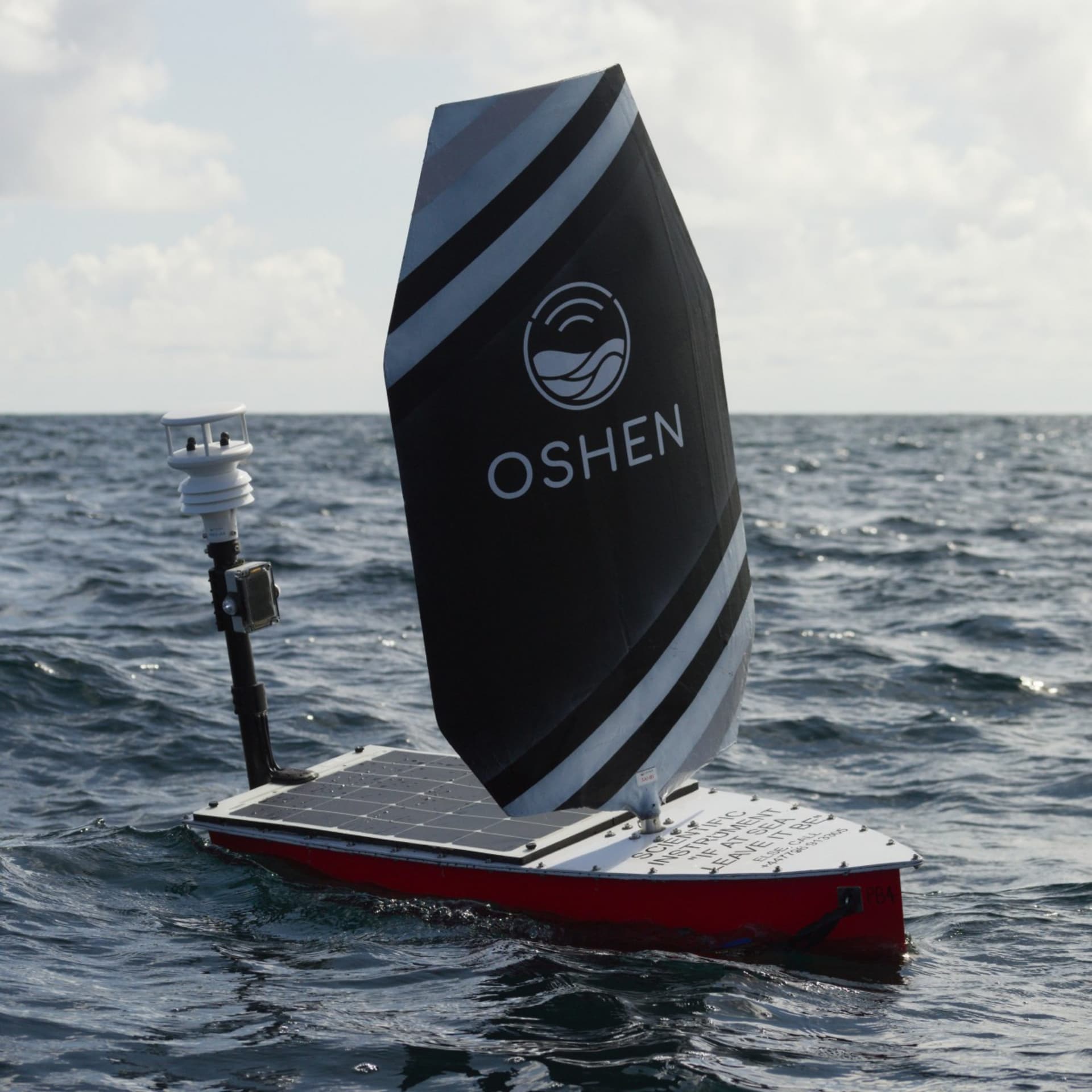
- Introduction of Sea Stars: Small autonomous sailboats equipped with sensors to collect critical data on hurricanes.
- Collaborative Effort: Partnership between NOAA (National Oceanic and Atmospheric Administration) and British startup Oshen.
- Data Collection:
- Sensors: Measure air pressure, temperature, sea temperature, humidity, and wave height.
- Air-Sea Flux: Focus on understanding the energy transfer from ocean to atmosphere which fuels hurricanes.
- Deployment Strategy:
- Fleet of Sea Stars positioned to create a data collection line as hurricanes approach.
- Real-time data transmission and post-mission data recovery.
- Innovations at IFA, Europe’s Largest Tech Show
- Exhibits Overview: A vast array of consumer electronics and home appliances showcasing advanced robotics and AI.
- Highlights:
- Robotic Vacuum Cleaners: New models capable of navigating stairs and cleaning over obstacles.
- AI-Enhanced Appliances: Features that allow for intelligent cooking and cleaning schedules based on user habits.
- Ambient AI: The concept of AI managing household tasks without user intervention, raising privacy concerns.
- Clean Energy Solutions in Africa
- Mopo Battery Rental System:
- A response to unreliable electricity in Africa through renting solar-charged batteries.
- Battery Types:
- Smaller batteries for basic needs (e.g., charging phones).
- Larger batteries for household appliances (e.g., fridges).
- Community Impact:
- Eliminates reliance on noisy and polluting fossil fuel generators.
- Provides a sustainable and accessible energy solution to underserved communities.
---
Key Takeaways
- Technological Advancement: The deployment of autonomous robotic technology is revolutionizing how meteorological data is collected, potentially saving lives during hurricane events.
- AI in Everyday Life: The integration of AI into household appliances is transforming daily routines, though it prompts significant discussions regarding data privacy.
- Sustainable Solutions: Innovative approaches like battery rentals could address energy shortages and contribute to environmental sustainability in Africa.
---
Listener Engagement
- The episode invites listeners to share their tech experiences, particularly in dealing with emergencies and improving community technology literacy.
- Features feedback from a listener in Zambia who is actively teaching children about robotics and coding, emphasizing the importance of technology education.
---
Conclusion This episode of Tech Life illustrates the profound impact of emerging technologies on disaster preparedness, everyday life, and sustainable energy solutions, showcasing innovative solutions that are making waves across the globe.
Written by AI. May contain mistakes. Listen to the episode to check what was said.
Transcript
Automatic transcript. May contain errors.0:00Hello and welcome to Tech Life, the programme about technology and how it's changing all our lives. I'm Shona McCallum. This week we find out how little unmanned sailboats packed with tech are helping forecasters to predict when and where the next hurricane will strike land. That's in a moment. Also today, Alistair Keane sees a clean future in Berlin. They can whiz around the rooms when you go to bed. The AI will know that you probably are asleep at that point and send the hoovers out to do the cleaning. And in Africa, where many people don't have a reliable electricity supply, supply, a company is offering a solar-charged alternative to petrol and diesel generators at home.
1:00First, have a listen to this.
1:05Now, depending on where you live in the world, you might call it a cyclone or a typhoon. Around the North Atlantic, the most powerful rotating storm that gathers at sea is called a hurricane. And last year's hurricane season broke records with 11 developing instead of the average seven. Experts need to predict their patterns before these destructive forces of nature hit land so that people can be alerted and moved to safety. Here's the BBC's Nick Davis reporting when Hurricane Beryl struck Jamaica in July last year. Waiting for a hurricane is a slow build, but then it arrives. The wind, the rain, the sheer destructive power of these powerful storms is something nobody wants to go through.
1:52Rain has flooded roads and damaged critical infrastructure as winds approaching 150 miles an hour were torn into the island, but it's people's homes that have taken the brunt of the damage. The US government agency NOAA forecasts and monitors hurricanes and is now partnering with a young British startup company called Ocean. They build autonomous ocean robots which carry sensors and communications equipment. The small boats are called Sea Stars and they've been deployed off the US Virgin Islands to sail into the path of storms to help predict where the hurricanes might strike. I've been speaking to the head of Ocean to find out more.
2:30So I'm Anita Lavrak. I'm the CEO of Ocean. I'm currently calling in based out of Mississippi in the US, where we have two of our SeaStar robots ready for deployment for a very interesting project. Lovely. So you've mentioned SeaStar, the boat or robot. What does it look like? What kind of size is it? And what's it going to be doing? Yeah, so I think the easiest way to think about them is as tiny autonomous sailboats or as, you know, intelligent little sailboats. So they're one metre robots that will sail out to sea, kind of with someone sitting back on land, telling them where to go. And then they will either stay in position as requested or sail to a new location, depending on kind of what the customer is looking for.
3:16And for this particular project, what we're doing is we're collecting weather data to try and better understand and predict hurricanes. so seven sea stars seven of these small robots are going to go out in fact some of them are already on the water and they're essentially going to form like a picket line so almost like a fence and as a hurricane kind of comes in and threatens the US they're going to be collecting data on that hurricane as it goes in to try and predict where the hurricane's going to land how severe is it going to be which areas should you evacuate and form all of those really important decisions with obviously the ultimate goal of trying to save lives and mitigate economic damage.
3:55And what's on board then? What instruments is it carrying? And what data specifically can it send back to inform how hurricanes behave? It's measurements like air pressure, air temperature, how hot the sea is, how humid it is, what the wave height is like. If you think about it in the context of how is this important for hurricanes, you know there's lots of easy ways like if it's a pressure if the pressure is dropping for example that's where the front kind of moving in but the most important thing that we're doing is for something called air sea flux and what that is is it's how much energy is moving from the ocean to the atmosphere so hurricanes are like huge huge entities they need a lot of energy to keep a hurricane kind of going and they suck that energy up from the ocean so we're essentially measuring the rate that energy is coming out of the ocean into the atmosphere.
4:46And we're therefore looking at like, what is the fuel for the hurricane? And that's something we don't understand a lot right now. And platforms like SeaStars can actually help us understand that. So is the data that's measured sent back in real time? Or does the boat have to be collected and then the data downloaded? It's a mixture of both. The most important data is sent back in real time. And then there's additional high resolution data that is available once you recover the sea star. What's the benefit of having a fleet of these types of vehicles out in a hurricane as opposed to other methods that have gone before to gather weather data?
5:26In terms of what makes us different to what's come before specifically at the surface I think we are part of a natural progression of autonomous robot technology. So the first generations of this stuff were maybe a little bit larger, a little bit clunkier. And as all technology evolves, things get lower power, things get miniaturized. Think about kind of progression of phones, of TVs, of laptops, anything. We're just kind of part of that natural progression, the next generation of autonomous robots. Because we are a lot smaller and more agile as a unit, no one else is really making one meter robots that can survive storms.
6:05Therefore, we can actually field kind of numbers in the hundreds and get a much wider kind of area coverage of data. So what are you looking for in terms of conditions in order to begin this mission? The mission as a broader sense has already begun. So of the seven sea stars that are contracted, four of them are already on the water. They're all about 200 miles away from land already and sailing further out as we speak. And they're kind of getting into that picket line I talked about, getting ready to stand in a line, ready to catch a hurricane. The second thing, though, is the mission starts in earnest when there's a hurricane kind of forecast with more than, you know, with a pretty high certainty.
6:47That's when we get the call from the NOAA science team and they say, hey, you need to reposition these ASAP. And suddenly all of our pilots are sat there programming the sea stars and making all of the sea stars make a beeline towards where we think the hurricane is going to land. And they're all controlling that remotely from a control centre? Yeah, so all we do is we use satellite communications to tell the sea stars where to go. It's very high level, so the sea stars have a lot of on-board kind of intelligence. All we say is we tell them where to go and everything else they figure out by themselves.
7:20And what about the two boats that you've got in reserve? What's the plan for those? Yeah, this is one of the most exciting bits of the project actually. So forecasts have a huge uncertainty. Sometimes, you know, three days before a hurricane makes landfall, your kind of uncertainty for where it's going to land can be, say, 300 miles. That's a huge range. And it's too large for autonomous vessels to kind of transit in a day over water. But that's a pretty trivial distance to cover on land in a car. So therefore, what we can do is two sea stars in the back of a pickup truck can just be driven around on land to reposition right as the hurricane is kind of coming in and then retrospectively kind of deployed whereas some of the kind of earlier technology that NOAA tested the kind of platforms that they were using were far too large and would have required carefully craning them overboard towing them out something that you can't do reactively very quickly so this is something that's very new very unique to Oshin and we think is going to make quite a big difference to actually making sure we get data in the right place at the right time.
8:26That's Anaita Lavarack, the CEO of Oshin, speaking to us from Mississippi in the US. And if you live in an area of the world that's affected by hurricanes, cyclones or typhoons, is there a piece of tech that you reach for in emergencies? We'd like to hear about it. Our contact details are coming up shortly.
8:49Some of the world's leasing technology companies, and some you haven't heard of yet, have been attending IFA in Germany over the last few days. It's a huge tech show in Berlin, and it's a chance for firms to show off their latest consumer electronics and home appliances, including robotic hoovers that can climb stairs. TechLife's Alistair Keane has been there for us, and I caught up with him inside the conference centre and asked him what he's seen so far. Well, you call it a conference centre. This place is massive. Imagine maybe 13, 14 different airport hangars all spread out over a huge area and all absolutely full to the brim of different companies with different bits of technology.
9:33Some of them are huge names. There will be appliances that you might have in your home and others will be lots of companies you have never heard of. We've got lots of kitchens with cookers, fridges, washing machines, all of course with AI built into them and the other thing we've seen loads and loads of here this year are lots of robotic lawnmowers and hoovers and that includes some new releases at IFA including one that was able to go up and down the stairs a robotic hoover it had kind of caterpillar tracks and was moving all around and another that could go over bumps so for example if you had dropped a bit of wood on the floor it would be able to navigate itself over the bumps and continue clearing up.
10:14So that definitely seems to be a theme. Aoife has a record for being all about appliances and things that we have in our homes, and that's certainly the case this year. My goodness, that hoover sounds like something I need in my house. And you mentioned AI briefly, but that will have been a big theme for this year, right? Yeah, as I say, all of these appliances have AI in them in some form. So imagine you look at the fridge and it can tell you exactly what ingredients are in your fridge and maybe when to use them up before they go out of date and suggest a recipe. And then it might be able to pull up on a screen a video from online that can show you that recipe.
10:55And then even further into that it's connected to the oven, so the oven starts to preheat to cook that recipe. And then, you know, maybe the dishwasher kicks in at the end of the meal to start cleaning up, all without you having to press a button. I got a little bit more information from Stephanie Lips, who's Managing Director of Bosch Home Appliance, about what the AI Connected Home actually looks like. I think the true smart home will come in rather sooner than later. And already today, we have a lot of use cases in our appliances. Our washing machines and dishwashers start when energy is cheap and available or when it's produced on your own rooftop.
11:30We also have a hyper-personalised recommendation so that you really can get most out of your appliance. What I imagine for the future is that, well, today our consumers are still interacting with a touchscreen, with the app or with a physical button. And that will fundamentally change. Those settings will only be needed when you want to adjust automations or make specific settings available. And of course, you will be really having a conversation with your washing machine to find out what's the best program to remove the stubborn stains in your favorite sweater, while your coffee machine is brewing your favorite coffee, because it's the time for it and it knows that you prefer your coffee in the afternoon.
12:17And obviously I mentioned earlier about the robotic hoovers. They are, of course, also included in that AI connected home. So they can whiz around the rooms when you go to bed. The AI will know that you probably are asleep at that point and send the hoovers out to do the cleaning. So it's definitely a world where people don't understand that the AI is controlling so much that's going on behind the scenes. And what does all this AI mean for our data and what these companies know about us, Alistair? Yeah, one of the buzz topics we're hearing about here at IFA is ambient AI. The idea that all of this is going on behind the scenes.
12:53So it's moving on from the kind of initial idea of the connected home, where you might on an app be setting lots of different settings and telling it your routine. The AI itself can learn when you go to sleep, when you wake up, when you're in and out of the house. And that gives these manufacturers a huge picture of the way people live their lives without them necessarily realizing that that's the case. And what they're going to do with that data, it's still something that people are debating and people that are looking at the ethics of this data are looking at. One of the companies on show here are TCL, who are based in China, and they have a little robot.
13:29It's a kind of cute, almost cuddly robot that can wheel around the house behind you and be connected to this AI. It's just a concept at the moment. But it can do things like take pictures. So, for example, if you're a family and it can detect that perhaps it's a birthday and you're blowing out the birthday candles, it will know that's a good time to come and take a picture. So there are obviously a lot of data concerns about something like that. And those are concerns I put to the Chief Technology Officer, Daniel Sun. Data privacy is one of the most important concerns for consumers. Absolutely, the data must be carefully managed.
14:02Some data should be protected on device with encryption, decryption, and sensitive data must be protected following the regulations. Well, as I say, TCL are a company that are based in China. Certainly, here at IFA this year, there are lots of companies from East Asia. Probably more than half of the companies we've spoken to are from that part of the world, very much trying to sell what is really cool and quite often high-tech tech to a much bigger market. And they say that Europe is a great place to sell, but also coming to display their tech here at IFA is getting them noticed all around the world.
14:38So this really is one of the big tech conferences of the year and certainly one to keep an eye on what comes out from it. Well, it sounds like there's a lot to see. We won't keep you too much longer. Alistair Keane, thank you very much for joining us. No problem. Nice to chat, Shanna.
15:02This is Tech Life on the BBC World Service with me, Shona McCallum. Remember, you can get in touch with us by emailing techlife at bbc.co.uk or you can WhatsApp us. The number is plus 44 330 1230 320. Please include your name and where you are in the world. Just like Ali from Zambia. Ali WhatsAppped us to say that he likes the idea of creating a phone that is rechargeable just by rubbing on it with your thumb. Well, it's an interesting idea, Ali. Remember last week I made a plea to our female listeners to make themselves known? Well, we've had Jacqueline Lord get in touch. She says she uses some tech like Spotify and social media, but she avoids AI.
15:46Jacqueline doesn't say why, but she does say it would be great if we could encourage more women into tech. And Martin Jones emails simply to ask, I thought I heard on Tech Life that you want more women to email in. Is that right? Yes, that is right, Martin. We're looking for people to share your mini-tech adventures with us or tell us what technology is shaping your life. Still to come, a battery idea which could help to replace diesel generators in homes in Africa.
16:23to Lusaka in Zambia next where we're catching up with a Tech Life listener who's been teaching children about computer coding robotics and engineering
16:38Hello Warren Hi Shauna, how have you been? Yeah, not too bad Now we had you on the programme last year where you told us about your coding and robotics club and you're joining us with an update Tell us, how have you expanded things? It's been quite a journey We've grown the club to other provinces where we are able to have new clientele. And every weekend we have to go to a shopping mall, give out flyers and leaflets and stuff like that, where people should know about coding and robotics. So what's the future for the Lusaka Robotics Club? Probably sitting down and having an education overall with our current system, because it's not so accommodative for people that are so innovative in the education sector because there are a lot of hurdles there.
17:35They are being told things that are so unnecessary at the moment. So what needs to change in the education system in Zambia then? What should change? When you teach somebody about agriculture in Zambia or mining, They'll find ways to innovate and see what's the way forward in this industry. You think it should be the same for technology? Exactly, exactly, yes. So that's the kind of bigger picture. But tell me, is it still a joy teaching young children about robotics and programming and coding? That's my everyday thing and that's what keeps me alive. I love teaching. I love what kids can bring on the table.
18:19You'll be so amazed that their capabilities, it's so amazing and it has brought me so much joy. Not only am I a teacher, but I learned from them also. Well, it sounds like you're doing a wonderful job and I'm sure we'll catch up on Tech Life again in the future. Thank you so much for getting in touch again. Wow. Thank you, Shauna. I'm happy that you've gotten back and you're keeping track of my progress. And are you still listening to Tech Life every week there in Zambia? Yes, I never miss any episode. Wonderful. That's what we like to hear. Thank you so much. That's Tech Life listener Warren Chapasha talking to me from Lusaka in Zambia.
19:01If you're doing something like Warren to teach children about tech or if you're developing your own project involving tech to help others, we'd love to hear from you.
19:16We're always on the lookout for new ways to use solar-powered tech, so this caught our attention. Imagine you live in an area where there's no mains electricity, or it's not reliable. You might need to rely on a petrol or diesel generator. Mopo, a British-based company, have come up with a solution that's already providing power to people in six African countries. The business is based on customers renting batteries from solar-powered charging hubs located near to their homes. The batteries come in two sizes, a smaller one for basic household needs like lighting or phone charging, and a larger battery for bigger, more power-hungry home appliances.
19:56When the battery is drained, it gets returned to the solar hub for recharging. TechLife's Chris Vallance has been speaking to Wilfred Kanu, MOPO's country director for Sierra Leone. MOPO is a solution that is there to solve simple but critical problems. millions of people across africa don't have reliable and affordable electricity so the main aim for mopo is to see how best we can create a compact product that will easily use to distribute electricity we generate and distribute electricity so instead of some middle class people have to purchase solar equipment to power their homes MOPO seems like that is not a reliable way that they can have an affordable electricity so we decide to create different different type of battery that we're able to help those people in the middle class and also people that are not in the middle class that cannot afford electricity, which means you don't have to pay for electricity all the time.
21:12Then people that normally buy those solar equipment, instead of them have to like spend a lot of money in repairs. More people think of a solution in building batteries that can just power people's houses through paper used battery rentals. I see. So in a sense, they're renting the batteries from you and those batteries will power their entire home. Yes, that's correct. So Wilfred, tell me about the batteries that you loan out. We have a 50 watt hour battery that can power DC small DC appliances. So that 50 watt hour battery can be rented for 24 hours and it costs less than a dollar. to rent it.
21:57You can charge up to like six Android phones, power Bluetooth speakers, which are DCs. Then you can use lights bulbs, five volts lights bulbs to light your home. And we also have this bigger batteries, which is a one kilowatt hour battery. That one, you can use it to power your home with AC appliances and it also can be rent hourly. So how are the batteries charged and how do you get them out to consumers? We have an ecosystem, a Mopo ecosystem. We refer them as hub, Mopo hubs. So like we install solar panels, we have our own customized charge units and everything that charges this battery and we have i would say like a fleet of agents that normally rent these batteries out to customers using an nfc tag and a mobile phone which is like totally offline and these agents they're actually independent by their own so they normally purchase activation credits, which we normally refer to as mobile credits, from us using mobile money.
23:15Then from there, they can rent out batteries to customers and collect physical cash from them. Then they use that cash to purchase mobile credits again when they run out of mobile credits or activation credits. I see. So doesn't this involve a lot of sort of driving batteries back and forth or carrying batteries back and forth? Yeah, but mainly our customers normally come to the hub to pick up batteries. Then we have certain places. The agents have specific locations that they will sit down and customers know those places. So it's easy for customers to pick up batteries and drop off batteries within those areas.
23:55And I imagine a lot of your customers, if they don't have your system, they'll be using fossil fuel power generators as well. Do your batteries enable them to sort of, if you like, to stop using generators? Can a battery from your company work just as well as a generator? Yes. With our Mopo Max, which is the 1 kilowatt battery, that one can run large appliances like fridges, TVs, even power electric motorbike. So the main aim of that battery is to replace fossil fuel generators. What are the problems that fossil fuel generators present for people running them? noise pollution and um of course i'm carbon co2 it's not so good so we'll pull it in the air and most of our customers will complain about oh sometimes in the night when i turn especially residential customers when turning the generator on it's so noisy and i have to wake up at some point to turn the generator off because I need to save my fuel for the next day.
25:09So most of the places where we are currently, our customers have stopped using their generators because they know the Mopo Max, they don't have to worry about them waking up 12am, 1am to go and turn off their generator to save fossil fuel. That's Wilfred Kanu, Mopo's country director for Sierra Leone, speaking to Chris Vallance from neighbouring Liberia.
25:38Well, the power light is flashing here at Tech Life, so we must end the show, although producer Tom and I are still bursting with energy. If you liked our interview about rechargeable batteries or the robots sailing into hurricanes, or maybe you've been inspired by listener Warren to share your own tech story, then please tell us. You can email us. Our address is techlife at bbc.co.uk or WhatsApp us on plus 44 330 1230 320. Remember to include your name and where you live. Today's edition was produced by Tom Quinn and presented by me, Shona McCallum.
From the publisher
A fleet of small robotic sailboats, packed with sensors, are ready to sail into the path of storms, to gather data on developing hurricanes. We find out how they'll do it. The data will help experts predict where a hurricane might reach land, giving people time to prepare and evacuate.
Also on Tech Life this week: we're at Europe's biggest tech show to find out what the next big thing might be. We speak to a Tech Life listener in Zambia who is teaching children about robotics and coding. And rented batteries, charged with solar energy, could offer a clean energy alternative in Africa.
Presenter: Shiona McCallum Producer: Tom Quinn
(Image: A photo of a small robotic C-Star sailboat developed by British company Oshen. Credit: Oshen)