In short
“Smell the future” (Tech Life, BBC World Service) explores how AI and sensors can “read” odors for health, safety, and conservation; it also covers sleep-tracking tech and bird-identification apps.
Guests
Professor James Logan, co-founder/CEO of UK company Dot (robot-nose platform). He describes DotCore identifying smell “ratios” and translating them into technologies, aiming for smart watches/home/farm disease detection (COVID, malaria, dengue; bed-bug detection). He cites inspiration from Medical Detection Dogs and a project using odor sensing to monitor puffins (Scottish Government; detect burrow presence/chicks/predators/bird flu).
Key claims
smell contains complex chemical data; AI can decode subtle odor differences; ethical/privacy concerns arise from airborne personal data.
Notable examples
fear detection via sniffed t-shirts; COVID dog training; puffin burrow odor machine. Also included: Shona McCallum interviews Withings sleep analyser engineer Manon Navalou and sleep researcher Prof Dirk-Jan Dijk; Liv McMahon interviews Merlin Bird ID director Jessie Barry and developer Sam Lewis.
Written by AI. May contain mistakes. Listen to the episode to check what was said.
Chapters
Tap a time to open that second in VOExploring the World of Smell
0:34 to 1:46
Introduction to how technology is unlocking the world of smells.
“Listen on BBC.com or wherever you get your podcasts.”
Interview with Professor James Logan
1:46 to 5:30
Discussion with Professor Logan about his work on electronic noses and smell technology.
“our first item is about tech lifting the lid on a world of which us humans catch only the faintest whiff.”
Applications of Smell Detection
5:30 to 10:01
Exploring various applications of smell detection technology in health and agriculture.
“or even on a farm when diseases are present, for example.”
Ethical Considerations of Smell Technology
10:01 to 11:20
Discussion on the ethical implications of using smell for detection and monitoring.
“from people how do we actually ensure that the data is safe and that we're not just able to to look at everything with people and and that's a question we don't have the answer to at the moment.”
Understanding Sleep Technology
14:00 to 19:26
Learn about the latest advancements in sleep tracking technology and their implications.
“Now, this can be done using wearables, smart rings such as the Aura, the Samsung Galaxy or the Lunar Ring are ones that are popular, but also by devices that you wear on your wrist.”
Exploring Birding Apps
19:26 to 26:51
Discover how technology is transforming birdwatching and attracting younger audiences.
“Now, who doesn't like walking through a wood filled with birdsong?”
Discussion on Philanthropy and Attention Economy
28:00 to 28:14
Explore the implications of a billionaire's actions on society and capitalism.
“But it all started when he gave a homeless man$10 ,000.”
Transcript
Automatic transcript. May contain errors.0:00This BBC podcast is supported by ads outside the UK. How did a boycott Jimmy become a billionaire from posting videos? On Good Bad Billionaire, we're going to find out how the world's most popular YouTuber, Mr Beast, made his fortune. He's buried himself in a coffin for days. Counted to 100 ,000 on camera. And even recreated Squid Games, all in an attempt to go viral on the internet. But it all started when he gave a homeless man$10 ,000. So is he a philanthropist reshaping capitalism? Or is he just the king of the attention economy? Find out on Good Bad Billionaire. Listen on BBC.com or wherever you get your podcasts.
0:39Hi, this is Tech Life on the BBC World Service, the programme about technology and how it's changing the world all around us. I'm Chris Vallance, and this week we explore the world of odour, the data locked up right under our noses that AI and new sensors are helping us to sniff out. Also...
1:01Shona McCallum tells us what happens before the alarm goes off as she goes to Paris to see some of the latest sleep analysis tech and Liv McMahon accompanies me on a walk in a park as we try out one of the bird identification apps that's proven a hit with young tech-savvy birders. I've seen something flying around that looks very small and cute and wren-like, it's just flown into a nearby tree beside us.
1:46our first item is about tech lifting the lid on a world of which us humans catch only the faintest whiff. I'm talking about this.
2:02Smells. If you're a dog, odours that are imperceptible to humans provide a wealth of information. And for many creatures, they're also a means of communication. Wouldn't it be great if we could understand that trove of information locked up in odours and develop sensors, electronic noses in very simple terms to reveal this world to us. Well, Professor James Logan is working on exactly that. He's the co-founder and chief executive of Dot, a UK-based company. I met him at his office in Edinburgh here in Scotland, and he told me more about what they do. So everything around us gives off a unique order.
2:42And we live in, we talk about living in a landscape, we actually live in a smellscape. And what we're doing at Dot is we have a platform called Dot core and that allows us to identify different smells and then it allows us to translate that into technologies. So essentially we're giving machines a sense of smell. It's easy for us as humans to overlook smell isn't it because we're not very good at it and I guess if we were dogs we'd realise we inhabit a universe of smells that conveys an awful lot of information. Animals have evolved to have this incredibly good sense of smell. Now we also have a sense of smell.
3:16We probably use it more than we think so you might have used it this morning when you checked the milk to see if you're you know you were making your cup of tea or coffee but we use it much much more than that it tells us when there's danger around when there's fire for example but even subliminally scientists have shown that smell can be really important so for example you know we can also detect fear so you know if you if people sniff t-shirts from people who have jumped out of a plane they basically the bit of their brain that's associated with fear and anxiety lights up So subliminally, you're able to detect fear in other people.
3:47And I think we should say a little bit about what smell and odour is, because this thing helps us understand the rest of the conversation, if you like. At its base level, it's about chemicals being released into the air. That's exactly right. So let's talk about human body odour. We think of it as just a bad smell under your armpits, BO. But actually, it's a complex mix of chemicals. So coming off our body is around about 600 or 700 different volatile chemicals that come off through the sweat that we release, through the skin cells, but also the bacteria that lives on our skin as well. And so our body odour is really quite complex and odour just generally is very complex.
4:29So we don't tend to look at individual compounds. We look at the relative ratios, the amounts of chemicals relative to each other within that complex mixture. and that's where we start to see the difference. So a lot of the chemicals that come off our body, cows also produce, for example, but we don't smell of cows because those chemicals are in low amounts and the ones that signify a human are in higher amounts. So those are the ratios of chemicals that we look at and that's what AI helps us to work out. So in effect, you've built a robot nose, if you like, an artificial nose. In effect, yes, but it's inspired by nature and essentially what it's doing is it's decoding really really complex and extremely subtle differences in odors between things and that's the key to the sort of level of specificity and sensitivity that we get from from these devices and so we're hoping that one day our vision is that we're walking around with smart watches which can tell you when you're unwell with a device that's in your home that tells you what's going on in your home just through the smells that are there or even on a farm when diseases are present, for example.
5:34So what are the applications you've been looking into? So we've been looking at different diseases, including, so we did a lot of work on COVID. So we can detect COVID with sensors. We are working on malaria and we can detect malaria using our sensors with high accuracy. We have also been working on dengue and we can also detect dengue. With human diseases, there are a whole load of applications. We've known for hundreds and hundreds of years that diseases have smells associated with it. But it's only now that we've got the technology that can actually detect those. But beyond human disease, we're also looking at applications in the agricultural sector.
6:13That's quite a new sector for us that we're just getting into. But also animal diseases as well, including companion animals. And as I said, also pests. So we have a detector that can tell you if you have a bed bug in your room, for example. It's interesting. We talk about smell and disease. one of the things I years ago saw with the dogs that are trained to detect cancer because it turns out there's there's good reason to think that they may well be able to smell some chemicals if you like associated with cancer. That's absolutely right and you know a lot of that work inspired what we do now dogs and insects that are both good sniffers and we've done a lot of work with a charity called Medical Detection Dogs that are based in Milton Keynes in the UK and they do some phenomenal work with dogs.
6:59They are the world experts when it comes to sniffing things with dogs. And I've been there, seen it firsthand. During COVID, we were helping to train dogs to detect COVID with this charity. And the dogs are able to do it. It's incredible. You've also been working on puffins, I think. Tell me about that. Yeah, from dogs to puffins. Yeah, so we've got a really exciting project. We're working with the Scottish Government. One of the difficult things about puffins is knowing how well they're doing and you know they're they're a bird that's at risk particularly from climate change we better say for people listening past the world where they don't have puffins they're they're seabirds they're very attractive looking they've got brightly colored beaks and they're black and white and they're very endearing and they're beautiful birds but they are at risk and one of the way that conservationists tell how they're doing is they have to go on to very remote islands so they're found throughout scotland and the scotch islands and you have to get to the island then you have to climb on the weather can be horrendous you've got to then stick your arm down a burrow and they can be meters into the ground to feel whether there's a puffling in there which is a baby puffin believe it or not and that tells you how they're doing now that's extremely difficult to do so they came to us and said look you've got this amazing platform that can detect odors i wonder whether we could use that to detect puffins so we've done a whole lot of work where we've gone out to some of these islands in scotland we've also gone to puffin sanctuaries where puffins have been brought in to recover.
8:26We've collected their odours to demonstrate that they do have a unique odour and we've built a machine that will actually sit inside a puffin burrow to be able to tell us through smell when a puffin enters and it might even be able to tell us whether there's a chick there and even more so it might be able to tell us if a predator like a rat is present or if bird flu is present. Do we need to start thinking already? I appreciate we're talking about things in the future but do we need to start thinking already about privacy and some of this stuff because I think we're very lucky that dogs can't talk really aren't we because every time I'm in a room with the dog I think it knows everything about me right it knows whether I brush my teeth it knows probably knows what I've had for lunch it probably knows who I've met to an extent smell is incredibly revealing if you can detect it sensitively enough do we need to start thinking about that now it's a very good point so when we think about how do we know what's going on in our body normally we give a sample like blood and it's up to us to give that sample with smell you're releasing it all the time if you imagine you blow a bubble like you're a child and you have you know soapy bubbles and you blow one with your breath and off it floats into the air there becomes a big question of who owns that because it's left your body and it's now just part of the air but it's come from you and it contains a whole lot of information about you it can tell you whether that person is pregnant or not whether what they've eaten the night before whether they've drunk alcohol whether they're taking drugs um how well they are it could be a whole raft of of things and so there is a big ethical question around how do we how do you know if we have sensors in buildings for example that are sampling from people how do we actually ensure that the data is safe and that we're not just able to to look at everything with people and and that's a question we don't have the answer to at the moment.
10:14It's a really interesting field and something that we've absolutely got to consider. And that was Professor James Logan, the co-founder and CEO of Dot, with a fascinating insight into the world of smell. How did a boycott Jimmy become a billionaire from posting videos? On Good Bad Billionaire, we're going to find out how the world's most popular YouTuber, Mr Beast, made his fortune. He's buried himself in a coffin for days, Counted to 100 ,000 on camera. And even recreated Squid Games, all in an attempt to go viral on the internet. But it all started when he gave a homeless man$10 ,000. So is he a philanthropist reshaping capitalism?
10:53Or is he just the king of the attention economy? Find out on Good Bad Billionaire. Listen on BBC.com or wherever you get your podcasts.
11:12This is Tech Life on the BBC World Service with me, Chris Vallance, and of course with you, our listeners. On last week's show, we told you that humanoid robots had successfully performed surgery for the first time, though they're not ready yet to operate on humans. Randy in Ghana was listening and sent us a WhatsApp note. Robots operating on humans will be quite a scary experience, he wrote, But it's an advantage to African countries because people have been booking flights to India and Turkey for operations. And Zakaria Farah in Somalia made a similar point, emailing us to say many hospitals in his country do not have enough doctors.
11:51We also bought you a new innovation, retrofitting carbon capture technology to cargo ships burning fossil fuels. Enoch Anand Eliazar in Hyderabad, India, wrote to say, thank you for sharing the news and it's a clever use of limestone. A listener in New Zealand sent us this message, Kia Ora from South Kayapara Head. Now we had to check this online and a well-known AI search engine says Kia Ora is a versatile Maori greeting commonly used in New Zealand and South Kayapara Head is on New Zealand's North Island. The message goes on, I'm sitting outside in the garden doing sudokus. Love your work. Learned a new term.
12:32Friction. Nice. Well, we aim to please. And thanks to everyone else who sent in messages. We read them all. If you want to comment on this week's programme or have any suggestions for another show, then please do email us. Our email address is techlife at bbc.co.uk. You can also WhatsApp us a text message or a voice note, the number is plus 44 330 1230 320. Remember to include your name and the country where you live. And still to come, the smartphone apps that are causing a flutter of excitement among younger bird watchers.
13:11Well, talking of feedback from you, our listeners, some subjects we cover really do trigger a lot of responses and tech that helps us sleep is certainly one. It's not surprising if you struggle to find a good night's sleep, you'll know how soul destroying it can be. Well, Tech Life's Shona McCallum has been looking at some of the latest sleep tech products and research. And she's here with me in the studio. Hi, Shona. Hi, Chris. You're looking and sounding as though you've had a good night's sleep. What have you been looking at? Well, this taps into a really interesting area of health tech where people are using wearables to monitor their sleep and according to research nearly half of all Americans and around 48 percent of people in the UK are tracking their sleep.
13:55Now we know the importance of a decent night's rest don't we? Not getting enough sleep can cause all sorts of health problems so perhaps it's no surprise that we're paying more attention to it and I'm not just talking about the duration I'm talking about really drilling into all aspects so room temperature the time you go to bed how long it takes for you to fall asleep once the lights go out which is something called sleep latency REM sleep which means rapid eye movement that's the stage of sleep where most of your dreams happen deep sleep or slow wave sleep which is the time of the night that supports the memory growth and cell regeneration so I've only just begun to explain this to you Chris and you can see there's a lot to it.
14:40Now, this can be done using wearables, smart rings such as the Aura, the Samsung Galaxy or the Lunar Ring are ones that are popular, but also by devices that you wear on your wrist. So things like the Whoop and of course watches like the Garmin, the Fitbit or the Apple Watch. All of these look at things like your breathing, your heart rate and your body movement. And they usually give you a score in the morning based on a combination of all of those things. I'm thinking my sleep is tech deprived at this point. Your research has taken you to Paris. That's right. I went to Withings, a French health tech company, after trying out their sleep analyser.
15:18Now, this is a kind of device that's like a small mat. It goes under the mattress, so you don't have to wear it and it's not intrusive. And it was the first sleep tracker to provide sleep lab metrics without anything to wear, delivering in-depth analysis of your night. It's what the industry calls a needable. That's technology in your environment rather than on your body. Here we are in the mechatronics lab. Tell me about then the design of this. So when the body will move, it creates some pressure on this bladder. Manon Navalou is the mechanical manager at Withings. And so the pressure sensor that is localised here records these pressure changes.
15:59When you breathe, your thoracic rise and fall will be recorded here as well. The tech aims to, by monitoring what it can through the movement of your body, heart and breathing, build a health score that can pre-detect disease and connect you with a doctor at exactly the right time. You have one of five people in the UK that are concerned with sleep apnea or that can show some sign of sleep apnea during the night. so it's not so rare. You have 26 % of men but also 14 % of women so it's not only a men-related issue. So after looking at the mechanics of the sleep analyser I went through my own data with Withings founder Eric Cariel.
16:48I see that you are sleeping a low number of hours. And what about the sleep score then? At the moment, we're seeing I've got 49. It's out of 100. What we see is that your duration is quite low. Your heart rate is very good during the night. 57 is a good score. But if you have taken a glass of wine last night, your heart rate, which has been higher at the beginning of the night, and then decreasing. Regularity, I guess, is something that you're going to be tracking over a longer period of time. Yes. If we look at, for example, April, we've got more green there. Yeah, exactly. So April, I slept slightly better.
17:26Yeah, exactly. Last month, more yellows creeping in, and this month, more red. This evolution is very important to detect a lot of things, like a disease which is coming, and probably you are preparing to be ill. It's why sleep is very important and can really affect your health. So you can see the range of different things I was able to determine from my own data. But of course, I wanted to talk to an expert as well. I'm Dirkendijk, Professor of Sleep and Physiology at the Surrey Sleep Research Centre at the University of Surrey. We know that when we compare the measures of those devices against gold standard measures, that actually estimating sleep structures, so how much deep sleep or REM sleep you have, is quite difficult to do for those devices.
18:17When you say gold standard, what did you mean by that? Well, with gold standard, we basically mean polysomnography. What does that mean? We bring people into the laboratory. We put electrodes on their head, put electrodes close to their eyes. We measure muscle tone. And if we have those signals, we record them. We can analyze them. we can very accurately quantify sleep according to very well established criteria by professional societies. Okay, so these are not medical devices providing that gold standard sleep study, but they do have their uses, don't they? Some of these devices are used in real research studies.
19:04One of the big advantages of those devices is that you can record sleep for many, many nights, weeks or months, which is something that's very difficult to do in the laboratory with your gold standard methods. That was Professor of Sleep and Physiology and Director of the Surrey Sleep Research Centre, Professor Dirk-Jan Dyke. And thank you, Shona, for coming in. Thank you. I'm off to my bed now.
19:34Now, who doesn't like walking through a wood filled with birdsong? But I've got to confess, for much of my life, I didn't really give two hoots about which birds were singing. But for me and a lot of other people, particularly younger people, new apps have opened their eyes and their ears to the magical world of birding. TechLife's Liv McMahon has been taking a look at the appeal of these apps. We decided to try out one of the best known, Merlin Bird ID.
20:06well we've left tech life's global headquarters by the Clyde in Glasgow in Scotland and we've come out to a nearby park festival park which has got lots of little patches of wood and dense undergrowth and it's as you can hear a spot where even in the middle of the day in the baking sun you can hear birds and we're going to identify live is here we're going to identify some of these birds using an app that's been one of those apps that's got people interested in bird watching bird listening we should say as well Liv so you've started this app it's called Merlin just talk through what we're doing now so it's Merlin bird id and we are just at the moment we've activated the tool that allows us to listen for birds okay what's it telling us we've got What's that pip-pip-pip noise we can hear?
20:57The little tweeting that we can hear at the moment, it's suggesting that that is most likely a Eurasian wren, which I think is almost definitely the case. I've seen something flying around that looks very small and cute and wren-like. It's just flown into a nearby tree beside us. Well, that wren really wants to get in on the conversation, doesn't it? Tell me a little bit more about Merlin. So this is an app that was developed 10 or more years ago by the Cornell University's Lab of Ornithology. And it's had at least 12 million downloads on smartphones this year alone. And it's recorded some 4.4 billion sightings of birds.
21:40So it's really had this quite, I'd say, explosive growth over the last couple of years. And I spoke to Jessie Barry, who's the director of Merlin at Cornell's Lab of Ornithology. And she told me just about how it all began. Yeah, so back in 2014, we started the project to help anyone identify birds. But since then, we've been able to expand to include all the birds of the world and then add really exciting features like sound ID. So sound ID is kind of like Shazam for birds, where if you turn on the microphone, it will start to let you know which birds are singing near you. And that was a moment that I think was really exciting and eye opening for a lot of people to suddenly be able to identify those birds, get that help from Merlin and discover things that they have perhaps not noticed before.
22:30Jesse Barry there. And that really gives you a nutshell description of it, doesn't it? Shazam for birds. um Liv they've also seen an uptick in younger people um using the app yeah this app and many of us like it there's smart bears id there's iNaturalist it's being used by people to identify more various types of wildlife surrounding them and it really seems like it's part of a growing contingent of young people who are maybe looking to the help of tech to become more informed about the world around them. And this is Jessie Barry of Merlin again to that. We have minimal demographic information, but we can definitely see the shift to younger audiences.
23:17So it's been really fun to see younger folks jump at him. Jessie Barry there. Have we picked up any other birds, Liv, while we've been talking? We have, Chris. We've had a common wood pigeon. They're very common, I'm afraid. They are, they are, as the name suggests. I'm not going to get any points for that. Lovely birds, though, they are. Liv, you've been speaking to a young person who did in fact get into birding a little bit more because of these apps I have, yeah, I spoke to Megan Sostak who is 26, she's based in San Francisco, California and she actually makes content about birding So I was definitely a bird kid, I was very interested in birds She really thinks that apps like Merlin can really help reduce the barriers to it for young people I think that overall it's like a fantastic tool that really increases accessibility.
24:09It's bringing it to people and bringing it into people's hands who might not have felt welcome to experience it before. We should say there are lots of birding apps out there. And that's an interesting thing because Merlin has actually inspired other people to create apps as well. Yes, so I spoke to a software engineer called Sam Lewis, who's based in Stockport, just outside of Manchester. And he told me about how he'd kind of started casually using Merlin a few years ago, but it planted the seed for a more gamified bird app that he's created, which is called Lifha. I thought, why not? Why don't I try and make an app that can be Pokemon Go for birds, essentially.
24:56A few months ago, I got laid off from my job, and then I just went full in. I was like, right, I'm going to put all my time into this. It just sort of steamrolled from there. I was thinking of new features and getting excited about it, and then I was getting a load of users. And all my family and friends were trying it out, and they were using it every day. And most of those, 90 % of them had never been interested in birds before. Sam Lewis there, who's been building a Pokemon Go for birding, sort of. We had a Shazam for birding, now we've got a Pokemon Go for birding. It's all lots of fun, of course.
25:31But the motive behind creating Merlin, I'm sure, is one that many other apps share, is conservation. Yes, it's known as kind of crowd science. Bringing people together to be able to collect this kind of data themselves can then be used to advance conservation efforts around the world. And that's something that Jessie Barry really hopes will continue. you? I think the ultimate goal for Merlin is to ignite a movement for positive environmental shifts. And birds are just a wonderful vehicle to get people to start to notice what's going on in the outdoors and in the world around us and start to see the environment through a different light, noticing things that they haven't before.
26:14And so we really think those steps can be very small and incremental over time. But just generally, if there's millions of people who we're starting to care about birds we believe that's going to lead to good things for humans and the environment jesse barry there and uh well let's give merlin one more go we've got anything else that's uh apart from this wren that's been bravely accompanying our interview i don't think so i think we walk around okay all right we'll do that one well unfortunately we didn't identify many more birds just a couple of magpies and a goldfinch or two but thanks very much to live McMahon for talking me through the birding apps that are taking off.
27:02Well, we've reached the end of another Tech Life, but we hope you'll be flocking back to hear us next week. In the meantime, if you want to share your thoughts on this edition or tell us about tech we should be looking at, our email address is techlife at bbc.co.uk or you can whatsapp us on plus 44 330 1230 320 you can also send a voice message please include your name and where you live today's tech life was produced by tom quinn and presented by me chris valance
27:46How did a boycott Jimmy become a billionaire from posting videos? On Good Bad Billionaire, we're going to find out how the world's most popular YouTuber, Mr Beast, made his fortune. He's buried himself in a coffin for days. Counted to 100 ,000 on camera. And even recreated Squid Games, all in an attempt to go viral on the internet. But it all started when he gave a homeless man$10 ,000. So is he a philanthropist reshaping capitalism? Or is he just the king of the attention economy? Find out on Good Bad Billionaire. Listen on BBC.com or wherever you get your podcasts.
From the publisher
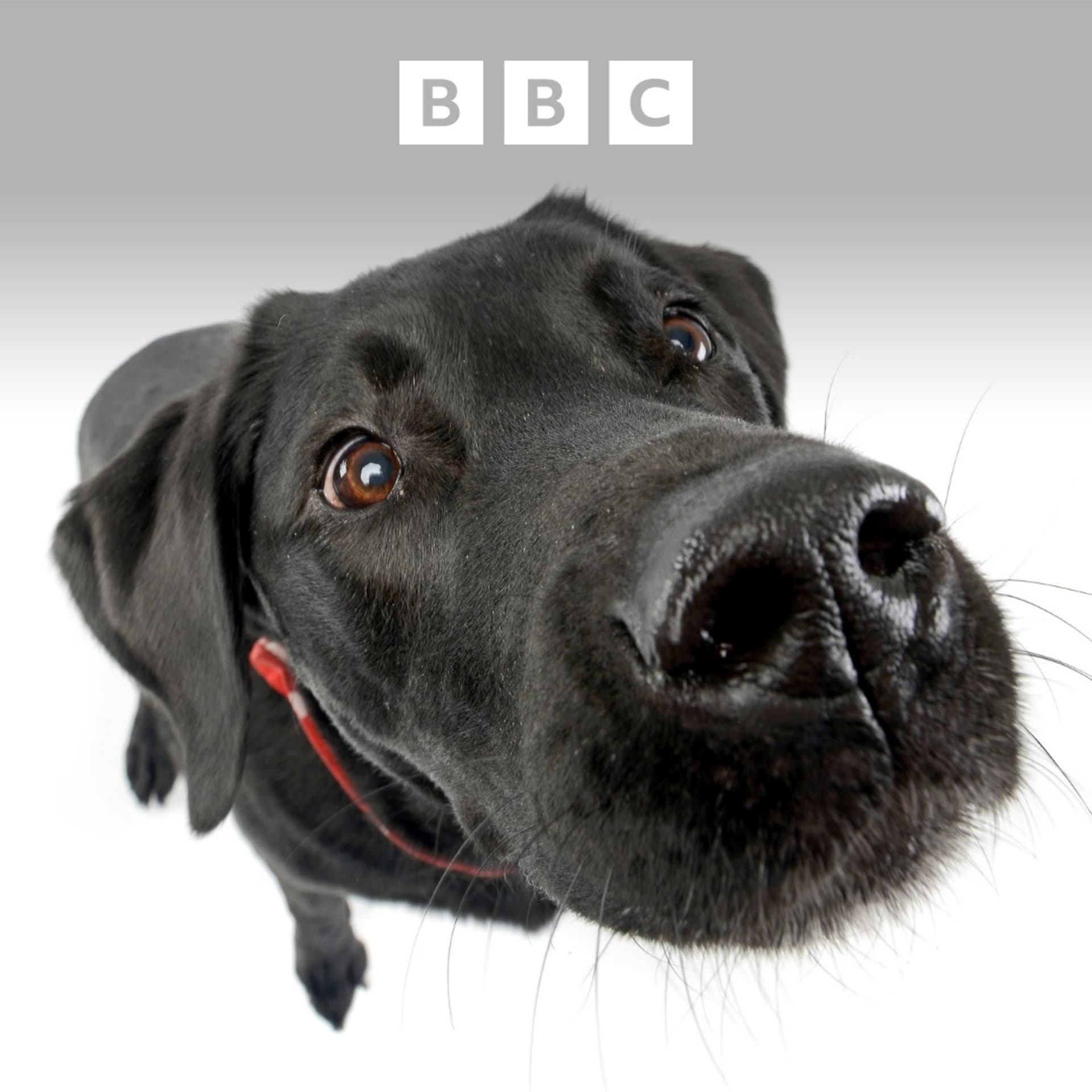
The nose of a dog is incredibly sensitive. And odour contains information. With the help of AI, electronic 'noses' are being used to sniff out complex odours, including diseases. Chris Vallance visits a company developing the technology.
Also this week: Shiona McCallum is in Paris to see the tech that can help us understand sleep. And Liv McMahon accompanies Chris on a walk in a park. There, they try one of many bird identification apps that are proving a hit, especially with younger users.
Presenter: Chris Vallance Producer: Tom Quinn
(Image: A photo of a cute mixed breed dog with black fur. It is sitting down, looking up at the camera. Its nose is prominent in the foreground. Credit: Getty Images)