In short
Tech Life Podcast Episode Summary: Talking Dolphin
Episode Overview In this episode of *Tech Life*, host Chris Vallance explores the intersection of technology and biology, focusing on dolphin communication through artificial intelligence, advancements in NFL viewing experiences, and the development of mega-batteries to address energy demands.
Key Topics
- Dolphin Communication and AI
- Introduction of DolphinGemma, an AI large language model from Google.
- Collaboration with the Wild Dolphin Project led by Dr. Denise Herzing.
- Aim: To decode the complexities of dolphin communication, potentially revealing whether dolphins have a language akin to human language.
- NFL Technological Innovations
- Introduction of Sony's Hawkeye camera technology to improve gameplay measurement.
- Discussion with Neil Manowitz from Sony and Aaron Amendolia from the NFL about how this technology enhances officiating and fan experience.
- Renewable Energy and Mega-Batteries
- Exploration of how mega-batteries store renewable energy to stabilize the grid.
- Interview with Terry Denning from Powin, highlighting the need for large-scale battery solutions in the face of intermittent energy sources like solar and wind.
Dolphin Communication Key Points
- Dolphins exhibit complex social behavior and communication patterns, leading researchers to ponder the existence of dolphin language.
- Dr. Denise Herzing's Background:
- Founder of the Wild Dolphin Project, focused on dolphin behavior and sound communication.
- Notable findings include:
- Dolphins use unique whistles (signature whistles) to label individuals.
- They exhibit social structures similar to humans, which may correlate with intelligence.
- DolphinGemma Overview:
- AI model trained on dolphin sounds to uncover patterns and potential language structures.
- Applications include analyzing sequences of sounds to determine context (e.g., social interactions, aggression).
Implications
- Discovering a dolphin language could reshape our understanding of animal intelligence and enhance conservation efforts.
- Raises questions about the complexity of communication in non-human species.
Innovations in NFL Viewing Key Points
- Introduction of Hawkeye technology to replace traditional manual measurement methods in American football.
- Key Features:
- Enhanced data collection for officiating and gameplay analysis.
- Cameras dedicated to measuring the line to gain and player boundaries, increasing accuracy and reducing game interruptions.
Implications
- The use of advanced technology aims to improve the fan experience and officiating efficiency.
- Positions the NFL as a forward-thinking league embracing technological advancements.
Mega-Batteries and Renewable Energy Key Points
- Discussion about the role of mega-batteries in stabilizing the energy grid during periods of low renewable energy production.
- Terry Denning explains how batteries are used to store excess energy generated from solar and wind power.
Advantages of Mega-Batteries
- Provide a sustainable alternative to traditional fossil fuel power plants.
- Enhance the reliability of renewable energy sources by bridging the gap during energy demand peaks.
Future Developments
- Ongoing advancements in battery technology, specifically lithium-ion phosphate (LFP) batteries, which are more stable and environmentally friendly.
- Expanding applications globally, addressing increasing energy demands in various regions.
Audience Engagement
- The podcast invites listeners to share the technology they can't live without, enhancing community interaction and showcasing the diverse ways technology impacts daily life.
Conclusion This episode of *Tech Life* offers insights into groundbreaking technologies that are transforming our understanding of animal communication, enhancing sports experiences, and advancing renewable energy solutions. The discussions highlight the intricate relationship between technology and our daily lives, urging listeners to consider the broader implications of these innovations.
Written by AI. May contain mistakes. Listen to the episode to check what was said.
Transcript
Automatic transcript. May contain errors.0:00Welcome to Tech Life on the BBC World Service, the programme about technology making an impact on all our lives. I'm Chris Valance, and this week we're looking at a remarkable attempt to use artificial intelligence to unlock the mysteries of dolphin communication and maybe help us talk to these clever marine mammals. We'll also hear about the hawk-eyed tech being adopted to speed up gameplay in American football and how to plug a gap in renewable energy, the huge batteries that'll deliver enough power to let you listen to tech life and do more when the sun isn't shining.
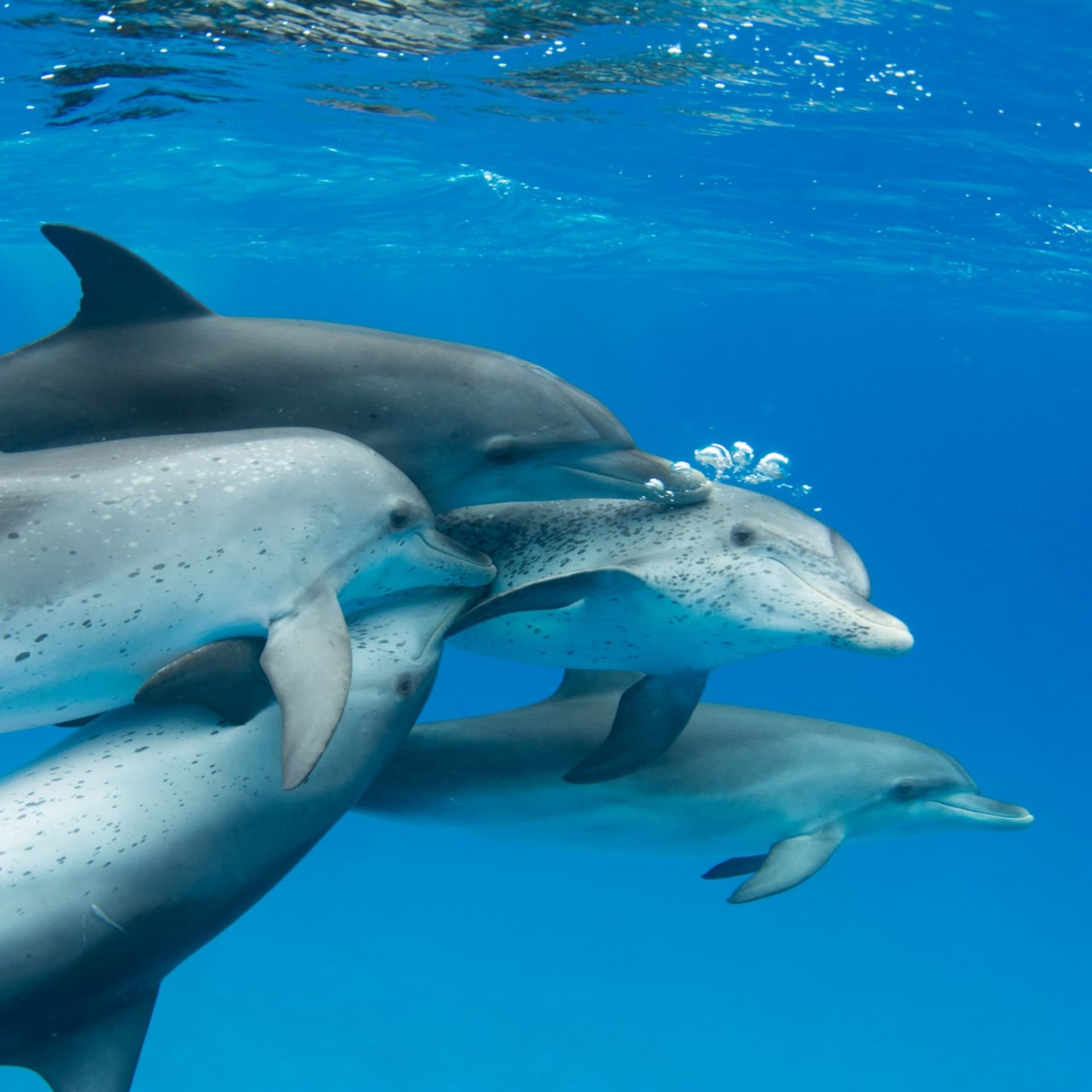
0:56We start this week in the clear, sunlit waters of the Bahamas, a great place to observe and listen to dolphins.
1:14That's the sound of male Atlantic spotted dolphins having a bit of a face-off. There's a variety of noises to be heard there, whistles, burst pulses and clicks. And if you've ever been lucky enough to see dolphins in the wild, it's obvious that these large-brained marine mammals are social, curious and playful animals. And they certainly communicate. But do they use language? It's a question researchers have been exploring for years, now with a bit of help from Google. The tech giant has developed Dolphin Gemma, an AI large language model it hopes will help unlock the complexities of dolphins' clicks and whistles.
1:55Google is working with the US-based Wild Dolphin Project, which has gathered years of data on dolphin sounds recorded around the Bahamas. Dr Denise Hertzing is the research director and founder of the Wild Dolphin Project, which hopes to use dolphin gemma a lot this summer. I asked her how she got into this line of work. You know, I've always been interested in what's going on in the mind of a dolphin, right? Like we know about primates and elephants, but finding them in the wild and being able to study them long term is challenging. So I chose the Bahamas because you can see underwater. Quite simple reason.
2:35This is not true in most parts of the world because I wanted to study their underwater communication, looking at their behavior, their sound and understanding what their society was with individuals and their relationships. Because these are very sophisticated animals, aren't they? Dolphins are quite smart. You know, we think they're pretty high on the intelligence level. You know, we use things like physical measures, like brain to body ratio. And they're really just second to humans, even above the great apes. They're smart. They can understand artificial languages, gestural and acoustic. They understand abstract things like watching a TV.
3:16They recognize themselves in the mirror. They use tools. and these are the features that we look at when we look at intelligence and the last barrier to looking at intelligence is do they have language or something akin to language? Because language is an interesting thing, isn't it? Because humans have language and for us it's how we sort of organize our thoughts in many ways. If you find out the dolphins have language, does that tell you, Would that be quite a revelation in terms of what we'd know about, if you like, the workings of their minds as well? Well, you know, dolphins are social mammals.
3:56We have a lot in common with social mammals because that's what we are, right? So dolphins have these long lives. They have children. They wean their children. The children learn, you know, they're as young animals. And then they have teenage groups. And then they learn how to be adults. And we think these things drive intelligence, right? the complicated lives of knowing your friends, knowing your allies, getting along with your neighbours. These are features that are repeated in all social mammals. Do you get the sense when you're in the water that you're dealing with an intelligent language using creature?
4:36When I'm with a dolphin one-on-one in the water and they're looking you in the eye, you're like, okay, there's something behind that eye. And what are we doing here? You know, like, what do you want? I mean, that is actually one reason we started our two-way work, because I was observing and we're interacting with them, of course. And I was like, wow, they're really like reaching out. And how do we bridge the gap with a species that doesn't share your sensory world exactly, right? So this This is where we need interfaces. What do we know about dolphin communication at the moment? We know a lot of basic things.
5:14They make certain kinds of sounds like clicks, whistles, burst pulse sounds. And we know how they use them. I mean, they have sonar, so that's clicks. They have whistles, which are unique whistles. Often they're called signature whistles that actually label an individual. So they have names, technically. And burst pulses are these close proximity fighting kinds of sounds. But dolphin sounds are kind of like thinking about bandwidth, right, for our technology. They have a lot of information that goes into the ultrasonic, right? So we can't hear them all the time, but we can analyze them on our computers.
5:53So there's a lot of places to encode information. And that's where this AI technology really comes in. Well, tell me about that, because you've teamed up with Google. to use some of their AI in a project called Dolphin Gemma. Tell me about that. So Dolphin Gemma is trained on our sounds, but it's going to be open source, right? So other researchers can input their sounds and also get patterns out. Now, there's a couple uses of Dolphin Gemma right now. So the first use is to just look at their natural sounds. So a large language model, as we know from typing on Google and getting a sentence finished, right?
6:34So it's going to be able to say, okay, if I put in this whistle, what's most likely to follow that whistle, right? Now, if you get enough of those, right, some kind of sequence that says repeated, that suggests order and structure, which might suggest some kind of language. For me, what that means is I will go back into our underwater video. I will look at where all those sequences are repeated and see, Is it always when they're fighting? Is it always when a mother is disciplining a calf? And then you can start picking out the sounds, basically, right? So that's the first use. And that's the, I would say, the bigger use of dolphin gemma right now for us.
7:14The second use is in our two-way system called chat. And what it's doing for us this summer, it's helping us predict how the dolphins are going to mimic our synthetic sounds, which is how chat is structured. This is a very simple two-way vocabulary. We have basically four or five words in there that are words for toys that the dolphins play with. And one of the challenges for us in the water with chat is that if I'm listening and I hear a mimic, I want the computer to tell me, was that a mimic or was that another kind of whistle, right? Is the dolphin mimicking the sound and can I respond appropriately?
7:55So Dolphin Gemma is able to generate, these are all the potential variations of a whistle the dolphins might make. And that lets us train our real-time sound recognition more efficiently. And if I understand it right, it relies upon you carrying with you the equipment both to hear the sound, because it's ultrasound, so it's beyond our range of hearing lots of it, but also to make the sound, if you like. So you have your little sort of portable underwater computer set up and microphone set up with you. Yeah, the idea is chat is a very simple system meant to be mutual. Just four or five words, things we like to do together to see if the dolphins wanted to go there, really.
8:39AI is going to do some great stuff for animal communication researchers. I'm excited to see what it does for other researchers, too. What will be the significance if you do find that dolphins have language? And it's a rich language that's perhaps comparable to our own. If other species have language, now it elevates them, we hope. I mean, humans are unique, of course. We're proud of who we are and how unique we are. But if we can look at the natural world and go, whoa, there's a lot more complexity than we thought, maybe it'll help us better preserve, better understand. And I mean, to ask that question finally and answer it with AI, You know, do other animals have language?
9:24That would, I think, would be huge. I mean, I know it's not everybody's cup of tea and focus, but I think it would help us understand and better help the natural world, to be honest, and our place in it. I suppose you might even discover their names for you and the language they used to describe you and your team. Oh, do I want to know? She who swims with a funny turn or something or the woman with the big video camera. Yeah, who knows? I mean, we're going to try to follow what the dolphins do and how they want to interact with us and do our best to honour that. You know, we're pretty non-invasive with our work already.
10:01And so we're going to do our best to open that door. I look forward to what you find on the other side. Thank you so much for talking to us. It's fascinating. Great. Thanks, Chris. And that's Dr Denise Hertzing of the Wild Dolphin Project talking to me from their headquarters in Florida in the United States.
10:30You're listening to Tech Life on the BBC World Service with me, Chris Valance. Well, what do you make of the attempts to communicate with dolphins using AI? Let us know what you think. You can email us, or if you'd rather squeak or click a message, you can send us a voice note. Details to follow. Now, over the last few weeks, we've been asking you to tell us about the tech you simply can't do without in your daily life. And we're delighted that you're still sending in examples. Inez Deborah Amelia Alter emailed us to say she cannot do without her laptop and iPhone. and Judy Schaefer emailed us from Washington DC in the United States.
11:11Judy says, I'm legally blind, have been for a few years and rely completely on Read Aloud to handle my email and internet. Judy also mentioned that she selected a British voice to listen to her text-to-speech software. But after a recent software update, the voice was removed. Judy says, it feels now as if my best friend has died, replaced by a computer geek, by a horrible imposter. The unwelcome update that makes things worse. There's almost certainly an entire radio series to be done on that, Judy. Please do keep sending us details of the tech you rely on. You can email us techlife at bbc.co.uk is our email address, or you can send us a voice note or a text message on WhatsApp.
11:58app. Our number is plus 44 330 1230 320. Still to come, the mega batteries which are plugging the gap when the sun isn't shining and the wind isn't blowing.
12:20Well, we've been chatting about dolphins and one of the delightful things I learned watching some of Dr. Herzog's lectures is that dolphins invent and play games of their own. There's one that involves carrying and passing a piece of seaweed on a fin. Among us homo sapiens, carrying games are pretty popular too. And in North America, one of the most popular games is called American football, where teams like the Chicago Bears and the Miami Dolphins compete to carry a leather ball up a field. A key target in the game has been the so-called line to gain. For years, measuring that distance has been done manually by a group of officials known as a chain gang who walk onto the pitch carrying orange poles connected by a 10-yard length of chain, and they measure exactly where the ball has landed.
13:10Now the NFL, the major football league, has announced it's going to use Sony's Hawkeye camera technology to measure the distance. TechLife's Alistair Keane has been to Las Vegas and met up with Neil Manowitz, the president of Sony Electronics in North America, and Aaron Amendolia, the deputy chief information officer at the NFL. Alistair asked Neil to explain the tech partnership that's developed between Sony and the NFL. Sony and the NFL have been working together for a long time. We've been working with them, whether it's from the broadcast side and using all the camera technology that we're putting into there on the photography side.
13:50And then also behind the scenes, we've been working on some of the data side around using our Hawkeye technology in terms of how do we capture data to help support the game to be better. And when you talk about to make the game work better, that is around refereeing decisions and how the rules of the game are applied? Yeah, so there's a lot of components to it. So obviously from the capture side is how do we bring the experience to the fan as close to the game as possible? And then in terms of the Hawkeye, there's officiating technology, and that is around plays and the experience there. To describe the Hawkeye cameras, these are cameras that kind of fly around the stadium, right?
14:30So, for example, here in Las Vegas, there's a full installation there. There's 32 additional cameras to what the broadcaster brings in. Six of those cameras do line-to-game measurements. For us, that's measuring the ball from the line to gain for the offensive team getting a first down. As well as we have 12 cameras that are dedicated to the boundary lines. These are dedicated looking at those places where a player could be in or out, and it's crucial to making decisions around the game in instant replay. As well as the cameras we have for Skeletrack. So the remaining 14 cameras are for Skeletrack.
15:03That's tracking 29 skeletal points on the players and the ball itself. and that's how we recreate the data that powers those alt-cast experiences you see, like the Toy Story and the Simpsons alt-casts. And that was when you took the almost real footage from the game and then put it into those other cartoon environments, right? Talk us through how that worked. What it does is it actually captures the data points of those skeletal movements of the players and maps them very, very close to real time back into a virtual world. There's a lot of use cases for this technology. I know Neil was talking about efficiency and accuracy, that same technology might help us with officiating.
15:41It might help us create VR type of worlds you would see with like an Apple Vision Pro or other types of VR glasses. So there's a multi-purpose to this technology. And then that technology has to travel with us around the world as we go to games that we're playing in Brazil or across Europe. The NFL really is on a mission to kind of take the sport beyond just North America, right? At the moment, you're doing things like this moving into other environments and also to other parts of the world as well to play what is the motivation behind that is it just to build a bigger audience is it to reach younger people for example yeah i think it's all that it's to expand the sport it's to share the sport with the world but for folks like neil and myself it's also an opportunity to showcase technology there's a lot of technology integrated towards sport from the tablets on the sideline to the communication systems we have to these optical tracking systems we try to be innovative and implement cutting-edge technology into the game.
16:35And when it comes to using this technology to make refereeing decisions and produce that data about the game, how well is that being received? Soccer or football has VAR, which has been quite controversial. People haven't always liked the way it's been used in the game. Is the NFL fully adopting this? Well, we've been doing like instant replay technology at Hawkeye since 2021 now. And yes, it's a part of the game to get accurate and efficient decision making. but I think the difference is it's always the officials and the experts making decisions. The technology is used for assist. It's used to surface the right data at the right time with the right fidelity and quality so the decision-making can be faster and better.
17:13And so if you're using something like line of gain, you're replacing the yellow chains we bring out to measure the ball with an optical measurement technology. You're speeding up the game so fans are getting a faster experience, more to the action, less to interruption. And then the transparency is there. You're able to share data about your decisions. You'll be able to show the clarity of it. And so that's the theory of how we build with technology is transparency, clarity, and efficiency. And I think if you're not using the best technology available for your sport, I think your fans are questioning you anyway.
17:43They're asking, why are you not using this technology, right? You have to keep up with what's available. Aaron, you've been in the NFL for a very long time now, I believe. How have you seen technology change in that time? And I suppose, where do you think it's going to go next? Yeah, it's just becoming so prevalent in the game. But I think the complexity and the interconnectedness of it is really the new opportunity. And that's why Sony is a really great partner for us because they have a breadth of things they can do. And they can help us interconnect those but also provide those experiences.
18:13Everybody else within our ecosystem, our broadcasters, our gaming partners. It's just exciting to be able to dream up things and actually implement them. It's amazing because to work in real time with a live sport, everything has to be right and everything has to be robust and functional. So that sort of challenge is amazing. And just seeing technology flourish in that in real time, it's very rewarding. And as we integrate AI, as we integrate new technology into the game, you're going to see it. That's Aaron Amendolia and Neil Manowitz talking to Alistair Keane about the latest tech developments in American football.
18:58Well, you'll often hear us talking about renewable energy on TechLife. But what happens when there's no wind to turn wind turbines, or the sun doesn't shine on solar panels? Will your TV lose power halfway through watching that important NFL game? In many countries, a traditional coal or gas power station has to be kept in reserve to keep the lights on at short notice. Now there's a move towards batteries. Not normal batteries, not even those big round ones that you used to get as a kid, but huge batteries stacked high in industrial quantities on big plots of land. They can store large quantities of electricity that's been generated from clean sources, ready for when demand peaks.
19:44Numerous companies are building battery farms or warehouses around the world including Powin, based in the United States. TechLife's Imran Rahman-Jones has been speaking to one of their executives. My name is Terry Denning and I've been here at Powin for almost five years now. And my title is VP of Commercial Execution, which means that I run global contracting for Powin. What's the problem you're trying to solve by building these huge batteries? I would say what we're trying to do is help stabilize the grid for renewable energy. And by stabilize the grid, what I mean is that the main forms of renewable energy today are both wind and solar, as we know.
20:33Both of those forms of energy are inherently intermittent. Wind energy is only produced when the wind blows and solar energy is only produced obviously when the sun's shining. So if you put a battery and you pair it with a solar farm, when everybody comes home from work in the winter and it's dark, obviously there's no solar energy produced and there's no natural way to store it. So if you've used that solar farm to charge up batteries during the day with the excess power that you produced, then as it's dark and everyone wants to put the television on, boil the kettle, etc., the operator at the power plant can hit that discharge button, turn the battery on, and for maybe four or six hours, that battery will be what's powering your television or your heating.
21:30And this is different to fossil fuels, I guess, because a gas or a coal plant, you can switch on and off when it's needed. Whereas with renewables, you're reliant a bit more on the weather and other kind of external factors. The gas plants, you know, they're generally used to help stabilise the grid prior to battery storage. They're very, very expensive just to turn on and off. So battery storage certainly helps out there. So as battery storage becomes longer duration, as we move from four to six to eight hours, et cetera, for batteries, then we'll find that it's an even more economical way to assist with, I guess, removing the intermittency of renewable energy.
22:15So you say four, six, eight hours. How long do your batteries last at power normally? Two to six hours. Now, you know, we do have a particular power plant here in the US in West Virginia. that actually goes up to 12 hours made up of discharging various batteries at different times. The batteries you use, they're lithium batteries, I think, but they're a different kind to the one that we might have in our phone or other devices. Can you just explain what LFP is and how that's different? You're absolutely correct. We do use lithium ion phosphate batteries, otherwise known as LFP batteries. One of the biggest advantages of using LFP batteries is their stability at high temperatures.
23:00The second advantage that I would mention is that LFP batteries have less heavy metals. So it's certainly better for the environment when it comes to recycling, because it's a lot harder to dispose safely of the heavier metals. Also that LFP batteries have a longer duration in terms of cycles. There's probably a 4x advantage in some uses between LFP over these heavier metal batteries. Where in the world are the big areas of demand for this kind of technology? Well, let's start where I'm based in the United States. There's a very large demand for power and batteries can fill a lot of that requirement.
23:44And we also stabilise the grid for other intermittent resources. Power, though, is also busy in Australia, Canada, Israel, Scotland in the UK, and also Taiwan and the Ukraine. But power is required everywhere globally. I think it's common knowledge that as the global population grows, more and more power is going to be required. You know, data centers is another application that's very power intensive. so batteries are going to be required in really all those areas but certainly in most of Europe the US and Australia we're certainly working very hard to help fill that demand. And what do one of these big projects look like if I was to come and visit one of them around the world what would I see?
24:38If it was a standalone battery storage project you would see lots of I guess shipping container size containers across in lineups, 10 lineups all the way up to like 50 or 60 lineups, even more. And you would see at the front of those lineups, a power conversion system or an inverter to take the power from the lineups of batteries to the grid. And what's next for battery storage technology? How do you see it developing in the future? So we work with various cell manufacturers. Those cell manufacturers are always trying to, let's say, make their cells more energy dense. So I think you'll find that the same shipping containers we use today will carry more energy within the same shipping container footprint.
25:30That's Terry Denning from Powin, speaking to TechLife's Imran Rahman-Jones from San Diego in California.
25:42Well, we're down to a single battery bar for this week's Tech Life. Just enough power left to remind you, we want to hear about the tech you simply can't do without, whether it's a gadget for your pet or the power bank which keeps you connected. Our email address is techlife at bbc.co.uk or you can WhatsApp us on plus 44 330 1230 320. Please include your name and where you live. Today's Tech Life was produced by Tom Quinn, edited by Monica Soriano, and presented by me, Chris Vallance.
From the publisher
Do dolphins have their own language ? And could we 'speak' to them ? An AI large language model from Google, called DolphinGemma, is helping experts study dolphin communication. We interview Doctor Denise Herzing, the Research Director and founder of the Wild Dolphin Project, about her work and how it might bring benefits for humans and dolphins.
Also in this edition, we find out how tech is changing the way NFL fans watch football games, and mega-batteries are helping to keep the lights on.
Tell us about the one item of tech that you simply can't do without – please get in touch by emailing techlife@bbc.co.uk or send us a Whatsapp message or voice memo on +44 330 1230 320.
Presenter: Chris Vallance Producer: Tom Quinn Editor: Monica Soriano
(Image: A photograph of Atlantic spotted dolphins. Credit: Google)