In short
Tech Life Podcast Episode Summary: The Darker Side of Streaming
Episode Overview Podcast Title: Tech Life Episode Title: The Darker Side of Streaming Presenter: Shiona McCallum Producer: Tom Quinn
Key Themes
- Streaming and Personal Safety: Exploration of the unanticipated dangers faced by popular streamers in the public eye.
- Offshore Wind Robotics: Insights into the UK's advancements in robotics and technology for offshore wind farms.
- Polar Rover Technology: Discussion of student-led projects focusing on autonomous vehicles operating in extreme Antarctic conditions.
---
Segment 1
The Darker Side of Streaming
Guest
Cutie Cinderella (Blair)
- Background:
- Popular Twitch streamer with approximately 1.2 million followers.
- Hosts the annual Streamer Awards.
- Started streaming as a hobby, which escalated during the COVID-19 pandemic.
- Streaming Dynamics:
- Twitch is characterized as a live streaming platform where streamers engage directly with viewers.
- Income largely derives from subscriber support.
Key Points Discussed
- Challenges of Streaming:
- Public attention can lead to safety concerns, with Cutie Cinderella describing experiences of threatening behavior from fans.
- The persona created online (Cutie Cinderella) can overshadow the individual's true self, impacting relationships with friends and family.
- Mental Health Considerations:
- Streaming can lead to a fractured identity, requiring streamers to navigate between their real selves and their online personas.
- Cutie Cinderella highlights the emotional toll of maintaining a public image and the pressure to constantly engage with an audience.
Advice for Aspiring Streamers
- Cautionary Insights:
- Streaming is a challenging career choice, especially for those who are people pleasers, as it’s impossible to satisfy every audience member.
- Acknowledgment of the mental and emotional strain that comes with public scrutiny and the necessity of balancing personal safety with career ambitions.
Segment 2
Robotics in Offshore Wind Farms
Overview
- The UK is a leader in the offshore wind market, with the Digital Autonomous and Robotics Engineering Centre (DARE) in Blythe facilitating testing for innovative technologies.
Key Technologies and Innovations
- Robotics Role:
- Robotics is essential for inspecting and maintaining offshore wind turbines, significantly reducing operational costs.
- Drones are utilized for high-resolution inspections, detecting issues like erosion or damage.
- Future of Offshore Robotics:
- Emphasis on developing autonomous robots that can conduct inspections and maintenance, minimizing the need for crew deployments.
Expert Insights
- Dr. Christina Garcia Duffy: Discusses the need for increased turbine installations to meet energy targets.
- Kevin Lind (Perceptual Robotics): Notes that regular inspections help preempt costly repairs and enhance safety.
- Mark Collins (Soil Machine Dynamics): Highlights the use of sonar and cameras in remote operations.
Segment 3
Autonomous Rover Development for Antarctica
Project Overview
- Team Polar from the Technical University of Eindhoven:
- Developing a solar-powered autonomous rover capable of traversing the Antarctic landscape.
Key Features of Gen 2 Rover
- Autonomous Functionality:
- Equipped with sensors and a computing system to navigate safely in adverse conditions.
- Testing and Goals:
- Current testing is being conducted in Arctic-like conditions in Sweden, with a long-term goal to operate in Antarctica by December 2028.
Team Insights
- Arda Bozdagan: Aims to validate design decisions through rigorous testing and improve the rover's functionality based on real-world conditions.
- Future Visions: Team members hope to push the rover's capabilities further, exploring potential commercial applications after achieving their Antarctic mission.
---
Conclusion
- The episode encapsulates the dual-edged nature of technological advancements in streaming and robotics: while providing opportunities for innovation and personal expression, they also come with significant challenges, including personal safety and mental health considerations. Additionally, the exploration of autonomous technology in extreme environments showcases the potential for sustainable solutions in harsh conditions.
Contact Information
- Listeners are encouraged to engage with the podcast by sending suggestions for future episodes or comments through email or WhatsApp.
---
This summary provides a comprehensive overview of the episode's content, highlighting key discussions on the challenges faced by streamers, the innovative technologies in renewable energy, and the ambitious projects by student engineers.
Written by AI. May contain mistakes. Listen to the episode to check what was said.
Transcript
Automatic transcript. May contain errors.0:00Hi and welcome to Tech Life, the programme about technology making a difference to all our lives. I'm Shona McCallum and this week we speak to someone who makes online content for a living. She's a well-known streamer who's also set up and hosts an annual awards ceremony for some of the top content creators. But as you'll find out in a moment, the public attention has a troubling downside. I'll be reporting from the UK's Test Centre for Robotics used in the offshore wind industry. The Digital Autonomous and Robotics Engineering Centre in Blythe is the first of its kind in the country. It helps developers and researchers trial products including underwater vehicles, robots and drones.
0:43And we'll check in with the student team building and testing an autonomous rover that will soon be driving through snow and ice in the Antarctic. Our goal is set to December 2028. so by the time that comes we will be in Antarctica and hopefully start and finish our mission
1:19We start today with a look at the darker side of streaming. I'll explain what it is in a moment, but first have a listen to this. Give it up for your host. Judy Cinderella.
1:40Wow. Hello, Los Angeles. Hi, everybody. Welcome to the fifth annual Streamer Awards. That's a clip from this year's awards, which were held in the United States at the weekend. the host as you heard was cutie cinderella she created the awards she's a popular streamer on twitch playing video games or cooking food oh wow and what is she making today we are making um broccoli and cheddar soup because i really wanted it and then we are making homemade focaccia we're going to try to this i i think i liked this gluten-free the last time we did it the cool thing about focaccia is you can literally just make it in a bowl if you don't know what focaccia is if you're not a big breadhead um i've got good news for you it's bread so that's cutie cinderella as the public know her but she's been talking to the bbc about the darker side of making online content tech lives laura kress interviewed her and laura's here with me in the studio hi laura hey shona so tell me a bit more about cutie cinderella so cutie cinderella she's a professional streamer.
2:56Her real name is Blair, but she doesn't give out her surname publicly. She's got about 1.2 million followers on Twitch, which does make her one of the bigger names on the platform. And in 2021, as she said, she started the Streamer Awards and that was a way of celebrating content creators' work. And she also hosts the awards every year as well. So Cutie Cinderella streams her own content on Twitch. And for anyone who hasn't been on Twitch, how would you describe it? Twitch is a live streaming platform. It's owned by Amazon. There's about 35 million people that log into it every single day. And there are streamers and there are viewers.
3:32So as a streamer, you press a button, your video goes live to your viewers, they tune into your channel and they watch whatever you're doing, which could be playing a video game, or as Cutie Cinderella does, she does a lot of cooking. And as a professional streamer, you rely mostly on your fans for your income. So they pay a monthly subscription to support the channel. And that's just one of the ways that the boundaries between fans and their streamers can sometimes get a bit blurred, which is something I spoke about with Cutie Cinderella in our chat. But I started off asking her how she got into online streaming in the first place.
4:04I kind of fell into it. It was never my intention at all, especially to be like on the level that I'm at now. I started as a hobby. I had a full time job that I was very successful at and I would play video games every single night and I felt like I was wasting my time I guess like I was like oh this is not productive and so my whole mindset was like well if I stream it then it feels a little more productive because at least I'm like doing this thing that's not just I don't know but I had a friend at the time that really pushed me to do it and then I did it mostly out of like I think curiosity and a little bit of like loneliness and looking for somewhere to just kind of like fit in and make some friends and then it just kind of took off but when COVID happened streaming surpassed my normal nine to five and so then I decided to take take the leap and here we are.
4:59Is there anything you you would like people to understand more about streaming because obviously people see as you know especially if you're a very successful one if you're a professional streamer I think people see that kind of glamorous side of things are the things that you think people maybe need to know a bit more about the career definitely when you get into it it is uh not the safest job in the entire world unfortunately you are having like a one-sided conversation at all times and you never know how someone's going to interpret that unfortunately some people can have some delusions and that leads to some safety issues for yourself.
5:39I think that's the scariest thing is just you're letting people into this version of you online and you never know what they're going to latch on to and how serious they might take it. And I think that's scary for people that you don't know. And then for people that you do know, as they watch you become like this online influencer, it's really sad to see sometimes how you could know someone for years, but then they start watching your clips and your your content and this version this entity that you are replaces everything that they've ever known about you yeah um because what i show online is a very exaggerated version of who i really am for the sake of like entertaining people and so that's one thing that always kind of makes me sad is it's just like dang i just wish you know i wish instead of like people in my my normal life instead of watching a clip to see how i am they would just call me or text me or whatever you know it's this really weird thing where you're like available all the time to everybody but that's not you that's an entity that you've created right like yeah totally it's a weird it it's been interesting for like a mental health perspective as well because it's almost like a forced multiple personality um when you're an actor you have a role that you're playing right like you are batman and so be batman and it's easier to separate compared to like i'm blair but when i push go live i'm cutie cinderella what does that mean right and so it's a really interesting thing that luckily i've had a lot of therapy and i've been able to kind of navigate it but it is a lot of people don't think about that do you know fear for your safety at times when when you're in this kind of public eye and or what what is life like as a popular female streamer yeah it's it's scary it's like to be 100 honest i could open my instagram dms right now and read you a hundred horrible things about why or how i could be harmed by these people essentially i don't horrible i mean that's weird yeah i own a craft store that i opened uh last january i I opened it up.
7:54So I have like a public facing brick and mortar because I thought it'd be a fun, you know, I, I love crafting. So I thought it'd be fun. Unfortunately, it's gotten to the point where I can't go there because we've had men show up looking for me specifically in an unsafe way. And it's even like had to make me hesitate to see how long I can keep it open because it's just because I don't want it to be unsafe for my employees. And so it is, it's always top of mind. I think like one of the reasons I publicly announced that I wasn't going to the Twitch convention because I did want to, I did have to go, unfortunately, part of like some contracts I had.
8:33But I publicly said that with the intention of throwing people off my trail. Is there something, you know, if you could tell yourself starting out streaming, what would it be? Is there something that you wish you kind of knew when you got into all of this? You know, it's funny. I have the, I have the worst advice for this I always describe it I describe it as like streaming is one of the worst things you can do as like a people pleaser because you will never please everybody and I didn't know that so the biggest thing I wish I could do uh if I went back and was able to whisper in my ear would say don't do it really even even with the kind of benefits yeah you feel like no yeah it's this funny thing because now that you're deep i mean this is this is my job and it's a very hard one to leave right because i i feel guilty i have an audience i have success i have who am i to throw away this incredible opportunity and so there's a lot of things that i think about but it is it's hard i say it's like death by a thousand cuts one paper cut can't kill you but when you get it again and again and again and again and again it's hard to stay standing it does get to you no matter how much like i don't read comments i don't you know i avoid it like the plague, but there's only so much you can do when my job is to be online.
9:52My job isn't to go on stage and sing or to be in a movie. My job is to read a Twitch chat and interact with them and do that live. I'm like a vocal processor. And so at times I'm speaking before I'm thinking, and that's bad because I'm live. And then you never know how that's going to be taken contextually and cut up and used against you. I'm not built for this. I'm really not. At some point, I will disappear off the internet. I will get a cabin in the woods and hide away. But for now, I just feel too incredibly lucky to walk away from it, even though there are a lot of negatives. But if I could go back and never do it and never experienced some of the things that I've experienced because of this job I do think I would be like a happier person overall.
10:46That's the Twitch streamer Cutie Cinderella speaking to TechLive's Laura Kress and if you've got any thoughts on Cutie Cinderella and her experiences of streaming then get in touch with us our details are coming up.
11:09This is Tech Life on the BBC World Service with me, Shona McCallum. It's time to say hello to Patricia Marchand, a Tech Life listener who lives in the UK. Patricia emailed us an idea for a future show. She writes, could we please have a programme to show what could be done with seawater, the level of which is rising to stop floodings? Patricia says seawater could be contained in reservoirs and treated and then be put to good use in land. Well, your idea does raise the issue of needing to remove salt from seawater before it could be put to use in times of drought. There are some tech solutions to this and we hope to bring you the latest on those soon.
11:48If you have any suggestions for a future show or if you want to comment on this week's programme, you can email us. Techlife at bbc.co.uk is our email address. Or you can WhatsApp us a text message or a voice note. The number is plus 44 330 1230 320. Please include your name and the country where you live.
12:22Next, and we're going to be talking about offshore wind. The UK is the second largest offshore wind market globally, behind only China. A single rotation of one of the huge wind turbine blades can generate enough power for a home for about 24 hours. And one of the reasons the sector is thriving is because of the UK's development and deployment of new technologies. Robotics will be vital to achieving even more expansion and reaching net zero. Dr Christina Garcia Duffy is the technical director at Offshore Renewable Energy Catapult. From now until 2030, the targets are telling us we need to put one wind turbine per day in the water to meet those targets.
13:11So I've come to Blythe in the north-east of England to the Digital Autonomous and Robotics Engineering Centre, or DARE for short. It's the first testing facility of its kind in the UK on an old shipbuilding site. Three dry docks and an artificial seabed allow underwater vehicles to be tested, all whilst being controlled from the test rooms. Everything is connected via a live environment monitoring system. Then there are drones.
13:45They do trials here before inspecting the offshore wind farms out at sea, taking high-resolution images of the blades while looking for signs of erosion, lightning strikes and large cracks. Kevin Lind is the Chief Technology Officer at Perceptual Robotics. The company offers automation and machine learning solutions to reduce wind turbine and blade inspections and maintenance costs. How often are you finding these kind of defects? We typically find interesting things every inspection that we do, but not always do you actually repair them. So it's a game of keeping an eye on the blades as frequently as possible to monitor damage before it progresses to a state that is dangerous or would impact the turbine.
14:34Running an offshore wind farm involves maintenance, monitoring and sometimes rapid repairs. I think there's going to be a big push in the innovation in robotics when we can finally have residential robotics. So robots that will actually live offshore but also if we can get them autonomous as well. Principal robotics engineer at ORE Catapult is Melissa Sanderson. To do this, we're going to need charging facilities, safe storage. We're going to need communications. Once they're out there, they could really be plugged into the already existing sensors on the turbine. So we can then do our inspections when the sensor tells us something's wrong.
15:09There's a robot out there ready to do the inspections. We can also be doing predictive inspections and maintenance. It'll take down the time for crews to go out there and the cost of that. even the missions of the crews going out there, they can operate it safely from their cosy environment on shore. The subsea tech is also tested. This simulates what you would see really deep under the water and can all be done from the comfort of a cyber chair, which only needs power and internet access. So I thought I'd give it a go. Mark Collins, the Innovation Director from Soil Machine Dynamics Limited, talked me through the tech.
15:46So a pilot will be navigating with a combination of sonar and camera. You see the robot itself, you would see the camera images and the instrumentation. But you'd have to be able to navigate using this representation of a sonar to get to your work site. And then when you get to your work site, you switch over to your robotic arms, you latch on to the work site, and then you would move to doing the tasks. The turbines need to be able to keep turning, even in the most hazardous conditions. Back to Christina again. When the wind turbines are off, they're not producing electricity, so that is costing us money, the consumer money, so the more we can get the wind turbines working, rotating, the better.
16:29Once the tech has passed its real-world testing here at DARE, it means the industry can have confidence that it has been properly assessed and is ready to be deployed. Ken Chan is DARE's robotics operations lead. Seeing is believing. A lot of this technology have to be seen to believe. DARE Centre has been acting as a platform, a platform to showcase, a platform to validate, a platform to develop these new technologies. And also things do go wrong, right? And better to go wrong here. Absolutely. We expect things to go wrong and things do go wrong. But the learning exercise and the lessons learned from these testing and able us to be equipped to help future customers and technologies that they don't need to make the same mistakes again.
17:21It's not just physical testing. There's essential software too, trying to reduce the cost of offshore wind. Here's Andrew Jenkins, the founder of tech company Kinoel. They offer what's known as infrastructure optimisation. I'll let him explain. We're using advanced mathematics and AI to optimise the wind farm. First of all, where do you put your substation? Where do you put your turbines? Because when the wind blows through behind the turbine, the wind is more broken up and it's slightly slower. So if you've got a turbine directly behind it, it generates less power. So we're trying to put the turbines in the right location.
18:02I'm Sophie Gillam, project engineer. I'm 27 and I work delivering projects for testing and demonstration of robotics and autonomous systems on our site in Blythe. And on a personal level, how important is it that there's an opportunity to work somewhere as innovative as this here in Blythe? It's brilliant. I mean, I'm from the northeast. I did my degree in the northeast. And so I can stay local and still work in supporting green energy and sustainable work right on the doorstep. So that's just that's really great. I always knew I wanted to work in sustainable energy or green energy, but I wasn't actually sure what type of jobs are out there.
18:36And you always hear of wind turbine technicians, so I'm thinking, am I going to have to go offshore? Everyone really suits me as a person. So it's quite nice to see that there's other opportunity to do different work within the same industry. And what do you think of the other projects and things that are coming to Blythe? Because we know that there's going to be a data centre and there's other interesting things being built. Do you feel that kind of energy and excitement? Yeah, absolutely. I feel like it really brings attention to Blythe as a hub of offshore renewable energy. And it also means that people coming through in education now, they can see the opportunity and they can see the jobs that are available in this sector and they can get the qualifications to do those jobs.
19:12That was Sophie Gillam, a young project engineer, ending my report from the Dair Centre in Blythe in the north-east of England.
19:38Imagine sub-zero temperatures, snow and ice everywhere and a biting, blasting wind. Those are the conditions that researchers in the Antarctic face every day as they go about their work. Getting supplies to them or moving between locations has often relied on special ground vehicles using kerosene or similar fossil fuels which pollute the environment. Now students at the Technical University of Eindhoven in the Netherlands are working on a solar-powered autonomous rover vehicle that can operate in the Antarctic. They want to drive it for a thousand kilometres over the frozen landscape, something they say hasn't been done before, and prove it can be used to transport cargo long distances.
20:21Testing on the rover is underway in Sweden this week.
20:29That's the team drilling away, proving they're hard at work. I've been speaking to Arda Bozdagan, an electrical engineering student on the team known as Team Polar, based in Eindhoven. he told me more about the rover, which is called Gen 2. So Gen 2, the two main things that we can do is basically to go autonomously. So it kind of has its own brain and it can go on its own in the final iteration when we go to Antarctica. And also it's solar powered, so it can go on its own power. And well, also because it's kind of, it has a little brain inside, we're using a Jetson inside computer. It can also understand when it needs to stop, more depending on what it's getting from the sensors.
21:16For example, if there's a storm, again, it knows when to stop on its own and maybe stop the traverse for a bit until the storm is over so that it can continue in a safer way. It's an exciting week for Team Polar, isn't it? Because you are currently testing Gen 2 in Sweden. What's happening this week? Can you tell us? Yes, it's very, very exciting for us, actually. Our team members are in Arioplog, in the Ice Makers facility right now. It's a facility known for where all the car manufacturers and BMWs, such as the likes of BMW, Ferrari, Honda, and all of these guys, they go there to test for winter, to test their vehicles, to see if they're kind of suitable to drive in extreme conditions.
22:02And our team right now is fortunately there to test our rover, Gen 2. We have a prototype of Gen 2 right now. and today they've been told that it's snowing a lot so they're working on the tracks people responsible working on the tracks to clean them up and hopefully we will be driving today afternoon and we had a really nice working progress for the last week you know we kind of had a last push to get it ready for Sweden for which we were successful and yeah so right now everything's going according to plan the whole team is very excited both in Eindhoven and in Sweden we're really happy to be doing this So you're there in Eindhoven looking forward to hearing how the test has been going.
22:43Tell me, what's the aim of the test? You're obviously wanting to see if Gen 2 could be fit to go to the Antarctic. Yes. So this is one of our testing trips. It's the first one. So basically the aim of this test is to see so far with the designs that we've come up with, which ones can we rely on, which ones need improvement and which ones are definitely, okay, this is not the right choice. This didn't work. So it is to kind of see how our first ideas turn out to be, which ones we can continue with, which ones we can improve and which ones are maybe not some of the best ideas we've had. So maybe we need to change them when we come back.
23:25And that's what you'll do then. You'll just keep improving Gen 2. What's the next step after that? More testing? Yes, we have some validation trips and some testing trips. And the difference between these two trip types, I guess, are that the testing trip is more like, okay, we're trying to see how we're going to be able to kind of implement our ideas. and how they turn out to be. While the validation trips are more trips where, OK, this is the final idea, this should definitely work. We just see how well they work in context. So do you have plans for this eventual Antarctic mission? For the next test, we're planning to go somewhere even colder.
24:10So it hasn't been confirmed yet, but we're thinking of places such as Iceland. Yeah, that's the plan. So to go somewhere even colder now, to kind of try to push it to the extreme, really. And you guys are all students. What do you do? Do you hand it to the next iteration of students or do you continue? Yeah, I mean, it's a very cool aspect that we're all students, I think. Yeah, I mean, so every year, right, we change the team. We don't change it entirely. For example, it's my second year on the team. So I got in in my second year of my bachelor's. Now I'm in my third year. After I finish school, if I don't stay in Eindhogen, I have to leave the team and new people will have to come in.
24:49So when do you think you will reach your goal of doing 1 ,000 kilometres in the Antarctic? We think that our goal is set to December 2028. So by the time that comes, we will be in Antarctica and hopefully start and finish our mission in 2028. And beyond that, do you think there's a commercial future for Gen 2? That is a very good question. And that is a question that today we still kind of talk about on the daily. Right now, I don't know what will happen after. We're kind of first focused on the goal because it is a big goal. It is a very difficult task, but that's the beauty of it, right? So we aren't thinking too much about what we're going to do after the mission's finished.
25:32We're looking to finish the mission first. And yeah, we'll see what happens after that. And that's Arda Bozdegan, an electrical engineer on the student team at the Technical University of Eindhoven in the Netherlands.
25:50Well, the end of the show is approaching. Thanks for listening. Just a quick reminder, you can contact us by email. The address is techlife at bbc.co.uk or you can WhatsApp us on plus 44 330 1230 320. Tell us who you are and where you live. You can also send us a voice message. Today's Tech Life was produced by Tom Quinn and presented by me, Shona McCallum. Thank you.
From the publisher
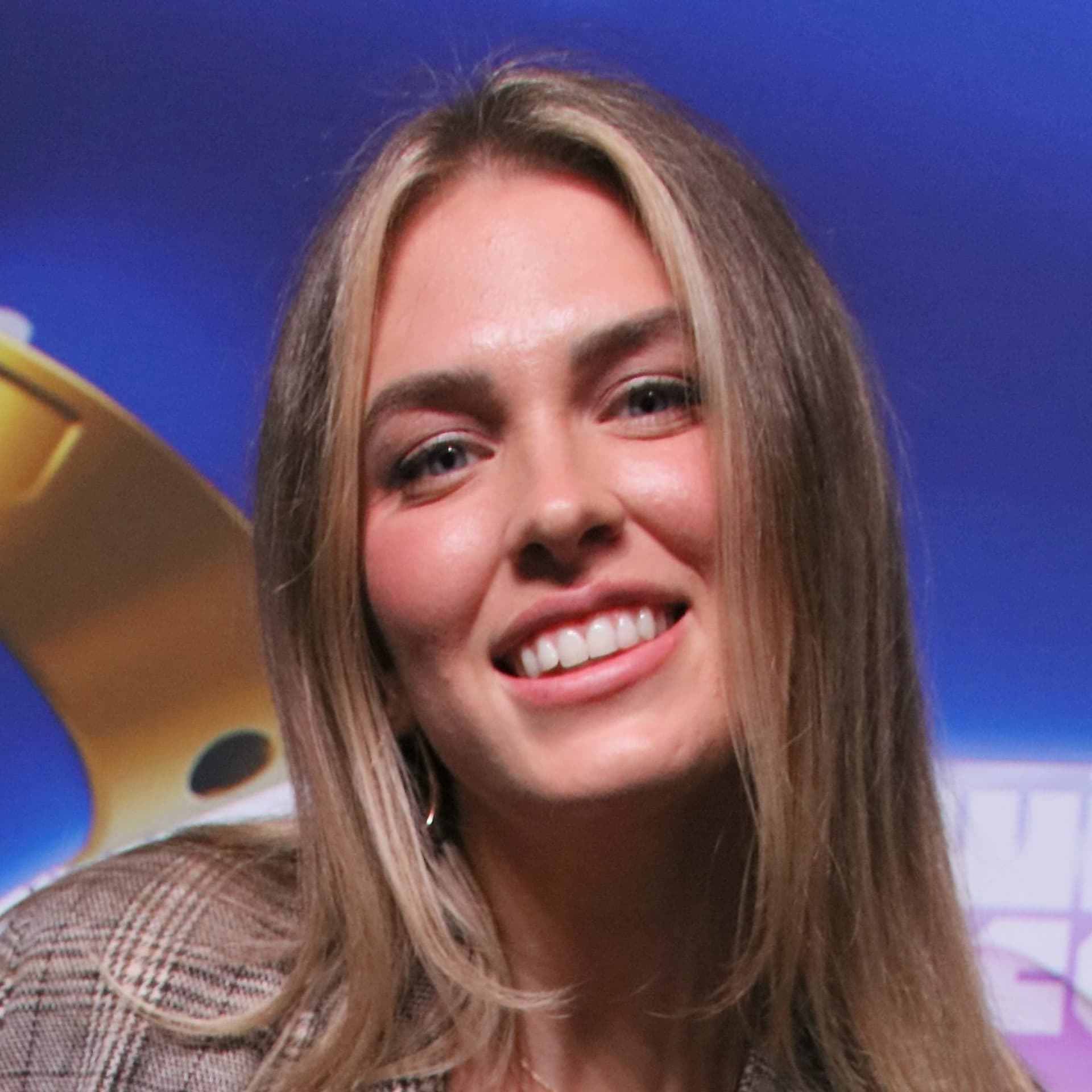
Twitch streamer QTCinderella talks about the unwelcome attention she receives in real life. Shiona McCallum reports on robotics for offshore wind farms. And polar rover tech.
Presenter: Shiona McCallum Producer: Tom Quinn
(Image: A photo of Twitch streamer QTCinderella attending TwitchCon 2024 in San Diego, USA. She is standing in front of a TwitchCon backdrop and logo. She is smiling at the camera. Credit: Getty Images.)