In short
Tech Life Podcast Episode Notes: The Doctor Will See You Now
Podcast Overview Podcast Title: Tech Life Description: Tech Life explores how technology transforms lives globally, interviewing innovators and holding tech giants accountable for their vast influence. It serves as a guide to the rapid changes shaping the future.
Episode Summary Episode Title: The Doctor Will See You Now Description: This episode discusses a live trial of holoportation 3D telemedicine technology in Ghana, enabling patients in remote areas to connect with distant doctors. It also examines the implications of changing place names by government officials on online maps and features a conversation with a technology correspondent covering the North American tech landscape.
Key Topics Discussed
- Holoportation 3D Telemedicine in Ghana
- Overview of Holoportation:
- Developed by Microsoft in 2014, holoportation captures color and depth information via multiple cameras to create a 3D model of a person.
- Currently being trialed in Ghana to enhance access to specialized medical care.
- Benefits:
- Eliminates the need for long travel to hospitals for patients in remote areas, particularly for reconstructive plastic surgery.
- Allows for real-time 3D consultations, giving doctors a comprehensive view of the patient's condition.
- Key Interviewees:
- Spencer Fowers (Lead Engineer, Microsoft Research):
- Discussed technology setup and its potential impact on healthcare accessibility.
- Charles Oluisi Asseku (Patient):
- Shared his experience of being part of the trial and the positive impact of remote consultations.
- Dr. Kwame Darko (Plastic Surgeon):
- Highlighted the technology’s ability to improve accessibility to healthcare, especially in rural areas.
- The Changing Landscape of Online Maps
- Changing Place Names:
- Discussed the impact of governmental decisions on the naming of places and bodies of water, exemplified by the Gulf of Mexico being referred to as the Gulf of America.
- Explained how mapping apps update names based on official government sources like the Geographic Names Information System (GNIS).
- Contested Territories:
- The complexity of naming conventions in disputed regions, with different names shown based on user location (e.g., Gulf of America vs. Gulf of Mexico).
- Mapping Sources:
- Most major map apps rely on governmental data for official names, while platforms like OpenStreetMap utilize a grassroots, volunteer-driven approach for more localized updates.
- Technology Correspondent Insights
- Guest: Lily Jamali (BBC Technology Correspondent):
- Shared insights on covering the North American tech scene, including themes like artificial intelligence development and the influence of tech leaders.
- Discussed the legal landscape surrounding big tech, including antitrust cases against companies like Google, and the implications of the current political climate on the tech industry.
- Audience Engagement
- The episode encouraged listeners to reach out with questions or suggestions via email or WhatsApp, fostering community involvement.
Key Takeaways
- Holoportation technology has the potential to revolutionize healthcare access, especially in remote regions.
- Online map naming conventions reflect political and geographical complexities, demonstrating the intersection of technology and governance.
- The role of technology correspondents is crucial in navigating the rapidly evolving tech landscape and informing the public of its implications.
Closing Remarks This episode of Tech Life sheds light on innovative medical technology and its implications for accessibility, while also touching on the evolving nature of digital information in a global context. Listeners are encouraged to continue the conversation and engage with the show.
Production Credits
- Presenter: Graham Fraser
- Producer: Tom Quinn
- Editor: Monica Soriano
For more information, feedback, or inquiries, listeners can contact the show at techlife@bbc.co.uk or via WhatsApp at +44 330 1230 320.
Written by AI. May contain mistakes. Listen to the episode to check what was said.
Transcript
Automatic transcript. May contain errors.0:00This BBC podcast is supported by ads outside the UK. I am Nina Khrushcheva, the great-granddaughter of Nikita Khrushchev, the leader of the Soviet Union in 1962. And I'm Max Kennedy, the nephew of U.S. President John F. Kennedy. We explore what was a terrifying moment in history. The story of the Cuban Missile Crisis. How close the world came to nuclear war. And what they had to do to pull it back from the brink. The bomb, Kennedy and Khrushchev. All episodes available now, wherever you get your BBC podcasts.
0:39Welcome to Tech Life on the BBC World Service, the programme about technology making an impact on your life. I'm Graeme Fraser, and this week we're looking at holoportation. What is it? And how is it helping people who need medical attention in Africa? That's in a moment. We can't get enough of online maps here at Tech Life. We are obsessed with them So what happens when a country's leader decides the names of some places Or stretches of water are about to change? Do the maps update? How is it decided? Our reporter has been searching for the answers And what is it like working as a technology correspondent Reporting on the busy and ever-changing North American tech scene?
1:21We chat to Lily Jamali who does exactly that for the BBC
1:44We start today with news of a project helping people in need of specialist medical help in West Africa. Live trials are underway in Ghana of holoportation 3D telemedicine technology Now that's a bit of a mouthful It basically allows a patient in a remote location to connect to a doctor Possibly hundreds or even thousands of miles away and be examined It is using portable video technology with everything needed packed into a van Which can travel around the country Currently it is visiting patients who might require reconstructive plastic surgery but there are many more uses. Using live 3D video images medics far away can look at patients from all sorts of angles and assess them.
2:28This is important in places like Ghana where people might need to travel many hours to visit a hospital and there are only a small number of plastic surgeons who can help them. In a few minutes we'll hear from a patient and a surgeon using the tech in a clinic located several hours north of Ghana's capital, Accra. But first let's hear from Spencer Fowers from Microsoft Research, who is conducting the trials. Spencer is the lead engineer, and he spoke to me via a video link from Ghana. Back around 2014, Microsoft developed a technology called holoportation. And what it is, it's basically a number of cameras that capture both color and depth information, and they make a 3D image of a person that we can transmit anywhere in the world.
3:11My team received this technology, and we were tasked with trying to find a place that we could apply it. And about the same time, we were approached around 2019 from Dr. Lowe of the NHS with this idea of could we use this to increase access to specialized health care for Ghana, specifically because of the way Ghana is actually structured. Ghana has a small number of reconstructive plastic surgeons, the majority of which are located either at Kualaibu Teaching Hospital or in Kumasi, which is also in the south of the country. So if you have a patient from the north of Ghana, it's a very long and arduous trip to get to one of these specialists.
3:51And so we wanted to explore this idea of how can we bring them in virtually using this technology to reduce the amount of times they have to travel all the way to Accra to be able to see a specialist. And you mentioned in your answer there, Spencer, about Dr. Lowland, because there was a pilot project in Scotland, wasn't there? Yeah, we started this out, Stephen approached us in 2019 with this idea, we began working on it. And then with the COVID pandemic in 2020, we weren't able to go to Ghana to begin with. But it turns out that Mr. Lowe had the same, or I should say he had similar need for the system because he was working in COVID hospitals and some of his patients were immunocompromised.
4:33So we actually were able to go to Glasgow during 2020 and build the first system there for the NHS and do a randomized clinical trial of the system with some patients there during the pandemic. So tell me, Spencer, explain to the listener how it works. What does the technology look like? What's the technology behind it? As a patient, you walk into the 3D telemedicine system and there are six to 10 cameras located around you. These are special cameras that capture not just color, but they also capture distance. So they take that information and these six to 10 cameras grab all that at the same time and send it to a single computer, which combines them all into a 3D picture of you.
5:15And we then use Microsoft Teams, just a standard Teams call. So it's similar to like what we're doing right now where we're having a call. But instead of it being a two dimensional video from the camera on my laptop, you're actually getting a 3D model of me that's moving in real time. So you can see my lips move as I talk and you can see my hands and arms move. And not only that, but you can also rotate where that virtual camera is located. So you could look at the back of my head or you could zoom in on my arm or something like that. And it gives the doctors the ability that they can actually pause the video, zoom in on an area, examine it and actually draw on the patient.
5:53What we've done is we've added a monitor into the patient area. So while they're being captured by these cameras, they can also see on that monitor the 3D view that the doctor sees. That way he's able to draw on their own body and show them, OK, this is the operation we're going to do. And this is where we're going to maybe take a skin flap and we're going to move over here. This is what we're going to work on. And so it really gives the patient a very unique opportunity to understand the procedure that the doctors would do. and it also gives us the opportunity to bring many more doctors in to consult on the patient because they can all join a standard Teams call and see the patient in 3D and be able to get much more information than they would from just a normal two-dimensional telemedicine call.
6:37Thanks to Spencer Fowers from Microsoft Research. Now we can hear from those using the telemedicine tech. Charles Oluisi Asseku took part in the trial as a patient. He's been telling me a bit about himself and a painful problem he's having with his neck. I'm from Ghana, West Africa. I'm a businessman and I was having an issue with my neck, cheroid, for the past 20 years. Every day it's getting worse. It's making me uncomfortable. I can't go to the public because of the situation. So I was there yesterday when a friend of mine called me that there's a specialist from outside Ghana has come here.
7:15So he would like me to meet them. So this morning I just come there to meet them and it was very fantastic. I met a lot of doctors on Zoom. Everyone was giving their view and how they are going to treat me. I hope that I'll find a solution here. This kind of new technology, I'll not see something before. Charles mentioned the doctors who used the cameras to examine his neck problem. One of those involved is Dr Kwame Darko, a specialist plastic surgeon who's usually based in Ghana's capital, Accra. He told me some of the problems holoportation could solve. I qualified as a plastic surgeon some 10 odd years ago.
7:55And at the time, I was the eighth plastic surgeon in the country. Today, 10 years on, I think we have about 20 something, 26 or so, 27 plastic surgeons. and the honest population is just over 30 million people. So you can imagine how much of a struggle it would be to access plastic surgery or reconstructive plastic surgery services, depending on which part of the country you are. So if there's a way in which at least the consultation and possibly the reviews after the surgery, if the person does need surgery, do not require you to travel great distances. I think it has huge potential to change the face of accessibility to specialist care and not just plastic surgery, but anything else where you require not just a 2D consultation, but 3D as well to look at whatever swelling or whatever tumor, whatever problem it is.
8:53So I'm sure like many of our listeners, I mean, I've had a normal video call with my doctor and I was talking to my doctor and they were talking to me. So what would be the advantages of this technology over that sort of normal video call consultation that you might have with a doctor? So let me give you this picture where we have maybe someone who got burnt or has some defect which causes fingers or joints to fold up and get stuck. So what we call a contracture. So you presumably drive, what, four or five hours, depending on where you are, to see us for initial consultation. consultation, we have you go see the anesthetist because we need to operate on and put you to sleep and they need to assess you to be happy with you that they can do it without issues.
9:42Then you go home, we give you a date, then you drive all the way back to actually have the operation on admission for a couple of days. We put you in some form of splint. You go home, come back, see the physiotherapist for a session. You go home, come back for another physiotherapy session. So imagine if this initial consultation could be done in 3D because we need you to see moving your fingers and actually see what angles and what degree it can move. And it's not possible to do this in 2D. You do need a 3D assessment to be sure what results are actually taking place and if the person is actually obeying and able to go through the physiotherapy that you require them to do.
10:25So that's just a single example of how 3D assessments are way better than 2D assessments for a speciality like mine. And it's not just restricted to mine. It'll also go for some others as well. And how do you think it could help the kind of health care that you're providing as a doctor? With particular note on accessibility. Yes, I mean, in terms of your accessibility, I mean, we were talking to Charles there about, you know, how it's much easier for Charles and I'm sure other patients like him to be able to come to the local area rather than to travel all the way to Accra or, you know, a similar situation in other countries where they're having to travel big distances to see the doctors like yourself.
11:08Yeah, I mean, one of the other patients we saw today is a child who had exactly what I'm describing, a contracture from a very unfortunate accident and poor access to ideal medical care and has ended up with a complication. And after bringing her in for an assessment, we realized that she would need some relatively major surgery, which we can do in the country. and were trying to work her up to have that done in Kolibu. So this is a nine-year-old girl who, once this is done, would have significant improvement in her day-to-day activities, less teasing when she's going to school, which means she would not have a problem with going to school and not shy away and possibly live to her full potential in being whatever she wants to be.
11:58So if we didn't have this set up in this rig, This is someone who may have been just reserved with a problem and stuck in whatever corner of the country that she comes from. So it really opens up accessibility and the opportunities for recovery and repair of whatever problem the personal patients may have. My thanks to Dr. Kwame Darko speaking to me about holoportation tech from Ghana.
12:34You're listening to Tech Life on the BBC World Service with me, Graham Fraser. Let me say hello to Jane Proctor living in France. Jane is a first-time author. She heard last week's edition about artificial intelligence being used to help develop TV and film productions, and she sent us a voice memo question on WhatsApp. Here's a short clip. It's left me wondering whether book publishers are using similar tools to pick the next, I don't know, Harry Potter series or whatever. So we've been all focused on AI-generated books, but it strikes me that this is just as much as a threat, a sort of backdoor threat, if you like, whereby publishers commission a book based on what AI tells them is a winning storyline targeted at whatever market.
13:19Any ideas whether this is already happening? We'd love to know. Thank you. Well, we contacted several publishing associations in the UK, the USA and Switzerland. So far, we've only heard from the UK-based Publishers Association. Their spokesperson provided a short statement. It's spoken by a producer. Like all modern businesses, publishers are looking at operational areas where the use of AI is appropriate. However, when it comes to stories and ideas, human knowledge and creativity remains paramount in book publishing. We hope that helps you Jane And hello to Colin Matthews from Ross Creek near Melbourne in Australia He's emailed to say he's curious to know Is there a better way of making toast?
14:03You heard that right He says today's toasters are safe and they're practical But it's obvious they waste far too much energy Than they require to singe the bread So Colin wonders if Tech Life might look into this Well crumbs Colin the most efficient way to make toast isn't what we were expecting to be investigating this week. So we think we need help from you, our audience. Do you know a more energy efficient way to make toast than a toaster? We'd love to know. You can send us a voice note on WhatsApp. The number is plus 44 330 1230 320. Our email is techlife at bbc.co.uk. Tell us who you are and where you live.
14:47Still to come, the tricky problem of naming disputed territories on online maps.
14:56There's never a quiet day reporting on technology news, and a large amount of that news comes out of the United States. No wonder with Silicon Valley and a large number of the global tech giants headquartered there. Lily Jamali is based in San Francisco and reports on it all for the BBC, on TV, on the radio and online. Well, she's not in San Francisco today. Instead, she's here with me in our studio in Glasgow, Scotland. Lily, welcome to the worldwide headquarters of TechLife. Oh, it's so great to be here with you. Thanks for having me. So how are you and how are you enjoying Scotland's weather?
15:32I am loving it. It is actually, you know, not as cold as I thought. And I saw some blue sky yesterday. And there's also a rumor that the weather here is better than in San Francisco right now. That must be quite rare, I reckon. So tell us about your job as the BBC's technology correspondent in San Francisco. What are the biggest stories you've covered since you started your role around about six months ago? Yeah, I can't believe it's already been six months. We've done a whole lot of everything. I mean, there have been product launches, new devices and services unveiled by the major players. Apple's September product launch, which they do every year.
16:09That happened just as I arrived on the job. So I was busy from pretty much week one. And then, of course, you know, AI is everywhere. The rapid pace of AI development by Google and OpenAI, Meta, they're all trying to dominate the space. So we've been covering that a whole lot as well. And then court cases, which is my forte. I've been a journalist for over 20 years and some of that was spent covering the courts. So antitrust, you know, cases brought both by the first Trump administration and the Biden administration, posing an existential threat to the likes of Google. That company may not look the way it does today in a couple of years.
16:47So we're following that. And there's so much more in the courts. Musk versus Altman being another one. Elon Musk suing Sam Altman over OpenAI and its future. Of course. It's a never-ending news cycle. And what are the main themes in tech in the United States at the moment? Is it all about the developing of artificial intelligence, as you were talking about there, and beating China to it? That's a huge part of it. I mean, the threat of China is invoked often when it comes to AI in the United States. It has been wielded by President Donald Trump, who took office a little bit more than a month ago, and the tech CEOs as well.
17:22And the positioning is very much kind of what you just suggested there, that the U.S. cannot let China win the AI race. So throw everything you've got at this, guys. You know, that's the thinking. DeepSeek's arrival earlier this year, that was a really big story for us. And it really shook things up for a time because it raised the question, you know, can China do what OpenAI and Anthropic and others have been doing in the U.S. for a lot cheaper and for a lot less energy than what we thought was required? It really kind of shook up the whole equation. But I have to say a lot of that has sort of subsided since.
17:59The big tech players seem undeterred, and there is still a ton of new investment being made in building out new AI infrastructure. Everything is being thrown at that right now. Of course, you mentioned the new president as part of your answer there. Has the Trump administration, has it fueled a lot of the changes we're seeing in the tech scene in America recently? Oh, totally. It absolutely has. During his first week in office, actually, he was at the podium at the White House with OpenAI CEO Sam Altman, with Larry Ellison of Oracle and Masayoshi Son of SoftBank announcing this huge new investment, an AI infrastructure investment in Texas.
18:37It was a little bit of a PR job, a public relations thing. But, you know, the deal had been hammered out, but he got to headline it. President Trump got to headline that announcement, put his name on it. And beating China is a huge part of his brand as president. It always has been. So that and other announcements like it, most recently in the semiconductor space, it's a huge part of his brand, I think. We saw some of the big tech bosses attend the second inauguration of Donald Trump as U.S. president back in January. And we've seen a lot of Elon Musk in our TV screens ever since. Are the tech bosses in the United States getting more powerful?
19:17They are extremely powerful, some more than others. Elon Musk, I don't think, has ever been as powerful as he is right now. But for the others, I think a lot of them are actually pretty worried right now. And so, you know, I think that's why we're seeing them lined up behind President Trump at his inauguration, making these constant visits to Mar-a-Lago and the White House now. I think back to the first Trump administration where you had Google co-founder Sergey Brin at San Francisco International Airport protesting when the Muslim ban was announced in 2017. Jeff Bezos, obviously the founder of Amazon, also owns the Washington Post, one of the most influential newspapers in the U.S.
20:03And that newspaper had free reign in the first Trump administration. Now he's inserting his will into how the paper does its opinion section, for example. So, you know, I think they are worried and trying to make sure that they stay on the right side of Donald Trump. And then, you know, Elon Musk is a whole other story. He contributed a quarter of a billion dollars to Trump's reelection campaign. And there is, you know, on the one hand, in the MAGA crowd, a lot of excitement about what he's been doing with cutting bureaucracy in the government. But there are a whole host of Americans who are very upset about what he's been doing, and they think he effectively bought himself a president.
20:43And for anyone who's not been listening to Tech Life recently, can you quickly recap for us what's been happening with TikTok in the United States and what happens next? Yeah, so TikTok is supposed to be banned right now in the U.S. because they had the option under this law that was passed last year to sell it or watch it go away. and that was supposed to happen. Trump's re-election changed everything. And so for now, it remains online. He has basically given it a reprieve for about 75 days. So through April, the status quo remains. We'll see what happens then. Lily, it's been an absolute pleasure having you here in the Tech Life studio and we hope to have you on the show again soon.
21:24Thank you.
21:34Let's stay with the United States for a moment. As one of his first orders of business, newly elected US President Donald Trump signed an executive order calling for the federal government to officially recognise the Gulf of Mexico as the Gulf of America. Google and Apple have both made the change for US users. All of this got TechLive's Ben DiRico thinking, how do the names on our digital maps get there? Ben's been looking into this and joins me in the studio. Hi, Ben. So tell us, you've spent some time looking into this, and it's not as simple as you'd think. What have you learned? Yeah, first, it's probably a good idea to start referring to the maps on apps like Google Maps, not as a single map, but as an app with lots and lots of maps inside of it.
22:19Google says that over a billion people access Google Maps every month in about 220 countries. So that's a lot of places and names to keep straight, right? And as we've seen, those names can change. This time, it's a big international body of water. But businesses close and new ones open. Roads get new names. And staying on top of all that is a really big task. So let's work from big to small. Google said in a thread on X that the company has, quote, a longstanding practice of applying name changes when they have been updated in official government sources, end quotes. In the case of the United States, that's a service run by the U.S.
22:56Geological Survey called the Geographic Names Information System, or GNIS for short. So that system updated in mid-February, and now U.S. users see Gulf of America. They also see Mount Denali in Alaska, the highest peak in North America, changed from its indigenous name back to Mount McKinley as it was known from 1915 to 2015. So the map that you see in Google Maps is going to be informed by where you are. The local name will be what's displayed on the map. Exactly. And that's, generally speaking, going to be determined by what your government says it's called, which, you know, poses some problems.
23:32There are lots of places around the world that are contested. Think of Kashmir or Cyprus. One group may say they're in control of an area, while their neighbor says the exact same thing. And each may have their own name for that area. So what happens in the map apps? Well, at least for Google, the government designation where the person is, is what's likely to be displayed. But for international users, not in either place, they'll probably see two names. That means Tech Life listeners currently in Europe, Asia, or Africa will likely see two names over the Gulf. Gulf of America, and in parentheses, Gulf of Mexico, or the other way around.
24:07You can actually see this in a few other places around the planet right now, too, of course, depending where you are. A good example is the body of water in between Iran and Saudi Arabia. In the US and here in the UK, it displays as Persian Gulf, with Arabian Gulf below it in parentheses. But if you're in Saudi Arabia or some of the other countries in the Arabian Peninsula, it'll be the other way around. Arabian Gulf with Persian Gulf in parentheses. So large apps generally use official sources for big names, but it still knows the names a small country lane, a local hospital, or a small business that's just popped up.
24:41Where does that information come from? Well, Google has a program called Maps Content Partners. This system allows trusted public sources, think universities, real estate developers, NGOs, to submit information to Google to include in their maps. This could include something big like a street name or the city limits or the names of crucial infrastructure like hospitals or fire stations. They also say that machine learning models are being used to extract information from images on Google Street View to verify addresses and street name changes as they happen. Does everyone do it this way or are there other approaches?
25:17Yeah, so I spoke to Min Win, a software engineer, and volunteer with a group that has a different approach called OpenStreetMaps. Rather than depend on government and official sources, OpenStreetMaps is a volunteer-run open source map data system. You know, if you think about how something like Google Maps works, it's, you know, it's operated by a company. It's just one of their services. They have employees, you know, kind of tending to the map. But OpenStreetMap is very different. It's first of all, not a corporate project at all. It is first and foremost, a volunteer grassroots effort. There's a nonprofit foundation backing it, but it's just thousands and thousands of contributors who, you know, have found the project and contribute their free time.
Read the full transcript
25:58You know, you may have heard of opportunities to contribute to Google Maps by providing feedback and things like that. But it's important to know that that's just feedback. And OpenStream Map is a very much more democratized kind of approach to map making.
26:15Thanks, Ben, for coming into the studio. That's TechLive's Ben DiRico.
26:22That's all from Tech Life for now but you can find us here again next week remember to let us know what you think of today's edition or something you'd like to hear in a future show our email address is techlife at bbc.co.uk or you can WhatsApp us on
26:42let us know your name and where you live Today's Tech Life was produced by Tom Quinn edited by Monica Soriano and presented by me, Graham Fraser.
27:10I am Nina Khrushcheva, the great-granddaughter of Nikita Khrushchev, the leader of the Soviet Union in 1962. And I'm Max Kennedy, the nephew of U.S. President John F. Kennedy. We explore what was a terrifying moment in history. The story of the Cuban Missile Crisis. How close the world came to nuclear war. And what they had to do to pull it back from the brink. The bomb, Kennedy and Khrushchev. All episodes available now, wherever you get your BBC podcasts.
From the publisher
Live trials are under way in Ghana of holoportation 3D telemedicine tech. It allows a patient in a remote location to connect to a doctor many miles away, and be examined. We speak to the lead engineer involved in the project, as well as a patient and a doctor benefiting from the portable kit.
Also on Tech Life, what happens when a country's leader decides the names of some places (or stretches of water) are about to change ? Do online maps update ? How is it decided ? Our reporter has been searching for the answers.
And what is it like working as a technology correspondent, reporting on the busy and ever-changing North America tech scene ? We chat to Lily Jamali who does exactly that for the BBC.
We are always keen to hear from you. You can email us: techlife@bbc.co.uk, or send us a text message or voice note on Whatsapp: +44 330 1230 320.
Presenter: Graham Fraser Producer: Tom Quinn Editor: Monica Soriano
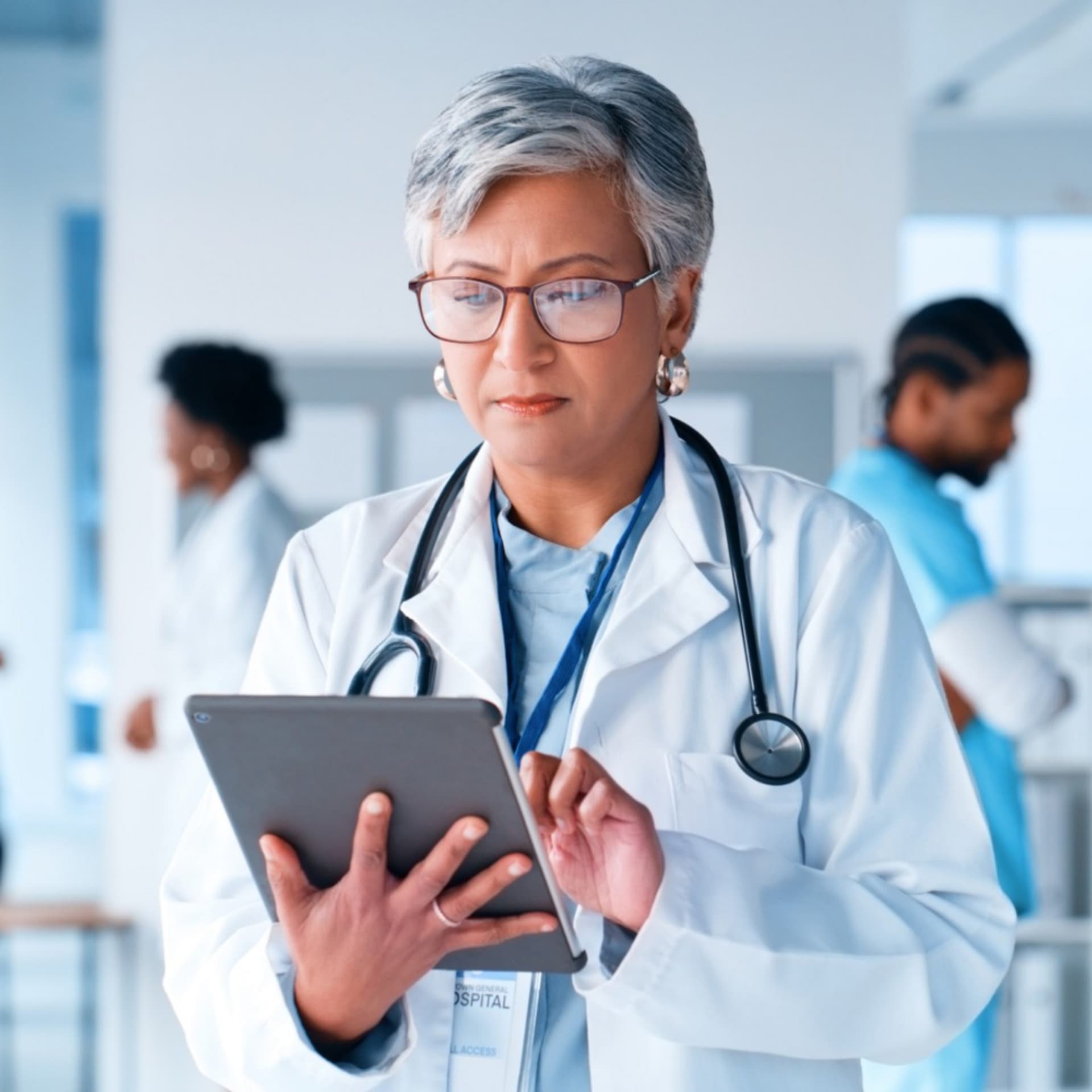
(Image: Image of a female doctor communicating with a patient on a portable video link. Credit: Hiraman/Getty Images)