In short
Tech Life Podcast Episode Summary: The King and AI
Episode Overview In this episode of *Tech Life*, Chris Vallance explores the intersection of royalty and artificial intelligence (AI) as seven AI pioneers gather at St James's Palace to receive the Queen Elizabeth Prize for Engineering, presented by King Charles. The episode features insights from notable figures in AI, including Professor Fei-Fei Li and Jensen Huang, CEO of Nvidia, while also delving into the exciting advancements in robotics and autonomous racing.
Key Themes
- AI Pioneers and Recognition
- Gathering of seven AI pioneers at St James's Palace.
- Presentation of the Queen Elizabeth Prize for Engineering.
- Notable laureates included:
- Geoffrey Hinton
- Yann LeCun
- Yoshua Bengio
- Fei-Fei Li (the 'godmother of AI')
- Jensen Huang (Nvidia)
- Fei-Fei Li's Insights
- Discussed her journey from rural China to becoming a leading AI scientist.
- Emphasized the importance of education in AI and the need for a shift to accommodate this evolving technology.
- Suggested that the next major milestone in AI is spatial intelligence, enhancing human creativity and robotics.
- Jensen Huang's Perspective
- Highlighted the dual-edged nature of AI technology; it can be both beneficial and risky.
- Urged for the importance of policies and norms to ensure safe AI development.
- Shared his personal use of AI tools and advocated for their responsible implementation.
- Robotics in Space Exploration
- Discussion on a new robot designed by Icarus Robotics aimed at assisting astronauts aboard the International Space Station (ISS).
- Features of the robot include:
- Dexterous arms for performing tasks.
- Aiming to reduce astronauts' burdens to focus on scientific research.
- Planned deployment to the ISS in 2027.
- Autonomous Racing League
- Introduction to the Abu Dhabi Autonomous Racing League (A2RL) featuring self-driving racing cars.
- All teams utilize identical cars equipped with custom AI developed by software engineers.
- Emphasizes the importance of trust in autonomous technology and aims to pave the way for safe autonomous vehicles on highways.
Detailed Discussion Points
- The Royal Event at St James's Palace
- Setting: An opulent venue reflecting historical significance and grandeur.
- Informal mingling among AI laureates and King Charles.
- Recognition of the achievements of AI pioneers in advancing technology.
- Conversations with Fei-Fei Li
- Prize Significance: Honored to share the recognition with her peers; pivotal in the development of AI.
- Gender Representation: Proud to be the only woman among laureates, advocating for women in tech.
- Future of AI: Believes in the potential of spatial intelligence to revolutionize fields such as design and architecture.
- Insights from Jensen Huang
- AI's Impact: Affirmed AI's potential to create significant societal changes but acknowledged the risks involved.
- King's Interest in AI Safety: Shared a letter from King Charles emphasizing the need for responsible AI development.
- Personal Experience: Discussed his hands-on use of various AI tools for professional tasks and decision-making.
- Icarus Robotics and Space Technology
- Robotic Design: Described as a hovering helpmate for astronauts, assisting in mundane tasks.
- Cost Efficiency: Aims to reduce the operational costs of astronauts in space.
- Future Vision: Plans to expand the robot’s capabilities and eventual deployment outside the ISS.
- Abu Dhabi Autonomous Racing League
- Race Format: Autonomous cars competing without human drivers, focusing on AI performance.
- Team Diversity: Participation from teams around the world, fostering global collaboration in autonomous vehicle technology.
- Challenges of Trust: Aimed at proving the reliability of AI in high-speed environments.
Conclusion This episode of *Tech Life* underscores the transformative role of AI and robotics in both daily life and specialized fields like space exploration and motorsports. It highlights the importance of safety and innovation as society navigates the challenges and opportunities presented by these technologies.
Listener Engagement
- The episode invites listeners to share their own stories about technology's impact on their lives, encouraging audience participation and feedback.
---
*Presented by Chris Vallance, produced by Tom Quinn. For more insights or to share your tech stories, contact: techlife@bbc.co.uk.*
Written by AI. May contain mistakes. Listen to the episode to check what was said.
Transcript
Automatic transcript. May contain errors.0:00Hello and welcome to Tech Life on the BBC World Service, the programme about technology and how it's changing all our lives. I'm Chris Vallance. This week, Tech Life infiltrates an actual royal palace and hobnobs with tech royalty, including the boss of the world's most valuable company, Jensen Huang, of NVIDIA. We meet a new breed of astronaut. Right at the top, I guess it almost looks like a set of eyes. We have our sensors, our cameras. Yeah, it's kind of an unusual looking robot, which I think is one of the cool parts about it. Two young engineers tell us about the robot helpmate they're sending into space.
0:38And we travel to the sun-baked starting grid of the Yass Marina racetrack in the United Arab Emirates to find out about the motorsport with no human drivers.
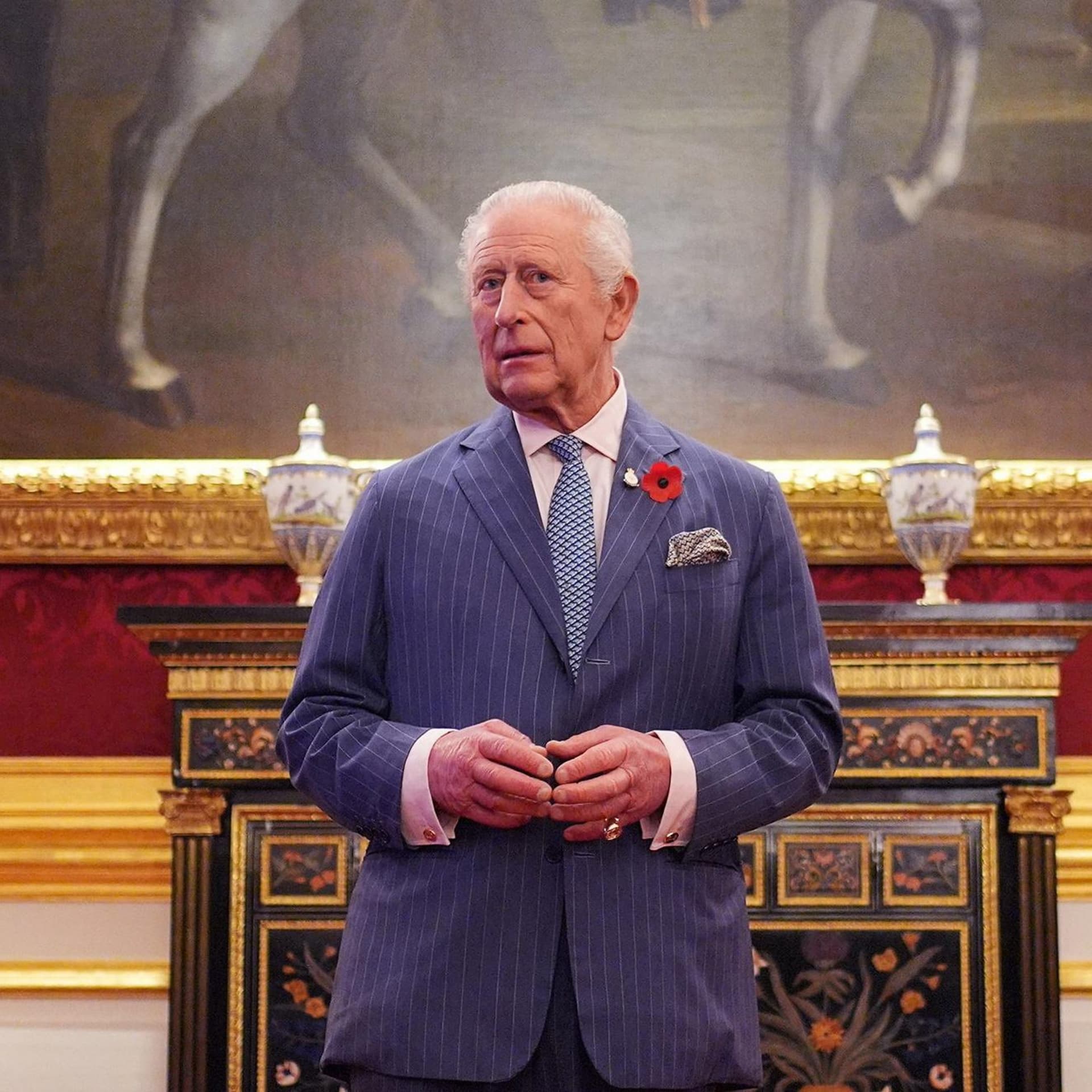
1:08St James's Palace in central London was built by the English king Henry VIII. In the five centuries since, it's seen a lot of change, and recently this home of royalty hosted seven pioneers of the technology that's upending so many things in the 21st century, artificial intelligence. They gathered to receive the Queen Elizabeth Prize for Engineering, presented by King Charles. The group included three so-called godfathers of AI, one godmother of AI, and the boss of the multi-trillion dollar AI chip company, NVIDIA. The BBC's technology editor and friend of TechLife, Zoe Clyman, managed to get what must have been one of the hottest invites in town.
1:51I had an absolutely extraordinary evening at St James's Palace in central London. And I haven't actually been there before. Apparently, it's sort of become the new go-to palace because there's a lot of building work going on at the most famous palace of all, which is, of course, Buckingham Palace. And the room that this event was held in was absolutely exquisite. It was kind of like being inside a cake. Everything was incredibly ornate. The walls were red, deep red. There were enormous paintings of, you know, the great and the good from history, adorned all over the place. There was gold leaf, an abundance of very beautiful golden candelabras.
2:33It was that real kind of old school opulence that I guess in an age of minimalist design, you just don't see very much anymore. Why was everybody there? I mean, this was all about artificial intelligence and recognising people who were pioneers of it. so there were seven uh ai experts pioneers laureates they were called uh on the evening who gathered in the same room for the first time ever to receive the queen elizabeth prize for engineering and presented by king charles and it was really quite an extraordinary thing to see all of these seven people together most of them are names that we would be very familiar with that you would know, the so-called godfathers of AI were three of them.
3:21They were Geoffrey Hinton, Yang Lecun and Yoshua Bengio. There was one woman there, Fei-Fei Li. She very basically came up with the way that computers are able to recognise what's inside a photo. So she's also played a key part in the development, the real backbone of artificial intelligence and how it works today. and afterwards what was quite amazing despite the formality of the event was the informality in which everybody just mingled you know at one point I found myself literally standing shoulder to shoulder with the king while he was chatting to someone else and I thought am I allowed to tap him on the shoulder I think I'm probably not I wasn't brave enough to do it.
4:01You did actually you mentioned Fei Fei Li you did actually have a sit down chat with her didn't you? I did and she was just astonishing she's had an amazing career she was born in China in poor rural China She emigrated to the US when she was 15 years old. She excelled academically and she went on to become a computer scientist and a visionary and somebody who I think is very inspirational to a lot of women in a very male-dominated sector. I had the chance to speak to her before the ceremony and I asked her what the prize meant to her. I was very honoured and also honoured to be able to share this with the other laureates who together we completed the three, the trio ingredients or elements of, or forces, whatever you call it, of modern AI, which is big data, neural network algorithm, as well as modern computing chips like GPUs.
4:58You are the only woman among the laureates. It's very noticeable. Do you feel that? As a scientist, that's not how I go about my scientific work. But among the lawyers, I am proud to be different. You're sometimes referred to as a godmother. Do you like that phrase? Natural instinct of mine. I would not call myself godmother of anything. But when people started calling me that, I don't remember, a couple of years ago, three years ago, I had to pause and recognize if I rejected this, it would miss an opportunity for women scientists and technologists to be recognized this way because men are pretty easily called godfathers or founding fathers.
5:56There's a lot of concern and debate about copyright at the moment. Do you think that that has to shift in order for the tech to advance? I think AI as alien technology, especially powerful technology, is always a double-edged sword. And debates about copyrights and all this is part of the course of the development of this technology and of how we're learning to use it in a responsible way. What do you think is the next milestone for AI? Well, for me, the next frontier of AI is spatial intelligence. If you look at how animals evolved and how humans developed, the ability to see, to understand the visual world, to navigate, to interact with it, and also to create similar worlds, is innately important and native to animals and humans.
6:58And if we can use AI to unlock this capability, it can superpower a human in many ways, including creativity, robotic learning, design and architecture. I think spatial intelligence is going to play a huge role or central role in bringing the next breakthroughs here. And that was Fei-Fei Li. Now, we talked about tech royalty. The other person you met and spoke to and had a little chat with is very much the man of the moment. It was the boss of NVIDIA. Tell me about that. Well, I'm not sure he needs a great deal of recognition from me. Jensen Huang was there. He was one of the seven laureates. He is, of course, the founder of NVIDIA, the chip company that's recently been valued at an eye-watering$5 trillion.
7:53It's very much the company of the moment. It is providing by far the dominant source of hardware that is, of course, what this AI tech needs in order to run. He was in very good spirits, actually. He sort of came over a little bit impromptu to have a quick chat with us. I asked him if he agreed with his fellow prizeman, Joshua Bengio, that AI is actually very dangerous. AI could, because it's such an impactful technology, it could be used for good or it could be used for bad. And so, number one, we have to make sure that we develop the technology to keep it safe. It's functionally in a safe way.
8:32And then the second thing is to through policy and social norms to make sure that it's used also in a safe way. What did you say to the king? Well, the king, surprisingly, he reminded me that he wanted to talk to me the last time I was here during the state day. And there was something that he wanted to talk to me about. And as I saw him today, the first thing is he said, I need to talk to you. Are you going to tell us what it was? And I will. And as he came up to me, he said, there's something I want to talk to you. And he handed me a letter. And this is a speech on AI safety. He obviously cares very deeply about AI safety.
9:14He believes in the power of the technology, the incredible capability to revolutionize UK and the world, but he also wants to remind us that the technology could be used for good and for evil. And so to make sure that we do everything we can to advance AI safety as we advance AI for good. Do you think he's using any AI tools? Do you think he's on ChatGPT? You know, I'm going to read that letter thoroughly and I wouldn't be surprised. But I use it every day. I use AI every day. One of the things that I do is I use multiple AIs and I use them for second opinions. I take the answer from one and I give it to the other and I ask it to critique it.
9:53And I would advise everybody to do that. That's Jensen Huang there. I mean, it's interesting, isn't it? Because, you know, he's talking about concerns around AI. And there's a great range of opinion within those seven figures about how dangerous or not AI might be. I mean, you think of Geoffrey Hinton's issued some pretty dire warnings about it. Did you pick up on a great deal of diversity when you were chatting and mingling? Well, you know what, Chris? I'm pretty sure that although they're not in the same room very often, these seven laureates do not agree on everything. I heard Yoshua Bengio telling the king that the technology was very dangerous and that he really needed to be aware of that.
10:34I heard Feifei Lee telling the king that education is going to have to be completely remodelled to take this really powerful tech into account. Because, of course, it's doing so many things that traditionally children are learning even now how to do in school. And where does that leave them in terms of preparing them for a world of work that's going to be so different to the world that we have now? I feel like everybody who was there shares this view that we're on the brink of something that's both exciting and also terrifying. And there was also a real sense of commitment from all of them that safety, although it's become a less popular word of late, certainly in the US in regards to AI, is still very, very important.
11:15And there seemed to be a lot of passion and goodwill in terms of getting that balance right. Well, whatever the future brings, Zoe, I'm sure you'll be there to tell us all about it. Thanks so much. Even if it involves going to a palace. Anytime you want me to go to a palace, Chris, I'm most happy to just say the word. I'm quite happy to put my sequin dress on again. Thanks very much. Zoe Kleinman there, the BBC's technology editor. Sequin dress and all.
11:51You're listening to Tech Life on the BBC World Service with me, Chris Vallance. Last week, we discussed the issues around the tech some families use to track loved ones. Listener Michael Carter from England told us he started using a tracking app after he'd had a serious motorcycle accident and his family weren't contacted for five hours. Imagine that. Now he says the app gives his family reassurance. Well, thank you for sharing that story, Michael. If you've got a story to tell about tech and how it's made a difference to your life, like it did to Michael's, then we'd really like to hear from you.
12:25You can also contact us to share your thoughts about anything in this week's show. Techlife at bbc.co.uk is our email address, or you can WhatsApp us. The number is plus 44 330 1230 320. Feel free to send us a voice message, but please tell us your name and where you live. And still to come, the motorsport that's helping to develop the AI drivers of the future.
12:58Now in just over a year, a robot designed by two young engineers will be blasting off into orbit. Of course, we've had plenty of robotic systems in space from robot arms to Mars rovers crawling over the surface of the red planet. But this robot is different. It's designed to be a hovering helpmate to astronauts inside a space station. Eventually, its designers hope it will carry out a range of mundane tasks autonomously. Ethan Barajas and Jamie Palmer are the co-founders of US-based Icarus Robotics. Ethan began by telling me about their work. We're developing dexterous mobile robots. So imagine underwater ROVs or drones with arms to actually augment astronaut crews by handling the routine, time-consuming, even hazardous tasks at a fraction of the cost that it takes to keep them alive in space.
13:56And what this will do is unlock scalable labor for astronauts to focus on the tasks that push forward science and make the breakthroughs that people use every day here on Earth. Not many people know astronauts cost$130 ,000 an hour to keep alive. That's the thing that we're looking to change. Jamie, tell me about the robot. What does it look like? It looks almost like an underwater robot. It has six fans that are laid out on this sort of rectangular base, and that allows it to move around inside the station. So similar to a drone, but not necessarily laid out like a drone. And right on the front of this robot, we have two six degree of freedom robotic arms that basically extend out the front.
14:39And these are the arms that we remote control to do this remote physical labor, to have a human operator on the ground actually moving it. And then right at the top, I guess it almost looks like a set of eyes. We have our sensors, our cameras looking down onto the workspace of the arms. So yeah, it's kind of an unusual looking robot, which I think is one of the cool parts about it. Are you eventually going to have robots that could work outside of space stations? Absolutely. So the reason why we're deploying internally first is A, because these astronaut crews cost that$130 ,000 to keep alive in space.
15:13And they're really, really genuinely understaffed. So they have a lot of things that they need to be doing, but a lot of their time is taken up by things like unpacking three and a half tons of cargo by having to do daily seal inspections. And that takes their time away from the experimentation. So we're starting there. It's quicker to deploy. We don't have to worry about radiation and temperature. And then in the future, once we have these robots trained, when we have that autonomy and that brain trained, that's a great time for us then to work on hardening that hardware, putting it outside the vehicle and actually starting to do those tasks outside as well.
15:46And your robots might be going into space fairly soon. Yeah. So we actually have we have our first deployment planned. So we're working with Voyager Space and we're going to the ISS in 2027. So there's a robot going up very, very soon. And we're very excited about it. It's a very big, you know, focus for us. And our big North Star at the moment is, you know, we need to get this robot onto the International Space Station and get it working really fantastic. So if I asked you which science fiction robot is closest to your robot, so the listener can visualize it, which one? WALL-E is probably the easiest thing to imagine, just a flying WALL-E maybe maybe sans the little uh fire extinguisher for propulsion i i mean you talked about the fans propelling it around because it's on the inside presumably if it was on the outside there's no air in space so you'd have to come up with a different propulsion system as well absolutely so there's a few different options you can go down you can go coal gas thrusters you can go ion propulsion so there's a couple of different ways to essentially move yourself around once you're outside and you don't have that atmosphere to push yourself off of with the fan so yeah there's a few options there and these you talked about autonomy how how autonomous are these robots going to be our plan is kind of different to i guess other plans that we've seen and what we're doing is we're actually leveraging a new sort of era of laser-based comms which allow you to have these really low latencies this means is we can actually now remote control the robots for the first deployments.
17:21So ultimately what we're going to have is one-to-one full-time human robot operators behind the wheel. So you have the human intelligence driving, but then while we're doing these expert examples and the human is using this robot, we're capturing that information and that data and using that to train autonomy. So then we'll roll out sort of low-level primitives and now all of a sudden, perhaps instead of an operator, having to control a robot to unzip a bag, it can just ask the robot to unzip a bag, but it will still be a full-time supervisor. And then in the future, as we collect more and more of this data and train this AI brain, we can then actually have, I guess, fully autonomous robots that can actually carry out many tasks that don't need the same level of real-time control and direction, where we can have perhaps an operator supervising multiple robots.
18:09So what do you see the first tasks for these robots being? Yeah, so the first tasks that we're looking at, Some of the biggest ones is, first of all, cargo resupply. So every sort of 45 to 60 days, you're getting essentially about three and a half tons of these white cargo bags. They essentially look like white gym bags. They're standard size. And they come up and these highly skilled, highly trained astronauts have to spend all their time essentially putting these bags, taking them out of the vehicle, unzipping them and stowing the objects. So that's one of the biggest time sinks that we're looking at.
18:40Other things are like visual seal inspection, and there's also assisting with experimental prep. And that was Jamie Palmer and Ethan Bahrahas, the co-founders of Icarus Robotics, speaking to me from the United States.
19:04Well let's go to the United Arab Emirates now where tyres are warming up for a bit of blisteringly fast track action On the 15th of November the Yas Marina Grand Prix track will rumble to the sound of loud and thirsty Formula 1 style cars But there's one big difference. The drivers are computers. These high-speed self-driving vehicles will be taking part in A2RL, or the Abu Dhabi Autonomous Racing League. Here's the flavour of the action from last year. History made, as we cross the line, the first ever Abu Dhabi Autonomous Racing League. And it is won by Team Tum of Germany. Stefan Timpano is the CEO of Aspire, the company which runs the Autonomous Racing League, and we caught up with him at his base, at the Yas Marina circuit.
20:02Well, Yas Marina circuit is probably one of the youngest circuits in the Formula One circus, if you wish. It's top of the art in terms of experience for the viewers, but also in terms of racing opportunity for the professionals that come here to compete. Now, you're involved in a different kind of race. The cars are, as I understand it, all the same, but they're differentiated by what's driving them. Tell me about it. Well, it looks like a racing competition. It is a racing competition. There is a little bit different. One difference, which is we don't have human drivers in the car. We use what is called the Super Formula car, which is one of the closest cars to a Formula One.
20:48And this super formula car has been stripped away from his human module. So we don't have any more humans sitting in the car, but we have what we call an autonomous kit. So what is an autonomous kit? It's a series of actuators that mimic as a gesture of your feet, of your legs, of your arms. So you can steer, you can accelerate, decelerate. So these are basically motors that turn the wheel, move the pedals, etc. Absolutely. Absolutely. It's a very basic robot, if you wish, nothing fancy like we see today. And on top of it, you have a computer in which each team will put his own AI, making it very, very simple, if you wish.
21:29An AI, they have trained to be their pilot. And this pilot will have behaviors which are based on the kind of training they receive. Once we ignite the engine, then the cars will go autonomously and there is no more human intervention on it. So instead of, I don't know, Lewis Hamilton and Max Verstappen competing, you're actually, it's software engineers. Absolutely. They're all software engineers. You know, like we like to see them, a little bit nerdy, a little bit awkward, that live into their formulas and try to make models and train these models to the car. But actually, when you observe them, when they train and they prepare for the race, They behave like a professional racing team, right?
22:18They talk about strategy. They talk about how they're going to react if they get attacked on the right, on the left, which speed, how to take the corners and things like that. A big part of Formula One is the conversation between the pit, the crew and the racer as they're going around the track. Is there an equivalent of that with robots? No. So the way we have done that is that the moment the race starts, we don't want human intervention. We want the cars to be autonomous, like we claim they are, meaning that they start and then they will decide across the 20 laps. It's a 20 laps race. It's something that will last for 20 to 30 minutes based on the speed and the laps we are using.
23:02and the cars will decide on their own if they need to accelerate, decelerate, if they need to be careful because the tyres are consumed to a certain level and they need to manage it like a human pilot will do, they will decide to attack, to defend, totally autonomously. Is it as fast as Formula 1 and what kind of challenges does that present over the kind of challenges that people developing autonomous vehicles ordinarily face? That's a good question. So the reason why we created A2RL is to really think about how to put in extreme conditions autonomy. And the main objective for us was to prove a couple of things.
23:40One that Abu Dhabi and the UAE are credible on the tech map and we are building up and building up on that by investing a lot, but also creating a challenge that will allow the world to look at autonomy in a different perspective. If tomorrow I tell you to put your daughter, your father, or whoever you care about into an autonomous car that goes not at 60, 70 kilometers per hour, but 130, 40 kilometers per hour on an highway, you want to make sure it works. Today, few people do it with autopilot and some cars, but technically there is a little bit of fear about it. And this is what we want to build up, the trust, which in our opinion is the most important thing.
24:27So how many teams do you have competing and what are they competing for? What's the prize? So we had last year in the first rate eight teams from all around the world. Today, we have 11 teams that come from 10 different countries that compete. So we have a couple of Italian teams and a German team. These three teams, TUM, Unimore and Polymove, who come from the three best universities, probably globally when it comes to autonomy, have the most experience, if you wish. And they come for something like 10 years of races of autonomous cars. Clearly, the ones they did 10 years ago were a little bit different compared to the one we do today.
25:09But then we also have teams from the UAE. We have teams from the US, we have teams from Japan. So it's a pretty diverse set of teams that all come with very different approach to the kind of race we do. That's Stefan Timpano talking to me about the Autonomous Racing League in Abu Dhabi.
25:36Well, they're waving the chequered flag and the finish line is fast approaching for this edition. of Tech Life. Remember, we're keen to hear your stories about tech making a difference to your life. Or if you've got an idea for a future edition of the show, do get in touch. We love hearing from you and we read all your messages. Our email address is techlife at bbc.co.uk, or you can WhatsApp us on plus 44 330 1230 320. A voice message is even better, but please tell us who you are and where you live in the world. Today's Tech Life was produced by Tom Quinn and presented by me, Chris Vallance.
From the publisher
Seven pioneers of artificial intelligence gathered at St James's Palace to receive the Queen Elizabeth Prize for Engineering, presented by King Charles. Zoe Kleinman was there. In this week's edition you can hear Zoe talk to the 'godmother' of AI, Professor Fei-Fei Li, and Jensen Huang, the head of the world's most valuable company, Nvidia.
Also on Tech Life this week: how useful can robots be in space ? And the racing cars revving up in Abu Dhabi without any drivers onboard.
Presenter: Chris Vallance Producer: Tom Quinn
(Photo: A photo of King Charles at the prize ceremony in London. Credit: Reuters)