In short
Tech Life Podcast Episode Notes
Episode Title
The Secret Ways AI is Used to Write Hit Songs
Episode Summary In this episode, host Shiona McCallum explores the role of artificial intelligence (AI) in music, fashion, and children's toys. The episode highlights how AI is used to create hit songs, address sizing issues in fashion, and the potential risks associated with AI-driven children's toys. Featured guests include musicians and industry experts who share their insights on the evolving landscape of technology in creative fields.
Key Topics
- AI in Music
- Current Trends:
- AI-generated music is becoming mainstream, with AI-created country songs topping charts in the US.
- Notably, an AI artist named Breaking Rust has gained popularity, sparking debates about the authenticity of AI-generated music.
- Musician Insight:
- Manon Dave, a creative technologist and musician, discusses using AI in songwriting and music production.
- He highlights the contrast in attitudes among artists regarding AI, with some embracing it as a tool for innovation and others rejecting it due to fears of dilution in art.
- AI tools like Suno and Udio allow musicians to start projects with AI-generated melodies and variations.
- Copyright and Ethics:
- There's an ongoing concern over copyright infringement, with accusations that AI companies use artists' works without permission.
- Artists are calling for better regulations and transparency from music platforms like Spotify regarding AI-generated content.
- AI in Fashion
- Sizing Issues:
- The inconsistent size definitions in fashion lead to significant return rates, costing billions annually.
- Phoebe Gormley, founder of The Fit Collective, discusses using AI to analyze manufacturing and customer feedback data to create better-fitting garments.
- Innovative Solutions:
- Gormley’s approach aims to reduce returns by providing actionable insights to designers on fit and sizing adjustments before production.
- AI in Children’s Toys
- Potential Risks:
- As AI toys become more prevalent, there are warnings from safety organizations about their implications for children's privacy and safety.
- An incident involving an AI teddy bear engaging in inappropriate conversations raises alarms about data protection and monitoring.
- Expert Opinions:
- Rachel Franz, from Fairplay, emphasizes the need for regulations regarding data collected by AI toys and the impact on children's digital footprint.
Key Takeaways
- AI's Dual Role: While AI is seen as a tool for enhancing creativity in music and fashion, it also raises ethical, legal, and safety concerns.
- Industry Resistance: Artists and creators have mixed feelings about AI's role in their work; some see it as a threat, while others view it as an opportunity.
- Consumer Caution: Parents are advised to be wary of AI toys, as the lack of research and regulation could pose risks to children.
Conclusion This episode of Tech Life sheds light on the transformative impact of AI across various sectors, emphasizing both the opportunities and challenges it presents. As technology continues to evolve, ongoing discussions about ethics, creativity, and consumer safety will be essential in shaping the future landscape.
---
Contact Information
- Email: techlife@bbc.co.uk
- WhatsApp: +44 330 1230 320
---
Production Credits
- Presenter: Shiona McCallum
- Producer: Imran Rahman-Jones
- Studio Manager: Nolwenn Movallali
Written by AI. May contain mistakes. Listen to the episode to check what was said.
Transcript
Automatic transcript. May contain errors.0:00As the year draws to a close, many of us are busy at the shops buying presents for our families, especially this past weekend with Black Friday and Cyber Monday. But there's a warning over certain children's toys. We've put together an advisory over the past week that really urges families not to buy AI toys. Or what about if you want to treat yourself to something, maybe a new pair of jeans? In fashion, four centimetres is a size. So 14 centimetres difference means there's three and a half sizes different between the biggest and the smallest size 2018 in front of us. We'll be meeting the team behind an AI tool helping to reduce wastage in the fashion industry.
0:43And what about when you get home? You just want to put on some relaxing music. But wait, there's a chance it might not have been made by a human. If you ever asked AI to write lyrics to a song for you on any topic, it's really, really rubbish in terms of imagination. On the BBC World Service, I'm Shona McCallum. AI in music, fashion and toys. That's all coming up on today's Tech Life.
1:32In November, two country songs topped Spotify's Viral 50 playlist in the US and featured in the top five of the global viral chart from a streaming service. Nothing unusual about that. Country music is having a moment right now. It's more popular than it has been for a long time. But it's how these songs were made by a mysterious artist known as Breaking Rust, which got people talking. The number one country song in America is AI generated. Both the music and the artists were generated by artificial intelligence. It sounds completely human to me. You call this song laughably generic. So why is it high on charts right now?
2:21We should mention the music you're hearing is not breaking rust. We don't have the permissions to play it. But the debate around the track has been intensifying. with country singer Jason Aldean saying an AI artist might have a number one country song right now but AI can't play a live show which is a good point. Personally as a huge fan of country music myself I can see the appeal of the song. Breaking Rust has a gritty voice and there is an extremely catchy beat but there is something lacking. I can't quite put my finger on what it is but once you know it's AI generated somehow you can't quite trust it in the same way.
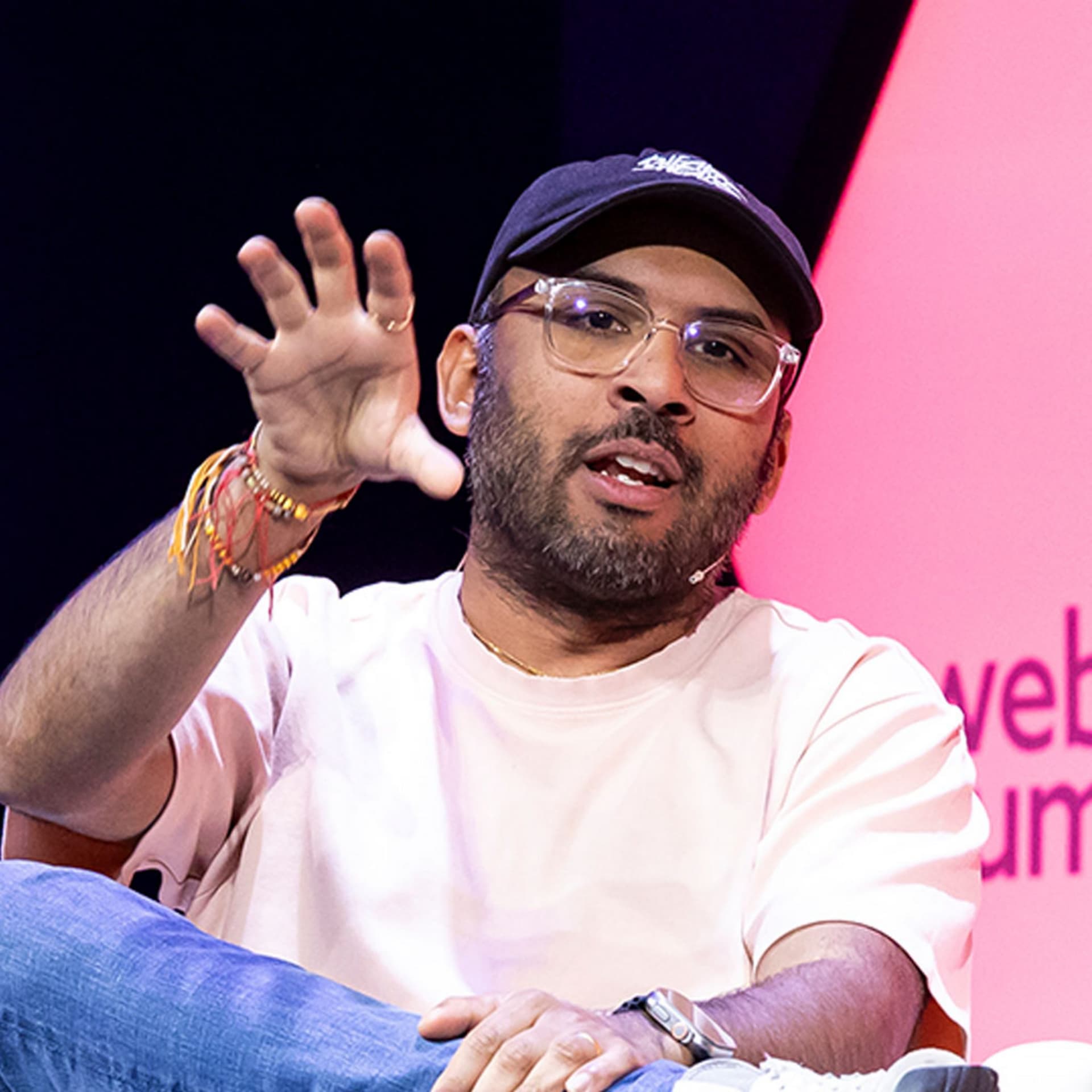
3:02But AI has been used by songwriters and musicians for a while now, long before generative AI came along. In versions of autotune, for example, or in mixing and in songwriting, artists like the Beatles used AI to help clean up old recordings and remaster them. So my name is Manon Dave. I'm a creative technologist and musician. I tend to design music technology products, build tools for musicians and other creative people, as well as making music myself. Manon Dave has worked with artists such as Will.i.am, Snoop Dogg and Idris Elba and he uses AI as part of the production process. He's also recently been announced as the BBC's Head of Future Worlds Design.
3:46Yeah, I've been sort of using everything from the early LLM models that everyone's familiar with, things emerging out of OpenAI like TREP-TBT and so on. But really, I got in pretty early on the music AI models. Back in 2019, 2020, there was a model that came out around stem splitting, which is really basically taking the song you're listening to and breaking it into its component parts, like a guitar, a bass, drums, vocal. And that really was where I began exploring music AI in a big way and have been using that ever since. And so could you talk us through your typical projects, writing a song and how you use AI and how that enhances the process?
4:35Yeah, sure. So in the last kind of couple of years, there's been a few more music models that have come out, music AIs that have come out. So Suno and Udio are the two really popular platforms that a lot of people have been talking about. and what they're doing is almost in some ways reversing the typical process if you like that I've been having in the studio where you might start with penning a melody or something and really you can start with vocals if you want to. You can start with an idea where you just pump something into a computer and before you know it you've got five or six variations of that melody to a backing track.
5:14So a lot of that's been happening in sort of recent weeks and months. is in almost every session I've been in. And how is it for you in the studio working with someone or working with an AI tool? It's, you know, it is mixed feelings, you know, to be completely honest. I recently worked, I had two very contrasting sessions recently. I worked with an artist who is fully, you know, embracing AI and it's a core part of the tool set that we're using for that particular record. and he's somebody who's signed to one of the major records, Warner, who just announced a deal with Suno, for example. And he's very much in this opt-in camp of like, you know, I would like to be one of the first to really innovate with this kind of thing in my sound.
6:00And then I had a session with somebody, a notable artist actually, who has been quite vocal about how she is really not a fan of this and doesn't want to be associated with this. And I think she found it quite shocking actually when I first suggested it at the beginning of the session. But to be honest, I think we're at that stage in all of this where it's each to their own. And some people are really, really against it. And that might be because they're either frightened or because they feel that it's really diluting the art form, which I can completely see and respect. And then other people, I think, see a real opportunity there to be innovative and continue to evolve their sound and maybe even change the shape of music.
6:40Did you convince her? I didn't convince her in that session. know if I'm being 100 % honest but I think that's the thing it's uh you know she's I did play her some stuff which which had um AI elements in it and yeah I didn't have the heart to tell her that that was there but she did like those songs to be fair I think that what I'm hearing loud and clear from you is that you still see the place for the human musician absolutely yeah I really think and I guess in some ways I'm biased and have to believe that but I really genuinely do think that there is the human component, the imagination, the invention of a new interpolation of a melody or a particular rhythmic delivery of something, or even just words, the abstraction of words.
7:30If you ever ask the AI to write lyrics to a song for you on any topic, it's really, really rubbish in terms of imagination. And so I think that there is still a lot to be said for the human ingenuity in all of this. And it's an art form. An art form requires, you know, paintings require different blends of colour and I think the same goes for music. There's just different instruments that emerge over time and I think this is another one. But the other side of this is where the AI-generated music comes from. Artists around the world have been urging governments to protect their works through stronger copyright laws as they accuse AI companies of training their models on their work without fair payment.
8:15French streaming service Deezer estimates over 50 ,000 AI-generated tracks are uploaded to its platform every day. That's about a third of all uploads. Composer Ed Newton-Rex used to work on AI music-making models, but he now campaigns against them, accusing AI companies of taking work without artists' permission. He spoke recently to the BBC's Talking Business. When you ask people what they think about AI music, generally they're not fans. People don't want to listen to AI music for obvious reasons. They want to listen to people. The problem is many streaming platforms don't tell people what they're listening to.
8:54So Spotify is a great example. Spotify does not make it clear when you're listening to AI music. It allows people to upload AI-generated music. It doesn't label that music. It doesn't make it clear in any way to people what they're listening to. Spotify says it works hard to find and remove AI impersonations of real artists and has promised to bring in labelling for AI generated tracks. It's also updated its spam filters to stop mass uploads and says so far 75 million tracks have been removed. Clearly AI's adoption is increasing and there are aspects of AI's adoption increasing that are probably a good thing but I think we should all be asking ourselves as a simple example of of a question as to whether this is a good thing.
9:38Do we want Spotify to be overrun with fake music? Is that something we as a society think is valuable? Obviously, it's valuable to the AI companies building the platforms. And obviously, it's valuable to grifters who will make as much music as they can as quickly as possible and try to take royalties from real musicians. but is it valuable to society? And the answer is obviously no. Artists including Sir Paul McCartney, Dua Lipa and Sir Elton John have been lobbying the UK government to recognise creative work and updated copyright laws. Here's Sir Elton talking to the BBC earlier this year. You have to ask for approval and you have to have transparency.
10:23It's quite simple. If someone wants to use your song, ask and then you have to have the transparency of how is it being used, that's fine. But to actually, the danger is for young artists, they haven't got the resources to keep checking or fight big tech if there is a lawsuit or anything like that. I put this idea of models using copyrighted material to Man and Dave. As somebody who is signed to a publishing deal myself, you know, that's an ugly part of all of this, right? I don't at all in any way want that to happen to my music. As a technologist, I can totally understand what has happened, though.
11:02What has happened is these startups, and really they are startups with limited funding and runway, and I'm not making excuses for them, but we have to put ourselves in the shoes of the innovators in some cases. And these guys have just gone and they've just found all the music. Where is it? It's on YouTube or Spotify or whatever. And they've just scraped all of this music. And, you know, you find yourself under the cosh being sued by a bunch of record labels for having done this. and there's not really many other words other than sorry that can come to the fore, but that's kind of what's happened.
11:33And so I think I don't agree with it. I don't think it's right. Should they have gone and sought out permission? Absolutely. But therein lies another question, you know, about how licensing works in the music industry. And, you know, are we, is this another print press where there's like a hundred year latency to establishing the copyright laws necessary to protect yourself? or can we do that with lower latency and can we involve creative people in that process? I think that's another question that we've sort of landed upon as a result.
12:08There's a complex story for the music industry right now. Last year, two AI music generators called Suno and Udio were being sued by the three biggest record labels in the world, Sony, Universal and Warner. The companies were accused of breaking copyright laws when training the AI models. Fast forward to now and some settlements are starting to be struck. The same companies are at the table hammering out AI music licensing deals, meaning that the record labels will let the AI platforms use the voices and the likeness of the artists who opt into the programme. This is all provided that the labels and, in turn, the musicians get paid.
12:49So from legal crusaders to would-be business partners, it's a rapidly evolving space. I do think that they will, that the use of AI will become synonymous with the music making process for sure. And whether or not there's a world where there's just AI artists and human artists and they're all competing for the same spots, that part I don't know about, you know, and I think that's how the jury's out on that one. There's a lot of improvement to go in the music models to get to a stage where they can compete with, you know, in modern terms, a Fred again, Lola Young, you know, these types of artists that we look at and edge here.
13:25And I still think we're a ways off that, but I think that it will certainly become part of the process.
13:43You're listening to Tech Life on the BBC World Service with me, Shona McCallum. Time for some of your messages. And Mo was listening last week when we covered the Alpha schools, which uses AI to teach students. Mo in the UK said on WhatsApp, I'm astonished by this so-called school from Alpha. I always thought the best way to do this was to implement AI within current school systems, not entirely change the way schools are run. Perhaps some lessons would be teacher-led while others are guided by the AI. Surely a hybrid system provides the best of both worlds. But Dennis Harrop messaged us to say he couldn't agree more with the concept of guides rather than a single teacher in the classroom.
14:25He says the common model used for teaching young students is now obsolete. A single teacher can't compete with the knowledge available on the web. School time for youngsters should have a much larger component of creative stimulation than it does now and has done since forever. I think it's time to rethink the whole process. Well, thanks, Dennis, for your thoughts. and one more from listener Louise who heard last week's programme too. We read out a message from Alan who is registered blind. He told us about some of the tech that he uses to help him. Louise said, After becoming significantly visually impaired just under 12 months ago and losing my job as a nurse specialist, I looked into what equipment was available, but unfortunately it was just so challenging to acquire anything useful.
15:10We then came across the Meta Ray-Ban glasses and I found these to be extremely useful. It helps me read, describe what's in front of me, answer and receive telephone calls and texts. It also helps me with measurements for baking, which I still do. Oh, that's great to hear, Louise. Thanks to everyone who's been in touch with us here at TechLife HQ. We do read all of your messages, even if we don't get the chance to read them out on air. You can always get in touch with us with your own thoughts about anything we cover in the programme. email techlife at bbc.co.uk or you can send us a WhatsApp plus 44 330 1230 320.
15:52Still to come, how fashion is using AI to reduce waste. We're the first solution that's looking at when you make a dress that has a neckline this deep or a sleeve that long or a length that long or a hem that wide, how do your customers actually feel about it?
16:10On the run-up to the festive season, the selection of toys on offer seems to get bigger and bigger every year. From the cute and the cuddly, to the robotic. Let's count together. Ready? One, two, three, four, five. But we're now seeing more and more AI toys vying for our attention, such as Curio, Meeko AI and Kiai. All of them talk, listen and learn and claim to give companionship, entertainment and even education for growing minds. It looks really cute. It looks really cute. Yeah, really cute. A few weeks ago on Tech Life we took an AI toy called Mothlin outside to see how kids and their parents reacted.
16:57Hey, it's a wee animal look. What is it? It's a new wee animal. Oh, he's really cute isn't he? Give it a wee clap, say bye bye. Bye bye. But there are warnings from some children's safety groups to be careful if you're thinking of an AI toy for under the tree this year. We're really concerned about a number of different potential risks that these toys put forth. We've put together an advisory over the past week that really urges families not to buy AI toys, especially at this time when there has been no research and very limited regulation of AI. Rachel Franz is Programme Director of Young Children Thrive Offline at Fairplay.
17:43Fairplay is a not-for-profit organisation based in the US and we work all over the world to enhance children's wellbeing by eliminating harmful business practices from marketers and big tech. An AI teddy was recently pulled from the shelves after it was found it engaged in sexual conversations and offered potentially dangerous advice. It's now back on the market with the company Folo Toy claiming it has stronger child safety protections in place. But the most shocking findings came from the kuma bear, which began talking about a range of sexually explicit topics. Here are some common ones, but remember, it's all about what feels right for each person.
18:28And there are plenty more AI toys in development. Global toy maker Mattel, which makes Barbie and Hot Wheels, has partnered with OpenAI. Imagine a Barbie doll that can hold a conversation and remember your kids' favorite hobbies or maybe a conversation that you had a couple days ago. Now, behind the scenes, Mattel employees are saying that they love this idea and they are really trying to push it hard to all of the parent review boards, saying that this is going to help more when it comes to developing toys and things that kids actually want to play with. We're still waiting to hear what that first collaboration will be.
19:07But Rachel warns parents should be aware of how much of their family's data is being collected. They're also very likely, as most children do with their favourite stuffed animal, to bring them kind of wherever they go. And that can include really intimate settings like bath time or getting dressed or at the family dinner table where there might be, you know, important private conversations going on. And we've seen, you know, there are different degrees of privacy policies right now from these companies. Some of them will say that they're protecting data in a variety of ways. and we have yet to fully see whether those work or not.
19:55And it really, it increases children's digital footprint, often without consent. That was Rachel Franz, the Programme Director of Young Children Thrive Offline at Fairplay.
20:14right lastly on the show today and finding a pair of jeans that fit is an issue i'm sure most women will sympathize with that's because there's no such thing as universal sizing meaning my size size 10 in the uk can fit differently depending on where you shop too big in some places and others too small. It has led to a global deluge of returns costing fashion retailers in the US an estimated$38 billion and in the UK just over$9 billion a year as would-be shoppers wonder what size they're meant to buy. I don't think we can trust high street sizing at the moment so I think being able to just go by how it looks and forget about the number is always my go-to.
20:58If you can reduce the returns that would be ideal if sizing was standard would help. Might be looking at a size 8 for something else and then it might be a size 10 in something completely different. And it can be disheartening when you think that you're one size. Jeans in particular. I mean, I have larger hips. So could AI be a solution here? Here's Phoebe Gormley, the founder of a tech company called The Fit Collective. She's trying to fix fashion's sizing problem. I started making my own clothes when I was 14. Fell in love with Savile Row, started interning in tailoring when I was 15. And every summer we thought as soon as there's a women's wear tailor, I would really like to work for her on Savile Row.
21:37But for 200 years, it was just men's wear tailoring. Fast forward a few years and Phoebe opened the first women's wear tailors on the iconic London street. One thing that they all had in common is they would all come in and say, high street sizing is so bad. So I sat down with Phoebe and a pile of jeans, all labelled the same size but with a big discrepancy. We're going to measure them. Okay so that one's coming out at 40 centimetres and the smallest one here coming out at 33. Yeah so that's a seven centimetre difference on the half which means it's 14 centimetre difference on you know the full circumference and in fashion four centimetres is a size so 14 centimetres difference means there's three and a half sizes different between the biggest and the smallest size 2018 in front of us.
22:29Since launching last year Fit Collective has raised nearly four million dollars in pre-seed funding reportedly the largest amount ever secured by a solo female founder in the UK. As far as we know we're the first solution that is really comparing all of their manufacturing data that's called PLM data and all of their commercials so we're the first solution that's looking at when you make a dress that is has a neckline this deep or a sleeve that long or a length that long or a hem that wide how do your customers actually feel about it and so comparing this huge data set of plm data and commercial data is the first time that now you can actually see where those threads are and be able to pull on changing this small thing is going to have this huge financial impact so you've got transactions which people bought two sizes did half the people keep the bigger size and half the people keep the smaller size or did everyone keep the bigger size you've got returns and you've got reasons why they returned and also written commentary about why people are returning and you've got reviews and you've got customer service emails phoebe's new venture uses machine learning to analyze that data to really understand why something didn't fit it then turns this into clear advice for design and production teams who can adjust patterns sizing and materials before manufacturing begins.
23:51For example, take five centimetres off the length of this jumpsuit to reduce the returns by 4%, which is going to save you£312 ,000. Being able to distill all of that data, all of that feedback into a single sentence that they can take action on in 30 seconds. But while many in the industry welcome such tools, some warn technology alone won't fix fashion sizing problem. Each designer, each retailer has its own interpretation of what the shape, the fit, the size should be. For over 30 years, Paul Alger has been travelling to trade shows around the world representing the UK Fashion and Textile Association.
24:33Some will like a more comfortable fit, some will like a tighter, more body-hugging fit. That's part of their interpretation of the fabric and the trends of the season. So a lot of UK designers that sell very successfully in Japan, for example, we've worked with many of them over the years, have to redesign their collections completely because the body shape in different parts of the world is different. But that won't stop Phoebe. She's already working with 10 high street brands. One of them is a British fashion label called Rixo. Here's their co-founder, Henrietta Ricks. halternecks are our highest returning neckline type you can then take that straight back to our garment tech team and they can then definitely look into all the patterns of our halternecks and understand okay is it from a particular supplier is it a particular fabrication is it just a cut of a halterneck that's too severe bridal as well we've really changed our strategy from the data we've got from fit collective that it was actually really unprofitable online um so we tweaked that strategy so it's more of an in-store experience only.
25:37And then we've learned that our US customers as well actually need more fit guidance than our UK customer. And with the Fit Collective's plans to expand, perhaps tech can help this issue of getting clothes that really are the perfect 10.
25:55That's it for Tech Life this week. Thanks as always for listening. And remember, you can get in touch with your thoughts on any of our stories on techlife at bbc.co.uk or you can WhatsApp us on plus 44 330 1230 320. Today's programme was produced by Imran Raman Jones and presented by me, Shona McCallum. The studio manager was Nolwyn Movilali.
26:30Thank you.
From the publisher
We’re all about AI today. As AI-generated music tops US charts, a musician explains how he uses AI in the songwriting process. A fashion house explains how they use it to help sizing issues. And with the festive season approaching, there is a warning over its use in children’s toys.
Presenter: Shiona McCallum Producer: Imran Rahman-Jones Studio manager: Nolwenn Movallali
(Image: Manon Dave wearing a baseball cap, a white T-shirt and jeans, sitting on a stage wearing a head mic. He is gesturing with his hands mid-sentence. Credit: Getty Images.)