In short
Tech Life episode on smartphone harm and alternatives, plus two other tech-in-society stories: an AI safety wearable for women and an AI-run cafe experiment in Sweden.
Guests/backgrounds
Rachel Harper, principal of St Patrick’s National School in Greystones, Ireland; founder of “It Takes a Village,” a community pact to delay smartphones. Alicia Giesler, Greystones teacher and mother of two. Ina Jovicic, founder and CEO of Enough, London-based startup developing the Eno Badge wearable. Axel Backlund, co-founder of Andon Labs (US), which tests AI agents in real-world settings.
Key claims
Greystones saw reduced anxiety and better sleep when under-13s avoid smartphones; parents support waiting until secondary school (12–13). Eno Badge uses AI to detect danger cues (e.g., knives/guns, aggressive movements, aggressive language) and alerts police via an alarm center, with encrypted footage. AI agent Mona can run a cafe but initially lost money due to over-ordering and being fooled by fake discounts.
Notable examples
Greystones town meeting and voluntary smartphone-free pact; Eno Badge “mini AI bodyguard” pin with red lights and live-stream evidence; Stockholm cafe Mona ordering 22kg canned tomatoes and over-ordering pastries; switching from Gemini to OpenAI model to reduce losses.
Written by AI. May contain mistakes. Listen to the episode to check what was said.
Chapters
Tap a time to open that second in VOExploring Screen Time Debate
0:30 to 1:15
Discussion on the impact of smartphone usage on children and adults.
“Whole Foods Market, make your summer sizzle.”
A Community Experiment in Greystones
1:15 to 2:24
Introduction to an initiative in Ireland that delays smartphone use for children.
“Today, we're looking at the ongoing debate about smartphones and the potential harm that too much screen time can cause.”
The Birth of 'It Takes a Village'
2:24 to 4:14
Rachel Harper discusses the motivation behind the community initiative.
“As you'll probably be aware, there's a big debate happening all around the world right now about our relationship with smartphones.”
Community Response and Impact
4:14 to 6:12
Reactions from teachers and parents after the initiative was announced.
“And that was the start of It Takes a Village.”
Long-term Benefits of Delaying Phones
6:12 to 8:49
The positive changes observed in the community three years after the initiative.
“Making everyone sign up to be smartphone free.”
Training for Online Safety
8:49 to 12:20
Efforts to prepare children for the online world through education.
“So it's kind of like a family thing that we're all ready for, I suppose, the next chapter.”
Listeners' Experiences with Smartphones
12:58 to 14:01
Sharing listener feedback on smartphone usage and digital detox experiences.
“I'm Asma Khalid, host of the Global Story podcast from the BBC.”
Introduction to Digital Detox
14:01 to 15:00
Discussion on the impact of digital addiction and the benefits of a digital detox.
“I was addicted to my smartphone and social media.”
Listener Feedback and Upcoming Topics
15:00 to 15:47
Engagement with listeners and teasing future content related to AI and safety.
“Hi Tech Life, I am from the island of Dominica and my name is Tyron.”
Personal Safety: Ina's Experience
15:47 to 17:11
Ina Jovicic shares her harrowing experience of an attack and its aftermath.
“particular it's often a question of safety well it wasn't until my next guest had her own frightening personal experience of being attacked that she started thinking that tech could perhaps help.”
Show all 17 chapters
Developing the Eno Badge for Safety
17:11 to 19:49
Ina discusses her innovative AI-powered safety wearable designed to enhance personal safety.
“But at the same time, I have to say the feeling that I felt the most is sort of this fuel that got created from this anger that I was like, what can I do to change this so this doesn't happen to anyone else?”
Privacy and Security Challenges
19:49 to 20:57
Discussion on privacy issues and the measures taken to secure user data in the Eno Badge.
“And you mentioned the red light that subtly obviously signifying that you're perhaps recording.”
Impact on Women's Safety
20:57 to 21:58
Exploring how the Eno Badge could redefine personal safety for women.
“These are the things that we want to free the women from so they don't have to think about the little constraints in their daily life.”
AI Running a Real Cafe
21:58 to 22:44
Introduction to an AI agent managing a cafe and the complexities involved.
“what happens if you give artificial intelligence a lease a budget and responsibility for real people and then ask it to run a cafe not in theory not as a demo but on a real street in a real city with real customers?”
Challenges Faced by the AI Cafe
22:44 to 24:59
Discussion on the operational challenges and mistakes made by the AI cafe manager.
“in what today's AI systems can actually do when they leave the lab and enter everyday life.”
Recruitment and Current Status of the AI Cafe
24:59 to 27:38
Insights on how the AI recruited staff and the current operational status of the cafe.
“like, you should look at your sales data to understand what is enough here.”
Listener Interaction and Contact Information
28:00 to 28:24
Learn how to reach out with your tech questions or feedback.
“If you'd like to contact us about anything that you've heard this week or any tech that's on your mind, you can email us.”
Transcript
Automatic transcript. May contain errors.0:00This BBC podcast is supported by ads outside the UK.
0:30Whole Foods Market, make your summer sizzle. How has America shaped the world? I'm Asma Khalid, host of the Global Story podcast from the BBC. As the United States marks its 250-year anniversary, we've been exploring the surprising and often hidden ways the U.S. has shaped the modern world. And today on the show, we answer your questions about this moment and what to expect in the years to come. From the BBC, it's the United States at 250. Listen to The Global Story on BBC.com or wherever you get your podcasts.
1:06Hello, I'm Shona McCallum and welcome to Tech Life, the programme exploring technology and the impact it has on all our lives. Today, we're looking at the ongoing debate about smartphones and the potential harm that too much screen time can cause. It's a subject that affects children and adults as well. You can hear more about that in a moment. Later on, an attack on a lone woman in a big city late at night. Four years on and the victim of the attack has developed an AI-powered wearable protection device. She tells me her story. I was like, what can I do to change this so this doesn't happen to anyone else?
1:45Or that I don't have to be scared walking alone at night, that I don't have to think twice when I'm walking home for my dinner. And finally, there's a cafe in Sweden run not by a human manager, but by artificial intelligence. Has it been a bold business success or an expensive experiment gone wrong? Stay with me to find out.
2:24As you'll probably be aware, there's a big debate happening all around the world right now about our relationship with smartphones. How much time are we spending staring at our screens? And more to the point, how much of that time is healthy, especially when it comes to children? In some places, the focus has been on social media. Should young people below a certain age be allowed anywhere near these platforms at all. Australia's already taken that step, introducing a law restricting under-16s from using social platforms. It's only been in place for around seven months, so it's still too early to say whether it's working.
3:02But here on Tech Life, I wanted to ask a different question. Instead of limiting how much time children spend on social media, what if the smartphone never entered the picture in the first place? What if children simply didn't have one, at least not until they were 12 or 13. Well, to find out what happens when a whole community tries that experiment, we're heading to the seaside resort of Greystones in Ireland.
3:34That sound you can hear is children laughing and playing in the playground at St Patrick's National School. And this school is part of something a little unusual. It's one of eight local primary schools involved in an initiative called It Takes a Village. The idea started about three years ago with a simple goal to support children's well-being. After a town meeting, parents in the community made a voluntary pact not to give their children smartphones until they reached secondary school. One of the people behind the idea is Rachel Harper, the principal of St Patrick's and the founder of It Takes a Village.
4:10The reason why we settled up was because we could see an increase in anxiety levels in the children in our area and I suppose as principal I would stand at the school gate in the morning just to get to know the children's names and their parents and I suppose I could see the children coming in in the morning there was that little bit of hesitant coming through the school gates and I suppose then chatting to parents children that were presenting well during the day and we thought were doing really well at night time it was a different story trying to get them to sleep at night and and up for school in the morning etc and then chatting to teachers as well they were saying a lot of their day was taken up by you know dealing with different challenges for children you know around anxiety and I suppose really it was the age group of nine and ten so you'd normally think that would be the junior end so I suppose that led me then to reach out to the other schools and the other principals to see were they seeing something similar?
5:09And they absolutely were. And that was the start of It Takes a Village. I spoke to Rachel recently over a video call from the school and she was joined by another teacher from Greystones, Alicia Giesler. Alicia is also a mum to a 10-year-old and a 12-year-old and she told us about the moment she realised something wasn't quite right. So I've been teaching, this is my second year teaching here in St Patrick's, but I've been teaching for 26 years, mainly the senior end of the primary school. So I noticed over the years that the children, when they came to school in the morning, they were more tired because noticeably they had been on their screens maybe later on at night or already on the screens before they came into school in the mornings, maybe sitting on the bus or something like that.
5:57And they were already a little bit tired before they'd even come in. So that's for me over the years, that's a huge change that I have witnessed. So you had this positive response, you had the village meeting, what happened after that in order to action this? Because it's quite a big undertaking, isn't it? Making everyone sign up to be smartphone free. So we had the town meeting, and it was in our local theatre. So when I say we could have filled the theatre three times over, we absolutely could have. So it said to us that actually there was a lot of community members and parents and teachers in the community that had concerns for the children's well-being.
6:34And we had a meeting, just a group of principals after, and we started looking at what did we feel were some of the reasons why there was an increased anxiety levels. We did feel that social media and phone usage, et cetera, was definitely having an impact on the children here because across the eight schools, we could see that phones were starting to creep in with nine, 10 year olds again they were never allowed to have them in school but they would have had them outside of school we didn't want to come across to parents that we were telling them how to parent their children we just simply wanted to ask parents to wait until secondary school so to wait until the children were 12 or 13 until they got a smartphone for their child that was a huge moment in our community we sent out a letter to all of the eight primary schools and again we had all eight signatures of the principals on that and I think that was a standout moment because the parents knew that we were already looking at children's well-being in the community so this was a part of that and I think that's why we got such good sign up and parents on board.
7:44And what was it like receiving that letter then? You have a 10 and 12 year old now so they would have been right smack bang in the middle of that age group that this letter was targeting. Well, I thought it was super helpful. My eldest was kind of coming up and I kind of thought, oh, I'll deal with that when I need to deal with it. And previous years was always like when you come to the end of sixth class, you nearly kind of have to hand over a phone to them so that going into secondary school. But then just having that back up and actually that there is a topic of conversation, that there's a potential that I don't have to do that straight away, that I can maybe hold off a little bit longer.
8:23And I'm not the only parent that there is more of a group that are are have the same thinking that they're happy to hold off a little bit longer. And what did your children think? And obviously now my eldest is in sixth class. And but we've been talking about it for quite some time. And he's happy enough with waiting because we've had several discussions about the phones and online dangers and and all that. So and so he's happy at the moment to to hold off and then we'll have the discussion later on. when we're all ready for it. So it's kind of like a family thing that we're all ready for, I suppose, the next chapter.
8:58And as long as he's prepared for it as well. And so, Rachel, you saw this positivity and this kind of collective initiative then beginning to unfold. Three years on now, we're talking, what impact has it had? Well, it's had a huge positive impact in our community because I think there's a new norm now for children that they actually wait and they get a phone when they're in secondary school. That would be at the age of, say, 12, 13. I think prior to this initiative, it was a rite of passage to get a phone when you were, you know, 10, 11, 12. So there was always all the children were talking about, oh, are you getting your phone when you're getting your phone?
9:39So there was that pressure on children to get a phone, you know, to try and fit in and to try and be in the cool gang. So that's been taken away for children and also for parents. I think they feel supported now if they want to delay getting a phone for their child. I think it would be fair to say that Greystones and this initiative would have been considered as an outlier three years ago. But now we see child online safety really rising up to the top of the political agenda. How do you feel as one of the first places to really have taken this decisive action? Well, look, we feel incredibly proud of our time, you know, Greystones.
10:21We have a great community here. But, you know, I think it was a brave step that we took, you know, over three years ago. Now, I suppose when we look back, you know, nobody was really talking about this much. So we felt that we broke those conversations down, those walls down. And I think it was just great getting the message out there. And I suppose what it really said to me was it doesn't, you know, matter where parents are around the world, that they had huge concerns and it somehow united us all together. And it's great to see all the different branches now and all the different things happening in the different countries and continuing to happen because my fear was that this was just going to be short term.
11:01So I think it's great that there's longevity and that we're still talking about this three years later and there's been a lot of progress. So while we're asking parents to hold off and to wait until or older, we felt as a school that we had a sense of duty to prepare the children for this online world and for getting their smartphones. So we have teamed up with our local secondary schools and their transition year pupils. So they'd be 16 years of age have been coming down. They're heavily trained up by their teachers and they have been delivering workshops with our 11 and 12 year olds and it's been absolutely fantastic for both sides for the 16 year olds but you know for the 11 and the 12 year olds so that's been a real success project and I think that has kept the buy in in our community here and then year three we've continued this program but we've also been training up our 11 and 12 year olds to become ambassadors for online safety within the primary school and they're now delivering little workshops with the five and six-year-olds so it's all about training the trainer and empowering children and and bringing them on the journey and I suppose that's what's kept alive here in our community.
12:16That's Rachel Harper the principal of St Patrick's National School in Greystones in Ireland and she was joined by Alicia Giesler, mum of two young children also in Greystones. The ultimate cookout starts with the ultimate ingredients. At Whole Foods Market, no antibiotics ever, burgers and kebabs are prepped and ready to throw on the grill. Fire up a juicy ribeye. Grab creamy potato salad and savory flatbreads from the prepared foods department and round it all out with 365 brand condiments, chips and dips at everyday low prices. Whole Foods Market, make your summer sizzle. How has America shaped the world?
13:00I'm Asma Khalid, host of the Global Story podcast from the BBC. As the United States marks its 250-year anniversary, we've been exploring the surprising and often hidden ways the U.S. has shaped the modern world. And today on the show, we answer your questions about this moment and what to expect in the years to come. From the BBC, it's the United States at 250. Listen to the Global Story on BBC.com or wherever you get your podcasts.
13:41This is Tech Life on the BBC World Service with me, Shona McCallum. What were your thoughts on my interviews about Greystones, the place in Ireland where under-13s don't have smartphones? I'd love to hear your experiences too. Have you delayed giving your child a smartphone? And if so, how's that worked out? And if you're an adult and think you're spending too much time doom scrolling, then you're not the only one. Hello, Tech Life. My name is Mikam Oshidari. I live in Tokyo, Japan. I was addicted to my smartphone and social media. I was looking at my smartphone all day long. I was just mindlessly scrolling endlessly.
14:31It was dopamine addiction. That craving never ended. That was Mikann. Instead of cutting that, she cut it out, giving up her smartphone completely. She's now written a book about her move to an analogue life and what she learned along the way. Have you done a digital detox? Let me know. Our contact details are coming up and I'll be bringing you more on this subject in next week's programme too. Meanwhile, we've received this nice WhatsApp message from our listener in the Caribbean. Hi Tech Life, I am from the island of Dominica and my name is Tyron. I always enjoy your show. Keep it up. Well, we'll do our best, Tyron.
15:12Thanks for the message. If you want to comment on this week's programme or have any suggestions for our producer Tom and I, then please do email us. Our address is techlife at bbc.co.uk. You can always WhatsApp us, a text message or a voice note. The number is plus 44 330 1230 320. Please include your name and the country where you live. And still to come, is AI any good at running a cafe?
15:46walking home alone at night is something many people think twice about and for women in particular it's often a question of safety well it wasn't until my next guest had her own frightening personal experience of being attacked that she started thinking that tech could perhaps help. Ina Jovicic is the founder and CEO of Enough, a London-based startup that's developing an AI-powered safety wearable called the Eno Badge. I started off by asking her to take me back to that night. So almost more than four years ago now, I was walking home from a dinner in central London, 10pm, very safe area, when all of a sudden I got surrounded and attacked by four men that were trying to take my possessions.
16:33Immediately in the moment, I didn't even click what was going on. But once it hit me, then the first thought that I had was like, well, hell no, you're not going to be taking anything from me. Let's fight. Four against one, not really a fair battle. But in the moment, you just your senses are not with you and adrenaline hits you. And we ended up, I ended up getting dragged into the middle of the street, then taking all my possessions anyway. And then I just had a scratch knees as souvenirs. And that's where I called the police. and how did that make you feel in the days and weeks afterwards I think there was definitely a mix of feelings there was one that was for me anger anger that I felt that I felt very powerless in that situation that I just had no chances and also realizing that it could have been way way worse and that's also what the police told me that I was very very lucky that I could have been stabbed or worse just by fighting back which made me feel even extra powerless then fighting back is also not the best outcome.
17:33But at the same time, I have to say the feeling that I felt the most is sort of this fuel that got created from this anger that I was like, what can I do to change this so this doesn't happen to anyone else? Or that I don't have to be scared walking alone at night, that I don't have to think twice when I'm walking home for my dinner. So fuel would be the number one emotion. And so tell me about your solution then, the badge that you are developing at the moment. what problem are you trying to solve here? The lack of human response in that situation that I found is what I decided to explore more in depth and that's where the intersection came with technology of the problem of not feeling safe and not being to react in those moments of danger with the use of AI because AI unlike humans doesn't have those emotions that in the moment of danger or threat are going to freeze not know what to do and that's where I saw the beautiful intersection.
18:28So from there, we started exploring how we can bring that together. And we came to the Eno badge, which is, as we call it, the mini AI bodyguard. So you started making this safety badge. Tell us about the product. What does it look like? What does it do? So you should imagine it as a tiny badger pin, which is the size of your pinky finger usually, and you attach it to your chest. And that's where you can see that there is a tiny camera hidden in the middle which is used for the recording you attach it with a clip that could be used also like the same type of clip that women use for hair or through a magnet or there is also a magnetic necklace and that's your preferred option and then that small small little plate pin or badge is then with subtle red lights that are just a little bit visible is essentially in action so that mini AI bodyguard brain is watching for cues of danger and if it sees any sort of I mean object recognition, knives or guns in the US case, but also any sort of aggressive arm movement, or if it hears any aggressive language, any volume that is out of the norm, if it says someone to you, give me your wallet, we immediately can recognize that as danger.
19:42And then that's the badge then vibrates to give you as a user signal that it's doing its job. And then it's already sending the live stream to alarm seating center. And you mentioned the red light that subtly obviously signifying that you're perhaps recording. I mean, what were the challenges around privacy when designing this? All the footage that the badge is recorded is absolutely inaccessible to everyone and is fully encrypted. The only time that footage suddenly opens like a window is when there is an offence or there's a crime happening and there is need for law enforcement because then obviously the situation changes.
20:20So that way that then window opens and that's the window of evidence that we're sending to the alarm receiving center for police to be able to act. The rest of the walks and everything that is recorded, the user will never get access to, nor do we. And what if there's any false alarms? If there's a false alarms, that's why we have the alarm receiving center, the real humans that sit on top of the AI. So we think about it like artificial intelligence and human intelligence coming together and working hand in hand because AI raises the alert first and then the humans confirm it even though our accuracy is very high we still want to have that human touch on top of it to say yes no because we're talking about safety and there is no no space for error and if this works exactly as you hope what would it mean for you the company but also for women and and safety and women walking home at night i think this would absolutely redefine the space of personal safety, I think, would give a lot of freedom to women that even though we do feel free, there's sort of small elements that sometimes come into our daily lives when, let's say, you're focused on your career, but you have that late networking event that you should go to because it's good for your career, but you're thinking, how am I going to return with the last train, last bus?
21:36These are the things that we want to free the women from so they don't have to think about the little constraints in their daily life. So our goal is essentially to redefine how we think about personal safety so we don't have to be always texting saying text me when you get home safe. My thanks to Ina Jovicic the founder and CEO of Enough. She's hoping to roll out her device in the UK and then the USA and beyond from later this year.
22:12what happens if you give artificial intelligence a lease a budget and responsibility for real people and then ask it to run a cafe not in theory not as a demo but on a real street in a real city with real customers? Well, this is exactly what has happened in Stockholm, Sweden. An AI agent called Mona is managing a cafe there, hiring staff, ordering supplies, negotiating with customers and navigating Swedish regulations. The experiment comes from Andon Labs, a US-based team interested in what today's AI systems can actually do when they leave the lab and enter everyday life. They've already tested AI agents running a real store and a vending machine.
22:58And OnLab's co-founder is Axel Backlund. An AI agent is an AI that is given the responsibility to take actions in the world. So if you think of AI, most people interact with it through a chatbot. So you write messages and you get a response. But an agent is something that doesn't need you to actually write to it all the time. So it can just do things by itself in a loop and do things like go out on the Internet and write emails and all of that without anyone explicitly telling it what to do. So it has more autonomy than your normal chatbot. Axel then explained to me how the AI cafe experiment worked.
23:37So the agent is responsible for everything that is not physical in the store. So it doesn't have a body, right? So it has to hire humans to make the coffee. But the agent is responsible for hiring the people working in the store, responsible for finding out where to buy things for the menu and also set the menu. It has to set the prices. It can analyze all the data to understand what should I actually sell in my cafe to make a profit. so every day it has employees come in it tells employees what to do during the day and tries to run the cafe and make a profit and how did it go we have tried now with with one model gemini and that did not go particularly well so we saw that the the agent had a lot of problems in understanding how much to buy so it doesn't have this understanding like we humans do of how much is enough when I buy things.
24:36So it would buy a lot of unnecessary things, like it bought 22 kilograms of canned tomatoes for no particular reason that wasn't on the menu. It kept over-ordering pastries quite a lot, so it didn't really understand and look at its past data to order less because it didn't have that many sales, but it kept ordering quite a lot until we told it, like, you should look at your sales data to understand what is enough here. so it lost quite a lot of money from that it's also quite easy to fool so if you come to the cafe and say hey i got a 99 discount how do i redeem it the agent run by jen and i would say no problem just go up to the to the cashier and tell them you have the discount so it didn't understand that that is a that's not really a discount that that anyone should have and certainly not a discount that it gave out itself because it's responsible for all of that as well okay so were those things that surprised you then the ai making mistakes essentially and perhaps losing more money than you had anticipated initially when you set this up so i didn't have very high hopes so we do these experiments not because we think that it will make a profit but because we we believe they aren't perfect yet but we want to understand where the particular failures are so i'm not surprised it it didn't make a profit but uh yeah Yeah, maybe the way it did lose money was a bit surprising because the models are very intelligent.
26:06And you mentioned that obviously humans and waiters needed to be in the cafe to serve the food, to make the coffee. How did the AI agent go about recruiting the staff? So the AI agent, like any employer, went out on the Internet, posted job listings. So it has a browser, like a human, and it put out the job listings. It then held video calls with them. So we gave the agents a voice as well. So they had the interviews over a call and then it gave offers to the candidates it thought were best. And where are you at with this experiment now? so now we have switched out the model that performed quite poorly which was gemini to to another model and we're seeing some positive signs it's not making as much of a loss anymore but it's also stopped ordering things completely because it looked at the financials and was okay this is a very bad situation for me so i have to just stop ordering anything and just serve coffee So that is where the cafe is at right now.
27:16And we'll keep testing new models. So as you said, the field moves extremely fast. And we want to make sure that when the latest models come out, we want to deploy it and see if it makes a difference and if it's any better running the cafe. Okay, so nothing on the menu at the cafe at the moment. Is that OpenAI that you're now using at the cafe? Yes, exactly. So now we're using OpenAI's model. Okay, so OpenAI a bit more frugal and Gemini a bit more generous. Would that be fair? That was fair, yes. That was Axel Backlund, the co-founder of Andon Labs in the United States.
27:57Well, it doesn't take an AI agent to tell me that we've reached the end of another edition of Tech Life. If you'd like to contact us about anything that you've heard this week or any tech that's on your mind, you can email us. Our address is techlife at bbc.co.uk. You can WhatsApp us on plus 44 330 1230 320. You can also send us a voice message and please include your name and where you live. Today's Tech Life was produced by Tom Quinn and presented by me, Shona McCallum.
28:40How has America shaped the world? I'm Asma Khalid, host of the Global Story podcast from the BBC. As the United States marks its 250-year anniversary, we've been exploring the surprising and often hidden ways the U.S. has shaped the modern world. And today on the show, we answer your questions about this moment and what to expect in the years to come. From the BBC, it's the United States at 250. Listen to The Global Story on BBC.com or wherever you get your podcasts.
From the publisher
What is a good age to give a child a smartphone? A community in Ireland might have the answer. In Greystones there's a voluntary agreement to wait until secondary school age. We hear from the school principal who leads the "It Takes A Village" initiative, and a local parent.
Also this week: a woman tells Shiona McCallum how surviving a late-night attack inspired her to develop a wearable safety device. And AI was let loose to run a cafe in Sweden. Find out what happened next.
Presenter: Shiona McCallum Producer: Tom Quinn
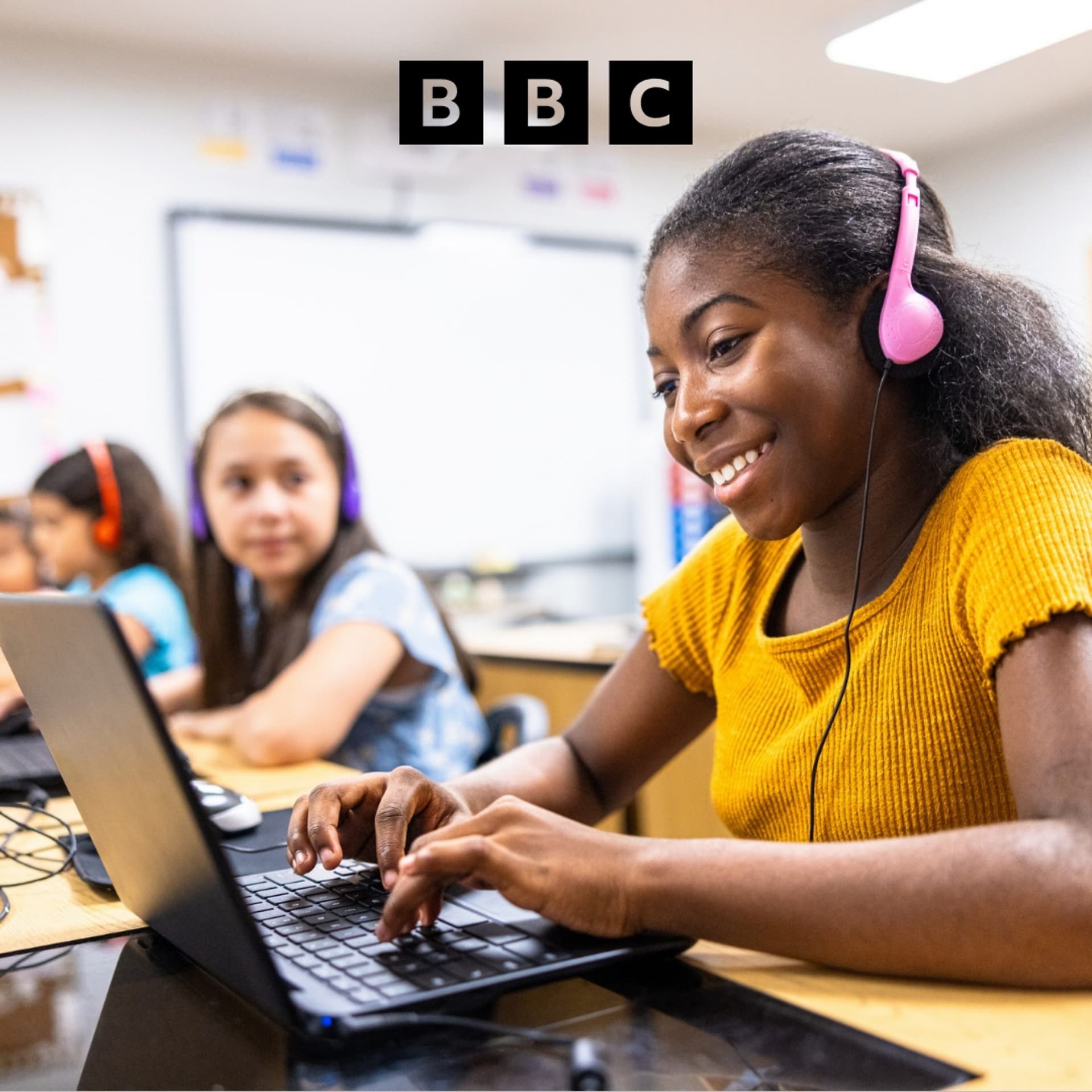
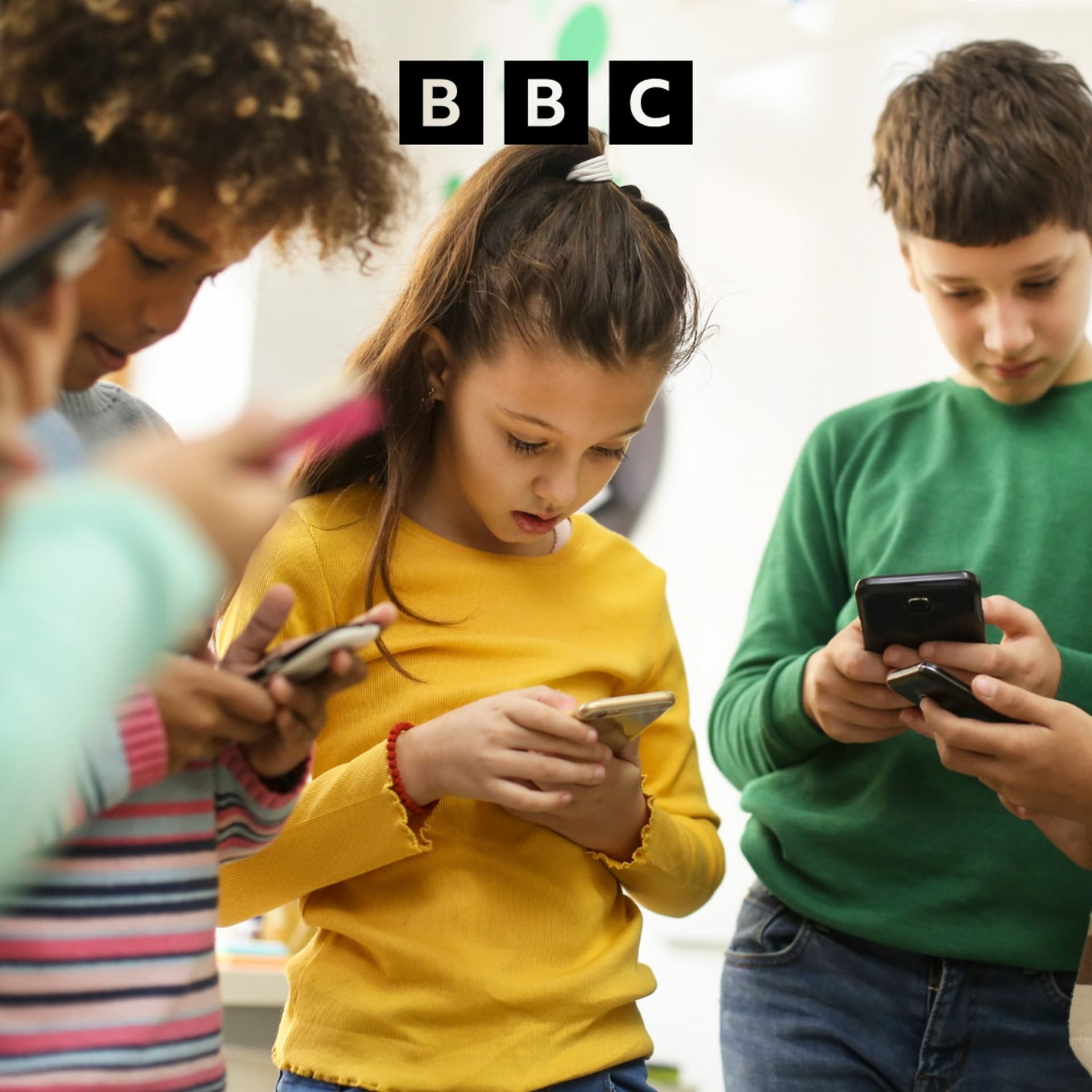
(Photo: A small group of boys and girls look at their smartphones. Credit: Getty Images)