In short
Tech Life episode “Unlocking tech breakthroughs” (BBC) focuses on how governments fund high-risk “moonshot” technologies and what they’re backing, plus two concrete tech impacts: robotics for dexterity and sensing, and AI’s role in public complaints.
Guest
Kathleen Fisher, new boss of the UK’s Advanced Research and Invention Agency (ARIA); previously a senior role at the US Defense Advanced Research Projects Agency (DARPA).
Key claims
ARIA argues dexterous robots need new hardware, not just software; it backs startups like Touch Labs (sensor-driven grip on melting ice) and Sanctera (surface-tension-based actuation). It also funds an “electronic nose” to match dogs for early medical detection, and solar/wind autonomous “Sea Star” maritime drones to monitor the North Atlantic subpolar gyre for climate tipping points. It addresses “climate cooling” via responsible research (ice sheet thickening, marine cloud brightening; studying aerosol injection materials without injecting).
Notable examples
Sea Star swarm goal (50 craft on demand), ice cube grip demo, foot-steering motorsport tech-adapted cars for disabled drivers (Team Brit: Callum Smith and Aaron Morgan; engineering director Al Locke). Later segment: AI helps people draft complaints, but councils warn it can create long, legalistic “word salad” complaints that slow resolution; cited concerns from local-government legal representatives (Dawn John Harvison, Deborah Evans, and Planning Officer Society).
Written by AI. May contain mistakes. Listen to the episode to check what was said.
Chapters
Tap a time to open that second in VOExploring ARIA's Vision
1:30 to 2:26
Discussing the goals and objectives of ARIA with Kathleen Fisher.
“a North Star vision of how the world would be in a better place.”
Advancements in Dexterous Robotics
2:26 to 3:39
Insight into robotics advancements and the hardware challenges faced.
“Well, this week we speak to someone whose job is trying to anticipate which technologies will do that and invest in them, even if there's a good chance these so-called moonshots will never land.”
Exploring Touch Feedback in Robotics
3:39 to 5:20
Exploring the importance of tactile feedback in robotic grip.
“And we're seeing really exciting results in that area.”
Developing an Electronic Nose
5:20 to 6:53
Discussing ARIA's efforts to create an electronic nose for medical applications.
“Yeah, so we just launched a call on olfactory perception.”
Maritime Drones and Climate Monitoring
6:53 to 8:07
The role of autonomous drones in monitoring climate change effects.
“Yeah, so one of the really important pieces of that climate change is this North Atlantic subpolar gyre, which is a current that goes around kind of the southern tip of of Greenland.”
Climate Cooling Controversies
8:07 to 10:56
Examining the controversial climate cooling programs discussed by ARIA.
“I mean, there's one area that ARIA has explored, and this predates your joining ARIA, but that is climate cooling.”
Listener Feedback and Engagement
12:03 to 13:20
Sharing listener emails and encouraging more audience interaction.
“with me, Chris Vallance, and of course with you, our listeners.”
Tech-Adapted Racing for Disabled Drivers
13:20 to 14:00
Highlighting Team Brit's efforts in motorsports for disabled drivers.
“That's the sound of a car raced by Team Brit.”
Racing Against Odds: Callum's Journey
14:00 to 17:10
Learn how Callum Smith adapts driving techniques due to his disability.
“Long term, they've set their sights on competing at Le Mans.”
Aaron's Path to Racing
17:10 to 20:14
Discover Aaron Morgan's inspiring journey as a disabled racing driver.
“I joined them in 2020, first off driving their Aston Martin V8 Vantage before graduating to their McLaren 570S GT4 in 2022.”
Show all 14 chapters
Engineering for Success: Adaptations in Racing
20:14 to 21:30
Explore the engineering adaptations enabling drivers with disabilities to race.
“Of course none of it happens without the sponsors who pay for it and the engineers who make it happen.”
AI's Role in Complaints: Empowering Voices
21:30 to 23:21
Understand how AI is changing the way people voice complaints.
“People like me, for example, would be put off even complaining.”
Challenges of AI in Complaint Management
23:21 to 26:07
Examine the complexities and challenges arising from AI-generated complaints.
“but they've also told us of a downside, that AI can generate unnecessarily long complaints, quoting laws and regulations, and it's placing a big burden on their teams.”
Conclusion: The Future of AI and Complaints
26:07 to 27:52
Reflect on the implications of AI technology on complaint processes and resolutions.
“and then comes straight back saying, well, all my points haven't been answered because you haven't responded to the arguments with respect to the following case law, etc.”
Transcript
Automatic transcript. May contain errors.0:00This BBC podcast is supported by ads outside the UK.
0:30at Whole Foods Market. Thumbtack presents Tile Trouble. Every single time I use my sink, I make eye contact with the uneven ground on my kitchen backsplash. The crooked corners eye me and I'm haunted by more tiling questions than I thought possible. What kind of pro can fix a backsplash? Can I replace one cracked tile or should I replace them all? What? What if I just use Thumbtack? I can hire top-rated pros, read reviews, and compare prices with a tap. All on the app. Thumbtack knows homes. Download the app today.
1:03Hello and welcome to Tech Life, the programme about technology that's affecting all our lives. I'm Chris Vallance. This week, they say necessity is the mother of invention, but sometimes development of a new tech needs a helping hand. Governments have cottoned on to this. The United States has DARPA and the UK has ARIA. I've been speaking to the new boss of ARIA about some of the things she wants to achieve. Every programme has an audacious goal, a North Star vision of how the world would be in a better place. You can hear more about that in a moment. Later, tech is helping disabled drivers compete on the racetrack.
1:43The steering plate is essentially a normal steering wheel on the floor, so how you would turn a normal steering wheel, I use my left foot to turn that plate. And we know AI can help people to write more fluently, but what happens when the technology is used to make complaints? When AI gets involved, the complexity and length of that complaint ramps up enormously.
2:25Every week we say this programme is about how technology is changing all our lives. Well, this week we speak to someone whose job is trying to anticipate which technologies will do that and invest in them, even if there's a good chance these so-called moonshots will never land. Kathleen Fisher is the new boss of the UK's Advanced Research Invention Agency, ARIA for short. Before that, she held a senior role with the U.S. Defense Advanced Research Projects Agency, known as DARPA. Well, Kathleen's been telling me about the work done by ARIA and the tech they're backing. An area that we think is really exciting is the dexterous robots.
3:07In this area, we're hearing a lot about possible advances in robotics. And in this area, a lot of the work that we're hearing about is about the software. But ARIA's take on this is that the software alone is not going to be sufficient because the hardware, the current hardware, has significant limitations. The hardware hasn't changed in roughly 60 years. We're still seeing kind of grippers, and we're using electric motors that are really, really poorly suited to what you need for the fine-grained dexterity that would replicate a human hand. So the hypothesis of this program is that we can design better hardware for those kinds of tasks.
3:45And we're seeing really exciting results in that area. When you come to hold something, and a really important thing when you're holding it is telling if something is slipping. So Touch Labs, which is one of our creators as a startup in Edinburgh, they have a touching technology that is based on feel. And they released a demo recently that showed the holding onto an ice cube, which requires very, very fine-grained control as the ice cube starts to melt. right and yet it's able to adjust its grip because there's a very tight feedback loop between the sensor and the and the squeezing technology to keep being able to hold the ice cube as it melts it's super super cool technology and then on the other side on the actuator sort of the muscle side of the robots electric motors are become really really poorly suited to the scale of muscles for like finger joints but we have a creator called Sanctera that has a totally different kind of motor technology based on, if you believe it, surface tension that is incredibly promising.
4:43And so we're really excited about both of those developments. There's also one of your areas is one that we've spoken about recently on the program, which is expanding human senses. We were talking about the sense of smell, which is, you know, sort of forgotten about, really, I think, by most tech people as a sense. It's not any of the multi-modalities of AI systems yet. Tell me about what ARIA is doing in regards to expanding our senses. Yeah, so we just launched a call on olfactory perception. The goal is, can we create an electronic nose that would rival that of a dog? So there's many places where you can train a dog to be able to sense medical conditions, for example, that are really useful for diagnosis of various kinds of conditions way, way before other kinds of diagnosis, or conditions where somebody has a, like, they're going to faint.
5:49Imagine how much of a disability it would be if you occasionally pass out, faint from this condition, but a dog could tell you You're going to do this in an hour. So, you know, to get into like a safe place for this to happen. That's like really challenging. So there's many, many applications where if you had a nose, electric nose, that was as good as a dog's, that it would just be transformative. You're also backing maritime drones. Tell me about the maritime drones. Yeah, this is like super exciting. This is part of the forecasting tipping points program. they're looking to monitor the North Atlantic subpolar gyre to look for tipping points that would be hugely detrimental for English climate.
6:29Yes, we should talk about this because obviously at the moment we're in the middle of a huge heat wave, one of several. We're all worried about climate change and the climate at the moment. And one of the fears, and it's in the UN reports, is that we might cross tipping points. These would be where the climate changes irreversibly, or at least not easily reversibly, to the detriment of many countries. So we're talking about climate tipping points here. How does the robot boat help with that? Yeah, so one of the really important pieces of that climate change is this North Atlantic subpolar gyre, which is a current that goes around kind of the southern tip of of Greenland.
7:10And a traditional way of monitoring is you have a boat that has many, many sensors that is very expensive to dispatch, but gives you a massive amount of information when you dispatch it. A different approach to monitoring is you have a large number of very, very small craft. I wouldn't call it a boat, right? It's a robot vehicle. It's called a Sea Star, and it's produced by a startup from Plymouth. And these sea stars are autonomous. They are powered with solar power and with wind. And when we started the program, they could go to sea for like five days. And the first six months of the program, they extended that to 70 days, which is really amazing.
7:51And the goal is to have like a swarm of 50 of them that could be dispatched on demand according to like what the models are asking for, like where do we need data and what would that data be so that we could have like a large number of collection points telling us the status of the gyre as we need it. Not everything that you've done with climate has been uncontroversial. I mean, there's one area that ARIA has explored, and this predates your joining ARIA, but that is climate cooling. That's the idea that you can, if you like, artificially reduce the effects of global warming. People worry that this is quite a dangerous thing to explore, that the cost of getting it wrong could be huge.
8:36What do you say to those sorts of concerns? The program Exploring Climate Cooling is not about doing the climate cooling. It's about studying the question so we know what is and isn't possible and what the consequences would be. We are already seeing private industries start to do various climate interventions. and will those climate interventions, are they good? Are they bad? Might they cause the kind of catastrophe that you're talking about? The only way to have good answers to those questions is to do responsible, publicly funded scientific research to have solid answers to those questions.
9:11And that's what ARIA's Exploring Climate Cooling Program is setting out to do, to answer in a responsible way with public engagement. And is that mostly through a carbon capture type? technologies? Or are you going beyond that and thinking about things such as blocking sunlight to an extent, those sorts of state games? The efforts that ARIA has been funding are ice sheet thickening in northern Canada, where if you thicken the ice so that it melts more slowly, because if you have white ice, that reflects sun longer. And so that's one, And ice sheet thickening is one that has actually been started.
9:55Like we've been doing those experiments in the wild. Another effort is marine cloud brightening that has a similar effect of reflecting more of the sunlight. Those experiments have not started. The process that ARIA goes through before doing any of these experiments is extensive, where there's the scientific process of what would the intervention be? and what are the pros and cons from a scientific perspective. But there's also a very extensive community engagement process of what's the area, who would be affected, what would the implications be. And we're in the middle of that process for the solar cloud brightening piece.
10:34There is independent work on aerosol injection in the atmosphere. And there are scientific questions about what kind of particles do you inject in the atmosphere. and ARIA has a potential project of exploring what kind of materials, but we're not actually ever planning to inject any materials, just study what materials might be injected. That's Kathleen Fisher of ARIA. And what did you make of the tech they're backing? Please do get in touch. Our contact details are coming up. Prep for a busy week with Whole Foods Market. Start your day with fully cooked breakfast sausages from Amy Liu, 365 brand frozen waffles with no bleached flowers and of course whole foods market eggs which are all cage free or better in the evening bring home a build your own family meal that feeds four for just 35 choose one entree and two sides shop smarter not harder at whole foods market get more with bbc podcasts wherever you listen be the first to listen to your favorite shows like Evil Genius, Good Bad Billionaire and You're Dead to Me with a subscription to BBC Podcasts Premium on Apple Podcasts.
11:45You can also enjoy a range of our podcasts ad-free with an Amazon Music subscription.
12:02This is Tech Life on the BBC World Service with me, Chris Vallance, and of course with you, our listeners. Last week, Shona McCallum was talking to Google about a new project using AI to reduce harmful contrails in the sky generated by jet aircraft. You can still hear it as a podcast. Well, Henry Marston in England has emailed about the podcast name. Your title, Can AI Tackle Aviation's Climate Problem, is a bit overhyped. It should maybe be, Can AI Slightly Help to Mitigate Aviation's Climate Problem? Annie Hess in France heard our item about AI detectors. She writes, I'm wondering if the guest being interviewed was not AI generated.
12:45The responses to the questions sounded standardised. Annie, we can promise you our guest was very much human. And Joshua Boyado from Accra in Ghana sent us the shortest WhatsApp message to say he was checking in. Well, it's good to have you with us. If you have an idea for a future show or want to comment on anything you hear this week, this is our email address. techlife at bbc.co.uk or WhatsApp as a text message or voice note to plus 44 330 1230 320. Please include your name and the country where you live.
13:33Now, time for a bit of motorsports.
13:46That's the sound of a car raced by Team Brit. And while their vehicles sound great, what's arguably even more impressive is that all their drivers are disabled. They use tech-adapted cars so that they can race competitively right up to the GT3 level. Long term, they've set their sights on competing at Le Mans. I caught up with two of their drivers. Well, let's be honest, I had to ask them to stop. Aaron Morgan, who's been racing with them for a while. You'll hear him shortly. And rookie driver Callum Smith, who spoke to me, as you'll hear, from his own adapted road car. I was born actually without arms.
14:24So I have grew up learning to use my feet to do everything. The simplest way I can explain it is my feet are like your hands. you know picking up a pen to right I do that with my toes and then my newest thing is is obviously driving so I'm currently in my um standard road going car I've got in the footwell obviously my car's automatic so I've got the accelerator and the brake and then on the left hand side next to the brake I've got a foot steering plate it's got like a foot stirrup on it as well so I'll put my left foot through that stirrup and that essentially is like my handle and then the steering plate is essentially a normal steering wheel but on the floor so how you would turn a normal steering wheel i use my left foot to turn to turn that plate and does that mean the steering's quite sensitive like you presume you don't have to move your foot very far not necessarily it's it's literally you know a normal steering wheel um if i could maybe show if i do this okay all right we should be able to give you a demonstration so that's my steering plate so i put my foot through there and as you can see when i turn the steering wheel turns yeah the steering wheel turns so you've basically got it looks like a record turntable down by the pedals with like a hoop in it so you can fit your foot through it and um and that's how you steer the vehicle yeah so if you'd look through it if you were standing outside the driver's side window you know it'd make it look like i'm driving like a self-driving car because obviously you can see steering wheel moving but you won't be able to see my feet doing you know doing the work down below so now you're going to take those those skills to the to the racetrack how do you feel about that i'm relishing the opportunity you know i've been brought up inside the motorsporting world so it's something i've always been fond and familiar with you know as i got older i kind of had that bug that i wanted to race and then yeah through through team brit you know i'm blessed to have the opportunity to to go racing and become the first the first person out of the uk to to hopefully compete using uh foot steering and you're confident you can be competitive you can win races oh yeah 100 you know if i wasn't confident i wouldn't be sat here today having a conversation being part of team brit you know and have you had a go in a car yet or is that still under under development as it were i'm currently in uh the progress of getting inside my first car so uh their bmw one series Academy car has been fitted with the exact same setup as you've just seen but the exact same foot steering plate has been fitted into the BMW 1 Series and I'll be getting my first taste of that on the 2nd of September at a test day at Donington Park and so that'll be my first time ever actually driving you know a race car so I'm pretty much very excited looking forward to that yeah.
17:09My name is Aaron Morgan and I'm a disabled racing driver. I compete with Team Brit. I joined them in 2020, first off driving their Aston Martin V8 Vantage before graduating to their McLaren 570S GT4 in 2022. Aaron, you've been driving for a while. but yeah I have been racing quite a long time now I became the youngest ever disabled person to be awarded a national b motor racing license in 2007 now I am a paraplegic so I had a spinal cord injury in 2006 where I broke two vertebrae and my spinal cord so I have no feeling or use of my legs at all so I need to drive the car completely with completely with my hands what was the hardest thing for you getting into into racing in terms of how the cars had to be adapted and sort of getting yourself competitive so i started squalor motorcross racing in 1997 well i rode all the way through to till my accident in 2006 so i was quite i was very good at using my hands uh in terms of motorbike for throttle brake uh obviously clutch as well and having never driven before my accident, I feel it's an advantage for me in some ways because I've only ever driven with my hands.
18:29So for me, it's completely normal. Is it difficult because you've got so much stuff on the steering wheel now? I mean, for you, you've got extra things on the steering wheel and of course the steering wheel has to move to be able to steer the car. So how do you sort of solve that? You're not constantly having to sort of find things as the wheel is turning. So on the steering wheel, I have a paddle behind the right-hand side of the wheel that I used to accelerate. There's a paddle behind the left-hand side of the steering wheel that I used to brake. And then we have buttons inside the steering wheel that we used to change gear.
19:01When you had your injury, that must have been quite hard to deal with, I imagine. Has being able to continue participating in motorsports really helped with, if you like, the psychological aspects of an event like that? Definitely. So I didn't mention it before, I was actually injured when I was just 15 years old, just lying in the hospital beds. I don't remember being told that I was paralysed. So just lying there in a hospital bed thinking, you know, so what's going on? Why can't I move? It was a very confusing and very challenging time. And being honest, I thought my racing days were over. So to have the opportunity to get back into racing, it all kind of started because I started learning to drive.
19:44and that sort of sparked things back in my head you know I can drive maybe maybe car racing as possible again so that sort of sort of sparked that off and motor racing provides a massive amount of psychological therapy for me in terms of I don't have time to be down about the things that I can't do because I'm always looking forward to the next race I have the next sponsor engagement that we have to be a part of catching up with the other team members so yeah it's a huge part of my life. Well I think you heard there how much being able to race means to Aaron and Callum. Of course none of it happens without the sponsors who pay for it and the engineers who make it happen.
20:25Al Locke is the team's engineering director. He told me how they adjust their cars for the needs of their drivers. We have kind of a almost a one-size-fits-all adaptation system that we've developed over the years that allows a driver almost regardless of disability to compete in that vehicle and we can make minor changes to that positions of levers and the force required for brakes and that kind of thing and you know the ergonomics is a big thing for those drivers and so that system works for probably 95 percent of the drivers that we work with but we do we focus those systems a bit more on some drivers so some drivers have very specific adaptation requirements we're working with the driver at the moment callum who has no arms so how does he drive the car right and so we've been working on a system specifically for him that allows him to steer effectively to use the brake effectively to use the throttle effectively and to change gear and communicate and do all the things that a racing driver needs to do to be effective and fast all at the same time without compromise and so that's a big challenge you know from an engineering and technology point of view our lock of team brit there and earlier you heard drivers callum smith and aaron morgan
21:39well we started with tech that might change all our lives and for many of us ai is already doing that take for instance the business of complaining about something to a public body at the click of a button an ai can draft you a professional sounding letter of complaint and local officials say there's been a surge in ai written complaints londoner dawn John Harvison, who struggles with writing, says that it's been tremendously helpful, particularly as organisations have shut down other ways of voicing a complaint. People like me, for example, would be put off even complaining. So in the past, you'd be able to pick up the phone and speak to somebody and possibly go through points of what the issue was on the phone and they could possibly do something about it.
22:30But that is not possible now. Everything is we're all pushed down this road to send emails. And so somebody who's neurodivergent or intimidated by the written word for whatever reason will just simply not complain. So maybe this this surge is is actually all these people who who've not felt enabled before. and that's not really a reason to complain about them having a voice now. And if you look on social media, there are plenty of accounts of people around the world who, like Dawn, have found that AI enabled them to make a complaint, perhaps challenging a parking fine or a benefits decision, which they might otherwise have struggled to do.
23:16People working for local councils in the UK welcome the ability of AI to help people complain, but they've also told us of a downside, that AI can generate unnecessarily long complaints, quoting laws and regulations, and it's placing a big burden on their teams. A representative of the Planning Officer Society, which represents over 3 ,000 local officials, told me that AI can generate legalistic complaints that look strong, but turn out to be, quote, simply an amalgam of issues, policy or law, which is effectively a word salad. drawn from the internet. Deborah Evans is the Chief Executive of Lawyers in Local Government, which represents over 5 ,600 council lawyers.
24:01She told me her concerns about the use of AI. Well, the impact is manyfold. The first most obvious impact is the massive increase that councils have seen in complaints as a result of AI being used to assist in the drafting of those complaints. Now, that can be advantageous in the case of people who are vulnerable or with special needs who really benefit from the availability of AI to help them verbalise their complaint. However, it has also massively increased the number of trivial or unjustified complaints, which drives up volumes and then slows down the process, needs further resource adding, which councils can barely afford and then increases response time.
24:53So it's having quite a detrimental impact on service. And that's because it's easier for people to complain, is it? And to produce a lengthy complaint. It's very quick and easy to then raise a complaint about something quite simple, maybe a quick service complaint that perhaps you would have put, if you were writing it yourself, it might have been one side of A4 about your bins not being emptied for a couple of weeks or whatever it may be. But when AI gets involved, the complexity and length of that complaint ramps up enormously. So that complaint could be between 19 and 27 pages, include case law, quote various acts of parliament or whatever it be.
25:38And then from a complaint handler's perspective, it's very hard to see the wood for the trees. So they can't see the basic nub of the complaint. And the majority of complaint handlers aren't lawyers and don't know where to start in responding to legal arguments and case law. And rightly so, because most of these complaints are service complaints and they can easily do a response with respect to your bin not being emptied, but they can't respond to legal argument. So we've got this big ramp up in complexity, but then it doesn't stop there because once a reply is sent, the next action often is that that individual drops the reply straight back into AI and then comes straight back saying, well, all my points haven't been answered because you haven't responded to the arguments with respect to the following case law, etc.
26:32So it can be quite hard to get to the end of the process. So not only are they, the more of them, they're more complex, but they're taking a lot longer. And it's really sort of slowing down the system. And what a council wants to do is really get to the issue very quickly and solve it. But that's not to say that if a complaint is justified, it will absolutely be treated properly. It's just that this creates more noise in the system. Even if it's just bulking up a justified complaint, it means it's longer to resolve and harder to resolve. Deborah Evans there. While lots of people have been commenting on the online version of this story, some argue it's all about how you use AI.
27:19Dawn told me she edits AI responses carefully, and it's merely a question of using the tech properly. But what do you think? Let us know. We'll follow up this story on a later episode.
27:35Well, they're waving the chequered flag, and we're almost at the end of this edition of Tech Life. Just to say you can contact us about anything you've heard on the show, with the assistance of AI or without, but not too long, please. Our email address is techlife at bbc.co.uk or you can WhatsApp us a text or voice message on plus 44 330 1230 320. Please do let us know your name and where in the world you live. Today's edition was produced by Tom Quinn and presented by me, Chris Valance.
From the publisher
ARIA is the UK's research and development funding agency that's built to unlock new scientific and technological developments. We speak to ARIA's new boss about their work.
Also this week: the tech that's helping disabled racing drivers to achieve their dreams. And the pros and cons of making AI-generated complaints.
Presenter: Chris Vallance Producer: Tom Quinn
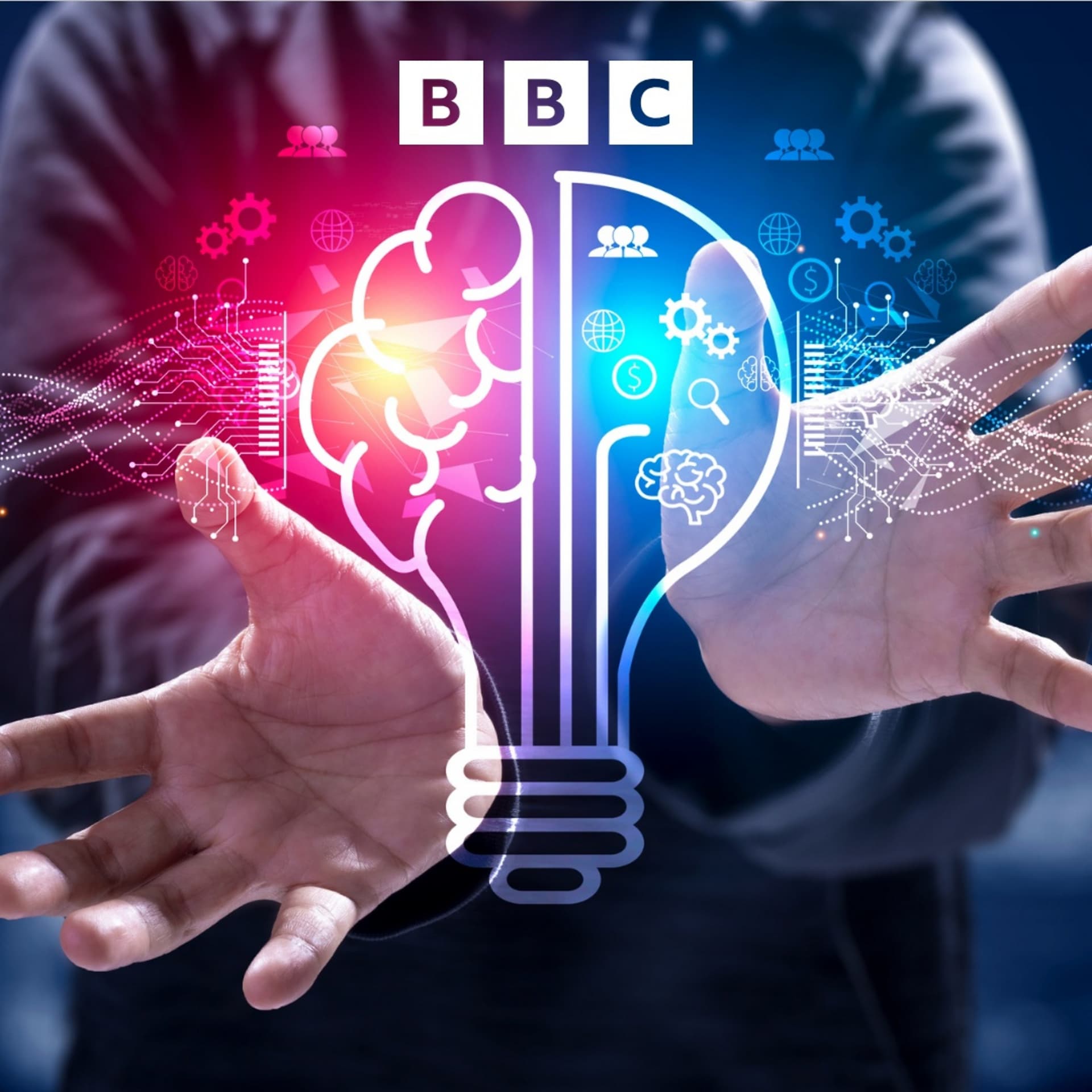
(Image: An illustration of a light bulb, representing creative thoughts and ideas. Two human hands attempt to grasp the image. Credit: Getty Images)