In short
Tech Life Podcast Episode Summary: What's New in Health Tech?
Episode Overview In this episode of Tech Life, host Shiona McCallum explores the latest innovations in health technology showcased at the CES (Consumer Electronics Show) in Las Vegas, discussing devices designed to enhance health and well-being. The episode also features insights from the BBC's cyber correspondent Joe Tidy, who highlights growing concerns around cryptocurrency theft.
Key Themes
- The burgeoning health tech industry and its implications for personal well-being.
- The intersection of technology and data in health monitoring.
- Security issues surrounding cryptocurrency ownership.
Segment 1
Innovations in Health Tech Shiona discusses several health tech innovations from CES, focusing on how these devices can impact personal health and wellness.
Notable Health Tech Innovations
- BodyScan2 by Withings
- A smart scale that assesses cardiovascular and metabolic health.
- Measures over 60 biomarkers in just 90 seconds.
- Aims to track health trajectories and promote preventive care, especially for chronic conditions like hypertension.
- PERI Device
- A wearable device for monitoring perimenopausal symptoms.
- Utilizes various sensors to provide insights on symptoms and suggests actionable steps for relief.
- Designed to empower women by providing objective data regarding their health during a traditionally difficult period.
- Earflow
- A device to treat chronic ear infections in children.
- Functions like a sippy cup, using pressurized air to relieve negative pressure in the ear.
- Gamified experience paired with an app to engage young users and facilitate use.
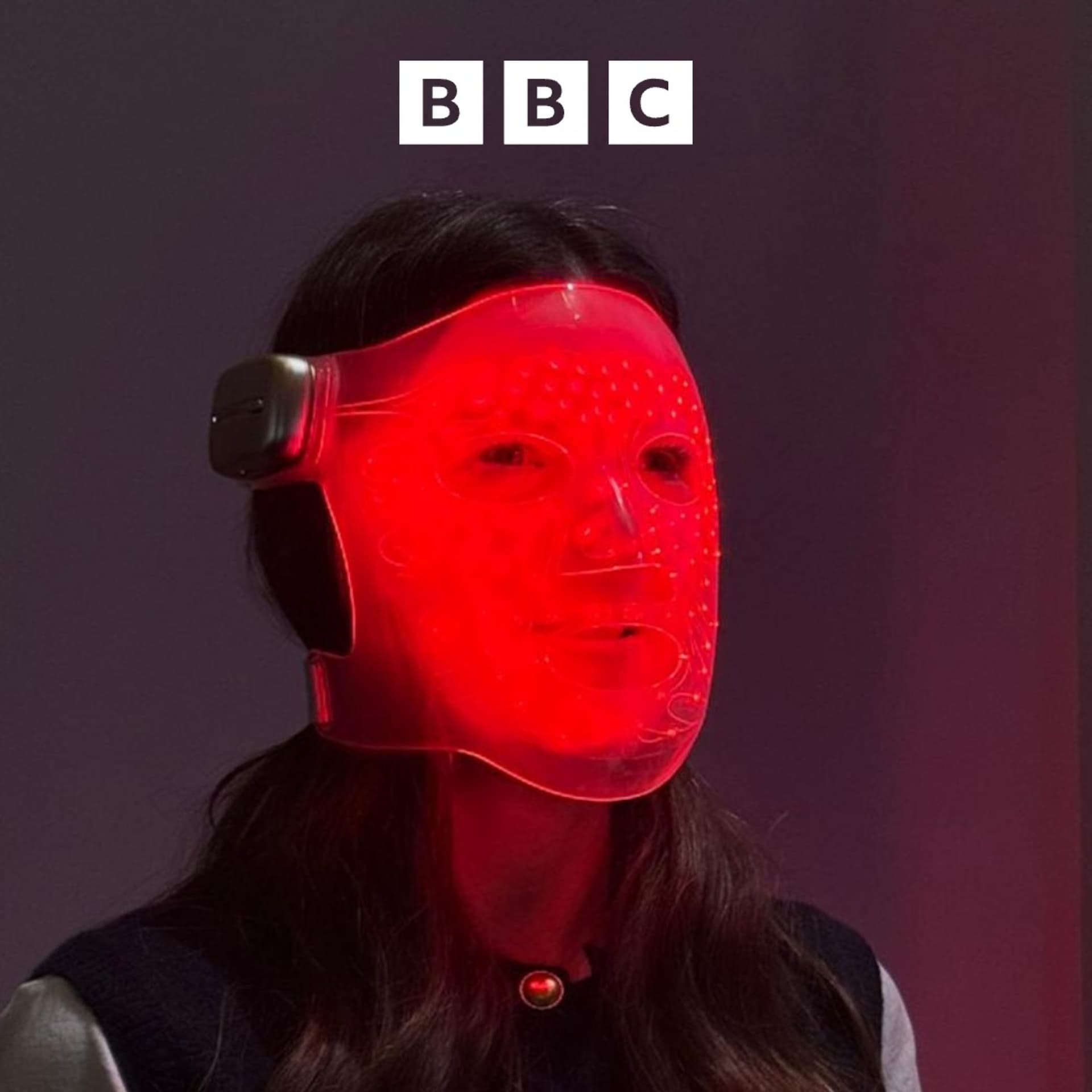
- LED Face Masks from L'Oréal
- Ultra-thin masks incorporating light therapy for skin rejuvenation.
- Claims to improve fine lines and wrinkles with regular use.
- Highlights the importance of usability and comfort in consumer acceptance.
Segment 2
Trends in Health Tech Insights from Lara Lewington
- Health tech is evolving from hardware-centric innovations to a focus on data utilization.
- Data integration from various health metrics (e.g., sleep, hormones) allows for comprehensive health monitoring.
- The role of AI in enhancing health data analysis and personalizing health insights is increasingly significant.
Segment 3
Cryptocurrency Theft Concerns Discussion with Joe Tidy
- Increase in Cryptocurrency Thefts: Over $3.4 billion worth of crypto was stolen last year, with individual owners increasingly targeted.
- Profiles of Criminals: The rise in targeted attacks by organized crime syndicates, including state-sponsored groups like North Korea.
- Lack of Recourse for Victims: Victims often find themselves without support or recovery options once their assets are stolen, despite the traceability of transactions on the blockchain.
Conclusion The episode underscores the dual nature of technology in our lives—offering remarkable health monitoring solutions while also exposing vulnerabilities in digital currency ownership.
Key Takeaways
- Health tech is advancing rapidly, focusing on user-friendly devices that promote preventive health.
- The importance of data analytics in personal health management is becoming more pronounced.
- Cryptocurrency theft remains a serious issue, with individuals lacking protections against cyber crimes.
Contact Information Listeners are encouraged to share their experiences with health tech and cryptocurrency by reaching out to the show:
- Email: techlife@bbc.co.uk
- WhatsApp: +44 330 1230 320
---
This structured summary provides a concise and informative breakdown of the episode's main topics, ensuring that readers can quickly grasp the key discussions and innovations highlighted in the podcast.
Written by AI. May contain mistakes. Listen to the episode to check what was said.
Chapters
Tap a time to open that second in VOOverview of CES and Digital Health
0:45 to 1:30
Exploration of the digital health industry's growth and CES innovations.
“It felt for me this year less about new hardware and more about what we're doing with the data.”
Introducing BodyScan2 by Withings
1:30 to 2:48
Discussion of the BodyScan2 device and its cardiovascular assessment capabilities.
“And let me start by saying that the digital health industry is booming.”
Understanding BodyScan2's Features
2:48 to 4:32
Details about BodyScan2's biomarker tracking and importance of monitoring health.
“It means that your heart pumping efficiency is great.”
Innovative Device for Perimenopause: PERI
4:32 to 6:46
Overview of the PERI device that helps monitor perimenopausal symptoms.
“Now, we've all heard of health trackers for things like heart rate and sleep patterns.”
Addressing Ear Infections in Children with Earflow
6:46 to 9:06
Introduction of a child's health tech device designed to treat ear infections.
“Now not everything at the CES trade show is for adults.”
LED Masks for Skin Care: Innovation from L'Oréal
9:06 to 11:27
Discussion of L'Oréal's LED masks and their skin health benefits.
“and should be launching in the next few months.”
Trends and Insights from CES with Lara Lewington
11:27 to 13:50
Lara Lewington shares major health tech trends observed at CES.
“I'm a technology broadcaster and author of Hacking Humanity, a book about how technology is transforming the future of our health.”
AI's Role in Health Tech Advancements
13:50 to 14:03
Exploration of how AI is being integrated into health tech solutions.
“But I have seen the progress of some things that I filmed over the years, actually having AI better embedded in it.”
The Evolution of Health Tech Devices
14:03 to 16:42
Learn about advancements in health tech like the Exia exoskeleton and the role of AI in personalizing user experiences.
“One example of this was the Exia exoskeleton.”
Measuring Biological Age: Controversies and Insights
16:42 to 17:42
Explore the complexities and varying methods of measuring biological age and its relevance to health.
“So I think long-term, that's really where we're going to see the power in a lot of this health tech data, whereas now it may be a lot more about how well you slept or how much activity you've been up to.”
Show all 13 chapters
The Impact of Wearable Tech on Health Monitoring
17:42 to 19:23
Understand how data from wearables can reveal health patterns and assist in medical diagnostics.
“Last week we were talking about robots helping us in the home.”
The Landscape of Cryptocurrency Theft
19:45 to 23:24
Gain insights into who is stealing cryptocurrencies and the methods involved in these thefts.
“Last year, criminals stole more than 3.4 billion US dollars worth of crypto coins, according to the firm Chinalysis.”
Personal Stories of Crypto Theft Victims
23:24 to 25:17
Hear the harrowing stories of individuals affected by cryptocurrency theft and the challenges they face.
“So these are a couple from the UK and they had a horrendous situation where they had been stacking and storing and buying up a crypto coin called Cordano for about seven years.”
Transcript
Automatic transcript. May contain errors.0:00Hello and welcome to Tech Life, the programme about technology and how it affects all of us wherever we live in the world. I'm Shona McCallum, and this week I'm looking at arguably one of the most fascinating areas on this beat, health tech. We all want to stay fit and healthy, but how can technology help? Well, I'm just about recovered from the jet lag after being in Las Vegas for CES, the biggest tech show in the world, where I saw a vast amount of digital health solutions on display. There were so many devices and gizmos designed to help us live longer or even better, make us feel a bit more attractive.
0:37I'll be bringing you a flavour of what I found and I'll be chatting about it with an author that you might be familiar with, who's written about how tech can help save your health and your life. It felt for me this year less about new hardware and more about what we're doing with the data. And a little later, for those who think cryptocurrency is electronic and therefore secure, there's an increase in thefts of digital money from ordinary people who've lost an awful lot and there's no safety net to help them. The BBC's cyber correspondent, Joe Tidy, will tell us all about it.
1:29OK, let's get cracking. And let me start by saying that the digital health industry is booming. Perhaps you already have a device that monitors your health, maybe at home or something you wear like a watch or a ring. They're very popular. But to get an idea of what's coming next, you really need to go to Las Vegas in January for the annual gathering of CES, a huge trade show attended by all sorts of companies and individuals promoting their latest innovations. And when I was there, I was looking out for the next big thing in health tech. I don't know if I found it, but I'm going to tell you about four things that caught my eye.
2:06And I'll start with Withings, a French company that has already released things like smartwatches and connected scales, but now they have BodyScan2, which takes readings and works out if you're meeting your health and fitness goals. Of course, I had to give it a try by stepping onto it and grabbing hold of the high-tech handles.
2:29It is just like a regular set of bathroom scales but with a difference It's doing a cardiovascular scan The tests are run as I place my thumbs on the sensors and it just takes 90 seconds
2:46Let's see my results My heart age is 37 so a year younger than what I actually am That's actually really good. It means that your heart pumping efficiency is great. Yeah, I'm happy with that. Well, that was reassuring. The other voice you heard there was Antoine Jessen. He's the director of product management at Withings, and he told me more about the BodyScan2. So BodyScan2 is our latest product that we are announcing at CES this year. It's the first at-home longevity station that can deliver a complete cardiovascular and metabolic assessment. at every way. We are able to measure more than 60 biomarkers that we translate into a health trajectory, a new concept that we are introducing to tell you whether you are gaining or losing healthy years.
3:36And it's easy to use, you just step on the scales? It's really easy to use, it's a form factor of a scale, so a device we all know, we are used to use, you just step on it every morning and it will assess all of these 60 biomarkers in about 90 seconds just for you every every morning and cardiovascular health obviously so important given lifestyles today yes so cardiovascular health is definitely really important we are seeing worldwide an increase in chronic diseases for example hypertension affect one in three adults worldwide that's why it's really important for us to be able to monitor this, being able to monitor these pathologies because they progress silently for years before symptoms appear.
4:24That's why BodyScan2 is important. That's why prevention is important. It's to be able to track these silent changes before it's too late. That's Antoine Jessane with BodyScan2. Now, we've all heard of health trackers for things like heart rate and sleep patterns. But what about an area I don't think we've ever discussed on Tech Life before, the perimenopause. That's a stage in a woman's life before the menopause. Well, I came across a wellness device designed to do just that. It's called Peri and it looks a bit like a slim bar of soap. And once it's attached to your torso, it monitors your symptoms.
4:58It gathers and assesses data collected from sensors and then it offers advice about how to deal with issues like hot flushes or anxiety. Heidi Davis is the CEO of PERI, she gave me the rundown. So PERI is the first wearable that can actually objectively detect perimenopausal symptoms and provide actionable insights via our AI engine to help women understand what's the next best step. We have four sensors in it. It's an EDA, it's an accelerometer for motion and we have blood flow and we have temperature. And what we spend five years doing is running trials, building our own database and then building algorithms that are totally unique to PERI to detect symptoms.
5:41And the device goes on to the stomach and women wear it for how long? How does that work? PERI actually sticks on under the breast with an adhesive. It has seven to ten days wear time. You can wear it when you're bathing, swimming, living your life as normal and you can go on here and you can see all your scores once you pair it with your own phone. We track your cycle all through sensor technology, activity, hot flashes and night sweats and after your first seven days you will get your first insight which is AI generated. What is your message to women potentially going through this phase in their lives and looking for solutions and not really knowing what's out there?
6:21So what we really created this for is for women that are wondering am I in perimenopause? They might have been to their doctors and been told they're okay but they know they're not or they've tried everything out there. we made PERI so that you can get those answers, understand your body better and really not navigate in the dark anymore and stop the guesswork and get real data behind your decisions. That's Heidi Davis from PERI. Now not everything at the CES trade show is for adults. I found health tech for children. While exploring I came across a company called Earflow. They've made a cup-like device linked to a game to treat chronic ear infections.
7:00So my name is Dr. Intan Odokowska. I'm the CEO and co-founder of Earflow. Okay, and why did you decide to look at ear infections in children? Yeah, so we were actually at Stanford by design and we were shadowing ear, nose and throat clinicians and we saw that ear infections and then that leads to ear tube surgery is such a big problem and so many parents really want to avoid surgery for their very young children, often two to five year olds. And we know that there is already a solution at that that is non-invasive that can help with this condition, but it was never designed for young children in mind.
7:35And so we set out on this journey to be able to, you know, turn a known way to non-invasively solve this problem, but make sure that it's user-friendly for really young children that is really in need of this. Okay, so let's talk about the device then, because you've got one here, and I'd love you to explain the tech to me. Yeah, absolutely. So the device looks a little bit like a sippy cup, but it actually has a lot of smart electronics that has air pump that basically can deliver a puff of air into their nasal cavity to pressurise their eustachian tube to open it and with repeated openings to relieve the negative middle ear pressure and allow fluid that's stopping the eardrum from essentially moving.
8:18And how easy is it for children to use? Yeah, so I can do a quick demo. I know that I'm not a child but basically all they have to do, they can put their favorite drink, you know, apple juice or water inside this cup part and they couple it to this part that has all the air pressure and you can see that we've created a gamified app with the rocket and essentially they just have to push their nose into the mask and swallow, drink their favorite drink and that's all they have to do. And when that rocket hits the star, that means the pressure has gotten to the right level so that the eustachianship can open.
8:56But we also have microcontrollers to stop the pressure from going too high so that it's not uncomfortable for the children. That's Dr. Intan Aldakowska from Earflow, which is in the final stages of medical approval and should be launching in the next few months. Now, this last bit of tech I'm going to tell you about is something I hopefully don't need right now, but I have seen all over my social media. LED masks. L 'Oreal brought their newest ultra-thin LED light therapy masks to Las Vegas. Think of a face mask embedded with lights, which the PR company says targets fine lines, wrinkles and dark circles.
9:33They also have a smaller version for around the eyes. Giev Baluch runs the tech and open innovation program for L 'Oreal Research. A lot of times when you look at masks, they're very, very bulky and looks almost like you have a hockey mask on, which is nice for Instagram, but maybe for using it 10 minutes a day for, you know six months it's a bit cumbersome so we worked with iSmart which is a company in the UK that helped us develop the thinnest mask in the world that's flexible that has two wavelengths of light. And so when you talk about flexibility you talk about comfort you know how is that in the hierarchy of things that you're looking at to make this a successful product?
10:11I think for LED masks today there's a lot of clinical evidence about the wavelengths of light and how they can you know, regenerate cells within your skin. But there's a usability issue today. Like if you really want to get the light to your skin effectively, it needs to touch the skin. And to do that, you need electronics which can bend and flex and that can fit any kind of conformity of the face. And so I think that sometimes we look at technology, sometimes it's really a design, industrial design challenge. And I think, I believe that when you look at this kind of technology, you'll be able to do a lot more when it's flexible and thin than when it's, you know, encompassed in a plastic body.
10:50So let's talk about results then, because I'm sure lots of people will be thinking, right, if I use something like this, what difference am I going to see on my face? With this kind of technology, we have two wavelengths of light, 830 nanometers, which goes to the collagen of your, underneath your skin, and 630, which actually goes to the cells and regenerates them and that takes about two to three weeks to see visible results that people can perceive and then it keeps getting better and better over months so if you use it six weeks and then eight weeks and then 12 weeks you can't consistency improve your fine lines your deep wrinkles and and you can go you know to some of those more difficult wrinkles that take more time to repair that's l 'oreal's give baluch well to pull together and consider some more of the health tech that was showcased at this year's CES, I got in touch with a friend of TechLife who was also in Vegas.
11:44She might be a familiar voice to you. I'm Lara Lewington. I'm a technology broadcaster and author of Hacking Humanity, a book about how technology is transforming the future of our health. Great, Lara. And I saw you at CES. Did you have a good time? I had a great time. Thank you. CES is always full of surprises and some old classics. What major health trends did you spot at CES this year? Well, I think every year there's always this phrase that health tech takes centre stage. And it was as true as ever. But it felt for me this year less about new hardware and more about what we're doing with the data.
12:21So this came in many different forms. Ultra Human, the Ring Company have what they call power plugs, which is the idea of pulling in data on things like snoring and mental health to be able to have a platform that provides more than just activity. And I saw this across lots of companies. It's what Withings were doing. Ellie Health is another company that's really interesting tracking hormones. This year, they added testosterone to what they were already able to track through saliva tests, which was progesterone and cortisol previously. So it felt to me it was very much about adding new levels to that data.
12:56And of course, with AI's great power, we're now able to make more correlations and understand more. So this data is also becoming increasingly valuable. And when you talk about AI, I noticed there was a lot of AI embedded in health. In fact, probably every single stand that I went to said something about AI. There is a balance, though, to be struck, don't you think, between those meaningful health insights that everyone desperately wants and this kind of hype around AI all the time. Definitely. And walking around the show floor, you saw the words AI, as you said, added to every stand. Even a massage chair had a big sign that said AI massage.
13:34So there's definitely an element of feeling like the term needs to be thrown in everywhere. And in many areas of health, it really is really important and making a real difference to what we can do with all of that data and what we can unearth from it. But I think there are also plenty of stands where it is using the using the phrase AI for the sake of using it, because there's almost an obligation. But I have seen the progress of some things that I filmed over the years, actually having AI better embedded in it. One example of this was the Exia exoskeleton. So this was something that I filmed several years ago, and it was helping workers lift heavy boxes.
14:11So they could lift an extra 30 kilograms. Now it's an extra 38 without feeling the strain in their back. And the way this device has moved forwards is about personalizing the experience for each person using it. So understanding how they move to try and better prevent injury for them. So the AI is also bringing greater personalisation to some of the devices we've already seen. And I would say that this year, there were far fewer actual devices that excited me. It was more about these new concepts or enhancing some of the stuff that we already knew. And tapping into a theme, I know you're very across longevity.
14:50Yes. Well, I'm not sure that I was actually so keen on how this emerged in various places. so you had withings and also the magic mirror bringing in this idea of biological age now the question of how we measure biological age is pretty controversial anyway so this as opposed to your chronological age the number of years you've been on this planet it's a look at how your body's functioning and what age it seems so there are many different ways that this can be measured and as i've found from various experiments that i've done through postal kits various tests in labs, depending what you're testing, so it could be your fitness age, it could be your inflammatory age, it could be your immune age, your metabolic age, the figures all come in as totally different.
15:33So whilst measuring biological age in different ways allows you to see patterns as to whether your health is getting better or worse, the methods of doing so and that exact number aren't hugely valuable. So although I saw this in a couple of places on the show floor, I actually wasn't particularly excited about it. And do you think then the concept of using these type of devices in, for example, a clinical setting is something that we're going to see in the future more and more. All of the tracking that we can do on ourselves, I believe, is way more about understanding patterns, our baseline, seeing when patterns change.
16:08That long-term data is incredibly useful and way more important than how many steps you did yesterday. So the fact that we can now pull in data on air quality or from continuous glucose monitors expands what we can learn about ourselves and those patterns that we can recognise. And whilst these devices, if we're talking about the standard wearables out there, aren't medical devices, albeit some of them do have medical grade sensors, they are increasingly being used as part of our overall health picture by doctors. And there have been many people who've seen things, go and miss in their patterns, have felt something is off kilter and gone to a doctor for further diagnosis and have discovered they have heart conditions, even cancer, episodes of lupus, so many different conditions identified from people seeing these changes in patterns.
16:54So I think long-term, that's really where we're going to see the power in a lot of this health tech data, whereas now it may be a lot more about how well you slept or how much activity you've been up to. My thanks to Lara Lewington there, author of Hacking Humanity. It was great having her on Tech Life again.
17:22This is Tech Life on the BBC World Service with me, Shona McCallum. You can contact us about anything you hear on the show and I'm really keen to know if you use any health tech to monitor your symptoms and to help you stay fit and healthy. Is it a wearable device and how does it help you? I'll run through our contact details in a moment. Last week we were talking about robots helping us in the home. Janice Churcher from Vancouver Island in Canada emailed us to say that she listened at 3am. She wrote, I tried to imagine a robot in my house as I have many art objects, some fragile. A robot would need to be incredibly well developed before I'd let it free.
18:02Glenn Brathen also emailed from Vancouver. We must be popular there. Glenn has a robot vacuum cleaner, but the company that made it has gone bankrupt and now it won't work in intelligent mode. Oh, I'm sorry to hear that, Glenn, but more importantly, I really hope your carpets are still being cleaned. On the BBC World Service Facebook page, we asked, if a robot could take over one household chore for you, what would it be? Penny Brayfield replied, cleaning, but it would never do it well enough. I tend to agree with you there, Penny. Lee Waller said putting the laundry away, while Lee Wilkins and Sean Knight both wrote ironing.
18:38Yes, I think that would also be pretty handy. Mark Billington might be on to something he typed putting the cover on the duvet and let's end with this one a listener in California going by the name Echo Bravo wrote down dealing with the cat litter box I don't have a cat but I can imagine that would be extremely useful if you want to contact us our email address is techlife at bbc.co.uk or you can whatsapp us a text message or a voice note our number is plus 44 330 1230 320. Please include your name and the country where you live. I'll repeat those details at the end of the programme.
19:23Now for the next few minutes, we're going to be talking about digital currencies. You don't have to be a big company to own or trade in them. Lots of individuals do too. And if you own cryptocurrency, thieves could be targeting you personally. It's hard to say for sure, but some estimates suggest around 560 million people own crypto coins around the world. As the number of people owning crypto increases, the number of crypto thefts is also increasing. Last year, criminals stole more than 3.4 billion US dollars worth of crypto coins, according to the firm Chinalysis. The BBC's cyber correspondent Joe Tidy has been looking into this for us.
20:03The idea of cryptocurrency as first envisaged by an anonymous person or peoples called Satoshi Nakamoto back in 2009. The idea was that you could send money or a digital form of money from one person to the next over the Internet, almost like an email, really, with no intervention from any bank or financial institution. It's sort of monetary freedom is how it was pitched. And the idea as well is, of course, you are your own bank. So, you know, if you if you want to store your money or your your currency or your value, your savings in cryptocurrency, the only people that have access to that are you.
20:40You have your special seed phrase and it's all encrypted and everything's very secure. And over time, what we've seen with cryptocurrency is it's gone from being a sort of currency to really a store of value. So people sometimes describe it as digital gold. There are problems with that in terms of like what's happened lately with the price. But that seems to be the sort of trend now is that people aren't really buying coffees with this stuff, especially not in in Western countries. They are buying Bitcoin and other currencies in order to hope that it goes up in value. And of course, the benefits of being your own bank also come with risks.
21:16Absolutely. So who is stealing cryptocurrencies then? Are they smart teenagers, hackers or traditional criminals? I think it's a mixture. So last year we had a warning from a crypto research company called Elliptic. They do kind of investigations, tracking different transactions across the blockchain. Because of course, that's the thing about cryptocurrency is every transaction that is made is publicly viewable. So you can trace where the money goes when it's stolen, but you just don't necessarily know who is the owner of the wallet, who is in charge of that money. And Elliptic said what they are seeing is a big trend towards individual wealthy crypto owners being targeted by North Korean hackers.
21:59So North Korea has in the last sort of five years become absolutely expert at these really monstrous high profile cyber attacks against cryptocurrency companies. For example, last year, there was the record breaking 1.5 billion hack of the Bybit crypto exchange, which is being blamed on North Korea. But what Liptic said is they're moving towards individuals as well. So that's the issue is that you've got these very, very well organized and experienced cybercrime groups that are sponsored or at least ordered by a regime like North Korea going after individuals. But then also, as you say, it is bored or talented or greedy teenagers as well.
22:41I spoke to one young person who is in the US. He wouldn't tell me anything else about him. And he's made a lot of money. He reckons about$1.5 million from going after wealthy crypto owners by finding out their details and then carrying out various types of attacks. So social engineering attacks, that kind of thing. And you've got to sort of take all this with a pinch of salt, especially with that type of criminal who likes to brag about things. But he showed me that he is the owner of$700 ,000 worth of Bitcoin. He proved that to me in an unfakeable way, I'll say. which he claims was from one victim.
23:19And you did speak to two victims as well, Helen and Richard. Can you tell me about them? Yes. So these are a couple from the UK and they had a horrendous situation where they had been stacking and storing and buying up a crypto coin called Cordano for about seven years. And they were buying it when it was worth pennies. And then it became, you know, worth dozens of pennies. And they saw their value rise quite a lot. to around$300 ,000. And then somehow, they still don't know how actually, but some crypto hackers managed to find their way into the cloud storage of the couple's sort of accounts, where unfortunately, they kept the details for their crypto wallets.
24:03So as I mentioned, when you're your own bank, you're the only one that can move those coins and send those coins across the blockchain, unless someone manages to find their way into your wallet details. And that's what happened to them. And is there any recourse for them? No. And that's one of the sort of fascinating and tragic things about their story and so many others is that when you are a victim of crypto theft, all your money is stolen and it's transferred to someone else. But the kind of sort of painful part of it is that you can watch your money being moved around the blockchain. You can see, oh, it went from this wallet to this wallet to this wallet to this wallet.
24:39But there's nothing you can do about it. Because until that person who's behind the theft interacts with a legitimate organisation, so a cryptocurrency exchange, for example, like Binance or Coinbase, until that happens, and it doesn't happen often with criminals, there's absolutely no way you can find out who the person is behind those transfers. It just seems so miserable, doesn't it? It is. And I spoke to the couple and particularly Richard, which isn't his real name. He said that apart from the death of his parents, it's the worst thing that's ever happened to him. This was their life savings, you know, three hundred thousand dollars.
25:16And they had high hopes for their value of those coins rising. They're not they're not rich individuals. They have sort of normal jobs. He's a composer and she's a personal assistant. And it's really wiped them out. That's Joe Tidy, the BBC's cyber correspondent, telling us about crypto thefts from individuals. And Joe's written an in-depth article all about this. You can find it on the BBC News website.
Read the full transcript
25:48Well, I hope you enjoyed this episode of Tech Life, particularly my look at health tech. If you see any interesting tech to monitor or help improve your health, I'd love to hear about it. Tell me how it helps you. techlife at bbc.co.uk is our email address or you can whatsapp us a text or voice message on remember to include your name and where you live today's edition was produced by tom quinn and presented by me shona mccallum
From the publisher
We all want to stay fit and healthy. But how can technology help ? Shiona McCallum discusses new health tech on display at the world's biggest consumer electronics trade show. And if you own cryptocurrency - beware. Thieves could be targeting you. The BBC's Cyber Correspondent, Joe Tidy, joins us to explain more.
Presenter: Shiona McCallum Producer: Tom Quinn
(Image: A photo of Shiona McCallum wearing an LED face mask. The room is dark and the transparent face mask covers Shiona's face. The light emitting from the mask gives Shiona's face a red glow. Credit: BBC.)