In short
Tech Life Podcast - Episode: Your AI Servant
Episode Summary In this episode of *Tech Life*, host Chris Vallance explores the emerging concept of Agentic AI, which refers to AI systems designed to function as personal assistants capable of carrying out tasks on behalf of users, such as shopping, travel booking, and more. The episode also highlights innovative projects in Kenya focused on tackling plastic waste through 3D printing and discusses a charitable initiative aimed at preserving endangered species through cryopreservation.
Key Topics Discussed
- Introduction to Agentic AI
- Definition: Agentic AI refers to autonomous AI systems that can take on tasks given by the user, effectively acting as a personal assistant.
- Example Use Cases:
- Planning vacations by finding destinations and booking accommodations.
- Shopping assistance by searching multiple websites for products.
- Software development support by automating mundane tasks.
- Insights from Amazon's Vice President of Agentic AI
- Swami Sivasabramanian discusses:
- The technological transformation anticipated with the advent of Agentic AI.
- How these AI agents can alleviate the workload of developers and other professionals by automating repetitive tasks.
- The introduction of "guardrails" to ensure AI agents operate within pre-defined boundaries, alleviating fears of unpredictability.
- Employment and Economic Concerns
- Job Impact:
- Concerns about potential job loss due to automation.
- Sivasabramanian asserts that while some roles may change, new job opportunities will be created as a result of technological advancements.
- Wealth Disparity:
- Discussion on whether Agentic AI could widen the gap between rich and poor, especially in developing nations with limited access to technology.
- Emphasizes the importance of equitable access to technology for all.
- Innovations in Kenya
- Plastic Waste to 3D Printing:
- EcoPrince Generation is transforming plastic waste into educational tools for local schools through 3D printing.
- The initiative highlights the dual benefit of addressing plastic pollution and enhancing education by creating interactive learning materials.
- 3D Printing Process:
- Collecting plastic waste, recycling it into pellets, and then using those pellets to create educational models.
- Cryopreservation and Wildlife Conservation
- Nature's Safe Charity:
- Discusses the process of cryopreserving cells from endangered species to combat extinction.
- The charity aims to create a "living biobank," maintaining genetic diversity to support future breeding programs.
- Technical Process:
- Explains how samples are collected, processed, and stored at ultra-low temperatures to preserve their viability.
- Future aspirations include setting up biobanks globally in biodiversity hotspots to facilitate conservation efforts.
Key Takeaways
- Agentic AI promises to revolutionize how we manage personal and professional tasks, but it raises critical questions about job displacement and economic equity.
- Innovative solutions like the 3D printing initiative in Kenya exemplify how technology can address environmental issues while enhancing education.
- Cryopreservation techniques are a beacon of hope in wildlife conservation, highlighting the importance of preserving genetic diversity to prevent species extinction.
Audience Engagement Listeners are encouraged to share their thoughts on the rise of AI agents and their implications, as well as their own tech-related mini-adventures through email or WhatsApp.
Conclusion The episode delves into the transformative potential of technology, spotlighting both the promise of AI in everyday life and the pressing need for sustainable solutions in environmental conservation.
---
For feedback and sharing experiences related to technology, listeners can reach out via:
- Email: techlife@bbc.co.uk
- WhatsApp: +44 330 1230 320
*Presented by Chris Vallance, produced by Tom Quinn, and edited by Monica Soriano.*
Written by AI. May contain mistakes. Listen to the episode to check what was said.
Transcript
Automatic transcript. May contain errors.0:00Hello and welcome to TechLife, the programme about technology and how it's changing all our lives. I'm Chris Vallance. This week, a senior figure at Amazon tells us why the era of agentic AI will soon be upon us. Agentic what? Fear not. All will be explained. We go to Kenya to hear how plastic trash can be turned into 3D printed teaching materials. After collecting the plastic waste, we partnered up with a recycler, a local recycler in Mombasa, to basically turn it into plastic pellets, recycled pellets. And can we save endangered species by freezing their cells? We can biobank their genetics in a way that we can bring them back to life in 10, 20 or a thousand years time.
0:42It's quite incredible now what this technology can do.
1:04Well, we like to say tech life is all about the tech affecting your life. And the tech we're going to cover next certainly promises to do that. Imagine a world in which dozens of AI servants were at your beck and call. They'll work for you, shop for you, book your travel, help organise your family life, maybe even assist with your healthcare or the purchase of a house. Well, that's coming, and it's called Agentic AI. Amazon Web Services, whose systems underpin many of the online businesses we all use, recently launched new tools to help companies develop Agentic AI systems. Well, we thought that was a good opportunity to get their vice president of agentic AI, Swami Sivasabramanian, to explain what it is and why it matters.
1:52AI agents are these autonomous systems where you give it a task, such as like, I'm thinking about planning a vacation and I want to go 10 days to, let's say, Australia in December. Here is my family details. Can you go find their best set of destination activities and restaurants? And now these AI agents goes and actually searches the Internet, goes and does the booking, all these things on behalf of me. So essentially, these are like sort of software servants that will go out. You can kind of give them instructions. They'll go out and do it for you. Absolutely. And that is why these things are going to fundamentally change in a big way, because now the real transformation of AI is going to start with actually the agentic AI, where you give these AI agents precise instructions and preferences, and then it goes and figures out.
2:57You don't even need to tell it, hey, here are the 20 steps on how you should go about it. So what kind of uses will these AI servants, if you like, these AI agents be put to? What are the big opportunities that you see for the use of these systems? I'd say AI agents is going to transform the way we work and the way we live in a big way. In the shopping world, you can imagine now asking an AI agent and already asking, saying, like, hey, I'm interested in buying something like a new formal shirt. and you ask an agent and it can go look at multiple websites to find out different options available and based on my size and color and present these options and then make a purchase on my behalf.
3:48Now, flip it around on the work side. In the software development, one of the things we as software developers used to deal with is typically mental model for many outside software developers, As they go in, day in and day out, all they do is sit in front of it and write new software code. But it turns out that's not true. They spend 20 % of their time writing code. Reminding 80 % is like the drudgery of updating old software and doing all these other things. With Amazon, we built this AI agent to basically upgrade software on behalf of developers to improve their daily lives. And interesting enough, this one saved the company something like 4 ,500 developer years, not ours, years.
4:40I suppose some people listening might be sort of excited about the idea of something going and doing the shopping for them and that sort of thing. But they'll be worried about it going rogue. You know, will I end up with 50 ,000 boxes of cornflakes because it has a moment? What would you say to people who have those anxieties? This is where the builder of these autonomous systems, it can be an e-commerce company or it can be anyone, they introduce something the industry calls as guardrails. Guardrails are effectively, you don't want these autonomous systems to be going off and doing things that are off script.
5:20You want them to check their work in some ways, like how a school teacher checks their students' work. and interesting enough now these AI agents all of them as builders we put official sufficient guardrails so that they don't go off the rails and do certain things it is important that each of these builders of these AI agents to help them. Should people be worried about their jobs it comes up time and again when we discuss AI but these are these are agents you know really going out and doing work. I mean, you can think of, you know, if you just took booking a holiday, years gone by, that might have been done by a travel agent.
6:01So is there an impact on employment, do you think? I mean, AI will undoubtedly transform how we work. And you're going to see some transformation in terms of what we do today might change in terms of how we do it. There might be some change in what people do in the short term, but you're going to see a lot more gain in the long run because it will create jobs we can't even begin to imagine. Is there a risk that it sort of exacerbates differences between rich and poor in a sense? If you've got the good AI agents, you know, you suddenly have this extra superpower, if you like. But if you're, say, somebody like a lot of our listeners will be in a developing nation, you know, you're not necessarily part of that.
6:53How do you see that as a sort of challenge to be faced? Yeah. As someone who came from a simple background back in India, that is something I think about a lot too. Access to this amazing technology is available to so many people around the world. Now, the access to these amazing tools and being able to learn them and put to work is actually now no longer in the hands of only like few specific big companies. It is important that they have access to these technologies in a way, such as being access to having the right Internet and so forth. Once they have it, then suddenly you're going to essentially help scale and address these tech skills as well.
7:47Then you can address things like shortage through education, training and hands-on engagement, which I see around the world, a majority of the government leaders are working hard to address as well. And in terms of, I said at the beginning, you know, this was coming. How soon until agentic AI is part of all our lives? everybody is seeing this potential on this big transformation so I suspect next three to four years is going to be like incredibly exciting where you're going to see this transformation in a big way well thanks to Swami for talking to us from the United States and we'd like to know what you think about the rise of the AI agents an exciting new world or perhaps you have concerns about privacy or the effect on the workplace let us know
8:48You're listening to Tech Life on the BBC World Service with me, Chris Vallance. Now, you may have heard me asking Amazon about access to agentic AI in developing countries. And listener Patrick Nakoma from Zambia raises a similar issue. He pays to use chat GPT, but he writes, The cost of using it is$20 a month, which is over 500 quacha here. That's too expensive for most people. I'm not asking for free services, Patrick says, just fair pricing for people in low-income countries who want to learn and grow but are held back by high costs. Listener Ben Gibbs in Sunnyvale, California, is a musician, singer, songwriter and AI music creator and is a bit unhappy with us.
9:34He got in touch after hearing our report, where experts told us what they thought about AI in the music industry. It was a bit one-sided and incomplete, Ben thinks. For example, we focused on intellectual property when we should have been looking at streaming platforms and their algorithms. And who or what decides the playlists that are fed to billions of listeners, Ben writes. Well, that's a good question, Ben. And thanks for that and the other points you raised. We'll keep them in mind. Also last week, we asked you to tell us about your mini-adventures in tech. Not big adventures like founding a multi-billion dollar electric car business, though we'd be all ears, just little things like learning to code or losing a phone or the sat-nav getting you lost in a forest.
10:19Now, I don't know if this qualifies, but long-time listener Tony Mabuki from Nairi Town in Kenya wrote on WhatsApp about a sort of mini-adventure. For the longest time, I've told myself that one day I'd send a voice note or write in to share a personal text story, Tony says. The only hitch, I keep missing the digits of the WhatsApp number shared during the programme. Then Tony found a solution. He used an AI-powered search tool to look up our WhatsApp number online. Tony says, I couldn't help but laugh at myself. Why didn't I just do this earlier? Was that your story, Tony? Gosh, it's all very philosophical.
10:57Anyway, if you've had a microadventure with tech, No matter how small, you can do what Tony did. Send us a message on WhatsApp on plus 44 330 1230 320 or email us on techlife at bbc.co.uk. Tell us your name and where you live. We'll repeat these details at the end of the show. So grab a pencil, all you Tonys out there.
11:28now close your eyes and journey with me to africa's eastern coastline to kenya rippling waves from the warm indian ocean roll onto the beaches of mombasa you breathe in the fresh sea air and bury your toes in the white sand and ah something crunches under your feet And you see, it's a plastic bottle. Plastic trash is a global problem, but in Mombasa, they're doing something about it by turning it into 3D-printed educational tools for local schools. TechLife's Jackie Wakefield headed to the beach to find out more.
12:10I'm in the coastal town of Mombasa, Kenya, to meet an organisation trying to address the problem of plastic waste here. and improve education at the same time. Inasmuch as Kenya has really tried to come up with policies to mitigate plastic waste, there's a huge gap in managing and enforcing these laws. This is Dafa Dufino, one of the founders of EcoPrince Generation. We are not going to get rid of plastics anytime soon. The only thing that we can do is try to mitigate or manage its effects to the environment. EcoPrince Generation is a social tech enterprise that converts plastic waste from the very beach we're on into STEM educational tools for local schools using 3D printing.
12:53I constantly hold beach clean-ups, community clean-ups, just to get rid of plastics. And the majority of the plastics that we do collect are PP, PET, HDPE type of plastics that are normally rampant within our ecosystems. Next, we head back to the printing workshop to meet Gabrielle Mwango, another co-founder. After collecting the plastic waste, we partnered up with a recycler, a local recycler in Mombasa, to basically take this plastic waste to the recycler, turn it into plastic pellets, recycled pellets. Then the printing process begins. The plastic pellets are heated and pulled into a filament, which is like the 3D printer's ink.
13:33Once it's loaded up, the printer's robotic arm moves autonomously, creating the design before our eyes. For me personally it seemed magical to transform plastic waste into literally anything and so one of our co-founders came up with the idea of transforming it into 3D printing filament which is the primary raw material for 3D printing which you could then transform into literally anything. The first model is a school biology puzzle. It's the outline of a human with red 3D puzzle pieces in the shape of organs like small intestine, stomach, liver and others to To help children learn human anatomy, we head to a local school to put it to the test.
14:12This is called a 3D printer, OK? Yes. So with these ones, you first design something in your computer. Gabrielle stands at the front of the class talking about the model organ puzzle with the children. Computer, you're able to now create that object, right? Where's the stomach? Where's the stomach? I can't see the stomach. Oh, here. Pick it out. So that's the stomach. So tell me why educational models rather than 3D printing anything else? Most of the people in the course normally have a really big problem in actually understanding English, or even speaking English. Our primary language is Swahili.
14:52A teacher may try to explain things in Swahili to students, but you'd find that they don't have reference points, because some of the things that are expressed in English don't necessarily have a Swahili word, right? So basically what most people are in Mombasa become visual learners or understand things better through actually interacting with things or touching things. So by producing these models, these students, regardless of whatever language they speak, they will see this concept and actually get that understanding in them. This is our heating chamber, okay? It gets as hot as 200 degrees Celsius.
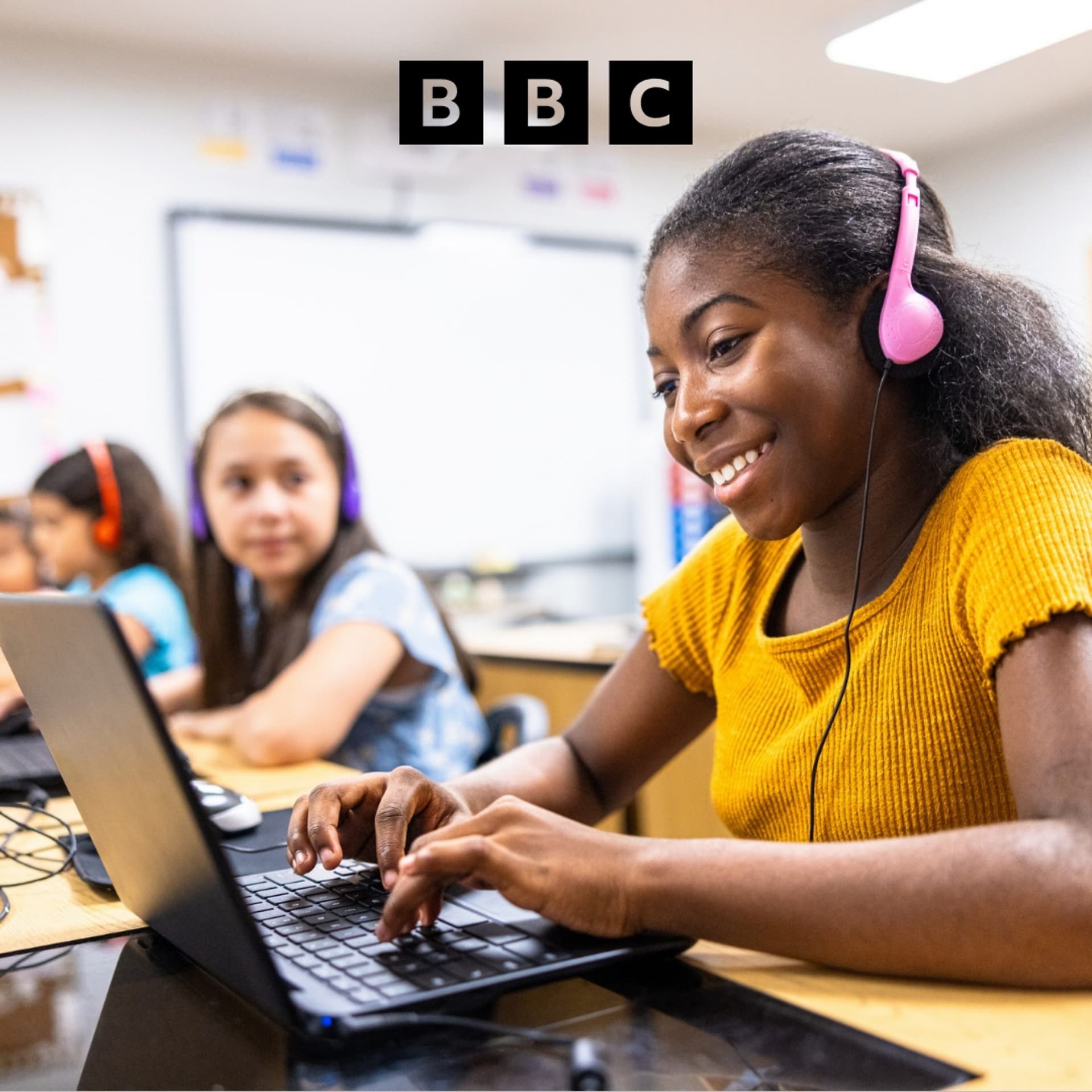
15:28While they receive models to aid their learning, the children also see the technical process of how to use a 3D printer. So right now it's starting the print. Ah, you see? It makes a line, a blue line, right? Yeah, you can just come across. The children crowd around the printer to get a better look at the product, a blue keychain. A keychain with my name, Gabe. And they're more than impressed. It's amazing. When you print it, you can see it in 3D. I think it makes it easier for learners to understand. Like, if you want to become a doctor, like, you understand more about the body parts, you see.
16:11It's more fun and so realistic using it. I want to print a flower. I normally go to those schools, see those kids using our models, and I'm like, if I had this, maybe I'd be a doctor at this point. So it's very fulfilling, that's all I can say, it's very fulfilling. Because given that the universe has given me the opportunity to actually be the person to solve a problem that I also encountered, so that other kids cannot go through whatever I went through. Gabriel and his colleagues at EcoPrince Generation hope to make a dent in the plastic pollution crisis while engaging more schools in Kenya with tech.
16:54And that was Tech Life's Jackie Wakefield reporting there.
17:16Now from preserving the environment to protecting the animals in it. Our next story is about a project that aims to help species on the brink of extinction. It involves cryopreservation, freezing cells from endangered animals so they can be revived later to support future breeding programmes. A UK-based charity, Nature's Safe, has set up a living biobank, storing tissues and reproductive cells from a range of endangered species at very low temperatures. And they hope to set up similar hubs around the world. Tullis Mattson is the founder and chair of Nature's Safe, and Debbie Romanis is its chief operations officer.
17:57I began by asking Tullis why he set up Nature's Safe. I set up Nature's Safe really on the back of the work we'd been doing with the equine forces, trying to save the rare breed equines that we have, and realised the same technology and tools could be used across lots of other different species, and then found that very little of this was being used. So that was really the door of opening into this amazing world of conservation using new science and technologies that we've learned from the equids thrown over to many other species. This is all about extinction. What's the scale of the problem? How many species are in fact at risk of extinction?
18:42I mean, the true figure is hard to actually know, But it's anything between 50 and some people say maybe even up to 100 species a day could be going extinct, which is truly frightening. And, you know, with global warming and loss of habitat, we're an absolute cliff edge. We have for many of our species, they have nowhere to go. So we work alongside normal conservation efforts. we are not replacing anything but we are just another tool in the toolbox which could be an absolute lifeline for some of those species that are at that cliff edge and have absolutely nowhere to go we can buy a bank their genetics in a way that we can bring them back to life in 10 20 or a thousand years time it's quite incredible now what this technology can do and of course it's not just about bringing creatures back it's also about issues like inbreeding when you've got very small populations and the kind of genetic diseases that can arise as a result of essentially there not being enough animals to avoid animals effectively producing offspring with close relatives that's exactly right we're not about de-extinction we're about saving what we've got here and now and so yes it's to stop that inbreeding inbreeding is quite often what can make species go extinct so we've got a wide genetic pool we want to bank ideally 50 different genetic profiles from each species, as genetically different as they can be, and bank them down.
20:10And that's like a security, it's like a safety blanket, a bit like the Millennium Seed Bank or the Svarsvold Seed Bank. You've got one for seeds, but where's the one for animals out there? So that's our idea of what we're trying to produce is an equivalent for that for many of our species. So Debbie, talk us through the process here, talk us about what you're actually sort of doing. So first of all, what kind of animal samples are you freezing in order to sort of carry out this work? And tell me a little bit about that process. Sure. So we work with conservation partners across the UK. And anytime an animal passes away or has a planned procedure, they send us a piece of skin or reproductive tissue.
20:54And then our amazing team in the lab processes those samples in a way that we are storing them in liquid nitrogen at minus 196, which means that they are maintained in a living, viable state. So for me, who's not the scientists, I like to describe it that the team in the lab dehydrate the cell and then pop a load of antifreeze in that cell. And that maintains its functionality when it sits in liquid nitrogen. And the really clever stuff comes because there's going to be a different recipe of antifreeze for each species. So that's what we're trying to develop as well. There's these different protocols across different taxa so that we can cryopreserve skin and reproductive samples across all species.
21:43Once you've sort of collected it, you've treated it so it can be frozen and you've frozen it, how is this material used? So in the most sort of short term, sort of the zero to 10 years, we are cryopreserving sperm and gametes. So that can be used for artificial insemination procedures to bolster captive populations within the UK. With the view of once those captive populations are healthier, then there is potential for reintroductions to the wild. So that's sort of the long term game plan of our conservation partners, the work that we're supporting. And then I'm going to hand over to Talis to talk to you about the other ART, the artificial reproductive technologies that are available, which are a bit more longer term looking.
22:34I mean, there is the ability to potentially turn a skin cell into a sperm or into an egg. You know, some of these technologies like they're turning a skin cell into a sperm and egg, that's been done. And so on the mice, have we done? And rhinos, no. But we have to bank for the unknown. We have to bank for the future. And what we do know, if we don't bank now, we may lose many of our species. How easy is it to bring these cells back to life? I mean, is this still something that is in development, if you like? Well, we had an amazing case the other day. There was a southern white rhino that sadly passed away about four or five years ago.
23:10We froze part of her ear down and literally, I think it was back in April, we got part of that ear out. We thawed it out and we got the cell lines to reproduce. So after a few days, there were a few hundred cells there. And after a week, there were millions. And the beef about this, you can replicate, replicate. You can never run out. You could always reproduce, reproduce. And it's an amazing tool. Just basically seeing life starting again right in front of you, right under this microscope. that an animal that passed away four or five years ago, it is quite extraordinary what the science can do.
23:45But we're waiting for obviously new technologies to catch up as well. We mustn't forget that. Is it easy to transport this material between countries to send cells to places where animals are in danger or to get cells back to preserve? No, that's quite a challenge currently, which is why we are just working with UK conservation partners at this stage. Our big vision is to set up global biobanking hubs in different regions around the world so that we can maintain sovereignty of wildlife in country because it's very difficult to transport biological samples across borders. And that's because of CITES, effectively the sort of global agreement that is there to protect species from being illegally transported, essentially.
24:36That's exactly right. Yeah, yeah, that's right. And so you're thinking of setting up biobanks in places like Kenya, as I understand it. Yep, Kenya, Madagascar, Costa Rica and, yeah, which would be incredible because they are biodiversity hotspots with a plethora of wildlife that we need to protect. and if we can provide knowledge transfer and access to some of the science and tech that wouldn't normally otherwise be available to these countries, then that would be a massive impact for us to be able to offer. And that was Tullis Manson and Debbie Rolmanis from Nature's Safe.
25:30Well, we're almost at the end of the show. Tom, the producer, has the tank of liquid nitrogen ready and it's almost time for me to be cryopreserved for my next presentation shift on tech life. Remember to tell us about your mini tech adventures, even if they don't involve being cryopreserved. Our email address is techlife at bbc.co.uk or you can WhatsApp us on plus 44 330 1230 320. And if you can please send a voice memo, we love hearing your words in your voice, but tell us who you are and where in the world you live. Today's Tech Life was produced by Tom Quinn, edited by Monica Soriano and presented by me, Chris Vallance.
26:26We'll see you next time.
From the publisher
Imagine a world in which AI servants are at your beck and call. They work for you, shop for you, book your travel and help organise your family life. It's called Agentic AI. And it's coming. A senior figure at Amazon tells us how they see AI agents changing our lives.
Also this week on Tech Life: Kenya's plastic waste problem is being turned into a 3D-printed teaching solution. And a charity is helping to save animals from extinction by freezing their cells.
We enjoy reading your messages about tech and Tech Life. Please get in touch by emailing techlife@bbc.co.uk or send us a Whatsapp message or voice memo on +44 330 1230 320. Please include your name and where you live.
Presenter: Chris Vallance Producer: Tom Quinn Editor: Monica Soriano
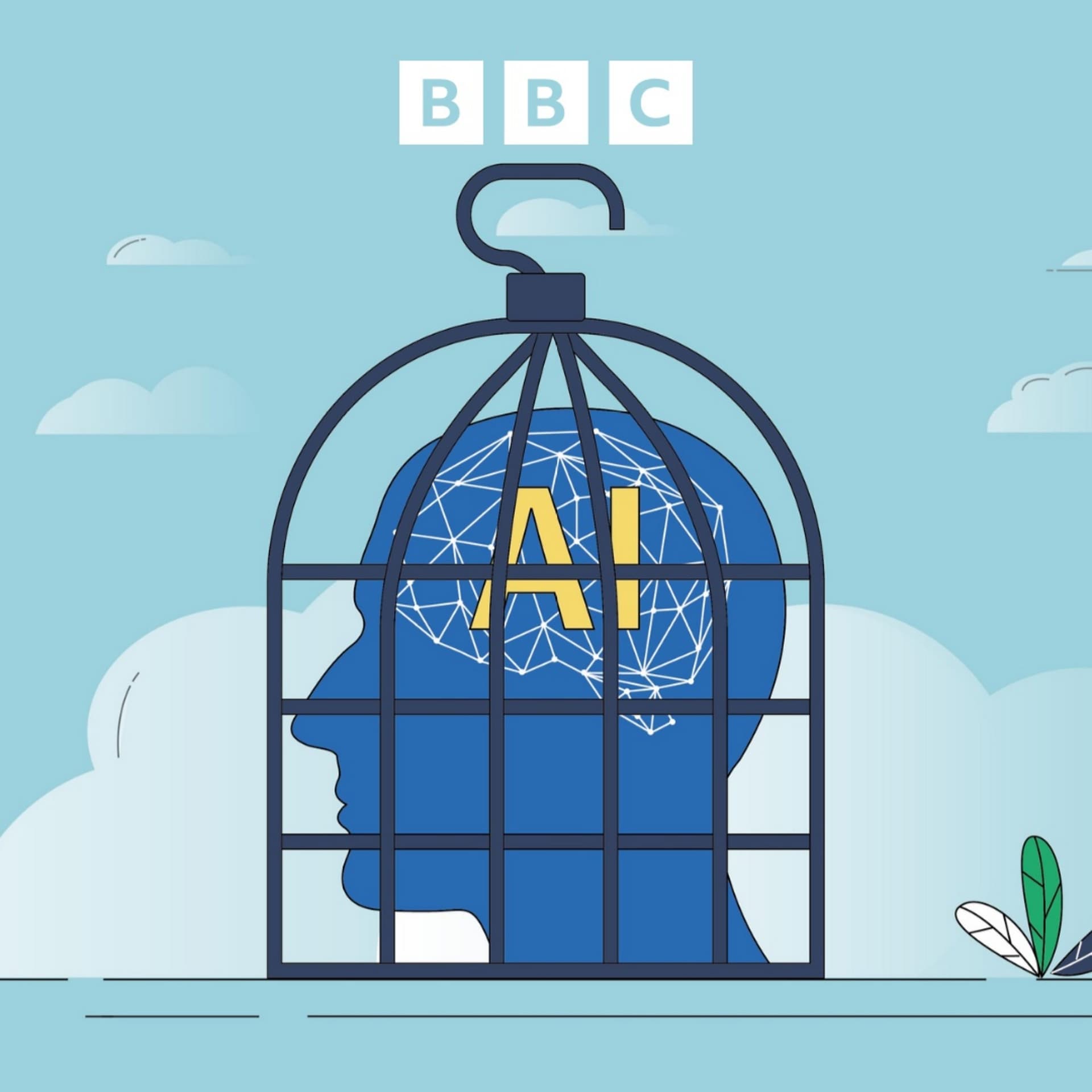
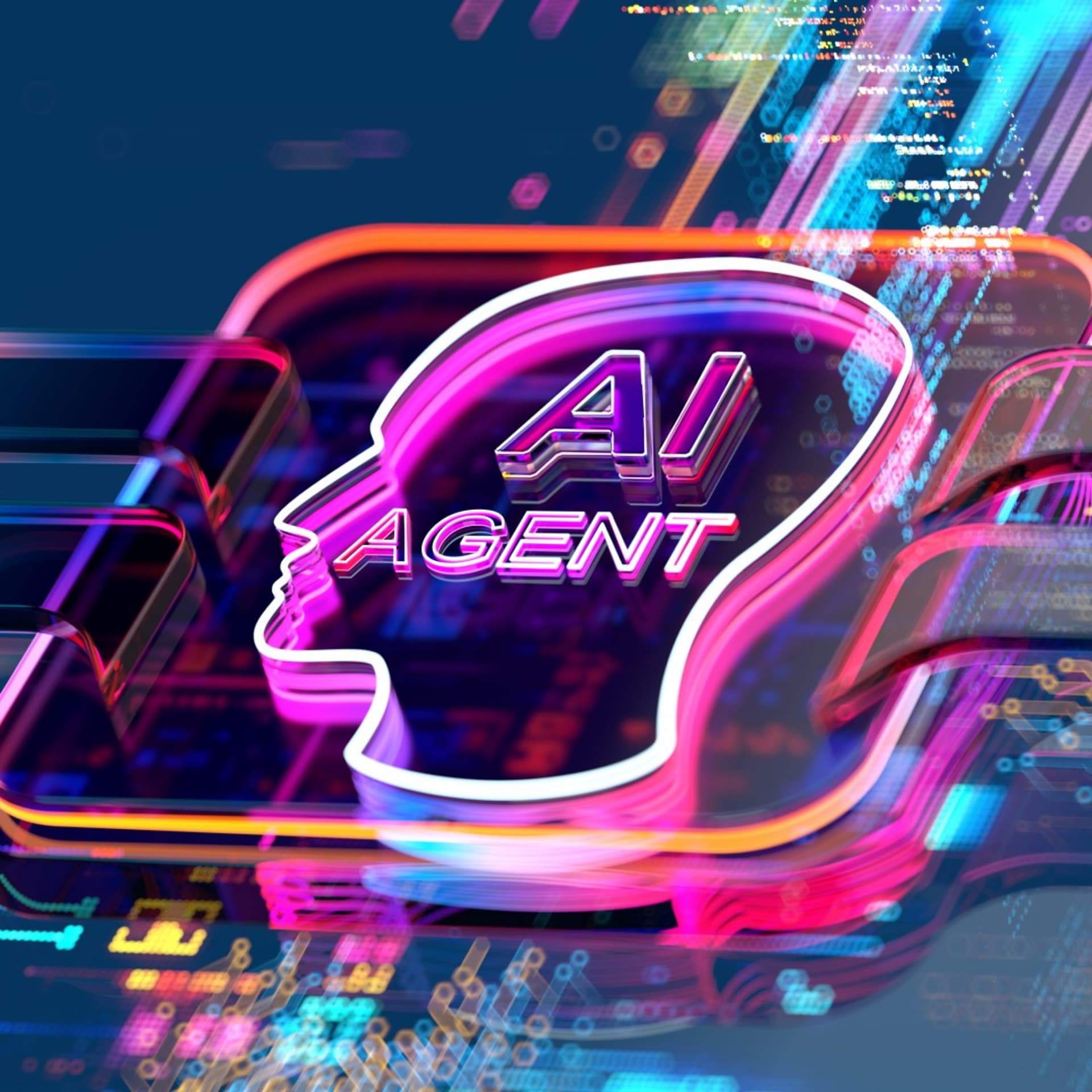
Image: A futuristic illustration of a human head connected to technology by an AI Agent. Credit: MF3d/Getty Images