Ask ChatGPT
 The ConTechCrew
4 Aug 2026 · 41m · 19 chapters
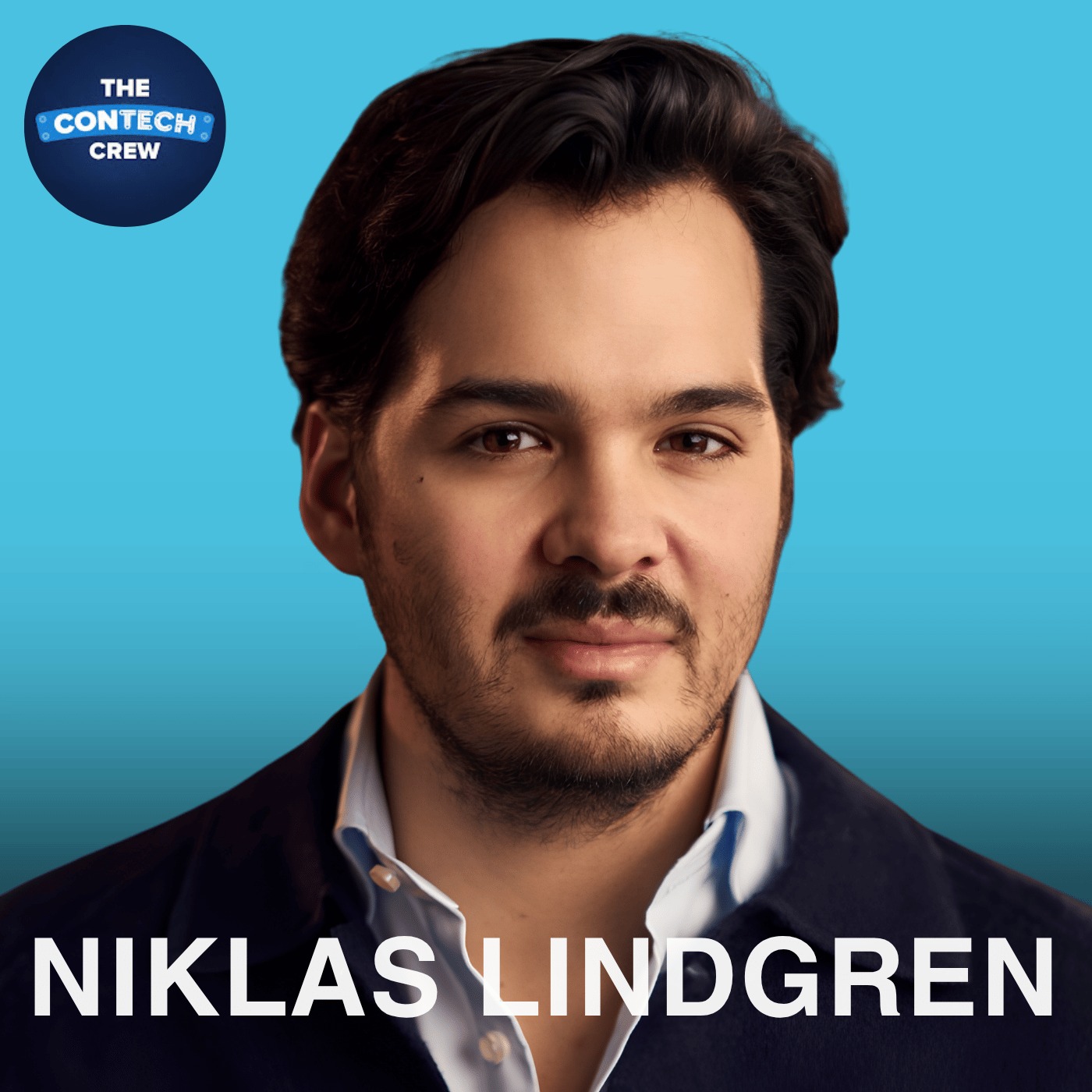
Endra’s generative AI platform for MEP (mechanical/electrical/plumbing) engineering to speed workflows by connecting 3D modeling with engineering calculations and manufacturer constraints, producing documentation packages (e.g., single-line diagrams, load/voltage-drop calculations) faster and enabling design iterations across manufacturers.
Niklas Lindgren (Stockholm) co-founded Endra after prior design-build security systems work (2014; scaled globally; sold to private equity in 2022). He previously built Revit/Autodesk-based design workflows at the security integrator. Endra’s founding team also includes technical co-founders Gustav/David, with David having built an open-source LLM (“Nedrite”).
“Multiply output 10x” via human-in-the-loop automation; store engineering knowledge as a system of record; integrate natively with Autodesk/Revit and support IFC export; target enterprise firms first.
For a 40-story electrical project, avoid manually placing every receptacle/socket; circuit everything and generate submittal documentation. Evaluate multiple manufacturer options (e.g., Siemens vs Schneider vs “NDD”) and compare quantities/costs; model down to conductor-level constraints. Endra plans a major electrical product launch in September in Las Vegas and announced a $50M Series round led by Andreessen Horowitz.
Written by AI. May contain mistakes.
Niklas shares his location and the hosts discuss the fun of remote conversations.
Niklas recounts his background and how he entered the MEP industry through family influence and entrepreneurial ventures.
“integrator for security systems in 2014 while in law school so still a kid at the time together with our fourth co-founder in Endra called Anton.”
Niklas discusses the transition from his previous company to starting Endra, including recruiting key talents.
“And so we had a design team fully working at Revit and in the Autodesk suite.”
Exploring the challenges in current engineering workflows and how Endra aims to address them.
“So we were doing some projects across the globe, but quite a few customers that we followed and made sure that their real estate assets were safe and sort of functioned the same way.”
Niklas explains how Endra multiplies the output of engineers and integrates various engineering tasks.
“And he was sort of very excited about our vision of getting into this space and creating something very different.”
Discussion on the importance of human involvement in engineering processes and how Endra supports this.
“We're trying to recruit the best engineering talent across the markets we operate in.”
Highlighting the need for a faster, more efficient construction communication cycle to enhance project outcomes.
“And over time, that has sort of hasn't shifted.”
Discussing the inefficiencies in the engineering process and the need for faster workflows.
“But they can look what an NDD system or a Schneider system would mean in terms of either quantities or money or investments.”
Exploring the integration of engineering and modeling workflows to reduce overhead.
“So the speed of the mundane, like it's funny because it has become part of the job, right?”
Understanding Endra's approach to being open and compatible with existing systems.
“Although we have built our own 2D format, we have built our own 3D format, which is a much richer geometry format than whatever is possible to get inside IFC or inside Revit.”
Discussing the importance of capturing knowledge to improve engineering outcomes.
“And we've rented out like a full venue to do this.”
Identifying the focus on large engineering firms and their strategic needs.
“I love to be the place people come first.”
Examining the global interest and demand for Endra's solutions in the engineering sector.
“And as I said, currently we work in the enterprise part of the market, currently moving down to smaller organizations and having conversations with firms that are from 100 people to 1 ,000 people.”
Discussing the recruitment of top talent to drive transformation in engineering.
“that would make sense that then you're, I would call it, the product is split up a little bit between it's a strategy and a set of tools to grow a business and a technology platform to really speed up the process.”
Outlining Endra's mission to transform engineering practices globally.
“and so the whole sort of mission that we are having at Endra is much larger than to sort of go build another tool.”
Announcing Endra's funding rounds and discussing their significance in the industry.
“Yeah, so we have raised, we raised our, so our funding sort of journey started a year ago or something like that, I think.”
Learn about the vision and traction of Endra in transforming MEP engineering.
“And I get so many questions like, why did they choose M &P Engineering?”
Explore how structured data delivery can improve construction workflows.
“It's a really cool company to work at right now in this exact moment.”
Understand the importance of speed and efficiency in the construction industry.
“or optimize for this manufacturer or whatever you'd like to optimize for, we could actually help you as a contractor, help you do that.”

Get the gist, explore an idea or ask about something said.
 Claude
On The ConTechCrew, what are the key points of this episode?
Searching your listeningAutomatic transcript. May contain errors.
0:00On this week's show, Engineering Generative AI with Niklas Lindgren from Endra.
0:17It's great to have you, man. Where are you coming to us from, Niklas? I am calling in from Stockholm, Sweden. So afternoon here in a currently rainy Stockholm. home uh well it's a currently rainy here but it's morning here i always love these that we can like just connect across the water have a conversation put it out it's kind of fun right it's a new world that way you are in the best part of america i love your hometown uh well that's awesome we love to hear that you know called to the denver and mountain area of colorado hopefully we'll see you out here a little bit more you guys know the drill follow us on youtube youtube.com forward slash at the content crew follow the guests follow the hosts interact with us drop us a line you never know we'll probably reply you know that moment when you're buried in submittals the electrical contractor swears they're working on the latest set the mechanical disagrees and nobody can find the same detail blue beam solves that problem and more with max stitching pulls together every discipline's drawings into a single continuous view so architects engineers and contractors are finally looking at the same thing at the same time wild concept right flag issues before they cost time and money find what you need fast and stop hurting cats across 100 sheets same blue beam you trust just way smarter free trial at bluebeam.com forward slash try max all right so nicholas tell me a bit about you and how you got here like give us a little bit of your history Oh my God.
1:51Yeah, that's a long way, but I was my way into this industry. If we could start there. My dad is an architect, so I had some drawings on our dinner table growing up, looking at mechanical, electrical, and plumbing drawings. drawings and so that was my probably my first sort of connection with buildings and with with this AC industry. My more professional approach was when I co-founded a design build integrator for security systems in 2014 while in law school so still a kid at the time together with our fourth co-founder in Endra called Anton. We were building designing a building and supplying physical security systems to real estate assets like data centers, large-scale warehouses, and enterprise office campuses all across the globe.
2:46Very different from the journey we're currently on. We were fully bootstrapped, about to go bankrupt. I can't even count how many times. But we scaled it from nothing to quite substantial size. Opened up an office in New York, scaled into the U.S., been working across the globe, really, on real estate assets, installing security systems, designing and installing security systems. We scaled it, as I said, for eight years, sold it to private equity in 2022, stayed there for a year and a half before starting Android, or two years before starting Android. So that's my segue into this industry. We were very heavy on design.
3:27We were doing very complex projects. And so we had a design team fully working at Revit and in the Autodesk suite. So sort of that is my segue into the design world and the engineering part of this industry. And that is sort of how I ended up in choosing to work with Enver. That's crazy because, I mean, you're in school, two of you in school. What makes you decide that this is what you want to do and build it from scratch? Like you didn't go find a company, you built it. What was the impetus? Apart from being a terrible lawyer, I would never, so I kind of understood that I'm never going to be a good lawyer.
4:08And I didn't really enjoy going to law school. Neither did Anton, who I co-founded our last venture with. So like it was by accident. Someone, I knew someone who knew someone. And then sort of we started to bite our way into that industry. And that where we started was very different from where we ended up as well. And it grew very organically over time. And as we started working with our larger scale projects with large customers, we did pivots along the way. So we kind of iterated our way going there. Well, it sounds like a good construction company story, right? And interestingly, like when you think about security and large scale security deployments, are those, and you said design build.
4:53So those are early project. you're in the earliest phases of the project doing that right exactly we were involved with our customers like even before like at the time they basically planned the plot and at the sort of program management level so very early usually um and as i said we were working with some quite few but very very large customers many hyperscalers many of these like the largest companies in like the warehouse and logistics industry and large government clients, United Nations, you name it, and we probably have worked with them. So we were doing some projects across the globe, but quite a few customers that we followed and made sure that their real estate assets were safe and sort of functioned the same way.
5:44Awesome. So you exit and it sounds like you and Anton hadn't had enough fun yet. So where did you go next? Like what's that next chapter look like? That next chapter looked like I was pinging, or if we actually go back, we tried to hire someone called Gustav a couple of years earlier as sort of a CTO role to our last venture. He was then working at a startup that got acquired by Goldman Sachs. He's a developer, an engineer and he made the wise choice of going into banking he wanted to make some money i think and not be in the bootstrap startup world so he was he was he was going into he was going to goldman sachs and working on the autonomous trading team and building autonomous trading systems for goldman so he said no the first time we asked him back to join our last venture and then once we did this venture i had lunch with him and i basically showed him what a sort of what a 3D model in Revit looks like, what the related documentation packages look like and how they are built and sort of how these two workflows are very disconnected today and show them what millions of engineers across the globe are working on, how their tools actually look like and what platforms they're working on and what the technical landscape in this industry looks like.
7:11And he was sort of very excited about our vision of getting into this space and creating something very different. And he said, but I will join as a co-founder if we're getting a fourth one. And that guy's name is David. David was also working together with Gustav in Goldman. And he had been on the algorithm trading team, basically building the algorithm that Goldman Sachs used to trade autonomously. and he quit Goldman in, I'm not exactly sure what year it was, I think it was in 2022, to go build an AI company. And he ended up building his own LLM, which is, yeah, he can speak about what he did there, but he released it as an open source and it's called Nedrite.
8:01And he spent some time doing that. Then we approached him and he very fast got decided as well, decided to join as co-founder and that was the founding team back in 2024 so yeah that's the that's our next chapter we managed to recruit two really really good technical talents uh so we come from the industry understand sort of the what the industry looks like been in the industry for all our careers and they can bring the world-class engineering parts of this to make sure that we can actually pull this off and also attract other talent to join which is to be honest a very crucial thing for us. We're trying to recruit the best engineering talent across the markets we operate in.
8:45And that's a much harder task than I ever thought it would be. But it's a very hard task. And just the two of them are attracting talent to us. So I'm very sort of happy that we were taking on that decision to have them join. Yeah. And it's an undervalued portion in our industry and in most industries, it just so happens there's a lot of companies that have the same ideas at the same time. And the differentiator on who wins and why isn't always that you had the right idea. It's that you had the best team that's pushed in the right direction, that's guided and viewed in the right direction. So, so you have this problem, you were working in Revit, you're working in all these disparate systems, but ultimately like what was the problem?
9:32Like, what did you want this crack team of four to solve? What did you think could be different? So from the very beginning, speed was the first thing that we went into and wanted to tap. We wanted to speed up the workflows for our customers and sort of have them do more with less. Multiply one engineer to work as five or 10 or whatever the numbers. And that was sort of the very foundational idea of what we do, of what we did at the time and that we could generate the design so engineers could work on different type of versions of a model and work on different type of, they can iterate much more using our technology.
10:12And over time, that has sort of hasn't shifted. That's still sort of one of the very core reasons why our customers are working with us. But it's also sort of now we want engineering firms and engineering organizations, MEP engineering organizations across the globe to be able to store their knowledge as a system of record and compound that knowledge over time. That's a very important mission for us. So they can sort of, as I said, store their knowledge, prioritize that to their customers, and make sure that they get better over time. That's one of the very important North Stars that we're having.
10:47So speed for engineering workflows. We connect the 3D modeling together with all the engineering workflows, which could be, if you're speaking for electrical engineering, that could be cable sizing, that could be equipment sizing, load calculations, voltage drop calculations. We connect this in almost like an omniverse-like environment where we connect all the physics related to the design together with the 3D modeling and all the way down to the manufacturer level where we understand the constraints and understand what the manufacturer actually can support and not support and how to sort of optimize this design end-to-end from the 3D model down to the manufacturer level.
11:30So we connect the physical world and the real world together with the modeling. And that is like at the core of what we are doing now. Yeah, I think people listening kind of got it because ultimately I usually have construction on the show, trades, GCs. So when you were saying engineers, I wanted to be clear, these are not software engineers. These are true engineers, MEP, consultant engineers that engineer and draw the buildings and the systems and make sure they fulfill the specs of the owner or the architect and owner for that job. And you're doing it, you're not replacing the tools, but you're creating this new set of tools in Endra.
12:14So I don't think you said that, but it's Endra. So if anybody's interested, it's Endra.ai. You're creating the platform for this to do those workflows for them. Exactly. Like if you have like a 40-story building and you're an electrical engineer, like we help you to not place each and every socket or receptacle inside that model. And we help you circuit everything, make sure to produce your load calculations and sort of create all your documentation package that you need for submittal. And we help you with whatever percentage, but we help you get there so much faster. and that is the core of what we are doing.
12:55We're connecting all the parts, as I said, related to, we're creating and populating the 3D models, but we're also creating all the documentation packages like single line diagrams, load calculations and so forth. So that is the core of what Android is doing and that is why it has such a big impact on our customers' workflow because this is what their engineers are working to do and to produce. and we help them produce this much faster. So as I said, you can start multiplying engineers and create better products ultimately. It's not about sort of to sort of cut out the engineers. We are building this fully for human in the loop.
13:34The human and the engineer is always in control of what he or she is doing. And what we are doing is that we're just helping them speed up, remove mundane tedious tasks and shift that value upstream to their customers So they can, for example, they can start evaluating three, four different manufacturers for one building. They can see what a Siemens system would have in terms of bid of quantities or for cost impact for this building. But they can look what an NDD system or a Schneider system would mean in terms of either quantities or money or investments. So those are the type of things that you can do with this.
14:16So you can start, and that's why this is a very powerful type of technology and why it makes sense. Yeah, well, I mean, listen, the cycles to getting from owner to architect to engineer and back and then getting the construction project in the ground is something we need to speed up, right? There is too much time spent on the manual tasks of it and not enough time spent on means and methods, not enough time spent on, hey, are there other opportunities here to do things differently downstream, to provide a better product but a faster product or a safer product or a more long-term valuable product?
14:59There's so many other opportunities to bring into the process. So the speed of the mundane, like it's funny because it has become part of the job, right? Like, what do you do? Well, I'm an engineer and I do Revit. And it's like, well, no offense to Revit. That's not actually what your job is supposed to be. Your job is supposed to be engineer some sort of system for a project that creates the outcome and the design intent of the owner to deliver. Yeah, definitely. And it compounds as well because you have multiple work streams inside your project, right? You have, as I said, you have your engineering work streams, which in many cases is done by like a completely different team versus the modeling team.
15:39So once you combine these two, there's a lot of like layers of complexity and just layers of like it creates more meetings just to have these two different workflows. That creates like overhead, which then is being charged on the project. So we try to sort of be the workplace where MAP engineers over time will spend a lot of time inside. And then we integrate. We integrate natively throughout it. We integrate natively to the Autodesk suite that we think makes sense. And we integrate really deep. So we integrate, as I said, on a native level. And that is part of our strategy to be agnostic. From Android, you could export IFC files for a model.
16:20We're not sort of a closed environment. Although we have built our own 2D format, we have built our own 3D format, which is a much richer geometry format than whatever is possible to get inside IFC or inside Revit. But we integrate NettoB, as I said, to Revit and we support our users to export IFC so they can open them wherever they want. and it's part of our strategy is to be very open where we can be open and we want our users to not sort of feel that they're being locked in inside Andra. Yeah, and I think that's what attracted me to it when I talked to you guys first, when I talked to you first is that like you're not usurping anything, you're actually building something uniquely of its own that's complementary to no matter which way you want to go and the other part was I want you to touch on that knowledge capture because I think that's the step change of like so many generative design things that have pontificated is what I will say that they're going to do these things it's really based off a historical and you know we're just going to we're just going to route it where it routes or we're just going to do what it does you're talking about more than that so what what does more than that look like more than that look I have to be a bit careful what I say here, because at the time when this podcast is released, we are doing our large launch for our first product, for our electrical product, September 40th in Vegas.
17:52And we've rented out like a full venue to do this. And that is where we are going to produce or present some of the core concepts of this. But on a high level, where we want to get. So I'll tell you sort of where this comes from. And it comes from a place where our customers want to start productizing their internal knowledge. So currently they have Word documents, Excel sheets, PowerPoints that are unstructured. And they want to have a way to take all of this bank of information and make sure to distribute this across the organization to make sure that they can perform excellent across their whole enterprise.
18:37And we are only working with firms that are, currently we only work with firms that are quite big. So this is like a key thing for them to figure out. And there will be a product in Endra where this is possible for the first time ever to start taking all of this knowledge, build products around that and then offer it to your customers. So, but happy to revisit that later this year because it's a very strategic part that we're building and it's going to be released September 14th in Vegas. Well, I love to be the teaser. I love to be the place people come first. So that was perfect. You gave them a little teaser of what's coming in September.
19:18So for any of you headed out there around that time, which I think quite a few of you will, it might be worth taking a look. But I want to touch on that too, right before Autodesk University. I wanted to touch on something you said in there. This is not just something that you've got two, three engineering firms that are trying this out or going there. You are at a whole new level. And so I want you to talk a little bit about that because you mentioned it. This is not for currently the small engineering firms. You are, your clients are big. Yeah. We work with the largest players in the globe or on the globe.
19:56I can't really say which ones. That's okay. Speak in general terms of size and why is that your target? I have some that has been publicly announced, and those are the likes of Tetra Tech Company, Ramble, Bureau Hapbald, and many others, but were sort of not publicly announced. We are waiting for our customers to announce because this is a key part of their strategy. So we help them do their AI transformation. How we do that is sort of a very strategic sort of bet that we're taking that we want to be part of how they make this transformation work. So when customers are sort of approaching us, it's not in the sense of them buying a tool or buying some piece of software.
20:52This is like a package, half product, half people coming with the product to make this transformation happen. And as I said, currently we work in the enterprise part of the market, currently moving down to smaller organizations and having conversations with firms that are from 100 people to 1 ,000 people. We haven't done that previously, but we are doing it now. and by the time this episode goes live, we will definitely be in that cell. So it's actually been a bandwidth type of problem for us. We're having so much inbound that we can't manage it. We have started to focus in three core regions, so we've been active in Europe, UK, and the US and we haven't had bandwidth enough to make sure to serve everyone or make sure to onboard this with everyone.
21:45So it's been a massive, massive interest across the globe really. I think our, yeah, I'm not sure if I should disclose the data, but I think our Q4 weight is that it was something like from 130 or 140 countries and pressing access to Andra. So it's been a global, big global demand for getting access to this. And we are still building this. Like, as I said, we're releasing our first product September 14th. So we're trying to tackle that demand with also building a killer product. And that's what we're doing right now. Yeah, it's a unique method, given that you can see the impact of the large organization.
22:29But it also goes to the founding group, right? You have two and two, two from two highly technical, two highly industry. that would make sense that then you're, I would call it, the product is split up a little bit between it's a strategy and a set of tools to grow a business and a technology platform to really speed up the process. And that makes sense why there's the four of you coming together. That's also, I think why you're getting so much traction right now is anybody can build a tool, but it's really about how do you transform the business model to take advantage of any given tool. And if a large engineering organization can take advantage of the tool, naturally, it will make its way to smaller and smaller.
23:16Big bet on your side, though, because going big, we all know on this side is the harder thing, right? It's easier for me to go small and get a few. So, you know, kudos to you for having the, I would say the stomach. Maybe it's from your days of being a bootstrapper and knowing, you know, not knowing where lunch is coming from that you guys were able to get to this point yeah jeff you know it's uh like i i wouldn't really get excited about this if it wasn't a big bet like in in like foundationally from from from from doing this and i am at a point i think currently in my career where i i don't want to sort of i don't work to get like a small outcome of this i work to do something big and transformational for this and that is why we are doing this and everyone working at endra shares that vision and then are joining us to to to do the same thing because as again back to what i said like we're we're probably like our engineering profile internally like developer profile that we are hiring for is probably very different from from the general ac software company we are hiring from like pitchers from Princeton and former people from Apple, Applied Intuition, you name it.
24:34We're trying to build a stellar, stellar team to try to pull this off. And it's not possible to recruit that type of caliber of people if you're going for a$300 million exit to Autodesk. It's simply just not possible. and so the whole sort of mission that we are having at Endra is much larger than to sort of go build another tool. We're trying to transform how engineering is done globally and we want to be the workplace where engineers go to do this work. That's a very important mission and target that we're every day trying to get closer to. Yeah, it's something people can get behind. And that's a key to having a vision to not just create something, but to solve a big problem or to transform how an industry delivers.
25:33And it's a critical part of the construction industry that engineering gets overlooked sometimes, I think, by the mass people just because, you know, it is in the background. It is a, you know, quietly known as not the most outgoing folks in the world. But I think it's great to have a company culture that way, right? Like if everybody's pulling in the same direction, you can get somewhere. And on that note, you've been you do have an announcement you can make while you're here because of the timing. So you've gotten the eyeballs, not just you've got some new eyeballs that I think are really interesting.
26:10And I think it's a signal for our industry right now. So if you want to talk about what you can tell everybody. I think you're speaking about our series announcement that will probably be live when this goes out. Yeah, so we have raised, we raised our, so our funding sort of journey started a year ago or something like that, I think. almost exactly a year ago where we raised a pre-seed round of 4 million that were raised in December of last year. Like seven months after, we raised a$20 million seed round. And we just are about to announce our series, which is a$50 million series round. Probably, I'm not sure about stats.
26:55I haven't looked into it, but I think it's one of the larger series, at least in NDC technology. and it's done by Andreessen Horowitz, which is a Silicon Valley-based fund, sort of traditionally not in the industry, but traditionally I'm not sure if they are sort of, they're not super sector-focused, in my opinion, at least. They're trying to figure out where they have resounding terms and opportunities and then go invest in them. But so we have just raised our$50 million here's the round, which means that we've raised$74 million the last 12 months, something like that, to go make sure that we build this mission and make sure that we can deliver on this.
27:39That is the announcement. There has been so much questions around this in the industry. There has been so much focus towards that. And a fund like Anderson Horowitz, which is arguably the largest fund on the planet, goes into sort of this space. And I get so many questions like, why did they choose M &P Engineering? And why did they choose, like, what did they get? When is this space? But it goes back to sort of both, obviously, the total market dynamics, but much more so traction is one, sort of what our customers are saying, like how they think about the product. and the founding team and also sort of the vision of this company.
28:29They know that us and the founding team are not looking to do something just scale to 10, 20 million ARR and sell to Autodesk as fast as we can. We're trying to do something much more sort of transformational in this industry. And I think many are intrigued by that. We had the other larger funds on the globe to choose from. We had term sheets from many of them, at least. And we chose Indurisum because they have been incredible at backing this type of companies, vertical, integrated AI companies. And I don't need to speak about their portfolio, but their investors in SpaceX, World Labs, OpenAI, Airbnb, Instagram, MetaUnited, and they've probably been there investing in it.
29:22So it's obviously exciting, but it doesn't really weirdly change much. We're just doing exactly what we were doing before, and we're doing it faster and at higher speed. I would say that's the sort of key difference. my job hasn't changed much. That's the interesting thing. So Andreessen Horowitz recently released an article about every building you've ever been in was designed by software built in, what was it, 1997. And I think that may be showing why they were looking for companies like you to really get the traction and change the industry because the industry is at inflection point. But it's interesting because as I've watched the funds that are there in construction tech, they have been smaller.
30:10They have been focused in niche in the market. A lot of them come from the market or are backed by construction companies themselves or engineering companies. We see this a lot. So this is a unique one to see them stepping in and say, no, we're betting on the bigger ones to deliver longer term and not just do that. And it's funny, you mentioned that Autodesk acquisition. There's lots of acquisitions out there and there is a trepidation. In fact, I've spoken with people who do software selection and that's one of their questions is what's your exit path? When are you looking to be acquired? And that's a signal to me that there's a fear of acquisition at points because you get involved in something and then ultimately when it's acquired, it becomes something different.
30:57So I think that's a unique signal. I can understand and respect if someone wants to do that. I did that in my last venture. So, I mean, it's, but it's not the company we're building now. We're trying to, as I said, build like the place where MEP engineers go to work and be the sort of infrastructure where firms are building their organizations on and scaling, scaling on, like scope down to the engineering parts of the workflow, MEP engineering parts of the workflow. and that is a huge opportunity and it's a huge market and it's a huge mission to go build and very, very complex on many, many dimensions and so we got job to do definitely for many years but the mission is sort of still the North Star and that's why we're attracting amazing talent like coming back to that, I hear that but it's really the sort of the team we're building here is stellar and we're building it across Stockholm, London, New York, and San Francisco.
31:57It's a really cool company to work at right now in this exact moment. It's really cool. It's a really early stage and a really good time for it changing. And to your point, I wasn't trying to offend anybody out there building the point solutions, especially given the last 10 years, there was a lot of workflows, a lot of specific things. There wasn't a lot of the technology we know of today available back then. And so you had to stay focused and look for areas of improvement. And those became, you know, point solutions that then were acquired and did make sense long term to be a part of a larger platform.
32:31There's just a different DNA and a different approach when you're looking at something like what Endra is biting off and doing. And it is going to take a very powerful, very driven global organization. But also, you know, it takes that investment. Like, you know, a lot of people look at venture capital as, you know, oh, it's the easy money. It's not easy money, man. It comes with, if you use it right, you know, it's an accelerant to where you want to get. So if you had to say beyond, well, you've said it, and I really like this. Like this is you're trying to create the place where engineers go to work.
33:10How does building something where engineers go to work, how does that improve construction? Like, because my folks listening are like, why did you bring an engineering company here? None of us are going to buy it. Right. And I'm like, I understand that. But this is going to drive a downstream transformation. So I wonder if you could spend a little time talking about that for them. It's quite easy to understand. So let's say you're an electrical contractor in America. You have, if there's been an engineer working sort of on the first early phases of design, there is something which probably today is delivered to you in a drawing set or in best case, a 3D model, right?
33:50If we can deliver this downstream in a much more structured format, we can help all the electrical contractors or the mechanical contractors or the plumbing contractors to sort of generate their more detailed design from that. And also, again, I've been in that, as I said, my previous venture was a design build contractor. So I know exactly sort of how we're, like what is being received at that stage. And if we can control that sort of ecosystem where we hand over a much more sort of data-rich design that we can start iterate on different type of solutions and optimize for cost or optimize for performance or optimize for this manufacturer or whatever you'd like to optimize for, we could actually help you as a contractor, help you do that.
34:38And this is a future vision. This is not where we are today. We are in the consultancy part of the market, but long-term, this is Andre's an ecosystem plate. So we want to be able to offer that downstream to the contractors, have them interface, let's say, with the manufacturers and they can start optimizing designs in this physics first than a powered way. That is sort of how this will affect the full sort of broader ecosystem in this. And if you're a GC, like I said, you can start evaluating five different cost scenarios. I said it previously that you could evaluate what a Siemens system for this billing would look like and what an NDB system would look like and what a Schneider system would look like for this exact billing.
35:25That could differ millions of dollars. and it's not today possible to have an engineer create five different designs because you simply don't want to pay for it, right? Here, you can have very detailed design. You can do five different versions of it and you can actually send the single line diagram to all of the manufacturers and you can send all the local, you can send all the data for manufacturers to give you a price for all the bill of quantities, everything because Endra today models it down to almost, it models everything down to a conductor level inside the electrical module. So it's very detailed down to a manufacturer level, which makes this, as I said, very powerful because it's connecting all parts of the modeling and the engineering parts of the workflow.
36:10Yeah, it drives a really powerful piece for GCs looking at that cost and being able to do iterations they couldn't do that are much more detailed. And then in all honesty, because you come from the design build world, you know that if you have those MEPs at the table early in that process, not only can they optimize maybe for one project, but for a more of a portfolio approach and look at like, how can we optimize across what we're building? You know, as these hyperscalers are building new hyperscalers, they got to manage those facilities over time. So a level of consistency across their portfolio might be a great idea.
36:50I can see all sorts of opportunities. And we keep saying this and it's come up on show after show. This can get us out of the mundane and into the means and methods and into how are we delivering? So not only now can you GC sit there and say, hey, these are some of the choices you have. They can bring the the trades in and say, OK, we have these opportunities. But then also here's the speed at which we can do this if we make these decisions. And by the way, here's the sort of buying power we can get if we standardize. You know, we've seen this on little things just like hangers and standardizing on a single set of hangers can save you all sorts of money, can also help you with supply chain, right?
37:31We have this supply chain issue and supply chain disruptions that have happened over time. Ender would provide a platform that at some point could handle those supply chain disruptions in a way that doesn't cause work stoppage. definitely and we even more like end race today even modeling the metal and the cables and like optimizing for that so it's like it's uh as i said it's a physics-based type of approach and uh you can get down to a very detailed level over time as i said back to the ecosystem type of strategy that we're having we just had actually today this morning we got a one of the largest GCs in America funneling a project through us to one of our partners in Boston and making sure that they can sort of, they will get the job if they use Endra.
38:22And we are working with the engineering firm in that case. And so Endra is being used as a reason to work with a firm that is connected to Endra because the GCs want faster turnaround times. They don't want to wait months if they don't need to. Same goes, by the way, for owners. If they can increase the speed to market and just have the designs made faster, they will take every chance they can in order to do so. And our thesis is that our engineering consultancies will be able to charge incredibly much more if they can deliver faster. We've spoken with one of the largest real estate owners in America, and they've said that they would be open to double their MEP engineering fees if they can shrink the design timelines with half.
39:08So it makes sense because if they have like a 40-story building in Manhattan waiting for their tenants to come in into that building, they lose a lot of money if there's like, if there's no tenants in the building for, let's say, three or four months. So I see that over time as a very sort of key driver for why this will make a lot of sense. Yeah, I mean, we heard that during the supply chain disruptions. Like I would pay double for a guarantee that all of the material I order shows up when I want because half the material or three quarters of the material is showing up. Might as well, none of it may have showed up because I can't get what I can't get done done.
39:44And you're right. This is an opportunity to time is money. And that was something interesting along the way is to learn that an owner who can't, you know, turn on the hyperscaler, can't, you know, have their manufacturing facility producing what they want to produce. They're losing dollars every day and it's worth them. I mean, millions of dollars in some respects and so that speed is important to them so i can see that being a differentiator but also they have fiscal responsibility so to get the speed without sacrificing the efficiency without sacrificing the quality of the building well now you're now you're talking man now you might as well just pull that mic out and drop it because if we get there then uh nicholas you'll be on the show saying mission accomplished.
40:31So do me a favor, let everybody know where they can find you, man. Cause I think people are going to be reaching out and looking and just wanting to follow you from our world. And I know I've got some engineer buddies out there that are probably going to be one of those inbound. So tell everybody where to find out more about what you guys are up to. Yeah. They can either go on our website, andra.ai that's E N D R A.ai, or they can connect with me on LinkedIn. That's Niklas Lindgren, Niklas with a K, or follow me on X. And I think those are the best ways to reach out. You know it. We'll put it in the show notes for you.
41:05I've been waiting to get you on and I'm excited that you took the time to sit down. So thanks for being a guest today, Niklas, and humoring us. Fired up, Jeff. This was great. Thank you. And thank you for tuning in today to geek out for our interview with Niklas Lindgren. To read all our news stories, learn more about our guests and listen to the show, visit the contact crew.com. This is the contact crew signing out until next time. Enjoy the ride and geek out.
What does it take to transform MEP engineering with generative AI? In this episode, host Jeff Sample sits down with Niklas Lindgren to explore how Endra is building a new AI-powered workplace for mechanical, electrical, and plumbing engineers. The conversation covers Niklas’s path from law school to founding and exiting a global design-build security company, assembling a world-class technical team, and creating technology that connects engineering calculations, 3D modeling, documentation, and manufacturer data. Niklas also explains how faster, more detailed engineering could improve decision-making for consultants, contractors, general contractors, owners, and manufacturers across the construction ecosystem.
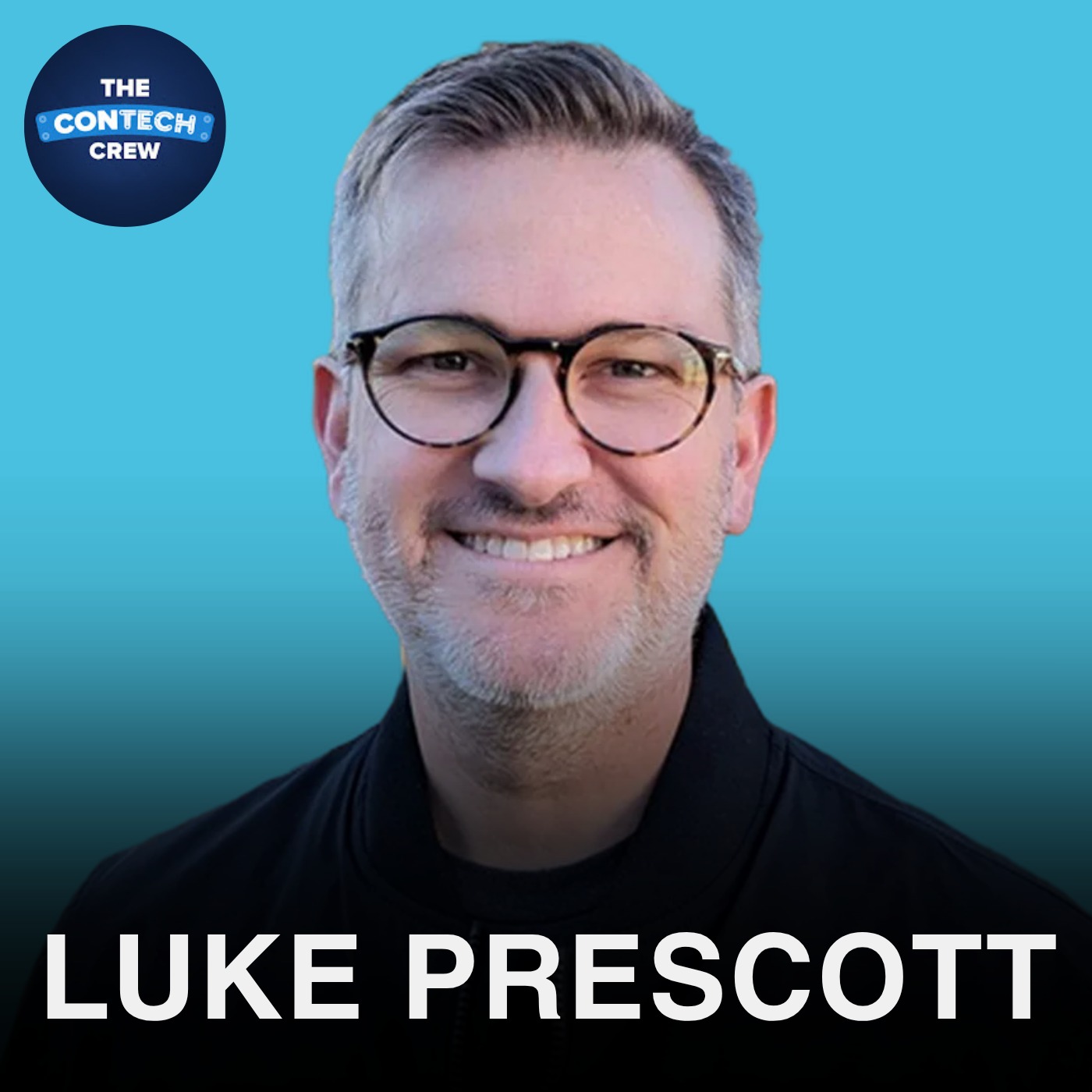
Niklas Lindgren is the Co-founder and CEO of Endra, an AI platform designed to help MEP engineers automate repetitive workflows, generate documentation, and capture institutional knowledge. Before launching Endra, Niklas co-founded and scaled a global design-build security systems company serving hyperscalers, government organizations, logistics providers, and enterprise clients. After selling the company to private equity, he partnered with experienced AI and autonomous systems engineers to build Endra and pursue a broader vision to transform how engineering work is delivered.
Key Takeaways
Timestamps
[00:00] - Episode teaser
[01:42] - Introduction to Niklas Lindgren and Endra
[03:48] - From law school to building a global design-build security company
[05:51] - Founding Endra and recruiting an elite technical team
[11:42] - The core problem Endra is solving for MEP engineers
[13:01] - Automating repetitive design work while keeping engineers in control
[17:48] - Capturing institutional knowledge and productizing engineering expertise
[19:39] - Enterprise adoption, global demand, and Endra’s go-to-market strategy
[25:57] - Raising a $50 million Series A and building for long-term transformation
[33:12] - How AI-powered engineering can improve construction downstream
[39:31] - Final thoughts and where to connect
Follow Niklas Lindgren:
Follow the Host:
Follow The ConTech Crew: