Ask ChatGPT
 The ConTechCrew
18 Aug 2026 · 53m · 21 chapters
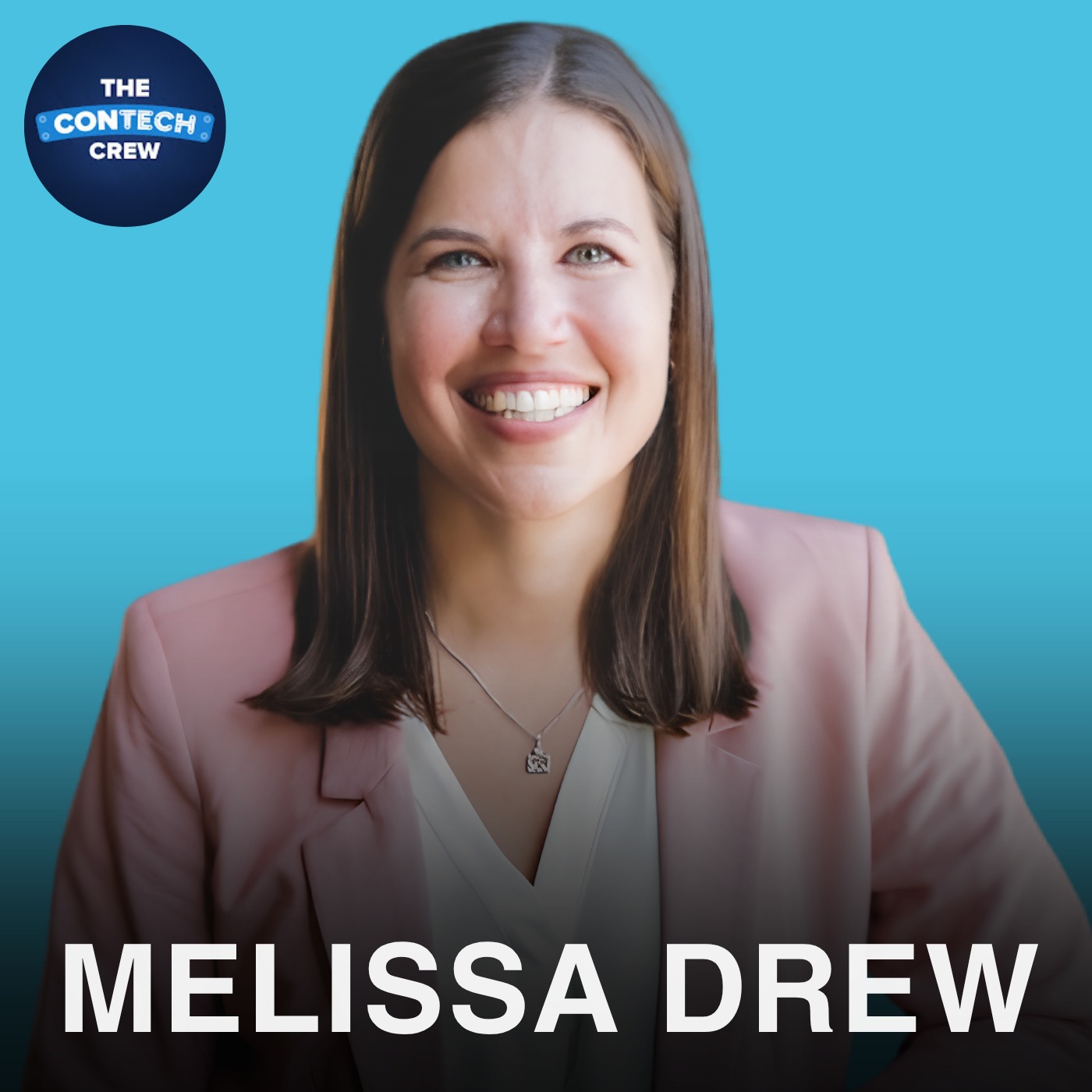
Melissa Drew, founder/CEO of Insight Build (Maryland), discusses how small construction management firms can protect profit and quality by avoiding rushed work, prioritizing subcontractor relationships, and using simple but effective planning/visualization tools (especially Bluebeam Max stitching) to keep all trades aligned.
Melissa Drew has 20 years with a large national contractor, mostly on higher-education and publicly funded government projects across the U.S. She founded Insight Build after relocating to Maryland in her 40s. Insight Build is a commercial construction management firm (about 7 full-time and 2 part-time staff), focused on large state-government projects.
Rushing and rework destroy morale and profit; flexible processes that reduce subcontractor paperwork improve trade retention and pricing; winning hard-bid work can be done by selecting a committed team and maintaining a consistent, team-first approach that avoids “change-order central.”
A $53M early project; Department of General Services job where they maintained a consistent approach until the state “flipped” to accepting their method; a project with 600 concrete piers where Excel + CX Alloy-style checklists prevented errors (only first 10 were wrong). Bluebeam Max stitching helped unify multi-page, multi-discipline sets for subcontractor estimating (e.g., marina project).
Written by AI. May contain mistakes.
Hosts discuss the focus on practical construction insights.
“You've been listening because the numbers are going up.”
Melissa shares her journey and the founding of Insight Build.
“Tell us a little bit about you and your history.”
Discussion on experiences in large projects and their impact on current methods.
“Just starting on a large scale really provide a lot of financial wherewithal to be able to jump into trying to scale the company and start in a big way, which I appreciated.”
Exploration of how a smaller firm can create flexible solutions for subcontractors.
“And, you know, as the companies that I was with grew bigger, I didn't feel like that was going to get any better.”
Melissa discusses how Insight Build approaches winning projects through collaboration.
“And we know there's just as many of those.”
Strategies for maintaining strong relationships with clients and ensuring project success.
“The owners feel it on the job site when everybody's working cohesively and, you know, in lockstep with each other.”
Explore the transition of teams embracing a change order heavy mentality.
“And it really took them almost years to accept that there wasn't going to be a point in time that we just flipped the switch and then all of a sudden became change order heavy.”
Learn about the challenges and lessons in pursuing government contracts.
“have some honesty behind it, and have people that can back up and validate that we don't just preach it, but we live it.”
Understand the importance of bonding capacity for construction projects.
“You know, to some extent, it doesn't matter how some of these jobs went.”
Discuss the significance of prioritizing quality over speed in construction work.
“So, you know, the bigger projects we get, we need to match the same with subcontractors that can, you know, carry their own bonds for their portion as well.”
Examine how rework affects team morale and project outcomes.
“like the right thing that we have to get started because we got contracts in place and we did whatever things to go.”
Learn about the importance of detailed planning and communication in construction.
“that saying forever, why we think it's different.”
Discover how technology like Bluebeam improves construction project management.
“When we released that data, we got it in our systems.”
Learn how to use visuals during the bidding process to prevent surprises.
“We're in sync as we're bidding the work and pricing it appropriately.”
Explore how AI tools like Bluebeam Max are changing project management.
“But it just so happens you have been using Max and Max is Bluebeam's new entry into AI.”
Discover the impact of Bluebeam Max's stitching features on project efficiency.
“Well, so what has your Max experience been like?”
Understand how AI integration enhances communication and project tracking.
“It comes down to planning and, and so your key and to visualization, how do you visualize?”
Learn the processes for assessing and adopting new construction technologies.
“I think that integration is one that I'm excited as we get on that kind of use case to go do.”
Learn about the challenges and lessons in selecting software for construction management.
“wow, that's way more complicated than we are at the level to do right now.”
Discover how choosing a project management system like Procore impacts other technology decisions.
“of like, hey, we learned, we'll probably learn again, but you're right.”
Explore the complexities of integrating various technology in construction environments.
“You know, you're six months into something and making a decision that will forever influence the rest of the business.”

Get the gist, explore an idea or ask about something said.
 Claude
On The ConTechCrew, what are the key points of this episode?
Searching your listeningAutomatic transcript. May contain errors.
0:00On this week's show, Small But Mighty with Melissa Drew from Insight Build.
0:10All right, Melissa, it's just you and I. It's great to sit down with you today. Where are you coming at us from? Yeah, I appreciate it. I'm looking at it in Maryland. So Eastern Shore, small town. Just about into summertime. Good weather, hopefully. Yeah, it is today. Nice. Well, I'm really excited because we're going to stray a little bit from our overly technology, overly flashy things. And we're going to get to the nitty gritty today. I was excited. We got connected and I'm really excited for the conversation. But you guys know this. Check us out. YouTube.com forward slash at the content crew.
0:45I'm going to be honest with you. You've been listening because the numbers are going up. The views are going up. The subscriptions are going up. Let's hit that thing all the way through because, well, that just keeps going up. Keeps us on the air. So we need you. You know that moment when you're buried in submittals, the electrical contractor swears they're working on the latest set, the mechanical disagrees, and nobody can find the same detail? Bluebeam solves that problem and more with Max. Stitching pulls together every discipline's drawings into a single continuous view. So architects, engineers, and contractors are finally looking at the same thing at the same time.
1:19Wild concept, right? Flag issues before they cost time and money. Find what you need fast and stop herding cats across 100 sheets. Same Bluebeam you trust, just way smarter. Free trial at bluebeam.com forward slash TriMax. All right, Melissa, we are back. Tell us a little bit about you and your history. How did you get to where you are today? And let's dig in. Yeah, great. I appreciate you having me today. So Melissa Drew, founder and CEO of Insight Build. We are a construction management firm located in Maryland. We just tripped into year four, so still growing. We're about seven people full-time, two part-time, and really focused in the commercial construction space on large-scale projects, mostly with state government.
2:09So I came in with the background. I spent 20 years with a large national contractor, moved around the country on higher education projects for the most part. So with those being in that state publicly funded lane, just got comfortable and got to appreciate that kind of work and maybe the patience for the bureaucracy of government work. And so as I got to the point in my career that I wanted to make that leap and take some relationships that I had and go break out on my own, it was the right time when I was in my 40s and, you know, planted myself here in Maryland. I had had several jobs here, kind of got settled in this part of the country and the state and started my business here.
2:52So we had some great starts, started out right away, day one with strategically landing a$53 million project that kicked us out of the gate and gave us a ton of opportunities with that. Just starting on a large scale really provide a lot of financial wherewithal to be able to jump into trying to scale the company and start in a big way, which I appreciated. It let me carry a lot of my background from that prior 20 years and get started. And we've had great success over the first three years. So looking to continue that, looking to keep growing and expand projects, expand regions and see where we can take inside build.
3:27Yeah, I mean, it's really exciting to see what I think is that evolution of going through and experiencing what those larger projects, getting a view of it all and then saying, OK, we're going to strip it back and we're going to go really focused. And so you said you learned what over those 20 years, I mean, I obviously got a lot of experience in the higher ed and government work, but what made you think, OK, this is something that that, you know, a small group can really tackle? Yeah, I found, you know, for me, tripping into wanting to work on it on my own was, what are you feeling? It was that time, you know, mega projects started coming along.
4:07And as the projects got bigger and teams got, I don't know, maybe too big to be able to handle things on their own, you started to have specialists or engineers that focused just in one trade and in that big corporateness of jobs. sometimes I felt it just made it disconnected from the realities of the job sites. So as I was with big companies, the home office would, you know, pull a lot of strings still. And it was difficult to get things done sometimes on projects. And that disconnect is probably what led me to feeling like I wanted more control over how to run job sites and be able to make that judgment of what was best for those particular projects and not necessarily have to fall in line with, you know, every corporate decision that just was a one-size-fits-all for every project.
4:59I wanted the autonomy to make good decisions. And, you know, as the companies that I was with grew bigger, I didn't feel like that was going to get any better. And so I wanted to jump back and see if I could do it and really bring big-scale experience, but have a small team where we can be nimble and we can adjust to what's happening on the projects and we can make decisions specific for those clients and those trade partners that we have and really focus on those relationships and the things that I think is what makes jobs successful, sometimes more than the structure of processes. Yeah, it's interesting because we do preach a lot of process and as you get bigger, that's what you have to lean on.
5:38But every project's not a complete snowflake like we think it is, but they are unique. And I'm wondering what are some of the advantages you've been able to bring now that you're smaller to those projects? Because, I mean, I think that's something anybody can think about of what the quality of that's like. So we focus a lot on our subcontractor relationships. I am a big believer that, you know, I think these, you know, and I did it prior, but like as you're in this big, big company and you feel emboldened to go kind of push everything down on the subs and just make life a little more difficult, sometimes a lot more difficult to say you must follow our way.
6:23And so our focus, you know, as InsightNow on those trade relationships, I feel like we can make decisions for, we have to bring little subs in sometimes for the work. And you know what, like forcing them into every process, maybe it's pay applications that are, you know, I don't know, do we have to have an AIA form for every single person for a little contractor? Can we be flexible to try to go help these guys? Just submit an invoice and let's get them paid and figure out how to make the process good and not have to redo things five times for a penny being off. And we have that flexibility in the decision making just on the site to say it's good enough.
7:02We can adjust our process a little bit to make the overall relationship and partnership with our trades the easiest. We take some of that burden sometimes. We're appropriate. But in every situation, we can make that evaluation on our own. And we're not just like boxed into what the accounting department, you know, going to tell us has to be done with a system. So those are some big examples or, you know, some frequent ones that I find with the flexibility with some of the smaller trades when they're one off situations that we can be nimble on on these one offs and just make it a just a smoother process for everybody that needs to be involved.
7:40Yeah, I mean, it brings a better feel. Right. And we know there's just as many of those. I mean, we have a labor shortage, right? And so bringing in and finding those trade contractors to do that work and that then you can trust. So you have time to build relationships. You have time to work with them. And that's what they want to see, right? If they come in and it's just, I'm going to have to fill out their forms and I'm going to have to wait 90 days because, you know, and then it's going to be another 60 days because I got a penny off here or a penny off there. like that's just no it's too much on them right and the overhead becomes too much and they stop picking you and they stop picking that client absolutely and the price goes up on bid day and you know because they know it's going to be more tedious and more work and we're you know redoing paperwork and those things and i you know i'm a firm believer that factors into choices that contract you know subcontractors make when they want to pick gcs to go work with in the day numbers And, you know, so we want to be on the better side of that and help downstream be successful and know that that's truly a partnership that we need to work together on.
8:47And I think being small has made us, you know, be able to do that a whole lot more efficiently than what I felt like when we were in the larger, you know, processes that we had with the national companies. Yeah. And that so talk a little bit about that, because that's why we had a little fun with the small but mighty, because everybody's trying to still win that work. So how are you approaching winning that work and really standing out in the selection process? Because it's got to be pretty difficult at this point, you know, going up against them because you're still going against all those folks.
9:19Yeah. And it's been interesting as we've started. I mean, we are we are striving still to be in that lane where we can compete for work on technical proposals that go in and we get kind of that look at it. Right now, I'll say our successes as we've started have been more in that hard bid world, which is not what I came from. I mean, that's not really where we want to grow and live, but it's, you know, as a new company, sometimes that just hard number and can you be competitive there is the opportunity that we have. And so, you know, some of the differences that we did, this large one that I said we strategically, you know, aligned ourselves for to help start the company was that, you know, we went after it in a way of, again, I'll say we're a small town in Maryland.
10:04You know, not, we're not, we're still two hours from D.C. and Baltimore. So it's a tight-knit community here. And we chose to pursue this large job with the smaller contractors that are here and local. And we elected to not make everybody go compete at a sub-level. We didn't go pull three electrical numbers for a bid and five concrete numbers and try to get the lowest. We picked a team. And we said, this is the team that we're going to win or lose together. So everybody, give us your best price. Like if you want to work on our team, then let's go get it and chase it together. And I really do believe that that, you know, was what led to the successful numbers and then, you know, establish that foundational teamwork and that partnership together that led the next three years of a successful project.
10:51And so that's how we've been able to stand out is really leveraging those relationships that we have, carrying the partners that we've established and finding ways to make it mutually successful. And you feel it. The owners feel it on the job site when everybody's working cohesively and, you know, in lockstep with each other. It's not just about the bid number on day one. It's the experience that we can bring for the next, you know, three years of that particular project that was a success. I mean, you just basically outlined the idea of I can have a contract method, a delivery method, and I can fall into the trap of it.
11:31Or I can say, OK, that's the contract method. That's the delivery method. But I'm still going to innovate and do it my way. And I'm sure, especially going through that first one and having that experience with that smaller team, I'm sure they wanted to give you the best number. And ultimately, too, probably said like, ooh, they might be missing this. Like, hard bid world, right? I came from it and it was like, okay, let's get in the bid and then wait till we get the plans and then we're going to tell them everything they missed and it's change order central and here we go. and that's a that that's a horrible experience it really is for the owner it doesn't even feel good when you're doing it right and and so we're heading i just did a show uh i was on somebody else's show where we were talking about the experience economy and brand and how that's going to impact the future and i think you're showing that it's like listen you can go that route, but, but you're, what we're doing is there's a feel.
12:38There is an experience of wanting to come back to that job site of wanting to help each other and wanting to work together, but you still have things along the way you've got to do. So how are you guys handling, you know, they can throw a lot of technology. They can throw a lot of resources. How are you guys maximizing? You got the relationship, you're bringing a different approach. What else are you guys doing to win that work and to keep moving? I think it's, you know, for us, it's when we're in those relationships that we've had the long term. And we've been, again, we're only tripping into year four right now.
13:17So in with those big projects, we haven't had a multitude of projects under our belt. So our ability to have those experiences with the clients and use them for recommendations on projects moving forward is key. And for us, it was, you know, this first one was with the Department of General Services, you know, a pretty classic state owner that is not reputationally easiest to work for. And, you know, it's, everybody has some hesitations going into those kinds of jobs. And I think we crushed it with them. And for all the reasons we just talked about, to say we didn't go in with that mentality of fighting over every change from the beginning, we did bring more of a traditional team approach type mentality to a hard bid job.
14:05And it really took them almost years to accept that there wasn't going to be a point in time that we just flipped the switch and then all of a sudden became change order heavy. I mean, up to the very end, we maintained a consistent way that we dealt with and the team approach and literally could watch the evolution in their minds of when they flipped to accepting that this is who we were. And wow, that is not the experience that they get with other contractors. And now, you know, they're our best reference to go back and they are best, you know, communicator in front of what other jobs they have that they want us to be involved in because they know that we consistently show up in that manner.
14:51And that's atypical for what the state government land at their level is used to having. So we're really leaning heavy into that of being the way of communicating who we are, have some honesty behind it, and have people that can back up and validate that we don't just preach it, but we live it. Yeah. I mean, it shows up. And it's not surprising that they were waiting for the switch to flip and it didn't. But not everything had to have gone well in the process. What would you wish you knew before you made the jump on your own that you can give anybody else who's thinking about it? Because I actually think we're going to see a little bit more of this, especially given the way the markets are changing.
15:34I think we're actually going to want more of it, to be honest. And because there's going to be such a drastic difference between the mega project world and the classic commercial construction, whether that be exactly what you're talking about, government work in specific areas or even commercial real estate or even other multifamily, because the markets are so different and it's such a difficult environment to work in. And so different than these big, massive mega projects that we're seeing. So what would you wish you knew ahead and what advice would you give people thinking about it? I think one area that I was maybe most naive in for the type of work we do of trying to pursue the government land on large scale projects is the bonding process and just the runway of trying to navigate that.
16:32You know, to some extent, it doesn't matter how some of these jobs went. And if we were successful with relationships and delivered a good product, we look now to go, you know, want to pursue the next RFP that hits the street and realize immediately we're not there from a bonding capacity and we can't even we can't even go after it. It's a no-go from the immediate beginning. And I don't think I realized, like I knew it would be difficult, but I don't think I realized the runway that that was going to take to build that capacity to pursue that kind of work. And that there's not a lot beyond time in some of these situations that you can do.
17:10We could be very successful on the first one. We can have money in the bank. We can have a great reputation and the best references in the world. But somebody's still got to back us for, you know, tens of hundreds of millions of dollars to go pursue more work. And it's just such a limiter. So I think being really strategic about how to navigate that in this world, in this type of the, you know, the government side of the industry or the projects that are going to require bonding capacity certainly needs thought for people wanting to go into it. Yeah, I think that's one we forget about. It was something that pretty much was out of my purview for a very long time until we started getting involved in the larger ACO industry and then seeing the sureties and the bonding companies and whatnot get involved in what they're looking at and what they care about.
17:59And you're like, wow, that's one more layer of complexity for anybody to go out and do this kind of thing. I'm sure it's the same for a lot of your trades as well in the process. Because we're all just trying to push that risk back down. Our bonding companies want us to. So, you know, the bigger projects we get, we need to match the same with subcontractors that can, you know, carry their own bonds for their portion as well. Yeah, there's lots and lots. There's contracts, there's bonding, there's, and then all of a sudden there's this construction thing where we got to build something. And then there.
18:31When there's time. And it was fun. We had this conversation about like the future of construction being more about craft, more about getting things done. And I'm wondering, how are you approaching getting that feel out of your own projects? And so because, again, when you're small enough, you can sort of keep your arms around the culture. You can keep your arms around what's going on. But maybe what do you want to be different than some of the experiences you had before? You know, one thing I preach a lot, and this came from some background I had at the end of my career with my prior company, is I spent my last two years out of project management and instead helping to build a quality department.
19:16And it was focused on, you know, a billion dollar data center program and, you know, that right the first time mentality. And I'm actually really amazed at how much that time influenced how I think now moving forward in my company. And, you know, what I try to instill in our team is, you know, faster is not always better. of like, you know, we have superintendents that have come up through the years of like gung-ho to get started, right? And I think there's a premature getting started sometimes when you don't have all the plans together. You haven't communicated amongst the team. Everybody doesn't know that they're on the same page with what to go do, but it feels like the right thing that we have to get started because we got contracts in place and we did whatever things to go.
20:05And ripping something out is like the worst morale killer that you can have on a job site to have to go build twice. And so I do think as a smaller company and having that influence is that I don't have pressure over me from somebody kind of pushing down now. I can make that decision and be the one to lead with our teams to say, hey, just take a second. We'll be OK. You know, we've got we've got a long schedule to go after and we can't we can't dilly dally and just kind of lose time. But if we plan more effectively and we align everybody on the same goal, then we will build it once and we will save time and people will stay more productive and more profitable.
20:49And they'll enjoy working with us because we're organized and we have a plan. And we were really able to prove that on this large project that we had and, you know, have the results to really go validate that that effort and that time up front was worthwhile to getting it right. And that's an imprint that I want to make. And I think we're living it and trying to help differentiate our company from maybe some of the others around that are just pushing fast for speed. Oh, well, I mean, time is money is what everybody says, but people don't understand. And what I really like, too, is that you didn't even focus on the money part.
21:30You focused on the morale. Ripping work out, rework. And whenever I hear rework, people talk about the dollar amount of the rework. very few people quantify the morale killer in fact i was was working with a trade company that uh you know we were talking about knowing that there was a problem during prefab but still making the prefab facility put it out wrong because they had to put it out to get paid and what the room felt like for having to do that and that's what the that's what the person told me was like listen And it wasn't about the money. It was that the rest of that project, the morale of the crew was just gone.
22:13And the go slow to go fast is really, really important. And I think that is, you have to balance because the owners have an empty site or, or maybe they have the foundation of a site and they want to go, go, go. And you're right. you're sitting there with enough experience of get it right the first time, which is cool because you can bring great insights from these mega projects, great insights from these national organizations and the places you go. And then you can apply it with a little bit more of your own secret sauce to plan better. And, you know, ounce of prevention goes, you know, that like we've had that saying forever, why we think it's different.
22:57And again, you're balancing it with accountability and speed and understanding that we're not going to just, oh, schedules don't matter. It's we're going to hit things because we plan. What does that better planning look like for you? How are you guys going about doing that and communicating it and making those better decisions up front? Yeah, I mean, on this specifics on this project. So I took from my old days back in the data center quality world, we used a program called CX Alloy was more of a commissioning software for electrical checks and mechanical checks on big distribution equipment.
23:38And I liked their process more of what it meant to create checklists and have data that we could input on. Maybe it was meant for switchgear and to go in the field and go check against that data that we inputted. But I took that concept and applied it towards, we had 600 concrete piers that we had to pour on this job. And they were all different. They left it up to us on schedules to determine existing grids and what application and what was going to sit on top of these piers. Everything had something different about it, just on a couple charts of the drawings. And so we really spent a lot of time back to very simple tools.
24:20We went back to an Excel spreadsheet, right? Nothing glorious, but using good old Excel to build this mastermind of a spreadsheet on 600 peers with all the data and the VLOOKUPs and the things that we could plug in to have 600 peers worth of data done before we built the first one in the field. And then we took that data, we plugged it into CX Alloy and almost treated every peer like a piece of switchgear. They all had their own properties to go look at. And it was a very simple app that the foreman in the field could go look at and go see, okay, I'm on pier 269 and it has to be this height and this and that.
25:02And our team could go check against the same and we built checklists in it, just like we would be in commissioning and made people check off. We could record as bill data, made them in, put it back in. And it was our way of having controls on 600 peers and not just trying, you know, the next 10 we were going to pour it, figure it out. and, you know, move from there. We had 600 built before we started. You know, and my story with that is that taking the time to go do that, I really emphasize, don't go build. You know, let us finish. This is kind of an office task. Trying to put my superintendent at bay.
25:35And he had the itch. He went and poured the first few without the spreadsheet, without the blessing that it was done. And I'll be honest, it was the only 10 we got wrong on the job. You know, and it was kind of that example of just give us some time, you know, believe in the system that we're doing and the planning that we're doing. And I know you're anxious, but we didn't have all the information yet. We didn't have it conveyed to every trade. And it was easy to have a mix up with the foreman, the concrete foreman in the field who didn't have all the information to go look at readily available.
26:06And so it was it kind of became proof, you know, the next 590 were we never we never missed from that mark. When we released that data, we got it in our systems. We made it easily communicable to the field. We didn't, we didn't mess a single one up for the rest of the job. And I'm super proud of that for what we did. Yeah. I mean, you're, you're using simple tools, but powerful outcomes. So where else, what other tools are you using? What other, yeah, cause we are a technology show, so absolutely small, but mighty, what else are you using to tell those stories? Cause again, that was telling the story to the foreman.
26:41And you know, sometimes like, it's like telling my kid, you don't put your hand on the hot stove, they're not going to listen until they get burned ones. So burned at 10. And now I guarantee you that that that super foreman is going to say, wait, wait, are we done with that? Because once we're done with that, then I'll do it. And now I understand it. So what else are you using to tell the story? Because you talk a lot about visualization and decision making. Yeah. I mean, for us, we're again, we're not a big company. We're not on the leading edge of AI and robotics and all these great things that could be in.
27:16We're on simple tools. So, you know, not necessarily to make the plug, but Bluebeam is amazing for us. We live and die by what we can create there visually to go convey our thoughts and our plans and our processes to our clients. That's an easy one when we're working on these active campuses where facilities are live and, you know, we want to go convey to the occupants of the campus what's going to be affecting their world when we shut something down. So those are pretty common, but we do a lot with the subcontractors then too of trying to communicate back and a lot of effort, you know, not just on this project I've been talking about, like as we've pursued more to go, you know, bid more, we really do make an exerted effort up front to create these visuals during the bid process so we can convey our plan up front and how we want to go buy things out, what we want to, you know, substituent, include so that people aren't going to be able to do that.
28:17aren't missing those plans. They have a good grasp of our mindset. We're in sync as we're bidding the work and pricing it appropriately. So there's no surprises later. We have used Blue Beam Studio a lot to try to do our checks upfront and get our team aligned on really going through our first set of document reviews we put into Studio. We all make our comments that sync up into different trades. And we have a really nice output where we can go just automatically group then with anybody's comments that they want to put, we know everything we want to talk to the mechanical contractor about. And we can read all the comments that got put in there from anybody's on our team's time over the prior two weeks.
28:57And it's grouped and it's organized. And we can go click through all those and bring our subs on calls and say, this is exactly where we're talking. We highlighted this, clouded it on the drawings. Watch out for this. Don't forget about this. Did you see this that was buried in the structural drawings that has impacts to mechanical? And And so for us, like going back to those, you know, those tools that can be simplistic, they've been around for a while. Nothing's reinventing the wheel on those, but it's an effective use and it's not just internal. It's really trying to go external with those in the sense that builds cohesive plan and really partnership amongst our trades.
29:34So we didn't bring you here for a Bluebeam ad, but, you know, you really focused on the blocking and tackling and where Bluebeam has really helped you in the collaboration and the communication. But it just so happens you have been using Max and Max is Bluebeam's new entry into AI. And given the AI world, talk a little bit about AI from your perspective. And then let's dive into what you've been doing with Max throughout the project. Yeah, I mean, so we dabble in AI and trying to find our place of finding, you know, the uses that we can as a small company to go invest. So we're really living in the clods and the chat GPTs right now and finding ways to pump our drawings into AI, having it look, spitting, you know, a thousand page spec books and thick contracts in there and just getting that efficiency of feedback faster.
30:31so we can make quicker decisions on jobs that we want to pursue, which ones we want to no-go, get that risk assessment up front is probably where we're mostly using AI right now in simplistic levels that match where the size of our company is right now and where we can find those gains. Awesome. Well, so what has your Max experience been like? Give people, let's get down and dirty and talk a bit about it. I mean, for us, the stitching features that came out with Max have been a game changer, total game changer for us. And I wish we would have had it from the inception of the company. We used it, the first one from a beta project when it was out, we did sign up for beta through Bluebeam Max and went straight into stitching because we were bidding a Marina project at that time that had, I think it was spread out over five different pages of the looks and every discipline was broken up.
31:26Nothing was easier to go take a look at. And, you know, we had prior, we probably did like everybody does. We try to snip, you know, drawing pages and you try to resize it enough to get it together and use it, you know, in a way that would have worked in the past. But Max has made it so easy to create those match lines across the base set of drawings that we could get the whole picture of what the entire marina looked like. And then for us, I mean, I think where we got even more brilliant with it was just coupling the stitching with the layers that we could use through Bluebeam. And so we were able to turn the sets that we had all stitched together with different disciplines, add our notes in it on different layers and be able to toggle on and off the entire project through one view on Bluebeam.
32:19You know, and as we sat with subcontractors, you know, I talked a little earlier about, you know, our intention of bringing subs on early during the bid process, being very open to make sure everybody's on the same page. And we would go through and run these sessions on teams and show our drawings that we had just kind of gotten used to internally. It just became how we were pursuing that project of looking at the at the whole view. And it was mind-blowing to these other contractors of how much easier it made their look at the project as well and what they were estimating and what they could grasp from seeing the whole project.
32:54And then you start clicking the layers on and off and start showing, you know, duck bang, silver lid with erosion control drawings and where we could be digging and where we couldn't and where the mechanical guy was going to cross with sewer pipe. And, you know, it became a really great tool to give everybody a good look on a very complex bid project. I don't know that we could have proceeded without it now. I mean, I literally like for how new it is, I don't want to live without it. Imagine going through another project of not having stitching. So one single feature is just a total game changer for somebody like us.
33:29and in the way that we want to pursue that communication back with our contractors and that planning up front. It's been awesome. It really does. It comes down to communication. It comes down to planning and, and so your key and to visualization, how do you visualize? And if you're visualizing in five parts, that story is very different. And it's funny because, you know, when we came out with stitching, I, all I could think of was roads and bridges. And then I I met you and you were like, oh, no. Oh, it's. Arenas. And all these other. Prisons. Yeah, you said that right away. You're like, marinas, prisons, water treatment.
34:07Like, these are the places. Yeah. Yeah. Anything. It's hard for anybody to start to get a grasp on, you know, when your project gets divvied up on so many different pages. And you got to match that across multiple sets. I mean, I think it's a brilliant addition from Bluebeam to go put that in the arsenal of tools that we can go use and just go visualize better, especially in a tech world. I mean, that didn't work on paper. You know, I was back in the days, too. I'm old enough that I would tape my drawings together to put on the trailer wall to try to match that up. But, you know, when you can zoom in now, you want all the information on one sheet, you know, one digital sheet in front of you and zoom in how you want.
34:47It's not a special limitation anymore. I frankly don't know why architects don't issue it that way, but I'm appreciative of the partnerships with Bluebeam and giving us those tools now that we can go be way more efficient in what we do and treat ourselves that way too to help them go do the same looks for their world and their piece of it. Again, it kept you guys on the same page. Is there anything else in the Max product that you've tried out or that you're excited about trying out? I mean, I'm super excited to try out more of the, you know, loading in more drawings, having the help of the AI features for Bluebeam to be looking at the drawings and understanding from discipline to discipline, sheet to sheet that, you know, well, this hardware set's called out here.
35:33It's not applied anywhere. We can't find it. Those kind of features to just get through drawings. It's, you know, it's hard. It's time consuming to go find all those things. And you tend to find them too late in the job when you can't influence. So the ability to use technology to bring that up early on and ask those questions. And, you know, we haven't been on a project with Revit yet as insights, but like now that maxes out when we go to Revit and, you know, our ability to use Bluebeam to add notes, to use our studio sessions, to put those on drawings and know now that that can seamlessly go into the Revit project files to ensure that somebody is not missing one to go correct on the architect side.
36:15Again, I think that's no more like lengthy list of spreadsheets to go track every comment and go back check. Did they miss them? Did they get them? I think that integration is one that I'm excited as we get on that kind of use case to go do. Oh, yeah. I'm going to love it that upstream. And then I'm going to be excited to see how it goes downstream when you're sitting in there with a detailer and they're showing you how they're going to fabricate and how that's going to apply and putting their notes in. And everybody is in their format of choice. You know, there was this whole 3D is going to be the way.
36:49And it's like, no, actually, you know, no, 2D, 3D and paper, by the way, I work for Bluebeam, but I'm still going to say paper has a moment. right like there's no spinny spinny thing on paper it just doesn't happen right and and there's going to be cases where that's the case it is and so i'm excited to see you guys get in and and get more out of those drawings and get more out of that you know programmatically answering it's not answering questions it's programmatically finding those things that you need to make decisions that that really help you. And we get there eventually, but now we have the tools to do it up front and really figure it out sooner.
37:30And it just, it helps every day on the entire path of the project. But I thought it was interesting when we met because you did come back to the power of simplicity, the power of telling the story. You approached it from the, look, you have to create a cohesion. And that's always been the problem for AECO built projects is the complexity relies in the stakeholders. They're everywhere and everybody cares about something different. And how do you stay on top of that? And again, you couldn't have done a hard bid style as a sort of overall team first experience if everybody wasn't really focused on being on the same page and really focused on, hey, what does this mean?
38:21And I love that you're you don't hear it in the hard bid world. Hey, you missed this in the structural. It's going to affect the mechanical. That's usually a stick, not a carrot that we're going to use. And instead you're saying, listen, we're, we're living and dying by this team. So we're also going to expose this to the team so we can all see it. And I'll say, I mean, I'm learning to it. That approach doesn't work on every job, right? There's, there's the, the hard bit jobs we can go do it on. And we've, we've shot ourselves in the foot sometimes by pointing out too many things that go and it's hard to be competitive when other, you know, players aren't, aren't doing the same.
38:57And, you know, but those aren't the jobs, what we're learning. in, those aren't the ones we want then. It's not where we want to be to go compete on those. And so, you know, even that process is helping us be smarter about what we pursue and knowing, you know, we can show up to pre-bid and know who's there and who's around to know whether we're going to be successful or not. Is it worth our time to go? Because, you know, we're just a different mentality, you know, and there's people that are great in that world and they're very successful and they're great people and, you know, good for them. They can go do that and we'll find the ones where more like this first big one that we started on, that that's our lane.
39:33And that's where we can make our mark and use our process to add value to it. Yeah. And that getting to know is one of the most, it saves us all time and money. Knowing, sitting down and looking around the room and going, nope, this isn't going to work. And you're right. That mentality won't work on all of them. And it's not right or wrong. It just is what it is, right? It's, we say this in the software world all the time it's like i love getting to know because i know my tool's not right for you and i'm not going to waste your time or mine and by the way if you if we go down the route together then we're both going to be in a bad spot i'm i would lose a customer or and and you would have a bad experience with the technology that maybe wasn't the technology's fault same thing you're going to have an owner and a deliverable where it's like this was not right for any of us.
40:24It didn't feel good. So, and that, and again, that's, that saves time. Uh, I want to go back to that simplicity of keeping everybody on the same page. Cause we do, we hear this over and over. We're going to, we're going to use all these whiz bang tools and we're going to go out there and do everything. And at your size, you don't have the time to do all that. Um, how do you sit and evaluate what does need new tools? What does need new things? I love the artful use by the way of CX Alloy. I'm going to have to go look them up. That's an awful use case there. And how do you decide? How are you as a team looking at that?
41:01I carry a mentality of I'm open to trying just about anything. So, I mean, if something's coming out, somebody brings us, you know, a thought that they've explored, I'm open to giving it a try. And I a little bit might have some FOMO of worrying that if I don't try it, are we missing out on the next thing that could be? But you can also get lost in a million licenses and subscriptions of software that, you know, you're just, you're, you're paying out. And, you know, if, if we don't find that we're really adding that value and somebody's in it, you know, I can't live without it every day, then it's probably not the right application.
41:34We've, we've really kind of dabbled in the ones that, you know, we know are the core of our business that are changing the way that we communicate or think or track or, or, you know, know, whatever it might be that stays with us. So having those tools, we're not afraid to spend money on trying new ones. You know, some of the big ones are great. Some have been duds. I mean, we've bought some that we just never really even got into. And you think they're great from the sales pitch and you realize you get in and, you know, maybe in our case for a couple of like, wow, that's way more complicated than we are at the level to do right now.
42:08We are, you know, six or seven people trying, no IT department trying to learn it on our own. We don't have the capacity for that. We need something way more simplistic, or maybe we can just more effectively track it with Excel for now until we go build up into that use case. Well, I was going to ask that without calling them out, but I don't want to call anybody out, but that's a unique thing. It can be just too much. Yeah, for us, it's been on a CRM side of trying to pull a CRM that we invested a lot. I mean, I feel like we vetted them. And, you know, we went through trials of the pitch of several of them to go look, seemed great, thought it would be the best thing.
42:48And then we got it and we spent a lot of money for it. And literally, we can't get out of the box on it. It's just too much time on our end to go get it set up that, okay, well, maybe some of the simpler ones don't check every box for us. But even we could get the basics that would get us further than our non-starter with this really complicated, maybe the best in the business that we could have. But we just don't know how to use it. So there's been some tough lessons learned on some of those as well. Well, you hit a really good one, right? Time to value. In any situation, I challenge everybody who's doing it and doing the evaluation.
43:27You've learned this now. I'm sure you will ask, hey, what does getting to production look like? What does getting through a pilot look like? Because, but there is something as, you know, somebody who's been around this a long time, there's a balance, right? You want to have the product to have certain things it's going to need into the future, but you don't need everything right away, right? And it's really hard to figure out, you know, which ones, those, which check boxes, which data points those things are. You almost, you can't know them all, right? You're going to learn some along the way.
44:02So we are living that right now in an evaluation of a new accounting software for us. And so, you know, we have started out on QuickBooks, which is a great, any business starting brand new, QuickBooks is a great solution to just get up and get going. It's very intuitive, but it's not tailored to construction. And so now that we're, you know, more years and several million dollars in, we realize that that's, you know, that's the next place I want to grow. And so we're out evaluating more sophisticated or maybe more construction oriented platforms. I definitely have this CRM experience, though, in the back of my mind as we're talking is like, OK, well, the bells and whistles can look nice.
44:43But if we can't if we can't get out of the gate on it, then it means nothing. And so it is that balance of, I want to set our company up to scale so that we're not switching this platform again, you know, in five years because it is such an overhaul. But I could go too far right now. It could be just too much for how small we are. And maybe we do need to get the mindset of, okay, well, there's probably one more jump before we get to where the big boys are and what we're doing and find a nice medium size that we can get up and running. It gets us at the things that we're not grabbing right now from QuickBooks.
45:20It syncs with our other systems. And that might just need to be sufficient for us right now. But you can play those things in your head of trying to evaluate where's the priority lie, the scale, the immediate. So it's been interesting. It's been kind of a fun process to go through. And we'll see where that lies. Well, again, that's why I wanted to bring you on because you have that positive outlook of like, hey, we learned, we'll probably learn again, but you're right. And I mean, the QuickBooks example is perfect, right? Because so many companies start on it and it has a chart of accounts and it has all the basics, right?
45:58Those are the things in accounting that when you go to move, you can't miss. Now, everybody's looking and listening going, Jeff, nobody does accounting software without that. I get it. But there are other things in there that you're quickly going to need. And that's what you're figuring out, right? Job cost accounting when it comes to construction is one of the most unique things about it it's what gives our industry so much trouble in finding the right mix of solutions so there's a lot involved in that but there's also i'm just gonna because i'm not on the erp side so i can keep calling it out there is these lanes people need to be in and they need to understand like i don't think quickbooks is necessarily upset that you're going to hit a point and grow out.
46:41They know that happens. They know that the dynamics exist. They know that the net suites exist. The bigger ones exist in almost every vertical, but they're there and they have a large chunk and they fit for a lot of people. And then there's, you know, what's going to be the next one that can really live in that place and grow with you. But then, you know, that's a question I'd love to see answers to when you're going on is what does success and growing out of this look like to you? And that is something we've talked to people along the way that it's, it's was more of a question back in the day on, do I own my data?
47:18Like, what do I do to get out of my data? Like that was a big discussion point. But now I think we're at this point where we've, I hope we've gotten past that and understanding that the data is and its whole your clients. And if you're, we called it cloud cuffing back in the day, if you are hanging on to that and holding them hostage, that's a non-negotiable. But so I think we've gotten past that. However, we haven't gotten the past of, well, I'll make it easy for you to leave me. I'm going to make it so you don't want to, but I'm going to make it easy to leave me because ultimately if, you know, here's a couple of things.
47:57What if you got acquired eventually because it was the right thing and now you've got this system that's got to be integrated? Wouldn't it be much better if there was a path to that? So that's why I love your approach of we can ask a lot of great questions. I think one thing for us, you know, even in looking at the county that I probably didn't understand back at the beginning is what an instrumental decision it was for our selection of Procore. in that, you know, so Procore is a platform we chose right out of the gate to go use. I love it. No complaints. But that is what influences every other technology decision that we've made thereafter.
48:40And I didn't understand that at the time. Again, new business, just kind of starting up, trying to grab out of project management. But, you know, one of the things that I see and maybe why we are ready to pivot off of QuickBooks is, you know, what I don't have a financial system right now that seamlessly talks to Procore. And Procore is the lifeblood of our business. You know, managing the projects is where it has to be number one for us. We can't be led by the best financial software in a mediocre management platform. So when we made that decision to Procore, now our number one priority in evaluating any other software thereafter is, well, how do they integrate back to Procore?
49:24You know, what is the CRM? How does it link back and push data in there or pull data from it? How do our finances tied back? Do we need a third party integrator to go talk to these systems or are there ones that are designed and partnered already with Procore? And that just amount of influence of that decision was, you know, luckily, I think I made the right one. I think Procore has been a great partner for us in what we're doing. But I certainly didn't have the knowledge of what the weight of that meant at that point in my business. You know, you're six months into something and making a decision that will forever influence the rest of the business.
50:00You nailed it. I used to do a talk on this about talking about a construction technology ecosystem, not as an ecosystem, but as a solar system. And that your project management system is Earth. Your accounting system is the sun. It's not why we exist, but cash and cash flow, it's the lifeblood. The sun is what gives this planet its energy. and without it, same as your business, but picking earth is Procore. And it's also why you don't want everything integrating with the sun and using the sun. Certain things have to integrate with Procore and it will run. Your project management system will be sort of, it's not the center of the universe, but it's where you live and it's the center of your world.
50:48And they're very different and they do become that. That's when I used to talk about tech stacks. It was how important that solution is and how it will drive every other decision down the road because it is part and parcel to. And again, it's and then it's how much information you need to flow across, because I used to think everybody would talk about, you know, a single source of truth. And I'm like, there's no single source of truth. It's not going to happen. Right. First of all, my truth is my perspective. You don't have the same perspective. So it is what it is. It's just data. However, like I have a business to run.
51:25So my accounting data is more than what you need. And I don't need you to need all that. And my scanning data and my reality capture data, I don't need all of that in my accounting system or ERP system. That's too much. So healthy balance. So luckily, I do agree with you. You know, I've watched a lot of them along the way. And I think ProCourse Marketplace and the app world that it's created and that it's embraced that is key. And I think that what's interesting is it will drive some of your selection process, but in the end, it's probably going to help you a little bit too, because narrowing down where you can land.
52:01Yeah, I totally agree. We all need a few things, right? There's nothing wrong with a couple of limiters of getting to know along the way, and not just know, but know how. A lot of people will tell you they integrate. It's show me. Show me how you really do it. because if I've got to go through nine steps and I've got to create a tunnel and I've got to do other things no right you know we know this in construction if it's if it's near real time or real time it's good enough but it is more than a day or two old a couple days old it's useless correct well listen this is awesome I I knew this is where this conversation would probably go So I know it was kind of a departure for the audience from super heavy technology.
52:51But I think we need to embrace businesses and leaders like you who are trying to do something different and are showing people there's a different path. So thank you for joining and taking the time to talk to me. I appreciate the opportunity. Liz, we want to grow you out there. So where can people go find out more? Where can they connect with you out there in the world? Yeah, personally, I'm really active on LinkedIn. So you can find me just Melissa Drew. There's a couple of us. So look up the one for Insight Build. And then from a company standpoint, just go on our website is great. So it's insight-build.com.
53:28That's awesome. And you guys know it'll be in the show notes. And I think we'll hear more from Melissa along the way. So thank you again for sitting down with me. Thanks. I really appreciate it. And thank you for tuning in today to geek out for our interview with Melissa Drew. To reel our news stories, learn more about our guests, and listen to this show, visit thecontentcrew.com. This is The Content Crew signing out. Until next time, enjoy the ride and geek out.
What does it take to launch and grow a successful commercial construction company in today's market? In this episode, host Jeff Sample invites Melissa Drew to share her journey from spending two decades with a national contractor to building a nimble construction management firm focused on large-scale government projects. The conversation explores how smaller contractors can compete with industry giants by prioritizing relationships, quality, planning, and practical technology over unnecessary complexity. Melissa also shares hard-earned lessons on bonding capacity, company growth, and choosing technology that delivers real value.
Melissa Drew is the Founder and CEO of InSite BUILD, a Maryland-based construction management firm specializing in commercial and state government construction projects. After more than 20 years leading major higher education and public-sector projects for a national contractor, Melissa launched InSite BUILD to create a more agile, relationship-driven approach to construction management. Under her leadership, the company secured a $53 million project immediately after launch and continues to grow by combining big-project experience with the flexibility of a small, highly collaborative team.
[00:00] - Episode Teaser
[00:21] - Introduction to Melissa Drew
[01:20] - From national contractor to launching InSite BUILD
[03:40] - Why smaller, more agile construction teams can outperform larger organizations
[05:31] - Building stronger subcontractor relationships through flexibility and trust
[09:04] - Winning work through teamwork, relationships, and a different approach to hard bid projects
[16:10] - Scaling challenges: bonding, risk, and growing a government construction business
[18:09] - Quality-first leadership and eliminating costly rework through better planning
[23:16] - Simple technology with powerful results: Excel, Bluebeam, AI, and visualization
[27:02] - Using Bluebeam to improve collaboration and communication
[38:40] - Choosing the right technology stack, and lessons from software investments
[50:01] - Final thoughts and where to connect