In short
The podcast argues that music’s “recording artist” model is fading as the industry enters an experience-economy arms race centered on touring, surveillance, and audiovisual spectacle—pushing artists toward dehumanizing, high-risk stadium-scale production and potentially toward AI-generated “fictional” stars.
Guest
Jamie Brooks, an electronic duo Elite Gymnastics touring musician (2010s) and writer of the essay “Why Do So Many Big Artists Hate Touring?” He describes coming into national touring via internet “loopholes” (MP3 blog era), with little live experience, and feeling overwhelmed by the gap between audience expectations and what he could deliver.
Key claims
Ticket scarcity has shifted from music recordings to tickets; Live Nation/AEG stadium economics create a “flywheel” of parking/concessions; promoters pressure artists to “fill the stage” with scalable production; social media and 24/7 scrutiny intensify mental strain; audiences increasingly watch the screen/stream rather than the live crowd.
Notable examples
Sleigh Bells tour visuals/backing-track style; Coachella headliners optimized for screens; Chapel Roan backlash and “security guard” incident; Justin Bieber’s tour advance, cancellation, debt, and selling his publishing catalog; Chapel Roan’s breakthrough via Olivia Rodrigo tour meme clips; Mitski resisting bigger venues with theater residencies.
Written by AI. May contain mistakes. Listen to the episode to check what was said.
Chapters
Tap a time to open that second in VOIntroduction to Emotional Struggles
0:00 to 0:33
Exploring the emotional toll of performing and the search for meaning in art.
“Last year I was really questioning why am I doing this to myself?”
The Changing Landscape of Music
0:45 to 1:27
Discussing the shift from recorded music to live performances in the industry.
“Artists are still releasing albums, sure, but our experience as music fans and the industry as a whole seems to be increasingly centered around live music.”
Jamie Brooks and the Experience Economy
1:27 to 3:35
Guest Jamie Brooks shares insights on touring and the pressure on artists.
“It's called Why Do So Many Big Artists Hate Touring?”
Jamie Brooks' Touring Experiences
4:22 to 11:11
Jamie discusses personal stories and expectations versus reality of touring.
“You can get it all for just five bucks a month over at theculturejournalist.substack.com.”
Audience Expectations in Live Music
11:11 to 14:03
Exploring the gap between audience expectations and live music reality.
“was, you know, very violent and very difficult.”
The Evolution of Performance at Festivals
14:03 to 18:09
Explore how festival performances have evolved from live music to screen-centric spectacles.
“And there aren't even any musicians like it's just like one person standing in front of the biggest iPod in the world, kind of just plugging their ox like into this huge screen and playing it like an instrument.”
Economic Pressures in the Live Music Industry
18:10 to 25:57
Understand the economic factors that influence artists' decisions to perform in larger venues.
“or the stage to be the artist, to have that be the thing that is driving the sensory experience that people are seeking out, it's very strong.”
Challenges Faced by Touring Artists
25:58 to 28:00
Learn about the mental health struggles and pressures that artists encounter while touring.
“Like Live Nation and AEG are thinking years down the road about who is going to be able to fill those rooms in the future.”
The Pressure to Fill the Stage
28:00 to 29:20
Explore the evolving pressures artists face to enhance stage production for larger venues.
“It used to be the late night shows, but those seem less significant now.”
The Role of Viral Moments
29:20 to 30:50
Learn how viral moments impact artists' success and ticket sales in the modern music landscape.
“And also back to your point about surveillance too, It's like everything is also content capture now.”
Show all 31 chapters
Invisible Struggles of Artists
31:40 to 33:50
Discuss the challenges and misconceptions artists face in the public eye.
“I have a question while we're on the topic of Chapel Rhone.”
The Fantasy of the Music Industry
33:50 to 36:04
Examine the disconnect between artists' realities and fan perceptions in the music industry.
“audience doesn't know that they don't want to, that they're not incentivized to know it because it doesn't help them be entertained in any way.”
Financial Realities of Touring
36:04 to 40:04
Understand how the financial landscape for artists has changed with the rise of live shows.
“And there's not really any incentive to, to look deeper in that because it doesn't really benefit you in any way.”
The Rise of Underplays
40:04 to 42:04
Explore the emerging trend of smaller bands opting for underplays to build their reputation.
“even bother coming out with new stuff because like, you know, she's not even interested in the amount of money that she could make on a tour.”
The Pressure to Sell Out: A New Touring Strategy
42:04 to 43:16
Discussing the trend of artists opting for smaller venues to create scarcity and enhance their brand.
“There's an increased pressure currently to sell out.”
Mitski's Unique Approach to Touring
43:16 to 45:08
Exploring how Mitski successfully navigates the pressures of the music industry by prioritizing intimate shows.
“I think even venues that were seated, that seemed like such an interesting creative decision to me and also an interesting decision in terms of like, it's more fun to go see an artist in a space like that, I think.”
The Role of Live Nation and AEG in the Industry
45:08 to 47:16
Analyzing the consolidation of power within the live music industry post-pandemic and its implications.
Festival Homogenization and Market Control
47:16 to 49:05
Examining how major agencies dictate festival lineups and the impact on artist diversity.
“The ultimate destination is probably in almost every case, a venue owned by Live Nation or AEG.”
Future of Touring: A Healthier Model?
49:05 to 51:39
Speculating on potential healthier touring models for artists amidst changing industry dynamics.
“I mean, you know, you look at what's going on in Los Angeles with like film and television production, like it's like, you know, apocalyptic.”
Addressing Structural Issues in the Music Industry
51:39 to 56:00
Discussing foundational issues like healthcare and housing that affect artists' viability in the industry.
“So I don't know that there is like a healthy version of the kind of small mid-level indie touring thing that's possible.”
The Reality of Touring for Indie Bands
56:03 to 57:21
Exploration of the struggles faced by indie bands on tour and the necessity of basic needs.
“And every single time I think about that, I think about D.”
Government Support for Arts in Canada
57:23 to 58:36
Discussion of how government subsidies aid indie bands in Canada and their significance.
“And like, you know, like if I said the name of the band, like I don't know that a lot of people would necessarily know it now, but they were being funded by the Canadian government.”
Cultural and Economic Shifts Post-Pandemic
58:38 to 1:00:18
Analysis of the changing landscape for live music and its economic implications after 2020.
“talking about like how the conversation about live music, the economics of it has seemed to shift a little bit where at first people were talking about post 2020, like how untenable it all seemed.”
The Role of Government in the Arts
1:00:20 to 1:01:47
The complexities of government involvement and potential subsidies for artists in America.
“And so what ends up happening is like in America, it always like the conversation always turns to, you know, what sort of like more private sector solution can we come up with?”
Emergence of AI and Fictional Pop Idols
1:01:48 to 1:06:27
Exploration of the potential rise of AI-generated celebrities in the music industry.
“We've got to like figure out how to shift the political situation before any of these cultural initiatives are going to bear any kind of fruit or be even thinkable.”
Reality Behind Music Production and AI Influence
1:06:28 to 1:10:05
Discussion on the authenticity of artists in music production and the increasing role of AI.
“I think that might be the last thing of its kind that we see, like kind of a going away party for what the recording artist was.”
The Disconnect in Music Production
1:10:05 to 1:11:28
Explore the hidden complexities in music production and artist authenticity.
“I think it's more just going to kind of rot the ecosystem from the inside out where it's just going to be there in the background.”
Navigating Machine-Made Environments
1:11:28 to 1:13:42
Discuss the challenges artists face in a rapidly evolving, AI-driven industry.
“It's just kind of happening from the inside out.”
Artist's Suffering and Technological Change
1:13:42 to 1:16:08
Understand the emotional toll on artists amid technological shifts in the industry.
“And when she starts to get tired, like a few hours into the session, like, you know, like he gives her Adderall, like so that she can keep recording.”
Reactions to AI in Music
1:16:08 to 1:18:38
Examine the varied responses to AI-generated content within the music community.
“Why do you think the reaction to this piece has been so strong?”
Future Predictions for Artists
1:18:38 to 1:22:18
Speculate on the potential evolution of artists and music in the next decade.
“You know, I talked earlier about my frustration with the prescriptions offered by groups like United Musicians and Allied Workers.”
Transcript
Automatic transcript. May contain errors.0:00Everything made sense this year. Why do this? Last year I was really questioning why am I doing this to myself? I'm so sad I feel so left out in public I feel so awkward all the time and I always felt like actually why am I putting myself through this if this feels so if this is taking so much away from me what is this for and then I started doing shows again and it all made sense that it was to literally bring queer people joy in a time that was so Hello, it's Andrea here with Emily, and you are listening to Cujo, a podcast about culture in the age of platforms. So, it sounds kind of strange to say this, but the notion of the recording artist seems to be becoming increasingly a thing of the past.
0:50Artists are still releasing albums, sure, but our experience as music fans and the industry as a whole seems to be increasingly centered around live music. After all, that's how artists make most of their money now. And in the age of streaming, it's also the main way fans shell out for their favorite artists. But what does this mean for those artists and for the future of music itself? Our guest today, Jamie Brooks, who you may know from the Cujo Discord and our episode on the geopolitics of pop culture, recently wrote a fascinating and provocative essay on just that. It's called Why Do So Many Big Artists Hate Touring?
1:30And it uses Jamie's own experiences navigating the trenches of touring as part of the electronic duo Elite Gymnastics in the 2010s as a jumping off point for a discussion of how the music industry is rapidly evolving into something very different from the one we grew up with, even as it continues to nostalgically circle around artists and sounds from the past. Half a decade after the pandemic brought live music to a halt, the industry seems to be in the midst of a kind of experience economy arms race, where artists risk big money on bigger and bigger spectacles. Ticket prices keep climbing upward, and all roads, even for indie artists, seem to lead to playing stadium shows hosted by Live Nation and AEG.
2:14Combined with the near-constant surveillance that celebrities experience in 2026, the situation doesn't seem particularly sustainable. Which is why we keep hearing stories about artists canceling tours for mental health reasons, stars like Chapel Roan getting heat for lashing out at fans, and Justin Bieber going so far into debt that he had to sell his catalog. All leading Jamie to ask, is it time to let go of the idea of pop stars, or at least human ones, entirely? Jamie joins us to discuss why touring seems to become more stressful for artists as they become more successful, and the less visible mental and emotional tolls that come with it.
2:55We also get into the complex financial realities of touring, what happens when scarcity pivots from music recordings to tickets, And how early and mid-career artists are increasingly feeling the pressure to manufacture the appearance of success through tactics like deliberately playing smaller rooms just so they can sell them out. And we talk about Jamie's somewhat spicy argument that the unsustainability of all this may be pointing to a future where AI-generated stars, following the footsteps of the success of K-pop demon hunters, become increasingly ubiquitous because they're better suited to modern audience appetites for 24-hour access than real people.
3:35We'll be right back with Jamie after the break.
3:44can't go wrong cause when that morning sun comes beating down you're gonna wake up in your town but you'll be scheduled to appear a thousand miles away from here The Culture Journalist is an independent project that relies on word of mouth and is funded entirely by listeners If this pod had something meaningful to your life and you want to access everything we put out, please consider supporting our work by becoming a paid subscriber over at our Substack. Paid subscribers receive access to our Discord community, the Cujoplex, full access to bonus episodes, and more goodies. You can get it all for just five bucks a month over at theculturejournalist.substack.com.
4:38Hey y 'all, we are back with Jamie Brooks. Thanks, Jamie. Welcome back to Cujo. Always great to have you on. Happy to be here. So tell us about your own experience as a touring musician. Like, what were your expectations the first time that you headed out on a national tour versus the reality that you came to discover? Well, I mean, that era, like the MP3 blog era, it felt like doing black magic, you know, like I would make stuff like, you know, on a MacBook, you know, a cheap beat up MacBook that like, you know, had already been raised from the dead. several times and then the world would respond to it like I would be on pitchfork or I would you know be in on the New York mag approval matrix or whatever so when the the offer first came in to go on a national tour with sleigh bells like it felt like I had unlocked like some kind of secret cheat code for the universe or something and so I my line of thinking about it was very like kind of magical and superstitious I was like yes this is fated this is going exactly according to the divine plan or whatever.
5:39I was a little crazy, which I think a lot of people in that position, a lot of artists, are sort of given to thinking about stuff that way. So when I first went out there, I thought it was going to go very well. I thought it was going to work out. I thought it was just sort of like the next thing in a path that had already been laid out for me that maybe that I had always been supposed to follow along. In reality, I didn't have very much practical experience playing shows by that point. I had probably only played like maybe 10 in life and I was already like 26 or something by that point. I was not somebody that had cut my teeth in any kind of a local DIY scene or anything like that.
6:17I was not somebody that had played in a lot of bands. I was somebody that kind of came at that whole infrastructure and that whole ecosystem from outside via these loopholes that the internet opened up. And so once I kind of got out there on stage in front of like 2000 people in San Diego, for the first time, I was wasted. Like I didn't know what I was doing. Like I had all these really kind of backwards ideas about how to handle what I was doing. I was almost like as concerned with soothing my own anxiety as I was trying to do a good job. And I didn't know how to do a good job because I don't know how much I had seen of people really doing a great job in that type of situation.
6:57Or I wasn't necessarily being mentored by anybody or I didn't have a lot of experience. So it was all kind of just fumbling around desperately in the dark, like under these enormous stakes, which is kind of like what my whole careerist era was like. Just like the blind being led by no one. Yeah, it's interesting how I feel like most people don't realize how much there's just an expectation of knowing how to tour, knowing how to do stuff live. but it can be like a pretty separate craft completely from the nature of making music or recording a record. Yes. And I think that part of what made it so confusing for me at the time was that the entire situation was going through a lot of changes.
7:41The implications of the fact that you could make a saleable recording on, you know, computers that everybody had, consumer-grade computers, that was, it was changing things. And so anybody that thought they were operating according to conventional wisdom was also probably, you know, getting punched around by all these changes and finding themselves feeling like the rug had been pulled out from underneath them. The rug was kind of being pulled out from underneath everybody. There are certain skills that I think are continuously useful in a live performance context, you know, that were the same, just as useful in the aughts as they were in the 2010s and as they are now.
8:21But I don't think anybody necessarily knew what they were at that point because there was so much change happening. So it's like everybody on the outside, like everybody that's a consumer looking at it from that perspective, thinks that it's all very easy and obvious. They think that they understand what constitutes a good show and what doesn't. But really, all of that was up for grabs. And I think the reality of what the answers to those questions are have changed so much, you know, in the past 10 years, the past 15 years. And I think like, you know, consumers aren't necessarily like clocking a lot of that.
8:56I think a lot of it is kind of happening under the hood. And when you say you said this is like sort of the MP3 blog era. So we're talking like early 2010s ish. Yeah, like 2012 was when I did my two big national tours. yeah I have so many memories this is when I was like hanging out at 285 Kent and working out of 285 Kent a lot and that was sort of ground zero for a lot of buzz bands after they first got famous on the internet and I have so many memories of being like oh this viral act is coming I wonder if they'll measure up to how they sound like this kind of weird rotating cast of buzz artists and And then I remember many of them seeming quite shaky as you describe your own experiences.
9:40The first time they came through 285 Kent and then they would come through again like a year or so later. And sometimes they would just seem like stars, like they had grown into the role. But sometimes they would never come back. Yeah, I would say it's probably like a, you know, like a 90-10 ratio of didn't cohere to figured something out. like the vast majority of people that I think were coming at it, you know, that got a windish agent off the back of a song that got posted on 20 Jazz Funk Greats or whatever, you know, the vast majority of those people did not figure out how to exist in a live context.
10:15And even a lot of the ones that did, like it required completely changing, like how their project worked under the hood, where they would go from, you know, being something that was more electronic and sample based to being something that was just a band, because that was the only way that you were going to be able to like hack it on stage every night in like 150 cap venues is uh is by getting people on stage that could do you know what people did on stage in the odds so the vast majority of people i think at least like in the indie kind of indie rock indie pop context like they they did not figure out how to make it work and even a lot of the people who probably did come back to like glasslands or 285 can't the second or the third time and like you know seem like they had it together like how much longer did they keep it together you know like how many people like went and did the attempted crossover album on a beggars group label with like Jack Antonoff producing and like, you know, just like it completely bricks.
11:08I think that the transition was, you know, very violent and very difficult. And the people who did kind of come out the other end relatively intact were very few and far between, or at least that's my kind of impression of it. But also, you know, like a lot of the stuff that might have been working in a live context before then, like during the aughts, like a lot of that stuff didn't survive the changeover either. Because, you know, like I mentioned the indie rock, indie pop context earlier, like, you know, everybody in the early 2010s that that thought any flavor of that was going to be the next thing was like wrong, because what actually did fill up that space and become the next thing was on one end, hip hop and on the other end, EDM.
11:51So the stuff that still had some kind of vestigial DNA from the era where rock was like a bigger mainstream concern, like, you know, that stuff did not fare very well at all unless it already had a bunch of money behind it or, you know, just whoever was behind it turned out to be somebody very special. You wrote, there's one line in particular that struck me like towards the top of the piece in regards to the Sleigh Bells tour that you were talking about. You wrote, I came away feeling overwhelmed by the gulf between the audience's expectations and the reality of what I could reasonably offer them.
12:27Talk a little bit more about like what are those audience expectations and why did they feel so difficult to meet? So it's like people would often tell me like, you know, like, well, you need to get a drummer on stage. You need to have a bigger sound. You need to practice more. But that's not necessarily like what ended up being the most successful. You know, my band, Elite Gymnastics, when we were on the Sleigh Bells tour, like what we had was the two of us standing on stage, like holding instruments that we didn't really know how to play very well. And there was like a laptop that was playing most of the music.
13:00And then we had like a projector screen, like, you know, the type of not like a modern one, like the type of thing that you would have had like in sixth grade, like during the 90s. It wasn't very big. We bought like a projector at Office Depot and we would like project visuals up into it. And like the visuals were pretty cool. I think the visuals are, you know, kind of similar to a lot of stuff that you would see from different kinds of electronic acts. Now, it's almost like, you know, the budget version of like Two Shell or something like that. And it just didn't work very well because like the technology wasn't there and the audience's expectations weren't necessarily primed for that type of thing.
13:36But it's like, had we been able to execute that in a more expensive way, the last 15 years of live music indicates to me that it would have gone over pretty well. I think that pre-recorded elements, pre-made visuals, this type of thing, it's become progressively more common just in the live music industry across the board. And it seems like that will not change. It seems like things are going to get even more automated and even more pre-recorded. Like at Coachella, a lot of the recent headliners have kind of been just like one person on stage standing in front of a giant screen that is like showing visuals that have been created by some kind of like creative director.
14:15And there aren't even any musicians like it's just like one person standing in front of the biggest iPod in the world, kind of just plugging their ox like into this huge screen and playing it like an instrument. Yeah, I think like one refrain that we tend to come back to in our annual Coachella trend report is that there's been this shift year over year. I noticed more where it's almost like the artist is performing for the YouTube live stream first rather than the actual like live music audience before them. Is that how it feels as like a member of the audience? Oh, yeah. For the headliners, not for all of them.
14:49And there's exceptions. Like I'd say like Lady Gaga last year felt like it was definitely for both. But I feel like, I mean, one that really stood out to me from a couple years ago was like Doja Cat. I was watching the screen the whole time, even though I was actually quite close to the stage because I was like, wow, this looks like so much better on the screen or like Sabrina Carpenter's debut performance a couple years ago, which will be interesting to see this year because she's headlining. it was very clear to me there is a certain subset of artists who as you mentioned are kind of more like solo acts kind of without like a band behind them or anything where it's just it's all created to be watched like on a screen or on a stream rather than something that is like very aware of the crowd and the environment of course there's whole things we can get into with like the scale of Coachella and those audiences and everything but since the introduction of the Coachella live screen I've noticed a shift in the aesthetics and artistry of some of these like bigger name artist performances.
15:39Yeah. Is it because of Coachella or is it for some other? I mean, because also the artists will sometimes take a similar show on the road outside of Coachella. And I'm curious if there's like, do you think there's an economic reason behind these sort of stripped down arrangements of singing over a backing track? Well, yeah, I mean, there's that aspect to it. But I think that the promoters, you know, they own the rights to all these these arenas and stadiums. And, you know, we know from all the details about the live music industry that have come out through the Live Nation lawsuit, that the opportunities to make money in the live music space off of those bigger shows are exponentially greater than the opportunities to make money out of shows at smaller venues.
16:21That's part of the reason why we're always seeing artists that don't necessarily seem like they should be booking arena tours, trying to book arena tours. Because once you get over that threshold, then everybody stands to make more money. The ticket prices can be higher, which means a higher take home from the artist and the promoter makes a lot more money off of parking, concessions. The word that I've seen used to describe this is flywheel. It's like a flywheel where once you get people in the door by enticing them to buy the ticket, that makes them a market for all these other charges and all these other ancillary forms of revenue that are really where the money is in live music these days.
17:00So the economic imperative to make people want to see these huge shows that can only be mounted in such gigantic venues, whether that's the sphere or stadiums or arenas, is very strong. There's not an economic imperative to get people into smaller venues the same way. So the margins in smaller venues are like razor thin. And, you know, people, even if there's a lot of demand for tickets, a lot of artists can't make the economics of it, work anymore in those smaller spaces. So that's kind of why, you know, I'm interested in, you know, Coachella is sort of it kicks off the summer festival season.
17:37I sort of see it as kind of like a almost like a trade show for the live music industry. It's kind of like the flagship event that shows you what is going to be happening for the rest of the year. And I'm really interested in, you know, this trend that we've identified of the screen, like kind of becoming a bigger factor, because I kind of feel like the more that the audience can be made to feel as though the screen itself is the artist, the easier it is to get them into these events where it's possible to make so much money off of them. The economic imperative to get the screen to be the artist or the stage to be the artist, to have that be the thing that is driving the sensory experience that people are seeking out, it's very strong.
18:21And so I have a hard time imagining the live music industry progressing in any other way, which is why, you know, as I discuss in the piece, I really expect things to move towards fictional artists who kind of only exist in the context of these big audiovisual spectacles that can only happen in these big festivals or venues. Yeah, we're going to get to that a little later on. Excited to talk about it. And it's interesting, too, with the streamification of these two, I think. I mean, I do think, yeah, it serves as like sort of a for a lot of artists, this is the way they're kind of previewing their tours, announcing their tours, but it's also to the audiences at home, right?
18:57And then you think about like audience capture with that too. And the live stream at Coachella is free, you know, and anyone can jump in, but just think about like the value of that, of like how, I forget, I wish I had the numbers in front of me, but like how many people are tuning in on those live streams beyond who's just attending it there. So it's become this thing that's no longer, you know, we've talked about in past episodes, how we're like post FOMO culture now. And it's just it's like all all attention economy. And they've really figured out a way to transition the live music market like into that via screens, I think.
19:27Yeah, I think they are starting to run ads on the Coachella screen a little bit. But even that can kind of distract from the reality that the Coachella stream itself is one large advertisement for the slate of events that the two major promoters are going to be putting on the road like for the rest of the year. so you know one really interesting point that i think resonated with a lot of people in your piece that you made jamie is about how touring actually becomes more stressful for artists as they get bigger and more successful rather than something that actually you would think becomes easier and more streamlined and supported with more resources why is that why does touring become harder for artists and more stressful the bigger that they get yeah i mean it can vary like a little bit like Not every artist that makes it to the level where they can start playing the bigger venues loses their anonymity or incites stalker behavior or other things that can have a deleterious impact on quality of life.
20:29So there's always going to be people that can stand up and be the exception and be like, well, I have fun. I really like it. I don't know what these babies are complaining about. You see this kind of happen in situations like the Chapel Rhone controversies where you know, like if she pushes back on dehumanization from photographers or autograph seekers or whoever, there will be people who try to make the argument that she's just making it up, that it's not actually difficult, that there isn't actually anything bad about it. But in my experience with all the people that I've known that have gone on big tours and the big tours that I've gone on as a like friend or partner to somebody that is, you know, in that position.
21:10It sucks. It's it's you're you're being shuffled from one beige room to another. You can't like go out and see any of the places that you're you're visiting. A lot of the time, like the bigger venues like aren't even in like the city or close to anything that would be fun to go look at from a sightseeing perspective. It's like your life as you know it and as you want it to be just goes completely on hold so that you can organize your entire day just around providing like this like hour long moment of gratification to ticket holders. And, you know, like I say repeatedly in the piece, like, you know, there are worse ways to make a living.
21:49And, you know, we probably don't need to worry too much about whether or not the people who are able to make a living this way are happy about it. But it is dehumanizing and it is like a lifestyle that is like unpleasant. You know, This year, one of the headliners at Coachella is Justin Bieber, who canceled his tour in support of his last album, Justice. I always want to call it Justified because the Justin Timberlake album, too many Justins in pop music. But he actually took an advance before he went on this tour. The promoters, as we've discussed, they really want to get people into these gigantic venues.
22:23And so one of the mechanisms that they can use to try to make that happen is when there is somebody who they think would be able to fill these venues up, They will give them like a gargantuan multimillion dollar touring advance in order to entice them to commit to the tour. And so Justin Bieber, he he took one of these. And then once he actually got out on the tour, like he couldn't handle it. Like the change to his lifestyle was was too much. It aggravated what other existing issues he already had. And so he had to cancel the rest of the tour, which put him into debt. But it seemed like it was the straw that broke the camel's back with his relationship with his manager, Scooter Braun.
23:02And he had to sell his publishing catalog, which, you know, and again, I'm not throwing a big pity party for him here. Most people are never going to be in a position to see this kind of money. But it's very unusual for an artist as young as him to sell their publishing catalog. Most artists that sell their publishing catalog are near the end of their lives. And so the logic behind it is, let me get a payout based on how well this stuff is going to perform over the next 20 years now while I'm still alive to enjoy it. But somebody as young as him doing it, it really sets off alarm bells like, oh, something is not right here.
23:36I think it's possible that his wife even had to sell her makeup company or something like that. It was a lot of money that they owed because of this tour cancellation. So it's like even somebody in that position who has so much going for them and is in a position to earn so much, even they find it challenging to keep up with the demands of the lifestyle and the isolation and dehumanization that goes along with it. And social media, I think, has just exacerbated this so much to an extent that I think isn't really well appreciated by people on the other side of it, where like the amount of scrutiny you're under like 24 hours a day, the likelihood that any stray moment can be captured by a camera and just analyzed and replayed over and over again, like becomes exponentially higher.
24:18And that's like a type of strain that I don't think anybody is prepared to deal with. And I think that like, you know, it's easy for people on the consumer side of things to be like, oh, well, you wanted this, you chose this, you opted into it. Nobody opted into this. Nobody, nobody knew this was how the world was going to be like nobody that's on the outside of it even like really understands what it feels like until it happens to them. So it's not something you can really choose for yourself. And as surveillance like kind of ramps up across the board and these these new pieces of legislation that are going to kind of like, you know, change the way that we're surveilled online in our everyday activities, we should maybe be at least a little bit more willing to consider the deleterious type of impact that surveillance can have on mental health and well-being.
25:04I'm so glad that you brought this up too, especially with someone as high profile as Justin Bieber, because it's actually, maybe I'll do this later, but I'd love to see just a full list of like the number over time of artists who have been canceling tours due to mental health claims. I mean, they range from artists as big as like Justin Bieber, Shawn Mendes famously did this, Lola Young, Last Summer, Youngblood. Like there's so many that just immediately come to mind when you stop and think about it. Like I think like Disclosure has done it, Arlo Parks, Wet Leg have all canceled or withdrawn from tours or members have done that just citing mental well-being.
25:38And it would be interesting to do like a comparison of like how the touring market and demands of it have evolved over time with like all these economic factors that we've been talking about. With the number of artists who have been doing this. Yeah, the touring industry is booming. So they have a big incentive, the promoters, to try to get the artists who can fill these rooms into these rooms. And they're also, you know, like even for smaller mid-level artists, they're very involved in trying to push those artists into touring more so that they can build up and get into those venues. Like Live Nation and AEG are thinking years down the road about who is going to be able to fill those rooms in the future.
26:13because they know that whoever's able to do it now is going to age out or they could die or they could retire. So they keep having to try to find new grist for the mill. So even artists that are at smaller levels, they really feel that pressure. And that's where you can make money as an artist now. We have transitioned over the past 20 years from a music industry that was based around recordings to a music industry that is based around experiences. So even if these people think of themselves as recording artists and they think of the record and the recording as the site where their art takes place, that's not really in economic terms how it works anymore.
Read the full transcript
26:51The show is the thing or the play is the thing. And even though it's been that way for quite a few years now and the audience seems pretty comfortable with the way that they've shifted their spending from recordings to experiences, I think like the implications of this shift are sometimes like harder to parse or, you know, not top of mind for people who are thinking about this type of thing. It also shifts like playing music into so much more of a high risk, high reward activity, like in every way, but especially financially, probably a little bit less so for smaller artists who are just playing like small midsize clubs.
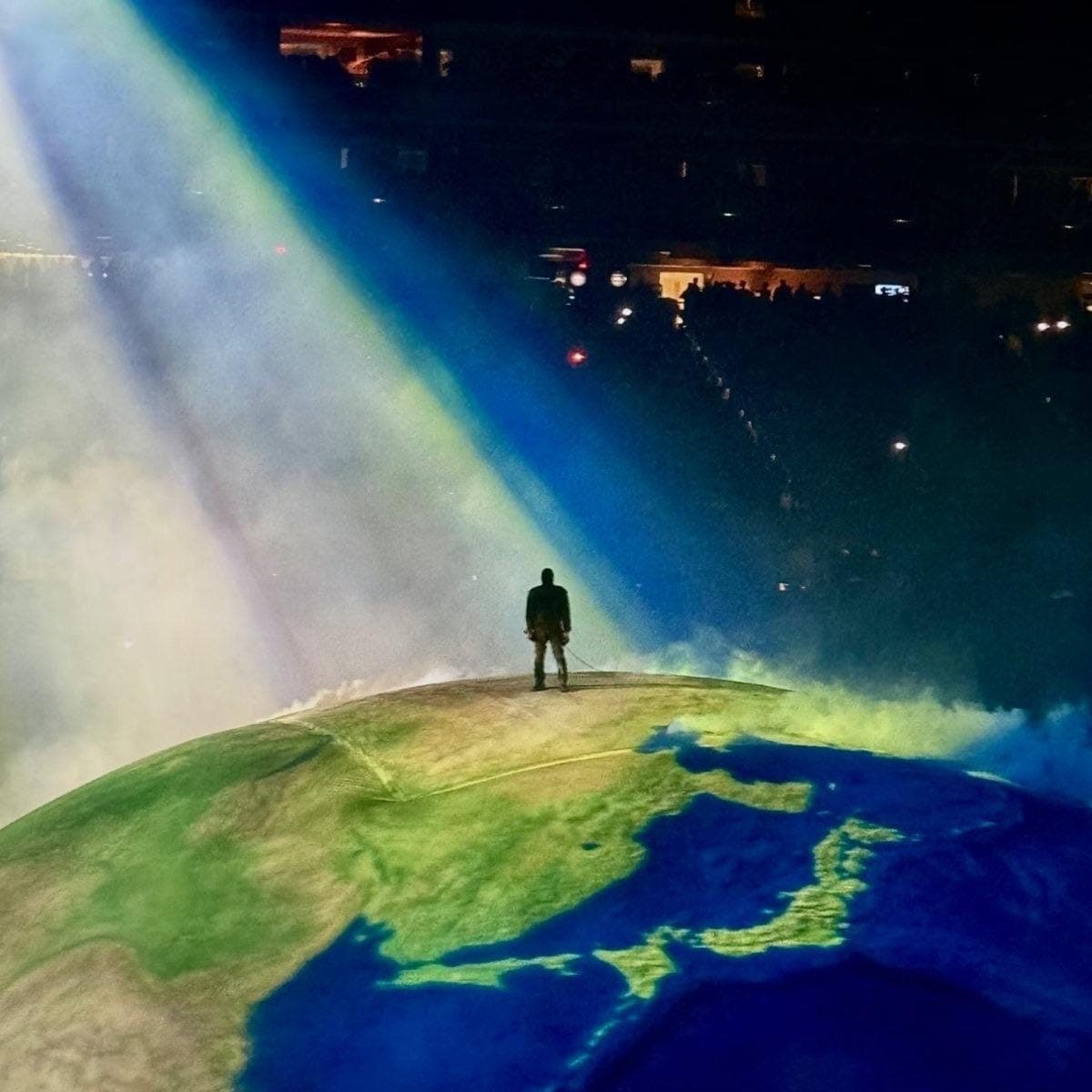
27:25I mean, that can also be financially devastating. But just think of the sheer cost of some of these spectacles. I think like Kanye's show the other night in Los Angeles with Lauryn Hill, where he's on like this giant rotating or seemingly rotating earth it might not be actually rotating yeah well i think that even for the smaller artists like i can speak to i know for a fact that the people who are even in 150 cap rooms a thousand cap rooms like they're all auditioning for those bigger stages because the promoters are watching to see what those shows look like because they're trying to figure out who the next arena level artists are going to be so everybody kind of has to i i even you know 10 years ago 15 years ago, like when I was more, you know, like directly talking to people who were doing this, even back then when this transition had progressed, like, you know, less than it has today, they were feeling enormous pressure to the phrase that would usually be used is fill up the stage, regardless of how much the audience liked the songs, like regardless of how charismatic the individual performer might have been.
28:27The promoters wanted to see stage production because that has become increasingly important as ticket prices have gone up and as the promoters have become more focused on like who is going to be able to mount arena shows properly. Like if you're really good and people really like your record, but like you don't have the type of live show that can scale up to an arena, that's not necessarily like a path to success these days because the arena shows are where you make money. So everybody I think is feeling this pressure, even the artists in the smaller venues, like they are losing money, paying to have as much stage production on those tiny stages as possible so that they can prove to the promoters that they deserve a spot on a bigger stage at the big festivals or a spot on, you know, Tiny Desk or whatever the big promotional platform is these days.
29:17It used to be the late night shows, but those seem less significant now. Right. And also back to your point about surveillance too, It's like everything is also content capture now. It is a proving ground for being able to fill bigger arenas, but it's like everything has the potential of a viral moment because you have hundreds or if not thousands of people out there capturing stuff on their phones. And all it takes is like one killer performance or a shot or a memeable moment for that artist to suddenly like blow up and get attention. And then that snowballing effects on like ticket sales and all that.
29:49And then suddenly that makes them arena worthy. And it's just it's also just more content to feed the attention economy, to feed the feeds in the meantime, even while an artist is touring, because one must, you know, the little shop of horror's flower thing. Right. Yeah, well, and the music industry is competing with every other force that is jockeying for that attention. Like a really good example of what you're describing is what happened with Chapel Rhone, where, you know, that record was doing nothing for months until she got on the Olivia Rodrigo tour. And then the short videos of her doing the hot to go dance, you know, started circulating on social media.
30:22People started getting into the song through that. It's like the music was there. the recordings that were capable of capturing the enthusiasm of the entire world already were there. They existed, but like it was almost as if they didn't until they succeeded in this particular context, until there was that that memeable short form video moment like of them being performed on stage in a way that was like befitting of these big, overwhelming sensory experiences that only festivals and arena and stadium shows can really offer.
30:56If you like what you're hearing on this episode, there's a place where you can join the conversation. It's called Cujoplex, and it's a private online hangout zone on Discord where smart, cool weirdos just like you, you know, people who like talking about the evolving state of independent culture, can congregate, share links, and talk about the news of the day. We've had some great conversations lately about creative economies, media theory, AI, politics, the future of journalism, and even the records and TV shows we've been obsessing over this year. Some of our chats have even inspired episode ideas.
31:31You can get access to Cujoplex, along with our monthly bonus episodes, by signing up for a paid subscription over at our Substack. That's theculturejournalist.substack.com. I have a question while we're on the topic of Chapel Rhone. Why do all these struggles remain, for the most part, sort of invisible? What makes it difficult for them to surface or be discussed or addressed? I'm thinking of where Chapel Rhone recently, these frustrations did sort of spill out into the public view, but they usually don't. And when they do, they seem to be misunderstood. Well, I mean, there's kind of just like a larger disconnect between how the sausage gets made and like what's actually going on behind the scenes generally there's the fantasy about what music is and what a particular artist is and then there's the reality like i think that taylor swift fans like you know they seem pretty keyed into you know like the the personality of the person that they're following but i don't know that they necessarily like are thinking about how much time working out it took to be able to sustain the the physical effort of the Aeros tour, like what goes into it in terms of like, you know, planning diets and like, you know, just like staying just rigidly in shape as if you're you're filming a Marvel movie and people are going to be using, you know, IMAX cameras to capture every inch of your abs, like, you know, the whole time, like that level of preparation and that level of of intensity to what goes on behind the scenes.
33:03I think it's just not what people like to think about. It's not entertaining. People like to think about other stuff. They like to concoct like these different fan fiction narratives in their head about what's really going on. Obviously with Taylor Swift, there's the people who like to imagine that she's got this secret life as a lesbian or all these different fan fiction ideas that people had about her love life when it was less public. I think that that's part of the product that people are consuming. It's the same with like reality TV where there's like a grain of truth to it, but it's like, you know, the narratives are kind of constructed and kind of coaxed into existence.
33:37And like, you know, the reality of what's going on is, you know, probably wouldn't be as compelling to people as the full spectacle of it is. So I think it's pretty difficult to bridge that gap just generally. There's so much that the audience doesn't know that they don't want to, that they're not incentivized to know it because it doesn't help them be entertained in any way. It doesn't contribute to what they're getting out of the product. And that's, again, why I feel like a move to fictional artists or fictional performers is inevitable is because like already it's kind of fictional, like already like the person that they think Taylor Swift or Doja Cat or Olivia Rodrigo is, is a character that has only a tangential relationship to the actual person.
34:20And so I think like we keep seeing this pop up with Chapel Rhone specifically because compared to the other people, you know, like Olivia Rodrigo or, you know, like a lot of these people were child stars, like literal actresses, like, you know, Sabrina Carpenter, they come from a background of playing characters. And so Chapel Rhone, like, you know, like thinks of herself as an artist, she thinks of herself as like an iconoclast, as somebody more like the type of people we would have succeeding in the music industry in the 80s. And so she keeps doing the type of iconoclastic things that she expects somebody in that position to do, which kind of spoils the fantasy for people that have gotten used to the more fictional approach that is what actually works now.
34:58There's sort of this parasocial illusion, I don't know, of a friendship. There's a fantasy going on between the fan and artist that can't be broken or there are penalties to it being broken. Yeah, the way that things ran away with that security guard story with Chapel Rhone when it was like she actually had nothing to do with that is insane. I think that's a hits the nail on the head with exactly what we're talking about. Yeah. Well, I mean, the, you know, the fantasy is the product. The narrative is the product because it's like, you know, we're talking about like how the industry has shifted from being about recordings to experiences.
35:30That type of shift happens. And a lot of people don't even realize that a lot of the artists themselves like don't necessarily realize it. Like how many artists are there in the world right now that are like hard at work on new music when what would actually, you know, benefit their career is to go out and play the hits as much as possible. Like, you know, the delusion is kind of like happening on all sides and it's, it's rooted in how difficult it is to keep up with like, you know, like how quickly things have changed, especially since 2020. So it's, yeah, the fantasy is the product. The narrative is the product.
36:02The delusion is the product. And there's not really any incentive to, to look deeper in that because it doesn't really benefit you in any way. Like Chapel Rowan is, it doesn't necessarily benefit her to poke at it and, try to reconcile this problem. I'm still happy she's doing it. It benefits me as somebody who cares about this and like who cares about the truth, but really like people who have that kind of perspective in the minority. And so, you know, like people like me are never going to be what the industry at large is concerned with or what the mass audience is concerned with. Let's dig into the misconceptions around the financial realities of touring.
36:39Something I tend to repeat because we're talking about Coachella. You know, people think big tours, which I think do generate, you know, I'm sure, I mean, we all know Taylor Swift made insane money from the Euras tour, but, you know, even things like Coachella, like famously actually barely break even. They're not just like these like big money grabs. And that trickles down, I think, even more acutely to most artists. So how these financial realities of touring evolved along with the nature of compensation for artists in the music industry as a whole, i.e., you know, the rise of streaming and how that has impacted, you know, artist revenues and this concurrent rise of like a greater reliance on generating income from touring and merch and all the flywheel stuff that you'd mentioned before.
37:24Sure. Yeah. In the old days, the record was what made money, you know, in the CD era in particular, the markup on those things was fantastic. What they cost to actually manufacture versus what you could sell them for. Like it was people really making money off of those things. And so the whole live experience was organized around that. That's why even artists playing big venues would focus mostly on new material. I remember in 2008, I went to go see the Glow in the Dark tour, which was Kanye West headlining and the opening acts were Rihanna, N.E.R.D., and Lupe Fiasco. And N.E.R.D., the whole time that they were on stage, They were just playing stuff from their new album, which, you know, like I don't think even big N.E.R.D.
38:10heads are necessarily like super into the Seeing Sounds album now because the way that Pharrell could make money off of that support slot and justify the expense of putting it on was to get as many people to buy the CD as possible. so everything was was based around that so much of the the conventions and and you know like expectations that that exist around live performances are based around a time where tickets had to be cheap to get as many people in as possible and the way the artist made money was to buy the cd uh you know i i saw sonic youth in like 2002 and i had to buy a copy of murray street uh in order to get into the the backstage meet and greet where i could like get my photo taken with Jim O 'Rourke.
38:50It was all about buying the album. So since the shift to digital distribution, what has changed is people have started to think that no, actually the live experience is now the thing that the audience really cares about. And that as they've spent less and less money on recordings, and there's all kinds of reasons for that, but the main one is that the more recordings exist, the less valuable they are. And so as it's gotten easier to create recordings, all of them are worth less. And all of these tools like digital audio workstations and now AI, they're pushing down the value of any recording, even the really good ones, naturally, because there's just so many of them.
39:33But live shows are not subject to infinite scarcity in that same way. There's still material constraints on how many of them there can be. So the value of the live experience and the concert ticket remains high. So as the market for recordings has collapsed, artists and the music industry at large has kind of taken shelter in live shows. And now it's like a lot of people, they put out a new album in order to justify doing the larger campaign with live shows and merch, which is where you actually make the money. Like Rihanna doesn't even bother coming out with new stuff because like, you know, she's not even interested in the amount of money that she could make on a tour.
40:09She can make money just doing brand deals like, Like, you know, like she gets paid more for like, you know, coming out of retirement for a week to promote the Smurfs movie than she would by doing a whole tour. And she doesn't want to do the tour because like, you know, then she would have to like live under the microscope for six months. She has no interest in that. And once you get to a certain level, you don't have to do it anymore because you you reach the level of being able to subsist off of brand deals. So there's there's kind of like another strata like above like even these people that are in arenas and stadiums.
40:39But yeah, like overall, there's been this shift from recordings to experiences. And then as that calcified, the promoters and the live music industry started to understand that you can make way, way more money off of the big shows. everything going on in the smaller shows, like the smaller rooms, the margins have become unbearable. It's still really hard for people to make money off of those, especially since 2020, with various shortages and cost of living increases. And if there's international touring involved, the tariffs and visa costs and this type of thing. Yeah, I wanted to talk a little bit about the financial realities of touring for small and medium-sized acts or even just like your typical kind of like local buzz band that is not a giant pop act.
41:28My partner Drew Millard is actually writing a piece. I'm kind of scooping him, but I think he doesn't mind. He was maybe going to come on today, but he's writing a piece about the rise of like the underplay as sort of like a template to follow for bands. I think Geese's tour of last year was a little, by their standards, it was still big venues, but it was like, They're playing like 1 ,500 cap style rooms, I guess, which is when they could have done a lot better. But he's talking to a bunch of like publicists and booking agents and managers and artists about how there's like more when you're a smaller band.
42:04There's an increased pressure currently to sell out. And you'll see this locally if you look at, you know, Calendar. Maybe not you, Jamie, because you live in the country. But if you live in a city, a major city or a medium-sized city, and you look at bands coming into town, you'll often see a band play maybe three shows in a row that are sold out in a smaller venue than they could sell. So like a band that could sell out of 1 ,500 cap room will instead play three 500 cap rooms or four 300 cap rooms and then create this appearance of scarcity and selling out. And then the emphasis is less on making money from the touring on any given day and more on kind of setting yourself up for the future.
42:50Yeah, I think that that's definitely an example of, you know, like in 10 years ago, like it was about filling up the stage. And I think it's a very superstitious industry. And like these memes, like fill up the stage as a meme, like, you know, sell out as many nights as possible as a meme. I definitely have been in the room for all kinds of conversations about like, what's a stronger look like being able to sell out this venue, or, you know, like doing two nights at this venue. It can happen for different reasons. Somebody who I really admire how they run their career is Mitski, who after she started to really blow up on TikTok and attain this massive young fan base that goes far beyond the range of what somebody making that type of music usually has access to, she really resisted the pressure to get into bigger and bigger and bigger venues and instead would do multiple nights at theaters, not even just small rock clubs, but theaters.
43:45I think even venues that were seated, that seemed like such an interesting creative decision to me and also an interesting decision in terms of like, it's more fun to go see an artist in a space like that, I think. Mitski actually just played a residency here at the Hollywood High School Auditorium. Oh, yeah, there you go. Yeah. Like to your point. Yeah, that's super cool. And I mean, like the memory of having that experience is going to be so much more valuable than like, you know, going to a regular rock club or definitely more than going to an arena. And I think that's so cool. And I think it's really setting her up for a long career.
44:21It reminds me a little bit of in the aughts, like Wilco wasn't necessarily like the most exciting band for people to think about in terms of what they sounded like or, you know, what they said about what was going on in culture at the time. But the way they ran their career, like how they really prioritized independence and they really prioritize trying to maintain control of their own destiny. They made so many fascinating decisions that I think really provide a really compelling example to any younger artists today. I think that's part of the reason why you see like so many younger artists, even from wildly different parts of the sonic landscape, like, you know, JPEG Mafia, I think is like a big will go ahead, you know, because they just provided that example of like, another way that you could do it another way you can approach all these things and as far as who's that artist today i think it's definitely mitski but i think even the um anybody who's like prioritizing doing three nights at a at a smaller rock club instead of trying to get into the next size up venue that's providing a better experience for fans that's creating like more memorable experiences that are gonna you know hopefully like help them uh attain more of a following you know like a lot of them are maybe hoping to cash in with an arena tour down the road but i think that's definitely like a better move from a lot of different perspectives and you know i have to imagine that some organs in the live industry are are capable of seeing that and respecting it there's also this aspect that drew explores and that makes intuitive sense such as that smaller rock bands are adopting sort of like a boiler room approach where if you have a smaller venue and you pack it out and you can see all the fans around you having this like special boutique experience and that creates like better social content that is then advertising for the next show like just what's that called like social I can't so I can't remember the name of the cycle the simple psychological phenomenon or like marketing phenomenon where you see all these people liking something then you're like oh I got to get in on this too yeah it's it's like memetic Yeah, mimetic desire.
46:26And then another interesting thing is that I remember until, you know, really recently, the narrative about live music in the post-pandemic years was, I saw so many articles about how, you know, it's expensive, it's unsustainable, the costs are too high, the travel is too unpredictable and becoming too expensive and gas money. and now it seems to have shifted that's still going on really many of those problems are still there but it seems like that's shifted into a new moment where they're actually like upping the ante everyone is just responding to that by upping the ante more and more at least with the larger artists with the size and the cost of the productions and I can't help think about how all of these artists who are like working towards getting into these stadiums I love I love this image of promoters looking several years down the road.
47:15Oh, this artist in X number of years will be able to fill this stadium. The ultimate destination is probably in almost every case, a venue owned by Live Nation or AEG. And that was kind of the, they're all traveling towards Live Nation and AEG if they're not with them already. And that was sort of the greater story of the pandemic's influence on music, which was the increased consolidation around those companies. Yeah, which was already, you know, well in progress even before that point. Those two companies, they bought up all the festivals. We talked about how Coachella is like kind of a trade show or a showcase for what's going to be happening and the coming from those two companies over the next year.
47:58And a lot of the times, like the festivals will all get booked like at once. Like, you know, if you're an artist, you don't just get offered Coachella, you get offered like these 20 festivals at once and you're going to have similar positioning like for all of them. It gets done like in a package sort of way. And you can see that if you look at, you know, festival posters for all different cities, like all over the North American and European markets. It's the same artists like in a lot of case. There's like a few festivals, a handful of festivals across the country that try to do something different.
48:30There's like the Kilby Court block party in Utah that, you know, always turns a lot of heads with their lineup. You know, there's certain festivals that will like do absolutely no rap and R &B or there's some festivals that will do like more of it and in a way that like ends up being cool. but it's all very homogenized because it all kind of happens at once like in the in the back half of the year like the agents and the promoters get together and they figure out who's going to be playing what and it all gets booked at the same time yeah heavy i'm sure you guys have seen the name of the instagram account is escaping me but there's one instagram account that whenever the coachella lineup drops they post instead of the names of the artists on the poster it's just all the agencies represented by those artists and it's just a great way of looking at the perspective of like the actual hold on the market and to your point jamie kind of the bigger deals that are happening underneath all of this and it's always just like it's like interesting i'd say it's like less than a dozen agencies and you know like half of them are like the usual suspects like the big ones like wme and caa and uh whatever wasserman is calling themselves whatever wasserman is going to become yeah i wonder if there's gonna be an update on that yeah every time i see the coachella poster like the first thing that pops into my head is trying to picture the email threat that led to this like who's arguing about like how they're this font size versus this font size because i've seen a bunch of those emails and it's you know like terrifically entertaining stuff oh yeah and then then of course there's like the rare ones like when the misfits played a couple years ago where they like insist on having like their banned font yeah that's probably like part of the negotiations for like whether or not whether or not they're going to play the hits or not exactly okay there's a whole conversation to be had about alternatives for generating revenue for artists besides touring, but also just wondering, like, let's say, you know, like five, 10 years down the line, what made a healthier model of touring and live performance look like?
50:21Oh, you know, like I think about this, like we're in such a period of tremendous change, you know, kind of five or 60 years down the line with, you know, all this stuff about fictional artists and things like I think the impact that AI and everything that's going on with technology is going to have on culture is going to be pretty significant. I mean, you know, you look at what's going on in Los Angeles with like film and television production, like it's like, you know, apocalyptic. It's like it will never be the same again. So I think that in a time like this, I really have to step back and ask myself, like, does a healthy version of this like even have touring bands?
51:01Like if recordings aren't necessarily going to be like moving the needle culturally as much as they were like if we're moving into a situation where attention is being directed towards other things you know video games streamers like whatever like everything on the phone that is competing with spotify for mindshare and listening time what kind of role does the does the smaller mid-level touring band have in that kind of landscape you know maybe it goes back to like you know something like more local like you know maybe it has less to do with you know you need to see like this band from england that has the hot new record of the moment and more like you know like oh i i heard about this jam band where like everybody's stressed like chewbacca on stage and it's a really good time i need to go see that but you know like there's only one region of the country where people would care about that and in another region people care about something else like i i feel like we're we're staring down the barrel of you know some more severe significant changes to how this all works.
52:03So I don't know that there is like a healthy version of the kind of small mid-level indie touring thing that's possible. Like when I try to think of what would be good for those artists, I'm thinking like the geese resale prices were just like astronomical. So I think, well, if you could get the band to be able to participate in that income somehow, like, you know, maybe you, you book like a bunch of nights at a small venue. If you're the hot new band like them. You give a third of the tickets to the local hipster people that you would want there for authenticity. You give a third of them to whoever would be on the guest list.
52:38And then you sell the other third for like, you know,$5 ,000 a piece to the high rollers. You know, maybe there's some kind of way to monetize that kind of demand that could make those kinds of shows more viable as a driver of revenue. But like, maybe that's good for the artist. Maybe the artist could get rich off of that. But I don't know that that's good for culture or for anybody else. Like, I don't know that that's necessarily a paradigm that I find exciting, like creatively or culturally stimulating or something. So I feel like, you know, when I try to answer the question of, okay, well, what do we want?
53:15Like, everything's changing. Like, you know, like what direction should it go? I feel like I want to step even farther back and maybe look harder at the things about the current paradigm that were already bad before the new technology is going to come in and magnify them and think like, well, what is to be gained from just letting go of this full stop? What would a more radical reinvention of our relationship with music look like? Maybe something that's based around passive consumption of recordings or parasocial attachment to artists that nobody actually really knows. Maybe we just want to get away from that altogether.
53:55That's kind of like where my mind goes. But, you know, I'm not in charge. So what ultimately happens is probably going to be more on the horror story end of things. I mean, it also makes me think to what you were just saying, like, has there ever been like a healthy model of touring? Again, going back to the deeper structural issues that have just been exacerbated by these technological and economic shifts. Maybe there are alternative models for providing resources and support structures for both sort of the economic side of this and like maybe like the health side of this that can be put in place.
54:27I don't really know what those things look like. It's kind of hard to even like start talking about that stuff when like underlying all of that to address that point specifically. What would be good for, you know, the health side of things? Universal health care. Like what would be good for struggling small artists? You know, like affordable housing. Like, you know, if we fix those things, then it almost kind of doesn't matter as much whether people can make like a comfortable middle class income from going on tour and playing music. You know, like if you can square away like the basics more easily, then that frees people up to explore all kinds of different creative paradigms and stuff.
55:04Then you can have all kinds of people who are comfortable enough to like try to take a shot, take a big swing and try to do something different. And I feel like that's the situation where you get, you know, really interesting music and all different kinds of other art to cohere and take shape. I get frustrated sometimes with the really artist centric conversations about like, how do we fix the problems in the music industry? Like, you know, the United Musicians and Allied Workers and the camper van Beethoven guy on Twitter, like, you know, talking about how we need to get back to the 90s. The 90s is when Steve Albini wrote The Problem With Music about how horrible it was for most people to try to engage with the major label system.
55:43I'm sure that Camper Van Beethoven and Galaxy 500 or whoever had a really good time being part of the 10 % of people that made it through that bottleneck and got to have comfortable middle class careers as low level rock bands on major labels. But it's like out of everybody who tried to do that, very few people succeeded in it. You know, I think back to the 80s, a lot of people really romanticized like the Black Flag era DIY bands going all over the country in vans and stuff. And every single time I think about that, I think about D. Boone from The Minutemen, who was trying to nap in the back of his van when they hit a bump or a pothole.
56:20And then he went flying outside the back door and broke his neck and died. like I can't romanticize that like that was one of the smartest most interesting artists of that entire fucking moment and it's like he got the flu and like you know couldn't even rest off his illness continuing to drive on to the next tour date without like just dying tragically and pointlessly so it's uh you know really like when I think about what would be good for art what would be good for culture what would be good for everybody it really seems like we have to nail down housing and healthcare first. And then whether or not releasing records or going on national tours can be a viable career path for people who would like to do that, that just seems less important to me.
57:06Maybe we can get there. But I think that we really would have to answer the big questions first. And the idea of putting serious time and effort into trying to increase streaming royalties for mid-level indie bands before we solve some of those other problems just seems obscene to me. Yeah. Also, government subsidies for touring. I'll never get over how the Quebec government gave a lot of bands I know, or hearing about my friend's band in Montreal, who kind of formed and existed and went on to tour because the government gave them a subsidy or a guarantee to do so. So they could just reap the benefits of that helping launch them at an early phase in their career without having to, while doing it a little bit more comfortably, maybe a little bit more safely, and actually like being able to get on their feet and develop a fan base and generate income, you know, things like that.
57:55Yeah. The first time I went to New York to play a show at the Glasslands Gallery, like, you know, I made friends with this other band that was on the bill with me and, you know, they had grants like I had never heard of them really before. And like, you know, like if I said the name of the band, like I don't know that a lot of people would necessarily know it now, but they were being funded by the Canadian government. And like, you know, as I got into in one of my past essays, like the whole reason that Canada and these European countries can like afford to put this money into funding fucking indie rock is because they have existed under the umbrella of American military protection in the post Bretton Woods world order that is now breaking down.
58:32So now they're they're all not going to be able to do that anymore. And I mean, like some of the the complaining that we we have heard, like Emily, you were talking about like how the conversation about live music, the economics of it has seemed to shift a little bit where at first people were talking about post 2020, like how untenable it all seemed. And now it's like people are more doubling down. I think part of that is because people from these other countries that were getting all these subsidies and that were able to enjoy a comfortable middle class income from international touring because of those subsidies, like that's all breaking down.
59:03Now, like you, you can't get the visa as easily. Like now there, there might be tariffs or like other walls in the way of making something like that financially viable. So it's like for those people, it's the apocalypse. But at the end of the day, like there are bigger things going on in the world than, than whether or not people who want to have that specific career path can successfully do it. And, you know, like, as like, I'm Canadian, but I've been living in America my whole life and like associating, you know, with American artists and seeing how difficult it is on the ground for people to try to do anything cool and creative under the economic pressures in the United States.
59:39I'm like, you know, like, okay, well, I don't know if I'm too unhappy about the rest of the world getting a taste of that medicine after being sheltered from it for so long. Like, you know, maybe now we can we can all like, you know, confront the deeper problems instead of just trying to, like, secure a particular lifestyle. I think the perennial problem that when talking about this stuff in the context of the United States, though, is that like we can say, oh, wouldn't it be nice to have artist subsidies here all we want? But like, it's just so hard to imagine the path to making that happen and hard to imagine a world in which that would not like I can only kind of like picture that happening after some of the other bases have been covered or something.
1:00:18Yeah, absolutely. And so what ends up happening is like in America, it always like the conversation always turns to, you know, what sort of like more private sector solution can we come up with? That's why it always comes back to that, you know? Yeah. Like when I was taking a look at like all the different legislation that people have proposed to kind of solve these problems, like, you know, Maxwell Frost, the Zoomer congressman, like he has proposed having subsidies, you know, like Canada offers where you can get grants from the government to do various types of creative things. And it's like the person who would be in charge of that is the secretary of labor, which is a political appointee.
1:00:55So in a situation like we've got now where, you know, the political appointees are being appointed by, you know, like a very conservative person. Yeah. So it's just the, these, this idea of government subsidies, it's like, who's going to run them? Who's going to decide who gets them? Because like right now with the government, the way it is, if we had government subsidies, you know, like Kid Rock would be getting them or like that's maybe even like the positive possibility for what that would look like. So it's in the American context, like, yeah, we got to solve a whole bunch of other problems before we can solve the problem of whether or not like indie rock bands can get grants to go on tour.
1:01:27And that's a problem for everybody in the world as people in these other countries are now realizing. So there's not really like a shortcut around that. I guess like the argument for thinking about these things in the current situation is that, you know, maybe like if we can shift culture in a particular way, like it will help solve the political situation. And I think now we just have to accept that it's the other way around. We've got to like figure out how to shift the political situation before any of these cultural initiatives are going to bear any kind of fruit or be even thinkable. So then, yeah, it becomes the question of what are we going to do about like these private sector solutions?
1:02:05Like, you know, like what are we going to do about the NFTs or the AI or, you know, like any of these other problems that we all have to deal with? And, you know, that's what I spend a lot of my time thinking about these days.
1:02:30So you end up, at least in terms of talking about these larger stadium acts, making the somewhat provocative argument that fictional or AI-generated stars might actually be better suited to this moment of celebrity than actual people. And that a shift in this direction might even be a positive development, though I can't tell if you were tongue-in-cheek about that. Do you actually think this is the case that we might be better off with non-human pop idols or do you just think it might be an inevitability? I guess it depends on what we mean in this context. I think that for the consumer, there's obvious upsides to it.
1:03:11They don't want people. They don't want human beings with flaws and foibles and bad moments like they don't. Like otherwise they wouldn't be jumping down every celebrity's throat the second they do something that makes it seem like they have any kind of autonomy or agency. There's this story that Lauryn Hill used to tell about, you know, how after she blew up, she hated how she felt like she had to be wearing makeup to go to the corner store. Because you never know like when people are going to be there wanting a photo with you or something. They're going to feel disappointed if they don't have access to the version of you that exists in their minds.
1:03:44It's like we already live in a world of fictional celebrities who people think these celebrities are doesn't really exist. And so just making them fictional full stop, it seems like the next natural step that would just like make the whole machine function a bit more frictionlessly. And last year with the K-pop Demon Hunters soundtrack outperforming every previous release by a non-fictional K-pop girl group, it just reinforced that to me. It's like, here's the fictional version and it's outperforming the non-fictional version. And that means to me that it must be doing something better or, you know, from the consumer perspective, like it must be giving them what they want in a way that the non-fictional groups can't.
1:04:29So it's not that I would be happier with it. It's not that I am jazzed on it or I think it would be great. But it's like the mainstream doesn't organize itself according to what I think. I'm just sort of looking at what is happening and trying to see all sides of it. And I see how the fictional things can work. I think the most basic level of analysis that you can apply to it is to just be like, oh, well, that seems dystopian. That's the reaction that most people have when they're first confronted with the idea. but when I really look into it and think about how it would work I feel like we've been heading towards this for a long time and my own experiences in the music industry and my own experience is seeing like what life is like for people who are experiencing celebrity it's just not sustainable and I don't think it's like a lifestyle that even if it does pay very well like should be desirable or that anybody should be living their life that way and oftentimes with the stocking and those kinds of fixations it can carry real danger you know people have died because of this or people have had to like live their lives in fear and even if they're making money like it doesn't seem like it something that anybody should be happy about or that anybody should see as sustainable or that should be allowed to continue without you know interrogating it but the only solution that i think really exists that seems realistic is this move towards fictional artists and so in a couple of years when uh k-pop demon hunters 2 comes out and all the projects that were greenlit because of the success of k-pop demon hunters when that stuff starts hitting the market and there's tours and instagram accounts that are chatbot powered that like respond to every single dm and you know this type of thing like when all that stuff starts hitting the market i expect it to do well i expect it to work and so you know over the course of the 2030s i think that's really going to become the dominant paradigm in pop music i think that that's the direction that we're going i think that something like the Taylor Swift era's tour that was very focused on a particular human being like in a particular human being's autobiography.
1:06:28I think that might be the last thing of its kind that we see, like kind of a going away party for what the recording artist was. Where do we see this already happening aside from K-pop demon hunters? So far, are the manifestations you see just for kids or do you imagine this like extending to adult musical fandom as well? I mean, you know, like pop music is for kids before it's for anybody else. So I think anything going on at that level where you can sell out arenas and stadiums and stuff, unless it's like Oasis, where it's specifically a nostalgia play for older people. I think that there's some level of this going on.
1:07:03It's just how celebrity kind of works now. But I mean, you know, like the non-fictional K-pop is definitely like an example of this. Those people, like they have to portray a particular image like that industry is rife with eating disorders, controversies about people. You know, they find out that a member of a girl group is dating like anybody and like the fans go insane. You see that type of behavior even in the Japanese girl groups that were much less popular globally that kind of preceded the K-pop thing. all the celebrity tabloid narratives. So much of it just seems completely divorced from reality.
1:07:40Even the degree to which the indie prestige zone kind of exists in a sphere of people that are inside of it have such a strange notion of how much it matters to the rest of the world or how much it doesn't matter to the rest of the world. It's like there's so much fantasy and so much delusion in the consumption of media products and music generally that, you know, for me, like it's almost like harder to answer the question of like, what about any of this seems real? Yeah. I think you mentioned either in the piece or on Discord about the like AI fruit slop stuff. Oh, yeah. I mean, but that stuff's going crazy.
1:08:21Like everybody's like, you know, the future's analog. You know, people are going to get back into real stuff being offline. They're all going to build cyber decks and like completely like opt out of the attention economy. Like, no, they're not. Everybody's watching Triple T and Strabarita like on social media. Like the AI is going crazy. People are going crazy for the AI. It's absolutely the future of entertainment. Like not like entirely. It's not like everything is going to get replaced with that. But it's like the idea that people are going to reject this, that people have some kind of intrinsic Luddite gag reflex that's just going to make it so that.
1:08:58none of this stuff ever makes any money or has any cultural impact. Like that has already been proven to be false. Techno nihilism. I did kind of call that one. To invoke your 2026 cultural prediction. Yeah. Yeah. Yeah. I mean, I confess that I have thought back to that prediction, like when I started to see the AI fruit videos going around it, it's pretty much exactly what I was expecting. And in nothing like that is happening in music so far that is super obvious. but you know, there's a Rolling Stone article. The Rolling Stone coverage of AI can sometimes be like a little bit credulous. It's not necessarily like super all the way satisfying to me.
1:09:34But, you know, they've talked to people in the industry, you know, Harvey Mason Jr., the president of the Recording Academy has talked about how every session he goes into for mainstream pop music, somebody's using AI in some capacity. They're using chat GPT to generate lyrics. They're using Suno to generate production ideas. They're just not talking about it because there's this social taboo against it still. So I think that like, you know, we're not going to see necessarily something on the level of the fruit videos, of the triple T videos, like in music, that's just obviously AI slop that people are accepting anyway.
1:10:08I think it's more just going to kind of rot the ecosystem from the inside out where it's just going to be there in the background. And, you know, like we've been talking throughout this whole podcast episode about the disconnect between how the sausage gets made, like what life is actually like for the people creating this stuff and everybody else. And one aspect of that is that a lot of the times the artists or the person that's being held up as the artist, they're already not the person making the stuff. And even the person who is listed on the recording as the producer, sometimes they're not even the one making the stuff because they got the sounds from Splice or they paid somebody to ghost produce or to submit loops in a work-for-hire basis where they're not credited.
1:10:47So already we've got this situation where the artists aren't really the artists and the producers aren't really the producers and then you add the AI stuff into that, obviously those people are all going to be using this stuff. Like obviously it's going to start permeating the sound of mainstream music and probably a lot of the stuff on the prestige circuit too. It's just, they may not be talking about it and it may not be obvious because we can't hear the difference as well as we can see the difference between regular animation and, you know, Triple T videos. But it's still happening. There's this massive transition like happening like under our feet and the consumers aren't really seeing it.
1:11:22And I guess that's like another reason why I feel like the shift to fictional artists is necessary, because it's already kind of happening. It's just kind of happening from the inside out. And when people accept it at the level of, you know, okay, I'm a fan of this artist that I know is fictional. That's just the last domino to fall after like all these other changes have already happened in the background. Something I found really poignant about the piece was how you sort of frame this possibility or this inevitability in terms of, you know, humans being unable to keep up with them sort of like machine made environment in which they are or machine driven environment they are expected to navigate.
1:12:05Like, you know, the 24 hour availability, for example, like no human can do this. And it really reminded me of something that I think it was in like a Douglas Rushkoff book, maybe Future Shock, but he was talking about how, you know, Gawker writers famously were known to consume large amounts of drugs like uppers because they were unable, they were asked, you know, Gawker was a very like traffic obsessed operation and they were forced to sort of have their output. keep up with the speed of the internet or the feed. And it goes so much faster, an environment that operates so much faster than any UN being can actually function in.
1:12:51So they had to take drugs. And so I'm sort of reminded of, we talked about this a little bit on our recent weather report that we put out last week, but of, you know, AI in journalism conversations where there was a bunch of things that happened recently where like more and more writers for prominent mainstream publications came out as using AI in their work and how like the Gawker situation in the 2010s was just leading to that. Yeah, I found I found that so evocative because it yeah, it's like a cybernetic angle on it. It's like in order to keep pace with the audience's expectations or a lot of people, you know, they might say like the the expectations of the platforms, the algorithm or whatever, but I kind of prefer to focus on the audience.
1:13:34But yeah, it's like in order to keep pace with that, you have to augment yourself by taking these drugs and like you know like the music industry is ground zero for that kind of thing as well like in order to to keep pace with the speed of of the music industry people are they're all like fucking taking speed you know i remember uh watching the show nashville which you know like it's kind of like a weirdly accurate look into the music industry at times where you know like one of the the young upstart artists in that show like you know get finally gets into a big studio session with a big Nashville producer.
1:14:06And when she starts to get tired, like a few hours into the session, like, you know, like he gives her Adderall, like so that she can keep recording. And I remember just like hooting and hollering as I was watching that, like, oh my God, it's just like real life. Yeah, it's that that's exactly what's happening is is the speed of the machine is is no longer attainable by humans. And so, you know, I feel like it has to kind of move away from humans. I feel like especially now that the AI can generate like performances, whether it's vocal performances or like visual, you know, whatever you want to call the fruit videos, like, you know, they can generate content that captures human attention and that causes an emotional reaction in human beings like much faster than human beings can.
1:14:51You can generate a song in less time than it takes to listen to one or generate a video in less time than it takes to watch it. So ultimately, like that's going to be the dominant kind of mode of production. I don't really see any other way around it. The only other way around it would be for people to stop consuming and like, you know, nobody wants to do that. I mean, you know, like obviously in my life, like I'm making all kinds of, you know, big steps towards not doing that. Like I have cut all kinds of platforms and services out of my life and totally changed the way that I approach everything.
1:15:23Like I'm constantly interrogating my own consumption, but other people are not doing that. Other people don't have the bandwidth for it, like in a lot of cases. So I don't necessarily have high expectations that like suddenly everybody's just going to stop doing that or stop caring about those things. So with everything continuing down the current track, it seems like people want the content to keep coming. And so this is how the content can keep coming. The generative stuff will, you know, the medium will become the message. So this piece also has generated a lot of buzz. It was shared by one of the Substack founders.
1:16:01There's been a lot of conversation generated around it. It's your most successful post on your Substack so far. Why do you think the reaction to this piece has been so strong? Well, I think that a big part of it is because the piece is very sympathetic to artists. It's very much about kind of the suffering that artists do in silence. Like I do try to repeatedly make clear that it's kind of like a first world problem, at least as far as the big celebrities go. It's not that I'm, you know, necessarily positing this as something that we should be more worried about than, you know, like universal health care and affordable housing.
1:16:39But I do think like it, you know, the science fiction writer Bruce Sterling, like he talks a lot about how musicians are often patient zero for changes at the intersection of culture and technology, that what musicians endured when distribution went digital in the aughts, it prefigured a lot of what happened when media went digital, for example. As an author who sells books, he kind of started to notice that a lot of what he started going through in the 2010s was stuff that musicians have already gone through. So I think that even though it is maybe a bit of a first world problem. It doesn't mean that it doesn't have wider implications, but I think Substack in particular is a platform that is frequented mostly by people who self-identify as artists in some form or another.
1:17:25So I think in that respect, the post was really well suited for Substack because most of the people who are active users of that platform were really well set up to feel seen by it or to sympathize with the people I was talking about in a way that might not be true on a more consumption based platform like, you know, X. Also Bon Iver shared it, right? Yeah. Well, and I mean, you know, the Substack founder guy, Hamish, I think like as much as he may have been impressed by the piece and wanted to share it, I think he also really wanted to draw attention to the fact that Bon Iver is on Substack, you know, so I was like sort of like a secondary beneficiary of that impulse.
1:18:07Amazing. And were there any like Luddite people who were like, how dare you say that we should have AI generated artists, AI artists? Yeah. Well, I mean, you know, like I tried to take care in the piece, like not to necessarily come off like I was advocating for that, but just sort of like to point out that that I think that's where it's going. But yeah, there was like maybe a couple of people that were musicians that sort of like resented that, you know, like musicians, they want to hear everything is going to go back to how it was. You know, I talked earlier about my frustration with the prescriptions offered by groups like United Musicians and Allied Workers.
1:18:44It's like the Living Wage for Musicians Act, which is sort of like what that sort of sentiment resulted in. Like what it would actually do is cause a 50 % raise in the cost of a streaming subscription. And it would use that new money to like pay artists more. So it's like the consumer would pay for it. You know, like they They talk a big game about like, you know, like, oh, these CEOs are exploiting artists and exploiting music workers, but they don't have a way to get the CEOs to pay artists more. Like all they can do is force the customer to pay more. It's honestly very similar to what the labels were doing in the 90s when they like colluded to keep CD prices artificially high.
1:19:25You kind of have to like try to like create artificial scarcity in order to keep prices high. Feel that? Last question. So you mentioned in the piece that the very notion of the recording artist is a relatively recent, albeit 20th century phenomenon or invention. Setting aside the idea of AI pop stars themselves, what comes next for artists, do you think? As you said, like not everything is going to become K-pop Demon Hunter style. But what are the next like five years look like for musicians along these lines, do you think? uh well i think that uh you know we're probably still gonna have a bit more of the trend that we have seen with uh artists like mitsky and geese who sort of come out of a more educational context uh you know or loifei or uh jacob collier or whatever you know like people who have that kind of academic pedigree like who are really musicians musicians those people becoming the new indie you know buzz bands i think we're still probably going to see a little bit more of that especially like in a live context uh i'm confused about like what to expect with ai because it's like the social taboo against using it is incredibly strong but at the same time like the the content generation capabilities of it are also like very strong like we can all see with the fruit videos like it's possible to use this stuff to generate content that people find compelling like at least at a level that's suitable for mass consumption like you know maybe enthusiasts aren't necessarily going to get excited about it.
1:20:59But it's like every other time that this has happened, every other time that there's this new technology that enables people that weren't part of the game to be able to come in and make stuff that wouldn't have been possible otherwise, you know, with electronic music, like hip hop, like the blog world of the aughts. When loopholes open up, people step through them just like I did 15 years ago or whatever it was. So it's like on paper, I would expect that to happen with AI too. I would expect people who couldn't have made like recordings that are capable of creating buzz or, you know, like becoming popular to like, you know, step through a loophole and come through with something novel and interesting.
1:21:39It seems like that should happen, but it's just very hard to imagine that at the moment because there's so much social polarization going on with AI still, especially in the enthusiast spaces, especially like you know anybody that anything that has anything to do with writing because the publishing industry is fighting ai in a way that other media industries aren't i would almost expect for the next five years to have like another like kind of bloggy kind of moment where there's a lot of weird stuff bubbling up from below and stepping through loopholes but i'm not sure what that's really going to look like in practice because the battle lines are so intense and we're about to go to war and who knows what's going to happen with all of that.
1:22:20And like, you know, what's going to happen to this country as that situation escalates. So I think one way or another, like things are going to be very weird for the next like four or five years for the rest of this decade, definitely. And I think it's really going to be like the 2030s when the Disney on ice, like fictional artist stuff really locks in and becomes the dominant paradigm. I maintain the capacity to be surprised and I expect to be surprised in some way or another, like maybe in a bleak way, maybe in a happy way, like who knows, by what happens in the back half of this decade. But there's a lot of really powerful forces that are jostling around in line for the future.
1:22:56And I'm not sure who's going to make it through the door first. And being surprised is kind of what makes this work interesting, isn't it? Yes, precisely. And occasionally fun. Yes, occasionally. Very occasionally. All right. Well, Jamie, thank you so much for coming on and chopping this up with us. always a pleasure. Where can people follow you and your work? Okay, well, I've got my newsletter, The Seed of Loss at Substack. That's J-A-I-M-E-B-R-O-O-K-S.substack.com. Or you can just go check out Hamish McKenzie's notes feed or Boney Veres. And yeah, that's probably the main place these days. Thanks, Jamie.
1:23:36Thanks.
1:23:41This episode of The Culture Journalist was produced and edited by Emily Friedlander and me, Andrea Dominik. To check out more, head to our sub stack. That's theculturejournalist.substack.com. And if you like what you're hearing, leave a rating or review on Apple Podcasts or share us with friends to help support independent journalism.
From the publisher
CUJO is a podcast about culture in the age of platforms. Episodes drop every other week, but if you want the full experience, we recommend signing up for a paid subscription. Paid subscribers also get access to our CUJOPLEX Discord and The Weather Report, a monthly episode series where we take stock of where the cultural winds are blowing and tell you what’s rained into our brains.
It sounds strange to say it, but the notion of the recording artist seems to be becoming increasingly a thing of the past. Artists are still releasing albums, sure, but our experience as music fans and the industry as a whole seems to be increasingly centered around live music — at least in terms of where people are actually spending their money. Today’s guest, writer and musician Jaime Brooks (you may remember her from our episode on the geopolitics of pop culture), joins us to discuss what that means for artists and the future of music itself. We dig into Jaime’s recent viral essay, “Why do so many big artists hate touring?,” which draws on her own touring experiences as part of the electronic duo Elite Gymnastics to explore how the music business seems to be in the midst of an experience economy arms race. Artists are risking serious money on ever-bigger spectacles, ticket prices keep climbing, and all roads — even for indie artists — seem to lead to Live Nation and AEG. Meanwhile, the psychological tolls of life on the road, combined with the near-constant surveillance of being a celebrity in 2026, has led to a growing wave of cancellations and burnout. All leading Jaime to ask: Is it time to let go of the idea of pop stars (or at least human ones) entirely?
We dig into why touring seems to become more stressful for artists as they become more successful, what happens when scarcity pivots from music recordings to tickets, and how even early and mid-career artists are feeling the pressure to manufacture the illusion of endless growth. Jaime also raises a spicy possibility: If the music industry continues down this path, the future of pop stardom might belong more to animated or AI-generated performers in the mold of K-Pop Demon Hunters than real people.
Read “Why Do So Many Big Artists Hate Touring?”
Subscribe to Jaime’s Substack, The Seat of Loss
This is a public episode. If you'd like to discuss this with other subscribers or get access to bonus episodes, visit theculturejournalist.substack.com/subscribe