 The Determined Society with Shawn French | Adversity & Mindset
23 Nov 2026 · 1h 25m

 Add vo to ChatGPT or Claude to ask about everything you hear
vo listened to this episode to put together the overview and transcript, so there may be the odd mistake.
Tommy Mottola, a Bronx-born music executive and manager, discusses “determination” through his upbringing, early business hustle, and leadership at CBS Records/Sony Music. He argues that success comes from executing what you can do now, taking risks despite pushback, and focusing on the core product (the song) while surrounding yourself with top talent.
Tommy Mottola (guest). Background: Bronx native; started as a music manager in his early 20s (including Hall & Oates); later became president of CBS Records at a young age and then ran Sony Music for nearly two decades. Worked with major artists including Michael Jackson, Mariah Carey, Celine Dion, Bruce Springsteen, Shakira, Hall & Oates, Whitney Houston, Gloria Estefan, and more.
The “Bronx School of Business” taught lessons you can’t learn in school—rules, hustle, paying it forward, and cultural mixing. Determination means acting without waiting for perfect knowledge. In music, “the song” is paramount; executives should build the right team and enable artists.
buying spoiled wine at 14 for $1/case and reselling for ~$30,000; pushing Mariah Carey’s Christmas album concept; launching Celine Dion residencies and “My Heart Will Go On” (one-take vocal); signing/expanding Shakira internationally; Gloria Estefan’s Spanish album and post-bus-crash support; Michael Jackson calling repeatedly to promise $100M sales for Invincible.
0:00I'm always gonna hit the target. Always. Simple as that. Ran Sony Music for almost two decades. Worked with names like Michael Jackson, Mariah Carey, Celine Dion, Bruce Springsteen. Your knack is taking someone from zero to stardom. And we're gonna make it and we're gonna go all the way. It's about executing the best way you know how to do at that point. And everyone laughed and said, you know, this is not gonna work with Celine Dion. and six years later she sold out every single night and broke all the records. You know, if you can do something good and help somebody, do it. You're in your 70s.
0:37You're still hungry. You're still going at it. And so I thought this would make an interesting book, and I called it the Bronx School of Business because the stuff that we learned there, you can't learn in school. But my final question to you is, what does determination actually mean to you?
1:04At 14 years old, a kid from the Bronx bought a ton of cases of wine for a dollar a piece, sold them all for 20 and walked away with$30 ,000. He didn't have an MBA, came from nowhere from the Bronx and years later, given the keys to CBS and then ran Sony Music for almost two decades. Worked with names like Michael Jackson, Mariah Carey, Celine Dion, Bruce Springsteen, so many more, like Hall & Oates and Shakira. I have with me a man that turned an amazing career from something that you wouldn't necessarily think a young man from the Bronx would get without the pedigree. Again, this man right here is a living legend.
1:51I have with us today, Tommy Mottola. Welcome to The Determined Society. Thank you, Sean. Thank you. Man, I mean, the Bronx, man. In a three-mile radius of where you grew up, there's some influential names. Why don't you start off with going into that? All right, I'm going to put my glasses on for this. Here we go. All right, so the motivation and inspiration behind writing the book, which has been brewing in my mind for pretty much off and on, I would say, for 10 years, 15 years, I kept thinking like, wow, think about all the experiences that you went through. What did that really mean with the arc of your career and your life, right?
2:28And then when you do the research, you kind of know this stuff, but then when you really think about it, just listen to these names. So within this little pocket of space, born, raised, and grew up in the Bronx, Al Pacino, Ralph Lauren, Calvin Klein, Billy Joel, James Caan, Dion of Dion and the Belmonts, Mary J. Blige, Colin Powell, Sonia Sotomayor, Stanley Kubrick, Stan Lee, Jonas Salt, polio vaccine, Anne Bancroft, Alan Alda, Jennifer Lopez, Mark Anthony, Fat Joe, Cardi B, French Montana, Ice Spice, Laura Nero, Grandmaster Flash. This is where hip-hop started, right here. Chaz Palmiteri, my buddy, Gary Marshall, Penny Marshall, Carl Reiner, Diane Carroll, Kerry, Washington, Luther Vandross, Willie Colon, Big Pun, Swiss Beat, Slick Rick, Romeo Santos, Prince Royce, Eric Holder, Jake LaMotta, Tracy Morgan, Customato, Dominic Chienese from The Sopranos.
3:37Okay, there's 50 more of those luminaries that all were born and raised in this little pocket, literally a three-mile radius. So to me, it was like, wow, this is really an interesting story, right? What happened and what were the forces that, was it the water that we drank? What was it that sort of got into all of us and gave us that liftoff, right, from this place to go achieve the things that everybody that I just named really did, including myself? And so, you know, it was an interesting journey thinking about and recounting all of the things that I remember walking through those streets every day, having to pay really special, particular attention to where you're going, where you're walking, how you're walking, why are you going to a place, the rules, the rules and regulations that we grew up with.
4:45You know, the parenting was completely different at that time, right? So everybody set rules. The integration of the neighborhoods, it didn't matter if you were black, white, Puerto Rican, Jewish. It didn't matter. We were all together. It was a homogenization of all the cultures, right? And everybody would have crazy, stupid names for each other. But at night, we'd get together and eat dinner. Everybody, it was like one big family. So this familial thing that happened with all the cultures, looking at all the surroundings that you were growing up with, which were way more warm and fuzzy then than they are now, right?
5:29But knowing that that environment still had danger outside that little sort of neighborhood, so to speak, and always being aware and being sharpened and everybody talking about wanting and desiring to strive to get further ahead and stop at nothing to get there. You know, so whether it was sports that you were into or you wanted to become a lawyer or a doctor or you were the local gangster on the corner, whatever it was, there was enough energy and power there for you to draw from that really gave motivation and inspiration, you know, especially to me. and I still go back. I go back once a month to get the food, to sort of walk through the neighborhood.
6:25It's like putting your feet back on this sacred ground that really meant a lot to me growing up. All the memories, all the great Sundays that we would spend. Literally every Sunday, my father would take me to the Bronx Zoo, which was just right outside our neighborhood, and the botanical gardens. It was a ritual. And it was, you know, something that I cherish. I still think back about it, how he would take me and methodically walk me through all of the exhibits and everything. So there's all those great memories. And then I was able to take my kids back there and relive that, you know. So there's a lot to be said.
7:07And so I thought this would make an interesting book, you know. And I call it the Bronx School of Business because the stuff that we learned there, you can't learn in school. It's amazing. Thank you for painting that picture for the audience. Because one of the things that I really enjoyed at the very beginning of the Bronx School of Business was the picture you painted, the scene. I could see everything. I could smell everything. And you open up the book talking about 87th Street and Arthur Avenue. And if I walk those blocks with you at 10 years old, what are we actually looking at? 187th Street and Arthur Avenue.
7:41I mean, there were, it was store after store, vendor after vendor. So one store would have, you know, an open cheese market where you would go in and you would buy the local, you know, homemade. The best mozzarella, by the way, in the entire United States is made on that block. You know, you go in first before you would buy it. Of course, they would give you a taste and say, let me try this. And before you before they would make you buy that, you get a taste of that. So, you know, I looked at it even back then is like that was the beginning of good taste. You know, all the senses that you had and, you know, and sharpening of all of those things that make you aware no matter what it was and the courtesy that was paid.
8:34and, you know, the warmth, which I grew up with, I grew up with that, you know, on a daily basis, both in my family and in those neighborhoods. Everybody reached out and tried to help each other, which I've carried through pretty much most of my life and my career. You know, I've always felt like, you know, if you can do something good and help somebody, do it. You have to do it. You know, it's like part of me, became part of the fabric of my life. Do you think that, I mean, I think that there's not a lot of people nowadays or people that I've come across that do still believe in paying it forward if you can help somebody progress, move forward in their life or career.
9:17They don't necessarily do it anymore. They gatekeep it. I feel as though growing up where you grew up, right? You know, people land in the Bronx, like you said in the opening of the book, because they have nothing. Right. And that makes everybody on that level playing field. And it creates this culture in this little. I mean, it's a different environment now, as you understand. Sure. I mean, it's dramatically changed. You know, it's a much it's an urban neighborhood. Right. As opposed to a sort of an ethnic environment, which was predominantly Italian at the time. and then all the other cultures living there now.
9:57But it's strictly an urban neighborhood now where the Italians don't even live really and run the neighborhood anymore. It's actually mostly Albanian, strangely enough. But the stores and the same products are still being sold, but by another different culture, which is interesting. It's really, I think, a hand down of the tradition because they grew up in that neighborhood as well. Is the quality the same, or do you think it got walked down? Quality is almost the same in every one of the really good stores. Yeah, it's pretty close. Basketball is heating up prize picks. Pick a shootout in the West and a boards battle in the East.
10:41Pick it all on prize picks, available nationwide. I'm all in on Wemby and the Spurs. Those young guys are maybe the most fun team to watch every night. They took the leap last year, got some massive playoff experience under their belt. I think this is the season they take it all the way. But just because basketball is heating up doesn't mean football is slowing down. Make your basketball picks like points and rebounds, then add your football picks like touchdowns and passing yards, and put them in the same lineup. The lineup possibilities are almost endless because everyone and everything is on prize picks.
11:12On prize picks, you simply pick two to six players, pick more or less on their stat projections, and submit your lineup. Then sweat it out as you watch your picks play out live. It's the best way to get more locked into the sports action all season long. Asterix, download the app today and use code TDS to get$50 instantly in lineups when you play your first$5 lineup. Download the app today and use code TDS to get$50 instantly in lineups when you play your first$5 lineup. Prize picks. Run your games. The way that you speak about the Bronx then, you know, to me, everybody being on that level playing field and helping each other progress i think they just stuck with you yeah is it still like that or do you think people are more for themselves now no everybody is for themselves yeah yeah no i think no i think it's uh it's completely dramatically changed not not just that neighborhood but the world has changed you know uh this has changed everyone's life.
12:13Everyone else around us, politics, affordability, all those things has changed everybody's life. Right, right. Tell me about the wine story. That's very interesting because your dad said no. So what did you see? So my father was in the import-export business. He was a customs broker. So one of his clients got a truckload of wine. Two or three cases of the wine were spoiled. But the rest of it, almost all of it, was still really good. So, of course, he couldn't pass it on to the customers. So they had to get rid of it. They were going to dump it, right? You know, or try to get rid of it somehow one way or the other.
12:57So I said to the guy, let me buy it. Let me buy it for a buck a case. You know, I think there were like 200, 300 cases. So, you know, fine. Okay, you really want it? My father said, don't do it. Don't get involved. Stay away from it. It's just going to become a headache. Anyway, I took that, and I took that wine in my own car with my friends, went from house to house, family member to family member, friends, anyone that we could find, knocked on every door. I ended up grossing almost$30 ,000 from that truckload of wine. And that was really my first big business deal. Well, I mean, you learned something that day.
13:39Yeah. Yeah. Specifically, and the reason I'm asking this question, because I want the audience to hear it, because there's a lot of people that want to do things in their life, but they feel that they can't or they're afraid of failure or whatever story that they're telling themselves. You literally found a way to make money immediately at 14 years old. $30 ,000 probably felt like a million at that point. It did. So what was it about you that was so different? And what did you learn through that process that you can share? It taught me and it showed me that with determination and with thinking outside the box, so to speak, and the absolute resolute way of not knowing the answer no and willing to go through walls could definitely get you ahead.
14:28even if you didn't know what you were doing in that certain thing that you were going to take on. That kind of drive, which then became innate and instinctive inside of me, was then applied to the things that I was given as a gift and the talents that I was given for music. You said something there that I want to highlight. It's not about knowing how to do something and worrying about how or I need to learn. I need to wait till I'm ready. It's about executing the best way you know how to do at that point. And it taught you something that led you to the keys to CBS and it's Sony for almost two decades.
15:14Prior to running Sony, OK, I was a very successful manager managing the careers for almost 20 years. since I was a 20-year-old kid of Hall & Oates, John Mellicamp, Carly Simon, being involved with bands from Australia called Split Ends, which became Crowded House, the Savannah Band, a group called Odyssey. We had hit Native New Yorker, Shesha Lifheim, all these great hits back in the 70s and the 80s, all the way up to the 90s and all through the 90s, continuing that success to the 80s and becoming really good friends with a guy who was running CBS Records at the time, which became Sony Music when it was purchased by the Japanese.
16:04So when I was offered that opportunity, which seemed insane for somebody to offer a manager the job of coming in as the youngest president ever to run the biggest and best and most prestigious record company in the world and become president of CBS Records, which again transitioned literally six months later to Sony Music Entertainment, right, was an insane move. But this guy saw something in me because of my ability to move artists who were nothing and unknown from zero to 100 because I believed in them and because they had the talent and the ability to do it, and the executives inside his company who were becoming sort of like, you know, record executives as opposed to guys out on the street hustling, doing the same thing, breaking new artists.
17:10The competition was really beginning to step on CBS at the time, you know, the whole Warner label group. And that's why he said to me, I need a guy like you to come in here who cuts right through all this bullshit and gets to the point and can take artists, you know, and break them wide open. And the one thing I knew, again, so imagine a guy going from a manager to becoming the president of the biggest multinational music company in the world, right? What did I know about running a company that sucks? Nothing. Except all of the aspects that it took to make a hit record, which at the end of the day was the product that is the most important thing, right?
17:58Yeah. Doing the job you're doing. What did I do? Not knowing, knowing rather, I'm sorry, knowing that I didn't know certain areas of finance inside of a big company like that. I didn't know about all the distribution mechanisms. I knew about sales and marketing and merchandising and promotion because I had done it all. And I had done it all on my level with all various different record company executives for the artists that I was managing. So I went out and I hand selected people to come into the company who could help me perform those functions, who were better and smarter and more experienced than I was at the time, knowing that if I could do that, I knew how to steer the ship creatively and from the artist's perspective and point of view and build and develop and hopefully turn brand-new developing artists into stars.
19:00And that's what happened. That's exactly what happened. We went out and we handpicked the team of the best people that existed because I had worked with all of them as a manager at various different music companies. And we had the absolute finest killer executive team in the entire record industry. Well, that kind of begs the question. When you walked in there, the executive team's looking at you like, what the fuck, who is this guy? And you earned the room by building the crew that steered the ship that gave them the one thing that they wanted, which was to throw them. The guys who were there for 10 years or 15 years had created literal fiefdoms, literal fiefdoms at that company.
19:40There was a guy who was head of distribution who was, you know, the most powerful and respected guy. And distribution was very important because you could take nothing and turn it into a big thing overnight just because of the power of that distribution, right? Sure. So like any product, distribution, distribution, distribution, right? Stuff in this can, it's all water. Where is it going to be distributed? Well, it's in Walmart. It's in Target. Well, no, it's in this little store over here. No. If it's in Walmart and Target, it's going to sell. Do you know what I mean? It doesn't matter what's in the can, but whatever.
20:17Okay. So there was people like that. There were people in the legal department all surrounding me, and a lot of them actually hoping that I would fail. And to make Walter Yetnikoff, who was the chairman that brought me in at that time, look like a fool, you know. But it didn't work out that way. Sure didn't. And literally within a year, most of them, if not all of them, were gone. So, you know, it was a wild ride. And it was almost like a kid being in a candy store because every day I would get up and I was so excited to go to work. I'd wake up at five, I'd work out, I'd get in the office and just work until 2 a.m.
21:12literally every day for a 15, 16 year period nonstop. and it was the most exciting and enjoyable part of my career life that I could possibly ever have been blessed and had the privilege because it was a real privilege to have. You know, we talked on the phone the other day when I was driving across the alley and you mentioned Hall & Oates. Right. And I had no idea prior to looking at your book and reading it a little bit that you managed Hall & Oates. And you said to me, I had them come in and play a couple songs for me, two, three songs, and I didn't let them go for 20 years. I think I was 18 or turning 19 years old.
22:02I had gotten a job at Chapel Music Publishing Company, okay, which is still a big publishing company. It's owned by Warner right now. It's called Warner Chapel. So, but it was the premier publishing company at the time. And I'll never forget, I went there because I got a raise from the other publishing company. I was making$125 a week and they offered me$225 a week. That allowed me to get a two-bedroom apartment as opposed to a one-bedroom apartment up in New Rochelle where we were living at the time. And I was like, wow, man. That's great. With a garden, you know, and we had a dog. So it was like, wow, man, you're making it on your, you know, moving on up.
22:49And so long story short, and they had the catalogs of Irving Berlin and all these great writers, you know, who were the biggest writers ever, you know, at that time. And so one day a record producer from Philadelphia brought these two guys in. And they looked kind of strange. They had really long hair. One guy with a mustache. Another guy with long blonde hair. And they had on these clogs, you know, like to wear an amythedam, right? But they were wooden. And I was like, wow, these guys are freaky looking, man. Green leather jacket. They came in. Daryl sat down on the piano. John was on his guitar, and they started playing me songs.
23:34And I just said, there is a God. And I thought it was by far the greatest thing I had ever heard in my life at that point in time. And from that day forward, I literally said to them, you're not going to leave here without me telling you that I'm going to become your manager, and we're going to make it, and we're going to go all the way. And I managed them for almost a 20-year period. Wow. From that day forward, taking their demos around, making the demos with them, and shopping them to the various record companies and making sure that I got them a deal with what was the premier record company at the time, which was Atlantic Records, you know, with a premier record producer, a guy named Arif Marden, who made records with everybody from Aretha Franklin to Roberta Flack, Killing Me Softly.
24:31a group called the Young Rascals, Bette Midler, everybody that was on the label was literally produced by this guy. A genius. That's wild. What was it like? Because your knack is taking someone from zero to stardom, right? That's what you've shown in your career. That's your track record. That's your resume. The names speak for itself. Right. What was that thing for Hall & Oates that you heard that you continue to do over and over again. It always came down to, it always comes down to the same thing, okay? The song, the song, the song. In a movie, the script, the script, the script. Doesn't matter who the players are.
25:12If the song is there, you don't have to be a great singer. Bob Dylan, okay? Or whomever, right? There you go. Killer songs, but an interpreter, right? A stylist, a way, right? And then I had the good fortune of being involved with being, again, blessed, finding simultaneously the greatest voices and singers of all time. Daryl Hall is literally one of the greatest male voices that ever lived and will ever live. Sure. Period. One of the greatest. Mariah. You know, untouchable. Celine Dion. Untouchable. Beyonce. I mean, you know, on and on and on. Mark Anthony, Shakira. Shakira. So, you know, and then of course we had the superstars that I was blessed was working with like Barbara Streisand.
26:10Quick story. I'll never forget my first day in the studio with her. Um, and I brought in a writer. Um, Desmond Child was his name. Now he wrote living on a prayer and all these other hit songs and he wanted to play some new songs for Barbara and she was recording a new album. So I'm sitting right next to her in the studio. They're playing a brand new song and the track was playing. So she starts singing it. So she turns to me and she's singing and I'm going to myself, I can't believe this. I'm sitting in the studio with Barclay Streisand right next to me and she's singing to me in my face. Can you imagine this?
26:50I mean, so, again, those were the gifts. And those were, you know, those were privileged moments. And I treasured them. I treasured them and I respected them. And I had so much respect for the artist because I myself did that and wanted to do that. But the fact of the matter is that I knew all the moves in my head. and I knew all the riffs on the guitar, but my hands and my voice were not as good as they should be. Well, you tried. And I tried. TD Valentine, baby. Okay, so I was actually on a label that I ended up running, which was Epic Records, you know, which was under the CBS umbrella. So, again, I was doing it vicariously, really, through all of these gifted, talented people.
27:45and I got an even greater joy. It was being a conduit of helping them convey that amazing gift and talent to the world. Basketball is heating up prize picks. Pick a shootout in the West and a boards battle in the East. Pick it all on prize picks available nationwide. I'm all in on Wemby and the Spurs. Those young guys are maybe the most fun team to watch every night. They took the leap last year, got some massive playoff experience under their belt. I think this is the season they take it all the way. But just because basketball is heating up doesn't mean football is slowing down. Make your basketball picks like points and rebounds, then add your football picks like touchdowns and passing yards, and put them in the same lineup.
28:29The lineup possibilities are almost endless because everyone and everything is on prize picks. On prize picks, you simply pick two to six players, pick more or less on their stat projections, and submit your lineup. Then sweat it out as you watch your picks play out live. It's the best way to get more locked into the sports action all season long. Asterix, download the app today and use code TDS to get$50 instantly in lineups when you play your first$5 lineup. Download the app today and use code TDS to get$50 instantly in lineups when you play your first$5 lineup. Prize picks. Run your game. I was thinking about something the other day and hearing you speak, it brought it up again.
29:07Do you ever look back or even look currently at the names that are still? kicking ass that you had involvement with me like what happened the biggest tours this year um are and the biggest names out there still right now Shakira yeah okay who we signed when she was 14 years old uh when she was singing in Spanish and we convinced her to make an album in English which then broke her wide open worldwide I mean Ricky Martin still, who was only singing in Spanish, had lots of hits. You know, I mean, Mariah, what can you say? It's an annual gift to the world for Christmas. I mean, we literally took Christmas and put it back on the map, and it starts before Halloween now because of that one song.
30:03I mean, it was that powerful and it was that unbelievable. Well, she didn't want to do it. She didn't want to do it, right? She's like, you're turning me into Connie Francis here. That's a long story, yeah. Yeah, yeah. I mean, look. But how convinced were you that you were right? When I was growing up, here's what provoked the whole thing. When I was growing up, every artist, every artist, you know, and I would look up at the Elvis's and those kind of people, right? They had a Christmas album that's part of their repertoire. At the time that I brought it up to Mariah, it was really something that companies were recommending and artists were doing more at the end of their career to revive their career.
30:46So her initial reaction was, what are you trying to do? You know, you're trying to kill my career. And she made a funny line. I acted pissed off, but I went in the other room and I laughed my ass off. She said, are you trying to turn me into Connie Francis? And I said to myself, how the fuck does she even know who Connie Francis is? How could you possibly know who that is? And, you know, it was a huge, huge discussion and a huge sort of hump to overcome. And eventually she decided, okay, I'm going to go forward and I'm going to do it. And it was like right after the third album in her career. I said, listen, the timing couldn't be better.
31:30You're on fire. Your trajectory is going straight up. This is the best time to do this. It can only become a good part of your repertoire. And maybe we get lucky. Okay. Long story short, her writing partner and producer, Walter Afanasyev, helped her and me together create a masterpiece. literally a masterpiece i remember her writing the song in our house you know like in the middle of the night tinkling it out and then going with walter and putting it all together to complete the song all i want for christmas um and um you know and then they recorded it as a demo and which i wasn't crazy about and we went back and it ended up the way it ended up but and i must give a lot of credit to Walter because every instrument that was played on that record, every single note and everything that was arranged, all the sounds were created by Walter Afanasiev.
32:37No one else, just that one guy. So he took masterfully all these great standards that we recorded and all I want for Christmas. And even, um, you know, some of the oldies that we did, um, you know, like my favorite Darlene love song, you know, Christmas, baby, please come home. Uh, and turned it, you know, into standards, literally turned it into sand standards. And then Mariah's vocals on that album to me outshined anything and everything that she had ever done. And when you think about Joy to the World and Oh Holy Night and some of those performances, and then we took that album and did a live performance at St.
33:25John the Divine Church, big cathedral up in New York. Those vocal performances were the greatest vocal performances of all time. Certainly the best in her career, without question. So it all worked out, as they say. and I'm happy for her because it's giving her and has given her an annuity for the rest of her life. And it's created, you know, something timeless and classic, which is really, really a beautiful thing. Dude, it's the best fucking Christmas song ever. It really is. Ever. It really is. My kids love it. My wife's obsessed with it. It is the song. You can't argue it. Every Christmas, it just goes right here.
34:05Dude, it starts right now. It's not even Thanksgiving. It's starting to come. Exactly. Yeah, Halloween. We're playing it. My question to you is when you heard the demo and you said you weren't crazy about it, what was it that needed to change for it to get to the masterpiece that it is? You know, it's funny. Walter says I said it sounded more like a country record, right? And then I said I want to model this album and the sound because I went in with a very clear vision. You know, my favorite Christmas album of all time, and it still is, is Phil Spector's Christmas, okay? Because I'm such a fan of, I mean, Phil Spector was the greatest of all time creating that sound, right?
34:46And with the Ronettes and Darlene Love and the Crystals and all those artists you may know and you may not know. I wanted the overall feeling of the up-tempo songs on this album to have that sensibility, that wall of sound. and I said, we need to create things, you know, that are going to have the feeling and the sensibility and the reminiscence of that, you know. Not an homage, but, you know, pay attention to that. And he went back in and he brought this back and it was like, whoa. He just killed it. Was there any initial pushback from him on that or did he just trust you? No, Walter and I, our working relationship was awesome.
35:28It was awesome. Yeah, it was crazy. I just ask you how creatives are, right? Yeah, no, no, he always, he, you know, it was one of the greatest working relationships that I ever had. I had it with a couple of other producers as well. A guy named Corey Rooney, who's still like a brother and a friend to me, who produced all of my Jennifer Lopez albums. And Mark Anthony wrote and produced Mary J. Blige's Real Love and did a big hit for Beyonce, did some of Mariah's records. Very talented guy. Mary J. Mary J. Mary J. Yeah. Goat legend. So Mary J's, you know, she got a residency. Celine Dion. Everyone laughed at us.
36:12Everyone laughed at us. And Caesar's Palace didn't want to do the residency. They didn't have the room. So what did I do? We went to a friend of mine named Phil Anschutz, who was a multi-billionaire gas and oil guy in Colorado. And he was starting a touring company at that time called AEG, which is the competitor to Live Nation, but not really a competitor these days. He funded the building of that room that became the residency room at Caesar's Palace. Wow. You know, and we opened and everyone laughed and said, you know, this is not going to work with Celine Dion. And six years later, she sold out every single night and broke all the records.
37:00She is one of those, you know, performers that I look at now and go, damn, I can't even watch her. It's so, it sucks. I'm going to tell you one other classic story. Okay. True story. One night I looked at this movie, a screening of a film called The Titanic. Yeah. Everyone at the company pretty much thought it was like sappy, all this crap. And I said, I don't agree with you guys. I think we should do it. I think we should have Celine do the title song. I mean, it's Romeo and Juliet on a boat that sinks. How bad can it be? Yeah. I mean, seriously, right? It's a lot of, right? And the boat sinks.
37:45I mean, come on. You know, here's the two levels. Long story short, James Horner wrote this song, produced a demo. We went in the studio that night with the demo track and James Horner and Celine's husband and manager, Renee Angelil, myself and I think one of the other Sony people were with me. Celine really didn't want to do the song, and she was like, eh, iffy about it. She went in the vocal booth, again, true story, sings the performance that you hear one time, one take on the demo, that became the vocal, that became the record that we put out of the Titanic, My Heart Will Go On. I put it on her studio album, which was just coming out as the picture was being released.
38:42And I also put the same song with her vocal on the soundtrack album of just score. So it would never have been done before. So there was a vocal performance on an album with just score, and the same track was on her studio album. Eight months later, we ended up selling about$70 million, broke all records of those two albums, and it was probably the biggest selling combined album of all time. But the important thing in that story is that's a one take. I'm still stuck on the one take show. She went in, and we were all sitting there, tears coming down, like chills. I mean, you know, imagine when she goes into, you're here.
39:34I mean, I have goosebumps, man. Yeah. Like right now. True story. Yeah. One take. That, to me, I would have never thought it would be one take, as incredible as she is. Yeah. One take on that song. That's a lot of range. Greatest pipes in the world. Her, Whitney, greatest pipes in the world. Whitney. You know, Mariah and a class of her own as a stylist and a vocalist, you know. But, you know, Celine's pipes as straight pipes, just like killer. You got any Whitney Houston stories? No. I love Whitney Houston. She was amazing. Yeah. When she was on and in her prime, boy, nobody nailed it like that.
40:10No, she was incredible. And that vocal was also basically a one-take vocal. The bun from Bodyguard? In a demo. Yeah. I'll always love you. and she was pregnant. And Foster, who produced it, who's a good friend of mine, David Foster, real good friend of mine. Another story. But he produced that and became, you know, the classic of all time. Noticing a pattern, you know, with all these people you're talking about, like there's, you have these inklings that someone should do something. You get a lot of pushback and then it explodes. Gloria Estefan, the whole company was pushing back on you when she wanted to do a full Spanish album.
40:48You did it anyway. And the thing that I really loved about doing the research and learning about your relationship with Gloria is how you stuck with her after the bus crash, sending her dinners, being there. And then you were at her comeback. I sent the medevac because they were going to get surgery in like, I don't know, like somewhere in Indiana or something, in some small hospital because the doctor said, if we don't do this now, you're going to be crippled for life. I sent the medevac. I got them into HSS. It's her special surgery. Amelia was just banged up, but she broke her back. And I got a guy named Dr.
41:27Michael Neuers, who was the number one foremost spine surgeon at the time, to do the surgery. And, you know, it was something. You know, she went in. She came out of the surgery successful. But after a year of hard work, we opened at the AMAs, and she did the song, Coming Out of the Dark. I remember it did. I remember it. And I was in the audience. Crying. I remember that. Man. Yeah. I mean, you know, I mean, a great... Those rewards to me are precious things that happened along the way. I mean, we're family. We still eat together at holidays. We see each other. They introduced me to my wife, Talia.
42:18Yeah. I mean, they gave me back the greatest gift that ever happened to me in my life. You know, and we're married 30 years now. So it's all good. It's been a good thing. Yeah. The glorious story, it shows your side of loyalty that is unbreakable. You mean the Spanish album? Well, just everything with her. Yeah. I mean, the medevac. You found her surgeon. Yeah. Even the first album that I took on with her, it was about to be released and I stopped it because it didn't have enough what I thought were hits. I thought the marketing plan was terrible. I thought the videos were terrible. We redid everything.
42:56We scrapped everything. New videos, new artwork. I think one or two new songs. And then, you know, the rest is history. The rest is history. When she went through that bus crash and everything that they're after, and then when you opened up at the AMAs and then she sang Coming Out of the Dark. At that moment, throughout the whole thing and that pinnacle, what did Gloria Estefan teach you about determination? That, you know, willpower and sheer survival techniques and the ability and the drive to beyond determination, beyond determination, like an extraterrestrial spiritual determination that she had.
43:51I mean, because she literally couldn't walk. I mean, it was a broken back. And she had metal rods in her back the whole bit. And coming out and doing that performance and then being able to dance on stage again, she just said there's no fucking way that this is going to happen to my life. None. Zero. I gotta sit with that for a second. Cause I, I, again, I remember I was old enough. I, I remember hearing about the bus crash and not knowing her still broken up because I couldn't bear to think that I may never hear her voice in that way again or see her perform again. Cause I always connect with music.
44:31Yeah. And they were so disoriented and, and, and I'm, you know, again, everything worked out, you know, things could go any which way. But, you know, I really did urge them and push them to get on this medevac immediately and come to New York and at least have the best care that we could possibly find. Amazing. You know, and God was there and it all worked out in a beautiful way. Yeah. I mean, you have a lot of cool stories, man. Basketball is heating up prize picks. Pick a shootout in the West and a boards battle in the East. Pick it all on prize picks available nationwide. I'm all in on Wemby and the Spurs.
45:16Those young guys are maybe the most fun team to watch every night. They took the leap last year, got some massive playoff experience under their belt. I think this is the season they take it all the way. But just because basketball is heating up doesn't mean football is slowing down. Make your basketball picks like points and rebounds. then add your football picks like touchdowns and passing yards and put them in the same lineup. The lineup possibilities are almost endless because everyone and everything is on prize picks. On prize picks, you simply pick two to six players, pick more or less on their stat projections, and submit your lineup.
45:48Then sweat it out as you watch your picks play out live. It's the best way to get more locked into the sports action all season long. Asterix, download the app today and use code TDS to get$50 instantly in lineups when you play your first$5 lineup. Download the app today and use code TDS to get$50 instantly in lineups when you play your first$5 lineup. Prize picks. Run your game. As you would say, probably just your real life, living and going through it. It's like everyday crazy stuff. You know, the craziest stuff in the world happens and the greatest things and a lot of the worst shit happens.
46:23It's got to have the balance, right? Without dark, there's no light. Yeah, that's the way it always is. And that's the way it'll be, especially now going forward. Good luck. It's a crapshoot, man. Let's see, man. We're all, you know. Playing the lottery every day, Tommy. Every day. Every freaking day. You know, Michael Jackson, king of pop, used to call you at 4 a.m., right? What, three, four times a week? What was his request? I'm going to imitate it, okay? Okay. It really would. He would call me at least two times, sometimes three times a week. Literally at 3 a.m., phoned, ringing it. Mottola?
47:03Yeah. Like, I didn't know who it was. Hi, it's Michael. Hi, Michael. How are you? Okay. Sorry. Promise me we're going to sell$100 million, he would say. Promise me we're going to sell$100 million. This was on an upcoming album called Invincible, and this was going on for six months before it came out. And I said, okay, Michael, we're going to do everything we can to make it as successful, you know, as bad and all the other records that we had had together, you know. And we were like, we were great friends, great friends. We would hang out. I mean, the guy would come to my house for parties. He never did that.
47:43He never did that fire anybody. Hang out at the house, meet people, greet them in my home. Came to my wedding. He was like part of the wedding party. I have pictures of him and my wife and me together, you know. staying the entire night at the wedding, sitting next to Joe Pesci and Bob De Niro and Bruce, literally hanging out at a table, laughing and having a good time. When you say Bruce, you mean Bruce Willis? Bruce Springsteen. Yeah, Bruce Springsteen, okay. So, again, this is all, you know, these are all privileges and gifts that were bestowed upon me. And so Invincible comes out. We do everything we can to set it up, promote it.
48:34We all felt like, okay, it's good music. Maybe some of it and the singles are not up to the level of where the other ones were. But we're still going to go out and blow it out and really make it happen. And Alvin comes out, and within a few weeks, I think it went top five or something, but it begins to come down the charts. Not stiff, but certainly not a hit. And everything that was written about it was not favorable. This is not his greatest work and all this other stuff. Even though the music was really good music, right? And in the end, we ended up selling maybe close to 20 million albums. Okay.
49:19So that wasn't exactly as stiff, but in Michael's eyes, it was a stiff, you know. And who's to blame? The record company. Right. Who's running the record company? Yours truly. So one morning, I'm on vacation with my wife. It was actually my birthday. And we were on some, actually on a boat. and she said, I think you better come here. And I'm putting on TV and the news was on and I see Michael there with Sharpton, where we worked very closely with Al Sharpton, you know, with his action network. And so here's Michael holding up a sign with me, with the devil, right? And I'm going like, what is that all about?
50:08What's going on? So, you know, what's it all about, you know? So I call Sharpton, who we were very friendly with. I said, Al, what's happening? How could you let that happen? What went on? He said, I didn't know it was going to happen. I didn't expect that to happen. It was an event that he had created. He asked me to create, Sharpton said, about black artists never being paid correctly in the music industry from the beginning, which is very true. You know, all great things to stand on and everything. He said, but I didn't know he was going to do this. And so there you go. So the album basically stiffed and was looked at as not successful.
50:54And somebody had to take the blame. You were the fall guy. I would say within six months after that, Michael and I were friends again, talking again. And I'm the guy who helped engineer the purchase for him and authorized the payments of buying the Beatles catalog. And made our company put up all the money to fund and finance the purchase even for his half. even though his half was sort of recoupable if it didn't, you know, if he didn't recoup all the advances and stuff like that that he was doing. And I think the purchase was somewhere under$100 million at the time, which ended up being worth, I don't know, a billion and a half,$2 billion.
51:47So, you know, not only were we good friends, I mean, you know, I mean, I supported Michael. Michael Jackson was the greatest talent of all time. I mean, it's no question. Yeah. You know, I would sit there and just hear and see the things he did, even when we did We Are the World. You know, I was in that studio when that record was made and him singing with Lionel and writing. And I had Hall & Oates on that and Daryl Hall singing right after him. And I mean, it was just it was an amazing arc of friendship, you know, and working together, worked together for 15 years. I'm just going through the fact that you were in that room I mean Kenny Rogers was there too Cindy Lauper it was incredible everybody it was crazy Stevie Wonder Stevie yeah when that happened in 02 when Talia called you in to look at the TV and given all these things when she called you in on the TV to look at that that must have hurt a little bit you said nothing You publicly said nothing when maybe, you know, most people would.
53:00Why didn't you say anything? You know, I was always taught, you know, to stay above it. Don't forget, I was the chairman of the company. What could I do? Come out and lash out? Yeah, it's the stupidest thing to do. And I knew what had provoked it. So my decision was, you know, and my mother always taught me, If you don't have something nice to say, don't say it. Say it. Yeah. Let it go. You know? And the same thing even, look, all for over the last 20 years, 25 years, if even Mariah had negative things to say, you know, I never said any criticism except gave her compliments. And I'll still give her compliments to this day.
53:42That's just me. That's the way I'm going to be. I will always compliment her as one of the most talented people that I have ever encountered. And we had a great time when we were doing things together. Was it rough? Yeah, it was rough being the head of the company and being married to the biggest star on the label. Yeah, how'd that work out? Who has to come home and discuss career and all these other things. And for a kid at 20 years old, and then I think when we were married, she was probably 24 and I was like 40-something, right? being under that kind of pressure and being under that spotlight on a global basis, the pressure was enormous.
54:29And being surrounded by nothing but record executives, because those were my friends who hung out with us all the time. And the pressure of being, you know, under that sort of do this, do that, these are the best things to do, you know, guidance, but felt overwhelming to her, had to feel overwhelming to her, you know, as her, you know, as she would stay controlling. But it was all of this amazing experience that really helped guide her through those years. And at the end of the day, which is what she wanted, because she wrote the songs, not me, you know, and she directed the music, you know, we helped guide it.
55:15but we had 17 number one records. Okay. So, you know, with all due respect, you know what I'm saying? It's like, you know. Yeah. Yeah. A lot of pressure. A lot of pressure. How could it not be? Even if you have one hit, I look at a girl now like Ella Langley, who I'm absolutely, like, overwhelmingly in love with that song and a vocal performance and her. and her beliefs and all the things that are going on with country music right now. The pressure that kid is feeling is insane. It's insane, you know. And I believe because of her strong beliefs and her grounded roots, she'll probably get through it.
56:03But it is unreal. It's enough to crack you like that. It really is. It can take you down very easily from going from nothing in bars a year ago, nothing, zero, right? Sitting there, people clanking glasses, all that bullshit, right? Now in front of stadium audiences every night, you know, and making hundreds, you know, millions, tens of millions of dollars, right? From zero to this year, who knows, maybe 100 million bucks. The bottom line is that the pressure is so outrageous and so difficult. And then if you combine that with being the chairman of the company, biggest star on the label, and a marriage, it's like a recipe for disaster, you know, as my shrink would say.
56:57Yeah. Well, hindsight's 20-20, right? It is, man. It is. You know? You know? But, you know, things, you know, it's the way it was a great life experience. A great life experience. And so much good came out of it, you know, for her, for me, for everyone, you know. Well, I think life experience is life experience. Everything happens the way it's supposed to happen. You can look back and say, I probably shouldn't have done that. It's probably hard. You know, it was a very pressure-filled situation. But look, 17 hit records, right? A beautiful... 17 number ones. 17 number ones. Number ones. Different than hit records.
57:38Yeah, true. And most of them in all the territories in the world. So don't forget, you know, we had 63 companies all over the world. So, I mean, as Sony. But the hits were virtually hits in every country. Yeah. You know, someone who's lasted the test of time. Yeah. I mean, music changes all the time. Hip-hop's not the same. Country's not the same. Right. For me, when I look at Shakira, right, Right. She is somebody that has stayed the test of time. She has broken the culture barrier from Hispanic. Yes, she had, you know, her black hair when she was 14. She came over to the United States, dyed her hair blonde, which I mean, my wife's Ecuadorian, so she didn't like that.
58:21She didn't like that. But but she is so cerebral and so incredibly talented. Now, of course, it's probably why she's still as big as she is. But what are some of the things that you see still with Shakira that haven't changed, which makes her so amazing? Determination. Okay, I like that. I don't mean to, like, blow a little smoke up your nose. But the bottom line is, you want to talk about determination? She would come into my office with a yellow pad. And I'm talking about a one-hour meeting worse than my executives that would be working for me. detail, detail, detail. She is methodically one of the most obsessed, detailed person.
59:06You know, like totally forget dotting every I, crossing every T beyond, beyond and applying that to her songwriting and to her career. Right. So after this amazing, illustrious career, and even after some of the big hits in English, then having Hips Don't Lie with Wyclef and some of the other stuff, she went into sort of a transition period with her marriage to the soccer star and all that and having a tough time. That song is sick, by the way. Yeah, personally. And then coming out of that, but using that, All that stress and anxiety and everything that you go through, the toughness of those kinds of situations with that divorce and her kids, coming out of it, turning it into a song, and that becoming one of the biggest songs of her career.
1:00:08And it just started another trajectory all over again that went even greater than the first time. basketball is heating up prize picks pick a shootout in the west and a boards battle in the east pick it all on prize picks available nationwide i'm all in on wimby and the spurs those young guys are maybe the most fun team to watch every night they took the leap last year got some massive playoff experience under their belt i think this is the season they take it all the way but just because basketball is heating up doesn't mean football is slowing down make Pick your basketball picks like points and rebounds, then add your football picks like touchdowns and passing yards and put them in the same lineup.
1:00:48The lineup possibilities are almost endless because everyone and everything is on prize picks. On prize picks, you simply pick two to six players, pick more or less on their stat projections, and submit your lineup. Then sweat it out as you watch your picks play out live. It's the best way to get more locked into the sports action all season long. Asterisk, download the app today and use code TDS to get$50 instantly in lineups when you play your first$5 lineup. Download the app today and use code TDS to get$50 instantly in lineups when you play your first$5 lineup. Prize picks. Run your game. But also, she did something there that she hasn't done before.
1:01:22She rapped. It was incredible. We're big Shakira people in my house. We took our kids to their first concert last December at the Hard Rock with Shakira. But she really honed in on perfecting that live performance. She was always a great performer, but she really worked on building a show. And now she's building her own little environment with these Coachella-style sort of experiences that she did in Spain, which are awesome, which are going to be, you know, I think she's creating a whole brand and business unto herself. Yeah. It's incredible. It's amazing. It's incredible. You know, you, 15 years at Sony, everything that you did, one morning, 7.30, they walk in.
1:02:09Was it Grubman? Is it DePrasse of Iberman or? Grubman, yeah. Grubman and who, what was the other person? Mel Ilberman. Ilberman, okay. He was my, he was, we always said he was our Hyman Roth. Mm. You know? And you said to him, give me the bad news first. Exactly. Yeah. Exactly. What was the reasoning? I'll never forget. I was at home. So I had been proposing to the Japanese because I was seeing this shift and transition going on in the business. I said, look, we're giving all these artists big advances, right? Let's say, I mean, using a hypothetical number, we're giving Beyonce$5 million, you know, because she needs an advance on the next album, the 10, whatever it is.
1:02:56you know, let's give her 20 million, but let's go to them and propose to them that we get involved in all of their branding and endorsements, their live performances. Let's have a total entertainment company because I saw the business. Don't forget, I came from the management and the live aspect and merchandising and all those things were always in my head. I said, we can have the benefit of all those things. We're building the brand. We're the people finding, funding, and developing, and marketing, merchandising, and promoting the brand. And what do we get? We either get a royalty from the hits, or if it's stiffs, we lose all the money.
1:03:42But we don't have a piece of the brand. Because even if it's stiffs, the brand certainly has this exposure and is making value. And they said, well, it's an interesting idea, but, you know, and I said, look, I'll step down, get a new guy, I'll help guide the CEO, but I want to run this new division for us that would run in tandem. At first, they liked the idea, and then I think they viewed it as well because they had their own mind of what people were thinking, you know, corporate mentality. Is this just another way for you to make more money and this kind of thing and that kind of thing? And I said to them, if I make more money, you're making a lot of money.
1:04:30It's as simple as that, you know. So we had a schism. And we had a completely different opinion of how things should go going forward, right? And at that time, you know, they made a decision to say, okay, we want to go forward and take a different route and maybe have someone more corporate come in and take the reins to the company and, you know, give you your own label and have a whole creative entity but not be in the other piece of the business. And I said, okay. And that was that. Okay. Push came to shove. After thinking about it, I said to myself, it's inevitable that this is a bad idea to stay in the umbrella, even though they were going to fund it to almost like$100 million or more at the time.
1:05:30Right? I mean, it was a substantial deal. So I said, I'm going to be better off doing this in a place where I know, I know for a fact that all the wind is going to be in my sail. So I called my closest friend in the business, a guy named Doug Morris, who was running Universal at the time. And I said, Doug, I want to do this and I want to do a label deal with you and blah, blah, blah. He said, done. Consider it done. called Grubman. And within a month or so, we made a deal. And then that was it. We started Casablanca Records. We had a couple of little hits. Actually, Lindsay Lohan on the label.
1:06:13Nobody even knew this, but we sold like 3 million albums. She was very talented, very talented as a singer, but was going through that crazy part of her life. And it never came together. And I found another kid who never broke in the United States, but I called at that time Lucian Grange, who was running Universal internationally, who's now the chairman of Universal, who's basically the biggest guy in the record business right now. And I said, I found this kid. His name is Mika. And I think he's going to be a monster star. Long story short, we signed Mika. Never had a hit in the U.S. He was number one in every country of the world outside the United States.
1:07:01I think they sold 20 million albums. Huge star. M-I-K-A. Why do you think it didn't hit here in America?
1:07:13I just don't think that the American record company at the time got it. and I don't think they got behind it in the way that I would have done if I were actually running the company at that time. Okay. You know what I mean? So that's the way it went. It happens, right? Yeah, it happens. So you've been a part of 50 businesses. Since Sony, which one? Look, we even had a label. Which one failed, right? And which one was the hardest and what did it cost you? Which one failed? Oh, my God.
1:07:56Since Sony? You know, I'm an investor in a lot of different businesses and a lot of consumer businesses. I was an advisor to a private equity company called Cataton for a while and was part of the acquisition of a company called Restoration Hardware. RH, right? And not only supported buying the company for a couple hundred million, but I got so invested in it and I thought the CEO was the smartest guy I'd ever met. I became lead director of the company and was on the board for five years. And it went from, you know, a small investment to a, you know,$8 billion company, you know, lots of beverage companies you know when you're in those games you have hits and you have failures so you know it's part of the game it's part of the game I don't I don't think I can stack up the failures and the hits because there were a lot of them but certainly when you know at Sony I had the advantage we did as a company, not me alone.
1:09:17It's always a team, right? Of controlling the supply chain. So what I did learn is if you do not control the supply chain, your chances are always going to be less, right? Not only did we find and develop the artist, but we marketed, merchandised, advertised, and distributed, right? And we had relationships with retail and leverage at radio. so we control the entire supply chain. We could take something and break it. If we said yes and I pushed that button, it was going to go top 10. Was it going to be a real hit? Maybe if it was good enough. If not, it got out there and got a shot no matter what.
1:09:59So that doesn't happen in all these cases anymore at all. You know what I mean? Yeah. Everybody's taking a shot at something now. You know what I mean? There's 100 new things a day. unlike it was then. Yeah. You know, so. Is it, or is there, because it can't be that there's that much better talent now. It's just more things, right? More technology, you know. So it gives people more of a. Much harder to break a new artist today. Much harder. Because there's way too much coming at you. You know, every day there's, you know, anybody can upload a song, And so, you know, you have all of that coming at you and accessible if you want it.
1:10:44Right. And I believe it still needs to consolidate in some way, not necessarily always behind a major label, but it certainly doesn't hurt if you have that force and that power of that machinery behind you who can help give you an advantage. Right. And, you know, those are the things that have been breaking through. but less and less really break through and become these monster global stars. So what I'm hearing you say, is there some things in the industry now that would benefit artists if it changed a little bit?
1:11:23Not really. Not really? I don't think that, yeah. I think it's going to change more the other way. I think the labels, artists are going to walk away from the labels more wanting more control. not wanting someone over them, offering them advice to do this and do that as much as they want to do what they want to do on their own and taking the risk of making it or not making it. If they make it, they own everything. It's all theirs. If they don't and you make a partnership like you do with any other, everybody complains like, well, they took these royalties all these years. Well, if you go in business and somebody puts up$5 million, they're entitled to something.
1:12:10They're entitled to a piece of the profits. And in the contract, they're entitled to whatever they own. They might own that IP in perpetuity or for a certain amount of years until the re-recording restrictions are over. So you know going in, and you should know going in now with the right legal advice about what you're going to do or not do. You know, so those are the things that are happening. No free lunch, right? There's no free lunch. Zero, zero. Now, when artists break free and they want to go on their own now, I immediately go, well, you're not going to have the marketing power. You're not going to have the PR.
1:12:48You're not going to have all those things. But then I shift to, well, there's social media. And that's what they're banking on, right? Let me tell you, with AI, you'll see the need for almost no management, no real record company, because everything will be laid out for you what to do. Okay? Will it do it in the same way with people who are experienced and have access already? Probably not, but it will do it. because not everybody's going to get a shot at being signed to a label anyway. Of course not. I mean, fewer and fewer people. Labels are not really signing deals. They're looking for activity that's going on first with the record and the music and then overpaying for it in competition to take it in and throwing it against the wall.
1:13:39A lot of them are in the volume business now. Yeah. So it's a whole different dynamic. Makes sense, but there's so much. there's going to be look there's going to be no question is going to be because there's a more insatiable appetite for music than ever before so kids are going to find it and consume it when i go in the car with my son we take these rides he likes to go out okay like at 11 o 'clock at night dad let's take a ride okay he starts claiming stuff man that i never heard like these independent artists and it was like a couple of them it was like oh my god this stuff is brilliant and two or three of them i mean not that most people have never heard because they're huge you know i mean a guy like steve lacy is huge um my friend you know monty lippman who runs uh universal republic records try to sign him three times i mean the guy is unbelievable i mean the music and the records are killer, you know?
1:14:43I wouldn't kill to sign an artist like that. Yeah. But there are independent artists out there without any real major support that are just absolutely knocking it out of the park. You know, I noticed when you and I connected on Instagram back in June, we mutually followed this one same person, Coey Red. Country singer Coey Red. Oh, yeah. Yeah, so I'm actually really good friends with her now. Yeah, I went up. Me and my wife and my youngest loves her music. So we went up to Tennessee, and we did an episode, and we went to dinner. And someone like that, she's independent, right? She's going to eventually, I think she'll eventually break through.
1:15:31She's really good. One song away. One song away. A lot of them are one song away. There's hundreds of them that are one song away. Yeah. But they're there. They're in the game. That's the key. Get in the game, staying in the game. If you really, like, I mean, look at Ella Langley and Laney Wilson. I mean, they stayed in the game. Yeah. They, five years of doing, like, honky-conks in bars, dives, joints, right? And now. Real dumps. Yeah. And there you go. They stayed in the game. One song away. Look like you love me. Her and Riley Green. Okay. Crazy song, you know? And I was calling companies like five years ago and saying, you got to look at these girls, man.
1:16:15Yeah, okay. And nothing now, though. That's interesting. Let's go back to the Bronx School of Business. You mentioned in the book that Talia saved your life. What did she save you from? She saved me from myself. She saved me from myself. Sometimes, you know, the adage that you're your own worst enemy, And it's like, you know, I'm a high level, high functioning, high strong human being. Right. And for anybody, first of all, to put up with me is like, you know, oh, my God, this is like an angel from the Lord coming down and saving my life to be able to put up with all this bullshit. Right. I can't even take it sometimes.
1:17:01but she saved me from myself and just understands me and loves me for what I am and who I am. And we've been through a lot of stuff together, a lot of stuff together, a lot of life, a lot of deaths in our family, a lot of ups and downs emotionally on the outside, but support each other like, you know, So, you know, again, I don't know of anybody who is, it's almost like having hands out. Okay, I'm going to catch you if you fall, you know. And I catch her every time she falls, and she catches me every time I fall. That's beautiful. Yeah. It's beautiful. And we have great kids, and it's one great experience.
1:17:57so that's awesome man i mean look it's the it's the spanish women yeah i have one no it's like riding a wild horse it sure the hell is you got to watch out for the every day you wake up it's like yeah hold on man you gotta hold on man you don't know what's gonna happen it could erupt at any moment it sure could and it would be our fault but that's the fun like the whole thing exactly it's so fun so funny i'd say to my kids what we do if we didn't hear mom's voice first thing in the morning, like yelling in the house, like whatever, you know? We do. Is she here? Is she okay? And everything's on 10.
1:18:29Nobody talks on one or two or even five. It's always on 10. Always on 10. Wow. And they go like, who's here, man? We're trying to talk to the guy in the other room. It's 6 a.m. What's going on up there? That's the way I am. That's the way I talk. That's good. It's passion. It is. Right? It is. If you had one class to teach, right, at the Boma School of Business, which one would it be and why? It's cliche to say, oh, follow your dreams and all that bullshit. But, you know, it's if you love something, sharpen your craft and learn everything about that. I don't care what it is, if it's carpentry, if it's architecture, if it's developing fragrances and designing clothes, or if it's a passion for music, do everything to take in.
1:19:38And it was like me, I was like a sponge from the neighborhoods growing up, taking it all in visually, listening, listening to these guys, listening to those guys, watching, get your eyes out there, get all of your senses and your radars and sharpen your sensibilities and ability to accomplish that goal. That's really what it is at the end of the day, uh, because it ain't going happen by luck. You know, I mean, it's happening by luck with a lot of people these days, you know, with this, but if you really, you know, want to get that brass ring, it, and, and, and the good news is it's all there and available for you to learn enough about whatever it is that you're going to do and be determined enough to just, I'm, I'm, don't take no, you know, and, and as long as you know, you're not on a collision course, you have to be smart enough to know you're going to bang into the wall, but can you go through it or go around it?
1:20:47If you can't, can you do it too many times? You got to be smart enough to know I'm on a collision course. Let me take another route. Yeah. Yeah. Especially if it's the same thing over and over again. Exactly. Right. And, and, and I believe in that because, you know, in building this, I mean, I love it. I found my passion. Yeah. I wouldn't want to do anything else other than this. and I've had to get a lot better. I've had to sharpen my sword a lot. Yeah. And it's daily. What is your competition? Trust me, I do. You're not in a sword fight, man. You're being thrown into a ring with lions. This is like the Coliseum, and you are just one of those guys out there with a sword.
1:21:26What are you going to do? What are you going to do to stand up and be louder above that crowd? You know, the thing is, Tommy. I don't mean to be. No, no. interviewing you. I know. I love it. It's a great question. You're in a game, man. It's like, okay, here's another guy. But you stood out to me enough to say, I'm going to go talk to this guy. That to me right there was pretty damn awesome. And I think my answer is, I've seen 300. I know the history of the gladiators. I will be the one fucking standing up and living at the end. and I don't know how. Yeah. One conversation at a time. Yeah. Just like you said, one here at a time.
1:22:08You know what got me about you? What is that? That I liked and why I decided I wanted to do this.
1:22:16You're smart. Your whole mission statement is strong. It's powerful. It's positive. But I detected and I have a great, great bullshit meter and a great bullshit detector, right? Don't forget, you run a company with 17 ,000 people coming at you every minute, you know, 50. You better know bullshit like that, okay? You're a good guy. Thank you. Okay? And at the end of the day, I said, this is a good guy. Smart guy. Got a great show. There's a whole great perspective, but he's a good guy. I want to go talk to him. Simple as that. Wow. Yeah. Dude, how did you find me? I don't even know. I don't know.
1:23:06I just, you know, that's it. Middle of the night, same crap. You know what I mean? That's wild. Yeah. No, I appreciate that. Yeah. I appreciate you. Yeah, man. So. So thank you. Yes. No, thank you. We'll find a way to win. Cool. Yeah, absolutely. Last question, man. You know, you've talked, we've talked about, you know, what Gloria taught you about determination and how you saw it through her eyes. But I mean, you're in your 70s. You're still hungry. You're still going at it. But my final question to you is, what does determination actually mean to you? You know, it's so funny. And people ask me that question all the time.
1:23:50It's like, you know, why are you still doing it? It's like, first of all, what would I do? Wake up and not do anything? You know, it's like, I mean, I don't know any other way. And, you know, I guess you get trained. Like I wake up every morning, I do my workout, I do this, I do that. And then I go into my office. What do I do in my office? My wife even like goes, look, what do you, I'm determined to take usually nothing and try to make something, whatever it is. I'm working on 10 new ideas, right? I'm working on an idea now with a guy who's in the hip-hop business, a friend of mine from back in Sony.
1:24:40We had a bunch of hits together. I'm not going to mention his name. And we're working on a big idea, right? It's going to take more than determination. It's going to take me trying to lift up the Empire State Building. But I think it's doable. and I think we can, if we don't lift up the Empire State Building, we're going to lift up a building. So if we don't hit a 10, we're going to hit a 5. But I think because, and I like to always analyze like, okay, you've got to put all this time and effort into things. At the end of the day, how many people are going to want this product? Because that's really all it comes down to.
1:25:18It doesn't matter what you're doing, right? How many people are going to want your product? Why? You know, where's my avenues and my outlets for, you know, for whatever, you know, for sales accessibility. And so I feel compelled every morning to wake up and be productive and to stay productive and to keep my mind, you know, focused and laser sharp. And truthfully, you know, and I do like my own checks all the time, I feel like it's more, my senses and my accuracy is as sharp, if not sharper than it ever was because of the experiences and the failures and the roads that you went down that didn't work and the ones that you went down that did work.
1:26:14So all of that combined gives you a laser focus and able to go like that and hit the target. Are you going to hit a bullseye? Maybe, but you're going to hit the target. I'm always going to hit the target. Always. Simple as that. And if you have a great idea, then it'll be successful. So, you know, I don't know what it is, but it's that fire that burns, you know, but it's a good thing. It's the work, man. It's the process that you enjoy. That's totally the process. Yeah. Totally the process. You're 100 % right. It is the chase. Because at the end, I go, okay, now what? Yeah, it's next. Next. Next.
1:26:56Let's do another one. Because the journey and the process, that's where you're built. No, you hit it on the head. I love the process more than anything else. It's almost like my foolish passion of building a house. Well, I love it because I resonate with it. building houses unfortunately i'm one of those stupid people who built too many okay uh i don't even want to tell you how many but it's over 20 okay and um i'm into it i'm passionate i'm gonna have this it's gonna be this chick and then when it's done i go like okay and then this drives my wife nuts nuts like six months later like let's go look at some houses let's go look at some property you know it's like are you out of your freaking mind because You've been building shit your whole fucking life, Tiny.
1:27:43Even now, it's like, you know, on a Sunday, let's go drive around. Let's look at this piece of property. You know. It makes sense to me. She thinks I'm totally out of my mind. You know, but. You might be. It's like, yeah, I'm over this place that we just did. I'm done. I'm done. How long have you been there? It's nice. I don't know. Six months. Okay. You know. And my son even saved. My son saved it to me the other day. We're driving around. Fucking six months. we just moved in what are you talking about I said oh nothing because I don't want them to know how really insanely obsessed I am about trying to do it again that's great man that's me that's what it is well I respect it I get it it's the build man it's the build thank you so much for coming on I'm excited for the book when it comes out we will make sure guys for the audience listening Bronx School of Business the link to buy the book is in the show notes.
1:28:39You need to go pick it up and learn about this man, learn about his career and everything that he's done. Yeah, I'm excited about it because it's where all this came from. Yeah. You know what I'm saying? It's where it's from. It's great. It's great. Well, thank you again, Tommy. Thanks for your time. Absolutely, man. And thank you for waiting for me. That was crazy. Glad you didn't get eaten by an alligator. Oh, man, you and me both. A lot of traffic. Big accident on 75. For you guys listening and watching, thank you so much for tuning in. Go check out Tommy, everything he's done. Grab his book.
1:29:05And until next time, guys, stay determined. Thank you.
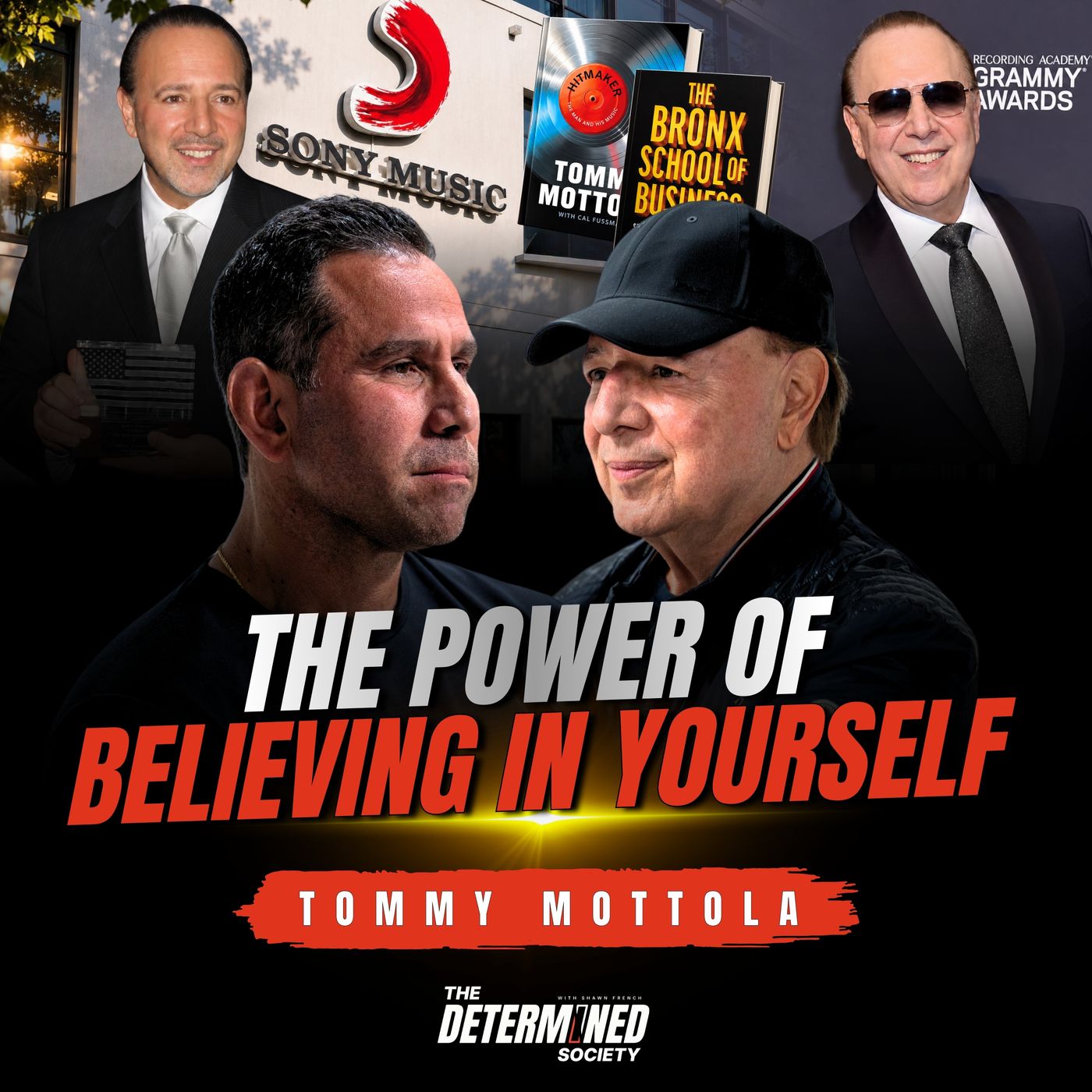
Legendary music executive and former Sony Music Chairman and CEO Tommy Mottola joins Shawn French on The Determined Society for a fascinating conversation about music, entrepreneurship, leadership, loyalty, and the determination behind extraordinary success.
From growing up in the Bronx and making his first business deals as a teenager to helping shape the careers of Michael Jackson, Mariah Carey, Celine Dion, Shakira, Gloria Estefan, and Hall & Oates, Tommy shares the instincts, risks, and relationships that defined his career.He takes Shawn behind the scenes of Mariah Carey's Christmas album, Celine Dion's iconic recording of "My Heart Will Go On," Michael Jackson's Invincible era, and Gloria Estefan's remarkable recovery after her accident. Tommy also reflects on his time leading Sony Music, the pressure of making decisions at the highest level, and the inspiration behind his book The Bronx School of Business.
Beyond the music industry stories, this conversation explores what it means to recognize potential, build great teams, stay loyal through adversity, and maintain the hunger to keep creating long after achieving success.
An unforgettable conversation about vision, leadership, perseverance, and why true determination is found in the process of building something meaningful.
Connect with Tommy Mottola
Instagram: https://www.instagram.com/tommymottola/
Facebook: https://www.facebook.com/tommydmottola/
X: https://x.com/TommyMottola
Connect with Shawn French
pillar.io/theshawnfrench
Subscribe to our newsletter for all updates and heavy doses of DETERMINATION:
https://thedeterminedsociety.com
Subscribe on Apple/Spotify:
Apple- https://podcasts.apple.com/us/podcast/determined-society-with-shawn-french-adversity-mindset/id1555922064
Spotify- https://open.spotify.com/show/5kS9tkLGQLcVyRgB3mDznw?si=184c18d1b9d44f53
The Determined Society is hosted by Shawn French — a show for people who refuse to quit. Every episode goes beyond the highlight reel to explore the real stories behind resilience, reinvention, and the relentless pursuit of a life built on your own terms.
Subscribe on YouTube, Spotify, Apple Podcasts, and all others.. If this episode moved you, share it with someone who needs to hear it — and leave a review. It helps more than you know.
Hosted by Simplecast, an AdsWizz company. See pcm.adswizz.com for information about our collection and use of personal data for advertising.
Scan the code with your iPhone camera
Listen in the app.