 Ask ChatGPT



Whether the U.S. is prepared for AI-enabled cyber/terror attacks, amid recent major tech outages and congressional testimony; plus Thanksgiving conversation advice.
Bridget Bean, former director of CISA (Cybersecurity and Infrastructure Security Agency). Alex Hogan (host segment). Intelligence official Jay Clayton, director of national intelligence (testified). Also features Vanessa Van Edwards, behavioral researcher and NYT bestselling author (separate Thanksgiving segment).
Recent outages (Microsoft/FAA/NSA/banking) were not an orchestrated attack, but AI accelerates vulnerability discovery and exploitation. CISA staffing cuts left critical roles vacant; CISA should be fully staffed. Nation-state actors (China/Russia/Iran/North Korea) can target critical infrastructure; defense is urgent. AI can help patch water utilities/hospitals faster.
GAO-tested AI chatbots provided mass-casualty and electrical-grid attack plans. Bean cites Iran-attributed attacks: grocery freezers in France (700 stores) and water utilities in 15 U.S. states. FBI warned of ARTEX automating intrusions in under 3 hours.
Written by AI. May contain mistakes.
Discussion on the risks posed by AI advancements to national security.
“coordinated attack, according to a top intelligence official.”
Exploration of workforce issues at CISA and the implications for cybersecurity.
“Part of leading things might mean addressing the findings of a new report from the Government Accountability Office.”
Examination of vulnerabilities in critical sectors and the role of AI.
“Do you think when several folks were let go, I think it was last year, that they did not have the skill set?”
Insights on how organizations and individuals can defend against AI threats.
“But tell me a little bit more about the reaction to, you know, all of these tech issues we are seeing as of late.”
The hosts express gratitude to the guest for her insights.
“Well, Bridget Bean, thank you so much for your time and expertise.”
Bill Hemmer discusses impactful moments in American history.
“You can find all episodes at foxnewspodcasts.com or wherever you listen.”
Discussing the increasing tensions in political conversations during holidays.
“Sharing a meal, breaking bread and having a conversation used to be about finding a common ground.”
Analyzing why party identification is often based on opposition.
“Still, that's no reason to skip Thanksgiving dinner this year.”
Strategies to handle challenging political discussions during gatherings.
“You're either born with it or you're not.”
Tips on preparing for and steering conversations to maintain peace.
“It's very hard to convince someone to change their entire political opinion over Turkey.”
Advice on maintaining a light atmosphere during potentially heated discussions.
“Have you found any other easy ways to navigate a conversation and steer it back into neutral territory?”
The importance of consent in discussing sensitive topics among family.
“in the room because people should be able to voice their concerns.”
Identifying emotional cues that indicate discussions are becoming heated.
“So what you can say is, listen, let's get through turkey.”
How to interpret changes in volume and tone during discussions.
“conversation when we are angry, when we feel hateful.”
Strategies for building relationships in virtual environments.
“Like we're around this table because we have some commonality.”
Encouraging deeper conversations beyond basic small talk.
“And this is similar to what a lot of conversations look like for people who work remote.”
The significance of common values during discussions about politics.
“more emotionally contagious in a good way.”
The guest shares where to find more resources and insights.
“And you have so many more tips and tricks and studies and research.”
Joe Concha discusses the casting of Robert Pattinson as James Bond and reactions from the past.
“I'm Dana Perino, and this is Perino on Politics.”

Get the gist, explore an idea or ask about something said.
 Claude
On The Fox News Rundown, what are the key points of this episode?
Searching your listeningAutomatic transcript. May contain errors.
0:00This holiday, all plans, even unlimited, are just$15 a month. A holiday deal this good obviously deserves an enormously expensive holiday song. Like, all I want... Right. Okay, we can't afford that. You know what? Forget the music budget. We're gonna stick with whatever's in the public domain. Give it a try at mintmobile.com slash switch. Upfront payment of$45 for three months,$90 for six months, or$180 for a 12-month plan required. $15 per month equivalent. Taxes and fees extra. New customer offer for initial plan term only. Greater than 50 gigabytes may slow when network is busy. See terms. When an intruder approaches a home, they expect a camera.
0:33What they don't expect. Stop. This is SimpliSafe. Police are on the way. Using smart AI cameras, live U.S.-based agents help deter intruders in under 30 seconds. Don't just record a break-in. Stop it from ever happening. Plan starting around a dollar a day. Right now, get 70 % off your new system with professional monitoring at simplisafe.com slash Spotify. 30 seconds response time requires monitoring plan with outdoor protection starting at$49.99 a month. Visit simplisafe.com slash licenses for alarm license information.
1:00Bridget Bean: I'm Kaylee McEnany. I'm Bill Hemmer. I'm Shannon Bream. And this is the Fox News Rundown.
1:08Thursday, November 19th, 2026. I'm Jessica Rosenthal. Recent tech outages were not a coordinated attack, according to a top intelligence official. But as bad actors weaponize AI at machine speed, are we ready for when they do? You know, our power and our communications networks, those are antiquated and compromised. So we need to figure out as a nation, how are we going to rebuild those? We speak with the former head of CISA.
1:34Bridget Bean: I'm Alex Hogan. Dreading politics at the Thanksgiving table this year, you are likely not alone. But there are tips and tricks to diffuse some of that family tension this holiday. We're not going to solve the country's political crisis now, but we can debate gluten-free gravy or regular gravy. And I'm Joe Concha. I've got at the final word on the Fox News rundown.
2:01The director of national intelligence testified before the House Homeland Security Committee Wednesday and was asked about the recent outages from Microsoft to the FAA, NSA, as well as in the banking sector. What we have seen over the last 10 days is not an orchestrated attack by a far and malign actor. We do not have any indication that it would be. But Jay Clayton said computing and application capabilities are increasing exponentially. Our digital infrastructure is becoming increasingly outdated and needs to be upgraded. This is a dramatic change that's going through the technology infrastructure around the globe, and we need to lead it.
2:40Part of leading things might mean addressing the findings of a new report from the Government Accountability Office. They tested AI chatbots to see if they'd offer plans on how to commit an event resulting in mass casualties. and two on how to attack an electrical grid causing economic damage. The chatbots did provide those plans. During the congressional hearing, Texas Republican Congressman Morgan Luttrell asked Clayton, How do we protect ourselves from an AI-generated army that can be programmed to be a terrorist? One of the most important prongs is to have the best technology, because this is not geographically bound within the United States.
3:22One issue that came up a few times at the hearing was why in this environment are we not fully staffed at CISA, the Cybersecurity Infrastructure and Security Agency. Last year, nearly 1 ,000 people were cut from CISA's workforce. Virginia Democratic Congressman James Walkinshaw asked Homeland Security Secretary Mark Wayne Mullen. The cyber threat facing the American people is exploding. You don't have basic information. If you need 2 ,800 and you have today somewhere between 2 ,200 and 2 ,800, you don't know. What work, what critical work that you seem to believe correctly, I agree, needs to be done is not getting done while those positions are vacant?
4:00I don't know if you were here earlier because I wasn't. I was. Then you heard me say we have not missed a mission. We're very mission. Then why do you need them? We need to address the merging threats. Outgoing Texas Republican Congressman Michael McCall urged them to fully staff CISA once again. I think it's critically important to have CISA fully and appropriately staffed. Bridget Bean is a former director of CISA. With the right skill set to face the threats that we have today and those that are emerging. So I think it's critically important to fill those those roles. Do you think when several folks were let go, I think it was last year, that they did not have the skill set?
4:40Or is that something you have to be constantly training to have? So we've built a country where almost everything runs on technology and almost all of it is connected. Paychecks, flight, prescriptions, power, even some of our classified systems. And so, you know, and it depends on the same networks, the same clouds, the same handful of vendors. And so as these systems continue to support much of the American critical infrastructure, you know, we continually need to patch and update. And AI is making it so much faster for the adversaries to get in that, you know, we've got to continue to stay on it.
5:19But as we know, years of experience, when you do a patch, especially in a hurried fashion, things can break. And so trying to stay one step ahead of the adversary, then we're really balancing the risk calculus at this point. What is your assessment of the combined threat of Iran and other state adversaries and their use of AI? Like we hear about Iran's plans to try to commit physical attacks inside the U.S., but what about their use of AI to commit cyber attacks? I think we've got to realize that China, Russia, Iran, North Korea all have varying level of skill, right? We also know that China is in our critical infrastructure.
6:03Iran is a little different, but they have proven themselves to be capable in many ways. As you know, it was just attributed to Iran that they took down the freezers in France in 700 different grocery stores. also the water utilities in 15 states this summer. So they have technical capability, and it is their methodology, this asymmetric response to the conflict in Iran. So all of these nation-state actors absolutely have capability. Some of them have burrowed into our critical infrastructure, and we've seen them try to disrupt our critical infrastructure. So we need to be very, very mindful, which is why we must be on the defense right now.
6:49And so one of my frustrations about the hearing was that they didn't get to these really meaty questions, which the American public, they want answers to and they deserve answers to. What are we doing about the issue that we've seen over the last week? And, you know, I'm heartened that we have some steps we can take right now. We can harness the power of artificial intelligence to help our water utilities, our hospitals, especially those with limited IT ability to scan their networks and find vulnerabilities and then help them patch it. Yeah, I think I heard the speed of government that was referenced at the hearing.
7:25But tell me a little bit more about the reaction to, you know, all of these tech issues we are seeing as of late. D &I Clayton said they are not part of a coordinated attack. That's what he told the committee. So then the question is, right, what is going on. There's a lot of speculation about that. We keep hearing that companies and governments are just patching things, securing things. Is this sort of maintenance happening because of the AI threat landscape or is this just routine maintenance that's not going right? It's not because of the AI maintenance. The AI is accelerating it. First of all, you update your phone and your phone doesn't work for five to seven minutes.
8:04And then sometimes when it comes back on, you have to tweak some of your applications. This is the same way with major systems, that if you're going to make an update, and these updates often have a security feature, or they might have an enhancement, an organization may have a new need. And so these patches or these updates might be responsive to the mission that's being executed. But because there's so much interdependency between the systems in every organization, you might inadvertently and unintentionally create a problem downstream. And this happens all the time. I mean, you think about your phones, you think about other technology that you have that you have to update.
8:43But what's happening is the speed with which the vulnerabilities are being found and exploited, that's why the patches are done quickly. Traditionally, you would get your patch, you'd get your update, you would do it in a test environment, you'd roll it out in a smaller environment to see what kind of those cascading impacts might be. But because of the environment we're in right now, organizations don't always have the luxury to do that. You know, in counterterrorism, we call it a complex coordinated terrorist attack. I don't believe that that's the case. In technology, we call it everything, everywhere, all at once.
9:20I don't think that's what we're seeing. I think when you have an event like the FAA, the airlines grounded, it is a very visible event. It impacts millions of people. and then the banks on top of it. All of that raises the awareness and the concern. And so, you know, although we have interruptions, network interruptions, systems interruptions frequently, when they're all bundled together in a week, it does raise concern. And I think that you heard in the hearing, there's no indication now that there was any malicious underpinnings. But they also said that they are continuing the investigation.
10:00And this stuff takes say long time. You're going through logs. You're going through the system. You're trying to recreate what happened. But at this point, they do not believe that it had any malicious genesis, if you will. You know, Bridget, last Friday as Microsoft was coming back, but before the FAA ground stuff, the FBI put out this release about ARTEX, this AI tool that's being weaponized by cybercriminals and state-aligned hackers, as they put it. They say this allows for the automation of cyber intrusions and for privileged network access in under three hours. You're talking in your last answer to us about cyber hygiene and the things we can do, like these sort of minor things, like not click on things.
10:44But how do we defend against a tool like that? You know, the irony is artificial intelligence, super intelligence, it's a dual use technology like airplanes. Airplanes can bring your family home for the holidays. It was also used as a weapon in 9-11. You know, nuclear power can light up a city, but it can also be used as a weapon. I view AI very similarly. It can be used for good. But this tool was originally used to find vulnerabilities in people's own system, right? So it's something we call pen testing. What are some of the vulnerabilities? And it was out there for people to use as, you know, a good for mankind, But then bad actors got a hold of it and started using it.
11:28So what it used to take people weeks to months to do, having this software with the AI makes it happen so quickly. And I think they said like in three hours they could do what it used to take, weeks and months. So it goes back to some of the very fundamental things. That's why you see organizations patching these vulnerabilities, taking their programs off of the open Internet, not having, you know, Internet facing programs that could get an adversary into their core business. So there's a number of things that organizations can do. But from the individual perspective, it really is what, you know, what we just talked about.
12:06You know, you may call them simple fixes, but it really is what will protect the individuals, making sure that they don't have weak passwords or that they're clicking or that they're running on old software. And for organizations, it's the same thing. It's just at a much greater scale. Finally, Bridget, as the former director of CISA, what do you want to see the government focus on now? Is it modernizing the infrastructure so that we can handle these shifts and these changes? What exactly should the focus be on? Even if all of these recent tech issues are not part of a coordinated threat, what do we do moving forward?
12:46Well, I think it's a multi-pronged approach, to be honest. First of all, we have to look at how AI is impacting everything we're doing. We need to really look at those systems. We can't live without water, power, hospitals, and work with those entities to protect their, you know, the financial sector has pretty darn good security controls, but others don't. Let's look at those who are critical to our country, but don't have the resources. So really get them the support from the big AI. You can look through their networks, find the vulnerabilities, and patch them fast. You know, our power and our communications networks, those are antiquated and, you know, and compromised.
13:29So we need to figure out as a nation, how are we going to rebuild those, especially with the additional data centers that are coming online? We need to really think about how we're going to make sure that our systems are resilient should something happen. So the other big issue is to make sure it's safe before it goes out the door. So I really think we need to think about how we harness the power of AI to protect, you know, those things that are most essential to our way of life. And then as new AI and those highest, most advanced AI models are out there, what are those guidelines that we should, that, you know, the safety culture, should we build around it?
14:11Well, Bridget Bean, thank you so much for your time and expertise. We appreciate it. Thank you very much.
14:26This holiday, all plans, even unlimited, are just$15 a month. A holiday deal this good obviously deserves an enormously expensive holiday song, like All I Want. Right. Okay, we can't afford that. You know what? Forget the music budget. We're going to stick with whatever's in the public domain. Give it a try at mintmobile.com slash switch. Upfront payment of$45 for three months,$90 for six months, or$180 for a 12-month plan required. $15 per month equivalent. Taxes and fees extra. New customer offer for initial plan term only. Greater than 50 gigabytes may slow when network is busy. See terms. All year, Bill Hemmer has been counting down the 250 most impactful moments in American history.
15:02This week, we reach the top 25. Miss any of our countdown? You can find all episodes at foxnewspodcasts.com or wherever you listen. This is Joe Concha with your Fox News commentary. Coming up.
15:17Bridget Bean: Sharing a meal, breaking bread and having a conversation used to be about finding a common ground. But as we head into the Thanksgiving holiday week, for a lot of Americans, that has met with a side of tension. According to a Pew research study last month, 75 percent of Democrats and 73 percent of Republicans say that a major reason for their party identification is not because they love that specific party, but it's because they believe that the other political parties' policies are harmful. Still, that's no reason to skip Thanksgiving dinner this year. Instead, there is research proven on how to navigate those conversations.
15:53There's this myth that soft skills, people skills conversation is innate.
15:59Bridget Bean: Vanessa Van Edwards is a behavioral researcher and a New York Times bestselling author. You're either born with it or you're not. And thank goodness, I'm a recovering awkward person. I have learned that conversation skills can be learned. And so when we learn them, it allows us to more deeply connect with people, but also be more excited about our interactions and not dread them. So we are post midterms, pre Thanksgiving. A lot of Americans are going to head home and they might be facing some challenging conversations with family members. So how do we navigate that? What do you do when the conversation starts to veer into potentially awkward or even heated territory?
16:38Okay, so first is prep. As you're heading home, you're in the car, you're on the flight. I want you to just think about what does winning mean, right? It's very hard to convince someone to change their entire political opinion over Turkey. Probably won't happen. So winning is focusing on connection. It's trying to still like each other by dessert. That is winning. So that's first. The second kind of thing to keep in your head is we're going to do two things during the dinner, which we can talk about, which is setting ground rules and then transitioning. But you have to have something to transition to.
17:08So what do you want to talk about? What is the exciting thing, the interesting thing, the thing that you can agree on, that you can pivot to? That's going to replace any kind of awkward or heated debate. And the last one here is my five by five by five rule, which is just keeping in your mind, will this matter in five days? Will this matter in five months? Will this matter in five years? That always sort of makes it feel like it's not so temporary.
17:32Bridget Bean: Absolutely. That's a good checklist. It's also probably something someone could bring up in the middle of a conversation, if things are starting to get a little heated, whether that's between yourself and someone else, or if you're hosting the dinner and things might start to veer off course a little bit, that could be a way to get things back on track. Have you found any other easy ways to navigate a conversation and steer it back into neutral territory? Yes. Okay. So whether you're hosting or you're a guest, it's always good to set expectation with levity, so keeping it nice and light. In fact, the more playful you are, the more everyone sort of takes a deep breath and then transitions.
18:09So saying something like, you know what, I want to like y 'all still at pie. So let's talk about how grandma met grandpa. Let's talk about that. You know, we're saying, you know, we're not going to solve the country's political crisis now, but we can debate gluten-free gravy or regular gravy. So you're keeping it light. That also signals to the group. It reminds everyone we're in this together. And so your whole goal is to get back to connection, keeping it light, keeping it bright. And where can you agree?
18:37Bridget Bean: That being said, I think that's a good point that you want people to have genuine conversation at the end of the day. So we don't necessarily want to fully steer away from the potential elephant in the room because people should be able to voice their concerns. And despite the fact that we're seeing a political climate now where people feel further stretched apart than they have previously, according to studies. Do you think it's still worth bringing up some of those tough conversations? Yes. And you want to do it with permission. So first of all, there's going to be people around the table who want to get into it, who want to talk.
19:09Great. There's going to be people who don't want to talk about it for whatever reason. So in this way, you can time box the discussion. So also what this does is you're setting up connection before the difficult discussion. So what you can say is, listen, let's get through turkey. Let's get through mashed potatoes. We're talking about, um, what would everyone's wrestling theme song be? And who would play me in a movie? That one always gets my family going. So you're getting a fun, heated debate. And then you're like, for everyone who wants to talk politics, that's during pie. And that's in the basement.
19:39Okay. So pie in the basement. Right. So, um, there's a couple of things.
19:43Bridget Bean: And then do you have a designated safe place where there's no politics allowed? Yeah. You got it. You got, you got a designated food or doesn't it safe place? Or you can joke can say, if you talk about politics, Vanessa and Alex said, you got to go to the kids table. So is there, have you found, is there an actual time, amount of time, I should say, in which a conversation typically goes from being uncomfortable and heated to way too far? Is there an amount of time that we can put on that? Because that type of conversation could stretch not only from politics, but really in any kind of business setting or personal family setting as well?
20:17It's actually not time. It's emotion words. When we're talking logically, our prefrontal cortex is activated. The part of our brain that's like, I'm listening. I'm thinking. I'm, ah, I've never had that idea. We're still open to new idea. We're having productive conversation. Those are all good. When emotion words begin to come in. So emotion words, frustrated, angry, resentful, hate. When those emotional words come in, you can know that those are tiny red flags that their lizard brain is taking over, that their amygdala where they process more fear, where you might be processing fear is starting to kick in and it is almost impossible.
20:56And this is what is really important. It's almost impossible to have productive conversation when we are angry, when we feel hateful. So what we want to do is when we hear those emotional words come, we have a couple of choices. We can pause, pause ourselves. Like this works for you too, of like, whew, deep breath. I think I need more wine, right? Like so pausing for ourselves or taking a pause for the group and saying, you know what guys, let's do what we're grateful for. Let's just like take a moment. Let's rewind. We're doing what we're grateful for. We can come back to this after this. So we're just giving our amygdala a chance to like calm down and our logic to kick in so that we actually can have productive discussion.
21:33Bridget Bean: So what would you say about tone and volume? Because I imagine for some families, that might be the indication that things are going astray. Volume, dynamic volume can mean a couple of different things. Loud volume can also mean excitement. It can also mean passion. So one is don't be triggered by someone else's volume because volume could mean that they're just sharing what they really are passionate about. If they're not using anger words or negative words, it's okay for someone to be passionate. You can match that passion. The key is, is that volume turning into yelling or screaming? And so I think that one, don't let that trigger you.
22:12And second, tone. We want to be kind to each other, right? Like we're around this table because we have some commonality. Tone, you want to listen for if someone is beginning to feel anxious and lose themselves. So right now, for example, I'm calm. I'm having fun with you. But if I was like really anxious or afraid, I would talk more up here. So I would be up in the highest end of my range. When you hear someone beginning to go up into that very high voice, this is for both men and women, just have a little bit of compassion, like a little bit of grace for them that they are now, they're flipped into fear.
22:46And that's when you want to ground and say, listen, we are all around the same table. We want to figure this out. We love each other. We can talk about anything. Right? you're grinding them back out of that fear.
22:59Bridget Bean: So what advice do you give to someone who wants to be surrounded by more people this time next year, wants to be popular, wants to be happier, less lonely? What advice do you give them? Oh, I love it. And you are not alone. So the very first thing is create friends around your goals. It is very challenging to make friends as an adult first. So no, if you're struggling with this, you're not alone. And that is because as adults, we're pretty formed. And so we end up getting in these small talk traps. What instead I want you to do is you're in the perfect time of year to ask, so what are your new year's resolutions?
23:34Or what are your goals? Or what exciting goals are you working on this year? And then create allies with those goals. So, you know, I'm, I really want to get more into being outside. I'm thinking about doing hikes every week. Do you want to join me? Or I'm thinking about learning Portuguese and I really want to practice. Do you want to learn it with me? Or, you know, I'm learning how to make sushi this year. I'm learning how to cook. Will you come to one of my dinners? you're doing two things. One is you're sharing a motivation that you have that has bravery attacked. And two, you're asking for help.
24:03And that is actually the best way to make friends.
24:05Bridget Bean: Okay, well, so we are sitting on opposite sides of the country as we're having this conversation. And this is similar to what a lot of conversations look like for people who work remote. So I'm curious from your perspective and in your research and studies, what can people do who are having these types of interaction where you can't give someone a firm handshake, You can't give them a hug if it's appropriate in a work setting or tap them on the shoulder. How do you convey a sense of authority and try to present yourself as a leader when you're doing it through a screen? OK, so the good news is we can still make wonderful connections even through a screen, even through voice notes, even through chat.
24:43So that's the good thing is that we're still able to do it. The most important thing is to break social scripts. I know this sounds like a weird idea, but here's why this works. When we are on screens or on text or on chat, we tend to fall into conversation patterns. And those patterns don't serve us. How are the kids? How's the husband? How's the wife? How's the job? And those logistics are level one. When we look at the levels of connection with people, level one are like the basic facts. You are not going to be able to make connection level one. But when we're on screens, that's what we typically default to.
25:19So what I would challenge you to do, and this is about not only speaking with authority, but speaking with intent to connect is break those social scripts. So not asking for the facts, asking for stories. The research, my lab shows that facts are dead ends, stories are doorways. What's the story they can tell you about their kid? What's the story they can tell you about their job? What's the story they can tell you about their weekend? What was the craziest thing that happened this week? What was the most surprising that happened this week? What was something fun and exciting you did last weekend?
25:48What you're doing in your conversation is trying to elicit positive emotion. That breaks the script and it also makes you more emotionally contagious in a good way. So as a whole,
26:00Bridget Bean: as we approach Thanksgiving, all of the various holidays next month, I'm curious, would you encourage people to try to change perspectives when it comes to sometimes tough political conversations or acknowledge that realistically, given the political climate, the algorithms that are feeding people every single day, the news that they consume, and their preconceived ideas. Is it realistic to think that people can change their loved ones' minds this holiday? I think it's very realistic to remind people that you're more connected than you think. That the division that we feel that we have, if we are connected on anything, on love for our grandchildren, on love for Turkey, on love for America, If we have any of those strings, that is enough foundation to find common ground.
26:53And so we cannot give up on finding that common ground because if we can find it, we know there's a way back. So our goal this holiday season, at least mine is, is to build bridges, bridges with what you can agree on, bridges with your love and connection, and that's going to help you find each other. I love it.
27:09Bridget Bean: And you have so many more tips and tricks and studies and research. If people want to hear more from you and about you, where can they find you and what are you looking forward to? I'm very grateful. I'm very grateful this holiday season. I've just met so many amazing people in this work. You can find me at Science of People. I'm also Vanessa Van Edwards on all the social networks. And I'm going to be putting up my favorite holiday conversation starters that are safe, that are going to find common ground all week long. So come find me. And I promise they're not awkward. Well, we will stay tuned.
27:42Bridget Bean: Vanessa Van Edwards. thank you so much for your time. Thanks for having me.
28:12slash switch. Upfront payment of$45 for three months,$90 for six months, or$180 for a 12-month plan required,$15 per month equivalent, taxes and fees extra. New customer offer for initial plan term only. Greater than 50 gigabytes may slow when network is busy. See terms. I'm Dana Perino, and this is Perino on Politics. Join me and my very smart friends every week as we discuss the ever-changing state of American politics. We cover it all. New episodes available Mondays everywhere. You get podcasts. Subscribe to this podcast at FoxNewsPodcasts.com. It's time for your Fox News commentary. Joe Concha.
28:50What's on your mind? Well, we have a new James Bond, and his name is Robert Pattinson. Yes, Pattinson, he is the safest choice. He's been a known quantity for nearly 20 years, going back to the Twilight saga, you may recall. but I thought his turn in Batman was pretty good, not great, not very memorable, but it wasn't his fault then again. The movie was nearly three hours long for no apparent reason. I personally would have liked to have seen Christian Bale get the role here, who also played Batman and turned down the role actually once before, or Tom Hardy, who has done multiple films, also with the best director in the game, Christopher Nolan.
29:29Now, they may be a little old for the role, but Hollywood magic can change all that, as we've seen with Tom Cruise and Brad Pitt lately. Either way, there was always going to be some criticism no matter who was chosen to play Bond. I went back and looked at the headlines from 20 years ago when Daniel Craig was chosen as Bond, and the headlines were brutal. You can't have a blonde James Bond, they said. James Bond actually has to be an attractive man. Daniel Craig is not. And Daniel who? And then Daniel Craig as Bond and his films ended up grossing$4 billion. dollars. That's with a B. And he was excellent.
30:06In fact, you can make the argument now that outside of Sean Connery, Daniel Craig was the best Bond, if not the best Bond, at least in my book. Either way, Robert Pattinson gets the ultimate job that you would want in Hollywood. You get to play the iconic James Bond at$25 million per film. And oh, by the way, the Bond girl is rumored to be in his first film Sidney Sweeney. You get paid to do scenes with her? Oh, man. Sign me up. I'll do it for free. I'm Joe Concha.
30:43You've been listening to the Fox News Rundown. And now stay up to date by subscribing to this podcast at Fox News Podcasts dot com. Listen ad free on Fox News Podcasts plus on Apple Podcasts and Prime members can listen to the show ad free on Amazon Music. And for up to the minute news, go to Fox News dot com. This holiday, all plans, even unlimited, are just$15 a month. A holiday deal this good obviously deserves an enormously expensive holiday song, like All I Want. Right. Okay, we can afford that. You know what? Forget the music budget. We're going to stick with whatever's in the public domain.
31:19Give it a try at mintmobile.com slash switch. Upfront payment of$45 for three months,$90 for six months, or$180 for a 12-month plan required,$15 per month equivalent. Taxes and fees extra. New customer offer for initial planned term only. Greater than 50 gigabytes may slow when network is busy. See terms.
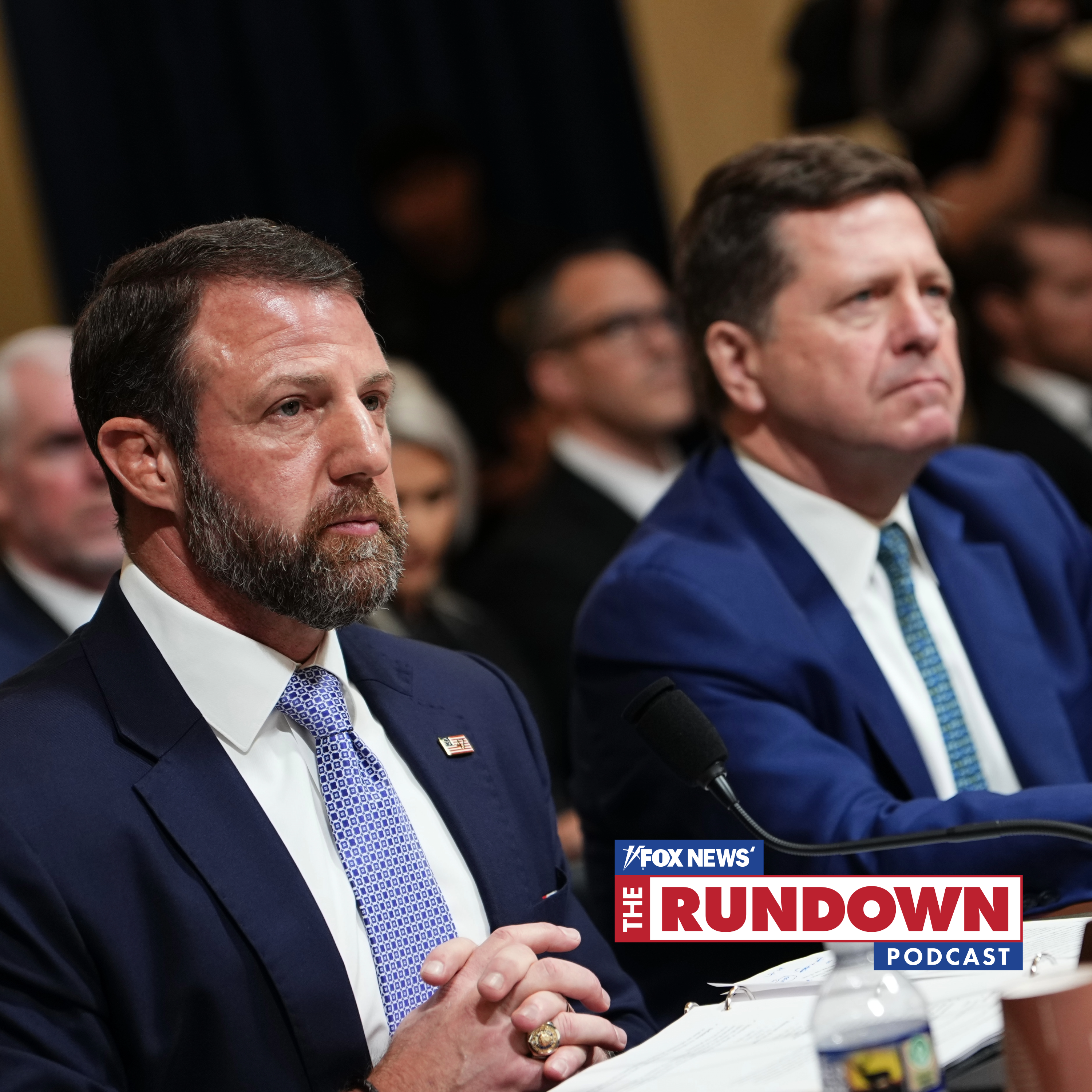
After a string of major tech outages that disrupted airlines, banks, and even Microsoft, Washington faces one urgent question: are these cascading outages just rushed maintenance, or a warning sign of AI accelerated cyber warfare? Former acting CISA Director, President of Via Stella LLC, and Heritage Foundation Visiting Fellow Bridget Bean discusses the critical staffing shortages facing our top cyber defense agency, how nation-state adversaries like Iran and China are weaponizing AI tools to infiltrate critical infrastructure, and why securing America’s aging power and water grids requires harnessing AI on defense before it’s too late.
With Thanksgiving approaching, political disagreements could make the holiday dinner table more tense than festive. FOX News correspondent Alex Hogan speaks with Behavioral researcher and bestselling author Vanessa Van Edwards about practical tips for navigating difficult conversations, finding common ground, and keeping family relationships intact. She also explains how to recognize when a debate is getting too heated and why building connections starts with asking better questions.
PLUS, commentary by FOX News contributor Joe Concha.
PHOTO CREDIT: AP IMAGES
Learn more about your ad choices. Visit podcastchoices.com/adchoices