Ask ChatGPT


 The Fox News Rundown
8 Nov 2026 · 31m · 8 chapters

A post-mortem of a recent U.S. midterm election, arguing voter frustration drove a major GOP collapse and shifted key demographics left, with turnout not the main problem.
Darren Shaw, University of Texas at Austin professor and Fox News Decision Desk data analyst; Mark Meadows, former Trump chief of staff and former U.S. congressman; Francis Suarez, former mayor of Miami.
Vance’s “turnout wasn’t the issue” view is supported; Republicans lost because many casual/peripheral voters came out motivated by affordability and a sense the system was failing, and voted Democratic. Major slippage occurred among “weak identifiers” (independents, younger voters, Hispanic voters). Foreign policy framing (ending the Iran war; “America first” vs Israel) resonated with voters.
Florida stayed red but was close (governor by ~100,000 votes despite a ~1.5M Republican registration advantage). Texas turnout reached ~10.2–10.4M voters; Democrats won more than expected. Independents showed ~20-point slippage in rural/small-town areas; Latino GOP support fell from ~50% (2024) to ~35%. First-time midterm voters split 62–34 for Democrats.
Written by AI. May contain mistakes.
Discussion on GOP challenges post-election and key voting demographics.
“This is the Fox News Rundown from Washington.”
Analysis of voter shifts among independents, Latinos, and young voters.
“From the Republican perspective, it was a bloodbath.”
Exploration of how economic concerns influenced voter decisions.
“Republicans carried them with 58%, but Trump won upwards of 65%.”
Discussion on how migration is affecting the political landscape in key states.
“Darren, are Latinos officially like the most coveted group, maybe aside from suburban women?”
Examination of Vance's insights on turnout and critical issues for the GOP.
“And you saw the political diversification as well.”
Explore Vice President Vance's insights on voter turnout and key issues affecting the election.
“It was just that they showed up not for Republicans.”
Discussion on Florida's election results and what they mean for Republicans.
“Byron Donalds won the governor's race by just about a point.”
Explore how blame and accountability shape voter sentiment.
“And then this entity, this third party will just come in and fix it.”

Get the gist, explore an idea or ask about something said.
 Claude
On The Fox News Rundown, what are the key points of this episode?
Searching your listeningAutomatic transcript. May contain errors.
0:00Daron Shaw: Traditional home security only alerts you after a break-in, and that's too late. SimpliSafe is changing that. Stop. This is SimpliSafe. Police are on the way. We don't just alert. We help stop crime before it starts. Plan starting around a dollar a day. Right now, get 70 % off your new system with professional monitoring at simplisafe.com slash Spotify. SimpliSafe. Ahead of crime in real time. Outdoor deterrence plans start at$49.99 a month. Visit simplisafe.com slash licenses for alarm license information.
0:31Francis Suarez: Black Friday, well, shop Wayfair now Monthong, big deals, yeah, these are steals 80 % less money spent You kick a run, check out the song Blackstool's gil-zor, deal Black Friday scores your most is two
0:42Daron Shaw: More than a few
0:43Francis Suarez: Grab a big bed, two layer head Mattresses, two sheets that are new Say that Wayfair, save on these chairs Find just your style, it makes you smile Here's a quick plug, area roast Free shipping while Wayfair is hot Win the season, win the win the season Wayfair, Wayfair, Wayfair, Wayfair, Wayfair
1:03Francis Suarez: Sunday, November 8th, 2026. I'm Jessica Rosenthal. The online fights over what went wrong for the GOP continue, but the data gives some clear notes about voter frustration and why the electorate swung as far left as it did.
1:17Daron Shaw: Everybody seems to think they've got the group that explains the universe. Independence and weak identifiers are critical voters politically and demographically. Yeah, younger voters and Hispanic voters. And the reason they're so sought after is that they're weakly attached to the existing party system. So they swing pretty heavily from election to election.
1:35Francis Suarez: And for all the Republican gloom, one state stayed red. But it was still a fight in Florida.
1:40Daron Shaw: In Florida, you know, I think the governor won by 100 ,000 votes. So when you talk against a million and a half Republican registration advantage, which had been built up over time. So that turned out to be a firewall for Florida, but just barely.
1:56Francis Suarez: This is the Fox News Rundown from Washington.
2:08Francis Suarez: After Election Day, Vice President J.D. Vance wrote a deep dive assessment in an ex-post, concluding, turnout was not the issue. People turned out all right, just not for the GOP. He went on to explain why, writing that after talking to the smartest data guy he knows and smartest pollster he knows, the chief reason they lost was the war in Iran, followed by high costs, not putting America first, and Israel. In a speech Thursday about the election results, Senate Minority Leader Chuck Schumer seemed to agree with part of Vance's assessment.
2:37Daron Shaw: This election made it clear that there are a lot of issues Republicans shouldn't run away from, ending this disastrous war, stopping Trump's costly tariffs, banning both members and Congress and the president from trading stocks, ensuring Americans' electric bills won't go up just because a data center can pay less.
2:56Francis Suarez: President Trump's former chief of staff and former Congressman Mark Meadows told Fox News as for the demographics that swung for Trump two years ago and then swung back to Democrats, it's bigger than one group.
3:07Daron Shaw: It is our problem really with Hispanic Latino votes. I think our problem is much more broad than that. If you look at Texas, I mean, young men who voted overwhelmingly for Donald Trump, over 30 percent of young men voting for Donald Trump, perhaps for their first time ever voting, went largely the other way.
3:29Francis Suarez: And while there's already talk of 2028 and who will run, Meadows said the GOP needs to work on a direction.
3:36Daron Shaw: I think people are looking to unite on a message and then a candidate instead of a candidate, then a message.
3:42Francis Suarez: But what does the data say about all those groups that drifted from Republicans and what issues were driving them?
3:48Daron Shaw: From the Republican perspective, it was a bloodbath.
3:50Francis Suarez: University of Texas at Austin professor Darren Shaw is on the Fox News decision desk.
3:55Daron Shaw: I think the average seat loss in midterm elections for the president's party in the Senate from 2002 to 2022 was about 2.7 seats. So minus three. It looks like we may, depending on Mississippi and Alaska, be at minus nine for the president's party. In the House, it's about 25 seats of loss. And I think we're upwards of 35 now. Something like that, at least trending towards that. So these are much more significant than usual. I think there's only been five times since the 1800s that the president's party has lost both chambers in the midterm election, only five times. Most recently, I think Bush lost it in 2006.
4:37Daron Shaw: So it's a major wipeout, and it's a major wipeout, even though the Republicans didn't really have a lot of at-risk seats after 2024. They didn't have a huge, overwhelming win in the 2024 election. So I and others thought they weren't that exposed in the House, nor were they that exposed in the Senate, but they still had considerable losses. That's why I think even though the numbers aren't stark compared to historical numbers. They're really striking, given that it didn't seem like there was that much out there to lose, and they lost it all and then some.
5:11Francis Suarez: Tell me about what groups we saw, because everybody was focused on independence, Latino voters, the youth vote, the rural vote. Did we see slippage away from the GOP and all of those? What caught your attention?
5:23Daron Shaw: Jessica, you basically hit every one of the groups I was interested in. Enormous, enormous slippage. Let's start on the political side with independence. The numbers I got from the Fox News voter poll, we had about 8 % independent, and those are pure independents. So leaners, people lean to one side or the other, we treat them as partisans.
5:51Daron Shaw: So on points. Basically, this group was a draw in 2024. So, you know, roughly speaking about 20 points of slippage amongst people in rural or small town, rural America or small towns, that's 36 % of the electorate. Republicans carried them with 58%, but Trump won upwards of 65%. So even in a pretty core Republican area, major slippage, probably due to diesel prices and probably due to a slightly lesser degree to AI, you know, and AI data centers. Amongst Latinos, you know, we had Republican support amongst Latinos at 35 percent. That's compared to close to 50 percent in the last election cycle in 2024.
6:36Daron Shaw: So Republicans have given away about 75 percent of the gains they made with Latinos from 2016 to 2024. Not all. They're not back to sort of Romney 2012 levels, but they're basically, you know, have given away almost everything that they've gained in the 2016, 2020 and 2024 elections. You know, so those are some of the major groups. Young people, I guess, just to kind of close the loop on some of these obvious groups, you know, so people under under 30 years of age, the Democrats won roughly 70 percent of that cohort. Republicans had made major gains, especially with young men in 2024, they got absolutely devastated amongst young voters and including young men.
7:21Daron Shaw: Wasn't quite as bad with young men, but, you know, quite as bad means you didn't lose seven out of 10 voters, which is what they did overall. One other small thing, about 10 % of the electorate was casting their first vote in a midterm election. So these are to some extent young voters, but also people who've never been engaged in midterms before. And the Democrats carried that group 62 to 34 first time midterm election voters. So all that adds up to a pretty devastating loss.
7:52Francis Suarez: Darren, are Latinos officially like the most coveted group, maybe aside from suburban women? I mean, they seem like this bellwether group now that you you know, it could really put you over the top or really hold you back.
8:03Daron Shaw: I think they're one. You know, I do think, you know, suburban women, rural voters, you know, we can kind of go down the list. Independents, sort of people who say they're ideologically slightly conservative. There are a number of groups that anybody who's doing these sort of sophisticated demographic analyses, cluster analyses in marketing terms, they could point to. Everybody seems to think they've got the group that explains the universe. But I like to keep this stuff pretty simple. You know, independents and weak identifiers are critical voters politically. and demographically, yeah, younger voters and Hispanic voters.
8:38Daron Shaw: And the reason they're so sought after, Jess, is that they're weakly attached to the existing party system. So they swing pretty heavily from election to election. Younger voters because, you know, they don't have a lot of experience. They're not that tied to the Republicans or Democrats for the most part, if you are, but most of them aren't. And Hispanic's the same way. I mean, Hispanic attachment to the Democratic Party, for instance, going back 10 years, was nowhere near what, let's say, African-American attachment to the Democratic Party is, which is kind of rooted in the experience of the civil rights movement.
9:09Daron Shaw: Democratic politicians and candidates offering policies and commitments specifically to attract the support of black voters, a mobilization apparatus geared towards black voters. Nothing really like that existed for Hispanics. They had just sort of almost by default and for socioeconomic reasons supported Democratic candidates. And that really began to atrophy when two things happened. The economy collapsed. And at the same time, you know, the Latino population, especially in places like Texas, really began to diversify. And you began to see the, you know, a burgeoning middle class and upper class in places like, you know, for instance, San Antonio, other places in Texas and California.
9:50Daron Shaw: And it resulted in greater heterogeneity, greater diversification of Latino voting patterns. So part of it was political context. And part of it was just, you know, this group is becoming broader and more economically diverse. And you saw the political diversification as well. They're still up for grabs. I mean, right now they've reverted back to some degree to democratic tendencies, but, you know, the Democrats are leasing that turf and they're going to lease it, you know, pending their performance on core economic dimensions. If they deliver the goods on the economy, maybe Latinos, you know, are sort of a 70, 30 Democratic group moving forward.
10:27Daron Shaw: If they underperform or have a mixed vote, you know, we're going to be talking about the Latino vote again in 2028, which is probably my bet.
10:37Francis Suarez: One of the most interesting stats I think that you all found was that, OK, 39 percent felt the economy was the most important issue. And of those, 52 percent went with the Democratic candidate. I thought it would be maybe a little bit more given what we were told. But then the next most important issue, 32 percent said was the state of democracy. And there, 79 percent voted for the Democrat. What do you glean from that?
11:04Daron Shaw: I may be in the minority on this. I think that's a marker for you think Trump is a threat. So this is, you know, these are my Democratic and liberal friends who email me all the time about, you know, are you safe? Have the have the militia come to get you after the election? This this sort of thing. I mean, they really not. By the way, I think after, you know, January 6th, people started impressions in that regard to become supercharged. Trump doesn't help matters by talking about, you know, litigation against results that don't go his way, you know, sort of threats about postal voting and that kind of thing.
11:42Daron Shaw: So Trump has played into this. In some ways, I think he's trolling these people. But this was explicitly Biden's message in 2020 and into 2024. And I think the right talks a lot about illegitimate votes, about voter fraud. The left talks about voter suppression. And voter suppression broadly construed as sort of what you're seeing at in this kind of response.
12:08Francis Suarez: Tell me about migration. And I mean, people moving from California, New Jersey and New York and going to Texas, the Carolinas, Georgia, Florida. Do we know if any of that played any role here?
12:19Daron Shaw: I think you can't help but look at the volatility in the vote in Texas. And I guess over a longer period of time in Georgia and say, like, look, these are these are states that are attracting lots and lots of people. They're high growth states. And unless you're getting migration patterns that are 55, 45 or 60, 40 Republican Democrats, unless that's the migration, the partisanship of the migration patterns, then if it's closer to 50-50, you're going to be pulling those states towards purple status. I think that's true. But what's interesting, Jess, is that within the states, so you are getting, you know, a more balanced, a more independent leading electorate because of that migration.
12:59Daron Shaw: I think that's unavoidable. You see that in Atlanta, you see it in Dallas, you see it in Houston and Austin, you know, it's undeniable. But what's kind of interesting is within the states themselves, It's creating more polarization because they're, you know, the more liberal migrants are geographically concentrated. They're in Austin. They're in Central and South Dallas. You know, they're in Fulton County, in Cobb, in Gwinnett, in the suburban ring around Atlanta. Meanwhile, the rest of the state is at least as Republican or conservative, in some ways more so. So while states are more competitive, they're actually more polarized in partisan terms because of the sorting, as Bishop called it in his great book, The Big Sort.
13:46Daron Shaw: Right. We're sorting residentially, even as the distribution looks closer to 50-50. We're not 50-50 in many places. We're 50-50 overall because the urban areas are 70-30 and the rural areas are 30-70.
14:00Francis Suarez: I want your take on Vice President Vance's, you know, Election Day autopsy, because he says he he has his own pollsters that he was talking to and that turnout wasn't the problem. people showed up. It was just that they showed up not for Republicans. And he wrote that there are four critical issues that he says that they need to address to get voters back whom they lost. And that's end this war, conflict with Iran, address high prices, put America first. And number four was change the relationship with Israel. Do you think that's accurate, his take?
14:40Daron Shaw: The first part I think absolutely is, and that is that it wasn't nearly as much of a turnout problem as a lot of people had fought. And just Texas as an example, Texas ended up turning out about 10.2, 10.3, 10.4 million total voters out of 17.7 million registrants. That's a math. That's a presidential type. Not quite, but it's closer to a presidential election turnout than a midterm. And if you had told me that we were getting upwards of 10 million, I'd have thought the Democrats are in a lot of trouble because I think there's 4.5 million Democratic votes in Texas. I didn't think there's 5.1 or 5.2 million.
15:16Daron Shaw: And I figured that all the Democrats were going to turn out. And the question was whether Republicans would. Well, turnout did get above 10 million. And James Tallarico won by 12 points. And I think it's pretty clear that Republicans did turn out, but a lot of casual and peripheral voters showed up. And those voters were motivated by the economy and by affordability and by a sense that the system was failing them. And they voted Democratic. A lot of people that we probably modeled as Republicans showed up and voted Democratic in this election. So I think in that sense, Vance's analysis is spot on.
15:49Daron Shaw: On the issue side, I agree with part of the construction. I think working backwards from the narrative I just gave you, I think the Democrats have provided is that, you know, these prices are high. Republicans don't seem to care too much. They're pursuing policies like a war in Iran, high tariffs that are keeping these these prices high, especially fuel. They're keeping all these prices high. And then they're they're enriching their friends and family members and supporters and interest group allies while, you know, Rome is burning. That's the kind of sentiment that's going on. I think Vance is Vance is highlighting the foreign policy side of that.
16:29Right.
16:30Daron Shaw: That the war in Iran, not putting America first commitments to other interests, in particular Israel, that this is something that Americans are really against. Now, we in my polling, we haven't necessarily found that Americans are against the alliances, that Americans are, you know, that Americans are anti-Israel. But if you frame the foreign policy question in terms of protecting everybody else's interests versus protecting America's, then, yes, there is a significant amount of support for that particular statement of the problem and interpretation of how to solve it, which is kind of latent.
17:06Daron Shaw: But, you know, presumably what Vance is talking about is end the war in Iran, reduce support to Israel, kind of retreat more towards America's shores and concentrate on problems in the United States. I think he's probably right. There's considerable support for framing the next two years, for instance, of the Trump administration in those terms. I'm not sure that's necessarily a particularly farsighted foreign policy, but I would certainly concede that that's probably the more popular way for them to proceed. And I would also suggest it's smart for Vance to focus on foreign policy, where the administration is going to have a lot more discretion than on the domestic side, where they're, you know, currently a lame duck administration with a opposition party in charge of both houses of Congress.
17:49Francis Suarez: Fox News Decision Desk, team member Darren Shaw, thanks so much for the deep dive on the numbers. Appreciate it.
17:55Daron Shaw: Always a pleasure, Jessica.
18:19Daron Shaw: www.stitchfix.com
18:34Francis Suarez: This past week was a rough one for Republicans as a number of purple and red leading states went blue. But Florida stayed red. Still, it was an uphill climb. Byron Donalds won the governor's race by just about a point. And a Democratic socialist came within three points of beating Republican Senator Ashley Moody. Still, Republicans are looking at Florida not just as a bright spot, but looking to its leaders for leadership. This week, my colleague Evan Brown talked to a former Florida leader about his midterm take.
19:04Daron Shaw: Well, I think in politics, you have to analyze all of the factors. It's the day after now, so the day after usually provides a little bit of clarity.
19:12Francis Suarez: Former Republican mayor of Miami, Francis Suarez.
19:14Daron Shaw: And what you saw nationally was obviously a swing to the Democratic Party, right? I mean, you saw, like you said, previously solidly red states like Texas going Democrat, Georgia continuing to go Democrat, even in the governor's race. Michigan double digit win for essentially an avowed socialist. And Florida, you know, I think the governor won by 100 ,000 votes. So when you talk against a million and a half Republican registration advantage, which had been built up over time. Yeah. So that turned out to be a firewall for Florida. But just barely. Right. I mean, again, the governor won by 100 ,000.
19:57Daron Shaw: Now, there's two ways to look at it. One way is to say, well, in 2018, first time candidate, Ron DeSantis, who was also a congressman, just like Byron Donalds, only won in 2018 by 30 ,000 votes. so there's a corollary there right first time candidate former congressman didn't have a statewide profile and and so couldn't motivate people in the same way that incumbent who is well known and has done a good job if you analyze de santis's you know first run versus second run oh yeah nine day if you look at trump's uh victories in florida you know completely different as an incumbent so you know i think that's part of it i think the other part of it is there has to be a recognition on the part of Republicans that elections are decided nationally by working class people, period, full stop.
20:46Daron Shaw: And when a party doesn't seem to be connecting with working class people as well, because their policies, for example, let's say, are driving up the cost of living, then it opens up an opportunity for the opposition, in this case, a very well articulated by young, appealing candidates who are making what I think is a very easy political argument, which is if you have a problem, don't worry. Government is here to solve the problem. And I think that is a socialistic view of the world. And one that unfortunately has never worked in the history of humanity. It sounds great. It's easy to say, rolls off the tongue, but it just never works.
21:35Daron Shaw: And so I think, you know, the deception in that argument wasn't exposed properly in this election cycle. Some of the wins that the Trump administration has achieved were not articulated well, partly because the candidates, in my opinion, when you look at them, were not as good. So politics at some level can be or can appear to be a bit of a beauty competition, right? Sort of a superficial thing. And when you have candidates who are young, smart, message, you know, with tremendous message discipline, you see what happens even against candidates that may be better qualified. Right. Right. You look at Mike Rogers in, in, in, uh, Michigan, you look at his qualifications for being a U S Senator.
22:20Daron Shaw: I mean, this guy has a stellar resume, but he lost against the guy who has never run for office. Right. Or as far as I I know I was never run for office in Abdul Zayed, who was a social media darling, much like Mondami, and who was able to take even tough questions like Tallarico did. And we even answer that it would be hard to be upset about even when you're on the opposite side of the issue. So I think it's a moment for reflection for Republicans. They have to continue to get, you know, talented candidates. I think in Florida you had a couple of talented candidates in Byron Donald and Ashley Moody who won despite this this wave against Republicans.
23:00Daron Shaw: Yeah. I do want to contrast last night from from 2022 when Governor DeSantis during his reelection won by 20 percent and then Senator Marco Rubio won reelection by about 15 percent. it's particularly, I think, troublesome or at least at the very least noteworthy that candidates like Angie Nixon, who is a democratic socialist, part of that far left, and who has espoused certainly anti-American views, anti-Israeli views. She didn't get blown out of the water. She lost by about a percent and a half. That's more commentary than her actual loss, I think, is that she lost by a smidge. Well, I would go a step further and say that In addition to everything that you said, she also went out and said that she'd been told that the communist government of Cuba is a communist government, but she's right.
23:53Daron Shaw: She's just going on here sitting. You know what I mean? I mean, imagine someone saying something like that. That's a disqualifier right there. Well, it should. And that person's still getting. It should be right. How did she do? And how did she do? Yeah. How did she do in Miami-Dade County? She won Miami-Dade County by double digits, my understanding. Yeah. So for those who may not realize, for those listening who may not realize that's the capital of Cuban America is Miami-Dade County. But it is a county that has performed blue up until recently when, again, DeSantis and Trump in two successive cycles won the county by double digits.
24:29Daron Shaw: And I think they won it by double digits because, A, they were, you know, Trump's policies to Venezuela at the time and Cuba were seen as the right policy by those Hispanic subgroups. You had a governor who, you know, maybe not everybody agrees with everything he did, but he ran a successful state, performed well during COVID. And so he was rewarded for those policy achievements in that time period. And so, you know, I think policy matters. I think candidate quality matters. You know, again, you could say what you want to say about the president and the governor, but there were good candidates, right?
25:08Daron Shaw: They understood how to articulate their side of the argument in a way that was compelling. And I think when you look at the, you know, the opponent for Ossoff in Georgia, when you look at Ken Potsdam in Texas, when you look at Mike Rogers in Michigan, these are just not compelling people. They could be great people. They could be, you know, amazing human beings. But part of politics is communication. It's being compelling. It's being able to influence. It's being able to convince people that you are the right person. And that requires talent. It's also a multi-year game. I mean, you have to sort of build the momentum in the area where the physical or geographic area where you're trying to change things.
25:53Daron Shaw: You're a Republican. Your own successor as mayor of the city of Miami is a Democrat. And the reaction around the country when that happened, I think it was last December, was, oh my gosh, Miami turned blue, as opposed to not realizing that Miami has more often been blue than red. But, you know, it was coming fresh off the 2024 win by, you know, by President Trump. I think it kind of had eyebrows raising. But here we are again with a blue Miami and a blue Miami-Dade County. I would say two things. One is, you're right, nuance is lost in politics today, right, in terms of factual nuance, right, understanding a factual context to a situation.
26:36Daron Shaw: So that's definitely a problem. I think the long form podcast and things like this help because it gives people an opportunity to really, in Spanish, we'll say desarrollar, which means to explain something at depth in a way that people can understand that. I think the second part is, you know, Ken Griffin, when talking about Miami and people criticizing, for example, cost of living going up here said, you know, we have what he called the problems of prosperity. And so what happens is when you succeed, okay, when you succeed by all measurable metrics, we had the lowest unemployment in America, the highest median wage growth in America.
27:17Daron Shaw: We had almost the lowest homicide rate in history, 130 year history of the city, right? So we were creating amazing outcomes, lowest homeless rate in 11 years. When you do so well, you actually, believe it or not, open the door to the opposite argument. And what the argument is, is this. They say, if you're not doing well, we have someone to blame. It's all these successful people. All these successful people are really your oppressors and they have cheated their way to the top. And there's only one way to fix this. it's through government government has to create greater equality better outcomes for you and it's a very easy argument to sell because if anyone's not fulfilling their potential or feeling like man no matter how hard i work i can't i can't make it um i can't pay my bills or whatever there's an easy uh person to blame they don't have to they don't have to take responsibility they don't have to say well maybe i should work harder maybe i should have done this or that in my life to accomplish these goals, I can just blame somebody else.
28:25Daron Shaw: And then this entity, this third party will just come in and fix it. And again, it's never worked. It's never going to work, but it's easy. And when you succeed, actually, what I've learned is when you succeed, you actually become very vulnerable to that argument, to that swing. And I think that's what happened in Miami. All right. Francis Suarez, former mayor of the city of Miami. Thank you for being with us on the Fox News Rundown. Thank you, Evan. When you spend enough time around great companies, you notice that the best ones treat trust as a growth strategy, not a box to check. Vanta helps companies build and prove trust from day one.
29:02Daron Shaw: Its agentic trust platform connects compliance, risk, and trust at enterprise scale. Vanta delivers a 526 % return on investment over three years and pays for itself in just three months. Learn why over 16 ,000 of the fastest-growing companies use Vanta at Vanta.com.
29:23Francis Suarez: That'll do it for this edition of the Fox News Rundown from Washington. Tomorrow, we talk about the importance of data centers to voters and the future of AI in the U.S., along with other fallout from last week's midterms. I'm Jessica Rosenthal. Thanks for listening to the Fox News Rundown from Washington.
29:44Daron Shaw: Stay up to date by subscribing to this podcast at foxnewspodcasts.com. Listen ad-free on Fox News Podcasts Plus on Apple Podcasts. And Prime members can listen to this show ad-free on Amazon Music. And for up-to-the-minute news, go to foxnews.com.
30:01Francis Suarez: T 'was many nights before Christmas, and one woman knew she needed a Christmas tree, so to Wayfair she flew. finding just the right one and for years it will last wayfair shipping was free and remarkably fast what's this garland a wreath essentials to host good thing she celebrates way longer than most as her cart filled with magic and decor from the heart merry christmas to all get your wayfair head start for holiday decor you can count on year after year wayfair delivers
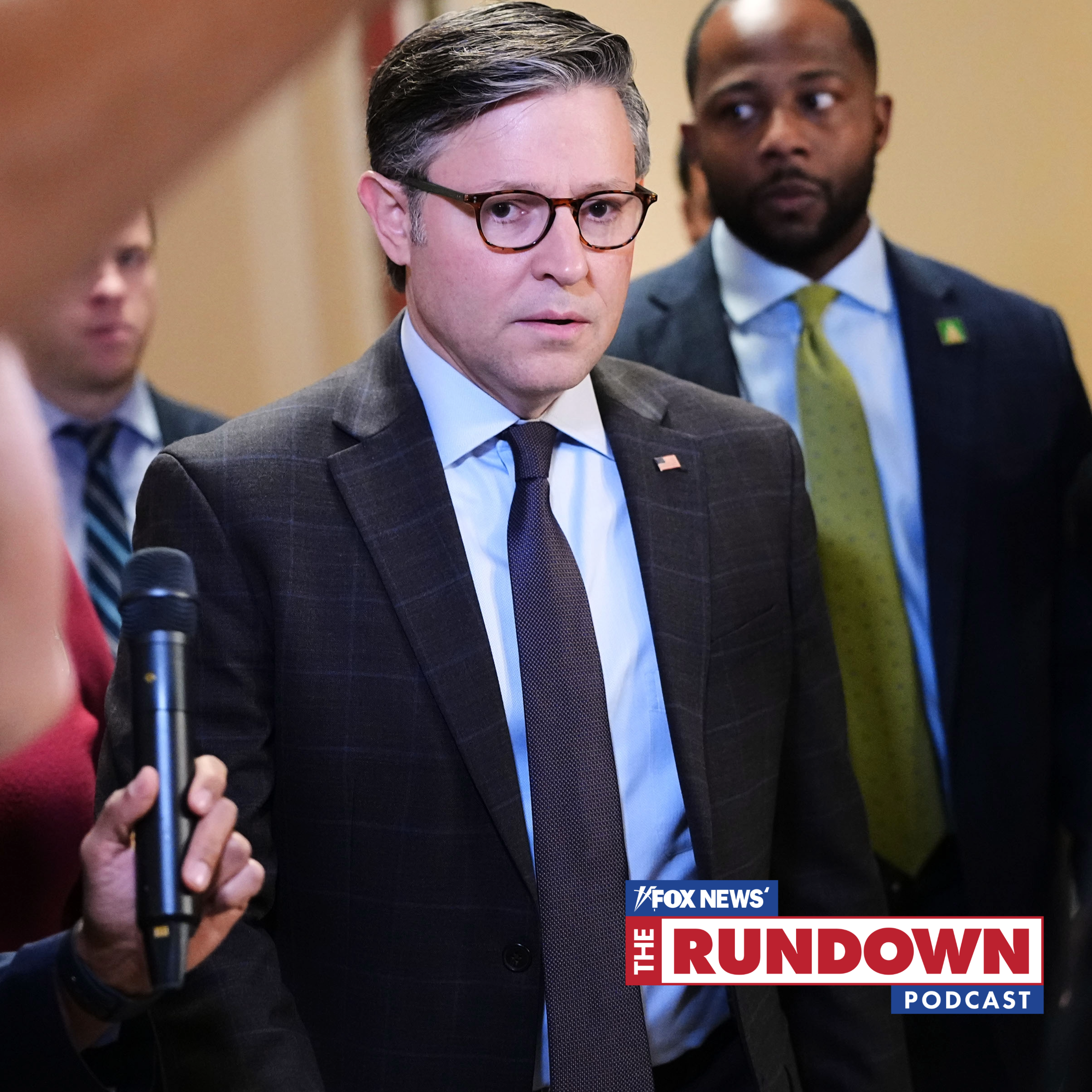
Widespread economic backlash, high fuel costs, and foreign conflict fueled historic midterm losses for the GOP across both congressional chambers. Fox News Decision Desk team member and University of Texas at Austin professor Daron Shaw joins us to break down the polling behind the Democratic sweep, unpack sharp slippage among key voting blocs like independents and Latinos, and evaluate Vice President JD Vance’s post-election autopsy ahead of 2028.
Plus, former City of Miami Mayor Francis Suarez joins to analyze how Florida remained red—even if the races were closer than expected. He also outlines how the GOP must rebuild its ground game ahead of 2028.
PHOTO CREDIT: AP
Learn more about your ad choices. Visit podcastchoices.com/adchoices