Ask ChatGPT


 The Game Business Show
12 Nov 2026 · 1h · 26 chapters
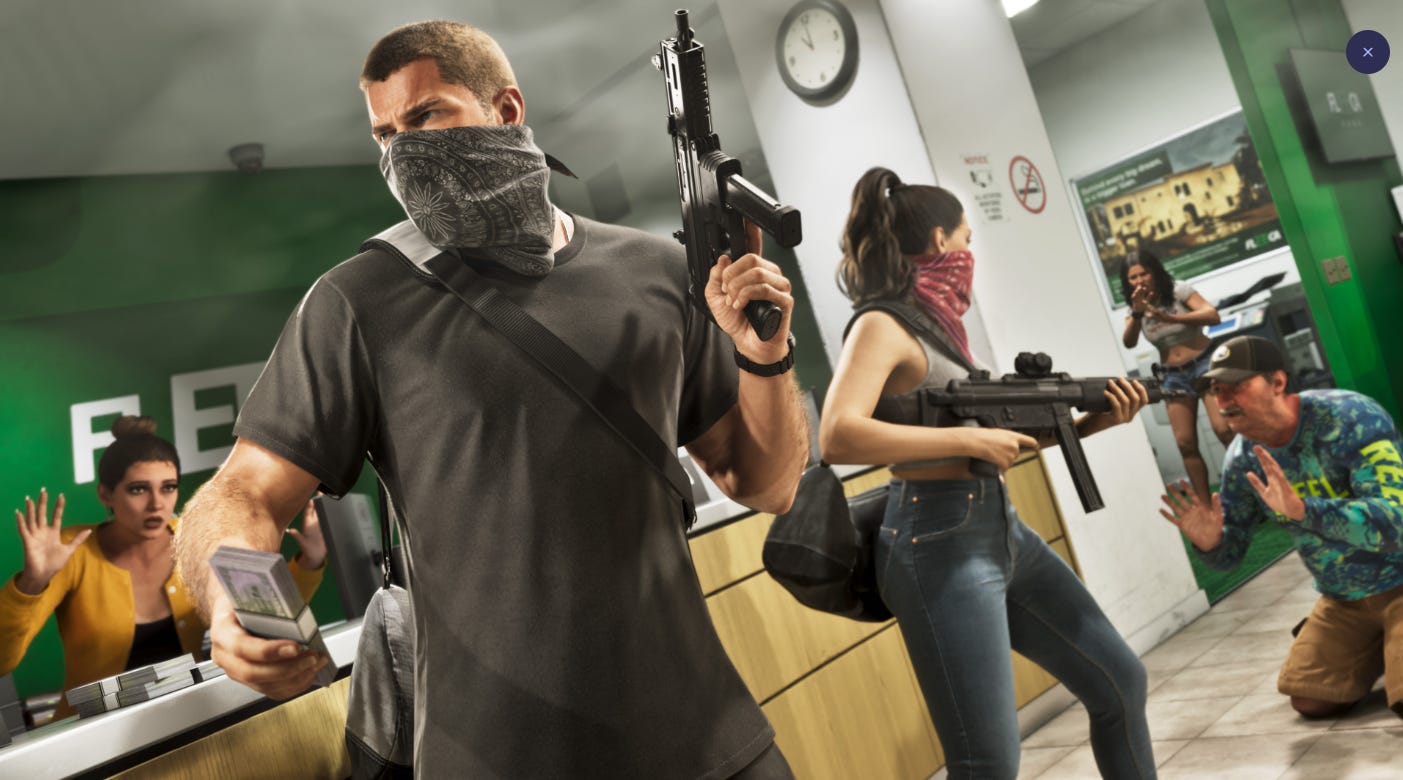
Take-Two CEO Strauss Zelnick discusses investing in new IP, GTA 6’s impact on the wider market, NBA 2K27 performance, digital distribution (98% digital), and Switch 2 sales after the 40th-anniversary Zelda launch. The show then focuses on two indie launches landing right before GTA 6: Rami Ismail’s strategy game Australia: Did It End of the World? and Edmund McMillan’s Binding of Isaac console release/updates. It also covers indie publishing risk, AI’s role in development, and launch timing strategy.
Written by AI. May contain mistakes.
Details about the upcoming Game Business Marketing Awards.
“We've got two very famous guests from the world of indie game development.”
The hosts introduce Rami Ismail and Edmund McMillan, highlighting their new projects.
“Because earlier this week, I had a chance to chat with Take-Two CEO Strauss Zelnick around the company's latest financials.”
Discussion with Zelnick about new IPs, GTA 6, and market strategies.
“Now I asked Zelnick what made him confident that this team can find a space for a new competitor and he said, I don't know that we can.”
Analysis of the competitive landscape for sports games and NBA 2K's performance.
“Our expectations, however, are for acceleration for NBA 2K in the second half of the year.”
Zelnick discusses how rising hardware prices might affect game sales.
“Rami isn't known for making strategy games.”
Discussion on the shift towards digital distribution in gaming.
“And so I had to just get back on the ground floor and build some stuff.”
News on Switch 2 sales following Zelda console launch and its market performance.
“You need new ideas and you need things that sort of shake things up and just sort of inspire and excite people.”
Learn about the evolution of indie game development and the challenges of self-publishing.
“And so when Devolver Digital and Raw Fury and all these, like, boutique publishers started becoming a thing, I was watching that with, like, a little bit of rage, you know?”
Discover the strategic implications of launching games near major titles like GTA.
“I think the, and I think I've spoken to a number of independent developers that sort of did the same or similar math is Grand Theft Auto is no-go, right?”
Understand the complexities and pressures indie developers face in the current market.
“Like, it is harder and harder to stand out because there's now 5 ,000 slop games launching every month.”
Examine how the funding landscape for indie games has shifted and the evolving role of publishers.
“And, you know, if it doesn't, then a month or two after Grand Theft Auto, we'll just do another push.”
Explore how indie developers are using AI and the implications for creativity and logistics.
“And that is a discussion that has accelerated aggressively, especially as, and there's maybe a little bit of irony in there, especially as it's becoming easier to do other stuff, right?”
Exploration of AI's shallow integration in game development and its implications.
“The change log internally or Jira tickets, you know, bug tracking or full generation of all assets in the video.”
Discussion on the lack of measurable ROI for AI investments in game development.
“Like nobody has calculated an ROI on a token.”
Examining the potential cognitive effects of relying on AI for creative processes.
“I'm always concerned about the cognitive impact of AI.”
Insights on how reliance on AI can hinder problem-solving abilities in programming.
“games journalism has been going on for 15 years.”
Analysis of the multiple pressures currently impacting the game development industry.
“because I know I've seen enough that I usually ask, like, which AI do you use?”
Updates on indie game developers releasing titles alongside major games like GTA 6.
Interview with Edmund McMillen discussing recent developments in his games.
“Well, a lot has happened since I last spoke to you.”
Exploration of the difficulties faced in localizing games for international audiences.
“when it wasn't too bad but oh really it was difficult and dealing with the response from the different audiences, especially like China, was very hard.”
Learn about the enduring popularity of the game Isaac and its ongoing updates.
“I try my best when I get annoyed by very vocal groups of people that they, it comes through as love in a really weird, abusive way.”
Exploration of launching a game on the same day as a major title like GTA 6.
“So we don't really do, oh, we've got a console board of a 15-year-old classic.”
Discussion on game development, personal priorities, and work-life balance.
“And it probably will get a handful of people playing it.”
Learn about recent layoffs and financial performance in the gaming industry.
“It was still the biggest, still the second biggest NBA yet.”
Discover sales trends and performance metrics for major gaming companies.
“Take-Two still expects to make between$8 and$8.2 billion for the year, thanks to GTA 6.”
Get a preview of upcoming episodes and closing thoughts from the hosts.
“To make sure you don't miss any of that, of course, you can go to thegamebusiness.com and put in your email address and you'll get an alert every single time we do an episode.”

Get the gist, explore an idea or ask about something said.
 Claude
On The Game Business Show, what are the key points of this episode?
Searching your listeningAutomatic transcript. May contain errors.
0:00Rami Ismail: This week Strauss Zelnick talks new IP, two world famous indie game makers go head to head with GTA 6 and switch to sales spike on Zelda launch.
0:12Rami Ismail: Hello and welcome to the Game Business Show. Just a little reminder that this is the deadline day, Thursday November 12th for the Game Business Marketing Awards. That takes place in just under a month. You'll have until the end of today to enter the awards where we'll be selecting some of the best and most innovative marketing campaigns of the last 12 months. You can find out more in the newsletter attached to this show or via thegamebusiness.com. We've had a bunch of cool entries already. I can't wait to share some of the winners with you on December 10th. Now, we have quite the show for you this week.
0:45Rami Ismail: We've got two very famous guests from the world of indie game development. One is Rami Ismail, who I can't believe we've not had on the show already. Rami is of course the world renowned video game developer and consultant he has a new game out this week a bit of a return for Rami and we have Edmund McMillan as well he's a regular listeners and viewers may remember he was on the show earlier this year following the success of his game Mugenics Edmund is releasing his 2011 classic Binding of Isaac on modern consoles next week with some new updates that's right both these indie game development heavyweights are launching new projects right on top of Grand Theft Auto 6.
1:23Rami Ismail: Have they lost their minds? We will find out in just a few moments. But first, we have a couple of other stories for you. Because earlier this week, I had a chance to chat with Take-Two CEO Strauss Zelnick around the company's latest financials. And of course, we talk about GTA 6. But I was also eager to hear about this new studio they formed. You may remember it. Back in August, the publisher launched Small Axe, which is developing a new blockbuster sports franchise. The team is made up of former EA Sports veterans, including leaders that worked across the FIFA and EA Sports FC titles. That's led to plenty of speculation that maybe they're making a football game, a soccer game rather, but they could be making an American football game as well.
2:03Rami Ismail: It's likely to be one of those because Tate will already make a basketball game and they only tend to work in the big sports these days. Anyway, I asked Selnick about this because it's unusual to see a big company investing in new IP and new studios at this point in the market. and he says we continue to invest in new intellectual property it's of course the riskiest part of our business and we believe that it's incumbent upon us to do so that we're building our business for the long term and they are doing other new IP as well they've got that game Judas from Ken Levine they've got Project Ethos which is that shooter they're working on they are doing other things in the new IP space as well but sports is really difficult players of games like NBA 2K like Madden like EA Sports FC are increasingly entrenched within their existing games, they like to play with their friends on the same title and they've got live service modes like Ultimate Team and My Team that keep them engaged from title to title.
2:51Rami Ismail: Now I asked Zelnick what made him confident that this team can find a space for a new competitor and he said, I don't know that we can. I'm always running scared and again, I never claim success before it occurs and I'm a firm believer that arrogance is the enemy of continued success. Our track record with regard to the creation of new intellectual property is not perfect, But it's pretty good. Today we have 15 huge franchises in our PC and console business that have each sold at least 5 million units. And the only reason that that is the case is because we were willing to invest in new intellectual property over the years.
3:24Rami Ismail: I'm cautiously optimistic that we can continue to create success. Inevitably, it will not be 100 % of the time. Now, in Take-Two's financials, the firm reported that its current sports game, NBA 2K27, didn't do as well as they hoped it would do. Its numbers were a bit below expectations. It blamed a competitive landscape for the game missing its targets and even cited pre-sales of next week's blockbuster launch of grand theft auto 6 as having an impact i asked him about that this is what he said first of all let's remember the release of nba 2k is the second most successful release we've ever had this is not a recovery situation this is a great new situation that said do i believe that there is some influence of the pre-sales of gta 6 the expectations around on GTA 6 on the rest of the entertainment business?
4:09Rami Ismail: Certainly, certainly there's influence. Our expectations, however, are for acceleration for NBA 2K in the second half of the year. That's driven by content drops and probably the largest slate of post-launch content in the franchise's history. We've sold 4 million units, we continue to sell, and we're super excited about how well the game is doing and how well it's been received. So I think we have every reason to be highly optimistic about NBA 2K for the rest of the year. It's obviously still got to contend with GTA 6. The GTA 6 has exceeded expectations in terms of pre-sales. That's according to Take-Two.
4:40Rami Ismail: However, it has resisted raising its financial guidance for the year. Take-Two haven't raised it above that$8.2 billion guidance. It still thinks it's going to do that despite the fact that GTA is doing better than expected. So I asked Zalnick about that and he says, you know me, I never claim success before it occurs. The release is 10 days away. We'll have the actual numbers very soon. I asked if he was concerned that the increased price of consoles might impact GTA 6's ability to reach a wider mass market audience. And he said, we're all troubled about increasing hardware prices, and you know that it's been driven by both tariffs and chip costs.
5:12Rami Ismail: I don't see it as a positive for the consumer, obviously, but I don't think it'll stand in the way of the success of our title or anyone else's title. He's said that to me before. I did want to talk to him about physical discs, because in Take-Two's financials, it was revealed that 98 % of its distribution mix is now digital, and just 2 % coming from the retail space. next week's GTA 6 is not being released on a disc it's only going to be available as a download or via a code in a box does this mark the end of take 2 supporting optical media and he said it may not be the end but listen we've been talking you and I for a long time I predicted that digital distribution will be well over 90 % of the business more than 10 years ago I don't always get it right but this one I got right will there always be some physical business yes in the same way there's still a vinyl business in recording music but it's going to be a very small part of the business now i want to move on to our guests but actually have a small nugget for you and a new sales figure for you wouldn't be the game business if i didn't have some sales numbers and it's around nintendo switch 2 so uk sales the switch 2 jumped following the release of the 40th anniversary zelda switch 2 console according to nilsson iq that in itself isn't a surprise of course according to nilsson iq the launch of the zelda console was the fifth biggest week for switch 2 sales so far the biggest week was of course to launch to the console then you had the black friday week then you had the week after black friday which did very well then as well and then you have the week of christmas and number five is the zelda console launch only just behind the week of christmas actually it's a good good start for this console in this game we know the game is already the biggest physical launch by quite a way in the uk the zelda edition meant that over half of all consoles sold in the uk were nintendo switch 2 machines the week of that coming out so far in 2026 switch 2 is the best selling console of the year followed by ps5 and xbox series s and x that is the uk of course will it still be the case come the end of the year we'll have to see obviously gta 6 is going to have a big impact on sales of playstation and xbox next week will be interesting to see what happens then nintendo have a lot of consoles to sell i'll just have to say that even though the targets are less than the first year they've got some lofty expectations and they don't really have a lot of other games to try and do the selling certainly not at the end of this year they've sold as their big game for the west they have monster hunter wild which i think will do well in japan but japan had such a big first year it's touch and go with nintendo's expectations right let's move on to our first guest his name is rami ismail he is the spokesperson for the video game industry he was a spokesperson for video for the video game industry particularly the independency he co-founded the studio of lambier in 2010 and developed hit games such as ridiculous fishing left browsers and nuclear thrown now rami is making a bit of a development comeback this week with the game australia did it end of the world railway defense business.
7:56Rami Ismail: It's a strategy game, which is unusual. Rami isn't known for making strategy games. And it's being published by a new publisher called Mystic Forge. Most significantly, it's just come out just yesterday, barely a week before the release of GTA 6. It's quite a brave move. And Rami has some logic as to why it made sense to do. Now, obviously, having Rami on meant I didn't just ask him about his new game. I didn't just ask him about GTA 6. I also had the opportunity to talk to him about all sorts of different things regarding what's going on in the video game industry, from AI to game funding to publishing.
8:27Rami Ismail: Frankly, we're going to have to have him back on because he's a brilliant guest. And here he is. Hello, Rami. Welcome to the show. Thank you. A pleasure to be here. This game sounds bonkers. It's a bit of a return to game making for you, right? You've been a bit away from sort of building games.
8:43Edmund McMillen: Yeah, you could say that. A little bit yes, a little bit no, obviously. It's a return to being in a leading position on a video game. So I've been working in games for the past, like, you know, 16 years nonstop. A lot of that has been Flambier, the first 10 years of my career. And then I would argue the five years since then, six years since then by now. I've mostly worked on other people's games. So I've worked as a consultant, as a producer, as creative director. But mostly I've worked in this weird capacity that I have, sort of like weird spider in the web kind of situation, like working in different communities with different developers, different ecosystems.
9:24Edmund McMillen: So I've kind of kept this very top-down view of the games industry. And it's lovely. It's really cool to see the industry. And obviously your work is also a great example of looking at the industry from that perspective. But I think at some point it just really gets a little weird to not be on the ground floor for me. And so I had to just get back on the ground floor and build some stuff. so it was a very welcome invitation by mystic forge the publisher of this game who frankly just asked me if i was interested in doing a strategy game and i basically just told him listen i with all the you know because i'm a huge strategy game fan and so i was like absolutely but just just to so we're clear that's not the thing i'm known for right like you understand that i'm to i make arcade shooter games that make the screen shake and they're like that's kind of why we want you to try right like that's the that's the idea here is let's make something new in strategy and i was like i'm all in so it's a bit of a strange way of doing going about it approach
10:29Rami Ismail: with approaching you to make a game that isn't in your wheelhouse that feels like a strange then that strange pitch to receive yeah it is an interesting strategy yeah it it was it is
10:42Edmund McMillen: But also, you know, sort of like thinking about it, it makes a lot of sense. This is a veteran group of publishing professionals, like their marketing and their production are all like great, like long term industry people. I knew their names. I had heard of them before I had worked with them. Right. But the other thing is, I think for them, it's just really good to have a smaller, more experimental game with a developer that's already practiced, that knows how to publish. I have self-published titles, so I kind of know how all the systems work. And I think for them, it was just a really good sort of like practice round, you know, like, let's, let's do this for real.
11:18Edmund McMillen: Like, let's, let's, let's go and ship something. Let's see where our processes work and where they feel and how we can make sure that we are supporting our developers, like in a way that works. And I found the collaboration to be really smooth given, you know, that they're really good at their job. but also it's been just very interesting to work with a publisher that is about to ship their first like title like their first proper title right the first one they signed even though in between they they did release uh dog witch which i adore by the way um so yeah what's a weird pitch i'll be honest with you it was not something that i've heard before um but sort of talking to them through why they want it because you know i don't know about you but when you get a weird pitch i always get a little nervous i'm like what is the what is the what is the behind the scenes here that i'm missing but when they when they laid out sort of like the case of like okay let's do something experimental we're new you're getting back into sort of like making games potentially it could be a nice sort of like collaboration here like we have the expertise to publish you have the expertise to make games but we also have an opportunity to do something a little strange here um i was like you know what that that sounds awesome because the publishing landscape has been really depressing to me yes you know somebody who last was trying to publish my own games back in 2013 right and you know through working with other developers i've seen that it's depressing out there but it's it's very different sort of having these these ideas that you want to make and then realizing that right now the publishing landscape is just so defensive it's so low on risk i heard a publisher say the other day in their own words it they effectively said like listen we don't have to sign games early because they're going to keep working on them they're going to burn their own money and then we just swoop in at the end right and i was like you could you could not say it out loud that would be nice you know but that's the strategy right now
13:21Rami Ismail: It's a weird thing, right? Because we talk about this on the show all the time that for this industry to grow and to sort of actually find its feet and to compete with the TikToks of the world and all this sort of thing that's soaking up all the time. Right. You need new ideas and you need things that sort of shake things up and just sort of inspire and excite people. Yeah. And yet now you've got to sort of marry that with this sort of risk averse culture. And you understand why. You get it. Yeah. But you kind of, you just have to take risks. There's no other option, really. The worst thing you can do right now is not take risks.
13:52Rami Ismail: That's something.
13:52Edmund McMillen: Yeah. Agreed. And that's the part that's so painful to me because, you know, I'm from the romantic era of indie games, right? Like, screw publishers, we're going to do it ourselves, kind of like era of indie games. And so when Devolver Digital and Raw Fury and all these, like, boutique publishers started becoming a thing, I was watching that with, like, a little bit of rage, you know? I was like, I don't want this to be such a large part. Like I want it to be possible for two kids in Guatemala to decide that they want to be game developers and then not need to go to GDC or Gamescom to pitch their game and hopefully get enough money to make.
14:30Edmund McMillen: Like I just want it to be possible to self-publish. And as publishers became larger and larger and the budgets went up and the marketing budgets went up, that became less and less true. It's harder now to self-publish in many ways than it was before if you want to compete. But the economics of game development have also changed. Like, you know, tools like Godot, like Game Maker have made it super accessible to make games. And tools like TikTok and Instagram and all of these platforms have made it possible to kind of go a little viral. And I think what we've seen lately, and this is something that I'm happy and sad about, is that a lot of developers are much better at prototyping than we were before.
15:13Edmund McMillen: Like people are making games in weeks rather than years, right? And so they're just building it. They're testing it. They're seeing it. Like they're almost doing games like TikToks. You know, when you talk to a TikTok creator, like somebody who works in the social media sort of ecosystem, when you talk to these influencers, they're very quick and like, they just kick out stuff. They're like, yeah, that's a good idea. Let's try it. Let's try it. Let's try it. And then if something hits, they're like, okay, that hit. And they don't even do it again. It's not like they go back and go like, oh, that worked.
15:41Edmund McMillen: Let's do more of that. They're like, oh, that worked great. And then they just keep trying stuff.
15:45Strauss Zelnick: Move on.
15:46Edmund McMillen: I'm seeing more of that attitude in younger developers. Maybe a little bit of Roblox influences in there as well.
15:53Strauss Zelnick: You know? Yeah.
15:54Edmund McMillen: Did you ever have that feeling? Because I had that feeling. There was a time where it really felt like indie games was the culture of video games, right? Like the culture of video games was indie games for a while. um i think we're now at the point where i have come to realize that we are the art culture of video games like we're the people that go to like the art house cinema okay like if you're into any indie game like you play like a small indie game out there you keep track of indie developers we're kind of the odd ones out right yeah because the the massive budgets the massive uh income is like roblox uh grand theft auto is gonna make a big chunk out of that and like i think it's always been true but it's for the first time it's really coming into focus with this ai discussion that's going on everywhere it's like there's so much pushback from independent developers on on ai and i think because we are the only ones that are really selling on you're going to play something human made for humans um yeah sure there's different parts of indie but i think it's a larger part of of the art house scene than it is of the of the triple a blockbusters well it's out Well, November 10th, it's very close to GTA 6.
17:09Rami Ismail: Isn't that a no-go area?
17:12Edmund McMillen: It is and it isn't. I think the, and I think I've spoken to a number of independent developers that sort of did the same or similar math is Grand Theft Auto is no-go, right? Like you're not supposed to go near Grand Theft Auto. Everybody agrees you're not supposed to go near Grand Theft Auto. So most people are not going near Grand Theft Auto. That means most people are going before or after Grand Theft Auto, which means that, weirdly enough, the quietest time to launch right now is near Grand Theft Auto. It's going to stay busy until February? Yeah, March probably. Maybe March, where everybody's just been like, oh, we're dodging Grand Theft Auto, so we're just going to launch in Feb or January.
17:53Edmund McMillen: I'm looking at that. Those are all games I am competing with. Right? Those are indies. Those are like$20 games,$15 games,$10 games. Those are games that you're meant to play in between other games that you're like, you know, the things that I am that I'm directly I'm not competing with. It's not even the same industry. Like Rockstar Games is a separate industry. Like, yes, it's video games, but they're not they're not playing any rules that I know of games industry where you can just go like, yeah, we have a trillion dollars. So we're just going to build this game for eight years. and then we already know it'll make a profit by day two.
18:28Rami Ismail: Yeah, nobody plays by that.
18:30Edmund McMillen: I don't work in that space. And so we had lots of discussion with our marketing guy to kind of go like, are we shooting ourselves in the foot? And the answer, frankly, is we don't know. Like, there's no way of knowing, but the alternative with waiting, with the way the industry is developing now, I'm happy with the choices we made because this choice was made months ago before the last Steam Next Fest. And that last team, Nextfest, told me everything I needed to know about the industry right now. Like, it is harder and harder to stand out because there's now 5 ,000 slop games launching every month.
19:05Edmund McMillen: On top of the stuff that we are already making as a very vibrant industry, I don't want to be in the period that's already busy because everybody's going there. Like, I'd rather take my bets with Grand Theft Auto VI, snuffing all the oxygen out of the room, than go stand in the middle of a busy football stadium with a little flag being like, play my game. I feel to a degree that we're increasingly in damned if you do, damned if you don't territory with this industry. You're supposed to make things quick, but then AI can clone you faster. You're supposed to build community, but then build a community creates additional expectations on your game, and AI is a threat.
19:49Edmund McMillen: you're supposed to move your risk to publishers, but publishers are less and less interested in making risk. You're supposed to put your Steam page up early, but then publishers can see your wishlist numbers. You're supposed to not launch against Grand Theft Auto, but then everybody else does the same. I'm like, you're supposed to not take too many reckless risks, but then anything but reckless risk doesn't seem to pay off anymore. Like, it's a strange time.
20:13Rami Ismail: It is. Don't follow the rules is the only thing you can do. and you've just got to play it by whatever your game is, it makes giving advice really difficult on a sort of broad level. I can't sit there and say, hey, this is what works. Because actually the opposite thing can work. A lot of the time you go, yes, you know, that thing worked over there. People say to me AAA is dead, but AAA also has had a really good year. AA is dead. AA has had a really good year. Indies are dead. Indies have had a really good year. There is no one way to do this. You have to pay it by year. But I guess the only thing with GTA, I think, that makes things really difficult or the difficult thing with GTA is there will be people out there that don't want GTA, right?
20:51Rami Ismail: According to Sakana, they're player engagement numbers. Apparently, one in three people are going to pick up the game. One in three games are going to pick up the game, which sounds like a lot and it is a lot. That means there's two in three that aren't. But I guess it's the coverage element. I don't know how important that is in 2026, but you know, the media, there's less and less of them and they're going to be hyper focused on this rockstar game and maybe influencers and content creators are going to be doing the same thing. So I don't know how, you know, as the industry shifts towards community and all that kind of stuff, how important it is to a problem.
21:22Rami Ismail: I know it was for some developers when Red Dead Redemption 2 happened. I spoke to one developer, the creator of Conquers Barrow 30, released a game on the same week in Red Dead Redemption 2 because he thought, hey, no one else is going to do this. And then nobody covered his game. He couldn't get a review out there. Right. But that was a problem eight years ago. I don't know if it is today. Right.
21:39Edmund McMillen: I think it is but it's also funny because the press is in the exact same loop we are like they should be writing about more than Grand Theft Auto 6 but also they don't have the economic liberty to write about anything but Grand Theft Auto 6 so we're just all stuck in the same same little blender over there. that said i think for australia did it because of the target in terms of like what it needs to do financially because of sort of like the particularly niche sort of like strategy games like sort of like angle of it i think my own reach and the reach that the game has uh combined should be enough to sort of like get at least a little bit of discussion going and like have a little bit of conversation and then from there it's just the same coin flip you do everywhere else right like It's just hopefully it makes momentum.
22:27Edmund McMillen: If it does, great. And, you know, if it doesn't, then a month or two after Grand Theft Auto, we'll just do another push. Yeah.
22:35Rami Ismail: It's not all about week one, is it? Not anymore. I'm going to bring this up because you mentioned Steam Neckfest there. And I've... Here's the thing. I have not covered it. I've not talked about it yet. I'm covering it now. And I saw the amount of sort of used with slop games, but sort of AI made games and sort of flooding that scene Lucy James, who runs a sister title of ours, brought that up as well. You're obviously a major advisor and consultant in this scene. What are you having to tell devs at this point? It seems depressing.
23:08Edmund McMillen: It is. One thing that's nice about being an advisor for game developers is that all of us are kind of reckless anyway. If you want to be a game developer, you kind of have to go in with, this is a bad idea financially. It's a bad idea reputationally. It's a bad idea in general. And the best outcome I have is I will be very successful. And then I will have lots of angry gamers in my DMs, right? Like that's sort of like the, like we know we stepped into a hard industry. And we also know for all of us that we can earn much more outside of this industry, right? Like if you're a good programmer, you go work for a bank or whatever, or now in AI, you can earn much more.
23:53Edmund McMillen: I think the two things, the two discussions that I'm having right now are about when to look for funding and what you need to do and what you need to not do for funding. And so it used to be the advice, the very old advice was find five or six publishers that are interesting, email them, have conversations. That's no longer a thing, right? Like you need to email all the publishers. So you're going to just grab one of the lists online and you just email 220 of them. they'll be slightly annoyed at you but they're all getting paid and we're not yet so i'm okay with them being a little annoyed with that right um but then that is also not necessarily true anymore because now most publishers want to see your wishlist numbers before they'll consider funding you so really what you're doing is you're seeing if anybody wants to get ahead of the competition because your game is interesting or good enough that they don't want to risk somebody else scooping up the game.
24:47So unless you have a game that hits that level of hook,
24:52Edmund McMillen: you're, you're, you're stuck, right? Because if you go loud and you start announcing your game, you start talking about a game, building community around your game, chances are you won't be successful. At which point the game is just dead because there's no publisher who's going to pick up a game with like 1100 wish lists. It's just not, that's not going to happen. Right. And so the validation step, the market validation step of games has moved from the publisher to developers. And that's something that developers have to be really, really aware of is that now just coming with a good game is not enough.
25:27Edmund McMillen: You have to bring the whole business case and it needs to already have a bow tie. It has to be completely ready, gift wrapped and then the publisher might be magnanimous enough to buy your full publishing rights for the same deal you would have gotten 10 years ago, but they would do a lot more. So with that, I think the discussion in developers is really rapidly shifting to, we don't want publishers anymore. And that is a discussion that has accelerated aggressively, especially as, and there's maybe a little bit of irony in there, especially as it's becoming easier to do other stuff, right? So the second discussion I'm having is sort of related, It's obviously about AI.
26:13Edmund McMillen: It's a continuous discussion among independent developers. And I don't like it. That's just a personal opinion, though. I'm not a fan of LLMs. And I think it's not even on a technical level. On a technical level, I find them fascinating. I'm a programmer. I can't help it. This is the best pattern recognition machine we've built in our history of mankind. I just think that the thing we're using it for is real bad it's like we're using it to find like what should we eat today or like the compute that we're using to sort through all of human civilization and we can have a discussion about the copyright and all that but like we're scrolling through all data that has ever been created by humans that they could get their hands on to go how many tomatoes go in Magolonaise and I'm like, I don't like the way we've set this up.
27:12Edmund McMillen: I love, you know, like I've loved some of the medical applications, the targeted applications. It's sort of like instead of larger language models, this idea of small language models. I love that. I think it's brilliant. It's great. The same way blockchain is great for a lot of things that aren't the thing people ended up using blockchain for, right, or tried to sell blockchain for. um but um i was talking to um adam boys over at vivrado uh not too long ago at an event and he mentioned that um he's done like a survey and like published some of the results of that survey and and one thing that i found fascinating is he said that across the industry if you really talk to developers like over 90 of developers are using ai in some way shape or form and some way shape or could mean as little as to do the commit notes for the repository, right?
28:04Edmund McMillen: The change log internally or Jira tickets, you know, bug tracking or full generation of all assets in the video. Like both of those count as using AI in some way, shape or form, right? But also if that number is 90 % plus, then the level of integration, So the amount of AI that they're using throughout the full project is set at about three out of 10. And so it seems like a lot of developers are very shallowly using AI right now to sort of like do the things that they're not necessarily good at. Among indies, my gut feeling, and I don't have data to back this up, but from the conversation I have, it's generally less on the creative side and more on the logistical side, right?
28:54Edmund McMillen: But I have a lot of concerns about that as an advisor, because for me, my job is to make sure that these companies are successful and that these games are successful. And I'm still at the point where I don't believe the economics of AI currently makes sense.
29:09Rami Ismail: No.
29:09Edmund McMillen: Like nobody has calculated an ROI on a token. Like nobody knows what the ROI on a token is. Like how can we be spending millions of dollars on tokens if we don't know what the number on the other side is, right? That's a very strange, we're in a strange mass illusion, sort of like, this is good for productivity, but nobody has managed to measure that in an objective way. And so I think we're all just sort of like, in the industry, in all industries, people are just hyping each other up. But like, I would love to see an ROI. Like, okay, you invest this in a token, what are we getting out of it?
29:47Edmund McMillen: Then I still have problems with it, but those are more philosophical. Like right now, as an advisor, my point is, okay, you can look at AI as part of your process, but let's not put it in anything that is critical to your survival. Because if you do, and, you know, they shittify it, or the cost of the token goes up, you're going to be out of profit. To me, it feels like a bad idea to bet the bank on it. I personally just don't like AI, but my job is not to have opinions of taste. It's to tell people what is best for their business.
30:23Rami Ismail: I'm always concerned about the cognitive impact of AI. A little while ago, I struggled with a headline. And it happens from time to time. You know, I've done an interview. It goes all over the place. It's in loads of different comments. What's the headline for this? And so I struggle with it. And so I would then go for a walk normally, and I would freely think it through. And often I'd have to come at it at a completely different angle. I'd have to think about it. And it's a painful process to come up when you're trying to work that out. What's the angle? and it happened the other day and one i mentioned to my peers i'm struggling with a headline and one of the journalists said have you tried asking google gemini right so i fed it my article i said here's my article what do you think the headline it spat out loads of headlines and some of them were pretty good i was like ah that's that's an interesting one and i adopted one this was a couple of weeks ago i've been bothered about it ever since not because i'm particularly you know proud you know if i couldn't come up a headline i would ask for help and often take someone else's headline suggested to me sure but what bothered me is the fact that i can easily see myself going, oh, it's so much easier.
31:19Rami Ismail: I'll just ask Google what I should put as a headline. And then how long before I stop being able to come up with my own headlines? How long before I stop trusting my own instincts around these things, which I've built up for 20 years of doing this job. So I'm sort of going every now and again. It's great for transcription. It's great for this, that, and the other. And AI transcription in games journalism has been going on for 15 years. But I just become worried about that.
31:44Edmund McMillen: I hear you. Yeah, no, I've seen this happen because especially among program, programming is a very odd job, right? Like you're effectively prompting a computer, but without ambiguity, right? So the core conceit of programming is that all code is not ambiguous, right? That if you write this, that is exactly how it gets executed. Prompting is effectively the same thing, but with ambiguity involved, right? That's the only difference between the one and the other is that one is ambiguous and one is not. And so when you use natural language to describe something, the computer has to make a lot of inference as to what you actually mean.
32:26Edmund McMillen: And I do this exercise with developers all the time where I say, okay, let's take the ball of lava in the sky, right? The sun. And let's do a word association exercise. So everybody, like when I point at you, give me the word you think of when I say the word sun. Like the first word that comes up. And some people will say warmth. And some people will say light. Some people will say orange. Some people will say vacation. I will say Egypt, right? Right. Um, and the trick of the exercise is I always challenge the room to see if anybody in the room can get more than 30 % of people to go, I have that one too.
33:04Right.
33:05Edmund McMillen: Cause that would suggest some level of agreement on what the concept of sun means, which you would, you would assume we all agree on. Um, but we don't, it's never happened in like the 15 years I've used that example. I've never had a room where 30 % or more hit one word. And so a lot of being human, I think, is having very stubborn personal feelings about things, understandings of things, like context of things. And the thing that worries me about this in game development, but also in writing, also in programming, is that when you remove all that for the most common denominator, you lose the ability to have spikes.
33:49Edmund McMillen: You lose the ability for things to be more than the average, right? Because everybody is sort of going. And I'm seeing this in pitches. I don't know if you see a lot of like games pitches, but if you're looking at game pitches right now, you can almost tell when they started using AI. Like you see like the JRPG and you're like, oh, this is cool, this is cool, this is cool. Oh, the UI is definitely flawed, right? And you can to a degree see the difference between the ones because I know I've seen enough that I usually ask, like, which AI do you use? And they're like, oh yeah, Gemini. I'm like, okay, clear.
34:23Edmund McMillen: So you can now tell when like a combat system was like half done by the developer and half done by AI, because it'll have these weird like, these personal like choices that don't really make sense, but they're very true to the identity of the game. And then you just have these very flat like curves or, or you're just like, this doesn't fit that. It just fits JRPG, right? This is just the JRPG progression curve. You just took the Warcraft guy and put that in there because that's the most commonly cited piece. And so I have noticed that programmers that start to rely on AI, their ability to problem solve drops so fast.
35:10Edmund McMillen: And so they become more and more dependent on the AI and it goes in weeks. It's not a month's thing. Like I've had programmers go like, I've been using AI for like a month. and I need to get back to programming because I was trying to write like the simplest piece of code last week and I couldn't anymore. And it's just, it's such a spectacular coalescence of pressures, right? Like it's hard to overstate how many things went wrong for us to be right here. Like I had a conversation the other day where I said, okay, if we had sat down five years ago and had a discussion about What would be the sequence of events that would get us the worst possible outcome?
35:53Edmund McMillen: It's pretty close to where we are right now, right? So we have investment pressures, right? Investment is more hesitant with games. We have an audience pressure, as in more and more of the audience is playing older games, but also economically, gamers have less disposable income, it seems like, and are more willing to stick with games that they already know and trust, right? So that's a tough one. um we've had mass layoffs a lot of talent has lost left the games industry right um we have ai which is sort of like led to a weird crunch on everything that isn't ai not for any reason it's not like it's not successful it's just ai has a potential of being the everything machine so anything that doesn't feed into that so that's why you know like all these there's no reason to layoff people at soccer punch like come on like they they just shipped two great titles like tsushima was the definitive game of the generation as far as i'm concerned uh like the best summary of everything we learned in the ps4 era um they have layoffs like really like bioware is common like like why right and the answer is consistently well it would be good if we spend less money on video games because we want to spend it somewhere else so all of these things together are pressing down on the industry uh publishers being more careful uh developers needing to go faster ai making it easy to clone games like this is the weirdest time for the games industry since like free-to-play became a thing and we kind of all had to grapple with like well that seems bad like having to make games in such a way that people want to spend money means you need to make a game that is worse if you don't spend money and then we built we you know we we all tried to not build it and then it turned out that those games make like 400 times more money yeah and then suddenly the industry was all free to play and i'm like it feels like that again like i think we all agree that this is probably bad yeah but also it seems unlikely that we're going to stop it unless the economic foundation under all of these things drops which we don't control so i just make video games about
38:06Rami Ismail: merging units with giant lasers thank you to rami there rami isn't the only independent game developer releasing a new title on top of gta 6 the other is a chap called edmund mcmillan you may know of edmund he's the developer behind hit indie games such as super meat boy binding of isaac which he made with florian himsell and this year's breakout success Mugenics which he co-developed with Tyler Glare we had him and Tyler on earlier in the year now Binding of Isaac is coming back next week there's a console version there's some updates happening to the game and it's all taking place on November 19th the exact launch day of GTA 6 I decided to chat to Edmund about that decision also to talk about how Binding of Isaac is doing 15 years after its release and I think you'll be surprised and I thought maybe we could get an update on Mugenics 2.
38:51Rami Ismail: Here is my chat with Edmund.
38:54Strauss Zelnick: Edmund, welcome back. How are you doing? I feel like I was just here. I'm doing great.
39:00Rami Ismail: Well, a lot has happened since I last spoke to you. You had a little moment at Gamescom, which was fun. That was a lot of fun. You had a console launch from Mugenics, which was back in the time everyone was releasing games back in September. Yeah. I wasn't going to ask this at the end, but somehow I'm asking at the start. Has it been going, you know, since that explosive start where you just did like huge numbers straight away? It's been a while.
39:26Strauss Zelnick: It's been a while, but it doesn't seem like it. It seems like we just, we still just released because we went through like all the transitional. There was a big transition for Tyler because he went from living in an apartment to owning a house for the first time. So that was like a huge thing. So he was like looking for a house, moving, and you know, how all that stuff goes. The full transition while I was just trying to like gather my wits and start planning ahead for dlc and stuff like that and getting everything moving and in the midst of that we were doing localization and we're trying to localize to all the essential things which was way more it was probably the biggest issue in all of development when it wasn't too bad but oh really it was difficult and dealing with the response from the different audiences, especially like China, was very hard.
40:18Strauss Zelnick: Oh, wow. Were they all wanting different things? No, it's because they used AI to translate it. Right off the bat, they had some app, right? So they're saying, it better be exactly the same as this thing that we've been using, or we're going to hate it, and we're going to review bomb it. And the expectations were very high, and then the translator asked us to not put his name in the credits for at least a little while because he was worried about what would happen to him. I mean, it's settled. It's a good translation for the most part, but we still get, you know, people are like, when you said, when it says abalone in this euphemism, but it's a clam, why did you not translate that to clam instead of abalone?
41:07Strauss Zelnick: It's like, well, I was informed that over there that that's the euphemism. but they're so so literal about it it's just like every little thing is being picked apart by these people and being like aha see your translator sucks you should have just used ai or you should have done they say use a fan use unknown fan just just like take responsibility for a language i absolutely don't speak in the slightest and then they can take
41:34Rami Ismail: control over the whole project and yeah freely do what do what they want to do it's it's it's
41:39Strauss Zelnick: kind of hilarious but they're stuck because they can't legally post in forums so when they get upset about something and they want their their voice to be heard they review bomb i say that's kind of like where it all kind of comes from so china's like it's like neck and neck with the u.s as far as sales go so it's really there they really really really like the game and i try to I try my best when I get annoyed by very vocal groups of people that they, it comes through as love in a really weird, abusive way. But I'm seeing that like they genuinely care and I try to assure them then that we're doing our best and try to explain why we need to do the things we need to do the way we need to do them, which is sometimes difficult for them to either understand or um except yeah but you do what you kind of do the dust has settled on it and um sales are great we we passed two million units a while back wow and then we released our console and we sold an okay amount new consoles aren't like we should have sold we should have uh launched after grand theft auto i'm hoping grand theft auto sells some consoles well everyone will need a second game
42:55Rami Ismail: once they've finished the uh campaign on gta exactly and that's what that's what isaac's there
43:00Strauss Zelnick: for, right?
43:01Rami Ismail: Well, let's talk about this because obviously you're bringing Barnaby Isaac back to modern consoles. It's 15 years since you released that game. This year's the 15 year anniversary.
43:13Strauss Zelnick: Will you ever be finished with it? I mean, I don't really want to be finished with it. Wow, that's all right. It's kind of one of those things where like, why would I, I don't know. I really, I'm a fan of games that, that throw you an update annually here and there to just kind of get you breathe some life into, into an old game. And I know that a lot of like classic games got put in the hands of modders for the most part. And then those modders kind of made it official updates that just constantly are in flux. And it kind of makes this living organism that's pretty neat to experience. So I'm not, I have no plans of making a sequel.
43:54Strauss Zelnick: I have no plans of making any substantial DLC. Um, but I am not against rebalancing. I'm not against adding little game modes here and there, and maybe eventually a new character, like little stuff annually to kind of, because you look at the numbers and it's like, I looked at an, I looked at the, um, steam, uh, steam deck stats of, uh, uh of this year uh and uh isaac is number four for the most played game on the on the steam deck wow and if you go back in time from the beginning of steam deck isaac has never not been in like the top 16 ever of any year since the scene that came out and it's like i look at that and i see it going from like 16th from a few years ago back up to fourth and it's just like there's so many people playing how could i i'm not i don't want to do it a disservice and not keep keep my hands in it a little bit you know um because it's it's something that people seem to love so much and um it's nice to be able to kind of do a little fun little goofy stuff and that's what we're doing like the latest update is it's a bunch of little things it's a few big things um especially a fun a fun one on launch day.
45:15Rami Ismail: No, you're keeping that secret.
45:16Strauss Zelnick: It's a thematic daily run for the day. That's all I'll say.
45:24Rami Ismail: Wow, okay.
45:24Strauss Zelnick: Everyone needs to check it out. It's worth checking out. It's very fun.
45:27Rami Ismail: Well, okay, let's talk about what the challenge you have of people checking it out. So we don't really do, oh, we've got a console board of a 15-year-old classic. It's a great thing. It's not something I'd always necessarily cover on the game business, but obviously November 19th, There's something else out that day, I think. What are you thinking?
45:46Strauss Zelnick: Honestly, Tyrone said, wouldn't it be funny if we just launched on the same days as the Grand Theft Audio? And I was like, yeah, whatever. It's fine. That's funny. That's funny. I mean, I'm not scared of it. It's not like, I don't know. It's an interesting experiment. We'll see what happens, right? Who's to know if it will sell more or less? I feel like more people are going to be playing video games in that week. and Isaac fans are Isaac fans, period. You know, the people that are playing it actively on Steam and stuff will see it launch on console, and everyone knows already about Grand Theft Auto, and they know what to expect, and I think once the kind of dust settles on that,
46:25Edmund McMillen: people are going to be, like you mentioned earlier,
46:28Strauss Zelnick: people are going to be looking for another game to play. And Isaac's right there, that 15-year-old game. There's a game behind you. There's a game behind you on your wall that got a remake recently. It's been around for a very long time, too. and it's making waves with reviews today.
46:43Rami Ismail: So, yeah, no, I think... For those listening to the podcast version, I've got Ocarina of Time poster on the wall. Yeah, sorry.
46:52Strauss Zelnick: Radio.
46:56Strauss Zelnick: But, yeah, we'll see. I mean, I think it's really amazing, and I got goosebumps by thinking about it. It's amazing to feel like I've made something that is considered a classic i'm very very proud of it i feel a lot of feelings um about that uh it's really cool that this thing that was really just this like almost avant-garde punk you know fuck you to what what i thought i was being restricted by when i made super meat boy Like I was, I made Super Meat Boy and I, and I, I didn't really make any big compromises, but I was still playing it safe. You know, I needed money. I needed, I needed a future.
47:42Strauss Zelnick: I needed to plant my feet. And this is an opportunity I didn't want to squander. And I had some feelings about that. Like, like feeling like, well, yeah, this is who I am, but I'm really kind of like pulling back. I want to really just let go and just do something balls to the walls, personal artsy fartsy, but still stupid and goofy and all those things that embody me as a person. And, and the binding of Isaac was me just doing that, like just going no holds barred and expressing myself how I wanted to express myself in a mixed genre that I loved and people liked it. And it's considered a classic game that's being remade, basically, and updated and re-released on next-gen consoles every time a new console comes out.
48:34And that's, like, kind of surreal.
48:37Strauss Zelnick: Like, it's really crazy.
48:38Rami Ismail: I guess that's what you have that in common with GTA.
48:41Strauss Zelnick: I guess. Yeah, it's interesting. It's crazy. It's really like an eye-opening thing to be talking because I haven't said all these words yet. This is the first time I've said these words, and I'm thinking, like, that's actually really kind of crazy. It's really kind of crazy that this weirdo game that I thought would completely fail is launching against the biggest launch of all time, probably. And it probably will get a handful of people playing it.
49:16Rami Ismail: Yeah. There's going to be lots of people that don't want GTA. Yeah, for sure. And also, it's not on every platform, GTA, either. But the reason why Zelda's managed to cut through is because it's different and it speaks to different people. But it's, yeah, that's the challenging bit. I think it's perfectly fine to go up against GTA. It's definitely room. It's finding people to let people know that it's there. But you've got that community, I guess, to do that for you.
49:38Strauss Zelnick: I guess so. Yeah. I mean, it was to say, I mean, I think as far as Nicholas goes, they probably default back to the fact that the Isaac community is always there, regardless of what they're playing, they may move. we see this like blob of people move towards the new thing that comes out like slay the spire 2
49:58Edmund McMillen: comes out and me genics and isaac player goes players go right and then slowly they come back
50:04Strauss Zelnick: yeah you know a new thing comes out and then they move over and they slowly come back um and uh i think that isaac is such the uh the kind of comfort game for for so many people that regardless of we launch it, it's just the most important thing is that it's there. Yeah. Yeah. It's not about week one either.
50:23Rami Ismail: You know, you've got a whole, as you know, it's, I don't know, I don't know what you're up to now. I think last time I saw it on 10 million sales, it just keeps going and going and going.
50:30Strauss Zelnick: We just sold 4 million, like almost, I think by the end of the year, it's like 5 million more copies this year. Wow. Yeah.
50:38Rami Ismail: Wow. No wonder you keep supporting it.
50:41Strauss Zelnick: Yeah. Yeah. No, we put, we put it on sale, um, like at the beginning of summer and it was uh steam recommended that we we do it and i said i always say yes to whatever whatever steam thinks yeah steam recommended and uh they they pushed it and it was a big sale but it was just like wow yeah it went it broke all of our um our daily numbers uh by like three times three yeah it went crazy it went higher than eugenics for daily that's incredible um the i
51:13Rami Ismail: I guess at some point you're going to have a situation where you've got like a Mugenics and a Barney of Isaac and whatever you do next and you're going to have to start. You're going to have to be expecting.
51:21Strauss Zelnick: I don't foresee myself making anything like big, big for quite a long time. There's nothing in me right now that wants to do that. I kind of don't. I'd like to work on Mugenics for a few more years. I'd like to do a few maybe weirdo kind of offshoot side project type stuff, smaller things, maybe some experiments. and then maybe something bigger. I don't know. It's, you know, Mugenics, there was many years, many, many years.
51:50Rami Ismail: And you were saying to me last time, yeah, you wanted to spend more time with the kids and that kind of stuff as well. I do have priorities.
51:58Strauss Zelnick: I do have those things too. I've been able to balance it pretty good. I think I've gotten into a pretty good, after Mugenics, I don't know if I said this in our interview, but I made a deal with my wife that we would do, I would do only work three days a week. Oh, wow. So Monday, Wednesday, Fridays. So I work those full days. And then the weekend and Tuesdays and Thursdays are for the family exclusively, which means, you know, more days for the family than the other woman, which is my work. Yeah, wow.
52:33Rami Ismail: Well, I haven't got too much more to ask. I think it's exciting that, yeah, I think it's brilliant that Barney of Isaac continues to work. I didn't even realize that was the sort of numbers you're still doing. Yeah, I didn't expect it. You are. It is a classic now. 15 years you would count as a classic game. And yeah, passing on from generation to generation, selling more and more and more. It's a phenomenal success. So I'm excited for it coming to consoles. And I guess doing the crazy thing and going up against the game everyone else is talking about is quite...
53:02Strauss Zelnick: Yeah, whatever. Yeah, whatever.
53:05Rami Ismail: Yeah, whatever. Thank you to Edmund there. and thank you of course to Rami as well all that's left for me to do is to run through the big stories of the last week and there's been loads coming out of PlayStation not all of them positive stories unfortunately PlayStation has cancelled its online shoot of fair games after play tests delivered mixed results when it came to player feedback and retention developer Haven Studios will now collaborate with other PlayStation teams on their games while exploring their own projects as well no job cuts are being made at this time of course Haven was one of the many things PlayStation bought when trying to push into live service games.
53:41Rami Ismail: They commissioned a load of live service projects from their internal teams, they bought a load of teams, they bought Bungie, and this live service push really hasn't worked out with the exception of Helldivers 2. Live service has become a particularly hostile market in between the time when they started investing and the situation now, and they seem to be pushing back to this core studio business. Speaking of which, PlayStation has also cancelled Ratchet and Clank ranger rumble you've not heard of that it's a free-to-play mobile game a spin-off of course the ratchet and clank series um it entered soft launch but it didn't do very well and so they've canceled that and there's also been a delay to one of playstation's games sony santa monica's delayed god of war la fe from february to may 2027 february was looking like a particularly congested market so i think it's probably good news to to folks such as the new tomb raider game or the tomb raider remake rather that's coming out at that time um some sales figures for you these are much more positive news the legend of zelda ocarina of time remake has sold 5.2 million units in four days it's the fastest selling internet switch 2 game globally it's about half of what tears the kingdom did which is i think an incredible result of course the challenge is this game is going to be enough to push switch 2 units over the crucial q4 sales period world of warcraft forever also had an incredible launch and the biggest launch in the franchise's history based on peak concurrent players it also marked the highest number of returning players in the series history it also had the biggest number of new world of warcraft players in 15 years and this is the thing i was talking about in the past about jagex and old school runescape as well these sort of nostalgia based games they're not just appealing to older players they're appealing to young players as well it's really fascinating so that's world of warcraft forever now back into negative news unfortunately a leaked draft of the eu's digital fairness act suggests the new legislation would stop games from selling loot boxes and pay-to-win mechanics to minors without parental approval and switched off paid for virtual currencies for under 18s some of the proposals on this seem quite reasonable but it's going to cause some damage i think to the video game business oh there's been absolutely loads of layoffs and closures this week really brutal skydance has made some undisclosed layoffs at its games division it follows the merger of paramount and warner by the discovery paramount games only formed in the summer and it brought together like various paramount games initiatives with all the skydance teams including that marvel game they're making paramount games will now combine with warner brothers games team which covers lego batman more combat and harry potter there's a lot of consolidation going on there lots of big games hopefully a strong publisher at the end of it but some cuts in the short term mobile game developer fortis games is shut down with 440 redundancies that was a big one bandai namco has closed developer reflector entertainment which it acquired in 2020 the developer is responsible for the 2024 action adventure game unknown nine awakening i don't think that game did particularly well killing floor and manning to develop a tripwire interactive is owned by embracer that lot and they've laid off 36 staff as they go through a restructure as well bit reactor the developer of star wars zero company has laid off an unspecified number of staff it had to furlough a bunch of staff um ahead of the launch of the star wars strategy game it did very well the star wars strategy games the man managed to bring some people back but not everyone and going back to embracer this is not such negative news black forest games has spun out of thq nordic and created third signal a new independent group of studios to its nordic and black forest games will continue to collaborate on projects so those are the sort of layoff news um some financials obviously we talked about take two earlier but just to recap they saw their second quarter bookings drop 18 to 1.6 billion dollars and revenue dropped 15 to 1.5 billion it's it's very slightly below the 1.62 billion to 1.67 billion guidance the drop is due to the missed target is to NBA 2K27 falling below what they thought it was going to be.
57:17Rami Ismail: It was still the biggest, still the second biggest NBA yet. Take-Two still expects to make between$8 and$8.2 billion for the year, thanks to GTA 6. Sega reported a 23.5 % decline in full game sales to$129.5 million with its Q2 results. 10.6 million games were sold during the quarter, up from$9.3 million a year ago. That's because a lot of the games were catalogued games and cheaper titles were ones that did really well. In fact, catalogued game sales were up 12.2 % year on year. unity has delivered another record financial quarter boosted by 126 year-on-year growth in its ai-powered ad network vector unity delivered its first gap profitable quarter since its 2020 ipo so that's a great result there uh nintendo um reported a 12.1 decrease in sales the six months ending september 30th this is primarily due to fewer console sales profit rose 49.1 to 1.3 billion driven by a bunch of successful games including tomodachi life and rhythm heaven as well as switch two games between readers the firm also had a first quarter u.s tariff refund which boosted the bottom line switch to hardware sales they have dropped by 37.4 which causes some concern had a very strong first year of course playstation saw its sales rise 2.9 to 13.5 billion dollars for the six months ending september 30th while income reached 2.6 billion that's up 57 this was helped by stronger sales of its services plus first party games including marvel's wolverine which has now sold 2.4 million copies so far nevertheless hardware sales are falling down from 4 million in financial q2 2025 to 2.6 million this time around and that's not been helped by the price rises on the ps5 the company has increased its forecast the year by six percent because of very very very strong pre-orders of games like grand theft auto 6 and finally guild games festival returns on friday february 19th and will feature talks from larian ea and super massive games and that i think just about covers it there's actually lots of news uh this week all over the place but thank you for listening big week for the industry next week with gta 6 of course we're going to be covering that with a sort of sort of historical look at some of the big business deals and decisions that have impacted the gta series down the years featuring some pretty famous names in the world of video games so join us on wednesday for that yes right we're putting out a day early because um well gta comes out on thursday and on tuesday we've got an interview with Doom creator, video game legend, John Romero.
59:36Rami Ismail: So join us for that as well. But that's it from us today. To make sure you don't miss any of that, of course, you can go to thegamebusiness.com and put in your email address and you'll get an alert every single time we do an episode. You can also become a paid subscriber and get our Monday morning bonus podcast and newsletter as well. But until then, thank you for tuning in.
We are just a week away from Grand Theft Auto 6. Is it going to light a fire under the game business? Or just suck all the oxygen out of the room?Two game developers banking on the former are indie legends Rami Ismail and Edmund McMillen, who are both launching games right next to Rockstar’s crime epic. We chat to both of them about that.Ismail also chats AI, game publishing and the state of the indie game sector. Meanwhile, McMillen shares surprising statistics abound The Binding of Isaac and Mewgenics.In addition, we had a brief interview with Take-Two boss Strauss Zelnick, and we'll recount what he told us. Plus, some extra data on sales of Nintendo Switch 2.