Ask ChatGPT

 The Game Business Show
3 Nov 2026 · 46m · 20 chapters
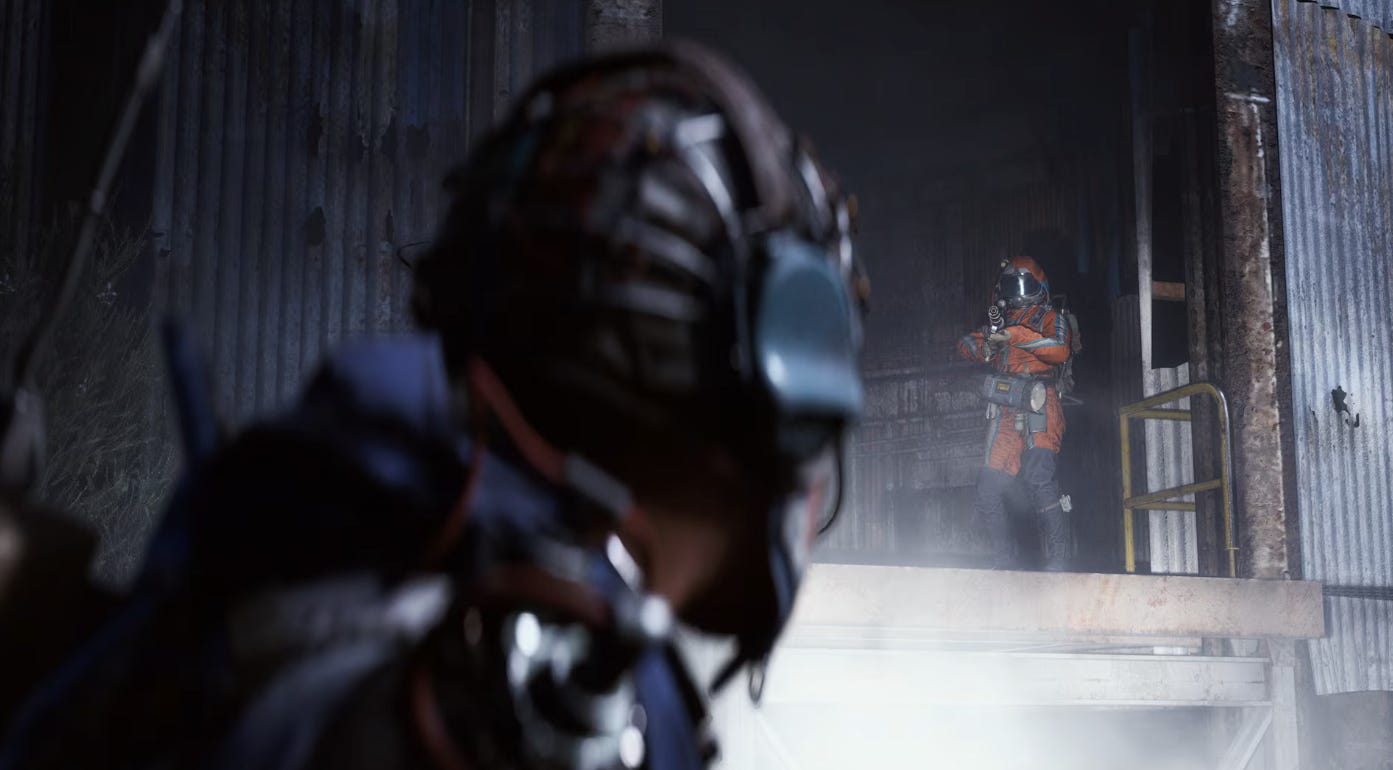
A year after Arc Raiders’ launch, Embark/Nexon executives discuss what went right, what went wrong, and how they’re adjusting live-ops—especially around PvP vs PvE, update cadence, cheating, and AI voice/text-to-speech issues.
Patrick Sodeland (CEO of Embark at launch; now Executive Chairman at Nexon). Alexander Gondel (Executive Producer on Arc Raiders).
Embark didn’t use design documents; they build by playing and iterating systems. Launch success was bigger than expected (they cite ~80% day-one retention; ~100 hours of play per user). Post-Christmas content slowed and player numbers dropped; cheating signals emerged and are continuously mitigated with ML/third-party tools. They paused “expeditions”/seasonal drops and later shifted from monthly to biweekly updates (“pull the handbrake”) to regain integrity and long-term health. PvE was initially ruled out, but testing showed strong interest (about half of rounds on PvE servers during a test).
Sea of Thieves comparison for PvE-friendly vs PvP groups; Frozen Trail release bringing players back; rerecording text-to-speech lines with real actors after launch criticism.
Written by AI. May contain mistakes.
An overview of the game's initial success and challenges faced after launch.
“We talk consciously about we don't want to just be a live service studio, even though there's nothing wrong with that.”
Discussing the launch success, sales figures, and movie adaptation of Arc Raiders.
“Now, a year ago, we spoke to the CEO of Embark, Patrick Sodeland, just ahead of the launch of the game.”
Patrick and Alexander share their experiences and reflections on the game's first year.
“A year on from the launch of Arc Raiders, which feels like a lifetime.”
Discussion on the challenges faced with content updates and player retention after the game's launch.
“And then I remember my son who is 14 said, listen, you behave like you're 12.”
How the team is handling player feedback and the balance between PvE and PvP experiences.
“I was always talking to Alex and the team long before, we said we have to plan for success.”
Exploring the evolution of Arc Raiders from its PvE origins to its current state and future plans.
“But at the same time, we built something that became more than we anticipated, to be very honest.”
Recent player tests to gauge interest in PvE modes and what it means for Arc Raiders.
“People may be wondering why the hell aren't they just doing what some players were looking for.”
Learn how Arc Raiders aims to cater to diverse player preferences while maintaining game integrity.
“So we then have to figure out how can we do a good enough job to cater for all the player types without still watering down the overall experience.”
Explore the results of the Frozen Trail release and its reception from players.
“Has it delivered what you needed, what your players needed?”
Understand the rationale behind slowing down game updates for long-term benefits.
“That's a difficult decision to make when you're sitting kind of on top to say, you know, slow down, pull the handbrake.”
Discover the strategies for maintaining efficiency and the need for team growth in game development.
“and they're a relatively large team whose job is to figure out how the developers can do things easier, faster, less tedious, so that we can get things in the hands of players quicker.”
Learn about Embark's unconventional methods of game design and development.
“You know, when you're six, seven people and you're in a startup mode, everyone knows everything at all times.”
Examine the issues of cheating and maintaining game integrity in live service games.
“Yeah, the thinking, I think, is probably, and the process and the kind of the idea that you need to dare to challenge conventions, I think that's probably the biggest learning.”
Discusses the ongoing challenges of cheating in live service games and industry solutions.
“This is the thing I was looking into the year you had, and one of the things I find, and I find this a lot with big games that have a lot of players come in, is you do encounter people trying to sort of spoil the game.”
Explores how player expectations differ between premium and free-to-play games.
“Knowing that, like Alex said, we probably can't ever cure it 100%.”
Covers the transition of game IPs to TV and movies, emphasizing creative control.
“And if the game is doing well, I think you even get higher expectations.”
Discusses the use of AI in game development, balancing innovation with quality.
“I was going to ask if there's anything else that surprised you, because for me, I wasn't quite surprised, I guess, maybe interested.”
Details Patrick's new role at Nexon and the focus on creativity and innovation.
“I think most development houses in the world utilize this to some extent.”
Learn about the strategic decisions and game development philosophies at Embark.
“you know, game company on the planet where our developers are given the best possible tools to do the best job of their careers.”
Discussion on the successes and challenges faced by Embark in the gaming industry.
“So I think that they've done a really good job with it.”

Get the gist, explore an idea or ask about something said.
 Claude
On The Game Business Show, what are the key points of this episode?
Searching your listeningAutomatic transcript. May contain errors.
0:00We talk consciously about we don't want to just be a live service studio, even though there's nothing wrong with that. As people stop playing it, they're saying, why isn't there more art creators? What are the studio doing? And they don't listen to us. It's not like the studio took a break, went to a beach and celebrated and never came back and didn't care about the game. That's not what happened. We got some criticism when we launched the game around some of the text-to-speech, which, to be fair, the quality of the output of that wasn't good. I've never seen a design document at Embark. They don't exist.
0:32We don't have them.
0:36Hello and welcome to The Game Business Show. The Game Business is a reader-supported publication. If you're interested in becoming a paid subscriber to The Game Business, we do an extra newsletter and podcast every single Monday for paying subscribers. You can find out more about how to become one at thegamebusiness.com. Now, this week, we're returning to one of our most successful ever interviews this time last year arc raiders came out the extraction shooter did the impossible it was a new ip built on a relatively small budget at least compared to other major shooters and it went toe-to-toe with battlefield 6 and call of duty and came out with a smile on its face the game developed by swedish studio embark went on to sell 16 million copies in six months it's nexon's most successful global launch and it's the biggest release in its history is even being adapted into a movie or TV series.
1:27Now, a year ago, we spoke to the CEO of Embark, Patrick Sodeland, just ahead of the launch of the game. And now, here we are, revisiting the story some 12 months later. And it hasn't been entirely smooth sailing. After an initially huge launch, the game has been through a series of challenges. Post-Christmas, the content schedule dried up a little bit, and it's had challenges with cheating too. Player numbers have dropped, as they tend to do, and the team has had to adapt. is even considering a PVE mode, which was something it ruled out this time last year. To talk us through all this and a few other things besides, I'm once again joined by Patrick Sodeland, who is now also Executive Chairman at Nexon, and Alexander Gondel, he's Executive Producer on Arc Raiders.
2:10So, hello Patrick. Hello Alexander, how are you doing? Hello, doing well. How are you? I'm alright. Welcome to the show. A year on from the launch of Arc Raiders, which feels like a lifetime. How do you feel it's gone over the course of that year? You want to start? No, no, you start. It's your game. Well, yeah. So we felt like we were onto something when we ran our latest tests. We feel like we are onto something and of course we had high expectations of the game. But to be blunt, I don't think we kind of understood what kind of a monster we unleashed after we dropped the game. It kind of exploded in ways that I didn't see happen at all, in good ways, I would say.
2:56And of course, working on this for so long, it's such a pleasure seeing players enjoying the game in ways that you didn't expect them to and also what you did expect. So that couple of first months is a bit of a blur, to be honest, for me, because it was so filled with surprises I wasn't expecting. So when I look back at it, I was just walking on the air around. I also can't recall every single thing that happened last year because there was so many things that happened. I think we realized as the preorder numbers started to come up, and then we obviously could monitor that in the studio. And we just saw them go up in ways where we had to double check whether the numbers were accurate or not.
3:36We couldn't really believe, you know, how much interest there was for the product. And then obviously the launch came. I would say that we were relatively well prepared. I think the game, you know, what you worry about is obviously if people like it, but then does it technically work? Is it, you know, operationally sane? And I think for the most part it was. I don't know, Alex, you and I together with random friends probably must have played 300 hours or something. Alex and I played more or less every single evening for the first months or something. And it was always like, okay, are the kids, Alex has much younger children than I do.
4:16And obviously it was always like, have your kids, you know, gone to bed, you know, and then, you know, are the wives reasonably happy with this? Can we get to play? And then I remember my son who is 14 said, listen, you behave like you're 12. And like, but still, you talk to people as you care about them online. I'm like, of course, like, why do you like you should shoot them? I'm like, no, no, no. So we just had the most, frankly, fun time. And obviously I know you guys must have also been exhausted having worked so hard, but it kind of, it became a thing where we just had to play because it was fun.
4:51And I could see, you know, my brother and friends who play games absolutely, but play more randomly, they all picked it up and like started playing. And then I wouldn't say that at least, you know, I'll let Alex speak for himself. I'm not a great player, but I'm a reasonably okay player. My friends weren't at all good, to be honest, so I couldn't play with them. They sucked. But I played with Alex and with the people on the team and everything. And that's what I will remember myself, just, you know, kind of that joy of longing to come home and playing something every single evening. It's pretty cool.
5:29And what about sort of since then? How do you feel the year's gone? because this is where hard work begins, right? When you're on the live service journey. So we, for the first couple of months, we were reasonably well prepared. We had a couple of really big updates that we shipped before Christmas, and we had a big kind of holiday event over Christmas. And we could see that players really took to heart the roadmap that we created. So we were mostly just focusing on kind of executing on the roadmap. We had a Christmas break, much deserved. And I remember I was in Spain kind of just looking at it from the outside and looking, you know, at the numbers and looking at live streams and stuff.
6:10And it started to dawn on me that, you know, at some point here, we're going to run into some challenges, of course. That was pretty clear. Since we basically front loaded so much of our systems and content into the launch season, we didn't really have that much kind of lined up for the January, February updates, which we knew was going to be the problem. So when we came back in January, we had to pick up and start working on some of the things, looking at the data, looking at the feedback and trying to figure out, okay, where do we go from here? And then we created another roadmap and try to kind of see like, this is what the players liked.
6:48And we tried to kind of make sure that we executed on the monthly updates in which we had them. But we could also see that a game of this size also have some problems that start becoming a little bit more apparent. So we had to kind of split our focus between the things we wanted to add to the game and the things that required maintenance, let's say, on the game itself. So that kind of came pretty fast when we came back into January. I was always talking to Alex and the team long before, we said we have to plan for success. We We have to have a live service plan if you want, or a post-launch plan that is reasonable.
7:27And I think we had that to a large extent. What happened was the game took off in a way that we didn't anticipate. There were a lot more players that played the game, but also I think we became a victim of our own success to some extent and had like 80 % day one retention, which meant everyone that played the game decided to continue playing, which is what you want as a game maker. That's like what you're looking for is a game that people enjoy so much they want to come back and play. But what that meant is that we kind of got this incredible demand for more. People just wanted more Ark Raiders.
8:04They loved what we built. And now we were, you know, they came to about 100 hours, we counted, right? Yeah, I think they were 100. At about 100 hours, they were kind of done with what we had given them. And I said, listen, if you pay$40 and you get 100 hours worth of playtime, I think it's a reasonable return on how much you've spent, right? So I think that's fair. But at the same time, we built something that became more than we anticipated, to be very honest. And I think the team did what we could, and we were reasonably prepared, but obviously not prepared for what came. And then the other thing I would say is the controversy.
8:45In the beginning, you know, there's always like the PvE, PvP aspect of the game, etc. What made the game interesting, what made the game successful, also, you know, can become or did become to some extent one of the most talked about points about the game, which you can look at that either way you want. It's either a good thing or bad thing or neutral thing, depending on how you slice it. But we obviously had to listen to all aspects of feedback that was coming to us. I think that's probably the challenge. What surprised me about Ark Raiders is the game that I compared it to the most was Sea of Thieves.
9:23If you play Sea of Thieves, I thought it's actually very similar to Sea of Thieves. And Sea of Thieves had a problem, and there's a group of players on Sea of Thieves that just want to sail around and collect treasure, you know, just do that. And then there's the players that want to, you know, sink everyone else's ships. And I get the impression you've had a similar challenge and you've got the sort of peaceful players and those that, you know, want to fight and having to strike the balance between the two. Yeah, so from the beginning of Ark Riders, it used to be a PvE game. That's what it started as.
9:51And then we reset the game and we created the PvP-vE game that we have today. And one of the things that was always on the back of our minds is like, how would a PvE version of this game really look like? Even though we were really happy about the tension and the things that we shipped with, but we saw the player base kind of ended in kind of two pockets. Generally speaking, there's like a third that is like more friendly type players. And then you have a mix in the middle, which is the larger group. And then you have a very engaged, like highly engaged PvP group on the top end. And we started seeing that kind of segmenting itself after the first couple of months of the game, which was interesting because all players had their own experience of how to play Arc Raiders.
10:35And if you were playing on the friendly servers, that was a quite different experience than playing on Stellamontis on like a highly competitive PvP server. So we saw that there was already quite early some sort of split, let's say. But the interesting thing, I think Patrick, you wrote actually in our Slack just right after launch, you were asking about PvE. Yeah. I think you wrote the questions and I was like, hold on, Patrick, we need to figure this out. But that question has been lingering in our minds for some time. Yeah. We don't want to lose the essence of the game though. I think the things that Rare found was here, it's a pirate game.
11:12Yeah. The fantasy kind of works. Yeah, I know. You want to sit down and have a nice time and chill out and not be worried about attacking, but you're probably not playing the right game. No, but I also think it's more than that. If you think about what it does, it's actually, you create a game formula. And one of the things that we were honestly, we could just frankly add PvE. It's not a difficult thing for us to do, but we didn't want to obstruct or fiddle too much with the core loop of the game where the PvP aspect of a PvP PvE game does add, we believe, adequate tension. And when you're building a game, what you're trying to do is to evoke emotion in players.
11:56You know, if you can evoke emotions into people that are playing the game, you're probably doing something right. It could be joy or it could be, you know, fear. it could be whatever you do, whatever your aspirations are. And a game that does all of those things is probably a game that will do relatively well. And I think Archibaldus do touch a lot of those different types of emotions. And by removing one substantial component from the game, you're fiddling with the core emotional loop of the game, which we believe is maybe not the right thing to do. But we've now since tried it and realized that it's fine.
12:32Why not have it? Maybe people can choose what they like. But that was our fear all along. People may be wondering why the hell aren't they just doing what some players were looking for. We were looking at the holistic picture, which we have to do, and like the whole of the game. And that's kind of to also protect the creative integrity of what we have created and what we aspire to build and what the game should be according to us. Yeah, there is that balance. You want to listen to the players and give them they want, but also it's an artistic expression that you've created. It's a thing that's come from you and at least reflect that, I guess.
13:09But I guess, so you're rethinking that element of the game and I know that you've paused these expeditions sort of season things as well. I know a lot of the people listening to this won't know what that means, but it feels to me, is there an element of uncertainty around where the game goes next? Is that fair? I'll let you answer that, but I think from my perspective, the PvP, PvE aspect of the game is we now have a large enough audience that we need to listen and cater for both, you know, for both camps, so to say. We can't ignore the PvE camp completely and just say, well, this is not the game that we built, you know, that would be unwise.
13:43So what we're trying to do is to obviously stay true to the game that we built, but then at the same time, understand how we can give the respective kind of camp. The people in the middle or not the problem, myself, Alex and others. But we also need to respect, like you said, that there are people that want a slightly different arc creators than the others. So we then have to figure out how can we do a good enough job to cater for all the player types without still watering down the overall experience. And that's kind of the balance you need to strike that we're working on. I'll let you continue.
14:19Yeah, I think it's important to say that we are, we're still very much arc creators in the sense that we are going to stay true to the tenants that we have already established with the game. But at the same time, there might be ways for players to enjoy the game in slightly different ways. And recently, we ran a big test on the players who are specifically asked to do PVE, and we're kind of going through that data right now. But what we did see, which was really interesting, is that it was a huge amount of interest in it, and there was a lot of players who tried it out. and almost 50 % of the rounds that were played during the test were on the PVE server.
14:55So I think it created a moment there where people were like, okay, what does this actually mean for our creators? And when we're going into solution territory, some of the interesting takeaways are that some people that was like, hey, I want PVE, change their mind. They didn't want it because they were lacking some of the values that the product had. And then you have players who absolutely loved it. So now it's for us to figure out how we can cater to the specific needs of the players. Ultimately, I look at games as something that I'm choosing to invest time in. And if we as developers can give you the best possible time while you're playing and respect your time and then kind of respect different player types, I think that's a great way to engage with the players.
15:38But of course, not at the expense of the integrity of the experience itself. So you water down and become like a game of nothing instead of becoming great at what you are, which is always the balance that I think we need to take into account. So you just launched this big Frozen Trail release. I mean, the numbers look good. Has it delivered what you needed, what your players needed? Yeah, I would say the numbers look really good. So we managed to get a lot of players back, which is what we were hoping to do. And we were able to address a lot of the concerns that the players were having about the game, which I think is important to say, like, okay, these were some of the things you wanted more of.
16:18So we gave that and we tried to be quite surgical when we think about what type of experiences we had to the game. So the results are looking really promising so far. It was a big change for us going from the monthly cadence of updates, which didn't really work out that well. But I'm glad we got to that decision, right? It's a difficult decision to make. And when you're on a high, you're generating a ton of sales and people are enjoying what you're playing and they're asking, you know, you just like, trust us. We listen to the players, we read everything. All we want to do is to please them and to give them what they're longing for and what to some extent they're asking us for.
17:04But then we actually have to live with the reality of, okay, how do we do this? What does it mean for us? There are, you know, people need to build everything and what can we build, etc. So it's not like we're sitting here ignoring what's being said. We have tentacles all over the place and trying to understand what it means. You need to listen to large cohorts to understand overall sentiment and maybe, you know, not listen to the loudest voices, but more the mass and to understand what direction are you taking things. And the decision that was made was to slow down, to frankly, go back to the drawing board to stop monthly drops, realizing and understanding that that would have an impact on our sales numbers.
17:48It would have probably an impact on the engagement and kind of live with the fact that the team and the product, per Alex's earlier comment, the integrity of the game needed that breathing space for it to be able to make a comeback that I think we believe will help the game live longer. That's a difficult decision to make when you're sitting kind of on top to say, you know, slow down, pull the handbrake. Let's not do this right now. When your instinct may be, no, no, no, no, no. You have to do more and then push harder and get more stuff out. You know, we should go to biweekly drops instead of monthly cadences.
18:27Like that's your inclination. And that's, I think, just human reaction, right? And we, the team suggested it. I had to digest it, is probably the word. And then I said, fine, let's do that. It's the right thing to do long term for the game, but also for the people that work here. So I'm happy that we did it. I think it's the right thing to do to respect the community, the game and the people that work at Embark. So I hope people see it that way. Because oddly, this feels faintly familiar, because obviously you and Owen both told me last year that Nexon was pretty calm after the finals went from, had that big launch and then lost loads of players and everyone was like, it's okay.
19:10Just, you know, it's all right. Don't panic. I'm getting a similar vibe. Obviously, all you want is, like I said before, is just to make sure that whatever negative sentiment sits around your product and you want to cure that. That is again, human nature, especially when you have had something that was met with such love and critical acclaim. And that as people stop playing it, they're saying, why isn't there more art creators? What are the studio doing? They don't listen to us. And it's not like the studio took a break, went to a beach and celebrated and never came back and didn't care about the game.
19:46That's not what happened. But I think we, and there were absolutely moments of, you know, a little bit of panic again. I think it's probably normal and out of mind it. It's good to be relatively paranoid if you make video games. But I think common sense prevailed. And I think we got to the point where we have to think long term. and we can't, it's also about what the studio can do. And we just had to think about that as well. Well, OK, because when we spoke a year ago, you spoke really passionately about going 100 times faster than previously possible. That was a challenge you set. And rewriting how you go about building games.
20:25And now you've had 12 months of live ops and fighting fires and balancing and live content updates and feedback and all that stuff. Does that strategy still hold? Or have you found that sometimes you might just need some more people? Yeah, I mean, in general, I think work efficiency and how we build things should always be a priority. And I think we are at the forefront of it and will continue to be. We have a separate group of people dedicated to only doing that at Embark. That's all they do every single day. and they're a relatively large team whose job is to figure out how the developers can do things easier, faster, less tedious, so that we can get things in the hands of players quicker.
21:07That is our absolute goal. Would I say that the 100x thing is reasonable? Probably not, but that's also why it needs to be 100x. If you say 10x, you'll get 2x. If you say 100x, you may get 10x. So that's kind of how we look at it. And I think if you look at the amount of content that this team is producing both on the finals and on our creators at the same time as we have a central team that does technology and other aspects of it. We are, I would say, without sounding arrogant, we're very efficient and very lean in how we're building. I think that's what we have to be and that's what we have to do.
21:46But yes, sometimes you need more people. So has the team changed much in the last 12 months? Yeah, we've grown a little bit, mainly around trying to figure out where our key bottlenecks were and trying to invest into solving those primarily. So we've grown a little bit. I think we're more capable now than we were before launch. It's also like transitioning into a live service type of organization requires a different set of skills and tools and experience. So we had to kind of grow into that over time. but to Patrick's point we don't want to necessarily just outgrow what makes Embark Embark we want to make sure that we can still be all game creators and and do the things we're really good at more people equals you know more complications and not necessarily always a one-to-one like an efficiency from like hiring to output so we want to make sure that we can stay agile and and and doing the things we're good at and so so we try to do it in the reasonable pace growing the team without changing who we are um so so yeah now we're focused on on trying to make also longer term bets with the team not only kind of reacting but also like thinking about what the future might be for the game so we have a we have a little group looking at not necessarily the big update next big update but the update after that so we can uh so we can something more interesting and more fun.
23:14I think at the end of the day, we want to keep evolving. We want to do things that are interesting and sometimes you need to make longer term bets in order for that to pay off as well. And also I think you have to, you know, if you look at it from a studio kind of operational perspective and if you run, you know, if you have my job and your job is to think holistically about what the studio is and how we work, the bigger you get and the more people you have, the culture and the dynamic and how a studio operates and functions changes. You know, when you're six, seven people and you're in a startup mode, everyone knows everything at all times.
23:56Then, you know, you get to 30 people and you have subgroups forming and people, you know, you have an information flow that's slightly different. You have the same level of escalation when you go from 200 people to then 200 people to 300 people. And, you know, at some point you get to a certain mass where you're the ethos of what Embark is and why we started Embark and how we want to be changes so much that it's we need to become something different. Now, that's not necessarily a bad thing, but it's something that we have to be mindful of as we run the studio and think carefully about, is this what we set ourselves out to do?
24:34What changes if we do become too big? So we've never had an ambition to be X amount of people. We've always tried to look at how can we run the studio and still be Embark and protect the reasons why we started this studio and the things, you know, and then how we build things. And that's my job to kind of remind ourselves about that all the time. Because it's easy financially, one could afford to add, you know, 100 people, but it changes so many other aspects of what Embark is so that we may not want to do that. Or we may want to do that, but unless we do it, it needs to be a very conscious decision.
25:13Yeah. After our chat last year, the whole industry basically said, how? You know, there was the... They're all trying to work out how you managed to build such an incredible game, such highly rated, felt like you could stand toe-to-toe with some of the biggest names that it did in the genre on a budget that, you know, with a team the size you are on a budget you had. Are you getting a lot of peers calling you up, asking for your secrets. Have you had a lot of that? Absolutely. We've had, you've been in some of these meetings with other developers that are asking us how we deal with it, etc. But it's not always the answer that we give them that they hope to hear.
25:53Because what we're doing is foundational in many aspects. We have started, it, you know, from the start in redefining and understanding what it takes to build a video game. And that means throwing out a lot of old practices and ideas around how you build. You know, I've never seen a design document at Embark. I don't know, you know, they're not, they don't exist. I've never seen, we don't have them. You know, we don't believe in the fact that you should, you know, why would a design on paper for something that is inherently interactive be the right way of doing it. Yes, you want ideas and thoughts, but I can't read a game.
26:32I got to play a game. So we're all about building systems that facilitate us playing what we're talking about rather than putting it on a paper and then trying to imagine how this is going to feel when you eventually play it as an interactive experience. That's just one way of looking at it. So there are no such things at Embark. There's never been, there will never be. And if you are an old school developer and you used to design things on paper, I'm not saying that that's wrong, by the way, but for us, it wasn't the right thing. We believed that we wanted to play it rather than write about it.
27:04So that's what I meant. So sometimes when we talk to people and we tell them what we do, that may not at all be what they're looking for. And that is completely fine, you know, but that's, there's no, the Embark way works for Embark and for us because we built it that way. It may not mean that it works for someone else. or maybe parts of what we do can work for someone else. Or maybe they can be inspired by something you did in that what you did won't necessarily work for them, but maybe a version of it. Yeah, the thinking, I think, is probably, and the process and the kind of the idea that you need to dare to challenge conventions, I think that's probably the biggest learning.
27:45And then you've got to find your own version of that. I think it's easier for the sort of newer studios or the startups to sort of, because you can do that from the start, right? It can be built in. Absolutely. Whereas the big giants, the ones that have all these tech and tools and pipelines and staff and departments, well, I'm sure they can get there, but there's a journey they'll have to go on to do that. This is the thing I was looking into the year you had, and one of the things I find, and I find this a lot with big games that have a lot of players come in, is you do encounter people trying to sort of spoil the game.
28:14So I think, have you had a bit of a cheating challenge at the beginning, or maybe if you still do? So I think with all big live service games that are going to lie today, they're going to run into this challenge in some way or the other at some point. We started seeing some signals of that early this year. Fortunately enough, we had another game with the finals being live. We could carry some of the key learnings into that. but also we had to kind of invent all new ways to to think about that that problem and it's not a battle necessarily that you can win because there's an industry out there that is making money of this unfortunately i would say um so so we'll continue like continuously being kind of improving our methods to to detect using you know machine learning and using our third party
29:11tools that can help us identify and then take care of it and we've been seeing some good results from our efforts over time is it something that you know is it ever going to be fully solvable probably not but I feel like we're on a good path right now with this I wish that there were better ways to deal with that problem as an industry because I actually believe that the industry has this problem. It's costing the industry a lot of money. And I heard someone quoting a figure. I don't want to misquote that, but but I believe that this industry is like you need to think about like how to solve this as together because every single live game is going to have similar challenges to our game.
29:57Yeah. And the bigger you get, the more interesting you are as a target. So which is something that we also have to live with. Right. So it comes with a game that people want to play. You're bound to have these issues. But obviously our responsibility is to do everything that we can and do as good of a job as we can to make sure that the experience people have is as free of this as possible. Knowing that, like Alex said, we probably can't ever cure it 100%. But if you as a player come in and you experience, you don't experience this for most of the time, then we're probably okay. I did some research into a completely different subject.
30:42I was looking into AI and how it's using, you know, it's helping people pirate games and crack things. And I spoke to people whose job it is to sort of deal with that. It became quite apparent quite quickly, although they are concerned about that and that is a challenge. Actually, most of their issues are around people bot farming, cheaters, and all these people. In their mind, that's a much bigger problem for them to deal with. There's these organized criminal gangs, as they call them, going in and causing this irreparable harm to a lot of live service products. And it was quite eye-opening to me because I didn't really realize that had become...
31:13I mean, I hear about it, but I didn't know how much of a major issue this is for games. Imagine the bigger that you are, the more attractive you are to these gangs. Do you find that player expectations, because they paid$40 as a premium product, are those expectations higher? Are they more demanding? Are they less forgiving of things like that than they would be of a free-to-play game like the finals? I think we have to be kind of honest and look at it from a consumer perspective. I know personally if I buy into another service and I pay$40, I expect for it to work. And I expect for it to be not full of cheaters.
31:48So I think the players have every right to be upset with us if our game is full of cheaters and it's not working. I mean, I would be naive to say something else. So our job is to make sure that, like I said, that for most players enjoying our game, they can log in, the game works, and that it's not full of cheaters and that they have the experience that they paid for. I mean, that's at least how I look at it. And when we don't deliver that experience, we deserve to get heat for that, to be honest. We have to look at it that way. Are there any other differences between premium players versus free-to-play players?
32:31We see if you put$40 down, you're probably going to be a little bit more invested in the experience. So I think you'll have more kind of blasé type players coming into the free area, where they just, you know, which is obvious the game is free, you can try it and it may not be for them. So I see if you have more people coming in and out, I think you have a slightly more loyal player base and therefore a slightly more competent player base in a premium game that you may have in a free game. I mean, overall, the free games obviously like, you know, have players that have played thousands and thousands of hours, but you also have people that come and go because it's free to test, whilst the threshold to a premium game is you having to pay for it, which gives us a slightly different dynamic, I think.
33:20I would say that also, generally on any game that is live today, I think the expectations are continuously rising because there are some games that are putting out some tremendous amounts of stuff for the players to do. And I think if you backtrack and look at the same type of problem space just maybe five years ago, I think the expectations would be quite different than they are today. And I don't think that's between free-to-play or premium. I think overall, if a game is live and online, you already have those expectations. And if the game is doing well, I think you even get higher expectations.
33:56Because I already seen some comments that's like, hey, you did so well, you should be able to give us even more now. So I think the bar just continuously gets raised. And of course, it's our job then to try to figure out how to best kind of match those expectations. I'm wary I'm focusing on a bit of negative stuff, actually, because the game, I think, the latest number was 16 million sales, is that the last official figure? Which is enormous. And now it's, you're taking it to TV and movies, which is another fantastic sign. How involved are you looking to get in those sort of side projects, I guess?
34:30We want to be involved. I think we take pride in our ability to build worlds. and to create worlds that people have an interest in. Therefore, we also need to be involved in making sure that our artistic vision and creative vision for those worlds and IPs are protected in other formats. So we will absolutely be involved. At the same time, we also need to understand that we know how to make video games. We don't know how to make TV series or movies necessarily. So collaborate and work with professionals that are good. So for us, finding a partner that shared our creative vision, that understood what our creators is to us and to the player base out there, because it's quite large, was important.
35:20And we went through a lot of offers and a lot of companies and found a company that we believed understood how to protect that creative integrity and to care for the brand, which is the most important part for us. We don't necessarily do this to... I mean, this is an incredibly fun, you know, cool thing to do. And if more people... We believe that there are more stories that can be told in the Ark Raiders universe in different formats, essentially. And that's why we did it. I was going to ask if there's anything else that surprised you, because for me, I wasn't quite surprised, I guess, maybe interested.
36:00It was the reaction to the sort of AI use you had in the game, in that there seemed to be some backlash to it, but actually it seems like the majority of players were sort of okay with it. And I think it was the first time people started to discuss the nuance in terms of that technology and how it gets used. I mean, that sort of interested me. Was there anything that surprised you about any of that? Yeah, go ahead. So, we got some criticism when we launched the game around some of the text-to-speech. Which, to be fair, the quality of the output of that wasn't good. So, I mean, not only was it a complaint, you know, from the technology perspective, but it was also a quality complaint from some players, which is why we made a decision to go and rerecord all the lines and now they are gone, those lines from the game.
36:47And with real actors. Yeah, with real actors, exactly. And, or with the actors that we found the voices from in the first place. So we did that from a quality perspective and trying to kind of make sure that this was as good as possible. Oh. Were we surprised? I would say both yes and no to some degree. I think it's always when you're trying to do something new and cool and then there's always a risk associated with some elements of that. But overall, I'd say we apply the right tools to the job eventually and Claire seems satisfied with the result. Yeah, I also think right now, a year on, where AI still remains to some extent controversial and in any industry, for us as a studio, we're not using artificial intelligence to auto-generate games for us.
37:48You know, we are the game makers, but it can be a very helpful tool for us to increase productivity, to allow us to do more things and to remove obstacles and work that, frankly, is very repetitive and tedious that, you know, where our people are better served doing other things that are more player-centric and put in front of the player. I think it's become a little bit less controversial in the last year. I think most development houses in the world utilize this to some extent. So I think that's going to become the norm and something that I think is going to be less controversial. I think it is less controversial already because I think the fear, rightfully so, is or was that, you know, there will just be auto-generated games and the kind of creative integrity of what it means to build a video game is going to go away.
38:39and that, you know, that is not how I envision AI, at least from our perspective. But what's interesting is what Alex was alluding to, and I think something that I spend a lot of my time thinking about is not necessarily the efficiency component of artificial intelligence, but how can AI give us different type of gameplay experiences that, frankly, we could not do without this technology? So it's rather how can we improve the medium rather than, you know, changing and then removing the people that work on the medium. And I think we have elements of that in our creators, like how, you know, I think people, maybe there's a perception that all our AI, you know, the PVE aspect of our creators, that it's a machine learning system that learns everything it isn't.
39:27But I think there are absolutely elements of how we make the AI enemies maneuver and traverse and how they're animated and how the experience of them are improved by the use of artificial intelligence in the production pipeline that I think makes the experience a lot better. That's kind of where I think the sweet spots sit for artificial intelligence and where it gets exciting for us as game developers to start pushing ourselves creatively around what can we do with this technology? What experiences can we create that didn't exist before? And I think that should be a positive for the players, not a negative.
40:14That was my obligatory AI question there. But I think you're right in terms of where, what the conversation has moved on to. And where I'm out of time. But Patrick, since we last spoke, you've received quite the promotion, I guess. Are you being asked to replicate Embark and Ark Raiders sort of across the Nexon world now? I don't think you can. I think, again, there's every instance will have a different playbook. And to take the Embark playbook and just slap it onto Nexon would be a naive endeavor. Doesn't mean that Nexon doesn't require or should be focusing on some of the things that Embark have been doing.
40:59Yes, and they are. You know, people, it's not like in walks Patrick and Nexon all of a sudden started doing things that they had no idea what they were doing. That's not the case. This is a highly creative, smart leadership team that were on this ball a long time ago. So I can take no credit from that. My job is to work with the leadership team there to be slightly provocative, ask the questions that come from 25 years of experience in this industry and to lean into the creative aspect of what makes a video game fun understand what types of games are we making? How can we make them better? How can we make them more fun?
41:46How can we make them more innovative? How how do we push the boundaries of what it means to play a game that comes from the from the from the Nexon sphere? You know, how can we make Nexon the best you know, game company on the planet where our developers are given the best possible tools to do the best job of their careers. That's essentially the type of stuff I'm working on together with longer term strategic things. What does Nexton look like 10 years from now? So that's where it got interested when they asked me if I wanted to take a slightly different role. So I'm kind of doing that part-time and doing Embark part-time, which works okay.
42:38Okay. Well, I'm out of time. I was going to ask how the finals is doing because people don't talk about that one quite so much because Arc Raiders has taken all the headlines. Yeah, the finals is back with season 12, launched last week. Obviously, I would like to have everyone to go try it. It's free. But I'm stuck in it now and I'm playing a lot, but I think it's the best season that we've had in a very long time. we're seeing good numbers on it. People are coming back, playing it, staying longer. I think the team made a brave decision to kind of focus on the fundamentals of the game instead of getting trapped into the more content perspective necessarily.
43:23They've taken a different approach which I think the players out there are rewarding them for. The finals is almost three years old, there's crazy amounts of content in it. So it's rather ensuring that what's in the game works better than to just build more and more and more and more. So I think that they've done a really good job with it. And I think we had the highest CCU since season two. So it's been a very successful launch for us, which... So kudos to the team for doing that. It is not always easy to run those types of games. And I think Season 11 was not as good as we wanted to, to be honest.
44:10But 12 looks, what we know is a big step up. And people are really rewarding the team for being bold and making that decision. I'm glad to hear it. I just think the amount of work going into Ark Raiders in the finals, are you still working on other games as well? Are you having to divert all your energies into these other two? We are and we have to be. We talk consciously about and all the time about we don't want to just be a live service studio, even though there's nothing wrong with that. It allows the electricity bill to be paid and the people to. So it's important for us. And also we believe that the games deserve it.
44:51and the player base out there deserve it. But at the same time, we need to be forward-looking. We need to lean in and to kind of challenge ourselves to build new things at all times. That's also kind of the ethos of Embark. And that's never going to stop, I think. It's who we are. Well, thank you. Thank you for staying on for a bit longer. Thank you, Patrick. Thank you, Alexander. Congratulations on one year of Ark Raiders. Congratulations on all the success you've had and the growth you've had on that game. I appreciate it. Thank you. I appreciate it's never easy and you're always dealing with whatever the current crisis is and it may be difficult to take a step back and look at what's happened but it was a phenomenal success to go up against caller gt in battlefield in that same window and come out smiling is is no small feat so uh uh well done and uh and i look forward to talking about this for many many years ahead yeah thank you so much thank you to you and all the players out there right that's it for today's episode of the game business show thank you to Patrick and Alexander for joining us.
45:48We will be back, of course, with more news analysis, insight and interviews in the days and weeks ahead. And to make sure you don't miss a single episode of the show, why not become a subscriber? You can go to thegamebusiness.com and sign up for free. You can also become a paying subscriber and receive an extra newsletter and podcast every single Monday. But that's it from me today. Until next time, thank you for tuning in.
This week, we return to Arc Raiders developer Embark to look at the game one year on from its launch. The shooter went up against Battlefield and Call of Duty and came out smiling, with 16 million sales. But since the start of the year, it has faced numerous challenges and player numbers have tumbled.Chris speaks with CEO Patrick Söderlund and executive producer Aleksander Grøndal to hear about the game’s journey so far, how they’ve adapted to the challenges, the reaction to its new update ‘Frozen Trails’ and whether it should add a PvE mode. They also discuss advising other studios, AI controversy, The Finals, not being just a live-service studio, Patrick’s new role at Nexon and Hollywood’s interest in their games.