Ask ChatGPT


 The Game Business Show
27 Oct 2026 · 27m · 17 chapters
The episode discusses Meta’s Horizon Create and Horizon Studio, prompt-based tools that let users describe an idea and generate complete 2D/3D mobile games, then publish them to Meta’s platforms. The host frames the debate: excitement about lowering the barrier to entry versus concerns about quality, market saturation, and impacts on professional developers.
Saks Person, Meta VP of Horizon; former Xbox Live Arcade leader, launched Microsoft’s Project Spark, was Mojang chief creative officer overseeing Minecraft, and at Epic worked on Unreal Editor for Fortnite and created Lego Fortnite.
AI is “least important”; the real value is faster iteration, end-to-end logic creation, creator-centered tools, and Meta’s distribution at massive scale.
Minecraft, Fortnite/UEFN, Roblox, Google Playground, and the “best place to have fun with friends” platform thesis; monetization could include ads, microtransactions, subscriptions, and creator revenue sharing.
Written by AI. May contain mistakes.
Exploring the satisfaction and positivity in creating games.
“It complements the traditional game industry.”
Discussion on Meta's Horizon Create and Horizon Studio and their impact on game development.
“Last month, Meta announced two new tools, Horizon Create and Horizon Studio.”
Analyzing the challenges and opportunities posed by new game-making tools.
“Are people actually going to play this stuff or is it just going to suck time out of the market and hurt the entire business?”
Introducing Saxx Person, VP of Horizon at Meta, and his expertise.
“And why not talk to Meta itself and in particular the company's VP of Horizon, Saxx Person.”
Saxx shares his experiences from Xbox to Epic Games and now Meta.
“Check out my conversation with Saks Person.”
Saxx discusses the vision for Horizon tools and the future of game creation.
“It does certainly look that way from, you know, Minecraft to Fortnite and then UEFN.”
Focusing on how Horizon tools lower barriers for game developers.
“My question was going to be, what is the vision for this?”
Exploring how game distribution differs with Horizon's approach.
“And on the player side, I found so much joy in using the headline that best place to have fun with friends.”
Saxx discusses the business potential for developers on the Horizon platform.
“I think that's one of the really neat things about being here is it's a company that doesn't blink when you say a billion people.”
Examining whether Horizon tools are a threat or complement to traditional game development.
“Do you see it as a business opportunity or is it more for the other thing?”
Discussing the importance of user-generated content in the gaming landscape.
“Where do people spend their time playing games?”
Saxx shares thoughts on various monetization strategies for games.
“In linear entertainment, in the age before YouTube, it was, you know, the idea of making films is something that's quite prohibitive to most people.”
Discuss the unique aspects of Horizon's platform for game developers.
“for those two things to add up to a good business.”
Understand the importance of protecting IP on gaming platforms.
“YouTube is not opinionated about what content they have.”
Evaluate the measures in place for user safety and content integrity.
“I was going to ask as well, maybe it's linked to that, is that how confident are you in the safety measures and the age review processes and that it's capable enough?”
Anticipate the evolution of game creation and player interaction in the next decade.
“find the right players because that's what I've seen before in these ecosystems.”
Hear personal anecdotes reflecting on the joy of game creation.
“game industry is to allow reasoning to influence how the game develops.”

Get the gist, explore an idea or ask about something said.
 Claude
On The Game Business Show, what are the key points of this episode?
Searching your listeningAutomatic transcript. May contain errors.
0:00Sax Persson: It complements the traditional game industry. I don't think it directly sort of steps on top of it or anything. I just think this is the modern way of making games. People that make games are like circus horses. We smell the sawdust and we walk in circles. Like because it's so addicting to make a game, like to make something out of nothing and have people like find joy in playing it. It's like the most satisfied thing I can think of. So like giving that feeling to more people, I have a hard time thinking that's nothing but a positive thing.
0:29Hello and welcome to The Game Business Show. The Game Business is a reader-supported podcast, newsletter and video series. If you're a fan of us, if you like what we do, why not consider becoming a paid subscriber? We really could do with more of them. Paid subscribers get a bonus edition of our newsletter and podcast that we put out every Monday called Here's the Dream. And of course, it supports all the things we do, including this very episode. Also, you can become a free subscriber and get an alert every single time we put out a new episode, which is every Tuesday and every Thursday. You can also read the write-ups of our shows as well.
0:59All you have to do is go to thegamebusiness.com for more information. Now, on to this week's episode. Last month, Meta announced two new tools, Horizon Create and Horizon Studio. One is used on mobile, the other is browser-based, and these tools enable game makers to turn any idea into a complete 2D or 3D mobile game, just using a prompt. Basically, you open the app, you describe what you want to create, and it comes to life. Once people are happy with the game, it can be published to Facebook, to Instagram or to the Horizon game that Meta runs. Now, this is a big conversation point today. On the one hand, these tools are exciting.
1:31It dramatically lowers the barrier to entry for game making. Suddenly, more and more people can turn their ideas into something that people can play without the need for coding experience. And that's got to be a good thing, right? But it's also a challenge for the video game industry. What does that mean for the people whose entire jobs are to code things and build impressive 3DR and to animate stuff? What does it mean for the number of games that are going to come to market? We already have far too many of them coming out. And is this stuff actually any good? Are people actually going to play this stuff or is it just going to suck time out of the market and hurt the entire business?
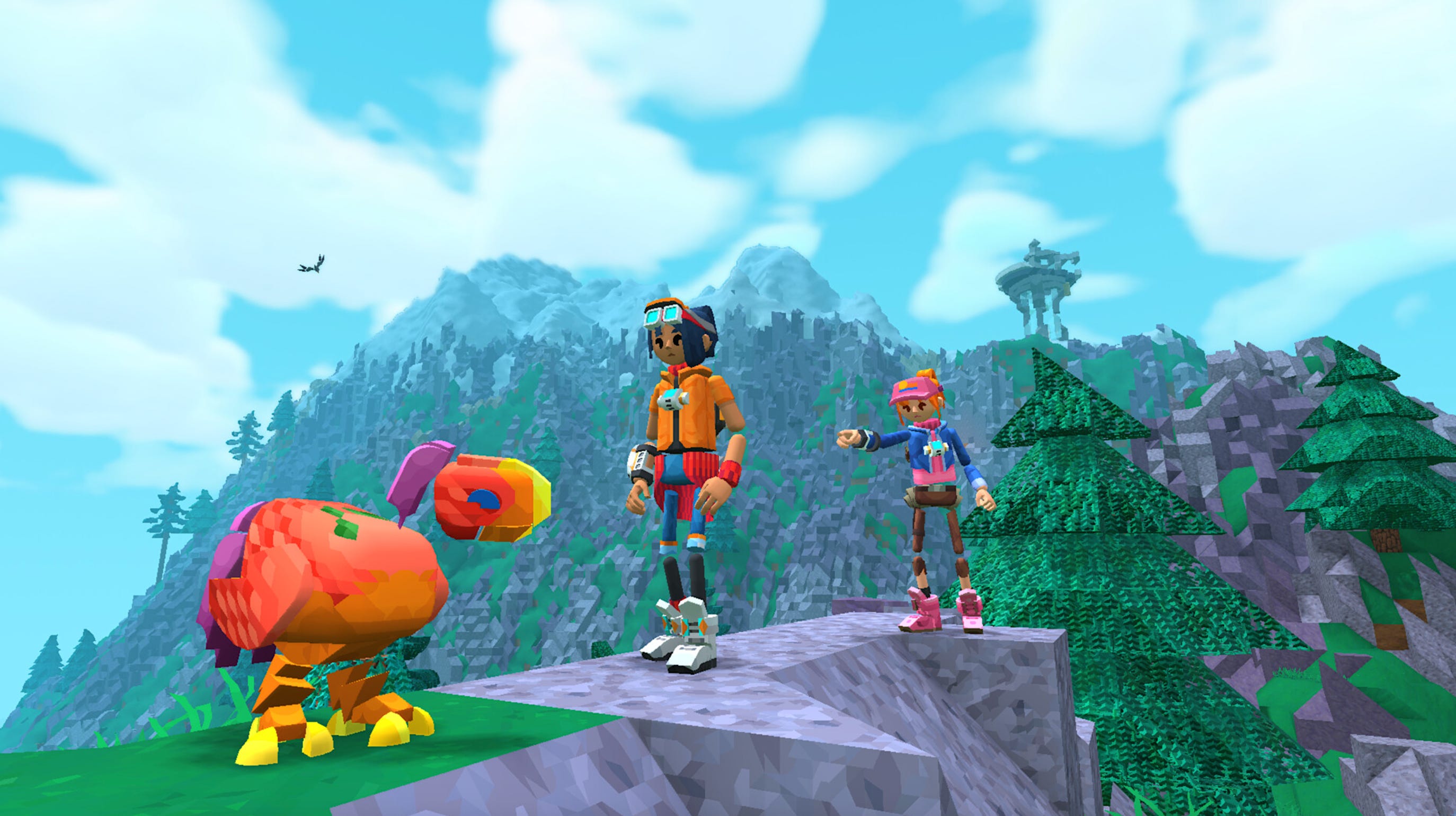
2:01Meta is of course not the only one doing this. Roblox as well as prompt based gaming solutions and Google has just announced its playground which is basically the same thing. So I thought we need to talk about this. And why not talk to Meta itself and in particular the company's VP of Horizon, Saxx Person. Now Saxx knows this world better than anyone. He played a senior role looking after Xbox Live Arcade back in the day. He He also launched Project Spark, which was a game creation title that Microsoft was making. And then after that he became Mojang Studios' chief creative officer and vice president overseeing the Minecraft franchise.
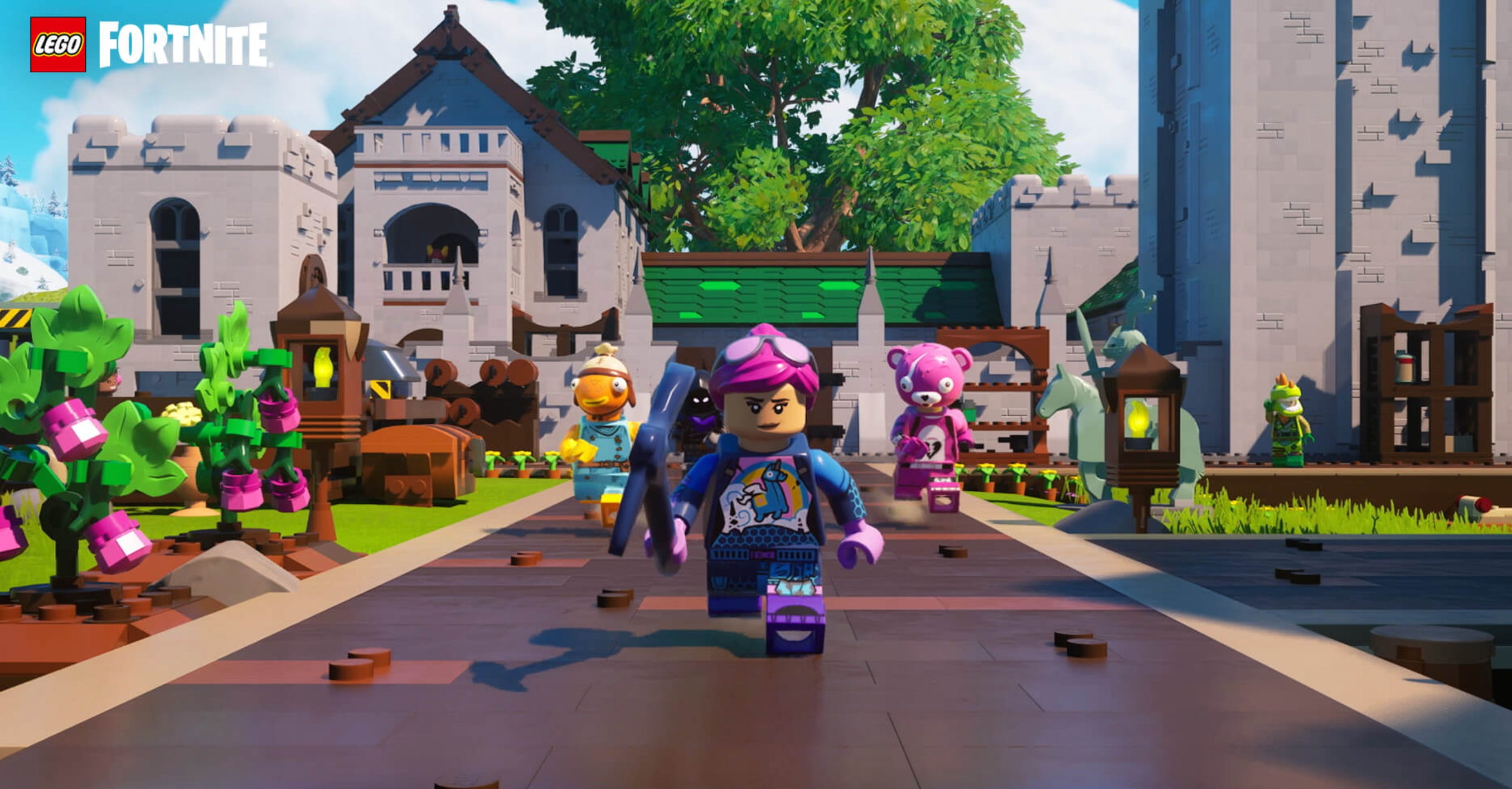
2:34He then went and joined Epic Games, worked on Unreal Editor for Fortnite and made Lego Fortnite a thing, all before his current role at Meta. So when it comes to the power of UGC and lowering the barrier of entry for game developers, there are few people out there as experienced as this man. So here he is. Check out my conversation with Saks Person. Hello, Saks. Welcome to the show. Thank you for having me. It's a year. Have you been at Meta now?
2:58Sax Persson: How are you finding it? I should count it in days, but that's how it feels. I've been there 10 months, 10 months now. And how are you finding it? Am I finding it? I have had a fantastic time. I came here wanting a fantastic time. So to a large degree, you make your own fantastic time. But it's been really fun. I think tackling some of the things, it feels like a combination of a very long career or like a lot of the things I've worked on before, like sort of coming to a head, both in an industry fashion and meta helping like bring things about. So it's been really fun. It does certainly look that way from, you know, Minecraft to Fortnite and then UEFN.
3:34And then here we are doing these AI, they're not the word to use, tools. Is that the right one or platforms with Horizon? Tools, I would say, like an AI platform tools.
3:46Sax Persson: I think the AI is the least important part. I think it's very much what it brings about that we're very focused on, that we want more people to be able to make games pretty simple. The industry has always had moats. When I started, it was certainly access to equipment. It was, I don't know, dev kits to develop on the genesis way back in the time. And then coding became a pretty big moat. And I really think like one of the big advantages of new coding models is it allows people to make games, including logic, like end to end, like to express themselves. I think that that's always been what drove me and like through Fortnite, through Minecraft, before that Project Spark, before that I ran Xbox Live Arcade.
4:29Sax Persson: It's the how do you give game makers access to make games and a place to publish it? That's like it's such a fun problem to tackle. My question was going to be, what is the vision for this? Is that the vision? Well, I get it because the vision is twofold, right? There's a developer vision and there's a player vision. And the developer vision is very much that. It is allow people that want to express themselves through games to be able to make games, like break down the barriers as much as we can using modern tools, whatever the tools are. And AI happens to be like an extraordinary accelerator to certain things that have just been very difficult.
5:05Sax Persson: Like a good game is iteration. and if we can buy more iteration by making more powerful tools that make it faster, more precise, more people can make the iteration. I think by nature we should expect more interesting games to come about because it doesn't cost as much to make one. You can afford to iterate. You can afford to be, I don't know, like experimenting. I think that's the developer vision, like allow more people to make games. And on the player side, I found so much joy in using the headline that best place to have fun with friends. That really these platforms and ecosystems are not as much about any individual piece of content.
5:46Sax Persson: They're much more about what do players tell us. Like, did you have fun today? Is the biggest predictor of, like, do you have a good platform? Not necessarily, like, is the individual game like this particular game. It's the, no, this was a place that was welcoming for me and my friends. We played 10 games, sometimes competitive, sometimes hanging out, sometimes ridiculous. But the platform had all the content that made all that possible. I mean, it's certainly very an interesting space at the moment. And there's some big players in there. Obviously, Roblox has been doing this for a bit, and it's also introducing these prompt-based things.
6:21Google just announced its playground. What do you think makes the Horizon version unique?
6:29Sax Persson: Well, we're very focused on... And so I think the journey we're on is the... We've spent since I joined 10 months ago really thinking through how do you make games? Break down into all the atomic components of what makes a good game, like what makes a game maker be able to make the game they want to make, and then recompose it all again, identically. And then what's the differentiator is that we have... We kind of build it all from scratch. We don't sit on 20 years of very opinionated code bases and licensees. We sit on an engine and code base that's made for this, like that's made to very quickly recompose, make the game you want to make, and publish very fast.
7:08Sax Persson: So that's one side of it. It's like, how do you make the game? Well, we just think we have the right tool set for it to make meaningful games, to have the iterations, that this is not a one-shot. You just kind of make a fun, I don't know, vignette of a game. Like, these are games as I've always played games. And the key to that is continually making sure that the creator is in the center. The tools surround you, but this is not about a clever prompt. It's about being able to communicate and make the thing you want iterate towards the result you want. And then finally being able to publish. So that's one side of it.
7:42Sax Persson: The other side is distribution. I think meta understands scale. I think that's one of the really neat things about being here is it's a company that doesn't blink when you say a billion people. This thing is, why not two? Because that's kind of the type of company here. And I think that's the other part of it is I really want to spend my effort building a gaming ecosystem platform that is welcoming for all, not just the people that sort of is well served through like a Fortnite or what have you. but the billions of people that do play games that would love to do it in a freaking-less fashion to get the game that they want to play with friends.
8:23Sax Persson: So I think the distribution side is one of it. And from a tooling perspective, we're approaching it very similar to how I would have written an engine back in the 90s when I worked on Messiah and Sacrifice and sort of that matrix back in the day, where my job was to make an engine that could allow a game creator to make the game they wanted. I never made the game. I made the thing that made the thing. and it feels very similar to how we're approaching it. Do you see this as a business opportunity for professional developers to be looking at or is this more about what you were just talking about there, which is people that perhaps never thought they could make a game or even people maybe that do make games but doing a bit on the side or having a bit of a fun project or experimenting with stuff.
9:04Do you see it as a business opportunity or is it more for the other thing?
9:07Sax Persson: I think it's absolutely a business opportunity. I guess it's a business opportunity for a AAA team to switch to this platform right now? No. Like it's I think there's a particular flavor to it that we'll start with. But it's still a business opportunity like every I've I spend a lot of time with sort of like new forming teams that that are making games like indie teams. And I think very much my pride lies in. Can I inspire people to take that first step, make that first sort of level and get the group together that's going to make this magical game. And it was very much business opportunities.
9:45Sax Persson: We should measure ourselves in our ability for people to be entrepreneurs on the platform. And in many ways, I think it complements the traditional game industry. I don't think it directly sort of steps on top of it or anything. I just think this is the modern way of making games. That's my controversial opinion, is faster iterations, closer to your community, and higher tolerance for experimentation. I don't think it's that controversial I know perhaps that some people it is but it's incredible I've been doing this show for a while and that's a regular thing that gets brought up not necessarily related to what you're building here but just generally fast iteration and using tools to do that it's interesting because I was going to ask do you see it as a threat to the traditional business or is it something that might sit alongside it and I guess you've answered it there but do you see it having an impact upon the wider business?
10:38Sax Persson: It has a measurable impact today. Where do people spend their time playing games? Well, the headline I said, best place to have fun with friends is what defines the most successful games, and UGC is a big, big part of it. I think user-generated content has this... It's not a great word for what it really is. These are smaller developers making games that people love playing and play for, I don't know, billions of hours. I think there's a whole generation growing up that this is just part of how you play games. So I think it's a really important expression. I think it's a really important new generation of developers that are showing sort of a modern take on how to make games and what a game should do in order to be successful.
11:20But from my perspective,
11:21Sax Persson: it still complements the traditional game making. I have the same respect for like traditional games that I've always had that are more crafted for, in many ways, for the team and sort of as a statement versus usage-related content that often is much more about measuring yourselves and like how do people like feel when they play your game, like the direct communication between community and game maker. I do business journalism. So I often talk about its impact on the business sense and how much time it sucks out of the market and all this. But at the same time, this isn't just a business. It's an art form.
11:54And most other art forms, like we encourage, we like it when everybody's making music and everybody can paint a picture and everybody, you know, I would say everybody can. Oh, everyone can, right? And it's just the ability to express ourselves and share with each other our stories and our things. And that's something that all the big art forms allow you to do as well. You know, not everybody can necessarily become a professional artist, but everyone can. Most people can paint them.
12:19Sax Persson: But often it's not even the goal. The goal is just for ten people to like what you make. And that's that's exciting. Yeah, I think like Spotify is a controversial subject, right? Because they ruin the game in the music industry. or did they open it up for everybody to become a musician? I think in the balance, like both things are true. I think we can do better than that. I think the games industry has largely done pretty good on preserving like sort of the premium, very defined market of AAA and the validity of a Roblox, Fortnite, Minecraft, user-innovated content that powers billions and billions of hours.
12:55And in many ways, like for many years,
12:59Sax Persson: I've been the fastest growing part of the game industry. Yeah. In linear entertainment, in the age before YouTube, it was, you know, the idea of making films is something that's quite prohibitive to most people. And now it's something that, you know, anyone with a phone can do, but not everyone on the phone can be Steven Spielberg or, you know, Christopher Nolan, but they can all, we can all, we can play around with it and share things. And I've had that. I think it's fantastic. I think games, when I grew up, I'd had no way to make games. Like I didn't know, like what I knew I wanted to make games.
13:26Sax Persson: I had no idea. And I grew up in Denmark and it's just kind of like a couple of lucky events and I end up in a place where I go, oh, these are the people that make games and I became part of that community. It was awesome. But it also was so random. I think the idea of access very much like when I was on Minecraft for seven years was just so empowering to feel like kids growing up on Minecraft, how they found ways to express themselves and how all of a sudden they found huge audiences and before they knew it, they were running a business. Like, it's just, I think that's fantastic. Like, something very unique to gaming.
14:05So how do you see it from a monetization point of view? I mean, what are you thinking? Is it microtransactions? Is it ads? I mean, how do you see that sort of playing out?
14:16Sax Persson: I think all of it. I think it depends on where you are. Like they say, there's a realistic thing called cost to serve. Like, what does it cost to put this game in your hand wherever you are in the world? And what's your ability to pay for that, right? And in some locales, ads are by far the most realistic way that you can have a business like that, where you can share proceeds with the creator and, like, all the things that happens on YouTube. On the other hand, like, I think microtransactions and, like, download-to-own.dto are great business models. And subscriptions, like, are good catch-all for everything.
14:53Sax Persson: I just think we should be open to all of it. And I don't think the problem is the business model ever. I think it's always the disclosure of it and the, like how is that integrated into the platform much more so than the, like the individual transaction, if you know what I mean. I also think video games have got so broad now, and there's so many people with different people play games and different backgrounds, you know, they're different monetization strategies, also different audiences, and depends on the game you make, I guess. Yeah. Yeah. So I think, again, like we should make a platform that is where the platform promise is a platform that has integrity, that has quality, that has a way for you to find the content you want and match the content that you want, and a way for your friends to be part of that same ecosystem.
15:37Sax Persson: And from a monetization perspective, just focus on what is the most realistic way for that, for those two things to add up to a good business. I don't even know if this is a goal. I was going to ask, how can you entice developers to Horizon? and why choose this over UEFN, which you know very well, or Roblox? Is it better terms? Do you make a pitch? Or is it the distribution? I mean, or is that not something that you think about? Yeah, I do think about it. I should. I do want us to have a differentiated offering, of course. I think the most, like what do I think as a, from a developer perspective, is the most interesting thing about our platform?
16:20Sax Persson: One is that it's targeted on mobile, like the place where everybody is. It's unopinionated from a platform perspective, meaning there's not a particular look. It is your look. Whatever you decide, whatever you do, the character is your character. The environment is your environment. The style is your style. So I think we're very welcoming to ship to the widest possible audience exactly the thing you want to make in the style you want to make it. And there's nothing quite like that. Like Roblox is very opinionated from an artistic perspective. Minecraft, the same thing. Fortnite, the same thing.
16:53Sax Persson: Fortnite and mobile is not, like that's not at scale. Roblox is certainly at scale, but it's hard to imagine sort of a, like a rich and like a rich artistic look, like compatible with how Roblox went about building the engine. So that's a part of it is we're trying to fade into the background to provide the components for the games to be the center and meta in many ways just to be the platform that helps the games get there. Similar to YouTube. YouTube is not opinionated about what content they have. They serve the content that matches up with the player's interest. No, I see. And from an IP perspective, so that's the other differentiator I think for us is if you're on IP, then this is a good place to be.
17:35You can make the thing that represents your IP accurately
17:40Sax Persson: in the way that you would want to make it distributed to the widest possible audience and with very, very little friction and low development cost. I think that's a basic value prop. If you're an IP or you're another creator, like an Instagram creator, like if you want content for your channel, you can now develop content for your channel that is exactly how you would want it for your channel without us sort of pushing the content in any particular direction. This might be a naive question, but when it's sort of like an IP, how do you protect the right people are using it? And how does that? Yeah.
18:14Sax Persson: So I think in principle, there's a lot of safeguards in place for any platform, honestly, to protect intellectual property. You can't operate a platform if you don't observe all the basic safeguards for preserving intellectual property. There are things you can do above and beyond that. And my goal is that this will be a first rate place for that. So my defined goal is to go and make this a great place for IP, because I really think that matters from a player perspective. You want the legitimate experience that feels exactly like the thing. I worked a lot with LEGO and Star Wars before in my past, and I certainly have an appreciation for how precise a franchise feels that their IP needs to be represented.
18:59Sax Persson: Making a platform that's good for that is a big deal for me. I was going to ask as well, maybe it's linked to that, is that how confident are you in the safety measures and the age review processes and that it's capable enough? and I know how important that is, you know, just seeing Roblox and stuff like that. Are you confident in the tools you've got there and the protections you've got there? Yeah, I'm very confident. The industry is growing up, and we are, like, any company, like, to operate a global platform, like, really have to be on the A game. Like, the global regulatory landscape is not the easiest to navigate, but it's there for a reason.
19:33Sax Persson: Like, I really think for us to develop trust long-term is directly proportional to the integrity of the platform, like both from a content and age and like sort of all, like from all perspectives, business practices. So yeah, it's a very defined focus of ours. And we're fortunate in the sense that like Meta's as keenly aware as any other company, like how to do this right. And we're piggybacking on that. I remember when Horizon was a VR thing, and we had VR developers on this show tell me that there were so many Horizon games on the Meta store that it was causing discoverability challenges for them.
20:16Obviously, this, in theory, is going to be a lot of games being made. How are you approaching discoverability? I mean, I know perhaps it's some of the wider Meta ecosystem here, but how are you approaching discoverability challenges that will inevitably arise?
20:33Sax Persson: I don't know. Yeah, I think the the heart of at the heart of every platform is like its ability to match content to players. Yeah, like absolutely. I think matters if there's something that is really good at is that like that is like on Instagram and Facebook, like our ranking systems are just very mature. So it's not dissimilar to that. And ranking is a ranking or matching or whatever you want to call it, is key to a whole lot of solving a whole bunch of issues about, yeah, but what about low-quality content? Well, that gets spotted really quickly if you have the right signals in a way that that's not what we put in front of you when you go onto the platform.
21:19Sax Persson: So the ratings challenge are the same as Vanilla Platform. The specific thing around VR that you're mentioning in the VR store and what have you um i can't comment on that i wasn't there no i can i i can comment on the i think modern ranking algorithms and ai is a big part of that allows you to be much closer to having individual uh recommendations for for every player sort of based on all the different factors that um about what you're playing all that stuff um so i i i feel pretty confident that good content will find the right players because that's what I've seen before in these ecosystems.
21:57Sax Persson: But it's like one of those things that like it's like a daily, it's a daily, I don't know, there's something you should agonize over daily. Are you featuring the right content? Yeah. Like did the right content surface to the top? Like did any good content not get the chance it needed? Like those those things are for any good platform like what? What a big part of the sort of the intellectual horsepower goes towards. So I'm conscious of the time. I know you've got other important things to do, changing the games industry. But I'll ask one more question. Where do you see this ending up in, I don't know, let's say 10 years?
22:31Where do you see the end goal for this?
22:33Sax Persson: The end goal meaning for Horizon or the game industry? Well, maybe this whole movement. Maybe end goal is the wrong word, because I don't think anything ever really ends. But let's say 10 years. I think every year we take more steps to remove more moats to democratize the act of making games. I have no illusion everybody's going to make a game, but I do agonize over the people that really have a game in them. Do they have the option? So I think 10 years from now, I want to imagine that the making and publishing of games are democratized to a point that the best games can find the platform and an audience and what have you.
23:09Sax Persson: In terms of like, I think 10 years from now, humans are still making games like they've always been making games. 10 years from now, a good idea is still a good idea. 10 years from now, like you're iterating on your game for six months, like on a particular mechanic because you really feel this is important, will still feel the same. But the tools surrounding it will just make it faster, easier, more fun to measure, like that sort of thing. And then I think there'll be a whole new category of games where the agent sits in the runtime, time, which I really think like what energizes me is that is I want to bring about a way that that gaming is not just a different way to make a game, but it's a different way to play a game also.
23:49Sax Persson: And we're just getting to that. We show some of that at Connect. But from my perspective, like that's where we can really like bring innovation to the game industry is to allow reasoning to influence how the game develops. That's exciting. I mean, a couple of years ago, I was probably one of those people that's a little bit snippy around. I don't know if I was or wasn't, but maybe I was around sort of AI made games. And then I was it was a Christmas and one of my wife's cousins, very young, a young lad, it must have been 12, was there and he knew I was into games and he wanted to show me his game.
24:20And he it was a wipeout clone. Right. And it was it was very basic and it didn't run quite right. And so much of it was AI, these AI generated logos and so many elements to it. And I was quite skeptical when I saw it, well, before he showed it to me. But when I saw it, I thought it was wonderful that he got to make this. He was so proud of it. And all the family were sitting there playing it together with him. And yeah, sure, he didn't even know what Wipow was, by the way. I said, oh, a bit like Wipow. And he went, he gave me a look. You're dating yourself. Yeah, exactly. But dad didn't say zero.
24:55You don't know Psygnosis? Yeah. But I thought it was a wonderful little moment, actually. And I actually changed my tune. I thought it's great that he was able to make that. You know, I was able to make websites when I was 13 using drag and drop like systems. I'm sure people with HTML experience were looking at me with a scowl and I, and it's like, but that, that's, that's where we started. And so I'm, I'm hopefully that's, that's what we'll see.
25:16Sax Persson: I love that, that feeling that the, that your, was your nephew said that that feeling he had making that game, like there's, in my opinion, no doubt he, like he wants to repeat that, that feeling. But we say like people that make games are like circus horses. We smell the sawdust and we walk in circles, like because it's so addicting to make a game, like to make something out of nothing and have people like find joy in playing it. It's like the most satisfied thing I can think of. So like giving that feeling to more people, I have a hard time thinking that that's that's nothing but a positive thing.
25:49Saks, I'm looking forward to seeing all of this develop in the future. But yeah, thank you so much for your time. Thank you for having me. It was awesome. Thank you. That's all we have time for today. thank you to Saks for joining us it will be a topic that's going to run and run and run and i'll be looking to talk to some other people involved in these projects in future episodes speaking of future episodes if you want to make sure you don't miss one you can go to the game business.com put in your email address and every single time we do a new edition you'll receive an email from us we also have a paid subscription tier because we do an episode on a monday which is called here's the drink it's only available to paid subscribers so if you'd like to pay to support the game business that's how you can do it by going to the game business.com however That's it for me today.
26:29Until next time, thank you for tuning in.
This week, we chat to Meta's VP of Horizon Sax Persson to discuss its new prompt-based game development tools: Horizon Create and Horizon Studio.
We discuss the rise of UGC, whether it undermines the traditional game business, whether AI-made games are an opportunity for professionals, and the battle between Meta, Google and Roblox. Enjoy