 Ask ChatGPT



4J Studios’ Reforged, a Minecraft rival, framed as a new “sandbox creation genre” rather than direct competition with Minecraft. The episode also covers community feedback loops, AI’s limits in sandbox creativity, and how investors view games in 2026.
Chris van der Kool (4J chairman; game leader/investor; wrote for the Financial Times about UK math/education funding). Joseph “Stampy” Garrett (former Minecraft YouTuber; now a game designer on Reforged; known for daily Minecraft videos and building mini-games without mods).
Reforged won’t replace Minecraft; it aims to offer a distinct identity for Minecraft fans. AI prompt “party tricks” won’t remove the value of the creative process and the “last 5%” of compelling design. Developers talk directly with players on Discord (no community-team filter). Success is players creating surprising content (e.g., Circuits leading to complex machines and Rainbow Road-style builds).
Xbox Insider “pioneer” playtests; maglev track system for vehicles and mini-game mechanics; “amplifiers” for custom localized game modes; Minecraft marketplace support work (e.g., Mario pack).
Written by AI. May contain mistakes.
Exploring the unique space of game development alongside Minecraft.
“Our plan is never to compete with Minecraft.”
A deeper dive into 4J Studios' new game, Reforged, and their vision.
“And one studio that I spoke to was the developer 4J.”
Discussion on the UK's gaming industry and the importance of talent.
“I think it's a fun chat and here it comes.”
How 4J engages directly with the gaming community for feedback.
“Last night, you did a talk on it and you mentioned, I think you mentioned it, Joe, there's no community team.”
Exploring the role of AI in gaming and how it impacts creativity.
“And in the games industry, if people use AI tools to remove that from the gameplay experience, there's nothing left.”
Joe discusses his approach to incorporating creativity in game features.
“and invest time and build in a different way.”
Learn how the game's design philosophy emphasizes versatility and player creativity.
“You know, we talk about the sandbox genre and I'm trying to put as much of the sandbox into it.”
Explore the challenges and insights gained from transitioning into game development.
“And so for me, it was kind of the first few weeks when I was in the office and walking around and just seeing what everyone's working on their screens and being just like, oh, I'm allowed to see all of this.”
Understand the tension between releasing games quickly and ensuring they are polished.
“Normally in the next few weeks there's a prototype to play with and it keeps getting improved.”
Discover how 4J Studios has evolved and its current team dynamics.
“And is everyone internal or do you have like outsource partners?”
Learn what success means for the Reforge project and its unique identity in gaming.
“Success to 4G for Reforge is people loving this game.”
Explore the collaborative relationship with Mojang and the vision for future projects.
“is kind of becoming more clear to kind of where the differences are to Minecraft.”
Exploration of Minecraft's success and its influence on new game creations.
“And as game developers, we're like, okay, there's room.”
Discussion on building a quality community through the Xbox Insider program.
“and that amazing creative talent to thank for being here today.”
Insights into how the investment market views video games and emerging trends.
“When the game's out, Joe, are you going to be back on YouTube doing daily...”
Exploring the difficulties of predicting game success and securing funding.
“millions on new ideas on the back of a beer mat, like we maybe were in the 1990s.”
Discussing the dream of enabling players to create and share their own games.
“Christmas and he'd showed me a game that he'd made and I was blown away.”
Overview of the tools and concepts for creating customizable game modes in Reforge.
“And if, well, you know, like in music, if you write that demo and it's amazing, you know, then somebody helps you make that into a massive hit and you've got the originality as yours.”

Get the gist, explore an idea or ask about something said.
 Claude
On The Game Business Show, what are the key points of this episode?
Searching your listeningAutomatic transcript. May contain errors.
0:004J: Our plan is never to compete with Minecraft. Absolutely not. We've spent the past sort of 10 to 15 years becoming absolutely embedded in this genre and loving it. And as game developers, we're like, okay, there's room.
0:13Joseph Garrett: The question we often get is kind of why this genre when Minecraft exists. And so my kind of hope is that that will just become clear.
0:224J: I don't think the coming tidal wave of AI enabled, very quick to market mush, let's call it that, is going to last very long.
0:33Joseph Garrett: Hello and welcome to the Game Business Show. Now last month I was in Middlesbrough in the UK to attend a video game conference and I interviewed a bunch of well-known video game developers. And one studio that I spoke to was the developer 4J. Now, if you've not heard of 4J, this is the Dundee team behind the console editions of Minecraft. And they also made things like the Super Mario pack and the Star Wars pack for Minecraft as well. Now, today, 4J is making its own game, a title called Reforged, which is very much a rival to Minecraft. And they've even hired a very famous Minecraft YouTuber, or rather a former Minecraft YouTuber, called Stampy to help them put it together.
1:12Joseph Garrett: Now, at this event in Middlesbrough, they were talking about the game. In fact, they did it on stage with the developer Double Eleven, which is the studio behind Minecraft Dungeons. Clearly, there's no bad blood there. And I find this story really interesting. You see, Stampy, or Joseph Garrett, as is his actual name, isn't just an ambassador for Reforge. He's actually a game designer on the project. And more than that, 4J are desperate to prove that there's more to Minecraft than just one game, that it can be a genre. on top of that the chairman of 4G Chris van der Kool is a well-known game leader and investor in this industry and has certain views and opinions on where the business is headed in fact he recently wrote a piece for the financial times talking about the dangers of math courses closing at UK higher education particularly a course in Dundee so I approached Chris and Joe and said hey while you're here would you like to have a chat with the game business and they said yes and I think it's a brilliant little conversation where we also discuss Minecraft's role in the industry, Joe's transition from content creator to game maker, why AI doesn't work in the sandbox space, the problem with VCs in the games industry and lots more besides.
2:20Joseph Garrett: I think it's a fun chat and here it comes. So Chris, before we start talking about you know Reforging 4J, every time I get called up to chat about GTA 6 at the moment by the BBC, one of the questions I got asked is, do you know Chris Van cool. Because you're a prominent Scottish game developer, have you become like a spokesperson for GTA in Scotland? Certainly in no way officially.
2:414J: No, I mean, listen, in terms of GTA 6, I just want to see as much recognition for the fact that the world's biggest entertainment launch I expect in history is coming from a game that was conceived in Scotland, has continued to be principally developed in Scotland, has the most amazing, talented studio in, you know, in Rockstar North leading but across the UK and it's something we should be absolutely incredibly proud of in the UK and in Scotland especially so anybody that is willing to listen to me say that
3:13Joseph Garrett: I'm willing to tell them that I read your FT article I know it was around particularly around maths in schools but you seemed a little concerned about where things happen but I look at the UK this year right GTA is obviously the top but it falls a horizon 6 you've got Lego Batman I'm writing down here War Dogs Hell Let Loose Silent Hill Townfall Fable coming next year Star Wars Galactic Racer James Bond a little bit so many big games being made on this island right now. It doesn't feel like it's in a bad spot, but you obviously, you're probably looking further ahead.
3:394J: Yeah, I'm looking at the talent that needs to come into this industry to sustain what we have. You know, I think we in the UK have created the perfect balance of technical innovation and creative innovation. You know, that's what we're amazing at. The Scandi countries are kind of similar. When I look at the world, I think that's where the best original amazing ideas come from. And in an industry that's a little bit starved of originality, you know, we need to lift our heads, you know, as AI tools become more useful to people, there's going to be lots and lots of mediocre. So things have got to stand out there.
4:134J: And I think talent on a technical and creative side is the only thing that will sustain us. And my point to the FT, which by the way, seems to have worked to the maths degree that I was really challenged in Dundee that was being pulled, they've changed their mind. Oh, good. which is great. The point of that was we're good at all these things. Let's make sure we appreciate that and invest in it because today's great, but the future has to be even better.
4:37Joseph Garrett: Of course, one of the big games coming out of the UK is Reforge. Last night, you did a talk on it and you mentioned, I think you mentioned it, Joe, there's no community team. Is that right? No. Yeah. The point I was making is that there is a great community team, is that there isn't a filter of the community team in terms of directly talking with the community. So it's not a community team talking to the community and relaying to the developers. The developers are on the Discord and talking directly. If someone gives feedback about art, often it's someone from the art team responding, or if there's a design question or something, it's someone from the design team discussing directly with the community members, rather than being filtered through a separate team and kind of kept at arm's length.
5:24Joseph Garrett: Do developers like that? Yeah, I mean, obviously you could take it too far and then half of your day is doing that. And one of the things you have to be careful of is, you know, we're not designing by committee, right? Like we have the final say. We had the vision for the game that we've been following and we're sticking to that vision. So it's really for very direct, mostly gameplay-related feedback or balancing and also just gauging what is exciting the community. What are they actually talking about? We could be internally really excited about one feature and then it's released as part of a bigger update and no one really talks about that.
6:03Joseph Garrett: Everyone's really excited about something else. And we're like, okay, we can put more resources into this because that's what the community is excited about.
6:104J: I would also add, reinforce what Joe's just said. This comes from a place of, we were doing this on Minecraft console edition, but we're very clear and careful that this was Mojang's game and IP, not Forge's. And Paddy, my co-founder who leads development on Reforge, he was obsessive about watching the community and listening to the community and responding to the community, but probably not publicly, because we were not the voice of the franchise, Mojang were. This time, it's that, as in we're lurking around and watching every comment and encouraging everybody in the studio to do that. But then layered on top of that is we've come out from behind the shadows a little bit.
6:514J: And that direct connection that Joe's referred to is utterly invaluable, frightening, and you have to be authentic. Joe's 100 % right. We're quite clear in, we want everyone's ideas and all ideas are great ideas, but ultimately we'll make the decision. Otherwise we'll not end up with a great game. But we genuinely are listening to you because if you pretend you're listening and then you just use it as a marketing device, you'll be stuffed very quickly. So it's committed to, it's very intentional the way we're doing it. And it's become, you know, once you get into that way of working, once the studio starts to understand that that's part of their job, is to have our community help us through the direction of the game, people start to really enjoy it.
7:33Joseph Garrett: Obviously, that whole sandbox or creation genre is competitive. And now you've got these AI prompt-based things from Meta and Google coming through. Where do you see Reforge sitting in that?
7:444J: People think that they want to see a party trick. Like, oh, in a sandbox game, I want to build the Taj Mahal, and I say that in natural language, and suddenly the Taj Mahal's built. It's game over at that point. What's the point of the game? The point of the game is to express your creativity, be inspired by other people's creativity, to try it yourself, have these great experiences. And in the games industry, if people use AI tools to remove that from the gameplay experience, there's nothing left. So that's not something that worries me in any way, shape or form. I think the second thing is it's very easy to throw a prototype together and kind of test an idea out with AI tools.
8:264J: The last 5%, and it's the same, it's always been the same. The last 5 % is what sets a game out from being utterly genius and compelling. And I don't want to play that again. And I don't see AI, you know, in any way removing that piece that's there. But do you think differently, Joel?
8:41Joseph Garrett: No, yeah, yeah. I guess kind of add to that, like no one's buying a pre-built Lego set, right? It's the process, it's the work. And even beyond that, obviously you can build in creative mode, but a lot of people are just building in survival mode where an extra step is they want to gather the resources and get the materials in order to build it. And then it's a creation that's truly theirs and unique. You know, they haven't asked for it. They've had the idea and it's a human type of creation and it's that process which is the gameplay, it's not the result. I'm going to sound like a heathen, I think it's my age.
9:17Joseph Garrett: I'd never played Minecraft for ever. My son is six now and now I feel like I'm a veteran. It's only been three months, but the amount of playing. You're the first game that sort of follows that particular direction in terms of that?
9:334J: I wouldn't want to claim that we're the first, but I think we are one of the first companies and developers to say, this is a genre. And it's a genre that Mojang effectively created. You know, there were games like it, you know, Infiniminer was the inspiration for Minecraft. There's not total originality there, but they leaned in and created this community and created this movement. And it's quite unusual in that any other genre that's been defined in the game industry, like an FPS, for example, there are dozens of FPSs and there's a top tier of maybe 10 and you can move from one to the other.
10:104J: You might be an expert at one and feel good in them. That's not the same in the genre. And for us, it was also, you know, Minecraft is, you know, 15 plus years old in terms of its engine, its design, where it's going. It's grown at this amazing thing. We're not trying to unseat or use up that. We're trying to say, if you love Minecraft, just wait till you get your hands on this. It's for the 2020s. It's super fast to build. It's so much more efficient, it'll blow your mind. I always kind of joke, it's like putting a pair of slippers on that you're super comfortable with, so you immediately get comfortable with this game, but then you go on a hundred meter track and beat Usain Bolt.
10:464J: You know, it's that kind of order of magnitude feel, and that's what we're going for. And I think with that, we want something that for those that play Minecraft a lot, it's like, okay, I want a bit of a break from that. I'm not going to go and play some slop on something else. I want to go and play Reforge and, you know, and invest time and build in a different way. We very, very carefully chose not to do pixel art. You know, we ended up inventing our own graphics technology because of that. And we chose not to go into kind of fantasy RPG. You know, we're sort of sci-fi, you know, earth adjacent with a totally different vibe.
11:214J: So it's giving you a choice of a totally different play environment to express the kind of gameplay skills that you've built up in games like Minecraft. What's Joe brought to this?
11:31Joseph Garrett: Because, you know, I had Digital Eclipse on recently talking about their game director is now was the former community manager and it's not the same sort of thing. But I find that really fascinating that we're seeing that trend of what we might consider completely different skill sets and experiences really being applied to video games. So I'm fascinated to know what Joe's brought.
11:484J: Fun laughter and a delight every day. That's the principal reason, do we think? And nothing else. Now look, Joe represents an utter revolution within games for us that that we lived through, you know, we suddenly found these incredible players and members of the community who could use the game to absolutely transform players' and fans' experience. And the fans of Joe's and his creator colleagues more than the fans of 4G Studios, you know, or the game. It's kind of quite symbiotic. And we recognized when we were thinking about Reforge that we had to make a game that really appealed to people who wanted to tell stories, you know, in the game.
12:334J: And we'd become great friends with Joe. You know, we've got a lot of friends in the creator community, but our relationship with Joe Paddy and I felt was different and pretty special. You know, he's got a filmmaking, storytelling sensibility that we absolutely loved. So he was naturally the person we wanted to reach out to, to say, hey, we've got all these amazing ideas. Tell us if you think it works. And Joe, we had that conversation with other people and they'd go, yeah, yeah. And here's what we think. Joe was like, analytically, let me give you notes. Here's what I think. If I had the opportunity to influence it, these are the things I want to do.
13:084J: Paddy and I, as soon as we got that back from him, we're like, my God, I wonder if he would help us with this because not only is Joe Joe, the Joe you know is watching Stampy, Joe's got an amazing design brain that comes to life within a team. And we've worked with a lot of people over the years and we recognize the talent that was there and we're just utterly delighted that sort of unbeknownst to us, it perfectly dovetailed with Joe deciding he wanted to look for the next chapter.
13:35Joseph Garrett: Yeah. Well, what have you got out of it, Joe? Yeah, I don't know if there's anything. I guess one thing I'd say in terms of what I tried to bring at least is like, so obviously I was doing my videos in Minecraft and one of the things I was most known for or spent a lot of time doing was creating games inside of Minecraft. So I'd create mini games using the tools that were already in the game i was on the console edition so i wasn't using mods i wasn't altering the game but kind of using them in ways they weren't meant to be used to try and stretch them as far as i could and i always enjoyed that challenge so i guess one of the things that i always try to bring to the game whenever we're looking at a new feature is that feature to be versatile and robust enough and open enough that it can be up to players interpretation for how they use it.
14:20Joseph Garrett: You know, we talk about the sandbox genre and I'm trying to put as much of the sandbox into it. So when we're adding a thing, we're not thinking, okay, this is the thing and it will do this. This is how it's used. It's like, oh, we're doing this thing. You know, this is an obvious use for it, but it could also be used in these other ways and then the communities will find other ways that we haven't thought of. So that's kind of one of my primary design philosophies that I'm trying to bring to the game. Not to be too prescriptive on the things you put. Yeah, I mean, I can give a very direct example of one is we wanted a way we're going to have full drivable vehicles soon.
14:54Joseph Garrett: They've already been in the engine and prototypes, but we kind of wanted a middle step between that. So we were kind of looking at what's our version of something that you could put down a track and move around. We kind of had this maglev system where it's kind of this floating shell, essentially. And you could build these tracks and it would like stay in line with the tracks and you could make it jump and go up ramps. Obviously, you can sculpt to make slopes. but then also you could just make a big platform of this thing and then you could essentially make like air hockey and it will just bounce and then you've got this this weapon this bracer blast that can blast in one direction so if you go in one direction you move in the other direction so there's all sorts of games that you could do bouncing it around or with these different tracks so it's one system where you know the obvious thing is oh it's for transport you can build tracks to move around your world but then there's all sorts of other different uses that you could have for it and we're going to be adding more uses to it in the future as well has anything surprised you going from outside looking into being in on the inside uh i mean i i guess for for me not really known like i guess pace of of development and so i have no kind of comparisons to to that um but i don't think there's anything that's been like uh oh my god i know i mean i've always been so curious with getting development anytime there was any any kind of behind the scenes footage or making of for games, I would always just eat that up because I was always so curious.
16:16Joseph Garrett: And so for me, it was kind of the first few weeks when I was in the office and walking around and just seeing what everyone's working on their screens and being just like, oh, I'm allowed to see all of this. Like, because normally in all those making ofs, they're blurring everything. They're blurring white boxes. So I guess it's kind of for me was just seeing how the cake's made. I mean, I've eaten so many cakes for I played so many games, but I've never known exactly the ingredients. How do all of these different disciplines and departments work together? So I don't know if it's been a surprise, but that's been the most fascinating thing for me to kind of see how the process goes.
16:51Joseph Garrett: That's when you're making videos. Was it daily you're putting out? Yeah, yeah, at least one a day. Yeah, at least one a day. And then you're making a game and it's like five years or whatever. And I know that from Andy Robinson, who runs VGC, we looked at Playtonic for a bit. He found that really hard to adjust to going for... I guess you go doing these updates all the time. Yeah, I think it was harder at first because for my first few weeks, it was really like, what game are we making? And it was just day long design sessions and anything's on the table and we can do all these crazy things. And that was amazing.
17:21Joseph Garrett: That was like incredible. But then it was like, okay, but we need to make sure the jump feels really good first. We need to make sure the player movement feels. So then it was a really focusing down to just kind of those core building blocks of a video game to make sure that the player movement and that basic gameplay works. And that was where I was kind of struggling and that was kind of furthest from my level of expertise. That's where I was really mostly testing and giving feedback at that stage. But we're really at a point now where all of those first ideas that we put down in those first few months, they're all getting put in the game now.
17:58Joseph Garrett: And the iteration there is much quicker from the speed that 4G works in terms of kind of prototyping for an idea this is being worked from. Normally in the next few weeks there's a prototype to play with and it keeps getting improved. So the pace is actually kind of really sped up for at least the type of things that I'm working on. What is what I was going to ask? Because obviously people talk about the speed of game development. COVID slowed things down and the amount of people that's required to make these things now sort of slow down game development. but now everyone's saying we need to move faster.
18:30Joseph Garrett: The world's changing so quickly. Players are moving so fast. But it sounds to me like 4J has a fast loop in terms of that.
18:374J: Yeah, we'd always like it to be faster and things to appear quicker. And we were talking last night, we've got a new title update coming out next week. For the players out there, it's going to be the first time they see it. We've already moved. We're already anticipating what's coming in the next one. So it's that thing, you give yourself more feedback and you get the things quicker. You want them even more quickly. And it's a never ending challenge. You know, there's always a balance between perfect and good enough. And I, you know, we don't want things to go out broken. We never want things that, I mean, that's a part of the 4G values is like technical excellence and make it, you know, really intuitive and simple and consumer grade.
19:194J: It doesn't feel hacked together ever. But at the same time, we've got to get it in the hands of players at times when we maybe aren't comfortable to do that because, you know, going back 20 or 30 years, we were used to long QA cycles. You know, when you send that away to pressing or to Nintendo for manufacture, you've got to be 100 % right. Minecraft taught us differently. Minecraft taught us, and Mojang really taught us this, that actually if you go with the players, if you're open with the players and let them see, they'll forgive you. They'll forgive you because they know you're trying to make a great game for them.
19:534J: And that's become fun. you know that's become fun so yes we want it ever quicker i yes i the sort of go-to-market side of the business is always unbelievably impatient i am and paddy sort of has to try and sit in the middle and it's great because he's you know co-founder co-owner of the company he wants the same as i do in terms of let's go but at the same time he's the keeper of the keys for the game and the quality and there's a point at which he's like no i'm not this isn't ready you know nobody's seeing it and judging that line is is you know is the balance we've got to continue to find how many people are at 4j now what's the team says overall we're uh with everybody so obviously we've grown just outside development we've got community we've got marketing teams i and silly we're touching uh just under 60 people at the moment which still isn't huge but it's probably more than double what we had when we were at peak minecraft because we had one job to do then.
20:494J: Uh, this time we've got a lot of jobs. Yeah.
20:51Joseph Garrett: And is everyone internal or do you have like outsource partners?
20:544J: Do you work with other things? Got a longstanding relationship with, uh, the guys at Lionbridge in, in Warsaw from the beginnings of Minecraft console. Uh, and we've continued that sort of QA sort of localization, some play test. Uh, we've, we're experimenting with a bit of codev, uh, because again, we, we love the idea that we can keep a really tight team together. That's coherent and cohesive. and we know that just growing too big just brings enormous challenges. So, you know, we're unusual as an indie in that we develop and make sure this game is the best game it can be on console before we move to PC.
21:304J: So we've been doing a bit of co-dev getting the game ready for PC.
21:33Joseph Garrett: I think I've told you this before, but every time people say 4J, everyone thinks Minecraft. I think the perfect Dark Remaster, which I still play every year quite frequently. Brilliant.
21:444J: We love that. We love those whole Rare Remastered days were absolutely brilliant. I mean, the two Banjo games, we love them on N64. And it was Paddy when Peter Zetterberg called us up and said, hey, I've moved. We did Overlord for Peter when he was at Codemasters on PS3. And the minute he moved to Microsoft, he called up and he's like, hey, I'm here. What do you want to do? And Paddy immediately was like, if you can give us the Rare Remastered, we'll be on board tomorrow.
22:12Joseph Garrett: I talk to Rare quite a lot. And I say the same thing and they're sick to death and me saying it. I said, if you take that Banjo-Kazooie HD remaster and the TUI one, and you maybe put nuts and bolts in there, stick it in a pack, put it on Switch 2, four million copies. That's what I'm convinced by it. Sounds good to me. Sounds good to me. Maybe not quite that much. What does success look like for Reforge? Success to 4G for Reforge
22:344J: is people loving this game. You know, we are in a brilliant position in that we can be patient, and we are being patient. You know, we're eight or nine years developing the elements engine. You know, we're two years into the build of the game now, and we're only just about to get it over to PC, and then next year we'll put it in the hands of, in a form that we'll ask people to pay for for the first time. And we believe that if we can bring an audience to this who love this game, this game will grow. We don't need number X on day one. You know, we're in the fortunate position in a way that we don't have franchise targets.
23:134J: You know, we're not a mega sequel that's had billions spent on it or hundreds of millions spent on it. And if we don't hit a number of pre-sales, you know, we'd much rather the audience moved across, you know, the hardcore legacy console edition Minecraft fans of 4G Studios are around the game now. They, we hope, will come in and play. They'll tell people, a new generation of people are coming to Survival Sandbox. We'll play this and go, wow, this is actually something different. And then for us, success is those players, that community, starting to create things we never thought possible. You know, that's the dream for us, is, you know, the next generation of, I don't even want to say professional creators.
23:554J: Professional creators, great, but players that start to absolutely blow our minds. And we've had bits of that already in this Pioneer program. You know, when we launched Circuits, the sort of laser-based logic system in Reforge, almost within days almost within days people were building machines way more complex than we thought we were ready to do and come out with ways to do like Rainbow Road style Mario type treatments and amazing stuff and that's success for us, that's success what about you?
24:30Joseph Garrett: Yeah I would second everything Chris said I guess one just extra thing I'd kind of add on is just for I guess almost for for Reforged to kind of justify its existence. I think because Minecraft is so dominant in the genre, and there are other games kind of out there in the genre, but because there's such one singular juggernaut, from people that kind of haven't played Reforged, you know, the question we often get is kind of why, why this genre when Minecraft exists? And so my kind of hope is that that would just become clear. And I think it is as we are getting, you know, further along the road towards our final vision, I think Reforge's individuality and identity is kind of becoming more clear to kind of where the differences are to Minecraft.
25:20Joseph Garrett: And so I think that was kind of another success is kind of that it can stand as a separate pillar within the same genre. And it's not always spoke about in kind of comparison or in conjunction with another game. when we spoke last time you sort of is it like a few days a week you work is that how it works on the game or you know it just it's yeah it's just flexible is it yeah it's it's yes sometimes it'll be kind of a full week sometimes it'll kind of just be the the regular meetings i'm checking in with it it's just it's very flexible which kind of has worked for for both of us
25:554J: i yeah me joe and i were talking about this over breakfast today you know effectively we want the best of Joe's design brain into this game. And, you know, he brings such brilliant energy into it. And from that point of view, we know we've got a partner in Joe with 4G that's making an enormous difference to this game. And, you know, he very kindly said, oh, some days it's a little bit. Some weeks I can see the work that Joe puts in and it's more than, you know, more than a week's worth of work. You know, he's just an amazing person to work with. And I think that relationship works pretty well.
26:31Joseph Garrett: Did you say you're working, you're doing still still do bits for Minecraft on the head that last night?
26:364J: Yeah. So, so we, uh, as, as probably pretty well known, you know, we pioneered, uh, the, the sort of add on pack on console market, you know, we developed all of those sort of things like star wars pack, all of that. Um, and one of the, and those packs we still publish through the Minecraft marketplace. Um, so when big updates happen to Minecraft, we'll still do updates like that. but very specifically, we created the Mario pack for Switch and Wii U, but now that's coming this month to Switch 2. So we've been working intensively to get that ready to go, and we're delighted to support that Mojang team.
27:204J: It's amazing. I'm picturing like a proper upstart.
27:23Joseph Garrett: We're going to take the Minecraft support team to take on Minecraft, but there you are working on Minecraft. You were at the event last night. you're at the developer of Minecraft Dungeons 2. Yeah, yeah.
27:314J: It seems like everyone's sort of whole friends. Absolutely. I mean, listen, the first people we communicated to about the Elements Engine and Reforge, what we're doing was Microsoft. We're great friends with so many people. We've got such a tight relationship over the years. So as Joe's already said, our plan is never to compete with Minecraft. Absolutely not. We've spent the past sort of 10 to 15 years becoming absolutely embedded in this genre and loving it. And as game developers, we're like, okay, there's room. Because let's be realistic. You know, it's not our job to compete with Minecraft.
28:084J: It's our job to create something brilliant for players in addition to Minecraft. Minecraft will be here, I think, forever. Minecraft is one of the, well, the most successful game as a single release, you know, I believe in history. and I'm cheering for that to be the case for a long time to come. And if we stay involved in the franchise some way, we'd be delighted. So no, we don't see ourselves as anything other than hopefully good friends to Mojang, good friends to Microsoft. And we have them to thank and that amazing creative talent to thank for being here today.
28:44Joseph Garrett: And you're in the Xbox Insider program, was that I heard last night? That's how you do the, yeah.
28:484J: Yeah, we use the Insider program as our way to build this pioneer community because we wanted to, very much we were interested in quality, not quantity. And the minute you go PC playtest early, you're going to get problems with people not having the right hardware, does it work on my card, compatibility issues, all those extraneous stuff. Whereas if we're on Xbox Series S and X, we have two defined hardware platforms. Microsoft have done an amazing job through IDXbox and the Insider Program in creating a platform where we can manage that new community as it comes in. And that's been great. Now we're getting to the stage where PC is just around the corner and we now feel with two years of development of the game and what we learned from Insider, we can open that audience up a bit more.
29:40Joseph Garrett: Wow. When the game's out, Joe, are you going to be back on YouTube doing daily... Daily videos is a thing of my past, I think, yeah. I'm enjoying being this side of the curtain. I want to talk about questions. I did want to know because I've got you Chris here. You're an investor and you work on various boards and things like that. I ask this question every year I get from different people. I get answers that don't always make me happy. But how is the finance world sort of viewing video games sort of in 2026? I think the investment market is definitely looking for things that are close to revenue,
30:194J: you're generating revenue. And when they look at the big whale investments like an anthropic and how quickly its revenue means the fastest growing revenue of any company in history, they go, okay, where can we find that in games? And there are clearly places in the games industry around mobile user acquisition, around server mod where that I would call the flash to bang can be compressed. The long-term patience that needs to create new IP and new games isn't really compatible with the traditional venture model. But that's not necessarily a bad thing. I think people in the industry who want to create new need to think of new ways of getting their ideas out at lower cost and testing them and building them.
31:094J: But the industry has changed. Like, we don't have a place at the moment where there's super patient capital prepared to risk millions on new ideas on the back of a beer mat, like we maybe were in the 1990s.
31:26Joseph Garrett: Well, interesting. We had Guha and Karthik Bala from Velen Studios on this week, and they said between 2019 and 2023, you could throw a stone and find money in the games industries. But before then, it's always been relatively difficult. But I guess now, I keep hearing the same things, which is the problem of games is that you don't know until towards the end of the game development if the game is going to be a hit or not. Well, if you, if you look at, um, most of the games that have broken through as new
31:524J: IP in the past three or four years, I don't think any of them were testing well on KPIs, until they were, until people knew they were successful. So there's leap of faiths everywhere. You know, and War Dogs, obviously, famously, you know, amazing job from the team and Team17 in bringing that to market. But that was dumped by Tencent six months ago. I think we'll see a change because the only outcome for large scale publishing entities at the moment is to do things based on previous success. and we've seen those waves time and time again and after those waves kind of crash a bit, people start to say, well how can we see new IP coming through and what can we do?
32:384J: The difference this time round is it's so democratised almost to a ridiculous extent in terms of digital distribution because it creates the other problem there are amazing games in a sea of not amazing games and how do you find them? So these challenges need to be solved for and I don't think the coming tidal wave of AI enabled very quick to market mush, let's call it that, is going to last very long because nobody's going to find games, nobody's going to play games.
33:12Joseph Garrett: I've told this story on my show, but I've got a cousin about two years ago and it's Christmas and he'd showed me a game that he'd made and I was blown away. I said, oh, it's like Wipeout and he's like 12, he looked at me and went like, what? And I was made and He'd programmed it himself, but everything else had been AI, you know, obviously AI assets and AI logos. He wasn't, but here's the thing, he was just making something. He was just doing it for the joy of creation, which I guess is part of the joy of reforging Minecraft and all those sort of things.
33:374J: Chris, actually, what that brings through, and I'd love to hear Joe's view on this, is Joe, earlier in this interview, prefaced, you know, what he was about as a creator and building these, you know, almost playground games that he wanted to see in Minecraft, but he talked them through and he, you know, he sort of machinima style or puppet style kind of made the rules, but the rules weren't built into the game. I think one of the dreams for Reforge is that that rather than user-generated content, which is a phrase I don't really like, I want player-generated content. I want your cousin to be able to realize a wipeout idea game inside Reforge without having to resort to AI, without having to resort to a line of code, resorting to the thing that we want to stimulate.
34:214J: most, which is imagination. And that's what Reforge promises for me, that player-generated content future where everyone can create and then find ways to share it. Not necessarily all about Roblox style, how much money can I make off the next player, but I just want to share it with you because I've made it. And if, well, you know, like in music, if you write that demo and it's amazing, you know, then somebody helps you make that into a massive hit and you've got the originality as yours. But that's the dream. I mean, I don't know if you see that dream as well and think we'll get there.
34:53Joseph Garrett: Yeah, no, absolutely. When discussing, we discuss internally a lot about minigames and we're going to make our own minigames. And we're talking about the tools is we don't speak about like, okay, what can we make? And then what tools we're going to add for the community? We're planning them in tandem. Like one of the things we're working on internally, and we haven't spoke about it publicly. So actually, if I talk about it, is we're talking about these amplifiers, which is almost like a custom game mode, but you could do it within a smaller area of your world. So you could do it in survival mode.
35:25Joseph Garrett: Basically, you put down this item, you create a radius, you choose what shape you want it to be, and you could add modifiers that only affect that area. So there's obvious things like low gravity or moving faster, or it could be, oh, if you're in this area, you can't hurt other players. So say if we're doing a mode, we don't want PVP, you could just basically do that as a game mode, and you can have several of these overlapping. so you can kind of obviously in survival it will have gameplay benefits you can have one that makes your crops grow quicker or one that alerts you when enemies are there but you could also do it to kind of have these small kind of contained bubbles of a custom game mode and so our hope because you're going to be able to activate these on and off is that these will ultimately become the building blocks for how players will be able to create games inside of Reforge I do think it's a wonderful thing to be able to get people to create games.
36:16And I think AI can, maybe it can help some people in terms if they don't have certain
36:21Joseph Garrett: tools. I mean, obviously do it inside these sort of games, it might be exciting. But you're not thinking about these as necessarily... I'm interested, I don't know what my question is, but you mentioned it's not just like Roblox where you're just trying to make money out of these things. So how are you different, I guess? Or how are you thinking differently? Sorry, I've taken up a lot more time than I was expecting. No, that's okay Chris. All of your questions are bringing up things that we discussed this morning for breakfast. Jason, there's been several times a morning breakfast discussion. I didn't realize how good prep it was for this.
36:494J: Sorry, I let you answer. It was all part of my plan. So we believe that creation in a game like Reforge should be as intuitive as kids playing with Lego and making the game up in front of them and saying, well, these are the rules and here's how we do it, but actually able to be done in a way that's then shareable and distributable. and from our perspective as 4G, we want to have growing experiences in the game that we can probably sell as extra downloads and extra packs and things that we like and some of those we'll do first party ourselves, some of those we'll see from the community but we'll curate that so we don't just bombard people with all sorts of stuff.
37:354J: Outside that, we want anyone playing this game, this is our dream, to be able to share their experiences with anyone they want to. And if that's one-to-one in the playground, or at work, or however they want to do it, and that's all that ever happens, that'll be the majority of cases. But we also imagine there's going to be people who end up being professional creators who, for whatever reason, we're not necessarily the right retail place for them to distribute their stuff. They can go and build their own way to share this content and build it. What's currently known in the world of mods in the world, all of, you know, private servers, that's going to come to Reforge.
38:154J: But it'll come in a way that we want to have a certain level of influence on the kind of things. And obviously we do that by saying, here's what you can modify and here's what you can't modify. But we know, as Joe's just described, if we give people some really cool basic tools, they'll start coming out with unbelievable ideas. And we want them to get out and share them as much as they can.
38:38Joseph Garrett: So you don't necessarily need to be in the game to share it. It can be shared in different...
38:424J: We've not come up with that final, and certainly we've not announced, you know, final plans for that. But the dream is, it's the community. It's about, you know, we don't want to be blockers to the community growing. We want to be enablers. I think that's, you know, however we do that. But overall, things like, you know, things like constant requests for payment and, you know, and upgrades, that's not going to be 4G. We don't have an opinion yet if there are others that will work in the Reforge universe like that. But we're not trying to create a monetization platform. We're trying to create an amazing game with amazing game experiences.
39:214J: And us in the community will work out how that's going to be sustainable.
39:24Joseph Garrett: Well, good luck with it. It's certainly ambitious and it's shaping up very nicely. So thank you for your time. Thanks, Chris. Yeah, thank you. Cheers. Thank you. Thank you to Chris and Stampy for joining us there. That's it for today's episode of The Game Business Show. we'll be back with more news analysis insight and interviews in the days and weeks ahead to make sure you don't miss an episode you can sign up at thegamebusiness.com and you'll receive a newsletter every time we do a new edition you can also become a paid subscriber and receive a bonus episode from us every single monday but that's it from us today until next time thank you for tuning in
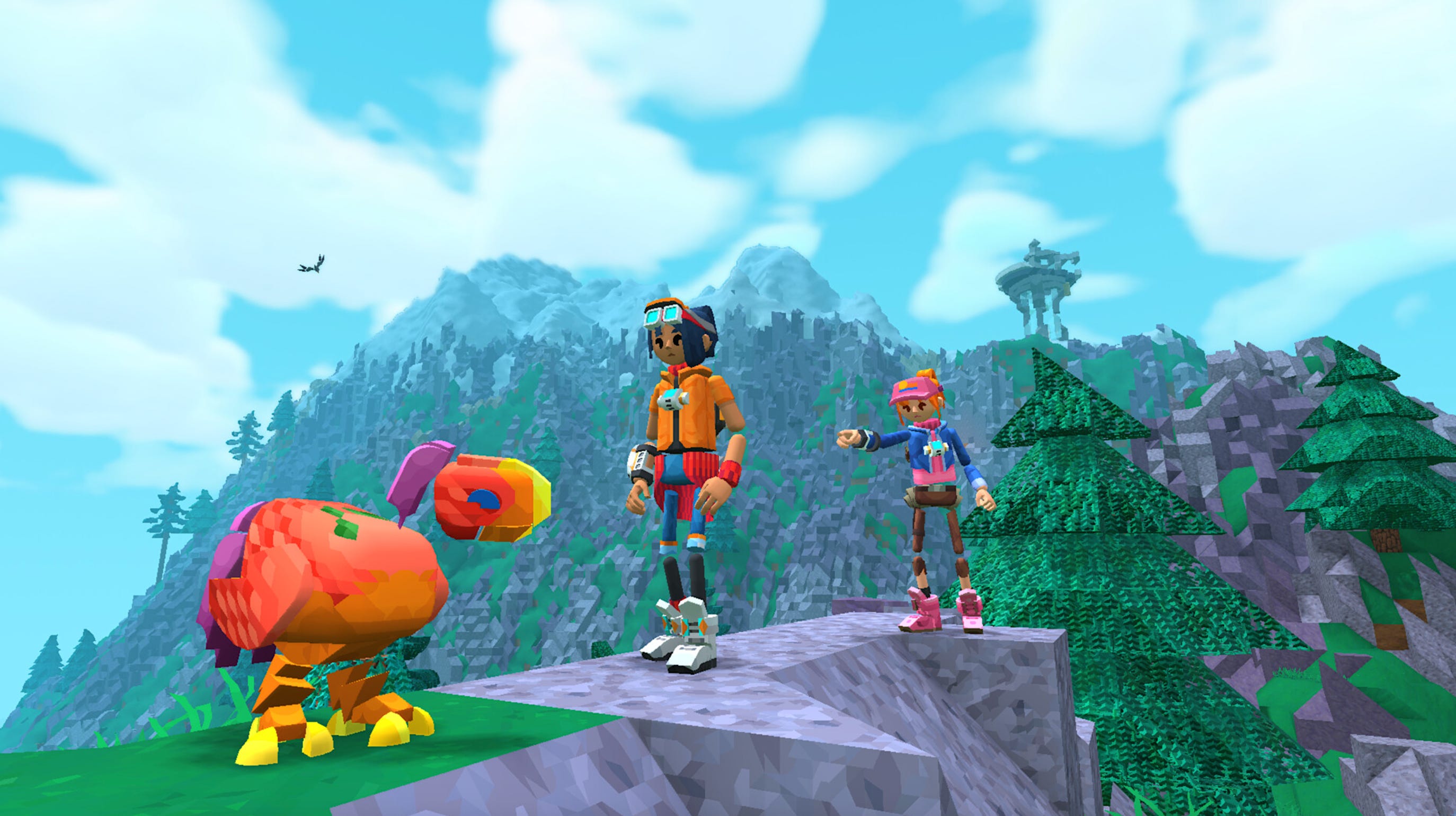
This week we're joined by Dundee-based game developer 4J, the creators of the Minecraft: Console Edition, to discuss its new Minecraft-rival: Reforj.
The team, which includes legendary Minecraft YouTuber Joseph Garrett (aka Stampy), believe that Minecraft is a genre, and that there's room for another one built for modern audiences.
We also chat the arrival of AI prompt-based platforms like Meta Horizon, the state of video game financing, going from YouTube to game design, when to listen (and not listen) to the community, and a whole lot more. Enjoy!