
In short
Podcast Episode Notes: Throwback: $100K Per Month, with No Employees | Ep 836
Podcast Overview
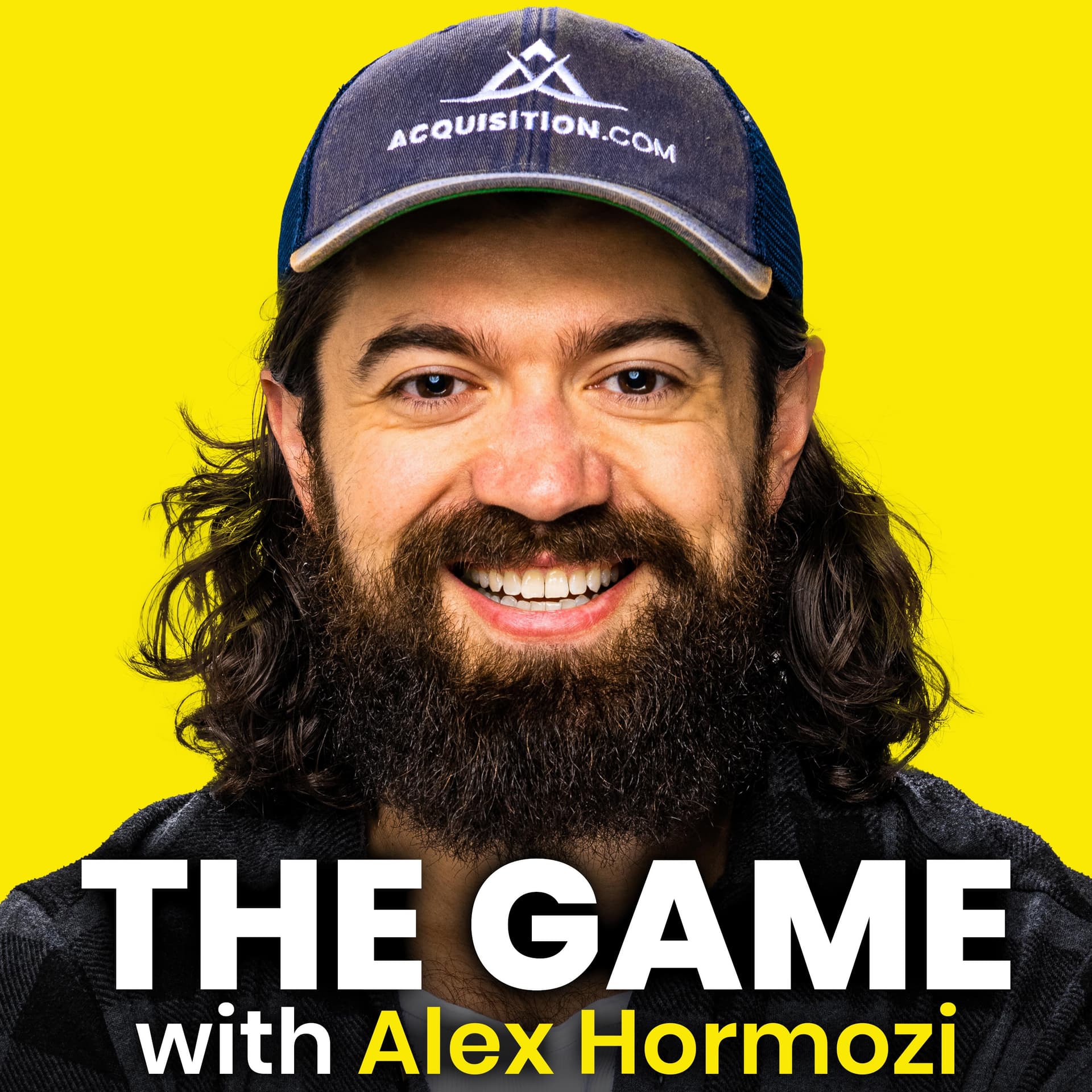
- Title: The Game with Alex Hormozi
- Host: Alex Hormozi
- Description: Insights on acquiring customers, maximizing profits, customer retention, and personal lessons from Hormozi's trajectory from $100M to $1B net worth.
Episode Summary In this throwback episode, Alex Hormozi shares his experience of generating $100,000 per month in revenue without any employees or significant startup capital. He outlines a framework for creating high-leverage income opportunities that anyone can replicate.
Key Themes
- Rainmaker Skill: The ability to generate leads and convert them into revenue is crucial for business success.
- High-Leverage Opportunities: Focus on low-cost setups that yield high returns.
- No-Risk Offers: Craft offers that are compelling and low-risk for customers, increasing conversion rates.
Detailed Breakdown
Hormozi's Journey
- Hormozi recounts his experience of starting from scratch and achieving significant monthly revenue.
- Emphasizes the importance of mastering sales skills and marketing strategies.
- Shares his "never go hungry" plan, a strategy he would revert to if he lost everything.
The Business Model
- Grand Slam Offer:
- Create an irresistible offer (e.g., a weight loss challenge) that guarantees customer satisfaction.
- Lead Generation:
- Use Facebook ads to attract potential clients, focusing on a compelling lead magnet.
- Capture leads through a simple landing page setup.
- Sales Process:
- Utilize follow-ups and personal touches (e.g., personalized videos) to enhance lead conversion.
- Upsell customers to higher-value services after initial engagement.
- Payment Structure:
- Charge upfront fees for services and reinvest earnings into further marketing.
Financial Mechanics
- Cost-Effectiveness:
- Average cost per lead: $10.
- Hormozi’s conversion: 1 sale per 5 leads at $600 each.
- Example: Spending $5,000 on ads could yield $60,000 in revenue.
- Retention and Upselling:
- Focus on retaining customers for higher lifetime value.
- Upsell additional services or products to maximize revenue per client.
Learning Outcomes and Recommendations
- Avoid Common Pitfalls:
- Overwhelming Capacity: Ensure businesses can handle the influx of clients.
- Choosing Partners Wisely: Collaborate with reputable businesses to maintain a strong brand image.
- Clear Communication: Set expectations upfront to avoid misunderstandings with partners.
- Documentation:
- Importance of recording sales calls and processes for training and marketing purposes.
- Tech Setup:
- Basic tech requirements include running Facebook ads, using Google Sheets for lead management, and setting up automated notifications with Zapier.
Final Thoughts
- Hormozi emphasizes the power of being a rainmaker and the profitability of mastering lead generation and sales.
- The skills and framework discussed are scalable and applicable across various industries, making it a valuable approach for aspiring entrepreneurs.
Key Takeaways
- Make a compelling offer that addresses customer pain points with a satisfaction guarantee.
- Leverage ads to attract leads without significant upfront costs, and reinvest earnings into further marketing.
- Focus on building relationships with customers, enhancing the overall value proposition through upsells.
- Prepare for growth by documenting processes and ensuring operational readiness from partners.
Call to Action
- Encourage listeners to implement the strategies discussed and strive for significant revenue growth in their businesses. Hormozi's insights are designed to empower entrepreneurs to capitalize on opportunities and navigate challenges effectively.
Written by AI. May contain mistakes. Listen to the episode to check what was said.
Transcript
Automatic transcript. May contain errors.0:00Hey guys, so this is a throwback of when I needed to start all over again and had basically no money and no employees and got to$100 ,000 a month in the first month. This has been my forever, never go hungry plan. Like if I lose everything tomorrow, this is what I would do. And I walk you through the framework of how I think about creating high leverage, zero dollar opportunities for income generation. And I think it's one of those easy things that you can think about your own business, even through that lens. But having lost it all multiple times and gotten it back, this is the actual thing that I would do because it's what I did.
0:36Being a rainmaker is a skill that can feed you for life. All right, all you got to do, no matter what industry you're in, is learn, one, how to make a Grand Slam offer, two, how to run a basic ad to get people to raise their hand, and three, how to upsell those people into a service. Welcome to the game where we talk about how to sell more stuff to more people in more ways and build businesses worth owning. I'm trying to build a billion dollar thing with acquisition.com. I always wished Bezos, Musk, and Buffett had documented their journey, so I'm doing it for the rest of us. Please share and enjoy.
1:04I built a$100 ,000 per month profit business with no employees for less than$1 ,000 when I was 26. And anyone could start the exact same business with little to no money at all and no employees. All right. So I'm going to explain what I did, how it worked, the good, the bad, the ugly, and what I would have done differently and how I think you can use the same model for yourself no matter how old you are or how much money you got. All right. And I did all this stuff using skills that anyone can learn for free. All right. So I'll even give you a step-by-step setup in the last three minutes of what you would need to do to get this running.
1:33And if you don't know who I am, my name is Alex Ramozzi, the founder of acquisition.com, portfolio companies that does over$200 million a year. And I make these because I want you to use this stuff, grow your business to$300 million to$100 million in revenue, and allow you to invest in your business and scale beyond that. All right. So that's my self-discount here. For everybody else, enjoy this stuff, go make money. That's the whole point. All right. So let's dive in. So when I had my chain of gyms, I got asked to speak at this marketing event. All right. So this is a random thing. And I like had never been asked to speak for anything at all, ever.
1:58And so this was kind of weird to me. I just like doing my own thing. And I didn't do any B2B stuff. I just sold weight loss. Right. And so they wanted me to speak about how I was using Facebook ads, uh, to get leads for brick and mortar in 2016. All right. So anyways, I wasn't sure, but I decided to accept anyways. I was like, this is a challenge. I'll go speak. And so I went up and you know, I gave my, I gave my spiel and I just went step by step. This is how I did it. Right. And what I want to do is I'll explain to you exactly what I said on that speech. And then we're going to quit Tarantino.
2:24And then I'm going to circle back to why it, why it's going to be important to you. All right. So here's how it worked and pay attention here. Cause this is the part that you will copy and run the same model I did if you want to model that business that I had that was making$100 ,000 a month. This business model works for any brick and mortar business, not just fitness. Here's how it works. I would run ads for a six-week weight loss challenge. You could run it for whatever you want, but I was running for a challenge. I'd run those ads and I'd send them to a landing page. At the landing page, they would opt in with their name, fund over email, and on the thank you page, they'd have a scheduler.
2:52They'd book a time to meet with me at the facility, which is where I would sell them. Now, I would call the leads to confirm their appointments who did schedule and then I would call the ones who didn't book to get them to schedule a time. Morning of, I'm just giving you a little hack here, I would send a personalized video and be like, hey, Sarah, I've got this t-shirt with your name on it. What size and what color do you want? And so then they would respond back to the color or size and it massively increased my show up rates and I got some goodwill, right? So when they came in, I would sell them the challenge, right?
3:18When you could sell whatever promotion you want and I would sell for five or 600 bucks. Side note, and I'll get to this more later, but I want you to sell really expensive stuff. So if I do it again, I'd sell more expensive stuff, but I was selling 500 or 600 bucks. And so the idea was, and this was my big offer, so you need to come up with something sexy, is that I lost 20 pounds in six weeks, they give the money back, right? And I offered a satisfaction guarantee so that even if they didn't lose the weight, if they wanted their money back at any point in the six weeks, I didn't give service that was amazing, I'd give it back to them.
3:43All right. So it was a no risk Grand Slam offer. And as you can imagine, it wasn't that hard to sell, right? Which is a key point here. You'll notice both offers that we will make one to the business owner and one of the prospects is not hard to sell. All right. So here's how the math worked out. So I'd pay about 10 bucks a lead and I would sell one out of five into the$600 challenge. So if you're doing your math here, that's 12 to one. So if I put five grand into marketing, I get about 60 ,000 out. And the nicer part was that I got that money up front so I can put it back in ads. And this is why the no money down thing is important.
4:11So I didn't even need five grand or$10 ,000 to start this. As soon as I made my first few sales, that became my marketing budget for the entire month. Right. And just a side note, I know gym launch gyms still get these numbers today. So it's not like this stuff changes that often. People just, I mean, people still need to lose weight today as much as they did a few years ago, right? Like, and challenges haven't really gone away. And so the nice thing is that once you crack one of these for brick and mortar business, you can run this hundred thousand dollar month profit, zero cost to start zero employees business model on your own for life if you wanted to.
4:40All right. And the way that I stumbled onto this was that I started launching my gyms and realizing quickly that I actually made more money launching the dims than running the gyms, right and the reason for that was that once everyone converted from my front-end program to my back-end program the average revenue per week per client went from a hundred dollars a week to fifty dollars a week right so like they would pay six hundred for six weeks versus you know two hundred a month which would be about fifty a week on the back end and so i made at full capacity i'd make half as much money so i actually made more money launching and filling the gym than i did after it was at full capacity and so that was one of the big aha moments ahead which is what is how i accidentally stumbled into this business model so let's quinn and Tarantino back to when I stepped off that stage, right?
5:20So as soon as I showed my whole model, I was like, this is the ads, these are landing pages, this is the thank you thing, blah, blah, blah. I got bum rushed by all these folks asking me to help them do what I was doing, right? And they're like, can you do this for my business? Can you do this for dry cleaning? Can you do this for whatever, right? And I had a bunch of gym owners too, obviously, and I didn't sell to gyms. So like, I was like, sorry, out of luck. Like, I just do this for myself and I hope you enjoy the presentation. But, you know, being the budding entrepreneur that I was at the time, I figured maybe I could make some money doing this, right?
5:46Maybe I could launch their gyms like I did my own and work out some sort of deal to get a percentage of the revenue that I was bringing in, right? Makes sense. So here's the offer that I made some of the guys who rushed me off stage. Now I got all their business cards, then I would call them up the next week because I didn't even know what I was doing. And so this is the offer I came up with. I said, I'll fly out to your gym, I'll spend my own money, I'll market your gym for you, I'll work the leads, I'll schedule them, and I'll sell them. And I'll even do nutrition orientations, which by the way, is where I would sell another 100 to 150 bucks a head in supplements.
6:13And if you're doing the math, that would also cover my cost to acquire customers on its own. And all they had to do was just fulfill the six weeks of service, right? And then they got to keep whoever they converted into a membership. So it was a no risk offer for them. Remember, like I spent all my time and my money, they didn't have to do anything, and I got to eat what I killed. That was the deal. All right. So here's the important part. If you are a single guy or gal, or heck, I mean, if you're married, it doesn't matter. If you know these three things, you can make this business model work for you.
6:38All right. So number one is you have to have a very compelling offer for brick and mortar business that gets leads. So for me, it was the challenge. It could be any number of things, right? All you have to do is give something very valuable for less, right? It could be a free thing or a discounted thing. And then if you're giving a heavily discounted thing, you just have to learn how to upsell something. If it's not that, then you can just sell the core offer. Either way, a very compelling offer up front. Number two, you got to learn how to run ads. Not that complicated. Nowadays, you can run lead ads.
7:01You can watch them on YouTube. It's not that complex to do. And then number three, you learn how to sell. If you can do those three things, you got an offer, you can run ads, and you can sell the leads. You can make this business model work in any local market. All right. Now, so here's how you get the business owners to agree. So you go into the groups and you ask folks in the groups and say, Hey, can I bring you customers for free? No risk. All right. Here's how I'll do it. I'll fly out. I'll spend my own money, et cetera, et cetera. And then here's the key part. You then ask them what's the absolute cheapest that they would fulfill customers for during this thing that you're selling.
7:31So whether it's chiropractor things, whether it's dentist things, you say, Hey, if I were to bring you a hundred of these, what kind of discount could I get here? Right. And this works especially well with services that have low marginal costs, which means that adding an additional customer doesn't cost the business that much. And remember, the big contingency for them is that, and you can negotiate hard here, is that they're going to get the customers for the lifetime, right? And it costs them nothing. So it's like, hey, even if you broke even on the thing, you get customers for life and you can make money after that, right?
7:58Like I'm the one who's, I'm the one who's frowning all the risk and doing all the labor here. So ideally, you can set it up like I had it, where they agreed to do it for close to free for X period of time, because all the customers cost them is nothing, right? and so once you do that because like for me it was I didn't they didn't get anything that I collected for the first six weeks then after that they could keep whatever they wanted but that was the deal that I had set up so once you do that you can run the ads and you sell the people alright so for example so I'm going to talk about a different industry so if I were to do this with chiropractors I might set up a$20 consult which is normally$200 and there'd be an assessment whatever that I would market alright and then I would get the doc to do the x-ray and then the person would meet with me again and I would sell them a treatment plan for like$2 ,500 for six months And if you can sell longer for more, by all means, do so.
8:39The deal that you make with the doc would be something like negotiating with him to see what he would fulfill that for. So if you can get him down to, say, like 500 bucks, and you'd be surprised here, you'd make the spread minus the cost to acquire. Right? So if you charge 2 ,500 and it costs you five, there's 2 ,000 left, then whatever it costs you to acquire is what the cost is, and then everything else is yours. More money, good. So you'd run the ads, call the leads, sell them the$20 consult. Just make sure they show up, just FYI. And when they come in, the doc's team would do the x-ray. You do the follow-up meetings and then recommend the session package.
9:06Cool. Let's talk money math. If you sold 48 of these a month, that's two a day for 24 working days. 24 working days in a month, sell two a day, it's 48. You sold them at$2 ,500 a pop with a$500 cost to fulfill. Remember, we pay the doc$500,$2 ,500 we get. Let's say it also costs you$50 a lead with one out of five buyings, 20%. That means your cost to acquire is$250. Five times 50 is$250. And if you ran this play for a month and spent$400 a day in ads, that's$12 ,000 total. Remember, you make money quickly so you can reinvest it in ads. You'd make$120 ,000 in gross revenue. Mind you, that's not profit.
9:45That's revenue. So we still got to take out your 12K in marketing and your 24K that you have to pay the doc. But now you've got$84 ,000 left over as a single person that has no employees. That's all profit. So you can stop there and you can make a million dollars a year in personal income. Not bad for no money down to start, no degree, no employees. right? But if you're a smart cookie, you can do better. So this is what you do. You also meet with all those leads again, and then sell them retail products. So think like cream, supplements, oils, orthotics, etc, right? Which you could pre negotiate that you keep all your product sales, which is what I would do.
10:17And so then you make another 500 bucks ahead in profit with those product sales. So that puts another$24 ,000 back in your pocket. And that now covers the dock. So now you're back to 108 ,000 minus your cost of living, which when I was doing this, it cost about$3 ,000 a month in extended stay, because I would stay at a motel, food, gas, etc. So$105 ,000. Boom. 100 grand plus in profit, no employees,$1 ,000 to start. But before you run off and do this, I told you at the beginning that I would tell you the good and the bad, but I still haven't told you the ugly. All right, so here's what I would do different if I could do this again.
10:49Now, I ran this model for a while. Here are 11 things that went wrong for me that I would have changed. All right. Number one, I massively overwhelmed the facilities. I would have spent far more time really planning out how they would fulfill another XX patients or clients or customers, et cetera. I would have like really be like, okay, well, if we get you a hundred customers, like what times you're going to put them in? Like, how can you fill the slot? I go to spend more time doing that with them. Number two, I partnered with struggling facilities. And so this was a double-edged sword. They're really easy to sell, but at the same time, they had a bad reputation for a reason.
11:20They weren't that good at fulfilling. And so if I would do this again, I probably would have tried to find good people, not just anyone who would just let me sell in front of the door. I was young. I was inexperienced. I've made mistakes. That was one of them. Number three, in retrospect, I would have explained all the costs I would incur up front, hotels, airfare, food, rental, ad spend, et cetera. So they wouldn't think I was just like taking all this money to their facility. I'd be like, I got costs too, right? So I'd explain that so they understand like, I have to make money to do this, right?
11:46Make it worth my time.
11:50Mosey Nation, real quick, if you are a business owner that has a big old business and wants to get to a much bigger business, going to$50,$100 million plus, we would love to talk to you. And if you like that or would like to hear more about it, go to acquisition.com. You can play anywhere on the page and talk to one of our team and see if we can help you get there. Number four, I'd also explain how much I plan to make revenue and profit from the facility. So they wouldn't be shocked when I crushed it, as they all were, right? So half of them tried to get me to stop selling, and I would refuse because I needed to sell a certain amount to hit my target.
12:24And that's why it's so important to explain the cost of friends. Like, hey, this is how much it costs me just to break even. So I got to sell 40 people just to, like, cover my nut, whatever it is, right? And then I got to sell another 40 if I just want to, like, hit a 50 % margin. So I want to do more than that. So you really got to prepare for this, right? So it's like it's setting expectations. But I was young, and I was, like, so afraid of scaring somebody off that I just didn't want to set good expectations, all right? and mind you, I said it and none of them believed me and I knew they didn't.
12:49So I was like, whatever, I'll just prove them wrong. Ultimately ended up hurting me. All right. So all in all, I would have been more transparent upfront, made sure they really understood how this was going to happen. Like the mechanics behind it. Five, I'd have an agreement, which I don't have to spell this stuff out. All right. So this would further clarify expectations. This is important. This is the contract, right? So this would clarify the expectations and hold them accountable for their own behavior. These are the words spelled out in front of you. These are the terms you're accountable for this.
13:15I'm accountable for this, right? If I had done that, I didn't even have contracts. I was a kid. I didn't know. Have contracts. Next, I would have filmed as much as humanly possible. This is probably my biggest regret through this entire thing. I filmed literally nothing. And I would have had 30 plus gyms and thousands of sales calls and in-person documented for training. I have none. Like think how much sick this would be. If I had, if I was like, here's a thousand fucking sales recordings, like that would have been awesome. And you could have that. So if you do this model, please, for the love of God, do that.
13:43Cause you'll have the extra margin and it's worth having someone be with you. You're going to probably need that for the ads anyways, if you wanted to do it instead of your iPhone. I did on my iPhone, but point is, is that I would have filmed stuff. I would have documented this because like, this is going to be part of the story that you tell one day. And that's what I would have done. And as a side note, me just showing all the contracts that I was selling, imagine how easy it would be to market and sell this organically. I'd be like another month, another a hundred, 200 sales. Like it would have been so easy to market this.
14:07And I just did it. I didn't think about content. It just wasn't a thing for me. And honestly, I think I would have been booked year round, like no matter I wouldn't even have to run an ad or do a reach out. I would have been booked inbound. And at that point, this is the cool thing, is that if I had done that, I would have had more negotiating power. So I could either negotiate a piece of the back end, like what the continuity was going to be, like if they converted, or they could have paid me an upfront cost to go out, or they covered my marketing for me, not me. There's other things that I could have been able to leverage if I had had more brand, more content, and I didn't have that.
14:39So if I could do it again, I would have done that. It would have made an even better deal for me. Next is I'd include a clause in my contract that I'd have them signed separately for added transparency and accountability that if any customer said they were encouraged to refund. So they told a customer, you should refund or you should sign up again through me, right? So like if I sold somebody at a chiropractor's office for$2 ,500 and then I find out that the customer refunds and says they signed back up through the dock at half price, that they would owe me twice what the person paid. I would have done that.
15:09And big picture for me, that was actually the thing that drove this business into the ground for me was that I had a couple of bad actors, which is why I said earlier, I would have done deals with better people, less shady, who just basically said, one guy was like, there's too many people here, just refund. Because it wasn't his money, right? He didn't care. And so that hurt me a lot. I also got slammed on a bunch of reviews because I was the one who would sell someone into a location and then the location would suck. And so it was my reputation. I mean, theirs too, but my reputation, because I was the one who was like, this is going to work, right?
15:40And I definitely had rose colored glasses on in the beginning being like, oh, no, it's good. They're just scrappy, you know? But I think ultimately people were not as well served. I should have picked partners that I really wanted to sell their product. And I just picked partners who would let me sell their product. And I was better at selling it than they were. And so, I mean, you know, you learn a lot. It's been a decade, you know, it's been a while. So look like the biggest problem is that when I had this like I had a few bad gyms that ruined it Some acted really sketchy other sold clients to refund and sign back up And unfortunately since I was the one who saw them I was the one left holding the bag and I was the one associated with the decision which sucks I made mistakes I definitely put this with my rose-colored glasses on when I was selling these gym packages I just pretended I couldn't see all the crappy stuff that was going on But I was desperate and I wanted to make money, you know, and that's something that I own I would have done it.
16:25I would have done it differently now, which is why I make this stuff So my goal is Mosey Nation. You guys don't have to repeat my mistakes. So I think a lot of my pain could have been avoided with three things. Clear expectations, clear agreements, and better picking of partners. But all in all, being a rainmaker is a skill that can feed you for life. All right. All you got to do, no matter what industry you're in, is learn, one, how to make a Grand Slam offer, two, how to run a basic ad to get people to raise their hand, and three, how to upsell those people into a service. All right. The key points of leverage are that you're not getting commission.
16:56That's why this is such a profitable opportunity. You're getting everything minus what you negotiate because you are the one taking the risk of capital and time. That's the key point here. You're not a salesman here. You're a rainmaker. It's a very different skill set. If you have a high return on advertising, this is a license to print money. This is what I did. Every time I needed money when I was broke, I would go do this. I'd go find a facility. I'd sell in front of it. I'd go print myself money. This was like my get out of jail free card. that like it was worn down from the amount of times I used it.
17:26It gave me second, third, fourth, fifth chances. And like when you know how to get leads and you know how to sell, you have unlimited chances to get it right. All right. Like this is a skill worth having. The only limit on this business model is the actual capacity of the facility. So if I'm picking better partners, I'd pick the ones that could handle more patients, more customers that I could sell for, for a longer period of time, et cetera, et cetera. Like that's what I would do if I could do this all over again. And if it's only you, you could only have three or four facilities that you're doing this for.
17:51And you just do one a month and then you go back to the beginning. Like you wouldn't even have to have zillions like I did. Like you could just go like there's three months and a quarter and I'd have facility one, two, and three. And then I'd go back to facility one and do my rain making thing. And they could all be in the same area. It doesn't matter, right? But most of the times you'd probably just sell. The issue I had is I'd sell them to such a capacity that like they'd be full. And then I had to go find another one to fill up. And that's why this model, you know, was what it was for me. But there's probably a balance between those two extremes.
18:17So bonus number 10. I would have run maybe$250 in ads in every market before I decided to take them on. So some markets perform better than others. And so I could have spent like a grand to test for markets, like 250, 250, 250, 250, to figure out which ones were going to get me the most leads for the cheapest price. Right. And so imagine I've got a bunch of different gyms or chiropractors or dental offices or real estate agent, doesn't matter, right. That I'm selling for cleaning services that I'm selling for. And I could have been like, okay, well, if I spend$2.50 in all these markets and this market gets me, you know, one third the price leads, then I can just ignore these ones and focus my time on the opportunity, right?
18:55So then I would have only worked with the facilities in the absolute best markets, right? So to give me more leverage, aka more money per unit of time and effort that I spent. And then finally, I would try and find the most expensive stuff to sell, right? So think thousands, not hundreds here. So like I could have made a lot more than 100 grand a month if I shed the balls to charge more and find a more valuable service or product. And you can do this in any industry, right? You can do it in insurance. You can do it in pest control. You can do it in solar. I gave you gym, chiro, dentist, et cetera.
Read the full transcript
19:23If people have expensive stuff, you can get leads and you can sell them locally. So if you want to sell stuff in the thousands, market a cheap or free thing that's zero to$99. Sell that thing as a lead magnet and then upsell them into a multi-thousand dollar thing. This gets you better lead quality in general, able to dramatically cut no-shows and reschedules for appointments, because if you bill them, you know, 20 bucks, 50 bucks, like people are much more likely to come in, right? That's what I would do, okay? Now, I promised that at the end, I would give you the tech setup in the last three minutes.
19:56So here it goes as fast as I can, all right? So this is crazy simple. So if you're not a tech person, like I am not a tech person, I was able to figure this out. So you can do this, all right? So just as a reminder, it takes 20 hours to learn most things. But most people spend years delaying the first hour. So don't be that person. All right. So like I said, I'm not tech savvy and I've got you covered. So you can figure out how to do all of the tech that I'm about to explain in less than 60 minutes. So like put a timer on 60 minutes from right now, this moment, you can know all the tech that you need to know.
20:23All right. So here's what you got to do. First, Google, how to run a Facebook lead ad. This is how you're going to get leads. Give something away for free, the crazy guarantee, and you'll get leads. Your skill will be upselling them into something more expensive. That's number one. Facebook lead ad, you just Google how to run one. Number two, Google Zapier Facebook lead ad to Google Sheets. All right, this will give you a makeshift CRM. This will just give you a big old list of leads. So now the ad, which you know how to run, then zaps over the lead to a Google Sheet. That's step two. Third, you Google Zapier SMS SMS notification set up with Facebook lead ads.
21:04So third, Google Zapier SMS notification set up so that when you get notified, so that you can get notified whenever you get a new lead. All right. It's the quick and dirty way anyone can set this up for your business. All right. So I'm going to recap this real quick. You're going to Google how to run a Facebook lead ad, and you're going to give some amazing free thing away. That's what's going to get you leads. To make sure you actually capture the leads, you're going to go Facebook lead ad to Google sheet. No, you don't even have to build a webpage. All right. So like we're making this crazy easy here, like no landing page or nothing.
21:33You literally just have to learn how to run the ad. And then you put a Zapier over to a Google sheet and then you get a Zapier SMS notification that every time you get a lead, you get notified so you can call them and text them. That's it. That's the tech setup to make this work. Isn't this amazing? Right now, this is how you become a Rainmaker. And I get asked all the time on podcasts, et cetera. Like if you lost it all, what would you do? I've lost it all twice. I know exactly what I would do because I've already done it. All right. This is what I did. And this is what I fell back on when I lost everything.
21:59And to this day, it's a skill that I have and you can have it too. All right. And if you're wondering, how do I figure out what offer to sell and what service? Right. Go to a business that's local, that sells expensive stuff. Offer to sit at the front desk and try out a few different offers until you get the one that works. Once you keep configuring the price to get 10 to one or more, you can then copy or paste it in any market. Mind you, you might be able to do this and not have as favorable of a setup with the first location. So you learn. Right. You can learn before you earn. So learn. Get all the kinks out on someone else's money.
22:26you can make significantly less and just say like, I'll give you all the money. If you can spend it, I'll work everything for free just to learn. Once you get the model, right? And you figure out a way to get 10 to 1, 21, sometimes 30 to 1, then you scale and you copy paste it in other markets, right? And then you can make a much stronger deal for yourself. And as an aside, it's way easier to actually get 10 to 1, 21, 31 returns in local advertising compared to online because you have implicit trust. Like if it's whatever your micro local market is, you automatically trust it.
22:55You If it's like, you know, Towson chiropractor, like, like he's around the corner, right? You trust them. And so you're able to sell high ticket packages with significantly less automation and selling before that, just because people are like, I can touch and feel this place. Like there's the location. They're not going to go anywhere. And to be amazed, it still matters. Most commerce still is not done online. As much as YouTube will make you think that everybody's online, still the vast majority of commerce is done in person. Okay. And so people trust people who are local to them. And so if you sell in person, it's even easier.
23:24And if you learn to sell over the phone, as a side note, you'll actually make more money because it's more efficient to sell over the phone, like in terms of sales per hour. So it's a higher level skill. It's harder to sell over the phone. But if you do, then you can actually sell for all these different markets from home, as a side note. But I recommend if you're starting out and you've never sold before, start in person, do the first one for some sort of negotiated that's basically you getting nothing and them risking more. And then once you get the model down, then you can copy and paste it, negotiate with more leverage, and you'll make more money.
23:52But as an aside, again, with the phone thing, like the reason it's you make more money is that you spend more time selling and less time waiting for appointments. So like you don't get no showed on the phone because you can just keep calling other leads and selling them. Whereas in person, you might just have to sit there for 30 minutes and it happens a lot. Just be real. And so you may actually close a lower percentage of people you speak to, but you'll talk to twice as many prospects because you don't have to they don't have to get in their car, you know, get the appointment, show up. It's like you take that whole step out.
24:16And so it's basically like when you would normally be the person confirming the appointment, you actually just sell them right there. That's the 201 version of this, right? Like 101 is really, 101 is go to a local place and do it for basically free and have them front some of the risks so that you can learn the model. 201 version of this is that you now fly around or you go to the local places and you negotiate your splits so you get a majority of the upfront because you're risking the capital and the time. 301 is that you learn how to sell this over the phone so that you can be central and then you can sell it in any of these locations, right?
24:45All of these require no employees, basically no money to start, and you can make hundreds of thousands of dollars a month in profit. I hope you guys see the opportunity the same way I did, because this is literally, people are like, how would you make, this is what I would do. This is how I did it. It's not like a hypothetical for me. I've lost everything I've had multiple times, and every time, this is what I did to make money again. How do I print money with no risk? This is how I did it. And so my goal, again, for everybody watching this, is that I hope that you use this stuff, make all the money, you know, pass 3 million, get into the 10, 20, 50, et cetera, and then allow us to invest in your business so we can help you scale beyond that.
25:20Otherwise, Mosey Nation, love you. See you guys next bit. Bye.
From the publisher
Wanna scale your business? Click here.
Welcome to The Game w/ Alex Hormozi, hosted by entrepreneur, founder, investor, author, public speaker, and content creator Alex Hormozi. On this podcast you’ll hear how to get more customers, make more profit per customer, how to keep them longer, and the many failures and lessons Alex has learned and will learn on his path from $100M to $1B in net worth.
Follow Alex Hormozi’s Socials:
LinkedIn | Instagram | Facebook | YouTube | Twitter | Acquisition