
In short
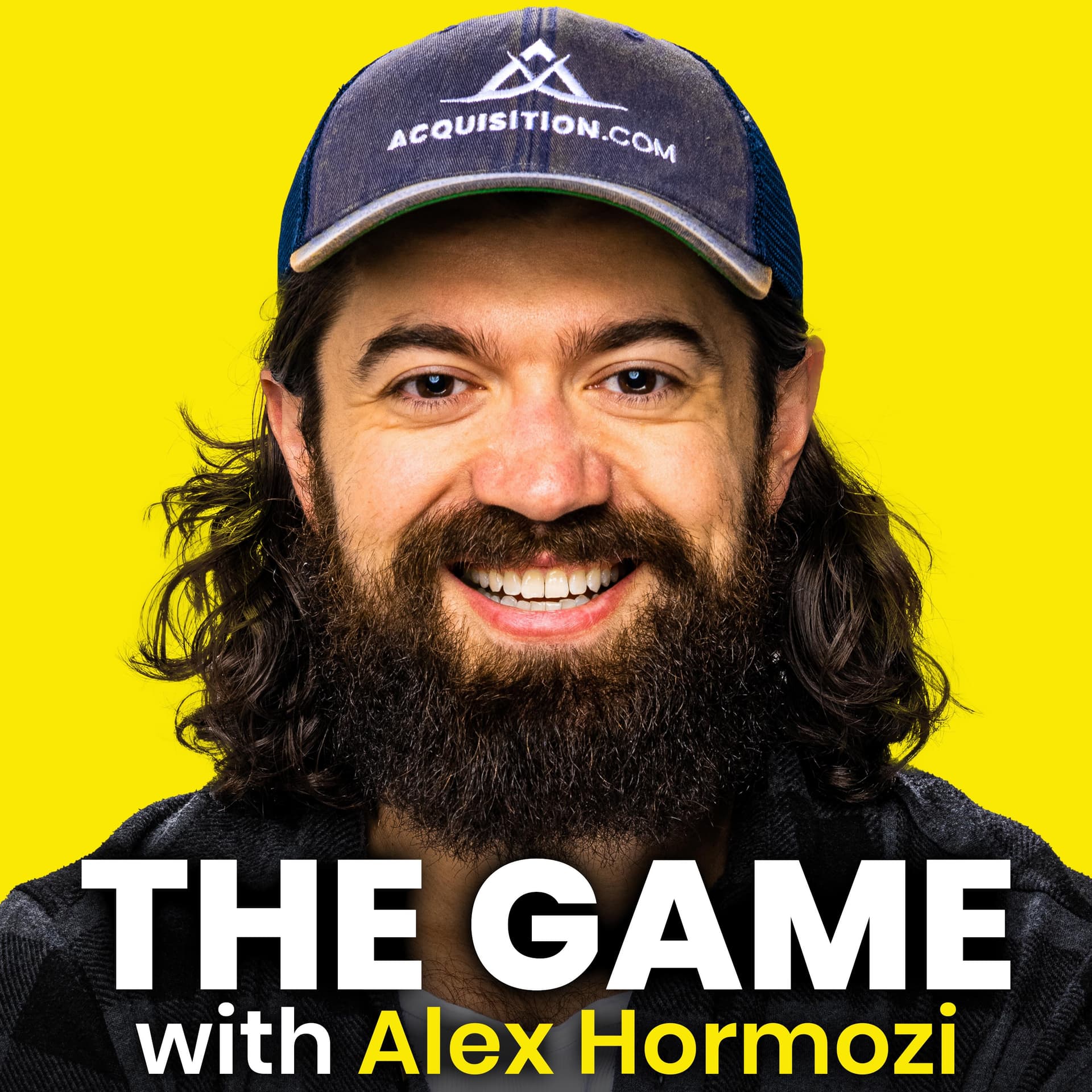
Podcast Summary: The Game with Alex Hormozi - Episode 860
Episode Title
What Leila Hormozi And I Accomplished In Q1 And HOW We Did It
Episode Overview This episode features Alex Hormozi and Leila Hormozi discussing their achievements in the first quarter of the year, reflecting on their entrepreneurial experiences, and emphasizing the challenges they faced. They share insights on decision-making, company culture, and the importance of maintaining individuality in the face of external pressures.
---
Key Themes and Discussions
- Reflections on Q1
- Descriptive Terms for the Quarter:
- Alex describes the quarter as a "dick punch," while Leila likens it to "eating glass."
- These metaphors highlight the intense struggles and challenges inherent in entrepreneurship.
- The Entrepreneurial Experience
- Problem Solving:
- Entrepreneurship involves navigating numerous problems daily, which can often feel overwhelming.
- Alex mentions that as businesses grow, the complexity and challenges also increase.
- Skill Development:
- With experience, entrepreneurs become more adept at decision-making and problem resolution, but the emotional toll remains constant.
- The Importance of Authenticity
- Maintaining Distinctiveness:
- They reference a passage from a Jeff Bezos letter about how maintaining one's uniqueness requires continuous effort; the world often pushes for conformity.
- Both emphasize the need for leaders to embrace their distinctiveness despite external pressures.
- Insights on Decision-Making
- Speed vs. Quality:
- The speed of decision-making significantly impacts business efficiency.
- Alex and Leila discuss the balance between making quick decisions, knowing they won't always be perfect, and the need for thorough information.
- Empowering Others:
- They share strategies for empowering team members to make decisions independently, which enhances overall company agility.
- Company Culture and Values
- Sincere Candor:
- Layla discusses the importance of honest communication within the company, fostering an environment that encourages feedback and growth.
- They emphasize that leaders should be open and direct, addressing issues promptly rather than sugarcoating them.
- Avoiding "Suicidal Empathy":
- They warn against excessive empathy that leads to enabling poor performance or behavior within teams.
- Achievements in Q1
- Set Goals:
- Alex and Leila share their Most Important Tasks (MITs) for Q1:
- Alex focused on enhancing company-wide communication, restructuring the media department, and a compliance project.
- Leila was involved in building a strong media team and improving the overall culture of the organization.
- Progress Tracking:
- Both express satisfaction with their accomplishments and the positive direction of their company culture.
- Embracing the Challenges
- Coping with Opposition:
- Increased success often brings increased opposition; they discuss how to handle negativity and criticism effectively.
- Alex reflects on the value of being transparent and authentic, despite the risk of backlash.
---
Key Takeaways
- Persistence is Key: Entrepreneurship is inherently challenging, but resilience and problem-solving are crucial.
- Stay True to Yourself: Authenticity is essential in both personal and professional realms; do not dilute your values or beliefs.
- Empower Decision-Making: Fast and empowered decision-making enhances team dynamics and company efficiency.
- Foster a Strong Culture: Clear communication and sincere candor are vital for maintaining a healthy company culture.
- Accept Imperfection: Understand that not every decision will be perfect; the ability to adapt and learn from mistakes is essential.
---
Final Thoughts Alex and Leila Hormozi's candid discussion provides valuable insights for entrepreneurs navigating the complexities of business growth. The focus on authenticity, effective decision-making, and the importance of company culture stands out as essential elements for success in any entrepreneurial journey.
Written by AI. May contain mistakes. Listen to the episode to check what was said.
Transcript
Automatic transcript. May contain errors.0:00What's going everyone? Welcome back to a new episode joint style between the game and build with Layla. so this is a collab because we're influencers we're collabing did you hesitate when you said the name of my podcast I feel like you were really you didn't even know did you I wasn't sure if it was scale oh my god no I know it's Bill I said the right word I said the right word this is so fucked so we thought we'd give you guys a 2025 25, one sixth of the way through the year update, which is kind of insane when you think about it. Like we're almost done the first quarter. How fast that moved.
0:48I mean, yeah. Layla, would you like to kick us off? Yeah, Alex. If you had one word to describe the first sixth of the year, what word would you use? Is dick punch one word? I was trying to think of mine, so I was giving myself time by asking you. Yeah, I think that's my word. Yeah, I would say eating glass. Yeah. Eating glass. I don't think we have the staring into the abyss part. You know, for those of you who don't know, that's an Elon Musk quote that Laila and I both like. He said entrepreneurship is a lot like staring into the abyss and eating glass. Staring into the abyss because you don't know if your company is going to make it and you're always, you know, facing existential threats.
1:31and then eating glass because the way entrepreneurship works is that you are a funnel for all the problems that people either could not solve on their own or did not want to solve on their own. And usually it's both of those things, the ones that they don't know how and don't want to solve. And so basically your every single day is just only solving the worst things on an unending basis. And the number of problems that go wrong is just astounding. As an entrepreneur, like how can we even function with the amount of things that are going wrong at any given point but for some reason uh we keep doing it and so here we are but anyways that's uh that's what lela was referencing so it's definitely been an eating glass period yeah it's interesting because i think i was thinking about it because i think a lot of people obviously go through this phase and it happens no matter how big your business is and i would actually argue that the bigger business the more glass you eat because the problems are bigger.
2:28More surface area of glass to break. Yeah, there's more glass to break and sharper. But I was thinking about why, like what keeps you going throughout it. And I actually think, I mean, I don't know if you would agree with this, but I was thinking for myself is that I am good at it. I'm good at eating glass. Like you gain the skill, you know how to make the decisions. It's just that, I think what it is, is that you get better at making the decisions and making them quickly and knowing what to do. It's just that the execution is just as painful every time. And I was just thinking about that earlier today when I was thinking, you know, okay, my media has suffered this quarter because I have not been putting my attention there at all.
3:12And I honestly don't put that much attention in general, but it's just that when I do, I like it to be high quality media. And I felt like I've been so distracted that it's just been just shit. and you know as i was looking at okay making more media versus solving the problems of this week then i was like well why is it that i actually like solving the problems more and i think it's because i'm like well i'm good at it and i know what to do i know how to solve them you're better at solving problems than you are making content well yeah for sure but i think it's just the the difference is just it doesn't get any easier any time it's like people think when i fire somebody oh it probably hurts less it probably feels not as hard uh when we have a lawsuit oh it probably hurts less.
3:52It probably feels not as hard, but it's like, I just have found that the decisions get easier and it goes faster because you make decisions faster. So you get out of pain faster, but it's not any less painful. Well, I'll tell you what I've been thinking about. Pulling up your Twitter. Yeah. That's where I draw my thoughts. All right. So this, this was a, a letter, um, from Bezos to everyone is where the shareholder letter, shareholder letter. And this is just an excerpt. And I like, I keep coming back to this, because it's since I've read it, because it was so good. So I'll just read it. And then I'll kind of give you my two cents on it.
4:33So he says, differentiation is survival, and the universe wants you to be typical. This is my last inner shareholder as letter of CEO, as the CEO of Amazon. And I have one last thing of utmost importance I feel compelled to teach. I hope all Amazonians take it to heart. Here is a passage from Richard Dawkins' extraordinary book, The Blind Watchmaker. It's about basic fact of biology. Starving, staving off death is a thing that you have to work at. Left to itself, and that is what it is when it dies. The body tends to revert to a state of equilibrium with its environment. If you measure some quantity, such as the temperature, the acidity, the water content, or the electrical potential in a living body, you will typically find that it is markedly different from the corresponding measure in the surroundings.
5:19Our bodies, for instance, are usually hotter than our surroundings, and in cold climates, they have to work hard to maintain that differential. When we die, the work stops, the temperature differential starts to disappear, and we end up the same temperature as our surroundings. Not all animals work so hard to avoid coming into equilibrium with their surrounding temperatures, but all animals do some comparable work. For instance, in a dry county, animals and plants work to maintain the fluid content of their cells, work against the natural tendency for water to flow from them into the dry outside world.
5:51If they fail, they die. More generally, if living things didn't work actively to prevent it, they would eventually merge into their surroundings and cease to exist as autonomous beings. That is what happens when they die. Now it's Bezos.
6:33and says to her, can't you just be normal? They both smile and laugh. And of course, the deep truth is that her distinctiveness is something he loves about her. But at the same time, it's also true that things would often be easier, aka take less energy, if we were a little more normal. This phenomenon happens at all scale levels. Democracies are not normal. Tyranny is the historical norm. If we stop doing all the continuous hard work that it is to maintain our distinctiveness in that regard, we will quickly come into equilibrium with tyranny. We all know that distinctiveness, aka originality, is valuable.
7:04We are all taught to, quote, be yourself. What I'm really asking you to do is to embrace and be realistic about how much energy it takes to maintain that distinctiveness. The world wants you to be typical, and a thousand ways it pulls at you. Don't let it happen. You have to pay a price for your distinctiveness, and it's worth it. The fairytale version of be yourself is that all the pain stops as soon as you allow your distinctiveness to shine. That version is misleading. Being yourself is worth it, but don't expect it to be easy or free. You'll have to put energy into it continuously. The world will always try to make Amazon more typical, to bring us into equilibrium with our environment.
7:38It will take continuous effort, but we can and we must be better than that. I just like love that. I just thought it was so good. And Laila and I had this little exchange, I don't know, a while back, not that long ago. But I've been, I mean, I guess I get the same amount of hate anybody does. but I don't know maybe I read it that day or whatever it was and I was just like why do I even bother you know what I mean like why do I even we're we've already cursed on this podcast so whatever so I was like why do I even give a shit like I don't need to do this um and I was like maybe I'll just do what some of these other people do and just like just be vanilla you know just like not state things that are controversial and there's a difference between like what I would consider faux controversy and like true controversy, right?
8:24Like, to me, faux controversy is like, you know, you're complaining about results you didn't get from the work you didn't do, right? Like, that's like faux controversial. Like, no one really disagrees with that, right? It's like, it sounds a bit spicy, but like, it's fundamentally, no one's really going to be like, yeah, you should, you know, get things for doing nothing, right? But there's other things that I believe that are actually controversial, that there's a huge amount of people that disagree with it and go get up in arms when I talk about it. And so I was telling this to Layla and she just kind of like paused and she was like, never dilute yourself.
9:05And it's kind of exactly what I think I needed to hear in the moment. And then, you know, reading this, this letter from Bezos was very reaffirming along the same lines. and so I wrote this as my uh quick response which Layla's like of course she's gonna say something else because Alex loves talking uh so I wrote this um you are either a thermometer or a thermostat most people are thermometers what right quote that was from Jim Collins book that I talked I said all the time I've never even heard I literally had it pulled up. I don't listen. Ridiculous. You say I don't listen. Ridiculous. So this is obviously me not listening.
9:46Well, let me just read the part that I wrote. I said, most people are thermometers. They change based on temperature outside of the room. They use almost no energy to operate. They're completely passive. Thermostats, on the other hand, lead to systems that expend huge energy to change the temperature of the room. They're entirely active. But not only does it require huge effort and energy to reach the ideal temperature, it takes even more energy to maintain that temperature. Every hour of every day must persist. hold the line literally to create a different environment from the outside world. And when I feel beat down, I ask myself, am I a thermometer or a thermostat?
10:15Will I hold the line or simply melt into the background? Then I try to do what the thermostat would do. I do what I was afraid to do. I say what I think when I know it might hurt. I play when I know I might lose, make the bet when I know it might not pay off, trust when I know I might get stabbed in the back. So much energy, so much effort, but the only alternative is to melt into nothing. So we hold the line. So the quote actually originates from Martin Luther King Jr. which actually originates from soccer. Actually, I would like to just respond with, yes, I completely agree. That has been top of mind for both of us.
10:47I actually wrote something that I gave a speech to the team last week. Did you? It did, but you're not on those meetings, so you don't know. Oh. Which I'll read here. So you know his original thought. There you go. So you can hear it as well. Yeah, I'd love to hear it. Sincere candor is one of our core values for a reason. It's not some fluffy leadership buzzword that we thought sounded cool. It's a non-negotiable standard that keeps us sharp, honest, and growing at the speed that we need to win. Here's what it means. We tell the truth. We tell it fast. We do it with the intent to make things better.
11:13We don't sugarcoat shit. We don't dance around the issue. No, let's circle back. I'll let them know next week. Bullshit nonsense when we know something needs to be said. If something's awk, we address it. If something's great, we acknowledge it. If something could be better, we push for it. This applies across the board. Leaders, if you're holding back feedback from your team because it's, quote, uncomfortable, you're failing. Say what needs to be said clearly and constructively. Teammates, if you're whispering about problems instead of addressing them directly, you're part of the problem. Speak up.
11:41This is a company of adults, not high schoolers. Everyone, if you can't take feedback without getting defensive, you're capping your own potential. Growth comes from friction. You have to embrace it. What sincere candor isn't? Being a fucking asshole, tearing people down, just speaking to hear yourself talk. It's not passive aggressive comments, vague feedback, or waiting until it's too late to address an issue. It's about being honest and having an impact. It's about being clear rather than comfortable. And it's about driving results rather than putting your ego in front. Our clients and those who look up to us to lead the way come before politics, egos, and your appearance to the team.
12:17If you want to move fast, improve constantly, and be surrounded by people who make you better, then sincere candor is the standard. And if that makes you uncomfortable, you're in the wrong room. Stamps. But you weren't there to hear that. I was not there to hear that, but I was there in spirit. So I will respond in the same way, which is that I agree. And I think it's funny that Layla and I both independently wrote those things. Because I mean, I'll just, you know, speak candidly. I think one of the, you know, Layla and I have plenty of our own flaws, but like, I think we've usually been pretty in sync with each other in terms of like what we're thinking what we're feeling what's going on in the business and i think that's the season that we kind of feel like we're in right now so we feel like a lot of people are trying to lower the bar right lower the standard um within the company lower the standard uh obviously they're trying to lower the standard right but like for me with media like people like just comments that that i get on a continuous basis for like just believing what i believe um Um, and so we've both been like feeling that, that pressure.
13:21I think what it is, I was thinking about it is that with increased success becomes an increased frequency of opposition. So it's not that it ever wasn't there before, but it's that the frequency increases. You know what I mean? Yeah. Because I was talking to the team about it and I was super upfront. I had the new hire orientation. I said, listen, we will not accommodate you. You will mold into the culture that we already have because this culture works and this is why we're winning. And so if you don't like the culture that I'm about to explain, then this is not the company for you because it's very potent and it's not what a lot of people want.
13:55And I was really like heated that day. I don't know why. I think it's because, you know, with all the new people coming in and then what I see is that the teammates who do emulate the culture, they question. They're like, am I to this? Am I to that? And we should always take good ideas from new people, but to try and assimilate into like corporate jargon, bullshit, you know, passive aggressive comment, just some of the stuff that like, you know, people have old habits. The way I explain culture is always, it exists on a spectrum. So nobody comes in a 10 out of 10 culture fit. And any day given, it's not like I'm all ever a 10 out of 10 culture fit, or you're a 10 out of 10 culture fit.
14:34It's like, to what degree do we exemplify the culture that day? and I just said, I was like, we can't accommodate people. Like you cannot be nice. You have to be kind. And you know, it's funny as I was interviewing someone, he was in his final round and he said, he's like, what's the thing that like, what pisses you off the most about the company? And I was like, when people are nice, not kind. And they think that, and then other people think that they're a great leader, they're a great person because they're acting fucking nice. And it's actually just really mean because you're gonna end up fucking up your team.
15:08you're gonna end up fucking up the project or whatever it is because you're trying to save face i was like that pisses me off and he was like every single person said the same thing he's like the one thing that i heard on the last three interviews was kind not nice i was like that's really cool our whole team saying it very congruent we're the opposite of suicidal empathy what's that it's where you have so much empathy that you love the person that's hurting you oh understood and you don't try to stop them because you don't want to disrupt them we are not that way no and i think you know it translates into you know the media side as well because i think in general especially for you um i just think back to the jordan peterson podcast where he translates the story of um was it god kate and abel kate and abel yeah and it's basically like the representation of i just thought this was like a good interpretation of it of somebody who represents the ideal and then somebody who rather than trying to be like the ideal and being inspired by it tries to tear down the ideal and i just think that's what most people do like anytime you face opposition when you represent an ideal, you just trigger all these people who feel like it's not possible for them.
16:32And you piss them off because then they think of all the reasons why they can't become that ideal. And then they have to say false things about you or make up stories about you, which then goes back to people thinking they're special. You know, I think one of the things that Robert Greene talks about that I loved in that book, The Laws of Human Nature, was, I don't remember what the law was called. It's about specialness. Like we all think we're unique. We all think our problems are unique. And we all think that when we don't like somebody because they represent an ideal, we think that they are uniquely bad most of the time.
17:06And that because of all these bad things, that must be why they accomplished something. Or it must be why. Like there's no way they could be these good things. And I think that was really interesting because I just think it's really, I just think it's true. I see it everywhere. A lot of people have that worldview. Yeah. Yeah. Yeah. So this has been, I would say this has just been like what's been kind of the theme for us right now. It's been what's top of mind. It's like staying true to us despite increased pressure to kind of bend the knee to conform. And we do have a very potent culture. Yeah, I think for me it's been within the company.
17:44For you it's been externally. You know, I was thinking about, I was like, I think I faced the most opposition externally when I first started making content. which is interesting but that was tough well it's funny because i had um i had two different founders over the last week who visited the headquarters um and it was during the weekend and you know one of them was like i think you know we were hanging out talking about whatever and then um i was like i'm gonna do this hop into this uh compliance training i was like you want to join? And he was like, yeah, sure. And it was like three o 'clock on a Saturday and the whole sales team was there.
18:24And, and I was just like walking them through like, you know, things to say things you can't say, things like that. And then just, you know, drilling it with them. And after, you know, we left, you know, got, got out of the training, he was like, how, like, how did you get your culture so that people work weekends? And I thought about it and I had the same thing. I had the same question asked for me from a different founder the next week as well. And I was like, I think we work weekends and the team sees us work weekends. And so they work weekends. Yeah. Like I've never asked anybody to work weekend.
19:03Have you? Well, well, okay. I've reached out to, I reach out to people on weekends, especially if there's problems and things going on. And there's obviously departments that work weekends because that is the nature of the, that piece of the business. but I've never been like, I need you to work a Saturday and a Sunday just because I want you here. So hear me out. So I'll say something a bit controversial in the spirit of being sincerely candorous. If we hear I need work-life balance on a job interview, we're probably not going to hire the person. And it's not because, you know, we think there's anything inherently wrong with that.
19:39If you want work-life balance, I completely respect that. It's because we're looking for people who in their spare time like doing the thing that they work on. And so for them, they're not looking for a vacation or a break away from it because they're currently love doing that thing. And whatever role they're in doesn't give them the opportunity to fully flex all the skills they have. So I'll give you an example. So there's a guy on our marketing team who like, we're actually right now, literally right now, he's at a summit internationally that he paid for with his own money, uh, and bought his own tickets and all of that stuff to go see some new kind of cutting edge thing or whatever.
20:16Right. And you don't like, so for him, if I reach out on a Saturday, it's, he doesn't, it's not, doesn't feel like work. He's like, this is what he wants to do anyways. And, um, whenever I'm like, Hey, have you seen so-and-so's thing? He's like, Oh yeah, here's all the cool stuff that they're doing, whatever it is. And it's, it's, it's, that is what we're looking for, where someone's inherent interest happens to be the work that they do. Because then that team, and just think about it purely from a competitive standpoint, if you have two companies, one company built of people who desire work-life balance, right?
20:53And in their quote off time are not thinking about work at all, fine. And then you have another team that's thinking about quote work all the time because it's what they're interested in. the other team's going to win. And so I saw Darmesh, who's the founder of HubSpot, post this really cool little visual. And it was just a Venn diagram. So two circles with a tiny, tiny little bit of slice of overlap. And one side said work-life balance. And the other side said breakthrough startup. And he said, both of these are fine. And then he pointed the arrow to the middle of the overlap. He said, this is not.
21:28He said, because you're just not going to do it. He said, no matter how much talent you have, greatness requires toil. Yeah. No, I mean, the thing is, is like we're very upfront on the interviews, for example. Like we are scaling very quickly. We're growing very fast. It requires people who want to put discretionary effort towards work. And whenever people hate on me for that, I'm like, I only need a couple hundred. Like you think that there's not a couple hundred people on this earth who don't need to have like an extraordinary amount of work-life balance right now like there's a lot of people who love this shit and so i don't know i just one thing i've never understood is that i agree that people should have whatever they want especially like you know you have people who they're they'd have three kids and they're all young and they're raising them or they're taking care of their parents so they've got like good good go work somewhere where you have a work-life balance i just don't understand why you have to hate on a place that says hey up front we're looking for people who don't need all of that and understand this requires working in quote off hours and like we all love work here we are competitively great and i've just never understood why that's an issue you know reminds me of um i don't know if you remember he was uh one of our software teammates from gym launch and he didn't show up to work for three days in a row and so uh and then we said like what the hell it was the whole thing he did it again we let him go and then he wrote us a glass door view and was like, I felt like I was a prisoner, right?
22:57I felt like I couldn't leave. And I was like, what in the world is going on here? And it's just, you know what I really think it is? I really think that anyone who hates on a place that is upfront about their expectations, treats people well, invests in their team, you know, takes care of their team while they're working their asses off. And you still treat that company like they're doing something wrong. i think you're a victim and i think that's all it is and i think victims blame and victims look at everybody as the enemy and i don't fuck with that i've i recently read elon's um biography by isaac walterson and there's a lot of really good little anecdotes in there that you kind of see the level of determination that it takes to build something really great um you know among them you know elon showing up at sunday at two o 'clock in the morning and being like why aren't there more people working as like one level of extreme.
23:53But the other part was talking about like many Tesla engineers, you know, would leave Tesla and be like, you know, burned out and they'd go to some other company and then they would come back to Tesla like nine months later, under the conclusion that they would rather be burned out than bored. And I think it's just like, we are trying to build a company for doers, for people who want to take ownership, take action, make an impact, actually see their work get put out. And it, it just, it's not, it's, you know, I love this quote, but it's like, it's a dangerous place to work. You know, that's what we're trying to create that for.
24:32It's, it's dangerous place to work, but you're also going to be among like other fucking predators, people who are good at what they do. Yeah. And I think there's a misconception, which I will say, which is like, people hear us talk like that. And then they think, oh, I bet you everybody's not friendly. They're not kind. We have the kindest people in this company. I think that it's like, I always have this, like, be a kind killer. It's like kind killer. That's good. Yeah. Like be a kind killer. Like, I mean, that's what I tell myself. It's like, I want to be super kind, but also be a fucking killer and I can get after it and I can go hunt.
25:07And it's like, that's the culture that we have. And I just think that, you know, it's the same thing as people who we bring onto the team. And then when they come in, they're like, I didn't believe it was actually going to be like this yeah we get that feedback a ton i and i think that that's you know someone asked me he's like what's the most common feedback you get after someone's been in for a few weeks and i was like literally that it's like they didn't believe this was actually going to be what the culture was and that it's actually not bullshit and i just think that in a world of everyone posing and faking there's just so few that are real they all say like oh my culture this and that they don't have a fucking culture they have like an accidental chicken noodle soup.
25:45And so... I don't know what that means. I don't know. I'm thinking of like a broth with like a bunch of random shit in it. Like it's just like it's not real. Just a diluted broth. Diluted broth. You have diluted broth. You have water with a little bit of brown in it. I have chili. Yeah, we got chunky chili, baby. Pineapple chicken chili. That's right. Pineapple and some jalapeno. Yeah, that's what we got. I do think that's a misconception. people just think like it's kind of like us you know they see us and they're probably like ah they're like robots and they like don't have fun and don't have a life and there's don't tell them otherwise oh my god it's just like i actually think that it's hard for people to understand that companies and people can contradict it's like you can be hard but soft you can be fast and slow you can be outgoing but also very thoughtful that's just top of mind i think it's holding line i think that the other thing would be just in general
26:49well i've got a cool story about this so i had uh i had uh an interview uh the other day with uh an executive assistant candidate the one interview and yeah my one interview my one interview of the month and so anyways i i got i got on and i was like tell me a controversial belief that you have oh and uh obviously struggled to give me a controversial belief because she was afraid of whatever her answer would be but the reality is um i said well don't worry about it i'll go first and then i just said a bunch of controversial beliefs that i have and you did that to me on like our third date you were like what's the worst thing you've ever done and i was like i don't even think i've ever done anything i was like well i'll give you 10 you were like i'll give you my top three yeah i was like oh well i was but my i'll explain the thing about it where I was like, especially an executive assistant, somebody who's working super close all the time.
27:44I was like, she's going to find out what my beliefs about the world are. And if she doesn't like them, she might as well know now and we can both avoid the pain. And so it's kind of weird because you have to go against like social niceties and politeness and political correctness to be like, this is what I think. And if you think that's a problem, then you probably shouldn't be here. Or just like go work somewhere where that's that you do have that. Because the flip side is, if someone else is like, fuck yeah, that's exactly what I believe, and I just have never been around people who've been willing to say it, then I think they're going to be more bought in.
Read the full transcript
28:18And I think we're moving towards a world, hopefully, where people can honestly just be more authentic. And so I define authenticity as how you'd behave when you have zero risk of punishment. Now, in almost every condition, every environment, there's some risk of punishment. So authenticity is not a are you authentic or not authentic, but how authentic are you? So to what degree do you behave as though you could not be punished? And so also to a certain degree, the more resources you have available to you to protect yourself, the more authentic you are able to be because your risk of punishment drops.
28:57But wouldn't you say that when you have more resources, you have more resources to lose? You have more to lose, but you have more to protect yourself. yeah that's fair i think it's why like a lot of people get big at least you know on social media and then they start acting different because they're like afraid of losing it you know what i mean no i mean i constantly have to fight that not not like i don't ever act not like myself i just don't want to always reveal as much as time goes on i get it i mean one of my big goals in life is uh to die with no secrets i would like my controversial beliefs to be known i'm not there yet oh yeah that's cool i mean yeah well i think the thing that the thing that really like started pushing me in that direction was that we'd have these uh for school we like once a month we ran these um we did the school game so people compete to build the biggest community in 30 days it's just it's just a fun way to get people uh involved and using the platform um and so the winners would come out and like to a man one of the most consistent piece of feedback I got after the day was over is people would just be like you're a lot nicer than I thought and you like are funnier and like make more jokes and I thought about that and I was like there's some misrepresentation that's occurring because it means I'm not fully sure like what is being displayed versus what is real I mean there's some disconnect now part of that is the algorithm right like anything that's a little bit more of an extreme take is going to get, you know, boosted further.
30:28So even if you have equal representation in terms of creation, you will have dis or unequal reach from those pieces because anything that is more polar will go more viral. Well, I also, I mean, like just saying for myself, from my experience, like sitting in front of a camera with like five people watching you and lights on you is not exactly like a natural, comfortable habitat. That's what we're making this podcast right now. this is an empty room note basically known here oh my god so much better but like it's okay my team knows that um so like i also think there's there's like a few things that people don't consider when they watch somebody making content like for mine for example it's usually like i'm on a time crunch which is like i have fucking interviews before i have a call with a lawyer right after i have to go run a freaking meeting in five minutes and i'm like trying to get that shit done.
31:20So like sometimes I'm pissed off because I'm trying to make a video and I know I only have a certain amount of time because I have other things going on. For you, you have so much where it's like, how do I put it? Like the volume. And so it's like energy levels, like how the day is like, did you eat? Did you forget to eat? Like shit like that even affects how a video is portrayed in someone's mood. And I think sometimes people just think, oh, it must be this person's personality. But I'm like, not at all. I think it's very hard to get everything perfect every time you shoot. And when you do, it's like, oh my God, this is going to be a banger.
31:56And I felt good. And it was amazing. It's like a 10 out of 10. But those are like from the grace of God. They come like once a month, maybe. Every other shoot, it's like something goes wrong. But maybe that's not who we are. What do you mean? Well, maybe that's only who we are one out of 10 times. And then the mediocre one that's the more common occurrence is who we really are. yeah that's fine whatever i'm not perfect maybe we're not as good as we think we are i definitely i definitely yeah only judge me by my best days whatever you get what i'm saying though right i understand what you're saying like i mean it's just different because when you're if you just if if i get off a call with a lawyer getting some shit news and then i've got to go into another meeting it's like within five minutes i can change my state.
32:44I'm engaged listening to the person. I'm focused on them and their problem. I'm not focused on myself versus the video. It's like, I'm focused on myself. I'm focused on me. What's my mood? What's my demeanor? Do I have energy? And then if anything, when I don't have it, they're like, Hey, repeat that. Say it again. It didn't sound right. And then I'm like, fucking I'm a zoo animal in front of a camera. Circus. Yeah. So yeah, I would say interestingly for me, I had the same, basically when I heard that I really was like, I want to change some things about how we're making content. So 2025, so this year, we've already been kicking off the new strategy.
33:17Some of you guys have seen it and you've heard it on the podcast. My theme for the year for me personally has been interactivity and demonstration. So less theory, more demonstration. And the reason for that is I enjoy doing it more than I enjoy talking about doing it. um, by, by a, by a country mile, by a lot, like there are not a ton of things in this world that I enjoy. I enjoy working out and eating with people I like, and I enjoy solving business problems with business owners. Um, whether that be, you know, founders of the portfolio companies or just business owners that, you know, shop to the headquarters or companies that we're looking to invest in.
33:57Like I, I just love solving business problems, like really like big strategic business prompts. Like those things just like really light me up. I can do it actually all day. And the only other thing I like doing is writing. And that's it. That's like, that's the only thing in this world that I enjoy. Everything else is overhead. And Layla, of course, and spending time with her, you know, obviously above all else. Anyways, but I bring this up to say that you guys have probably seen that in the, in the niche of the content. And part of the reason that I had interactivity as the second of the themes was I, I am, in my opinion, the better version of me when I'm with someone else.
34:34And probably you detect a different vibe on this podcast with Layla. Cause like we're together, we're hanging out. Um, versus like a lot of podcasts that you hear from us is like Layla on the treadmill, like walking and slacking to like figure out what she's going to like do with slacking, like using the tool, not slacking off. Um, and for me, I'm just like pacing around in a room with a microphone trying to like get the few kind of interesting ideas I had from last week off my head so that we can, you know, make something out of them. But the interactivity is what I think is real. And so that's kind of the big push is just how do we make it even more real?
35:11Well, then let's use real business owners in real scenarios and just show, not tell. And so that's, it's way more work for the team, but I'm happy with it. And so that's what I'm doubling down on that. That's what I think I'm committed to it for the year. Like that's what I'm going to, unless something crazy changes, like I'm, I'm in. I'm supporting your commitment to it as well and not committing to it myself. I commit to doubling the size of the team to support my, to support the company. yeah so just so you guys know the so for us to do these kind of like interactive things it it actually takes four times the resources like actually uh maybe even more than that uh to pull these off and so uh me demanding that immediately january 1 was a bit of a shitshow not to mention we're trying to hire 35 other people yeah and we're hiring 35 other people this and our projections are to double the team by the end of the year which is 70 more people yeah so it's and that's just at holdco um so yeah it's just a lot it's a lot it's a lot well you know and i think the thing is is like i'm definitely like your standards with like media that's my standards with the culture so like i'm definitely like i just constantly know the temperature like how is like where's the culture at and it's like as you bring in new people you have to be measuring that shit every day not every week yeah and i think that's where like now my time is more internal as I'm like building out the, you know, the highest level leadership teams.
36:46I'm helping train up the leaders in the middle. I'm making sure that we're making the right decisions. And then there's way more big irreversible things that come up. It's just like the last thing I think about is making content. That's why I've shifted to documenting. So I hired - Yeah, Lela's documenting, I'm demonstrating. Yeah, I just hired two more people to get back on, quote, vlogging. And basically it's like, all right, you know, two hours a day every day or the days that I have things that I am able to show. Someone just comes in and just records pieces of my day and we'll string them together in some sort of episode.
37:28We're going to see how it goes. I have no idea. Probably fucking tank. Well, I think actually, now that I think about it, your documentation is demonstration. It's just that the demonstration for you has far more of like you do a lot more like meetings and interviews and feedback and because Layla works a lot more team team focused than I do um I tend to be more I would say like you know front of face driven customer focus being business owners in general Layla's focus is internal more like team in general yeah so that is you demonstrating what you do which I think is actually my, I mean, if you think about like teaching, right?
38:05Like teaching people, the most effective way of teaching is modeling. Like that's how you learn how to walk. It's how you learn how to talk. It's how it's, that's how humans learn everything. And so modeling plus feedback is the, obviously we can't give feedback at scale, but at least having the model of like, this is, this is how we do it. And it's worked well for us by no means. Is it, uh, you know, a sermon, it's a documentary. Um, this is just how we've done it. If you do it differently. I love you. That's amazing. That's just how we do it. I also just, and I'll put this out there. I just don't know how much longer I'll be able to make direct to camera content.
38:39Yeah. Or at all. Nor desire. I mean, I like making podcasts actually. I enjoy making podcasts. It's not that I don't enjoy making content actually, because I do, because it helps people. It's just that I don't enjoy making shitty content. This was the, this was a big realization I had, this actually might be really valuable for somebody, but I love training, like working out. I do. I still, I mean, I've been doing it for 20 years. Like I really like training. There was this period for a while that I like wasn't looking forward to training. And I was like, huh, maybe it's because like my joints hurt and because I'm getting older, which is definitely a thing.
39:12But I thought more about it and I was like, okay, well, there's definitely been some workouts this year that I enjoyed and then others that I didn't. And the common factors originally that I thought was that I had someone with me. Now that's definitely a factor, like having a social factor there and having somebody else to alternate with and encourage and spot and all that stuff I think is huge. Like I really push myself harder when I have someone with me. But the second part was one that I had to think more about, but it was actually not being in a rush. Like my favorite workouts are, I have a Saturday morning, I have nothing on the calendar, and I've got a friend in town and we train for two and a half hours.
39:50And afterwards I take 30 minutes to unwind and have a shake or whatever. And then I can like start my day and, and, and, you know, get to it. But I get to it when I, when I, when I am ready to get to it rather than like, I've got 45 minutes, I got to get it in and out. To me, it's just not enjoyable. And, um, it's the only reason I train is because I enjoy it. Yeah. I think that's been the realization for me of like the last couple of years like there's just most things that i do i don't enjoy them i enjoy the result yeah for sure you know what i mean and so like for me i don't know if training's ever been i've gone through periods i've gone through periods where i trained because i really liked the way i was training but then i ended up getting hurt or something you know doing endurance racing or strength training and then i'm like fuck this shit like i don't feel like fucking up my body um or even just like risking fucking it up but i do like staying in shape i do like looking fit i do like all of that um but you know i think it's also different for guys and i mean for you versus me but i don't know it's interesting because when you told me that about the rush i'm like i don't even remember the last time i didn't feel rushed with the workout like i don't remember right because you're always rushed with everything with everything it was literally always rushed and And I think that that's probably why we get along or are good for each other is that I am almost never in a rush.
41:19I know. I do not do rush. I'm like, or what? Because the inherent position of a rush is that there's a threat. Whereas that if I am rushed, then you must finish by this time or else. I'm like, or else what? Or else I don't get to everything else I've got to do that day. and then I've got to do tomorrow and tomorrow I have even more shit. Yeah, well, some shit's just not going to get done.
41:46I mean, you can add things to do list in about two seconds. I can what? You can add things to a to-do list in two seconds. And we're going to die with work undone. Oh, come on. I'm just being real. It's like the few things that I enjoy. You can't tell me this. I have every single fucking department rolling into me right now and there's freaking problems and fires everywhere. Like if I tell you them and give you the price tag for the problem, you're like, yeah, you should take care of that. Well, you should definitely take care of it. You'd be like, no, that one though? Definitely take care of it.
42:16I'm like, right, there's five more you don't know about. You should definitely take care of that. Someone should take care of that. I agree. Well, I do think I like the shifting to documenting. I think it's going to take a second to get the hold of. That's my focus. I think my real focus for this year is building out the strategic and executive team at acquisition.com. I think it needs to expand. So I'm looking for a few key people, close on a couple people. And I'm excited to bring in more leaders to help propel the culture forward because that's really what's needed. I also think the second piece to that is watching the transition from with acquisition.com externally, being able to market itself and have its own brand and have its own brand story rather than like being built off of yours and mine.
43:12I think that's exciting for this year. For me, the media infrastructure is the goal for the year, is that we're fully firing based on the vision that I set at the beginning of this year for what I want it to be 12 months or not 12, but now, eight, 10 months from now. Yeah. That's a rebuild. Yeah. It's a rebuild. I think that's actually a good point is like something that I think is a fallacy is that like you build a team and you're like, ah, it's done. No, fuck that. Never happens like that. most of the times you build a team and then in a couple of years, you're going to have to almost rebuild, restructure, reconfigure the team.
43:48Your standards raise or the conditions change. The standards change, the requirements of what that team needs to do for the business change, the way that you want to do something changes and it changes what you need from that team. And so like business is never stagnant. If you have a stagnant business, it's dying. I would say that all businesses that are growing constantly have to change to grow. Just like you think of the entrepreneur, you have to become a different person with different skills in order to keep operating the business. Like I constantly am thinking like, what skills do I not have?
44:17What kind of person do I need to be to be the CEO of this business? It's the same for every team. It's like they have to adapt as well. And it's almost like the person has to be a chameleon and then the teams have to be chameleons, which is why I think like the number one competitive advantage that we have is we just like hammer in adaptability and growth into our team. And so when we do have to change people are not scared of it and they don't resist it we don't have to waste time and resistance we just get straight to change management and all that right it makes it like really easy to do change management whereas all these other places it's like oh god it's gonna take so long and this night it's like no that's not our culture everyone that works here is ready to embrace it and i think it makes it way easier competitive greatness competitive greatness what else would you say q1 thus far because you know the quarterly is actually in three weeks three and a half weeks so we're almost at the end of the quarter um would you say that you're on track will you actually okay i have my mit's pulled up will you accomplish your mit's by the end of the quarter i wanted to clean up um our brand image on youtube so that's changing headlines and thumbnails for kind of all the images kind of like the look and feel I think in the early days we were like kind of figuring out how YouTube worked and it looked a little kiddish because we were like oh we'll do what Mr.
45:37Beast does and we found out that doesn't really work for education and what we do and so we didn't figure that out but I have to go back I want to kind of clean up the surface area of the brand so I think we're actually going to be on pace for doing that we had a deal that I had to divest this from and I dealt with that so that's a pain in the ass but I did handle that whole thing and end so you got that done no I know I just went through the emotional piece still yeah sure um and I had to do compliance review which I have done so I have all the stuff except for one which we pushed to next quarter but that was a strategic decision so yes, I have done all my MIT's Oh nice, so have I High five That's that, still get it done even when you're eating glass Winners win And what about your MIT's?
46:38Mine were increasing company-wide communication from CEO and leaders and so I started writing a newsletter to the team each week. I have a culture segment on the weekly meetings each week. I put in place Q &A sessions with myself and the team and then I'm bi-weekly doing a manager huddle to kind of just you know reset the thermostat. Let me double click on something real quick. So I think this would be valuable because I find it valuable. One of the things that I've observed with Layla, so this is me as a non-operator commenting on Layla as a pure operator. A lot of what Layla spends her day on is QA, so quality assurance.
47:25And so if you're like, man, all I feel like I do is like go and like fix this shit that's fucked up that people did. It's like, that's a lot of what the job is, is how should I have this conversation with this employee and give this feedback? How should I, you know, message this email that's going to go out to the whole company that's going to change the way compensation or benefits are being provided? How do I, like, Layla is very frequently giving, like, you make, you probably make like a hundred small decisions a day. Yeah, I feel most confident in my ability to make decisions. Yeah, Layla's, I mean, Layla's very good at making decisions.
48:01And she just makes them quickly. and i think that i'm speaking for you now but sure would you say that that's because if you make the wrong call you're willing to just be like well i get 90 of them right and if if i have 10 i'll just buck and undo it and we'll do the other way if i find out later i think i trust myself to clean up my own mess yeah that's a good line like if i get it wrong i'm like i'll fix it i'm just never not it's a great frame i was listening to i was saying the elon book and there's this period of time where he had to like ramp up Tesla production to like 5 ,000 cars a week.
48:35And they were at 1800 and they, and like his, everyone like was shorting him because they're like, there's no way he can do this. And he, you know, obviously slept on the factory floor and whatnot, but he just walked around the factory floor trying to remove steps from the process and made like a hundred decisions a day. And he had to do it off of gut intuition. And he just told the team he's like i'm gonna get 80 of these right 20 i'm not and we're like but we just he's like but we need to make these decisions now yeah and so i think one of the big things that this is just me witnessing from you is that like your speed of decision making is very fast like layla makes a lot of decisions and she makes them quickly and i think that one of the i mean there's the saying from lee iacocca which is the speed of the boss the speed of the team and it's just like how like you are often the bottleneck in the business because you like decisions are sitting with you that need to get made.
49:28And you're like, I need to collect more information. But the question is like, is there a world where you cannot have the information and just pull the trigger? And is it something that will be an existential threat to the business? Or is it just like, if I'm wrong, like I'll muck something up. But I also feel like there's so many decisions where like, it's happy, glad, and someone just needs to make a call. That's actually really interesting. So the podcast I made before this, literally about decision making. Oh, cool. so it was because i've been teaching the team like how do you bring me a six inch putt yeah how do you make it so obvious that it's easy for me to qa that decision because a lot of times they bring me like uh what do you think should i should i fire this person or not and i'm like i don't know i have no context i don't know the pros and cons i don't understand what's going on in the department i don't know their workload and so i'm like you haven't done enough work to bring this decision to me and so then i give it back to them and so i've been teaching it to them and then they were like you should make this into a podcast and so i just did that because it is like there's so many that i don't need to be making but they don't yet have the skill to make and so that's why i outlined a framework i shared with the team last week i was like here's how you here's how i think through decisions and make them quickly because i literally the the quote i started off the podcast with is the speed at which you make decisions determines the speed of the business and at some point you can't make all the decisions so the business slows down because you have more decision makers and they make them too slow yeah and so how do you keep decision-making speed up to par i think some of it is also a little pressure you know like i follow up with people on decisions they say they're going to talk to somebody they say they're going to hire somebody fire somebody to do that i remember i remember and then i asked them did you do it and then i'm like if not i'm like do it now let's get it done right now like why not and just a sense of urgency um otherwise it's more painful anyways so but yeah back to mit's um So that was the first one.
51:20The second one was the restructuring the media department. And I actually think that's gone fairly successfully. Like I feel confident in the direction. Yeah, we built the entire team in like 60 days. Yeah. And there's no fire anymore. And I think that the culture is 10 times better. Way better. Like 10 times better. That's actually such a huge win because amid all the work and like I feel really good. about the culture and the team. And I feel like it's not where I want it to be, but it's going in the right direction, which is great. And then my last MIT was... By the way, when we say MIT, it's the most important task.
52:04It's just like our way of setting our targets. Yeah.
52:11Oh my God, why did I just blink? It was the biggest one. That's my biggest MIT. being married to me you succeed I don't even remember what was it can you pull it up recruiting someone I think it was recruiting oh you want me to look at yours but I don't want to delve into that one too much you only had two me yeah now scroll it'll scroll because you can't see on that format no i could there's two i could see them there's two really yeah you had restructure media and um co-lead compliance project oh no i didn't say that one i said company-wide communication it was different okay yeah yeah and then compliance project which we've done i think a really good job freaking going super well so yeah and that's what we did this quarter that's the next quarter we'll do more things.
53:04So anyways, for those of you guys who are feeling like, uh, pulled from a thousand directions and that culture, society comments on Instagram, whatever, are trying to get you to not be who you are. New hires are trying to get you to bend to whatever new corporate jargon exists. Um, just know that you are not alone. Don't dilute yourself. Don't dilute yourself. you
From the publisher
Wanna scale your business? Click here.
Welcome to The Game w/Alex Hormozi, hosted by entrepreneur, founder, investor, author, public speaker, and content creator Alex Hormozi. On this podcast you’ll hear how to get more customers, make more profit per customer, how to keep them longer, and the many failures and lessons Alex has learned and will learn on his path from $100M to $1B in net worth.
Follow Alex Hormozi’s Socials:
LinkedIn | Instagram | Facebook | YouTube | Twitter | Acquisition