 Ask ChatGPT


Simile’s mission to create “digital twins” of real people and simulate interactions among up to 8 billion humans to predict outcomes for “wicked problems” like climate change and democratic collapse.
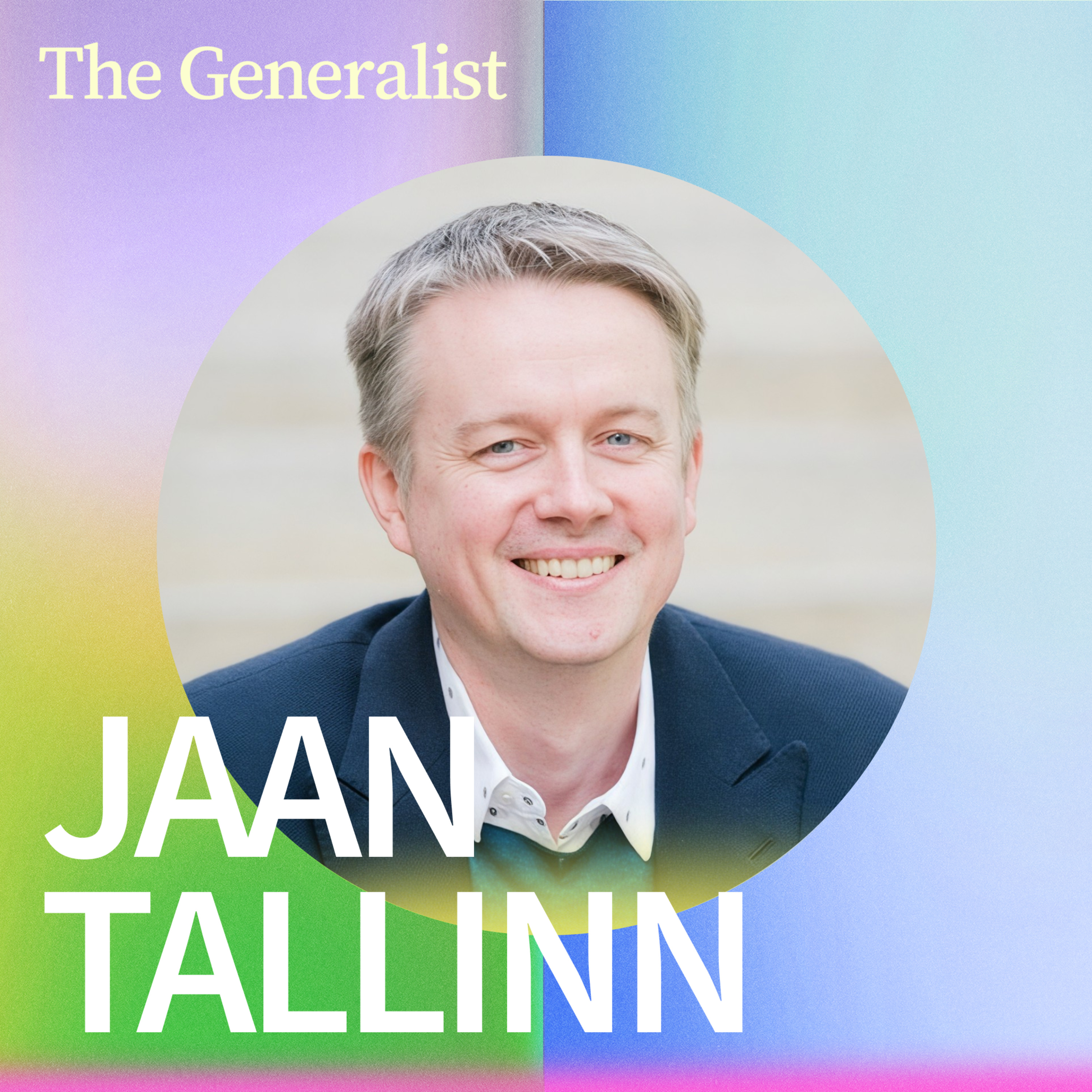
June (Joon Sung Park), co-founder and CEO of Simile. Background: trained as a painter; later studied agent-based models. As a Stanford PhD student, co-authored work including a 2023 paper using 25 AI agents in a virtual town (GPT-3.5-era) and subsequent research building higher-fidelity digital twins from interview/behavior data. He previously worked on SimReddit (2021) to simulate online communities for social computing.
People can be modeled with 85%+ behavioral prediction accuracy; simulations let companies query a niche population repeatedly after one data-collection effort; emergence can be studied by moving from single-agent to multi-agent/societal simulations; trust requires transparency, validation benchmarks, and predicted-accuracy calibration.
Thomas Schelling’s checkerboard segregation model; a pharmacy chain’s question about why patients stop pills; banks changing fees; CEOs rehearsing earnings calls; Simile’s customer workflow like CVS testing decisions on simulated customers.
Written by AI. May contain mistakes.
Discussion about what Simile aims to achieve in simulating human behavior.
“June, I've been super excited about this conversation because I think you're building one of the most interesting companies I've ever imagined.”
June discusses the predictability of humans and how social interactions can lead to emergent phenomena.
“The implication of simile is in a sense that humans are extremely predictable, right?”
A look into the history of simulation research and Thomas Schelling's contributions.
“But this is also what gives us the ability to explore different causes and mechanisms.”
Discussing the complex societal issues Simile aims to tackle, like climate change and democracy.
“Of course, 1970s, we had the limitation in models, so these were deterministic models.”
June shares his personal interest in simulation and its philosophical implications.
“When did you fall down that rabbit hole?”
The conversation shifts to the role of foundation models in enhancing simulations.
“So that's when I initially started to learn about this topic and did a very brief stint as a RA in a lab that tried to go deeper into the agent-based model field.”
June reflects on science fiction influences, particularly Asimov's work, regarding simulation.
“In which case, this can actually be the fundamental building block that we had missed in the past for a building simulation.”
A discussion on psychohistory from Asimov's Foundation series and its application to simulation.
“The sort of direct comparison for me feels like psychohistory and Asimov.”
Explore the implications of AI explainability and its influence on predictions.
“we're all grappling with in AI at the moment which is explainability.”
Learn how a prank led to a profound journey in art and self-expression.
“It's slightly related and also interesting version of this is, imagine down the line, many different parties would have powerful simulator.”
Discover how the artistic process mirrors the principles of simulation.
“The sort of style that you studied under, as far as I understood, was sort of like, you studied under this very well-known hyper-realistic painter, which, you know, it's so real.”
Unpack the fleeting nature of memory and its representation in art.
“When you think about a painting, a portrait that does evoke something beyond just the fidelity of the picture, what comes to mind?”
Examine the importance of an artist's intent in their work and simulations.
“capture the fidelity even better than any human can in some sense.”
Gain insight into how Simile operates and serves its customers.
“As a painter, I used to work on really large scale paintings.”
Learn about the stages involved in creating user-driven simulations.
“When someone comes to Simile, what do they come for and what does that process look like?”
Learn about the different layers of simulation models and how they work.
“But then it can be something as complicated or as more involved as things like a real product.”
Explore how real human subjects are used to inform simulation models.
“I did ask our simulator to give me a very brief preview of what this conversation might look like.”
Discover effective interviewing techniques and their applications in research.
“For instance, we actually ask people, hey, tell me the story of your life.”
Discuss the challenges of reaching specific demographic groups for data collection.
“And then really fine tuning our process to make sure that we ask the fewest number of questions possible, but still get the most generalizable understanding of these people.”
Understand the importance of trust and transparency in simulation data.
“But we create simulations of them once, then they can ask them any questions.”
Learn how predictions can be validated against past data and studies.
“This can help people calibrate how much they should rely on this particular prediction.”
Learn how external and behavioral data can create accurate simulations of individuals.
“Can we try this in simile and see if we get the same results?”
Discover how creative influences shape simulation technology and its applications.
“It was very much an homage or inspirations from that show.”
Understand how simulations can aid personal and organizational decision-making.
“The use cases they might see are everywhere from, well, what is the better way for me to, let's say, get better at public speaking?”
Examine the SimReddit project and its insights on social interactions in online platforms.
“but we couldn't convince ourselves that this was going to be useful.”
Learn about surprising outcomes from simulations that impact broader business strategies.
“One of the things that was interesting to me about that is you were sort of simulating the fail states of a company, right?”
Explore the potential of simulation technologies in the finance sector and decision-making.
“Are you sort of, I could imagine a version of it where you're like, I don't know, once a week, I give a 30 minute call to my simulation in a sense and let it increase its fidelity.”
Exploration of how predictions can shape investment strategies and the role of technology in financial decision-making.
“Similarly, of course, I was founded on the premise that we want to help people and society make the best decisions possible.”
Discussion on how simulations can inform AI models and improve decision-making processes.
“Is it the rare moments of human intuition being somehow a little bit actually better than the simulation that make the difference?”
Insights into the qualities and superpowers that make effective team members in innovative environments.
“I'm sure that's not going to be a$10 session of simulation.”
Exploring the balance of being proactive and optimistic in leadership roles.
“Another one here is people with contradicting superpowers.”
Discussion on impactful books and art, reflecting on personal and societal growth.
“I am deeply inspired by Thomas Schelling, the work and the career he led.”

Get the gist, explore an idea or ask about something said.
 Claude
On The Generalist, what are the key points of this episode?
Searching your listeningAutomatic transcript. May contain errors.
0:00If you can predict the future, then you could be the world's greatest hedge fund ever. So it's a really interesting question.
0:06Joon Sung Park: Simile is an applied AI lab that basically allows you to predict people's behavior at the level of individuals and populations. You can predict people's behavior with 85 % plus accuracy. And the ultimate goal is to simulate all 8 billion humans and predict the future in some sense. Yes, it is about representing people in our society and also try to understand the interaction between them. A lot of the companies that we work with, they want to talk to their niche population all the time. But they can maybe, if they're lucky, get to talk to them once. But we create simulations of them once, then they can ask them any questions.
0:39Joon Sung Park: So this is actually the strength for simulation. So the problems that we would want to go after is really ask questions like, well, how to solve climate change? Can we actually find out the signals for democracy that's about to collapse? So this is what social scientists would call wicked problems. I often, before interviews, simulate how the interview might go. What are some of the interesting questions that you might ask me today? Did you simulate this?
1:11A pharmacy chain wants to know why its patients stopped taking their pills. A bank is about to change what it charges. A CEO is preparing to walk into an earnings call. None of them know what will happen. But Joon Sung Park just might. June is the co-founder and CEO of Simile. In 2023, as a Stanford PhD student, he published a paper that put 25 AI agents in a small virtual town and watched them throw a Valentine's party. Simile is that idea grown up. Digital twins of real people, built from hours of interviews, that let companies like CVS test a decision on thousands of simulated customers before making a real one.
1:52That pitch has helped Simile raise more than$300 million, and reach a$2 billion valuation. In this episode, we discuss June's past as a painter, why the end market for a simulation company might be a hedge fund, and what happens to strategy once everyone can see the future. I'm Mario, and this is The Generalist. June, I've been super excited about this conversation because I think you're building one of the most interesting companies I've ever imagined. So maybe we can just start very simply.
2:23Joon Sung Park: Tell us about Simile. So Simile is an applied AI lab that is creating a foundation model of human behavior that basically allows you to predict people's behavior at the level of individuals and populations. We then have an amazing product team and engineering team that takes the core foundation model into a product that allows our users to ask any questions they might have, whether it's their customers at large institutions or their environment and so forth. And the ultimate goal is to simulate all 8 billion humans and predict the future in some sense. Yes. It is about representing people in our society and also try to understand the interaction between them.
3:05Joon Sung Park: That when we come together as a group of people, what kind of interaction will we see? And what kind of causal mechanisms can we observe? Those are the core goals of simile. The implication of simile is in a sense that humans are extremely predictable, right? Right. I'm interested in whether you find that to be true in your own life. Do you find that the people you know actually surprise you a lot of the time or actually you think you could simulate them extremely well? What I do think is the case is I do think we can learn about people. What we've noticed over time is that people are made of fundamental building blocks.
3:42Joon Sung Park: The core nature that they contain seem to be fairly consistent, though we can learn about them. So for instance, if I have a close friend that I've known since high school, I know what kind of food he likes, but I also know what excites him or what makes him sad. These are the fundamental natures. So one of the core thesis is at the level of individuals, we can pay attention to these kinds of signals that people might have and learn about what would excite them, what is the meaning they seek, and so forth. Now, an exciting part is then you bring in many of these people together in a room, and you then see an amazing emergent phenomenon as well.
4:18Joon Sung Park: And that's actually much harder to predict in some ways. But this is also what gives us the ability to explore different causes and mechanisms. So had we done this, if we had this policy, would it change the world in certain ways? Those are the kind of exploration that we would want to do in simulations. When you talk about emergent phenomenons, what does that look like when you start to bring these people together? Emergence actually goes back all the way to complex systems and perhaps even the early days of simulation research. So in many ways, the simulation that we're creating with generative AI models is a revived form of the research that had gone in for many decades.
4:54Joon Sung Park: But if you look back to 1970s, one of the scholars that I respect the most is Thomas Schelling. He was a behavior economist who created really the field around what we called agent-based models. and he was really one of the first simulation researchers in computation. The model that he became known for was, of course, simulation of the era, where he cares deeply about the societal problems of the era. In the 1970s, it was the ratio of segregation. The model he created was the model of segregation that basically made this point. Imagine for a moment that you have a checkerboard. On this checkerboard, there are red dots and blue dots.
5:33Joon Sung Park: These are, quote-unquote, agents in the system. Now, these agents, because it was back in the 1970s, were extremely simple in their primitives. They had one rule. Every game iteration, they would look around its corner and see how many of its neighbors are of the same color. If the ratio drops below a certain point, then that agent would decide to move to a random location. The point that Thomas Schelling was trying to make was, in our society, we believe that racial segregation happens due to overt racism that people held within them. But that's actually not the case. People can have very subtle preference towards living with people of the same color, in no way extreme or overt.
6:16Joon Sung Park: But that simple motion would still be enough to generate complete segregation of the society. So that's an instance of emerging phenomenon, where if you look at any individuals within the society, you would not imagine these people to be racist. However, the society's trends towards being segregated, that was an unexpected finding. Now, of course, that was early days of simulation research. Thomas Schelling goes on to win a Nobel Prize. But now the opportunity that we see is, can we create simulation that is of much higher fidelity than what Thomas Schelling used to do? So of Of course, 1970s, we had the limitation in models, so these were deterministic models.
6:59Joon Sung Park: But now that we have general-to-be-eye model that actually encodes a lot of human behaviors, instead of saying red dots and blue dots with these simple rules, can we actually put them in a much more realistic environment? So the kind of problems that we would want to go after in the most ambitious side of the scientific research is really ask questions like, well, tell me how to solve climate change. Climate change is a really interesting problem because it has so many actors with competing incentives. So this is what social scientists would call wicked problems. How can we resolve those tensions?
7:30Joon Sung Park: Yes. Can we actually find out the signals for a democracy that's about to collapse? It's these kind of problems that we'll be investigating with the next generation of simulation technology. When did you first become acquainted with shelling and simulation work? When did you fall down that rabbit hole? So I actually grew up as a big science fiction fan. So, you know, growing up, I watched, read a lot of science fiction. And one of the core things I always resonated with was this idea that in any truly advanced civilization that gets depicted, you really see two pillars of scientific progress. One is some form of AGI and the other is simulation.
8:10Joon Sung Park: And I always thought that was super fascinating. And for whatever reason, I was always more drawn to this idea of simulation. And I also think a little bit more philosophically speaking. So I initially got my training as a painter in art. And I think it was perhaps a little bit related to that passion as well. But simulation, when done right, it's a little bit like painting a portrait of the society. Yes. So that we can learn about the society and so forth. So I always had a lot of interest in the topic of simulation. But then during college years, I got acquainted with a topic around agent-based models.
8:47Joon Sung Park: So that's when I initially started to learn about this topic and did a very brief stint as a RA in a lab that tried to go deeper into the agent-based model field. And then I sort of forgot about it for a good number of years. And when I started my PhD at Stanford, so this was 2020, Jupyter 3 was just about to come out. And there was a lot of chatters around the scientific view that this new class of model is going to be a powerful new mechanism for understanding people and also for AI. So during that first year, myself and two of my co-founders, Michael Bernstein and President Leung, wrote a paper called Opportunities and Risks of Foundation Model.
9:30Joon Sung Park: So this was in particular a project that Percy led at Stanford, the Conde Tum Foundation Model. but as we were working on this project we started to really think about well imagine for a moment the foundation model and these generative ai models will be an important part of our technological landscape what's going to the killer application of the technology yeah and we realized that it might be simulation because these models have ingested so much of human behavioral data that we noticed that if you poke at models at the right angle we can actually extract a lot of human behavior. In which case, this can actually be the fundamental building block that we had missed in the past for a building simulation.
10:12Joon Sung Park: So that, when we had that realization, I sort of connected that with the agent-based models that I used to be fascinated by and said, can we create the next version, the next generation of agent-based models, and maybe even call it generative agent-based models. And that really became some of the starting point for thinking about this topic and area. You mentioned the inspiration from sci-fi when I was studying simile. The sort of direct comparison for me feels like psychohistory and Asimov. What were the inspirations for you when you think about what you were reading as a kid or that you reflect on now?
10:49Joon Sung Park: Yeah, so Foundation Series is actually a fantastic example here. What really inspires me from the science fiction is not only the existence of this kind of technology, but also shape of this technology. So if you look at simulation technology today, at least the initial building blocks are basically technology that allows you to simulate the results of studies or policies. Yes. So imagine that we have a behavior study that we want to run, market research we want to run. These are some initially sort of good use cases that people start with on day one. They would come in with a question. But what is interesting is the arc of this technology is much more proactive.
11:31Joon Sung Park: And I can describe what that means from the lens of Asimov. So if you look at the Foundation series, here's the premise for those who may not be familiar with this story. So there's a galactic empire that's much more into the future than where we are right now. And a group of scientists realized that this galactic empire is going to collapse in a thousand years. And they are basically tasked with figuring out what is the way to reduce the following unrest after the collapse of this empire. And they realized that there was going to be 30 ,000 years of unrest. And they asked, how can we reduce it to 1 ,000 years?
12:12Joon Sung Park: So they asked their simulator basically this question. Yes. What is the best way for us to ensure that the social unrest is kept at 1 ,000 years? And if you look at the shape of this technology, the psychohistory, the simulator that they're thinking about, what they're giving this tool is an end state. They're not giving them a question. They're giving them a goal. Here is the end state that we want to get to. Yes. It's up to the simulator to create the multiverse of possibility and basically suggest, maybe this one, maybe using the term from Dune, the golden path for getting to that particular end outcome.
12:50Joon Sung Park: This is the beauty of simulation. because this is possible for a simulation because we care deeply about multiverse creating these different possibilities, exploring into the future, and also understanding the causal mechanism. Had we done this, how would that have influenced the people's behavior, future? The one last thing I'll say to this point is the beauty of this way of exploring is sometimes the first steps or even some of the steps that we'll have to take to get to that end outcome that we want can be surprising. If you look at this series, they realize that the right first step to mitigate the period of unrest is basically to send the scientists who's been saying that there is going to be a collapse of galactic empire into exile.
13:35Joon Sung Park: The most counterintuitive solution, you are about to send the people who are experts in this away to some remote part of this galactic empire, and that's going to be the solve. No one would imagine that. but turns out at least in this series of course it's a science fiction but at least in this series the author explores whether that actually is the right first step and that is the power of simulation at its height. I love that example because it also sort of speaks to something we're all grappling with in AI at the moment which is explainability. There are moves that you can you know an AI simulator can make in a chess match that the best players in the world might not see or even might not grok why that's the right choice.
14:18And, you know, it's the same sort of idea here around exile. One of the axioms for psychohistory is this idea that you shouldn't reveal what the prediction says. Otherwise, it sort of influences the actions of the population. Do you think that applies for simile at scale? You know, it doesn't maybe matter right now when you're sort of taking small populations and asking, you know, for preference questions, for example, but do you think that that same principle ends up holding?
14:45Joon Sung Park: I do think this is definitely a part of questions that we do need to wrestle with as similarly. It's slightly related and also interesting version of this is, imagine down the line, many different parties would have powerful simulator. How do they interact? And if they're based on the same model, how do those interact? Could it be the case that in the future, people will want to build their own specialized simulators. Yes. That is for their own institution, and that is going to be their competitive advantage. And that, I actually do think is the case. Yes. So one of the things that, of course, Simile serves today is building actually a more specialized, fine-tuned version of simulator for different institutions that we work with.
15:28Joon Sung Park: But I think these are all part of these questions of what happens if people know the results of simulation and vice versa. You mentioned that you trained as a painter and for people who maybe hear that and think you like to paint, you're like an extraordinary artist, actually. When I was looking at your work on your website, I was like, oh, this is at a very, very high level. This is someone who has clearly devoted a huge amount of time to this and has remarkable ability. When did that arise for you? Was that something you sort of naturally gravitated towards? Was it something that, I don't know, one of your parents sort of guided you towards?
16:07Joon Sung Park: So I did always like craft. The act of creating something that people can interact with is something that I was always drawn to. And the way I actually got to art is actually a little bit more coincidental. So it turns out when I was in high school, I lived in a dorm. And this dorm had a very interesting stairway where there was a very quick turn. and one night when everyone was asleep, I for whatever reason thought it would be really funny and just, you know, light prank that if I can draw a really realistic pair of eyes on the wall and basically as people go up, they see it and they get slight jump scare and will have good laugh about it.
16:50Joon Sung Park: I didn't know how to draw. So what I did was I actually that night decided to watch a good number of tutorials on how to draw a really realistic pair of eyes from YouTube And I spent three, four hours from midnight to maybe 4 a.m. drawing this on the wall. Next day, I would basically hide in the corner and just watch my friend come up to it and interact with it. And I thought that was really fun. I personally got something out of that experience that I have created something that people are reacting to. And in some ways, they're also finding some kind of value and meaning out of it. That particular interaction with the society and with the community, I actually thought was quite compelling to me.
17:33Joon Sung Park: And what ended up happening was one of the teachers at the school who was one of the proctors at the dorm saw that. And first he was like, okay, well, you're not supposed to do this. This is graffiti. But then he said he was an art teacher. Then he said, now you have to come to my class. And we gradually realized that this can actually be a professional career. So that's how I started this journey. Wow, that is such a great story. The sort of style that you studied under, as far as I understood, was sort of like, you studied under this very well-known hyper-realistic painter, which, you know, it's so real.
18:12You know, you can't imagine how real it looks in a way, but also has this sort of, in some places, sort of surreal elements. You mentioned there is this sort of connection between simulation and the art. It seems very clear that you love this process of making something so realistic that you almost can't tell the original from the synthetic. Where does that come from? Where do you think that interest stems from in you? What intrigues you about that? It's interesting.
18:40Joon Sung Park: Of course, my scientific training has really gotten done now in AI and computer science. But for a computer scientist, I am actually somebody who's deeply interested in people. I am intrigued by what motivates them. I'm intrigued by what makes them feel certain emotions. I'm also intrigued by what are the elements that empowers them. And one thing that I realized about the greatest painters, and I worked a lot with figures, and a lot of the best portrait artists, what's unique about them is their paintings are not merely realistic, but it says something about the subject. It teaches you something about the subject, something that's not apparent, but something that's hidden away that gets conveyed at a more emotional level.
19:35Joon Sung Park: those are the portrait artists, those are the painters that I respected the most. So in many ways, simulation, when done right, actually is that. Simulation isn't, of course, reality. It is all within computation. And it is, to a large extent, an approximation of the world that we live in. But when done right, the core ethos here is that we can reveal something that is fundamental about our individuals, our society and community, so that when we look at it, we can learn something about ourselves. And that, in the end, can help us teach what is the best way to collectively live in this world. When you think about a painting, a portrait that does evoke something beyond just the fidelity of the picture, what comes to mind?
20:26Joon Sung Park: so when I was a painter some of the folks that I was heavily inspired by are artists like Gero Richter so he's a German painter has had a very interesting career where he originally started as a hyper-realist painter but he had a very interesting technique where he would take actually photographs so he's now he was active throughout his career and he's still alive but he was active for many decades and when he was making his early career, the idea of photograph and photograph that were getting printed on newspapers and so forth was an active area of interest for artists. But he had a very interesting take, which was he would ask his viewers or his friends to send him photographs they liked.
21:14Joon Sung Park: It can be literally cut out from newspaper. It can be personal photographs that people have taken. And then he would, in a really hyper-realistic way, paint that. but he would fade it out. And in a few different ways, he would fade out the color. So a lot of it actually was black and white or it had gray gradation, but it didn't have color. And he also did this exercise where after he makes this wonderfully accurate painting, he would smudge it in one direction. It's almost like, you know, something went wrong during the printing process and it got smudged. and I always interpreted that as sort of this idea that we want to capture something that's real, that's now as accurately as possible.
22:03Joon Sung Park: But as the moment goes on, things are fleeting and certain emotions and memory does fleet away. And I thought that was really interesting observation where nothing that we capture is permanent, that things are changing. So what are the core essence of that individual that we can really capture. And in many ways, our memories are not perfect. What is the core emotion that you actually still remember after things have faded away? I thought that exploration was actually quite compelling. So a lot of my work actually got inspired by some of the work that Gerd Richter has done. But of course, I did get a lot of influence from American realists who were working on the East Coast.
22:45Joon Sung Park: That's where I initially got my training. So it was a mix of those inspirations. That Richter anecdote is so interesting, I think, also because it makes me think about the role of the artist in juxtaposition to a machine, which is obviously something we're all wrestling with more and more now, which is, you know, the machine can capture the fidelity even better than any human can in some sense. the role of the artist is maybe not to smudge, but to show that there's a human element also there. I think about probably because of my background with that in writing. Right now, it's very clear AI is not as good as the best human writers, but that will almost certainly happen.
23:26That seems very possible. And so what are the smudges or the little notes of transients that show up there? I imagine you want sort of the poet's mistake to be in there almost.
23:38Joon Sung Park: To this point, though, in many ways, also this much, and the artist's role in this ecosystem also comes from the framing. What the artists decide to care about, what they decide to put in their frame, I think matters a tremendous amount. Yes, intent. Intent, intentionality in art is extremely important. Yes. Why are you interested in this? Can you express this beyond just the painting itself? This is actually a huge part of the artist's job, as I'm sure you are more than familiar because this is clearly in your sort of a straight lean in your profession. Finding story that's worth telling, finding elements and phenomenons that's worth studying.
24:17Joon Sung Park: That's the job of humans. because at the end of the day, we do this because we care about them. So as an artist, the kind of things that I would do is before I actually embark on the process of creating paintings, a lot of the work that actually goes into the process is actually building up that emotional rigor in caring about a subject in the first place that I would actually want to devote my time into actually working on the subject. As a painter, I used to work on really large scale paintings. For large scale old paintings, each painting could take up to half a year to a year. Wow. It's a commitment.
24:50Joon Sung Park: Wow. So when I felt like I was the most successful, there was this deep emotional connection with the thing that I was painting. It was maybe a location that I practically fell in love with when I was traveling. Or it's a very particular subject in everyday life that I found deep interest in, that I decided it's actually worth highlighting in this world. That observation, that framing, does come from humans. This is also the case in simulation because it's at the end of the day, we can simulate anything, anyone, but it is up to the human observers to decide who do we need to simulate, what phenomenon do we need to explore, and what are the solution spaces that are the right thing for us to think about.
25:35Joon Sung Park: That's all human researchers. Emotional rigor is a phrase I have not heard before, but that feels very profound, actually. I love that phrasing. I think you've said before that, you know, in some sense, every portrait is also a portrait of the artist. Does that mean that every simulation becomes in some way a simulation of yourself? Do you recognize that, you know, your hand in these different mini people? One of the sort of strange things I realized was portrait artists especially have this secret where no matter who they paint, even if you're a realist painter the end outcome sort of looks or at least resembles something about the painter themselves, not their subject it's one of the secrets of the painting community.
26:20Joon Sung Park: I think this is the case in many ways of the simulation that we create but it's much more collective because when we create simulation, it's not purely about creating these synthetic personas we actually go talk to real people we get their consent we get their buy-in, they know how the simulation is going to be leveraged. But it's really a collective process of organizing a large group of people who find this act to be interesting and potentially worthwhile. And when simulation is done right, we represent them. That there is something in this simulation, even though we're trying to simulate many people, there's something about this simulation that does represent or reflect the core individuals that we have talked to in this process.
27:04Joon Sung Park: Very much the case. This is a good reminder for me that, you know, when I was talking to some folks in preparation for this podcast, one of the things they said was, don't forget to really ask about the business because the philosophy is so interesting here that it can be easy to forget that, you know, there is something that is working extremely well here. And, you know, it seems like you have been through some very rapid growth. So maybe to get more granular of how this sort of tangibly works for folks, maybe you can walk us through a bit of a customer journey. When someone comes to Simile, what do they come for and what does that process look like?
27:39Joon Sung Park: So in many ways, Simile is a company that is providing simulated panel of people. Today, the day one, the act or the user flow is actually a lot like working with a real panel company. So imagine a customer comes in and they tell us XYZ or the population that we want to deeply understand. What Simile then does is we create the simulation of that population. we load them onto a platform and basically it's basically a model layer that we generate and then we make that expose via product to our customers they can basically query this model any number of times and the input to this model basically is two things who wouldn't the population that we have determine do you want to talk to so you basically set the filters and then you give it an environment the environment can be something as simple as a survey question or behavioral experiment.
28:34Joon Sung Park: But then it can be something as complicated or as more involved as things like a real product. Imagine you want these agents to come and use your product for 10-15 minutes and tell you what they think about it, or even policies. Imagine we have this new strategy, how will people perceive this? How will they react? And really the arc of simulation, I see this in four stages, goes from individual level static simulation. This is akin to running surveys, behavior experiments. You're asking individuals what they think about X right now, but this then goes into more individual agent in a dynamic setup where they cannot explore some things like product and so forth.
29:16Joon Sung Park: You're basically adding the temporal dimension, but then this goes into that multi-agent simulation and even societal simulation. At a multi-agent simulation level, we sometimes simulate your earnings call often before interviews. I also simulate how the interview might go. What are some of the interesting questions that you might ask me today? And just for me to prepare myself a little bit in terms of what the conversation might look like. And of course, down the line, here we're embedding these multi-agent simulation in a rich environment. So if you want to actually simulate the entire market, that is ultimately where this technology goes.
29:53Joon Sung Park: Our customers today have access to the first three layers of these simulations. Did you simulate this? I did ask our simulator to give me a very brief preview of what this conversation might look like. Was there any question that you were like, huh, I would not have thought to prepare for that? It did suggest that we might actually go a little bit deeper into the philosophy and artistic side of this story. And I do think it likely has. And I do give as input the background of the person I'd be talking to. And of course, you know, I gave the information that you are a writer who has worked on these different pieces.
30:33Joon Sung Park: Yeah. And I think it sort of made a connection. So there's a mini sort of Mario simulator in there saying this guy, he's a writer. He's going to ask you about Richter and all these sort of things. That's so fun. Wow. Okay. So interesting. To take it back to sort of the customer side of things. I think the part that maybe people might not realize is that you're actually going out and talking to these people in the population, right? You've automated the collection, just like another panel company might do. And it's really guided by real people. Yes. You know, an example is I'm making this up, but a juice company wants to target a new demographic.
31:15They want to talk, you know, they want to win the 20 year old audience. Let's say the young, the younger generation. You would then in an automated fashion, go out, talk to 5000 people in that demographic, gather that information and then feed that into the model such that the juice company can then go to the model and say, OK, you know, does this. marketing campaign work better than this one? Does this pricing strategy work better than this one? Is that sort of roughly the right idea?
31:42Joon Sung Park: That's roughly the right mental model. But what ends up happening is, so across our partnerships with different panel providers, we interestingly have a very fruitful strategic partnership also with Gallup, which is one of the most respected panel companies out there. So through these partnerships, we have access to about 30 to 40 million real human subjects across the globe. On any week, we are talking to tens or hundreds of thousands of real humans. Wow. Now, the questions we ask them, however, isn't quite so narrow or it's not perhaps even directly related to the question that we want to answer in research.
32:24Joon Sung Park: Because in many ways, we want to expose this model to our users who will then ask any questions they want to ask. So in many ways, the goal here is to learn something that's much more fundamental about the people we talk to. For instance, we actually ask people, hey, tell me the story of your life. Yes. Where did you grow up to? What do you care about? And then we would also go a little bit deeper into certain verticals if we know that we will be serving that vertical. So imagine if it's a CPG company or imagine it's a food and beverage company. We might ask, hey, historically, what kind of beverages did you like?
32:59Joon Sung Park: Do you drink? Do you not? We will ask those kinds of questions. And we'll also ask you about your experience around that question. When was the time you enjoyed the most when you were, let's say, drinking or eating up with your friend? Those kind of things. So we want to get a more fundamental understanding of who that person is. And that's ultimately what powers simulation. How many hours do you need to get to know someone? What initially became the foundation for a simile, although the technology actually has moved significantly away from the original papers, was back in 2023, we had a paper called Generative Agents that introduced a small game town with 25 agents living in it.
33:39Joon Sung Park: These were basically agents or NPCs in this small game town that were made with GPT-3.5 back in the day, paired with memory planning and reflection architecture. These models were interesting because they were one of the first introduction to the idea of creating agents using generative AI models. But then that's the one that really kickstarted the simulation. But the follow-up to that paper for me was how can we create these agents to be more realistic? And the way we went about doing that was actually collecting a lot of interview data. So I would actually recruit about a thousand or so real human subjects from the U.S.
34:18Joon Sung Park: that's made to be diverse as our first initial pilot study, bring them to a lab. And we basically did two hours of interview and behavioral data collection. And then we used that to train individual agents that basically became the digital twin of the source individuals. I would then send the people away for a couple of weeks and then bring them back. And when they're back, I would ask them to complete behavior studies, surveys, experiments. And that was the paper that for the first time showed that we can actually predict using these digital tools we created. We can predict people's behavior with 85 % plus accuracy.
34:55Long answer, but here the idea was two hours. Two hours can be very effective.
35:01Joon Sung Park: Of course, one of the things that Innovation Dissimile works on is how can we make this be even more efficient? So today we roughly do about 15 minutes to half an hour of data collection per person. And really the beauty here is actually knowing what questions matter the most. Yes. And then really fine tuning our process to make sure that we ask the fewest number of questions possible, but still get the most generalizable understanding of these people. That is so interesting because you're really in a way, yeah, you're doing the work of an interviewer. You know, I've been spending time thinking, how do the best people ask questions?
35:37and studying different interviewers. One of the people I was looking at was Terry Gross from Fresh Air. She does these very warm, but also very interesting interviews. And your first question of tell us the story of your life is almost exactly the question that she often starts with or recommends as an icebreaker of just like, tell me about yourself.
35:58Joon Sung Park: Somehow these are just simple things that actually give people the space to tell you a lot. It is interesting. Where we got this inspiration for actually running interviews with people actually was through podcast. So after the original Generative Agents paper back in 2023, I had to go on actually on a lot of podcast. So I would actually talk to these interviewers. And after an hour, I realized, actually, these people know a lot about me. This is actually a very effective way of learning about people. And that's what inspired those to say, well, we want to learn about people, then let's talk to them.
36:36How do you deal with situations where the population that you're after is not readily available? Like if you are working with a customer that wants to know if something will appeal to Fortune 500 CEOs, that's a group that is maybe hard to reach.
36:50Joon Sung Park: So right now, of course, there are populations that are truly hard to reach. And this is where we are actually curating our own bespoke panels of experts. So this is a panel that we actually curate at Somali and form special relationships with individuals. But the ethos here actually is we have large enough panel set that we can get to individuals that we want to get to most of the time. Now, the tricky part, of course, is how frequently can we get to them? You can actually find a way to talk to, let's say, very niche population who have very limited amount of time available to them once. that can happen.
37:31Joon Sung Park: But the question is, can you do that frequently? And one of the value proposition for a simulation actually is this is where simulation is actually the most useful in many ways. Because a lot of the companies that we work with, they want to talk to their niche population all the time. But they can maybe, if they're lucky, you get to talk to them once. But we create simulations of them once, then they can ask them any questions. So this is actually the strength for a simulation. I wonder if this is true, but one of the tricky things I could imagine about the product you're selling is that it might be hard for people to trust the result that you give them.
38:07Is that true? How do you sort of convince people that, hey, you can act based on the information we're giving you and you're probably going to make a good decision here?
38:16Joon Sung Park: Right. I would actually say trust is one of the most important piece of this industry and this field. It's actually a little bit like how the security industry actually operated too. In security industry, if you look at companies like Wiz, you're fundamentally trying to prevent things that has not happened yet. So people have to believe that you are good at doing that to really be a part of the platform. The same thing for simulation. We are fundamentally trying to simulate things that has not happened yet. So what is the way for us to bring them along in the journey? And what we've learned is a couple of things.
38:51Joon Sung Park: It's not just about accuracy. The accuracy is of course the table stake and we're very upfront about here's the validation we run, here's the benchmark, this is how what we do compared to all the other models, that's how we start the conversation. But what matters perhaps more is people forming a very clear mental model of how this technology works, what data goes into this technology so that even if they do not necessarily know whether this works, when they put together this mental motor of how this works, they can sort of imagine, ah, that does make sense. Of course, that would work. So if you think about, let's say, consulting, it's very much, like, they operate very much in this way.
39:34Joon Sung Park: Consultants come and they give you an advice that X, Y, Z will happen. Therefore, you should act in these ways. The users do not necessarily think, okay, they predict the future. If they do, they would obviously be in different business. But what they do believe is, well, these consultants put together a very smart group of people, have done highly reasonable things so that to the extent that any given group of people can have a good insight into what we should do, this is the best evidence we have. That's how we start the conversation. So for a simile, what does that mean? It means being very transparent about the sources of data.
40:10Joon Sung Park: Here is the set of data that we care about. This is how we look at curating the right data set. It includes behavior. It includes counterfactual behavioral data. It also includes the interview, like the one that I just mentioned. And then we take this data, process it, and put it into a model that can basically reason about this data and provide citations. When we create simulation, it's not just about us creating random predictions, but we actually say, real individuals said XYZ things on the basis of these evidence. We believe this is a good simulation. and then the last piece that's also very important is we provide a model of predicted accuracy.
40:51Joon Sung Park: So this is a model that we train internally and has been a very exciting project. We recently published a blog post that's more technical on this topic but this is a model that is jointly trained that is basically looking at the hidden layers of the core foundation model that we train that is trying to understand given the data and the question that we have gotten how confident is our model And we show very strong correlation between the actual accuracy and the predicted accuracy. This can help people calibrate how much they should rely on this particular prediction. Have you ever tried, or is it possible, to sort of backtest these predictions?
41:28Like, you know, could you go back and say, would this population like the first Tesla? And then would this population like the first Cybertruck? And you can sort of say, well, actually, you know, people were very polarized about this, but they really loved this. And that actually, you know, was the case.
41:43Joon Sung Park: So this happens for almost every deal. So what we do is, of course, our customers have run a lot of studies internally. They know the ground truth of the world they live in. So during the first conversation, they'll actually say, hey, here's a study we ran. Can we try this in simile and see if we get the same results? And so then you can say, okay, it's of equivalent accuracy to a traditional panel. But by the way, we can also query this endlessly in a thousand different directions. To what extent is external information sort of sufficiently useful to create a simulation of someone like, you know, you, if you were never interviewed by a simile, would the data that you've shared on a podcast be enough to simulate you well?
42:31Joon Sung Park: It can be a very good starting point for simulating that person, right? So a lot of writers, a lot of public figures, we can actually get enough data to at least create a persona that does resemble them. But also in many ways, the simulation that we want to create is fundamentally more behavioral. It's not just what people say in public, but it's actually what they do when they're not seen by anyone. That data is often hidden away. So the external data is useful for a step, but it's imperfect. How do you get the hidden away data? So in a few different ways, for people, we actually do collect a lot of behavioral data.
43:08Joon Sung Park: And the behavioral data, for instance, that we might collect are things like a transaction data. That's a good starting point. Now, where a transaction data does fall short, however, is it is fundamentally observational data. It tells you what people have purchased. It does not tell you why they have purchased. So if you want to create a counterfactual, imagine this person who used to go to Starbucks every single day chose not to go to Starbucks today. Why did that person not go? Is it because they got sick of sweet drinks that they were getting? Or was there a car accident? It's very hard to know.
43:44Joon Sung Park: So if you want to know the counterfactuals, then you actually do need to set up either interview or experiments that does occur naturally. So we do a lot of those activities where what are the natural experiments that we can set up to deeply understand people's reasoning, or we talk to people. So we do combine this with behavioral data, with interview data. Another thing that we do, of course, is we run randomized controlled trials internally. So this one is with obviously people who have consented to partake in the studies with full understanding of the studies context, but we basically expose people to different conditions of options.
44:21Joon Sung Park: And we make the stakes real. Imagine we have a web store that they're going to come and hypothetically buy something. At the end of the study, we'll actually send them the item. So the study is real. You must have seen the rehearsal. That sounds so similar to something that Nathan Fielder would want to do. How do you get Nathan Fielder to make season three on Simile? Because that feels like that would be the most interesting possible version of these ideas. Did you get ideas from that show or inspiration in some ways? You know, we get inspirations from all sources. In fact, after we had written the original General Division's paper, my co-founder, Michael, wrote a follow-up paper whose title actually was Rehearsal.
45:09Ah, no way. It was very much an homage or inspirations from that show. There's another book that I always think of when I think about things in this space called Remainders. Have you ever read that? Not yet. Tom McCarthy, I think is the author's name. And the sort of premise is a man goes through a car accident where he gets massive amounts of money as compensation, but has lost huge amounts of his memory. And so he sort of painstakingly recreates in huge detail little things that he can remember or wants to try and recall. And, you know, the set for it becomes sort of increasingly grand. You know, his ambitions grow.
45:52Anyway, it's another one that's sort of in that rough zone that is very interesting. When I think about the sort of second, third, X number of acts for this company, you can let your imagination spin almost infinitely. One of them that I could imagine is, you know, in my early years, I wanted to be a lawyer and I did a lot of public speaking and mock trial. I imagine jury selection, for example, would be something that is like extremely applicable here. Have you started to see that?
46:19Joon Sung Park: We have in the legal spaces, policy spaces, I think the role that simulation can play is actually quite deep. But this is something that we are obviously quite inspired by. And we do see that opportunity. What about in the personal space? Because when I think about the most impactful decisions in your life, picking a partner is one of them. Is there a world in which Simile becomes sufficiently widely spread that people start to simulate potential matches? So I think it's possible. What is interesting about this technology is simulation is one of those very few technologies that's very applicable for any groups of people.
47:03Joon Sung Park: So right now, of course, we are partnering with enterprises to bring simulation, this innovation to their organizations. But this is something that individuals can also leverage. The use cases they might see are everywhere from, well, what is the better way for me to, let's say, get better at public speaking? That's a common use case that I've seen. Imagine you have a very difficult conversation that you need to have with your friend or with your colleagues. Is there a way to rehearse the situation so that you're prepared for those conversations? So I think these are the places that the simulation could be leveraged.
47:38Joon Sung Park: Of course, for the more sort of these dating and romantic side of things, I think this is an obvious use cases that some people might be interested in. Obviously, I personally happen to be a little bit more of a romantic in some ways where I let certain part of my life just fall on naturally. So I think it does depend a little bit on who you are. You know, I don't know if you've ever come across it, but there's, I think, I think it's the New York Times that has something called like the 21 questions that lead to love. And there are these very good questions that are really thoughtful and do create a way for people to open up.
48:11I could imagine someone doing a vast survey of people of those 21 questions and using that to simulate something pretty interesting. Obviously, that does not feel particularly on strategy for you to do, but it's interesting that the technology is getting to the point where, yeah, you could imagine something happening there.
48:29Joon Sung Park: I agree. One of your earlier projects was called SimReddit, which I thought was really interesting. Maybe you can actually talk a little bit about that. So this actually was the project that was the precursor to all simulation effort and also agent effort that we made at Stanford. So this actually predates the Smallville, the Generative Agents paper. The idea was this. We worked on this back in 2021. The idea was, again, the models have seen so much of human behavioral data that we can actually use these models to simulate people. We wanted to demonstrate that this actually had really good use cases.
49:03Joon Sung Park: The interesting part was we actually thought about creating generative agents in Smallville back in 2021, but we couldn't convince ourselves that this was going to be useful. We were like, well, this is interesting, but is it a game? Like, why would we want to do this? So we wanted to demonstrate a use case that we were compelled by. And one of the fields that I intersected with was this field called social computing. Social computing is a field that basically has to do with creating computational tools and platforms that enables people to interact with each other and collaborate with each other in a better and pro-social way.
49:41Joon Sung Park: And one of the hardest problems in this field for many decades has been the problem around emergence and cold start. So it's one thing for you to run user study and see how five people might use your platform. But what happens when you have millions of people using your platform or something that we hear often and all the time in many ways is you designed a new social networking service or you created a new online thread. It's very hard to tell what people will do in that space. All the ways they might misbehave, all the ways where they might find opportunities to collaborate. It's really hard to foresee.
50:17Joon Sung Park: This is where our policies would also fail. So if you look at Reddit, each subreddit has these moderation strategies, but oftentimes those are said in a reactive way to something that has happened. Our idea was what if we can create a simulation of subreddits on day one, show the designers and users every single thing that could happen in this community so that we can, before we put people into this platform, we can put in the strategies and moderation tools and rules that will prevent some of the best actors while encouraging some of the really good use cases. So it was 2021, 2022 version of Moabook.
51:01Joon Sung Park: That's basically what this was. Yes, that's right. I wouldn't have made that connection. That totally makes sense. One of the things that was interesting to me about that is you were sort of simulating the fail states of a company, right? How much of that do you bring into Simile itself? Have you simulated, I don't know, your entire company and thought through, I don't know, if XYZ things happen, we should be extra aware of them? Right. So we do actually use Simile to make our own decisions, obviously. We want to believe that this is actually our core advantage as a company. Yes. So recently we had to decide whether we wanted to move our headquarter.
51:36Joon Sung Park: So because we were coming out of Stanford, our first headquarter actually was in Palo Alto. And we asked the simulation, where should we actually have our headquarter? Should it be in San Francisco or can we have it in South Bay? It was very compelling that, ah, yes, we actually would want to move our headquarter to San Francisco based on the simulation. And this had to do with our ability to attract amazing colleagues that we want to work with, our ability to be in close proximity to some of our customers. And it has some downstream implications if we stayed in South Bay. So we decided, at least for a simile, it made sense to move.
52:15Wow.
52:16Joon Sung Park: These are the kinds of simulations that we would actually run. And so for that simulation, is the sort of input population current employees, potential employees and customers? Like how do you sort of make sure you have the stakeholders you need in that? The input to this particular simulation actually was initially people working in tech in the Bay Area. And of course, that does naturally include people who might already be at this company. But that was the population that we tested against. What have been the predictions that have surprised you the most? We actually ran a study that was trying to understand how automobile companies ought to think about EV, the electric vehicle.
52:59Joon Sung Park: This actually was a study that we ran for some time, even before we started Simile. But one of the problems they were faced with was how do we market electric vehicle? And for companies that are not electric vehicle company. Yes. Marketers and market researchers, what they were focused on was, well, what is the right messaging that would actually maximize the sales of EV. And we ran that in simulation. And we say, hey, you can say X, Y, Z things, and this is how your sales will change. Reasonable. But what was surprising, however, was some of the best messages you could create actually would change people's perception across other lines of business that this set of companies had.
53:42Joon Sung Park: That's not EV. Wow. And what was interesting was it would actually lower the sales of other product lines that wasn't EV. So even though this particular strategy increased the performance on the EV sales, if you take a look at the holistic picture of the business, it was actually in the negative. That actually was really interesting, right? To the point of us finding insight that's counterintuitive. here basically counterintuitive thing was you were tasked with optimizing for this micro sort of a segment of the business but it actually can have negative implication across the board so maybe it is actually not the right move of course this is something the companies would want to take into consideration holistically and make their own decision but that was the finding you must have a very good simulation of yourself in a sense do you try and increase the fidelity bit by bit over time?
54:37Does that happen naturally? Are you sort of, I could imagine a version of it where you're like, I don't know, once a week, I give a 30 minute call to my simulation in a sense and let it increase its fidelity.
54:50Joon Sung Park: So what's interesting is what we have, and this isn't internal tools and not a part of our product yet, but internally on Slack channels for the company, we actually have what we call siblings. siblings can actually model our own team members based on all the messaging that we've been having in the public channels and so forth so you can actually add your sibling and ask it to talk to another siblings ask it to talk back and it's actually very good representation of that person yeah we one of my team members actually made this more as a sort of a fun sort of hackathon project Yes. But it actually became one of the more viral feature internally.
55:33Joon Sung Park: So for instance, when teammates want to grab dinner and they're deciding what to eat, they would actually do add group of siblings, decide what we want to eat. Or if we have a debate that we want to sort of actually resolve, we'd actually add a bunch of siblings and say, hey, what would these group of people actually talk about? Just simulate the entire debate in a multi-agent fashion. It has been quite fun. Wow, that's so interesting. In many ways, it feels like the final state business model of a company like yours should be investing. If you can predict the future, then you could be the world's greatest hedge fund ever.
56:13Yeah, what do you think about that?
56:14Joon Sung Park: How far away might that be? Similarly, of course, I was founded on the premise that we want to help people and society make the best decisions possible. And that is my personal passion. So beyond, obviously, the monetary side of the business, we were fundamentally researchers to start. So we do care deeply about the impact that we want to have. But the finance market is actually interesting, less even for the profit, but actually because this is the way that our society decides to allocate capital for societal decision making. So I agree that this is actually one of the final lending spots potentially for technology like Simile.
56:53Joon Sung Park: We do have colleagues who are hired directly from leading quant firms. So this is, of course, something that we are quite fascinated by. Have you allowed it to trade small amounts yet? Not yet, but I do think it might be an interesting exploration for Simile. We're not going to be able to disclose it when it does happen, at least for some time, but it's an interesting exploration. Yeah, I think people have obviously let various agents loose on trading accounts, and it always seems like it goes rather badly so far. But this might be, I could imagine there being a real edge there. But the thing that I do think this does raise that's quite interesting is more and more agents in the future will be making decisions.
57:36Joon Sung Park: And this will be the case in the financial market. This will also be the case when you're trying to even create new UI and UX. Agents will be doing this and they're already doing this. Where they fail is when they do not take into consideration human nature of the world they operate in. Simulation is actually a way to inject our voice into these decision makings. to basically give a sense to these AI models, what people might actually do and feel so that we can have also better control over these models. So that I actually do think is a very important part of contribution that the field of simulation has to make.
58:13It sort of raises an interesting conundrum that I've been trying to think of what it means. I'd be curious how you parse it. In a world in which simile or other such tools, let's say, become truly table stakes for every company and kind of every significant organization, you're then in a world in which every company has superior strategy, right? How does someone win in that world? Is it just a sheer resource overmatch? Is it the rare moments of human intuition being somehow a little bit actually better than the simulation that make the difference? Because when we think about our world of startups, strategy is kind of one of the key inputs to how a small company surpasses a big one eventually.
59:01Joon Sung Park: I think there is basically three different elements here. One is it will always be humans who ask the goal and who ask the right question. so a part of human intuition that is going to be that will continue to be important here is basically that ability to put things into the right framing that I do think will always be there then I think there's a question around resources and the resources I think come from two different axes one is and similarly does support this today but the ability for these companies to create a simulator that is particularly fine-tuned for their population and their environment.
59:44Joon Sung Park: A part of this would certainly be these companies bringing in their own data to create a forked version of Simile's model that is going to be used for their particular institution. The last piece here is also compute. So with Simile, you can create more multiverse. You can create more experiments. You can look into the future for a longer period of time. And where I actually do see this go is simulation is interesting as AI technology in the way that this is the most extreme version of inference time compute, of reasoning. This is the deepest reasoning a model can possibly do because we're literally exploring every possibilities.
1:00:30Joon Sung Park: We're simulating what might happen. And there, another thing that is beautiful in this particular context is there's actually no limit to how much you can simulate. So you can actually see, imagine you want to create a simulation that would solve climate change. I'm sure that's not going to be a$10 session of simulation. So there, I do actually think that differentiation might actually also come purely from the amount of compute and resources that we might have. I'd be curious to hear how you think about building your team and what you look for in researchers. That's something that some folks I talked to before this said.
1:01:07You have a particular lens of what works for you and similarly.
1:01:10Joon Sung Park: What I always care about is very consistently two things. Are they the common denominator of success? And do they have two superpowers that contradict each other? And these two things are something that for me at least, for the people that I loved and respected the most, that they had most consistently. The former is interesting because it allows us to see whether this is somebody who has extremely high degree of ownership, people who basically wake up in the morning and think, doesn't matter how everything else goes, I would personally make sure that this succeed, that I can be the one to control the success of this particular project or this particular era.
1:01:56Joon Sung Park: Very powerful. But it also shows that they can reinvent themselves. This is something I personally care a lot about. And for myself, for Simile and the team members, I want similarly to be relevant not just in the first era of our company the era that we live in today but I want us to be invited to play the next game and the game after and be relevant for many generations to come that does require us to be able to reinvent ourselves multiple times and right now we're in the early innings of this journey so we are now trying to gain the right to win this era and gain access to the next era But I want the individual team members to also bring in that energy.
1:02:37Joon Sung Park: That winning now doesn't mean our journey is done. It means we merely gain the right to play the next game. And it's actually the ability to play the game that is the greatest prize. So that I actually care deeply about. Another one here is people with contradicting superpowers. I have now multiple people who share this trade. But for instance, if you look at someone like Michael, who is one of my co-founders, He actually was the person that I brought and who I had started to discuss the idea of creating a game town. And many of my senior most colleagues thought that was silly. And these were colleagues that I loved and respected the most.
1:03:16Joon Sung Park: But they thought, well, why are we making a game? Is this for entertainment? And I honestly didn't quite have a good answer. I was like, well, I think it might be just really interesting, but I actually don't know. But Micron was somebody who had this deep analytical insight. So he's an extremely mature scientist, among the very best in my field, if not the best that we've seen. But he's also internally a child. When he heard this idea and we sort of talk about it, you sort of would see his eyes light up. And he also couldn't articulate why this was a good idea. But he knew that this was something that he wanted to do.
1:03:52Joon Sung Park: Being able to marry that childlike playfulness and imagination and boldness with very deep, mature scientific expertise makes this character very compelling. So that I actually care deeply about. So I see this across my team members, and I feel very fortunate to be able to say that, but this is something that I do care about quite a bit. The loss of playfulness feels like the death of your mind in many ways is something I've been thinking about more and more, in part because I have a young child. But it feels like that is It's sort of the moment where you've stopped learning in some fundamental way.
1:04:31You can still sort of incrementally learn. But yeah, protecting that is something that's, I think, really hard as you go through the world. I have to ask what your two contradictory superpowers are.
1:04:40Joon Sung Park: There are a few different ways to phrase this. But fundamentally, I am someone who is on a day-to-day basis very concerned about many different things where we have to put every single thing on the table to make sure that we succeed. But I'm also somebody long-term who really do believe that the world is stacked for this team, that no matter what happens, we'll actually succeed. This particular trait I share very closely with one of my co-founders, Lainey Ellen. Lainey is also somebody I observed. She is paranoid every day, and she's always in the mindset of we have to do every single thing possible today.
1:05:23Joon Sung Park: Otherwise, we'll totally miss out on this opportunity, but have this very fundamental faith that no matter what happens, we'll succeed. I personally found this combination to be quite powerful, at least in the way that we were able to operate as a team. And to the point of portrait artists painting their paintings that sort of resemble them, I actually think team building is a lot like that too, where as a founder, myself, Lainey, Michael, and Percy, we recruit people to accompany and these people bring in their own unique clients that we do not have. But at the same time, it is also us who are recruiting these people, who are finding these people to be compelling.
1:06:06Joon Sung Park: So in many ways, our belief as a founding team actually does get represented in the team. So in many ways, the team itself is also a self-portrait of who we are. So I do also think this is something that is broadly shared across the team. If you had unlimited resources and no operational constraints, what is the simulation you'd most like to run? I am deeply inspired by Thomas Schelling, the work and the career he led. And this was a scientist who had deep insight about the computation and the work of behavior economics in particular, but also held deep interest in some of the largest societal problems that we faced during those days.
1:06:47Joon Sung Park: The simulation that I would be most interested in are also of that nature. You look at our society today, what are the biggest societal problems that faces our community? It is climate change. It is the stability of our union. Can simulation create insights that would help us better navigate these really difficult, wicked problems? That really does inspire me. and I ultimately want to believe that the final contribution that a company like Simile can make is one that is societal, that leads our community to be better, to be a more perfect union than we are right now and that's what excites me.
1:07:31Joon Sung Park: If you could assign a book to everyone on earth to read, what would you want to give to people? And if you want to throw a painting for everyone to look at, I'd be very interested in that too. Okay. I think what book ends up becoming meaningful to the individuals, I actually think is, you know, very personal. So, you know, I think everyone should find their own journey. The one that I actually had, that had actually the most impact on me, actually, when I was younger, was The Catcher in the Rye by J.D. Salinger. Without quite realizing, you know, it was very visceral representation of a young mind in the form of Holden Caulfield.
1:08:07Joon Sung Park: And that always stuck with me. and I do think as a young person I think I first read The Kitchen and the Rye when I was maybe 14, 15 I do think it actually had a fairly profound impact and I do believe it also had profound impact to many people so not necessarily recommending the book but that's the book that comes to my mind if I had to pick a title there is a painting that I have in my apartment and a copy of it because the real painting obviously is very expensive and not available for sales, of course, is the Triptych by Francis Bacon. This is a triptych, but it says, three portraits that are painted side by side of fluid.
1:08:55Joon Sung Park: It's one of the canonical pieces of Francis Bacon. It's very much in Francis Bacon's style. He used to create these figure paintings, but he would distort the shape of the figures. He would smudge it. The eyes don't quite align the right places. It's very mysterious. But that actually was the painting that when I was an artist, of course, stylistically, I was actually fairly far removed from Francis Bacon. But it was one of those pieces that I always admired. If I can paint something like this in the future, this would be an amazing contribution. June, this was so much fun. Thank you so much. Likewise.
1:09:38Thank you for having me.
1:10:00visit us at thegeneralist.substack.com. See you next time as we continue to explore the future.
Before Joon Sung Park and I had ever met, he simulated the conversation. What questions would Mario, or a person like Mario, ask him? What would I find most interesting to dig into? I do not know how closely I adhered to my facsimile, though I wish I did.
Joon has an advantage in rehearsing these encounters, and thousands of others. He is the Co-founder and CEO of Simile, an applied AI company building a foundation model of human behavior. That involves creating digital twins of real people – like a writer or podcaster – and simulating how they might react to certain circumstances. As you might imagine, that’s an attractive proposition for many companies: CVS Health, for instance, can test a new pricing policy against thousands of simulated patients. A bank can model how customers will react before announcing a fee change. Joon’s ambitions stretch far beyond these cases, though, and Simile has raised more than $300 million, most recently at a $2 billion valuation, to pursue them.
—
Every timestamp
00:00 Intro
02:11 What Simile is
03:14 Learning to predict human behavior
04:33 From Schelling’s agent-based models to AI simulations
07:40 What drew Joon to simulations and how the idea took shape
10:32 Joon’s sci-fi inspirations
14:20 The ethical questions raised by simulation
15:34 How Joon got into art
17:58 Art that reveals deeper meaning
22:48 The artist’s framing and its role in simulation
27:04 A Simile customer journey
30:46 How Simile gathers data
37:55 Gaining trust
42:59 Public vs. hidden data and how Simile collects it
45:55 Use cases for simulation, from legal strategy to finding a partner
48:29 SimReddit
51:06 Using simulation internally at Simile
52:43 Surprising results from an EV simulation
54:27 Simile’s “siblings”
56:00 Simulation for investing
58:13 Winning in a simulated world
1:00:58 Joon’s hiring philosophy and his own contradictory superpowers
1:06:22 Final meditations
—
Resources
—
Where to find Joon Sung Park
LinkedIn: https://www.linkedin.com/in/joonspark
Website: https://www.joonsungpark.com
—
Production and marketing by penname.co. For inquiries about sponsoring the podcast, email [email protected].