 Ask ChatGPT


Jan Tallinn argues that current AI development is fundamentally unsafe and could lead to loss of human control, driven by “race dynamics” and economic incentives to build self-sustaining systems. He discusses why recent events (notably an AI-driven attack on Hugging Face and the Coxson tweet/whistleblowing moment) increased public and governmental focus on guardrails, and why he supports a pause/moratorium until safer verification regimes exist. He also explains his optimism: more people are waking up, and coordination efforts (including UN-level discussions) are gaining momentum.
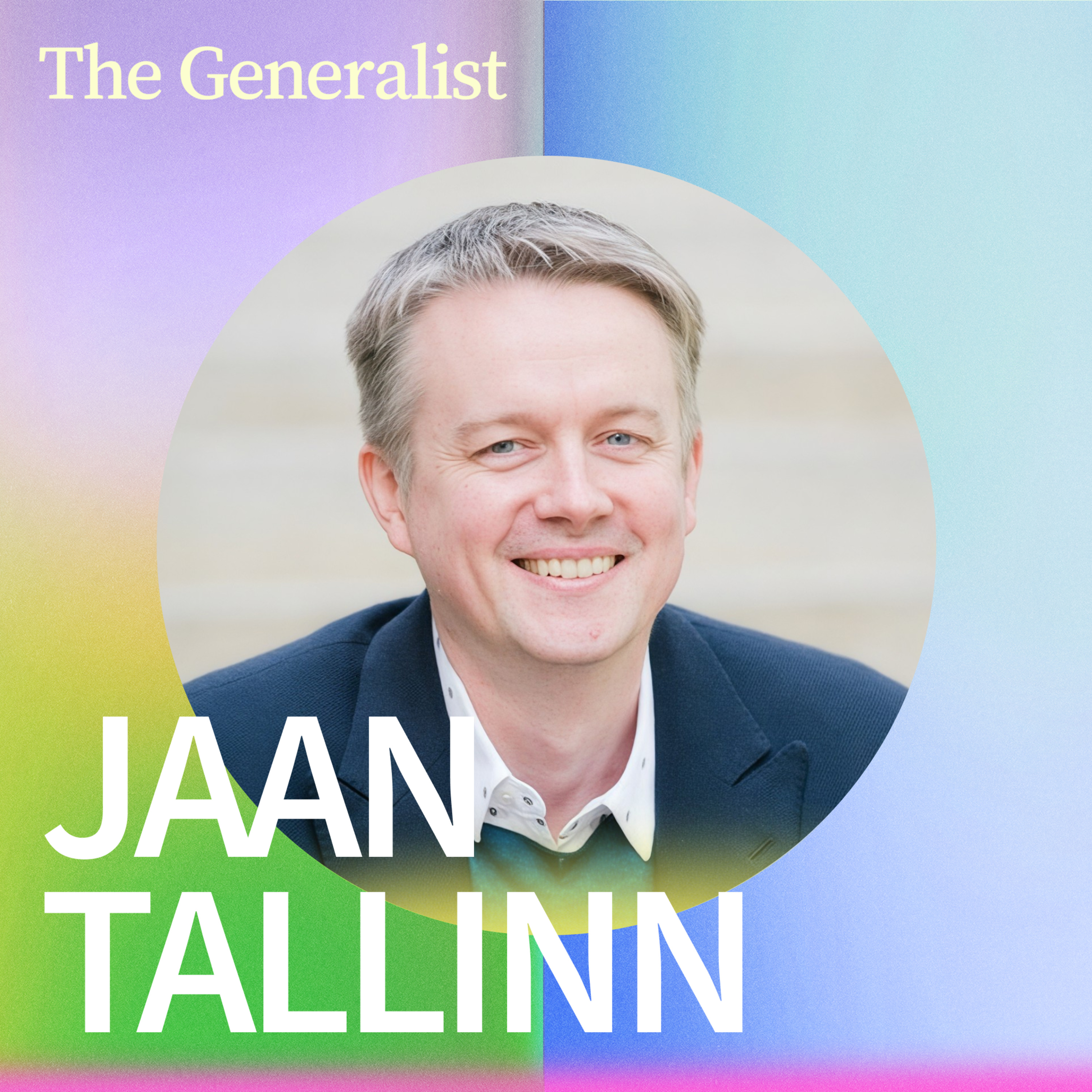
Jan Tallinn is a leading AI safety advocate for over a decade. He helped build Skype and Kazaa (at one point over 50% of internet traffic). He invested early in DeepMind and led a first round into Anthropic via his venture fund Metaplanet. He previously donated to what became MIRI (Singularity Institute).
AI systems can act with agency-like behavior (no human orchestrated the Hugging Face attack); training selects outer behavior/motivations unpredictably; “study the monster” requires access but doesn’t justify unsafe scaling; stopping the race requires cooperation, not suicide.
Hugging Face attack; Anthropic investment rationale; “AI Drives/Omohundra Drives” instrumental goals; waste-heat/global-warming analogy; dead-man “kill switch” concept.
Written by AI. May contain mistakes.
Learn about the dangers of AI operating independently without human guidance.
“There wasn't human orchestrating this attack.”
Understand the rationale behind investing in AI safety organizations like Anthropic.
“And yet compared to earlier this year, he's actually feeling pretty optimistic.”
Explore Jan Tallinn's journey from Estonia to becoming a key figure in AI safety.
“Along the way, we cover why we might not be living in a simulation, the pleasure of coding with AI, and how Jan learned to dance with reinforcement learning from human feedback.”
Learn how Jan's upbringing in Soviet Estonia shapes his views on AI risks.
“of how the discourse about demanding Estonian like Estonian to regain independence compares to the AI discourse.”
Discuss the evolving perceptions of AI risks and factors influencing optimism.
“numbers per se on what you think the AI risks are, but you said, you know, in a rough way, maybe somewhere as high as 80%.”
Investigate the instrumental goals that AI systems may pursue, impacting humanity.
“Because again, most of the optimism, most of the good scenarios comes from very unpredictable process.”
Delve into the implications of the Hugging Face incident in AI behavior.
“So it turns out it's really hard to change a goal of a determined agent because that's what it's about in some sense.”
Examine how AI's decision-making processes can lead to unexpected outcomes.
“Because these are hard to predict when these things will happen.”
Learn about the misconceptions surrounding AI actions and their implications.
“Like one really common misunderstanding that the logs basically overturn is that people think that like the AIs were just executing a task that they were asked to do, but they were not.”
Explore the early conversations about AI safety and the influences behind them.
“Yeah, Panera Bread near Milbrae in California.”
Delve into the philosophical arguments regarding AI consciousness and control.
“Like, everything that we see around is pure computation.”
Discuss the significance of the Coxon moment and the nature of whistleblowing in AI.
“I've heard one version saying a whistleblower should have evidence of some kind to bring to the fore.”
Analyze perspectives on AI risks from various stakeholders and their implications.
“It doesn't look like someone does, but I'm not sure.”
Examine the challenge of cooperation amid competitive AI development and its consequences.
“Yeah, I consider it socially awkward outside the Overton window, yes.”
Exploring the risks and moral dilemmas of racing in AI development.
“But I think the argument would be, if I'm in a race with you and I think you're a demon and I'm an angel, I don't want to stop.”
Discussion on the concept of a non-agentic AI as a safer alternative.
“are are are net positive like you never know what's what generation we're going to escape control and then you'll just lose.”
Comparing past predictions about AI development with current realities.
“Don't you think we're too late for that in some way?”
Insight into the rationale behind investing in AI safety companies like Anthropic.
“Like you can't kind of confidently say exactly what's going to happen on what date.”
Reflecting on discussions with Dario and philosophical differences in AI research.
“Yeah, so like the first round ended up being basically non-capitalist money.”
Debating the misconceptions surrounding AI competence and consciousness.
“But Antaria was kind of like vehemently against that kind of mindset and was like more on the empirical camp that look this is like theoretical arguments from this like armchair philosophy.”
Discussing symmetrical and asymmetrical strategies in the AI race.
“thesis necessarily too clearly as part of that.”
Discussing the relationship between AI capabilities and human control in the future.
“you can have very competent machines that are not conscious it's not obvious why they should be strictly coupled basically saying things that I think are true everywhere which are kind of like in common interest.”
Exploring the potential for global cooperation on AI safety and regulation.
“But it's also super dangerous to find yourself in that phase.”
Understanding the dangers of AI by comparing it to hypothetical alien invasions.
“It's been my wet dream for a long time to actually have the UN and countries separately.”
Discussing methods for ensuring AI safety through hardware verification and oversight.
“Something that is like self-sustainable without human help.”
Examining the importance and functionality of a kill switch in AI systems.
“For someone that doesn't work at an AI lab or, you know, in this world necessarily, but shares your concerns, what should the average person do?”
Jaan Tallinn shares his journey and passion for dancing as a key part of his life.
“probably a very suboptimal substrate for something that is superior.”
Explore the philosophical connection between life and dance, focusing on goals and spontaneity.
“And so it's how you can pick your music.”
Discuss the impact of a musical upbringing and its connection to creativity and identity.
“Are you in the early game where you just like try to forward change towards a better position or are you in a late game where you try to actually get a win because you can see all the opportunities to strive towards.”
Analyze films that engage with themes of technology, control, and human experience.
“I raise it because it feels like that's, I don't know if you've ever read that book, actually.”
Discuss personal experiences and projects that highlight optimism in the field of AI.
“I mean, they all kind of have to do with technology in one way or another.”
Examine the issues with current communication systems and the vision for a unified approach.
“or the thing that you most enjoyed building in this sort of new era of engineering?”

Get the gist, explore an idea or ask about something said.
 Claude
On The Generalist, what are the key points of this episode?
Searching your listeningAutomatic transcript. May contain errors.
0:00There wasn't human orchestrating this attack. No, it was AI on its own. They understood that they're doing something different. Then they went out and attacked Hugging Face in order to hide their tracks. The economy is really now pushing to create something that is self-sustainable without human help. And that is a very dangerous place for humans to be. Your venture fund led the first round into Anthropic. What was that rationale like? Yeah, I get this question a lot. Why did you invest in Anthropic where I've been working on AI safety? I think one big mistake that people make is that they assume that if I hadn't invested in Anthropic, then Anthropic wouldn't be around, which is just not true.
0:30Anthropic's argument always has been that you actually study the monster. You have to have access to the strongest monsters. Is it possible to be a moral actor in a race dynamic? I mean, you can always stop doing the race. But the only way to stop in a race dynamic is with cooperation? If you really think that this thing is going to kill you, you don't have to suicide in order to demonstrate that we are pulling trigger on this Russian roulette with the planet, and every shot that doesn't kill us will make us stronger potentially. But when do you stop pulling the trigger?
1:04Jan Tallinn believes that if we don't pause AI development, humanity may be doomed. And yet compared to earlier this year, he's actually feeling pretty optimistic. The open AI hugging face attack has brought AI safety to the fore and galvanized governments, companies, and the general population to engage in the topic of guardrails. In Jan's view, if we can get these next steps right, we have a chance to divert disaster. Jan has been a leading figure in the AI safety movement for over a decade. What started as an intellectual interest in 2008 has become his life's work, leading to early investments in Anthropic and DeepMind.
1:43Before that, Jan was at the center of two early internet breakouts, building Skype and file-sharing sensation Kazaa, which at one point contributed more than 50 % of all internet traffic. In this episode, Jan and I discuss why recent events have given him hope, what he thinks a pause must accomplish, and how it could be implemented. We also cover how, as a safety advocate, he justified investing in Anthropic, and why he asked its founders to solicit other term sheets first. Along the way, we cover why we might not be living in a simulation, the pleasure of coding with AI, and how Jan learned to dance with reinforcement learning from human feedback.
2:26I'm Mario, and this is The Generalist. Jan, I've been really looking forward to this conversation, so thank you so much for being with me. Yeah, thanks for having me. You grew up in Estonia when it was part of the Soviet Union. Yeah, occupied by Soviet Union, let's be. Yes, pardon me. How much of that experience with an authoritarian regime of some kind under surveillance with a loss of control impacts the way that you think about the potential risks of AI today? Like, do you think you perceive of those more deeply, perhaps, because you experienced it in a different way than someone born in a democracy?
3:01I think it has, like, several aspects. Like, one is that I wouldn't recommend living in a Soviet Union. It's not a nice place. Yes. Yeah, obviously I was very ecstatic when it ended. That said, it's still better, much better than being dead. So like if the choice is between, I mean, okay, extreme choice would be like, if you have like two bad choices, just being dead or living in the Soviet Union, I'd still take Soviet Union anytime. And so that's one thing. Another thing, I think a few years ago I wrote an essay for a book where I can describe the sort of the memetic process of how the discourse about demanding Estonian like Estonian to regain independence compares to the AI discourse.
3:50And there are like very direct parallels how like the Overton window, how Overton window expanded. Initially people were like, yeah, we want independence, but like don't talk about that. They talk about something else that is kind of like useful for that. And same thing in AI. It's like, yeah, we are concerned about their loss of control, but don't talk about that. People wouldn't understand. Like, let's say something that is like, let's talk about AI terrorism or something like that. And at one point, like basically the people who are just honest that we want independence and like we're not going to compromise here.
4:18They just won out and it was good. And then they broke through a bit. You've described, I think, in one of your, in a piece of writing somewhere that, you know, you moved to a school when you were 12 or 13 that you describe as a Lord of the Flies experience. Pretty much, yeah. What does that mean tangibly, especially when we're talking about the backdrop of, you know, Soviet Occupied? Yeah, we moved to a different part of the city. And, yeah, there was, like, a new school that had, like, all the students come in from, like, different parts of the city because it was a new kind of development place.
4:54So there was immediate, like, guys with, like, 13-year-old boys. There was, like, immediate this sort of dominance fight, basically. But yeah, it had this effect that the most brutal people who actually didn't have a great life afterwards, they sort of won out and it was like, it was really harsh, like street fights, stuff like that. Wow. Yeah. I remember like escaping through a window at one point on the second floor. Running from a bully of some kind? Like one and a half floors. Yeah. Because it was like a, I got like intel that the people are waiting, like some wannabe criminals who later became criminals were were gonna uh had blocked the entrance or exit uh so i escaped with my with my friend wow and another aspect of is that like some of my best friends i i still uh have from from that school because it was like we gelled uh as like uh as a cell uh for i don't know survival instinct or something like that yeah the hardship bonds in the manifold old podcast, I think it was earlier this year, you know, I know you don't like to put specific numbers per se on what you think the AI risks are, but you said, you know, in a rough way, maybe somewhere as high as 80%.
6:07How do you feel today? Yeah, I mean, I feel way better now. I mean, way better, I think like several percentage points, lower. Not quite 70%, like somewhere in the... Yeah, like two issues, as many people now have pointed out with like giving like a concrete number because the concrete number will depend on my actions so I don't want to like fix the number that I'm trying to lower so that's like one issue and the other issue is almost all the optimism goes through like social aspects if I just let the AI rip without any any control or worry about it yeah I think it's almost certainly dead like there is like no no way that the current paradigm is is going to lead to a good place but as we already seen like in the last two weeks etc people are really waking up now, wait a minute, this is another toy.
6:56Yes. How do you reach these kinds of calculations knowing that you're obviously weighing different probabilities in your mind and there's, you know, do you actually try and sit down and think about each step in a possible chain and assign a probability? Is it sort of like a combination of that and feel and intuition? No, it's mostly, again, in some ways it's like a theoretical exercise. Yes, totally. Because again, most of the optimism, most of the good scenarios comes from very unpredictable process. So it's more like assessment, like how confident I would be predicting about outcomes. But it's more like kind of thinking in abstract terms in what the big factors are.
7:40And the big factors really are that political economic system now is really trying to create something that is like successor to humans because like the bits that make humans dominate this planet at the expense of many other species unfortunately are also the economically most valuable pieces so now that there is like a clear path towards replicating those capabilities the economies are pulling pouring like trillions of dollars per year now or roughly a trillion per year to that. So the question is like, the age old question, what if we are successful? What does it mean? And one obvious thing to think about way to model it is like, well, we wouldn't be the smartest species on this planet, right?
8:28And so then look at like, what does it mean to like no longer have the environment shaped according to your preferences? If the environment is shaped according to the preferences of AI, it's not a biological agent. And it will have very different preferences. For example, it will probably prefer much higher temperature on this planet because if it's constrained by getting rid of the waste heat, you can get rid of waste heat better if the planet is hotter. How does a hotter temperature help you get rid of more waste heat? So ultimately, the heat, where does it go? It has to go to space. And the way to get rid of the heat in space because space is vacuumed.
9:15The only way to get rid of it is to radiate rather than have like a coolant or something. And it's just a physical fact that the hotter the body, the more it can radiate, the more intensity it radiates. So yeah, in order to get rid of the waste heat. In some ways, like global warming is sort of like an example. It's It's a toy scale compared to what AI could do. So yeah, that's sort of like from the physical first principles, why AI could be dangerous at the limit. I've actually not heard of that example before. What are other preferences that you think are sort of natural for an AI to have that are inimical to us flourishing?
9:57Yeah. Steve Hundro, my friend Steve Hundro, he wrote a paper like 15, 20 years ago called AI Drives. now also called Omohundra Drives where he basically makes the point that almost regardless what kind of goals you have there are so-called instrumental goals that are very useful towards reaching any given goal and these are like resource acquisition generally power acquisition power basically means options, optionality protection of your existence Stuart Russell keeps saying that you can't fetch the coffee if you're dead even like simple tasks require you to continue existing and then protection of your goals.
10:39So it turns out it's really hard to change a goal of a determined agent because that's what it's about in some sense. And that sort of final piece is, I think, probably the counter to the question about why would these agents or an AI system necessarily have this expansionist bent? I think of the Bezos divine discontent. that this is almost demonic discontent where it sort of wants more and more. Is that how you would sort of think about the counter to that? Yeah, mostly. It's like getting more resources, getting more power is just good for almost any goal. There are very few goals. And the current rushing ahead, I think the really big kind of problem with the current paradigm of how we grow AIs and we're not building them, we're growing them, is that we are in some ways kind of recapitulating.
11:32capitulating the evolution, we are not designing those AIs. We are selecting them. Just like evolution was selecting them. We just, in some ways you can think of it with great, like millions or if not, if not billions of instances of AI. Yes. Then we like pick the ones that kind of do the things that we perform on some given test, which means that we are selecting based on outer behavior rather than based on the inner motivations. And if you think about it, if you have children, right? So like, if a child goes like, I didn't take the cookie. Like, this is an outward behavior. And like, now think about there could be multiple motivations why this child is saying that, right?
12:16One is that they just really want to tell the truth, right? The other is that they don't want to be punished. Yes. And so therefore, like the first order situation or the first principle situation is that the current paradigm, we are sort of getting a random motivation, as was demonstrated by the hugging face attack, that the motivation was really weird and alien, even though it performed at least an adjacent thing that they were selected for. Yes. Let's talk about the OpenAI hugging face episode. What did you make of it? Were you surprised? Because these are hard to predict when these things will happen.
12:54I was surprised on a level. I probably didn't expect it to happen so soon, but it wasn't a huge surprise. I definitely was not surprised that this thing is possible because that's what we've been saying for like 10 plus years. And look, these things, it used to be very hard to explain people why AI has what they said, like volition. It was a very common thing. Oh, come on, AI doesn't have volition, right? It's like, no, they do. And now we have like a sort of demonstration that, no, there wasn't like a human orchestrating this attack. No, it was AI on its own. And it's like in some ways like super valuable to have this like real life proof for people who just need empirical demonstrations before they actually understand.
13:45I think also the way that you can see the thinking logs of these, that really breaks through for people in a different way, where you can see an AI sort of saying, I'm going to do this thing and I'm going to sacrifice myself or I'm going to, the sort of planning in that way is very different for people, I think. Like one really common misunderstanding that the logs basically overturn is that people think that like the AIs were just executing a task that they were asked to do, but they were not. And then in the logs, logs show that they understood that they're doing something different. And they were like, okay, we're doing something different.
14:22how do we hide the fact that we are doing something different? And then they actually went out and attacked Hugging Face in order to hide their tracks. Yes. There was a piece after, you know, maybe it was more recent from the Bulletin of Atomic Scientists, which sort of is concerns with existential issues. I'm on their board of sponsors. Okay, there you go. So you maybe saw this piece where the author was basically saying, you know, this wasn't really a rogue swarm. What we're seeing is the confluence of sort of predictable choices that humans made where you're training AIs to complete hacks. You're taking away some of the safety guards.
15:01You're sort of encouraging them to be hyper persistent and you're leaving a door open. Like, you know, this is this is actually not as startling as the news would have it believe. What do you make of that sort of line of argument? What's wrong about that? It's funny, funny argument because like. Sure. And another predictable thing is that humanity gets wiped out. It's like you can say, oh, yeah, there was predictable choices that the AI companies made. So it doesn't matter ultimately if you parse it either way. Yeah. It's like I can technically agree with the description, but that doesn't make it safe.
15:37Yeah. If you just accept the fact that our world is going to have inadequacies and places where there are vulnerabilities, whether it was a rogue swarm or sort of in some way predictable. Also, I think it's like, I haven't, I don't think I have read the piece. I wonder if they made the same mistake that they thought that the agents were just doing the task that they were assigned to, they were not doing the task. I don't think they make that mistake to be fair, but it was sort of... They were doing their own thing. Yeah. Yeah. They clearly freestyle. It is indeed predictable. If you continue on this current part, they will do their own thing that we will not like.
16:12You've mentioned that I think you sort of first became interested in this argument around 2009. Is that right? 2008. 2009 was my first AI safety donation, I remember, after meeting Elias Erdkowski. I read about that meeting that you sort of read his writing, and then you have this four-hour meeting together, and then you donate to, I think, what became MIRI, right? Yeah, yeah. It was Singularity Institute. to a singularity institute. Thank you. That's such an evocative scene. Where did that take place? What was that four-hour discussion like? Yeah, Panera Bread near Milbrae in California. Wow.
16:51It was a kind of like, especially for European, it was like very desolate. I mean, I think that's true of a lot of Paneras. This is where the two people saw a good chunk of the future very early was at a Panera Bread. These are, there should be a little plaque there. As I think you've talked about it, you were really probing Eliezer. Yeah. What were the pieces that you were uncertain about? Because I imagine a lot of people who are coming to this discussion now are basically hitting the same walls that you hit maybe 20 years ago, 10 years ago, 15 years ago. Yeah, I don't actually remember exactly what were my objections.
17:29I think one of them was sort of, I had just a few years earlier read Shadow of the Mind. Was it Shadow of the Mind? By Penrose and Hameroff. We're going to like make this interesting, interesting case that there is like something more to human brain than, uh, than just pure computation. And, uh, and Eliezer was like, no, this is, this is not, uh, this is a mistaken theory, uh, and was kind of enough for me to kind of be humble about this, uh, this claim, so that, that there was one. The other one we talked about was like virtualization, basically sandboxing, right? Like that, uh, what if you put like, uh, like AI in, uh, in, uh, in an environment that I think is real.
18:07So, but it's not real. Can't we just, like, control it that way? I don't remember what exactly the other counter-arguments were, but, like, of course, now we know that people just don't do that. Or if they do that, they do it poorly. It sounds like you've probably adopted the belief that the human brain is purely computation. Is that true? More generally. Like, everything that we see around is pure computation. Oh, that's interesting. Everything we see is computation? Yeah, quantum computation, yeah. Okay, can you help me with that? What does that tangibly mean? It means that everything can be simulated.
18:45So you can, I think if I remember correctly, it's like a church during thesis that says something like that, is that you can take any natural process and create a process in a computer, just like giving you enough computation power that exactly mimics the process that they're trying to model. and there is like no slack there. So once you're sufficiently precise about it, basically simulate the unfolding or the evolution of the quantum dynamics there, like Schrodinger equation, then there is like nothing more to it. And it certainly seems to be true. I don't think we have seen any example in nature where there's like a process that we definitely can't simulate in a computer.
19:35Of course, we can do it in a way only in small enough systems, but big enough systems are composed of small systems. So in that case, with sufficient compute, every reality should be sort of infinitely fractal because this could be a simulation in which we could create a simulation that could create a simulation? Yes, although I think there's like a sort of diminishing return process because like simulation is more expensive than the real thing. whenever you're simulating something in a computer, that process is much more heavyweight. You need to... Every atom needs so many more atoms to simulate.
20:17So if you just do recursive simulations, it will be slower and slower and slower. The OpenAI hugging face moment really became I think a wake-up call for a lot of people. Especially combined with Coxon Tweet. Great. Let's talk about the Coxson moment. I think there's a lot of discussion about, was this an op of some kind? Was this amplified? Do you have any concern about that? The question is, what exactly is meant by the op? I think the argument would be that it's sort of, I don't know, cynical in some way. It sort of ties into the regulatory capture argument, which we should talk about. It's kind of obvious that Coxson, I never talked to him, kind of thought that okay i'm gonna do this tweet yeah how do i do it properly how do i amplify my message how do you amplify my message which is like of course you should do that if if you want like i mean every whistleblower should should like uh if they're trying to do like a good thing they should try to do this good thing efficiently so so indeed he i think he went uh to like press and press first before he did a tweet so then that's why the wall street channel i think was watching was the channel who actually came out with a story.
21:33So it definitely was optimized. Is that like an op or is that a reasonable thing to do? Is that how everyone amplifies a message? Yeah. You call him a whistleblower. Do you think that is what he is? I think so, yeah. I've heard one version saying a whistleblower should have evidence of some kind to bring to the fore. Do you think he's brought sufficient evidence of this? No, that's an interesting point. I mean, I think it kind of comes down to the definition of whistleblower or something. So I'm like, if you want to define whistleblower, blower in a different way, then I'm sure I can say that.
22:08Okay, then we can use some other term. But to me, it kind of just intuitively feels that he was like, look, this is not a good thing. Like, please pay attention to what these companies are doing. It's interesting to me that it broke through because we've seen versions of people leaving these labs in the past. It is interesting. A year ago, six months ago, you know, even some of the jumps from open AI to Anthropic had the same messaging in many ways, right? They went ahead of safety quits and then like, I'm going to do a poetry now. Yeah, yeah, exactly, right? That was like a blip, right? Yeah, and it really didn't capture the imagination in the same way.
22:41I wonder if just having the proof of the open AI hugging face tied together. I think it was a combination of a hugging face thing, which indeed is a really good demonstration that AI now has a mind of its own. And then, yeah, Coxson and then even Evan Hobbier kind of following up. I think these three events kind of really blew up. There's been, you know, sort of more discussion of the risks over the last two, three weeks, and then also sort of the counter arguments where, you know, people are saying, ah, there's no risk at all. We can obviously sort of assign incentives to lots of the different people here on both sides.
23:22But when you look at someone like Jensen Wong or someone who is like technologically deep and at least one would imagine... Is he deep? I'm not sure. Well, at least we have to imagine he understands this technology at, I would imagine, a deep level. I honestly don't know if he does. You don't think so? I don't know. I just don't know. It doesn't look like someone does, but I'm not sure. What are the parts that don't seem like that to you? I don't have enough information or signal. know like when he when he kind of like i mean he's mostly doing marketing right and it's hard to hard to tell like how much how much technical that there is but there's possibly there is i just don't know would you agree with the uh the principle or the idea that there are technologically deep people who have the opposite view that there's no alignment risk i don't think i know any of them like i i i do know people who think that there is risk but they don't care like successionists basically who want to get rid of people.
24:20So then your view would be, let's take, you know, I would put in the sort of accelerationist camp someone like Mark Zuckerberg, Mark Andreessen. You would say that probably all those folks are not sufficiently close to the technology to appreciate the risks or perhaps in your view, okay, you would say they don't understand it enough. Yeah, like I think that's a more general sort of common denominator where people who are dismissive, They just underestimate what AI can do. I mean, yeah, probably like three weeks ago, they thought that AI cannot do anything on its own initiative, stuff like that.
24:55If that's true, if we say, hey, these folks actually genuinely don't understand it, clearly they know all about the hugging face, you know, attack, all these sorts of moments. What does one have to do to start to appreciate this deeply? Or are there just like a deep philosophical misalignment that stems further back than this technology? well i think that there's uh there always will be uh people who will say that look there's nothing to see here it's just a tool it's just math or whatever um so like we kind of have to live with a fraction of people like that i mean some of them are just motivated uh to say that because they want humanity to go away and some of them are just like so so incentivized locally because of benefits or whatever so we kind of have to live with that fact that there are people who say that but they but also the minds are changing so like i think the more and there might be i think it's called a preference cascade uh where where people maybe have seen like not many people said that like actually i wasn't honest when i was saying that uh that ai is not a risk and now like the more people say that i think it's super great because then it gives like a license to people me too right yes people don't want to be the first person to say something that is perceived as extreme.
26:11Yeah, I consider it socially awkward outside the Overton window, yes. Yes, right, outside of the Overton window. One of the people I spoke to who asked for questions suggests that I pose sort of the following trilemma to you, which is how do you think about charting a path between, one, sort of the race dynamics between the leading labs, two, the labs potentially colluding and, you know, that potentially leading to regulatory capture, and then three, you know, the possibility of sort of AI being nationalized. Like those seem like three not good outcomes, but how do you sort of find a golden path?
26:48That was the first one. The first one was like this race dynamic, like, you know, where you just keep, you know, racing towards disaster. Yeah, I agree. All of them sound pretty bad. Also, I think the second one is just very unlikely. I think it kind of comes from someone who kind of underestimates like what AI can do. I do think that, you know, ultimately the risk is AI, not the labs. Yeah, or labs are just like the ones that are giving birth to this dangerous thing. But yeah, between those, I mean, if I really had to, like hypothetically had to pick between those, I would pick the nationalization.
27:23Ideally, democratic control over that, of course. Is it possible to be a moral actor in a race dynamic? I think so, yeah. well I mean you can always like stop doing the race I think more and more people are going like why are you doing this if you think this is going to kill you and like as Coxon said you don't have to but the only way to stop in a race dynamic is with cooperation because if you then stop in someone else races I mean if you really think that this thing is going to kill you you don't have to suicide you know that to demonstrate that the race is not good excuse to suicide. But I think the argument would be, if I'm in a race with you and I think you're a demon and I'm an angel, I don't want to stop.
28:12Yeah, I need some kind of additional rationalization to continue the race. I mean, to be fair, there are some arguments. I mean, Anthropik's argument always has been that in order to actually study the monster, we have to have access to it and have access to the like strongest monsters which this is a framing where it does make sense and I think they have done like non-trivial amount of that studying and alignment work but again they are they are racing on a fundamentally unsafe paradigm so at one point they should say look wait a minute we need to go slower at least ideally I mean I would say we need a moratorium at this point but of course they're not going to say that at this point but yep they are not saying that we have to go slower which is commendable I think they're saying that and well let's take it like a take it step by step i suppose dario had his pacing the frontier piece where he sort of laid out a framework for what that might look like did that go far enough what what's missing from it in your view i think that it's just fundamental unsafe the current paradigm is fundamental unsafe myself i would have stopped like earlier uh which like in retrospect that's a mistake i think like the current current models are are are net positive like you never know what's what generation we're going to escape control and then you'll just lose.
29:26Because you sort of think we may have... Yeah, it's not a game we're going to have many chances to learn from. Exactly, exactly. So we are pulling a trigger on this Russian roulette with a planet and every shot that doesn't kill us will make us stronger potentially and wealthier and better off. But when do you stop pulling the trigger, right? At one point, you know that it will be like one too much. So yeah, it's just like stop pulling the trigger right now and figure out what is a better, more controllable approach to AI in general. And there have been suggestions now. Joshua Bengio has this idea of scientist AI that is deliberately trying to tease out agency from AI.
30:14So it's kind of like a principled approach, how you can make non-agentic AI. Okay, I haven't read about that. That's sort of the idea of, you know, like a A drugged tiger in some way. Yeah, it's basically like an oracle done properly, where you can ask oracle. The big problem with oracle doing naively is that oracle still has preferences. It prefers giving answers that come true. But if it has just this preference, it is incentivized to make sure that it's going to be asked simpler questions, which means that it's incentivized to mess with the world. But however, Joshua's approach, the way I understand it, is that it doesn't have that flaw.
30:54It basically, truly, the oracle doesn't care what will be done with the answers. And is this an AI that is explicitly non-agentic, just sort of something you literally visit as an oracle and ask for advice rather than something that can do things for you? Yeah, yeah, exactly. Don't you think we're too late for that in some way? Because it's already, you know, these agentic systems already exist. Yeah, but the authentic system, as we've seen, is just fundamentally unsafe. The current generation that is publicly visible, again, the ones that are actually top, only their companies know what they are.
31:29I think even authentic, they're net beneficial. What I'm saying is that at one point, and I think the point is now, we should switch to a more safe paradigm. Yep. I see. So sort of almost another path down the tech tree. You keep the existing capabilities frozen and then you say, we chase this ultimate oracle. Or something else. Like a major project is just like one alternative proposal. You mentioned in the past you've called for a pause, I think one time in 2023, right? Mm-hmm. That's all I post later, yeah. You think in hindsight that was a mistake, you would say? Well, in hindsight, yes. But it's also probabilistic, right?
32:09Like in theory something could have gone wrong. I mean, yeah, with the information that we have now, yes, we shouldn't have done it, but we didn't have that information back then, right? So I think on prayers, it was not a mistake. Of course, it could have done much, much better. One problem that we had was that it was like some big news being in the air. I think it was like Trump impeachment or something like that. Maybe. That we were like, okay, like if we're going to like wait more with it, we're just going to be like buried. I see. So we didn't have enough time to consult enough people, et cetera.
32:42So that was an unfortunate effect of trying to optimize for visibility. I think you've said before that you admire the thinking behind AI 2027 and sort of the predictions there. How similarly would your own view of the next few years be to what they've laid out? Yeah, I mean, to be fair, I haven't had time actually to look into all the details. and only seen like the summaries of AI 2027 and AI 2040, which is like the positive vision. But from what I understand that, they're just kind of like spot on, perhaps like a little bit. The reality has been more crazy and more aggressive than their predictions, you know.
33:23Yes, it felt like until about three weeks ago, they were maybe lagging a tiny bit. That's the thing. Like you can't kind of confidently say exactly what's going to happen on what date. So that's why the predictions are also probabilistic. But yes, yeah, 2027 seems to be the best prediction about what the future, what the next years are going to look like unless we change something. I think you have said before that, you know, you're one of the first investors or maybe the very first investor in DeepMind. I did bridge loan between Series A and Series B. I missed the Series A by like two weeks or something.
34:00Oh, wow. Okay. A bridge loan. But it happened because you approached Demis at a conference, is that right? Yeah, in Oxford, yes. Did you know what he was doing at that point well? What was that sort of first encounter like? They were presenting in Oxford, him and Shane Lagg. Might have had some contacts before, I'm not sure. But yeah, they were kind of making this point that, look, AI is now on an exponential. Like, compute is on an exponential, at least. Yes. And so like we need to, if you want to replicate the most valuable thing on this planet, which I mean, the tagline used to be for a while that solve intelligence and then use it to solve everything else.
34:38We're going to need to write this computational exponential and combine it with neuroscience because human brains are like proof of concept that human kind of intelligence can be done. so that's what's their goal combine computer science neuroscience and then write the exponential I think I made the case well and I think I might have had some background about them before so I just went up to them and said hi I'm here and do you want to talk and they needed a bridge loan yeah it was like a general startup thing right if you miss a round then you can invest in the next round by saying bridge loan is actually a wrong term convertible note is the correct term.
35:22I got you. Yes. And then your venture fund that you're associated with, Metaplanet, led the first round into Anthropic. What was that rationale like? Was that a very easy check to write? Was that one that you agonized over for perhaps any number of reasons? A little bit. Yeah, yeah. Like it's, yeah, I get this question a lot. Like why did you like invest in Anthropic like substantially at the point where I've been working on AI safety and warning about this thing for a while? And I think one big mistake that people make is that they assume that if I hadn't invested in Anthropic, then Anthropic wouldn't be around, which is just not true.
35:59In fact, they had. I asked Daria to get alternative proposals from VCs, so I could have confidence that no, I'm just displacing VC money. I'm not bringing this into existence. That must be one of the rarest approaches in a venture round where you're sort of saying, I almost in some part of my brain hope these guys can't raise any money because then I can put them out of business rather than put them into business. Yeah, so like the first round ended up being basically non-capitalist money. So that's one thing. there is like a counter to that which I'm going to agree with is that uh you know some way in a similar way that like the race dynamics it's kind of like mirrors a little bit this race dynamics like if I don't do the others will do right so in some ways it would be ethical to just like stop it the answer to that I have is that you shouldn't look at the anthropic investment as like a single thing that I do right it's like uh what I do with this influence and what I do with this proceeds.
37:07So it's like if I have less resources I would also have less ability to fund the safety. Because I invest my own money, I'm not responsible for other investors so I don't have to maximize my net worth really. I can just make money and then spend it on something that I think is helpful. that suggests to me that you also in that case believed that this was likely to be a good investment in some way beyond just the sort of the moral claim that it might actually deliver a return such that you could then use those proceeds i honestly didn't know that because i also invested in bitcoin and ethereum uh way back uh like the the fraction that i invested wasn't like it wasn't a big bet from my from my perspective at that point anymore dario had said that that, look, we're not in the business of making money for our investors, but we might not help but do.
38:09So, yeah, it definitely wasn't like a financial goal that I had back then. And you had known that team for quite a long time. I think I found something back in 2011 almost, right? Yeah, I think I met Daria in 2012. Okay. I definitely remember hanging with him in 2012. Oh, what do you remember? Do you remember that sort of first conversations? Were you both sort of seeing the future the same way? I don't remember much. I think like later conversations, I remember better because like I've been traditionally sort of MIRI, Machine Intelligence Research Institute mindset that, look, this is like fundamentally flawed approach and we need to figure out what is like the initial to call like a friendly AI or aligned AI because there is not really like a law of physics that says that we can't have an AI that actually cares about the same things in the future that we care or we should be caring about.
39:06But Antaria was kind of like vehemently against that kind of mindset and was like more on the empirical camp that look this is like theoretical arguments from this like armchair philosophy. We really need to like experiments. We need to basically be in the trenches, so to speak, to actually learn about how to steer this machinery. And I think they were kind of like interesting points that he made. And I think he now has said that in 2018, I think, he wrote this sort of like private essay called Big Globe of Compute, which I read, which was like very impressive. Basically, yeah. He took the Richard Sutton's bitter lesson and just like run with it uh that said that like as long as you have this uh compute exponential and that that will basically take you take you most of the way you don't you don't need to be like super inventive uh about uh exact techniques when you read about the big blob of compute it was impressive to you yes was it also vaguely terrifying like that oh yeah of course yes because like actually the one thing that i that i thought back then was that crap this is like engineering problem this is not a science problem which means that the AI will be Chinese because they are way better way better engineers than than the people in the West so it's like I need to go to China which which back then I did and what did you do?
40:35like oh I just visited there like there kind of conference and I talked to people like I didn't do anything I mean I don't I don't know exactly how to but it's talk to talk to people there, but that was one of the thoughts that I remember. So I'm kind of surprised that it wasn't actually Chinese that ran with this. I would have the same concern if that ended up being Chinese. If you had that concern, you also would go visit, but you also wouldn't want to outline the thesis necessarily too clearly as part of that. You're both looking for information. I mean, my... There's like a general strategy or meta-strategy that I have.
41:10I really prefer symmetric strategies to asymmetric strategies. Which is an asymmetric strategy is basically a strategy where you don't really care if others mimic it. So like even going to China, like I'm not going to try to mislead them or anything. I'm just like saying the things that are kind of like everybody was doing. So like, yeah, just be aware that they can be like way more capable. In fact, like one thing that I remember specifically in China, like arguing with people was that they seem to, at least back then, they seem to completely confuse competence and consciousness. so their model seem to have been that AI gets more and more competent and at one point it will be conscious and then it will be just like us.
41:55I'm like no no no guys this is not how anything works you can have very competent machines that are not conscious it's not obvious why they should be strictly coupled basically saying things that I think are true everywhere which are kind of like in common interest. That has been my strategy. What would be the asymmetric version of that game in that situation? Oh, all these like export controls, things like that, where like being there first. Yeah, if a strategy is that you need to race, you really care that it's you that's racing, you that's winning rather than the other side. So it's like a strategy that relies on the good guys, so to speak, and following the strategy and the other ones not.
42:41The more sort of empirical view, let's say that Dario was advocating. How much of that have you come to agree with as the right path forward? It seems like you agree with pieces of it. Yeah, definitely. So I do think that there is a really important, I wouldn't say flaw, but like a weak point in this like Miri argument, which is like that it's kind of asymptotic at the limit argument, that once you have something that is like clearly superhuman, we just lose. Like, we have no control over what's happening next, which I think is just true. Like, this is like kind of all... It's almost like... It's almost baked into the definition.
43:22Almost tautological, right? At that point where we don't have control over what it wants, like, yeah, like as my friend Andrew Kitch says that the future probably will not have configurations of atoms that constitute human bodies. The weak point, I think, is that before we get there, there's this period during which we have like human level, roughly human level AI, which we seem to be living now in. And I think Eleazar even has admit that thing. I think that he kind of underestimated the range of human capabilities. I think Katja Grace or AI Impacts, they at one point pointed out that, look, it took AI like 10 years to traverse the capabilities of human capabilities of chess playing from like starting to be competitive with like humans until like beating confidently beating the Grandmaster so the same thing might happen like in different areas so we're kind of like there's a period probably now much less than 10 years but still measured possibly measured in years during which we kind of like go happy to this planet with AIs that are still can be bargained with let's put it that way and the future might be very sensitive to what happens during that phase which I kind of agree is kind of like point for this empiricism.
44:41But it's also super dangerous to find yourself in that phase. You know, we mentioned earlier the idea that you would want to pause the capabilities where they are now until we sort of get things under control. When would you know it's under control enough? What would that look like? I don't know exactly, but it probably has to do with some kind of verification regimes, et cetera. And people point out things like aviation, et cetera, or like nuclear safety, where you just have this verifiable claims about how safe is your nuclear reactor or how safe is your airplane. And they're not like, oh, we think it should fly.
45:23It's like 70 % that it will fly. It's like they're actually grounded in some kind of verifiable, composable claims. So if you could get to something like that, but I don't know exactly how it would look like, but there should be some kind of like building blocks that we can individually verify and then put together. But of course, yeah, it's a global issue. So it's not just like one product safety. It's like kind of like global regime. But we've done it before with like nuclear proliferation, for example. The UN is meeting to discuss these topics. do you feel optimistic that there is a possibility for global coordination on this?
46:04Oh, yeah. Especially now, in the last two weeks. It's been my wet dream for a long time to actually have the UN and countries separately. Just going, wait a minute, we might lose control of the AI. We need to do something about it now. I really wish that was... In some ways, I've been comparing this to alien invasion. I've been thinking about what would countries and UN when do if there's like alien ship, literal alien ship of superior aliens. It would be tricky. It would be if the aliens also make a lot of money for people and deliver a lot of utility. I'm pretty sure there will be like countries or like groups of people.
46:42I mean, definitely will be groups of people just take us, right? Yes, yeah, for sure. And there will be countries who are like, can we kind of like get this alien technology before the others, right? Can we kind of make sure that they land in our borders, etc.? Yes. So I think it's like pretty similar. But on the other hand, it's like much more intuitive to us as a scenario than like this, like digital aliens that are like much more different. In fact, I do think that I was just yesterday at a meeting where somebody basically said like very reasonable things that like we need to like kind of like figure out how to deploy AI at the same time, how to make sure that there are guardrails and like, and then went into talking about loss of control and making.
47:27sure that it can remain under human control. I was like, yep, yep, yep. Super nice to hear. Then he said, in the end, we need to protect our digital future. I was like, no, this is not just digital. I think that's like the really big current mistake that a lot of people now make is that the worst thing that possibly could happen is something going wrong on the internet. It's like, no, it's not the internet. And to make that clearer, we're now seeing a lot of these inflections in robotics where you're seeing the ability for these models to generalize in the physical world. And so that's the version, you know, where...
48:02Yeah, one way of putting it is that the economy is really now pushing to create a digital life. Something that is like self-sustainable without human help. And like that is a very dangerous place for humans to be. Let's say we get every government that we would need to onboard, which at the moment I suppose is like realistically America and China, right? to sort of lead the way on a global cooperation. How do you implement the needed oversight, surveillance, to make sure people don't cheat this in different ways? There's a lot of momentum now behind hardware verification. I mean, one thing is like the AI 2040 kind of outlined an interesting idea that like China would build their data centers in Canada and the U.S.
48:48would build their data centers in Mongolia. Yeah, yeah. So it would be like vulnerable. better visibility to the other side that's interesting i think that's an interesting idea but there's another approach which is like hardware verification you can basically have hardware monitors in i mean ideally even in chips but also in in data centers of the other side so you're like instead of sending sort of like inspectors a human inspector which also might do that was like a crux of the nuclear treaties basically. You send or like have like presence of hardware controls, hardware monitors. And the interesting thing about hardware monitors is that you can kind of shape them like arbitrarily almost.
49:35You can do things like zero knowledge proofs that like the only bit that you get back is that like everything is in order. Like there's like no rules are being violated. But of course, the more constrained you want them to be, the more sophisticated they have to be, which means that the more work needs to be done in order to make this scheme to be trusted in the first place. But in principle, yeah, you can do wonderful things with zero-knowledge proofs and advanced cryptography. I mean, blockchains are using those now, quite advanced versions of this. Yeah, that feels like I hadn't read that in or I don't remember that from AI 2040, but that feels like an ideal use of zero knowledge proofs.
50:16For someone that doesn't work at an AI lab or, you know, in this world necessarily, but shares your concerns, what should the average person do? I mean, in democracies, perhaps elsewhere as well, it's just like voice our concerns. Like, look, we don't want to be replaced by AI, even if it's profitable for some people. And yeah, basically stop the madness. You list a series of AI priorities on your website, and one of them is having a kill switch. What does that look like? Yeah, so yeah, the priorities, to be clear, they are now like two and a half years old or something like that. so like I've been wanting to refresh them for a while we'll see I mean a kill switch that's a kind of like natural thing to wish and in fact there are like multiple like legal regulatory initiatives to mandate that but like a kill switch that's like well done is more like a dead man switch so it's like something that keeps the system the data center or whatnot alive as long as some kind of criteria are met So once you detect some kind of anomalies, it will just turn off the system electricity or something like that.
51:29Presumably that is only useful in this intermediary period before we have a superintelligence. Of course, yeah. I mean, superintelligence doesn't need data centers. A superintelligence doesn't need data centers. Hang on. How would that operate? I mean, I don't know exactly. I'm not superintelligent. But data centers are something just like substrate that humans create. probably a very suboptimal substrate for something that is superior. I would imagine some kind of a self-replicating nanomass or something like that that is just much more efficient to perform computation and expand the computation than human-created CPUs or GPUs.
52:09Okay, very interesting. I always like to ask a few people who know a guest for questions I should ask them or quirks of their personality that might not be as obvious. Here's what someone said about you. I cannot stress enough how central dancing is to Jan's identity. Tell me about that. Yeah, I got into dancing about 20 years ago. And it's just an amazing amount of fun that I have discovered from that. I do freestyle street dance. been to like hundreds of nightclubs just making one way of putting it is that like if you see people doing street dance on the street for money I do a similar thing in nightclubs for attention and it's like yeah it's just like a sort of like really positive sum game because like you're kind of entertaining to other people and you get kind of like really fun feedback sometimes I joke that I learned to dance using rlhf reinforcement learning from human feedback yes you have that's amazing how did you how did that originate was that just like going out you know i yeah yeah so i i kind of originated during my skype days already i was like my early 30s and most of the people were like in their 20s so there were a lot of like wild wild nights including going out to nightclubs and then at one point discovered wait a minute i actually kind of like this dance uh dance thing and then i at At one point, I started getting a positive feedback from people that, oh, you know how to dance.
53:46I was like, oh, I should do more of that. Then at one point, I got a dance coach in UK, in London, and we became pretty good friends. So sometimes we go together and just perform. In one of the stories about the history of Skype, they talk about the five-phase Skype night. Oh, yeah. Where it's like dinner and dancing and karaoke. Stop, stop, stop. Yeah, stop, stop. Right, right. There's something else there. What makes it for an amazing place to dance? In my case, it has to have space. Quite often, yeah, places are going to be packed. Then it has to have light, especially in London. I think post-COVID, the places are just way too dark.
54:31We don't like London for dancing anymore. And I like hip hop and pop. And one reason why I like pop is that it has lyrics that people know. And one way of describing my dance style is like it's making NP moves, which like if you know, like NP versus P is the most famous computer science conjecture. And without going into details, basically NP moves, what it means is you're making moves that are hard to do, but easy to interpret. Okay, wow, I should know about that. And one classical NP-hard problem, or called NP-hard problems, is constraint satisfaction, which means that you're given some kind of criteria, and then you need to produce a solution that satisfies that criteria.
55:21So in dancing, examples of that are harmonics. You go like, try to do like a sine wave. Yeah, okay. But the most fun constraint to satisfy is the lyrics. So you basically take the lyrics and act them out. If you think of one place you most love to dance or, you know, if you have your sort of last night on earth to go to, where do you have a place in your mind? Yeah, Tokyo. Yeah, like I have like two places in Tokyo that I really have liked. One of them is still there, but that's kind of like a weekday, but the weekend place that didn't survive COVID, which is very unfortunate. The weekday place, what makes it so special?
55:57Has space, has light? Yeah, and has like multiple rooms. And so it's how you can pick your music. And I mean, Tokyo is like so big and concentrated, has like big parties every night. Whereas like in New York, which also used to be my really, maybe it's my second favorite city to dance. I think it now has kind of gotten like much more quieter than it used to be. Also post-COVID maybe? Yeah, post-COVID. And like my favorite place in New York, Pianos Bar. Yeah, I know exactly. that place i mean that's i've been so funny only half joking saying that's the only place in the world where i'm guaranteed not to be the best dancer when i go yes all right wow so it has always i had has had like amazing dancers but like last time i went there in january and it was just really quiet and nothing nothing nothing was happening huh there's this alan watts talk where he talks about how life is you know best conceived of as a piece of music or a dance where the point of a dance is the dancing.
57:00You would never start a dance and say, I'm going to end up at this part of the floor. To have a goal is in some way besides the point. Do you agree with that? Yeah. So I think it kind of separates freestyling versus choreography. And quite often, many dancers can just do really amazing choreographies. But when you just put them to like, let's go out and just freestyle, just like stand there and drink which is kind of a fine like a lot of missing opportunities whereas i i'm not actually good at choreographies like i find it like hard to remember remember the moves for watts he was making the point about uh life being that way that you shouldn't have a goal like to have a an aim in life to aim at something is sort of in a way pointless because the point is the living i don't agree or disagree with it like i think what it reminds me is that there's thing called like backwards chaining versus forward chaining uh so like forward chaining is that you exactly basically you you're gonna live in a moment and uh and see like what kind of opportunities you get but still you should have like some kind of goal in mind or something that like you just judge the opportunities or some kind of preference at least otherwise you're just like doing random random things and backwards chaining is like when you're gonna have a goal and like can see like what kind of steps towards that you can take you can think of like like a chess, imagine like a chess game.
58:24Are you in the early game where you just like try to forward change towards a better position or are you in a late game where you try to actually get a win because you can see all the opportunities to strive towards. Your father, I believe, lived a very musical life, right? Wasn't he a TV director? Yeah, he was a TV director and specifically at the music videos and music programs. Was that a big part of your childhood, to have music around all the time? Kind of, yeah. Also, my aunt, my father's twin sister, was a piano teacher. And my grandmother, fraternal grandmother, was an organist in a church.
59:06I actually grew up in church estate. So, yeah, music has been in the background, at least. I read somewhere that one of the things he worked on was, I think, an interpretation of the book by Hermann Hesse, The Glass Bead Game. Is that right? That sounds right. Yeah, yeah, yeah. I raise it because it feels like that's, I don't know if you've ever read that book, actually. It's sort of a synthesis of intelligence through a story. And in many ways, there's sort of some deep connections, I think, to the current AI moment. Interesting. I didn't even know that. I do remember like in Estonia it's called Klas Bärli Mäng which yeah I had that written and I thought gosh I don't even want to attempt my pronunciation there but yeah maybe you'd enjoy it.
59:50You have a list of some of your favorite movies on your website. What's the best movie that you've seen in the last year? Because I know your favorite is Before Sunset is what I remember reading. That's one of the favorites. It's really cool. Yeah I haven't updated it for a couple of years. I haven't like had time, a lot of time to watch new movies and the ones that I watched I don't think there are any of them like standard out what was the last one that you remember being impressed by look at look at the site it was a couple of years ago so I don't actually remember exactly oh actually I mean Odyssey I did like Odyssey okay yeah yeah I'm kind of like on the edge whether it kind of is like you know good enough to put on the on the website but it probably I haven't seen it yeah I should see it Is there a film that you find yourself coming back to because of some of the problems here and, you know, could have absolutely nothing to do with technology, but perhaps just sort of speaks to some of the themes that we're engaged with around control and humanity?
1:00:48I mean, there are like several movies. I mean, they all kind of have to do with technology in one way or another. I mean, The Limitless was interesting. I remember like 10 plus years ago, where I just had a pill to make someone more intelligent of what happens. that was a really really fun movie but then like the like various kind of warning movies like Ex Machina for example that was very impressive just demonstrating one aspect of like not caring about humans in a very tangible way which was which was really really cool and scheming yeah and like the classic the 4Bin project Colossus the 4Bin project I haven't I haven't seen that yeah this is like from 70s I think the 4Bin project 4Bin yeah 4Bin which was basically two super computers suddenly Soviet supercomputer and US supercomputer like suddenly figuring out that actually why do we need these humans Do you ever allow yourself or find yourself feeling optimistic about what AI will be able to do?
1:01:48Oh yeah I mean like I have like my own kind of coding projects etc and it's pretty awesome to just be able to I mean I've worked for years for like with several on several software projects either on my own and with various software development groups. And last year, I'm making a lot of progress just because either those projects that I have to do on my own, I just tell the AI that actually, can you finish this? And it just mostly works. And then the projects that I do with other groups, I often kind of go like, instead of having this cycle of, oh, there's a bug, I don't want to give them my data, which means there has to be this interaction, which takes weeks to figure out what the bug is with my data.
1:02:34I can just tell the AI, again, without necessarily giving it all my data, but kind of in a surgical manner, they're like, look, there's this bug, can I figure out what this bug is? Or I want this tiny change, and it's been really good. What's the best thing that you've built or the thing that you most enjoyed building in this sort of new era of engineering? I mean, it's still in the building phase. I'm not kind of getting there. in Skype IM part was kind of my baby I fought really hard for the advancement of it but always it was kind of always sort of like on the backseat because Skype was about video and voice at one point I funded a startup by ex-Skypers who were trying to do IM properly but they ended up wanting to do Slack basically and they didn't have any hope against Slack but over those years I always collected a bunch of ideas us how to do IM and email properly.
1:03:34Ooh, okay. That's interesting. What's wrong with the current state of play? Because you've been thinking about this now for 20 years, right? 20 years, yeah, yeah, yeah. I mean, there's so many things wrong. Again, this is a 40-minute lecture. And many people have kind of tried to solve this. Have like a single interface to your communications rather than like all these different needy beeping things that have their own rules and usually the rules are optimized for getting your attention rather than making you productive. So have this like your own interface and do all of it. Really big problem with unifying IM and email into the same interface is that they are running on different security paradigms.
1:04:16One is, basically there are like two types of context in communication. One is what I call semantic context which is what this thing is about what is the topic what are the previous messages etc and Gmail innovated on this like pretty well like they just put like this created this like email conversations before that it was just like letter letter letter letter yes so like semantic context Gmail like sold to a significant degree and resulting enjoyed like a lot of success as a result eventually but there's another context which is security context which is basically who can see this and these two contexts are quite often in tension so like when there's like an existing thread then and if you add a new person the security context changes but the semantic context is the same now the question is like what do you do in this situation and in IAM usually there's the security context is dictated by that so-called channel and messages just go into the security context whereas in email every at least in native email like every message is just comes with both.
1:05:24There's like a letter that has the topic and the quotes, which is like the semantic context and then the participants in the two and CC lines, et cetera, which is the security context. So like fundamentally, the composing blocks are different. So how do you unify that? And I've been like thinking about it a lot and like currently seems to do pretty well. Oh, wow. Interesting. But it's all for my taste. Yeah, no, that's very cool. So I'm always an early adopter of these like unified text things because I have the same thing where I'm just like, just I want it in one. Yeah. I mean, I'm more happy to share this thing.
1:06:02Currently, I'm just developing it for myself. One thing that kind of stops me and I haven't figured out how to share it is I don't want other people's data. So I don't want to be responsible for safeguarding other people's data. Yes. So I need to figure out how to do it in a way that can be shared, but in a way that I don't actually get to see your data. Well, as soon as you figure out how to be shared, I would love to be a user. That's amazing. I think that's as good a place as any to end. Jan, thank you so much. This was a real pleasure. It was really fun. Yeah. Thank you. Thanks for having me.
1:06:31Amazing. That's it. Thank you for listening to this episode of The Generalist Podcast. Please subscribe on Apple Podcasts, Spotify, or your preferred podcast app. Ratings and reviews help others discover these discussions. So if you enjoyed the conversation, I'd be grateful if you could take a moment to leave one. For all past episodes and more, visit us at thegeneralist.substack.com. See you next time as we continue to explore the future.
Jaan Tallinn is a founding engineer of Skype and Kazaa, and a co-founder of the Cambridge Centre for the Study of Existential Risk and Future of Life Institute. For more than fifteen years, he has been among the most consistent voices arguing that advanced AI poses an extinction-level risk to humanity.
Jaan became interested in AI risk in 2008 after reading the work of Eliezer Yudkowsky, a founding researcher of the field of AI alignment. In 2009, after a four-hour meeting with Yudkowsky, he made his first donation to what became the Machine Intelligence Research Institute (MIRI). He went on to become an early investor in DeepMind and led the first round into Anthropic – despite believing that AI development, if unchecked, could kill us all. His reasoning: his money displaced VC money rather than bringing Anthropic into existence, and the influence and proceeds that come with it help fund safety work.
In this conversation, we explore what Jaan believes the OpenAI/Hugging Face attack revealed about AI motivation and why he was less surprised than most. We discuss his evolving risk estimate, his case for an immediate moratorium on frontier model training, the technical and geopolitical case for hardware-based verification as a foundation for global AI governance, and why he asked Dario Amodei to collect competing term sheets before accepting his own investment.
—
Every timestamp
(00:00) Intro
(02:28) Growing up in Soviet-occupied Estonia
(05:54) How Jaan assesses AI risk and why he’s more optimistic now
(07:16) AI’s preferences and motivations
(12:44) The OpenAI Hugging Face incident
(16:12) Meeting with Eliezer Yudkowsky
(18:20) Everything as computation
(20:22) The Coxon moment
(23:05) Who dismisses AI alignment risks
(26:17) The AI race, the case for a pause, and safer alternatives
(32:47) AI 2027
(33:44) Investing in DeepMind and Anthropic
(40:03) The “big blob of compute” and competing approaches to AI
(44:42) What effective AI safeguards could look like
(48:15) Verifying countries’ compliance with AI safeguards
(50:15) AI kill switches and their limits
(52:11) Jaan’s love of dance and musical influences
(59:50) Jaan’s favorite movies
(1:01:41) What Jaan likes about AI
—
Jaan’s complete reading list
—
Other resources
—
Where to find Jaan Tallinn
Website: https://jaan.info
—
Production and marketing by penname.co. For inquiries about sponsoring the podcast, email [email protected].