Ask ChatGPT

 The Growth Podcast
5 Oct 2026 · 1h 9m · 24 chapters
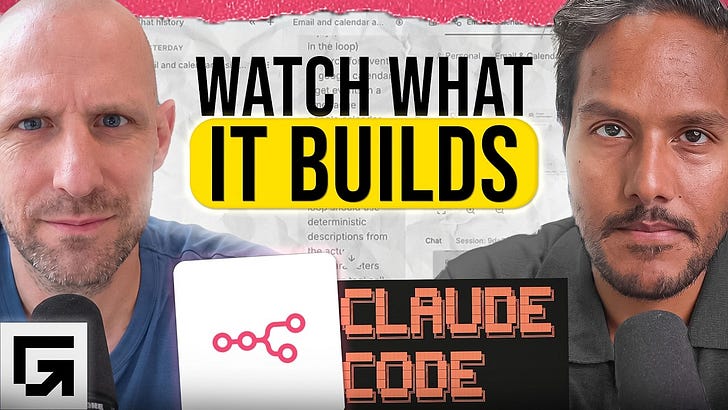
n8n CEO Jan Oberhauser argues n8n isn’t “dead” despite hype cycles around AI agent tools. He positions n8n as orchestration for reliable, secure, auditable AI workflows—especially for business-critical use cases—contrasting it with “Cloud Code” style tools that generate large amounts of code.
Jan Oberhauser is founder and CEO of n8n (company existed before ChatGPT). He discusses n8n’s product strategy, growth, and enterprise adoption.
Written by AI. May contain mistakes.
Learn about N8N's growth and challenges in the AI landscape.
“I think we have been called dead probably a thousand times.”
A deep dive into the differences between N8N and Cloud Code.
“We're going to get to the bottom of what can N8N do that Claude Code and Co-Work can't.”
Discussing N8N's impressive growth metrics and user engagement.
“And it's kind of, also when you work with other people, they kind of talk about like what is actually running.”
Exploring N8N's strategic partnerships and market relevance.
“And again, it just generally feels like you're just getting started.”
Exploring N8N's strategic partnerships and market relevance.
“Nine out of ten companies that see themselves as industry leaders and expect to grow this year say experimentation is critical to their business.”
Explore how to effectively combine AI with deterministic logic for better results.
“of AI with deterministic logic and human in the loop.”
Learn about N8N and its role in streamlining AI product development.
“Now, my audience, I've been spending a lot of time talking about PM operating systems in Cloud Code.”
See a live demonstration of N8N's features and how they work together.
“Then you can send off example please send or please create another actually please connect and another meeting with my VP of sales tomorrow at 3 p.m.”
Understanding the critical aspects of reliability in using N8N.
“but probably wonder how can I actually create that?”
Learn how N8N enhances auditability and workflow management.
“And again, hidden the loop step and so on.”
Discover how to share workflows and collaborate within N8N.
“is that when you build these things in cloud code, the fundamental sort of unit, the source of truth is code.”
Explore the unique use cases where N8N excels compared to other tools.
“You can literally maybe add a few pieces there.”
Explore how N8N addresses reliability and security in enterprise workflows.
“I guess for me, I feel like other products could also do this.”
Understand how to start with small impactful workflows using N8N.
“I feel like you guys have so much power that sometimes it's almost hard for people to figure out, at least when I talk to them about it, about what is the specific thing that I should go do next.”
Delve into the unique advantages of N8N over Zapier in automation.
“Yes a lot of scraping use cases I also have used NN a lot to teach AI like it's a really good place where you can very easily fine tune a model.”
Understand how integrating AI fundamentally differs from superficial applications.
“And can you break that down for us a little bit more?”
Explore how user adoption of AI features has driven growth for N8N.
“Obviously, that would have been zero at the beginning of 2023.”
Learn about N8N's approach to growth without focusing on typical revenue metrics.
Discover how N8N's goals shifted from revenue-focused to user adoption-driven.
“where I was just focused on free-to-paid conversion, free growth, that's very interesting and very different for people who might not realize way to approach those free users.”
Examine N8N's community-focused approach to growth compared to viral tactics.
“saying hey it's not about money it's about about adoption that's why kind of this this value switching away from AR to really actually use this made much more sense for us.”
Learn about N8N's product team structure and the evolution of leadership roles.
“Although if you think about like a lovable or something, they are more viral.”
Learn why technical depth is crucial for successful product managers at N8N.
“And again, just make sure it's always on the right level.”
Discover the significance of evaluations in product management and how they are handled at N8N.
“I wanted to just see what are you guys looking for for your PM.”
Understand how candidates can stand out and succeed in interviews for PM roles.
“Like you can create your own EVAs in NNN.”

Get the gist, explore an idea or ask about something said.
 Claude
On The Growth Podcast, what are the key points of this episode?
Searching your listeningAutomatic transcript. May contain errors.
0:28We have grown 10x in the past year. Do you need N8N anymore? You guys have to untag that. I think we have been called dead probably a thousand times. I don't remember half of the things that killed us over the years. You guys actually existed before ChatGPT. And you talked about in a podcast how you said you were scared a little bit. N8N was literally the hottest AI tool in the world in 2025. Now people are declaring you all dead.
1:05Before we get into today's show, please take a second to check that you're subscribed on YouTube and following on Apple and Spotify podcasts. If you want access to all of my favorite AI tools, I've gotten them to give you an entire year of their paid plans. Check out bundle.akashg.com for an entire year of Bolt.new, Airtable, Speechify, Descript, Magic Patterns, Linear, dovetail arise and mobbin and now into today's show n8n was the hottest tool in my newsletter last year i wrote about it over 25 times you can use it to learn the basics of ai like rag and fine tuning you can use it to automate your workflows you can use it to create ai agents using its visual workflow builder and then claude co-work came out and then there was the rise of Claude Code.
1:55Today we have on Jan Oberhauser, the CEO and founder of N8N. We're going to get to the bottom of what can N8N do that Claude Code and Co-Work can't. What is the role for N8N this year in 2026 and 2027? How should you think about using N8N versus these other tools? We'll also talk about how they build product at N8N, what their new latest metrics are, and much more. Jan, thanks for being on the podcast. Thanks for having me. Excited to be here. So N8N was literally the hottest AI tool in the world in 2025. Now people are declaring you all dead. I looked at the Google search trends and there might be something behind it if you look at these trends here.
2:40Then this tweet went viral from John Ennis. Remember N8N? Went irrelevant pretty quickly, huh? Do you need N8N anymore? There's a lot to unpack there. I think first probably important to call out, that we i think we have been called that probably a thousand times i don't remember half of the things that that killed us over the years we're still here so i think that probably doesn't hold that too also quite exciting uh quite interesting i think if you check out half of the other tools out there and you type into google trends i think you see very similar trajectories i think it's just there's obviously a hype cycle that gets a bit overhyped and then it kind of goes into this kind of more normal um the framing again i think that's also where we are with the most products there.
3:20But yeah, I think my first thing is to talk a little more about Cloud Code and other ones. I think it's an amazing tool and really deserves to be out there. But I think the most important thing is like NNN and Cloud Code are very, very different products. It's like you need both in the end. Like Cloud Code is more like the genetic tool, like it runs entropic models in your terminal. And NNN, you can see more as this kind of orchestration there that really connects your kind of tools, your kind of LLMs, your data sources, and it kind of offers you this kind of visual canvas for systems to really run reliably and securely.
3:52This is especially important for business critical use cases where technical and non-technical people really collaborate. I generally think it's also more important than ever for this, and it's more important than ever for this, especially business critical use cases where reliability, security, and audibility really matters, where we want to be 100 % sure that you know what is running, like you can inspect what's running, you can see what did run, where you cannot just rely on it's working 95 % of the times, but you have to be 100 % sure that it really works. I think this again, where our visual canvas kind of really shines because it shows exactly how it works, what it's done.
4:30And it's kind of, also when you work with other people, they kind of talk about like what is actually running. Like if you have something like a cloud code, it generates literally 10 ,000 lines of code that nobody can inspect and nobody knows if it's actually doing the right thing. Also, we see actually a lot of people that use it together. Like they're very often prototyped with cloud code because again, you can get something started very, very fast, but then actually kind of migrated afterwards to something like NNN for the reasons that I already mentioned again, especially for the audibility.
5:02When you want to handle like large or complex data processing pipelines, they want to be like able to kind of more precisely define what actually should happen and where also self-hostability really matters because like people care more and more about data privacy and security and also one important thing to be aware of actually multiple of the model companies are using NADEN as well and I think that also makes sense because in the end you want to use the right tool for the use case and actually using us for things like security or compliance use cases because that's again where we really shine and also if you look like in our stats online you still see like crazy growth like we cross 200 000 github stars recently we have one and a half million active users we have over 1200 enterprise customers and i'm not talking about enterprises using end and i pay i'm talking about 1200 enterprise customers using our enterprise solution out there we have 300 ambassadors out there there's literally one NNN community event worldwide every day.
6:00Like in September alone we have over 50 events happening worldwide in a single month. We increased our revenues 10x over the last year. I think the medium number of enterprise instance users more than doubled over the last month. So definitely we still see a lot of growth. And I think one last thing to probably call out, I think there's still two very critical things that kind of made me very confident about the future of NNN. one is the kind of model flexibility it's like what people really care more and more about and is kind of being able to switch models for the simple reason because new models appear literally daily and all of them have different capabilities all of them have different prices people really value kind of this this flexibility of n-a-d-n to kind of really use the right model for your use case and we see generally kind of models and kind of intelligence being more and more commoditized and this again means that the value kind of more in our direction.
6:56The other thing is also like when you want to kind of connect multiple models together. Again, you say, hey, maybe you want to use for X use case, I want an OpenAI model, or for that use case, I want to use an entropic one, or here I want to use an open source one. And the last one is really this kind of the community and accessibility. Like, I think NNN, we talked about the hype cycle before, and obviously NNN started with the kind of very early adopters we talk about this like 0.1 percent of these people and now we are kind of moving more into this kind of 99 percent who are like moving away from this early adopters but really the people that actually want to get things done that we kind of lower the entry barrier more and more we just really make sure that this technology we can only build with anything but literally anybody who can use a computer that's literally our mission is defined to give everybody who uses a computer and technical superpowers and that's what we're thriving for these days.
7:47And again, it just generally feels like you're just getting started. There's so much opportunity out there. So I'm really excited. Wow. So I'm going to be paying attention when you show this to us in a little bit around privacy, security, auditability, reliability to really understand what those words mean. Because I feel like sometimes when we hear those words in abstract, it's hard to really understand what that means in the product. So I'm going to be on the lookout for that. But I want to dig in a little bit more on this detail around specifically the rise of Cloud Cowork and Cloud Code. I had on the founder of Lindy, who I used Lindy personally for some of the similar things I would use N8N for, like automating agentic workflows.
8:26He admitted Cloud Cowork had a really significant impact on their business. Did Cloud Cowork, Cloud Code, the rise of Codex have a noticeable impact on N8N's business? In the end, like we first got going back to the things where we got killed, like I think that at some point openly I launched their their own agent builder and think like actually we had I think the best week ever is when we got called killed by them so I mean it's like I think the nice thing about all of those opportunities is that people talk about it more and see more opportunity and so yeah that's that was quite exciting and we definitely I think every company these days like then they say people again hype things up and they see a lot of usage of those products I think what we're definitely seeing is where the use cases change I think a lot of the use cases in the past is where people started to use NNN for this personal use case.
9:18They say, hey, again, write me an email summary. And what's changing more and more is, again, that people say, hey, these use cases are great and I need them. But where they really use NNN more is for those kind of business critical use cases. And that's definitely probably the biggest shift we are seeing there. So I was trying to find some numbers on NNN. Just in May, you guys announced your strategic investment from SAP. where you mentioned you had hit a$5.2 billion valuation. Startup Riders earlier this year put you at$100 million ARR. You just had mentioned that you guys had 10X'd your ARR over the last year.
9:56What can you tell us about your users and revenue now? Feel free to break any news. Honestly, we're not showing much more numbers there. I can say we're way across 100 million by now, still growing strongly. and again the user numbers are already shared one and a half million users are also growing strongly there as well but we're not showing any additional numbers right now publicly.
10:39the next one. Someone goes quiet, they get a different path entirely. Their AI agent makes it fast. I describe the campaign I want and it builds the full journey form. Triggers, timing, copy, even branching logic. And when I want to know how something is performing, I just ask the agent directly and it tells me what to do next. They also have an MCP server, which means AI tools like Claude can see directly what's happening in your customer.io workspace. Your segments, your customer data, your attribution, all of it. So instead of explaining your business context every time you need help, clawed out a nose.
11:10Notion used customer.io to personalize their onboarding and hit nearly 50 % open rate. Improved conversion by six to 7 % with localized campaigns and pushed open rates up another 20 % through A-B testing. The idea is simple, customer.io helps you deliver more impact from every message you send. If you're a PM or founder and your onboarding is still one size fits all, try customer.io at customer.io. Today's episode is brought to you by the experimentation platform Chameleon. Nine out of ten companies that see themselves as industry leaders and expect to grow this year say experimentation is critical to their business.
11:45But most companies still fail at it. Why? Because most experiments require too much developer involvement. Chameleon handles experimentation differently. It enables product and growth teams to create and test prototypes in minutes with prompt-based experimentation. You describe what you want. Chameleon builds a variation of your webpage,
12:25I think you had said 1 ,200 enterprise accounts? Exactly. Yeah, this as well. I think the exciting thing is definitely just seeing what kind of enterprises adopting NNN. It's like again talk about SAP again they're literally they're not just made investment that he talked about with 5.2 billion valuation but they also they actually added NNN to the product. So NNN will be available to literally any SAP customer out of the box. They can use it without installing anything else without installing like setting up anything else without adding billing information anything else they can just use this out of the box.
13:01It means like really kind of makes an AI layer instead of SAP where you can really kind of build your agent automations inside of the product. Also like customers like Mercedes which probably talk about how they're using NNN and how they see the company getting transformed through it. I think this is the really exciting things like I think a lot of the numbers people are sharing a lot of that is a lot of hype but actually it's the interesting thing when you actually see real usage of a product and especially really delivering real ROI because I think like people like in the past like revenue was great because like revenue was very close to actually also kind of real value.
13:41But I think there's a lot of decoupling happened there. And I think what our customers see very strongly is that we really deliver a real ROI for them. It's like they're not just burning money. They actually see that getting something back there. I think why that is happening is I think another thing that's maybe important to call out about NN is this kind of combination of AI with deterministic logic and human in the loop. We talked about it before, AI is amazing. It offers so many possibilities, but at the same time, it's not a solution for everything. What you really want is kind of link AI with deterministic logic because, again, it's much cheaper to use as simple if.
14:18It's much faster and it's 100 % reliable. And then you still need human in the loop. It's also something, again, that demo you later because how it works instead of end at end because for certain use cases, you always want to make sure there is like a human still in the loop. Again, I think that is probably the things people should look out on LinkedIn, like not just the numbers that actually share, but actually the real users behind it and the ROI it gets delivered for those customers. So I asked Claude to go through my newsletter archive and it said I had written about NADM 25 times in the last 12 months, which surprised even me.
14:53It also found that when I did my AI tool ranking a couple months back, we put it in the A tier. above Zapier and Make. Now, my audience, I've been spending a lot of time talking about PM operating systems in Cloud Code. So what they typically do is, you know, they would open Cloud Code, connect some MCP servers and have a working agent in a couple minutes. What does N8N do for that person that they can't do themselves? So actually, I think it's probably easiest if I simply show you how it works. This is the starting screen for all users right now. I think maybe the first important thing to call out there is like what you see here is our AI assistant, which the idea about it is to kind of, I talked about before that what we're looking for is kind of really give everyone who uses a computer technical superpowers to really kind of lower the entry barrier.
15:43And that's exactly what it's doing here. Like you can do the same thing you can do in a cloud code. You can just describe literally what you want to get built and it's going to build it for you. But actually I have something prepared, but before I show you how it got built and maybe show you the outcome and to give you a better understanding how anything looks like and how it feels like. Here you can see an AI assistant which actually works with your Google Calendar and your Google Gmail account. How generally anitent works is you get a trigger node something that starts a workflow in this case you have here an agent and it gets a response and as well we have again different AI models it's important to call out here that here you have for example we use Claude Sonnet by default it actually does get used via our own gateway so you don't have to sign up for for separate accounts if you don't want to if you want to you can obviously still use your own one as well and we even have a model like we know this language and this provides not always very reliable so it's always good to have a fallback in case they don't respond and then we have a lot of different tools like in this case here list emails you can get a whole single email you can write emails get information from your calendar and so on here you can also see that here we have further actions like for example sending an email that is something i don't want the AR model to do by itself without asking me so we have fear this human like human the loop step they can define literally like only execute that tool if you got approval before you can define how it should be approved um and and how the the output should be what it displays you then they give you a fast a demo like how it would work in this case you can use it externally or you can also test inside of nnn so you can just say um what is my next call and now i can also see this audibility piece you're not just seeing how the whole workforce built you can also see how it actually executes so you can see here the agent gets actually did run then it kind of used a model it called certain tools here it also got a memory and also here you can go through literally each step what information got sent in and what information came out of it and you can see here my next call is actually tomorrow at thursday at 11 a.m.
18:07till 11 30. Then you can send off example please send or please create another actually please connect and another meeting with my VP of sales tomorrow at 3 p.m. and now again you see again each node executing and if something goes wrong you would see it red then you can very easily debug and say hey I now fixed that one thing again you can see what's actually doing how it's executing and now you can see exactly that if you go over here you see now it's waiting here you can see it's not doing anything further and now it says I'm about to create a calendar event with a certain information am I actually allowed to do that now I can either cancel it or say add event if I say add event it goes in here actually creates the event and it's done.
19:05I think that is generally how NITN works. Obviously like it looks now quite technical like they're not technical but probably wonder how can I actually create that? Again that's where the AI system comes in and I can show you how it was built. Here you can for example see the prompt. Here you can generate me a workflow agent for a personal project so you kind of see what it was supposed to be doing. get emails, archive an email, search for events and so on. It kind of get prompted like similarly like you would be doing in Cloud Code and other solutions and then it starts thinking and asks some clarifying questions like which model should be used and something else and then it actually thought for eight minutes again very similar to Cloud Code and after eight minutes it kind of came back to you with the answer what it built and you can see here literally again that's the workflow we were just working at right now.
20:01What you can also be doing, again you can see some more information about digital tools that you use, also again where you use the approval step and then you can also kind of make additional adjustments and maybe that's something else to maybe also demo here where we maybe just say hey that's great but I for example very often want to schedule one-on-ones with my people in the team. So I just tell it hey please now extended workflow make sure i can schedule this one-on-one meetings they should be 30 minutes long you should add always a google google link um the agenda should always be in the description and i should only pass like what's required and also like it should get the information from google contacts um and now you can see exactly that now it's gonna keep on thinking for a little bit um and then it's gonna come back to us again in the meantime maybe i um just again go back up here just to see actually like while it's thinking can still for example like interact with the workflow here you can still ask questions as well and kind of keep on working and it kind of keeps on working in the background and we can just ask further questions there and then we can anytime go back here see what it's doing trying to see while it's figuring things out in the end and I don't know it's probably going to take a few minutes I'm not sure you have enough time but at the end what you will see is that it adds additional tools to that workflow it will add again another tool that you can get contacts from a Google contacts and another additional tool to add actually specific calendar events for my one-on-ones and I think that is again I think that shows the power of anything and especially like if you imagine now this one I can very easily hand over to somebody else because like like again even if you're not technical you can still at least go in here and kind of very easily understand hey actually here is an agent you can see what is the system prompt actually has been defined you can see again what model it's using you can see how they're defined you can see here it actually creates a draft of an email you can see what things get auto-defined like all the things that are simply totally impossible in code because again it's just too much output or again if it's done 100 % by AI you literally it's a black box it can do the things for you but you have no reliability that the thing that worked yesterday is still going to be working tomorrow as well that's again the reason why we again great for anything that's where compliance is important or where anything is really business critical for you because you can really rely on on those workflows because of combination again because of AI, but still deterministic logic as well.
22:43And again, hidden the loop step and so on. So I want to make sure I define for everybody watching those key terms we talked about. So starting with reliability, one element of reliability you just talked about and you showed us is, hey, Claude, they barely have four nines of uptime right now. So you can put a backstop model. If Claude is not available, use this other model. Is there any other component of reliability that people need to make sure they understand? Like there's probably multiple ones like another one to call out is literally it's running on your own infrastructure so it means like if you talk about you can actually like edit and can run on your infrastructure you can literally self-host it so if you want to make sure like it's close to your own data like there's no internet problems that can really cause any problems there you can run it there.
23:32You know like for example like all the other tools like for example get email tool or anything else is literally code we created that's literally tested and we maintain. So even if the API changes anything like that literally what all we have to do is we change the kind of the code one time it gets changed for everybody we know it's the kind of this reliable build a reliable piece of tool that works for everybody and not something that literally any person worldwide has to re-implement every time and certain edge cases are forgotten. Like we can really think very deeply about the quality there.
24:09On top of obviously we have like this kind of whole platform that not just again create workflows but you can also deploy them on. So again like if something goes wrong you can just have retries. You know where the data gets stored and so on. I think there's a lot of things where it simply takes out a lot of the worries and the thoughts you normally have to think about when you employ something else or just get code written by another solution for you. So another word we talked about was auditability. And I think the way I'm seeing it, although I'm curious if this is like technically accurate, is that when you build these things in cloud code, the fundamental sort of unit, the source of truth is code.
24:52It's a bunch of files that kind of live in some Python scripts, some random markdown. It's kind of like built on a brittle house. Versus here, what we have, I think, and how I experienced the product as a power user, is the core is this workflow editor. And everything is thought of in terms of more stable components, where each of these lines and nodes in the workflow is something that you guys really put your foot behind. It's stable, it is working, and it's something that somebody can see versus just in code. Exactly, especially like this audibility piece. I think that, again, there are multiple things.
25:34So next to what we can see what has been built, again, it's the workflow itself. Again, you can also see how did it run in the past. Like say, hey, here are the last executions we, for example, went through. So you can see literally here step by step how did it actually run. Again, it started here. It called an agent. It called those different tools. Again, you can see the information that went in and out of the product. And you kind of get so, like you can literally identify everything the AI really did for you. Again, with code, it's the input and you see the output of the whole thing. But what really happened in there, you have no idea.
26:13Like why did it take certain decisions? For example, we could now add here, for example, between the output of the agent and the output like an additional node that adds, for example, the tenacity logic and say, hey, if it outputs like, again, something that's smaller than 50 or larger than 50, do something very differently. Like it can be, again, 100 % sure it's always doing this. And you can then also, after it's inspect, why did it take a certain path? Because like that number actually got the output, then it went there. And if it didn't go, do a certain thing, you know exactly again how we can debug it and change it.
26:48And then you can literally rerun half of the workflow from that data point, from that point in time, and can then get it to the kind of state and the quality you actually require. So another thing that you had mentioned that's important about N8N is this idea of being able to pass it to somebody. So can you show us like what is the if I wanted to give this, let's say I'm a manager and I want to give this to somebody on my team. You should also have this workflow. How would I do that? You can literally maybe add a few pieces there. You can literally share your workflow with other people because I just invite them there and then they can access it and kind of change it themselves.
27:26um other few other important pieces you can literally have a version history you can kind of see how it changed over time um again this means a person can actually go through and kind of see hey okay who made changes um what went on there you can even have um things like again publish certain verses they kind of describe what changed between and similar to git um another important one is um actually where did it go um you can even very easily export them so you can literally send another person an email a workflow via email if you want to and we also something that's not in this version yet here because i think it's an older version so i didn't update it it's what we have is kind of review steps you can actually say hey i made this change please review that workflow see if it does the right thing for you and then you can approve it and only then it gets for example published okay what is making enterprises like the model companies themselves use it here Here we've shown the email and productivity assistant.
28:26I guess for me, I feel like other products could also do this. What are those use cases that N8N is so uniquely equipped for? Certain ones are, for example, like the more important reliability and security is obviously more a giant. Again, we have definitely quite a few companies using that for use cases, like it's a survey of security orchestration. meaning like every time an email arrives with an attachment scan it then archive it if there's something is going wrong inform certain people or make something certain gets started or anything that relies on like more sensitive information it could be employment data or could be also be even things like on and off boarding employees where you don't want to like you don't want to have anything go wrong because you don't want to have a half onboarded employee either what you don't want to have even less than half onboarded employee either we have people using us for for DevOps use cases there's definitely like a wide variety if I think in anything if you think about anything where you really want to kind of want to be 100 % sure that that it really gets done and not just half done and so means more or less anything that is not a private use case that That is very often why people normally choose NNN over other solutions.
29:46Here's what I did last week that changed how I think about AI coding tools. I built a full internal dashboard in Bolt.new. Took me about two hours. Looked good, worked well, had all the functionality the team needed. Then I did something you can't do in most AI coding tools. I sent the actual source code to my engineer. In Base44, in Lovable, in most of the tools, the code lives inside the platform. Your engineer can't pull it. They look at your prototype, say cool, and rebuild the whole thing from scratch. Boltatnew is different. The code is pullable. Real, production-grade, front-end code. My engineer opened it, reviewed it, and started building on top of what I'd already made.
30:22No rebuild, no start from scratch. The prototype became the product. I use Boltatnew every single day. I built my entire paid cohort platform on it. 75 product managers log into something I made in Boltatnew. Try it yourself, Boltatnew slash A-A-K-A-S-H. That's bolt.new slash akash. Today's episode is brought to you by Jira Product Discovery. If you're like most product managers, you're probably in Jira, tracking tickets and managing the backlog. But what about everything that happens before delivery? Jira Product Discovery helps you move your discovery, prioritization, and even roadmapping work out of spreadsheets and into a purpose-built tool designed for product teams.
31:02Capture insights, prioritize what matters, and create roadmaps you can easily tailor for any audience. And because it's built to work with Jira, everything stays connected from idea to delivery. Used by product teams at Canva, Deliveroo, and even The Economist, check out why and try it for free today at atlassian.com slash product dash discovery. That's A-T-L-A-S-S-I-A-N dot com slash product dash discovery. Jira product discovery. Build the right thing. Do you know how to take an AI product from idea to development to evaluation to deployment and eventually to scale? That's exactly what Product Faculty's AIPM certification helps you do.
31:46I even took the course myself. You'll learn directly from Rohan Varma, the product lead working on codecs at OpenAI. You'll go deep into AI prototyping, evaluations, agents, AI native workflows, cloud code, open claw, latency, cost, guardrails, rag, routing, fine tuning, and production systems. You'll even build your own AI product as your capstone with unlimited one-on-one support. So if you want to stop just learning AI and actually build AI products that work, join Product Faculty's AIPM certification on Maven. 5 ,000 plus students have graduated and they have 1 ,000 plus reviews. Use code AKASH550 to get$550 off your enrollment.
32:28I feel like you guys have so much power that sometimes it's almost hard for people to figure out, at least when I talk to them about it, about what is the specific thing that I should go do next. So we've showed them the email and productivity assistant. We've given them a preview. This is amazing for security and compliance use cases. If you're a product manager, you've built the email productivity assistant. What is the second, third, fourth thing you should build in any of them? And I think this is probably more a question for the person. it's like I think that's the problem with a very hard sound platform like ours because you can do everything in the end like you want to do the thing that will be most impactful for you and like if in the end you want people to think about like what's the thing I'm doing literally every day what is something where I'm using multiple applications where I'm very often copy pasting things between applications um where I don't know maybe I'll get information from one place put it into like a chat gpt or claude and then do something with that create a pdf report um anything where where you think like hey i'm i feel like i'm wasting time um then at least you can get started for your person use cases um for kind of company uh wide use cases i think that is very often again and then normally it suggests people to start with something small like we have a lot of companies that just want to start with something huge to say hey how can i totally transform x and then they spent literally building and building and building for four weeks and it's a very hard thing because at some point if you don't have experience yet you maybe think things the very wrong way and I think what what they have seen that sometimes workflows that literally just contain like an agent a few other nodes they're actually very often the most impactful ones and again not always do you need actually AI for everything again AI is one tool of very many like we have one company that literally used nnn to kind of do password research of employees they have a lot of employees um a lot of them um forgot forget their passwords regularly and they were locked out for literally hours they cut down at the time like immensely and it saves them like literally multiple full-time employees a year in time saved so like i think it's not about like the craziest um one is really the one hey where can i get started easily what do i think is the most impactful one and then build your way up from there especially are this simple ones are great kind of to kind of show off to other people they should say look for what i build see what's possible i spent literally two hours on that and that's the impact they get other people involved and then very interesting thing is like especially in org is like you the more you talk with other people that actually build you get other ideas as well ah like i built this ah yeah this is a very similar use case I have as well and you adopt it and on top we also have our template library online there's over 10 ,000 workflows for people there so you can just go in there say hey I'm using tool X Y and Z or you can say hey I'm in sales and you get literally for each use case you see hundreds of them workflows and agents other people have built they can either use them to get inspiration and actually take them simply as they are at your own credentials and you can get started there.
35:42Can you show us the template library and maybe give us some inside information about some of the popular ones and the ones that PMs should be looking out for? Here you see the templates page. As I mentioned before, you can get started saying, hey, I want to use Google Sheets. And then you see like a lot of you, in this case, for example, 4 ,000 workflows that use Google sheets. We can then say hey everyone I'm in sales. Now you see all the sales use cases that use a Google Sheet. What we for example see very often is a lot of people use also edit and for web scraping. Just get information from web pages, get information from different data sources in which it in a certain way save it in this case for example to Google Sheet and then send that information to Slack or we can go over to remove everything here and go for example marketing maybe actually let's get an IT ops maybe this one interesting ones yeah here for example you have you can say the other thing about end at end is again going back to the reliability piece like if something goes wrong you can get informed in whatever way you want you can get informed by an email you can inform these cases an example how you can get informed by a telegram again here we see like somebody's used and it ended for monitoring here there for example track hey are SSL certificates on my server still up to date and then it kind of alerts them on on this discord it sends it also to Notion so there's a million use cases out there as you can see that you can use for for literally anything we definitely see a lot of monitoring use cases in there as well again very often also in combination with AI because I think that's again where you want to react very fast the reliability piece again matters where you can say hey again if by default just inform me and then maybe try to auto fix it then use AI but you can really kind of very clearly define again the different steps that should be taken first and then you can make sure again again for example the informing piece always happens to 100 % but this kind of auto fixing part with the AI for example only happens later and again I think that's again one of the things that NN really shines and I think I just advise anybody to just look through there and kind of get some inspiration of people what people are actually building within it.
38:11Yes a lot of scraping use cases I also have used NN a lot to teach AI like it's a really good place where you can very easily fine tune a model. You can very easily set up a RAG system. You can set up a vector database. So if you want to learn the fundamentals of AI, I think it's also really good for that outside of just workflows. So one of the areas we talked about was the ease of use. So can we see how the AI assistant has done on extending our personal productivity workflow? Surely. Okay. Here we see the prompt. It's how I thought about it. And then it said extend it here. it actually also asks a question in between.
38:49And now we can maybe go into the workflow. We can see on the side, let me extend it actually a bit more. And now you can see how it extended it. So what it actually added now is, for example, this lookup. So it means like it can now look up context on Google. You also can see it actually executed because what it's doing is part of the process already tries to kind of test the workflow for you and runs it. You can also see here this approval for one-on-one. So if you want to book a one-on-one, you can also see here the same thing again. It says, I'm about to book a 30-minute one-on-one. It will include a Google link.
39:28Are you okay if it gets added to the Google Calendar and only then, again, it does that? Okay. So it took five or six minutes, it looks like, but in the end, you're going to get an updated workflow that actually makes sense, that works with your tool. Exactly. So your episode is coming right after Wade Foster, CEO and founder of Zapier. So we have to ask the obligatory question, Zapier versus N8N. What can N8N do that Zapier can't? I think the great thing about N8N is we focus from the very beginning about power and flexibility. I think when you get the most value out of N8N is you kind of really don't want to be kind of locked into this kind of automation where you kind of have something where you want to be sure like you build something today you think again i mentioned before you want to start with something simple and then you kind of you want to kind of build on top of that and and kind of build it up i think that's again when it shines very strongly because again we have this power and flexibility built in we have um you have things like code nodes where people can fall back to code anytime we have this very um complex and agents can be building again it's not just um basic agents you can actually add your own memory you can put out you can add outside passes to make sure the output is always a certain format you can have again as i mentioned before you can have different models you can have fallback models you have this human the loop steps i think um a lot of the things that i think when it becomes a little bit more complex rather than simple use cases.
41:04Again, like, Wade is a great guy. I've always enjoyed talking to him. I think SAFE is a great product. But again, as I mentioned before, there's always the right use case for the right product. And I think, like, especially if it's about where you need power and flexibility and a very deep integration to AI, it's when NNN really, really shines. And again, obviously, I think probably it's worth mentioning, but I think, obviously, if you want to self-host it and things like that, And that is where obviously NNN is, I guess, they say, I guess, can compete considering their SaaS solution there. That's an important differentiator too.
41:44So I want to learn more about your guys' growth because you have a pretty fascinating history. We talked about how many times people have called you obsolete. You guys actually existed before ChatGPT. NNN has been around. And I think that might have been one of the first times. And you talked about in a podcast how you said you were scared a little bit. But sprinkling AI on top would only give you 10 to 30 % growth, not the 10x growth that you guys have been seeing year after year since. How did you make that call? And can you break that down for us a little bit more? What does it mean to sprinkle AI on top versus make it core?
42:22sprinkle ai on top is what i see is like somebody tells you add ai and you say hey here and at this ai button somewhere it does something with ai where i see again become but what we have with it is like really think about like how can you become part of the value chain how can you really kind of not just add ai to the product but really kind of make sure people actually build within it and meaning like when the idea was like how when people think about if i want to build an agent like they should be built want to build an agent with n at n so we're not just so we're actually seeing like you can actually um get that a real value of real value for people out there and i think like the thing is probably like when people get asked add ai to the product or build an ai agent or kind of spring like like we want to be the solution that kind of helps them to do that because that's where the real value lies and where you can again see a 10 or a 30 growth but And literally, like last year, we grew literally 10x exactly for that reason, because we were part of the value chain.
43:24And we kind of empowered people and we kind of provided real value for them. I think a pretty crazy stat you guys released is 80 % of workflows on N8N now use AI agents. Obviously, that would have been zero at the beginning of 2023. So is that your 2022 users adopting AI? Is this a new crowd? If so, what happened to the old crowd? It's actually people adopting. I mentioned before, our users are tinkerers. They're very interested in checking out the latest tech and really making their day-to-day more efficient. And obviously, AI is the tool to do that. And all of them are super interested in actually adopting AI and really making it part of their daily usage.
44:11And I think that's how we became so successful because we just made it super simple to really get people started with AI much faster and easier than other solutions out there. And how you've grown this thing is very different. The average company doing this type of growth, they would embrace per-seat pricing, they would have lead-gen targets. You killed your lead-gen target and you refused per-seat pricing. Why? The thing is we're in this very lucky situation that you can think very long-term. I think that most AI companies out there, they maybe grow their AI very strongly. but at the same time they're just losing a lot of money.
44:48So it means like you have to kind of show a lot of growth to kind of get more money from investors. And it means that, but what forces them to kind of really think very short term, like how can I get more ARR now to get more money tomorrow? And then the whole cycle repeats. Because of the way it is built, like we are actually sustainable. Like right now, we're actually creating a profit. So it means like we don't rely on investor money anytime soon or at all, if you keep on doing what we're doing right now rather we can think about like what sets us up for success in the long term and I think right now like being able to kind of just capture a lot of the usage and not think about again how to increase revenues as fast as possible but how do I really kind of create the best product out there and how can I create a lot of value for our customers and how can I get captured as much as possible of the opportunity out there that's why it's obviously a very much easier decision for us to do something like that than for many other ai companies out there right now so the lead gen and per seat pricing those are pretty public for anybody who's studied nnn like me what might be some other metrics you've deleted or a metric you're going to delete that people don't know about metrics we deleted maybe i can talk about an internal thing we are focusing on very strongly is like one thing is obviously like what we want to achieve like in certain goals regarding users and AI in the long term but the other thing is like how we want to kind of build a company and how do we think and it should function and we set this internal goal like we want to reach a billion users for less than a thousand employees means like we don't like we we don't want to grow our headcount like we obviously grow it because we have to um but it's the opposite of what we're interested in we kind of we want to build this very efficient org the idea behind it is very simple like organizations come to us to help them to kind of transform the organization to become more efficient to use ai better to automate more and so on and if you're not kind of doing it internally and like you're literally hypocrites like that's horrible like i hate nothing more and especially i think we cannot do a great job like we can only help them transform if you actually transform internally as well and kind of had our own learned our own lessons know what worked what didn't work what was impactful and it wasn't impactful and for that reason again we're not talking about like how fast we have grown our headcount over the last years because there's literally nothing we think is a positive thing right now.
47:22We're actually doing the opposite where we kind of try to stay as lean as possible and really try to kind of build the organization of the future to again help our customers and our users do exactly the same thing as well. Maybe another thing to point out is like what we're not what we're not caring as much about is like obviously as kind of this freely available product obviously like you have obviously users that pay you and users that don't pay you and we obviously could always kind of for example focus on how do we get people that currently don't pay us who use our free version that self-hosts us to our hosted solution that we actually earn revenues there's nothing we're doing at all because it doesn't matter for us like all we care about is that they're using end-at-end.
48:02And we know it's like they're generating value for them at some point, either while we work for an organization where they're going to want to pay us at some point in the future, but again, we don't care about if they're paying us right now or not. All the matters for us is they're happy end-at-end users that keep on using us in the long term. Fascinating. For somebody who was a VP of growth at Apollo.io, where I was just focused on free-to-paid conversion, free growth, that's very interesting and very different for people who might not realize way to approach those free users. You mentioned the employees, and I actually wanted to talk about that.
48:37I think at some point you had said you want to be the first billion dollar company under 500 employees. I think your career page puts you at around 160 employees, but LinkedIn, it seems like a bunch of people are wanting to associate themselves with N8N, and you have like over a thousand people listed working at N8N on LinkedIn. So how many people really are working at NNN right now? Currently, we are around 370 people in the org. And we are hiring. We're probably going to be around 500 by the end of the year. You're right. That's the reason why the number is so inflated, because we obviously have a lot of partners and agencies working with us, and they then very often appear as NNN employees.
49:17Also, the other thing you mentioned is like our old, it talked about right now, a billion users with less than 1 ,000 employees. Our old goal was a billion AR with less than 500 employees. we changed it for two reasons first we became like we did much more on the enterprise side of things and we realized as long as people as long as the buying side is not done by AI we cannot do the selling side by AI either like it's still a people game people don't sign half a million dollar contract without talking to anybody so like it's going to stay very people heavy for a long time and the second thing was also that we realized like I mentioned before like what matters in the end is fast adoption and they kind of talking about like the the the one billion AR was was not set because we said hey we want to make a lot of money it was set to kind of as kind of my sort of being like a big impactful organization but at the same time it still confused people internally or even even externally saying hey like all it is just about money and we kind of wanted to be very clear saying hey it's not about money it's about about adoption that's why kind of this this value switching away from AR to really actually use this made much more sense for us.
50:27I have one more question about how you guys grow, because it really is different from everyone else. Let's say like Whisper. I think they're like a company that I put in your similar category, like AI. They're just taking off like crazy. So they launched their note taker. Their entire focus was viral grow. They even bought like rickshaw ads in Delhi and things like that. You guys have been perceived as much more quiet. Is that like a strategy? Is that your personality? What's going on there? I think it's probably also part of my personality. I'm not the person that has to be literally anywhere.
51:03I'm more the introvert kind. So these kind of things don't come naturally to me. And I'm not the person that really has to be anywhere on stage. So I think there's definitely also a component about me there. But generally, as an org, I think I can be also a European organization. I think we are probably more the kind of under-promised, over-deliver kind of people. So we don't really are in the business of kind of really kind of buying any kind of viral growth there. Again, like we think more long-term. Again, like we became not viral because we paid people to talk about us. We became viral last year because we had people being excited about it and then getting a lot of value out of it.
51:40They wanted to share it. We had people that kind of created their business around it and kind of generated own money like that. And I mean, this obviously kind of makes you even more interested in actually talking about it because it's this nice win-win situation. It's like the more they talk about it, the more visible they are, the more visible they are, the more visible we are, and then obviously they get more contracts. So it's this nice piece as well. Again, we had from the very beginning this very strong community focus. I talked already before about, again, having an event literally every day on the road somewhere about it.
52:14it and i think that is again this kind of more long-term thinking we know hey like invest in the community is nothing that kind of gives you growth tomorrow or next week it's again i think that takes many many years but once you have it and once it works it's amazing and also but even by now still like most of the enterprise users actually comes from our community people like they literally use and it and privately they get a lot of value out of it they say hey i actually work for this huge org number x whatever and then i have an outside use case there so i can actually automate things there and then i do the first internal use case then they get other people excited we have literally communities inside of large orgs that are like over a thousand people are big and they have their own internal community events inside of large organizations inside of the system integrators i think that's just amazing it's nothing you can again do very fast but i think this is kind of more long-term sustainable things that can work out very well fast.
53:09Very European indeed. Although if you think about like a lovable or something, they are more viral. So I think there is also a component to your personality and how you have grown this thing. So that's how you've grown this thing, which is just amazing. I want to talk a little bit about product. You said 370 employees. How do you structure your product team? Right now we have like squads which are like between three and five engineers, one to two PMs and one designer. We have a VP of product, underneath we have a director and then we have underneath our PM teams and then the engineers report to an engineering leader again and designers to theirs and I think that works actually very well for us.
53:56We have this very small units that can kind of work very fast and efficiently and kind of get things pushed out quite fast without a lot of the overhead. When did you hire your first head of product and how did you make that decision? We probably hired him around April 2021. So it was around the same time we raised our Series A. Then we had multiple engineers already. um and i was obviously so totally involved in the product um but i also realized like it's important to have somebody who has the experience to lead a product or who can spend more time on it who can go deep on the problems um and and i i met him and from the very beginning he like i think he mentioned the past and it is a product he would love to have thought about himself like he's literally a productivity nerd he has like a shortcut for literally anything on his computer.
54:50How he does everything from, I don't know, shopping to meetings, all it is super efficient. He's probably one of the smartest people I know. It was just very, very clear from the very beginning that he is the right person to kind of lead a product company like NNN on the product side of things. So what did you hand him and what did you refuse to hand over? Originally, I stayed very close. I was still very involved, again, also on the product development open side of things I literally still merged every PR so kind of really kind of sort of reviewed everything that kind of was happening there but it obviously changed more and more over time where again kind of very early on kind of owned the roadmap but again we always talked about all the things were happening about literally every single feature in the very beginning and discussed things how we think they should work and again as the product team grew more and more actually I became for a lot of the things more removed.
55:48I still have for example like for example check-ins with the design team. We had this case where after at some point they built a feature and they made certain decisions that honestly went against what I thought was the right direction to go in and then just realized actually I probably have been too far away from the product at point in time and then I said hey now actually I have to kind of go back there I literally I we have now still to this day we have regular meetings every week with the design team where they kind of show me what things they're exploring what things they're thinking about I can give a feedback there they can hear me what what I'm thinking about things um I can get feedback very early on and it just gives me a better idea where everything is going and it's just apart from that obviously like and it and still my baby I just want to be very close to it and kind of understand what's going on there.
56:42And again, just make sure it's always on the right level. And then there's always certain things where it matters less and other things where it's worth to kind of really go a little bit deeper and understand how exactly you're thinking about things and what direction it's moving. So when a PM is talking to you these days at the CEO level, what are the ways they should be talking to you? What are the mistakes they might make? It's like it has to be obviously on the right level where it really matters and in the sense of like obviously it comes that depends what they're coming to me about is it about a certain direction they want to be going in i think that's that's exactly the right kind of level where it says like hey we think we we want to go in that direction we want to explore those things because then very early on i can give feedback i think it's right um or we can obviously say very early on it's not the right direction and can also give feedback there um and we don't um there's waste time and resources there but again everything is always happening very closely with David because like he's the product leader I trust him literally unconditionally he's just a super smart guy but I think it's always good to kind of bounce his ideas off obviously where it's less helpful very often it's like if it's obviously just in the detail I think like I still like the design demos because again that's literally where I want to be in the detail because like I think that's is important for me but if the last thing again any senior leader wants if they get involved for every small decision because most of them don't matter and I think like if it's about that hey should we put the button here or there or any kind of smaller things that don't really kind of make a substantial difference for the product experience or the opportunity I think that's probably not what you want to be talking with any senior leader.
58:24100%. So I went and found an opening for N8N. I wanted to just see what are you guys looking for for your PM. And a couple of things stood out to me when I was looking at this. Obviously, it's a very empowered job. You own the strategy and roadmap. But where I wanted to go was, what do you require? So some of the things you talked about here, two to three years on platform, well, that's because it's a platform role. You talk a lot about technical depth. Some of the words we were just defining earlier in this podcast, reliability and scalability trade-offs, holding your own in an architecture discussion.
59:02It seems like a very technical role. How technical do you have to be to be a successful PM at N8N or more broadly an AI PM these days? The experience we made is the more technical the better. And honestly, almost every role we hired. Also, our designers are very technical. and we also expect them to kind of use cloud code, create a function demos, and just get a good understanding there. So I think the more technical, the better, because you just get a, I think you can have much more impact. You also kind of understand, especially under recently, our user base was quite technical, so it was even more important than now.
59:43And I think also now where again, we talk about power and flexibility, the thing we never want to give up is this power and flexibility. People should never kind of feel logged in. I think like technical people are great for that especially because they kind of really understand very deeply like what's possible like how much work is really something we need to do there. Generally we always look for the kind of rising stars. I think that worked very well for us. Also we look like for really passionate builders. Like one of our values is literally like a culture called like we are builders. Like we want people that kind of very often that are tinkers.
1:00:15like we have people that do like have home automation running at home and kind of get very excited about those things because again they are very close to our users there and also people that kind of understand what it really means to kind of build something that scales and something that really is again reliable again that's why we wanted people actually not just build a basic agent but actually understand hey you want to probably go deeper you also want to think about evaluations, you were thinking about how does it scale, how do you kind of improve it, how do we kind of make sure it's really reliable and all of those things.
1:00:49I think all of those, if you find that this kind of treats in people which understand they're not just able to operate very high level but can also go deeper if they have to, that is normally a very good sign for us and that are good PMs. So again we found some very amazing ones but we also had It's always got a hard time finding the kind of more technical PMs out there over the last years. I keep hearing this from AI CEOs, even less technical products than you that they want, these pretty technical PMs. One thing I don't see on this list is evals. What do you think about evals? It's one of the hottest topics in product.
1:01:27Should PMs be owning the evals or at least defining, you know, the golden set? What is the role of evals for PMs at N8N? We actually have an own team, it's called the AI Trust Team, which actually owns them. And they literally also have built an internal product around it as well to actually make sure that EVOS run the right way, especially like a complex product like EnidN, where you want to test against not just simply input output, but we want to see in case, for example, EnidN, like to have the right toolspin code and so on, it becomes even more important actually not just get something that just again works for for for half the people out there but we really need something very specific so again people have to understand e-wails very very deeply and i think actually e-wails uh i think it's kind of sad people talk about them a lot but people don't really use them as much as they should because i think they're probably not very fun to create um they're very hard to create i think there's definitely still a lot of opportunity in that space as well and honestly also still a lot we could be doing much better at end and we also They have obviously an EVA product in there as well.
1:02:36Like you can create your own EVAs in NNN. I think they're very valuable. But honestly, I would love if more people would actually ask for them and actually create more EVAs because I think that's, again, when you talk about being able to kind of run things reliably, EVAs are the way to actually ensure that, especially if you want to switch, for example, a model or other things like that, for no matter whatever, is this a time reason, if you want to fast the throughput report or price or whatever, you need EVOS to kind of just get very fast, a good understanding if the performance is the same way or how we can change the prompts very easily to kind of maybe make it work for those models as well.
1:03:13So a lot of people who are watching this podcast, they're seeing this role and they're like, I want this role. So if they want this role, I have a two-part question. How do they get noticed by N8N? Like what are you looking for to interview people and then how are you interviewing people noticed um i say i'm not directly involved at that level but i think like what's definitely always helpful if you just see people being active in the space maybe having built something like that already just just understanding what it actually means again especially again we talk about them having to be technical again like if we can literally very easily see that again by by having built something or just seeing how they kind of present things, how they think through those things, it's definitely very helpful.
1:04:02And the second part, sorry, the first thing was how they get noticed. And then how do they succeed in the interviews? Like there's so many different types of AI PM interviews these days. What are you guys running? How are you guys separating, you know, the pretenders who just use Cloud Code to ship some product on GitHub, but they don't actually, they aren't actually technical. How are you differentiating, okay, this is the PM in the interview process that could actually succeed here. We found that they kind of really kind of, I probably was going to mention before that they're really kind of able to kind of go deeper and not just, it feels like they're repeating things they heard online without really understanding what it actually means.
1:04:37And I think this happens a lot. Like, again, you can, by just asking the right questions, like we are very lucky in the sense of that a lot of the things that actually become problematic at a certain point, we actually also experience internally already so we know what kind of questions we can ask and what kind of answers to expect there which actually kind of a person would answer if they actually thought about a problem more deeply versus the person that actually just repeats what they heard and it seems like it sounds good but actually there is nothing behind it um because I think like but but even then like I think with AI I think it definitely becomes like we also kind of have tasks for each role I think it becomes even more and more important there um it definitely seen in the past um that a lot of tasks if they especially take home tasks it is yeah obviously if you never know if it was AI involved for other people involved like even In pre-AI we had cases where some other people simply helped out there.
1:05:46So like something like a live session where you just go through a problem and kind of try to kind of see like how would you work through the problem together. It actually tells us much more. We also had problems in the past that like you can obviously have people that kind of worked in the same space before and people that never heard about a problem. And I think it's very hard to understand sometimes if you have a person that already worked on the problem before and if they actually had the right quality did it just again are they actually at the right level um or did they just again experience it before that's why they perform much better than people that never thought about it and this is just a very hard thing honestly very often you you have to still work with them for for a month or two to really understand hey how did they really meet the bar and i mentioned before like maybe having this goal reach a billion users less than a thousand employees like that obviously makes very clear talent density is really important if you have only a thousand people at a certain scale you can only have the best ones and they're kind of really ensuring that the quality is as high as possible obviously always means you kind of really have to always kind of um keep the hiring bar high but again if something doesn't work out i think it's the best for both sides if you also kind of sadly let them go because i think it's obviously not going to be great for end at end but it's also going to be bad for the people actually to leave them in that role because they're not set up for success.
1:07:11Doesn't mean that they're bad in any way, but they're not the right fit for the role we need them in the organization. Wow. What a wide ranging conversation. We covered N8N's growth, N8N versus Cloud Code and Zapier. We showed you guys how to use N8N to create a personal productivity assistant and get other use cases from templates as well as how they grew. Jan, thank you for all of the alpha you dropped today. Thank you for having me. I really enjoyed the conversation. See you. All right. And if people want to find you online, where should they go? Honestly, I'm only active on LinkedIn. I left X and so only on LinkedIn.
1:07:48All right. Find him on LinkedIn. Obviously, go try NNN if you haven't. I have other videos that go deeper on NNN, which I will link right up here. And see you in the next episode. I hope you learned as much from today's episode as I did. If you can do one thing that's totally free that would help the show, it would be to check that you're following on Apple and Spotify podcasts. Check that you've left ratings and reviews on those platforms. Check that you're subscribed on YouTube. Leave a like and a comment on this video. And then share it with your friends. We're trying to make better and better podcasts.
1:08:20After two years, we think we've gotten something pretty good going. So let us know what we can do to make it even better, who else we should interview, and we will put on the best shows we possibly can. And finally, don't forget my offer for the bundle. You get an entire year of my paid newsletter. Plus, my favorite AI tools. Bolt.nu, Airtable, Speechify, Descript, Magic Patterns, Linear, Dovetail, Arise, and Mobbin. That's$27 ,000 worth of value for just$150. So check that out at bundle.akashi.com if it interests you. And I can't wait to share our next episodes.
1:09:03Thank you.
Brought to you by
Customer.io - Send smarter messages using your product data
Kameleoon - Leading AI experimentation platform
Bolt - Ship AI-powered products 10x faster
Jira Product Discovery - Plan with purpose, ship with confidence
Product Faculty - Get $150 off their #1 AI PM Certification via code AAKASH150
Today's Episode
n8n was the most written-about AI tool in this newsletter last year. I covered it 25 times and ranked it A tier, above Zapier and Make.
Then Claude Code and Cowork arrived, the Google Trends line bent downward, and a tweet went around declaring n8n irrelevant.
So today I went to the person with the most to lose.
Jan Oberhauser is the founder and CEO of n8n, last valued at $5.2 billion after SAP's strategic investment. He says n8n has been declared dead roughly a thousand times, including the week OpenAI shipped its own agent builder, which turned out to be one of his best growth weeks ever.
His argument is not that Claude Code is bad. He uses it. His argument is that they are different products and you need both. Claude Code is where you prototype in ten minutes. n8n is where the thing goes once it has to run every night, survive a model outage, pass an audit, and be handed to someone who did not build it.
So he opened the product and showed me. A live agent build, an eight-minute AI assistant run, an approval gate that stops an agent mid-action, and an execution log that shows every decision the agent made.
Then we got into the growth story. 10x revenue in a year. No lead gen target. No per-seat pricing. A goal of a billion users with fewer than a thousand employees.
10 Key takeaways
1. Claude Code and n8n are different products, and you need both - Claude Code runs Anthropic models in your terminal as an agentic tool. n8n is the orchestration layer connecting your tools, models and data sources on a visual canvas. Jan's own users prototype in Claude Code and migrate to n8n once the workflow has to be reliable.
2. Reliability is fallback models, self-hosting and maintained integrations - Every provider goes down, so you set a fallback model inside the same workflow. You can self-host next to your own data. Each integration is code n8n writes and maintains, so an API change gets fixed once for everyone instead of separately by every builder.
3. Auditability is the thing generated code cannot give you - With code you see the input and the output and nothing in between. n8n replays every past execution step by step, with the data going in and out of each node, and lets you rerun half a workflow from a single data point.
4. AI plus deterministic logic plus human in the loop - An if statement is cheaper, faster and 100% reliable, so it belongs next to the model rather than being replaced by it. Destructive actions sit behind an approval gate, so the agent asks before it sends the email or books the meeting.
5. The AI assistant builds the workflow for you - Jan prompted it the way you would prompt Claude Code. It asked clarifying questions, thought for eight minutes, and returned a working multi-tool agent. Extending it with one-on-one scheduling and Google Contacts took another five.
6. Start small, and skip AI when you do not need it - Companies that try to transform everything at once spend weeks building the wrong thing. Jan's favorite example is a company that automated employee password resets and saved multiple full-time employees a year. The small wins are also the ones that get colleagues interested.
7. n8n wins wherever the work is business-critical - Security orchestration, compliance, employee onboarding and offboarding, DevOps, monitoring. The rule Jan gives is that the more reliability and security matter, the better n8n fits, which covers nearly everything that is not a personal use case.
8. Sprinkling AI on top gets 10 to 30%, being in the value chain gets 10x - Adding an AI button somewhere is not a strategy. n8n's bet was that when someone decides to build an agent, they build it in n8n. That choice is what produced 10x growth in a year.
9. Deleting the metrics that would make money faster - No lead gen target and no per-seat pricing, because profitability means n8n can think in years instead of quarters. The company does not push free self-hosted users onto paid hosting either. The internal goal moved from a billion in ARR to a billion users so nobody confuses the mission with money.
10. Talent density over headcount - The target is a billion users with fewer than a thousand employees, which keeps the hiring bar high. Jan wants tinkerers who run home automation and understand scale, evals and reliability. Live problem-solving beats take-home tasks now that AI can do the take-home for you.
Go Deeper
Build your first n8n workflow with Pawel Huryn’s guide.
Then follow Mahesh Yadav’s learning path in How to Become a Builder PM. Prototype your next agent there, and promote it into n8n through the MCP server.
Write 20 test cases and run them as an eval.
***
You can get my podcasts on Apple, Spotify, and YouTube.
***
If you want to advertise, please email productgrowthppp[at]gmail[dot]com.