
In short
The Gstaad Guy Podcast - Episode Summary
Episode Title
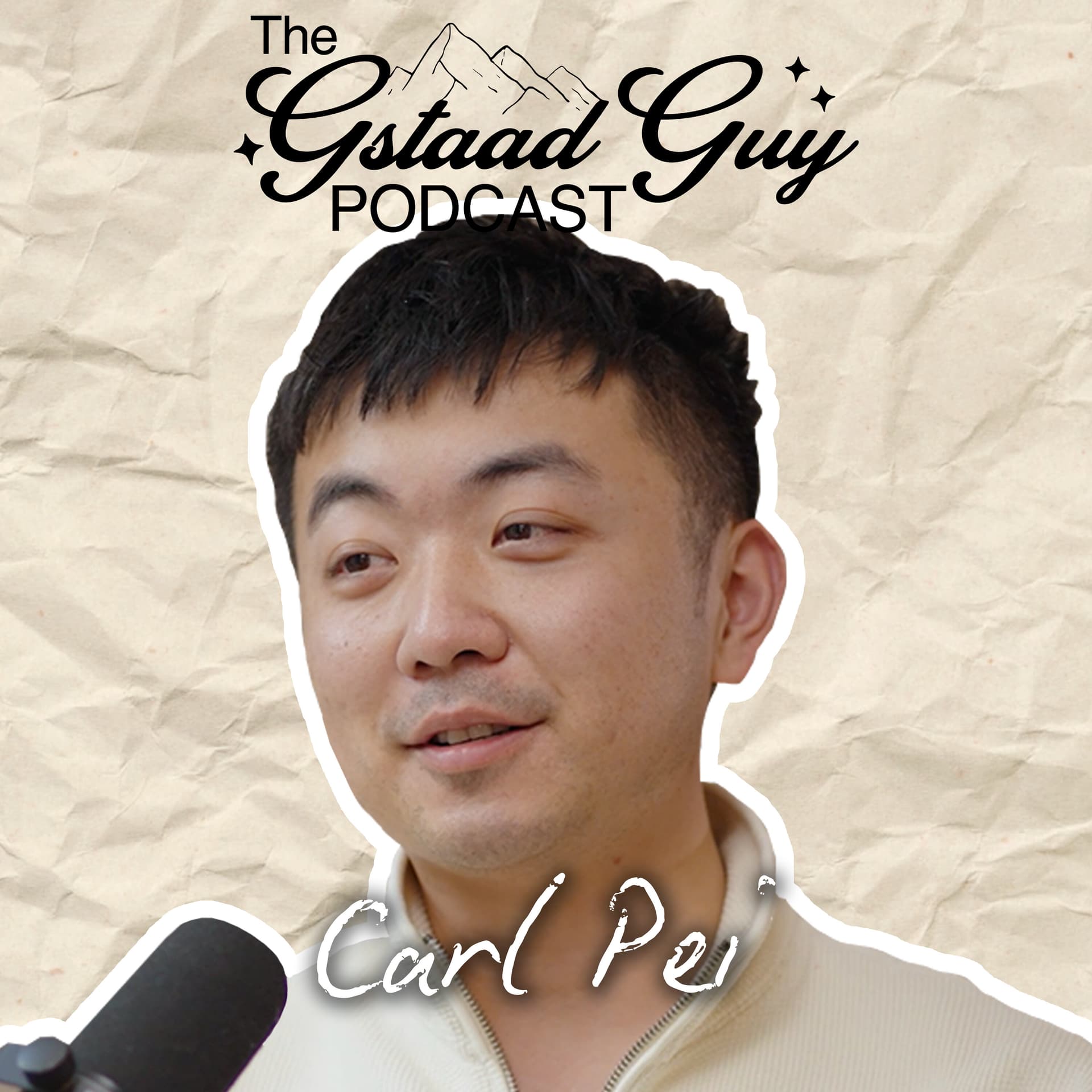
Carl Pei: Founder & CEO of Nothing – Reinventing Tech, Inspiring Creativity, & Building a Hardware Revolution
Podcast Description
The Gstaad Guy Podcast is an unscripted series hosted by The Gstaad Guy that features conversations with industry leaders and creative pioneers about their journeys, challenges, and the grit behind their success.
Key Themes and Concepts
- Reinventing Technology: Carl Pei discusses how his company, Nothing, aims to redefine tech by making it more emotional and expressive.
- Creativity Through Constraints: The importance of using limitations to fuel creativity in product development.
- Optimism in Innovation: Emphasizing a positive outlook in tech innovation amidst a climate of negativity.
- Brand Identity and Design: The necessity of individuality in tech products, moving away from the "Apple shadow."
Key Takeaways
Introduction (00:00 - 03:41)
- Setting the stage for a conversation with Carl Pei, a notable tech entrepreneur based in London.
Vision and Mission of Nothing (03:41 - 04:53)
- New mission statement: "Make tech fun to inspire human creativity."
- Contrast between past and present optimism in tech.
The Journey of Nothing (04:53 - 08:50)
- The founding of Nothing and the challenges of launching a hardware business in a software-dominated industry.
- Carl reflects on his previous experience with OnePlus and the complexity of hardware development.
Tech Landscape and Influence (12:59 - 18:30)
- Discussion on how the tech industry is influenced by major players like Apple.
- Observations about retail strategies and branding.
Challenges of Hardware Business (20:13 - 25:38)
- The multifaceted nature of hardware production and the supply chain complexities.
- Strategies for standing out in a saturated market.
Work-Life Balance and Personal Growth (25:38 - 28:09)
- Carl shares insights on maintaining personal health and well-being while managing a startup.
The Role of AI and Future Technologies (32:01 - 34:33)
- Predictions on how AI might change device functionalities, including screen sizes and user interactions.
Entrepreneurship in Europe (38:01 - 41:58)
- Carl discusses the challenges and opportunities for startups in Europe, particularly compared to the U.S. tech ecosystem.
Key Skills for Innovators (41:58 - 43:23)
- The importance of optimism and creativity as essential skills for entrepreneurs.
Generational Differences in Work Ethic (43:23 - 44:32)
- Observations on the traits of Gen Z and their differing resilience compared to previous generations.
The Need for Challenge to Foster Growth (44:32 - 47:30)
- Discussion on how experiences of trauma and struggle can lead to personal and professional growth.
The Future of Tech (52:00 - 58:30)
- Carl outlines his vision for the future of Nothing and the tech industry.
- How applied AI could revolutionize user experiences.
À La Poubelle vs. Fantastique (58:30 - 01:04:45)
- Carl shares what he would discard from the industry ("AI hype") and what he cherishes ("the London weather and his team").
Conclusion
The episode wraps up with an affirmation of Carl Pei's optimistic view of the future of technology and the role his company, Nothing, aims to play in it. The conversation highlights not only the challenges of hardware innovation but also the excitement and creativity that can drive the industry forward.
Engagement
Listeners are encouraged to engage with the podcast through its social media channels on Instagram, TikTok, and other platforms for further insights into excellence in various fields.
Written by AI. May contain mistakes. Listen to the episode to check what was said.
Transcript
Automatic transcript. May contain errors.0:00Well, Carl, Carl Pei, it's really great to have you here today. Thank you for having me. Thank you for being here. The Stad Guy podcast at the Berkeley Hotel in London. I think it's especially fitting that we're talking to you in London today because you are one of the few London-based founders in my network, which I find to be pretty crazy because I was born and raised here. Although I don't know that many founders based in London. I'm blessed to know a lot of founders around the world, but very few based in London. Yeah, same here. I think we talked about it last time we met. The scene here just doesn't have a lot of people compared to other places.
0:44Yeah. But I love the product you're working on. Love the business. Nothing. Nothing tech. I actually was introduced to it as a customer before meeting you. I bought your Nothing One, I think they're called. No, the One. The Ear One. The Ear One. Yeah. The Ear One. The Earphones, which I still use. I actually have in my bag over there your new yellow noise cancelling ones which I also love. I mostly use the wired earphones as you know for conversation but I use those for sports and for for transit. We have the ear open. They hang on your ear so when you're running outside or when you're biking outside you can hear everything around you whilst you're wearing it.
1:22It's funny you say that. I bought them. I have them. Oh you have them? I haven't used them yet but I have them. I have all of your most of your tech except for the phone because I'm too married to Apple which we'll get into but thank you so much for being here carl it's uh really great to have you here yeah looking forward to this around the world with your host the stard guy we welcome you back to the stard guy podcast sharing stories of excellence with those in the know for those who just know so you founded nothing six years ago now uh we started at the end of 2020 so it's been like four and a half almost five years fine how's that been it's been a it's been a roller coaster ride if i'm honest um hardware is hard yeah it sounds like a cliche but it's pretty hard like especially smartphones i really wouldn't recommend anybody to do it not because i don't want competition yeah but it's just very difficult i mean when i ask my friends if they know about nothing.
2:28They say, what is nothing? Many of them know it, some of them don't. I explain it, I'd love for you to correct my definition, as an incredibly innovative and Gen Z focused tech hardware business that makes devices focused on a niche of people that are maybe fashion conscious performance focused but also love to celebrate the design of gadgets and they love design. It reminds me of the old Game Boy Advanced that was clear and see-through. The old, the first I think Mac. One of the first Macs, the first iMac that was clear shelled and also incredibly sleek in design, it looks very presentable. It puts out a statement of care and interest for design away from just the world of Apple.
3:29Is that a reasonable definition? It's a very good definition. We've actually refreshed the mission and vision because we've been running it for a couple of years and it's very close to what you just said. Great. Thank you. So our new mission is make tech fun to inspire human creativity. Love that. Because I think we both grew up in a time when tech was more inspiring. Like every new product was groundbreaking or new. And at least I felt a lot of optimism, like seeing all these improvements, not just on the hardware products, but also that was a time when social media first became a thing. Like, wow, this person I met like 10 years ago, I can reconnect with.
4:08So everything felt super optimistic. And then contrast that today, and it feels very different. The entire world has become more negative. Like the economy is not doing well in a lot of countries. People are afraid of their jobs with AI coming. They're even more afraid of their jobs and afraid of the future. We have the trade war. We have just so many things that are stressful. And at the same time, these tech companies that used to be super innovative in the past, they've all become like big corporate companies and become super boring. So that's kind of the first part, like make tech fun. um the second part to inspire human creativity for me it's about like at the end of the day i think even in the world of ai the the part that's really going to set humans apart is our creativity that's like our superpower like for me it's not just about uh art or design when we talk about creativity it's about solving problems like starting a business it's also creativity being a great software engineer it's also creativity so how can we make products that not only look nice and are fun to use but also help people be more creative help people work more efficiently and differently i think that's going to be really important in the in the next phase of our journey this new definition is it very similar to your initial desire to why you started the business?
5:41So the past one was make tech fun again. Okay, fine. Because tech had gotten boring. We need to make it fun again. Fine. I feel like now it's more fun already, so it's not again. Fine. It's just make tech fun to inspire human creativity. What were you doing when you first started the business prior? I had helped create another smartphone brand before called OnePlus. Okay, I remember that. Yeah, I was like 24 when we started that company. So you can say this is the second time, but it's still very hard. Why are there so many software businesses, app developers, and software empires, but very few hardware players in the world?
6:26I think the value chain is very long. With value chain, I mean all the different components to a business. We just have a lot of components. so it's like five companies within one company in terms of complexity like if we make an app you need some designers some product managers customer support developers i think that's it but that's only like we have those it's a very small part of our business but we also have supply chain manufacturing quality control like industrial design so hardware design software design hardware engineering software engineering like the list goes on And it's just so many plates you have to spin at the same time compared to a different type of business.
7:09I think that's why we've seen people try. In the last 10 years, there's been a few attempts. But I think they didn't approach the problem from the overall complexity of the problem. I think they looked at one or two parts of the problem. I think that's the main reason. Being able to manage complexity is pretty rare. And what made you feel excited about managing that complexity as the founder? I mean, first of all, like, I've been super excited about this category ever since I was a kid. Like, getting the first iPhone and the first iPod. I mean, the first iPhone was only available in the U.S. I grew up in Europe.
7:51I had to get somebody in the U.S. to buy it for me, like, pay a penalty fee for canceling the contract. With AT &T. with AT &T, getting it here, jailbreaking it, to be able to use a different SIM card. But it was so exciting. And my entire career has been in this industry. So if you told me to do something else, I just, I don't have experience in anything else. And I felt like, this might sound like a bit arrogant, but because so many had tried before and failed, if I didn't give it a shot, then nobody is going to change this industry because I believe that we are like my team and I were the one of the only teams that has a shot at trying this.
8:34So what did starting nothing look like? Where do you even start with the hardware business? We took a pretty different approach. I guess the fundraising part is the same for everybody but the context for me is I never had to raise money before and I remember me chatting with a co-founder before starting this company were like, raising money? That's interesting. Why would anybody give you millions of dollars at risk? Why would somebody give you money that they potentially can lose? That's so strange. It was so foreign. This was late 2020. And then we just got going. So the first thing I did was I spent some time in Stockholm, where I grew up.
9:24and I was really lucky to have a few friends in the startup ecosystem as founders. And I just went to everybody knocking on the door and asking them, what's this fundraising thing about? How do you raise money? And the ecosystem there is quite small and it's pretty open-minded. So one person introduced me to the next person. So I got to learn how multiple people in the Swedish startup ecosystem raise money. and then I could internalize like because everybody said different things so I tried to internalize that to our context and um spent a few weeks in Stockholm and raised the seven million seed well to start this business so that's kind of how we got started and then at the same time we were reaching out to suppliers to um find people to provide the components and the factories to make the products.
10:20That part didn't go very smooth at all. The fundraising was quite easy at that time. It was a seed. But the supply chain was very difficult. First, we wanted to make phones. People told us it's been tried so many times. It doesn't work for a startup. So we don't want to take this risk. We're not going to do this. And we're like, okay, let's not make smartphones. Let's try and prove ourselves through something else, which is the ear one. Yeah. Our theory back then was if we could design a pair of wireless earbuds that look very different, look very cool, and also not just that, but also manufacture and sell it at scale, then people would trust us to create a more complicated product like the phone.
11:07So the supply chain was kind of the second track. And the third track was the brand and the design language. so there I was also super lucky because I had gotten to know the teenage engineering guys in Stockholm I was in Stockholm at that time raising money and one day I just visited them in their office and had a 40-minute chat with their CEO Jesper and we shook hands and yeah we said let's make you know one of the most popular phones for the world what are some of the projects and products they worked on prior. Jesper is a legend. I think he's like a once in a generation creative. Hopefully, I really recommend you to have him on the podcast.
11:51So actually, as I was growing up in Sweden, his creative work was really impactful on me without me knowing that. Because I think he started off doing advertising. So Acne, the Swedish company, they also had a creative arm before and i think he was one of the co-founders and and leading that so i think he like a lot of the really iconic swedish advertising that you just can't forget because it's so iconic like the melody might be you know still stuck in your head that was all him well um and then i think after that he shifted to start teenage engineering and i also heard that he used to be Sweden's biggest collector for Lambos.
12:40Okay. Not anymore, but at one point in time he was. Nice. He's a very interesting person. And he came up with the entire sort of design language and palette of nothing. Yeah. Yeah, yeah. So we roughly talked about the vision. Because one thing that we talked about in the beginning is that the tech world is so influenced by Apple. Like everybody's living in Apple's shadow. Yeah. if you visit some of the other tech stores around town, they just look like Apple stores with different colors. Whenever Apple releases a new product, everybody kind of follows and shifts their design language. So the thought experiment we had was, imagine if history played out in a different way.
13:25Imagine if a different country was a superpower of today. What would the best tech company of that country look like? So let's try to forget that Apple even exists, start from scratch and try and define a new universe. So on the design track, we first started with looking at a lot of inspiration, not just from tech products, but also movies, furniture design, interior design, different retail environments. just trying to get like a mood board in place and then took that mood board and developed that into our own design language. And then we published a book internally. That was one of the first things we did.
14:10That's actually our first product. We made seven or eight copies of the book. Like a design language. Yeah, a design book. Design book. Design language plus concepts for future products. That's where we started. So I think those were kind of the main tracks. And then how did that grow into the first phone in terms of the design execution? It's very painful because the way we've approached design here is quite systematic, right? Starting with design language and then everything has to follow that same design language. That wasn't my past experience. In my past experience, we just said, you know, we need to make a phone.
14:49So just make us like 40 different variants and we'll just pick the one we like the most. so I think a lot of companies work like that. That yields in individually beautiful products, but as you go through time and you release a lot of products, there's no consistency in the design language. So then shifting to a culture where designers have the most power in the company and everybody else has to follow, like all the engineers, they just have to do whatever they design, it was very painful and very different. so that's kind of on the engineering side but then on a supply chain side it was still really really difficult because we started this company during COVID and I don't know if you remember like in 2020, 2021 there were a lot of chip shortages so we had gotten to a point where we were ready to mass produce the phone.
15:45A phone has like thousands of components in it and there was one component missing. There's a small component that connects the screen to the motherboard. It's called an IC chip. We couldn't source IC chips because there was a supply chain disruption. We went begging like everywhere. I've probably spoken to every CEO, every competitor CEO in our industry at that time. Trying to get intros, trying to beg, like thinking about angles. um you know one angle was just hey i'm just a young person with a dream like even though we're competitors should support me like i'm not going to be a threat i'm going to be a small um the team also tried from the bottom up like try to talk to the sales teams at the chip suppliers um eventually i think what happened was uh one of these chip suppliers our team approached them from the bottom from the sales team and then i got an intro to their chairman as well so we met up and i think that sandwich kind of worked fine but it was very stressful when looking at nothing and comparing it to any other hardware brand and business i find that the placement aside from just the design and the brand language is incredibly different as well because to me hardware and phones have always been about abundance of access.
17:12We are a platform for creativity and a platform for productivity and therefore we're on the busiest high streets. If you think about the Apple stores, the Microsoft stores, they've always been, we can add value to you no matter who you are. That's always been the pitch and therefore we're available on the roads, retail-wise, where everyone is. Your store, maybe you had a store next to Supreme in Soho, right? Still there. Okay, you have a store next to Supreme in Soho. I've been to that store. And that neighborhood is entirely different because I think if you shop at Supreme and you take part in skate culture, whether or not you skate, but you're part of that Soho Supreme crowd and you hang around that area, you identify in many ways as an outsider, as I don't belong on the high street.
18:00This is where I belong. This is where people understand me and share my values. And that's what resonates about nothing to me. it's people who buy into nothing
18:15want to be on the outsides of that of that core and not in the nucleus and just something as simple as the retail decision made that fairly clear to me as a consumer I'm wondering if that was the intention as a founder it just felt right it was actually quite opportunistic so we were scouting for locations and the space next to Supreme just got free okay so i'm like let's just like stop looking let's just get it because there's a huge line outside of supreme every day yeah and so if they line up outside they have to see our store all the people so then we get free exposure are you on the q side of the store i forgot or on the right side we're on the right side of supreme okay perfect yeah awesome yeah the q side yeah it's perfect has that translated into a supreme type customer becoming a nothing type customer I think if you look at our user base, there's a lot of similarities.
19:10So one, we are the youngest in the entire world in terms of like our user base for smartphones. Okay. I think our average age should be around 26 years old for our users. Okay. Samsung's average age is like 45. Wow. And they have a trend where it's kind of going up. It's actually quite dangerous if you have a brand that's getting older and older. That means the market share will decrease over time. our users are also if you ask them like why they buy the product the software is actually the number one reason for the phones and the second reason is design for the earbuds it's design number one and i think that's very similar to street culture it has as well i think lastly we also have the greatest amount of apple users switching to an android brand percentage-wise out of all the Android brands.
20:03Wow. So I think it's not a like for like, but the gut feeling is saying that it's moving towards the right direction. I am a diehard Apple user, as you know, an ex-Apple employee. What would your assumed driver for a person like me be to switch from the Apple ecosystem to nothing? For phone or for audio products? Both. Or either? Audio products is pretty simple. Like, everybody has the same white Apple AirPods. So for those who feel more individual and want to express their individuality and personality, that's why people are buying our audio products. In fact, for the audio products, the majority of the users are Apple users.
20:51So more than half are currently paired to an iPhone. Wow. For the smartphone, it's a very different story because if you're used to the Apple ecosystem, them, it's very hard to switch away. I personally feel like some of the behaviors are intentionally created to make it harder to switch. I believe as a company that's that big and that successful, they don't have to lean on these crutches. They can compete on innovation instead of trying to protect and make it harder to switch away. but now we're seeing movements in the US with the DOJ and Europe lawsuits against Apple for being anti-competitive so hopefully that could help us in the future What's your vision for Nothing?
21:46I think for now the vision is just to be the number one tech brand for, so we actually have a vision statement as well to create the leading and most loved tech company for the next generation. There's a few keywords here. Leading means market share leading. So among this target consumer, we need to have the highest market share. Like as a startup we can't be leading across the entire world with all types of people. So we got to focus on one group first. Most loved, kind of self-explanatory and next generation. So I think it's, you know, looking at our current user base, being very young, I think we really have a unique opportunity to become the number one brand here.
22:39Yeah. Super exciting. How many devices have you sold so far? I think almost 10 million. Wow. Yeah. It's a lot of people. Yeah. But very small in the context of the overall industry. Yeah, absolutely. And most of them carry your phone with no case. That I don't know. We don't have insights there. At least when I see people carrying nothing phones. It never has a case because they love to show off the back. And also the flash covers most of the back of the phone. Yeah. Right? I've also seen people with the case. And the cases, they have a cutout for the lights. The flash. Yeah. Amazing. What's the process like of making a device more featureful
23:28when many hardware manufacturers think we've reached nearly the peak of what we can pack into a device? I also felt that way, actually. Like, everybody shares the same suppliers. the same processor suppliers the same screen the same memory the same battery so it's getting hard to differentiate like whatever we have access to everybody else also has access to so that's why we've apart from the design part which we have one of the best design teams but actually design is pretty easy to copy like if apple wanted to copy our designs they could do it tomorrow you can't protect any of the design a little bit a little bit it's not super protectable but they won't do it out of a pure business reason because our design is more niche they're very mass so if they copied us they will lose market share because a lot of people wouldn't want to buy our products it's true right so um that's one benefit of being the only startup in this space like we can be very catered to a specific group of consumers whereas everybody else they're huge if they copy us they're gonna de-grow their business um so we can be very daring in terms of design whereas they can't because they have to keep delivering numbers on the software side though that's where i think there's a lot more opportunity to differentiate because frankly the software experiences haven't really changed for a very long time like even before iphones when there was like the PDAs, it's still the same, like app icons, you press the app icon, you go to the app, and then you go back to the homepage.
25:16I think there's an opportunity to fundamentally change how we use these devices. I mean, you've sold 10 million devices. The average cost of your devices is around$500. But that's like 10 million, both earbuds and phones. Fine. So then the average would probably be like 100, 200 or something like that. Fine. Yeah. what does that take as a founder and what's your personal life and balance like given the amount of sacrifice you have to to make to bring the business to where it is today um i'm pretty chill now it wasn't always the case when we just started i was so stressed out about everything like everything was a big deal for me um when we raised our first money i felt super stressed because now we're responsible for somebody else's money like if they had invested this money into the stock market they would get a certain return we need to deliver more return than that so now like i'm responsible for somebody else's finance when we hired our first employee i was also super stressed if this person joined another company they would have gotten like career growth and salary growth so now we have to deliver more than that um it got to a point where the first half year i had a like a heart problem um every 20 seconds every 20 seconds my heart would beat like really hard and i didn't know like what the case was so i went to the doctor and they gave me a machine to hang on my shoulder to monitor the heart and they just said you're stressed it's fine it will it will uh it will go away so that's kind of where it started but now i'm very chill compared to that um i think it's just about everything was so new to me uh going through it living with it and now looking back it's like a joke like why would you be stressed out about those kind of things you have much bigger problems to to deal with.
27:22So I think it just comes with time. What does it take now? Now I'm pretty, pretty relaxed and sure, like long hours, but I think it's super fun what we're doing. And this journey has ups and downs, but wouldn't it be boring if it didn't have ups and downs? Like it's kind of like watching a really fun movie right like if a movie didn't have like these mood swings it wouldn't be a good movie that's true it's true it's an optimistic way of looking at it i'm sure a lot of your friends and people who cross paths with you just randomly suggest product categories they think you should step into we've chosen to focus on two which is audio and phone why have you not been curious to tap into other product categories?
28:20I think it's because you have to, I don't know for other types of products, but for electronics, you have to really respect the category. What I mean by that is like, in the beginning we thought earbuds is easy. It's just, oh, we made phones, like that's hard and earbuds, no problem. But actually earbuds are very complicated. We found out later because you have to pack in so much in so little space. It's almost like a mini phone. It has Bluetooth. it has antennas, it has battery, it has charging. And we had to, you know, overcome a lot of engineering challenges, even for the earbuds. So we shouldn't be kind of lighthearted or just randomly go into different categories that we need to be very serious about all the categories that we enter.
29:08I think secondly, we have to think about where we're going as a company and how this product really helps us get there. Because I don't want to be in a traditional industry. I think computers are kind of like a traditional industry almost. Tablets, I don't really know what the benefit of that would be. I would rather have our next category be more futuristic than from the past. Because earbuds and smartphones are already quite established. established they've existed for many many years so instead of doing another established one i think we're at a point in our journey where we should start taking the lead in the industry we needed a couple of years just to get started get warmed up get the foundations built but i think for whatever's next we should start leading the industry because i don't think there's a lot of leadership in this industry.
30:05Yeah. On my episode with Eric Schmidt, I briefly discussed how connected I feel to my phone and that I nearly feel like a cyborg because it's literally a digital extension of myself. But my thoughts and the things I'd like to do on my phone are still bridged by my slow thumbs. Sometimes my voice, if I want to do dictation, but still the bridge from my world and my mind to the digital world is slowed down by that interaction. It can get slightly faster, but it's still limited by that physical interaction. Do you think phase two of digital products actually breaks that for the first time? By the way, we engage and transfer our thoughts and desires into the device, but also the way we might consume through a screen.
31:00yeah i think it's gonna fundamentally shift in the next couple of years i think a lot of people see the same vision we all have different strategies and different paths to get there but i think ultimately it's about creating a system that really knows you and it can be done on a phone because the phone should be the device that knows you the best because you spend the most time on it you do the most things on it so with that information about to you can almost become your digital twin knows all your preferences it knows your most important people and knows where you've been it's true um of course there's a lot of privacy issues that we have to navigate we have to give people full control over the experience what to share what not to share what to use what not to use um being able to delete data that they don't want us to have um because i think people are quite scared also about the future but if we're able to bridge those concerns, I think we can build something really, really different.
31:57So knowing you is the first part. I think secondly, today when you use a computer or a phone, it's a manual process. Like first you have to come up with an idea. Hey, I want to do this thing. And then you have to think, okay, I got to do X, Y, and Z to get that done. Different steps to get that done. And at the same time, you have a bunch of notifications coming in. Text messages and emails and whatnot. So it's super distracting. I think in the future, the ideas will come to you because it knows you. It knows you. It knows your context. It knows where you are. It knows your calendar. Do you want to do these five things?
32:35And if you want to do it, just say yes or press yes. And then instead of going through all these steps manually, we'll just do it for you. So this way, you know, people can spend more time on things they really care about and take away all, like the computer or the OS will take away a lot of the life admin or non-essential work, which I think will enable more people to be creative. So how do you think that translates into the actual hardware of the phone with things like screen size? Because in my lifetime, screens have only gotten bigger and bigger, partially for content, but also for interactions.
33:12I can do more than I ever could have on my phone now, partially because the screen is so big as well. If I have to personally do less and my phone can do more on my behalf as my agent, as my digital twin with the AI, can my screen be smaller? I would love a smaller screen. These phones feel really bulky in the pocket. But the other side of the coin is people use the phone a lot for consumption of media, entertainment, Netflix, YouTube, Instagram. So that's the balance. I think even if the phone can do a lot of things for you, theoretically, you can say it doesn't even need to have a screen, but actually people want to consume content on their devices.
33:55So I still think we're going to be in a world where the screens are relatively large. Kind of like, I guess the people who don't want the screen can go with a wearable. But they still want the screen. Like people who say they don't want the screen. I mean, all the small phones, like Apple used to have a small iPhone SE. They canceled it because nobody bought it. People say they want it, then you make it, they don't buy it. So I think sometimes, you know, when it comes to a practical purchasing decision, what consumers say they want and how they actually behave is different. Other than a nothing phone, of course, and the Apple devices that I'm very loyal to, the one phone that really got me excited over the past couple of years is this tri-folding Huawei that turns into a huge tablet.
34:41And I actually could see myself using it if I could transfer out of the Apple universe. because I could basically have my tablet with me wherever I go and just fold it into this fairly thin phone. How do you feel about folding screens? I just haven't really figured out the use case for it. So I have two use cases. I'm on my phone when I'm on the go, and when I need to write a long email, I need to use a keyboard on my laptop. When I need to write something serious and really focused, that's it. So I don't know where a tablet would fit in. I got an iPad recently because I thought I would maybe use it to watch movies on a flight.
Read the full transcript
35:20But I'm too lazy to pre-download the movie, so it's never been used, actually. So for me, I don't really know how that fits in. And from our industry perspective, 1.2 billion phones are sold a year, out of which 10 to 20 million are foldables. so it's just too small of a market for us to try and capture because we are too small in general so a very small part of the market for a small company i think that will yield very little sales and that would uh it will be a loss like that product would be a loss um i'm pretty impressed by the huawei product because foldables have been around for a couple of years and my biggest concern was they just stretched the ui like they just stretched the phone ui to be in a different aspect ratio whereas you know when apple had the iphone and then they came out with the ipad all the apps look different it was tailor-made for the ipad screen but i think kwabi has done that now but the earlier generations of the foldables didn't do it it looked really bad Yeah.
36:28And now the use case for me would be mostly content creation and editing and writing down notes. Just the reason why I use my laptop or my iPad instead of my phone is being able to have two windows side by side. Really, that's what it comes to. Being able to browse and scroll something while typing something else or writing notes for something or being on a call with notes open. And on the phone, it's a bit more difficult to do that. It is kind of doable. Sometimes you get out of a Zoom call and you have that little bubble. Yeah. But you can't really multitask. So multitasking to me is very important as a part of my day-to-day job.
37:07And having double the screen size, I think I'd be able to do two tasks at once. That's the main thing. You'll be able to see on one side, like for reference, and work on the other side. Yeah. That's the one thing. Otherwise, you're right. I can just use my laptop. Yeah. I'm a laptop person. So as you know, I was born and raised in London, but I had the blessing of studying in the U.S. I went to Babson College, which is an entrepreneurship school in the U.S. And they have this incredible entrepreneurial spirit, which in part, I think, is influenced and inspired by this American dream, which exists all over the world, of course, has a desire to start something new.
37:48but it's undeniably more present in the US than it is in the UK and the rest of Europe and I unfortunately do see that happening less and less. What do you think is going on in Europe for there to be such a, with the stagnation of entrepreneurial desire and risk taking? I think it's cyclical. like you've seen the meme photo like tough times create strong men strong men create good times good times create weak men weak men create tough times and it's a cycle and i think europe you know used to be the center of the world and then u.s took over and now china is taking over so very soon europe will be in this part of the cycle where it's on the back foot so i think in the current status quo it's natural people have had a great life great economy and you know great innovation that was a long time ago and all that greatness made people more pessimistic more lazy but I think Europe is gradually or will or should gradually wake up to the fact that they're now at the bottom of the food chain and when you're at the bottom you just have to go up So I think even if we don't do anything, it's still going to happen this way.
39:15So, you know, I grew up in Sweden, but the first 10 years of my career were in China. So I had never worked before in Sweden. I feel pretty grateful to, you know, to be a part of that because I had never seen a different work ethic than the one that was in China. and then coming to the UK for building this company it was a huge reverse culture shock going back to Europe like
39:50at one point in time I felt like we shouldn't keep doing this in the UK your business we should move somewhere else like US maybe but then over time I've changed my mind there's great talent here as well but they're rare there's people who want to work hard and want to build something very ambitious but it's not everybody so we just got to get a lot better at figuring out who's a good fit and i think there's a massive undertapped opportunity in europe like europe has the best universities in the world like a lot of great universities i think the problem is like when these really talented young people join companies that are quite like not ambitious companies they get polluted yeah like their mindsets they just you know people we we learn by absorbing what's around us right absolutely if everybody around them their manager their boss their boss's boss they're all not very ambitious then they just kind of um settle in to that status quo so my new theory is like if we can get these people when they're fresh out of school there's they still dare to dream still have a lot of ambition yeah they're not polluted by external companies we can train them ourselves to become like the new generation of uh some of the smartest and most ambitious people in europe what are some of those skills that you think are so essential in a team member, in a founder, or even in an entrepreneur, someone who's innovating within a business that you think you struggle to find in people and you try to build in people?
41:44I think optimism is one.
41:51like the world is very malleable like the world is very soft you can shape it and change it but i think a lot of people believe that the world the world currently is the world that's always been here and it's how it's always going to be but that's not true um it always changes maybe this pocket of the world doesn't change that much or hasn't changed that much in the last hundred years but earth as a whole is changing very quickly so i think that optimism that you know everybody can make a difference we can make a difference as a team and that's probably one of the most important things and then ambition i'm not sure how much ambition can be taught but surely the people who worked really hard when they were really young to get the best grades to be really competitive to get into the best schools and who do a lot of extracurricular activities and all that stuff.
42:44They are pretty ambitious. Maybe we just pick them. Are there any things that you see in a young person that you hire of this new generation, Gen Z, Gen X, that you don't see in millennials because they grew up very differently with very different exposures to media? I think overall there's a lot of Gen Z's who are quite entitled who want to take the easy way out and who are not very resilient like getting stressed out easily taking trivial things and having very strong feelings about them maybe that's something with gen z i don't know um i've i've seen some of that and i wonder if it's an age thing or a generation thing i i'm i'm still not sure yeah maybe it's like they grew up during covid they missed a couple of years of socializing with real people it's cool they didn't get the reality check yeah the bully didn't shake them yeah i think you get i mean you have to have some trauma.
43:58Like you have to have been through something hard to shape you. Like if your life is very easy, it's very kind of plain and very chill. I think that really doesn't set you up for success. Do you think people who are blessed with stability and abundance should look for some level of trauma or scarcity in order to develop more rigor and more grit? I think first of all everybody doesn't have to be successful or you can be successful in many different ways having a great family raising great children doing a sport really well those are all successes in my mind so you don't have to start a company or be really strong in your career but I do think trauma helps a lot if you want to be really good at something I think for me personally as an immigrant who looked different than my environment and who might not have known all the social customs in the country I lived in and kind of feeling like an outsider, all that stuff, not having as much money as my peers.
45:09Those have really helped me in later years. And there's this saying, right? Wealth doesn't survive more than three generations. I think it's very true. I spoke about this on an episode of the podcast. I took a class called Wealth Creation, Preservation, and Destruction. And the third generation usually destroys the wealth. So if one day I have kids, I would want to put them through some kind of trauma. Like, for their own good. Okay. It's interesting. Yeah, if you just have a chill life, I think it's very hard to become a full human. Do you not find that no matter how much you raise your kids in a life and setting of abundance, the human experience will still bring them trauma in different ways outside of your household?
45:56Yes, but then like small things become trauma instead of bigger things. It's reasonable. So that makes sense. But life has a lot of difficult times. So I think that wouldn't really set them up for success. I met you at Ebania for the first time. What was cool about that moment is kind of like I went to military academy during summers growing up. Everyone was wearing the same uniform. So you really get to know people based on their truth and the things they say versus how they look and dress and hold themselves. And that was cool about meeting you and all the other founders of Ebania with our friend Alex.
46:36Because everyone was just with this towel on. I had no signals of who anyone was, how they dressed, what they wore. There was just no indication of someone looked like a banker, looked like a tech founder, looked like a party person. There was no indication of anything. What I saw is that your friend group that we were hanging out with and that social group were incredibly different from very different fields. but were quite value aligned on the idea of creating value and finding value through optimism. You were very excited about London and about working in London while a lot of founders were leaving.
47:18You were very excited about creating phones and hardware while many businesses in the category had been shutting down. And the people in that circle share that same optimism in their own fields and own businesses and their own households. So I'm curious how much optimism means to you and do you actively practice that or is that a subconscious part of your personality?
47:46It's optimism. I've also heard it described to me as unfounded arrogance.
47:57or maybe it's called like main character energy now okay but ever since I was young I thought I was different okay and I was easily annoyed by people around me so when I didn't do well in school it wasn't my fault it was a teacher's fault like I've always had that in the subconscious somehow like anti-authority um i had i made a website for one of our teachers in school nobody knew that it was me but you could throw darts on the teacher's face um you could leave messages um so i did a lot of like mischievous things when i was younger and i've always had this kind of anti-authority thing. So I always felt I was different.
48:45So I don't know where that's coming from. I haven't searched deep enough, but I kind of know that things are always going to work out. And even though sometimes we have challenging times, like we're on a great trajectory and we just got to figure it out, but don't know where it comes from. Do you find that most of the people around you align with your values and identity, like the friends you choose to hang around? Unfortunately, I've been quite busy with work, so I've been really bad at maintaining friendships and relationships. Yeah, it feels bad thinking about it, but I think I have a group of friends who are very value aligned.
49:28I don't get to hang out with them as often as I'd like to. Do you think that's just part of the process and it's a decision you're happy making? Yeah, I think that's just par for course for this stage of my life. I'll have other stages where family becomes more important or friendships become more important. But I just got to navigate through this part. Growing up, there were lots of phone types, right? I think Nokia led the way and then it became BlackBerry. And some people had Motorola, some people had different things before the iPhone came in. and there was one device which was like jewelry that I think no one really ever stepped into because phones just became too complex and too deeply integrated in our lives for a luxury phone manufacturer to keep up, but that was Vertu.
50:23And I think at the time there were like 8 ,000 euros maybe for a phone, something insane. And they had like crocodile skin, and it was kind of like for that Laura Piana Hermes type consumer who wanted to have the best of the best materials or product in their phone as well and treated that like a jewelry statement and also had this concierge service that you could tap on the side of. Do you think there's still opportunity for a tech device to wearable in that category that's ultra premium today? I think so. But I think it's not about materials or that stuff. I think the real premium will come from having really sci-fi technology in your pocket.
51:16That's what's going to drive the luxury feeling for the product. And hopefully one day we can contribute to that. Is that something like AI?
51:29not necessarily AI I think actually AI is quite most AI is BS I'm actually trying to ban the word AI within the company well why? because it's like if you think about our products and our competitors everybody's just talking about AI all the time Apple released the Apple Intelligence last year and everything's AI they sold a big vision they set the expectation like super high and then a year later their their ads are like gemojis ai gemojis like you can't set an expectation here and then deliver like nothing so i think most ai is basically trying to solve problems that don't like don't really exist there's this wonderful new technology everybody's trying to figure out like how to use it nobody's figuring that out so we're just doing like really incremental things and overselling it so i think it's pretty much bs and i think most companies in ai are gonna fail
52:36um you know for our industry we have a few parts of the stack we have the large language models so they're very capex heavy you need a lot of money to get gpus to train the models and all that stuff a lot of mostly uh electricity that keeps it electricity uh but also the nvidia chips chips um but because there's been so much investment in that space there's so much competition now like it's very for some people it's very easy to get funded in that space but the demand is there's a big demand for these models but now we see that you know one company has a model, it's world leading. Two months later, somebody else comes out with a model that's world leading.
53:24So everybody's kind of neck on neck with each other. And then the improvements are becoming more and more incremental. So what that means is actually the margins are going to decrease. Because if you can't differentiate, like I will just, when we use AI in our product, when we use large language models, we're just going to bid it out like a RFP. I just need this. Who gives me the best price for the best quality? I'll use that. so there's no brand like consumers will never see those products so i think large language models is a place where probably only a handful or like two or three companies can survive the rest are going to be wiped out and then to add to that we have open source models that are also kind of neck-on-neck with the commercial models so as soon as we can we're gonna stop using the commercial models and just go to open source yeah and then to add to that can you just for the audience describe the difference between an open source model and a privately held model yeah so open source model is basically a model that where how you trained it is open so other people can see how you trained it they can make modifications and then train their own models so for commercial models all that is proprietary it's a big secret they've invested a lot of engineering talent into figuring out their unique cocktail of how to train the model.
54:44But now the open ones are just as good. So what that means is even a kid can just look at an open source model, and if they have the compute power, they can just train a variant of that themselves. So it's a race to the bottom on large language models. And the second big trend is that the hardware is getting more and more powerful. So if you look at smartphones, our phones have a dedicated processor for AI now. today it's still very kind of small and not very powerful but in each generation it's going to become more and more powerful so that means more and more of the tasks that we do they don't have to be sent to the commercial models they don't have to be sent to the cloud and just do it locally it's better for privacy you know we don't have to share the user data to some other third-party company so i think it's going to be really hard to do large language models And then, okay, if you can't invest in large language models, what do you do?
55:36Now that the big trend is applied, how do we take this technology and apply it in novel ways? So far, I think there's been no product that's been really useful, apart from two scenarios. Like one is chat, and the only chat product that's popular is ChatGPT. If you look at the user numbers, like nothing else matters compared to ChatGPT. it's like a hundred times smaller at least well so so they're gonna do well i believe because they're a consumer brand now but it's gonna be really tough for everybody else to um to really build that product the other scenario that's has some use case and we've seen that with software products and hardware products is meeting notes right like um we have this call or this meeting and then you get a summary yeah i've seen this business plod is doing like that's a hardware product granola as a software product i think that has product market fit those kind of products but beyond that everything is just kind of empty empty hype right now so that's why i want to ban it like you know the way we think about it is this is some really powerful new technology but it's not a product so to make a great product you have to take this as an ingredient and then figure out a pain point that consumers have or users have and then solve it really elegantly for them.
57:00Only then is it a good product. So just talk about the product. What is the benefit? How does it work? Don't talk about AI. So of the large language models, you said it's kind of like a race to the bottom. How do you apply AI in the hardware and where do you see the hardware going as a result? Yeah, I think here we've also seen a few casualties in the industry. And I actually applaud these founders because they have a different vision to all the products that currently exist. They're trying to invent, like, in this new world, how do devices look like? So there was this pin that you put on your shirt.
57:38I've also seen this small red device with a very analog screen where you just scrolled. Oh, yeah, Rabbit. Rabbit. I think these are all really great attempts, and we should applaud people for trying. but for me I think the best device for applied AI for hardware is the smartphone because all these new devices there's a lot of risk like you have to teach the user to forget about the current way they think about the world and you know learn a new way and then when you get those products there they have future potential but today they barely work fine so it's that bridge is really hard to cross and you know we only have two pockets i have keys in one pocket i have my phone my other pocket there's no space for a third device it's very hard to compete away the smartphone from somebody's daily life and to add that to add to that you don't want to charge two devices every day so i think the smartphone is the best it's got the most user base it's got the most information on the user there's no other product so a lot of people ask me like hey why do you still make phones phones that existed for 20 years, smartphones.
58:53That's the reason, because I think there's going to be a fundamental shift in how we use these products. I have this conversation quite often with friends of in 20 years, do we think that we're still going to have something that looks and feels sort of like this or will it be entirely different? It's usually a 50-50 split. And if it's different, what are the candidates? My candidate is AR from glasses. so just augmented reality of still engaging in a similar method but I'm wearing glasses and I'm just seeing a phone in my hand that's not actually in my hand or seeing a tablet or seeing a screen I still do see myself engaging with similar style of content I think I'll use YouTube and TikTok for the rest of my life probably I just don't know if I'll be on this I have a feeling I'll be wearing glasses at some point soon.
59:49I'm not close to, like I'm still open-minded to that form factor. I'm quite skeptical because I don't want to wear something on my head. Like it just feels like a burden and I get a headache. But who knows, maybe it becomes a major form factor in the future and then we can also make, you know, our take on that. I think there's going to be interesting things happening in robotics in terms of how do you apply AI to hardware. I think if I could choose between glasses and robots, I would probably choose robots. What do you mean by that? Like, if I had to pick a product to apply AI to, to make the product better, I think robots are more exciting than glasses.
1:00:34Robots are cool. Yeah. Would you get a robot pet? I would, yeah. Like, you remember like 20 years ago or something, Sony had these iBot really cute robots the pets iBow I think it's called I think something like that would be really cool would be I mean you're now a fellow content creator which I love I've seen over the past year you've been making videos as a founder which is quite rare especially in short form social media focused content very different to the keynote style videos. I've watched one of your sort of keynote announcements before. Really cool. It's like in this dark room with like a podium in the middle, I remember.
1:01:23But now you're doing something entirely different where you're sharing knowledge, talking about your struggles as a founder, which many founders try to shy away from. Why have you made that leap into content and social media as a founder? It started with like, you know, we have this big problem The big problem is that we're too small. And our marketing budgets as a result are also tiny compared to Apple. I think somebody told me that Samsung spends a billion dollars a year in the U.S., just in the U.S., for advertising. So how do we compete with that? It's impossible, right? If we do the same things, shoot like really boring ads, put them on TV, we're never going to be able to compete because the little money we have in comparison to a billion dollars in our marketing budget, nobody's going to see our content.
1:02:22They're just going to see the big spenders. So the main problem is like, how do you get outsized leverage with less investment? and our industry is actually not that good at content creation. I think other industries are a lot better. And after analyzing it, we felt like this is where we could uniquely play. Our team is younger. We're not Gen Z, but we're at least millennials in the team. Whereas for these older companies like Apple and Samsung, their leadership teams are kind of boomers. so at least it's easier for us to get how to communicate in this new age than for them so this is where we felt like we could build a unique competitive advantage and last year we really started experimenting
1:03:13just with not too much resource we got like 600 million views across our different channels and it's somewhere we want to invest going forward so right now we've like all the stuff using so far is basically kind of low lift and stuff um but i think we can do a lot more in the future and also like just from a society perspective like people like uh mr beast or speed i show speed you know like what they've done has is like unprecedented so i think in the current generation like there's two really big opportunities one is ai and one is content creation and we want to be a part of both. I'm happy to be a very, very small part of the content creation element.
1:04:05You have a valuable part of it. I appreciate that. Thank you. Something we always do on the Stade Guy podcast is play a brief game of à la poubelle which means to the trash in French and fantastique which is all the things we celebrate and that we're grateful for. I'd love two or three things that you would throw à la poubelle in your industry, in the world you find yourself in, or anything at all? AI hype, à la poubelle. Pessimism, à la poubelle. Okay, I love that. And now fantastique. Fantastique. The London weather these days? Absolutely fantastic. Oh my God. Look at this, it's amazing. It's just bright blue skies.
1:04:49What is it, 5 p.m.? Yeah, it just changes your mood. Changes everything. My team, fantastique. Happy to hear. Very dedicated. We've done so much with so few people. Like our team is so small compared to what we're up against. And the team just keeps getting better and keeps getting stronger. So very nice. Very good. And then the unreleased Phone 3 that's currently in my pocket. Fantastique. This has been a super interesting episode for me, Carl. it's always good to see you. This is the maybe fifth or sixth time we have the pleasure of hanging out. But I'm always extremely excited to talk to you.
1:05:32I think you are a optimist in the world of tech, which is becoming rarer and rarer. It's very cool to see. And you're an exceptional founder, business operator based in the UK, making entrepreneurship cool again, making films fun again. Trying, trying. Trying. And I'm very excited to see all the incredible things you continue to accomplish. Thank you for listening to this episode of the Start Guy podcast. If you're keen to learn more, please follow along by engaging with our social channels on Instagram, TikTok, Spotify, YouTube, and Apple podcasts. And we look forward to seeing you next week.
1:06:14Merci beaucoup. À la prochaine. And a big hug from the Start Guy.
From the publisher
The Gstaad Guy sits down with Carl Pei, Founder & CEO of Nothing, to explore what it means to build a hardware company from scratch in an industry dominated by software giants. Known for making technology emotional, expressive, and fun again, Carl brings a perspective that blends design, culture, and radical originality.
The conversation delves into the discipline of creating physical products, how constraints sharpen creativity, and why individuality should be embedded into the technology we use every day. Carl reflects on the importance of optimism in innovation, the courage to think differently, and how great gadgets can inspire human creativity and self-expression. A look at the future of tech through the lens of emotion, intention, and personality, reminding us that the next era of innovation is not just about products, but about how they make us feel.
Filmed at The Berkeley, London, Knightsbridge Suite.
Chapters:
(00:00) Intro ✨
(03:41) “Make tech fun to inspire human creativity” ✨🛠️🎨
(04:53) Creativity 💡🎭
(06:11) Tech landscape 🌐📱
(08:50) Launching a hardware business 🚀🔧
(12:59) “The tech world is influenced by Apple” 🍏💫
(18:30) Going into retail 🛍️🏬
(20:13) From Apple ecosystem to Nothing 🍏➡️⭕
(21:41) Vision for Nothing 👀✨
(23:19) Standing out in today’s market 🌟📈
(25:38) Work life balance ⚖️🌿
(28:09) Why phones and audio? 📱🎧
(32:01) Today vs. Tomorrow ⏳➡️🚀
(32:58) How AI will affect screen size 🤖📏📱
(34:33) How do you feel about folding screens? 📱🔁
(38:01) Entrepreneurship in Europe 🇪🇺💼
(41:58) Essential skills 🧠🛠️
(43:23) The new generation 👶🏻➡️💡
(44:32) Trauma fuels growth ⚡🌱
(47:30) Optimism ☀️🙌🏻
(52:00) AI 🤖✨
(54:51) Open source vs. private models 🔓💻🔒
(58:30) The best device for applied AI is a smartphone 📱🤖💡
(01:00:47) Robots 🤖🦾
(01:04:45) À La Poubelle vs. Fantastique 🗑️✨
See Privacy Policy at https://art19.com/privacy and California Privacy Notice at https://art19.com/privacy#do-not-sell-my-info.


