
In short
The Gstaad Guy Podcast: Episode Summary
Episode Title
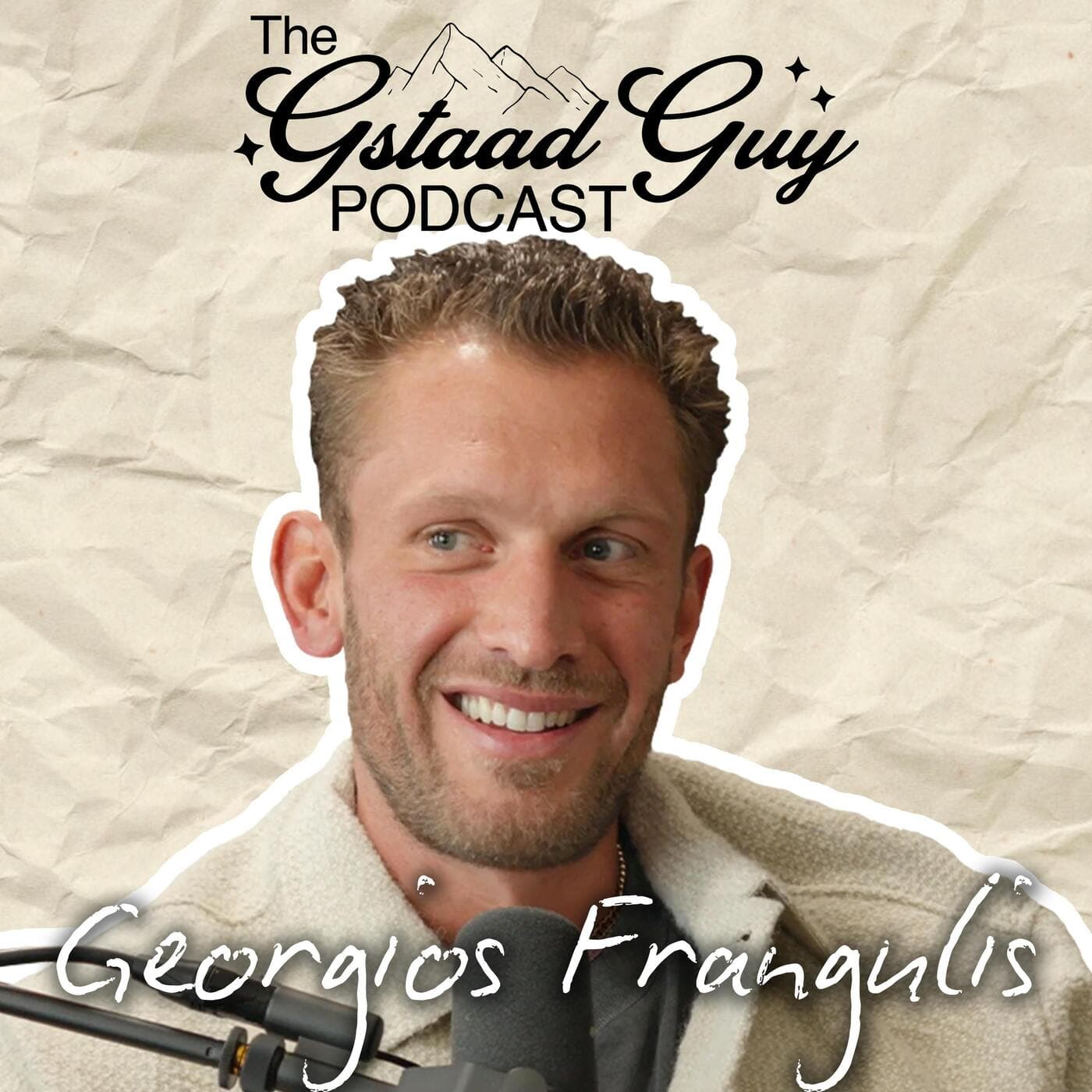
Georgios Frangulis: Founder of Oakberry Açaí – Entrepreneurship, Resilience, F1, & Building a Premium Brand Against the Odds
---
Episode Overview In this episode, The Gstaad Guy interviews Georgios Frangulis, the founder of Oakberry, a global premium brand specializing in açaí products. The conversation covers Georgios's entrepreneurial journey, his battle with cancer, and the strategies he employed to overcome challenges and build a successful brand that sponsors the BWT Alpine Formula One Team.
Key Themes and Discussions
- Founding Oakberry
- Georgios's background as a Greek-Brazilian influences his entrepreneurial outlook.
- Transition from law school to entrepreneurship, emphasizing the importance of practical experience.
- The inspiration drawn from witnessing his grandfather's success as an immigrant in Brazil.
- Launching Oakberry in December 2016 with limited funds after surviving thyroid cancer.
- Initial funding obtained through an insurance payout related to his cancer treatment.
- Challenges Faced
- Difficulty securing real estate for the first Oakberry location due to lack of experience.
- Overcoming skepticism from others regarding the viability of an açaí business in Brazil.
- Building a Premium Brand
- The significance of branding in the food and beverage industry.
- Creation of a unique customer experience that elevates Oakberry above typical fast food.
- Use of strategic partnerships and sponsorships, such as Formula One, to enhance brand visibility.
- The Nature of Açaí
- Açaí is a staple food in Brazil, traditionally consumed with fish, rather than a dessert or superfood as perceived elsewhere.
- The supply chain challenges associated with harvesting and processing açaí, which spoils quickly.
- Oakberry's vertical integration of the supply chain to ensure quality and sustainability.
- Mindset and Resilience
- Importance of perseverance through personal and professional trials.
- Georgios's belief in trusting oneself and not letting naysayers deter ambition.
- The role of personal values and upbringing in shaping entrepreneurial spirit.
- Investment Philosophy
- Georgios shares his criteria for supporting new ventures and founders.
- Importance of understanding one's limitations and building a strong team.
- Connection between personal relationships and business decisions.
Key Takeaways
- Resilience in Adversity: Georgios exemplifies how personal struggles can lead to innovative business solutions and success.
- Brand Identity: Creating a brand that resonates on a personal level with customers can lead to strong loyalty and rapid growth.
- Strategic Positioning: Partnering with high-profile events (like F1) can significantly enhance brand visibility and prestige.
- Sustainability: Emphasizing ethical sourcing and environmental preservation can be a unique selling point for a brand.
Notable Quotes
- "If it makes sense for you, usually people don’t know what they want."
- "You have to be true to yourself… if it makes sense for you, just do not listen to the naysayers."
- "Being able to just think about something that makes you feel good and not listening to people because they usually don’t know what they want."
---
Conclusion This episode provides a deep dive into Georgios Frangulis's inspiring journey from personal struggles to entrepreneurial triumph. Listeners gain insights into the intricacies of building a premium brand, navigating the food industry, and the importance of resilience and self-belief in the face of adversity.
For more updates, follow The Gstaad Guy on [Instagram](https://www.instagram.com/gstaadguypodcast) and [TikTok](https://www.tiktok.com/@gstaadguypodcast?_t=ZN-8wXuujHGzPa&_r=1).
Written by AI. May contain mistakes. Listen to the episode to check what was said.
Transcript
Automatic transcript. May contain errors.0:00Georgios, welcome to the Stadguy podcast. It's so great to have you here. You're Georgios to me, but you're Jorgo Fragoulis to your Greek relatives. You're a Greek born and raised in Brazil, the founder of Oakberry Acai, a business that I love as a consumer, I admire as a friend. You are one of my first followers on Stade Guy, one of my first supporters, and now an official backer and investor of Pubell, which means the world to me. through your amazing hard work. You took Oakberry from one location to now 900 locations globally. You're on the front cover of Forbes Brazil and you sponsor your own F1 team, Alpine.
0:39You're a big fan of F1. And now the Oakberry logo is on the side of the car. So huge deal, huge honor to have you here and very excited to talk. That was the best intro ever that anyone did to me. Like, f***ing insane. I think you said it for me. It was definitely the best intro that I ever got in my life. Like, I don't think my mom would be able to pull out so much good stuff about me, you know? I mean, it's all true. I would definitely want to be my friend or f*** me if I, you know? I mean, there's one thing I didn't even mention. You funded your first store through an insurance payout after you battled cancer in your thyroid.
1:19True. Like, that I think is the most impressive part as well. the way that you took a horrible moment in your life and turned it into the biggest opportunity I'm excited to dive into that yeah it's like whenever when you don't have an option I mean you either make it or you know I didn't have an option thank you for being here my pleasure
1:51who just know. I'm a big fan of the business you've built, Oakberry. If you don't mind, I'd love to hear how that came about and your founding story for the business. Sure. So, I mean, it's kind of funny to tell you about a story because you actually know the story, so it feels like I'm just telling you the same story over and over again. But yeah, I'm Greek-Brazilian, so I was born and raised in Sao Paulo, in in brazil my family my dad's family is from greece and austria my mom's family is from italy and france but uh i mean if you have your granddad your dad's dad being greek there's no way you're gonna be anything else but but greek like all over so i was i can say that i was raised in a very uh greek-y way and and i'm very proud of that i think it uh it built a lot of uh my personality the way i see stuff and i think that uh also the the entrepreneurship that kind of runs in my veins came from my ground that that showed up in brazil with 30 bucks in his pocket running from the second world war he was a like a soldier in the in the war showed up in Brazil definitely not the easiest of the environments not knowing the language and he he thrived he made sure that he could provide to the family and everything and he was very successful so I grew up like seeing the whole story with my own eyes and I think that that kind of inspired me a lot and so long story short I went to law school in Brazil never wanted to be a lawyer I knew I wouldn't be a lawyer I just thought that okay law is something that can help me in anything that I choose to do uh also I mean I thought okay let's do law or business or you know business administration or something but business you can kind of uh learn in the streets law I mean if you try to learn in the streets you're probably not gonna do the right way so yeah I went for law school in brazil right after i finished uh university i moved to miami uh tried to do uh real estate so got some money landed from family and friends wanted to build didn't worked out the way i wanted sold uh the the lot that i bought with a friend sold the apartment that i bought to flip uh made some some money and and then i said okay i have to figure out what i'm gonna do in my life and like what's the next step and then i i went to california just because i thought okay california is the crib for uh any trend setting like that's gonna become something big worldwide i wasn't with acai in my head i wasn't with food in my head i just wanted to see what was going on what were like in in in in the world in california back then that's like 2015, early 2016.
5:05And then I saw that people were like crazy about acai in California, starting to go crazy about acai. And acai is something that is native from the Amazon forest. So native from Brazil, it's something that it's been very mainstream in every big city in Brazil for the past like 30 years. And when I tried acai in California, people were selling acai for like 30 bucks a piece. big lines no standards it wasn't good at all and it wasn't their fault like they were doing it the way they could because they didn't had the acai full acai which now we can call the full oak experience back then and and i said okay there is probably a good opportunity here because it's a it's a brazilian fruit a brazilian commodity something that it's a healthy something that i know that can be standardized to the u.s standards of food and beverage and and like fast food kind of operation and if i can come up with a brand that is uh cool enough to take over like the category as a whole i'll probably have a cool business so i was full of ideas but i like my bank account wasn't full at all so i i said okay i'm gonna try to start this business in california I couldn't rent a spot because nobody would give me a cool piece of real estate in Santa Monica or surroundings because I was a 20-something-year-old guy without any track record.
6:36And I said, okay, so let's start this business in Brazil. Invited a friend to join me, Renato. He's still running the business with me now. and then we started a business in Sao Paulo in 2016, December 2016 with the last of the last funds that I had. I actually didn't have the funds. It's a sad but cool story. So I had cancer in 2016 and I was like, I was f***ed. I had no money and I had, it wasn't that bad of a cancer. It was thyroid cancer, but it was like a big one. So I had to go into surgery, took off the whole like thyroid gland. I don't know how to say it in English. And then I said, okay, now I have no money.
7:26And it was like October 2016. Everything was ready, but we needed like those last like 50 grand to actually make Oakberry work. And then I said, okay, I have to save from everywhere. so I started to call like the banks where I had accounts just to cancel those random insurances that they sell you or whatever shit they sell you throughout your whole life like 50 bucks a month 100 bucks a month something that is just you just see they taking it out of your account and then I called to cancel one and the lady uh that got the phone said oh but this is this insurance is so good i said yeah but i just uh went through something big i'm positive i don't need life insurance now because i'm i'm good now and she said yeah but this one it also covers uh uh heart diseases i said like what she said like cancer i said well uh okay i just had cancers do do i uh qualify for uh for the insurance like premium she said yeah uh not the full premium but 75 percent i said okay what should i do she said just send your documents and diagnosis and everything to this email and and wait for the for their response so i did that it was like october and i got 75 of the of the premium which was like i don't know 60 70 grand uh which was just enough to actually put oak berry to work and and yeah from from day one we started the business in brazil even with all of the acai of air what people understood that we were trying to do it in a different way trying to make oak berry like a actual meal possibility for them instead of going to any other fast food in a in a shopping mall or a food hall or something and we grew fast in brazil from this first location to 30 locations on the first year, then to 100 locations in the second year.
9:28And then we started to expand internationally, U.S., Australia, UAE, Portugal. And now we have over 900 locations, 45, 46 countries. It's been a hell of a ride. very very cool but it's exactly what i was thinking about when i thought about the concept i said okay this can be something global if done right i thought it was i think it was just uh like a bit lucky on the on the way that i was born in brazil and i had the the knowledge of how good acai can be like how indulgent acai can be and at the same time like with all of the healthy food trends and stuff it was something that people were looking up to and yeah right timing right everything definitely not the best environment to start not the best situation but i mean we we were able to to pull it out and and thrive and it was uh it was good so yeah that's a long story not that short talking about it's perfect so by the way i think i never told the story about the cancer i i maybe i told forbes when uh when they interviewed not in that much of details uh but i don't want it to feel like oh like feel i don't want anyone to feel bad for me i'm good and everything is good and yeah thank you for sharing it was it was good it was good at the end of the day i cannot complain that jump from getting the insurance claim to opening your first location and then having 30 locations in the first year it's pretty insane and then a hundred year two and now nine hundred but I'd love to talk about that first location and what it took to make that work it's I would say that every business is very hard or should be very hard in the beginning for you to actually understand what you're doing but i can say uh that food is one of the toughest ones one of the toughest environments competition is crazy and it has to be like liability is crazy you know you you're you're actually giving 100 200 people a day something that they're going to put inside of their body so i was like all over it and and i think that by by being something that i thought about developed and draw from scratch uh thinking about the u.s market which is definitely the most competitive market for f &b for food and beverage like worldwide and then we started in brazil kind of the standards were higher than what usually is offered in brazil so there was like an advantage uh that when it wasn't a planned advantage it's not like oh we're gonna develop in the US and then we're going to start in Brazil.
12:28We just had to start in Brazil because we had no other way to start a business. And I think that made people understand faster what we were trying to do, why we were willing to take something that was so widely available and mainstream in Brazil already and give it a different approach and actually remember people that, okay, acai is not an ice cream flavor. acai is something that is sourced by the riverside communities in the amazon forest it's all natural it's like the fruit that has the more antioxidants in the nature and it's something that you can have like instead of anything else and you're going to feel good about yourself and it tastes good you i mean you're you're an oakberry i would say addict so you know you know how good is it how good it is and even like it's something that you can kind of uh combine so i think that people understood that fast and i'm i mean i love branding and i love brands and i love how people uh choose what they're gonna buy how they're gonna leave and stuff i was always like looking what people are doing and everything as a hobby like i like i like that i like uh i like fashion i like brands i like like i like to know why people are going for stuff and usually people either because they think they're too good or because they think they're too bad they think they're very different like uh from each other but at the end of the day we're very similar on most of the things and i thought okay it's something that it's missing in my life if i do that i'm not much better or much worse than anyone i'm you know i'm i've been like raised in the same environment and same city and i think if it works for me it's probably gonna it's gonna work for for everyone else and and also when we went like uh global with the brand like people are like how are you gonna sell acai because in brazil it was everybody knew in California some people know in New York but in in Dubai nobody knew about us I eat like seven eight years ago in South Korea or in China or in Croatia or like in many of the countries like Saudi Arabia nobody ever heard about acai before we showed up and opened up the first shop and I thought okay if if it makes sense here and now like the world is so connected everybody they know the same people they look up to the same people they want to be part of something like bigger i think if it works here it's going to work like everywhere else and and it did so i mean that's i think that's that's why we we were successful and and we grew very organically like and we never did advertisement okay buy an oakbury franchise or do something we wanted people that were customers like our clients to feel like okay this makes a lot of sense and i want to be part of that because then they actually like physically fell in love with the concept and with the brand and with the product and they already know where they think they know why they're buying it it makes much easier for them to uh be part of that in a more like particular way you know i love that and to my understanding what you've told me acai in brazil is really like a staple food it's not this occasional dessert-like superfood that we have elsewhere around the world.
16:16Traditionally, in the Amazon rainforest, people have it with fish, and it's a whole different thing, right? Yeah, so when they first discovered acai, I would say, in the big cities in Brazil, was because those riverside communities, they were having acai as their main meals every day. What they were doing was they were just hopping on the trees, acai trees, to harvest for themselves. But back in the day, they didn't understand the value that acai had. So they were eating acai, but they didn't consider it something valuable as a food. i mean uh and i'm talking about money they didn't thought that they could sell that and make money selling acai and and professionalize the whole chain uh but then people figured out okay like why why are they eating it and why are they healthy and you know and we should we should also put that into our diets and then it started to to to uh like spread fast and And this riverside population in the Amazon forest, they're still the same people that are harvesting the acai now, but in a much more professionalized way.
17:43So now you have, we call it co-ops, which is basically families. They have something like a cooperative company. and then we qualify them. We give them all of the training, all of the appliances to make sure that they're doing it the right way. And we make sure that their kids are going to school and by harvesting the acai, you end up, it's kind of crazy, but you end up forcing the population to preserve the forest because you don't have to cut an acai tree to have the acai. But before they were eating the acai and cutting the trees to sell the palm hearts that was inside of the tree itself because they didn't know the value that the acai had.
18:42Now that they understand that and they see that they're making money and it's very tricky to fulfill the economic needs of such a secluded region without harming the environment over there. And acai is like one of the guardians of the region because you make them, you kind of force them to preserve in the best way possible because they're going to harvest and then the same tree is going to give more acai after six months and then on and on and on. And at the same time, they become like professionals on what they're doing. And you kind of make the economy grow in the best way possible. So we fully verticalized the company three and a half years ago.
19:35So we take care of the whole supply chain. That was very necessary for us to make sure that we would be able to supply to all of our shops with the high growth that we have. Opening like 200, 300 locations every year. plus we're now in supermarkets in the u.s in portugal in australia in brazil uh we just signed uh south korea now huge agreement like they're they're nuts about oakberry in south korea it's insane i don't know like what happened there but it's we opened generally very health conscious culture so it could be the health benefits definitely i think that combined with the the way it looks because they're very image oriented also very social media oriented also and oakberry is something that can go quite viral because it looks purple and everything and with the layers and it's cool so they they like it and yeah so we we had to make sure that we had all of the certifications and everything to export to over like uh 40 countries and to make sure that that is happening we have to make sure that from the the bottom from within the forest everything is uh happening the right way i mean something you explained to me is that the people who live riverside in the amazonian rainforest they pick the acai and eat it nearly immediately because it actually goes bad very quickly yeah that's why you freeze it exactly and export it frozen so yeah the acai is uh so you can think about acai uh like the fruit for people if you never saw an acai it's looks like a blueberry like there's a seed inside there is a huge seed inside so it's like 10 poop 90 seed and it gets bad in hours after you you took it out the tree so they they would just harvest and eat whatever they need for that day in our case which is a different quantity, of course, than a family for their own survival needs.
21:42We have to, our factory is like in the middle of the forest. Like it's in the region. It's a state called Pará in Brazil in the north of the country, which is already like Amazonian region. We harvest and then we just take it to the factory. then you clean the fruit and then you separate the pulp and then you make like huge pulp bars, like frozen pulp bars and then we store them frozen then to do the acai sorbet which is the final product that you're going to find in our stores then you add agave, you add water and stuff and then you get the final product which is also organic and everything but just the frozen pulp bars what is good is it's fruit so once it's frozen shelf life is like 18 24 months so it's uh i would say it's a it's a tricky supply chain but it's manageable and it gives us a huge uh competitive advantage because we know what we're doing we have the best people in the market uh from harvesting to exporting.
23:01But yeah, it's a tricky harvesting and so many different stages. I mean, at some point, you have to go to the factory to actually see it with your own eyes. I've never been to Brazil. Yeah, I know. You were supposed to remember a couple of years ago, but we're going to make that happen. I'd love to. This podcast is brought to you by Pubelle, by the Stardguy, the sterling silver charm-based jewellery, hand-painted with enamel, allowing you to express all the things you love and all the things you may question. And now back to the Stardguy podcast. And one thing I'd love to touch on with you, I think your product is undeniably great and you captured a corner of the market with your product.
23:51But I think what you've also done amazingly well is create a very strong brand and create an identity for a food brand, which is very difficult. Because I think the oakberry brand is stronger than the acai brand for you in particular. I think, at least from my experience, people don't decide, oh, I'd like to get an acai and then say, is it this or oakberry? They actually decide, I'd like to go to oakberry. there's this very elevated experience a very clinical experience everything feels very clean and sterile which is nice in a food environment especially when you're thinking of health and wellness it's also consistent globally which is very important i think there's slight localizations in some markets where there's toppings that are different but generally you get the same product everywhere around the world and the brand is widely understood as fast convenient but premium healthy food and i don't think that's an accident it must be a strategy how did you go about building a luxury brand as your first business i was always very into like branding and brands and why people i'm i'm i like to buy stuff a lot you know now i can now i can buy a bunch of stuff uh through like my my work and because i i like i tried to make it possible but i was when i wasn't able to buy stuff i was looking at stuff and looking up to people that could do that and not necessarily because of the price but because of how cool something is and how exclusive it can feel and how community-oriented it can be and how you manage to make these people to feel part of something bigger.
25:51And then we thought, okay, how to take something that is actually boring. Food is usually boring. It's very hard to try to create a brand that people would be willing to wear a t-shirt of a fast food chain. Not many people in the market were able to do that. And we wanted from day one to have a brand that people would be willing to wear and not just eat. And for that, we needed to be in the hands of the right people, offering the right experience, starting in the right locations. and I think the most important is to create this different Aurea like around the brand by making people feel like even if they cannot be on the spot where Oakberry is being offered they're having the exact same experience that those customers are having and by that i mean okay we had like very limited funds for marketing and stuff so what what would be the best approach best approach was for me to be a pain in the ass and try to get oakbury into like the super bowl or formula one or uh the u.s open some like landmarks of uh the world of events that it's like undeniable to everyone that okay if someone made it there it's because it's cool and even if i cannot be there but i'm having the same experience that someone that is in the super bowl you kind of feel part of uh of that the whole experience and that was the the strategy that i think that made oakbury kind of uh explode but keep this sense of luxury uh premiumness, exclusivity, and we keep actually doing the same strategy.
28:05If I show you my marketing budget and what we do, you're going to say, it's impossible to do what you guys do because we're 85 % franchise business. A franchise business, you make money on royalties and you have some like 1, 2, 3 % of advertisement fee and you have to invest that. But when you have 45 countries and you have to invest in 45 countries at the same time, that's definitely not enough. So you have to be smart to be able to create this premiumness feeling without having the ability to invest like crazy or big brands do. And that's why we do Formula One. Formula One is like, okay, every time when I started to talk about Formula One, I'm crazy about Formula One since I was very young.
29:00My biggest dream in my life is to own a Formula One team. That's the environment where I feel like, okay, I'm in the right spot when I'm here. And I just love the sport. I mean, going from using your insurance compensation to having 900 branches globally and sponsoring your own F1 team is really insane, especially for an F1 fan. how does that feel it feels good i i love the feeling like it's uh it feels like an accomplishment and something that i mean when when you're thinking about that your whole life and then you see it happening uh it feels great i'm not like the most like celebratory kind of guy like i don't oh yeah we made it and everything and because i i just love like what i do and and I love Oakberry, and it's just another day at the office at the end of the day, but when people talk to me about that, sometimes they make me understand, like, how big it is, because when you compare it to the other companies, they're not five, six, seven-year-old companies like Oakberry.
30:12They're not Brazilian-based companies. They're not food and beverage companies. They're huge, like, oil companies or telecommunications, like those guys that, or it's like Amazon or something, you know, or yeah, something like that. So it feels good. And I think it's a smart strategy when you have to show your brand at the same time build this sense of exclusivity, make people understand because being in a Formula 1 car, it's a statement that you don't have to explain. People, they see that and they understand. You don't have to know shit about Formula 1. you know it's the most exclusive sport in the world.
30:52And, okay, Formula One now, it's 24 races per year, 24 different cities, probably 18 different countries. How many of those cities of the Formula One races do you have? Most of the cities we have, we have locations. But that's not even the main point. The main point is that every race is showcased in like over 200 countries. and like which other way you would find to be in 24 weekends so it's friday saturday sunday on live tv in 200 countries uh and building this sense of exclusivity uh and at the same time showing your brand like i i cannot think about other platform to do that with the same amount of money that we put there.
31:42So the exercise that I do not to feel crazy is, okay, I do the math. I'm going to take the full amount that we're paying. I'm going to divide that by the number of races. And then I divide that by the number of countries where we have stores. And then you come to like, okay, we're spending maybe a couple thousand bucks per country per weekend to be showcased everywhere. And then when you do that math, it seems so obvious. you know i hope uh flavio and alpine they're not listening listening to the podcast right they're gonna raise uh they're gonna raise our contract for like for next year they're gonna think it's actually so so cheap for them but i think it it just makes sense and another and another sport like tennis it's also a sport that it's global yeah and uh and if you if you make sure that you're connected with the right person or the right event so we're very good at like we're doing the we just did the miami open so of course there's arena she's sponsored by oakbury uh not because we are a couple she was sponsored before that's how we met uh because we just love her as an athlete also like everybody loves her as an athlete i love her in every other uh possible way and and but then we do the miami open but we're good on like creating and producing content at the miami open you don't have to be the main sponsor of the miami open to show people that you're there like uh selling your products or giving out your products or doing something and then uh the players are eating and the customers are and the attendants they're all eating oak berry and we're good to show that to our customer and that's very cost effective at the end of the day when you still have a tight uh marketing budget so i'd love to talk about you as a person and your personal journey with all of this.
33:36Because I know, based on stories you've told me, a lot of people doubted what you could and couldn't accomplish before doing this. And I think it's very easy to bet on the winning horse and say, yeah, the guy who has 900 locations is dating the US Open champion and sponsors an F1 team. He's doing great. It's fairly obvious. But it wasn't always like that. You know, in 2015, before you started Oakberry, you told me you had a lot of people in your life who didn't believe you could accomplish what you did. And I'd love to know more about how that felt and where your sense of conviction came from.
34:20If it came from somewhere, maybe you also struggled with that yourself. i i think that also comes a bit from the way i was raised and the way i believe the world is at the end so i think that i don't know it's it's just a uh when people are telling you that they don't actually believe what you're telling them that you're going to do it's usually people that they it's not they like they envy you they actually like you and they're trying to protect you from doing something crazy and spending the last like dime you have like or the insurance money that you just got on an on an acai like kiosk in brazil where you have a thousand of acai kiosks for the past 20 years and nobody's making any money on that and then you come up with most random idea and say yeah I'm gonna take it and I'm gonna do it and I'm gonna take it global and people are like f*** you're gonna screw up yourself and they try to protect you like you're smart you went to law school go work on something even like family you know my family always supported but like supporting but like f*** the guy's gonna do something that he shouldn't be doing you know so I think it's I actually like I wasn't expecting people to cheer me up and say that's the most amazing idea ever and you're gonna you're gonna kill it and you're gonna become a freaking billionaire by that because if they said that it would be like okay it's too obvious probably someone would be doing that already if it's too obvious to everyone but at the same time I was sure that as customers all of them they were telling me that okay it's crazy not it's not gonna work i was sure that it's something that was missing in their life because it was missing in my life as as as someone living in a in a society you know uh so it's you have to to like be true to yourself i don't think you have to be like crazy but if it makes sense for you usually people they don't know what they want and if it makes sense for you and you figure out that it makes sense for you it's very hard to figure out what actually makes sense for you and what is lacking in your life if you come up with something that you say okay this really makes sense just do not listen to like the naysayers and go through it because unless you're completely nuts and you think different from everyone else, and I mean that in a good way, like you're Elon Musk or something, it's going to make sense.
37:16And I think that it's much easier to do something like thinking inside of the box and not outside of the box than trying to come up with the craziest idea or invent something too crazy. And by the way, you do stuff, I think that you actually, I don't know if you know that you agree with me, but I would say that you have to agree with me on that. Like when I think about the Stadt guy or Pubell or like it just, it didn't create like the world. You see something and then you go there and you do something different because I think these guys like Musk or Bezos or Zuckerberg, Allison, and this is like 10 in a generation, 10 guys in one generation.
38:05Those are the guys in our generation. I mean, I'm much older than you, but those are the guys in our generations. And I know I'm not capable of doing what they do and I wouldn't be willing to become able to. So like being able to just think about something that makes you feel good about and not listening to people because they usually don't know what they want. And I believe I'm good at understanding what people want and how people like to be treated. And, you know, I think that's the most important. I love that. I mean, you brought up Stadgei and my own belief in Stadgei, but you saw something in what I was building very early on which actually went far beyond your support as a fan of my content and a support of me as a friend when we built a friendship but you also really believed in me as a business operator and you're an investor in Pubell my jewelry business and more than just being an investor who by the way you barely asked for information you believed in me as a founder and you said listen whatever you do I'm behind you I'll back you and it means a lot but I'd love to know because I know you have a lot of friends you don't back so I'd love to know what it is that you you you look for when you see a business or a founder that you want to stand behind and I'm not doing this to fish for compliments which I do appreciate from you of course I'm just very curious about where you find that trust i i think it's like i think it's more than trust or it's different than trust because like you you actually it's i've been around and i've been disappointed by people that i trusted a lot so trust is something that you're gonna build like with time and everything and by seeing how the person acts or acts in very different situations, how they're going to treat a waiter in a restaurant, I think that shows if you can trust the person or not.
40:35When I'm thinking about making an investment or thinking about a business, and I don't have my own VC, I don't have my own family office, I invest in stuff that I really like and I really believe. And, of course, I invest in people that I really like and I really believe because I know from my own experience that, and I mean, I don't want to be modest on this one. If it wasn't by the way I think and do stuff, Oakberry wouldn't be Oakberry at all. So I know that the most important part when you're building a brand from scratch is who's taking care of that. who's taking care of the brand who's gonna think about the way to to make the brand and it doesn't really matter which industry it could be jewelry could be acai could be water we have seen that happening in so many different industries by the way the person understands the the the way to connect to to people and i see that in you uh i mean when we when we first talked about puvel well, I mean, I already knew you enough to know how skilled you are on that.
41:44So it was very obvious that you have, and I had no idea if you had the business ability, but I knew that you were already building a team to help you because that's also something that I value a lot, when you know that you're not the best in everything. like i you open up a an excel spreadsheet in front of me i have no clue what to do with the spreadsheet i don't know how to operate a powerpoint like i'm and it's not like i'm 70 years old uh it's just something that i was never like passionate about and i knew that oakberry was growing i had to have uh people to help me to do that that is they're much better than me on that and i felt like you were the same you know like from the beginning you didn't advertise yourself once you advertised the people that you're bringing with you and connected me to the people so okay like the guy the stat guy he knows like his limitations of course you have limitations and i have limitations and it's and it's very brave to know that in the beginning even more when you're asking for a or like introducing someone to a new venture or asking for an investment not what you did with me you just like show me pobella and i thought okay it's so cool i want to i want to do it but but you when you like at some point soon you're going to talk to investors and you're going to like sit with banks and then i also think that's what they want to see you know and i don't know i think that believe in the person and understanding that not necessarily you can trust the person as a businessman because business they can go south or north and you never know what's going to happen but for the person to understand that they have their limitations and they're already thinking about having the right people to help and like kind of thinking ahead uh that that's something that helps a lot and and makes me more confident on whatever and i made some very shitty investments i can tell you uh because maybe that's not the smartest way of doing it but i'm not a professional investors professional investor i want to do stuff that i believe in people that i believe and i mean but pubelle you know i think it's it's going to be big it's so cool it's so different and i think it fill in all of the the blanks of what you need to have like a cool brand spreadable and you know something that can be I mean it already is it's what one and a half year since we first launched?
44:36We launched last September so it's been 8 months Okay that's insane you know like we've been together in Dubai at the pop-up at the financial district it was insane like insane and people coming you see people coming because they want to take a picture with you but you see a lot of people coming because they love pubel because it's cool i mean that's that's it and it didn't invent the will you just said okay this is this is going to be cool you know it's uh there is that if you know you're no feeling at the same time on the right price point and yeah so it's I love that you say that and I really appreciate it I appreciate it congratulations thank you it wouldn't be possible without you and your love and support it would you would find other people to back you up but not just the financial support which of course is massively no no back you up in every way you've been a massive support since day one also Arena loves it you know that I know she does she's posting all the time always she was carrying it on her tennis bag on the tennis bag on she was so pissed because so she lost uh the one that was on the tennis bag she thought she lost it with the trophies yeah but she didn't so we found it was uh it was under like the trunk of the car i think she she pulled it and yeah it fell and then she was so happy after she she found it again but i i love that you talk about not reinventing the wheel because i find that any of my friends or acquaintances that whenever I'm around people that haven't started the business or worked on a business, they obsess over the idea.
46:28And when I'm around people who actually operate businesses or start businesses of their own, they obsess over the process and the execution and i find that it's always an execution play right there we all have great ideas on a daily basis in the shower right but who can execute and what can be executed this is everything so just like you said i didn't invent the charm bracelets nor that this is a success with a comparison worth making but you didn't invent acai it was like you said there's thousands of acai places in Brazil. And if you say I'm starting an acai place in Brazil, no one would really find that idea exciting.
47:14And I think those are the best ideas because your edge is actually the execution and your ability and your desire to just tweak and perfect, which I think is the best way of starting a business because you're, first of all, there's a massive de-risk when the idea has already been tested and you can just do things a little better and that's what i hope to do with you're not doing a little better you're doing much better i appreciate it it's you know it's it's so sick thank you i love it i don't know if people can see but i have i have my own race car he made my own race car in a poubelle charm which is crazy and everybody asked me about it and yeah and then one of one on every episode of of the schlag guy podcast we play a brief game of a la poubelle versus fantastique okay where you list two things that are a la poubelle to you and two things that are fantastic could be something in the society something in the world that surrounds you something you experienced recently i think that uh friendship is fantastic and i think that uh
48:26believing in yourself is fantastic also. I agree. And I think that... We're blessed with both. Friendship to each other. Believing in ourselves and believing in each other. True. It's a good... Cheers to us. Cheers to us. A la poubelle. I wanted to say something that I cannot say because then people are going to give me so much shit. Pretending to be the CEO of Oakbury. that's definitely a lap of bell liars liars is uh a lap of bell yeah envy is a lap of bell for sure those are the two worst things i think in the world and it ends up making so much bad stuff happens just because of that you know so quite obvious and cliche but i mean i appreciate you sharing that thank you i have one question i forgot to ask you we discussed this a few days ago with a friend of ours that's a founder and was a ceo for a very long time and we asked him can you be a great ceo for a long time while always being very kind and never being a dick and i've only ever seen you be extremely kind do you think it's possible i mean i'm positive it's possible
49:49it all depends on why you consider a dick also sometimes you have to be a dick to protect the person you know like when someone tells you that they're going to open something and you try to protect them by telling not to do it you're being a dick but you're trying to be protective so I think that being a dick on purpose that's the problem and I think yes you can you can be a CEO for a long time without being a dick on purpose you're gonna make a lot of mistakes and stuff and sometimes you can be a dick but the problem is when you do that on purpose so well thank you so much for being here my pleasure man it's so cool to do this with you and to be out of character and to be able to have these conversations very cool congratulations on everything wouldn't be possible without your love and support it would but I mean I'm glad I'm here to watch you thrive I appreciate you thank you so much for being here and hope to see you on this podcast again soon just invite me I'll be here awesome thank you thanks man thank you for listening to this episode of the Start Guy podcast if you're keen to learn more please follow along by engaging with our social channels on Instagram TikTok, Spotify YouTube and Apple Podcasts and we look forward to seeing you next week Merci beaucoup, à la prochaine and a big hug from the Start Guy
From the publisher
In this episode, The Gstaad Guy sits down with Georgios Frangulis, the visionary behind Oakberry, to explore how he turned a niche superfruit into a global premium brand. From launching with limited resources to now sponsoring the BWT Alpine Formula One Team, Georgios shares the unlikely path that took Oakberry from street-level scepticism to centre-stage visibility.
The conversation delves into the realities of entrepreneurship, navigating doubt, mastering timing, and the mindset needed to keep going through personal and professional trials, including his battle with cancer. Georgios reflects on what it means to stay committed to your vision, even when the world says no.
Filmed at Casa Cipriani New York’s Liberty Corner Suite.
Timestamps:
(00:00) Intro ✨
(01:55) Oakberry 🫐
(07:02) Battling cancer 🎗️💪🏻
(09:17) Expanding the business 📈🌍
(11:15) The first location 🏪📍
(12:53) Açaí 🫐 🥣
(21:07) Shelf life of Açaí ⏳🫐 🥣
(24:54) Building a luxury brand 💼✨
(29:45) Building the dream 🏗️ 💭
(34:04) People doubting you 🤨🚫
(39:28) Trusting people in business 🤝🏻 💼
(42:00) Knowing your limits 🚧 🧠
(47:54) À La Poubelle vs. Fantastique 🗑️✨
Learn more about your ad choices. Visit megaphone.fm/adchoices
See Privacy Policy at https://art19.com/privacy and California Privacy Notice at https://art19.com/privacy#do-not-sell-my-info.


