
In short
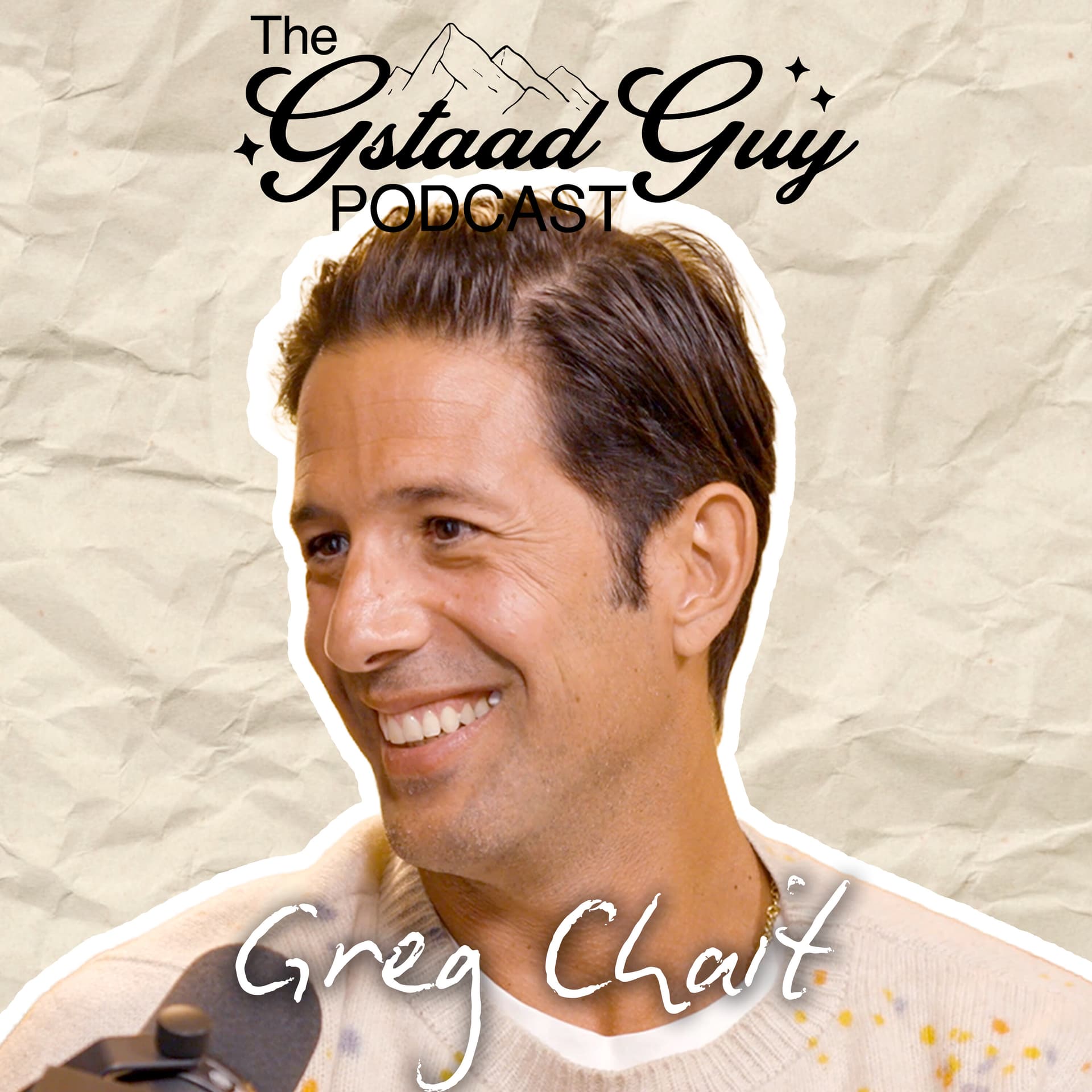
The Gstaad Guy Podcast - Episode Summary: Greg Chait: Founder of The Elder Statesman
Podcast Overview Podcast Title: The Gstaad Guy Podcast Episode Title: Greg Chait: Founder of The Elder Statesman – Cashmere, Colour, Craftsmanship, & Playful Luxury Host: The Gstaad Guy Guest: Greg Chait Recording Location: Casa Cipriani, New York Episode Focus: The journey of Greg Chait and the evolution of his luxury brand, The Elder Statesman, emphasizing creativity, craftsmanship, and the concept of playful luxury.
---
Key Themes & Discussions
Introduction to Greg Chait
- Background: Greg Chait, founder of The Elder Statesman, shares his unconventional journey from hosting parties to creating a luxury brand.
- Philosophy: Emphasizes intuition over trends as the foundation of his creative process.
The Origin Story of The Elder Statesman
- First Cashmere Blanket: Discusses how receiving his first cashmere blanket ignited his passion for luxurious textiles.
- Yarn Discovery: Chait emphasizes the importance of high-quality yarn and craftsmanship in creating his products.
Evolution of the Brand
- From Blankets to Ready-to-Wear: The transition from producing cashmere blankets to designing knitwear and expanding into womenswear.
- Tie Dye Innovation: Chait discusses pioneering tie-dye on cashmere, reshaping perceptions of luxury to include playfulness and self-expression.
Values and Customer Engagement
- Value Alignment: Importance of building relationships with customers and aligning brand values with consumer beliefs.
- Creative Collaborations: Chait highlights collaborations with artists and designers, enhancing brand identity and creative output.
Personal Insights
- Emotional Overload and Fatherhood: Discusses the impact of becoming a father on his leadership style and personal philosophy.
- Mental Health Awareness: Chait emphasizes the necessity of mental health support, therapy, and the emotional toll of entrepreneurship.
Vision for the Future
- Expanding Retail Experiences: Plans to open more retail locations to create immersive shopping experiences.
- Focus on Authenticity: Commitment to maintaining authenticity in craftsmanship while navigating market changes.
---
Key Takeaways
- Playful Luxury: The Elder Statesman represents a unique blend of high-quality craftsmanship and playful design, challenging traditional luxury norms.
- Craftsmanship and Quality: The significance of utilizing high-quality materials and employing skilled artisans to create unique, bespoke products.
- Customer-Centric Philosophy: Building a brand with soul that respects customer privacy, fostering a deep, personal connection with the audience.
- Mental Health in Business: The conversation highlights the importance of mental well-being for entrepreneurs, advocating for seeking help and support during challenging times.
---
Conclusion This episode of The Gstaad Guy Podcast offers deep insights into Greg Chait's journey with The Elder Statesman. It highlights the importance of creativity, craftsmanship, and meaningful customer relationships, while also advocating for mental health awareness in the fast-paced world of entrepreneurship. The discussion serves as an inspiring narrative for anyone pursuing excellence in their craft.
Written by AI. May contain mistakes. Listen to the episode to check what was said.
Chapters
Tap a time to open that second in VOExploring Playful Luxury
1:26 to 3:41
Discussion on the concept of playful, positive luxury in fashion.
“But your category of business and the category you create in is one I've always been so curious about and so passionate about.”
The Origin of The Elder Statesman
3:41 to 5:06
Greg Chait shares the story of how The Elder Statesman was founded.
“So I ended up working at the firm in the day, doing Subi at night.”
Journey into Cashmere and Color
5:06 to 8:10
Discussion on the creation of luxurious cashmere blankets and color exploration.
“So I helped Tom Ford's Gucci when I was at the firm for something with the Oscars.”
Transforming Blankets into a Business
8:10 to 10:05
How personal passion for blankets turned into a successful business venture.
“This is when I was actually connected to PG Laura Piana, who really helped me out at the beginning directly.”
The Breakthrough Moment
10:05 to 14:06
Greg recounts the pivotal moment when his blankets gained recognition.
“I'm like, I think it's going to be big, but I can't do it without you.”
The Journey of Blanket Sales
14:06 to 17:46
Learn how Greg Chait initially sold luxury blankets and beanies, leading to the success of his brand.
“These ones were the ones made up in the Pacific Northwest, but I helped develop them, you know what I mean?”
From Blankets to Fashion Week
17:46 to 23:00
Discover how Greg transitioned from making blankets to showcasing at Paris Fashion Week.
The Evolution of Elder Statesman
23:00 to 27:39
Explore how the Elder Statesman brand evolved, including its signature colorful pieces.
“I have a few friends that few your blankets.”
A Personal Connection to Elder Statesman
27:39 to 28:00
Listen to personal anecdotes about how the Elder Statesman made an impact on customers and their experiences.
“But when you would hug them while they're wearing the Elder Statesman, you're like, this is also very cozy.”
Curated Retail Experience of The Elder Statesman
28:00 to 29:00
Explore how curated boutiques enhance the shopping experience for unique clients.
“And they're the first ones I saw in the world wearing the brand.”
Show all 26 chapters
The Artistic Expression in Cashmere Fashion
29:00 to 30:58
Delve into the artistic and playful aspects of The Elder Statesman's designs.
“So these sort of resort boutiques service a very unique client.”
Crafting a Unique Retail Space
30:58 to 33:36
Learn about the thoughtful design choices in The Elder Statesman's retail locations.
“with this exposed, I think it's cedar wood.”
The Origins and Evolution of The Elder Statesman
33:36 to 36:42
Discover the backstory of how The Elder Statesman brand was conceived and developed.
“Hermès have a really cool initiative called Petit H, small h in French, where they make goods with discarded or leftover sheets of leather.”
Balancing Brand Identity and Personal Privacy
36:42 to 42:00
Understand the importance of maintaining privacy while building a brand identity.
“Some of them several hundred years even.”
Understanding the Elder Statesman Customer
42:00 to 46:00
Explore how the Elder Statesman brand resonates with its customers' values and lifestyles.
“And what you're saying about privacy really resonates with my perception of your customers because I feel like a lot of people who wear the Elder Statesman, of course, it's an if-you-know-you-know brand.”
Collaborations and Creative Partnerships
46:00 to 48:20
Learn about the unique collaborations that have shaped the brand's identity.
“And then you eventually started telling your own story with your, with your retailers, with your online presence, and also with some collaborations.”
Navigating Business Growth and Creative Challenges
48:20 to 51:00
Discuss the balance between creative passion and the operational demands of running a fashion business.
“And to my understanding, the folks that have gotten involved are also customers and lovers of the brand.”
The Impact of Fatherhood on Creativity
51:00 to 55:40
Discover how becoming a father influences creativity and work-life balance.
“And what seems right for me always catches up and will always feel a lot better thinking about in the morning and at night.”
The Transformative Experience of Parenthood
56:00 to 58:00
Explore how becoming a parent can radically change one's perspective and emotional state.
“And now, you know, they've had some time to settle in.”
Future Plans for The Elder Statesman
58:00 to 1:00:00
Discuss the evolution of The Elder Statesman brand and its retail strategy.
“But you don't know what stores are going to be there.”
Understanding Customer Demographics
1:00:00 to 1:02:00
Delve into the similarities between urban and resort customers of The Elder Statesman.
“So it's actually, it's actually like it's, there's a small, you know, there's a small amount of people and places and we're in that range.”
The Concept of Playful Luxury
1:02:00 to 1:04:20
Explore the idea of playful luxury and how it influences branding and customer connection.
“It's a connoisseur who likes excellent products, experiences, and places.”
The Challenges of Entrepreneurship
1:04:20 to 1:06:40
Discuss the emotional struggles and realities of building and maintaining a brand.
“And I think it's not the case for pretty much anyone that has been in a hard game for a long time and it can be emotionally taxing.”
The Importance of Support Systems
1:06:40 to 1:10:44
Highlight the significance of having personal support systems and mental health resources.
“Because, yeah, I think that's really important.”
A La Poubelle vs. Fantastique Game
1:10:44 to 1:12:48
Discover the dynamics of the game 'a la poubelle versus fantastique' and its implications on culture.
“podcast we always play a game of a la poubelle versus fantastique a la poubelle are the things you'd like to throw in the trash and change.”
Authenticity in Art and Sports
1:12:48 to 1:13:39
Explore the significance of authenticity in creativity, art, and sports.
“It's like the authenticity is what I love.”
Transcript
Automatic transcript. May contain errors.0:00But I really appreciate you agreeing to do this. Of course. Thank you for having me. Thank you for being here. I know we are friends, but I'm a fan first. I made that very clear. Every time we see each other, I'm a big fan of you and everything you've done with Elder Statesman. thank you yeah no you've uh when you first reached out to me i was i was a little scared yeah if i'm gonna be totally i was like what is happening here so and then like slowly we met and then you came over and we met and we hung out and then i was like oh this kid's a sweetheart i appreciate it and then i'm like oh this is totally a character i appreciate it but i didn't know yeah i guess that means i'm clinging to the character yeah dude you sell it well and but Colton was much more heavily featured.
0:47In Elder Statesman. Yes, back in the day. Yeah, it's true. I slowed down Colton slowly, partially because I don't enjoy playing him as much, but also the audience just, I think there was a deeper shock factor for Constance. Well. Naturally. Yeah, yeah. Everyone knows a Colton. Few people know a Constance. Yeah, yeah, yeah. You know? Everybody knows a Colton. Everybody knows. Especially in LA. Oh, yeah, yeah, yeah. Around the world with your host, the Stade Guy, we welcome you back to the Stade Guy podcast, sharing stories of excellence with those in the know for those who just know. But your category of business and the category you create in is one I've always been so curious about and so passionate about.
1:37And the category that I'm even trying to get into myself through Pubelle and through my jewelry. But it's this playful, lighthearted and positive luxury. I think luxury over the years in some ways is quite heavy. And the elder statesman still has all those notes of the exceptional touch, exceptional silhouettes, but it's light, it's colorful, it's happy, which is a reflection of you. Thank you. I mean, someone once said that usually brands are shadows of their founders, and I'm not that serious. but I'm like totally serious about certain stuff but like generally speaking like I love having fun and yeah it's better if there's a good story around it absolutely I'd love to hear the the origin story and how the elder statesman was born incomes my friends from Australia they saw that I'd become director of marketing of this company at like a pretty young age like 23 or something and they came over i was throwing this big party for uh the vmas in miami and we partied for a week and had so much fun they're like you need to help us with suvi i'm like i have no idea what i'm doing with this so like you're smart you'll figure it out so they left me the collection on my living room floor and i left it there for about a month and a half and even opened the bag i was like so i had some contacts you know i had some friends i'm like you know i know some people from entertainment i'm gonna call this guy from gq so the guy picked up my phone call said yeah i'll see it he's like this is great i'm like you know i'm gonna call vogue and so i randomly called um my fairy godmother a god friend at uh was uh meredith meling burke okay but i called her and said i got this thing i would love to show you and i didn't know at the time again i think the ignorance was bliss sort of thing i showed up in new york with this collection of stuff and i didn't know that they usually meet you in the front but she like invited me back and was just so nice to me and i just thought everything was so i didn't know that this industry was tough at first so i just kind of it was like a it was like a bait and switch you know My first experiences were easy and kind.
4:01So I ended up working at the firm in the day, doing Subi at night. I opened a bar. I actually opened two bars. I have a girlfriend right around this time. Her fashion IQ is super high, as good as it gets. and she in that relationship i guess i learned like how to trans like what style how it was translated into actually what a brand is and the first brand i the where i really clicked i found this company called number nine which is a japanese company and it was here in new york there's a store on washington and you know you couldn't find it and the guy actually al who i ended up working with for years um he would actually lower the gate so you actually couldn't find it well all the time and it was this perfect japanese company of like i'm like this is everything that i've always imagined but didn't have words for and this is what i understand it what type of clothes were they making it was just like the perfect t-shirts uh it's hard god how do i it's like everything that you want and i heard the restarting it well with the original guy takuhiro it was like kind of my hero it's mostly like essentials essentials but like really great takes on it like things that it's like kind of rock and roll but not in the way that you're like trying to be rock and roll it's like okay like the perfect t-shirts the perfect jeans perfect cashmere things fine flannels whatever but like just that touch where it was like that's special you could tell everything from there was special fine that helped me understand what a brand was And in the meantime, I forgot this bit.
5:44So I helped Tom Ford's Gucci when I was at the firm for something with the Oscars. They were really amazing. They sent me, I get this gift from their head of VIP, this girl, Megan Quinn, who I'm still friends with today. And from Tom. And it was a thank you. And it was a casual blanket. Here you are. From Gucci. It was actually not a Gucci blanket. It was some, I actually don't remember the name. It was just some, not random, but very small mill in Italy. And I had never touched anything like this before. And it was a brown, very simple, very simple, single ply, you know, just knit blanket. But it like blew my mind.
6:26I started getting to go around the world and I started looking for blankets and I started collecting them. Okay. And in my mind, I kind of started piecing together this perfect blanket that must exist, kind of like that really innocent kid from Arizona that goes to the mall and must exist sort of thing. And were they always premium blankets? Always. Yeah, yeah, yeah. So I was like... Looking for the best blankets. Looking for the blankets. And it was definitely, I understood immediately it was the Scots or the Italians at the time. That was it. And then I learned that I was so into the stuff that the Scots had a very particular way of treating their yarn, which was a little bit more durable, and the Italian yarn was a bit softer.
7:15And I had this idea of this really thick, yet super luxurious, not-so-perfect blanket, and it just honestly didn't exist. My friend connected me with these folks up in the Pacific Northwest who hand spun yarn and knit. So I learned that, okay, this is all about the yarn. I like somehow figured this out. This is, I wish I picked up a guitar and was able to like figure that out or something, but I figured out yarn. That was my, my thing. so i had them make me a couple blankets in the image that i'd been thinking about and they were able to do it because i could actually make the yarn too i can make the yarn and i can have them do one stitch at a time and i ended up with these 59 inch by 79 inch um 10 i don't know what it is in kilos it's like four point something kilos uh blankets well yeah those are the first things the first and i just made them for myself that's how there's no elder statesman nothing nothing and where did the love for the color and the expression come from i understand that love at first touch moment which a lot of people i think feel with their first cashmere experience yeah the color i it was probably it was process fine like when i first started dying things and i first started getting to get closer to your friends at Laura Piana.
8:47This is when I was actually connected to PG Laura Piana, who really helped me out at the beginning directly. He's a great, great man. What a guy. I haven't seen him in many years, but he really helped me out for a while. Just by letting me into the, and I was like into the facilities, I'd go visit and I saw all this wonder. And I'm like, I couldn't not do it. Like I couldn't not play with color. And I had these made up color theories that I was doing and it just kind of jumped from there. And then I started figuring out these processes and the processes would create different variations of said color.
9:29And then, you know, then it started getting quite psychedelic because my life was quite psychedelic. So are there no two sweaters that are hand dyed that are the same? It's impossible. that just proves that it's handmade. Wow. That's what I like with a lot of really well-made things. And by hand, the fact that they're not precise proves that they're made by hand. The imperfection is the beauty. Yeah, and it's like a small percentage and that makes it the difference between handmade and homemade. And I know that post-dyeing, you also dry them in the sun, right? Yes. I saw that at your factory. Yes, that was because I started doing it at home and I didn't have the cool dryers that they had in Italy there was no knitwear like cashmere business so I'm like I'll use the sun because I had you know when understanding what makers do I mean you look at India or people are drying things outside I'm like well yeah I'm gonna try this I'm gonna just lay this outside and dry it perfectly and and you have a lot of it in california correct so how do you transition from your love for these blankets your love for the touch of cashmere to moving into ready to wear knitwear because oh gosh homeware and knitwear are two very different categories well it wasn't by design i mean it was kind of by design so basically cut to 2007 i know a little bit about how the buyers work and this and that was we did great um and it had its own story of that particular chapter i had another life where i was going to do a juice i was going to do a juice business back way back when but um my partner that i was going to start with the juices with like sat me down he's like listen i don't think i want to do this i have enough restaurants and I'm not sure how big Juice is going to be.
11:31I'm like, I think it's going to be big, but I can't do it without you. But he said to me, he's like, look, man, you're really into these blankets. He's like, you're really passionate. He's like, you should do that. I'm like, dude, this isn't a business. This is like, I'm making it for myself. I'm maybe making for some people in like seaside village towns or mountain towns or whatever when it's cold. That's not a business. I'll do it on the side. He's like, no. He's like, come back to me. if you think you want to do this and i was pissed because i wanted to do the juice so that was that was and it's like august of 2007 so october 2007 maxfield in la have you heard you know maxfield i was obviously sorry they had heard i'd made these blankets colton colton's a big fun of maxfield colton's max yeah exactly yeah yeah so they had heard that i'd made these uh these blankets and i went in to show them and i knew them from subia and i knew them from actually just sort of shopping there i couldn't really afford much but i really liked the vibes in that place um for those who don't know max fields in los angeles is a very cool brutalist multi-brand store from the outside the inside it's very homey cozy and well curated yeah same time yeah that's yeah it's tommy who founded it is like really responsible for helping launch all the japanese brands in america he was he brought he was the first one in america i think pretty much to launch armani wow it's a big rite of passage maxfield yeah maxfield at the time was one of like 10 12 of the best best stores in the world in the world that's it it was like that was it but he was so he's like he had the like one of the largest collections of vintage hermes it wasn't just clothes it was like oddities and things that were so curious and amazing and yeah hit the buyer at the time was like i want to see this blanket so i wrap them up take an hour to figure out how to wrap them up i'm like okay and i show up and tommy shows up and puts his hand in the bag and says i'm gonna be in this meeting this is casual i'm like i'm like this is over before it even began because this guy is known as the toughest guy in all of fashion like this is the founder of mexico yeah this guy's this guy's a tough guy great taste but tough yeah i laid him out and he goes i've never seen anything like this he's like you know i'll take him i'm like great this is amazing how many do you want he's like he's like no you don't understand i want these i'm like these are mine and and he's like do you he's like he goes do you want me to sell them or not i'm like okay yeah let's try it he's like well how much and i did know a bit of the margin math from from my days it's yeah my days at suva so i said this much and he goes okay i'm like but i don't even have a label or a name he's like i'm like what are you gonna do he's like well I'm just going to put a price tag on it and see what happens.
14:47And they sold the next day. Wow. Can I ask you what they sold for? $7 ,000. $7 ,000 for a blanket. No name. You patchworked and dyed yourself. These ones were the ones made up in the Pacific Northwest, but I helped develop them, you know what I mean? And I put my hands on them a bit, but yeah. And I was shocked. Wow. and then they said you know that was october they said how many can you have by christmas i'm like i have no idea so i got on a plane i'm like up to back up to the pacific northwest i'm like how many can we have by christmas and we i think we made like 10 more and then i'm like well we should do something else like so we started making beanies these incredible beanies so we made 40 beanies how are they colored these ones were natural gray natural white which is essentially oatmeal and like off-white those are the natural colors of the animal um i did like this bluey color that was like an indigo and then black still no name still no name and what are you selling the beanie store they were like four hundred dollars and this is in 2005 six 2007 seven yeah i mean this is an expensive beanie i thought very expensive especially especially 2007 yeah so those all sold in a week.
16:13Who's buying$70 ,000 worth of blankets in 2007? I mean, wonderful people. Wonderful people in California. Yeah, people are shopping at Maxfield. I mean, it's like you just trust that whatever you're going to walk in there was amazing. And yeah, I was actually, you know, I was shocked. I didn't really understand it. I just literally didn't understand at the time. I didn't really understand the client or anything. so did you ever end up figuring out who that initial client was sure sure it wasn't just one client it was like multiple people did they have anything in common yeah they're all at the beginning what i really noticed is they were all really big um contemporary art customers fine that i figured out eccentric that was like the one thing and then like yeah they understood like they understood something in art like they were just like yeah it was like it was a lot of art people wow yeah that would actually let me into their eventually let me into their homes doing trunk shows and are you still in touch with any of those first customers yeah i mean a lot of them actually are they still customers they are that's really cool yeah there are customers of elder statesmen before the elder statesman correct yeah and like right in the i actually ended up one of the guys ended up buying back the first blanket no way oh yeah my friend set that's very cool yeah that's very very cool yeah forgive me for interrupting um you were telling me that oh yeah yeah so you made the beanies so made the beanies and i said if these if these sell i have to do something with this so they sold and i fly to new york show it to my friend this restaurant guy i said man i think i'm going to do this and i had a uh business plan that was like two pages and like a forecast and like i'm like it's worth x amount of dollars and you know i need this much and this is what you'll get and this is like kind of my first fundraise um he wrote me a check right there well no operating agreement nothing nothing i didn't i actually had to chase him down to make an operating agreement well eventually because he's just trusting me yeah trust and love yeah and he just wanted to see me i really owe him a lot for pushing me into that so that's when i started really figuring it out like i got on a i realized that i wanted to have a blanket company and i needed other things that could be my ways for people to see the blankets i talked to the maxfield people i said where do you go buy these oddities because they had other blankets and weird things around that they're like paris i'm like oh that's fashion week i probably need some fashion so i made a couple sweaters just so people would buy my blankets and i showed up in paris and i ended up walking i had zero appointments do you create your own showroom or you just i stayed at the coast because i heard the coast was good nice yeah i didn't know so i just showed up there and they i don't know if they let you do appointments out of there but just kind of did it um and these girls from there's always some sort of story which is which i actually think is really important for companies like that aim to be around a long time there needs to be like a lot of anecdotal like things that happen to create the make it feel real because it is just israel so i showed up in paris thinking that i had like um you know a couple men's sweaters and because i i was the fit model and ended up walking out of paris with 12 of the best women's stores in the world can i can you tell us who they were yeah i had amory's okay i had uh Joan Shep in Philadelphia at Leclerc I can never pronounce it properly Leclerc yeah there it is Leclerc in Paris yeah very cool but it's I find it to be quite dark yeah yeah and you're definitely the most vibrant brand in there yeah at the time it was pretty neutral oh yeah fine yeah it was pretty neutral and yeah it was what was it it was United Arrows Mr.
20:44Carino from Japan very cool several Barney's That's good. Especially in 2007. It was cool as it gets. Yeah, yeah, yeah. They were just amazing human beings. That also kind of helped me. Along with Susan and Burlingame, some of these stores are, people are retired or whatnot. But a lot of US retailers that you're meeting in Paris. Right. Learn that. As an American founder, an American brand, and American retailers, but you're just connecting in Paris. Correct. It's crazy. Yeah, yeah, yeah. And what ended up happening there is I showed up with like a bag of stuff and I'm waiting in the downstairs, you know, the outside area, at the Hotel on the Coast, having a coffee.
21:34And I'm waiting for my room and I'm kind of getting, I wasn't like upset, but I was like, I know. I'm like, I got to get into this room. I'm exhausted. and they're like these you know or these um our clients are just going to leave they're checking out quite late um it turned out these two women come up to them like we're so sorry for we were in the room for a while and they're like who are you i'm like oh i'm greg they're like hey we're who am i who are you they're don and denise from amory's i'm like so you're i'm like and i pulled out a thing from vogue of their shop i'm like i've been trying to get a hold of you guys and they came right upstairs um and they looked at the collection and you know they really they went you know one person it was word of mouth they told one person and another showroom maybe at the calm de grason showroom and someone else told this guy from cologne germany this guy named kurt you know who his store would move around it'd be out at like the back of like a crazy church or something like that and he was he was like like one of the guys that was selling like hardcore Comme des Graçons stuff.
22:39And like, that was kind of the world you wanted to be in. It was like, it was all or nothing back then. It was like, if you didn't get into this distribution on some level, you weren't, you didn't have a brand. So that's how it started there. That's incredible. Yeah. So I backed into it by accident. I'm still just trying to make blankets. I've seen your blankets. They're very nice. I have a few friends that few your blankets. They're beautiful. So you get those first orders. I'm just kidding. We have a full-fledged crazy company. You do have a full-fledged. I think people who are listening this far in, I think most are probably big fans of what you're doing.
23:22And if they weren't before the podcast, they are now. Thanks. Thanks, guys. It's a very cool thing. And if you like what you see, just wait till you touch it. Right. Well, yeah, that was like the proof is in the pudding. It's like you had to put stuff out. that was there was no internet i mean really you had like it was i was against not against i was sitting next to gucci or chanel or whatever i mean this is as good as it gets it has to it has to be good there's no marketing yeah brand you know none of that stuff was happening yeah at the time so you get these retailers who place orders for these initially quite tonal pieces.
24:00Yeah, yeah. Baja sweaters and things, yeah. But still, these stores are not retailers to me, they're curators. These are institutions that are very careful about which brands they let in, what designers they let into their curation. And letting you in, I think they must have seen something above a soft tonal sweater. there's there's some sort of value alignment that must have happened well the quality i didn't i thought that there again must be stuff out there that existed that that was like at this higher level but it was like utilitarian wasn't like there was at the get you know fashion goes through these times where there's like a lot of like big names on t-shirts and things like that and we've seen that a couple times at that time that was happening it was like everything was so loud and they're just like wow this is understated luxury it was like it wasn't a thing yet or well obviously laurel piana has always been the north star right it's but serving a different cost servicing a different customer totally and i had i didn't have any rules i was playing with color you know and i eventually so yeah we yeah these guys were again we i think i mentioned earlier that with tommy with the isimiyaki and stuff but these stores were all responsible for launching calm they worked very closely with these very special companies absolutely you know the row um that's a more modern one but and at what point did you then expand actively into women's wear versus it being accidental and extended to the palette of colors and designs that you that happened over i'd say three years it came all from product development like just make it kind of figuring out like what yarns i could work with what and weaving in india or weaving in central america and taking yarns from italy and putting them there and like what dire can i find and then it came all came from process and then it wasn't it was everything came from how do i make it and then i could imagine how something can be and then and then the colors i start the colors just felt so incredible on this like soft like super soft textured sweaters or blankets or something so i just started having fun with it and also listening to these amazing curators as well so 2010 or so tie-dye on cashmere is done for the first time by you?
26:38I think we were the first ones. I'm not entirely sure. But yeah, I think so. I mean, I didn't know everyone living in the world, but... It's definitely the first time I saw it. Yeah. And the retailers slowly started to pick up more of these colorful products. I mean, they went straight into it. Straight into it. Yeah. I mean, it's still a very small company. Absolutely. I remember the first time I saw the brand tell me first time I saw the elder statesman I think was probably 2013 maybe 2012 so I was a junior in high school sophomore in high school and it was at my friend Kai Schachter's house God rest his soul of course and Kai his brother Adrian their parents were wearing this cool brand, the Elder Statesman.
27:34And they always wore these cool and colorful things. They were always ahead of the game. But when you would hug them while they're wearing the Elder Statesman, you're like, this is also very cozy. And then they started having these tie-dye blankets. And back then, there was the leather, the black leather tag, which you started to see popping up. And a couple of people in their friend group, some girls started to wear these tie-dye sweaters too. And they're the first ones I saw in the world wearing the brand. And whenever I would walk into a store and I would see the elder statesman, which was quite rare, when I did, it would give me this like, okay, they get it.
28:19They get this category. They get this consumer. Right. It takes a very certain type of store and curator to be aligned with the Elder Statesman. I think a few stores I love, the Stalk U, Forward, by Hans Walker, Elise, Performance Ski, in Asper. They are awesome. They're the best and I love your goods there. I love the exclusives. They've been awesome. I mean, both of those folks have been awesome. Amazing. To Sony in Zurich and in Andermatt. Yeah. I love the selection there. And just like to also Troppem in Stade. Of course. They have great stuff. So these sort of resort boutiques service a very unique client.
29:10And the other brands among... Mainly clients that shopped or not shopped, collected contemporary art. It's very true. Kenny Schachter is a... Exactly. That's like the brand that I can see. Art. That was the best thing I could figure out. You're so right. I never thought of it that way. Aspen homes, lots of art, lots of art people. Those art people. Same thing, lots of art in Stad, hence Tchopam, lots of art in Zurich. But like even just the example of Tassoni, which for anyone in Zurich or that passes by Zurich or Andermatt in Switzerland, make sure to pass by Tassoni. They have very few brands, very carefully curated.
29:52and the elder statesman's among brands like lorapiana and in some ways servicing a similar client but an incredibly different way it's this playful expression it's this light-heartedness but also now that you say it i do see this artistic expression yeah and also what i saw with you is like your characters um maybe are being very extreme but if you like kind of maybe take a less extreme version of call it in conscons. But that's, you know, people are more dynamic. They're not just like one way. So you could wear your Loro Piana and then on the weekends... For the Elder. Kind of. In a very simplistic...
30:37It's true. You know, because when you're in a different kind of mood. Yeah. And I love in your own stores, which I've had the pleasure now of watching them grow and expand, you have this... sort of like workshop vibe, very clean, plain wood. There's like some notes of Apple Store and some notes of workshop with this exposed, I think it's cedar wood. Yeah. Which is a moth repellent, naturally. Yeah. And I'd love to know how you chose the retail experience that you have as well. Well, that's a good question. Specifically with New York and LA, I mean, LA was first. I always wanted to be kind of hidden and not because I wanted to be too cool or exclusive.
31:25I wanted people to have a transition of the mind before you walked in. So even my shop is in L.A. is one actual house in from Melrose off of Huntley. But even that small transition for one little building and you're you're going into another world. And that's really important. And in New York, that's a little bit more difficult. And also, you don't want to be in Siberia, right? You don't want to be a place that people can't get to or can't find. So I really felt that Crosby was that quiet street. And all my New York friends were like, Crosby's the best, you know? So you walk out of the craziness of Soho into this more quiet street.
32:13and you're kind of in this like little, I guess, paradise sort of. You walk into this colorful cocoon. Yeah. It's coziness. And it's a little nice thing and it's kind of unexpected. And I like the spaces because they both have a lot of natural light. In LA, we have a huge backyard and the doors open. And in New York, we actually have windows on three sides of the building, which is pretty full. Yeah. It's beautiful. And the Aspen Shop has just a giant window looking out over the mountains. so you can't. I've been to your New Aspen store. I love the big creature you have. The big Kashmir creature.
32:48Yeah, that's funny, huh? Who is that? What's his name? What's their name? My friends, the Haas brothers, you know, the artists from LA, Nikki and Simon. It's one of their creatures and I dressed them. Okay, fine. Yeah. I've ridden Kashmir. Yeah. Can you tell me about this stuffed animal you very kindly gifted me? Yeah. The elder statesman Kashmir. Yeah, he's like the emotional icon. We haven't named him this particular one yet, but he's like the most the emotional icon of the company um fun story is that the first teddy bear i made was in 2012 and it was 14 feet high oh wow yeah 14 feet yeah it lives here in new york indoors yeah wow yeah now yeah so basically i had this notion to make a teddy bear that was massive and for no real reason and uh i was gonna go bankrupt from making it it's crazy and uh this client friend called me like what are you doing like i'm making this teddy bear and it's driving me crazy because i'm like i love it i can't stop but it's um i'm almost out of business because of it it's like that's the price of a of a car and he was he paid cash from your teddy bear yeah yeah 14 feet yeah it was massive like it took two massive blankets to make the cardigan that we put on his name was noah and the client was friend was client friend was like okay i'll just buy it and he like saved my ass and um is that his house yeah yeah here in the west village so but what the whole point of that was is i had been i really loved yarn and fibers and so i didn't throw anything away and all the cuttings all the extra bits all the things that maybe weren't dyed exactly in the right tone fine and i started making these bears and these bears are generally out of scraps and materials that we i love them yeah it's totally upcycled filled with kapok um we've done friendship bracelets and stuff we do like uh we do bears we do palm trees i've seen those snakes yeah like you know we do all sorts of weird shit anything crazy i love it yeah i love upcycled things yeah Yeah, and a good example of something that we are too busy doing to never actually promote what it is.
35:10It's rare, but it's like... Hermès have a really cool initiative called Petit H, small h in French, where they make goods with discarded or leftover sheets of leather. It's really beautiful. It's amazing. Well, that's a top-quality leather, of course. It should be, because it's awesome that they're doing that. I mean, the more people do that, the better off we'll be. I love it. I want to go back to the early days of the brand, of you working with these curators, expanding the distribution, but still staying very niche. When I say expanding, I think it's very clear to underline that it was relatively expanded, but you always stayed tight.
35:55Very tight. was this always part of your your plan with the brand because you could have gone in a hundred different directions but you always stayed true to to your truth yeah um i again i mean just like when i went into entertainment i was reading biographies you know um and i started studying a bit brands um floripiana being one of them i mean these companies have been around for a long time and they had to start somewhere so once i like fully like it sunk in that i was doing this like i realized that this is i'm like okay this is going to be like a 30 50 year arc and a lot of the companies that we all know today really didn't hit their stride until year 15 20 30 40 in some cases.
36:50Some of them several hundred years even. Sure, yeah. And I thought, I mean, to me that meant that, you know, make sure that you really, it takes time to have your identity really locked in. And you're also going to experiment and try things. And so I think the idea is that we're, I was never in like a, there was urgency with things that we were doing. There's like, you know, a lot of hard work. um that's like what a lot of people don't realize um because i'm very quite seem quite mellow i am quite mellow it's always been a knock they're like you don't work for i'm like i promise i do but it does i know i have a tan because i surf but was uh it was always in the cards to be a long term thing i didn't think something was real unless it was i didn't even call it or statesman a brand until year four i wouldn't even call it i'm like if it doesn't exist or I won't, I'm not even.
37:45There was no name? No, I was elder statesman, but like, people would be like, what is it? I'm like, oh, it's a project. How did you come up with the name? I, that's a good question. It's named after my late brother. Okay. So I was so passionate about this, this work that when I was coming up with a name, I wanted to name it after him, but like just his name wasn't like that great. I mean, it was a great, nice name, Paul, but I was like spit on the nose but I was just chatting with a friend and we were like and this is after months of trying to figure out a name and the elder statesman came up and we were just like wow that's really good and it's a colloquialism from British politics about some of your prime ministers the pits okay and and there's the elder pit that came into politics and became prime minister from gumption from hard work from earning it right and the young then the younger pit i think 20 some odd years later became prime minister as well so back then they would say pit the younger and pit the elder and eventually it became the elder statesman which ultimately means someone that holds a high rank in any given society by earning it well there's like respect from your peers that's the idea so the elder statesman was about that like and it was like a way of doing things and it was about him so it wasn't about me because i'd seen being in entertainment and seeing stuff in fashion or just being in la where people can really lose themselves between the first and the third person absolutely i really wanted to be careful of that trap and make it about something much bigger than me so i had something to live up to it's really gnarly i don't um recommend that for everyone because like it really keeps you up at night because you have to you can't quit and you can't can't break the rules you can't bend you can't bend the rule you can't do anything like that quick any quick fixes you know and i think people who try to look you up and look up your the brand stories can find of course lots of storytelling about the elder statesman but very little about you as greg and i know that i've been asking you to be on this podcast for a while and it took me a while to convince you convince you to accept thank you i'd love to know how you felt about that detachment in the public eye between you and the brand and why you found it important to stay behind the scenes and keep a lot of the storytelling of the brand behind the scenes like for example when I saw how the sweaters are handmade and sun-dried I feel like most companies would have that plastered on the company's forehead yeah but with you it's not communicated anywhere yeah you know for a long time we're just like too busy doing it and i have to admit like well first of all like why you know naming it the elder statesman like i knew i could be a good field general for that you know like i'm i'm good i can help i'm love people i love i love bringing people like i would create a staff and then i could work for them and And I needed like this reason that wasn't just my, you know, economic needs.
41:18I had to have like a lot of meaning in different ways. So that's why it was about that. And I always wanted to make sure the brand itself became much bigger than me. So because I always wanted to attract good talent. So if it was just about me, like the rest of us, a flawed human, like that's like, I don't know didn't seem didn't seem like the right way to go i wanted to be it's about something bigger and that's okay that something's bigger than me i know in today's world but i think it's it's very cool it's working yeah and i wanted to have privacy you know again i guess getting to be 18 and whatever i was 1918 working for whitney and um just seeing what lack of privacy does and letting getting to actually live a life not to say that i knew i was things were going to go well but like in the chance that they do go well and it's all about you yeah then you're you know you don't kind of own your day-to-day you know how earlier in the podcast we were saying that the found maybe i think we said this but the founders often mirror some of the customers we Yeah, and I said like shadow or whatever, yeah.
42:34Exactly. And what you're saying about privacy really resonates with my perception of your customers because I feel like a lot of people who wear the Elder Statesman, of course, it's an if-you-know-you-know brand. To the random passerby, it's a cool-looking tie-dye sweater. But if you know, it means a lot more and it feels like a lot more. And the people I know who wear the brand have the resources to be public. It's undeniable that given the brand's price point, people who shop with the brand, they can do a lot of different things with their money. And one of the things they choose to do is to actually remain quite understated and private.
43:20I think all the people I know are big fans of the brand. They want to blend in, in public. They don't want to stand out. They don't want big logo. they don't want people to point at them at the room and say they're wearing something that costs this much they like the expression of color and they like the feeling of something cozy and it sounds like i don't know if it was intentional or accidental but sounds like your customers mirror a lot of your personal beliefs and values i was always respectful of people's privacy coming from where I came from. So I never screamed who was wearing it, never told anybody who was wearing it.
44:02It wasn't really press releases with people wearing it. Once someone bought something from me, that contract's done. They own it. I didn't pay them for me to go out and promote the fact that so-and-so's wearing it. I just kind of respected the contract. And that was it. And I think hope and it looks like that became good for people that want to have their wealth. Like it's not the first thing that people for sure talk about, I guess. I think it's definitely the case and it's definitely a part of the customer values that I observe. When I see someone wearing Elder Statesman, although of course there's some people that follow a hype train or anything becomes cool.
44:49Sure. but I'm going to make make the statement based on the the masses of people I observe the masses within this minority if I go to Stade or Zurich or LA and I see someone wearing the brand they're usually cool people that I'd want to be friends with that's the other part where I've figured out the brand has soul and the company has soul and the people that have been customers have soul they can see the soul and they're like soulful people and that seems to be like the not demographic but psychographic yeah that were like yeah it's like i appreciate art i appreciate color expression and i like cozy things and nice things it's well and also their primal mind you know all of our primal minds can go that's a great plate plate of food versus that plate of food like i believe i have no science to back this up but i believe that we can see something that's well made so like i always knew that if i the ingredients were a plus these customers get it yeah um the execution a plus and then when i was able to be free spirited with it that soul between the make and the free spiritness and like letting people the their craftsmen actually have the say in how things are made and what colors go into stuff it just kind of created this vibe and absolutely yeah i mean you you initially partnered with these curators and multi-brand stores to help tell your story on your, on your behalf, which is what these, these stores are very good at.
46:26And then you eventually started telling your own story with your, with your retailers, with your online presence, and also with some collaborations. Yeah. And you've done very few. We have done a couple of very cool ones. One of which is Uggs. Yeah. Yeah. That one was really great. How, how did that come about uh they called some folks on our team and like we were launching xenia yeah around the same time and i'm like this is perfect let's do these and launch them within a month to show our range yeah you know the fact that we are xenia being one of the most incredible companies out there i call them like the intel chip of fashion because they make so much for people for other companies that people don't even know but it's a very special company and then you have Uggs which are also really well made just very different and a lot of fun so being able to launch those things within weeks or a month of each other I thought was really a neat thing to do it's very cool so I know that you're a creative at heart everything you've told me today I feel creative through and through and being a creative and being an operator often go hand in hand by consequence people who are creatives end up creating something cool and they all of a sudden have to run these businesses and manage these people and i know based on everything you've told me that was not part of the initial the plan it kind of just it kind of all happened yeah no um when i was making blankets i did not see ceo written all over that especially ceo in like 2025 through covid and all that kind of stuff um no no i i did it just because i'm like some like i guess smart enough to be dangerous but with how fast the world moves i really felt like we needed to augment our ability to grow the company um i'm not saying like massively i'm saying like in a really in part of that trajectory we talked about just i mean i could do it but i couldn't do it fast enough yeah um and i could learn it but i don't feel like i was learning it fast enough um so yeah we brought on folks and to operate the business that means us and i mean they're they've sunk in their teeth like right in and this is what you know and They're action-oriented folks.
48:56And to my understanding, the folks that have gotten involved are also customers and lovers of the brand. First customers, yeah. And we were friends for about 10 years. A lot of family businesses end up being sold to big corporates. In your scenario, it's this creative project, ends up being a fashion house in many ways. and you bring in two families that are customers and kind of turn it into this co-family business. Yeah, that felt right to me. Having three families, essentially, it's my family now that I have an expanding family as well. Congrats, you're that. That two times over. Yeah. That again.
49:41Amazing. dvf was um someone that really i met in 2012 during the fashion fund and she was always kind of like a fairy godmother and so the von first you know became a part of it and then the greeds who are jens and emma are some of like the most prolific operators in the business and also live in LA and I've been friends with Jens and Emma for kind of ages before this and here we are. It's very cool to also know that when someone's a customer first before becoming a business partner or colleague, there's deep and true love for what they're getting into versus just commercial excitement or the desire for commercial gain.
50:30Oh, I got to tell you, our CEO, Nicholas, who just started with us a few months ago. I felt really good about him. A, I know that he's like an unbelievable operator, but he has been a client for over 12 years and he's done some pretty deep cut orders, like really special stuff. So I'm like, this guy really knows Elder and he has some pieces that are like so unique. I love it. So he's done the full process. He gets what the company can do, but he's a CEO. right so I love it I'm not saying I can't you know but he's like he's like yeah that's what he wakes you know that's what he wakes up and he does and I respect that also you're you're putting your time in the categories that your heart wants to follow you know that's right I think I think it's always very important like there's even in in the world of Shtadgai and what I'm doing there's I've taken the path in the past of doing what seems right for the business versus doing what seems right for me.
51:40And what seems right for me always catches up and will always feel a lot better thinking about in the morning and at night. And you can, I think, hack that for a few months, even a couple of years. But the truth will eventually shine. It will come out. Yeah. yeah i mean that's i think you nailed it it's just like i i mean i was lucky i was always inside the factory but if you're not i'm not if i'm only spending maybe at some point got to a point where i'm spending like 10 of my time actually getting to be as close to the product as i want to be which is much closer than most people but like that's like not that's not what But I was lucky enough to be able to put this group of people together so we can now take it and like open.
Read the full transcript
52:29We want to open like more stores in places like Stad. Love it. For reals. And Emirates and Japan. And I can't be in Japan and Stad at the same time. You can't. And you definitely can't do that. While looking at the finances and order sheets. You can't do it. You can't. You can't do it. Just can't do it. And especially with how 2020, like where we are in the world and how fast things are moving. I mean, you know, one day there's a, there's a tariff issue. The next day there's a worse tariff issue. The next day, like, you know, there's a government shutdown or whatever, you know, whatever it is.
53:04You just like, you, you gotta be like, you gotta have people that have their edge with all of this stuff. Absolutely. And it's good. You gotta be relentless. Yeah. At all times. A hundred percent. And I thought, I couldn't do it. Like, shouldn't say that. yeah I couldn't I mean I couldn't do it and live as well if that makes sense be me and be the person I want to be I didn't want to be like a a version of myself in the wake up one day and just be depressed about what I didn't do with life fully aligned and I think so much of the beauty of being a founder is doing what you want to do and then when it goes well it's a beautiful blessing in disguise but you end up doing a lot of things you have to do to grow it unless what you want we're going through this right now well okay we we love what we're doing it's so exciting but so much of our of our working hours especially for my my colleagues is doing the unglamorous part it's most of the it's most of the work is the unglamorous bit and how does that make you feel i think knowing that we're working towards a point where we can get back to doing what we want to do first of all we have to do the same way you have by getting bringing people on board who are experts and can do those jobs better than we can and detaching our hearts from this as well and saying you know what this task here that person is better at than i am well you know what you've also done now without it maybe even realizing you probably have is that because you're doing it yourselves now you're going to be that much better of a partner to that person because you have some shared experience.
54:43It's true. It's huge. It's absolutely huge. I feel like I can be really good to the CEO because on some level I really get it. So I really respect the job. And all the way up and down the company, the more kind of things that you have your hands in, timing is key. You don't want to be in anywhere too long, obviously. But it makes you more dangerous in a good way as a partner to your people. Yeah, for sure. I think that, I guess that's the definition of empathy. Like being able to put yourself in someone else's shoes. When you have been in those shoes, it's especially easy. Yeah. Like I've been there.
55:19I know it's going to be a tough month. That's right. I look at fashion stylists all the time. And every time I see one, I'm like, man, you have a tough job. Yeah. You know, because I mean, I've lugged the stuff in the return. I mean, that's like, you know, like, well, thank you for seeing me. You know, like, yeah, it's hard. how does being a father now for the second time congrats again thank you how does that also affect the way you think about your days and the way you think about your work every time i've had a kid well it's only twice but a whole part of my brain gets unlocked that i didn't even know was there so when i had dorothy my 15 year old the dorothy part of my brain gets unlocked and now i'm this whole different human being that is Dorothy's dad so I'm totally different and so everything changes so my my wife says like once one major thing in your life changes so does everything else like it has to be something really major so and nothing bigger than life and death right life kid yeah so here comes Dorothy and now I'm Dorothy's dad and like her little souls in my body and then here we go and all of a sudden maybe that's where maybe things maybe that's maybe I'm really started coming because i was just like happier yeah and i was more joyful and bright you know being like the dad of a like a three-year-old girl that's like so cute and yeah maybe that's what it is and with eloise um my seven month old it's like now i'm eloise and dorothy's dead and i've got the eloise part of my brain that's opened up and like what i'm like being here talking to you and talking about this just feels absolutely like right for the eloise part of my i love that mind um it's it's not it's kind of like the you know i talk about them and with my friends a lot like the mystic it's kind of the mystical stuff in life that's really hard to put words on but all i can say is there's just a part of your brain that you don't even and there's like another gear yeah absolutely no one knows until you have until that kid comes i can imagine i can i can only imagine i can't actually imagine it's pretty radical and ethic it's a beautiful it's a beautiful experience now that a lot has has developed and changed yeah in beautiful ways what do you see as the next phase of of you and the brand well that's a that's a great question And, you know, I mean, we have like what a team, right?
57:53And now, you know, they've had some time to settle in. And, you know, we are focusing on opening retail because in today's world, obviously the wholesale channels minus, you know, a handful of people that we've discussed are doing well. But you don't know what stores are going to be there. So now the future of your business is truly in your hands and your hands alone. So we're going to take that and create these beautiful temples that people can come and shop in and feel us and see what happens. That's the plan. How we get there exactly. I believe it's not exactly, you know, not exactly sure because, you know, you want to stay open with all 17 years of being around some of the most fantastic people in the world, being with my clients or the people I work with.
58:45A lot of opportunities kind of pop up by just being open. You know, like my friends in Stodd, you know, like really. And they happen to be developers, you know, and they're incredible humans. And if the timing's right, you know, as long as we stay open, they're like, hey, maybe I have a project for you. that would be perfect i'm like wow that would be perfect and that's how that happens yeah you know i guess it's being open to to that growth yeah absolutely thanks coming absolutely and you know the the my team now is putting like just next level like the next level fundamentals in place uh you know there's a there's a lot to be said about there's people that are good from taking things from zero to a certain number let's call it like 20 million or whatever um and then there's a whole different set of rules for taking something from 20 to 100 and it looks like the same game but it's just different rules yeah um one of my my mentors who's a mutual friend of ours damiel oh yeah he always says very different to go from one to two two to three and three to five they all look they look very different yeah and um i mean that's where we are now like i'm i'm not giving any numbers of how big or small we are but like we're just at this next i was kind of hovering around the same number for a couple years which is a you know something that i never thought was going to be possible with like a couple blankets out the gate but um but the rules are different and now the rules have completely changed with like you don't know who what retailers are going to be on so we can't really yeah it's like you know balls in our hands absolutely how do you feel about your urban customer versus or the urban experience and customer versus the resorts because i know you're it seems to me that you have probably even more resort outlets and experiences than you do big cities same customer though so if you think about it if it's a psychographic though you know these are people traveling in, even if they don't know each other, that they're actually rotating in the same circles and orbits, you know, there's not, there's a, the world's a wonderful place, you know, obviously, but, and there's beautiful things, but there's like not that many great places to go.
1:01:10So it's actually, it's actually like it's, there's a small, you know, there's a small amount of people and places and we're in that range. So whether it's in New York or Japan, that same person that's going to Japan is inevitably going to be in Samoritz. Yeah, it's true. Just that's the bet. Maybe I'm wrong, but that's what I think is the case. I think... Where have you been this year? I think... I mean, I'm not going to start listing the places, but I agree that I've been to many elder statesmen outlet towns and cities, and I actually have the very similar strategy for my content and for Pubelle.
1:01:52I try to follow the Stadt guy. To me, the Stadt guy is not me and it's not a person. It's an archetype. It's a type of person. It's a connoisseur who likes excellent products, experiences, and places. And a lot of those places have the elder statesman outlets and boutiques there and the brand is uniquely placed as one of the very few playful luxury brands. And although Pubelle, my jewelry brand, is incredibly different to the elder statesman in every shape of the form. It's so fun, by the way. Thank you so much. Thank you. It's great. Thank you. But you are in all of my pitches to retailers and all of the conversations with our investors, all of our brand planning and understanding moments internally I always bring up your brand and I always bring up the other statesman because this idea of playful luxury of something being made very well and still be very fun really fascinates me as a category and it's very rare as a category so we take a lot of philosophical learnings from you and take a lot of inspiration from you and what you've built there's people even better than us So then I have to nod my head.
1:03:11And playful luxury? I don't know. I don't think so. Well, I felt, I feel like Hermes is a bit playful. I find Hermes to be so serious. Really? Maybe. Because they have some playfulness, but to me it's like several hundred year old French leather making saddles. Maybe this is like me 15 years ago that's like, thinks that it's before like luxury like blew up. Well, look what you got on though. I mean, and you had that, and I'm sorry. I apologize for not remembering her name, but your friend that's a jewelry designer that's making them really playful. Nadine Ghosn. Yeah, and you guys had a big discussion about this.
1:03:46Nadine, I think, also exists in the space. She is very talented. She's far more luxurious, both in terms of materials used and price points than Pubelle. We use sterling silver and we hand paint with enamel, but Nadine's using... I mean, that hand painting is banging. That's incredible that you do that. I appreciate that. Well, it's a craft. It is. It is a craft. Every charm is painted by hand. them more people should know that yeah we don't communicate as well as we do we're trying to learn from you yeah communicate really poorly how hard you work exactly i mean the world's such a serious place that like i think giving people some fun or like a place that feels cozy or homey or that seems to be working and that's i want it like i'm never has been into sports as much as like as recently just because it feels so real and then like expressions of joy and playfulness like that is so real like comedy is you know levity is the ultimate luxury right like and the richest people in the world would say i just want to be happy yeah i'm sure for a lot of the listeners today who feel incredibly inspired by the success of the brand and inspired by the creativity behind it may also feel intimidated if working on brands of their own or have entrepreneurial desires of their own because assuming things go great can sometimes lead to more assumptions of, oh, maybe it happened easily and maybe it was all smooth sailing, which I know wasn't the case.
1:05:20And I think it's not the case for pretty much anyone that has been in a hard game for a long time and it can be emotionally taxing. It can, it's been incredibly scary at times.
1:05:40And I just think that it's really important for the, I'm sure there's many people that listen and they'll be like nod their head to, yeah, this is, you know, it's a tough, you know, it's a tough business. Our business is tough, you know? But for those that think it's easy, it's not. And, but that's okay. and just expect that it's going to be really really hard and be sure i think that it's important to you know which i'm so happy to see in the world is that like mental health is like a big business and or a big part of the world and meditation and you know the therapy or whatever you know meditation if depends what you can afford but you know therapy is like should be like a human right And, you know, these things get like lonely and, you know, you don't always make the right decisions and you have to live, you have to kind of fight your way out of some bad ones sometimes.
1:06:35So, yeah, I don't think people are talking about that more in today's world. Yeah, thankfully. Yeah, thankfully. Yeah. Because, yeah, I think that's really important. we live in this strange time where support is more accessible than ever but also in some ways feels more distant than ever oh can you tell me more about that like i think um it's because maybe we're not as personal as we i think so i think that's what it is i think because i'm trying to wrap my head around why because there's so much outlets and yet yeah i think there's first of all I think there's option overload and like advice overload.
1:07:17If you want to make a bad decision, ask everyone. So once your TikTok algorithm, something as simple as that, understands that you're going through a hard time, it will start feeding you loads of content about bad times and how to service bad times. And then you have this decision-making overload of what do I listen to? Who do I listen to? And... What steps do I take to listening to someone? I think although now there's more resources than ever, maybe all we ever really needed was one friend or one family member we could vent to versus 60 self-proclaimed experts that we hear online within 10 minutes.
1:08:00Yeah, and you have no context for really why they're saying what they're saying. Exactly. That's a big, huge problem. Yeah. Yeah, one friend to Ventu, absolutely understanding your biochemical makeup, knowing that just simple breathing can give you some respite in a day. And a combination of these things. Yeah, maybe it is more simple. I think therapy is great. I've understood so much more. I started finding people when my brother passed away. like over 20 years ago. And that journey has been really awesome. It's beautiful for me. That's great. I think the idea of therapy to some seems like a last resort to jump into that.
1:08:52Yes, especially men. Yeah. I'll tell you, this is how I get my friends into therapy or get them to do stuff. I always kind of appeal to the ego. I say, you know what? having therapy regularly is good because you can always optimize you know that instead because it's a disaster waiting till you know the bottom's dropped out of something and you're crawling to someone's office to try and be put back together and it's amazing that there's people out there that will put you back together but try and avoid that like and i always say you know you can always optimize and that seems to get people to do yeah like i do these journeys men men love two birds one stone and optimizing yeah optimize you know like like getting people to do like plant medicines i'm not trying to push it on anyone but you know it's i always say it's just an you know an optimization and that has gotten most the friends i've gotten that have sought my counsel to see if they should do it that's usually the the line yeah that gets them that help i think a simple way for me to think about it is it doesn't just make the bad less bad but can make the good better.
1:10:05Correct. You don't have to be in a bad state to go to the gym. You know? No. I mean also look at anyone that's been successful in history. They've had counselors. No one's done it very few. I don't think anyone's actually done it in a vacuum. They've had people helping them. And today they're called therapists. You know? so yeah i guess a therapist could be someone hired or someone if someone's blessed to have that in their natural support system to just make sure that they they nurture that relationship as well some people's grandparents could be their therapist in many ways yeah absolutely on this podcast we always play a game of a la poubelle versus fantastique a la poubelle are the things you'd like to throw in the trash and change.
1:10:53Could be bad ways people act, maybe ways people are in your industry. Could be a small, minute, random thing in society that surrounds us and fantastique in the same way, but something you'd like to celebrate, recognize, and maybe see more of. For me, I guess those two are kind of connected. I'm not going to try with the accents. Is that how it's good? the trash to the trash um what i really really what really bothers me i really and my wife is just like shut up is um i hate customer confusion like i do not like when people are allowed to promote what they're making whether it's food or clothes or whatever as being premium and they get people to spend their money and being and they're buying something that they're being told is premium or high quality and it's just not and or the story's not real it drives me absolutely insane because we're living in a world where you know whoever's the best marketeer is going to get their product out there and then folks are gonna like when it comes to like that's hand-painted right but the person knocked that's inevitably going to knock you off is not going to hand-paint their jewelry they might have some snazzy marketing moment and the customer who maybe never saw yours because of the algorithm is going to find out that they're going to think that they got the best and they didn't and i think that's i think like if you look back like we're going to get in the last 10 years we have customers that have actually never gotten close to what's actually good so that they're just perpetuating this bad behavior and i think that's bad for the world it's bad for culture it's bad for art it's bad for product it's just bad and on the good side is people like yourselves like i love hearing that that's hand painted i love the rise of restaurants you know like like i love like the rise of i talked about it was sports like i love that people are it's are gravitating towards this really real stuff that has excellence and you can I mean, you try and fake it in sports, you know what I mean?
1:13:14It doesn't work. It's like the authenticity is what I love. It's true. I think to quote Jake Paul, the creator, he said, AI will never replace sports because you can fake 101 things, but the human talent and the human experience is something that's just going to be there to stay forever. Oh, it's just going to get bigger. and that's okay because it deserves to. It deserves, yeah. Absolutely. I love your answers. Thanks. Well, thank you so much for taking the time to be here today. Thank you for having me and this was awesome. Thank you. This was great. Keep doing what you're doing. It's fun watching you.
1:13:54Thank you. Thank you. It means a lot. And likewise, I love your business, love your brand, love everything you've done in between. Thank you. And congrats on fatherhood again. I love you some Dorothy. It's the best. Best. Thanks, Greg. Thank you. Thank you. Thank you for listening to this episode of the Stardguy podcast. If you're keen to learn more, please follow along by engaging with our social channels on Instagram, TikTok, Spotify, YouTube, and Apple podcasts. And we look forward to seeing you next week. Merci beaucoup. A la prochaine. And a big hug from the Stardguy.
From the publisher
The Gstaad Guy sits down with Greg Chait, founder of The Elder Statesman, to trace the unconventional path from throwing parties and collecting blankets to building one of fashion’s most distinctive luxury brands. Greg shares the origin story behind receiving his first cashmere blanket, discovering the power of yarn, and why leading with intuition, not trends, became the foundation of his creative philosophy. From early exposure to fashion to stumbling upon the identity that would define his brand, he reflects on living many lives before finding the one that felt right.
The conversation explores colour theory, self-expression, and becoming the first to put tie dye on cashmere, a move that reshaped perceptions of luxury as something playful, cosy, and deeply personal. Greg breaks down the evolution from blankets to ready-to-wear knitwear, expanding into womenswear, designing retail experiences, and building a brand with soul. They discuss value alignment, creative collaborations, customers turned partners, and the balance between being an artist and an operator. Along the way, Greg opens up about empathy, therapy, emotional overload, and how becoming a father reshaped his perspective on leadership and life.
Filmed at Casa Cipriani New York’s Premier River View Suite.
Chapters:
(00:00) Intro ✨
(00:40) Colton 👤✨
(01:26) Positive Luxury 🌿💎
(02:25) The Origin Story 📖✨
(03:50) First Exposure To Fashion 👗✨
(04:31) Discovering Number Nine 🔍9️⃣
(05:50) Being Gifted The First Cashmere Blanket 🎁🧣
(07:26) “It’s All About The Yarn” 🧶🎯
(08:23) Colour & Expression 🎨💬
(08:36) Close To Loro Piana 🤝🏻💎
(09:44) The Beauty In Imperfection 🌸⚡
(10:25) From Blankets To Ready-To-Wear Knitwear 🧣➡️👕
(12:42) Maxfield LA 🏙️🛍️
(18:45) Figuring Out The Right Path 🧭✨
(24:04) Value Alignment 🤝🏻🤝🎯
(25:31) Expanding Into Womenswear 👩👗
(26:32) Tie Dye On Cashmere 🌈🧣
(27:03) Stumbling Upon The Elder Statesman 🍀✨
(30:40) Designing The Retail Experience 🏬🎨
(34:20) Upcycled Teddy Bear & Home Goods 🧸♻️
(36:06) The Early Days of The Elder Statesman 🌱📖
(36:55) Building An Identity Takes Time ⏳🧬
(48:20) Behind The Name: The Elder Statesman 🔍🎩✨
(44:29) Some Things Stay Behind The Scenes 🎬🔒
(43:05) If You Know, You Know 👀🤫
(45:05) “The Brand Has Soul” ❤️✨
(46:45) Spectrum Of Collaborations 🌈🤝🏻
(47:56) Being A Creative & An Operator 🎨⚙️
(49:26) Customers Turned Partners 🤝🏻💼
(50:42) What Seems Right For The Business vs. Yourself ⚖️🧠
(54:04) The Beauty Of Being A Founder 👑🌱
(55:40) Empathy 🤍🤝🏻
(56:06) Being A Father 👨👧❤️
(58:03) The Next Phase Of The Brand 🚀✨
(1:00:56) Urban & Resort Customers 🏙️🏖️
(1:03:00) Playful Luxury 🎈💎
(1:05:18) There Is No Easy Path To Success 🧗♂️🏆
(1:07:28) We’re Emotionally Overloaded 🧠⚡
(1:09:14) Therapy 🛋️💬
(1:11:13) À La Poubelle vs. Fantastique 🗑️✨
See Privacy Policy at https://art19.com/privacy and California Privacy Notice at https://art19.com/privacy#do-not-sell-my-info.


