
In short
The Gstaad Guy Podcast: Episode Summary
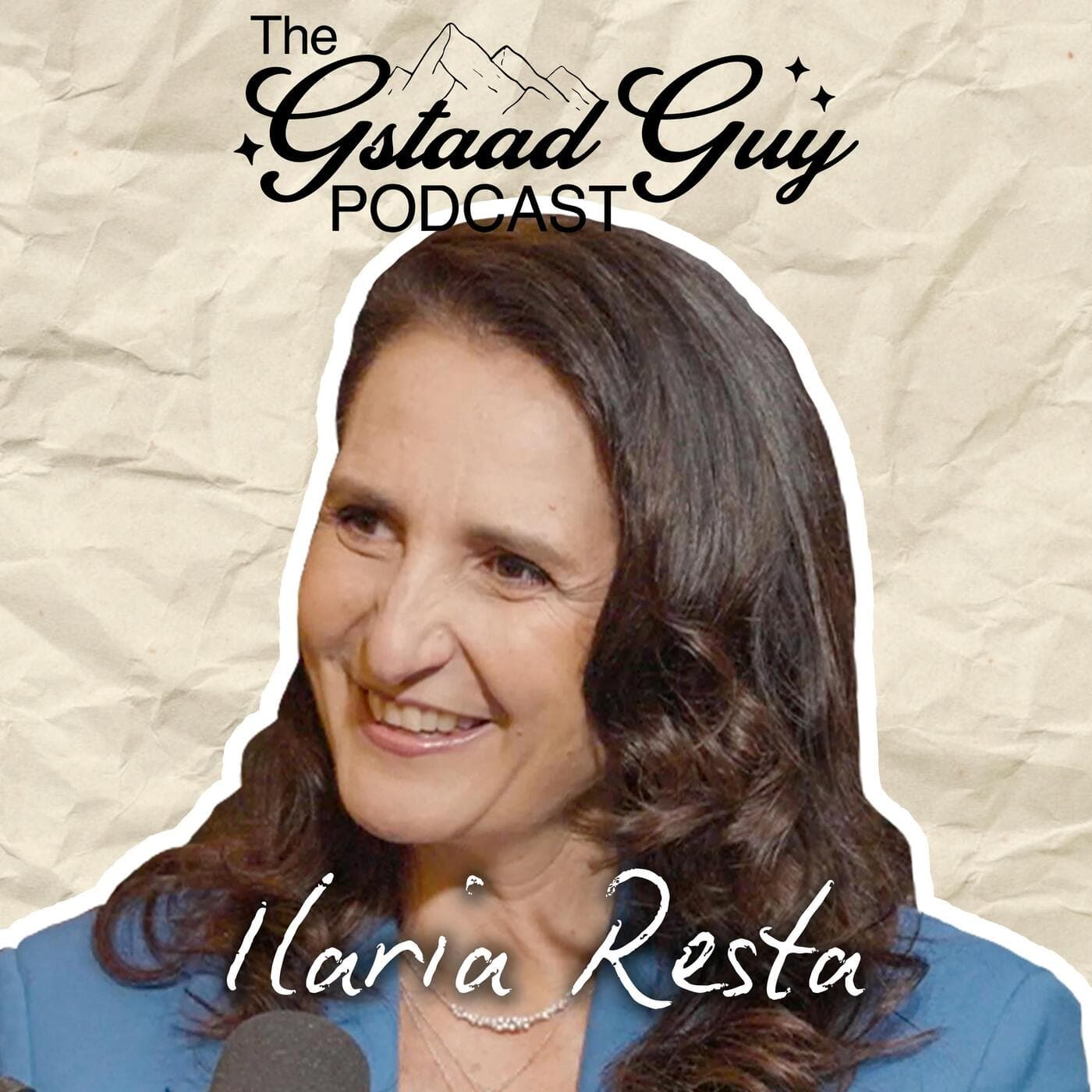
Episode Title Ilaria Resta: CEO of Audemars Piguet – Preserving Heritage, Embracing Innovation, & Embodying the Brand’s Ethos
Episode Description In this episode, The Gstaad Guy interviews Ilaria Resta, the CEO of Audemars Piguet, discussing the intersection of tradition and modernity in the Swiss watchmaking industry. Ilaria shares insights on family values, the importance of passion within the business, and the challenges of preserving artistry in a rapidly changing world.
---
Key Themes and Discussions
- Discovering Audemars Piguet
- Ilaria shares her initial experience with Audemars Piguet upon moving to Switzerland and how her perception of the brand evolved.
- Reflects on how the brand is often associated with tradition but also embodies modernity and fluidity.
- The Power of Watches
- Discusses the impact of watches in daily life, transcending traditional gender norms and segmentation.
- Emphasizes the importance of personal choice in watch selection, advocating against rigid categorizations.
- Brand Ethos and Values
- Audemars Piguet's ethos is described as both rooted in tradition yet forward-thinking, with a philosophy of breaking rules while mastering them.
- Ilaria highlights the company’s resilience through historical challenges, including wars and the quartz crisis.
- Creative Freedom and Entrepreneurship
- Ilaria promotes an entrepreneurial spirit within Audemars Piguet, encouraging team members at all levels to express creativity.
- She asserts the importance of a work environment that fosters innovation and accountability.
- Family Values in Business
- Emphasizes the importance of family values, both in personal and professional contexts.
- Ilaria describes a leadership style characterized by openness, honesty, and collective ownership within the company culture.
- Commonalities in the AP Community
- Discusses the diversity among Audemars Piguet customers and collectors, united by a passion for watches and a shared appreciation for craftsmanship.
- Highlights the emotional connections that collectors have with their timepieces.
- Future vs. Past
- Ilaria reflects on the duality of looking forward while respecting the brand's rich heritage.
- Discusses the importance of innovation in materials and techniques, while also revisiting traditional methods.
- Watchmaking Industry Insights
- Acknowledges Switzerland’s unique position in the watchmaking industry, rooted in historical freedom and craftsmanship.
- Describes the evolution of watchmaking as both a family craft and a significant cultural legacy.
- A La Poubelle vs. Fantastique
- À La Poubelle: Ilaria expresses a desire to eliminate biases in watchmaking, particularly regarding gender and access for newcomers to the industry.
- Fantastique: Celebrates the passion and dedication of young people interested in watchmaking, and the artisans who devote their lives to the craft.
---
Key Takeaways
- Heritage and Innovation: The balance between preserving traditional craftsmanship and embracing new technologies is crucial for the future of watchmaking.
- Empowerment through Family Values: A family-like atmosphere in the workplace encourages creativity and long-term commitment from employees.
- Emotional Engagement: Watches are not just timepieces but carriers of stories and emotions, creating deep connections between makers and wearers.
- Open Communication: A leadership style that emphasizes listening and open dialogue fosters a stronger and more innovative company culture.
---
Conclusion This episode provides a rich exploration of the values and philosophy guiding Audemars Piguet under Ilaria Resta's leadership. Through her insights, the podcast delves into how tradition and modernity can coexist and thrive in the world of Swiss watchmaking, while also emphasizing the importance of community, passion, and authenticity in both business and craftsmanship.
For more insightful discussions, follow The Gstaad Guy Podcast on [Instagram](https://www.instagram.com/gstaadguypodcast) and [TikTok](https://www.tiktok.com/@gstaadguypodcast?_t=ZN-8wXuujHGzPa&_r=1).
Written by AI. May contain mistakes. Listen to the episode to check what was said.
Transcript
Automatic transcript. May contain errors.0:28How are you, Elaria? things I've seen in a long time. Thank you. I love the material science. It was such a great pleasure to meet you. Likewise. And you are now the CEO of Audemars Piguet, Ilaria d 'Esta, an Italian in Switzerland. An Italian and a Swiss. I have both nationalities. It's true, you are both. Yes, I spent half of my life in Italy and half in Switzerland. It's true. So I deserve both. You do. You do deserve both. I passed the exam, by the way. It is an exam to become Swiss. How was it? It was tough because at the time my French was really not excellent. to do a French exam, a history exam of Switzerland.
1:03It was quite a lengthy process. Well, where were you living in Switzerland when you were there? I was in Geneva at the time, yes. And now Le Brassus? And now they're almost close, one hour away. Beautiful. Beautiful. The best place. Around the world with your host, the Stade Guy, we welcome you back to the Stade Guy podcast, sharing stories of excellence with those in the know for those who just know. Have you always been a big Audemars Piguet fan? Actually, no. I discovered Audemars Piguet when I came to Switzerland. When you moved to Switzerland at the airport, you cannot miss watches. And of course, you visit the different museums.
1:45And then I got to know Audemars Piguet. But I was not... I was never expecting ever to receive a call for this type of job because in watchmaking normally you see people with long tenure, long career in watchmaking. So I always felt this was a world that I could never have access to. I love it. I think you are in many ways such a walking representation of how I perceive Audemars Piguet because I think that it's a very fluid brand when it comes to how, who, and what can be worn so i see you dressing up watches where you are fairly formal and you make a watch as formal as your outfit and then i see you very sporty and very casual i see you crossing the barriers of the gender norms of the watches you wear a men's watch or a woman's watch and you play with the spectrum of where a watch can go which i think is very very ap is that always how you've been with your jewelry and watch choices?
2:55I've always been like that in general with the things that have a role in my life. I like them to fit into my life and not me adjusting to those. And I believe watches have a powerful influence on you, at least on me. I like that the watch represents something in my day. And I don't like to have fixated rules of watches or fixated rules like men, women, as you just alluded to. I don't like that type of segmentation also because it doesn't reflect what people want. People don't want to be clustered in a segment, certainly not a gender segment for watches because there is not a reason for a watch to be male or female.
3:46Certainly there are watches that women like more than men. But that's the way I like to live. Watches change a lot. Styles completely different. I'm extremely playful with watches. I love it and I see it. I like to be as playful as I can be with watches too. I actually love very small face watches. I also have very small wrists, so it does fit to wear a small face watch. But I feel like when people think of Swiss watchmaking, especially a brand like Audemars Piguet, they think of tradition and heritage. which is such a big part of the brand, but also this modernity that you're talking about and this fluidity is such a big part of the brand.
4:26And for a very old watchmaking business that's family owned, I think people wouldn't assume that. From everything you've learned about the brand prior to becoming CEO and while becoming CEO, has that always been part of the business's DNA? It is, and since it started, people believe very recently Audemars Piguet became, sometimes it's defined the enfant terrible in watchmaking. But in reality, this witty spirit, this daring attitude has always been part of the history of Audemars Piguet, a company that frankly survived two world wars, multiple financial crises, and more importantly what almost destroyed the watchmaking industry, which is the arrival of the quartz in the 70s.
5:16To survive and thrive, you need to, in a way, break the rules. And in fact, that was also one of our mottos of our campaign. To break the rules, you need to master them, which is a very powerful motto because it tells you you need to keep looking forward, you need to keep evolving and changing, but by staying through to your roots. That's why we are in Le Brassou because that's where we belong, where we were born. That's why we continue to manufacture watches like they were manufactured almost 150 years ago. But at the same time, we don't want to be nostalgic and look back. We want to look back and forward at the same time.
5:58That's why we play with materials. We play with innovation. And also we are a bit playful in the way we communicate in an informal and fun way. Absolutely. I see it in every shape and form, and I see it with your energy as an operator. You are having fun while you're doing something that is fun and cool, but also incredibly precise and incredibly rooted in tradition. I think that a lot of what I observe about you as an operator is actually very entrepreneurial, which seems absurd when you think about it because to have an entrepreneurial spirit in a very old Swiss watchmaking business is likely a clear choice.
6:45And when people are hired in most positions, they're told this is what you should do in this position, but as a CEO, the choice is entirely yours. So I'm curious about when you joined Audemars Piguet as the CEO, did you have in mind the type of operator you wanted to be and become? And is it this playful entrepreneurial operator that I perceive? I learned in my career that predefined your approach, your style, your choices before you join a company is a big mistake that I've done in the past. because you want to reapply a model that worked in the past and it worked for another context. And this is not for the best interest of the new company.
7:37So I realized when you join a company like Audemars Piguet in a sector that I didn't know anything about, I didn't know the people, I really needed to shut up and listen and observe. And I had the possibility to do so, the luxury, because I had a very long onboarding, which helped me observe and see the truth that was not necessarily exactly what I imagined when I studied at home of the Marpegay, right? And you realize how much one of the key drivers of the success is truly the people embodying the values of the brand and the family. Because as you said, we are actually the biggest family-owned company still in the hands of the founding family.
8:21And that's a responsibility for all of us, to keep high the name of the people that actually for many, many years sacrificed financially and personally their time to make sure that this company could still be here, despite it's producing something that could be irrelevant and being disrupted, as it has been disrupted by many other products, right? Not many industries are disrupted and thrive after. And one powerful element is really the freedom of people, the creative freedom and the accountability that goes into. You talked about entrepreneur. That's a really good word because what we try to do is to create a space of legitimacy for people to invent, to dare, to try.
9:15and that is exactly what led to the creation of the most successful launches at Audemars Piguet and as a leader I learned that when I came after a few months I realized how much you need to preserve the balance between yes clear strategies that are necessary framework of operation absolute obsession for details craftsmanship and perfection but at the same time leave so much more room to ideation, to creativity from anywhere in the organization. So ideas should and can come and comes actually for anywhere. In any sector, it's not only product, it's also marketing, it's communication, it can be HR, it can be anything.
9:58You speak about the Audnars Piguet being the largest family-owned watchmaker. And I feel a lot of the family business elements, even though it is a family-owned business, it's not a family-operated business, yet you radiate and practice those family values within the company. Is that something that's always been true to you as a person? Or is that something that's also been contagious because of the DNA of the business? Both, but it is very often between me, even in companies that have a very different business model, I believe that when you treat the business as if it was your own business, you make the right choices.
10:46At least ethically you do, and at least you can go home and say, I did my best in the interest of the company. And you become egoless when you think you're doing something for yourself and for your own business, right? You make the most efficient choices, the most daring choices, and you take risks. at Audemars Piguet I found the same and it's precious what I heard from a few colleagues at AP they told me you know we feel the company belongs to us and it's something that makes me proud and I know it makes also the shareholders proud because the idea that there is a shared ownership of the company and the feeling that every day we go home when we enter the office it gives you much more freedom and daring spirit in a way.
11:41And it shows also in the very long tenure of our colleagues. They stay there for long. They devote their career to EP, and that's important. I've seen it when I went to Le Brassus, and I toured the... The factory is the right word? It doesn't feel like a factory. We like manufacture. It feels more like an artist studio than it feels like anything industrial by any means. And you cannot fake it because when you see the people, that's why we like to open the manufacturer to visits because we want to show the truth, right? And we know that clients love to see the behind the scenes of a watch. And you see the passion of people when you stop by the bench of a watchmaker.
12:27These are not scripted people. We don't tell them what to say. But the level of passion, the contagious love for what they do shows to clients to the point that many tell us, I'm not wearing a watch. I'm wearing a world of emotions, which is so powerful and so true. Absolutely. I think family values and family are one of those things that mean a lot of different things to different people. and people take it quite lightly when they hear it because a lot of people use these words and rarely define them. And I think the blanket definition of family can be understood as unity or companionship. But I think in the world of Audemars Piguet, it's far more literal because when I think of family, I think of variety, variety in emotions, variety in views of the world, variety and taste, but somehow it all comes together.
13:25And that's most households, most Christmas dinners. The brother and sister disagree, they definitely disagree with the parents, they disagree with the uncle and aunt, but somehow it works and flows. And it's one unified mission. And that's how I understand family. And that's something I saw my first time visiting the Manufacture. There's so much contrast. There's contrast in materials, in ideologies, in time periods, the very new and the very old. And that is how I define the family element, how it all kind of glues together. And I'm very curious about your view and definition of the family values also within the team and on the product side, because I think it is quite a subjective word, actually.
14:17Absolutely. I think you captured a lot. many of the most important elements of family. I would add definitely the honesty and the straight talk, the ability to have a free space of expression, which is extremely important because the other side would be toxicity, right? It's when you cannot be yourself, you need to hide or you cannot speak up. And we want to have really, at least that's my leadership model, I call it circular leadership, of a leader that sits really literally with the people and listens to the colleagues, not in a company that has the shape of a pyramid. Even the family, yes, you have the parents, the kids, but when we sit, we sit around the table and we talk and we can all express opinions.
15:05There is one other element of the family spirit that I love, is this idea that you give space to each to express their personality, their dreams and their desires without setting expectations up front. And that's how our creativity works. We try not to create too many boundaries and put in too many frameworks around the creativity and the job scope. Why? Because we want to let people in a way flourish and find their own space and their own passion. That's why we encourage what we call internal mobility is the possibility of people to switching functions, roles, responsibilities, which is counterintuitive to a hyper specialized business like watchmaking.
15:54making. But we allow that because we want people like in a family, you know, to grow, choose their studies according to their passion. And life is not ever fixed, right? You can have a path that is not linear. And we love this non-linearity, which is an investment for the company. Because if you think about it, it's much better to have everybody specialize in doing one component, one job, and repetition drives excellence and efficiency. But we don't want that. we'd rather invest in spaces for creativity. I love that. And I've seen it. It's a beautiful thing. But also family is the relationship we have with all the people around us, right?
16:35I hear this word family so many times. And then at the end, it's not real and authentic. What we want is really when we work with our, we call friends of the brands, like people like you, is to give you the space and the creative latitude to be you. and we don't script. We don't like that. That's why people who come around us are passionate about watches. This is a certain point. We don't want to have ambassadors, friends of the brands, who have been given a watch and they don't even know what it is. We want them in the first place to be genuine, passionate about watches. We want them to come and visit Le Brassou.
17:18It's a bit like getting engaged, right? You go and visit the parents, you go in the house of the person you love. And for us, it's important that you come home and to see where we are, how we work, because that defines who we are. Yeah, absolutely. This podcast is brought to you by Pubell, by V, Stade Guy, allowing you to express all the things you love and all the things you may question on interchangeable charm jewelry that can be combined to create bracelets, necklaces, handbag, accessoires, and much more. From iced matcha and reformer pilates to sauna buckets and a pair of skis. All the things you love and even the things you question can be expressed through Poubelle.
18:10I've been very privileged and lucky to attend many of your events as a friend of the brand and friend of the house.
18:19And I noticed that other people attending are all incredibly different from one another. Very similar to the Audnach Piguet team. There's people from all corners of life and all corners of interests. And there's a timepiece that suits each of them in different ways. And they feel very strongly about one, positively, and feel very strongly about others, maybe negatively, but there is a passion and a love for so many different corners of the brand. So while I observe these people and I see that they're undeniably different, I'm curious to know what you see as the things they have in common and what actually brings them all together in the room because although they're very different, they all bond and have the best time together and share love.
19:06and I wonder what you see as the commonality between people who are friends of the house customers, collectors and even artists within People ask me often how do you make such events so fun and successful and I look at the people asking me the question saying it's you because it's really not the place it's not the entertainment or the food definitely we take care of all these aspects with the greatest level of detail, but it's really mixing people that are truly different, but with one common passion, which is, of course, watches, but also with the attitude of having fun and sharing. We like to think the people around us are extremely generous with their authenticity and with their ability and desire to put themselves out openly without creating and putting a mask on, which is the mask of the role they have, right?
20:08So when you come to an event and you see a football player or singer or you or all the others, really you see the real person behind the artist. Many are artists or the real person behind the professional. It could be a professor, it can be a doctor. They remove these, let's say, I don't want to call it mask because it's who they are also, but you see the true person. And why? Because watches, I believe, let emotions talk much more, which is incredible. It's a piece of metal, gold, whatever, mechanical. But in reality, there is always a story behind each watch. And it's what I found fascinating.
20:52after the beginning of introduction, all of a sudden the event turns into a party, into an emotional moment of fun and authenticity. Absolutely. And when it comes to the collectors you meet, people have been collecting Audnacht Piguet watches for some for months and some for many, many years. Or generations. Or generations as well. Father, son, daughter, yeah. Exactly. Are there any values that they share that makes them authentically Audemars Piguet, other than likely some hard work to make the affordability threshold? What I like of these exchanges with the collectors that are extremely precious for me, and they were indispensable to learn about Audemars Piguet, first of all, there is always an emotional trigger when the collection started.
21:51it could be the gift from parents it could be the memory of a moment in their life and each watch despite these collectors have many many many have a very strong memory attached to them at the same time they go deep I rarely have a conversation with somebody who cannot tell me exactly the movement when it was done the reason why that movement is so good and it's a precious exchange because they tell you also what works, what doesn't work, how is it different from what their expectations. It's a precious source of inspiration for us and you can tell there is a common thread of bringing together, building together pieces of history.
22:40Watchmaking has been there for hundreds of years. The industry itself, way before even Audemars Piguet, of course, was founded and for them, they participated to the life of humanity for a certain point in time. They bought watches that are 200 years old, 150 years old and they can tell you what happened in that very moment in the history and maybe in the history of their family if it's a gift coming from the family. So it's a way, if you want, to feel immortal and to be connected to the past and hopefully to leave something to the future. with the advance in many of your technologies you guys have created some very cool new materials which I'm a big fan of and at the same time you've brought back lots of the archives that you are big fans of as well and things from the past that you've brought back into life how do you personally balance future and past and what excites you more on a personal level?
23:47Well, both. I must say since I arrived, it was evident that we have two souls. One soul that looks forward and one part that looks back and the two are interconnected because a lot of inspiration comes from the past. The trap we should avoid is the trap of reproducing the past as it was. That's not going to happen. when I arrived with one of the responsible for our archives and museum we decided to create a unit I call it business unit in reality it's him with very few people with the idea and we call it etablissage it's an homage to the system of production in the past where you had multiple ateliers specialised in each component and then a central role of assembling all these pieces into a watch.
24:46This idea that there are hyper-specialized ateliers around you has been one of the reasons of the success of Audemars Piguet and the watchmaking in general. And we wanted to relook at that model. So we recreated this system for very few watches that get inspired by the past. So we look at the archives, we look at the picture, very often drawings because we don't even have pictures, Of course, we are talking hundreds of years ago. And the idea is really to do it with intent to relearn certain savoir faire, certain ways of working that do not exist anymore. That's for me fascinating because we have no intent to create necessarily revenues or financial results out of this unit.
25:30The idea is to learn and put it to the service of the rest of our innovation program. At the same time, there is a team that is truly obsessed about materials. They have a different type of expertise and they like to cook. As I said, it's like they're extremely creative, of course, with incredible engineering background or chemist. They try really to play with the material in a way that blends with the history of the watch we are trying to create and the purpose of the watch. So it's not creation for the sake of creation of a new material. There is a lot of thinking about why this material makes sense for this type of watch.
26:13Why titanium? Why forged carbon? And why these colors? And we let imagination go. And it's a work hand in hand between the materials and the movement of the watch. I think the watches undeniably can sell themselves. And they do. it's very difficult for people to want to get their hands on Audemars Piguet to get their hands on Audemars Piguet yet you continue to communicate all these amazing things and I think many business operators communicate things in order to sell them but most of the pieces are sold before you even have the chance to communicate them Why do you continue to tell the stories of Audemars Piguet and the watchers when you could in fact say nothing at the same time?
27:06Because we believe we have the honor and the responsibility to keep this industry alive and known. The watchmaking industry is more than an industry. For me, it's in the crossroad of history, art, mechanical sciences, material sciences. It's extremely rich and it's part of the heritage of Switzerland and many other countries. When we did, you were part of it, this event in Shanghai a few weeks ago, it was an event where we decided to open the doors to anybody to come and visit with the idea of opening the doors to watchmaking. Why we do that is not to delight the prospect clients, it's to delight people and give them access to a learning on this fascinating world.
27:57It's a bit like museums when they were born, was really the idea to share knowledge, to share passion and emotion. And definitely we are seeing more and more young generations being interested in that. That's why we are starting to do more and more masterclasses, The idea of letting people touch components and see with their own hands and eyes how complicated it is to not even assemble a watch, which is absolutely difficult and requires years. But just to pick up a small screw from the bench is already extremely complicated. It requires dexterity. That's why we have a museum with open doors to allow people to come and visit.
28:38And we created in Japan the AP Lab. And the idea of the EPI Lab was really to be in a very young district of Tokyo to open the door and share to the world in Japan what it is to talk about watchmaking. And we even did it without necessarily branding many of the stories. It was really the idea of opening the door. So I'm a big believer that we have that responsibility also to recruit the future watchmakers and the future people who will continue carrying the tradition of this wonderful job. When people think of watchmaking, they often think of Switzerland. And when people think of Switzerland, they also think of watchmaking.
29:19And although I wish I had a Swiss passport the same way you do, and I love Switzerland, which I think my audience very well knows by now. So I'd love to know what it is about Switzerland that stands out to make this possible, because there's definitely a pattern here and there's definitely lots of correlation between the Swiss way of living and doing business and being and watchmaking. If we talk about the Vallée des Joux where we are located, which is in the Jura Mountains, you see a lot of watchmakers there, not only Audemars Piguet. And the story is related to a group of people who flew for freedom, freedom of religion and freedom of expression.
30:09Unfortunately, they arrived into a wonderful place indeed in terms of nature, but with very limited resources. So there was a lake, so water, there was a forest, so wood, and there was rust, which allowed metallurgy to start. But the quantity was so small that they couldn't do big metallurgy. They could only do small components. That's why watchmaking started in the proximity of Geneva, where there was watchmaking starting, given jewelry were not allowed for a long time. So watchmaking was the alternative solution for many to do their work. The other help was the long winters in the Valle des Joux.
30:53So many people who were farmers and had the kettles, they could do nothing else and spend their time in the homes. And they started working on these very small components that then they sold to Geneva, to Paris, to London for watchmaking. All of a sudden, this system of etablissage started because each, we're talking households, atelier, we mean like husband, wife and kids maybe working on components. and all of a sudden this became a network of families, a network of ateliers connected to one another. That's why you see so many companies with important watchmaking companies based in the Valle des Joux and that's why we remain there because for us the reason why we were born, how we were born means so much in the values for us.
31:48This notion of freedom comes from them. we have amazing stories of devotion to watchmaking from all the branches in the family and for us it's important that we give them the right place in our memories and we continue being inspired by what they did I love it in a very Stadgei fashion we often discuss what we find to be a la poubelle about the world and the world around us that we'd like to change and things that are fantastique that we love and celebrate. I know your list is very long of what you find to be fantastique. I'm positive. So everything is fantastique. Exactly. You're an optimist.
Read the full transcript
32:27I was wondering if we could share just a couple of things that stand out to you in particular as maybe things you'd want to possibly change and throw at La Poubelle. And, of course, the things you find fantastique. Maybe just one or two in each category. Perfect. Let me start from La Poubelle then. So we end with Honé Haït. For me, à la poubelle, this bias on watchmaking, there are many, again, men watches, women watches, or if you don't come from watchmaking, you cannot work in watchmaking. These biases, à la poubelle. À la poubelle. À la poubelle. Okay, I agree. Then, fantastic a lot of things.
33:13First of all, fantastic to have around us so many young kids that as of the age we have clients at 17, 16 who want to buy watches. This desire of learning and discovering an object like watches, fantastic. Fantastic our people, everybody in watchmaking, not only Thaudet-Marc Piguet, all the people that devote years and years and years in developing and becoming a watchmaker, which requires dexterity, patience. Fantastic. I agree. Absolutely. Amazing people. And lots of our audience today is incredibly inspired by you and your career. I'm sure many young women in particular who would love to have the variety and experience that you've had because you are the CEO of Audemars Piguet and you have worn many hats in your career.
34:07You've done many different things, to my knowledge, but all at a very high level and all with incredible passion. What do you believe is the secret recipe to do so many different things in so many different ways very well? Well, I started by saying that my career advice I got when I was very young is to define a dream and be obsessed and go after the dream. I think this is a la poubelle in honesty. This is a thinking that creates expectations on a path that is not necessarily the most advantageous for you. In my career, I had lots of twists, turns, ups, downs, choices that were totally unexpected.
34:56I went for avenues that I thought were big and reality were smaller and then the other way around and I learned a lot in both. So for me, it's much more, yes, you should have a dream. Yes, if you have clarity when you're young, go for it. I don't know. I was not so fixated about becoming a CEO. I was, of course, I had this dream later in my career. I really wanted that, but I didn't start with that. I followed truly, truly what I felt had the right balance of passion and learning. So it was something I felt comfortable working in, but not too comfortable. So I like the idea of stretching myself into the unknown.
35:37Learn a lot. It's very important. It gives me adrenaline and energy. So I would say to people, look up, have a side view to the avenues and to the streets you didn't consider. And ask yourself a question before you continue on autopilot in your life and career choices. I love that. The power of choice, I would say. I love that. It's a beautiful thing. Well, Ilaria, as always, it's such a great pleasure to sit with you. Likewise. And I'm very excited to spend more time with you and to see this amazing exhibition. Congrats on 150 years. Thank you. I was so impressed by Shanghai. More to come. Many more years to come.
36:15Yes. But I must say, if people have the pleasure to be in Shanghai and see your exhibition, that's one of the most impressive things I've seen in my life. It's a hundred emotions in one, a hundred time periods in one. And it's really, really magical. And I'm excited to see more of that magic that you bring to the world through the lens of Udmach Piguet. Thank you so much. A pleasure to be here. Likewise. Thank you so much. Thank you for listening to this episode of the Stad Guy podcast. If you're keen to learn more, please follow along by engaging with our social channels on Instagram, TikTok, Spotify, YouTube, and Apple podcasts.
36:56and we look forward to seeing you next week. Merci beaucoup. À la prochaine and a big hug from the Start Guy.
From the publisher
The Gstaad Guy sits down with Ilaria Resta, CEO of Audemars Piguet and one of the leading voices in Swiss watchmaking, to explore how tradition and modernity intersect in one of the world’s most enduring industries. With a career shaped by deep respect for heritage and a passion for innovation, Ilaria brings a unique perspective on what it means to steward a legacy craft into the future.
The conversation touches on the tension between old and new, the family values that shape both personal and professional life, and how a sense of family can define a business culture. Ilaria shares how passion, discipline, and even obsession are essential to preserving the artistry of watchmaking while ensuring its relevance in a fast-changing world. A rare glimpse into the heart of an industry where every second counts, and where heritage remains the ultimate luxury.
Filmed at the Scarfes Bar at the Rosewood London.
(00:00) Intro ✨
(01:31) Discovering Audemars Piguet 🔍⌚
(02:45) The power of watches ⚡⌚
(04:37) Ethos of Audemars Piguet 🏔️🌌
(07:00) Embodying the values of the brand 🤝🏻💎
(08:53) Creative freedom & entrepreneurship 🎨🚀
(10:09) Family values in business 👨👩👦👦🏛️
(14:17) A work environment that empowers 💼🌟
(19:07) Commonalities across the AP community 🌍🤝🏻
(23:43) Future vs. Past ⏳🔮
(27:11) The watchmaking industry 🛠️⌚
(29:18) Switzerland and watchmaking 🇨🇭🏔️⌚
(32:17) À La Poubelle vs. Fantastique 🗑️✨
(35:04) Choosing self-development 📚🌱
Learn more about your ad choices. Visit megaphone.fm/adchoices
See Privacy Policy at https://art19.com/privacy and California Privacy Notice at https://art19.com/privacy#do-not-sell-my-info.


