
In short
The Gstaad Guy Podcast
Episode Summary
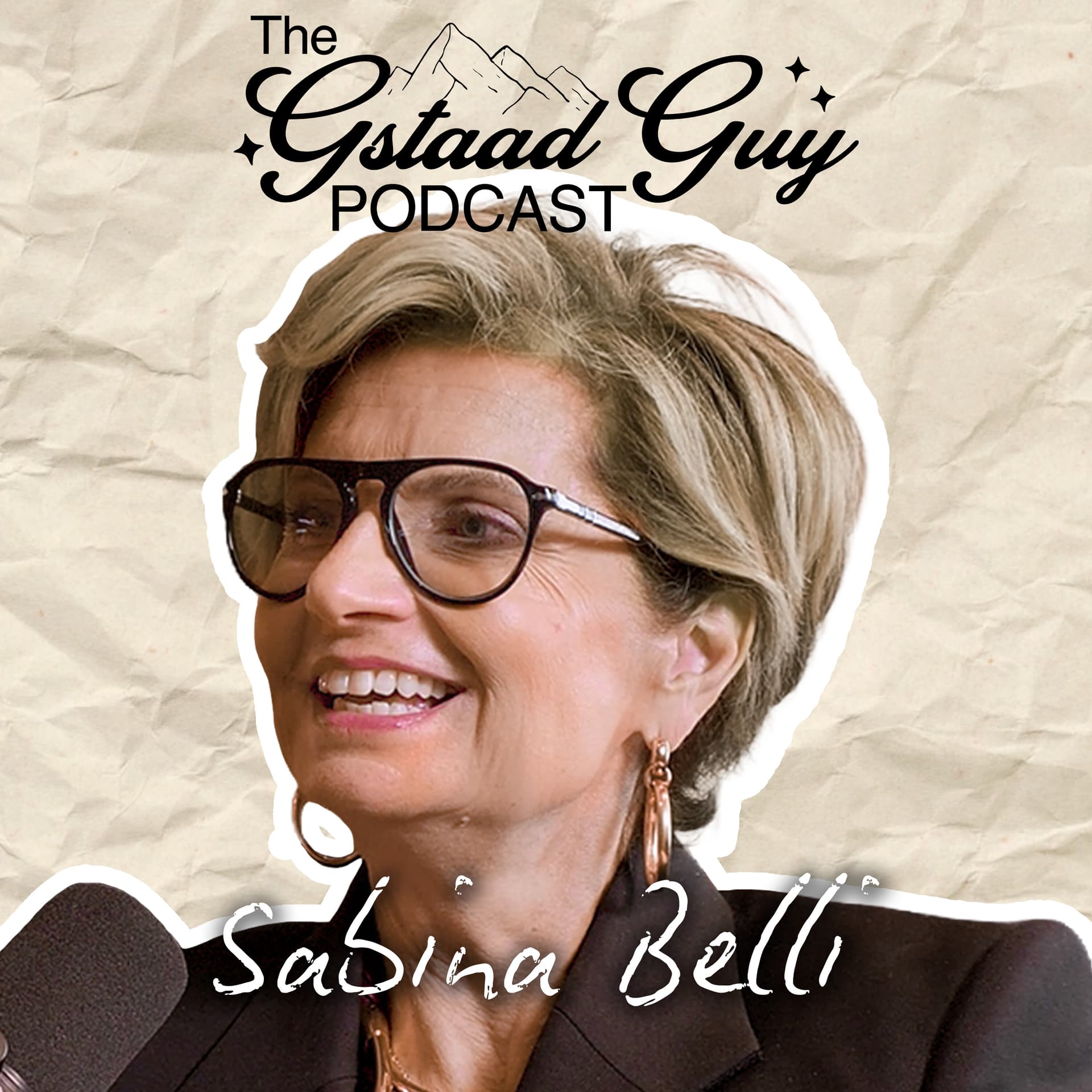
Sabina Belli - CEO of Pomellato
Podcast Overview The Gstaad Guy Podcast is hosted by The Gstaad Guy, focusing on the journeys and challenges faced by individuals who have mastered their craft. The podcast aims to reveal untold stories, emphasizing the grit behind glamour, through a series of unscripted, guest-driven episodes.
Episode Title Sabina Belli: CEO of Pomellato – Savoir-Vivre, Modern Femininity, & The Importance of Authentic Craftsmanship In Luxury Goods
Episode Description In this episode, Sabina Belli, CEO of Pomellato, discusses her transformative role in evolving Pomellato into a modern symbol of everyday luxury. The conversation explores themes of savoir vivre, Milanese elegance, and the empowerment of women through jewelry. Belli emphasizes the importance of craftsmanship, the brand's values, and the emotional significance of gifting.
Key Themes & Discussions
- Pomellato's Transformation
- Under Belli's leadership since 2015, Pomellato has evolved into an international luxury brand.
- The brand focuses on modern jewelry that aligns with women's independence and empowerment.
- Milanese Influence
- Belli discusses how Milan's industrial design and architecture influence Pomellato's aesthetic.
- The concept of prêt-à-porter jewelry allows for daily wear rather than only special occasions.
- Craftsmanship
- Emphasizes the importance of craftsmanship in luxury goods.
- Introduced Pomellato Virtuosi, a school for goldsmiths to cultivate future artisans.
- Emotional Value of Jewelry
- Jewelry as a symbol of self-respect, resilience, and love.
- Discusses the difference in the emotional significance of self-purchased jewelry versus gifts given by others.
- Modern Femininity
- Conversations delve into the archetype of “The Pomellato Woman” who embodies independence and self-empowerment.
- Encourages women to embrace their femininity while pursuing personal and professional aspirations.
Highlights from the Conversation
- Craftsmanship & Technology: Belli discusses integrating traditional craftsmanship with technology to reduce waste and enhance production.
- Self-Gifting: Promoting the idea that women should buy jewelry for themselves, celebrating personal achievements and milestones.
- Inclusivity and Kindness: Belli expresses the importance of being kind and inclusive in both personal and professional realms.
- Economic Independence: A strong advocate for women understanding financial independence and the significance of being economically savvy.
Rapid Fire Game
À La Poubelle vs. Fantastique
- À La Poubelle:
- Rudeness in social situations, especially towards service staff.
- Scrolling on phones during meals.
- Believing everything seen on social media.
- Fantastique:
- Practicing gratitude for everyday privileges.
- Supporting and being present for others in need.
- Finding joy in mundane experiences.
Conclusion The episode concludes with a reflection on the balance between ambition and emotional intelligence in both personal and professional spheres, highlighting the importance of both being a warrior and a sage in today’s world.
Follow The Gstaad Guy Podcast
- Instagram: [Gstaad Guy Podcast](https://www.instagram.com/gstaadguypodcast)
- TikTok: [Gstaad Guy Podcast](https://www.tiktok.com/@gstaadguypodcast?_t=ZN-8wXuujHGzPa&_r=1)
Note: This episode emphasizes the profound impact of authenticity, craftsmanship, and modern femininity in the luxury sector, advocating for a balance between ambition and emotional depth.
Written by AI. May contain mistakes. Listen to the episode to check what was said.
Transcript
Automatic transcript. May contain errors.0:00And then you have those people whom are very dear to my heart that do not know and just do things because they think it's the good way. A for effort. Yes. And I think these people are brave at the end because they navigate in their own way. And most time they are right because they do what their instinct tells them to do. And I had a British friend who said, those people are pathetic but cute. Pathute. So that's in between Ela Pubella and Fantastique. Yes. Can you give us an example? In the real world. As I said, you know, he's wearing Crocs because he thinks it's comfortable at the end, you know.
0:47It's cute. Pathute. Pathute. But that's not judgmental. Yeah. But a la Fouba et Fantastique are. Yeah. No, I mean, it's kind of respectful at the end, you know. Well done. That's true. Good try. Honest. It's true. Genuine. I agree. And I like that. I like it too. I like bad taste when it's... Comes from a good place. Yes. And this when, you know, we could start making the first difference in this behavior thing. Things that come from the heart and things that come from a technique that you've learned, you know, etiquette. That's true. So whenever it's from the heart, well done. Otherwise, it's just technicality.
1:33Otherwise, it's technicality. and if you can merge both heart and technicality, then it's manners. It's savoir vivre. Around the world with your host, the Stade Guy, we welcome you back to the Stade Guy podcast, sharing stories of excellence with those in the know for those who just know. Well, speaking of, the lady of savoir vivre, Savina Belli, thank you so much for being here. Thank you. So nice to be here. So nice to have you. I know this was a very short notice. So thank you for taking the time and for being here in Milan. I know you're a big fan of Milan and the business you run as a CEO for Milato is very much Milanese.
2:18Very Milanese. Very Milanese. Born in Milan in 1967, this company really, manufacturing company, because our founder, Mr. Rabolini, was a goldsmith himself, coming from a family of goldsmiths. And he has been extremely visionary because back in the early 70s, he understood that women were changing. Women were becoming much more free, independent, autonomous, also, you know, dressing differently. And there was no jewelry really matching that new woman. And he decided to create this very cool, yet very precious and very luxurious Pomellato brand made by hand by goldsmith, like his family would do.
3:10And he really revolutionized this idea of being able to wear jewelry every day, like prêt -à-porter, really, not waiting for the occasion, special occasion that at the end never comes. For those women that are not like red carpet women or trophy wives, which is one of the worst words ever. But for those women that can afford buying jewelry for themselves as a reward, as a celebration of some special moments of their own lives. And he really invented modern jewelry back in the days. I see that. I feel like pomelato is permanently modern. Even the older pieces that I've seen seem incredibly modern.
4:00Very much inspired by the essence, the quintessence of Milan. So the industrial design, architecture, this kind of brutalism that you feel in Milan. Milan is not like the other città d 'arte, Florence, Rome or Venice. There is less maybe immediate beauty in Milan. You have to go and get it behind the scenes, behind the doors, in the apartments, in the houses of the Milanese. And yet this very strong signature style of Milan is everywhere in the city. You see it's in the, again, architecture or in some very specific and very strong codes. So he was really inspired by all that. And he invented this way of using metallery like, you know, chains or this very, again, industrial pieces into very refined jewelry, yet with very complex mechanism that are really based, again, on engineering and that kind of industry.
5:14So it was a very interesting merge. And also quite soft. I feel like all the pomelata jewelry I've seen is quite soft on the eyes. It's very much curved. Sensual, bit bold, you know, big, big volumes. One piece is enough. You don't need to, you know, to do much more to exist because this is also a tribute to women. You know, the jewelry is here to enhance a woman's personality and not the reverse. You know, you don't wear jewelry to pretend. And also within the world of pomelato, you have Dodo. Yes. Which I feel like I may be a colleague of in the world of charms with Pubelle. Absolutely. Dodo and Pubelle are absolutely cousins.
5:57Cousins. A bit like your other cousins. Dodo is very Italian. Every Italian kid or, you know, older generation person has owned a piece of Dodo because it was the absolute gift that first lovers would give each other or, you know, for the first important milestone of one's life. And even today, of course, it still has that kind of very important symbolic, but it has also become a much more grown-up jewelry line. And we are very proud of our little dodo. I heard the dodo birds. It's coming back from extinction. Oh, yes, maybe. Absolutely. There is a plan. There's a plan to bring it back. So they could be the real mascot, hopefully soon.
6:52Dodo born in Mauritius Island, in the Mauritius Island, in the Indian Ocean. And clumsy, a bit too heavy to really fly. And so the human beings, in such a mean way, they just... Ate them. Yeah, let them extinguish. I'm sorry to hear. But we are full of hopes. The Dodo lives on. Yeah, absolutely. The Dodo lives on. So you've been running Pomellato since 2015, am I correct? Yes, 10 years now. 10 years. Amazing. How has that been? It's been a big journey because, first of all, I took it as an immense responsibility because, you know, being the guardians of such an incredible brand is very, it's a big honor and a big responsibility.
7:40And I really think that, you know, we had in this journey, in this trajectory, many different responsibilities, one of which, of course, is the mere business development, because we wanted this brand to become a real international player and not simply a Milanese and European brand. The second one was really main thinking on how to transform this brand without losing its roots, its DNA and its reason to exist and its quality and the goldsmith. And that is a big issue because, you know, goldsmithry, it's really an expertise. And maybe I'll elaborate a little bit more on that. And finally, creative-wise, still be so avant-garde, so somehow even a bit provocative in the world of jewelry that has a lot of codes and a lot of ways of expressing itself.
8:42And we still wanted to be this brand that takes things in a different way, in a less conservative way, maybe, or traditional way. So I think a lot of our viewers see you and, of course, admire the way your brain works, as do I, but also admire the position you find yourself in, the position you've worked towards, becoming the CEO of an incredible brand like Pomellato. But I think as you've shared before, lots of beauty exists in positions that aren't necessarily just at the desk as a CEO, but also in the world of craftsmanship and actually working with the hands versus just on the keyboard as I do on my computer all day.
9:28What do you believe to be the importance of craftsmanship and this world of artisans and working with the hands today? It's an immense talent, an immense asset to have. You know, most times when we talk about artisanat or craftsmanship, it kind of reminds us those handicraft things that you may find in one of those little markets traveling across the world, which gives craftsmanship this kind of, you know, a little bit vulgar or khaki meaning. While craftsmanship, particularly in Italy, is part of our culture, part of our history. This ability in transforming an idea or a drawing into something tangible and real, sometimes a 3D mini piece of art, is an incredible asset, an incredible talent.
10:33And in the world of jewelry, being a goldsmith, it's something that brings you back millennials ago. This has been invented by, you know, the most incredible artists that understood that this precious metal, together with the precious stones, could become pieces of work that transcend the actual value of the metal and the stones, but become something absolutely priceless and extremely beautiful because there is also a component of aesthetics that is incredible here. Unfortunately, you know, our societies across the world have favored people going to university, to school, to collect its diploma and then go into a white collar office world, thinking that it would take you faster to positions of, you know, prestige and so on.
11:34And therefore, the schools of technical learning, such as, you know, goldsmithry, but also working on leather, on glass, on whichever, you know, material, noble material is necessary, particularly in the world of luxury, has been seen as a secondary career. I believe totally the contrary. And actually in Pomellato, we have launched an initiative that I'm extremely proud of, which is called Pomellato Virtuosi. And this is a school of goldsmithry that actually prepares the next generation goldsmith. Goldsmithry has been traditionally an art that was transmitted by the eldest just by example. There has been very few schools of goldsmithry.
12:28So this is a trajectory that builds the career of a goldsmith in three, five or seven years of education with a diploma at the end that converts to 99 percent into a real contract long term. and that offers a career that is extremely fascinating because again, I call it the intelligence of the hand, you know, making sure that this talent, unique talent of producing something with your hands, linked of course with the brain and the whole, the technicity that is linked to that is so important and so valuable in this world of luxury where things are different, whether they're made industrially or by hand.
13:23So I think it's one of our duties as luxury brands and luxury players to make sure that all those people that have that knowledge, not only we protect it, but we develop it for the next generations to become a real preciousness and part of our cultural background. And if you think about it even for yourself, you know, how many things do you know or do I know to do by hand? You know, the work of hand is very, very rare nowadays. You know, our grandmothers were knitting or doing crochet or maybe carving. You know, everybody was able to produce something. Nowadays, it's really rare. And I think that it could be turned into such a precious gift to expand and even, you know, to do as a hobby could be fun.
14:28And I really would like to spread this notion that there are so many métiers, so many different knowledgeable works that are in the arena of craftsmanship, particularly in the luxury world, that could be explored for the next generation, you know, for the children of today that may not be happy in school, but would become incredible geniuses in this world of craftsmanship. And they have the benefit of AI not having hands yet. So there's a different headwind. I think a lot of the office work right now is being elevated but also challenged by AI. Absolutely. But AI doesn't have hands just yet. AI is a fabulous tool.
15:16I'm absolutely very fond of AI. But for the time being, when you come to our atelier in Pomellato and you see this 180 master goldsmiths, you know, using these tools together with very high level technology, because of course now we have all sorts of incredibly powerful and time helpful tools. Also to reduce waste. I know sustainability is... To reduce waste and also to reduce time because sometimes, you know, We have to do so many prototypes that are really just useless at the end. But now we can avoid those steps, but still have that ability in looking at something and finding the solution. Because you know that that could be done in a manual way is priceless.
16:14But you don't come from a world of jewelry, correct? Before 2015, you were doing very different things. Well, I've been lucky enough to work in different categories, yet I'm a luxury expert. I've always worked and developed luxury brands. And I think that this is really one of the most interesting aspects of my personal and professional life. I've learned things that are at the basis, the pillars upon which luxury rests. And I think that it's absolutely fascinating. And it's also something that if you observe carefully, you can translate in real life. So what does luxury mean to you? And what significance does it play in the world you find yourself in work with?
17:07You know, I always have difficulties in defining things. The answer to what is always a bit too radical. You have to take a stance or to say this, but, or yet, which is a word that is always a bit of compromise. I rather like to look at this topic under the angle of why luxury. Why are we all so fascinated about luxury? And I think that that brings us back to the very roots of humanity. And it shows us that luxury has used a number of the most fundamental elements that drive and rule the humanity. If you look at neuroscience, neuroscience tells you that the humans, human beings, contrary to animals, we are ruled by elements that are related to our body.
18:10We need to eat, to rest, to sleep. We are ruled by our mind, which is the cognitive aspect of why we think and we elaborate a thinking. And finally, we are also ruled by a social interaction and these ideas of belonging. All these three elements are vital for our survivor. This is what is called adaptation. And somehow, if you take this very complex topic into the luxury world, this is exactly what happens. We need to understand in a social related manner how to adapt to a specific situation. And this is why luxury has developed all these elements that are very important in the luxury way of building brands that resides on values, on codes, signs, symbols, rituals, myth, archetypes, aspiration, projection, and finally manners and etiquette, protocol.
19:30If you don't know all of these, if you don't understand how important these are, you may miss some of the semantics of luxury. And if someone is just starting to get into the world of luxury or at least building on a curiosity they have, which of those nodes that you just mentioned would you say is introductory to explore and learn about first and foremost? and then beyond that I personally focus a lot on archetypes because it's a big part of my social communication and my storytelling but all those other things you mentioned I think in many ways have fit into my worlds absolutely but many I haven't thought of as well so I'd love to know from you what you actually one you know I I mentioned that to you in private But one of the things that really I admired very much and made me laugh a lot is your ability in understanding all these little details that you have encapsulated in these two personas.
20:34And that are really very much what we do in understanding and depicting a bit this mapping of luxury and also then mix or match one brand to a specific target audience. Because the world is not one. There are many communities, many different groups that you have to appeal to for different reasons. First of all, because you have to resonate in their value systems, which is the most important, I think. You know, values is really what rules your way of being as a human being with ethics, with, you know, a number of very important ways of behaving in this world. And then you have all the more superficial things like codes, signs, symbols.
21:28And of course, you know, symbols are very easy to decipher with just your eye. I mean, think of, you know, you're looking for a bathroom and you see the symbol of that. Exit is a very powerful scene. Codes is slightly subtle. Codes is what defines a brand way of expressing itself. So it could be colors, it could be, you know, symbols of logos, silhouettes, and so on. And then going further into the level of aspiration and projection, yes, there are archetypes. But I think it's also important to make the difference between archetypes and personas. It's slightly different. Archetypes are born in the very old time mythology and it's a universal way of expressing some sorts of traits of character that could be, you know, the courageous guy, the warrior or the hero or the princess or, you know, the Penelope doing things.
22:47So once you have set the values inherent to the archetype, you have like a higher persona. The persona is more a daily character, you know. And we were talking about La Shura, which is a very Milanese persona. She's not an archetype because she can't belong to that level of Olympus where the archetypes are sitting. But she's definitely a character that with few signs, symbols and code you can depict. And again, you know, I think that Colton and the Stadt guy are very strongly representing these two personas. Of course, they become archetypes, but it's important to make the difference. And this is also what can lead us to understand the difference between the look, the outer version of yourself, and the more profound and deep one.
23:58So if you're aiming at looking and at showing and at dripping into social symbols, a la poubelle. But if you tend to match all this with what really matters in the deep of your values, of your heart, of your way of thinking and believing, then you become a very interesting person because you can adapt yourself to any circumstances with the right codes, the right manners, the right etiquette, which all of a sudden become not at all superficial and like, you know, accessories, but at the heart of the social interaction we are looking for. There's one persona in particular that I know you feel quite passionate about and that I believe you actually personify, which is a strong independent woman, right?
24:58It's a sovereign woman. And I know you started your initiative in 2017 at Pomelato for Women. I'd love to understand more about who you think the Pomelato woman is on all those different levels and what you think makes someone not fall into those categories that you believe to be quite important to work on and develop? I think that, again, you know, I'm absolutely fascinated really by this need of adapting ourselves to life in general and in particular to some situations. And there are rules that are absolutely unwritten rules that are, you know, out there. Nobody teaches you exactly how to behave and how to manage certain situations.
25:53And it's important at one point to both know, again, a bit of the rules that need to be learned and a lot of what you can let go from your own, you know, beliefs and things. And in the professional world, so far, women were supposed to mimic a male behavior. They had to be strong and courageous and brave and all this, you know, kind of attributes that were defining masculinity in a very cliche way, of course. And so, you know, the years, you would see back in the 80s and the 90s, you know, this representation of women at work very much following certain standards, one of which was shut down all your emotions, because, you know, if you do so, you will show your weakness and your vulnerability.
26:56And I think that one thing that really matters to me today is to give the opportunity to all women to show as well, or at least to live with that part of ourselves, which has been shut down for so many years. And that, in fact, is also what gives us the possibility of looking at things with a third eye. You know, again, there is black, white, and then another option. And that comes from intuition, sensitivity, emotion, empathy. And, you know, with the Pomelato for Women platform, we really wanted to communicate on different levels. One, of course, is the most horrifying one, which is gender violence.
27:47You know that one out of three women is victim of domestic violence or physical violence, but it could also be economic violence, psychological violence. And on the other hand, we wanted to show women our support, our way of telling them, you know, we see you, we know that you are out there struggling, hoping to become the one you want to be, but yet still prisoner in all this different social, you know, constraint. Like, can I be both a good business person and a good mother or a good partner? Or, you know, having this ability, as I said, to balance both a certain drive, a certain leadership with some elements of soft skills.
28:38And the Pomelato for Women campaign was really here to, first of all, give the right place to this topic in people's minds. So, you know, foster and develop awareness on this fact, because most people don't really know the reality of feminicide, of all these different very tragic things that happen all over the world and in all social classes. So it's not something, you know, very specific to some people or some regions. And the other hand, also this possibility of looking at oneself as a woman and not as, again, a caricature of what people are expecting you to be. And I was very impressed to see that most questions are coming from the very young women that are still in that kind of limbo without knowing yet how far they can go in their dreams.
29:42Or if they want to follow their dreams, they do it in a too fierce way that is not needed, you know, to succeed. So I keep telling them, you know, you have to try to balance these two polarizing situations, you know, leadership and strength and will, with something more maybe, yeah, intuitive and emotional. And you won't see, you won't be seen as a weak person, but your weakness can become a strength. And would you say that these things you work on building and talking about internally at the business translate into who you believe the pomerato woman and consumer to be? Yes. Well, you see, we've started from a very basic data, which is, you know, transactions.
30:40And we saw that a huge percentage of these transactions are self-purchases. So meaning that our women buy their jewelry for themselves, which in the world of jewelry is a very unique situation. So this is a mix of, for sure, women that have their own money, which again, today, it's not so often taken into consideration as a consumer target. You know, women buy, purchase with their own money. It's not simply the, let's say, commodities that they can buy for the household or for other things. The second is that women consider jewelry as a very special moment for themselves. It's a reward. It's something very, very strong in terms of also meaning and symbol because you usually go and buy such a piece of eternity because it stays forever when the moment is really meaningful.
31:50And thirdly, they choose what they really love. While when you're given something, even if it's a jewel, you know, maybe it's chosen by the taste of the person that gives it to you. And it's not like 1000 % what you would have loved. So this is a very strong significance. It's a very, very unique situation. And again, you know, it brings us to another very philosophical topic, which is the meaning of the transaction. You know, if you buy for yourself with your own money, you really know what kind of value you are giving to that thing. If you're giving something, there is always a little bit of.
32:40Why am I treated like such, you know, particularly in the world of jewelry, there is a lot of. Is this gift really free? what is the secondary benefit of being even such a big thing? Sometimes it's simply investment, you know. It's the purchasing of a very precious stone or precious jewelry that at the end it's the partner buying it and at the end it's going to be in a vault or in a safe and it's going to appreciate it with time. Or maybe it's like, you know, I need to give you this really important piece of jewelry because I need peace in my couple, which is another very ugly situation. So if it's the woman buying for herself, it's really an act of freedom.
33:35And that we love. So if a woman's buying jewelry for herself, the emotion felt is freedom. What do you think the emotions that are felt typically are when someone's being gifted jewelry in contrast? Well, I guess that, you know, who doesn't like that? I mean, it's joy. It's a moment of pure joy. It's a moment of delightfulness. I mean, it's, you know, when you open up that little parcel, you know it's going to be precious. It's going to be unique. It's going to be superior quality. So it's always a fabulous moment. But there is also this transaction going on, you know. And in the very essence of luxury, the very roots of luxury, luxury should be for free.
34:20There is gratuity in luxury. You access to something extremely special with no trade. You know, you're not expecting to give back something in return. A gift is a gift. But But in our society nowadays, there is always this, you know, secondary thought about why am I given this? While again, if it's your free will moment, then it's really freedom. And that freedom you mentioned, and we discussed it last time, we saw each other, the freedom felt and the freedom in many ways earned through the ceremony and celebration of someone buying themselves a piece of jewelry. What do you think the significance of that is, of someone working towards the position of gifting themselves and being able to be financially free to treat themselves to things like beautiful jewelry, a woman in particular?
35:22Well, first of all, you are accessing with jewelry to the world of eternity, really, because you never really own a jewel because you know that it will be given at one point to friends, daughters, family, whatever. So it's a kind of a transitional moment of possessing something that will transcend you when you'll be gone. So that is quite philosophical as well. And it's bigger than us. And I think it's very symbolic while another luxury garment or accessory, whatever, will have an end, particularly if it's a very seasonal, fashionable thing. And even though, you know, vintage may resuscitate pieces from the past, but jewelry has obviously very intrinsic, profound value also in terms of symbolic value.
36:21And I think that it's one of those milestones in life. You know, if you think of when is it that at one point you want to celebrate or you want to mark that moment, it's always something that is a bit of a passage from one step to the next. So it could be a diploma. It could be obviously something very important in terms of private life, love life, etc. could be also promotion at work. And so, you know, looking at your ring and say that was for such moment is really the celebratory aspect of jewelry that I don't know, you know, any other moment, maybe champagne could be one. I tend to think that for a woman to buy her first car could be also, or whatever car, could be an important moment.
37:16Because car is also, in my generation, particularly a symbol of freedom. You could go. Literally freedom. Or motor bicycle, but anything that takes you away or somewhere else. And so, yeah, I really like the idea of giving permission to women to just use their money and not put this money in those, like, you know, common potluck that at the end, you never know how it's spent. Because, you know, if you own something tangible, then it has also an element of safety somehow. If you spend your life, you know, providing the family with groceries, at one point you will be the owner of empty boxes. And while someone else will be the owner of the apartment, the car and the watch.
Read the full transcript
38:15So do the math. And I want to go down the path of conversation where we uncover what it means to want more and how to maybe acknowledge that some of the things that may have been taught are beautiful and powerful, but some of them they should question in that trophy wife category. One of the very important values that I found more and more important as being a woman is this idea of independence, autonomy, and freedom in the sense of free spirited, free mind. And that means that at one point, you are the only one owning your own trajectory. And no matter, you know, where you come from, if you have been, you know, privileged enough to not have to, you know, think about the future or maybe even dream of, you know, marrying or living with someone that we provide.
39:18the most important thing to be really on this sense of being rooted in something important is to know that you rule. A woman rules. And, you know, in slang, you have all these different words that I love, you know, being a queen, being a badass means that you do not need anyone else to be yourself. And if you try so hard to become the one that somebody else is expecting you to be, you're losing yourself. You're losing your freedom. And that starts from different concrete elements. The first one is get yourself an education, girl. Go out there and get to understand the power of knowledge. The more you know, the strongest you are.
40:12And this goes from a specialty topic or a more general one, or something that will give you the possibility of being yourself in a moment where, you know, it matters. I'd love to pause you here to just get a bit more specific. Okay. Which categories of knowledge do you find to be the most important to go out there and acquire, to go down this path of freedom you're talking about? Back in the days, you know, at my grandmother's or even mother generation, so we are talking about the beginning of last century, there was this finishing schools, you know, college or places where this, you know, girl that were well born in wealthy families would go to finish up their education to become the best wives.
41:05So it was all about, you know, knowing how to throw a dinner, be a good, you know, wife to support and enhance the personality of the husband and to have this kind of generic conversation to be able to sit in whichever salotto, saloon, salone. That, you know, it was the rule until the 70s, really, in most, at least European and even American words, communities. And then all of a sudden, first of all, I have to say that this was accepted in all those social classes and communities where women were not to work. Because if work was vital to survive, then, you know, of course, all this wouldn't apply.
42:00But work was not seen as a symbol of freedom, was seen as an obligation. So going back to what do you need to learn, it's really, yes, a little bit of all that, because this goes back to what we were saying about, you know, the etiquette, the manners, the rules of your own society. And you want to feel at ease in whichever situation and not, you know, feel clumsy or not in the right moment with the right codes. So understanding the codes and the rules and the manners is so important and it's not a futile thing. But on the other hand, I believe that the number one freedom for a woman is money. And it's a very sad thing to say because you wouldn't like to be that, you know, material.
42:53But money gives you that kind of a free spirit to be who you want to be in whichever situation. So get those basic understandings of economy, for example. And when I say economy is how to manage your own money. Men know that for centuries and, you know, forever, they understand that having money, owning a property, owning some cash is to be nurtured, developed and even, you know, doubled or make even more out of that. while for women thinking about money, talking about money, managing their own money is vulgar, is like so ambitious, so not chic. And at the end of the day, again, you know, why shouldn't we women be less savvy in understanding that on the money we own, be it heritage or be it money that we make, that money could, you know, become even more valuable with the right approach.
44:16And again, this is not greedy. It's not something that one should be ashamed of. But it's a way to own that kind of freedom that will give you the possibility of flying off one day, if that is the case, because love may not be forever. or not to be the prisoner of a household where, you know, you don't contribute more than just your looks and your kindness and your sexiness. And so, you know, be more worthy than that. And finally, at one point, you may want to express yourself as a woman in a job or an initiative or an experience that is great. I mean, it's bringing pride and it's bringing this kind of satisfaction of I did it.
45:17I made this happen because it was something I wanted to do. So is it an entrepreneurial project? Is it belonging to a community that needs your added value or looking forward to creating some sort of also financial assets for the next generations? And I'm really fighting against this cliche whereby women should not talk about money. Women should be empowered to go see their boss and ask for a salary raise because they think they are worth it. And that, you know, there is a trade of added value. I'm bringing to the company this savoir-faire, this knowledge, this value. And I deserve my economic weight should be seen as a very normal debate.
46:20While I see it as a, you know, as a manager, I see so many girls so shy and so reluctant to talk about that because they feel victims of this, you know, syndrome of the imposter. You know, I don't deserve that. Of course you do deserve that. And there is nothing wrong in expressing your own pride and your sense of value in a Jew situation. So these are elements I really want the cool girls to understand because it is going to be an element of cool to be able to free up ourselves from that last stigma of the male domination. So first step to female freedom, acquire knowledge. Particularly, a particular point of knowledge to focus on is financial knowledge.
47:19I know where this is going in terms of the audience's thinking. Hopefully they're learning a thing or two on this podcast. But where else can they acquire that real-world financial knowledge? Not just taking a macroeconomics course online, but to actually learn how to have that difficult conversation with their boss. how to learn more about mindful savings, perhaps, and to prepare themselves for the, hopefully, not coming, but the sometimes inevitable rainy days that may come by. Yeah. Well, frankly, there is no academic path that takes you there. I mean, there is nothing official. But I think that, you know, one thing that is very important for me is to be very observative, you know, to observe the world and to be curious.
48:10And that is what I put under the umbrella of knowledge, you know, talk. If you sit at the table where you see smart people, Talk to them. Don't go out with the girls, you know, and do funny things because it's an opportunity to learn and to absorb some sort of, you know, again, immaterial knowledge that could be interesting. And again, back in the days, at the end of a social situation, the boys would stay, you know, drink cognac and smoke cigars. And the girls would go to the living room and talk about kids and fashion or whatever. Those days are over, you know. And if you enjoy those days, fine, I have nothing against it.
49:00But I'm just saying that you will not be part of a game that could be much more funny and much more rewarding. Because at the end, you will exist for yourself and not as a symbol, not as a trophy again. So ask questions. Ask questions. Be curious. Do not hesitate to, you know, to ask and to get into the know, because it is also most oftentimes from the eldest that you can learn of these things, you know. Find yourself a coach, a mentor. You know, there is someone around you, a woman or man, that has this kind of, you know, very solid kind of strength and capacity of passing advices or saviness simply.
49:56And I think that it's such an important and an immense strength of having someone you can relate to as a coach, as a mentor. And very oftentimes these people that have been everywhere, that have seen it all, are so happy to share, you know, to give back. And being part of their conversation is probably one of the most precious gifts one could look for. So what would you say is the next step beyond acquiring the knowledge and being inquisitive within that category? Be kind, be generous, be inclusive beyond the words, you know. Unfortunately, I think that lately we have been misusing all these things, these concepts that are just, again, the basics of living together in a world where people should see each other and not just pass by.
50:58and you know sometimes people ask me you know who is your the person that you aspire to be or the person you admire the most etc and of course there are names out there that you know can be always used when you want to depict a very incredible person that has marked his or her time. But I keep saying that, you know, very oftentimes, the persons that are never on the radar of no one are those anonymous people that wake up in the morning with tons of problems to solve, a very precarious life, a very difficult time, be it for health problems, for, you know, working issues, material problems. And yet they go on and they're seen, you know, in the subway, in the morning, in the trains, in the streets.
52:02And, you know, they are just the invisible. And those people are, to me, so much stronger and so much more heroic than so many others because, you know, that say, be kind because everyone is struggling with a battle that you know nothing about. And you have to suspect that that battle is out there. And, you know, sometimes I felt it myself, you know, just give a look, a real look to someone. Ask, how are you? With that tone of voice that means something to someone. Talk to that lady that probably hasn't spoken to no one for the past two or three days because she's so lonely. And, you know, at the cash register of the supermarket and you'll make her day, but you don't know it yet.
52:57But that is to me. And again, it's not this kind of, you know, nice principles that may make you feel a better person, is to really be a better person. And there is this say that I heard and I really like very much, which defines inclusivity. Inclusivity is being invited to the party. But the most important, it's also to be invited to dance. And that is not really so, you know, given because all of us can be invited to the party. but how many of us will stand up and ask that person, come on, let's dance. And that means that, you know, we are always a minority of someone else because the world is done as such, you know, it's a pyramid.
53:55And there is always someone that considers you someone to be included. And that is horrible if you think about this, you know, Because, yes, you may think that because you totally know what is to go a la poubelle or what is fantastique, you are in that party. But someone else will look at you and consider you a pathute. So in order to avoid that, I think that, you know, the most important thing is to think of that moment of yourself, maybe in that courtyard in school, you know, when you were like nine and you felt. I would like to be part of the happy few of the school and I'm not. Or I was in the happy few and I was looking at that guy like the non, you know, cool one and kind of feel that, feel that emotion and how horrible it is not to be part of some game, of some party, of some, you know, playground.
55:08And I think that my hope in this life is to, you know, be able to decipher that moment and to possibly give an option to someone to be part of the game. Mm-hmm. In both of our worlds, we... play the games of exclusivity by design. The worlds of luxury and jewelry and my storytelling for sure and the worlds the businesses I've founded live within are exclusive by design. And in many ways, I'd love them to be more inclusive or even inspire inclusivity in the right ways or for the right reasons. everything you're talking about resonates deeply and it's something that i hope i can do for others many ways fueled by that feeling of myself as a nine-year-old wishing people had done that for me i think we can all share that feeling what do you think that looks like in our industries and in the world of luxury to be mindful and to be inclusive and naturally in a very different way to what that may look like on a day-to-day basis at a cafe.
56:29You said it's, you know, the very essence of being a gentleman is to be gentle. And that feeling, that value may not be so present even in today's education because, you know, as I said before, there are those things that come from the heart and are very intuitive, very gentle. And then there are those things that you learn. Both are important. You have to be a very genuine, authentic person in the way you behave. But if you are just very genuine and authentic, you become like a wild puppy. If you add a little bit of technical manners, you can master both and get that intelligence of the situation.
57:19being able to read the room, what's going on and how am I going to interfere and interact in this situation. And in the luxury world, there is this idea whereby everything should be extraordinary. And, you know, with this understatement that what is ordinary is, you know, vulgar or ugly or not worth it. But sometimes the most ordinary thing can become very luxurious because you add that little, you know, supplement that comes from, you know, the genuine, the heartful part. And so I see, for example, in one of the pillars of the luxury experience in store, for example, you have those sales associates that do perfectly well their job in the technical way.
58:16They know exactly how to put on the white gloves to show you a precious skin handbag or whatever or jewelry. But they are lacking all the heartfelt moments. and the ultimate experience comes when you are adding both, when you are understanding that that client of yours you have at your counter at that moment needs to be seen as a human being and not just as a client. And then it's when you act as a human being and as a heartful person And, you know, you send those little treats for the dog's client, the client's dog, because you notice that there is a dog around there and could be, you know, an extra supplement of care.
59:09And so I think that, you know, back to should luxury stand just for style, aesthetics, quality, etc. Yes, of course, that is the basics, because otherwise, you know, it wouldn't make sense to pay so much money for something that is just ordinary. But extraordinary without heart, without understanding, deciphering the needs of the persons, be them target groups or clients, physical clients, is worthless. And going back to, you know, developing brands that really resonate to a certain target audience is really understanding what matters for these people. What are the values of these generation? And we have seen brands that have been absolutely genius in developing extraordinary products, meaning expensive, quality, excellence, etc.
1:00:17But with that kind of additional thing, that was talking to the heart and the mind of a specific audience. And those are the ones that are winners and will also stay and develop over time because they are not just a simple expression of a fashionable statement. I think that's very Italian, that expression you're talking about. On a recent episode of the podcast, I sat with a friend of mine who runs Acqua di Parma, Giulio Barcamaschi. And he was talking about this unique touch of Italian luxury and Italianity of getting the basics absolutely right and the fundamentals absolutely right and elevating beyond that.
1:01:07And become a virtuoso. Exactly. That is called la sprezzatura. We use this word in Italian that was rooted back in the Renaissance, meaning that you have to know all the rules by heart, master them perfectly well, and then you can allow yourself the crazy touch, you know, the twist that makes you a bit different. And sometimes you find that in the British as well, you know, because, you know, there is never something that is absolutely by the book. If you do everything, you know, absolutely, perfectly well, you end up being a caricature. While if you add that little twist, that is what style is.
1:01:50You know, that one of our parangons of style in Italy was Gianni Agnelli, the owner of Fiat. And all of a sudden he decided to wear his watch on his shirt, on the cuff of the shirt, which was probably a little bit of a twist or probably also something practical because he didn't want to push back the shirt to see his hair. All of a sudden, people start mimicking him. And it was so ridiculous because only him had that kind of extravagance and that kind of perfection in the rest of mastering his elegance to add that touch. If you're just doing it because you saw it on someone else that you think it's cool, it becomes immediately less authentic and a little bit kind of ridiculous.
1:02:43I actually, without putting a label to it, think about this idea of the spizzatura that you're talking about, of getting the fundamentals right before elevating beyond in day-to-day life as well. I can speak in the category of men and men that I admire, the way they play their game of life, for lack of a better analogy. But I think when playing the game of life, people can work towards very different goals in very different ways. But the one that I admire most is people who can be incredibly ambitious and work towards the things they want to achieve financially, economically, whatever it may be, by still being incredibly in touch with what really matters to them in life, which could be being a father, being a great husband, being a great family member.
1:03:42and doing both of those things incredibly well. And when one of those things is missing, I think it makes the other side a lot easier. If someone is incredibly focused on being a great member of their family or father, but they're not working, then they may actually not be able to do that incredibly well. And the inverse is also true. If someone is completely free of responsibility in the household and all they're doing is working, then what is the significance of work? And I think both those two things side by side or what I admire most in people I look up to. It's when they can be the best father, best brother, best son, while being incredibly hardworking at work and very goal-oriented.
1:04:21And that's, I think, the fundamental before that elevation we're talking about. And to go back into the category of women and what that game looks like to women, What do you think the spezzatura or the fundamentals are to you that you admire most? Let me just build a bit on what you just said, which I love this idea of, you know, the Renaissance man is really this man that has completed both aspects of being a warrior and a hero, because it's a question of archetypes. It's a question of values. on one hand have all those codes of honor that defines a real good man, a good person. And let's not make the difference between men and women.
1:05:16It's really a human being. So that means respect, tolerance, generosity, understanding the person, the other person, being empathic and build something not simply for oneself, but for a purpose. And this purpose is whether it's, you know, prolongating the family or a capital that you have inherited and you just don't want to spend it all. You want to, you know, make it still an asset for the future. So all these elements of very strong values and very beautiful code of honor are very important. Together with making sure that, you know, the rules of how to build something should be also known, and that is courage, risk taking, making decisions that may not absolutely gregarious and accepted by all.
1:06:22And so that sort of, you know, pushing forwards the boundaries and the limits. There is something, you know, there is this world, mensch, being a mensch is so strong because it combines both. And I know that we all have in mind this, you know, people, this men that have really marked their time for being both. Both the courageous warrior meeting the very idealistic hero. And this is a very specific archetype again. In the world of women, women have always been given other archetypal signs. So women are more like the guardian of the temples, the one that protect, the ones that make things smooth and extremely, you know, women are symbols of peace in a way, even though, of course, we have the Amazons, etc.
1:07:28But women are meant to be the fluidification part of the society. That was, again, a very typical archetype. And I think that once women, because women know how strong they are anyways, women do not need to be told or being recognized as strong because they know that they have this kind of self inner element in themselves that are very close to strength, to courage, to all these things. So the moment you actually give women the reason to believe that they can express that sense of strength, they are even multiplied in their power, in their power in the sense of strength, again, you know, being very valuable.
1:08:30And if you think about the biases that women have gone through centuries about being seen as less or, you know, weaker or, you know, for all these reasons that were unconsciously in the cultural biases that the human being are carrying for centuries, you know, When you are told since childhood that you will never become a professor in medicine because with your little brain and you're not so good at math, you will never become a scientist, which is one of the biggest biases in women, you know, the famous discrimination in quantitative thinking, etc. Then there is a sedimentation. Women start building up this belief whereby they are not meant to be a scientist or an artist or a painter of a sculpture because you do not have references in that.
1:09:34So to the question, how can you become as an aspiration, this man of honor that you are talking about? It is a bit easier because history has shown some examples and some very elements of meritocracy in becoming such a person, while in the women's world, there are less of these examples yet to be aspirational. And I think that one of the number one options that whether it's a brand or an ideology or a book or an artist, someone that has a message to convey could do today is to give women the reason to believe that they can make it happen because they have it inside. They have all this knowledge of their own value.
1:10:33And it's just a question of letting go out, out there in this world and being authorized in doing so. And not relegated again to a certain representation of femininity. And it's not wrong to be ambitious. It's not wrong to be looking at the best. You know, if you are a woman, a sport person, of course you want to win the gold medal and the Olympics. Why wouldn't you do so in real life? And I really appreciate you helping me define in a much more proper way the things I look to build on and grow into. And also for sharing all that on the feminine side. So shall we revise Wifey? we should i think we should because so wifey is actually colton colton says wifey constance says fantastique and constance has only has done a couple of masculine fantastiques but of the seven i think i've done at least five have been female focused and a la poubelle the criticisms have only ever been masculine i think criticism is a great motivator for change but i don't think i'm in the motivator for change because I'm a man.
1:11:56I have a very good one, à la poubelle, for women. Please. I can't say them, but you can. Of course. Women that not support women, à la poubelle. Big time. Why is that? Because women can be women's worst enemy. In behaving in a way that is very bad for the category. If you are this ambitious and again in the archetypes it's seen like the the the witch or the the bad queen in in snow white you know this very dark side of the women's personality that is all about envy and not being aligned with oneself, those women can be extremely damaging for other women because it's a bad example to give out. And you don't get anything good out of an abuse of power.
1:13:05And the fantastique on the flip side is naturally being supportive of women. What does that actually look like? It's to, you know, to be at the right place for that person. So is it a moment where you need an advice as an older sister or a mother or a good friend or a peer? So put yourself in the situation where the other person is and use your sensitivity to kind of match the moment. And I think that there is also a learning curve in that, you know, understanding that you can also be someone less perfect that you're aiming at being. And this is one of the other biases that women of a certain generation maybe had to go through, you know, this ideal of perfection.
1:14:07Be everywhere in the right moment at the best of yourself. You know, sometimes you can really miss one of the criterias and everything will be fine. but be a little bit more kind to yourself as a woman as well because women can be also very harsh on themselves pretending a lot and sometimes men wouldn't or maybe older people wouldn't allow you to be a little bit more resilient but it's also a good value to have you know don't see things like dramas all the way you can there is always a way out and there is always a solution always i think this is very useful and i think putting explanations and and words to thoughts is a very powerful thing like just you a few moments ago talking about being a hero and being a warrior and adding that layer of definition to a very simple thought I have, it really feels empowering to me.
1:15:16So I think both criticisms and celebrations of habits and having labels to them can be very powerful. So I'd love to keep this going with the a la poubelle that people could think about changing and the fantastiques that people can think about growing and celebrating. What else do you see in the woman around you, woman of this generation, maybe even particularly the woman that could be listening to this and that are the audience of Stadgai, many of which come from privilege and come from opportunities where they have many tools that can be used to grow certain parts of who they are and what they have, but choose not to.
1:15:58What message may you have for them? Think where you could give back a little bit of yourself. I'm not just talking about your money, your privilege, etc., but yourself. Where could you act in a way where you can be of help for someone else, you know? Be present, listen, you know, these people that go out for lunch and scroll their telephone, à la poubelle, women that interact on topics that are only meant to look good and to compete, you know, in this fake world of appearances, you know, looking cool, looking this, looking that, and give all this blah, blah, blah about how life is fantastique, while it's so much more powerful to sit down and say, you know what, I'm not doing well.
1:17:03And that could be a way for one to show this kind of vulnerability that is part of someone's strength as well, and for the counterpart to say, hey, how can I help you? What can I do? Or simply, you know, I know that I will not be able to feel or what you're feeling now, but I'm here. And sometimes there is this spiral, this circle we are caught in, despite our own will, whereby everything should be fantastic. Everything should be perfection. Everything should be admirable. And if you give a little bit of, you know, that's elements of not so perfect, the whole thing collapses. No, the whole thing can be built in an even more precious way, because then it's when the real interaction happens.
1:18:05And so, you know, I sometimes wonder, you know, when is it the last time that I talked to a friend with that real compassion, that real understanding where he or she was standing at that precise moment without giving an advice that was theoretical and, you know, to look good because I was the smart in the room. But by saying, you know, I don't think I will understand exactly what you're going through because it's even bigger than what I can imagine. But what could I do in my own little possibility to be here for you. And that is really something that we lose ground with, because it's seen as, you know, kind is boring.
1:18:59No, kind is fundamental. And making sure not to offend the others, you know, making sure that there is this consciousness that whatever you say has a meaning. And even the fun joke, you know, the making fun of someone in the audience because it's easy to make fun of this person because it's, you know, it makes everybody else laugh. It's not so funny at the end. And this is also something that has to do with manners that, again, I'm very fond of. I think that manners define an interaction in a social context. And going back again to that sprezzatura, you can be a little bit bad-mannered or vulgar or whatever, provided you know what you should do in the right moment, in the right situation, by the book.
1:20:00Because that means respect, understanding, listening, deciphering, and so on and so forth. So behaving in a kind of, you know, cool, understated way, somehow considering the manners and the rule a little bit passé, it's not, I think, the right way to navigate in the world you're in and to actually belong to that world. We talk about this notion of female independence as incredibly liberating, powerful, and important. And I know that, particularly with the women around me, there exists a world where they're keen to work towards independence and seek this independence you talk about, while also still maintaining this form of dependence, for lack of a better word that I have in my vocabulary.
1:21:01but to still be part of some sort of unity within a family and still be a matron, as well as being someone self-sufficient, independent, and powerful in their own right. What do you think that looks like? And what do you think is important to think about while actually working on those two things side by side? And how do they coexist? I have great admiration and great respect for all those women that belong to cultural backgrounds, tradition, countries, where there is a strong cultural roots that are defining what a woman should be, and yet the aspiration of belonging to a world of more options for one's dreams or achievements or independence.
1:21:55So I've spoken to a lot of those women and I think it's a very interesting, it's not even a paradox, it's having to merge two very specific and sometimes contradicting topics. The most successful women I've seen in my life being in that situation are the ones that managed to do both through the lens of generosity, belonging to the community, giving back and showing that their own dreams, their own motivations, their own ambitions were not just for themselves as an individual, but we're also for the community. So I have friends in some regions of this world that have really a very successful personal life, personal career, but with a very strong implication in their community, in their cultural background, sharing a bit of their own success, of their own path of their own achievements with the one they consider belonging to.
1:23:13So it's in different ways. I see artists, for example, that have expressed their art and their genius in forms of art, whereas there is a very strong symbolic link with their cultural background. And therefore, their ambition of becoming artists resonates better in their community because it's seen as a way also to pay homage and to somehow express part of this cultural background. I've seen women that are extremely successful in some very business-orientated careers and they go back to where they belong and they teach the girls, they do things that are seen as. And I've also seen these very admirable women that manage to be both, to be somehow warrants of the traditions of their families, you know, accepting that there are some things that are there to stay.
1:24:29And that have to be somehow, you know, even nurtured for the future because that is part of a strong cultural background. And yet demonstrate that they can be someone else at specific times without provocation. You spoke about the importance of this generosity early on. and I think the word generosity often implies abundance coming from a place of abundance and being able to share that abundance but from what you were saying it sounds like generosity can also exist in a world of scarcity where someone may not have achieved abundance yet but they still have a lot to give and a lot to share beyond sharing finances and sharing privilege but also maybe sharing emotion and sharing time.
1:25:21Yeah, you know, the very essence of generosity is not expecting anything in return. Generosity has to be free, for free. So, you know, you give the abundance that you own. And sometimes you own nothing, but you still are very abundant because you have things that do not belong to the material world. So just a conversation. I mean, people that are religious, for example, would find extremely precious and very, very, very immense as a gift to have a talk to, you know, someone that has a higher purpose and that, you know, can share some philosophy, some religious principles that may help you see the light in a dark world.
1:26:17moment. So that is abundance. I mean, you know, sometimes you see people that are really in the most simple, precarious condition, and yet they're giving you something that is priceless. I really appreciate you sharing that. Because I think I play in a world of materialism in a lot of my storytelling. And I try to tell the story of generosity going beyond anything material. And I think it's something that especially the Instagram living society has a very hard time appreciating in the real world. I think generosity has become very synonymous with material things and material acts. While in fact, I think it goes the furthest way with things that are immaterial, like you're saying.
1:27:08So I think it's a really important note to share. Yeah. And the most important part for me is also to believe in this concept and things without being afraid or scared of being seen as, you know, a little bit pathetic because it's a bit passé and it's a bit not so cool. And, you know, the cool people are not losing their time on this concept that may seem a bit from the past or for older people. You know, these are concepts that most probably we were sharing with our grandparents sometimes. And like, you know, the cool kids are not in it. But I can tell you that the coolest kids nowadays, the ones that have really given a meaning to music, to their creativity, etc., are the ones that understand this.
1:28:11And they are nice, kind. And I mean, I'm sure that we all think of a number of people that we see on stage, you know, mega stars, and yet they don't belong to the world of arrogance and so on. And sometimes you also see, you know, behind the scenes, the most incredible stars that, you know, everybody was looking at, like, you know, sunshines, etc., were the most horrifically sad and unhappy people because they were not seen for what they wanted to be seen. So, again, one other very stupid say, but, you know, I don't want to use only metaphors and says, but usually we say, you know, don't do to the others what you wouldn't like they do to you.
1:29:08but it's even more important to you know think of what the others would like you to do and the most important is not don't do what you think is good but what you think the person would expect you to do and that is a little twist that most often time we don't think about you know we would like to do what we think it's good to do but are we sure that that's exactly what the person is expecting from you. And even in this idea of charity, you know, of giving back, it is so easy to write a check or too easy to, you know, have an IBAN and just, you know, send a portion of your money or participate to a charity in one of those ballrooms and just, you know, buy in an auction something that, you know, at the end your money will go for a charity association or whatever, but you have traded with something material.
1:30:07The real generosity is to sponsor a person for real, you know, just go down there and see if in that community there is something you can do with your hands maybe or just with your presence that could help this person more than just sending a check. although sometimes maybe the check can well check is always very useful of course but you know in the idea of what how can i give that but just go in your city in some neighbors where you have people that are suffering and in the need of help even more than you know somewhere abroad where you know you feel that your consciousness will be fine if you take care of those but you know if you have an old lady living in your building, maybe asking her if you can carry the groceries or do the shopping for her is an equally investment in charity than again sending a check.
1:31:17And how does that generosity look in relationships and people's love lives, that non-monetary generosity? well i think that non-monetary generosity is cannot be taught cannot be learned it's something that comes really again from the heart and it is also part of this macro situation of understanding the adaptability the the survival the you know and if you don't get it if you don't have that Not à la poubelle, really. And it's not even à la poubelle, it's how sad, you know, it's really something that I would hope that few people are left in this world with that non-understanding of how great it can be to be kind.
1:32:16but I mean if it's useful to open a school of kindness let's do it. I think it could be useful you know I think I feel privileged to understand the intangibles and to understand how I can maybe be generous to people I love and people I maybe don't even love people I just know or come across without actual financial generosity through my time through care fueled by some level of empathy of some kind. And as you said, understanding their motivations and desires above my own. But I think some people may have those intentions without the ability necessarily to translate those intentions, partially because of the knowledge and technicalities we discussed that, of course, come secondary to the heart, but also sometimes through a weakness people may have to actually understand their heart.
1:33:10I think some people through upbringing or situation may have suppressed the heart in some ways and may have not allowed their heart to grow because they were told that actually it's not masculine to let your heart grow. And by the way, it's not cool to actually give back through the heart or even women, by the way, women don't want that. Women will actually want you to be an absent partner and just take care of them and you do your work and then you take care these are messages that i have seen and that actually i've had people bring up to me and i think the the tools to be able to unpack what desire looks like and what leading with the heart and not leading with the wallet looks like are actually powerful tools for an audience that's often distracted by scrolling where their brain switches off and turns to mashed potatoes you know so yeah but i guess that you know you're you are describing something that is very deep in rooted in you that is probably coming from maybe your education your family your parents or your some again mentors or people that you have been looking up up to that have taught you that or given you a reason to believe that it's cool.
1:34:34There are people that are never being exposed to such situations because their life was not like such. And so I think that, you know, I mean, I'm not here to change the world. Neither are you, I guess. Unfortunately, we have to stay humble. But if we could spread some of these messages that could be eyes openers for some and also to develop archetypes or personas that could become aspirational for the new generation, for the young kids, with tangible representations. I mean, when you were a kid, I'm sure you were looking at the marvels, the Superman and all the superheroes. And yet I think that there is room to show that there are many plain people that yet have superpowers and they're just there to be shown or to be understood or to be discovered.
1:35:45And I see, you know, sometimes in movies or in TV series or on all these platforms, you have all these narratives nowadays that are so powerful to actually send out a message of aspiration and projection. And, I mean, since the dawn of humanity, the villain has always been more fascinating than the good guy, you know. We all think that being a bit bad, a bit rebels and a bit greedy and successful makes you look better. And again, you know, the hero, the good guy, the one that stays a little bit behind has always been seen as, you know, a nice portrait for sure, but a bit less aspirational. But you can be that guy and being cool as well.
1:36:53And there are examples of that. And I think that, you know, the narrative of all these people that are so creative in putting together storylines and storytellings that hook people for numbers of seasons and episodes can be also used to indirectly teach a bit of heart. and to depict it in a way that can be seen as cool and not simply as, you know, too, how do you say, preaching or like that. Idealist-like, maybe. Yes. I'm trying to think of, you know, a good guy or a good person that was aspirational for all these criterios. Nelson Mandela, for sure, you know, these heroes, there are plenty. But even in the more recent world, we should find some.
1:37:53We should show that, you know, this legendary men of honor or women of honor still exist and are still archetypes to be looked at. I think this is a great transition to a rapid fire game of à la poubelle versus fantastique. Can you give me a few à la poubelle that you would change and a few fantastiques that you think the world around us should work on growing and celebrating? À la poubelle, being at the center of the attention while missing where the real point is. What does that mean? That means that, you know, some people want to be at the center of the stage just for the sake of, you know, existing, but they are missing the point.
1:38:41They are missing the real message. And sometimes the message comes from people that are not on stage. And, you know, missing the soft signs is very much a la poubelle. Sticking to the corners of the party. Exactly. Who's the girl or the guy that was sitting in the back? And most of the time, it was not the one dancing in the middle that will make the best out of his or her life. I agree. Okay. Scrolling on your phone at lunch, à la poubelle. Phone in general, à la poubelle. Okay. Believing what Instagram is showing you. À la poubelle. Unfortunately. Big time. I'm a part of the story, but hopefully with a bit of fiction, it adds a bit of...
1:39:31But if the intention is good, fantastique. Absolutely. Okay. In the categories of building relationships and building romance, I know we've spoken about this before, but you have some great thoughts that I remember you sharing about how someone can build a healthy relationship and sometimes unpurposely build an unhealthy relationship? What about in those categories? I love to keep in mind that we are surrounded by red flags. And one super important knowledge is to decipher and to see the red flag and take them into serious consideration and not put them on the side. I'm going to give you the super basic one, out for a date.
1:40:25If the guy is rude with the waiter, a la poubelle. Goodbye. Goodbye. The big, big red flag. I mean, it's not like, oh, maybe he was in a bad mood. No. All sorts of things like that, you know, not understanding the moment, the situation, coming in, talking too loud, a la poubelle. These people that speak and, you know, and it's not, oh, they are in such a funny and happy mood. No, you're just annoying. A la poubelle for those young couples that have bad mannered, bad educated children, small children. They are not, you know, gods on earth. They need to be behaved and do not take kids to the restaurant or to places where other adults may not be happy to have kids around.
1:41:20So à la poubelle, young parents with no good manners for their kids. It's true. Some fantastiques? Some fantastiques is enjoy every single privilege and, you know, mention them out loud. When you wake up in your bed in the morning and you have the best beddings and the linens and the, you know, the fluffy pillows. Ah, fantastic. Just say it loud. And that will bring you a tangible moment of happiness and gratefulness. So being grateful is very much fantastic. Mind you, we are not talking about being, you know, recognizing everything as fantastic just for the good sake of fantastic. there are things that should be taken into account as a fantastic moment of life.
1:42:12You know, that moment that defines a relationship, a situation, et cetera, that you could, you know, bring back in your memories. But the worst à la poubelle moment is that we live so many of those every single day without realizing them. And that is definitely à la poubelle. I agree. Absolutely. This conversation was very helpful for me alone just defining wanting to be both a hero and a warrior at the same time is a huge takeaway for me so i'm sure that there's lots of other amazing takeaways for the audience as well yeah it's amazing well thank you so much for your time sabina thank you it's been a pleasure thank you very much thank you thank you it's been amazing as always to learn more about how you think about the world and how you translate that into the amazing work you do with pomerato and this is a conversation that could go on for hours i think so i think so i think we need to do it again and i'd love to learn more about how you translate actually a lot of these thoughts and and intentions into running a business so maybe we we save that for next time as well absolutely but this was a fantastic moment thank you samina i feel the same way thank you thank you for listening to this episode of the Stardguy podcast.
1:43:33If you're keen to learn more, please follow along by engaging with our social channels on Instagram, TikTok, Spotify, YouTube, and Apple podcasts. And we look forward to seeing you next week. Merci beaucoup, à la prochaine, and a big hug from the Stardguy.
From the publisher
The Gstaad Guy sits down with Sabina Belli, CEO of Pomellato, to explore how she transformed one of Italy’s most distinctive maisons into a modern emblem of everyday luxury. With a philosophy rooted in savoir vivre, Milanese elegance, and a deep tribute to women, Sabina reflects on how Pomellato revolutionised prêt-à-porter jewellery and redefined how women wear, express, and empower themselves.
The conversation dives into the art of preserving and promoting craftsmanship, the difference between archetypes and personas in storytelling, and what truly defines “The Pomellato Woman.” Sabina opens up about the brand’s values of kindness, generosity, and authenticity, and how gifting, to oneself or to others, carries emotional meaning far beyond ornament. She also discusses navigating healthy versus unhealthy relationships, both personally and professionally, and why jewellery often becomes a symbol of self-respect, resilience, and love.
Filmed at Mandarin Oriental, Milan.
Chapters:
(00:00) Intro ✨
(02:38) Pomellato 💎✨
(04:18) Quintessence of Milan 🇮🇹🏛️
(06:03) DoDo 🐦💍
(07:33) Running Pomellato 🎛️💼
(09:45) Craftsmanship 🛠️🎨
(12:16) “Pomellato Virtuosi” 🎻💎
(13:13) Intelligence of the hand ✋🏻🧠
(15:32) AI 🤖✨
(17:30) Fascinated by luxury 👁️💎
(20:39) Mapping our luxury 🗺️✨
(22:28) Archetypes vs. personas 🎭📊
(25:23) The Pomellato woman 👩🧡💍
(32:27) The meaning of the transaction 💍🤝🏻
(34:25) Essence of luxury 💎🌟
(35:25) Self-gifting 🎁💖
(38:53) You rule 👑✨
(40:52) Categories of knowledge 📚🔍
(43:13) Money 💰
(48:18) Be observant 👀🧠
(52:37) Be kind 💛🙂
(53:33) Inclusivity 🌍🤝🏻
(56:51) Reading the room 👁️🏛️
(57:49) Being extraordinary ⭐🌟
(1:02:03) “Virtuoso & La Sprezzatura” 🎻🪶
(1:07:56) Strong women 💪🏻👩🦰
(1:12:53) À La Poubelle 🗑️
(1:14:02) Fantastique ✨🌟
(1:15:04) Idea of perfection 🎯💫
(1:16:56) Giving back 🎁🤲🏻
(1:19:51) Kind is boring 💛😐
(1:26:17) The essence of generosity 🤲🏻✨
(1:29:58) Treat people right 🤝🏻❤️
(1:35:41) Inspiring the next generation 🌱⭐
(1:38:26) Modern day heroes 🦸♂️🦸♀️
(1:39:00) À La Poubelle vs. Fantastique 🗑️✨
See Privacy Policy at https://art19.com/privacy and California Privacy Notice at https://art19.com/privacy#do-not-sell-my-info.


