
In short
The Gstaad Guy Podcast: Episode Summary
Episode Title
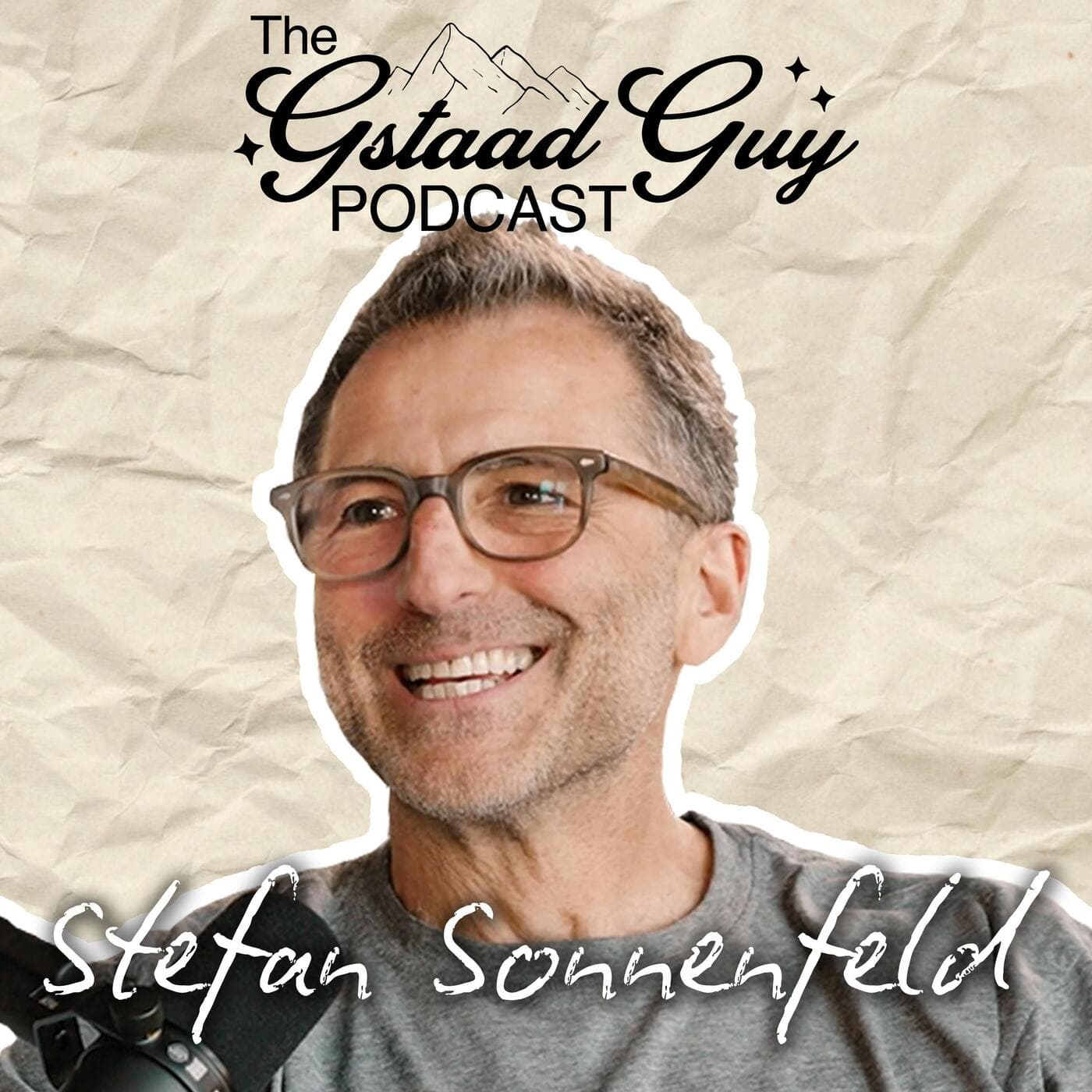
Stefan Sonnenfeld: Founder of Company 3 – “Da Vinci of Colour Grading”, Movies, Discipline, Working With Apple
Episode Description In this episode, The Gstaad Guy engages in an insightful conversation with Stefan Sonnenfeld, a renowned colorist and founder of Company 3. Known for his groundbreaking work with Apple and significant contributions to films, fashion, and advertising, Stefan shares his journey, challenges, and views on the discipline of color grading.
---
Key Highlights
Introduction
- Host: The Gstaad Guy welcomes listeners and expresses excitement for the conversation with Stefan.
- Stefan's Background: Founder of Company 3, the largest color grading post-production company in the world. Known as the "Da Vinci of Color Grading."
Chapter Summaries
- Police Officer Origins (02:39)
- Stefan discusses his early career as a police officer in Los Angeles, driven by a desire to give back and combat piracy.
- His unique background allowed him to transition into law enforcement while building his post-production career.
- Giving Back (08:58)
- Emphasizes the importance of service, describing police work as rewarding and fulfilling.
- Color Grading Exploration (10:05)
- Stefan explains how color grading shapes films and emotional storytelling.
- Discovering Colouring (12:59)
- Shares how his career in color grading began almost by chance and how he realized his talent.
- Impact of Color on Film (17:24)
- Discusses the powerful influence of color in evoking emotions and the importance of collaboration with directors.
- Working with Apple (26:20)
- Reflects on his long-term collaboration with Apple, including innovative product advertisements and content creation.
- Steve Jobs and Attention to Detail (26:48)
- Insight into Steve Jobs' meticulous nature and demands for perfection in Apple’s visual content.
- Work-Life Balance and Sacrifice (33:27)
- Stresses the necessity of sacrifice for greatness and the balance of a demanding career with personal life.
- Lessons Passed Down (39:36)
- The significance of mentorship and sharing knowledge with younger generations.
- Creative Leadership (42:00)
- Stefan outlines his philosophy on leadership within the creative industry.
- Optimization and AI in Film (47:35)
- Discusses the role of AI in enhancing efficiency and the potential impact on creative jobs.
- Health & Biohacking (54:58)
- Reveals his health optimization practices, emphasizing the importance of sleep, nutrition, and exercise.
---
Key Concepts & Insights
- Color as a Storytelling Tool:
- Color grading is more than a technical process; it involves interpreting narrative emotions through visual aesthetics.
- Discipline in Craftsmanship:
- Achieving excellence requires dedication, multi-tasking skills, and the ability to balance various aspects of life and work.
- The Role of Technology:
- Embracing new technologies, including AI, is essential for maintaining a competitive edge in the film industry while preserving artistry.
- Health and Longevity:
- Stefan’s commitment to health optimization underlines the connection between physical well-being and professional success.
- Leadership Approach:
- Successful leadership in creative industries involves being deeply engaged in the work and supporting team members’ growth.
---
Conclusion The Gstaad Guy Podcast episode with Stefan Sonnenfeld provides an enlightening perspective on the art of color grading, the interplay between creativity and technology, and the importance of balancing personal and professional life. It serves as an inspiration for aspiring creators and leaders in the industry.
Social Media Links
- [Instagram](https://www.instagram.com/gstaadguypodcast)
- [TikTok](https://www.tiktok.com/@gstaadguypodcast?_t=ZN-8wXuujHGzPa&_r=1)
---
Listener Engagement For more inspiring episodes and insights, follow The Gstaad Guy on social media and stay tuned for the next episode.
Written by AI. May contain mistakes. Listen to the episode to check what was said.
Transcript
Automatic transcript. May contain errors.0:00Welcome back to the Stadtgei podcast or welcome for the first time nice to see you again great to see you it's great to have you here always a pleasure to see you me too i was very excited for this conversation every time i see you i always get excited by all the stories you tell me about your incredible career personal life and how you balance all that with your sports and self-care you're saying i just talk about myself no i ask i don't ask i mean i'm incredibly curious and from the moment we met we were introduced by a dear mutual friend Filippo in Qatar. We're at breakfast. Another fabulously interesting guy.
0:40Another fabulously interesting guy and I remember that day I had asked you how your morning was going so far. I think it was 9 or 10 a.m and you had already explored parts of Doha first thing in the morning which is something about you. You like to just stay busy at all times. Yeah. And it's very cool. I mean, you... I'd say that's a problem. No, no, it's not a problem. It's cool. That's how you're able to build the incredible... Or sickness, maybe, and addiction. Work addiction, yeah. Maybe. But it's how you're able to become who you are today. You're an incredible founder, father, and friend.
1:19You founded Company 3, which is the largest color grading post-production business in the world. Correct. You are known to be the Da Vinci of color grading. And you've worked on incredible movies and projects like Jurassic Park, Star Wars, Star Trek, Transformers. You've worked on now the new F1 film. You've worked on the TV show of my favorite movie, the new Dune series. Superman. Oh man, you really touched a lot of what's top of the top out there. Yeah. And it's really incredible. Around the world with your host, the Stad Guy, we welcome you back to the Stad Guy podcast, sharing stories of excellence with those in the know for those who just know.
2:13I know you like to downplay some of the amazing things you've done. I hope we do less of that today just so I can really get to the crux of those things. And your path to build what you've built is definitely unconventional. And you are an active police officer. Correct. Sheriff. Sheriff. Yeah. Big distinction. Okay. If you work in LA. I'd love to start there. Okay. How did you end up a police officer and why? so yeah it's an interesting story to say the least i um uh when i first started the company i was pretty i am superstitious and i said to myself and my wife at the time missy uh papa george who helped start the company actually i said um i wouldn't cut my hair until i was like successful so um i ended up years later with really long hair i literally looked like a homeless guy with super long hair uh and sweats you know getting thrown out of restaurants and and i um i remember pretty clearly i was working on a a public service announcement actually for a suspicious activity reporting system which was called iWatch which is now all over the world it's like one of the preeminent suspicious activity reporting systems for terrorism and stuff like that.
3:36And, um, and so I, I helped these guys for free to do this. A director, a friend of mine was doing this commercial public service for this, this, uh, um, like I said, this, uh, suspicious activity reporting system. And, and so I, as I got more involved, I started to meet more people who were involved and it was like a multi-agency sort of program where they had the FBI and the LAPD and the sheriff and ICE and all these different, you know, departments and organizations that were helping to deal with terrorism at the time. So I, as I got more involved, they realized that I was actually pretty knowledgeable about the entertainment world and sort of the biggest source of illicit funding for organized crime and terrorism at the time was intellectual property piracy.
4:25And for me, that meant DVDs, movies, you know, pirated films and TV shows. And, and so they, this group, this collection of different departments asked me to do, start doing work with them, which led to undercover work. I was so knowledgeable, had long hair, sorry. And, and, you know, looked like a homeless guy and definitely didn't look like a police officer. And so I started to do undercover work with this really quite infamous group at the Los Angeles Police Department, the anti-piracy group led by this friend of mine and mentor, Rick Ischitani. This is when, how many years ago? This is at least probably 16, 17 years ago.
5:07And I met a bunch of the people that I know now, like Mark Stainberg, who's the chief of Beverly Hills Police, and anyway, all these different people. And so I started to do that work. And as I did that work, it started to become more involved and got to be more dangerous because we're dealing with different kinds of people. So I used my expertise, and then as it got more dangerous, the chief of police at the time got a little upset that they were involving a civilian to do this anti-piracy work. So we sort of all got our hands slapped a little bit, and they just suggested that I join a reserve program.
5:44And in L.A. especially, it's kind of weird, but they have very few of these programs in the country, and LA has a very robust program for the LAPD and the Sheriff's Department. So I applied, not really knowing what was going on. I just said, yeah, sure, whatever, you know, I'm working a lot, and I just figured I could deal with anything. And it turns out it's like the same process as a regular police officer. You have to go through all the background checks, which takes about a year. And at my age at the time, you know, I was, you know, I had a stack of like where I lived, you know, 20 different places and all around the world and knew all these different people, so they sort of branch out and evaluate everything in your life.
6:23You get through that process, and then you get to go to the academy, which is like a stress academy. It's a really rigorous, difficult program, sort of akin to Full Metal Jacket. You know that movie, if you remember that? But a little less than that, but pretty close to that. So I ended up being accepted to the sheriff's department, the L.A. County Sheriff's Department's academy, and i had to go through a year of a police academy while i was working actually i was working on pirates um uh four at the time transformers and working my ass off you know 12 15 hours a day and going 40 hours a week to the academy wow at the same time unbeknownst to anybody because i didn't really publicize this obviously and i didn't at the time i thought people would really get unnerved by it especially you know how people look at law enforcement so you know i i you know i went through the program and you know it was incredibly difficult and incredibly actually rewarding in the sense that it pushed me to stress academy so every week they test you on things that can disqualify you from the program so it's very stressful a lot of work 29 29 different academic disciplines and subjects and firearms and force training and all sorts of things driving um so once i got through that it really was incredibly useful to help me multitask i think and work under pressure not that i couldn't do that before but i found that it really sort of reduced my stress load when i was doing stuff like that and and and i really used it in everyday life to this day too and one of the good things about it too is it kept it got me in really good shape even though i was in decent shape it really you know we've we've talked about this i'm really big into health and wellness and it got me onto this path of sustaining like keeping myself healthy and fit um so that's the that that's nice the whole story and how does that look today now 15 years later so 15 years later i i was i got in i went through patrol training and worked with the training officer you got to get sort of sort of a rite of passage and in this industry of law enforcement is getting patrol trained getting signed off and now i'm a you know certified 24 hour peace officer of the state of california just like any other police uh officer in this state amazing and um i go on patrol once twice a month um usually with my training officer this amazing guy, Frank Espinoza, amazing guy, who's taught me a lot.
8:58And it's great because it's almost like meditation for me. You sort of forget about everything else in your life because you really have to focus on doing what you do. It's a little dangerous, obviously, sometimes too. And you have to be focused and disciplined. And the most important thing for me is 95 % of police work is helping people in times of stress. And for me, that's really rewarding. I know it sounds a little cliche, but it really is the best thing for me to be able to help somebody in their time of need. No matter who, you know, whatever type of person or a place that you're at, it's always sort of a super rewarding experience.
9:37So for me, that's really why I do it. It's not like I'm an adrenaline junkie or something. It's really helping people. And again, it's like my way of giving back. Instead of donating money, let's say I give my time and my service beautiful and there have been lots of you know obviously terrible events in los angeles over the years yeah you know so including fires and for sure different things like that and you you uh you know but super rewarding and and motivating yeah so why did you start this amazing business you've started and and why color grading as your chosen art form I went to college.
10:14I went to Boston University and I was going there for business. I ultimately thought I'd get an MBA and go to business school afterwards. And when I came back, I think after my first year, my mom, who was an actress, by the way, that had nothing to do with to this uh with with this but um i was sort of around that business my whole life my dad was a doctor we'll talk about him but um she insisted that when i if i came home for summer that i work and she wouldn't let me in the house actually she's like you better get a job or you're not coming home it's like okay and i was fine with that because i always worked i was actually a hard worker my whole life i don't know why but i just happened to inherit that and so um i just randomly got a job at a post-production facility um in hollywood actually close to here and um i just started at the bottom driving a car basically and it's a it's pretty classic story um i first day on the job true story i had to go in this pickup truck to universal studios and pick up dailies film dailies for miami vice the tv show and and that's ironic now because i've done all of michael mann's films and he's a good friend of mine we're great friends and he's an amazing director and but that's literally the literally the first day on the my first day on the job that's what i saw and so i was i picked up the dailies and on my way back i got t-boned in a car not my fault thank god but i got crushed the whole car was totaled and i was just like i wasn't hurt but i was really freaked out because i was like oh my god i'm gonna get fired this daily i thought it was like the most important thing on the planet to get these this film to where it had to go so i i um by chance a friend was driving by and they're like steph what the going on what are you doing like what's what what's happened steph what are you doing and i was like I can't remember actually who it was and I was like dude gotta help me gotta take this film and take it to this place like right now it has to get there it's like the most important thing he did that the the job happened on time and I was sort of my manager thought I was pretty quick on my you know quick thinker and and you know did a good job getting um dealing with a pressure situation so he immediately took me out of driving the next day and put me into this tech room nice which i never experienced and back then it was a little different there's all kinds of these big tape machines and these one inch and two inch tape machines that we used to use back then and and it was just this crazy it was like a nasa control room it looked like to me lights going things blinking sounds all kinds of weird stuff and um it was cool and i dug it and i so I just sort of um was given a job I think in the vault but in the on-premises and sort of just started looking at what everybody did and and I sort of fell into coloring honestly just by chance and for some reason I realized quite early on that I was actually quite good at it um and I picked it up pretty quickly and so I just sort of as as the years progressed I dropped out of college after on in year three mainly because I think my dad was just pissed that he was paying so much for the school and and I wasn't going to be a doctor or lawyer and I just didn't want to fight with him so I just was like and I really wasn't you know that um I wasn't you know that serious about the work at school so just dropped out um came back to that place and just worked full time and then kind of did every single job that one can do learn the business uh really well and and then you know after years of doing that a few years of doing that i really just got sick of working for other people because i always like had that sort of inclination or that feeling that i could do it better and i like i sort of think why are they doing it this way why don't we do it this way and why this is the wrong way to think about it and then how old were you at this point i was in my 20s and and so uh as i moved sort of up the ladder as it were um in different a couple of different companies i kept realizing that i was building their businesses for them i would say hey we should hire this guy he's pretty cool or this this girl and or we should do this and we should do that we should offer this service we should price it this way and i was basically creating their business and and and at at one point in my career uh when i'd moved to this place called pacific ocean post on the west side which was also completely um like almost blasphemous to be on the west side as opposed to being in hollywood um i just went into my boss the guy who owned the company i was like you know i've been doing this i know what's going on and i know oh, I'm billing a lot of money for you.
15:21Can I get like a raise? I just, and they were really awful with me. They were just like, no, you know, just keep your mouth shut and go do your thing. We pay you enough and you should be happy to work here. And it really, really bothered me a lot. So I think that was the impetus for me actually, literally that day saying, I just got to start my own company and do this myself. And that's what happened. And so I just felt that there were these four four or five key people missy being the first person my ex-wife that i mentioned before um and then hired you know 10 people and just started this company got funding from somebody and um really expensive back then to capitalize companies yeah super expensive like i showed you that one machine that was one machine was 1.2 million dollars so we spent i think at the time in 1997 15 million dollars to start the company so i obviously didn't have that myself well um and so i just got somebody to fund it owned half the company they they put up the money and i ran it and and it just went crazy from there i mean it just snowballed into something crazy and i think literally except for covid when production actually stopped and the strikes when everything stopped i think i i've always had growth in in the company for 27 years amazing so yeah very fortunate specializing in color but over the years we've branched out into other things so we're but but you're right we're basically a color finish house amazing um and that's what we do we're the largest and a bunch of different you know places in the world and we have the best people in the world i love it i think best service too so amazing i mean with with the level of of detail you have with your work for color i think it goes far beyond just servicing your client's needs and there's definitely a level of obsession there that must exist within you and your team for color and I'd love to talk about what you think color does to a film because it's one of those things that I actually never even knew was a thing I thought that the color stopped the camera I didn't realize there was an entire art form until I met you to be honest yeah no I most people for that matter and i've said before and i say it jokingly that most people hear i'm a colorist and i think i do hair or something like that and that's like i always say there's nothing wrong with that because that's a good business too but i they just don't know nobody knows and remember there's probably hundreds of us in the world that's it um and a very small few that work on a large majority of the content that's created in this world so uh i think colors like i call it like this latent tool this hidden sort of tool this enigmatic mysterious sort of um art form that was very very difficult early on to be able to uh craft uh to to to manipulate and to do the things that we can do today early on there were much more sort of simplified machines that didn't give you as much versatility as we have today so back in the day when i was doing more incredible videos for hype williams and paul hunter and spike jones and michael bay and you know all these different people um mark romantic legendary people we had to spend like we'd spend three or four days on one job it's very different now because there's so many more tools that typically a music video or something like that would take maybe four or five hours now as opposed to days but that's because we have more tools and it's non-linear and there's all sorts of advancements and stuff but um it's this latent sort of like i said sort of hidden quality that if done right i think evokes all kinds of different emotions and feelings and storytelling uh through color and when i work with michael mann for instance is a perfect example michael mann doesn't color with me and say most of the time he doesn't say brighter darker warmer cooler he says you know um this actor or you know al is like in heat for instance when i did heat with him and or ferrari that i just finished with him he'll say you know this whatever whoever the actor is he's feeling this at this current time and and this is what he just experienced and this is what he will experience so i want him to feel this so this is how i want this this scene to to to um connect with people and then i have to interpret that into color if you can imagine and because we we understand each other or i understand him um we work so well together and a lot of that is why people don't change over the years because it's really impossible to find somebody who you creatively connect with on a consistent basis who can interpret that and bring it to life on screen um and then other times people will say you know i you know i i need something unique that nobody's ever done which happens all the time and how do you do that and how can you help and so you sit with the dp and the director and the producers and the creators and and you you you you create this wonderful experience um for people to view and i i think it's not really that noticeable at times unless it's done wrong and and now that you've sort of know that you'll start to pay attention a little more and you'll start to maybe see that oh stefan's aims on that now i sort of see his sort of style a little bit and then you'll see somebody else's that you maybe like or don't like because of whatever the feeling is that it evokes in you or brings out in you and it's amazing how powerful it is um and it's easy to illustrate but again people just don't think about it and everything that is on any screen really needs manipulation i mean we do it on our you know instagrams you know it's like so it's just we have these huge projects with robust you need robust infrastructures and security and all that sort of stuff to be able to manipulate these high resolution images and manage and move and and and monetize it you know through the pipeline and it's a really interesting sort of business that again most people don't even know it exists that's why we're like the at the bottom of the credit list like you have to wait till the very last credit well i think remember my daughter once i was doing michael bay's uh a horror film amy did a horror maybe i think it was that movie and there's this crazy fly scene yeah and there's like the fly wrangler literally is listed a way above me and my daughter saw the movie and she's like dad why is the fly wrangler getting better credit and i was like i don't know let's talk to michael about that um who's been super supportive and and people like michael tony scott ridley scott michael man jj um and then the whole host of dps who were always coming from the the music video slash commercial world where they manipulated things so extensively weren't able to do that in feature films because the process didn't exist so we were i i hope i'd like to say that company three was a pioneer in that developing that process that enabled you to manipulate and basically do anything you want in the feature film world and then make prints from that and now you don't make prints anymore but you have digital projection so for instance 300 one of my favorite films Zack Snyder total visionary visually he's one of my great friends he's I've done everything he's ever done pretty much um he he saw that and wanted to bring that movie to life and 300 wouldn't be 300 unless it had that insanely specific look right and grain and all the stuff that we and so obviously his filmmaking too but the the look of it was a big part of it too and couldn't do that before you know um michael bay is always visually stunning with his with his um with his look and color uh so those guys really pushed pushed for the studios to make that happen too which really helped accelerate our growth too because once people caught on to that everybody in the world wanted to do that and everybody world everybody wants to work at company three too because we were really our color science which is all that sort of sort of incredible artists artistry meets math and technology you know our secret sauce i guess if you will is that that's you know core of our our business too and we have all these amazing colorists um tom pool and jill bogdanovich and stephan akamura and tim mastic and all these mavericks who were just dave hussey all these mavericks who were just at the beginning doing all this great work there's like that's like just that group that i mentioned does i'd say just that group does like 50 of the film big films that you see so it's just amazing that we were able to come up with you know workflows from a production and technology perspective with incredible people at the company that all played a part in making this happen and it's not just the artistry too you know it's the technology and it's the systems it's the design of the rooms like i showed you um when you came by like ergonomically everything's set in a specific spot because when you work 16 hours a day like you all know you you you've got to be comfortable your neck can't cramp and you can't get a headache because you're not situated properly and you're looking at the wrong angle and you you know it's all that all very different a hundred different variables um and and every studio for us around the world you kind of have that same experience because we build them similarly and we have the unique service across the group too yeah so wherever you are hopefully you get that same company through experience also coupled with the great artistry with all the great women and men that we have working for us i love that so i i i'm a massive admirer of all the work you've done and and all the movies you've worked on but also you have worked with my favorite company which i happen to be an ex-employee of yes apple yes and you had the pleasure of working with Steve Jobs yes and doing the post-production for all of the video content and product announcements they did for 20 years yeah a lot of yeah since the iPod I think is the first advertising um over 20 years actually wow and that's including the first iPod ad with the colors flashing of the person dancing in the shadow correct uh I think Dave Myers did the test and Mark Romanek did the first spot.
26:15Amazing. I'd love to know more about your work with Apple because it's very different to, I assume, work on a big Hollywood film. Yeah, Apple was very unique. Steve was very unique. And the people around him were very unique. And the agency and Lee Cloud, Chai Dei, which now has an agency named Mal that does specifically Apple work. Again, Mavericks. We were doing incredibly specific work, huge volume of work Steve was adamant that everything was real like he didn't want to manipulate with visual effects at all so everything was photo real so they photographed even with the phone the screens were real as opposed to Samsung that was comping visually affected screens in back into the phone so they look better so Steve wanted everything done for real he wanted every frame of film colored perfectly obviously he's a you know meticulous guy with everything and an incredibly artistic guy an incredibly tough guy um and we all spent so much time but doing this incredible work that we were super proud of um and uh and it was really like such an amazing i got to do the spot for ridley the 1984 spot that famous spot that's in the museum we remastered that in 4k and made it just even more incredible than it was um originally um and all those spots and i remember going to a pirates of the caribbean screening um that my friend um gorbert verbinski is another amazing visionary guy good friend um he was had this amazing huge grading at Disney premiere sorry at Disneyland so we had this unique projection system right where that riverboat is in Disneyland in LA Anaheim and I'll never forget it was I was there checking the the image to make sure it looked good and I saw this guy one guy sitting in the stands that we'd set up all these bleachers and it was like this like literally i was like what the who the is that what's going on and i got a little closer i was like oh my god it's steve jobs and i was like oh my god he's got the the iphone and nobody had ever seen the iphone because i knew because i was working we we always did these you know secret secret double whack you know and and i and i remember seeing him and it was such a wild experience because you know it's like craziest thing in the world but that was like the first iphone he was hiding it and he's hiding it so nobody would see it but he was working on it and it was you know in its testing phase and then then we went through these crazy amounts of spots to you know to roll it out and uh so you've seen a lot of the products before they would go live all the product yeah and and now we do a lot of the keynotes and all the keynotes actually and um a lot of those um making of films that you see on the website and the photoreal cg like the watch before it even existed we were doing photo real imagery for it for the watch the i watch and um yeah and now you're working on some of their their films like f1 and now they've got into content and they've been amazing and we've done uh we do severance uh with ben stiller and tom pool does that our chief creative officer and that's the number one show on apple amazing uh i'm doing f1 right now with joe kaczynski another incredible incredible director i did top gun with him yeah and a bunch of commercials and some other films and he's a visionary amazing guy uh tom cruise is incredible too done a bunch of his movies and he's amazing i mean he's in every aspect of everything he gets deep into it and i think of the first time he ever sat in a color room was with me and jj on mission impossible wow and to his credit you know he realized immediately what you could do in there and he was he never left like everybody was like oh we got to come back at midnight to do the um i'll never forget we were we're delivering the movie and we had a big chunk of visual effects i think it was mission impossible mission impossible three the first jj film and he um everybody's like they're going to come in at like one the delivery and everybody's like ah you you know to do stuff you can do it uh and everybody was like yeah it's too late i'm not gonna come and tom's like i'll be there and he showed up and we worked throughout the night and i'll never forget we um we walked outside and we do did a lot of work in japan too in tokyo i had i used to have a company three in tokyo as well for like a decade and the time difference is obviously very different but when we came out at like one or two in the morning to take a break outside there was like 15 japanese people doing a job with us virtually in wow japan and they saw tom cruise wow and i'll never forget he was so generous and so nice and so he talked to every one of them and signed autographs and it was but he realized the power of and he's in every movie i've done since with him and other actors too for that matter they they get it so they're there and they're in there every single day bradley cooper is in every session and is meticulous about about color especially i mean he talks about it he's amazingly generous with his, he's an amazing guy and a good friend and great filmmaker.
31:52John Krasinski, same thing, amazing filmmaker. I mean, these guys just are embedded in what they do and, you know, from acting, producing, directing, and also visual effects and color. It's such a large part of it. This podcast is brought to you by Pubelle, by The Stardegai, bringing you charms hand-painted with enamel on 925 sterling silver, allowing you to express all the things you love and all the things you might question. From reaver bateaus to baggammon board and caviar tins to paddle rackets, there is a poubelle charm or completed set for everyone in The Know. Thank you so much for watching and enjoy the podcast.
32:36I mean, all these people similar to you have this deep love for their craft and a deep love for everything that's kind of craft adjacent that takes them to the final product they want to achieve. And I think you can think about that when it comes to a project, but also when it comes to an entire life and your project being what your life is today. And you are someone that in the moment I met you, I realized that you are very careful about the way you've crafted the life you lead with your, what seems to me at least, an incredibly balanced life where you are love your athleticism you love your routine you love your police work and your work of philanthropy and the amazing work you do with your business i'd love to learn more about how you balance all those things and about the choices that you've made to get you to yeah as have you my friend like you are you curate well and you work all the time too and you're always on and you're even it's even harder for you because you walk outside and everybody like you know wants a piece of you and it's really tricky actually that that fortunately for me i'm very lucky because we're behind the camera and we don't we don't have that which is great because i don't know how you guys deal with that but not even a tiny piece of what you've done but i appreciate it um so no but you i think in general to be the best at anything you have to sacrifice a lot and and that means sacrificing every day and living and breathing doing like like you do like i've seen you do too which is also impressive but it's really like the people that you're gonna have on the show and the people who are typically successful are those people who are driven um and and and not just driven but incredibly motivated and driven and stay driven and understand what it takes to be at the top or whatever, be successful if you measure it that way and stay there.
34:39And so to do that, again, part of the academy taught me to be even better at this, but it's multitasking and also prioritizing and sacrificing. And any good athlete doesn't mess around with their sleep. Any good athlete that doesn't mess around with their diet and exercise and it's the same sort of thing there are these four pillars there's stress there's nutrition there's exercise and sleep and if you figure out how to work that into your schedule and not sacrifice too much of any of those things so that you can accomplish what you need it to every single day every hour and and every you know day in and day out year after year i think that's the only way to get there and do that and i think you know it's it's really hard but also I think it's really for me it's really fun and enjoyable and I really like to challenge myself um my parents actually were unfortunately had some terrible medical problems my mom had terrible Alzheimer's early and my dad had terrible heart disease so I've been exposed to that so I sort of early on chose to try to be you know healthier with everything that I did but um as, as everybody realizes time is precious and we don't have that much of it.
35:58And, and so I try to, to balance. Um, one thing I would say that I would, I, I, I would do differently if I could is rebalance working so much initially and sacrificing some of my family time. Um, so that's the only thing I sort of regret about it. But other than that, I don't because I feel that I get a lot of people saying how inspirational sort of my behavior is. I don't do it for that at all. I just am that person because I love every day I walk into my place. I think I'm the luckiest guy in the world. I look at the building that you saw, one of them, and I just like, I can't believe I get to work here.
36:39And I can't believe I get to sit next to Joe doing Formula One with claudio this the dp and jerry brutcomer have done so many of his films for decades and sit with these guys and create these incredible movies that are what we love about entertainment you know content's incredible it takes you to another place and and that's also f1 is one of my favorite sports um so i just star wars when i got to do stars when i got to do mission i love spy stuff all these different genres that I get to work in that sort of feed this fantasy of mine of immersing myself in that world and being part of that and that's just like the best thing about the business it's incredible and you know trying to get expose that to people since I never got help when I was young like everybody was always pushing me like especially the establishment they were like you gotta take this kid down and you know who is this young guy who thinks he knows what he's doing we're gonna like make it super hard for him and try and get everything away from him it wasn't wasn't like it is today there's more opportunities i think for people in a different type of culture around that but it's really tricky so i love the fact that we're able to also speak at universities and high schools and for sure and mentor people and intern people and all that sort of thing and help this new generation that again that's still quite uh they lack a lot of knowledge about what the business is especially what we do in post-production i mean their academy awards for visual effects now they had there has been for a while but nothing for color like like i said most people don't even know about it even in the academy me so it's a balance and you got to do it and like you said when we travel and you know seeing you in Doha a couple times we have and the travel you travel like crazy it's amazing and it's a really stressful thing I don't know if people realize it it seems it is tiring at times for sure but the same way with you when you look at your office I whenever I find myself just about to complain i remember that it's actually a choice and i know the alternative i can i can walk away no one's forcing me to to work hard except for myself and the same with you like we we can slow down if we'd like to and we have chosen this life so someone recently i heard them say um don't don't pray for the rain if you can't handle the mud yeah so i'm tired on a flight i i prayed to be on that flight yeah and i never i never ever take anything for granted and i'm super happy that there's work and then i have a company that with a lot of amazing people sure so yeah i i agree with that so you are a unique founder and ceo where you love the craft so much and you get your hands dirty so often with the work that you do color grading and and working on the on the productions yourself but also managing thousands of people as a ceo which are often contradictory what's that like yeah i mean it's an interesting question i get that quite a bit and i'll say like i've never not done that which is interesting so from day one you start a company found you know, you're a founder, you come up with a business plan, you come up with a, but then you're also that artist that's working day in and day out.
40:22So I always say this and I don't mean to denigrate in any way, but I don't know what a CEO in my business even does for the full day besides golfing and doing all those sorts of things that, you know, maybe necessary at some times, but I, I really just don't get it because I can do both. And I think it's absolutely a thousand percent necessary to do both. Not necessarily just in any business, but in this business, my creative service business, you have to, you have to be because you have to be on the ground. You have to be in the trenches. You have to experience all the problems that anybody would have any of your employees would have and any of your clients might have you have to understand the workflows and the technology both production technology and creative workflows that affect everything that you do um you have to understand the deliveries uh mechanisms and how these files these huge files a lot of the times get to the clients um and and then you have to make a business out of it and you know with all you know we've had the horrible three force majeure events back to back covid strikes and then the fires unprecedented crazy you know um two-thirds of our competition is bankrupt right now it's a it's a really difficult time but i think i i use the analogy of like it's akin to like a sports player you know like who then becomes a coach but recent sports player like jj reddick is a good example he just stopped playing and now he's coached the lakers amazing huge um you know luca and lebron and here's this pretty younger inexperienced first-time coach but he was an amazing player smart guy um and i think that's the only way to do it and you have to live and breathe it and um i'm very fortunate like i said i was originally in business school so i had i think i had that part of it i never thought i had an artistic bone in my body like literally shocked every day that i go in a room and i'm like do do do and people like what i do so um so i'm very fortunate to have that but again it's goes hand in hand and um i can't tell you i mean every employee mentions that that seeing me at the office every day seeing how much work i i do seeing me first in first last out seeing um me talk and help people and mentor people always having one or two people alongside me when i'm coloring movies if you notice i have multiple other people have like additional color credits colorist credits with me because i'm helping them build their reels and their training it's um all of that is imperative to have a successful company in my opinion um uh and i don't know how to do it any other way plus people think it's like so much work i don't look at work as work i don't i go home and let's say it's saturday and i'm at disneyland with my kid and i get a call besides being present obviously you have to be present with your kids that doesn't bother me nothing bothers me like that's just business and I don't look at it and separate it.
43:50It's my life. It's a company I started. It's like one of my kids. It's like my sixth child or my first child, actually. Second child, because I had two before the company. So third child. But it's, it's, that's how I see it. And I couldn't do it any other way. And I don't know how other people don't. I think that's how some of the companies outside of our company got in trouble. They had these people who think they know these formulaic sort of, you know, playbooks that you learn in school or business school or whatever. And yeah, those are important. But I learned that through experience. You know, I've worked with two eccentric billionaires as, as owners of my company until I, we bought the company back, uh, recent, you know, four years ago.
44:36And so, uh, I've had that, um, experience like onsite experience and lived and breathed and learned along the way. So that's how I see it. I mean, I'm deeply curious about people who have this obsession with their craft and that that comes first from an artist to a chef, anyone who strives for excellence in everything they touch, which really is part of being an artist when you're optimizing for the artwork. but part of being a founder and part of being a CEO is optimization which goes against everything an artist works towards and something really challenging that scale of optimization and art form is something like AI and it's kind of questioning the ethics on both sides where the CEO probably loves AI because it's, it's can be a great way to make a process more efficient and reduce costs.
45:44Whereas someone who is married to the art and has an incredible passion for the art may think it's a bad thing. So since you're wearing both of those hats, is there an internal dialogue happening in your mind? Yeah, it's a great point because you do anything and everything for the client and the job and the artistry. But you can do that and have a successful business if you do it properly, which we learn to do along the way. And a lot of people have helped with that. It's not just me. There's a lot of great teams that help along the way. It's a really great point. AI for us is, you know, again, I've said it many times that AI to me really obliterates mediocrity.
46:31That's what it does. Not the nuanced high-level creativity that we're in the business of. So I use it now. We have a wonderful AI group at our company. And we use it to be more efficient, for sure. Will it replace a handful of jobs? Yeah, for sure. But that's just a small, tiny fraction of it. And those are the repetitive, like I said, just mundane tasks that, yeah unfortunately those things they help the business run but they don't really affect the creativity creative sort of aspect of it at all uh so i think it's both it's super helpful again and will i embrace it and that's why we have people working on stuff um but again yeah that dynamic is sometimes um you struggle with it but i've learned to work it working i think you can achieve both and that's why the company's still around i think because we've been able to do that but yeah it's a it's a definitely a a thing that we come up against quite often i mean all these new technologies end up putting some people out of business and also putting a lot of people in business and I feel that every day when I was so lucky with timing if I was a few years off with Stad Guy my frown wouldn't be paying my bills you know and I wouldn't have had the scale and the partnerships I have and been able to start the businesses I've started and and talk about them so I feel blessed to be born in the era I've been born in but in the same way when you were showing me around your offices you showed me this massive antiquated machine which is far less powerful than our iphones today yeah do you feel like you would have been better off having started company three 10 20 years later than you did so i think luck favors those who are well prepared you know it's a kind of famous saying and I really do believe that but no because um I started the company timing wise which is a you know there are books on that um the luck factor is a kind of an interesting book on that deals with this um but no I think we did it at the perfect time it was just during that inflection point of traditional lab technology into digital technology that was just in its infancy and I was able then to come and manipulate what was available to us to a point that nobody else could see we were way ahead of the competition there was no competition initially I had grown up in Europe too I don't think we even talked about that I grew up I went 12 years old i went to a boarding school in greece my mom didn't want me to grow up as like a california surfer dude and she was like you need to you know we always went to greece every three months for summer as as kids but we actually my brother and i went to boarding school i was 12 he was 14 and um being exposed to all the different cultures and and we traveled a lot we played sports so we were in every country you know even to cairo all over the place doing the american community schools yeah i'm sorry issts are like the sports yeah and so we um we we had that um ability to experience so much and use that experience in our my art form and collaborate with a lot of european people in the business a lot of the folks that were in my business are from europe and so I was able to exploit that I don't know if this is the right word but it's into an advantage and we just again it was perfect timing Steve Jobs just starting to advertise huge benefit to our company all of these like again that book talks about it and being in these certain cycles of life are actually just you know uh incredibly helpful like you said for yourself too you told me your story and it's amazing it's exactly the same thing um incredible how you how you did it um so i am happy that we did this uh i'm not happy about these three force majeure events that just happened and it's really been a difficult time for our business in general but we're seeing it come back now and it it will like everybody loves i love watching tv movies you know i love content i love your content i love anything really that's that's out there and so i don't think that that's it's more screen agnostic than it's been which is fine too because we don't care what the screen is We just manipulate that content.
51:36So, yeah, I'm actually glad.
51:44I also don't think it would have been right timing-wise because of where I am today. It's opened up all these opportunities, which is how we met. And if I hadn't done that, I wouldn't be the company of choice potentially. essentially um so again the more i look at it actually the more i'm happy that i um i don't necessarily like being like being older but i am i do like that i was in the right place at the right time um and was able to capitalize on that there's one thing i'd love to touch on that we haven't yeah and it's the longevity and biohacking yeah that is a growing trend amongst a lot of my friends yeah and it's super cool and you're really into it and i would love to know about your perspective on health optimization and how it's going to change yeah so i'm a big believer in especially because of my parents that i mentioned before the health crises that they went through i'm a big believer in just optimizing health so that my life is better while I'm around.
52:56And it's not so much living longer. That's not what I'm necessarily trying to do. But I just want to be the way I am now. I think I'm in the best shape of my life actually now than I've ever been. Yeah. And I think I've achieved that through a lot of reading, a lot of studying, a lot of listening, and a lot of trial and error. And what I've done now is more simplified than, like George actually, like I said, Giacluny got me into it by introducing me to this woman who then just opened the door to all sorts of things that I didn't know about and then suggested reading. And so I just sort of expanded on that.
53:36So what's your percentage split of investment? Is it of time, effort, financial? So it's quite a strict regimen of food, diet. I take not a crazy amount of supplements. There was a time where i i followed brian johnson that you know um the don't die guy um and i was in that cohort that for three months that used his exact regiment which was hugely um it was a lot of stuff i mean like 80 90 different supplements and things every day and i i actually didn't feel great on that and it's i think it's more unique to him and his own sort of uh body and how he works and and it doesn't work for everybody so it wasn't so much that i felt bad i just i didn't think that it optimized me so i sort of took good good things from that and good things from other things and put my own regimen together for right so i have sort of a breakfast routine uh very specific amount of protein a lot of protein um small amount of carbs and fat um and i take some supplements uh at night too i have some i do take uh cycle through some peptides which are sort of things that amino acids that just optimize your own body's production of certain things for health and wellness for immunity for uh muscle health for um mitochondria health for you know again various different things um uh and they're just sort of little ways to optimize your your body uh and i think they work pretty well especially the ones that i've chosen to to to take on a regular basis um and like i said i think the most important thing on the planet that i've learned to do is sleep properly and um i sleep more deeply by a factor of two to three times now than i used to yeah and and for for rem too well it's a lot and i'm not i'm not exaggerating so on average um i'm getting seven hours of sleep uh that's pretty good for me and what time do you go go to bed usually i go to bed at between 9 30 and 10 30 wow every day um when i travel i immediately get onto that you know the time zone of where i'm going quickly so i you know if going to qatar or the middle east i have to um i get go to sleep at 4 p.m when i leave los angeles and you know try to sleep for four or five hours and get on the time schedule i have um i don't take any sleep aids so i i have sort of like some magnesium some gaba some um cortisol calm looks just calm stuff that sort of just relaxes your mind a little bit it's not a sleeping aid it's not habit for me it's natural stuff um nothing excessive but it it again it works so that i can put my head down i always fell asleep quickly always then what's your morning routine like and then i so i love i cold plunge three or four times four to five times a week in the morning what time is that again i wake up take some stuff um like some supplements and some ketone eight or something this is like five in the morning like six six um and then i usually i work out with weights pretty hard for three times a week monday wednesday friday and tuesday thursday saturday i do cardio which is walking on a treadmill on an incline running or i always play basketball for two hours on saturday really hard like it's 1300 calories you know it's like a zone four zone five yeah uh for most of the time for an hour and a half at least um i i love sauna i do a sauna dry sauna uh four or five times a week which i love and usually do a plunge after that um maybe an hour or two before bed um there's so much data on how sauna helps you know with all-cause mortality that it's just so silly not to do it i mean it's just like the easiest thing in the world to do and it's actually quite enjoyable and relaxing so um so the things that are easy to do that just are you know you have to be disciplined the hardest thing is to slow your mind down yeah calm down at night and put your head down and go to sleep i can't tell you how many times i go to sleep at 10 i'm like i'm never gonna go sleep and three minutes later on my ring i have like you know uh latency is like five minutes which which means it only took me five minutes to go to sleep.
58:19So I can sleep on the floor anywhere. I'm a good sleeper, so I'm lucky in that sense. But I never slept well once I started measuring. That's what's so interesting. I don't drink, which screws up your sleep 100 % of the time. Yeah. I mean, I'll have a non-alcoholic beer or a glass of wine once in a while, but that's it because 100 % of the time your sleep's ruined. And you try to stop eating. You know, I stop eating. I eat dinner usually at like 5, 5.30 max. Try 4.30. Wow. So I have a sort of small eight-hour window to eat all those, you know, 180 grams of protein. And that's it. And you try to do it, and your body likes consistency.
59:02So when you do it consistently, it rewards you. Amazing. I wake up in the morning feeling like a million bucks, and it's just the best feeling in the world. i guess that's the drug yeah right so i and if i go to london or i go to anywhere and i it's you know eight to eleven hour time difference to barely have jet lag and be able to function properly is an incredible feeling for sure and to me worth the time and effort that it puts you have to put into it because otherwise you're just miserable for sure and it's hard to hard to work properly. So that's my health and wellness, sleep being the most critical thing ever.
59:46And then, you know, stress is hard. It's hard to mitigate stress, but I try not to get too worked up over things. You seem very, very zen in general. I'm better than I used to be. Okay, good. Good. Well, thank you so much for being on the podcast. Yeah, thank you. I'm super excited to continue to see all the amazing work you do particularly next up is f1 f1's amazing movie can't wait i can't wait to see it i continue to watch your old projects without realizing that yeah just stay long stay late for the credits exactly or you'll see them go like this on tv like that exactly and then that's but yeah and thank you for having me i'm really listen i'm really impressed with you too and i you know love what you're doing i think you really it's funny because you when i listen to any one of your posts there's always so much relevant stuff that i've i'm sure you hear it from everybody that you think or you want to say or you can't say or you don't know how to say and it's very relevant to so many different things so it's great that you're doing that and it's i don't know how you do that seems like you have consistently very, very poignant stuff.
1:01:00So I appreciate that. Thank you so much. Thank you for having me. Thank you for being here. Yeah. Thank you. Thank you for listening to this episode of the Start Guy podcast. If you're keen to learn more, please follow along by engaging with our social channels on Instagram, TikTok, Spotify, YouTube, and Apple podcasts. And we look forward to seeing you next week. Merci beaucoup. A la prochaine and a big hug from the start guy
From the publisher
The Gstaad Guy sits down with Stefan Sonnenfeld, legendary colourist and founder of Company 3, to explore the discipline, drive, and vision behind some of the most iconic visuals in modern entertainment. Known for his pioneering work with Apple and countless cultural touchpoints across film, fashion, and advertising, Stefan unpacks what it means to shape stories through colour.
From policing piracy in the early days to becoming a creative "sheriff" in his own right, the conversation dives into the grit behind his journey, working tirelessly, creating opportunities where there were none, and staying ahead through health, wellness, and biohacking. A rare glimpse into the life and mind of someone who’s not just colouring film, but culture itself.
Filmed at Nobel LA’s St. Ives property.
Chapters:
(00:00) Intro ✨
(02:39) Police Officer 👮♂️
(08:58) Giving Back 🤝🏻
(10:05) Why colour grading? 🎨🤔
(12:59) Discovering Colouring 🔍🎨
(17:24) How colour affects films 🎬🌈
(18:03) What is colour? 🌈❓
(22:17) Manipulating feature films 🎞️ 🛠️
(26:20) Working with Apple 🍏💻💼
(26:48) Steve Jobs’ attention to detail 👓 🔍
(33:27) Balancing life ⚖️🧘
(34:02) Greatness requires sacrifice 🥇🔥
(39:14) No room for complacency 🚫😌
(39:36) Lessons passed down 📜👨🏫
(42:00) A creative leader 🎨👑
(47:35) Optimisation ⚙️📈
(48:49) AI obliterates mediocrity 🤖💥
(50:48) Timing ⏱️ 🎯
(54:58) Health & Biohacking 🧬🥗
Learn more about your ad choices. Visit megaphone.fm/adchoices
See Privacy Policy at https://art19.com/privacy and California Privacy Notice at https://art19.com/privacy#do-not-sell-my-info.


