Ask ChatGPT
 The Heart of Healthcare | A Digital Health Podcast
14 Sep 2026 · 33m · 18 chapters
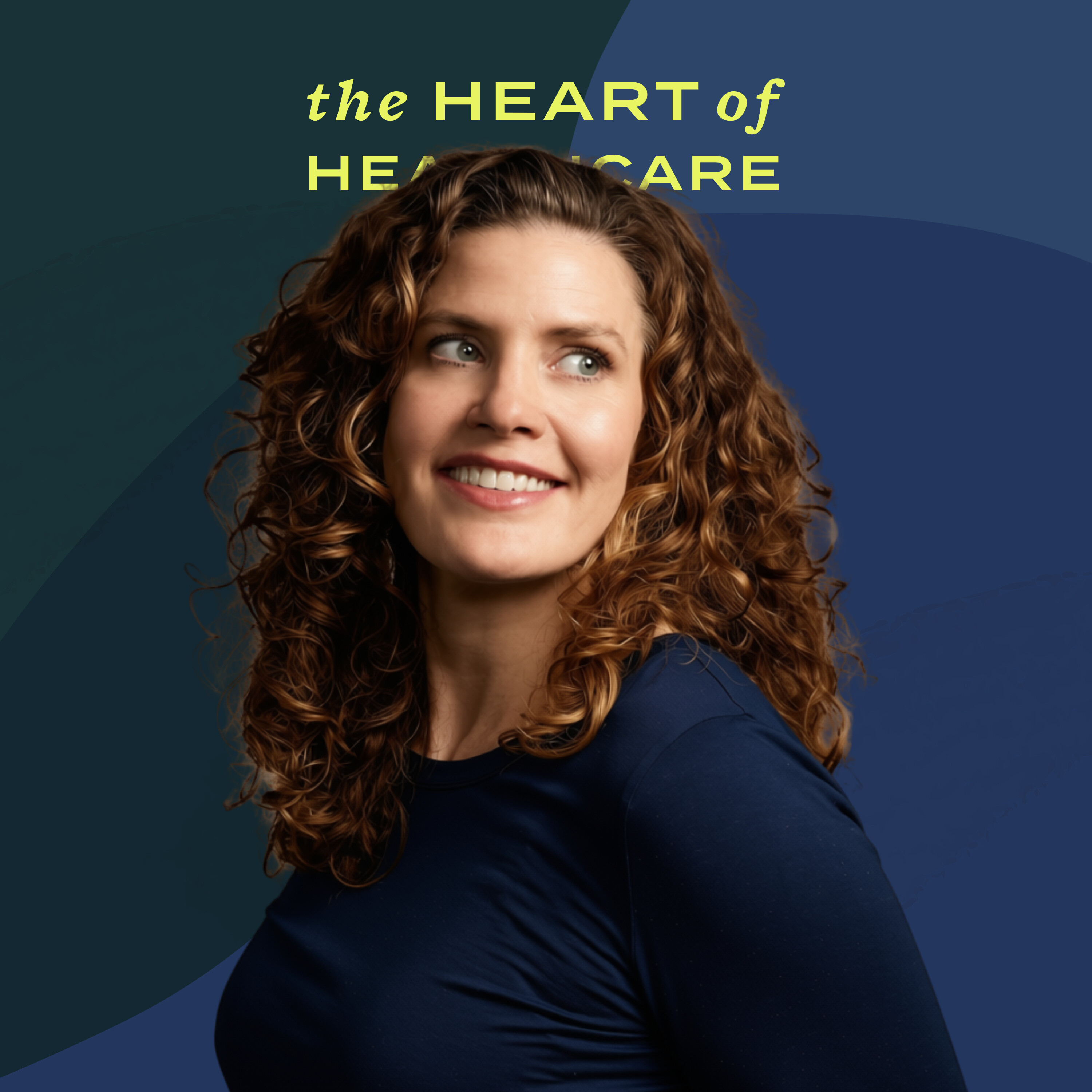
Sarah Russell (Anthropic healthcare product lead) discusses Anthropic’s approach to deploying safe AI in healthcare—building “non-regrettable primitives,” enterprise readiness, and especially HIPAA-compliant safeguards for agentic systems. She argues AI’s durable value will come from improving access and enabling “single pane of glass” understanding of a patient’s full story, supporting better triage and care delivery rather than replacing clinicians.
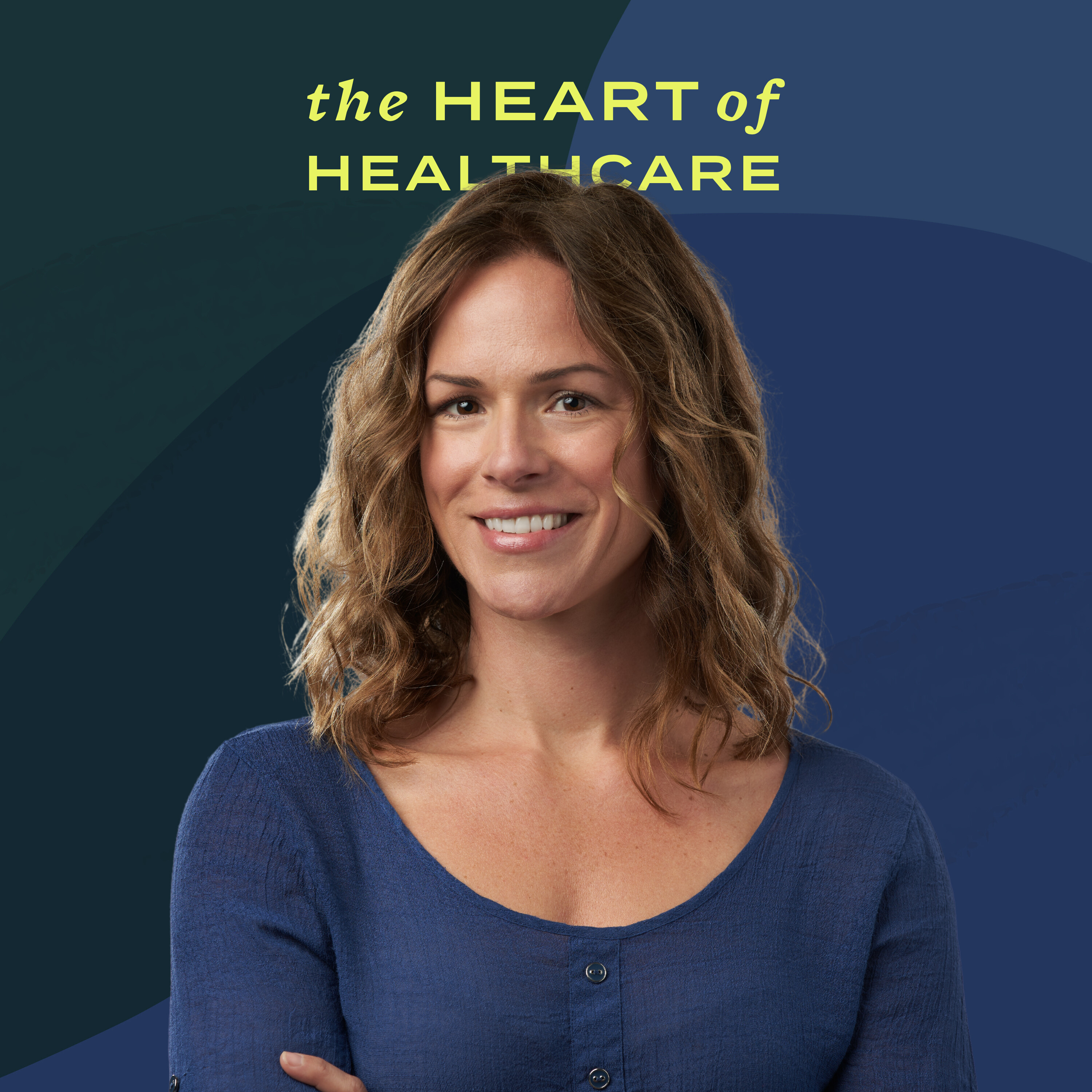
Dr. Sarah Russell is a practicing physician who has an MBA, previously worked as an investor and founded a company, spent about a decade at Alphabet (moonshot factory), taught at Stanford medical school, and now leads healthcare product at Anthropic.
Anthropic won’t train on customers’ PHI; HIPAA must be treated as both administrative and technical safeguards for agentic ingress/egress; regulation should focus on assistant/triage use first; entrepreneurs should build on model power but differentiate via product fit.
HIPAA technical tracking of where protected health information moves as agents query data; regulators approving pilots for guideline-based care (e.g., heart failure); clinical decision support and scribing as early real-world impact.
Written by AI. May contain mistakes.
Steve introduces Sarah Russell and highlights her impressive career in healthcare.
“So buckle up and join us as we figure out how to improve healthcare for all.”
Sarah shares her unplanned career journey and interest in impactful work.
“She spent about a decade at Alphabet in a number of different roles in their moonshot factory.”
Discussing the contrasts between clinical medicine and the tech industry's urgency.
“And I liked the idea of big impact swings.”
Sarah explains her role at Anthropic and the importance of healthcare products.
“It's quite striking and also inspiring for sure.”
Discussion on the challenges of HIPAA compliance with new AI technologies.
“Like what are the top five boring things that you've been working on?”
Sarah explains the concept of non-regrettable primitives in tech for healthcare.
“The as-is system is set up for static human interactions, basically, right?”
Discussion on how Anthropic aims to empower the healthcare ecosystem without competition.
“And first and foremost, that's what's also important is our relationship to that data, to be very clear.”
Sarah discusses Anthropic's strategic bets on AI in healthcare and the focus on access.
“So I think that's the other way of looking at it.”
Exploring how improving AI models can enhance patient care decision-making.
“that might be as long as Moby Dick, as Bob Wachter says, and say, what's most relevant here?”
Discussing the complexities of developing regulations for AI in healthcare.
“And I'm not sure that AI necessarily solves that per se.”
Examining how clinicians can effectively use AI technologies in healthcare.
“not necessarily even from an anthropic perspective, but just as a clinician and a physician who's watching it, is I think you're right that there are maybe two camps that are wrestling with how to score these AIs.”
Assessing the present impact of AI on healthcare practices and decision-making.
“I think that's happening sooner than we think.”
Offering guidance for future doctors in the era of AI and technology in medicine.
“But in terms of actually driving down, what is that metric?”
Insights on the importance of hiring talented individuals in startup environments.
“Sometimes I feel like I work with Claude and then I get to the end of it and like, did I, what did it just say?”
Explore the difficulties entrepreneurs face in the healthcare startup landscape.
“And even if it means they do some things better than you.”
Discuss the importance of passion and mission in healthcare entrepreneurship.
“So I think that's kind of nice to think about is like, what do I really like?”
Anticipate the transformative changes Anthropic aims to bring to healthcare.
“Mentioned you spent your career at the nexus of medicine frontier technology at the start.”
Wrap-up of the conversation with gratitude and a call to action for listeners.
“Hey, Sarah, it was awesome to have you on.”

Get the gist, explore an idea or ask about something said.
 Claude
On The Heart of Healthcare | A Digital Health Podcast, what are the key points of this episode?
Searching your listeningAutomatic transcript. May contain errors.
0:00Our mission is SafeAGI. So I think in some ways people should sort of remember, first of all, and now that we're becoming a public company and we face a lot of regulatory scrutiny and so forth, our effort and where we spend our time really has to be empowering the ecosystem with the best possible and the safest possible models, rather than trying to define or shape the ecosystem in our own image or what we want. Today on the show, Steve speaks with Dr. Sarah Russell, lead of healthcare product at Anthropic.
0:34Welcome to the Heart of Healthcare podcast. I'm Hallie Teko. I'm Michael Esquivel. And I'm Steve Krause. And every Monday, we bring you the latest in healthcare innovation as we sit down with entrepreneurs and industry experts. So buckle up and join us as we figure out how to improve healthcare for all.
1:03Hello, listeners, and welcome back to the Heart of Healthcare podcast. I am your co-host, Steve Krause, and today I am super excited to have Sarah Russell on the pod. Sarah is probably one of the most important people in the healthcare industry these days. She works for one of the most important companies in our economy right now and definitely in making plays in the healthcare ecosystem. And we're proud backers of this company at Bessemer. This is Anthropic. Sarah is the healthcare lead, product lead at Anthropic. And so really excited to have her on the pod to talk about all things AI and all things healthcare.
1:42Sarah, welcome. Thank you. It's great to be here. So Sarah's got an amazing career. She's a practicing physician. She has her MBA. She worked as an investor. She was a founder at one point. She spent about a decade at Alphabet in a number of different roles in their moonshot factory. She's a med school faculty at Stanford. And now, as I mentioned, in a relatively new role as the healthcare product lead at Anthropic. Is there a single thread that connects kind of your career arc? Well, there's an answer I give in interviews when I'm looking for a job, which is, you know, very packaged about always being at the frontier.
2:22And the truth is, of course, most careers are much more winding and unplanned. And you're sort of always searching for what you think might be the next best option in the face of both acceptance and rejection and so forth. But I think what matters most is 20 years ago or 25 years ago when I was in medical school, and I was always interested in both seeing patients and being involved in patient care, but I liked the idea of doing stuff at scale for sure. And I liked the idea of big impact swings. But when I was coming up, really the only option was research. You know, you could go and do a research project.
2:54You go do a fellowship, and then in fellowship, then you'd have a lab or something like that. That's really how medicine thought about impact. What did clinical medicine teach you that you use today at Anthropic? And then like, what did you have to unlearn to work at a place like Google or Anthropic, which are very different environments? I still see patients in express care at Stanford. And in that role, it is just a tremendous opportunity to be with patients in a moment of need, be with people in a moment of need, and to watch people working extremely hard under extremely difficult circumstances.
3:29And I think sometimes in tech, we think we're the hardest working people or we think our lives are really busy. And it's like, well, no, imagine if you work in an industry. Someone's stroking out in front of you. That's hard work. What I think about a lot is the perspective that you get from being in the world. But the other thing is, I would say for sure, that's like bar none, is just the blistering pace is so different at Anthropic and these companies. I mean, it is just blistering. It is so fast. And it's fast because the models allow for it, the tools allow for it. But also there's an urgency that comes from the mission around like the safe delivery of AI.
4:06And I think that's unlike anything I've been a part of before. It's just, and it's not urgency around urgency winning. It's urgency around this is like an important thing to get right because everything depends on safe AI. So that urgency and kind of is totally new for me. And this, I've never been a part of something like this before. It's quite striking and also inspiring for sure. For sure. Yeah, for sure. Now, I mentioned your lead of healthcare product at Anthropic, is that correct? Mm-hmm, yes. And that's a big surface area, right? How would you explain kind of what your role is in Anthropic and also what you envision Anthropic's role is in healthcare?
4:45So before, you know, you led by saying I have the most important job or something like that. Let's just dislike, you know, what's the word? Disabuse you of that notion. Oh, no, it's pretty important. No, well, you know, first of all, there are a lot of people working on healthcare products in the company. And I have a particular role within an enterprise vertical and so forth. I think of my job as both to build kind of these non-regrettable primitives that people can build on, which we can talk about later. But also I think of myself as sort of helping to bring perspective and wisdom about what I've learned to people who are relatively new to the space.
5:17But then to also like, I think fundamentally remember that the core product we're building are the models, like the research we build, like our core product is the model. Like we talked about this before, but it's so important. I think we build these core models to power an ecosystem. And that's our true north, which is how do we make these things? And then how do we match the power of these models with the most impactful use cases for a range of customers, right? And including consumers. And then around that model itself is like enterprise readiness, just making the boring things super dialed and like becoming, getting all the boring things right, getting really good at boring things.
5:54I want to touch on a couple of things because it's super interesting in this. When you say the boring things, you're saying getting the boring things right for healthcare. Totally, for any regulated industry, for any regulated industry, but particularly for healthcare. What are those boring things? Like what are the top five boring things that you've been working on? Yeah, I would say HIPAA, HIPAA, HIPAA, HIPAA, HIPAA. Okay. Admin controls. Like, can we make this thing look a little bit more like, you know, an enterprise software package? Does it have an interface and a control plane where people can manage use and understand what people are doing?
6:24Can we track what people are doing? Can we understand? Those are compliance functions. But when it comes to HIPAA, we're saying, okay, listen, now we have protected health information that's moving around in a system. And we have a totally new technology that's working on this data that we didn't understand before, which is an agentic technology. And that agentic technology is essentially moving that data, ingress and egress, and moving it around into different places to ask new questions and so forth. And so that poses a tremendous challenge for a safeguard system like HIPAA. because HIPAA is an administrative safeguard, but it's also a technical safeguard.
6:56And on the technical side, you have to say, okay, can I track and understand where all this data is going and where the agent is touching it? And all of that work is the work of HIPAA. And so you have to painstakingly on every product surface you touch, make sure you're sort of ticking off those technical and administrative safeguards. And everybody wants it and it's hard and it's complex, but there's tremendous need for it. So we're just, that's a huge focus. It's just how do we match it? The as-is system is set up for static human interactions, basically, right? Not a genetic reaction. So I imagine you have to rethink everything as it relates to your product view and philosophy.
7:29Totally. And also, and then maybe come up with like new rules or new standards. Like, is there something that we could do beyond HIPAA that makes people feel even more comfortable? Like, could we in fact track, like right now we track users across the ecosystem. What if we tracked data across the ecosystem? You know, there's all sorts of new kind of ways we could think about this to make it HIPAA like a baseline and then do even more. Because the idea being that how do we unlock safely AI in the hands of a clinician for a clinical purpose? To my mind, the more safeguards we can put in place, the more audit capabilities, the more understanding, the safety, the better we'll be.
8:07Right. Totally. And first and foremost, that's what's also important is our relationship to that data, to be very clear. We're never training on that data. We're never touching that data. This is all in the service of our enterprise customers. You mentioned another term, which I want to push on. You said designing non-regrettable primitives. What do you mean by that? If you think about the startups we're building at the frontier, I like to think about it as like, what are those startups doing over and over and over again in a painful way that we could do for them so that they can get onto the building of cool things?
8:38So in this new world of agent-first work, is there something we could do under the hood for them, like via an API that cleans, organizes sorts, does some function that's so useful to the developer or the builder on that side that it just becomes like much easier for them to go on and build the next exciting thing? So when I think about a non-regrettable primitive, it's like the thing we can deliver to a builder like a startup that makes what they're doing much faster, easier, more efficient, more token efficient, all of that work, you know? I've heard you say this several times. The model is the product, right?
9:07And I know that that's obviously what it is for Anthropic. But in our ecosystem, there's a lot of companies in healthcare, specifically I'm talking, that are building on Anthropic's platform. And there are a lot of entrepreneurs that are working with Anthropic. And I know you want more and more and more in your role to do that. And yet at the same time, Anthropic is like a really important, powerful company with a lot of resources. And so how should an entrepreneur think about will Anthropic compete with us? Remember, our focus is on enterprises, right? And some of our most important customers are startups.
9:42We love the ecosystem. We need the ecosystem. We need the ecosystem to be successful. So it's not in our interest, I would argue, to in any way disrupt that, just given the fact that I don't think any of us believe that we can very quickly use a model to outwit somebody else's hard-fought product market fit. Like there are pieces of building a business that are independent of the core model. Right. And so, yeah, I'm just, I'm just pointing out that like, you know, one thing to say is, do you remember like when Google was getting bigger and bigger and everyone was like, oh, Google will just do that.
10:12Like, we don't need to, I don't need to build that. Google will dominate healthcare and it still hasn't. Yeah. Right. And so, and the reason is, is because like Google's got a lot of different things that's on its mind and it has a mission around something. And our mission is not healthcare fundamentally. Our mission is safe, you know, safe AGI. So I think in some ways people should sort of remember, first of all, and now that we're becoming a public company and we face a lot of regulatory scrutiny and so forth, our effort and where we spend our time really has to be empowering the ecosystem with the best possible and the safest possible models, rather than trying to define or shape the ecosystem in our own image or what we want.
10:49This is the other point I'll make. We are aware of competition among these models. So one thing I think about is, to the extent that we can help the ecosystem, is where the most powerful intelligence is available, can we help the best fit use case? Meaning, where in healthcare does super powerful model intelligence make the biggest difference? Like, is it the case in processing the claim? Maybe not, right? Like, is it like saying yes or no to a guideline following question, right? I don't know. Probably not. But maybe, maybe there are ways in which those working on like chart summarization are trying to understand a medical record in its detail and its relevance.
11:25Like those folks, we'd want to say to them, use our model to do that work, right? So I guess there's another piece where it's like, to the extent that we're in the market, we're trying to say, listen, we have this super powerful intelligence and it's worth the marginal cost to do it. to use this model to do that task. I think that's the other way of looking at it is we still want to match our models with the best possible use cases. So that's the other way we're working in the ecosystem, not like generally, oh, use whatever, but also like, listen, we have this insanely powerful model. Can we try it here?
11:52And can you use it here? Because we want them using our models, not somebody else's, right? We want them to trust. So I think that's the other way of looking at it. Anthropic, your company put a real stake in the ground at JPM, where they announced Cloud for Healthcare. It follows a real effort in Cloud for Life Sciences, which is a little more advanced and doing some really cool stuff. I guess if you had to, for our listeners, sort of in a sentence or two, what do you think the actual bet of Anthropic is in terms of where AI will create the most durable value in healthcare? I think this is across all the big frontier models for sure.
12:26But I think at a meta level, the best and highest use case is probably around access. Access? What do you mean by that? Just the ways in which, you know, you bring and make it possible for more people to have access to some kind of health care resource. There's like one of it is not just like a doctor or something like that. You know, that's one option. But another option is like, how do you effectively match resources to a given population and figure out who needs what at what time and that sort of thing? I mean, I think when you think about the core challenges of health care in the United States or even globally, it's, you know, around quality, access and cost.
13:03but you can imagine and i think places where ai sort of opens the aperture of people who get sort of access to some kind of clinical guidance and that i think is important now people are doing this now there's all sorts of evidence that lots and lots of people are asking these models for that kind of help now right but i think to the extent that where that becomes more products and services and entirely new kinds of offerings and entirely new kinds of care delivery models i think that's an important play. So access generally, right? And then especially just like globally, if you think about places where folks are community health workers and places where we're trying to deliver more care.
13:43The other thing I'll say is I do think for AI in general, there's a tremendous opportunity to put AI against the question of the fullness of a patient's story and know that full story and what matters most in a very meaningful way. I think right now models are not great at looking at a full chart that might be as long as Moby Dick, as Bob Wachter says, and say, what's most relevant here? Models aren't very good at that. But I think as the models get better at that, it will be tremendously valuable to the ecosystem because we'll stop arguing about like, oh, what should we pay for? And instead we'll say, oh, what's best for this patient?
14:23because, oh, we all agree on what happened. We all agree what's in here. We all agree on this clinical picture. So now the question is, what's the best action for this patient? Not like, what should we pay for or not? Or who's this? I think that idea of understanding the fullness and creating this kind of, a colleague of mine calls it like a single pane of glass, you know, that function. I think that's very exciting. But again, that's a lot of tooling. That's a lot of agentic work. There's all sorts of things that need to happen. But to the extent that a model plays a role in that reasoning across a big, complicated clinical picture, with lots of different inputs, right?
14:54I think that's cool. Really interesting. Access and sort of a patient journey, understanding patient journey and history was really interesting. I thought, and what I'm most excited about, and I just want to push with you on is, I thought you were going to say quality. I'm just so excited about all the unlocks in biology or in diagnosis, in treatment, maybe that helps with access and that it's going to scale the clinical workforce, right? That AI can provide. The models are great. But like, I think the ability to just improve the quality of care is tremendous. I assume you'd agree. You know, sure.
15:27I mean, I guess when you talk about more clinicians on the front lines, I think of that as actually an access solution, right? But listen, let's dive in there. The high quality decision is in front of us and it's not being made. And I'm not sure that AI necessarily solves that per se. I think under the hood, you have to have incentive changes. You have to have like, you know, you have to have like new kinds of information flow. So this is hard. So like, that's a quality move that's hard to execute. So it's like, is the AI the solution there? I think, well, no, we know what it is. It's like, well, no, there's a delivery problem there.
15:58So I guess what I'm pointing out is I agree with you on the quality front. I do think quality will certainly get better. And we hope that variation in care delivery will change and get tighter. We'll see less wide kind of tails of bad care. It'll get tighter and we'll see more standardized, high quality care. For sure, I agree. But I also think we still have these like underlying challenges, which even we know what is the right thing to do, independent of the technology, it's hard to do. Very interesting. Again, talks to your guys' desire to work within the enterprise, right? One of the things I'm wondering about is how, as we think about these AI applying to clinical care, which by the way, we already have models, you know, that are making diagnosis and determinations pre-anthropic existing, pre-Chat GPT, right?
16:41But obviously it's gonna become more prominent. Like there's gonna be more autonomy. There's gonna be more agents as we talked about in healthcare. Now it's going to have to have regulation. It's going to have to be safe and stuff that you're working on, these sort of non-regrettable, the hard things that matter. One of my worries around the regulatory side is that there's going to be a sense of infallibility of the doctor and the AI has to be perfect, that doctors are perfect. I worry about that construct. But right now, the government's been sort of hands off on regulation. I mean, they did just put forth this new draft guidance on generative AI and clinical.
17:12I'm just curious, how do you think we as a society need to navigate this inevitable regulatory framework that's gonna have to be created as it relates to healthcare AI? Well, I can answer that, I guess, from sort of a perspective as somebody who's watching it happen, not necessarily even from an anthropic perspective, but just as a clinician and a physician who's watching it, is I think you're right that there are maybe two camps that are wrestling with how to score these AIs. I think some people say, compared to the infallible physician, because we can, compared to the perfect physician, because we can.
17:46And let's do it that way. And then other people say, well, compared to what? This person has access to nothing. Like they're in the middle of a rural area and their blood pressure is out of control. Like what's the option here, right? So I think those are two camps that are both good faith arguments. And it does feel like what I've seen, it does feel like there's a good faith conversation and effort to actually have regulators at the table pushing and asking really like trying to find the pilots, trying to find the cases. I think I'm hearing from more and more startups that they're getting approvals to use their models, to like look for guideline-based care and heart failure.
18:21Like it's happening. It feels like the regulators are in the mix. They're trying very hard. And then there's still this core question of like, what is the standard? There are probably going to be really nice use cases in which the AI acting independently is great. But I think there's always going to be a wide swath of use cases in which a human being facilitating that triage is going to be a very good use of that human being's time and a very good use of the system's time. There's lots of nuance to actually moving from a diagnosis to an actual intervention. And humans are very good at that in ways that is hard to sort of teach an AI.
18:53Like, does the AI know the, I mean, maybe it will, maybe the AI will be contextually perfectly aware, but there might be real advantages in terms of like the AI might not have access to the most recent data on wait times for a given clinic that's down the road, right? And so if it doesn't, Well, a human might know that. And so that's where the routing will occur. I guess what I'm saying is, is I think there's for a long, I think regulators should take comfort and will take comfort in the fact that most people are proposing these as sort of many use cases or use the AI as an assistant and not as like the core.
19:24Right. And I think that is, that's very comforting. That's a very important safety gate, I think. But and what I hear you say is you think we have time till there's full agentic capabilities in health care to form regulations and framework around that, like like almost full autonomy. Right. Like because we will get there where robots and and this is not your world, like you're not on the robotic side, but like a model could be anthropics could be another model. And sort of robotics are like a superhuman intuitive surgical, if you would know what I mean. But I hear you say that that's like we've got time to for the regulators to think about that.
19:59Oh, I wouldn't say we have time. I think that's happening sooner than we think. I think the good news is, is we welcome the regulatory play. Like, I would just say it's great that we have regulators in the mix who are holding us accountable to this. But the stakes are too high for us, though, to like 100 percent. Right. So I also think that, you know, maybe in some cases, you know, financial services or otherwise in some financial transactions, We'll get more comfortable with that kind of autonomous agent work happening very soon. But I think very reasonably, it's like the sticks are too high.
20:28We're just, we just mean, and frankly, I think it's an interesting question, like around liability. Oh yeah. Well, that's a whole nother issue. Right. Yeah. Right. Like there's a, this, these are just interesting models. It's like a whole new world. Well, who's liable for what use, right? Right, right, right. Right. Medical malpractice industry is going to be is going to be reworked with with agents and how you underwrite that. And that's a whole separate issue. But yeah, liability is going to be huge. Who owns liability is a huge question, even if the regulators give you permission. There's been tons of money poured into AI across the spectrum and into health care, which is awesome, by the way.
21:07I'm so excited by all the renewed interest in our industry. Like, where are we in terms of inning? if you want to use a baseball analogy? I guess I could answer two ways, which is in terms of what's actually happening in the real world, like in terms of health AI, what's happening in the real world, I would say we're like still in the warmups, like the team is getting off the bus. You're just stretching. You're like barely getting to put your uniforms on. We're so, so early. Now, when you think about some of the stuff the startups are doing and like with some of the stuff I've seen and what's possible, like that feels like early innings for sure.
21:44and it's going to be awesome. But there's like totally, there's like really, you know, especially - In other words, you're saying AI is impacting 1 % of care decisions today or something like that or even maybe less, I don't know, some small, small percentage. Except for in this case, which I have to, which is important, which is physicians use AI all the time. Yeah, scribing, CDS, right? Clinical decision support, yep. Yeah, yeah, yeah. It depends on what you're looking at. So it's like, in terms of real lift, where you see like the potential of a new business model, you see the emergence of a new business model, you see like a transformation in the way we deliver care, you see a totally new force shifting incentives.
22:29Like that, I think we're still getting off the bus, but that's all possible. You know, that's possible. But in terms of actually driving down, what is that metric? Pajama time, driving up whatever accuracy, all of those things, like, absolutely, we're very nicely on. But here's the thing. I think all of those companies doing that very important work, laying the foundation, getting into these systems, doing that work. The next question is, so what do I do with this now? And then I think there's clinical decision support. And all of those important next level applications of those tools that they've worked so hard to embed into those systems, I think that's very exciting.
23:02And that I think is the stepwise. And I would call that early innings for sure. Okay. For sure. Yeah. You're a doctor. So I'll ask you to put this hat on, you know, if you were advising, aspiring doctors, like those who are going into the clinical practice, does the world that you now live in of seeing these technologies applied to healthcare and seeing the future, like what would you advise to doctors as they think about a career in medicine as it relates to these technologies? I know. I mean, it's such a great question. And fundamentally, I think if you're interested in the human body and you're interested in biology and you're interested in the doctor-patient relationship and you're interested in discovery and so forth, you should absolutely go into the field.
23:41It's just the best. It cracks open a bunch of doors. It fills you with, like, you know, meaning and purpose. It's excellent. And it's a great, great field. It's also the case that it took me decades to pay off my school loans, right? So it's like, you know, what are we? I shouldn't, I shouldn't, it's like we have to think critically about what does this mean for people? So I do think it's the case that part of my value, and I don't know, I honestly don't know the answer to this, but I think most people who know a lot about a topic and really push Claude on that topic get a lot better results from Claude.
24:17One of my colleagues calls it getting close to metal. But if you really go after Claude and you tell it exactly what you know about something and exactly what you care about and exactly what you're thinking about with this patient, Claude's engagement is so much better. If you just give it a general picture, like I have back pain, you know, it might give you like a blog post about low back pain in the United States. You know, it's just like, no, no, no. What if you really push it and you say this patient's chronic kidney disease, you know, asking these questions. So I guess what I would say is that cognitive engagement and that level of expertise and discernment that comes from medical training, and even in its newest forms, to the extent that people still retain that kind of cognitive capacity and that ability to understand and reason and think like a clinician, that is still valuable and still high yield, even in the face of an AI.
25:05I really believe that because there's, the AI is not yet in front of a human, is not yet aware of resources about, can I get an MRI now or later, is not yet liable. Like there's still going to be a person. It's also the case that like many more physicians are retiring than we mint every year. So we're going to need clinicians. So the The other argument I can make for still going into medicine is that I think clinicians are like in a very good position to make the best use of these tools because they're going to get closer to metal. You know, they're going to understand exactly where to push the model.
25:37And I also think it's the case that like we just don't have enough and we need more. And so we still are going to need them. We don't we don't want them. It's not like we have a glut. And so it's still, you know, and also it's like, I do think it must be hard at some level to be in med school now because there is something to be said for like being forced to go read something to understand what it means. Sometimes I feel like I work with Claude and then I get to the end of it and like, did I, what did it just say? Like, do I remember any of that? Like what? And I think this makes me feel like a dinosaur, but it is hard to know like the cognitive offloading that happens.
26:14How do we prevent that? I do think to your point, I love the answer, but I do think to your point of like the student debt that you take on as a med school student and then you have to do, you know, obviously residency and fellowship, right? Like it's a long process. I do think how med school education is reframed and almost restructured in terms of maybe curriculum and length and balancing what you just said, which is like offloading the actual core understanding, which you need to do, right? Because you need a lot of understanding. but yet at the same time balancing that we live in this new world, I think it's gonna be really interesting.
26:47No, I totally agree. Part of, like, I think Don Berwick has this great line about, like, physicians are a guild and this has, like, been a painful thing that has blocked a lot of good change. You know, we're not very good at regulating ourselves and we're also not very good at, like, thinking about the best way to reform medical education. Yeah, yeah. It strikes me. Anthropic and other companies are gonna have a potential role to play in that. Two final questions. I mentioned that Outstart, you've been a founder, an investor, you now sit at a really important company that founders build upon, right?
27:19At Anthropic. What's the advice that you'd give to a healthcare founder starting a company today that you wish someone had given to you early on in your career when you were, you were entrepreneur and building? Oh, well, um, I actually got this advice from my dad who was an entrepreneur. Oh, cool. Yeah. Isn't that cool? I asked him a mistake he made when he was building a company in the 70s. And he said, you know, I had an opportunity to bring on a guy who was unbelievably smart. And I didn't because I was afraid of losing control. And he said, you know, I was just too insecure to hire people smarter than me.
27:58And I think, in fact, that's the advice I would give is do your very best to hire A-listers who are better than you, even if it means they're better than you. And even if it means they do some things better than you. I think it's so hard to be successful. Like startups are so hard. And when you hire people who are, when you hire A-listers, it just raises the bar. They attract A-listers, but also you get better and the product. And there's nothing like a successful product market fit exercise to reinforce and make you feel more, you know, better about your decision to hire those smart people. Right.
28:31So it's like, but I totally didn't do that. I was totally too insecure when I was 30. So I now think about it all the time. Sometimes it forces it upon you, but even it's astonishing right now. I'm working with some people who are building in healthcare and anthropic in different divisions. And I'm just like, wow, these people are so good. But the thing is, even when you get off the ground, it's so freaking hard even after that. Like, it's hard. I always say entrepreneurs are constantly told no. And they're, you know, no from investors, no from customers, no from potential employees, right? No, no, no, no.
29:04But even you get the product market fit, you're still going to face a bunch of no's. So your point is like bring on people who can just like fight with you to, you know, who have the same DNA and the same drive and the same intelligence to move beyond that. Yeah, I agree. Right. The other thing that recently Bob Kocher told me from Benrock, which I thought was, you know, really nice advice, too, is he was just reflecting on how important it is to decide to build in a place that is really, really meaningful to you. Because that actually can really power you in a lot of ways, like really believing in your core mission, which I think is important because it's easy in health care, but there's some parts of health care where it's not easy and you can find yourself doing kind of, do I care about this?
29:45So I think that's kind of nice to think about is like, what do I really like? What am I willing to like run through walls over? Because like I'm willing to be really, really wrong because I care so much. Totally agree. It's so hard. You have to believe this thing has to exist in the world to get you out of bed. Because like there's when you're facing nose all the time, sometimes it's hard to get out of bed, right? So I completely agree with that too. Hey, final question. Mentioned you spent your career at the nexus of medicine frontier technology at the start. If we have you on three years from now, I hope we'll have you on before.
30:15that. But, and by the way, in AI time, three years is like an eternity, but like you pick the timeframe when we have you back on the pod, what do you hope you'll be able to tell me that Anthropic has helped our industry be able to do when we, and we'll look back and say, oh, we did it. I'm excited that we did that. Probably. I mean, a couple of things it's like at a meta level, say like, wow, Anthropic and all of these partners were core to total redesigned care delivery, such that now like the best in class treatment are matching patients in near real time with best in class care. And there's like a totally new ecosystem that's been built around the patient at the center and teams of people caring for people like that kind of thing.
30:59For sure, a total redesign vision would be awesome to talk about. And then I think it would be also awesome to talk about like the ways in which we've reallocated capital in healthcare and payers and so forth to just like, oh, now all these people that used to be doing utilization management in this payer ecosystem, they're now on the front lines, triaging people. So this idea that like, we've truly transformed the work people are doing, and now we're redirecting it in this like, this way that is, that makes sense, is sustainable, is, has a business model, all of that stuff that we need. But I think the true promise here would be if we actually are redeploying capital, not removing these jobs, but instead putting those resources against places where we know everyone wins, right?
31:42Like healthcare gets cheaper if those people aren't going to the emergency room, et cetera, et cetera, et cetera. Totally. Yeah. By the way, our industry is riddled with friction. And it sounds like, you know, one of the things you want to do is remove a bunch of the friction and apply those resources to the thing, that reason we're all in healthcare, which is to like actually actually improve care for more people. Right. So makes complete. Hey, Sarah, it was awesome to have you on. I am super excited as someone who's spent a long time in this industry, cares deeply about that. We have such a smart, good, fun, interesting person leading a really important company.
32:13I know you work with a lot of great, smart, fun people helping you out. I know, but it is great. It's great to have you have you in this role and thank you for thank you for what you do. And thank you for coming on the Heart of Healthcare. It was great. Thanks.
32:31Thanks for listening to The Heart of Healthcare. If you enjoyed this episode and you'd like to support the podcast, please leave a rating and review. And don't forget to subscribe. The Heart of Healthcare is produced by Hallie Tecko and hosted by Michael Esquivel, Steve Krauss, and Hallie Tecko. The show is engineered, edited, and mixed by Kyle Moore. Visit our website, heartofhealthcarepodcast.com, for show notes and details.
32:59Thank you.
Sarah Russell picked up a phrase at her new job at Anthropic: a "non-regrettable primitive." It's how she describes the kind of infrastructure she thinks Anthropic should be building in healthcare, and it says a lot about how one of the most closely watched companies in health AI is positioning itself.
In this episode, Steve talks with Sarah Russell, MD healthcare and life sciences lead at Anthropic. This conversation comes as Anthropic heads toward what's shaping up to be one of the most anticipated IPOs in years.
We cover:
About our guest:
Sarah currently works on healthcare and life sciences projects at Anthropic. She is particularly passionate about research that explores how to make Claude safer and less confidently wrong. Prior to Anthropic, she was at Google X, an innovation hub at Alphabet, where she learned to lead teams of smart engineers building ML- and LLM-based products. Seeing the earliest version of Google’s Med-PaLM summarize a patient chart made her excited about healthcare technology all over again. Prior to Google, she was a CMIO in the VA system and a start-up founder. A graduate of Harvard College and Harvard Medical School, Sarah did her internal medicine residency at MGH and completed an MBA at Wharton. She still practices part-time in Urgent Care at Stanford, where she is an Assistant Professor.
⸺
📍 Connect with us:
If you're enjoying the show, please subscribe and leave us a review!
See Privacy Policy at https://art19.com/privacy and California Privacy Notice at https://art19.com/privacy#do-not-sell-my-info.