Ask ChatGPT


 The Heart of Healthcare | A Digital Health Podcast
26 Oct 2026 · 33m · 18 chapters
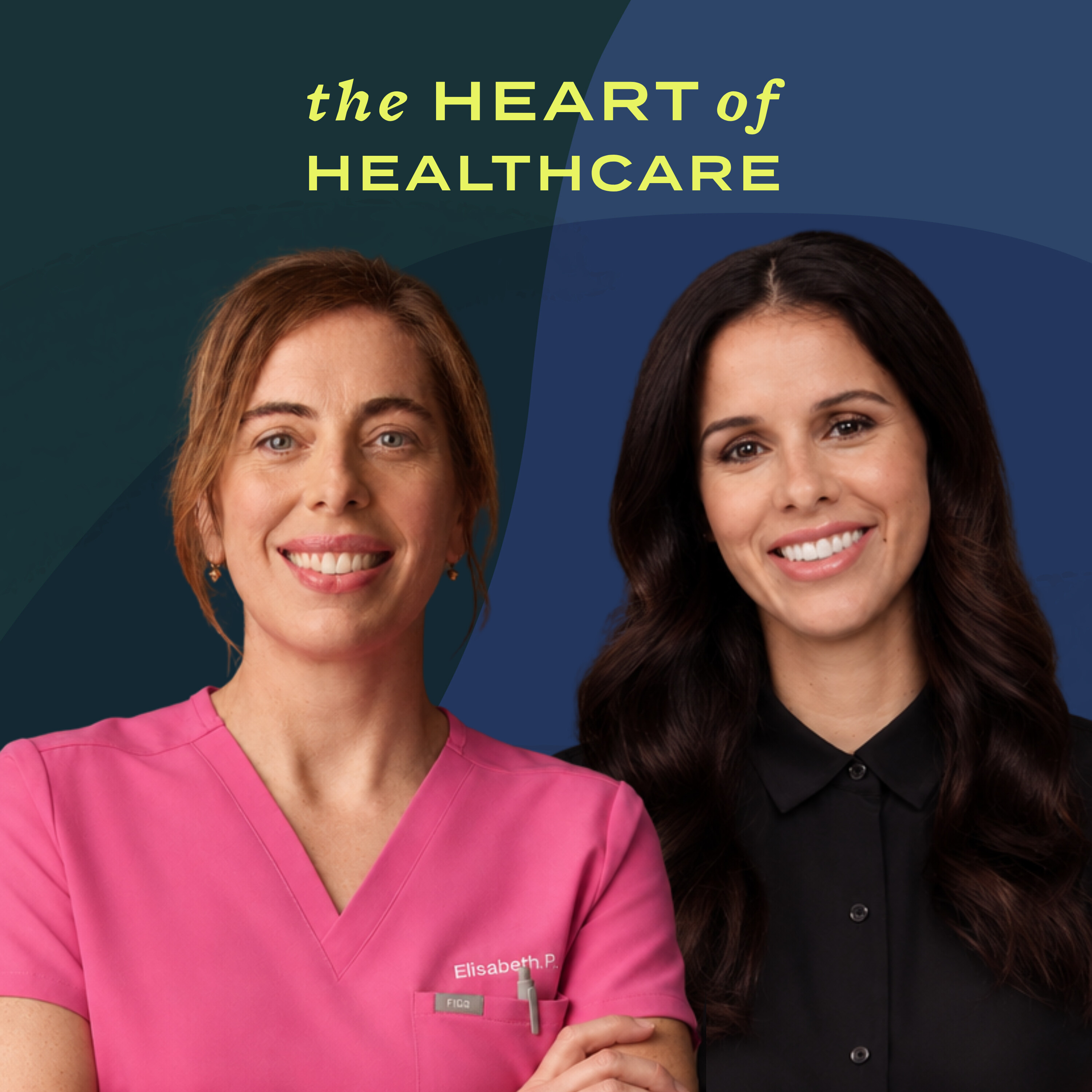
Healthcare advocacy—turning anger into action to fix barriers that harm patients and healthcare workers, especially lack of “protected speech” for clinicians. Guests argue that insurers and hospital contracts suppress clinicians’ ability to speak about safety and care denials, contributing to burnout and workforce loss. They promote federal legislation: the Speak Free Act (protect healthcare providers from retaliation for speaking up) and the Health Care is Human Act (a $6,000/year tax credit for health care professionals). They also stress funding for the Lorna Breen Act mental-health program.
Dr. Elisabeth Potter, plastic surgeon; became viral after UnitedHealthcare interrupted her mid-surgery to question a breast cancer patient’s diagnosis and justify an overnight stay, followed by a threatening letter alleging defamation. Trina Spear, co-founder and CEO of FIGS (medical apparel); leads advocacy and programs like Threads for Threads, research grants, tuition support, disaster relief, and the Awesome Humans Foundation.
Prior authorization and insurer calls intrude into operating rooms; clinicians can be threatened or removed from networks; FIGS foundation helped keep Dr. Potter’s practice open; Dr. Potter regained in-network status as of Oct 1 after two years.
Written by AI. May contain mistakes.
Hosts introduce guests Dr. Elisabeth Potter and Trina Spear and their backgrounds.
“So buckle up and join us as we figure out how to improve healthcare for all.”
Trina Spear discusses FIGS' mission and their efforts to support healthcare professionals.
“She is a prominent advocate for policies that improve outcomes for both patients and healthcare professionals alike.”
Discussion on the alignment of FIGS' mission with investor expectations regarding advocacy.
“And that is really about supporting health care professionals with all sorts of grants that go directly to them.”
Dr. Elisabeth Potter recounts the incident with UnitedHealthcare that brought her into the spotlight.
“So no one is really ever surprised by the positions we take.”
Discussion on the fear healthcare professionals face in speaking out and the need for change.
“I think that that is why we've created the Speak Free Act.”
Dr. Potter explains the Speak Free Act aimed at protecting healthcare professionals' rights to speak out.
“And I try to be very professional when I speak.”
Trina Spear emphasizes the need for financial respect and recognition for healthcare workers.
“Well, I think by not being able to speak up and speak out a lot of people that furthers their burnout and disillusionment with the job.”
Discussion on the challenges healthcare workers face and the need for respect and financial value.
“Maybe each of you can also name just another issue facing health care workers that you're really angry and fired up about.”
Exploration of the Health Care is Human Act and its potential impact on healthcare professionals.
“And so this is a really important piece of legislation that we put forward.”
Advice for healthcare entrepreneurs and clinicians on advocating for the healthcare system.
“And that really allows you to send a letter, right, to your member of Congress and let them know about the importance of these issues.”
Critique of organizations like the AMA and their effectiveness in representing healthcare workers.
“Potter is doing, really fighting against very, very large pools of funding, very, very large organizations.”
Discussion on how to measure the effectiveness of advocacy efforts in healthcare.
“They control a lot of money and they can turn a lot of levers in Washington.”
Dr. Potter shares her motivation for advocating for better healthcare practices.
“Potter, how do we measure your thoughts on your time?”
Discussion on the mission to support healthcare professionals and reduce burnout.
“But we want to help support health care professionals like Dr.”
Exploration of how FIGS Foundation helped save a medical practice.
“Just a humble scrub company that was able to come in and save the business.”
Envisioning a better future for healthcare professionals and their work environment.
“If the work that you guys are doing, the advocacy work that you're doing succeed, what actually feels different for healthcare professionals maybe five, ten years from now?”
Discussion on creating a collaborative and patient-centered healthcare culture.
“So I think that FIGS allowed me to keep my surgery center open.”
Final reflections on the ongoing challenges in healthcare and the need for change.
“Well, there's so much we still have to fight for healthcare, for our patients, for providers, to make sure that we get, we spend a lot on healthcare and we deserve a lot better.”

Get the gist, explore an idea or ask about something said.
 Claude
On The Heart of Healthcare | A Digital Health Podcast, what are the key points of this episode?
Searching your listeningAutomatic transcript. May contain errors.
0:00What a lot of Americans thought was that doctors have the ability to speak openly and freely about things that they see are harming their patients or other healthcare providers in the system. That they have that protected speech, you know, free speech. It's the United States of America. The truth is that we don't. Today, Halle speaks with plastic surgeon Dr. Elisabeth Potter and Trina Spear, co-founder and CEO of FIGS.
0:31Welcome to the Heart of Healthcare podcast. I'm Hallie Teko. I'm Michael Esquivel. And I'm Steve Krause. And every Monday, we bring you the latest in healthcare innovation as we sit down with entrepreneurs and industry experts. So buckle up and join us as we figure out how to improve healthcare for all.
1:00Hello, listeners, and welcome back to the show. I'm your host, Halle Teko, and today we are talking about healthcare advocacy, how you take something that makes you angry about our healthcare system and turn that anger into action. I have two guests today. One is my friend Trina Speer, co-founder and CEO of FIGS, the publicly traded medical apparel company known not just for its super comfortable stylish scrubs. The FIGS team is also making waves, advocating for the healthcare workforce in ways that no one else is. They're creating all new federal legislation designed to address the biggest challenges facing healthcare professionals.
1:43And they're organizing high-profile Capitol Hill rallies and public campaigns highlighting their health care is human work. And we also have Dr. Elizabeth Potter, a plastic surgeon who went viral for exposing the broken prior authorization system after an insurance representative interrupted her mid-surgery to question a breast cancer patient's hospital stay while the patient was still asleep on the operating table. She is a prominent advocate for policies that improve outcomes for both patients and healthcare professionals alike. I am so excited to talk to both of you. Trina, Elizabeth, thank you for being here.
2:25Thank you so much for having us. It's an honor. It's good to see you. It is. We are going to have such a great conversation today. Trina, let's start with you. You run a public company. You have a fiduciary duty to your shareholders. Why invest your company's time and money into advocacy? What exactly are you trying to accomplish? That's such a great question. And I think it really, you know, it goes back to our mission. You know, I think at FIGS, we're not just a scrubs company. We are really focused on healthcare professionals, because if you don't have a proper healthcare system without the healthcare professionals that are actually making it all happen.
3:08And so I think, you know, from day one, it was always about having the backs of our community, having the backs of health care professionals, whatever their biggest challenges are, whether they are in the operating room and they need products to do their jobs, whether it's telling their stories, which I think, you know, is a big focus of ours at FIGS in our campaigns, or it's creating impact in a variety of ways. That's really what we're focused on. And we've been doing that since day one. We, you know, we've had our Threads for Threads program where we donate millions, at this point, millions of scrubs to health care providers in need around the world.
3:45We have also donated millions of dollars to different initiatives. We are really focused on supporting health care professionals with our medical research grants, tuition for to support younger, the next generation of health care professionals, disaster relief. And I don't know if you know this, but we also built a hospital in Kenya, which is super cool, which is, you know, an exciting thing. Actually, the team is heading there in the next few days with a whole group of health care professionals to support the community on the ground there. And so and then finally, you know, the thing that I think is bringing this all together is we started our own foundation, the Austin Humans Foundation.
4:28And so that's a big part of our future. And that is really about supporting health care professionals with all sorts of grants that go directly to them. And I would say great name. Awesome humans. I love it. And that's, you know, that's always what we've called our health care professionals, because they're the best people in the world. Dr. Potter, I think, is, you know, the such a great representation of the health care community and really fighting every single day. And so, you know, I think this is really it's who we are. It's what we do. And there's much more to do. And, you know, I think in terms of advocating for all health care professionals, there was no organization that was doing it.
5:09And so we saw there was a need and we wanted to show up and really, you know, build different components from an advocacy platform to support the people doing the work like Dr. Potter. And it's so great to have you here doing this with us. Yes, and I have so many questions for her as well. But just like a quick follow-up on that, have you gotten any pushback from investors or your board for taking a position on issues, spending resources on going to Capitol Hill, things that typical companies do not do? You know, I have to say we've never really gotten pushback. I think the advantage to having a truly mission-centered business where everything that we've done is designed to support the mission is that everyone around the company, our board, our shareholders, they're all aligned in this work.
6:04And they know what we stand for. They know what we're all about. So no one is really ever surprised by the positions we take. And, you know, they're all opting in to being part of this change, which is, you know, it is it is a great position to be in. But I think, you know, when you say out loud what what you're all about, people can join you or they don't need to. Yeah. All right. Elizabeth, for those who are not familiar, can you take us through what happened with United last year that really brought you into the spotlight in this conversation? Wow. Okay, so January 2025, I was doing my job like so many healthcare workers.
6:44I was in the operating room taking care of women affected by breast cancer. And we had done all the things ahead of time, like we always do. We had gotten prior authorization and prepared for this woman to have her mastectomy. And I received a message in the operating room that UnitedHealthcare was asking to speak with me about a patient under anesthesia. And long story short. Yeah, no, it was ridiculous. But there's a history there in women's health. I mean, I've been doing this for 14, 15 years. And the history is that there's always somebody trying to deny the care. And I had fought this fight with insurance companies and with United before on different issues.
7:24And so I suspected that they were trying to deny something. And there was another doctor with me. The patient was safe. We were almost finished. I stepped out of the operating room 12 feet away for three minutes and took the phone call. And it was that. It was a doctor on the phone from the insurance company asking me to provide them with her diagnosis. This is their member who has breast cancer, had received chemotherapy, was having a mastectomy. They wanted her diagnosis clarified, and they wanted me to justify her overnight stay. And I quickly resolved that conversation and got back to my patient and later posted a video about the absurdity of that moment and how the system had entered that sacred space of the operating room and how wrong that felt.
8:08That post itself went viral. And then United sent me a very threatening letter, six pages, from a law firm in Washington, D.C., telling me that I had defamed them and that I had lied, that I had encouraged violence against them because I hadn't responded to all of the comments online and just said I was a bad doctor. And I knew it was lies. But it was terrifying. I mean, I'm one woman. I'm one person. Yeah. And that was, you know, a pivotal moment for me. But I rallied, do what I do. I got centered, knew exactly that this was a moment that the universe was asking me to step up. And I did. And I had great counsel.
8:52And I published that letter as well. So they said it was confidential. In fact, was not confidential. And I let the world read how UnitedHealthcare talks to a doctor taking care of women affected by breast cancer. And that went even more viral. And we just kept making those steps. It got backfired on them, didn't it? It did. And I mean, it's gaslighting, right? And we just kept making more and more of those steps. And then FIGS came alongside me and we just kept rolling. And have you since made peace with them? Or like, where does this stand now, 20 months later? So I would say that I love that question because we are using this to change health care and changes are happening.
9:36So it took me two years to get a network with United because they wouldn't allow me a network as a surgery center after that. But keeping the conversation open, talking to them about the good care that we're providing, sharing with them the outcomes. I am in network with United as of October 1st. So, and I haven't compromised, right? So, in fact, you know, I'd say that they expect me to continue to speak out. And that's the only way that I could, as a healthcare professional, be in network with them, to be honest, to be speaking out and taking great care of their patients. Yeah. I can think of other clinicians that have publicly shared their frustration with the private insurance industrial complex that we have in this country.
10:28But I think you're the first one that I know of that has actually named names and has actually brought receipts forward. Do you think it's that level of fear for the intimidation that they could face? Why aren't more doctors naming names when they—or just speaking up in general? Well, two things. I think that that is why we've created the Speak Free Act. And so we'll get to that. And things wind up with me to do that. But yeah, because you are putting yourself out there at risk when you name names. But we need to know the truth and the whole truth. And honestly, did I know exactly what was going to happen to me?
11:06Not completely, but I knew that I had to say, I had to tell the truth. That's like, I'm a doctor. In order to fix this problem that's in front of me, whether it's a disease or the healthcare system, we need to be honest about what's going on at the very least. So, yeah, I think that was integral to it. But I also think that, if you remember, the CEO of United was murdered about a month before I made that post. And those things were completely separate. But that was sort of the environment. I think that the country, Americans were ready to talk about specifics. And, you know, I didn't create this issue.
11:44None of us created it. But it bubbled to the surface and we all acknowledged it at a very important moment. So I don't think there was any getting around saying names. Yeah. Well, tell us about the Speak Free Act that you guys are working on. Right. So, I mean, I think that what a lot of Americans thought was that doctors have the ability to speak openly and freely about things that they see are harming their patients or other health care providers in the system. That they have that protected speech, you know, free speech. It's the United States of America. The truth is that we don't. Many of us have signed contracts in order to be in a hospital that prohibit us from actually speaking about safety issues or even just issues in general in a professional way, right?
12:34So now I actually, I played by the rules. So I'm really careful. And I try to be very professional when I speak. And I always tell the truth, right? There's no need for embellishment. It's bad enough as it is. But, you know, the Speak Free Act is really saying, OK, doctors aren't protected. You can be kicked out of a system. You can lose your job. You can face reprisal. And we need to create systems, to create legislation that protects all health care providers, not just doctors. We're talking about surgical techs in the hospital when they speak openly and honestly about something that's concerning to them.
13:16And the last thing I'd say about that now is, you know, we're in a healthcare crisis. And there's a way you act when you're in a crisis and a way you act when things are going fine. And this is the kind of legislation we need in a crisis. We need voices to come forward so that we can have an accurate understanding from boots on the ground, people close to the problem. And until we have that, we're just accepting a narrative about healthcare. We want the specifics, and we want them from all healthcare providers. Well, I think by not being able to speak up and speak out a lot of people that furthers their burnout and disillusionment with the job.
13:52And so it actually could cause more problems like people leaving the workforce altogether. There are millions of things that health care workers can be angry about. So so what is the lack of free speech? Maybe each of you can also name just another issue facing health care workers that you're really angry and fired up about. Yeah, I mean, I think just in line with what Dr. Potter was talking about, I think healthcare professionals need to feel respected and valued so they can speak free and say what's happening in the system, but they also need to feel valued financially. financially. And so one of the things that we're working on is the Health Care is Human Act, which is a tax credit for health care professionals,$6 ,000 a year.
14:39And this is really important because, you know, you get a tax credit for a lot of things, having certain types of windows in your home, having a certain type of car. Why aren't there? Why isn't there a tax credit for people saving lives, for helping patients, for ensuring that all of us can live long and healthy lives, right? And so this is a really important piece of legislation that we put forward. And I think it's going to help on a lot of the things that we're talking about, reducing burnout, retaining your workforce. It will lead to better patient outcomes, a stronger satisfaction in your job, lower turnover, and overall reduce healthcare costs, which I think is what, you know, a lot of people are focused on.
15:27And this is a first step in that direction. Yeah, I agree completely with Trina. And I'd say, you know, we're also passionate about the mental health of healthcare providers. And the Lorna Breen Act was something that, you know, after COVID, and we saw healthcare providers really suffering under just the moral injury of having to practice when you feel like you're not making a difference or when you feel like the system is against you. The Lerner-Brain Act has, you know, it's been passed, but in the United States, like you have to fund it. And I think this is also really important. Like we're getting into the weeds here.
16:02Like we're not just about passing a law and saying, check, we got that win for the way it looks. No, we have to fund this thing and it's$30 million and that's meaningful and it needs to be done and it needs to be passed by appropriation. So FIGS is, you know, they're doing the right things, they're getting the win, and then they're pushing through to make sure that in rulemaking and in funding that we get the money into the program. And so right now, you know, it's been, I think, two years with the Lerner-Breen Act and we've got to get that funded. So, yep. And we've had the founders of Marvin on the show and they specifically focus on mental health for healthcare providers, obviously a really important area.
16:43for our listeners who are fed up about something in healthcare, which everybody has, you know, some complaint as a patient, as a clinician, as an innovator, what advice do you have for them on what they can actually do about it? How to get started? Maybe, Trina, you could share advice for founders that have companies and what they can do with their companies behind them. Elizabeth, maybe you can share some advice for clinicians who are feeling helpless. So Trina, you want to to start with that one? Sure. Yeah. First off, get involved. You know, I think there's so many ways to do that. We have an advocacy hub.
17:17It's advocacy.wearfigs.com. And that really allows you to send a letter, right, to your member of Congress and let them know about the importance of these issues. It takes a few minutes. It's a few clicks. And it will make a huge difference more than you know. I think in terms of like founders of other companies that are in the healthcare space or not in the healthcare space, I think it's really important that they understand that in order to have a functioning healthcare system, you need a functioning healthcare workforce. And so how do you, as a founder of a business, really take that into consideration and stop overlooking this crisis that we're facing?
18:01And there are so many ways to show healthcare professionals that we respect and care for them. And the time is now to get involved in kind of help support this community. Yeah. And I mean, a lot of startups, though, they don't have a ton of resources. They don't have a ton of funding. They're small teams. Like, how can those folks who care about the issue, obviously, they're starting companies in healthcare, that is much harder to do than starting companies in other sectors. So they care about healthcare, but maybe they feel like they are limited with their resources. How should they think about using what they have to make a difference?
18:41I think you got to get creative, right? And, you know, we were a startup and this became obviously the biggest part of what we do. But I think there are ways to show your support that don't cost money. There are ways, and that's using your voice, using your platform. Social media, as we know, is really powerful. That is really, Dr. Potter is a testament to people listening and then others getting involved in putting their support behind her and the work that she's doing. And so I think it's, you know, sending a letter doesn't cost anything, right? And reposting and showing your support for the work that we're doing with our advocacy platform and the work that Dr.
19:27Potter is doing, really fighting against very, very large pools of funding, very, very large organizations. I think there's a lot that just one person can do in making a difference. That's what we need. We need everyone behind us. So partner up. Yeah. Yep. That's it. And Elizabeth. Yeah. What's your advice? It's really just that. I think it's as a clinician, knowing that your voice matters and that you can make a difference. I mean, this is the pebble in the pond. Like, start somewhere. Start with the truth. And then, you know, I think practically a lot of clinicians have tried in the past to speak up for something and found a wall in front of them.
20:06And what I've learned from FIGS is find new partners. Because it's not the traditional partners in healthcare that have stood next to me and amplified this message. And that's really important because when you think about the traditional organizations, like maybe there's a society that represents doctors or nurses, but FIGS is all healthcare workers. That is 22 million people strong, and that is stronger than any of those other societies or organizations. And by partnering with FIGS, we're making more change. So I think by believing that I had something worth saying, that it was truthful, and by by looking for new partners, accepting the help when when they came and believing and thinking, I know this is I know this may sound weird that like I'm a microsurgeon.
20:50I'm going to get like I'm going to be best buddies with figs. Like, no, it number one, I've been working their scrubs for 15 years and they're the best. But but then they're the ones who stepped up, believing people when they show who show you who they are and looking for partners in different sectors. So So I'm really excited about the healthcare industry partnering directly with healthcare providers who want to make change because, honestly, that's where I see movement happening. Yeah. I mean, but it's interesting that we have private companies, public companies that are stepping up to fill an unmet need.
21:23I think it's worth talking about some of these societies that are supposed to be doing that. I don't want to, let me call one out. Let's just say the AMA. I would think that the AMA would be the one to represent you or partner with you. Like, aren't they supposed to be advocating for health care workers? Why does this gap exist? How come these societies aren't doing that work completely? You know, I think that as a physician that we've allowed, we've stepped back from being that forward-facing voice of health care, and we've allowed other people to do that for too long. And so now you have a society like the American Medical Association, for instance, only a minority of doctors are a member.
22:04I mean, it's not the majority of doctors who are represented by the AMA. Under 50 percent of doctors are part of the AMA? Correct. Wow. Correct. And, you know, they have a really effective voice in Washington, and so that's why they get a lot of press, and that's why they have a lot of power. But even – so, like, when I went into rooms in Congress and people said, well, where does the AMA stand on this issue of breast reconstruction, for instance? And I'm like, why are you at the AMA doesn't understand this issue? The doctors understand the issue. Let's talk to the doctors and the patients about it.
22:37So I think that their power could be used for good. I think historically the AMA, there's a long past there. It's not always been a bastion of integrity. Yeah. I mean, you know, there's a lot of racism in the history of the AMA. Like, let's just let's be honest about it. We can always evolve and do better. And, you know, I think, I just think, let's be honest about what the AMA is. It is a lobbying organization. They own our coding system. They control a lot of money and they can turn a lot of levers in Washington. Yeah. They recently, just a few weeks ago, called it a win that a court ruled that patients should not get access to any sort of ambient recording taken during a patient encounter.
23:23So I have a little bit of, I have an ax to pick with them because I feel like patients do deserve to have access to anything that contributes to their medical record. But certainly, yeah, that's for another show. Yeah, and I'm in total agreement with you. Patient-centered tech, that's going to change healthcare. Because right now, the power of the medical record resides with the physician. And it really should reside with the patient. I agree completely with you. That decision is off. Yeah. Yep, yep, agreed. So, Trina, how do you measure whether your advocacy is working and whether you want to continue to invest in new programs, new efforts versus kind of say, well, our work here is done.
24:09Let's move on. Yeah, I think it comes down to two things. I think first, we need to change the conversation. And we're already seeing that. I think when CNN is covering our healthcare as human rally in D.C. on Capitol Hill, we know that our message is resonating. And I think there's much, much more to do in terms of how to continue to get our governmental leaders, get all constituents on board with this, but it's not controversial, right? We're, this is not, we've gotten both parties to, you know, really get on board. This is a bipartisan issue. And then I think in terms of, you know, the second thing is we need to continue to put wins on the board.
24:52This isn't, you know, we're just going to see how we go here. This is, you know, we have to continue to push. We have to win this war against the system. And I think we're on our way and we're not going to stop until we're successful. It's that simple. Love it. And Dr. Potter, how do we measure your thoughts on your time? Because you obviously are a very busy woman with your day job. How do you decide whether like it's worth waking up every day and thinking about how you're going to communicate the problems that you see in our healthcare system with an audience that you've built versus just saying, look, I'd rather go pick up a new hobby.
25:35I have other things I want to do with my life. I love this question, purpose. I mean, I'm really, really into being aligned with your purpose. And I know that this is what I'm supposed to be doing. And it's very rewarding. So this fills my cup in a big way, right? I also think that as a physician, there was a time when I really stepped into this work And I held such high ideals, right? I wanted to change the world. I wanted to help people. And as I ran up against the system at the end of fellowship and realized how hard it was to actually get this great care into the hands of patients, I started to realize that I had to be an advocate.
26:15I had to do these things in order to be a good doctor, right? So for me, I think it's recognizing that maybe the closest I can get to that initial passion for healthcare in 2026 is this fight. Yes, I love interacting with my patients. I love breast reconstruction. I love taking care of that patient in front of me, and that's mission critical. all. But also the heart of me feels like this is the essence of me being a physician, stepping into the gap for patients, speaking the truth, even when it's hard, ultimately with the end goal of like making this better for all of us. Yeah. And scaling your work, right?
26:59Because being able to be part of this. Yeah. I mean, you're not just like complaining in the break room with your colleagues. I mean, you're really, yeah, you're scaling your impact by sharing your thoughts broadly. Yeah. And I think it's also a good check for me because if I don't want it heard by the world is, do I really believe it? And yeah, I believe it. We have to change this. Yeah. So Giving Tuesday is coming up. Any nonprofits that you guys suggest our listeners have on their radar to support, to volunteer with, partner with, et cetera? I mean, we have our foundation, so obviously I'm going to talk about that.
27:37Our Awesome Human Foundation is, you know, obviously where we're focused. And it's really about supporting healthcare professionals like Dr. Potter. You know, when everything happened with her and her practice, this, you know, our ability to directly donate to help keep her practice open. That's what our foundation is all about. How do we do that for more health care professionals that could be or will be in a position? Maybe it's a different situation. Maybe it's similar. But we want to help support health care professionals like Dr. Potter. And there's no other organization like this. You know, most foundations, most advocacy platforms of companies, whether they're public or private, they're really focused on benefiting themselves, right?
28:25getting a tax break, having lobbyists fighting for them. Think about the oil companies or other companies that, you know, their advocacy is directly benefiting them. For us, it's not about that. For us, it's about benefiting the healthcare professional. How do we make their lives better and how do we support them in a variety of ways so that there isn't burnout? There are less shortages. Remember why they became a doctor, a nurse in the first place. love it i agree completely i mean as someone who's my practice was saved by the foundation wow and i can't that's very clearly like i would have gone bankrupt i would have lost my practice if it wasn't for figs foundation that is wild to think about right so like i mean i sought help everywhere i could i made all the calls and the people that stepped up that was figs so i yeah And I think when people look at impact that I have made from that point, that's FIG's impact.
29:24That's the impact of the foundation. Yeah. Amazing. Just a humble scrub company that was able to come in and save the business. That's pretty incredible. Closing question. If the work that you guys are doing, the advocacy work that you're doing succeed, what actually feels different for healthcare professionals maybe five, ten years from now? You know, I said it before, I'll say it again. It's really success is having Dr. Potter and all her colleagues and everyone in healthcare remember why they chose to be in healthcare in the first place. Remember why they chose to go into this profession and save lives and help people and get back to the actual work.
30:06If we can remove some of this insanity and all this extra prior authorization and burdensome paperwork, if we can remove all that and help them feel valued with, you know,$6 ,000 a year, that's one thing. Help them on the mental health front. Help them to be able to speak free. Help them get more training and support. If we can do all that, they can get back to what really matters and get back to why they chose to do it in the first place. So happy, healthy, productive workforce that is getting to the meaning of why they became healthcare providers to begin with. That's right. Yeah. And excellent, right?
30:44So I think that FIGS allowed me to keep my surgery center open. And so for when I think about this question, what in five to 10 years, I want patients everywhere and healthcare workers everywhere to have the experience that we have at Redbud Surgery Center. where the workers, we're all a team. The culture is we are on side to do the right thing for the patient at all costs. And we feel good about that and we're rewarded by that. And patients feel it, right? What I want is for the feeling that we have protected and saved at Redbud to grow. I want Redbuds planted around the country. So yeah, that would be my idea of success.
31:26Yeah, the decorporatization of healthcare, one might say. Right, absolutely. Let the passion return, yeah. Yeah, amazing. Well, there's so much we still have to fight for healthcare, for our patients, for providers, to make sure that we get, we spend a lot on healthcare and we deserve a lot better. So appreciate the work that both of you are doing and for sharing all of your insights and stories with me today. Thank you so much. Honor to be here. Thank you so much. It's an honor.
32:05Thanks for listening to The Heart of Healthcare. If you enjoyed this episode and you'd like to support the podcast, please leave a rating and review. And don't forget to subscribe. The Heart of Healthcare is produced by Hallie Tecko and hosted by Michael Esquivel, Steve Krauss, and Hallie Tecko. The show is engineered, edited, and mixed by Kyle Moore. Visit our website, heartofhealthcarepodcast.com, for show notes and details.
Speaking out against the healthcare system can cost you your job, your reputation, or even your business. So why do it?
This week, Halle sits down with FIGS co-founder and CEO Trina Spear and Dr. Elisabeth Potter, the plastic surgeon who went viral after an insurance rep interrupted her during a breast cancer surgery to question the patient's hospital stay. They discuss the risks healthcare professionals face when speaking out, why a publicly traded scrubs company is investing in political advocacy, and whether businesses can help fill the advocacy gaps left by traditional medical organizations.
We cover:
📍 Connect with us:
About our guests:
Trina Spear is the CEO and Co-Founder of FIGS, Inc. (NYSE: FIGS), the global leading healthcare apparel company. FIGS creates technically advanced products to help healthcare professionals look good, feel good and perform at their best.
FIGS revolutionized the healthcare apparel industry by branding a previously unbranded industry, de-commoditizing a previously commoditized product, and building a community around a profession. Trina is also a member of the board of directors of Amer Sports, Inc. (NYSE: AS), a global group of sports and outdoor brands, including Arcteryx, Salomon and Wilson.
Trina’s accolades include being named in Fortune 40 Under 40, Goldman Sachs’ 100 Most Intriguing Entrepreneurs, and E&Y’s Entrepreneur of the Year. Her article, “Transforming the Healthcare Experience: Doctors, Nurses, Patients, and Beyond,” was published in the Journal of the American College of Radiology.
Prior to launching FIGS, Trina worked in Blackstone’s hedge fund group and in Citigroup’s investment banking and private equity divisions. Trina is a member of the 2018 Class of Henry Crown Fellows at the Aspen Institute. Trina received her BA in Economics from Tufts University, graduating magna cum laude, and she completed her MBA at Harvard Business School.
Dr. Elisabeth Potter is a board-certified plastic surgeon specializing in microsurgical reconstruction for breast cancer patients. After a coding change by federal regulators threatened access to advanced reconstructive microsurgeries, Dr. Potter formed a coalition of stakeholders that engaged relevant congressional committees and federal regulators, leading to a successful reversal of the decision. Through advancements in surgical technique and perioperative care, Dr. Potter is advancing flap reconstruction in ambulatory settings. She is the owner and founder of Redbud Surgery Center-- purposefully built, equipped and staffed to offer advanced surgeries in an ambulatory setting. Dr. Potter is passionate about the importance of independent physicians as voices in improving healthcare, and Redbud exemplifies the contributions independent doctors offer to address our cost and access challenges. When an interaction with a major health insurer around a surgical patient’s authorization process gained national attention, Dr. Potter focused the conversation on the impact of administrative and insurance processes on the care experienced by patients. She is the founder of the Bluebird Center for Health Education and Access, a nonprofit organization dedicated to highlighting the importance of independent voices in healthcare and fostering access to advanced treatments in communities. Dr. Potter received her undergraduate degree in Molecular Biology from Princeton University, and her medical degree from Emory University Medical School. She completed an integrated plastic surgery residence from UT Southwestern Medical Center, and a microsurgical fellowship from MD Anderson Cancer Center.
See Privacy Policy at https://art19.com/privacy and California Privacy Notice at https://art19.com/privacy#do-not-sell-my-info.