Ask ChatGPT
 The Heart of Healthcare | A Digital Health Podcast
9 Nov 2026 · 44m · 15 chapters
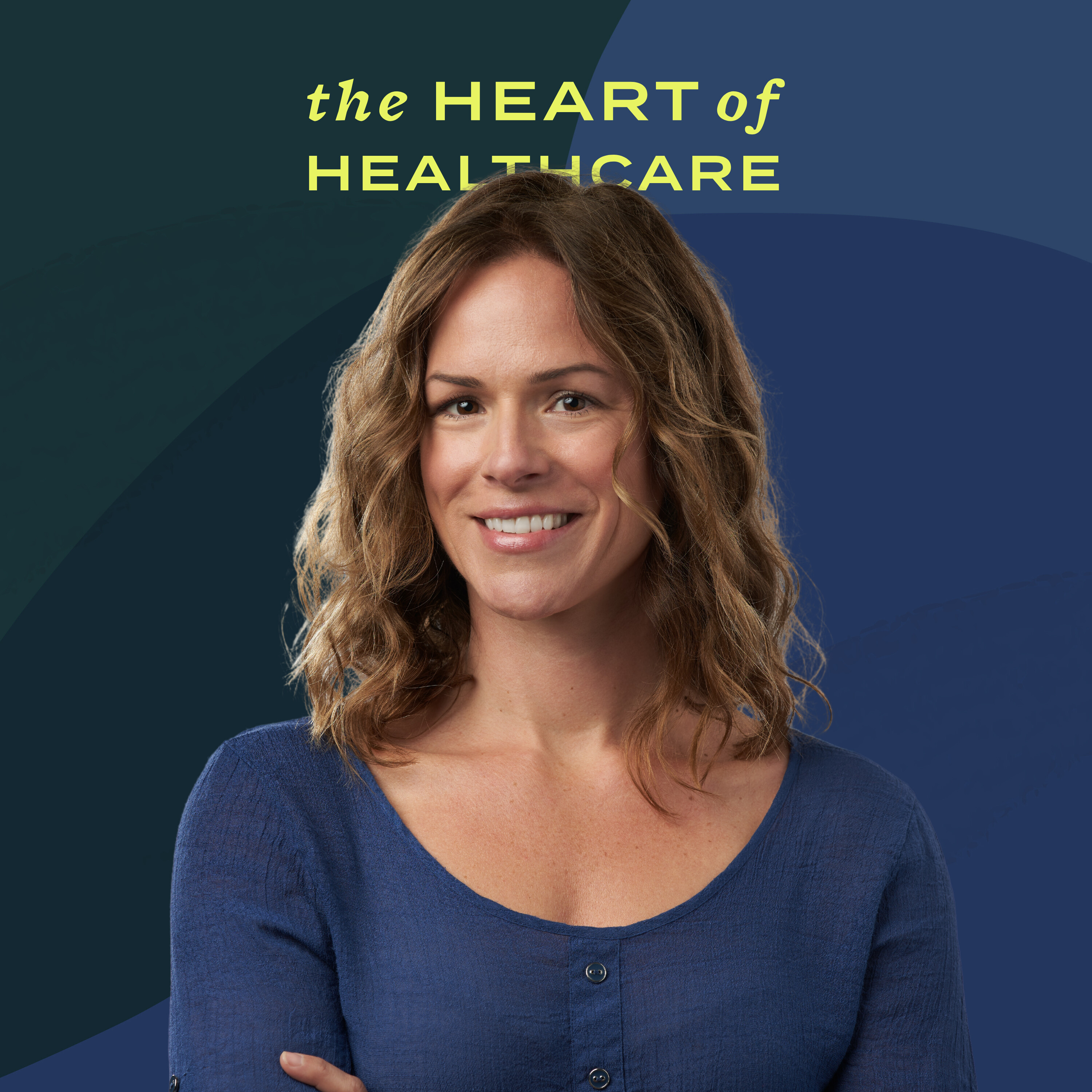
How NVIDIA’s Kimberly Powell argues AI (especially agentic AI) can relieve healthcare’s clinician shortage and administrative burden, and how “physical AI” could evolve hospitals into semi-autonomous, robot-like environments.
Kimberly Powell is NVIDIA’s Vice President of Healthcare; she joined in 2008 and built NVIDIA’s healthcare business over 18 years, moving from imaging into AI-powered hospitals and drug discovery.
Radiology already uses AI widely (NVIDIA cites FDA approvals: 1,600+ devices, ~75% in radiology). 2026 is framed as when AI became “useful” via agents connected to tools and grounded in trusted knowledge/policies. Voice and workflow integration reduce usability barriers and speed ROI (claims: ROI in ~12 months; ~$3.50 value per $1). For physical AI, hospitals can be “brownfield” upgraded using sensors, digital twins, and simulation.
AI-assisted radiology report drafting; photon-counting CT and 4D/5D imaging; protein design model RFD4 (co-developed with UW/Institute for Protein Design, David Baker); clinical-trial patient matching and trial simulation; NVIDIA Isaac for Healthcare, GROOT, Cosmos, and “Open Agent Safety Platform.”
Written by AI. May contain mistakes.
Introduction of Kimberly Powell and her role at NVIDIA.
“So buckle up and join us as we figure out how to improve healthcare for all.”
Discussion on Kimberly's vision and experiences in healthcare innovation.
“And Kimberly has a fascinating vision for where this is all headed, including, and I can't wait to talk about this, a future where the hospital itself operates like a robot.”
Exploring the integration of AI in healthcare practices and radiology.
“Language models took us all by surprise.”
The significance of agentic AI in healthcare and its potential benefits.
“And then I know we'll talk more about it.”
Kimberly shares insights on NVIDIA's transformative journey and impact in healthcare.
“I mean, I can't wait to dive and double-click into that.”
Discussion on the challenges in healthcare and the adoption of AI technologies.
“Well, and it's interesting because, you know, you're in this kind of fast learning mode.”
Explore how AI technologies are transforming healthcare interactions and workflows.
“Radiology is certainly a front runner there.”
Learn how AI is paving the way for breakthroughs in drug discovery and development.
“And for these harder things, and you'll see in those surveys, too, that it's not the clinical diagnosis that is the thing that agents have solved yet.”
Understand the role of AI in enhancing clinical trial processes and patient outcomes.
“So for example, for that model, it's called RFD4 Protein that we co-developed with the University of Washington and the Institute of Protein Design, David Baker, Nobel Laureate himself.”
Discover what physical AI means for the future of hospitals and patient experiences.
“I wanted to move us into talking more about physical AI in the context of clinics and hospitals, as Michael has alluded to.”
Learn how spatial intelligence and automation can transform hospital environments.
“That's how you and I operate in the physical world.”
Discover the importance of training autonomous systems for safe hospital operation.
“Now, so that next scale is not at the room scale.”
Explore how AI and interoperability are crucial for future healthcare solutions.
“And it opens up the doors to a lot of things.”
Understand how technology can support healthcare professionals in their work.
“And it is the case that agents will talk to other agents, right?”
Learn about NVIDIA's vision for transforming healthcare delivery through technology.
“But I can tell you, I'm already starting to feel it, which I'm like, okay, okay, I'm on track here.”

Get the gist, explore an idea or ask about something said.
 Claude
On The Heart of Healthcare | A Digital Health Podcast, what are the key points of this episode?
Searching your listeningAutomatic transcript. May contain errors.
0:00And in a world where, you know, our healthcare professionals are in such short supply, and we know that the situation is going to get globally increasingly worse, useful AI and agentic AI couldn't have come at a more important time. Today, Michael and guest co-host Megan Zweig speak with Kimberly Powell, Vice President of Healthcare for NVIDIA.
0:35Welcome to the Heart of Healthcare podcast. I'm Hallie Teko. I'm Michael Esquivel. And I'm Steve Krause. And every Monday, we bring you the latest in healthcare innovation as we sit down with entrepreneurs and industry experts. So buckle up and join us as we figure out how to improve healthcare for all.
1:05Hello, listeners, and welcome back to the Heart of Healthcare. I'm your co-host, Michael Esquivel, and I'm here today with our guest co-host and my dear friend, Megan Zweig of Rock Health. Today, Megan and I are joined by Kimberly Powell, Vice President of Healthcare at NVIDIA, one of the most influential companies powering everything AI. Kimberly has been at NVIDIA for an incredible 18 years. Wow. Where she's built the company's healthcare business from the ground up. She joined back in 2008 when NVIDIA was primarily known for gaming graphics and has helped bring its technology into medical imaging, drug discovery, and now AI-powered hospitals.
1:44Today, NVIDIA's technology is helping power some of the most ambitious applications of AI in healthcare. And Kimberly has a fascinating vision for where this is all headed, including, and I can't wait to talk about this, a future where the hospital itself operates like a robot. Kimberly, welcome to the show. Oh, Mike, Megan, thank you so much for having me. It's just such an exciting time, so I look forward to the conversation. And Megan, welcome too. Excited to be co-hosting with you today. Yes, very, very excited to be here. Excited, Kimberly, to have this conversation and wanted to kick us off with a little bit of a look back.
2:21Again, it's amazing. You've been at NVIDIA for almost a couple of decades and curious to ask, you know, what was your vision for healthcare when you joined that organization? And what if that vision has really come to fruition and what maybe has evolved over the years? Yeah, well, a tremendous amount has evolved and been, I guess you could say, unexpected and a wonderful surprise. But what was early on is the area of medical imaging. You know, imaging is one of the most essential tools of health care, right? When you don't feel well, you go to your doctor and you're oftentimes, you know, asked to go get a study, some image to see if they can figure out what's going on.
3:02And that was my very first job in my career was at a medical imaging startup. And it was then that I met NVIDIA and recognized that we had a contribution to make in imaging. Everything from the very initial stage of imaging, which is pure sensor data and turning it into an image, to now what is very common practice. And I think a lot of people don't know how common AI is already deployed throughout the radiology practice. You know, it's here today. It's very pervasive. It continues to grow. You know, the FDA with over 1 ,600, you know, approved medical devices with, you know, three quarters of that, 75 % of that is in the area of radiology.
3:42And so that is here now, continues to evolve. We're taking it even beyond just being able to identify anomalies in an image and using the new language models and vision language models, multimodality, so that we can even help our radiologists offload some of their administrative work, like writing up the report for them so that they can kind of spend that time with patients and thinking about diagnosis rather than typing, but giving them the opportunity to correct anything that they want to correct or add context into those reports. So that evolution has been phenomenal, and it still remains very, very strong.
4:20I think some of the things that I couldn't have anticipated is the world we're living in right now, which is agentic AI. Language models took us all by surprise. ChatGPT was a wonderful introduction. And even then, when you experience ChatGPT, you could feel how it would be impactful in medicine. But until this year, until 2026, where AI really became useful, you couldn't actually feel the impact. The first wave of it was really a chatbot. It's like, okay, question and answer. I can ask some really intellectual questions, I can get some answers back. Helpful, but doesn't really start to tackle some of the major challenges in healthcare.
5:00And then we started to move into like last year where language models could be attached to tools, right, with this MCP technology that now they could, okay, go in and maybe use a scheduling system. That's workflow automation. Now we're starting to cook, right? Now we're starting to work on some really hard problems. But in this year of 2026, where you have agents now, a language model that is surrounded by this thing called a harness, which I say language model being the heart or the brain, and now you've given it a body. And then you give it arms and legs. What do I mean by that? You give it knowledge so you can connect it to data that you trust or that is very real time or that is a policy or a guideline that's very important to health care.
5:48So you ground the model in foundational knowledge as one of the arms or legs. And then you also give it access to tools, right? Tools, which are those scheduling systems or tools that could be coding systems or revenue cycle systems or electronic health records, all the like, right, could be considered tools. And so this 2026 is really, and I think it's still becoming very clear to folks, is the year that AI became useful. And in a world where our healthcare professionals are in such short supply and we know that the situation is going to get globally increasingly worse, useful AI and agentic AI couldn't have come at a more important time.
6:34And so that's quite surprising. And then I know we'll talk more about it. And I think the next era is Agenda Gai really operates in the digital world. And that is extremely helpful because we've been digitizing health data for a long time. But again, really hard to work in it. It's very administrative. It's very burdensome, unfortunately, because the systems were designed for different purposes and so on. So, Agenda Gai, let's see if we can alleviate that administrative burden and create new experiences and workflows. But the real work does happen in the physical world. And so I know we'll get to that.
7:08So what does physical AI mean and how does that really manifest in healthcare? We're discovering that every day. I mean, we see a lot of ways that it's going to have immediate impact. But it's going to be a journey. And I'm excited about where it's going to take us. I mean, I can't wait to dive and double-click into that. Kimberly, but let me up-level before we do for just a second. So I'm standing here and I'm thinking, okay, this amazing executive joined NVIDIA in 2008. And we have seen NVIDIA go from a very, very well-known company into the world's largest publicly traded company. I mean, what has it been like experiencing that transformation from the inside?
7:49I mean, just on a personal level, here you are. You bet before many of us even saw this incredible innovation wave coming with AI and NVIDIA's role in powering so much of it. So, you know, just at a personal level, what was it like seeing this like, not even revolution, it's like a quantum leap in this transformation? It's, you know, it's one of the virtues that you just have to love about this company. There's a few things, right? One is no two days are the same. We are a company that we describe ourselves as like a learning machine. We are just constantly witnessing the signals that are happening out there and translating to what does that mean for us?
8:31What does that mean? You know, the mission statement, honestly, for bringing myself and our team into this company is we build some of the most advanced technology. How do we adapt it and make it useful for the domain of healthcare? That's our mission statement. And we were able to always see these signals or these, what's going on in the automotive and self-driving industry that could apply to the surgical robotics industry. I mean, that is a lot of our job is to, one, learn and make those connections. And then the other part I love about it, and it's hard and it doesn't always happen instantaneously, is we are in a market creation posture.
9:13We're not going into markets that already exist. We're a company that always wants to tackle a problem that was previously untackleable. And so if you set your sights so high on doing something for the first time ever in the world, you're going to challenge yourself and every individual and every partner and everyone in the ecosystem in ways they didn't imagine. And when you do that, you just discover all the ways that you can contribute and you connect. It's not only NVIDIA technology, you connect an ecosystem. You'll see how we operate. NVIDIA is an ecosystem company. At the end of the day, we are a pure technology company.
9:54We build platforms. And those platforms need to apply to different domains. And so we've got to really engage the ecosystem. And that's also just the most beautiful part of the job is, you know, being able to work alongside brilliant clinicians, brilliant scientists, you know, drug discoverers and researchers who've dedicated their life to, you know, really trying to find ways that you and I can live healthier. There's no better joy than saying, okay, we know technology, you know the science and the clinical space. How do we find a way to make those two things meet so something magical and transformational can happen?
10:35And so that's kind of our everyday mode. And so it has been tremendous. You know, it's been really hard work. We stay deeply dedicated. You know, I talked about medical imaging being the first thing I did when I got to the company. The first phone call was to GE Healthcare because they were pioneering this new iterative reconstruction technology for their CT. Well, we just in the past year or so are in this next generation of CT called photon counting CT. that would not be possible without our platform and artificial intelligence. And it's now giving new clinical applications. You can see the body moving, so you're in like a 4D, 5D space.
11:19So being able to see the beating heart and the function, not just a still image of the human body, but the functional aspects of imaging to bring new fidelity to it. So we're very dedicated. We don't have a time box on tackling problems because we have some intuition to say, this is really important and this is why. And so we should go try to connect, you know, the use case to the technology to make it available for everybody. And so, you know, those are the transformations that have led us here. You know, first we were accelerated computing. Well, I would go back. Before I was hired, it was computer graphics.
11:57Right. And, you know, how can graphics, what are they doing? They're simulating light and they're simulating physical real worlds. And they created this amazing GPU that then could turn into this amazing accelerated computing platform. And it can do tons of amazing math. Some of that math was iterative reconstruction for CT. Some of that math ended up being for deep learning. All of a sudden, okay, deep learning, whoa, how does that transform medical imaging? It's computer vision was its first application, right? And so it was one of the early wins of deep learning was in the area of medical imaging.
12:34And that's why we have so many great applications in market now today. And so we see every technological wave. We look at what's most important. We apply it. And we just, you know, it's play the game, not the score kind of thing that allows us to, I think, just be super focused, super dedicated, and be in this learning machine mode where you're like, wow. So it does catch you by surprise when you kind of retrospectively look at it. But when you're living in it, you're just keep going because you're making progress along the way and you see what's happening. It's a huge motivator. I mean, in short, you have the best job in health care.
13:11I mean, it's just awesome. I would say so. I happen to agree. Well, and it's interesting because, you know, you're in this kind of fast learning mode. You're trying to do these novel things. And then I'm sure you hit up against healthcare, which at times is slow. It's hard to change, right? And, you know, GE may have been one of the first partners of yours, but now you're working across health systems and pharma companies and medical device manufacturers. And so I'm curious, like, where do you see the fastest or where have you seen the fastest adoption of AI? Like, who's most eager for it? Who's most readily able to consume kind of these groundbreaking technologies?
13:55Yeah, and I won't belabor it, but radiology was certainly one of them. This has always just been a discipline that's been very tech forward, right? Embracing computers the minute that they could, digitizing radiology, embracing, you know, accelerated computing to get more out of the sensors that they were building, and now artificial intelligence to help with the interpretation of this. Radiology is certainly a front runner there. The thing that has been incredible to watch over the last, call it 24 months, maybe 36 months, is in this area of being able to take advantage of the modern AI, which can start with voice, so automatic speech recognition.
14:37You know, as I gave you that example, imaging being the most important tool, yes. But actually, it starts with the clinical conversation. I will coin a bridge in Shiv's, you know, tagline for the company. It starts in that first conversation you have with, you know, any healthcare professional. What's your history? What's not feeling well? And there's so much rich information in there. And then not to mention that's now digitizing yet another set of human sensor data and being able to take advantage of, you know, voice with language models and now the ability to deploy, you know, automated workflows, you can see that that's really transcended at a pace in healthcare that no one's seen in the history of healthcare.
15:22So call it, you know, if you look at a bridge and open evidence and the adoption of these platforms and how fast they have grown, you know, a bridge a couple years old deployed in over 300 health systems. You know, open evidence, being able to synthesize the world's medical knowledge and put it in the pocket of every clinician with real up-to-date medical knowledge and information on the latest clinical trials used by, you know, three quarters of, you know, the United States doctors. There's a lot of reasons for that. One is because we've reduced the barrier of how to use these systems. Again, as I said, you're interfacing now with this technology through voice, through the most human of computer interfaces, which is speaking, right?
16:09It is unlike looking at a very complicated menu and clicking around and trying to interface with the old software. That took training. It was cumbersome. It was slow. We've streamlined all of that and reduced the barrier to usability to zero. Everybody's got a cell phone. Everybody can press record. And then you feed it into these much more capable systems where, again, it's not just a generalist language model. These are domain-specific models that Open Evidence and Abridge and Heidi and all of these companies have built. They speak clinical language. They are connected to the healthcare systems themselves as tools.
16:51That's been a huge breakthrough. And, you know, the Bessemer and Bain recent survey showed exactly a lot of this. One, Menlo Ventures showed that the adoption in healthcare at the beginning of this year was three times of deploying enterprise AI than the rest of the U.S. economy in healthcare. Wow. Never seen before. And then a super recent survey with Bain and Bessemer said, you know, a lot of the healthcare systems are thinking it's going to take me a couple years to recoup my ROI on deploying these systems. No, they're seeing the ROI benefit in about half the time, 12 months. And they're seeing for every dollar spent, they're getting about$3.50 of value returned.
17:37Amazing. This is, yeah, the economics, the usability, this is what's allowed for this to scale. So that, you know, that fantastic, right? And for these harder things, and you'll see in those surveys, too, that it's not the clinical diagnosis that is the thing that agents have solved yet. No, that's going to be really hard. And we're in this for the long game. But, like, look, this is a very challenging subject matter expertise, domain expertise, discipline. And so we want to have the humans that we have in seat be able to operate at the top of their license, be able to give them all the time back to have the patient in mind, not the typing in mind, right?
18:21Eric Topol will say, liberate the doctors from the keyboard. Yes, I agree. Get back to the human ability so all of their sensor system is looking at the patient, hearing the patient, observing the patient, and thinking about the patient instead of doing the paperwork. And so, I mean, that's just a tremendous ability for this technology to have an impact. And, you know, it's going to transcend into so many places now that we can connect systems because healthcare is super complicated, right? There's a lot of handoffs. There's a lot of what they call standard operating procedures. These are necessary things that have had to be established, but they put a lot of friction in the system.
19:03They create, unfortunately, friction-full patient experiences. They create, unfortunately, a ton of administrative work for the healthcare professionals. So if agents can relieve that, we can create completely new patient experiences. And so that's what we're just so excited about to see that. And look, drug discovery, we've been working on this for the better part of a decade. And every couple of years, a new tool comes along. And first, you know, again, back to the start of the career, another early application of accelerated computing was in molecular simulations. How do we simulate how biology and, you know, a molecule will interact with one or to say, is this going to be safe to go in a patient?
19:51Does it fit right so that it's going to stop the course of disease? And that was an amazing breakthrough, quote, the 90s, early 2000s. and it's still heavily used today. But what we then walked into with the breakthrough of AlphaFold is using these transformer models to start to be able to speak the language of biology and chemistry and be able to understand more biological structure, which leads to more understanding of biological function, which now, if you just saw some of the work that we just released last week, a new frontier model for programmable protein design. So a reasoning model that you can program with all of the aspects that you want.
20:40Use computing just like a reasoning model, just like you operate reasoning, thinking through things, looking at that design, testing it sort of in this loop of a reasoning model to come up with protein designs that we've not been capable of doing before. And so this is, you know, this is the next generation of tools that we're bringing into this space. And it's really tremendous. But again, that's not a patient receiving a medicine yet. This is us still in early discovery, taking something that's, you know, five or six years, several hundreds of millions of dollars, and still not looking at a large enough space perhaps because we're still failing a lot in clinical trials, but it's working along the way.
21:27So we stay the course. We've been working on this for a long time and new tools are coming about and our job is to make them very accessible. So for example, for that model, it's called RFD4 Protein that we co-developed with the University of Washington and the Institute of Protein Design, David Baker, Nobel Laureate himself. And we make it so easy that you can call it through an agent on an API, right? And you can use it very, very fluidly. So our job is to first make it work, then make it fast, and then make it super accessible. Like that is what we do when these new technologies come around.
22:02And with that comes, you know, the next problem statement that we're going to go unlock. Yeah. So one of the things, Kimberly, just double clicking on that drug discovery, let's talk about the drug development side of it, right? Because it's one thing to discover new molecules, but we've got to run them through clinical trials. We've We've got to get them approved. So I do want to talk about the AI Native Hospital in a minute. But in terms of the physical AI world and taking these new molecules and getting them to market, how are you guys thinking about the physical side of AI and how we're going to need to run tests faster and how you're thinking about that and where NVIDIA sort of falls in that spectrum?
22:44Yeah, a couple of ways. One is there is a natural extension to these agentic digital health systems that I just described that are capturing more information about the patients. It's living in the health records. It's connecting data across like a bridge and open evidence where they can now help to surface more and precise patients that would be applicable to a given trial, right? So clinical trials have a lot of challenges. I mean, it's extremely challenging. One is finding the patients and finding the right patients. Two is designing the trials for how they will get, you know, administered. And then you want to simulate as much as you can to know what is the course of this trial and do we need to course correct.
23:32So there's a lot that can actually be improved there by extending this digital health sort of agentic AI world into the practice of clinical development. So I think there there's a lot of activity. you know, Diania Health and Concert AI. They're working on this a lot, as well as you saw, you know, Lilly and Abridge getting together. It makes sense to be able to, you know, be able to surface patients and design trials better and monitor and simulate these trials so that they can have a better chance of success. That's one. There's a further afield, although it's a real research initiative that is happening is another thing that we want to do, right, just now, you know, over the last couple of years, multimodal models have come into view, vision language models.
24:25We worked with the likes of the ARC Institute to create Evo2, right, genomic models. How can we create the conditions that, I'll call, I'll use the phrase, a patient world model where you're able to take so many different modalities. It could be wearable modality, imaging modality, molecular modality of all kinds, you know, whether that's spatial genomics or transcriptomics, all the things that you have plus all of your longitudinal health information. And how could you create a digital twin of me as a patient world model? So many great things would come out of having that. One would be I could simulate how Kimberly would perform in said trial.
25:15And if she has the right molecular from genotype to phenotype, does she have the right makeup, you know, model to actually participate in this trial and participate successfully? That would be very helpful for clinical development. And you could do that in the trial simulation. So that's another one. So cool. Yeah, I mean, we're working on this as we speak, right? We've got initiatives in what a lot of people are calling virtual sell. So there's a lot of work to get there. Like there's been in every other very complicated domain. You start at single modality use cases, and then you try to do two modalities, and then you add in a third modality.
25:58So we've got a lot of work to do there, but I think the world's ready to tackle it, and we're working on it now. I wanted to move us into talking more about physical AI in the context of clinics and hospitals, as Michael has alluded to. And I think one, so I think first would love to hear, like, what is the vision around that? What does that feel like from a patient perspective, I'm curious? And then I'll also tack on to that. Like, I've been thinking about this analogy of, you know, a lot of companies right now are thinking through, okay, I have this tech stack, and it's probably kind of old.
26:41How do I, like, AI-ify it? How do I make it current with the latest AI technology? Or you might say, you know what? Scrap the old tech stack. We're going to build something fresh that can be AI native. And I'm trying to apply that analogy to, like, physical spaces, like hospitals and clinics. Like, is what you're going to describe something that can be transformative for existing facilities and structures that we have today? Or is this something where we're going to have to, like, build net new, like, places and experiences for providers and patients? Yeah, I think what you're describing, we kind of often use terminology as brownfield versus greenfield.
27:26Brownfield being it already exists today. and how would you architect it or outfit it so that it could be – it doesn't have the technical debt. You could enhance it and somehow it could be what you want. And then you have Greenfield, which would be the hospital of the future sort of ground up build. I think the two exist, but they're not – we have a way to operate in brownfield. So let me start by physical AI. What really is physical AI to kind of describe it? I think we describe physical AI and you need to be able to sense, reason, and act in the physical world. That's how you and I operate in the physical world.
28:08You're nodding. I'm sensing. You're nodding. You hear. You're understanding me. I'm reasoning over. Do I need to tell her a little bit more? Does she have it? And I can move on, right? And this is how we as humans operate in the physical world. And so the idea where I talk about the hospital becoming a robot, it's really being able to sense, reason, and act at multiple different scales. So one scale is really at the environment scale. Okay. So this is, it could be a room, a hallway. It could be the entrance of their hospital where you need to sense. And that oftentimes is done by vision systems.
28:50and you oftentimes also want to potentially hear, right? Because you're going to digitize what is being verbally said or maybe there's a loud crash over there and maybe there's something that needs to happen. All put together, if I could just call that, that's really taking vision and speech and otherwise to create spatial intelligence. It's giving us a sense for sensing. You need to go beyond just that though and you need to kind of understand the physical environment in 3D. So those sensors are very helpful. And now we've created, you've probably heard a lot about world models. I said patient world models, but there's also, you know, physical world models where we're, you know, building frontier models in this space.
29:40One is called Cosmos, where you can literally take a 2D picture of an environment and recreate in a full 3D fidelity physical world what that environment is. And so if you're sensing systems and you have that 3D view, you understand the distance between two objects, you need to have that level of ability to really understand the physical environment. And so at that sort of level, you can start thinking about hospital automation. You can start thinking about, you know, the flow of patients throughout the hallway. You can imagine, you know, I went to Japan and there are autonomous wheelchairs everywhere running around the airports.
30:23They don't have humans driving them. So you could have, you know, here is somebody on crutches be completely autonomously picked up by a wheelchair and, you know, do the wayfinding for them to bring them, whether it's to the check-in desk or maybe they're checking in along the way to their actual appointment. Once you have sort of that spatial understanding and spatial intelligence, opportunities for automation and better experiences really kind of abound. And that is through pretty simple outfitting of cameras that oftentimes have microphones with them anyhow. And then having a digital twin environment of the space to be able to kind of simulate and test and operate in the physical world.
31:06So that's one, is at the spatial intelligence level, just like what's going on in my hospital. And even if the action is to deploy a nurse, that's fine. But someday the action is going to be to deploy that autonomous wheelchair. Now, so that next scale is not at the room scale. Now you're like saying, okay, I'm an operator. I'm a physical operator inside of this. I need to have the digital twin of the environment for several reasons. One, I would need to learn as a autonomous wheelchair, I would need to learn the physical layout of the hospital, okay, as one. That's just really for navigation.
31:45But two, I need to practice. And I need to practice in all sorts of corner cases of this wheelchair, not potentially being able to get to where it needs to go or something fell in front of it and being able to reverse and take a left. Just like we train autonomous vehicles today, they're completely trained in simulation. You vary the lighting. You vary the weather. You vary pedestrians walking in front. The exact same thing has to happen for any type of autonomous system that would be deployed in the physical environment. So you need to do the first one first, and it lays the foundation for now inviting these medical – essentially these assistive robots or whatever kind of robots they are.
32:29I like to use the wheelchair just because it's easy to imagine. To train them up, make them practice, make them safe, and make them very robust to operate in your specific environment. Okay? So that's kind of getting into – now you have some autonomous systems. And if you think about, again, getting back to, you know, healthcare professionals, whether they're nurses or clinicians, you know, 30 % to 50 % of their time on things that are non-clinical. That could be bringing a cup of ice chips to a patient that just, you know, left or came back from surgery. It could be, you know, the patient needs – the patient just got discharged.
33:08We need to set up the – reset up the room and delivering sheet new linens and things like that. it could be medications need to get to room 204 by 3 p.m. You could imagine these type of delivery robots being deployed in all sorts of super helpful ways to really scale the healthcare professional staff and create a better opportunity or a better experience for patients. You know, it's not fun waiting around for 30 minutes to maybe get water. It's so annoying. Yeah. And you You don't, you know, it's not the health care staff's, you know, fault. They're just, they're oversubscribed, you know. They're oversubscribed.
33:48And listen, your patients are going to need things. You're in a very volatile state and you need a lot of things. And wouldn't it be great if you just had an abundance of ability to get what you need inside the walls of the hospital? I mean, within reason. And so I think that creates an incredible, again, offtake of work that otherwise is non-clinical work. so they can focus all in on the clinical work. And then you get to the next level down is when we're starting to get into the clinical work, right? This is the really hard stuff. And here is where we need a couple of things. We're working really hard on we have this whole platform called Isaac for Healthcare.
34:29And Isaac is really our platform to essentially train any kind of autonomous system in a computer before it ever gets deployed in the real world. And we have ways of generating synthetic data to do all that robot practice in a computer. We have another model called GROOT, which is essentially the brain of the computer that we train on the policies for it to take action. These are vision language action models. And we've created now another part of the platform, which is for physiological simulation. So simulating the world and how the world operates is one hefty piece that we're working on. And that's a lot for hospital automation.
35:13But we also have to simulate the human anatomy. This is kind of the holy grail. Again, this is something we know is going to be a five-plus year journey. But we're working on it now. And we did Moni as our platform for medical AI. And we have Moni Physio. And that is where we're starting to create a physiological representation of human anatomy. This is where now we can say, instead of it being a wheelchair, it might be a surgical robot can practice on a simulated human, a high fidelity simulation of the heart or the liver or the colon, right? And be able to practice in simulation first so that it can fine-tune its skills over time and work in all those corner cases, then start to introduce autonomy into the clinical practice.
36:05And so that's where you see multiskill, from the room to the delivery robots to the clinical robots, all the way down to the model of the human and how it's going to change even under surgery. As you know, the minute we make an incision, the human body changes in how it looks and feels and its physiology changes. And so we need to model that. And it opens up the doors to a lot of things. So that's kind of how I see it. That continuum, yeah. And I also see it, yeah, on that timescale, right? The next couple of years is going to be outfit all of the hospitals with what is now commodity stuff, cameras, microphones, easy, deploy automatic speech recognition, computer vision, digital twins, so that you can start to deploy autonomous systems and really try to help us close the gap of healthcare professional supply and demand to offload them the work.
37:03And then, you know, really leaning into the really hard clinical stuff. What's most exciting, Kimberly, in this continuum you laid out for us is, I think I heard you say, maybe in the next five years, we could start to see a lot of this. And when we think about health care, and Megan and I, like yourself, have been in this industry a long time, glacial is the word that comes to mind. And so this is truly revolutionary stuff, and it's really, really exciting. So, you know, I want to be mindful of time here, but one thing you talked about earlier was, you know, data. And so for me, you know, one of the challenges that I've encountered working with companies and startups is how notoriously fragmented it is, right?
37:47We've spent decades and decades trying to solve interoperability with mixed results, right? Do you think AI can help us work around that problem or does it make solving interoperability even more important? Because it's critical to everything you're identifying here for the robot hospital of the future. Yeah, I think we're actually solving a ton of it in real time. One interoperability solve is it's all in language. Yeah. Because the opportunity of agentic systems and language models, there's a common ground here of language. The other opportunity, I mean, and this has happened over the last couple of decades.
38:30I mean, health record systems, they have what's called APIs. APIs are a way that an agent can interact with a system. So we already have that standard of an API to be able to interact. We have now language as sort of a very common way to interoperate. And then we have the ability, what I think is also really important, and we didn't touch on it, but I'd love to for just a minute, is the idea of governance and safety. I mean, that's a lot of it here. And this is another important aspect of, you know, deploying these agentic systems. And NVIDIA is working really, really hard at this. We just announced a very important platform called the Open Agent Safety Platform.
39:17This is where we create the conditions such that you can securely deploy an agent in a sandbox with the utmost governance and ability to only interact with the data and the systems necessary or that is decided by the orchestrator to do that. That is a necessary condition. And so we're kind of tackling it at all fronts, whether that's because we have API and MCP that agents speak now, because common is language across the board. Even in vision language models, we can take an image and we can turn it into language, right? And so we've got some of that interoperability happening. And then you have the ability to govern and deploy these safety with the appropriate authorizations to only access the data according to the way that you've been authorized to do so.
40:11And so that's, I think, how we're kind of quickly evolving here. And it is the case that agents will talk to other agents, right? And so there's a clear, you also saw maybe earlier this year that HelloCare, which does a lot of patient monitoring and interacting with the patient in the room, working with the likes of Abridge. And these are two sort of agentic systems that are helping with some of that handoff so that workflow can continue. Digital language information that is what represents the patient in their journey can flow through the system. much more fluidly without all that friction that we used to have, whether it be handoffs or things would get stuck.
40:58We have the opportunity here to really streamline that in incredible ways. Well, I know we're, I think we're up on time, but this has been so vivid. Like how you describe what we're going to see in the future is so vivid and it's gotten me really excited and just thank you for all the work that you're doing because I think you and your organization are powering so many of the companies that Michael and I get excited about that we're seeing, some of which you've mentioned, Kimberly. So just thank you. And I think let's keep going. Well, I appreciate you saying that, but I'll put it back to you and the companies that you work with.
41:45It's really their vision. They need to get there first and then NVIDIA gets there. But the point is their vision is what we can serve. And that's everything that I've been able to talk about today is I've learned by working with these incredible companies and entrepreneurs and clinicians who think differently. And, you know, that's the journey at NVIDIA as an ecosystem company, the joy that we get. And I do think that the future of healthcare, I've always said, you know, my career would feel like a complete bust if I, as just, you know, a patient don't feel, you know, a totally different feeling of how healthcare is being delivered, you know, in the next couple of years, I will feel like a complete failure.
42:27But I can tell you, I'm already starting to feel it, which I'm like, okay, okay, I'm on track here. So it's really quite tremendous. But it's really to the in service of all the amazing healthcare professionals and companies who have dedicated their life to this. So if we can make the technology work for them, that's success. What an inspiring vision today, Kimberly. I'm more fired up, if that's possible, than I was coming into this discussion. And what a privilege to have you on the show with us today. It was so great hearing about everything you've been working on at NVIDIA. And really, thank you to our listeners for tuning in.
43:06I mean, what a discussion. And really grateful for your time. Until next time, everyone.
43:39for show notes and details.
What is the world's most valuable company, best known for making computer chips, doing in healthcare? Quite a lot, it turns out. NVIDIA's technology is helping power everything from medical imaging and drug discovery to AI-powered hospitals and surgical robotics.
This week, Michael Esquivel and guest co-host Megan Zweig sit down with Kimberly Powell, NVIDIA's Vice President of Healthcare, who has spent 18 years (!!!) building the company's healthcare business from the ground up. They discuss how NVIDIA became such an important player in healthcare, why AI adoption is accelerating faster than expected, and Powell's ambitious vision for a future where hospitals themselves operate like robots.
We cover:
—
About our guest:
Kimberly Powell is the Vice President of Healthcare at NVIDIA where she spearheads the company's global healthcare product development initiatives in accelerated computing and generative AI platforms for the healthcare and life sciences sectors. Kimberly also leads go-to-market strategies and business development, collaborating and partnering with a global ecosystem to develop innovative applications in drug discovery, genomics, medical devices, and robotic surgery.
Before her current position, Powell was Director of Business Development for AI at NVIDIA, where she led an international team focused on expanding into new markets in deep learning, data analytics, and artificial intelligence. She was responsible for identifying new revenue opportunities, defining product market requirements, and launching several strategic evangelism programs such as NVIDIA AI Labs and the NVIDIA Inception program, which now supports over 20,000 AI startup members.
Powell's journey with NVIDIA began in 2008 when she took on the challenge of establishing NVIDIA GPUs as the leading accelerator platform for medical imaging instruments. Her early career involved hardware engineering and FPGA design and product management roles in medical imaging and diagnostic display systems at Planar Systems.
Kimberly Powell holds a Bachelor of Science in Electrical and Computer Engineering from Northeastern University.
—
📍 Connect with us:
See Privacy Policy at https://art19.com/privacy and California Privacy Notice at https://art19.com/privacy#do-not-sell-my-info.