Ask ChatGPT

 The Heart of Healthcare | A Digital Health Podcast
10 Aug 2026 · 43m · 19 chapters
Oura CEO Tom Hale argues that wearable health data can act like “a doctor in your pocket” by improving behavior change, especially through sleep tracking and predictive signals (e.g., Symptom Radar). He explains Oura’s focus on user engagement, accuracy (aiming for polysomnography-level sleep validation), regulatory strategy (wellness with selective FDA-regulated features like fertile window), and partnerships (Dexcom CGM integration; Medicare Advantage, Maven, GluCare) to move toward preventative, reimbursable healthcare.
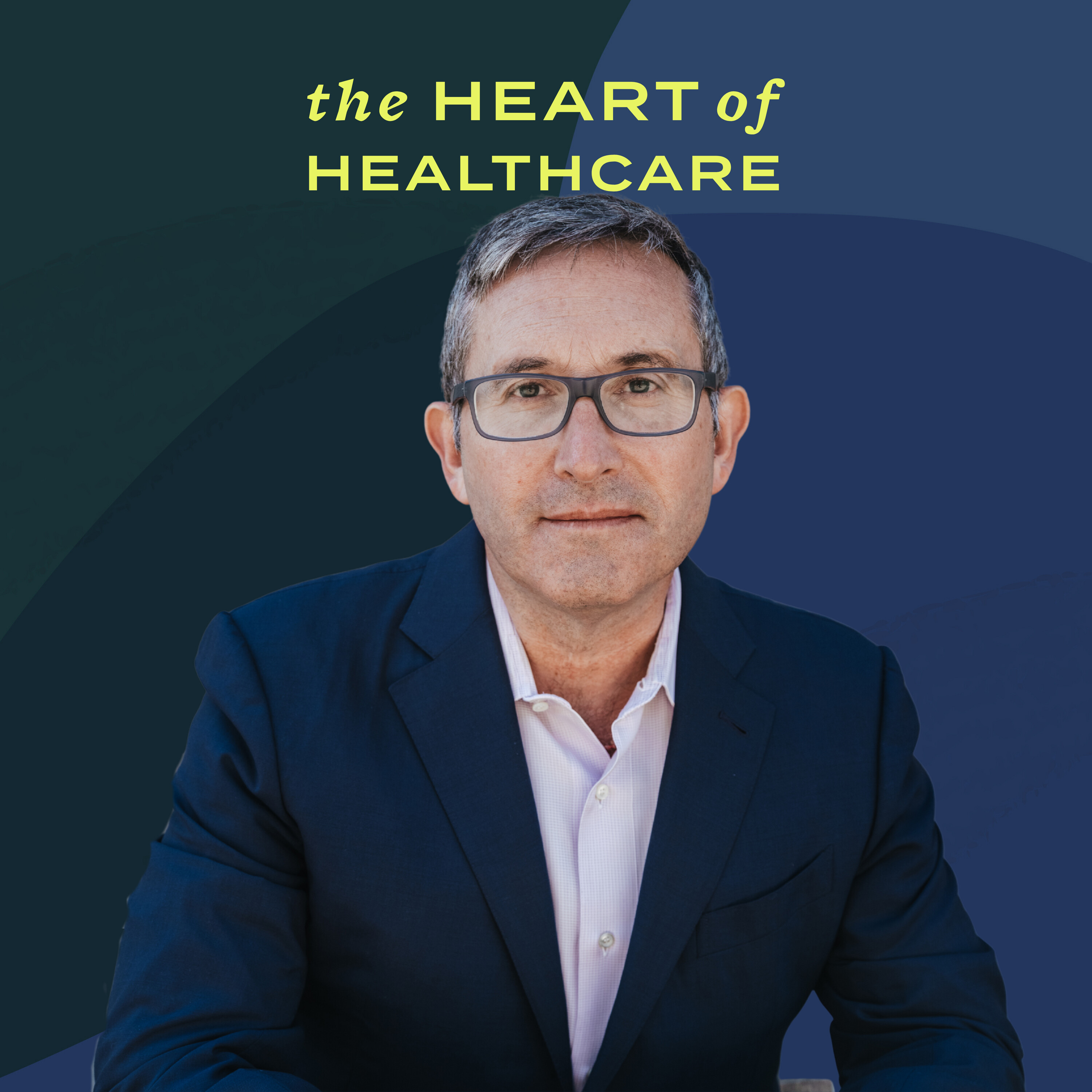
Tom Hale is CEO of Oura Health (founded in Finland in 2013). The hosts are Steve Krause, Michael Esquivel, and Hallie Tecko (podcast producers/hosts).
Doctor shortage means limited primary care time won’t change behavior; Oura helps by translating behavior into health impacts. Form factor enables consistent nighttime tracking. Symptom Radar predicts minor/major symptoms before people feel them.
Hale uses Symptom Radar while traveling to prevent getting sick; he cites reduced alcohol intake as a behavior change outcome. He describes Dexcom partnership showing blood sugar spikes vary with stress/sleep/exercise and individual differences. HRV tips include deep breathing/meditation and stress reduction.
Written by AI. May contain mistakes.
Exploration of the shortage of doctors in the U.S. and its implications.
“The reality of the healthcare industry is there's just simply not enough doctors to go around.”
Discussion about Oura's identity as a wearable health company and its growth.
“And every Monday, we bring you the latest in healthcare innovation as we sit down with entrepreneurs and industry experts.”
Tom Hale explains Oura's multifaceted approach to health and user engagement.
“So I will start by asking a question of you.”
Importance of focusing on user needs and the challenges of managing a diverse company.
“But maybe the one way I would answer it is that the way you manage it is you always look through the lens of the user.”
Exploration of what makes Oura's app compelling and user-friendly.
“The people who call on, I don't know, insurance companies are different from the people who call on the Department of Defense.”
Discussion on how Oura tracks health metrics and warns users of potential issues.
“Second thing, you don't know how you slept.”
Tom Hale discusses the design philosophy behind Oura's hardware and software.
“So one of the features of Aura that I think people are often both amazed by and then they fall in love with is this thing called symptom radar.”
Hosts share personal experiences with Oura and its impact on their lives.
“And this kind of accountability plus support is a really interesting, almost like tonality and maybe a personality of the product, which, by the way, is one of the things that people cite that they love about it.”
Discussion of personal experiences with Oura and other sleep devices.
“And we're going to get, by the way, your point about the lights and the doodads, my wife used it for Gen 1.”
The importance of data accuracy in fostering trust in health wearables.
“You know, if I've had a good readiness score the night before and I wake up and my active calorie burn is set at, I don't know, 700 or 750 active calorie burn, I sort of want to go and get it that day.”
How insights from wearables can influence health behaviors, including alcohol consumption.
“So you got to make sure that people are engaged.”
Oura's perspective on navigating wellness and medical device regulations.
“How does Aura think about regulatory issues and how do you guys navigate that?”
Overview of the partnership with Dexcom and its implications for health tracking.
“That's sort of almost the two sides of it.”
Learn how blood sugar monitoring can benefit both diabetics and non-diabetics.
“of those fluids and then gives you a value, which is your blood sugar level.”
Explore Oura's strategy to integrate into traditional healthcare systems.
“Hey, Tom, I imagine you as well as other leaders in the wearable market, well, I guess I imagine, maybe not, but that you ultimately want to continue to make a difference in human health.”
Discuss Oura's partnerships aimed at enhancing women's health monitoring.
“We have a partner in the Middle East called GluCare.”
Understand heart rate variability and actionable tips to improve it.
“It turns out one of the things mental health practitioners want to do is like, are you sleeping well?”
Learn the significance of heart rate variability as a personal health metric.
“listeners what are the two or three things you'd recommend to try to improve your HRV?”
Discussion on personal experiences with meditation and Oura's impact on health metrics.
“And I will say, final closing thought for our listeners on this topic.”

Get the gist, explore an idea or ask about something said.
 Claude
On The Heart of Healthcare | A Digital Health Podcast, what are the key points of this episode?
Searching your listeningAutomatic transcript. May contain errors.
0:00The reality of the healthcare industry is there's just simply not enough doctors to go around. If you were to take all the time of all the primary care physicians, you know, in the U.S., say, you might have 500 million hours of care that you could provide. Well, there's 330 million people in the U.S. So each person's going to get an hour and 20 minutes of care a year. That is just not enough to change someone's behavior. And our belief is that really the foundation of health is actually your behaviors. Today on the show, we're replaying an episode with Aura CEO Tom Hale. Next week, we'll be back with a back-to-school episode with Stanford University School of Medicine Dean Dr.
0:42Lloyd Minor.
0:46Welcome to the Heart of Healthcare podcast. I'm Hallie Teko. I'm Michael Esquivel. And I'm Steve Krause. And every Monday, we bring you the latest in healthcare innovation as we sit down with entrepreneurs and industry experts. So buckle up and join us as we figure out how to improve healthcare for all.
1:15Hello, listeners, and welcome back to the Heart of Healthcare podcast. I am your host, Steve Krause, and I am joined today by my friend and co-host, Michael Esquivel. Michael, how are you doing? Hey, Steve. Good to see you. Excited about today's conversation. Yeah, it's going to be a good one. We're very excited to have the chief executive officer of Aura, Tom Hale, on the pod as our guest today. For those who don't know, and I don't think it's many, as Aura is one of the leading wearable companies in the health and wellness space, They are known for their very cool-looking rings, which I'm sure you've seen on many people, which double as an activity tracker.
1:51And in fact, the company has already to date sold about$2.5 million, probably even more, of these rings in their history in just over a decade, might I add, and has grown top-line revenue to more than$500 million, again, in less than a decade. One of the leading companies in the digital health space. Really excited time to have you on the podcast. Welcome. Thank you, Steve. Thank you, Michael. It's nice to be here. All right. So I will start by asking a question of you. Is Aura a fitness company? Is it a wellness company? Is it a healthcare company? Is it a consumer company? Is it an enterprise company?
2:25Is it a hardware company? Is it a software company? How do you describe what Aura is? Well, I think the answer is it's a little bit of all of those things. But if you were to check the actual registry under which our name is officially lodged, it is Aura Health. And I think to kind of go across the areas, I think we started actually many years ago in 2013 in Finland with this idea that actually we were building a health company. meaning that we always knew that there was a strategy to say, let's build this form factor, ring, very comfortable, very small, very unobtrusive. Well, let's make sure we're focused on sleep because by the way, if you measure people's bodies at night, you get a really clean signal.
3:08There's no other confounding factors of daytime activity. You get a really good baseline and you can use that baseline to make predictions about what's going on in their health. And then we always had the vision of having a big impact on the world of health, both preventative health and ultimately kind of monitoring and managing populations, population level health. We always had that vision. So just to answer your question, yeah, it's a little bit of all of the above. And I'm curious, as a CEO, it's hard enough, as you know, to be an enterprise software CEO or executive, right? I mean, it's just you already have many stakeholders.
3:41You have your consumers. You have your employees. You have your customers. You have your shareholders. The list goes on and on. And I named off, I think, six or seven different things there that you are, that Orr is. Like, how do you manage all that as the chief executive of the company? Well, I guess if you're running a company that's a massively successful company, you're going to have to manage all those things. And obviously having a great team will do it. But maybe the one way I would answer it is that the way you manage it is you always look through the lens of the user. Because really, at the end of the day, let's say your employer bought you a ring.
4:14or maybe your insurance company bought you the ring because you're a Medicare Advantage customer. We have Medicare Advantage, people who provide the ring. Maybe you bought it yourself. Maybe someone gave it to you as a gift. All of that is great, except for the fact that you have to actually solve the need of the user and you have to engage the user and you have to keep them interested and you have to educate them because by the way, not everybody knows everything about themselves. We call it giving your body a voice. We give your body a voice, but we also educate you about what it's trying to say so that you can listen And then we tell you what the impact of your behaviors are so you can see the impact of your behaviors on your health.
4:48And we try and do that in a way that's accessible, whether you're a runner training for a marathon or you're somebody who has chronic fatigue syndrome or a man or a woman or all these ranges. Now, the thing that's sort of maybe embedded in your question a little bit is this idea of like, can you be both things? Can you be a consumer company? Can you be a healthcare company? Can you be a consumer company and be an enterprise company? And there are tensions. You know, I don't think we would minimize that at all. I do think, though, that if you look through the lens of the user and you serve the user and you keep them engaged and you deliver value, the rest of that stuff is really just about tactics and how you go to market.
5:27So the product needs to be meeting the user where they are, needs to be delivering value. And then the go-to-market is different. The people who call on, I don't know, insurance companies are different from the people who call on the Department of Defense. The people who call in our Department of Defense are different from the people who do the consumer marketing. That's basically the difference. What's so exciting, Tom, and thanks again for joining us today. What's so exciting is that with Aura and full transparency, I'm a power user. I absolutely love the product. One of the first things I do after I wake up in the morning and after I brush my teeth is take a look at my readiness and sleep scores.
6:03but there's something really compelling about this that you don't experience with other apps, especially in the healthcare space. There isn't that app fatigue and wondering like, what is the secret sauce that has made this so compelling? I'll give you a couple of ideas. We hear stories every day from people like you who said, yeah, I open up this application multiple times a day. It's the first thing I look at in the morning. It tells me how to plan my day or like, it's a really profound thing. I think some of the reasons why we've avoided app fatigue is as follows. I think one is that, interestingly, your health condition is multifaceted.
6:44Anybody's health is multifaceted. And by the way, if it's changing, then you're going to, if you're a woman and it's changing every 30 days, then that's interesting. And if you're a man and it's changing, you know, not every 30 days, but you're on some kind of journey, a fitness journey, a health journey, maybe you're recovering from an injury, that's interesting. So there's something about that. Now, I think that's a form of solipsism. It's a form of like, hey, I'm the most interesting user-generated content I can look at. It's me. So maybe that's part of it. But I think the really interesting things about it are this.
7:16One, sleep, turns out, is something that everybody is going to do at least once in a 24-hour period. And so there's this sort of, call it frequency of use that's mechanical because you're going to go to bed and you're going to wake up and we're going to tell you about it. That's the first thing. Second thing, you don't know how you slept. Okay, sure. You know if you slept terribly, you know if you woke up 40 times, but did you sleep well? Did you sleep? Putting that in terms that are kind of quantifiable and giving some dimension to that is really interesting because it sort of opens up a window on your health that you can't see or you don't feel or you don't experience.
7:49There are other elements to it. One of the things that I think happens in medicine, but also in apps, is they start looking down a very narrow telescope. And you start to get this kind of very narrow view. In healthcare, the form of this is like, I'm going to put you in a box. You're a diabetic. I'm going to put you in a box. You're training for a marathon. I'm going to put you in a box. You've got an injury. And that sort of model of interventionist medicine that puts you into a single category and then says, what's the right thing to do? What pharmaceutical should I give you? What surgery should I give you?
8:17And one of the things that we do is we actually allow you to move not just in between boxes, but maybe across boxes. So you can be a woman going through perimenopause who's having issues with sleep and is concerned about her heart health. And we can service all of those dimensions in one app experience. And you can be, you know, a woman who is in your young age trying to not get pregnant. And then you can say, you know what, I'm trying to get pregnant. And we can make it on that transition. And then we can take you into pregnancy because one of the things we do is we provide you insights about your body as you go through pregnancy.
8:49So it's this notion of change because change makes things interesting and reduces fatigue. The other thing that we do is breath. And, you know, we talked about this as sleep, stress, heart health, women's health, activity, understanding your metabolic. We do we integrate with CGMs. So we kind of give you all of these dimensions of your health and then help you make sense of them together. Unlike Michael, I'm not a power user. In fact, I'm not really a power user of any wearables. And so I'm going to sound like a VC who has not used the product and can make a comment. So I apologize. But I go for it because that's what you are.
9:23Exactly. Rain is the first time I've actually thought about it because I actually my what I think is really what the company got right was the form factor and linking it to sleep and that you don't take it off like you take off a watch. And I just think that form factor and obviously the battery life, the amazing stuff you've done there. To me, that's like, that strikes me as the unlock because we've seen so many wearables beforehand. The OGs like Fitbit and Misfit and, and, you know, then, you know, obviously we've got Whoop and others. But what's really unique, I think, is just the form factor.
9:53Is that fair? No, I didn't mention it because it seemed, it seemed pretty obvious. So, so congrats for picking that up. That's what I do too, Tom, as a VC. He's a VC, Tom. I say the obvious. I mean, that's like saying the sun's going to rise tomorrow. But no, but there's something really powerful about the obvious, which is that it turns out that many times that's the most important factor. I do think the form factor is critical. It's lightweight. It's small. It's good looking. Think about the things you don't take off your body. Well, you probably don't take off your wedding ring when you go to bed.
10:23Now, that's not true of your earrings or your necklace or if you're some other – maybe a watch. I think a watch is a great example. I mean, I have an Apple watch. I love it. I love my Apple watch. You know where it is every night? Yeah, charging. It's on my bed-sized table. It's charging because I use it during the day. And it has so much utility for the day that it runs out of battery by 630. And I'm not perfect. I don't always get it charged for a night. So you're right. That form factor is good. But the thing that the form factor unlocks, besides comfort and kind of ease, is that nighttime tracking.
10:53Because the power of aura is that we see night over night small deviations in your baseline. And those small deviations are the clues to what's actually going on. So one of the features of Aura that I think people are often both amazed by and then they fall in love with is this thing called symptom radar. And symptom radar basically looks across your temperature, your respiration, your HRV, and your heart rate, a couple of other things, and then says, hey, when we start to see a deviation that fits a certain pattern, we're going to kind of tell you that something's going on with your body. Can't tell you what it is.
11:26We can't predict what it is, but we can tell you that you've got either minor or major symptoms. And the thing is what that is is predictive because most people are like, oh, well, I don't feel anything. What is that? And then three days later, they're lying on the couch surrounded by Kleenex, and it blows their mind because what we just gave them was a piece of information that was predictive and correct. And I'll tell you how I use it. I travel a lot, and one of the things that happens is if I travel for two weeks, at the end, I start to get pretty run down. Yeah. And I can see that my body is like going, oh, you know, you're running out of steam.
12:00And I will do – I will literally like take an afternoon and be in my hotel room and drink fluids and not drink any coffee. And then I will not get sick. And, in fact, it has changed my life for the better because now when I travel, I don't get sick anymore. And that's because I can see it coming before it hits me. That's super cool. Because by the time it hits me, it is too late. I was going to actually ask you for one insight that you get. That's a really cool one. One follow-up question on the form factor, because it's also something that I admire about Aura. And I wonder if there was, for any, you talked about consumer being your North Star.
12:29You really need to nail it for consumer. And I assume that means both for the software as well as the hardware, by the way. And I'd say Aura, the aesthetic of Aura is better than most other wearables. I'm just curious about how you think about the aesthetic of the hardware and some of the journey there that you guys have taken. I – well, I think the company was founded in Finland and Finland has sort of a great tradition of both simplicity and clarity in design. That kind of reducing something down to its essence, I think that's really critical. I think there's also an element to which the frame that people put on this is they call it calm tech, which is that it really minimizes the sort of distractions.
13:09So there's a big kind of principle in finished life of like what you really want to do is you want to avoid all the distractions and make sure you're focusing your energy on the important things. And I think in the ring that the way that that takes shape is there's not a lot of lights and guggas and screens and vibrations and it's not constantly asking. And for a long time, we had a debate about should we even have notifications in the app? Because we're not there to engage you and nag you and make you feel bad or anything like that. It's like, we're here to calm and support you and to help you on your health journey in a way that's positive.
13:39And that became like both an aesthetic of the hardware, but also very much an aesthetic of the software. The tone of the software is supportive. And this kind of accountability plus support is a really interesting, almost like tonality and maybe a personality of the product, which, by the way, is one of the things that people cite that they love about it. That's so helpful. And we're going to get, by the way, your point about the lights and the doodads, my wife used it for Gen 1. I won't name the other company, but Gen 1 device. And she sleeps awesome. My wife is an amazing sleeper. I'm so jealous of her.
14:11She could sleep like a little less after kids, but she was epic. I'm a terrible sleeper. And so she had the device. And whenever she turned over, the device would light up the room. And I was awake for the next six hours. I was like, this thing sucks. You know, like unintended consequences. So I appreciate none of the lights and doodads. Thank you. Well, a quick aside on the form factor, I will tell you, I tried for the longest time, Tom, to wear the Apple Watch to bed. It was clunky. And after I had flopped around in the bed, as my wife reminds me, I frequently do and hit her enough times with the Apple Watch.
14:42She finally banned it from the bedroom. And when I got the Oura Ring, we've had no such issues, right? I love the simplicity of the design, the elegance of it. And Steve, to your point, for me, it's cool to have, to look at. You look so cool, Michael. It's very, very cool. You look so cool. That is not going to overcome the rest of my lawyer-ish tendencies, but certainly it definitely has got a very cool vibe to it. And the app is, it's really interesting, Tom, to hear you talk about that. You're right. I don't feel like I'm being judged, but I do feel motivation. You know, if I've had a good readiness score the night before and I wake up and my active calorie burn is set at, I don't know, 700 or 750 active calorie burn, I sort of want to go and get it that day.
15:25Or if symptom radar indicated I had some minor symptoms and I should back off that day, it kind of helps me plan my day a little bit in a way that none of the other apps can do because it's got all of this great data about me and how I slept. There's two things I just want to call out there, one of which is that the quality and accuracy of the data and the device are really fundamental to creating trust. I mean, the thing is, is that if you're going to make a prediction, you're going to give someone some advice or you're going to be supportive. You want them to trust it. And I think that's really one of the things that aura really gets right is that it really does get it right.
16:01Yeah. And so as a result, like if your readiness is low, you're like, God, I really trust it. I really believe that I should take today easy. And if we give you a symptom radar alert, you're like, oh, my gosh, I really should do something. That trust is so key. I think the other dimension of that is not just trust. It's that the experience itself is variable and fluid but also personalized to you. And so we try and do a lot of things to sort of make the insights that sort of – instead of just giving you numbers. And we try and put those numbers into context. And we try and give you some words around those numbers and make it kind of easy to consume and easy to understand.
16:39And I think that is so key. And maybe this is sort of wearables, you know, 1.0, 2.0, 3.0, where the wearables aren't there just to give you some values. meaning you took so many steps, your heart rate's this right now. It's there to give you kind of almost like a longitudinal picture of your health that's accessible, kind of like having a conversation with a doctor. And one of the very early sort of motivating principles for us was this idea that you could have a doctor in your pocket. Everyone's got this sort of supercomputer of a smartphone and everyone should have something on their body, which is measuring and interfacing with their physiology.
17:15And then there should be some machine intelligence that's overlooking that and saying, what's going on and interpreting that for you? Because the reality of the healthcare industry is there's just simply not enough doctors to go around. There's just not enough. If you were to take all the time of all the primary care physicians in the US, say, you might have 500 million hours of care that you could provide. Well, there's 330 million people in the US. So each person's going to get an hour and 20 minutes of care a year, that is just not enough to change someone's behavior. And our belief is that really the foundation of health is actually your behaviors.
17:53So how do you change someone's behavior? Well, you got to give them the information. They have to understand why. You got to give them motivation. You got to make them want to do it. So you got to make sure that people are engaged. They have to keep coming back to it. And you have to make sure that they trust it and that they see that what they're doing, the choices that they're making are affecting them. One of the big aha moments for me is that, you know what, what the number one result of putting an aura ring in on your body is, what the number one outcome of changed behavior is, can you guess?
18:20We, we, we are more active in our day. No, you, you would think, right? Right. It's actually people drink less alcohol. Yeah. Wow. I can see that. Oh my God. And by the way, this has now been quoted. Actually, I was listening to the earnings call of, of a beverage company who was blaming their poor results in the quarter on the oral ring, reducing the appetite for alcohol. And I think there's actually evidence that as particularly in a younger generation, you're starting to see this, the younger generation is just like, alcohol, what are you talking about? That's not for me. And the thing is that when you start to see how alcohol affects your biometrics and how your REM sleep goes to hell.
18:58And yes, we all know that if we have 12 tequilas, we're going to feel terrible the next day. But what about like a sip of wine or half a glass of wine? Can you tolerate that and not affect your metric. That's such like nuanced information that you now are armed with. And by the way, it changes behavior. People drink less. Yeah. It just makes you more mindful, Tom. I've seen that in my own behaviors, right? Just being more mindful of my days and what have you. I wanted to just quickly double click on that you said earlier was really around the accuracy of the data. Well, accuracy is foundational.
19:33I mean, and Steve, I know you've invested a lot of medical device companies. And so you know what the standards are that you change. So we aim to be clinical grade, but in a consumer package, that's kind of the recipe that we're aiming for. But there's some real reasons why that's possible. The first reason, of course, is where we measure on the human body. If you think about measuring at the wrist, particularly on the distal portion of the wrist, you've got sort of all these factors that make it harder and harder to use these sensors, most of which are light-based, to not have light pollution, not be confounded by hair, bone, sinew, to get a strong signal.
20:09This is actually on the return trip to the heart. It's not on the forward trip of the heart. And if you contrast that to the ring where the sensors are right here, you're looking through about two millimeters of uniform tissue. The blood flow is very close to the skin. It's arterial. You have a pulmonary artery goes right there, right underneath the sensors. If you think about it, when you go to the hospital, where do they put the sensor for you when you're at the hospital? Where do they put it? Clamp right on the index finger. That's because it's the first stop of blood flowing from the heart to a place that's convenient to sense from.
20:41So that's really powerful because this sort of AI and that machine learning that's looking at those signals and trying to make sense of them have more information in them. There's more data, not just raw data, but meaningful information. They can be withdrawn from that. So that accuracy is really fundamentally a function of where we measure on the human body. The other thing is that we have, and I think from the beginning, and I would credit the founders of the company with this sort of culture being like, it has to be the most accurate. And in order to do that, we need scientists and engineers to be motivated by that accuracy and to use that accuracy as the standard and say we will only aspire to the gold standard when we do sleep.
21:24The gold standard is polysopnography. We must find agreement and alignment with polysomnography that is better than any other device that we can possibly imagine. And sometimes we don't always get there, but, like, that's what we're aiming for. And that's supported by science. And it's supported by engineering. And that kind of orientation around precision and accuracy turns out it's the foundation for all these other things. Because if you have accurate data, then your predictions make more sense. Then your insights make more sense. You don't have these, like, things where it's like, well, I feel like crap.
21:55And you're telling me that like I should run, you know, I should run a marathon because that doesn't obviously make any sense from a user experience standpoint. So accuracy is key. I'm curious your guys' views on this issue. Obviously, you started off by answering my first question that you're a health care company, health care company that's focused on the consumer. And, you know, one of your competitors recently, Whoop, has gotten a letter from the FDA about how they market their product. Are they wellness? Are they software as a medical device? How does Aura think about regulatory issues and how do you guys navigate that?
22:32Are you a wellness company and you don't want to be regulated or actually you don't mind being regulated because that's just part of what happens when you're in the healthcare industry? I think it's a really great question. And I think our approach to it has been let's be regulated when it comes to the places that need to be regulated. So for example, for our fertile window feature, which basically is a feature that predicts when your date of ovulation is and on either side of that a couple of days, when you're likely to be most fertile. And couples that are trying to conceive use that as a way to target when they should have intercourse.
23:03And the thing is, is that that is a class one medical device. By the way, class one medical device, not a huge bar, but it is, you know, it's software as a medical device. And there's lots of rules about that. We have a deeper relationship with the FDA. We've always approached with like, hey, here's the research. Here's the clinical data. You tell us if we meet the bar or not. You tell us what we should say. We do think of ourselves from a regulatory standpoint as a wellness device, but maybe right on that boundary of a wellness device and clinical. And can you explain for our listeners what that means?
23:34Because that strikes me as the gray area right now. Well, no, it's not. It's not a gray area at all. It's actually really clear. It's actually really clear. Because if you're regulated as a wellness device, there are certain things that you cannot say. You can't say we're going to give you a clinically validated piece of information that you should make a medical decision on. In fact, you'll see this at the bottom of every wellness device and company has little things that don't use us for medical purposes. And so it's all about disclaimers about being a wellness. You can't use marketing like this is medical grade data or.
24:09Exactly. You can't. You know, I'll give you an example. Like one of the things in Aura, we don't give you an absolute temperature value, right? What we give you is the temperature trend and a deviation from your baseline plus or minus. And so what it can tell you is that like, hey, you know, your temperature is really actually kind of elevated. It's elevated two and a quarter degrees from your baseline. What we don't say is your temperature is 99.6. And the reason why is because that's a thermometer and a thermometer is a medical device. Because somebody might say, based on that temperature reading, I'm going to give you an antibiotic.
24:42I'm going to give you an NAS-NAD. I'm going to give you whatever I'm going to give you. And the thing is that that is a medical decision. Now, that being said, will people make decisions on the back of the information? We can probably, but we're not making any claims about that, which is, of course, the FDA's role and the regulation is there to be safe and effective. So that's what the FDA cares about. Now, that being said, when there are things that are really important to be, call it clinical grade, our path is to go through the SAMD, software as a medical device path. And that's because what we want to be able to say is like, hey, this is legit.
25:17You should trust it. You should count on it. And I think increasingly, the upside of that is that people can trust it. And weirdly, clinicians trust Aura a lot. And I'll give you this interesting stat. So we were looking at our customer base and trying to figure out the constituency of the customer base. One of the things that we noticed was that 11 % of our customers were self-described clinicians of one form or another. And we were like, well, that's really fascinating. What is the preponderance of clinicians in the general population? Well, depending on how you measure, it's either 4 % or 5 % or 6%.
25:51So we're roughly two times over index, meaning clinicians are wearing Oura rings more than there are clinicians in the population. Wow, that's really interesting. And we investigated and it turns out a lot of clinicians really, they trust the accuracy of the ORA ring. They see the benefit. They've experienced the benefit like Michael has all that stuff. So all of that is to say that in some sense, what we're trying to say is, look, you can trust it. But you should know that we're not a medical device. Now, here's the interesting thing. The other side of it is if you want to innovate and you want to move quickly, not crazy quickly, not move fast and break things quickly, being in the wellness space allows you greater degrees of freedom to move quickly.
26:37Because if you create a medical device and you instantiate that, even in software, the moment that you change it, the moment that you rev, fix a bug, introduce a new feature, add it, you have to go through an entire process of revalidation. And that revalidation means collecting data and assembling that data and going before the FDA and then showing the data and then answering questions about the data. So one of the reasons why I think Aura has been very successful is that we're able to move at a very, very rapid pace, at least relative to other medical devices. That's sort of almost the two sides of it.
27:09It's this kind of velocity that I think being a wellness device enables, but also recognizing that being as accurate as a clinical-grade device, or I hate to say it, in some cases, more accurate, it is really powerful because it delivers on the promise of something that a clinician might want to endorse or use or embrace in their practice. For sure. So Tom, along those lines, as you guys sort of span that spectrum between medical grade and clinical grade, et cetera, you know, would you tell us a little bit about the exciting Dexcom partnership that you all entered into? I think it was finalized late last year and maybe in the first half of this year, you guys unveiled it or rolled it out into the app.
27:47I think the first thing is from a basics perspective, what's a continuous glucose monitor? A continuous glucose monitor is a device that's worn on your body. It uses subcutaneous fluids that are interstitial underneath the skin, and it makes a measurement of those fluids and then gives you a value, which is your blood sugar level. And the value, of course, knowing your blood sugar, of course, is if you're diabetic, what you want to avoid are massive spikes. and you want to make sure that you are, you know, if you are a diabetic, you're dosing insulin off the back of those values. And so now there's a whole system of like the blood sugar monitor and your pump working together to dose insulin.
28:24Now, that's also valuable for people who don't have diabetes. Those could be people who don't dose insulin. Those could be people who are pre-diabetic. Those could be people who are looking to optimize the way that they consume fuel to understand more about their nutrition. So our partnership has really been about, hey, how do we think about helping people understand the parts of their body they can't see? If I asked you guys to estimate your blood sugar right now, you would come up with some numbers. They would be wildly wrong, and I guarantee you don't have the inputs to make an assessment of that.
28:52So, again, it's one of these things that are invisible being made visible. But what you quickly learn once you apply one of these sensors is that your behaviors really affect your blood sugar. You can have the same meal, you know, the same meal, and on a day that you're stressed or a day that you worked out or a day you didn't work out or a day that you slept well or a day that you slept great, and you might have different values in terms of blood sugar half an hour after eating that meal. Same meal, same person, different environment. And so those interactions between those behaviors and blood sugar are really interesting to understand.
29:26The other thing, of course, is that not everybody is the same. For years, medicine has been practiced on the averages, and those averages, by the way, established by studies that were done in many, many cases years and years ago, mostly on white males of a certain age because that's how research was done. And guess what? That doesn't account for the fact that, Michael, your DNA and phenotype are different than mine and that your health history, Steve, is different from Michael's and mine. And the day that you had yesterday, which was stressful, and the day I had yesterday, which was stressful, is different from Michael's.
30:00Everyone's different and in a different state at any given time. And so one of the things that's really powerful about a blood sugar monitor is that you start to learn, wow, not everyone's the same. Not everything is the same. But what is driving my blood sugar spikes? Now, why do you care about blood sugar spikes at all? Well, thank you, Peter Atiyah. His premise is one of the ways that you increase your health span is to keep your blood sugar within a certain range. And so what people see is they learn what foods, and I'll give you my personal example. You learn what foods spike your blood sugar.
30:31And the thing is the surprising result is that not everything behaves the same way. So our partnership with Dexcom is our application, which has all this information about your physiology, displays the information from your Dexcom sensor, your CGM in the app and helps you make sense of it. Hey, Tom, I imagine you as well as other leaders in the wearable market, well, I guess I imagine, maybe not, but that you ultimately want to continue to make a difference in human health. and I would posit that you already are, but in order to make the real impact, you're gonna have to move more into the traditional enterprise of healthcare.
31:12And by the way, it makes sense. If you think about what you're doing, a lot of what Orr is doing, others are doing, is really preventative medicine. And preventative medicine and consumer engagement in value-based care is like the ultimate holy grail, right? Because if you can get consumers involved in their care and get them focused on preventative medicine, you save a lot of costs as well as improve quality of life. So I imagine that's on your 10-year product roadmap and go-to-market roadmap and commercial roadmap, but how do you get there? Yeah, you're absolutely right. I think it starts with maybe preventative care and preventative health and educating people on healthy behaviors and how to reinforce that.
31:48What's interesting is I think it's always been part of the company strategy to become part of, call it the healthcare industry, broadly read, to be reimbursed by payers, to be something that doctors might prescribe, to be a clinical grade medical device that people would trust and use the values to make clinical decisions. That's always been part of our vision. What's interesting is we've been laying the groundwork for that for years. So for example, a couple of years ago, we crossed the bar for being HIPAA compliant and we made all the investments to be HIPAA compliant in our systems. We've always made privacy has always been kind of like a non-negotiable for us, but HIPAA is a certain set of requirements that require portability things like that.
32:29We also have always known that the channel to reach, whether it's a hospital or a doctor or a clinic or an insurer, is going to be different than go to our website or go to Best Buy and buy a ring. It's not the same channel. So we've been building that channel. We have a chief medical officer, a guy named Dr. Ricky Bloomfield, and he has been filling out his team with specialists who are clinicians in each area. So we have the clinical knowledge and the clinical credibility to approach healthcare in the way that healthcare and maybe the industry would like to be approached. Now, what's interesting, and this is the insight for me, is that we always thought it was like on our three-year plan.
33:04And what's happened is we've been pulled in that direction faster than I anticipated. And I'll give you a couple examples. So one is Essence, Medicare Advantage provider, small plan, 65 ,000, 70 ,000 lives under management. They came to us and they said, we want to roll this out to our Medicare Advantage customers. And we want to include the ring and we want the data to flow back to our clinicians because we can see and where we believe that if we catch people at the beginning part of their life as a Medicare Advantage customer, that we can have, in fact, impact on their behavior and that will be actually economically favorable for us because they're at the moment where things start to go wrong, physiologically speaking.
33:44And if we can intervene earlier or if we can get them to do healthy behaviors, we will have lower costs. Because of course, one of the challenges and maybe opportunities around Medicare Advantage is that you're catching people at age 65 and then they often don't change insurers. They had this real insight. Now, the thing is we started with a pilot in January. We rolled it out for the first folks in January. They've come back to us and they're like, we want to roll it out to everybody. So they're pulling us. And by the way, you can imagine that if they're successful and they are, everybody else wants this too.
34:16So we're starting to see this pull in this direction. The other thing we've been very proactive about is thinking about women's health, for example, because of course, women's health, chronically understudied, perimenopause and menopause poorly understood clinicians feeling you know like they're misunderstood patients feeling like they don't they get gaslit by their by their clinicians is a really fertile ground forgive me for saying so but a fertile ground for aura so we've partnered with the maven clinic maven will be able to provide aura rings to their customers and they will sync that data back to the maven platform for the basics like sleep activity and stress But also we'll get their care teams that the Maven care teams provide will be will be directed towards them with the knowledge of their aura data.
35:01We have a partner in the Middle East called GluCare. They are a medicated weight loss and diabetes clinic. And every one of their patients gets an aura ring because they put a CGM and an aura ring. And then they now have something to discuss with customers and their patients about changing their behavior. So we're starting to get pulled in this direction in a way that's really exciting. But we're also pushing, meaning we're starting to say, hey, look, where does Oura Ring really fit in and how can we make that fit into a care pathway? Where does it make sense? Does it make sense in fertility? Yes, absolutely.
35:34Does it make sense in mental health? Yes, absolutely. It turns out one of the things mental health practitioners want to do is like, are you sleeping well? Yep. And can we solve those problems first? Because if we do, then our other therapies are going to work better. and in heart health, like understanding someone's pulse wave velocity, which is a, you know, a measure that aura can make about that basically predicts the stiffness of your arteries. Well, everyone knows this. If your arteries are occluded and stiff, what are you on the prime for? Well, you're marching down the path towards a stroke or a myocardial infarction.
36:05So all these things are sort of indicative of us getting pulled in this direction as well as us pushing in that direction. And it's been really exciting to see those partnerships come to roost. And I think you're going to see in the next 24 months, I think you're going to see some really transformative things happen in that space. So Tom, one final question. One of the metrics that colloquially a lot of us struggle with is HRV. Could you give us, so I've used Advisor, could you give our listeners what are the two or three things you'd recommend to try to improve your HRV? I was at an event recently with one of your product leads, Jason Oberfest, and we spent quite a bit of time I'm riffing a bit on HRV.
36:42And if our co-host Hallie Teckle were on with us today, she would say, Michael, how do we get our HRV up? What do we do to improve it? And so what are two or three tidbits you might leave listeners with that they might focus on to improve that metric? Yeah. I mean, HRV is an incredibly powerful metric. It also moves very rapidly. And because it's a fast-moving metric, it's highly engaging. People like to chase the elusive HRV high that they can get. And can you explain to our listeners what it is or even to our hosts who are not power users? So HRV, heart rate variability, is a measure of the degree of change in between heartbeats and what's called the interbeat interval.
37:24So you think about your heartbeat, your heartbeat kind of goes bum, bum, bum, bum. And if you're stressed, actually, it's like dun, dun, dun, dun, dun, dun, dun. It's not very variable. But when you're relaxed, and I'll explain why in a second, it might be 1 ,000 milliseconds. It might be 900 milliseconds between the next beat. And then the next beat might be 880 milliseconds. The next one might be 920 milliseconds. And the next one might be 100, you know, 1 ,000 milliseconds. And then 1 ,020 milliseconds. And there's looking at that kind of degree of variability is interestingly a predictor of kind of the state of your nervous system.
37:56Because effectively what it's measuring is a simplistic view, is that you have two sides of your nervous system. You've got your fight or flight nervous system and you've got your rest and digest nervous system. and both of them have kind of inputs into your heartbeat. For example, if you're being chased by a lion, and evolutionary speaking, that used to happen. When that was happening, your body's flooded with cortisol and adrenaline where your heartbeat goes like this, and you don't have much variability in your heartbeat. And then when you're relaxed, you're asleep, you've got no stimuli, there are no lions, your body's going through some autonomic processes like digestion or recovery or going through a sleep cycle of deep sleep and then shifting over to the cognitive repair of REM sleep.
38:34you actually find this sort of loose and almost like more fluid difference between your heartbeats. So that's HRV. So generally the way to think about it, a higher HRV shows your body is in a lower stress state and a lower HRV is that your body is in a greater stress state. And one of the ways people use it is for recovery. If I worked out really, really hard yesterday, my HRV will be depressed and then I will know when my HRV recovers to baseline that I'm actually ready to push again. And for athletes who are training, this is one of the fundamental uses of HRV. HRV is also super predictive of like your mental state.
39:09One of the ways that we look at stress, we look at temperature, respiration, heart rate, resting heart rate, and HRV for our stress assessment is that if you're boom, boom, boom, whatever it is, your physiology is stressed. And that could be illness. That could be a bad meeting with your boss. It could be something going on in the world, whatever it is. We can see these metrics move. Now, that's HRV. I hope that was not too long of an explanation, but it gives you the sense. How do you affect it? Well, in the very near term, literally, us three right now, we could stop talking and we could take 20 deep breaths and we would elevate our HRV.
39:45And we could sit for 20 minutes and we could meditate and we could elevate our HRV. And we could reduce the amount of our stress in our lives by all the factors. Maybe it's spending some time with your pet or with your family or whatever, and we could increase our HRV. Now, over the long term, those are sort of like call it temporal responses of your physiology to things that reduce stress. The things that really move it over the long term. Turns out it's actually incredibly broad, which is why it's such an interesting metric to people because they can change things. You can consume less alcohol and you can watch your HRV go like this.
40:19You can decide to start working out and you can see your HRV kind of go like this. The people who have the off the charts HRV are always these performance athletes who are in endurance sports. And that's partially because their heart has been trained by all of the training that they do, their physiological training, to be something that doesn't operate in a way that reduces the variability of their heartbeat. You can see it in, you know, it's funny, I had a meeting with Deepak Chopra. And for him, it's his meditation practice. His meditation practice is, you can see it in the HRV of him and the people that he teaches meditation to.
40:55I am also really curious about the impacts of diet and nutrition on HRV. One thing, and many people ask me this is like, well, how come my HRV isn't as high as Steve or as Michael's, right? And the thing is like, it's not a race. It's actually, it's a very personal metric. And the way you should think about it is that as you age, the graph looks something like this. You know, you start with the highest HRV when you're very young, and then it drops pretty precipitously down to your 20s. And then in your 20s, the curve bends a little bit. It sort of gets lower and lower and lower until you get to your 60s.
41:27And oddly, in the data, in your mid-60s, it kind of picks back up a little bit. And we don't know the reason for that. I speculate that it has something to do with retirement and kind of other factors of life that reduce stress from your life. But we don't know that as a fact. So that kind of curve. So basically, the way to think about it is you say, where am I in my life? And then what are the bans for a normal male and a normal female? Because it turns out men generally have higher HRV than women. What are the bands that am I within those bands? As opposed to saying, I need to get to 130 HRV.
41:58And boy, that seems really hard because my body's telling me all the time that I'm at 50 or a 40. How is that, Michael? Helpful? Very helpful, Tom. And I will say, final closing thought for our listeners on this topic. I have started just three minutes a night of meditation before I go to bed. And I've watched my HRV spike over the last three weeks doing that. So it's been really fascinating to see. And I'm very, very personally intrigued by that metric. Tom, this is a master class in Aura and the wearables and the healthcare and what it means for our industry. I really appreciate it. I'm going to go out and buy an Aura.
42:32I really worry, though, that my HRV score is going to be so bad now. So I think I need to meditate before I go buy the Aura. But I'm smart, excited. I love how you're thinking. I'm excited to do so. So thank you so much for coming on. This is a great episode. I appreciate you sharing all that makes Aura so special. My pleasure. Thanks for having me, guys.
42:58Thanks for listening to The Heart of Healthcare. If you enjoyed this episode and you'd like to support the podcast, please leave a rating and review. And don't forget to subscribe. The Heart of Healthcare is produced by Hallie Tecko and hosted by Michael Esquivel, Steve Krauss, and Hallie Tecko. The show is engineered, edited, and mixed by Kyle Moore. Visit our website, heartofhealthcarepodcast.com, for show notes and details.
We're on summer break and replaying one of our favorite episodes. This episode originally aired on September 22, 2025.
A wearable can collect endless data, but it only matters if people trust it enough to change their behavior.
In this replay, Oura CEO Tom Hale joins Steve and Michael to explain how the company combines clinical-grade accuracy with a consumer-friendly product. They discuss why the ring’s form factor makes overnight tracking so powerful, how Oura turns physiological signals into useful guidance, and why the company is being pulled faster than expected into traditional healthcare.
We cover:
—
About our guest:
Tom Hale is the Chief Executive Officer at ŌURA and a member of its board. As the CEO he sets the company’s business strategy and vision to make health a daily practice for members all over the world. He has over 30 years of experience across the technology and consumer product industry.
Before joining ŌURA, Hale was president of Momentive where he drove B2B strategy and led product growth. During his time there he was instrumental in taking the company public in 2018, leading the team in key acquisitions, and driving the evolution and rebranding of the company into a multiple SAAS business. Previously, he held leadership roles at HomeAway and Linden Lab as the Chief Operating Officer and Chief Product Officer, respectively, and held executive roles at Macromedia and Adobe.
Hale has a Bachelor of Arts from Harvard University and sits on the boards of Cars.com, RocketReach, and NoiseAware.
—
If you're enjoying the show, we would so appreciate it if you left us a review!
—
📍 Connect with us:
See Privacy Policy at https://art19.com/privacy and California Privacy Notice at https://art19.com/privacy#do-not-sell-my-info.