Ask ChatGPT
 The Heart of Healthcare | A Digital Health Podcast
17 Aug 2026 · 40m · 17 chapters
How Stanford Medical School is preparing future physicians for decades of practice amid generative AI, patient self-education, and evolving medical education; also discusses lifelong learning, precision medicine/precision health, and AI-enabled clinical workflows.
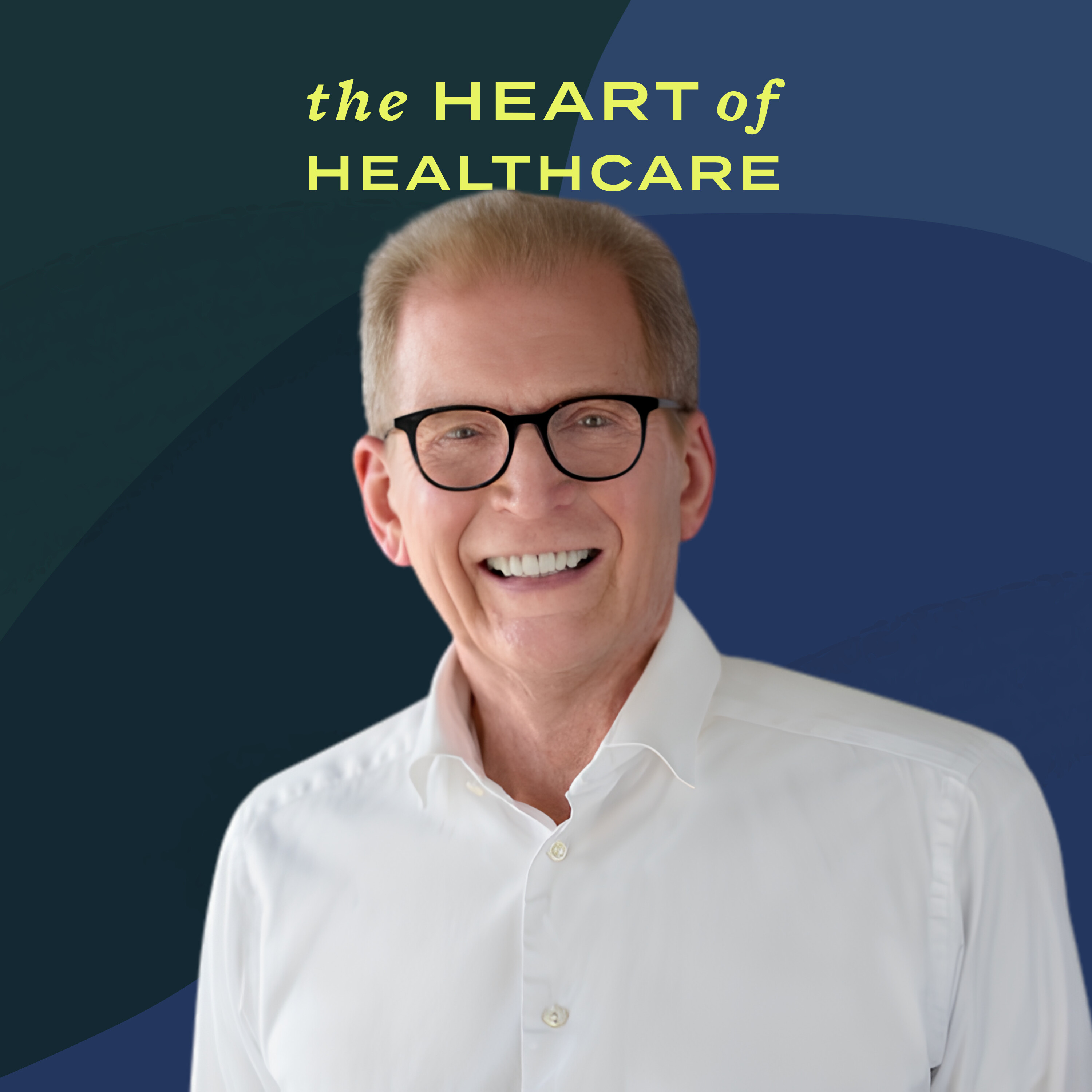
Dr. Lloyd Minor, Dean of Stanford University School of Medicine. Background in biomedical research and academic medicine; also board chair for the Alice Walton School of Medicine (Bentonville, Arkansas).
Medical education can’t “flip a switch” away from knowledge, but must teach how generative AI works, how to prompt, and when to return to primary sources. Assessment is shifting (closed-book/in-person exams and problem-solving with limited AI access). The biggest blind spot is inability to predict the future—so training must emphasize lifelong learning. AI can improve throughput and reduce anxiety by using tech for triage and documentation.
AI-powered tumor boards for lung cancer (agents analyzing radiology, pathology, and patient health to surface trials and link findings); ambient AI drafting discharge summaries and clinic notes; precision medicine already tailoring breast cancer therapy to tumor mutations/receptor expression; GLP-1s improving obesity outcomes.
Written by AI. May contain mistakes.
Discussion on how generative AI is transforming the knowledge acquisition in medical education.
“Welcome to the Heart of Healthcare podcast.”
Exploration of changes in Stanford's curriculum over the past five years and the incorporation of AI.
“Physician education has traditionally been mainly a knowledge-based process, particularly the work that we do in medical school and the learning that our students do.”
Discussion on the qualities and attributes sought in medical students amidst changing times.
“Like, give us a sense of Stanford Medical School's curriculum five years ago versus today in terms of the role of teaching what you just talked about, how to use AI responsibly in the practice of medicine.”
Addressing the balance between educating practicing physicians and students pursuing non-traditional paths.
“I know we're going to talk a lot about AI and innovation.”
Insights into the current landscape and challenges of precision medicine and health.
“15 years ago, when I was starting Rock Health, my co-founder, who I met in my MBA program, was doing an MD MBA.”
Learn about the evolving focus on precision health and health span.
“with much more focus on prediction and prevention than the U.S.”
Discussion on financing precision health within a fee-for-service system.
“How do we incorporate broadly everything that we know and that we're learning about the determinants of health in order to, for each of us, increase our health span?”
Explore how consumer involvement in healthcare has changed over the years.
“health, I think should be a major area of focus for us in medicine and in public health moving forward.”
Examine how AI is changing the way patients interact with doctors.
“And in the early days of my career, when I was just starting out and made a major discovery of an inner ear disorder and developed a surgical procedure to fix it.”
Learn about AI's potential to streamline healthcare processes.
“In other cases, maybe what we can do to our lifestyle to reduce the risk of disease or to improve our management of a disease if we already have it.”
Discussion on how AI can better triage and treat patients.
“Now, most of our physicians use ambient AI in preparing a note from an encounter from a visit to the clinic.”
Insights into how AI is revolutionizing cancer treatment practices.
“better triage and treat and then help manage.”
Understanding whether AI technology will become deflationary in healthcare.
“I love that example because, you know, where I thought you were going in that example is time savings, but you actually went to better accuracy, better quality, and then democratization and access.”
Learn how technology influences healthcare costs and patient outcomes.
“First of all, you've got to roll out the technology.”
Explore the misalignment of incentives in healthcare and its effects.
“And so, especially when it comes to preventive health, you know, you need the patients engaged to actually realize the ultimate outcome.”
Discuss the future landscape of NIH funding and its impact on research.
“I think at the end of the day, I hope that we are always doing the right things by our patients.”
Understand how to foster innovation in medical education and research.
“What I loved is you yourself are a research scientist, entrepreneur, I mean, or like at least someone who put a discovery out into the world, an innovator.”

Get the gist, explore an idea or ask about something said.
 Claude
On The Heart of Healthcare | A Digital Health Podcast, what are the key points of this episode?
Searching your listeningAutomatic transcript. May contain errors.
0:00Dr.
0:01Dr. Lloyd Minor: Lloyd Minor.
0:30Dr. Lloyd Minor: And that knowledge acquisition process is being profoundly changed by generative AI. This week, for our Back to School episode, Hallie and Steve talk to Stanford University School of Medicine Dean, Dr. Lloyd Minor.
0:49Welcome to the Heart of Healthcare podcast. I'm Hallie Teko. I'm Michael Esquivel. And I'm Steve Krause. And every Monday, we bring you the latest in healthcare innovation. as we sit down with entrepreneurs and industry experts. So buckle up and join us as we figure out how to improve healthcare for all.
1:18Hello, listeners, and welcome back to the show. Today is our back to school episode, And Steve and I are talking with a special guest, Dr. Lloyd Miner, Dean of Stanford University School of Medicine. Dr. Miner, welcome to the show.
1:35Dr. Lloyd Minor: Thank you very much, Hallie. It's great to be here. Yeah, welcome, Dr. Miner. Such a great guest to have as we all think about heading back to school. I think this month, next month, about 90 new students will walk through the doors of Stanford Medical School. You are clearly one of the top medical schools, have the brightest minds in the country, admit less than like 1 % of applicants. These students, when they graduate, will be practicing medicine probably in the year 2030, and many will be caring for patients probably well into the 2070s, if you can believe it or not. You have four years with them.
2:13That's a long time for now. By the way, I think I'll be 94 at that point. How do you prepare these bright minds for the future that they'll be working in?
2:21Dr. Lloyd Minor: Yes, Steve, thank you. It's a great question. And I think the impact that AI is having in all aspects of our lives, certainly for us in medicine and the impact it's having in patient care and research and very importantly in education, which we're going to talk about today, that impact we're only beginning to explore and understand. Physician education has traditionally been mainly a knowledge-based process, particularly the work that we do in medical school and the learning that our students do. It's learning a body of knowledge. It's somewhat akin to learning a foreign language. You learn a foreign language, you have to learn the vocabulary, you have to learn the grammar, and then you have to use the vocabulary and the grammar to communicate.
3:05Dr. Lloyd Minor: Well, in medical education, you need to learn the physiology, the biochemistry, the pharmacology, the anatomy, and then you need to put that together and be able to use it to diagnose and treat patients and interact with patients. And that knowledge acquisition process is being profoundly changed by generative AI. So exploring that, now, we wouldn't want to just flip a switch and say, okay, we'll move away entirely from a knowledge-based curriculum. You can check everything you want to through your favorite AI model and get all the information you need and just go out and do what you need to do.
3:40Dr. Lloyd Minor: No one's suggesting that. But we do need to incorporate, first and foremost, an understanding of how generative AI works, how to structure prompts, how to interact both with a compiled set of information as comes from a generative AI model, and then how to go back to primary source material. And when you need to go back to primary source material, and what do you hope to get from primary source material that you're not getting from a roll-up that comes from a large language model? I mean, obviously you sit there in the heart of Silicon Valley and have probably one of the most unique purchase as it applies to medical training and AI.
4:20And yet my instinct is probably most institutions are just by nature of how fast and furious it's coming are probably behind the ball. Like, give us a sense of Stanford Medical School's curriculum five years ago versus today in terms of the role of teaching what you just talked about, how to use AI responsibly in the practice of medicine. Like, how far have you come in five years and how far do you have to go to catch up?
4:48Dr. Lloyd Minor: I think we have further to go than we've come today. And I think that's true for us. I think it's true everywhere. And partly is, as I said before, we don't want to just flip a switch and say, okay, we're going to do something totally different. But here are some things that are different today. Our students are using large language models for lots and lots of different things. We've left it up to instructors who know their body of knowledge better than anyone as to how we assess a student's understanding of a topic. Some of our instructors have moved back to in-person exams or exams that are closed internet, closed book.
5:28Dr. Lloyd Minor: Others have figured out ways to move to problem-solving exams that some access to large language models is allowed. We've also incorporated an education in how large language models work, not to the level that those developing the models understand them, but to more of a level than the lay person would typically get. And we made that curriculum available to everyone. So if you just go to the web and search Stanford Medical School AI curriculum, you can see a lot of the videos and other source material that we've prepared and made available to everyone. But we're still early in this process, early in the evolution of how medical education is going to change because of large language models.
6:14How has it changed the sort of student that you want at Stanford Medical School as you're looking through all of these applications? Are you looking for different attributes today because of how medicine is changing so quickly?
6:30Dr. Lloyd Minor: Hallie, I think fundamentally we're looking for the same thing, and I hope we always will, in the following ways. Obviously, we look for students who are bright and who are motivated, students who've defined an area of passion. And some of those, many of those will be an area of passion in science, but not necessarily. It may be an area of passion in a humanistic endeavor. But every student brings something different in their personality and their abilities and their interests to medical school. And that's wonderful. And very importantly, we're looking for students who want to make a difference and who want to make a difference working with people, Being able to communicate with others, being able to show compassion and empathy, and really have a fundamental desire to improve the human condition, that's an important attribute that we look for in admitting students to medical school.
7:22Dr. Lloyd Minor: I think those attributes have been fundamentally the same for decades. How they manifest themselves in a student's background, how students present themselves to us in the application process, that can change somewhat as fields evolve. But the fundamental attributes, I think, are the same as they were in the past, and I hope will continue to be the same in the future. I know we're going to talk a lot about AI and innovation. How could we not with where you're sitting today? But beyond AI, what do you think the biggest blind spot is in medical education today? Yeah, that's a good question, Steve.
8:00Dr. Lloyd Minor: I think the biggest blind spot is our inability to really predict the future. And you said it in your introduction, the students that will be starting here in a few weeks are going to be practicing physicians for 40 plus years. they may have, and they probably will have, different iterations of their career, of their activities over the course of those decades. But how do we best prepare them during this more formal stage of their education to make sure that they can educate themselves for decades to come? Now, for those that are going to do clinical practice, they're going to do some sort of internship residency fellowship after medical school.
8:43Dr. Lloyd Minor: But even for them, how do we in medical school, really prepare them to be lifelong learners. And that's difficult because the way in which we learn already has changed dramatically just in the relatively short period of time that we've had access to large language models. And we know it's going to change even more as these models evolve and as agents develop and as our interactions become more and more fluid and impactful with Charative AI? I have a question. 15 years ago, when I was starting Rock Health, my co-founder, who I met in my MBA program, was doing an MD MBA. And the medical school was so disappointed that he didn't do his residency and go on to practice.
9:31Today, that feels very common. There are more MD founders or early startup employees that never practice, get their MD and then decide to go into industry. I'm sure you especially see that at Stanford with all the opportunities at Silicon Valley. How do you really calculate that into accepting students? Because we obviously have a shortage of clinicians in the U.S. And we need people that are practicing. I'm just curious if you can tell me kind of your thoughts on that and how you approach that and balance that.
10:09Dr. Lloyd Minor: First, we design a curriculum and we are educating physicians. And that means we design the curriculum of medical school and we prepare our students to be practicing physicians. Yes, to be licensed to practice medicine, you need to do something for at least a year after medical school, some sort of a residency internship in order to be licensed. And I would be concerned if a very large fraction of our students did not move into residency and fellowship positions for the reasons you just stated. There is a physician shortage in the United States. There are a variety of different things that are being done to address that, both at Stanford and elsewhere, also how we define the role of advanced practice providers and others, how we look at the evolving role of physicians, particularly in the era of AI.
11:01Dr. Lloyd Minor: I'm very proud of all of our students. I'm proud of our students who develop a passion for business, for something outside of the practice of medicine. But the fundamental intent of MD education is to train physicians. And I want us to retain that focus moving forward. We've also been involved with, very actively involved with the Alice Walton School of Medicine in Bentonville, Arkansas. I'm the board chair for that medical school. I'm a native Arkansan and had the privilege of working with Alice Walton in the evolution of the concept for the medical school, the founding of the medical school, the recruitment of the inaugural dean.
11:41Dr. Lloyd Minor: And we've helped to develop the curriculum of that school. And the focus of that school is to train physicians who will practice in the heartland of America, in particular in Arkansas and the surrounding states. So there are a lot of ways that we can have impact on training the physician workforce. And I want us to continue to look at increasing that impact moving forward. Yeah. You've written a lot academically about precision medicine. And obviously, this is a topic that Hallie and I have had many guests on the podcast who are entrepreneurs or experts in the field. I mean, you talked about not knowing how long things take in healthcare when you answer one of our questions and trying to predict the future.
12:21Where do you think we are in precision medicine? And it's probably been 40 years since we've been talking about precision medicine as a system, and yet we're not really there. And I don't think the promise has been realized. So what do you think the gaining factors have been, given this is an area of immense interest and study for you?
12:37Dr. Lloyd Minor: There are several different ways to look at precision medicine and also I'll talk about precision health. In some areas, precision medicine is really in full plumage today. A patient, for example, with breast cancer is going to have essentially anywhere they're treated today, in America certainly, is going to have a treatment tailored to the molecular characteristics of their tumor and other things pertaining to their health. In other words, it will not be an off-the-shelf, okay, every person with breast cancer gets the following approach. The therapies increasingly are targeted for specific gene mutations or receptor expression, and as a result, the outcomes have become much better.
13:23Dr. Lloyd Minor: And that approach is now generalizing to several other cancers as well and will be even more applicable in the future as more and more drugs to treat cancer in a targeted fashion become available for the benefit of patients. And we've seen also, we've seen the rollout of precision medicine in other severe acute diseases as well. What we started working on a number of years ago, and we articulated this vision in March of 2020, if you look in the background over my shoulder, there's a book, Precision Health. We articulated a vision to predict, prevent, and cure disease precisely, but in that order, with much more focus on prediction and prevention than the U.S.
14:08Dr. Lloyd Minor: healthcare system has traditionally had in the past. That vision remains vibrant. And today, our ability to screen for early signs of disease is much greater than it has been and will continue to increase. And also, our ability to predict a person's propensity for a particular disease is greater. And so, we can design strategies to prevent that disease from occurring or, if we can't prevent it entirely, to detect it earlier and treat it much more effectively. Now, the next evolution, I think, of that vision of precision health, predict, prevent, and cure precisely, but in that order, the next vision really is to start focusing on health span.
14:50Dr. Lloyd Minor: How do we incorporate broadly everything that we know and that we're learning about the determinants of health in order to, for each of us, increase our health span? And that's an area we're focused on developing now. And stay tuned. I think we'll have more to say about that very soon. That makes my public health heart warm to hear that. But we know that the core economics of prevention are extremely challenging. And public health is woefully underfunded. It has always been underfunded and worsening in this country. How do you think we can actually finance precision health inside of our fee-for-service system that pays for sick visits and not really health visits?
15:36Dr. Lloyd Minor: I think there's several ways. One is getting the word out about what each of us can do to maintain our health. And also, we're still in the relatively early days of GLP-1 agonists and related drugs. And we've already seen a profound impact on obesity. That will continue. And now, of course, oral agents are becoming available. A lot of these agents are still on patent. They will, over time, become generic. When statins were first introduced to lower cholesterol and therefore lower the risk of heart attack, access to those drugs was not as available as it is today. Still, we face the problem now that statins are widely available and relatively or very inexpensive.
16:20Dr. Lloyd Minor: We still face the challenge that it's only a small proportion of Americans who need to be on statins, we have clear evidence that it would lower their risk of heart attack who actually are receiving the drugs. So how we communicate, how we involve patients and consumers, all of us are consumers, all of us are patients, how we involve each of us in our health care more and build up the base of knowledge and also responsibility that each of us has for our health, I think should be a major area of focus for us in medicine and in public health moving forward. Yeah. Well, you actually bring up a thing that I just, the conversation led me to, which is it relates both to your work in wanting prevention and precision, as well as sort of the medical school training.
17:03And so it's sort of a two-part question is I've actually been shocked and I don't know all the reasons why, but consumers are getting a lot more involved in their health these days than I presume they were when you were practicing. And I'm curious, one, that's good for prevention because they're a key part of the equation, right? In terms of managing their health and staying on top of it. But two, how do you, has the way you train doctors changed now that one consumers, and it's not just a Silicon Valley tech bro thing, it's sort of spreading right now that consumers are getting more involved in the health and they're involved in every other part of their economy.
17:35Right. So that's happening. I mean, two, probably they're coming to doctors nowadays with a lot more things that they found either through open AI or chat H-E-B-T or Pernovo or their or rain or, or, or, or, or. Like, have you guys developed curriculum to help doctors deal with that and confront that?
17:54Dr. Lloyd Minor: You know, this started really with the internet. And in the early days of my career, when I was just starting out and made a major discovery of an inner ear disorder and developed a surgical procedure to fix it. But in the late 90s, early 2000s, most patients were coming to see me. They diagnosed themselves from doing an internet search, from doing a Google search. They would type in their symptoms and they would get one of the websites that we or other institutions had set up to describe the syndrome, its diagnosis and treatment. It takes a while for things to permeate the medical practice ecosystem.
18:31Dr. Lloyd Minor: Now, that whole process is being supercharged with AI. And we know of people, for example, that feed in their medical records. I'm not recommending that it be done, but that provide their medical records to a large language model and get a synopsis, a summary of the records prepared, as well as a suggestion on next steps. And people come into their doctors with, well, this is what Dr. Filling, your favorite large language model, told me to do. I think that's a good thing. First of all, it keeps us as healthcare professionals on our toes. Second, it shows, and it's back to what Steve and Howie, you were both saying, and that is that there needs to be collectively more engagement and involvement of each of us with our health.
19:17Dr. Lloyd Minor: And that first manifests itself as understanding the determinants of health, and then ultimately deciding how we do something about it. And in some cases, it may be getting a treatment or a prescription drug from a physician. In other cases, maybe what we can do to our lifestyle to reduce the risk of disease or to improve our management of a disease if we already have it. Yeah. Last week on the show, we actually talked about how AI tends to, for liability reasons, tell you to go talk to your clinician, to go to the ER, to go, you know, to take it seriously. But that can also lead to the system being overburdened by small incidents that aren't actually critical.
20:03How do we balance that for patients? Because the tools that are helping us better manage our health are also giving us more anxiety about our health. Right.
20:15Dr. Lloyd Minor: I think that that is a dilemma. I think as the large language models become better and better at delivering recommendations, as we get more fluid in the healthcare delivery system of bringing people in with sort of a background understanding of where they are in their health journey at a single point in time, you know, a lot of an encounter between a healthcare professional and a patient today is spent on getting background information, sort of coming up to speed with the medical record, taking a medical history, if that can be done more efficiently and effectively and accurately through engaging with technology in advance of a face-to-face or electronic face-to-face encounter between a provider and a patient, that will help improve the throughput and the accuracy of the system.
21:10Dr. Lloyd Minor: You know, let me give you an example. Now, most of our physicians use ambient AI in preparing a note from an encounter from a visit to the clinic. Can we ask which one they use? We have contracts with a variety of different systems. We've tried to not just select one vendor, but that almost to a person. I mean, there are a few people who have not liked using it, but very few. Most people, after you get used to it, it's been such a time saver. It's helped in improving the accuracy of how the encounter is documented. And it's made it possible for the physician or other healthcare professional to really communicate with a patient during the encounter in ways that you just can't do if you're typing on the computer a note at the time you're seeing the patient.
22:01Dr. Lloyd Minor: Similarly, every patient that comes into the hospital when they're discharged home or to another facility, they have to have a discharge summary. Now, many, most of those discharge summaries are being prepared first by a large language model. They have to be reviewed for accuracy by a healthcare professional, just as a note from an outpatient encounter has to be reviewed for accuracy. But this too is improving the efficiency of the system. So I think as we make the system more efficient, the types of things that you brought up, that is patients who doctor, and fill in the name of your large language model, says that you should go see your doctor about this.
22:41Dr. Lloyd Minor: It should be more fluid to get you the appointment you need to have, and also to have the appointment really focused on the matter at hand and not on getting all the background information, which should already be assimilated and ready for the healthcare provider. So it's like the answer to AI anxiety is that the healthcare system needs to also use AI to better triage and treat and then help manage. So the answer all comes back to using technology. The technology creates the problems and hopefully it'll solve the problems. But what it ultimately means to me is that we are going to continue to have many, many more touch points with our health than ever before.
23:25Dr. Lloyd Minor: That's exactly right. I mean, and I think that's a good thing because getting each of us engage with our health in ways that many people have not been engaged in the past, I think is going to lead to benefit. What are some of the cutting edge, I mean, you talked about Ambien Scribes. I'm sure there's other solutions you guys must be evaluating, piloting, implementing live with, but what are some of the cutting edge AI tools that you're excited about? Not actual names of companies, but use cases that really excite you as you think forward five years, not today or tomorrow, but five years, 10 years from now when it comes to practice of medicine?
24:04Dr. Lloyd Minor: Sure. Let me mention a few. We have a large and growing cancer center here at Stanford. We treat a lot of patients with cancer. We were a comprehensive cancer center. So yes, we get some straightforward cancers. We also get some very, very complicated cancers in patients who are quite sick. It's traditional for the more complicated tumors, patients with more complicated tumors, that those patients' cases are going to be presented at a tumor board. A tumor board includes experts from medical oncology, surgical oncology, typically radiation oncology. There'll be pharmacists who have expertise in the drugs and radiologists and pathologists, and they meet.
24:49Dr. Lloyd Minor: They meet and they discuss each patient and the patient's history and the findings, and they discuss the treatment options. Now, and we've pioneered this first in our lung thoracic oncology tumor board, now those discussions are being powered by AI. So our scientists here, our data scientists here, have developed an agent focusing on the radiology of patients with lung tumors. A separate agent looking at the pathology of those tumors, an agent looking at the sort of overall health of the individual, how it compares to other individuals. Then those agents communicate with each other and they provide a synopsis to the care delivery team in advance of the presentation of the patient to the tumor board.
25:40Dr. Lloyd Minor: and our physicians who are running the tumor board have found this so beneficial because oftentimes the AI review, if you will, is able to find clinical trials that may be applicable that people were not necessarily aware of. It's able to find relationships between the pathology and the radiology that maybe might not have come out just in interaction between the experts and those two specialties. Now, that's in one tumor group, lung oncology. Now, the next step is to extend it to a variety of different tumor groups. And then, very importantly, to build it far outside of Stanford. One of the things, and we haven't talked about it much yet today, but one of the things that excites me the most about the application of AI in medicine is that it should have a democratizing effect on the access to highly specialized care, and it should improve the access to that care in ways that we've only dreamed about in the past.
26:41Dr. Lloyd Minor: And certainly, I think the sort of digital health revolution helped to get that process started, but it's going to be taken to the next level because of AI. And so now, a physician without direct access to a comprehensive cancer center at some point in the not too distant future should have access to the analytical resources that I've just described because of the AI connectivity. I love that example because, you know, where I thought you were going in that example is time savings, but you actually went to better accuracy, better quality, and then democratization and access. So that was a great example.
27:19I do have a question for you. It's something that we've talked about with lots of different AI experts, folks like yourselves, you know, investors, entrepreneurs. In your seat, when you look at the AI today and you think about in the future, like today, AI has been inflationary, right? And we all operate in an industry that's, you know, COLA, cost of living plus, you know, four, five, six, 7 % sometimes in terms of the inflation increase, right? Do you believe AI technology will ultimately become deflationary? And if so, from your purview, how? Yes.
27:52Dr. Lloyd Minor: And many, maybe even most technologies introduced in medicine are initially very inflationary. First of all, you've got to roll out the technology. So if it's a device, you've got to get the device at a variety of different health centers. And then device manufacturers have to recoup the R &D costs associated with getting the device in the hands of clinicians. And so up front, they usually are inflationary. And then as they start to roll out and as their utilization really starts to impact outcomes, then they become deflationary. I mean, we've seen that in so many areas. We started out under precision medicine.
28:37Dr. Lloyd Minor: We were talking about breast cancer. First of all, the outcomes for the treatment of patients with breast cancer are much better than they were a decade ago. and there are many studies that have shown that in many cases, the cost of that treatment is less also because you're able to go to the right therapy up front rather than, I mean, from the human... So not as much waste, not as much waste in your... Totally, totally. You're doing the right thing for the right... You're doing the right thing for the patient. You're doing also the right thing in terms of the cost of care. I think AI will be the same thing, that overall, as it's being implemented, it is very likely to be inflationary.
29:17Dr. Lloyd Minor: Although, just the example we mentioned before, generating a discharge summary. For a patient who's been in the hospital a week, a physician, other healthcare professional could spend easily 20 to 30 minutes writing the discharge summary. If that is immediately prepared and the healthcare provider spends three minutes, five minutes reviewing it and signing it, that's freed up time. And time is the most precious resource in the healthcare delivery system. Yeah, the only thing I'd add, which I like how our conversations interlink so much, is that historically, I think our system has failed at engaging patients.
29:53And so if AI engages patients, we know that patients involved in every other part of the economy generally drive down cost, right? And so, especially when it comes to preventive health, you know, you need the patients engaged to actually realize the ultimate outcome. So if AI helps do that, my guess is patients don't drop off care. They're much more involved in the care to the point you're making, and you might ultimately have better outcomes, which theoretically should drive down costs. So we'll see. I want to dive into the example that you gave of picking the right treatment first and how that saves money for the system.
30:25That saves money for the patient, for the payer. But if you were a certain type of provider, you would actually be making less money by using that product that helps better tailor treatment. I think we see that across healthcare in a lot of ways where we have a problem of the incentives not aligning and what might be good for one stakeholder is not necessarily good for the other. How do we square that?
30:51Dr. Lloyd Minor: But we've seen that throughout the history of medical technology and medical advances. For example, before percutaneous angioplasty and stents, there were a lot more coronary artery bypass surgeries that were done. There still are some because not every coronary artery lesion is amenable to angioplasty and stenting. But many are. And there are clear studies that show that the outcomes are better. If you have a stentable lesion, the outcomes are going to be better if you go down that treatment route rather than going immediately to coronary artery bypass grafting. Now, does that mean we don't, that heart surgeons are put out of business?
31:34Dr. Lloyd Minor: No. They're doing more and more complicated things now. And so they have a different, many of them have a different practice than they did 30 years ago, but there still are great heart surgeons. And there still is a need for heart surgeons as we move into treating more and more complex cardiac disease. So that's one example. There are many, many others. I think at the end of the day, I hope that we are always doing the right things by our patients. and doing the right things means bringing the right therapies to them. And if that's a less invasive therapy, if that's a less expensive therapy, then that's precisely what we should be doing.
32:15Dr. Lloyd Minor: And I think maybe with the exception of a few counterexamples that we might be able to think of, I think that's the way medicine has advanced in our country. You wear a lot of hats. We've talked about some of them. You're an employer, a large employer. You're a major center for care in America. You train physicians. You train entrepreneurs, medical entrepreneurs. You're a huge center for research. And obviously, everyone knows in this country, it's been a tough sledding with NIH cuts. And I'd just be curious. I'd love to stick on that part of your job and your role. What do you tell a 30-year-old brilliant scientist today who wants to make a career in NIH-funded research?
33:02It must be a huge bummer right now. How do you guys think about that, and how do you help young researchers navigate these waters?
33:11Dr. Lloyd Minor: We continue to attract amazingly talented young people to fields in biomedicine, both physicians, PhDs, MD-PhDs, physician assistant programs. So the talent is there. People are still interested in health professions. There's never been a better time to be doing biomedical research than today. The confluence of knowledge about biology and the studies of biology with technology and the ways the application of technologies to getting more and more information about living systems, along with the third component being data science, in particular AI, that virtuous triangle of biology, technology, AI, data science, is driving innovation and driving progress in truly transformative ways.
34:03Dr. Lloyd Minor: There are uncertainties in the system for sure. I'm an optimist by nature. I also believe that Americans realize that a lot of good has come to our country. A lot of good to the health of people in our country and the world has come from work sponsored by the NIH. And I think that the NIH will continue to be a major supporter and funder of biomedical research in the country. What I loved is you yourself are a research scientist, entrepreneur, I mean, or like at least someone who put a discovery out into the world, an innovator. Thank you, Hallie. And yet we know a lot of the papers don't actually turn into reality.
34:44They just somewhere along the way die, meet inertia, don't get funded. What do you think is the one thing, if you had a magic wand and you were ahead of whatever to decide how to improve innovation, what would you do?
35:01Dr. Lloyd Minor: Well, I think there are several components to building an environment that encourages and fosters innovation. One is attracting and retaining really talented, bright people who are passionate about making a difference and who really devote their time, their energy, their intellect to discovery and not to making incremental advances, but really thinking about the fundamental new advances that change fields. So that's one. But it sounds like you feel pretty good about that. It sounds like you feel like the supply of talent has never been better. That's right. And then you have to provide them with the support.
35:41Dr. Lloyd Minor: So why do we have buildings? Why do we have infrastructure? It's to enable people to do their very best work. At Stanford, most of our academic medical center is on the campus of the university. And so we have collaborations with faculty in the engineering school, in the chemistry department, the biology department. So the other component of innovation is it traditionally is interdisciplinary. It's not innovation occurs best. And the most profound examples are when you bring in techniques or knowledge or approaches from another discipline and you apply them in a novel way to your host discipline.
36:20Dr. Lloyd Minor: And I think Stanford lends itself very well to that because of our co-localization and because we have a strong interdisciplinary, multidisciplinary spirit here at the university. So those are some of the attributes that I think are essential for innovation. certainly having resources to be able to enable people to get things started. Because by definition, if you're doing something really innovative, you don't have a lot or any preliminary data and you're not following just a conventional line of thought. You're really trying to think or develop something that's fundamentally new. Stanford has one of the most beautiful campuses in the world.
36:58It has the reputation. It feels like it's compounding. It attracts innovators. the innovators support each other. You inherited a ball that was already rolling in the right direction. Now, you are on the board of a brand new medical school at the Alice Walton School that you were talking about. How are you advising them on creating an innovative environment so that their students can have the next breakthroughs?
37:27Dr. Lloyd Minor: We're doing that in several ways, Hallie. One is that we have a group of our faculty who spend time there, principally training their faculty. But also, we have developed mentorship opportunities with a cohort of faculty here at Stanford who are working actively with students at Awesome, the Alice Walton School of Medicine, on research projects on, it is a great name, research projects on thinking about their careers, on deciding how they're going to have impact. We're doing this side by side with the dean of the Alice Walton School of Medicine and other faculty there. But being available, helping develop the curriculum, helping in the development of the clinical skills course to teach the students how to do a physical exam, how to take a history, how to assimilate medical information, to come up with a diagnosis and treatment plan.
38:22Dr. Lloyd Minor: Those are all things we put a lot of time and effort into developing here, and we're happy to share them with the Alice Walton School of Medicine. And we'll also be engaged and involved as a healthcare delivery system is built in Northwest Arkansas, also supported by Alice Walton and her foundation. I'm sure they're excited about having some of Stanford's magic rub off on their new medical school. Well, it's exciting for us and it's also very helpful to us as we see what we need to do to make the techniques, the innovation that we develop here to make it generally applicable and impactful outside of our institution.
39:04Awesome. Dr. Miner, thank you so much. It was a pleasure. Thank you. Appreciate all the work you guys do.
39:17Thanks for listening to The Heart of Healthcare. If you enjoyed this episode and you'd like to support the podcast, please leave a rating and review. And don't forget to subscribe. The Heart of Healthcare is produced by Hallie Tecko and hosted by Michael Esquivel, Steve Krauss, and Hallie Tecko. The show is engineered, edited, and mixed by Kyle Moore. Visit our website, heartofhealthcarepodcast.com, for show notes and details.
39:47Thank you.
It's back-to-school szn, and while some kids are stressing over earlier wake-ups, this year's incoming medical students have a bigger question to answer: how do you train for a career that could still have you practicing medicine in the 2070s, when the tools of medicine are changing so rapidly?
For our back-to-school episode, we sat down with Stanford University School of Medicine Dean Dr. Lloyd Minor to talk about how AI is already reshaping what future doctors learn and how they're taught, as well as what's still not working in American healthcare.
We cover:
About our guest:
Lloyd B. Minor, MD, is a scientist, surgeon, and academic leader. He is the Carl and Elizabeth Naumann Dean of the Stanford University School of Medicine and Vice President for Medical Affairs at Stanford University. Dr. Minor also is a professor of Otolaryngology–Head and Neck Surgery and a professor of Bioengineering and of Neurobiology, by courtesy, at Stanford University.
As dean, Dr. Minor has had an integral role in setting strategy for the clinical enterprise of Stanford Medicine, an academic medical center that includes the Stanford University School of Medicine, Stanford Health Care, and Stanford Medicine Children’s Health. With his leadership, Stanford Medicine leads the biomedical revolution in Precision Health. His book, “Discovering Precision Health,” describes this shift to more preventive, personalized health care and highlights how biomedical advances are dramatically improving our ability to treat and cure complex diseases. In 2021, Dr. Minor articulated and began realizing a bold vision to transform the future of life sciences at Stanford University and beyond – a multi-decade journey enabled by Precision Health.
In August 2023, Dr. Minor was appointed Vice President for Medical Affairs to lead all matters related to health and medicine at Stanford University.
Before Stanford, Dr. Minor was provost and senior vice president for academic affairs of Johns Hopkins University. Prior to this appointment in 2009, Dr. Minor served as the Andelot Professor and director (chair) of the Department of Otolaryngology–Head and Neck Surgery in the Johns Hopkins University School of Medicine and otolaryngologist-in-chief of The Johns Hopkins Hospital.
With more than 160 published articles and chapters, Dr. Minor is an expert in balance and inner ear disorders perhaps best known for discovering superior canal dehiscence syndrome, a debilitating disorder characterized by sound- or pressure-induced dizziness. He subsequently developed a surgical procedure that corrects the problem and alleviates symptoms.
In 2012, Dr. Minor was elected to the National Academy of Medicine.
—
📍 Connect with us:
See Privacy Policy at https://art19.com/privacy and California Privacy Notice at https://art19.com/privacy#do-not-sell-my-info.