Ask ChatGPT
 The Heart of Healthcare | A Digital Health Podcast
7 Sep 2026 · 41m · 23 chapters

Why American workers pay so much for healthcare, arguing that “healthcare isn’t expensive” but profiteering, price gouging, administrative bloat, and fraud are. The episode promotes community-owned health plans that rebuild employer healthcare around primary care and remove middlemen (especially PBMs and certain hospital pricing).
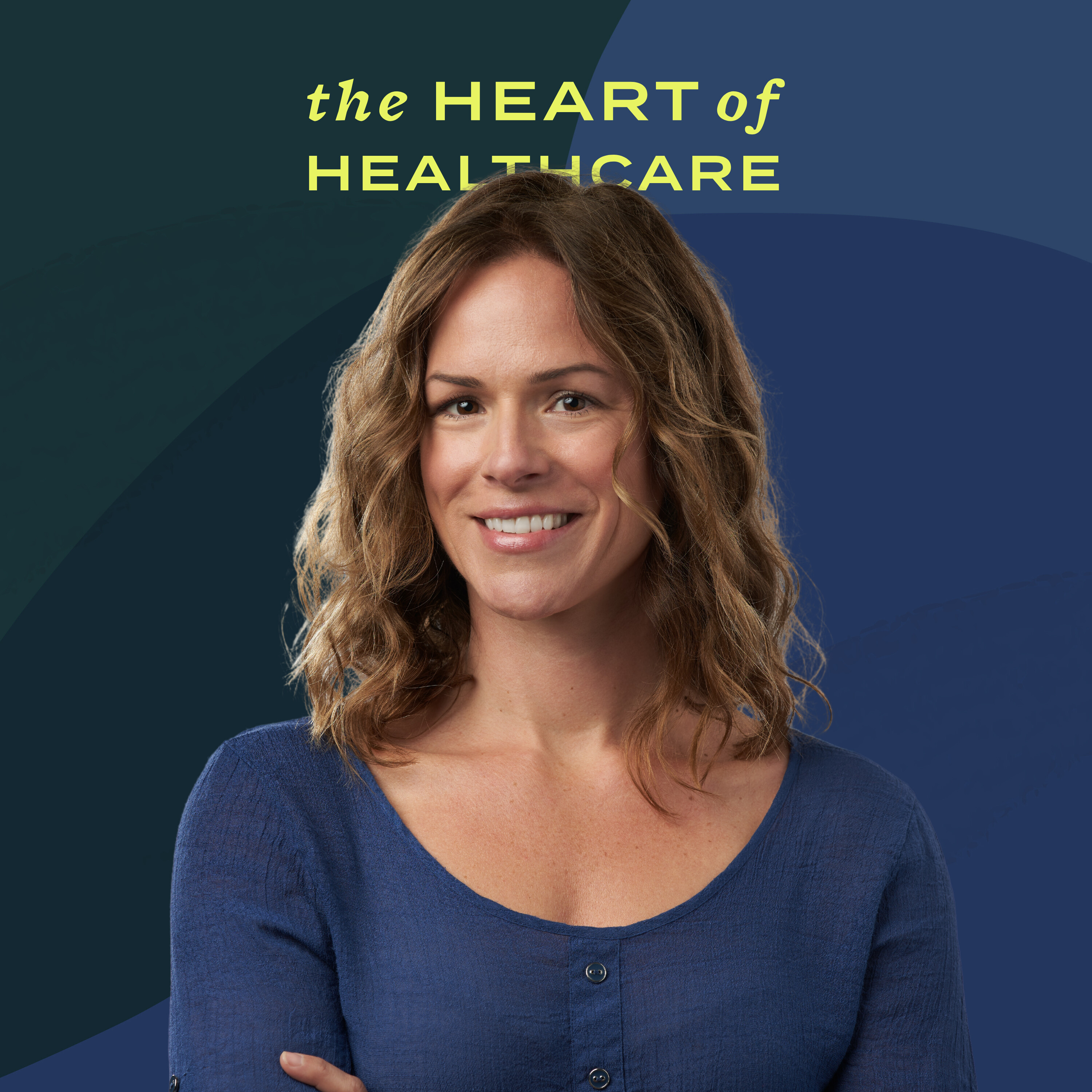
Dave Chase is co-founder and CEO of Health Rosetta. He previously co-founded Avado (acquired by WebMD/Medscape) and helped start Microsoft’s $30B healthcare ecosystem.
Clinicians receive about 25–27 cents of each healthcare dollar; PPO networks can obligate higher prices; PBMs can earn more per medication than manufacturers. Community plans cap profit via spend-based structures and redirect savings back to communities. Employer-based coverage traces to WWII wage controls.
Rosen Hotels saved $540M over decades, spent less per capita (55% less), and reinvested in employees’ kids’ college and local education; Florida hospitals are cited as charging 5–10x Medicare rates.
Written by AI. May contain mistakes.
Explore the real reasons behind high healthcare costs in America.
“Clinicians are only getting 25, 27 cents of every dollar ostensibly spent on healthcare.”
Introduction of Dave Chase and his role in community-owned health plans.
“Here's Hallie's conversation with Dave Chase.”
Dave Chase explains the concept and benefits of community-owned health plans.
“I'm Hallie Teko, and today I'm talking to Dave Chase.”
Discussing the essential components and failures of traditional health insurance.
“separate legal entity, but they're all on the same platform.”
Exploring the influence of pharmacy benefit managers on drug costs.
“Yeah, I mean, we've kind of forgotten what it's there for, which is actually health.”
How communities can reclaim healthcare funds for better outcomes.
“Some of the biggest companies in the world are in this category called pharmacy benefit managers.”
Rosen Hotels' success in implementing community health models.
“And that's where just incredible things happen when you do that.”
Discussing the issue of price gouging in Florida's healthcare system.
“But the scale that works the best that we've seen around the world is at the scale of kind of like a congressional water school fire district, like 50 to 500 ,000, big enough, but not too big.”
Exploring the historical context of health benefits being tied to jobs.
“And the headwaters of that river are the community itself.”
Explore how employment ties health benefits to jobs and the challenges of a remote workforce.
“of our health benefits being tied to employment, right?”
Learn about the origins of employment-based health benefits dating back to WWII.
“Where do you see this going in terms of the proportion of employers that you think will move towards a community-owned health plan in the coming years?”
Understand the differences between self-funded and fully insured health plans.
“And then the fully insured, which I think is somewhat misnamed, but that's what people think everybody has.”
Discuss strategies to manage high-cost healthcare risks for employers.
“And unless you want to pay a 40, 50 % premium, you can budget for that stuff.”
Explore the need for long-term investments in health and social determinants of health.
“I mean, it's probably 10, 12 really big high cost areas.”
Analyze the connection between primary care failures and the opioid crisis.
“I mean, education, pay, those are two of the biggest drivers of health outcomes in America.”
Discover the emergence of direct primary care as an alternative to traditional health plans.
“I think you're the one who recommended the book Dreamland to me.”
Explore the shift towards direct primary care models and their implications.
“Better than nothing, but it's literally designed around that primary care organization I was alluding to earlier that we help build a plan.”
Understand how bureaucracy affects clinicians and patient care.
“They are so frustrated by the time spent on billing and going back and forth with health plans.”
Dave Chase reflects on his past in health tech and its adverse effects.
“Like that's how bad the current system has gotten.”
Learn how new models can replace outdated systems in healthcare.
“It's all codified in those health plans.”
Discuss how legal documents shape health plans and their governance.
“I mean, basically the process of ingesting claims, like the most uninteresting thing you could probably ever bring up at a cocktail party, but like it really matters.”
Examine the influence of class action lawsuits on healthcare dynamics.
“Baked into every model is that employers will be the dupes of our system, and that's been a good bet.”
Discover the potential of community-owned health plans to transform healthcare.
“And when you try to solve them at a global scale, it's just incredibly hard, or national scale.”

Get the gist, explore an idea or ask about something said.
 Claude
On The Heart of Healthcare | A Digital Health Podcast, what are the key points of this episode?
Searching your listeningAutomatic transcript. May contain errors.
0:00So healthcare is not expensive. Clinicians are only getting 25, 27 cents of every dollar ostensibly spent on healthcare. What's expensive is profiteering and price gouging and administrative bloat and fraud. And we just choose not to participate in those schemes. And when you could rebuild from the ground up, you don't have to. And that's where just incredible things happen when you do that. Hello, listeners, and happy Labor Day. This is Steve Krauss, one of your co-hosts at the Heart of Healthcare. Excited to announce that next week we have a new episode for you with Anthropics' new lead of healthcare product, Sarah Russell.
0:36But today we're taking time off with our families to celebrate the holiday, and we wanted to share this favorite episode from our archives. Labor Day is about honoring the dignity and value of work, and few things undermine the dignity more than regressive healthcare system with its crippling costs. No matter how you cut it, workers pay for rising healthcare costs through lower wages and record high premiums. This year alone, average premiums rose to$24 ,540 for a family and costs are expected to go up 9 % again next year, the highest increase in 17 years. It's a real issue. So we thought we'd replay this episode with Dave Chase about the concept of community-owned health plans and what happens when we rebuild employer healthcare from the ground up around primary care and cutting out the middlemen who profit from these rising costs.
1:25So on this Labor Day, as we think about what workers deserve from the systems built around them, here's a look back at our conversation about giving them exactly that. Here's Hallie's conversation with Dave Chase. We hope you enjoy.
1:42Welcome to the Heart of Healthcare podcast. I'm Hallie Teko. I'm Michael Esquivel. And I'm Steve Krause. And every Monday, we bring you the latest in healthcare innovation as we sit down with entrepreneurs and industry experts. So buckle up and join us as we figure out how to improve healthcare for all.
2:11Hello, listeners, and welcome back to the Heart of Healthcare podcast. I'm Hallie Teko, and today I'm talking to Dave Chase. Dave is a co-founder and CEO of Health Rosetta, which has popularized the fascinating concept of community-owned health plans. His goal is to turn health plans from the number one driver of debt, poverty, and bankruptcy to a driver of well-being and wealth, something we can all get behind. Dave, welcome to the show. Thanks so much for having me on. I've just loved listening to your show for now, I think, a few years. Let's just start by telling us what the concept of a community-owned health plan even is.
2:53Yeah. I mean, sometimes I describe it by the opposite, which is the status quo, which is Wall Street rented sick care chaos. I mean, we just have a system that's just not working well. And the idea is if the closer you are to home, health starts with mom and dad and then fans out from there. And, you know, we all know with social determinants of health, if you don't squander money in unnecessary spending, you have more than enough money to pay people a good salary and have good housing and education, all these things that actually have a huge impact on health. So it's really about taking back control.
3:34And it's a general concept. It's not like there is a precise only one definition. It's just kind of having that ownership mindset at that community level. Usually that's a place based community, but it could be a union, right? That's a form of a community as well. And what exactly does it look like? Does it look like a nonprofit health plan that folks put together and the members are also owners? You said it has a couple different structures, but give us kind of some ideas of what it could look like. Yeah. The most common scenario today is a group of employers who aren't, they didn't create a separate legal entity, but they're all on the same platform.
4:14And by platform, I mean a health plan. So, you know, what is a health plan, right? It provides primary care and drug coverage and hospital coverage and things like that. So they're all doing the same thing. And it's kind of relocalized, cutting out a lot of middlemen. And it essentially rebuilds a health plan from the ground up. You know, if I had my iPhone in front of my face, I'd say, you know, we didn't get this by tweaking rotary phones and landlines. You always have to do a reset anytime there's a new category. And this is just doing that with a kind of a community centered approach. So it's not a new entity yet.
4:51Right. Over time, it could be a cooperative. It could be a blockchain thing. We're kind of agnostic on the exact legal structure today. It's just a community of employers doing the same thing. Okay, even just taking a step back and thinking about health plans and why we have them and their purpose. Let's talk about some of the pieces of it, right? So there's the risk bearing portion of it. So if something catastrophic happens, you want to know that you can get the cancer care you need, for instance, there's the negotiation piece, getting the best rates possible from providers. How do you think of the components of health insurance traditionally and where we've kind of gone awry?
5:36Yeah, I mean, we've kind of forgotten what it's there for, which is actually health. Yeah, that's what I was like. Let's talk about it. Yeah. And so, you know, we have a blueprint with Health Rosetta and we have eight components of that. I won't go through all of them, but the most important ones are, again, it's not a state secret that there's no well-functioning health care system in the world, not built on proper primary care. So that's a very foundational piece. There's also something we call, you hear different names for it. We call it individual stewardship, right? And there's different flavors of that.
6:07There's some big companies that do that, but we have like nurses essentially being kind of a care navigator because, you know, when you're in the healthcare system, you know, unless it's something very innocuous, you know, it's like trying to climb Everest without a Sherpa. It's like scary and you got to fit the right place. So that's a really important piece. Definitely the contracts with care delivery organizations, whether that's labs, imaging, hospitalizations. And unfortunately, the things that you would think should happen with those, like PPOs, that's a good concept in theory. Big companies should be able to negotiate bigger rates, but that's actually not how it works in reality.
6:50PPO networks, which you hear about, they contractually obligate you to pay the highest possible price. And when you cut out middlemen and get rid of perverse incentives, that's not there. But back to the blueprint, one of the other really big components, and it's actually what people touch the healthcare system most frequently with, is drug coverage. And that's an area of huge problem. Some of the biggest companies in the world are in this category called pharmacy benefit managers. No normal person's ever heard of them. And these are like fortune 15 companies and they're literally making more money per medication or insulin vial than the actual manufacturer of the medication.
7:34I mean, just crazy. And so, you know, I often say it's guaranteed a plaza line in a room of docs or nurses say healthcare is not expensive. Clinicians are only getting 25, 27 cents of every dollar ostensibly spent on healthcare. What's expensive is profiteering and price gouging and administrating a blowout and fraud. And we just choose not to participate in those schemes. And when you could rebuild from the ground up, you don't have to. And that's where just incredible things happen when you do that. Yeah. So who actually would own and operate if it is a community program, whether that community is union or a collection of employers, you still need that management company to do the work.
8:16How does that work? Yeah. Today, the apex of that usually is a benefits consultant, benefits advisor, and they're kind of a general contractor. Then the subcontractors that torture that metaphor are the organizations doing some of the things I just was talking about, like the TPA, processing claims, PBM, processing pharmacy claims, you know, contracting with providers. And that's a big focus of ours is rather than everybody having to do that one off. And it's way too much work to do that. It might be worth it, but it's still way too much work for that to ever mainstream. We just make that a lot easier so that it kind of becomes like Lego blocks that people assemble in those.
9:01And so over time, right in the future, I, it could be a public private thing. I think If you look at like how did America electrify everywhere, there was rural electric cooperatives. And a lot of those still exist today. And I think that's a good model. And, you know, maybe in Miami, it's a blockchain thing. Like, again, it's just it's having that governance at the right scale. And that's been one of the fatal flaws in our health care system is not only not focus on the right things and have the wrong incentives, But the scale that works the best that we've seen around the world is at the scale of kind of like a congressional water school fire district, like 50 to 500 ,000, big enough, but not too big.
9:49And they're the ones who can govern that. Yeah, exactly. The interesting thing about health plans is that their profit is capped based on spend. So they actually having higher spend benefits them because they can then charge higher premiums. Of course, they still need to be competitive. But in general, we have seen an increase in premiums over the year, we have seen an increase in healthcare spend per employee. if you take out kind of the profits from the health plans, the PBMs, et cetera, and redistribute it to this community model, you're not only taking money out of essentially a black hole in healthcare, but you can actually also then re-incentivize the stakeholders to promote things like primary care and preventive health.
10:38Am I understanding it correctly? Yes, although I'd reframe it because the taking has already happened. Every community has a river of healthcare money flowing through it every year. And the headwaters of that river are the community itself. And instead of that river of healthcare money looking like a water cycle, it's basically largely diverted out of that community. And so if you look at what these communities have done, they've reestablished health sovereignty and said, this is our money. We are going to actually define what needs to be done. Yes, as a byproduct, you look at a Rosen Hotels, it's actually been doing this 30 years.
11:16they've cumulatively saved 540 million dollars believe it or not while they grew from like 500 to 5 000 employees and the amazing thing about that was not only did they provide this incredible health plan for their members built on a great foundation of primary care and really high disease burden you know just as one data point i'm sure it would resonate with you given what You've been involved in 56 % of their pregnancies categorize high risk. Yet, great primary care, all these things led to these savings. And the best part about it is they redirected those savings. We actually, it became the inspiration for our organization's purpose.
11:58We call it the Health Reset a Dividend. This trillion dollars we waste every year. In their case, they said, we're going to invest in kids in education. They started with their own employees and they fully fund college education. That's like about a$250 ,000 per employee thing and the employee's kids' college education. And they didn't even stop there. They adopted a neighborhood nearby them, had lots of crime, really low high school graduation rates, said we're going to invest in kids with fully funded daycare, pre-K, after-school programs, hundreds of college educations fully funded. Crime goes down 80%.
12:38High school graduation was abysmal before. It's literally 100 % some years. That's what's possible when you stop the taking of that money. And that's where I've got it. Yeah, when you say taking that money, where was that money going prior to that? Well, it was going to the carriers and the PBMs. They're in Florida. 40 % of the most price gouging hospitals in the country are in Florida. they you know they're literally charging five ten x of medicare rates which is you know meant to cover your costs so it's just extreme price gouging i mean given it's florida i call a hospitalization health hurricane just like a regular hurricane you're compromised and vulnerable in a real hurricane right they outlaw price gouging because for that reason and yet we prey on people in their most vulnerable moments.
13:33And, you know, our plans just don't allow that to happen, right? The nurse concierge and these models prevent that from happening and just steer away from those hospitals. There's great hospitals out there. There's great surgery centers that charge a fair rate. You know, they're not doing it purely out of the goodness of heart. They got to pay bills too. And it's completely workable. Yeah. So one question I have for you is how you think about solving this challenge of our health benefits being tied to employment, right? So this still tethers you, if you're still going through your employer, it still tethers you to a specific job, which is something that we know creates job law.
14:14On top of that, we're also moving in a direction where a lot of people are working remotely. So their employer might not be in their community and we're moving in that direction where there is more of a distributed workforce. How are you thinking about kind of those two points? Right, right, exactly. I mean, it's this weird accident of history that we have. Do you want to explain it for listeners that don't know why it's tied to employment? Yeah, it goes back to World War II. There were wage controls during World War II. But one thing that wasn't controlled was the ability to offer health benefits to employees.
14:51And so that became a nice competitive advantage for employers offering that. And then it just got embedded into our system. And, you know, 78 years later, whatever it's been, we still have it. And it's interesting because people on both the right and left largely agree, right, that we shouldn't have it. But they haven't really offered a viable path out. And that's the idea that we have is that, like, take Ashtabula, Ohio, which is one that was natively developed in our community. You now have dozens of employers in just a couple years who are on that. They could go from one company to another.
15:27They wouldn't have to change any of the care, the pharmacy they go to, any of that. And then over time, then we want to provide with place-based impact investing. There's a lot of community foundation dollars to provide that entity. And rather than having to raise hundreds of millions of dollars to do an Oscar Bright Health, they actually have already de-risked a health plan that's operating in their community. And so that's, you know, one way. In terms of the distributed workforce, right, that presents some additional challenge. Now, the distributed workforce in that scenario still can get this care, you know, through their employer.
16:08It's, well, let's say, you know, that company's in Ohio. Let's say they were, you know, working in Colorado remotely. then you know we we have kind of this mesh network that we're building so theoretically you could jump on to one of these but that's that's a weakness right now i would say though that you know you're right most of the job growth has happened in companies that don't provide traditional benefits and so one of the things we're doing is you know we call our offering that that we have health resent inside kind of like intel inside because we're not the end level funded plan or fully insured carrier but we provide the building blocks for them and so already we have a company that we basically help them build a new plan from the ground up greatly compress their time to market and they have this awesome plan that's available already in 49 states down to employees of five.
17:04We want to get below five, but that's pretty good coverage there. And again, Rome's not built in a day, right? So it does take a while. Most healthcare is local and we draw a lot of lessons from what happened with the LEED standards and building, which is another very local, very entrenched industry. And eventually that meshed around the whole country and everybody could get those sort of services in that context. And that's what we want here too. That's a helpful analogy. I like that analogy. And you've called this kind of the biggest change in employee health benefits since 1943. Where do you see this going in terms of the proportion of employers that you think will move towards a community-owned health plan in the coming years?
17:49I mean, I would like to say them all, but I think realistically, it's probably more like, you know, your grocery co-op, like it's available just about everywhere, but you know, maybe 10 or 20 % of the population does that, but it's a viable alternative for a lot of people. And, and the thing here is what makes it even more viable is it's just dramatically less expensive. I mean, dramatically. If you look at Rosen Hotel, that example I gave earlier, they're literally spending 55 % less per capita on the best health plan I've ever heard of any company ever in America. And I was at Microsoft when it was an all-you-can-eat buffet back in their heyday.
18:33So it doesn't have to be expensive. And so really the bigger hurdle is just getting people to believe it sounds too good to be true. I understand that. how do they take on the risk piece of it? Like, let's say someone does get a, you know, in a terrible accident or get cancer and it's something that's going to be hundreds of thousands, if not millions of dollars. Are these employers still taking on that risk or are you still kind of outsourcing that piece for like catastrophic? Yeah, I mean, I'd say two things. One is they kind of already carry the risk. I guarantee any employer who's ever had a bad claims year, the carrier will claw back whatever they might've lost in that one year.
19:13And that sets the new baseline. And so you're going to, you know, typically an employer that goes self-funded, they're going to significantly win four out of five years. And then if they have good risk management, they kind of are to wash. And so the way you manage the catastrophic risk - Sorry, back up. Can you, for our listeners, just explain the difference between self-funded and fully insured employers, which are the two predominant models today? Yeah. And two thirds of the workforce are in self-funded employees, employers. And what that means is even though on the back of your insurance card, it might have some logo of Aetna or Blue Cross or whatever, it's actually the company paying the bills, right?
19:57They just have a third-party administrator, a so-called TPA, but they directly carry the risk. And so that's what a self-funded is. And then the fully insured, which I think is somewhat misnamed, but that's what people think everybody has. And as I said, you're still carrying the risk. It's confusing, yeah. You're still carrying the risk. And one of the most well-functioning parts of our healthcare system is the reinsurance or stop loss. So if you look over 10 ,000 kind of life years in a plan, it's, you know, one employer with 10 ,000 one year, you're pretty much going to have every event, you know, whether it's an organ transplant or X number MRIs, you know, Y number of labs.
20:43And obviously, if you're a smaller employer, you need to kind of pull that risk. And so the stop loss or reinsurance markets very well functioning. There's a lot of different players. There's companies, some people might have heard, like Swiss Re, and there's, you know, Berkshire Hathaway, you know, Warren Buffett, like that's one of their big businesses. So that's a well-functioning market, you know. And what do they do exactly? So they, essentially you have a threshold that depends on the size of company. But, you know, let's say it's a 700 person company. They may say, we're going to pay all the claims up to$250 ,000.
21:18If it's a claim over that, then the stop loss kicks in. And so that's really - Insurance for your insurance. Yeah. And that's truly the insurance in this. The rest of it really, it's a misnomer to call it insurance. It's just prepaying a predictable, budgetable item. Like you know what these things are. And unless you want to pay a 40, 50 % premium, you can budget for that stuff. And that's what we've kind of demystified. Like, this is totally doable. You know, we're a tiny company. We have like 14 people on our plan. When we started, we had seven. Obviously, we didn't have as many choices as a bigger employer, but we went this route and it gives us the tool to, you know, have a great plan built on proper primary care.
22:07And then again, we're pooled with a bunch of other people for that higher risk stuff. How many companies would it take to kind of pull together and have a meaningful risk share? Yeah. So it's more the number of lives than the number of employers because obviously, you know, 10 employers of 1 ,000 could get you to 10 ,000, you know, and you can do the math however you want. So, yeah, 10 ,000 is a good number, but you kind of don't have to worry about that because that's what the reinsurance market is doing. Like they're already pulling that and they have, you know, methodologies that are obviously not out to lose a bunch of money.
22:42So they do it in a reasonable way. And they like working with us because we, one of the important things to recognize is you may not be able to prevent a cancer in the short term, but you can definitely prevent a hundred,$200 ,000 cancer from turning into a$2 million cancer and catastrophic outcome. And so there are strategies for these high cost areas, you know, and there's, there's, there's a lot of things. not that many. I mean, it's probably 10, 12 really big high cost areas. You have a great strategy for whether it's cancer, musculoskeletal, or cardiometabolic, and you can really manage that well.
23:19Yeah. So we've talked a lot on the show about this time horizon problem that is inherent in our current health insurance model and our employer insurance model, because someone, you know, stays at a job for maybe up to four years. And so there's an incentive to keep them healthy within that timeframe, but not necessarily preventive health that is a 10, 20 year ROI. How do you see ways for us as a healthcare system to make it make sense to make investments that are long-term investments in someone's health? Yeah. I mean, fortunately, if you look at the things that do that well, it really starts with, I mean, some of it just outside of the healthcare system overall, right, in terms of social determinants of health.
24:07And that's a lot of what we're trying to do is free up money from the sick care system to social determinants. And that's what's Rosenhotels. I mean, education, pay, those are two of the biggest drivers of health outcomes in America. But in In terms of the things you would associate with good health within the healthcare system, again, you have primary care, you have centers of excellence, these sort of things, that the good news, in air quotes, is our system is so bad today that if you start to put in primary care that's really good, that starts to think in those long-term ways, they can immediately be paid back because our system's so bad that most of these things that people are going to the hospital for, they don't have to go to the hospital for.
24:58Half of the ER visits aren't emergency. Can even call it primary care when it takes you days or weeks to get in. And so that's one of the ways we've cleared that hurdle of how do you pay for primary care, which is just about the only thing in our healthcare system where there's incredibly black and white data about the long-term impact. And then another thing that's very near and dear to my heart, and I wrote a book about this, is the second most common reason people go to the doctor after cold and flu is lower back pain. We completely botch it. I wrote a book on the opioid crisis, and this is oversimplification, but basically if we didn't destroy primary care in this country and we handled lower back pain, we would not have an opioid crisis.
25:46It's that bad. And it's the second most, like I said, second most common reason people are to the doctor. It's the number one driver of disability. It's the number one driver of opioid prescriptions, even though there's exactly zero evidence that it does anything other than mask short-term pain. And so those are the types of, and then you get this horrible spiral, right? That we have, we're decades into now. And so. I think you're the one who recommended the book Dreamland to me. many years ago, which is still one of the best healthcare books ever written. So good. And he did a follow on called The Least of Us that basically took kind of the third big sad step in the opioid thing that was, you know, the prescription opioids and those black tar heroin.
26:31And now we have the fentanyl deal. And so he took that on as well. And that was one of the things he said in Dreamland was, you know, the antidote for the opioid crisis is community.
26:41Dave Chase: That was actually one of the things he said at the end and absolutely believe that. And good primary care goes a long ways in that process too. Yeah. As you know, a lot of primary care doctors are now breaking out of what they say, the corporatization of medicine and doing something called direct primary care, where folks just basically pay them directly a monthly fee. I wrote an article about this called direct primary care, is it concierge medicine for the masses? It's generally more affordable than concierge medicine, still not totally affordable, unless you think about it as a replacement for a health plan.
27:19And a lot of these smaller direct primary care clinics are really pitching themselves as an alternative to a health plan. So you can get your catastrophic insurance to cover if anything terrible happens. But in general, if you could just, you know, know, you pay them to keep you healthy. I'm curious, you kind of your thoughts on the rise of direct primary care over the last couple of years. Yeah. And the huge believer in it, it's not the entirety of the solution, but it's very helpful. And it's, you know, so many docs have been run out of primary care because it's become so miserable. And then now you have plans finally that are built around primary care rather than bolting good primary care onto the side, Better than nothing, but it's literally designed around that primary care organization I was alluding to earlier that we help build a plan.
28:11That's what they do. Every member gets direct primary care. If there's not one in their community, there's actually pretty good virtual direct primary care. And I think that's one of the other things that there's some people at certain stages of your life, virtual primary care is fine. And a lot of people don't need that in person. And even the folks who have in-person direct primary care, still 70, 80 % of what they're doing is virtual with them. And then the more fully actualized of those, like the Rosen Hotels, they essentially built a precursor to direct primary care and added in dietician and social worker and health coach and pharmacist and nurse.
28:55and then everybody is practicing the top of their license. You can, you know, that practice can actually handle more people than just a single shingle doc, which is important too. To me, it says a lot that our clinicians are facing burnout at such a rate. They are so frustrated by the time spent on billing and going back and forth with health plans. this movement to me of physicians kind of taking things into their own hands and creating these new business models. It's, it's a sign of the times for sure. And I agree. I think, uh, you know, more, more primary care and deeper relationships will be better.
29:37I mean, we've turned primary care into a factory in, in many ways, which is, is not as helpful, not as meaningful, um, for, for anyone. And, and they're just, you know, behind the EMR charting away, um, In the 10 minutes you get. Yeah, they didn't go to med school to spend two hours on bureaucracy for every one hour of patient time. The other thing that's kind of interesting that's adjacent is the on-site, near-site clinic providers. They've largely been serving jumbo employers. They already have the infrastructure built out. And one of the ways I look at this is essentially a new parallel economy has formed.
30:18It's already at least a$30 billion market, which any normal context, that would be really big. Obviously, nothing's big compared to$4.5 trillion. But it shows that what's happening there, a lot of that's primary care, a lot of that's the direct contracting. And the other things that are sort of happening in parallel is I think the global market for direct-to-consumer health is like$700 billion. And then the other thing I think is quite interesting in terms of sign of the times and why we're reaching this breaking point is the third largest healthcare economy in the world after the U.S. and Germany is the U.S.
30:59out-of-pocket economy. That's a$500 billion. Like it's so bad. And on the flip side, it's amazing how frequent this happens in our community where whether it's lab, medications, imaging, literally surgeries, the all in cost is less than the cost sharing component. Like that's how bad the current system has gotten. We pay for it one way or the other. We're paying for it. Um, so I've, you know, before you started health Rosetta and went down this journey, becoming an advocate for community owned health plans, you co-founded a tech startup Avado, which was acquired by integrated into WebMD, Medscape.
31:40And then you also helped start Microsoft's$30 billion healthcare ecosystem. But I hear you kind of referring to your past work as like kind of the ugly truth of your health tech journey. there's maybe some shame of what you what you do in the past. Let's let's talk about kind of your prior life and what you learned and what you regret. Yeah, I mean, I don't think I'm a bad human. I don't think anybody in there was a bad human. But as I reflected on that, I realized what was being sold there was going into established organizations that were in a perverse system, where it's the only industry I know of where tech is used as an excuse for prices to go up and productivity to go down.
32:24And when I looked at that net net, you look at all the EMRs, like we're just talking about, where it's turned clinicians into glorified billing clerks, like it made things worse, not out of ill intent. And that was when I realized you just had to rebuilt from the ground up. And, you know, one of my favorite quotes, you know, is a Buckminster Fuller quote that, you know, says, you never change things by fighting the existing reality. You know, you change something, you build a new model, it makes the existing model obsolete. And that's ultimately, even though like on paper we were a success, it was in during that Avado web md journey that i was like oh my gosh like i really the whole health plan space may have well been manufactured it's almost like a completely different industry i didn't understand having come out of kind of health tech health it digital health whatever you want to call it and the it the health plans govern everything in health care mostly for worse right every dysfunction you've ever imagined and have heard seen, none of it's an accident.
33:34It's all codified in those health plans. And so that's why I realized it's got to get rebuilt from the ground up. And then tech can turbocharge goodness too. And it's not like we're Luddites. We're investing a lot in tech. Yeah. I mean, basically the process of ingesting claims, like the most uninteresting thing you could probably ever bring up at a cocktail party, but like it really matters. And cleaning up that data to be able to make sense and make informed decisions. That's been a probably two to$3 million investment in our community and ourselves. You'll go to GitHub, boom, download it, you know, be compatible with AWS measure.
34:17But importantly, all this nonsense around contracts and procurement, all these things that really matter if you're going to design world-class health plans, which we now, we have as our sort of sandbox performance lab is we have 400 employers we're directly working with and we battle test this and all these contracts like we're not an ivory tower think tank. And then we roll that out to all of the folks in our ecosystem, which is about 25 ,000 employers, about 5 million lives. And so we've been battle testing that. And now we're like, hey, everybody's got to get this. Like if we're going to impact the whole market.
34:59And interestingly, if you look at a health plan, there's three main buckets of legal documents to make up a health plan. Two to three are employer, Medicaid, Medicare, ACA, right? Provider contracts, like what are you paying for a hip procedure, whatever. Two vendor agreements, like who's processing your claims. That's there anywhere. So even though we're not focused in on those today, we believe we'll have a spillover effect. And then the third bucket is specific to the regulatory environment. In the employer space are called plan documents. It's essentially a trust governance set of documents.
35:34And we assembled the dream team of attorneys in the space to redo all of those. And now we'll make it available. I love it. Yeah, I have a whole chapter in my book on open healthcare and what that means and thinking through how we can better work together to share these sort of insights. So love hearing that you're open sourcing a lot of these docs. I think that's huge. I think it's the only thing that has a prayer against an industry so powerful. Yeah. Right? Is it's one of the only things. I saw it at Microsoft on both sides, pre and post. I mean, Microsoft a long time. You know, IBM before that, they eventually got to religion on open source.
36:15But it was only when the market moved and they didn't want to get left behind. And so - Do you need to be a leader or a follower, but it's going to happen? Yeah, exactly. And will some of these big carriers adopt these one day? I hope so. I don't think they'll do it until they suffer in the marketplace. And my experience, the only way you change a beast is to starve the beast. And we have that ability to move the most profitable segment of healthcare is employer-based healthcare. Baked into every model is that employers will be the dupes of our system, and that's been a good bet. But now when we talked about the largest change since 1943, it's because the set of class action lawsuits that have been unleashed that happen in the retirement space is now happening in healthcare.
37:04And when there's regulatory capture, the de facto fourth brunch of government, unfortunately, becomes these class action guys. And we already have Johnson & Johnson as employers. I saw this. Johnson & Johnson, Mayo Clinic, and now Wells Fargo very recently. Better explain what's happening. The employees are suing their employers, right? Yep, yep. So they're saying, and it's, you know, J &J is a pharma company. And they can't, not that it's a defense, but they're paying$10 ,000 for a medication that you can get for$300. That doesn't sound like good fiduciary responsibility. And the big player in that space, in the retirement space, that is 2-0 at the Supreme Court, over a billion dollars of settlements, he's got 21 different Fortune 500 companies that are, there's LinkedIn ads running, targeting them.
37:55So who knows if they all turn into cases. To recruit folks for a class action lawsuit? Yeah. Do you work for Target? Have you received a health benefit? It's like literally Target is a Target. No pun intended. And there's right now, I think, 21 different companies that they've targeted. And I wish this didn't have to happen. You don't need that many to change the market. But in the retirement space, there's billions more in retirees' pockets because of what got cleaned up. Here, we're talking trillions more. And so that has just begun. Yeah. And it's a big sea change. Yeah. No matter what industry you are in as a large employer in the U.S., you are a healthcare company.
38:37Yeah. It's the second biggest cost. I mean, way back, Warren Buffett said, you know, GM was a healthcare company with an auto company on the side. Starbucks spends more on healthcare than coffee beans, right? It's crazy. Like we talked about earlier, it's this weird accident history. What we're trying to do is provide a plausible bridge out of it. But to my knowledge, nobody has provided a plausible bridge out of it. And it doesn't happen overnight. And, you know, going back to that built environment, if you look at what happened with the lead standards, it happened locale by locale, right? Those places like Portland, Austin, Boulder, Seattle were early adopters.
39:17It was sort of, you know, green zealots. And then, you know, maybe Mississippi was the 50th state to do it. They're just doing it because it's a smart business. And so that's where if you bring these problems down to a reasonable scale, they become solvable. And when you try to solve them at a global scale, it's just incredibly hard, or national scale. And so that's why we're like, you know, the best way to go national is to start local, you know, go slow to go fast. And it's working, right? We started out when I wrote the book that I published that launched this movement back in 2017. I joked I was an archaeologist searching for healthcare's Rosetta Stone because I had to dig so hard.
40:04It was like five around the country. We're now in the low thousands. That's a lot. You can't say we just got lucky anymore. Do we have a long, long ways to go? Of course, there's millions of employers. So fragmented. You have to start somewhere. Yeah. Amazing. Well, congratulations. Thank you for sharing this concept of community-owned health plans. If you are an employer, you can go check out Health Rosetta online, learn more about what they're working on. Folks can attend. Thank you so much for being here today. It was great chatting with you. Oh, incredible privilege.
40:41Dave Chase: Thanks for listening to The Heart of Healthcare. If you enjoyed this episode and you'd like to support the podcast, please leave a rating and review, and don't forget to subscribe. The Heart of Healthcare is produced by Hallie Tecko and hosted by Michael Esquivel, Steve Krauss, and Hallie Tecko. The show is engineered, edited, and mixed by Kyle Moore. Visit our website, heartofhealthcarepodcast.com, for show notes and details.
Healthcare costs are taking an ever-larger bite out of American workers’ compensation. This Labor Day, we’re revisiting a conversation with Health Rosetta CEO Dave Chase about why healthcare has become so expensive and what employers can do about it.
Dave argues that healthcare itself isn’t the problem: clinicians receive only a fraction of every dollar spent, while price gouging, administrative bloat, and middlemen consume much of the rest. He explains how community-owned health plans are rebuilding employer healthcare around primary care, transparency, and better incentives—and how the savings can flow back to workers and their communities.
We cover:
⸺
📍 Connect with us:
⸺
About our guest:
Dave Chase is the founder of Health Rosetta and creator of the community-owned health plan (COHP) model, a movement that has helped thousands of employers covering more than 5 million Americans build health plans that deliver better care at 20 to 50% lower cost. In 2024 he launched Nautilus Health Institute, seeded with $4 million in Health Rosetta intellectual property, to publish open-source standards and contracting templates that reset market norms for employers, clinicians, and communities. Dave’s work has reached over 1 million people through bestselling books, including “CEO’s Guide to Restoring the American Dream” and his newest, “Relocalizing Health: Taking Back Healthcare. Rebuilding Communities,” along with TED talks and TV and film appearances. He received the World Health Care Congress’ Lifetime Achievement Award for Health Benefits Innovation. Before Health Rosetta, Dave led Microsoft’s $30 billion healthcare ecosystem and co-founded Avado, later acquired by WebMD/Medscape.
See Privacy Policy at https://art19.com/privacy and California Privacy Notice at https://art19.com/privacy#do-not-sell-my-info.