Ask ChatGPT
 The Heart of Healthcare | A Digital Health Podcast
27 Jul 2026 · 27m · 8 chapters
Why autonomous vehicles (and other technologies) face slower adoption despite strong safety data, because people demand “perfect” machine performance while tolerating human-caused deaths; healthcare’s “patient experience” discipline offers a playbook for closing the gap between objective safety and felt safety.
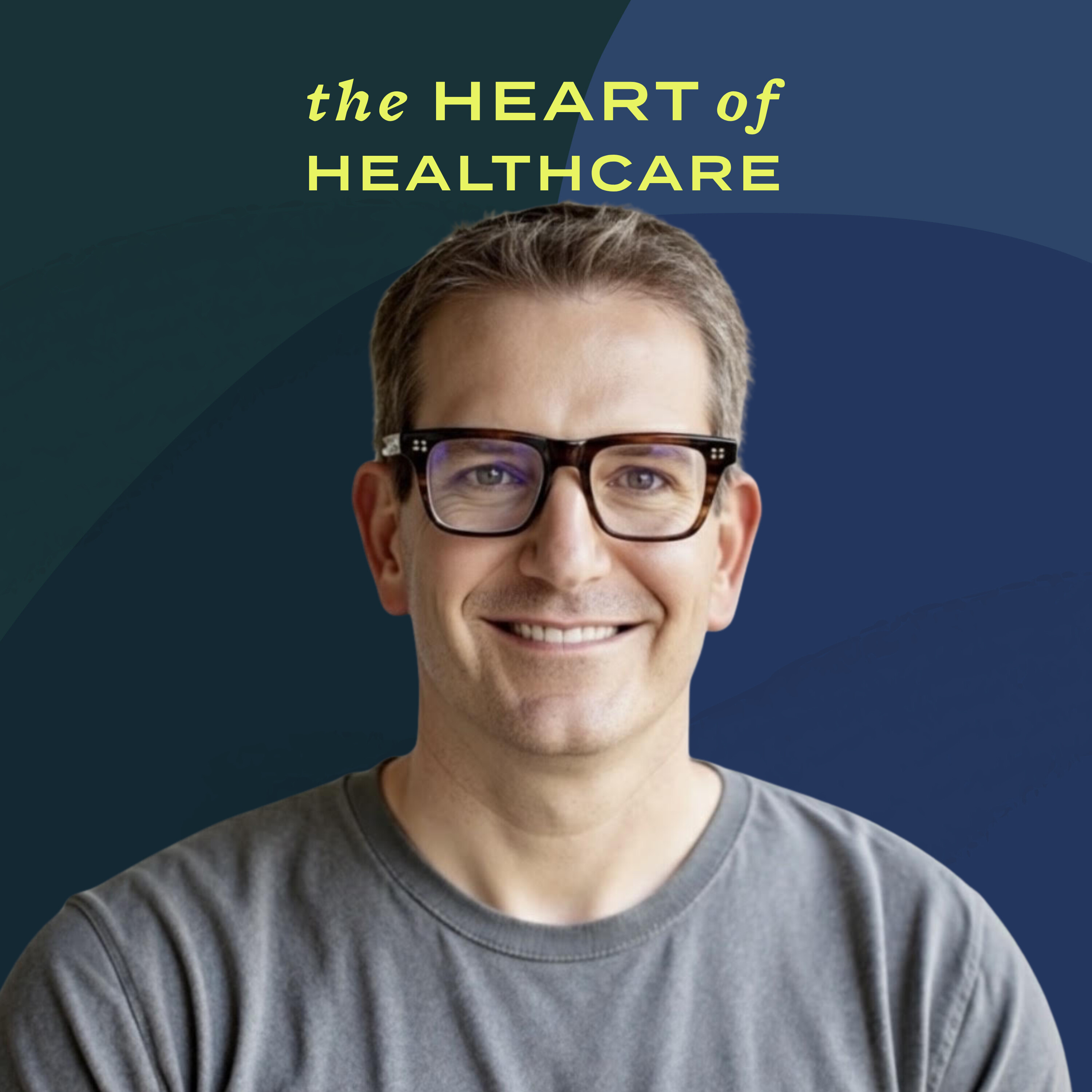
Dr. Jonathan Slotkin, neurosurgeon; chief medical officer for strategy and growth at Geisinger; co-founder/general partner at Scrub Capital. Also discussed: Dr. Thomas Lee, Harvard internist and patient-experience researcher (Press Ganey).
“Being safe” ≠ “feeling safe.” Adoption hinges on interpretation, trust, and transparency, not just crash statistics. Fix requires standardized reporting with a denominator (crashes per mile, by location) and honest handling of incidents.
San Francisco blackout where Waymo stopped safely at dark intersections; Waymo crash statistics (e.g., 94% fewer serious-injury-or-worse crashes); healthcare analogies like “bandage on the floor” signals; seatbelt/airbag adoption arcs; Cruise’s San Francisco incident and DOJ charge for an incomplete report; University of Michigan malpractice disclosure reducing claims.
Written by AI. May contain mistakes.
Discussion on societal expectations of technology versus human error.
“from machines while routinely accepting human error, carnage, and the loss of life as just the cost of doing business.”
Introduction of Dr. Jonathan Slotkin and his insights on safety perceptions.
“The illusion that we are all somehow above average drivers is quietly slowing the adoption of autonomous vehicles that could save tens of thousands of lives each year.”
Exploration of societal acceptance of human errors in contrast to machine failures.
“Making a safer machine feel safe is a different discipline.”
How healthcare's understanding of safety can inform the autonomous vehicle industry.
“Two weeks later, she misses her follow-up appointment.”
Explore how public perception of technology affects its acceptance and trust.
“The device worked, but Victor said it also felt intrusive, patronizing, and prone to annoying glitches, like a heavy grocery bag triggering the device seat's weight sensor.”
Learn about the importance of standardized reporting for autonomous vehicle safety.
“To address the gap between felt and actual safety, the autonomous vehicle field needs improved standardized reporting requirements.”
Understand how transparency in healthcare improves trust and accountability.
“Measure it the way crashes are and report it publicly.”
Discuss the potential job losses and shifts caused by autonomous vehicles.
“Millions of Americans drive for a living, and self-driving machines will affect some of those jobs.”

Get the gist, explore an idea or ask about something said.
 Claude
On The Heart of Healthcare | A Digital Health Podcast, what are the key points of this episode?
Searching your listeningAutomatic transcript. May contain errors.
0:02Welcome to the Heart of Healthcare podcast. I'm Hallie Teko. I'm Michael Esquivel. And I'm Steve Krause. And every Monday, we bring you the latest in healthcare innovation as we sit down with entrepreneurs and industry experts. So buckle up and join us as we figure out how to improve healthcare for all.
0:31Hello, listeners, and welcome back to the show. Today, we're taking a deep dive into a very fascinating and urgent tension of our modern age. Why do we demand absolute flawless perfection from machines while routinely accepting human error, carnage, and the loss of life as just the cost of doing business. Nearly 40 ,000 Americans die in car crashes every year, yet the moment an autonomous vehicle pauses at a dark traffic light or hesitates at an obstacle, it makes national headlines. Why is there such a massive gap between actual data-proven safety and how safe we feel? And what can a field like healthcare, which has spent decades navigating the exact same psychological divide, teach us about trust and technology and saving human lives.
1:28Today, we have a special episode with my friend, Dr. Jonathan Slotkin, who is a neurosurgeon, the chief medical officer for strategy and growth at Geisinger, and a co-founder and general partner at Scrub Capital. Dr. Slotkin will share his piece recently published in Noema magazine, titled Why We Demand Perfect Machines Yet Tolerate Human Carnage.
1:57Dr. Jonathan Slotkin: Six months ago, in a guest essay for The New York Times, I argued that the data on driverless cars was overwhelming and that needless barriers were costing lives. But unsurprisingly, the data changes almost no minds. This essay is about why. Being safe and feeling safe are different problems. Healthcare learned that first and spent 30 years building the discipline of patient experience. The autonomous vehicle industry needs that playbook now, and they don't have 30 years. My sincere thanks to Hallie and the entire Heart of Healthcare team for the chance to share my Noema article with you. Here's the piece.
2:42Dr. Jonathan Slotkin: I'd love to hear your thoughts. Why we demand perfect machines, yet tolerate human carnage. The illusion that we are all somehow above average drivers is quietly slowing the adoption of autonomous vehicles that could save tens of thousands of lives each year. By Jonathan Slotkin. On a Saturday night, five days before Christmas, a fire at a San Francisco power substation cut electricity to roughly 130 ,000 homes and businesses. Traffic signals went dark across a third of the city. The Waymo driverless vehicles moved through those streets exactly as they were coded to, treating dead signals as four-way stops and sometimes requesting confirmation from a remote operations team before proceeding.
3:32Dr. Jonathan Slotkin: But requests came faster than the human ops team could clear them. Videos on social media showed Waymos stopped with their hazard lights blinking. Several of them clustered at the same dark intersections. Human drivers honked and cut around the frozen Waymos. San Francisco Supervisor Bilal Mahmood called for a hearing. Some safety experts declared a warning about the readiness of self-driving cars. The incident was featured on local news. On the same day, if it was an average day in the U.S., about 115 Americans died in crashes with human drivers. That did not make the news. Waymo later reported that its vehicles navigated more than 7 ,000 dark intersections during the outage.
4:17Dr. Jonathan Slotkin: The cars that stopped did so because of a failsafe designed to stop and ask when in doubt. No cars crashed. No one was injured. But this story was not the one that circulated. That's because being safe and feeling safe are not the same. The inflated mirror. We demand machines that function flawlessly while accepting human-caused deaths and injuries as the cost of our daily travel. That double standard allows people to die by slowing the adoption of things that would save them. Nearly every driver believes they are above average. Psychologists call this illusory superiority. a hardwired tendency that shows up across countries and decades.
5:03Dr. Jonathan Slotkin: We measure the safety of new technology against an idealized version of ourselves, so the evidence must be better than the driver we imagine ourselves to be. The autonomous vehicle industry's biggest adoption problem is that strong safety data hasn't led to more public trust. Making a safer machine feel safe is a different discipline. Healthcare spent 30 years learning to manage the gap between being safe and feeling safe. That objective performance and how people perceive it are different problems. Improving one doesn't necessarily improve the other. But in the areas where these autonomous vehicles operate, they really are safer.
5:44Dr. Jonathan Slotkin: Across more than 220 million miles of driving, Waymo's vehicles have been involved in 94 % fewer crashes that cause serious injury or worse, than human drivers on the same roads. Pedestrian injuries are down 93%, cyclist crashes 84%, and intersection crashes, among the deadliest we manage in the trauma bay, 96%. These are the company's own figures, but analyses in peer-reviewed journals have reached similar conclusions. If the results hold as deployment scales, and with each release the data have grown more robust, the population-level health effect could rival those of seatbelts or the decline in smoking.
6:26Dr. Jonathan Slotkin: Of course, not all autonomous vehicles are the same. Many of the scariest headlines come from the millions of vehicles with driver assistance features that still require a human at the wheel. The best safety results so far, however, are from Waymo's driverless vehicles. Other companies have also gotten in on this market. Tesla now operates robo-taxis in Austin and other parts of Texas, and Amazon's Zoox serves parts of Las Vegas and San Francisco. But fairly and effectively comparing them requires looking at total miles driven, crashes, the ride's geography, and the ability to compare the data with that of human drivers in the same areas.
7:08Dr. Jonathan Slotkin: The data here is from Waymo because, so far, they are the only ones that provide such detail. Technical malfunctions still happen. This June, Waymo recalled the software on all of its vehicles and suspended highway driving after several cars entered parts of highways that were closed for construction. In April, an empty Waymo drove into high water in San Antonio after heavy rains, leading to another fleet-wide software update. 16 months prior, one sank into a patch of wet concrete that it had registered as a drivable road. Driverless Waymos have been involved in crashes that resulted in two deaths and one injury that police reported as serious.
7:51Dr. Jonathan Slotkin: And in all three cases, the driverless car was not at fault. In one case, a person going around 98 miles per hour in downtown San Francisco drove into a vehicle and triggered a seven-car chain reaction crash that killed a person and a dog in another vehicle and impacted an empty Waymo. In another case, a driver being chased by police ran a red light, struck a Waymo and another car, and then hit two pedestrians on the sidewalk, one of whom was seriously injured. And in the third, a motorcyclist rear-ended a Waymo and was then killed by a hit-and-run driver. This past January, I was in a Waymo in San Francisco when the car eased toward the right lane.
8:35Dr. Jonathan Slotkin: its turn signal blinking and stopped. A construction dumpster sat squarely in the lane in front of me. The light turned green. The car didn't move. On the dashboard screen in front of me, the dumpster showed up as an unmoving object that the car was tracking. A car behind us went around. A bit later, a remote agent came on, someone who can suggest alternate routes but never drives the car. And my Waymo pulled around the dumpster and drove on. It started moving just before the voice came on. So I still don't know if the person assisted or the car solved it. Only a month earlier, I had argued in the New York Times that resistance to these vehicles was an ethical failure that was costing lives and that the data showing they are safe were becoming overwhelming.
9:24Dr. Jonathan Slotkin: But none of that entered my head as I sat in the stopped vehicle. Alone in the backseat, I grabbed my phone to record what wasn't happening, partly to show my daughter and partly out of surprise. But mostly, I think, because I had just made a strong case for the technology and was wondering if I had been too certain. The machine had done what it was supposed to do, but it was still hard to shake the feeling that it was broken. The Signs We Read Data alone, no matter how powerful it is, hasn't settled the debate over driverless cars. Dr. Thomas Lee, a Harvard professor and practicing internist, helped build the modern study of patient experience.
10:09Dr. Jonathan Slotkin: That's everything that happens to a patient that isn't the care itself. For three decades, he has studied what happens to patients clinically, how they perceive it, and what they tell others afterward. He has spent a lot of that time as chief medical officer at Press Ganey, a company that systematically measures patient experience for thousands of hospitals. For years, the assumption in medicine was that clinical safety was the whole job. Keep infection rates low, get good outcomes, and trust would follow. But that assumption was wrong. Quality and experience are correlated but distinct, and the consequences were showing up one patient at a time.
10:51Dr. Jonathan Slotkin: For example, a patient comes in for a routine knee replacement. The surgery goes well, correct implant, clean wound, no complications, discharged on schedule. Two weeks later, she misses her follow-up appointment. A month later, she transfers her care to another practice. What happened? She had overheard two nurses arguing in the hallway outside her room the morning after her procedure. She didn't hear what they were arguing about, but she felt that the people taking care of her weren't working together. The quality of care was there, but the patient experience wasn't. Positive clinical outcomes are less likely in patients with bad care experiences.
11:33Dr. Jonathan Slotkin: She was less likely to follow her physical therapy regimen and to report complications early. Lee told me that dozens of internal press-gainty analyses show that when patients feel they were not treated with respect or that their doctors and nurses were not listening, their risk of readmission to the hospital and of returning to the emergency department rises. Their hospital stays run longer. The effect holds even after adjusting for diagnoses. When Lee's team ran natural language processing across patient comments, the trust killers were rarely clinical errors. A patient wrote that there was a used bandage on the floor or that a doctor appeared to have a bloodstain on his scrubs.
12:15Dr. Jonathan Slotkin: They knew that these things would not hurt them. They were reminders that there is no such thing as perfect safety, Lee told me. But who wants that reminder when they are sick? A patient cannot directly observe surgical quality. What they can observe is the floor, the scrubs, and the room, and they could read those signs and draw conclusions. Healthcare had to learn to treat this kind of semiotic failure, where the signals sent by a system diverge from what it actually delivers as a separate design problem with its own metrics and interventions. In the December blackout, cell phone cameras captured what was essentially the bandage on the floor and the bloodstained scrubs of a self-driving car.
12:57Dr. Jonathan Slotkin: Safer technology that isn't used because it doesn't feel safe doesn't help anyone. But the experience of feeling safe isn't communications or marketing problem. It's part of the safety problem. Medicine demonstrates how this new discipline can be studied and its lessons applied. The arc of adoption. Every major automotive safety technology follows the same arc. Initial resistance leads to peak anxiety that eventually fades until the tech itself feels obviously life-saving. Seatbelts were initially opposed as a government overreach. Anti-lock brakes were distrusted because the pedal feedback didn't feel right to the drivers used to pumping the brakes.
13:40In 1974, regulators required a seatbelt interlock
13:45Dr. Jonathan Slotkin: device that wouldn't allow a car to start unless the people in the front seats were belted. Trent Victor, Waymo's Director of Safety Science and Management, who spent a long career at Volvo helping build the driver attention systems now in many cars, points to it as a mistake his field shouldn't repeat. The device worked, but Victor said it also felt intrusive, patronizing, and prone to annoying glitches, like a heavy grocery bag triggering the device seat's weight sensor. The backlash was so intense that Congress outlawed it within a year. Ignoring how a technology felt, even in the pursuit of preventing physical harm, set the adoption of automotive safety technology back years, Victor told me.
14:32Dr. Jonathan Slotkin: With airbags, fears weren't entirely imagined. First-generation airbags deployed at a consistently high force and in low-speed crashes could injure or kill people, most often children and small adults sitting too close to the dashboard. People died. The remedy was not to pull airbags from cars entirely. Regulators allowed automakers to reduce the initial deployment power, with new designs reaching most cars by 1998. Systems today can sense an occupant's size and position and adjust the force or not deploy at all. Our fears were right about the danger, but wrong about its magnitude. Eventually, exposure closes the fear gap and the cultural default flips.
15:18Dr. Jonathan Slotkin: The way buckling a seatbelt has become almost universally automatic in the U.S. This is also playing out with AI in healthcare. Most Americans say they would be uncomfortable if their doctor relied on AI to help diagnose them. But patients who receive AI-assisted screening report satisfaction levels above 90%. Likewise, many who object most loudly to self-driving cars haven't been in one. Confidence in the technology runs far higher among riders than non-riders. New York City's Vision Zero program ran into the perception versus reality gap a decade before the self-driving cars did. When engineers redesigned intersections in 2014, approaches such as pedestrian islands were expected to increase minor crashes while reducing high-speed crashes that killed people.
16:09Dr. Jonathan Slotkin: In the first years of implementation, total crashes and injuries increased, but fatalities declined, making the streets dramatically safer. Oslo and Helsinki in Northern Europe have applied the same design philosophy and recorded entire years with zero pedestrian fatalities. The work was slow, with Oslo aggressively overhauling its streets starting in 2015 and Helsinki gradually lowering speed limits over decades. In 2019, both cities had zero pedestrian and cyclist deaths. For Helsinki, this was a first since it began keeping records in 1960. Helsinki went on to record an entire year with no road deaths of any kind in the year from July 2024 until July 2025.
17:01Dr. Jonathan Slotkin: Across multiple governments, their officials publicly defended the redesigns, buying time for the safety gains to show up in the fatality numbers. The autonomous vehicle industry doesn't have that kind of political clout yet. Some elected leaders still view these cars as relatively untested and new technology. Victor, who has spent his career studying how people perceive and trust automation, told me the industry has no one positioned to look at an incident like the San Francisco blackout and tell the public, this looked awkward, but it was objectively safe. The technical reality and the felt signal point in opposite directions, the same divergence that Lee's patients saw in the bandage on the floor.
17:46Dr. Jonathan Slotkin: The problem, as Victor put it to me, isn't a performance problem. It's an interpretation problem. No one to forgive. Empathy is a cognitive tool we use to forgive human error. But a machine's error is different. Like it's the product of a bad corporate decision or poor coding. Often, there isn't one person to blame or forgive. We're stuck with an opaque version of fate that is hard to accept. Forgiveness needs an agent that perhaps could have done something differently and can be held responsible. When a person makes a serious mistake, we have somewhere to place the blame and eventually someone to absolve.
18:28Dr. Jonathan Slotkin: People tend to lose confidence in a machine more quickly than in a human when the two make identical mistakes. We prefer a worse human over a better algorithm if the latter has made an error. Behavioral scientists call it algorithm aversion. With no trusted party to explain what happened, visible mistakes dominate people's judgments of a better system. This suggests that an adverse outcome from a trusted physician will feel categorically different from the same outcome produced by an AI, even when the AI is measurably more accurate. For now, the AI lacks a track record and a human presence to help the patient and family interpret the uncertainty when the outcome is bad.
19:15Dr. Jonathan Slotkin: The Missing Denominator To address the gap between felt and actual safety, the autonomous vehicle field needs improved standardized reporting requirements. Data won't cure people's fears, but it will force the industry to be transparent and accountable. We count autonomous vehicle crashes, but the federal order mandating the count does not require operators to report the miles those crashes are drawn from or where those miles were driven. It's a numerator with no denominator. It tells you almost nothing about the operator and prevents useful comparisons. Although Tesla and Zoox are newer and still scaling, they are not required to publish the information Waymo chooses to provide to the public voluntarily.
20:01Dr. Jonathan Slotkin: The federal government must step in and require every operator to report crashes measured per mile driven and by location, with regulators verifying crash and injury data against police and insurance records. The U.S. government has done this before in medicine. It forced the field into the open by requiring hospitals to measure and publicly report how patients experience their care. Some of us who practice medicine have already formally called for such a reporting mandate around autonomous vehicles. Until this happens, we are flying blind and continuing to normalize a death toll that the government's own rankings fail to account for.
20:42Dr. Jonathan Slotkin: On its list of what kills Americans annually, motor vehicle deaths are not listed as a cause. These tens of thousands of dead people sit inside a larger category of unintentional injuries. Good reporting is only the floor. In 2008, Medicare began publicly reporting how patients at nearly every hospital in America experienced their care using a standardized survey. By 2012, hospital performance on those surveys was tied to payment levels. An entire profession has sprung up to measure patient experience and to help hospitals hold themselves to it. Lee helped the field grow in the years that followed.
21:22Dr. Jonathan Slotkin: He said that around 2010, the field changed the discipline's name from patient satisfaction to patient experience to capture people's feelings about their overall care beyond mere satisfaction. Tracking these metrics enabled officials to hold institutions accountable. Lee believes the autonomous vehicle industry should make felt safety its obsession. Measure it the way crashes are and report it publicly. What Honesty Saves Autonomous vehicle companies are further along in publishing the evidence that their AI systems are safe. But data doesn't cure fear. Healthcare is further ahead on the perception problem.
22:05Dr. Jonathan Slotkin: Each field has built a big part of what the other still needs. For driverless car companies, the next steps involve building public trust through handling mistakes honestly and communicating transparently. What these companies do after their products hurt someone will tell us a lot about them. In October 2023, a driverless car operated by the company Cruise LLC, a subsidiary of General Motors, was moving through San Francisco when a hit-and-run driver struck a woman and threw her into the autonomous vehicle's path. The cruise car ran her over then, not sensing her beneath the chassis but programmed to pull over after a collision, drove toward the curb, dragging her about 20 feet.
22:51Dr. Jonathan Slotkin: The initial collision was not the company's fault. What came after was. Cruz's report to federal regulators left out the fact that the woman was dragged after being run over. This omission is what later led the Justice Department to charge Cruz with providing a false record with intent to impede, obstruct, or influence the crash investigation. Cruz eventually admitted responsibility and settled with the government. Terms of the agreement included a$500 ,000 criminal fine, a mandated compliance program, and three years of federal oversight. But by that point, California state regulators had suspended the company's driverless operating permits.
23:31Dr. Jonathan Slotkin: Several of the company's leaders, including its CEO, resigned. General Motors wound the company down. Some of the best approaches in health care toward maintaining patient trust are rooted in radical transparency. In 2001, the University of Michigan's health system stopped fighting every malpractice claim and began identifying its own errors, disclosing them to patients, explaining what happened, and offering compensation when the system was at fault. The expectation was a flood of lawsuits. Instead, a 2010 study documented that new claims fell, lawsuits dropped further, and the resolution time for both decreased.
24:13Dr. Jonathan Slotkin: decreased. Disclosure did not enlarge liability. Apologies worked best when patients could see that the system had investigated the failure and changed something so it would not happen again. Being honest with the public also means acknowledging the potential broader human impact of this technology. Stable employment is a powerful social determinant of people's health. Millions of Americans drive for a living, and self-driving machines will affect some of those jobs. The most exposed jobs tend to be held by older, lower-paid workers, and losses can land earliest and hardest on the most vulnerable people.
24:52Dr. Jonathan Slotkin: But how much job loss we will see is uncertain. New job types emerge, and living standards improve over time. Economists call this churn creative destruction, and it was the subject of the 2025 Nobel Prize in economics. In several cities, fears about job loss are already among the loudest sources of opposition. And this is not the kind of issue safety data can answer because it isn't a misperception. Deliberate workforce planning should already be further along than it is. Medicine has already faced what the driverless car industry is encountering now. And in some cases, autonomous systems have become the norm rather than the exception.
25:34Dr. Jonathan Slotkin: AI-assisted radiology reads are common enough that unassisted reads are growing rare for some conditions. Using AI is becoming the standard of care. A similar inflection point has arrived for the transportation industry. Data shows that the quality is there. The work that remains is helping people feel as safe as that data says they are. As that work proceeds, and as local officials engage with autonomous vehicle safety data that outshines that of human drivers, more communities will find that the safety and insurance math strongly favors the machine. Driving will increasingly become a choice, and one you'll have to explain.
26:18Dr. Jonathan Slotkin: This piece was commissioned, edited, and published by Noema magazine. Noema publishes long-form journalism exploring fresh ideas. To read this piece and others, head to noemamag.com.
26:40Thanks for listening to The Heart of Healthcare. If you enjoyed this episode and you'd like to support the podcast, please leave a rating and review, and don't forget to subscribe. The Heart of Healthcare is produced by Hallie Tecko and hosted by Michael Esquivel, Steve Krauss, and Hallie Tecko. The show is engineered, edited, and mixed by Kyle Moore. Visit our website, heartofhealthcarepodcast.com, for show notes and details.
Every day, roughly 100 Americans die in crashes caused by human drivers. Yet when a self-driving car hesitates at an intersection or makes the news for an unusual mistake, public trust can evaporate.
In this special episode, Dr. Jonathan Slotkin reads his latest Noema essay exploring why we demand perfection from machines while accepting human error as inevitable. Drawing on lessons from medicine, psychology, and autonomous vehicles, he argues that the biggest barrier to safer technology is trust.
You'll learn:
—
About our guest:
Dr. Jonathan Slotkin is Chief Medical Officer for Strategy & Growth at Geisinger, where he drives growth at the intersection of care delivery, insurance, and digital transformation. A practicing neurosurgeon, he previously served as Geisinger's associate chief medical informatics officer.
Jon's current research and writing examine safety, trust, and adoption of autonomous systems in public life. His New York Times guest essay on self-driving car safety was entered into the Congressional Record. His writing regularly appears in Harvard Business Review, STAT, and Noema Magazine. He has authored more than 70 peer-reviewed scientific publications.
Previously, as co-founder and chief medical officer of Contigo Health, he partnered with the nation's largest employers to reimagine care for their associates. He co-founded Scrub Capital, a clinician-powered venture capital firm, where he serves as a Partner. He completed neurosurgery residency at The Brigham and Women's Hospital, Harvard Medical School, where he served as chief resident.
—
This piece was commissioned, edited, and published by Noema Magazine. Noema publishes longform journalism exploring fresh ideas. To read this piece and others, head to noemamag.com.
—
📍 Connect with us:
See Privacy Policy at https://art19.com/privacy and California Privacy Notice at https://art19.com/privacy#do-not-sell-my-info.