Ask ChatGPT
 The Hospitality Hangout | Hospitality Podcast
8 Oct 2026 · 46m · 18 chapters
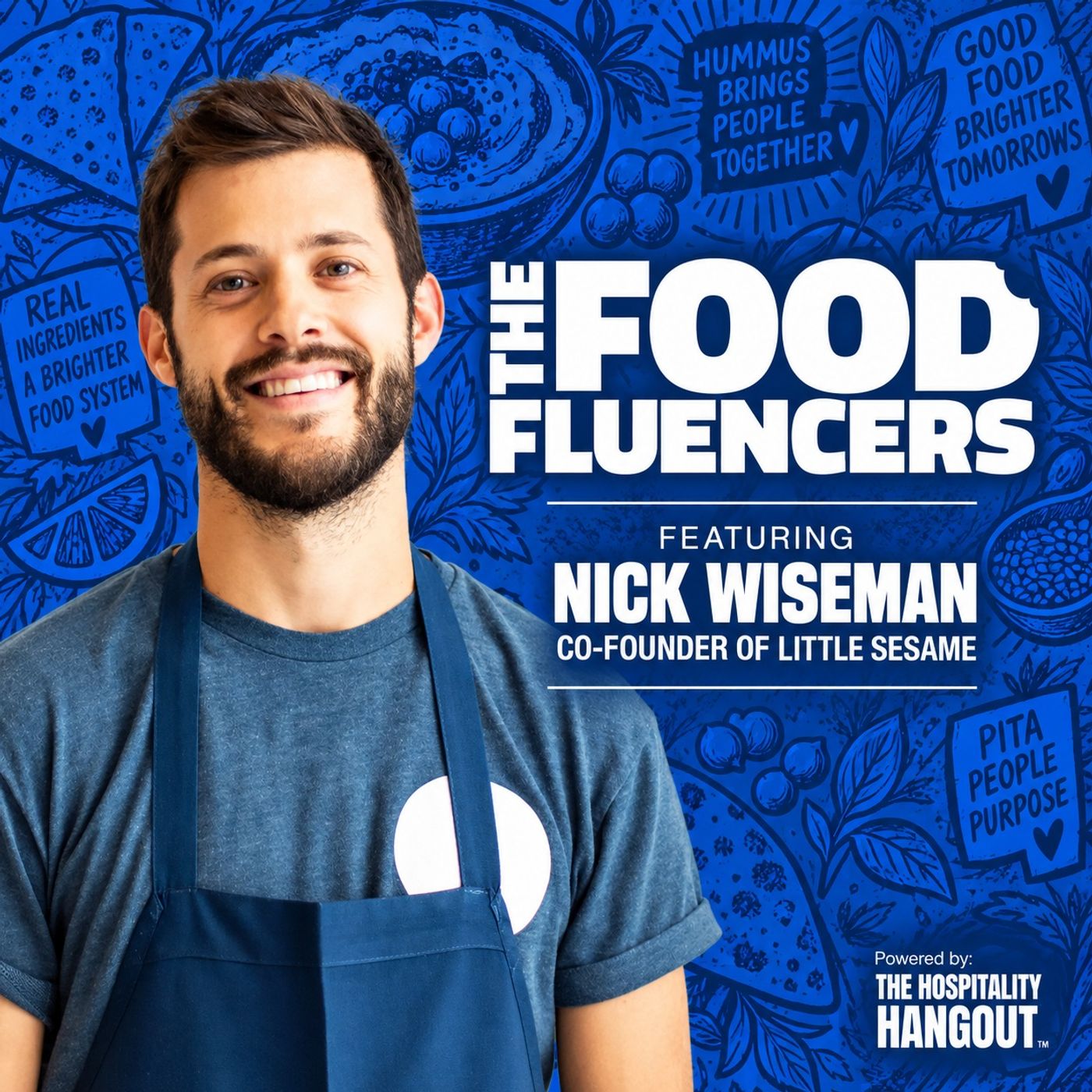
Little Sesame’s Nick Wiseman discusses how a basement hummus pop-up in Washington, D.C. became a fast-casual-to-CPG hummus brand, “freeing the hummus” beyond dips via shelf-life tech (HPP), social storytelling, and retail/foodservice distribution. The episode also briefly plugs Built Hospitality (AI concierge for restaurants).
Nick Wiseman is a restaurant veteran who cooked professionally in D.C. and New York fine dining (including Michael White). He co-founded Little Sesame with Ronan Tenet.
Little Sesame is in about 4,000 stores (Whole Foods, Sprouts, regional chains) and is used by Sweetgreen. Their refrigerated hummus now has ~120-day unopened shelf life without preservatives beyond lemon juice, using high-pressure processing (HPP). They scale fast because they self-manufacture.
Started in a 500 sq ft D.C. basement alongside DGS (District Grocery Stores). Whole Foods buyer outreach during COVID led to scaling. Flavor examples include pumpkin spice hummus and a chili crisp with Fly By Jing; a truffle hummus used fresh black truffle; upcoming collab with Yellow Bird (habanero hot sauce) in early 2026.
Written by AI. May contain mistakes.
Discover how Nick's passion for hummus led to a booming business.
“These are brands that are influencing people's eating decisions, eating habits, where they go.”
Nick shares the story of starting Little Sesame from a basement operation.
“of Little Sesame to tell us how he did it, how hummus is taking over the entire world.”
Learn about Little Sesame's unique approach to growing the brand.
“and now you have created literally a fast casual CPG empire.”
Nick discusses the challenges faced during the COVID pandemic and their innovative responses.
“They immediately sort of saw the difference between what they're used to getting on the grocery store shelves.”
Find out how Little Sesame achieved shelf stability without preservatives.
“It was like, again, like a short list of hummus bowls, pita sandwiches, seasonal salads.”
Learn how Little Sesame developed their hummus to have a long shelf life without preservatives.
“Didn't, didn't have no idea the journey would take us on.”
Discover Little Sesame's expansion into retail and food service markets, including major chains.
“And so we're able to basically, you know, what that stands for?”
Explore personal Thanksgiving traditions and how a chef approaches holiday meals.
“But obviously, like a lot of values alignment in terms of how we source and make our food align with sort of where Sweetgreen is trying to take a quote unquote fast food.”
Discuss the presence and popularity of turkey dishes in restaurants compared to other meats.
“You know, I think we chef it up, you know, like how do you make it fresh or brighter, you know, more enjoy, more fun.”
Understand how Little Sesame leverages social media for branding and consumer connection.
“Let's jump into social media because that's really a lot what this is about.”
Learn about Little Sesame's upcoming product collaborations and their innovative strategies.
“but we also bring on influencers beyond us to do that as well.”
Learn how Little Sesame experiments with unique hummus flavors and collaborations.
“with a New York restaurant group from Tacombi.”
Explore current food trend opinions and the future of hummus flavors.
“Okay, so let's just talk about, you said everything is not hot, everything bagels, but you said honey and truffle is still hot and chili criss.”
Discussion about potential collaborations between food brands and personal favorites.
“I'm such a huge fan of Becca and Fish Wife's team.”
Conversation about social media preferences and the importance of tipping in hospitality.
“What's Nick Wiseman's Uber rating right now?”
Nick Wiseman shares his thoughts on the ideal bagel toppings and ingredients.
“What's the last thing you put on Instagram?”
Exploring favorite food influencers and sources of culinary inspiration.
“And on that sandwich safari that we do, go check out because we always ask, is a bagel a sandwich?”
Nick shares insights about his career and the growth of Little Sesame.
“Your journey with Little Sesame is unbelievable.”

Get the gist, explore an idea or ask about something said.
 Claude
On The Hospitality Hangout | Hospitality Podcast, what are the key points of this episode?
Searching your listeningAutomatic transcript. May contain errors.
0:00Nick Wiseman: Hey everybody, I gotta tell you, we're gonna talk about Built. Built Hospitality. Millions of people use Built every day, that's right, every day to earn rewards on housing and in their neighborhood. But now, now it extends to your restaurant. That's where Built Hospitality comes in. Built Hospitality shapes how guests are recognized and taken care of. Built's restaurant-facing platform is designed specifically for dining operators to drive loyalty with their guests. It combines reservations, guest preferences, VIP management, and payments all into one platform alongside an agentic concierge. That's right, an AI concierge that thoughtfully designs and executes experiences around your guest tastes.
0:47Nick Wiseman: Using the latest and greatest in AI technology. When a guest walks in, your team already knows what they like without digging through notes. Built Hospitality works across the entire guest journey. That's right, the entire guest journey from delivering a complimentary course at the right moment, just the right moment, sending a personalized offer that brings them coming back again and again and again. That's right. That's what Built Hospitality is doing. It is allowing you to communicate with your guests and keep them coming back over and over. Make every guest feel like a regular every time, not just their first time, every time.
1:24Nick Wiseman: They're a regular. Built Hospitality is available now for restaurant groups everywhere. Learn more at BuiltDining.com backslash hangout. That's BuiltDining.com backslash hangout. And check out what Built Hospitality is going to do for you and your restaurant. What's the state of the union of Little Sesame today? How many stores are you in? Where can I find it? How many flavors you got? Tell me. It's grown quite a bit. Now we're in around 4 ,000 stores, probably 4 ,000 and counting. A lot of regional chains around the country sell to chains like Sweetgreen across the country as well. Wait a minute, wait a minute.
1:59You're telling me when I go to Sweetgreen and I get something with hummus, it's Little Sesame? That's right. Come on. Really? Yeah. Absolutely.
2:09Live from Amazon Business Studios in New York City, it's the Hospitality Hangout Podcast. and joining us today is nick weisman the co-founder of little sesame as we continue with our famous food fluencer series on the hospitality hangout podcast i gotta tell you we've got a it's gonna be a great show we've got a great guest we've got a lot of hummus here we got little sesame here we got little sesame here did i say that did i say nick weisman co-founder little sesame or i leave that out got it got it nailed it right i did i nailed it well i gotta to tell you, we couldn't be more excited about spotlighting brands that are driving people crazy, crazy good.
2:54These are brands that are influencing people's eating decisions, eating habits, where they go. Chefs are being driven by this, where we eat, where we go, why we eat. It's all part of the Food Fluencer series on the Hangout. And we've got Nick Wiseman here, the co-founder of Little Sesame to tell us how he did it, how hummus is taking over the entire world. When I was younger, I never even heard of hummus. Today, I'm rubbing hummus all over my turkey at Thanksgiving. It's unbelievable. It's unbelievable. But before we get to this, we have to talk about something else that's very important. And you're saying, Shatzi, what could be more important than hummus before Thanksgiving?
3:33Well, I'll tell you what's more important than that. Well, you know what? Where do you get everything that you need for your restaurant. Where do you go? You know, you got 15, 30 purveyors and vendors to buy everything you need. What if I told you, you could cut it all down. You could buy all your food and all your beverage from wherever you're doing it, but all of your non-perishables, I'll call them non-perishables, you could get that from one supplier. That's right. One truck, one stop, full inventory, full procurement platform, turning you guys in. Your restaurant could become like the Amazon of restaurants.
4:05That's right. Amazon business, streamlining all of your purchasing, all of your innovative with all these innovative tools and unmatched selection and pricing,
4:14Nick Wiseman: pricing. You can save 20, 30%. Check out business.amazon.com. And I know what you're saying. You're like, Shatzi, what are you talking about? My wife is using Amazon prime. I'm getting boxes all day to the house. That's right. Just like your wife is doing, getting all the stuff to your house. You can get all the stuff delivered to your restaurant at a fraction of the price where you're currently getting it from. So check out Amazon business. Don't be confused with Amazon prime. Don't be confused with that. This is for business only business.amazon.com and check it out. All right. That's enough about that.
4:47Let's get on to the show. Nick, are you there? I'm here. I got to tell you, we are super excited to have you here. You turned a basement operation in in the District of Columbia. Am I correct? Correct. Making hummus in the basement because your family's like, we have not found the hummus we like. You're eating hummus. This is terrible, this hummus. And you went and said, I will get my family what they need, which is delicious hummus. You start in the basement and now you have created literally a fast casual CPG empire. It's an empire, right? You know, we're working our way there. You're getting there.
5:27You're getting there. We won't own Empire yet. So tell us, Nick, tell us about how Little Sesame started with that one lonely little pop-up in D.C. I'll take it back. So actually, Brunan, my background is restaurants through and through. So, you know, I started cooking in professional kitchens in D.C. where I grew up when I was 15 years old. So, you know, steeped in restaurant life. Went to school out in California and then reverted right back to restaurants. They're hard to escape for those who have been in them. Like the Cup of Three. You went out and they dragged your bacon. Exactly. Couldn't leave.
5:59So back to New York City and was working the fine dining circuit of New York and stumbled upon Ronan Tenet, co-conspirator of Little Sesame. He was training me on the fish station at Michael White Restaurant, Midtown Manhattan. And we became fast friends. Michael White's restaurant. You're working what? You're on the front? That's the back of the house. You're a line cook? Both of us are back of the house. Both of us cooks. Yeah, I was working. He trained me on fish station. Michael White. I mean, you must know what you're doing. You don't just get a job at Michael White Restaurant. You know, we'd spend some time in kitchens.
6:30And again, we're kind of working the fine dining circuit of New York. So he was at Gramercy and with Marco Knord-Hearth and then, you know, worked his way to Michael White. And so, yeah, we were in that world of New York fine dining. But, you know, we met and we're immediately kind of kindred spirits, shared the same spirit, wanted to bring that quality of food, but more people, less rules, have fun doing it. And so we ultimately decided to reconvene in D.C. almost a decade later. I had actually opened, gone on and opened some restaurants in D.C. Again, my sort of my hometown. My family's been here for generations.
7:06Right, right. And we were operating a restaurant called DGS, which was an old school Jewish delicatessen, smoking, curing, brining, all the meats by hand. In D.C., hard in D.C. D.C. never really had its like iconic Jewish delicatessen. I don't think so. Yeah. So you guys found a little, a little, a void in the market. We found the void in the market. We're going after it. And, uh, there was 500 square feet in the basement that was underused. And like the, what's the antidote to pastrami is, is hummus. So we figured, you know, between your, uh, pastrami sandwiches, you'd want a little healthy food.
7:41And so we, uh, launched a little sesame as a pop-up, um, in the 500 square foot space, sort of freshly spinning hummus. And, you know, we kind of, that, that time we were handwriting the menu every week, go into farmer's markets. And it was like four to five hummus bowls per week, kind of reflecting the best seasonal vegetables we could get our hands on. And, you know, people were immediately just like drawn to the quality of hummus. They immediately sort of saw the difference between what they're used to getting on the grocery store shelves. And I love it. So you started cooking when you're 15 years old, right?
8:12Yeah. You're a runner. a runner. I mean, so I'm thinking that your passion for health must have helped with this whole hummus because hummus is really healthy, right? What are the health benefits of hummus? Oof, a lot. You know, it's obviously nutrient dense. It's a great source of plant-based protein, a lot of calcium in the tahini, a lot of fiber altogether in hummus. So you're born in the basement at DC, right? Yeah. And really like we talk about how many founders, how many entrepreneurs start in their basement or in their garage, I guess maybe. Is it better for a food company to start in a basement than the garage?
8:54I feel like the garage may be good for tech companies, but like Steve Jobs started like I think in his garage. I think Jeff Bezos, Bezos or Bezos? Bezos? Bezos. Is it Bezos? That's always somewhere in between, which is it. No one knows how to say his name. You know, the richest guy in the world. I feel like you should change his name, just make it easier for us to say, you know, Bill Gates. I think he started like in his garage or something like that. So when you started this in the basement, what did you think you had? Like, were you thinking like, oh, I'm going to make hummus and I'm just going to give it to my friends?
9:23Or would you be like, oh, no, no, this is going to be a business. We're going to go retail on this. You know, we our goal was, you know, to support the restaurant. It was a big building. We take over the whole lease. Anyone who operates restaurants now, you got to like maximize revenue in those four walls. And so this was really like 365, 24 seven, right? That's right. That's right. And DC is not a cheap place to operate. So, you know, we, um, we built a little sesame really just to be a supplement to, to DGS. And our goal was to, you know, 30, 40 people a day and pretty much out of the gate, we were doing like a hundred, 120 people a day when we got started.
9:55What does DGS stand for? What was that? District grocery stores, which was, you know, kind of the, the Jews were historically, I kind of pushed out of the buying cooperatives and, um, they formed their own and started these like kind of network of small indie mom and pop grocery stores around dc and then ultimately sort of kind of became giant food which is now a big retailer where you can find our hummus today so wait a minute well full circle story yes is district grocery stores so you open a restaurant called dgs correct which is an homage to the past when these were the cooperatives back in the day when you said what the jews couldn't own grocery stores is that what you said they were pushed out of the buying cooperative so you know you couldn't buy it everything we're always being pushed out so we were pushed out so so this was an homage if you will to that and we and then this big giant is is giant grocery stores is a you know there was a few that were actually good entrepreneurs of the bunch of dgs operators and the ones that were that were good kind of came together realized there was a bigger vision in grocery than just these indie stores and so they folded together and created giant food um giant food that is that a dc based chain yeah land over yeah right right outside of dc is really giant isn't it yeah yeah just uh yeah they're big they well now there's a few divisions of giant but that that primary division is a couple hundred stores in the mid atlantic so now okay so now you're supporting dgs with that little sesame and this is basically i could walk it was like a it was like just product or was it no it was like a place i and go and eat.
11:27Go eat. It was like, again, like a short list of hummus bowls, pita sandwiches, seasonal salads. So a tight little menu, but you could go eat. It was lunch. So most people, I would think, especially a guy like yourself coming out of restaurants and a chef, you'd be like, hey, this is going really well. Let's open a whole bunch of little sesames and it'll be like it'll be like Cava or you know what I mean? It'll be like one of those guys. It'll be just a huge chain and we'll franchise and we'll open up millions of stores and I'm going to retire a rich man. But you didn't do that. So what was the pivot?
11:59That was the vision. That was the vision. You know, I think, well, I'd say this. It did well. And, you know, again, we were more like tripling, quadrupling the volume we thought we could do in there. And eventually we're doing a couple hundred people a day. And we're jamming in there. People, you know, waiting a long time to eat a bowl of hummus. And so we realized we were onto something that it kind of did dovetail with some of the broader trends that were happening. And people really recognized the quality of the hummus we were making. And so we did ultimately, we were lucky also to, you know, a lot of fast casual kind of grew up in D.C.
12:28The Sweet Green crew was here and came in. Nick and one of the founders was a mentor to me and really helped us like build Little Sesame. The farmer's group that you got there. I remember going there visiting one. The farmer's whole bunch of restaurants. Yeah, farmer's. Yeah, farmer's group. Actually, their facility is right across from ours now, just outside of D.C. where we manufacture all our hummus. So what was so? So you're rocking it out. It's a little sesame. Everyone's buying the same. It's the best hummus they ever had. And what was it? Did someone from Whole Foods, like a buyer, come in there or something?
13:02Like, what was it that Whole Foods was like, holy shit, I got to have this? So we did end up opening the first standalone brick and mortar. It did really well. We had then put together some funding to, hey, like, there's a fast casual in this thing. We can scale it out. So we raised some money, which helped survive COVID. And then, boom, COVID hit. And sort of the premise of the restaurant was, like, serving downtown office workers. like many past casuals do. So obviously business evaporated overnight, but one of the beauties of COVID is people were willing to travel to kind of find, you know, seek out good products.
13:34And it was an opportunity to really test that. And so we started hand packing pints of hummus and selling them out the front door. We kind of staked our reputation on hummus. Washington Post already had said, you know, Little Sassin makes the best hummus in DC. So we started from a bit of an unfair advantage, but we started selling hummus and pints out of the front door. And yeah, like a few weeks later, we got a ping from a Whole Foods forager. Like, hey, I had your hummus. Can you, can you, do you want to try to, you know, want to sell some Whole Foods stores? And what'd you guys say? Absolutely.
14:03Sure. Didn't, didn't have no idea the journey would take us on. We had about, we had about a, you know, five day shelf life at the time. So that wasn't going to work. So, you know, it took us about a year from that call to figure out how we could actually do it meaningfully. And, um, because it's not shelf stable because it's in the refrigerated section, right? Yes, but a key to being successful in CPG is still you got to have some shelf life. Our product now has 120-day shelf life if it's unopened. How do you do that without putting preservatives or staying to its core? Because it's supposed to be this fresh, delicious, no-b**** ingredients, right?
14:40Yeah, and I think that was the hard part, right? I think the instinct, particularly in this country, is to add, add, add preservatives. so we um organic we have organic chickpeas organic onion organic tahini right everything's organic you know fully the line now is the whole line is certified organic um but yeah we we ultimately found we're lucky had someone on our team that had studied food science so that was a that was just one of those lucky uh lucky moments right and then we we'd spend a year and we again we worked with cornell food lab of berkeley food lab and trying to figure out how to do it and we're adding, adding, adding, ultimately realized that there was a technology called HPP, um, where we could, you know, it was a, a pasteurization process that became kind of in vogue with cold press juice that really like maintain the freshness of products.
15:29And so we're able to basically, you know, what that stands for? High pressure, high pressure processing. So let me, cause everyone's talking now, especially like the young folks today, like my kids, I mean, they look at the ingredients in everything and like pasteurization and processing or things that we don't want to mention you know my kids are like like dad we shouldn't even buy milk we should like get it right from the cow you know i'm like it sounds like you're gonna get sick you get diarrhea if you be be doing stuff like that you know but like so what how do you so you're doing this hpp that doesn't that's not like making it like taking all the good stuff out right that's the whole point of it right so it applies pressure rather than heat heat obviously denatures the quality exactly so the pressure kills all the good stuff but but keeps the flavor and freshness and so we're able to get all that shelf life with just lemon juice only preservative in our products fresh lemon juice that we're right because that's part of the ingredient of hummus right exactly so it worked out right so that's the beauty of of hummus as a sort of and and the power of hpp So let us know.
16:35So where are you now? So, so they, you finally figure out how am I going to make it? Whole foods buys it. What's the state of the union of little sesame today? How many stores are you in? Where can I find it? What, how many, how many flavors you got? Tell me. You know, it's, it's grown quite a bit. Now we're in around 4 ,000 stores, probably 4 ,000 and counting. We, we, you know, all the whole foods, all the sprouts, a lot of regional chains around the country. We, um, and then we have a big food service business too. So, you know, sell the chains like sweet green across the country as well. Wait a minute.
17:07Wait a minute. You're telling me when I go to sweet green and I get something with hummus, it's little sesame. That's right. Come on. Really? Yeah. You promote it on the menus. Like, does, do we know that that's happening? We try, we try, we get some, we get some love where we can. Yeah. I mean, how is everybody not, I mean, how does everyone not know that or do they? And it's just only, only I don't know that, you know, again, somewhere in between the two. All right. So we're making some phone calls over to the folks at Sweetgreen, start doing some. So is that a collaboration or no, they just buy it.
17:37It's not a collaboration or no, it's a collab. No, it's more of they buy it and they use the product. But obviously, like a lot of values alignment in terms of how we source and make our food align with sort of where Sweetgreen is trying to take a quote unquote fast food. Right. So it's a good brand alignment. All right. So now you got to have it. And how many SKUs you got now? How many? You know, we have a good number of seasonal SKUs. We run a seasonal rotator that just changes all year. We, you know, we're not launching into snacking. We have a pumpkin spice hummus. Are you telling me, please?
18:06No, we did a chili crisp that had some pumpkin in it. But, but that was a fall seasonal with, with, with fly by Jing, who you should have on the show. She's great. Do you like pumpkin? Like, I like pumpkin. I think I like a pumpkin pie one day, one day a year. I'll eat a pumpkin pie Thanksgiving here. You know, I've made pumpkin pie. Like I've seen someone make pumpkin pie and they've opened up a can of like Libby pumpkin like stuff. They dumped it out into like a, you know, a pie, you know, a like a graham cracker pie crust by like, you know, like, I don't know, like Nabisco or something like that.
18:47They swish it in there. Then they put marshmallows on top, put it in the other. Like, I just made a pie. I just don't think that's making that doesn't sound like baking a pie. No, it's not. But, you know, there's some there's that and there's, you know, there's a culinary version of that. Is there really like, can you make your own pumpkin pie like using pumpkin or no? It's got to be like, oh, yeah. I think the family would hate on it if you did anything but Libby, you know, the classics are the classics and deserve to be preserved. But, yeah, you can definitely make a pumpkin pie with real pumpkin.
19:23Really? I'll send you one. I'll send you one. If pumpkin was really like, that's a vegetable, yes? I believe so. It's a vegetable. Actually, I don't know. So it's a fruit. Okay, let's say it's a fruit, okay? When I go to the store and I'm buying fruit, like in the summertime, like pumpkin is what, a fall fruit? So like I'm getting apples and pears and like grapes, right? I'm not thinking pumpkin. Like I don't ever eat pumpkin, ever. How about a winter squash? You ever eat a squash? I like. I like squash. Same family. Same family. It's just weird to me how some of these things. Because you know why?
20:04I don't want to beat down on Thanksgiving. Are you a big fan of Thanksgiving? The food or the experience I love? Food, I take it or leave it, to be honest. As a chef. So let me ask you, Nick. What is Nick? You're a chef. I mean, you're a culinary guy. What does your Thanksgiving dinner look like? Or your Thanksgiving meal? Like what would Nick Wiseman go to Nick's house and Nick's cooking? What are you cooking? You know, again, it's, it's always this, uh, this is harking back to my deli days, you know, like you can't veer too far from the classics. People get enraged. So, um, you know, especially a good Jewish family.
20:41No one never, everyone's even very, um, is there a hummus at your, at your, at your, there will be this year there in the past few years, there was definitely hummus at the Wiseman family. Thanks. So are you traditional turkey and the stuffing and the cranberry and all this? You know, I think we chef it up, you know, like how do you make it fresh or brighter, you know, more enjoy, more fun. Like someone was saying to me that they're like, oh, man, I inject my turkey or I, you know, I brine it for like days to make it juicy like a chicken. And I'm like, well, why don't you just eat chicken? It's a good question.
21:21I do think key to a good turkey is brining it. What would you brine it for? I think at least 24 hours. It depends on how big the bird is. The brining is when you take it, you stick it in a big bath of salty water, right? Exactly. What are the two for the rookies out there, Nick? There's another science lesson. We might need Julie to help us out here. But basically, osmosis happens. So where the salt content is higher, there's a transference between the water content inside the bird and the water content outside. Not that quite a high level. So it pulls the salt in. There's more salt in the outside solution than the water on the inside than it pulls the salt in to create balance.
22:01Yeah. So, alright. So listen. Enough about Thanksgiving. I know that Nick has a much better time. Because my thing on Thanksgiving is that no one ever go... When was the last time you went to... And you live in D.C. now, right? Correct. Back home. Great restaurants in D.C. When was the last time you went to a D.C. restaurant and you're sitting there and you're looking at the menu like, oh, wow, they have, you know, turkey on the menu. This is awesome. I'm so excited. I will not have the steak. I will not have the lamb chops. I will not have the Brunzino. I will have the turkey. Like, whatever happens.
22:33Right, right. Right? I can tell you what's on every menu. You know it's a fish, usually a salmon, right? Oof, yeah. It's always a chicken, right? Oh, yeah. It's steak. You never see turkey. Never. yeah no one wants it yeah i don't know i think the turkey um farmers or what is it what are you a turkey what if you have you raised turkeys what are you i think you're still falling the farmer bracket you're not not a rancher i think the i think whoever is the lobbyist for the turkey farmers has done an absolute magnificent job of selling us on turkey once a year right Yeah, without a doubt. Let's jump into social media because that's really a lot what this is about.
23:19You're a food fluencer. You guys have created an amazing brand, Little Sesame. How much do you guys, because now you're in CPG and you've really got to connect to the consumer in a different way than restaurants do, but kind of similar. But you have to now, you know, moms or whoever's doing the shopping are going to the supermarkets. Maybe they're doing it online and you've got to get this brand to resonate that someone's going to say, I got to try this. And it's competitive, right? I mean, I go to the supermarket. I mean, I'll mention a competitor that I see. I mean, it doesn't have nearly the quality and the flavor profile, but Sabra, right?
23:54Sabra. I mean, that was like the big hummus that I remember. Like when I would start, that's what I would see. It was only that one. It was kind of like Heinz ketchup. You went down the aisle. That was it. You know, I feel like at one point that was hummus. I don't know how it started. I don't really care because we're talking about you guys. But how do you, how do you use social media to help influence that buying decision. Yeah. No, it's again, I think that's one of the advantages like, you know, brands like us have is that sort of that authentic storytelling piece. So, you know, we use it to tell our own story and kind of how we grew up through restaurants and sort of bring this culinary chef lens, the making hummus.
24:32We tell our farmer story. We work with a group of farmers out in Montana that are all kind of leaders in regenerative organic farming and I like them. And then we do a lot of recipes as well. And so like, how do you think about hummus in a slightly different way than you have before? Kind of like a fresh, a fresh spin on hummus. And, um, and that we, you know, so both I, I go in the kitchen often to make recipes, but we also bring on influencers beyond us to do that as well. So we just rolled out a truffle. We just had, um, I'll tell you who we just had on the podcast. We had the, um, the heatness on.
25:02okay and he told a story about how just the whole hot hot sauces and i remember when i opened my first restaurant duke's and it was a roadhouse and one of the things i really dug was just i liked hot sauces and when i was this is going back like i don't know like 25 30 years ago like basically it was tabasco that was that was it was frank's hot sauce tabasco that was it and on the table frank's wasn't even on the table that was just you know used for wings that was it and it was just the red Tabasco. And then, you know, time went on and they added some other flavors, but really it was just that.
25:34And I remember finding Cholula sauce at like the fancy food show. And I was like, holy shit, this is awesome. What a great thing. Great bottle, little, the little wooden knob on the top. And I remember our tables then had Cholula and Tabasco. This is like 25 years ago. And you would see that Cholula, we have to be like, buy more and more. No one was having the tobacco we're having the cholula so then we started bringing on more hot sauces and we started putting them all around and everyone's going crazy for hot sauces you know so are you like is that like a big influence for you like is that like is that a new thing for you are gonna have like a hot a hot little sesame maybe a collaboration like what do you think you know where we got one in the works there's a uh there's like us there's a similar hot sauce brand out there that's um this is the hospitality hangout with nick weissman the founder and ceo of little sesame breaking news right now nick what can you tell us yeah we are uh we're dropping a collab with yellow bird in uh in early 2026 so we're excited yeah they're kind of like the new school hot sauce super clean ingredients and um yeah we're excited it's gonna be the first spicy little sesame yeah little sesame yellow bird little sesame yellow bird coming live in uh too very soon.
26:48Is it going to be one flavor or is it going to be a few different? Yeah, we're using their habanero hot sauce. So it's like, you know, it's again, deliciously spicy, but they use like tangerine juice and lime juice and carrots. So it's got like sweet spice to it. It's really yummy and pairs really well with Thomas. When you think about collaboration, I know that you've got a few collabs going. You've got the sweet green collab. Now you're doing, is that like something you're like, wow, my way of growing my CPG brand is sure I can keep on making more home is trying to sell more make a couple more skews do some lto's and stuff like that but is collaboration it seems like everyone's doing these collabs as a way to get their product you know broader is that something you're like like like what you're doing with with with the yellow bird absolutely i mean you just see like there's there's you know brands work hard to build their audience and it's a pretty engaged audience often for these small brands that start to meaningfully grow.
27:45and, you know, there's a lot of power in that. And so sharing them with other brands of our size is, you know, is powerful and kind of like putting, pulling those concentric circles together. So we, we've done it a lot. We collabed again with fly by Jing. We have, we have the yellow bird skew. We did one with, with a New York restaurant group from Tacombi. We did a Mexican street corn hummus. So we've kind of tested, we've done with one with a DJ LPG OB. I mean, we pushed the envelope of like what, what a collab can look like. And we're doing something. with me just like hey let's go let's just mean shats that's right like we're in we're in we're so in on that that's gonna be huge what what's the like if you had a dream collaboration where do you see right now like you could do something like that would be a good you know for hummus well it's a good question obviously like we you know you look at the macro data the cool thing up cpgs you see a lot of data so like the data is not hidden you can see who's doing well and and what they're selling so that that sort of helps um guide some of our decisions and some it's like hey what's happening in food that excites us so we just dropped a truffle hummus for holiday we're we're excited about um we actually used we worked with um did you work with truff no we didn't work with truff on this one this one we worked with actual you know our old truffle distributor up in New York.
29:04I forget how I know. But anyway, we did fresh chopped black truffle inside. Yeah, the truffle guy. Packaging on that's good looking. Thank you, man. So, yeah, this was new. And so, yeah, we always – Truffle season is kind of like we're at the end now, right? Or maybe over. Yeah, we're just getting there. We're through there. And so we were using all fresh black truffle in this product, chopped fresh, and it was super tasty. Again, I think people in this moment – and, again, these things are so ephemeral, but like people wanted a little luxury this wrap the year and so so that's what i want to ask you so okay so you got these collaborations like with yellowbird now you do a truffle now this isn't a collaboration now when do you and how do you decide like because at the end of the day i mean you didn't really need to do something with yellowbird i mean you could make a spicy or a hot hummus but you're like no i think it will do better if we collab because now you have two companies pulling and pushing to try and drive this so like with the truffle like is that something you're like i could use myself or no i should go like i i just know truff because i know it's a big brand my kids like it and you know again you see it in my house in my refrigerator what have you is that something you spoke to them and they were like you know no or just didn't even cross my mind like you know this one we wanted to use like this is a super clean truffle product so we did talk to all the truffle companies we ended up working with robani who just does like a clean italian truffle so you know i think it depends on what we're trying to do and um and you know like again with yellow bird we were all big fans and it was actually at it we were at a team retreat out in montana all our chickpeas are from montana and um we did our grocery run we were standing at a big big house on a ranch out there and we were putting yellow bird on everything including our hummus and uh the team just had an idea like an aha moment like let's why don't why don't we make a collab with yellow bird so sometimes it happens we're looking at trends we're looking at data sometimes it happens you know run and i are are jamming in the kitchen sometimes the team brings this idea so it's kind of it uh it comes from a lot of places you know is there like let me ask you now what's next for little sesame with respect to i mean you're making hummus it's called little sesame it's a great fun name are you guys are like i just have to keep making hummus or like no i can expand and bring in like you know a whole bunch of different uh products in that realm you know like it's tahini on itself or baba ganoush or you know those kind of or no or do you do it already and I just don't know.
31:23You know, there's such a big lane in hummus that we're chasing hummus. I think we're going to push this year into snacking. We launched a kid's line last year that's done really well at Whole Foods. You know, it's like a four-pack of little cups. And so, you know, we're trying to think of like, how do we bring a new customer? How do we reach new customers? How do we, you know, get people to consume hummus at different times of the day? So I think like we try to think more about that holistically. But again, Ron and I are chefs at our core. So like, you know, creativity drives us. We like to be in the kitchen.
31:49So we're always pushing the envelope. And again, I think we have learned focus is key in business. And so we're focusing now, but the fun will come. You can't chase the shiny objects. Now, you mentioned data. And with selling into 4 ,000 stores, you have a tremendous amount of data. You know demographics. I mean, you've got a lot of information to help you. The stores that you're selling into, like Whole Foods, you mentioned, and I think you said Sprouts. sprouts and you know when you make friends and relationships with these folks over there do they kind of give you some hints and some ideas be like hey nick we really like you we're seeing a big you know focus here or this way you guys should definitely look to do this and we'll buy it like does that happen or you're on your own or do they kind of hey you know like right now what's really cool is, you know, whatever.
32:43And, you know, we, we, we have that relationship with our buyers for sure. I mean, we self-manufacture, everyone and I run all commercialization. So we can bring a product to market fast, much faster than most of our competitors, right? Because a lot of flavor that's really cool. You're like, dude, I'll have that for you next week. You know, six weeks, six weeks, but that's in our, in our world of CPG, that's fast. that's um yeah without so so you know we can move and so yeah we do we do certainly have that relation with our buyers where if they're seeing things in the store that are working you know then we'll do them again yellowbird like we know yellowbird dominates in whole food sprouts and hot sauce hot sauce so when we thought to go hot again it was an easy choice i love it i love it all right listen i gotta i gotta take a quick break quick break don't go away we'll be right back.
33:30Nick Weiss, founder, co-founder, chairman, CEO, president, co-president. We'll be right back. A little hot or not, we got a special hummus theme to this or that and the brand of Quickfire. Don't go away. We've got a lot more. Stay with us, everybody. Hey, everybody. I got to tell you, we're going to talk about Built.
33:48Nick Wiseman: Built hospitality. Millions of people use Built every day. That's right. Every day to earn rewards on housing and in their neighborhood. But now, now it extends to your restaurant. That's where Built Hospitality comes in. Built Hospitality shapes how guests are recognized and taken care of. Built's restaurant-facing platform is designed specifically for dining operators to drive loyalty with their guests. It combines reservations, guest preferences, VIP management, and payments all into one platform alongside an agentic concierge. That's right, an AI concierge that thoughtfully designs and executes experiences around your guest tastes, using the latest and greatest in AI technology.
34:35Nick Wiseman: When a guest walks in, your team already knows what they like without digging through notes. Built Hospitality works across the entire guest journey. That's right, the entire guest journey from delivering a complimentary course at the right moment, just the right moment, sending a personalized offer that brings them coming back again and again and again. That's right. That's what Built Hospitality is doing. It is allowing you to communicate with your guests and keep them coming back over and over. Make every guest feel like a regular every time. Not just their first time. Every time. They're a regular.
35:10Nick Wiseman: Built Hospitality is available now for restaurant groups everywhere. Learn more at BuiltDining.com backslash hangout. That's BuiltDining.com backslash hangout. And check out what Built Hospitality is going to do for you and your restaurant.
35:27there we go all right we are ready for a little hot or not you ready i'm ready i don't know everything season on everything is that hot or not not pickle flavored products like soda ice cream is that hot or not hot but i'm over it the hot honey craze is that still hot i give it to him hot still hot i give it to him truffle everything we just talked about that is that still hot yeah i we just launched one so i gotta say hot pumpkin spice season expanding beyond full are we gonna start seeing pumpkin spice all year round please kill it kill it kill it please for you and me both not no not hot the chili crisps craze is that still hot evolving yes i love jing go go get firefly by jing childhood flavors making comebacks like i don't even know what that is but Is that hot?
36:17Oh, yeah. Comfort, nostalgia. Always in. In a tough moment, always in. Okay, so let's just talk about, you said everything is not hot, everything bagels, but you said honey and truffle is still hot and chili criss. Are we going to see a hot honey little sesame? Are we going to see a hot honey hummus? By the way, it's got a nice ring to it. Hot honey hummus. I love it. If you go to a restaurant, you often see things that hit before they come out to grocery store shelves. And we currently are running a hot homie hummus. You are. Maybe. Maybe we are. Collab or is that your own? That's our own. Currently, it's our own.
36:57I love it. All right. Mike's Hot Honey, if you want to collab, we're in. Yeah, Mike's Hot Honey. If you're listening, buddy, let's do it, man, because he's got a lot of collabs going. I was just in the market. He's got like potato chip collaborations going. He's all over the place. Yeah, it's great stuff. I love it. I love it. And you still think the Chili Crisp is still hot, right? Chili Crisp is hot. You know, it's evolving, which is cool to see. You know, you're seeing like different cuisines, but who doesn't like a spicy, crunchy condiment or anything? I love the hot or not segment, but my question to you is, like you said everything seasoning is not hot, but I don't see it going away.
37:34It just becomes like a thing, right? Right. Is that like salt and pepper? Like now it's going to be super and everything. bagel is meant to be on a bagel, I think. What about eggs? Scrambled eggs? Delicious. It is delicious. You know, you're right. It's got its places. Like all good things. You know, just when it's overused is when it starts to die. Could I put everything seasoning in my hummus or it wouldn't work? There is a brand out there that's done that. And it didn't work? No, I think it's still going. We should ask them. Our friends over at Nick, you're a chef. What do you think about sesame-crusted tuna has always been big or sesame-crusted swordfish.
38:12What about everything bagel-crusted? I might have to cook it tonight. I think you just gave an idea for the restaurant. That's probably going to be his new special. That's right. I'm going to do a hummus scenario. I do like that. That sounds really good. All right, let's jump into it. Julie, I appreciate that. All right, let's jump into it real quick. This or that. Do you know how to play this, Nick? I don't, but I'm going to figure it out on the fly. All right, it's this or that, And it's which would you rather dip hummus? So this is a little sesame version of this or that. I will say something and you will say either this.
38:48It's either this or that to what I say. Do you want to dip hummus in this? Okay. All right. Which would you rather dip hummus in? Cucumber or carrots? Cucumber. Persian cucumbers. Persian cucumbers. Now, you know, he's a real chef because, I mean, I just didn't even know the difference. We just like cucumbers that just cute cumbers. Um, and do you cut them in like, like this or are they like, I gotta go, gotta go long. Gotta go long. Pita bread or pretzels and salt them. Oh, the, the, the cucumbers got us all to me. This or that pita bread or, or pretzels, this or that pita bread for sure. But you got to admit, I got, I mean the pretzels, like the pretzel sticks is like pretzels and hummus go really well together.
39:37don't they? They do. Have you tried pretzelized pretzelized pita chips? It's like a pretzel meets a pita chip. What are you dipping? Falafel or grilled chicken? What are you dipping? Hummus. I'm going to go falafel. Keep it veg. Yeah, I feel like that's good. And then do you like to take, I don't even know what this means, Julie, in a wrap or in a bowl? Where do you put your hummus? I think, you know, good either way, but I'm going to say keep it in a bowl. That's the little sesame way. The little sesame one is a bowl. And what is your, so you got cucumbers. I like cucumbers. I like carrots. I like pretzels.
40:14What else do you recommend to people if they're thinking about being bored of hummus? What's the best, like what is Nick Wiseman who's been eating hummus for so many years? He's got to. You know, I dip a piece of pizza in it. You know, I think, but yeah, absolutely dip a whole piece of pizza right in the cup. You know, get that Herbie jalapeno, a little sesame hummus and take the whole, take your crust or even just the whole thing, dip it in. We also push hummus outside the box, right? Like we just, for the truffle hummus, we just did. We were teaching folks to make pasta with it. Fold it into your pasta sauce, creamy, creamy sauce.
40:48Or we have a preserved lemon, mix it into a dressing. So you kind of thin it out with some good oil and some fresh lemon. So do you guys have like a little sesame like recipe ideas? We do. So, yeah, again, part of that social, on social, sometimes I'll pop up on there and make some recipes. But we got influencers again. They'll kind of like, well, we say free the hummus. so beyond just a dip how do you get people to eat hummus in a new way free the hummus i love that julie you gotta free the hummus the hummus is being typecasted into this that you can only have hummus with like this or that was very type just yeah yeah julie you really you really put us into a into a box on the this or that and what we want to do is say that you know what hot dog or hamburger this or that right that's right we're coming up some really good ideas here i gotta be You can probably talk all day.
41:37All right, listen, I'm going to jump into a little branded quick fire. Are you ready? Ready. All right, listen, branded quick fire, lightning round, lightning round. Last week, it was like a two-hour round. What is your – I think we talked a little about this, but I'm going to ask it again. What's your dream brand collaboration for Nick Weissman at Little Sesame? What is your dream? The dream. Someone calls, you're like, oh, my God, I can't believe it. They've called. Who is it? Well, that's a tough one. I'm going to go Dream Collab. I'm such a huge fan of Becca and Fish Wife's team. I'm going to say, like, Fish Wife, Little Sesame does something fun together.
42:14Wait, who is it? Fish Wife. Small brand. Another small brand. But I'm just a huge fan. Fish Wives? Fish Wife, yeah. I dig anchovies. And I was in, I don't know, I was in the south of France not that long ago. And I got to tell you, I was going to anchovy crazy. Oof, when they're good, they're good. For you, man. Right? That's right. Oh, yeah. When they're good, they're good. Anchovies. But I don't think people in this country really... I know a lot of people are like, oh, it's just out. No anchovies. Right. But Americans like Caesar. You got to hit them sideways. It's very funny because it's really not Italian, is it?
42:49It's not Italian at all. Wasn't it Julio's? It wasn't Julio? It was. Right? I think it was actually made at an Italian restaurant in Mexico. Julio Giordano or something like that. Who came up with the dressing. Anyway. I told you it was going to go. It wasn't Caesar. It wasn't Caesar. It was not. Yeah. If you were to delete one social media account forever, would it be your TikTok or your Instagram? What is your unique? TikTok. TikTok. What's Nick Wiseman's Uber rating right now? What is a guy that's a chef? Because you've got to be a big tipper. You know, I definitely am. I'm a force right now.
43:30Let's look. Let's look. Let's look. What do you think you are before you look? I'm going to guess in the zone, 4.7.8. Let's see how we're doing. I can't say I'm a 5, but I am a good tipper. I think that's important. Anyone who's worked in hospitality, you've got to be a good tipper. I don't know if that makes a difference or not. People told me that they don't know. They rate you before they see if you tipped or not. 4.7.1, not great. I've got work to do. Nick, I'm not going to lie to you. We may have to delete that out. We don't want anyone to know. 5.0. All right. Run it back. But he's on his way, from what I understand, to a 4.8.
44:12He's on his way. We're honest. We're transparent here. A little sesame. What's the last thing you put on Instagram? What's the last thing you posted? My personal or a little sesame? Whatever you want. It's your chick. I think my last one I put on my personal. I'm a little off the gram. We're in budgeting season for 26, so my brain is elsewhere. But I think it was – I got two young kids. I probably gave some shine to one of my kids. We just went through birthday season, so it's probably one of them. A little happy birthday post to my daughter. All right, we'll go all the way. That's – I don't remember.
44:51I don't remember, but it was probably something about my – But be a good dad, right? Exactly. So I'm going to say happy birthday to my daughter. How do you take your bagel? How does Nick Weissman, a chef, take his bagel and he owns Little Sesame, one of the most delicious hummus brands in the world? How do you do it? Not with hummus, even though we work hard to sell our hummus into bagel shops. We've been on Black Seed in New York. We're in Call Your Mother in D.C. We make our rounds in the bagel shop menus, but I'm going to keep it classic. So cream cheese, maybe some white toast salad, good smoked salmon.
45:28In the summer, a good tomato, some red onion, capers, dill. That's it. I love that you said in the summer, a good tomato or early fall, right? When the tomatoes are early fall. This area, right? You get them like over, right? Oh, yeah. Yeah. I got to tell you, I was at, I mean, I eat a lot of bagels. And on that sandwich safari that we do, go check out because we always ask, is a bagel a sandwich? Is a bagel a sandwich, Nick Wiseman? Absolutely. A bagel is a sandwich. I don't eat it that way, but it's a set. It's got to be. It's in there. I love it. I love it. Absolutely, he said. He didn't even hesitate.
46:00And that's a chef who not only owns restaurants, but he also is a big CPG brand guy with hummus. So I think he knows something. Do you have a favorite food influencer that you like to look at to get inspiration? Or where are you going to go for dinner or flavor profiles? Is there someone you really like to look at or follow?
46:20Nick Wiseman: It could be any influence. Like George Clooney for all I care. Is there anybody that you really love following? You know, that's a good question. I would say... Timothee Chalamet. I mean, that guy could do anything and like whatever. She can't do... I do. I do. I'm a Tim fan. You know, how can you not be? I got to tell you, you do a Timothee Chalamet collab. Oh, let's go. Tim, Timmy, if you're listening, let's do it. Little Sesame Timmy. Call me by your name, you know. Is there someone that you love to follow other than Timothee Chalamet? that love to follow it's a good question food wise i'm gonna say like that that whole bon appetit squad i feel like of writers there's like a lot of them in there that are all i think make really good food so from like molly bass to all those guys they all were are make great food and i think are really good at what they do well i gotta tell you nick weisman you have really just given us power, knowledge, excitement, hunger.
47:18Your journey with Little Sesame is unbelievable. From a basement in D.C. to Whole Foods shelves nationwide and not just 4 ,000 stores. So it's not just Whole Foods, right? You are really a master class at building brands. You have really done an amazing job. Restaurants, CPG. Listen, everybody, if you want to find Little Sesame, Let me go to eatlittlesesame.com. Is there anything else you want to say, Nick, before we wind up the show and get you back to whatever the hell you were doing before you had to do this? Ellen Hummus, of course. Hey, happy Thanksgiving, and I'm going to work on this pumpkin pie to send you.
47:58Yeah, we got to see this pumpkin pie because I'm not a huge. I just find some of these things. By the way, I'm bringing six. You'll appreciate this, I think. I'm going to my brother-in-law's. I'm bringing six 32-ounce porterhouse steaks. Sounds better than turkey. And then there'll be turkey. Where's Dan went? And there'll be turkey there. But let me tell you, you know, there's like an island in the kitchen, and they do like a buffet-style kind of thing. And when you go and you see the steak is gone in minutes, and that bird is just sitting there. Ready for sandwiches on Friday. It's just sitting there.
48:34All right, listen, eatlittlesesame.com. check out Nick and everything you're doing. If you go into the supermarket or you're online shopping, type in Little Sesame in the search and get some of this because I'm not kidding, guys. I eat a lot of hummus. Best I've ever tasted. Best I've ever had. It is fresh, delicious. That's just a different vibe to it. I dig it. If you want to see how good looking Nick is, you can check us out on YouTube at Hospitality Hangout, at Hospitality Hangout. And if you want to follow us or check us out on our newsletter, hospitalityheadline.com, get it all. Nick, anything else?
49:09That's it, man. Thank you very much. I appreciate you having me. Cheers, everybody.
Nick Wiseman, co-founder of Little Sesame, joins Hospitality Hangout’s Foodfluencers series to tell the story of how a tiny hummus pop-up in a Washington, D.C. basement grew into a national food brand.
Nick’s background is restaurants through and through. He started cooking professionally as a teenager, worked the fine-dining circuit in New York, and met future Little Sesame co-founder Ronen Tenne while working the fish station at a Michael White restaurant. Years later, they reunited in D.C. with the idea of bringing restaurant-level food to more people, with fewer rules and a lot more fun.
Little Sesame began in a 500-square-foot basement beneath DGS, a Jewish deli Nick was operating in D.C. The original goal was modest: serve a few dozen people a day and make better use of the space. Instead, customers immediately responded to the freshly spun hummus, and the pop-up began doing several times the volume the team expected.
Then COVID changed the business.
With downtown office traffic gone, Little Sesame started hand-packing pints of hummus and selling them out the front door. A few weeks later, a Whole Foods forager reached out. That opened a new challenge: how do you turn restaurant-quality hummus with a five-day shelf life into a grocery product without loading it with preservatives? Nick explains how the team spent about a year working through food science and eventually used high-pressure processing to preserve freshness while keeping the ingredient list clean.
Episode Credits:
www.thehospitalityhangout.com
Hosted by Simplecast, an AdsWizz company. See pcm.adswizz.com for information about our collection and use of personal data for advertising.