The Indicator from Planet Money
13 Nov 2026 · 9m

 Add vo to ChatGPT or Claude to ask about everything you hear
vo listened to this episode to put together the overview and transcript, so there may be the odd mistake.
The episode of NPR’s Planet Money “Indicator of the Week” covers three economic stories: a CPI inflation scare, wage theft recoveries, and Nvidia’s CEO scandal. CPI: October CPI rose 0.4% month-over-month; year-over-year data is missing due to a shutdown. Higher food and energy costs drove the increase, and Chicago Fed President Austin Goolsbee called it “borderline disturbing,” citing tariffs, oil-price effects, persistent services inflation, and demand-side inflation from the AI data-center chip boom. Wage theft: about $960 million in stolen wages was recovered in 2025 (EPI), though total theft is larger; examples include unpaid minimum wage, overtime, and meal breaks. Nvidia: CEO Jensen Huang resigned after reports of two affairs—one with a healthcare executive and another involving alleged Chinese spy Alice Wong (ex–Chinese state media; Megaspeed executive). Allegation: Megaspeed allegedly bought Nvidia AI chips and shipped them to China by bypassing export restrictions; NYT reported unusual transactions for over a year. Nvidia’s stock fell about 11%, wiping roughly $465 billion in market value; CFO Colette Kress becomes interim CEO.
none.
0:01NPR.
0:06This is the Indicator from Planet Money. I'm Waylon Wong. I'm Ricky Mulvey. And I'm Adrian Ma. TGIF for it is once again time for Indicators of the Week. It is our weekly look at numbers from the news that made us curious about the economy. This week we have... The latest CPI report, which is disturbing some economists. Hundreds of millions of dollars in stolen wages recovered. And an expensive affair. An affair to remember after the break. Stay tuned for the following announcements and messages from our sponsors. This message comes from the Hartford. One of the most powerful things you can do for someone is to believe in them, strengthening that belief they already have in themselves.
0:52The Hartford does that every day for over 200 years now. providing insurance for businesses from small and middle to large and global, and for employees and employers navigating life's ups and downs. The Hartford delivers insights that reduce risk and keep customers ahead of what's next. Visit thehartford.com today and see what's possible when belief is put into action. This episode's sponsor is HubSpot, which offers the following message. What if instead of updating your CRM, your CRM updated you? HubSpot's self-updating CRM keeps your customer context current so you can win more deals. Learn more at HubSpot.com.
1:31This message comes from Bombas. It's officially your sock drawer's favorite time of year. Chunky knits, playful prints, festive patterns, all in the coziest pairs. Visit Bombas.com slash NPR and use code NPR for 20 % off. It's Indicators of the Week. Adrian, you want to start us off? I do. My indicator is 0.4 percent. According to the numbers released this week by the Bureau of Labor Statistics, 0.4 percent is how much the consumer price index has increased in the month of October. Oh, so what is it on the year now? Well, funny thing you should ask. There is no year over year number this time around.
2:14We didn't get what? Oh, because of the shutdown. Because of the shutdown this time last year. Oh, that's so kooky. I'm so used to hearing the year and year figure. Which is to say, even though we don't have a year-over-year CPI figure, 0.4 % is higher than a lot of economists were expecting. Okay. And this was driven in large part by higher food and energy costs. And this is also starting to really concern some economists. For instance, Austin Goolsbee, the president of the Chicago Fed, he spoke on PBS NewsHour this week. And I think his reaction to the latest inflation numbers is really worth paying attention to.
2:53Well, it's another distressing report. Borderline disturbing. If Austin Goolsbee is saying that something is distressing, I am paying attention. The Gools usually seems unflappable, right? But he seems a little flapped. Part of what Goolsbee talked about was that oil prices have played a role in rising prices, even though we've seen them come down a little in the past couple of weeks. So have tariffs, of course. Though interestingly, he said that he would have thought that the impact of tariffs on goods prices would have faded by now, but that hasn't happened. Services inflation is not coming down, is probably not mostly driven by oil prices or tariffs or things that might be transitory.
3:37And so we've got a real inflation issue on our hands. And another thing Goolsbee said was that these things like oil prices, tariffs, these are considered what economists call cost side drivers of inflation. But he said he's also concerned about demand side inflation tied to the data center boom. You know, demand for things like memory chips and equipment has gone way up because of the AI data center boom. And it's affecting the price for things like laptops and video game consoles and smartphones. And he's worried that this is starting to put upward pressure on overall prices, not just products and services that are AI adjacent.
4:14Everyone hang on to your RAM. Waylon, why don't you go next? My indicator is$960 million. That is the amount of stolen wages that were recovered from employers in 2025. This number comes from the Economic Policy Institute. It's a pro-worker think tank. So that's almost$1 billion in stolen wages. and that's just the amount that's been recovered. The EPI says the actual amount of stolen wages is much bigger than$1 billion. That is interesting, but what does the term stolen wages actually mean? Yeah, it's a broad umbrella term that describes whenever an employer doesn't pay a worker what they are legally owed.
4:55So, for example, paying less than the minimum wage counts as wage theft. So does not paying overtime. So does not providing a meal break. There's a lot of behaviors that can fall in this category. And the Economic Policy Institute says low-wage workers are most vulnerable to wage theft. They're often in industries like construction, food service, and retail. So how are these detectives catching these wage thieves? Yeah, so workers can file complaints with state agencies or the Federal Department of Labor. The federal government actually has a toll-free hotline you can call. And people can even file complaints about places they haven't worked in for a couple of years.
5:35And then the government goes on and investigates. Yeah, and the investigations can be pretty extensive. This year, New York City got around$5 million back from Uber Eats and two other delivery services. So that was a local investigation. Yeah, that was City of New York. And another way that workers can try to recover wages is through class action lawsuits. The Economic Policy Institute calculated its$960 million number by adding up recovered wages through the federal government, state agencies and class action lawsuits. You mentioned that it's mostly low wage workers who are affected by this. So I can't help but think that, you know, most workers in this position, they might not feel empowered to like complain to their bosses like, hey, are you stealing my wages?
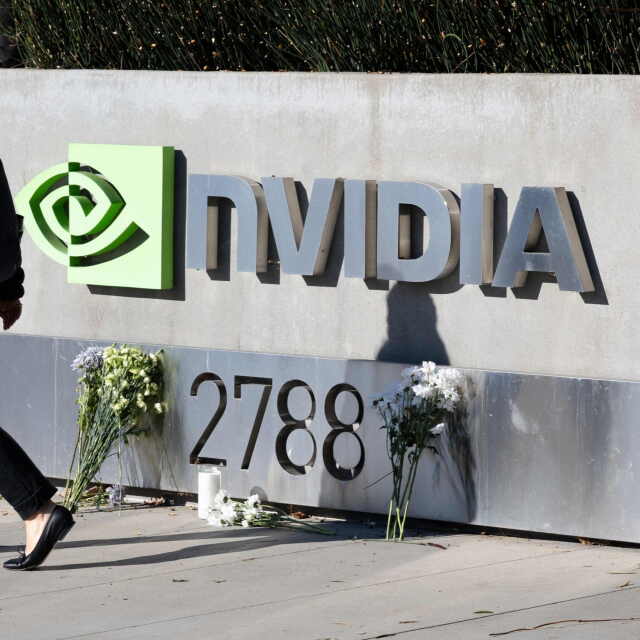
6:17Yeah, I think that's right. The report says that many workers don't file claims either because they're afraid of retaliation or because they just don't know about their rights. And research from the Economic Policy Institute estimates that minimum wage violations alone add up to$15 billion a year. And that's just one subset of wage theft. So, everyone, check your pay stubs, check your receipts. I think that brings us to Ricky's Indicator. How could we not talk about NVIDIA this week? I haven't talked about anything else. Well, of course, Jensen Huang resigned yesterday from his roles as CEO, president and board member after reports of two affairs, one with a health care executive at his company and another with an alleged Chinese spy.
7:01And this isn't just tabloid fodder, right? I mean, the amount of money involved here, as far as the company goes, is staggering. These are the most expensive affairs in recorded history. The stock has been all over the place, so it's hard to give you a definite number. But my rough estimate is that the stock dropped a little over 11 % since the news of the first affair broke. That means the company has lost about$465 billion in market value. So that is my indicator. Or in the spirit of this story, I need multiple indicators to affairs that cost more than the entire market capitalization of Coca-Cola.
7:36No, that is a wild statistic. OK, but only one of these affairs seems to have national security implications, right? The one with the alleged spy. So what is the 411 on Alice Wong? Yeah, so she's a former television presenter for Chinese state media outlets, but then she popped up as an executive at this computing firm. What a career arc. And this company she was the executive at, this was Megaspeed, right? Yeah, and allegedly it would work like this. Megaspeed would buy billions of dollars worth of advanced AI chips from NVIDIA, then bypass American export restrictions, and then ship the chips to China.
8:14Okay, so did anyone else have an inkling that something untoward was maybe happening here? Yes, before this week they did. The New York Times had been reporting on unusual business transactions between NVIDIA and Megaspeed for over a year now. What? A year? Yeah. Plus, a short seller spotted this odd relationship between Jensen and Alice back in May. What's new is that Jensen Wong admitted to at least one affair this week and resigned. The timing of this is just like you couldn't even write a script like this, honestly. Yeah. The news of the second affair came at an odd time. It was after Jensen Wong seemed like he may stay, or at least he had President Donald Trump's support to stay.
8:53Trump gave Jensen an emotional support call earlier this week, just asking to see if he was doing OK. But then two employees who worked at the company told The New York Times that there's this video of the second affair, although reporters did not view that video. Drama. So, I mean, it sounds like this news of the second affair was kind of a nail in the coffin. So where does NVIDIA go from here? So Chief Financial Officer Colette Kress is in as interim CEO. NVIDIA also reports earnings next week. But Jensen Wang, he was the face of the AI economy and also sort of a central banker for it. Yeah, I mean, and this is one of these examples, a rare example, I would say, of kind of a really prominent CEO that actually gets booted.
9:38You know, like a lot of CEOs, because they're deemed so important to the company, they kind of stick around no matter what happens. So I don't know. I just there's so many fascinating dimensions to this story. Yeah, and he also does not have voting control of NVIDIA. Oh, really? Yes. I cannot wait to see what happens next. Stay tuned. We'll see what happens next. So you don't know what's going to happen. No one does, Waylon. Ricky, I was looking to you. This episode was produced by Angel Carreras and engineered by Anli Huang. It was fact-checked by Tyler Jones. Kicking Cannon is our show's editor, and The Indicator is a production of NPR.
10:13Stay tuned for the following announcements and messages from our sponsors. This message comes from Google Workspace with Gemini. One subscription that does it all. Personalized AI in premium business versions of Gmail, Google Docs, Drive, and more. Try it free for 14 days at goo.gle slash workspace with Gemini.
Scan the code with your iPhone camera
Listen in the app.