The Indicator from Planet Money
23 Oct 2026 · 9m

 Add vo to ChatGPT or Claude to ask about everything you hear
vo listened to this episode to put together the overview and transcript, so there may be the odd mistake.
The episode of NPR’s Planet Money “Indicator” covers three news-linked “numbers.” Topic 1: CoreWeave’s financial risk—about a 60% chance of defaulting on debts within five years (Bloomberg). CoreWeave leases long-term data center space and sells shorter-term compute contracts; investors worry about heavy debt plus AI efficiency reducing demand and pricing power. Example: Epoch AI reported AI performance costs down 13-fold per year (1300%). NVIDIA is cited as a “backer” via promised compute support. Topic 2: A $963,000 Pokémon card theft from a FedEx truck; cards were PSA-graded and shipped to customers.
Waylon Wong, Adrian Ma, and Ricky Mulvey are the hosts (no external guests mentioned). Topic 3: Quebec’s maple syrup reserve reduced to zero (CBC); reserve held ~4 million gallons, about half the province’s average harvest, depleted by U.S. stocking ahead of tariffs.
0:01NPR.
0:06This is the Indicator from Planet Money. I'm Waylon Wong. I'm Adrian Ma. And I'm Ricky Mulvey. The three of us together can only mean one thing. It's Indicators of the Week. It's our weekly look at numbers from the news and why they matter. This week, we're looking at a syrup shortage. I'll explain why another debt riddled tech company is making investors wary. and a Pokemon heist. Like the Brewers and the Rays outfielders facing off in the World Series? We gotta catch them all. We play ball after the break. Stay tuned for the following announcements and messages from our sponsors. This message comes from Edward Jones, where they believe rich is about taking care of what gives your life meaning.
0:52That's why your financial advisor personalizes your plan to help you preserve your progress and create something that lasts. Let's find your rich. Edward Jones, member SIPC. This episode's sponsor is HubSpot, which offers the following message. What if instead of updating your CRM, your CRM updated you? HubSpot's self-updating CRM keeps your customer context current so you can win more deals. Learn more at HubSpot.com. This message comes from LinkedIn. As a small business owner, you wear many hats. You're the owner, the marketer, the seller, the hirer. With LinkedIn, you have the tools to help you boost your visibility, find prospective customers, and find the best team for your small business all in one place.
1:38So while LinkedIn can't hang up all of your hats, it makes it easier to wear them all. Learn more at linkedin.com slash indicator show. It's Indicators of the Week. Ricky, what do you have? So my indicator this week is 60%. That's from the data center company CoreWeave. And that's the chance of it defaulting on its debts in the next five years. That's according to Bloomberg. Ruh-roh. Okay, there are so many data center companies out here. Ricky, can you do just a CoreWeave 101 for us? Yeah, so stop me if you've heard this before, but CoreWeave's business is taking out long-term leases on data centers and then selling shorter-term contracts to customers to use them.
2:19Wait a minute. That's like WeWork, but for data centers. A little bit, and those comparisons have been made. But the difference is that there are bigger customers filling up the demand for these data centers. It's not just like a raw juice startup looking for office space. It's IBM buying compute. However, CoreWeave's business is really centered around these data centers. Yeah, but how did things get so bad for the company? The story is changing and investors are realizing the risk. We reported on Oracle's debt problems earlier this week. Think of Oracle like a risky cousin that you have. Like he likes to go skateboarding without a helmet and he refuses to wear a seatbelt in your backseat.
3:00No. Well, then I'm not starting the car. Don't start the car. Corweave is more like that cousin's friend. He wants to go free solo rock climbing and he likes to jump off cliffs using the squirrel suit. Well, he's not allowed in my car at all then. I'm glad you're setting these rules for these hypothetical characters. Safety first. So more plainly, investors, they're worried that CoreWeave is taking on a ton of debt. And at the same time, AI is becoming a lot more efficient. So some investors are also concerned that we may not need as many data centers. Oh, so then it's like their data centers are sitting empty.
3:35They can't get customers to pay leases and then they don't have any money. Yeah, it's that plus pricing power. And back in September, Epoch AI, it's a research group, they reported that the cost of achieving like a basic level of AI performance is down 13 fold per year or 1300 percent. Imagine if we could get that much better at podcasting over the same period of time. Then you would be paid pennies per year. I don't like that. I didn't really think through the economics of that. Oops. So the cost of AI performance is just dropped astronomically. In some cases. And either way, CoreWeave bond and stock prices are falling.
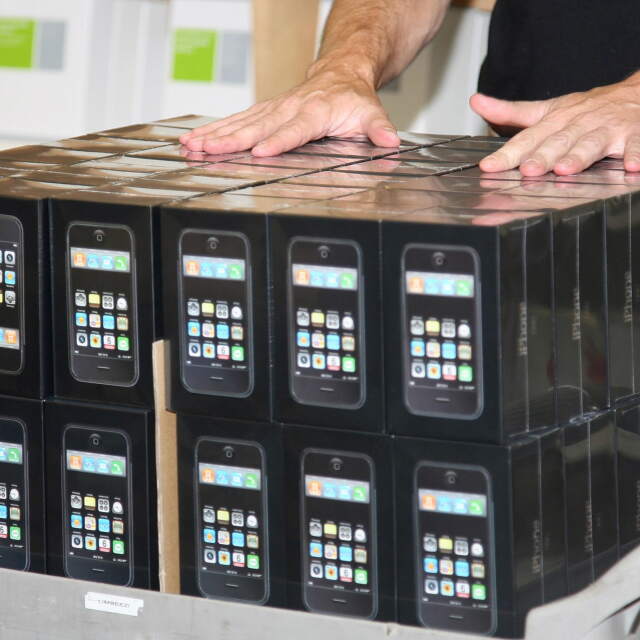
4:14Now, bulls would say this fall is an overreaction. CoreWeave has a lot of customers on contract who plan to use and pay for their services. Plus, it is backed by a powerful sugar daddy named NVIDIA, which promised to take care of CoreWeave and buy up its compute capacity if, you know, times get tough. Yet another pot that NVIDIA has its fingers in. All right. Adrian, what do you got? My indicator is$963 ,000. And it comes to us from Santa Ana, California, where the police say$963 ,000 is the value of sports and Pokemon cards that were stolen from the back of a FedEx truck last week. Interesting.
4:58And so what's the cardboard doing behind you? Pay no attention to that. To the pallet of cardboard boxes. You know, on a more serious note, there's a, you know, mom and pop run trading card game shop in my town that just got robbed. They broke in. They smashed all the display cases and took all the cards out. And there's been actually a spate of these robberies at local game shops and card shops around where I live. It's like a whole thing. Yeah. And what happened here was that the FedEx truck was sitting outside a business called Professional Sports Authenticator, which what they do is they authenticate and grade trading cards and other kinds of memorabilia.
5:37And the cards had just been graded by PSA, were going to be shipped back to the customers. But apparently the driver of the FedEx truck left it unattended long enough for the thieves to break in and steal the cards. And they knew exactly what they were doing, right? You wait until the cards get graded. So you know that these are the good ones. They were case in the joint, it appears. The company says it will compensate the customers, though. But this is a ton of money. I mean, where did that$963 ,000 come from? It is a ton of money, and it's not totally clear at this point. It seems like this is an estimate and could rise over time.
6:20But the value could be based on how much the card owners have insured their cards for. Ricky, are your cards insured? Absolutely not. I think my highest value card is worth like$20, and I got lucky. Ricky is fanning out his collection of Pokemon cards right now for those of the people listening. Well, if you want to know how much of those cards are worth, Ricky, and to get a sense of how much these cards have just surged in value this year, you might check out this Pokemon card index put together by a site called Card Ladder. We've had them on the show before. and basically this pokemon price index if you will it's kind of like the consumer price index which we talk about all the time on the show right you know the consumer price index is a basket of goods and services uh the pokemon price index that card ladder puts together it tracks about 9 600 different pokemon cards all the way from your alakazams to your zapdos which I just learned about today.
7:20And according to this index, the prices for Pokemon cards have more than doubled in the past three months. Moving money from data centers to Pokemon cards. This is the sign of a healthy economy. That's the economy we deserve, yes. So that is my indicator. Waylon, take us home. All right. Well, my indicator has to do with maple syrup. Are you guys team waffles or team pancakes? Waffles. Easy. Easy. I'm waffles too, actually. Easy. Adrian? I am more of a maple syrup on my oatmeal kind of person. Ooh, that's very nice and very healthy. Got to watch your cholesterol, right? But regardless of what you're putting your syrup on, there's a good chance that your syrup comes from Quebec.
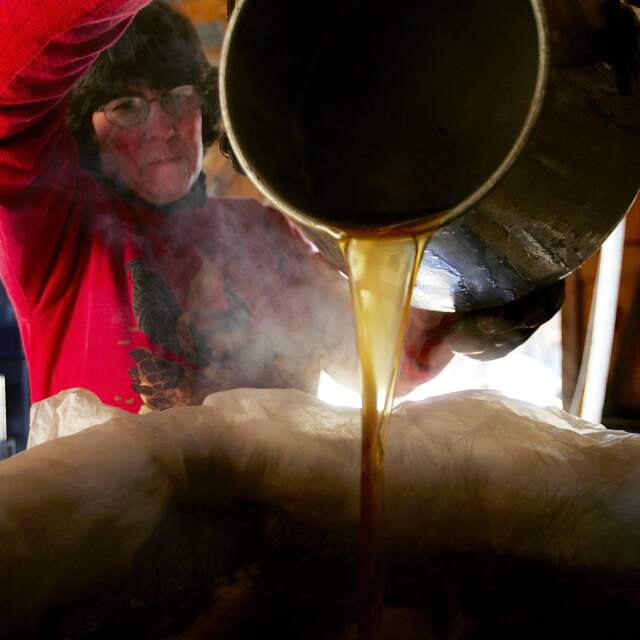
8:03But there's a problem. The president of the Maple Syrup Producers Association in Quebec gave an interview to our friends at the CBC this week, and he said the province's strategic maple syrup reserve, quote, has been reduced to zero. That is my indicator. Zero maple syrup in Quebec stockpile. Oh, no. Where's all this maple syrup going? All right. Do you guys want to hear some fun facts about this maple syrup reserve? 100%. It covers the equivalent of five football fields, which is wild to me. It can hold around 4 million gallons of syrup. That's about half of the province's annual average harvest.
8:44Wow. Wow. Is this, are we talking about one big tank or a series? It's a series of big tanks. Yeah. It's not just like one big swimming pool. Just like picturing an amber lake of sugary goodness. And what's happening is that demand for maple syrup is up. Last year, commercial customers in the U.S. stocked up ahead of potential tariffs. The majority of Quebec's maple syrup exports go to the U.S. So it's basically like the U.S. sucked everything out of that strategic maple syrup reserve. Yeah, we took it all. One big sticky pipeline. And the thing with maple syrup is that it is very weather dependent.
9:21You need a cycle of below freezing and above freezing temperatures to make the sap flow properly. Production in Quebec has actually been very robust in the last few years, but a bad upcoming harvest will, of course, make it harder to replenish the reserve. Even if they do replenish their reserve, they are still kind of worried about their customer base. You know, with all the trade war stuff, the U.S. is not quite the reliable trading partner it once was. And so the Quebec producers are looking for support from the government and they're looking to diversify their export markets. Hmm. Well, I don't want to stop using maple syrup, so they better get it figured out.
9:57Yeah, you're like, I can't use high fructose corn syrup. I won't do it. This episode was produced by Julia Ritchie and engineer by Anli Huang. It was fact-checked by Cooper Katz-McKim. Kicking Cannon is our editor, and The Indicator is a production of NPR. Stay tuned for the following announcements and messages from our sponsors. This message comes from NPR sponsor Charles Schwab with its original podcast on investing. Each week, you'll get thoughtful, in-depth analysis of both the stock and the bond markets. Listen today and subscribe at schwav.com slash oninvesting or wherever you get your podcasts.
Scan the code with your iPhone camera
Listen in the app.