Ask ChatGPT

 The Indicator from Planet Money
15 Oct 2026 · 8m · 5 chapters
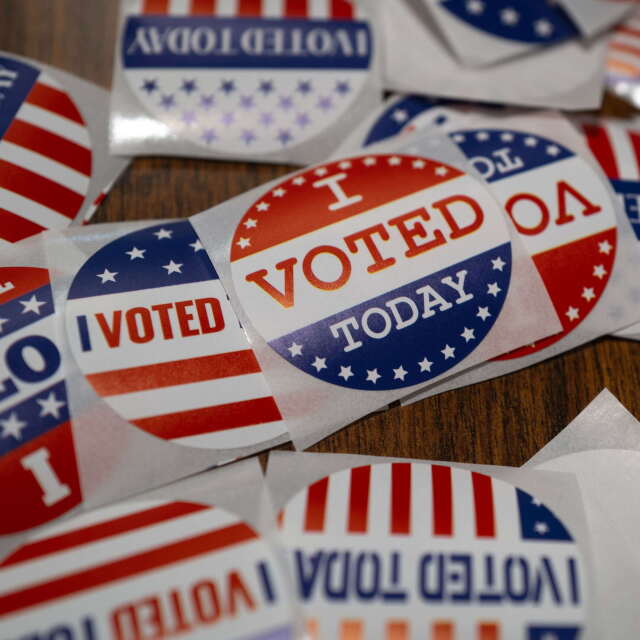
Why U.S. political campaigns have become so expensive, focusing on Supreme Court rulings, outside spending, and “dark money,” and whether money can buy elections.
Maria Aspin, journalist and NPR contributor (co-host/interviewer). Adam Bonica, Stanford political science professor who studies money and elections (data-driven explanation). Trevor Potter, former Republican FEC chair; now leads the Campaign Legal Center (legal/policy critique).
Citizens United (2010) and earlier Buckley v. Valeo (1970s) expanded money-as-speech and enabled secret, unlimited independent spending. Weak enforcement and deadlocked Congress created a “wild west.” Obama’s 2008 rejection of public funding set a precedent. Money affects who can run and how campaigns communicate, but doesn’t guarantee victory.
Elon Musk reportedly gave nearly $300M to Republican groups; 2016 Hillary Clinton outraised Trump; Kamala Harris outspent Trump in 2020; 2024 crypto ads sometimes avoided mentioning crypto while attacking opponents.
Written by AI. May contain mistakes.
Explores how money impacts elections and the perception of its influence.
“I'm Waylon Wong, joined by journalist and friend of the show, Maria Aspin.”
Discusses the evolution of campaign finance laws and their implications.
“Adam Bonica has spent more than 15 years digging into the data of how money shapes U.S.”
Examines how financial resources shape candidate backgrounds and elections.
“has been unable to change the laws and clarify them.”
Analyzes the influence of undisclosed funding and special interests in politics.
“and helps get their message out ahead of the primaries that determine who's actually going to run in the general election.”
Considers potential paths for reform in campaign finance and political integrity.
“I think the longer term effects are a weakening of our democracy and a more corrupt government.”

Get the gist, explore an idea or ask about something said.
 Claude
On The Indicator from Planet Money, what are the key points of this episode?
Searching your listeningAutomatic transcript. May contain errors.
0:01NPR.
0:06Next month's midterm elections could be the most expensive in history. Billionaires are largely to blame. I saw this week that Elon Musk told the New York Times he's given Republican groups almost$300 million since July. I guess that buys a lot of attack ads. But Republicans already had a big spending advantage. By some estimates, they've raised almost twice as much as Democrats for the midterms. And yet, despite all this money, things aren't looking good for the Republicans. If you trust the polls, of course. Right. But also prediction markets like Kalshi and Polly Market, they think the Democrats are going to win.
0:41This wouldn't be the first time that money doesn't win big. Case in point, Vice President Kamala Harris far outspent President Trump two years ago. And, well, we know how that turned out. Are you saying billionaires can't actually buy elections? Shockingly, it does seem like their money can't actually buy everything. But that's still not stopping people or corporations from spending more and more of it on U.S. politics. This is The Indicator from Planet Money. I'm Waylon Wong, joined by journalist and friend of the show, Maria Aspin. Welcome back to The Indicator, Maria. Thank you, Waylon. It's great to be here.
1:19And over the next three weeks, I'll be joining you to look into how money is shaping next month's midterms. Today, money doesn't always win elections, so what else does it do?
1:54This message comes from LinkedIn. As a small business owner, you wear many hats. You're the owner, the marketer, the seller, the hirer. With LinkedIn, you have the tools to help you boost your visibility, find prospective customers, and find the best team for your small business, all in one place. So while LinkedIn can't hang up all of your hats, it makes it easier to wear them all. Learn more at linkedin.com slash indicator show. This message comes from BetterHelp. BetterHelp is in-network with more than 125 health plans with an average co-pay for eligible members of just$23 per session. Don't have eligible insurance?
2:33You can still get 10 % off your first month. Visit BetterHelp.com slash NPR to explore your payment options. That's BetterHelp.com slash NPR. Adam Bonica has spent more than 15 years digging into the data of how money shapes U.S. elections. He's a political science professor at Stanford, and he says that this is a pretty negative part of American exceptionalism. It's pretty rare for established democracies to have money in the political system be A, this important, and B, this pervasive, and C, for politicians to be so obsessed about it. So how did we get here? A lot started with Citizens United, the 2010 Supreme Court decision that erased the limits on independent corporate spending in elections.
3:25But Adams says the problems began way earlier, like decades earlier. It's hard not to look at Buckley v. Vallejo, which was a Supreme Court decision that was decided in the 1970s that had set out the legal precedent that money is more or less equivalent to speech. And that has allowed wealthy individuals to basically be able to give as much as they want into the system. Adam is not alone in blaming the Supreme Court. Trevor Potter is a Republican and the former head of the Federal Election Commission. He points out that none of the current Supreme Court justices have ever run for public office.
4:08And he says that's part of a bigger problem. It's been a combination of a Supreme Court, which I think increasingly doesn't understand how elections work, and a commission which does not enforce existing laws, and a deadlocked Congress that has been unable to change the laws and clarify them. So all of those together has resulted in a kind of wild west of non-disclosure and enormous sums being spent in elections. Today, Trevor runs a nonpartisan nonprofit called the Campaign Legal Center. But in the early 2000s, he advised the late Republican Senator John McCain on his two presidential campaigns, including when he ran in 2008 against then-Senator Barack Obama.
4:58And here's where Obama is also partly to blame for where we are today. For decades, presidential campaigns have been partially funded by the U.S. government, which put limits on spending. But in 2008, Obama was raising a ton of outside money, and so he became the first major party candidate to reject public funding. That obviously worked out for former President Obama. But it seemed to set a precedent. The next presidential election, neither candidate took public funding. Meanwhile, the Supreme Court lifted even more barriers with Citizens United, and then spending really started to get out of control, despite some mixed results.
5:35Yeah, we saw pretty quickly that money didn't always guarantee victory, at least in the Electoral College. Back in 2016, Hillary Clinton outraised Donald Trump in the election that first sent Trump to the Oval Office. What is that saying about doing the same thing over and over again and still expecting different results? Mm-hmm. Doesn't seem to apply to Democrats spending gobs of money to try to win against Trump, though. But back at Stanford, Adam points out that having money does make a difference at every step along the way. That starts with who can even afford to run for office. It's part of the reason why we see, say, so few working-class candidates in Congress, so few young people in Congress, and so many millionaires or lawyers who happen to be a group that is really good at fundraising for each other.
6:22It's shaping what Congress looks like before we ever get a chance to vote. Being able to fundraise also helps candidates get more internal support from their parties and helps get their message out ahead of the primaries that determine who's actually going to run in the general election. And if you win your primary, suddenly you have to get your message out to everyone. We're seeing that right now with ads supporting some candidates and attacking their opponents, plus all the calls and emails and text messages trying to turn out voters. This is where Trevor says money does matter in general elections.
6:54You have to be able to communicate to voters. They have to hear your message in order to decide whether to vote and whether they're going to vote for you or not. It doesn't guarantee results. But without it, you are not going to have a chance. Just want to say to a candidate, you know who you are. I have heard your message. You can stop texting me. Heard your message so many times. This entire episode is directed at you. Exactly. It's personal. And it's not just individual candidates trying to get the message out. It's billionaires who don't want more taxes, or it's crypto and AI companies who want to make sure that the people elected are friendly to their industries.
7:35This is dark money's time to shine. Because Citizens United didn't just lift the limits on how much corporations and other special interests can spend. It also lets them do it in secret. Or at least without being upfront about why they're supporting a candidate. Remember the crypto companies who poured money into the 2024 elections? Some of the ads they bought didn't even mention crypto. They just attacked candidates the industry didn't like. Trevor worries that even if this kind of spending doesn't always guarantee victory, it's still warping the way our political system works. I think the longer term effects are a weakening of our democracy and a more corrupt government.
8:15That is what we're seeing today with these large contributions from the industries that want action out of this administration or don't want any action and want to make sure they don't get it. Today, neither political party wants to be the first to back down and stop this campaign finance arms race. But Adam is hoping that eventually, somewhere, cooler heads will prevail. My optimistic hope is that we see self-reform within the parties, and that's then rewarded by voters. The alternative is it's just a death spiral. A death spiral. Maria, we cannot end the episode of death spiral. Help me out here.
8:55No, there are some people working on solutions, and we're actually going to talk to some of them over the next two weeks. And we'll also dig more into the dark money status quo. So stay tuned.
9:08This episode was produced by Corey Bridges with engineering by Sino Lafredo. As fact checked by Sierra Juarez, Kate Kincannon is our editor, and The Indicator is a production of NPR.
9:22Stay tuned for the following announcements and messages from our sponsors. This message comes from NPR sponsor Charles Schwab with its original podcast on investing. Each week, you'll get thoughtful, in-depth analysis of both the stock and the bond markets. Listen today and subscribe at schwav.com slash oninvesting or wherever you get your podcasts.