Ask ChatGPT


 The Indicator from Planet Money
6 Oct 2026 · 8m · 2 chapters
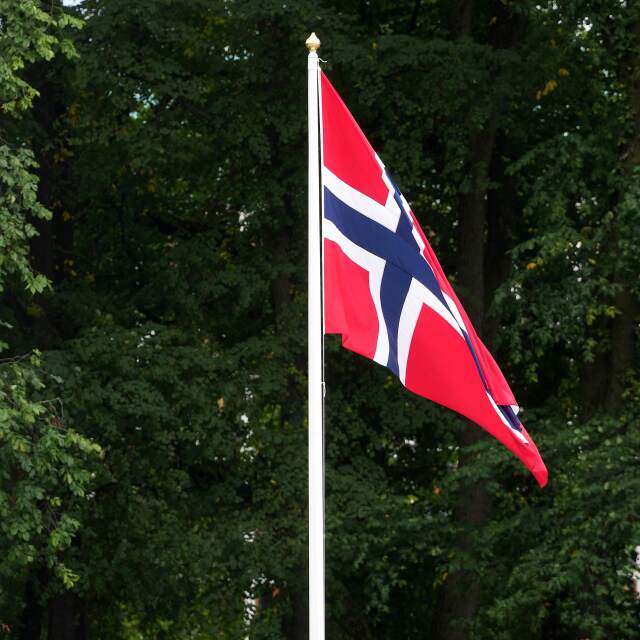
The episode explains Norway’s sovereign wealth fund dilemma over whether to divest from companies tied to Israel amid the Israel-Hamas war and Gaza’s humanitarian crisis. It describes Norway’s $2.3 trillion fund (about 20% of the government budget) and how it is usually passive, owning stakes in thousands of major firms.
Ida Voldenbacke, head of Norway’s Central Bank, who acknowledged “dilemmas about responsible investment”; and Karin Thorburn, a finance professor at NHH Norwegian School of Economics and former committee member on the fund’s strategy.
ethics rules force exclusions (e.g., tobacco, coal, nuclear weapons, some defense firms), but Israel-related divestment created political and foreign-policy backlash.
partial divestment from Israeli stocks; divestment from Caterpillar over bulldozers used in Gaza; U.S. criticism and threats of retaliation; debate over whether to exclude big tech used by defense and involved with Israel.
Written by AI. May contain mistakes.
Delve into the complexities of Norway's investment decisions amidst global conflicts.
“Dell.com slash Dell dash pro built for you.”
Delve into the complexities of Norway's investment decisions amidst global conflicts.
“Norway's influential minister of finance, Jens Stoltenberg, has the last word on a lot of what the fund does.”

Get the gist, explore an idea or ask about something said.
 Claude
On The Indicator from Planet Money, what are the key points of this episode?
Searching your listeningAutomatic transcript. May contain errors.
0:01NPR.
0:06Norway. It's one of the happiest countries in the world. Maybe because it's also one of the wealthiest. Can't hurt. It's a top producer of oil and gas. And since the 1990s, Norway's government has reinvested its oil money in a sovereign wealth fund. Ooh, buzzwords. Love a buzzword. As indicator listeners know, sovereign wealth funds are so hot right now. And Norway has the largest one in the world. It's currently worth around$2.3 trillion. But with mo' money come mo' problems. For the past year, Norway's fund has been facing a public global crisis over its investments in Israel and its own ethical rules.
0:47That's become a third rail for a lot of people these days. Most companies and investors don't want to talk politics of any kind right now. But the Israeli-Hamas war and the resulting humanitarian crisis in Gaza is especially fraught. Ida Voldenbacke, the head of Norway's Central Bank, in February acknowledged that the war has created what she calls dilemmas about responsible investment. And she's not the only one struggling with this. Just ask Ed Sheeran. I don't think he wants any more questions about that topic. This is The Indicator from Planet Money. I'm Waylon Wong. And back with me is friend of the show, Maria Aspin.
1:29Hey, Maria. Hey there, Waylon. Today on the show, how the world's largest sovereign wealth fund is struggling with the ethics of investing in Israel.
1:41Stay tuned for the following announcements and messages from our sponsors. This message comes from Insperity, because how you HR matters. From payroll and benefits to HR compliance and talent development, helping your business move forward with confidence. Learn more at insperity.com slash HR matters. This message comes from Superhuman. Superhuman brings together connected tools like Grammarly, Docs, and Mail into one productivity suite. Built on the idea that low-value tasks crowd out meaningful focus, Superhuman meets teams where they already work. It operates proactively alongside writing and email workflows to help clear what is in the way.
2:22Superhuman from the makers of Grammarly. Start streamlining your workflows with Superhuman today at superhuman.com. This message comes from Dell Technologies. Interruptions happen at work, but with the Dell Pro laptop powered by Intel Core Ultra with vPro, built with optimized battery and built-in intelligence, your tech won't slow you down. Dell.com slash Dell dash pro built for you. Sovereign wealth funds are basically a government's way of investing a country's riches. Most of the countries with big funds have a lot of oil money like Abu Dhabi and Kuwait. So they reinvest that money to help fund the government and have lower taxes.
3:04And sometimes they get creative. Remember Saudi Arabia's attempts to create a new International Golf League? Maybe that's part of why President Trump wants to start a U.S. sovereign wealth fund. He does like to golf. Oh, I did an episode on it. But Norway's been doing this for decades, and today its sovereign wealth fund makes up almost 20 percent of the government's annual budget. And it's a hugely powerful investor outside of Norway. The fund now owns a small percentage of about 7 ,000 companies. That includes pretty much every big stock you've ever heard of. NVIDIA, Apple, Amazon, Google, JPMorgan Chase, etc., etc., etc.
3:43That gives Norway some serious power in corporate America. The fund's CEO, Nikolai Tangen, can even get CEOs like Dario Amadei and Elon Musk to appear on his own business podcast. Hey, competition for us? What? Some Norwegian competition. But despite its power, Norway's sovereign wealth fund usually tries to be pretty boring, or what investors call passive. It mostly invests in stocks and bonds tracking the broader market, like a global index fund. And you won't find any big golf leagues or other boondoggles here. Norway's fund isn't even allowed to invest in more mainstream alternative investments like private equity.
4:24And only a very small percentage of its money goes to active managers making judgment calls. But the active choices can still cause big problems. They're extremely passive. It's really a passive fund. But the discussion is always around the active choices. Last week, I hopped on an international Zoom with Karin Thorburn. She's a finance professor at the NHH Norwegian School of Economics. And she's also served on government committees about the Sovereign Wealth Fund's investing strategy. If you look at research, the best way to achieve the highest possible risk-adjusted expected return on a portfolio is to include all stocks.
5:07All stocks. But here's the problem. Norway can't do that. Unlike most sovereign wealth funds, Norway follows the guidance of an independent ethics committee, which tells it not to invest in some companies. We're talking tobacco companies like Philip Morris, coal miners, nuclear weapons companies, and even big defense contractors like Boeing and Lockheed Martin. Seems like there were always some inherent ethical contradictions in this model for an oil fund. Right. Making money from oil, that's fine. But investing in coal, oh no. And we saw this during the heyday of ESG, when investing for environmental, social, or governance reasons was popular.
5:47Ethical investing is always a tricky balance, but it got a lot more complicated for Norway after Hamas attacked Israel and Israel declared war. Last August, Norway's fund said it would divest from some but not all of its Israeli stocks at the recommendation of its ethics committee. It also said it would divest from the U.S. company Caterpillar because the Israeli government was using Caterpillar bulldozers to destroy Palestinian homes in Gaza. This started a crisis for Norway, became a big issue in last year's elections, with some Norwegians saying the fund wasn't divesting enough from Israel.
6:23But the Caterpillar decision also created a big foreign policy mess for Norway in the United States. The White House and the late Senator Lindsey Graham publicly criticized Norway and threatened retaliation. Because look, when a foreign government's fund decides to divest from a U.S. company, that looks like foreign policy more than internal ethics. As our Norwegian finance expert Karin points out, this decision also opened the door to questions about what other big companies are involved with the war in Gaza and whether Norway should divest from all of them. It's a very fine line to decide which companies assist in the war.
7:01You could say that Apple is useful because soldiers may communicate by cell phone, that all kinds of car producers contribute because the military drives their cars. And then the question is, where do you set that limit? These are existential questions for a big investor that's supposed to largely follow the market, especially when the market is powered by the biggest tech companies like Microsoft and Amazon and Alphabet. A lot of them also do business with the Israeli government. Norway's influential minister of finance, Jens Stoltenberg, has the last word on a lot of what the fund does. In a recent conversation with fund CEO Nikolai Tengen on Tengen's podcast, the minister talked about the Israel dilemma when it comes to investing in big tech.
7:50If we cannot be invested in the big tech companies, which deliver, of course, different services to many defense companies, then we cannot be a broad-based sovereign wealth fund anymore. This all came to a head in November, when Norway's parliament voted to suspend part of the ethical guidelines governing the fund. Jan Stoltenberg told the Financial Times the suspension would help the fund avoid having to sell out of big tech companies. Since then, the government has been reviewing the fund's ethics guidelines. It's due to deliver a report by next week. The fund and Norway's Ministry of Finance both declined to comment, but Karin points out that the ministry doesn't have to follow whatever the report recommends about the Ethics Committee.
8:32And she says there's a lot of political and financial reasons for the fund to stick to its passive investing roots. Norway is really trying to avoid creating political conflicts with the fund. It's hard to be rich, actually, in the world, and you need to tread carefully. With great riches come great responsibility. It must be a nice problem to have. Maria, great to have you with us. We'll see you on the next episode. This episode was produced by Julia Ritchie and engineered by Travis Hagan. It was fact-checked by Sierra Juarez. Kicking Cannon is our show's editor and The Indicator is a production of NPR.
9:12Stay tuned for the following announcements and messages from our sponsors. This message comes from Insperity. Because how you HR matters. From payroll and benefits to HR compliance and talent development, helping your business move forward with confidence. Learn more at insperity.com slash HR matters.