Ask ChatGPT


 The Indicator from Planet Money
16 Oct 2026 · 9m · 3 chapters
Inflation “super core” services, Bumble’s buyout and stock surge, and the 100-year Winnie the Pooh milestone tied to repatriation debate.
No named guests; the episode is hosted by NPR’s Indicators of the Week team (speakers include Adrian, Ricky, and Waylon Wong).
Super core inflation (certain services like legal/healthcare/manicures/landscaping) is running at a 4.6% annualized rate, while wages rose only 3%—suggesting workers aren’t keeping up. Bumble’s stock returned 119% since a prior downturn episode, driven by a buyout bid. Pooh’s 100-year anniversary revives calls for the New York Public Library to return the Pooh bear to England.
CPI headline inflation 3.7% (September); Ithaca Holdings taking Bumble private, paying over double the prior stock price; Pooh bear on display at NYPL; UK requests in 1998 and a recent Queen Camilla emissary attempt.
Written by AI. May contain mistakes.
Discussion on supercore inflation and its implications on wages.
“4.6 is the annualized rate of so-called super core inflation over the past three months.”
Examination of Bumble's stock recovery and strategic changes.
“Okay, so remember a couple of months ago on Indicators of the Week, we talked about how bad things were at Bumble, the dating app company.”
Exploration of the history and cultural significance of Winnie the Pooh.
“That is the anniversary being celebrated this week by the classic children's book, Winnie the Pooh.”

Get the gist, explore an idea or ask about something said.
 Claude
On The Indicator from Planet Money, what are the key points of this episode?
Searching your listeningAutomatic transcript. May contain errors.
0:01NPR.
0:06Gah! Gah! Waylon, is that an animatronic bird? Oh, why yes, this is Molly, my one-of-a-kind singing and dancing bird automaton. She plays an important role in our weekly roundup of the most interesting economic headlines, also known as... Indicators of the Week! Indicators of the Week! This week, we're going to tell you about inflation, Bumble's latest pivot, and another play thing that is also in a bit of a custody battle. Unlike Kelly Clarkson and a certain Brooklyn toy shop, we will be back after the break.
0:46Stay tuned for the following announcements and messages from our sponsors. This episode's sponsor is HubSpot, which offers the following message. What if instead of updating your CRM, your CRM updated you? HubSpot's self-updating CRM keeps your customer context current so you can win more deals. Learn more at HubSpot.com. This message comes from Capella University. You know that feeling when there's a spark building inside you that you were meant for more? That's your own drive pushing you towards what's next. Capella University gets that. With their FlexPath learning format, you can set the pace and earn your degree without putting life on pause.
1:26You've built experience and know what you're capable of. Now, this is your time to turn that momentum into more. The only real question is, what can't you do? Learn more at capella.edu. This message comes from LinkedIn. Owning a small business comes with a lot of challenges and means juggling multiple things at once. It's even harder to do it efficiently. But with LinkedIn, you get all the tools you need to grow in one place. With LinkedIn, simplify your sales, marketing, and hiring so that you can actually run your small business. Learn more at linkedin.com slash indicator show. It's indicators of the week.
2:07Adrian, how about you go first? Okay. My indicator is 4.6%. 4.6 is the annualized rate of so-called super core inflation over the past three months. Sounds like something Elon Musk came up with. Well, this term is actually based on data from the latest Consumer Price Index report. And when we often talk about the CPI, we often talk about the headline inflation number. That is how much goods and services have changed in price over the past year. In September, by the way, that number came in at 3.7%, which is the second month in a row that it's ticked up. But this number is really just a kind of bird's eye view of inflation.
2:49And if you want to understand the underlying forces, you can zoom in even more and you could look at just goods or you could look at just energy. Or you could look at what is called super core inflation, which just looks at certain kinds of services. Yeah, like lawyers, healthcare, manicurist. Landscapers. This would make a perfect family feud question. Five things that people say belong in super core services inflation. Nice. And then you know some confused person is going to buzz in and be like, refrigerators. And it's like, no, we're talking about services. I respect points for creativity. The thing about the price of these kinds of services is that they can change relatively quickly when you compare them to things like the cost of housing.
3:37So by focusing on the price of services, economists can see how much people's wages are driving inflation. And, you know, when you think about it, it's like employers raising employees' wages. We tend to say that's a good thing, right? People are getting a raise. Unless that leads to an inflationary spiral. We don't want that. It's a good thing. It's a good thing. Full stop. Raise the money. Everyone here gets a raise. Well, this is the rub, right? Because employers may decide, okay, I'll give everybody a raise, but then I'll just pass that cost on to the customer in the form of higher prices.
4:09And if those wages don't increase at the same level, well, that's not good for employees, right? And this is kind of what we're seeing right now. Super core services inflation up by a rate of 4.6%. And wages over the past year have only gone up 3%. Okay, so wages not keeping up with super core inflation. Thank you, Adrian. Now, Ricky, what do you have? Okay, so remember a couple of months ago on Indicators of the Week, we talked about how bad things were at Bumble, the dating app company. Yes, I remember because they were like, new plan. It used to be that women always had to message first, and that was kind of the app's whole thing.
4:47And then they were like, never mind. Exactly. Revenue had been declining. A lot of daters were in just like app fatigue. Well, if you listened to that episode and thought, wow, this show has absolutely no idea what it's talking about. I'm going to go buy Bumble stock. Then you would have doubled your money in just a couple of months. We are not a financial advice podcast. Yeah. Like I need to make that disclaimer. So my indicator is 119%. That is the return on Bumble stock since we talked about how bad things were for dating app companies. Yeah. The business didn't suddenly get better. This is from a buyout bid.
5:26A group called Ithaca Holdings is going to take Bumble private, and it's an investment group run by some former big dogs at Meta and Instacart. Ithaca is paying more than double the stock price was to take the company off a listed exchange. That's the huge bump. Current CEO and founder Whitney Wolf Hurd said that she was excited to have partners who believe in Bumble's women first mission, though I should note it is two dudes who are taking the CEO spot from a woman. Did they message her first or did she message them first looking for a buyout? That is the question we need to find out. One of the new co-CEOs, Ravi Gupta, is betting that as AI advances more and more, the value of human relationships will grow.
6:08The new owners said this investment is a bet on the future of humanity. A bet that humans will want to pay to meet other humans. Yeah, so Gupta was not super clear in his post about what the plan is for Bumble moving forward, writing, together we intend to build the best company in the world for helping people find each other. But he doesn't need to be super clear. This is why businesses often go private. Management doesn't have to report to shareholders every quarter and talk about what's going on. So we might never know. Womp womp. That's what I've got. Waylon Wong, what do you have? All right.
6:43My indicator is 100 years. That is the anniversary being celebrated this week by the classic children's book, Winnie the Pooh. Have you guys read it? It may have been read to me, but not in my memory. I don't remember reading it so much as just knowing it. Does that make any sense? Yeah, I mean, it's in the culture. It's just like there in your childhood. Exactly. Well, it might not surprise you to learn I've read all the books by A.A. Milne multiple times. I read the autobiography of Milne's son, the real-life Christopher Robin. That was a huge bummer, by the way. Yeah, I am kind of a super fan.
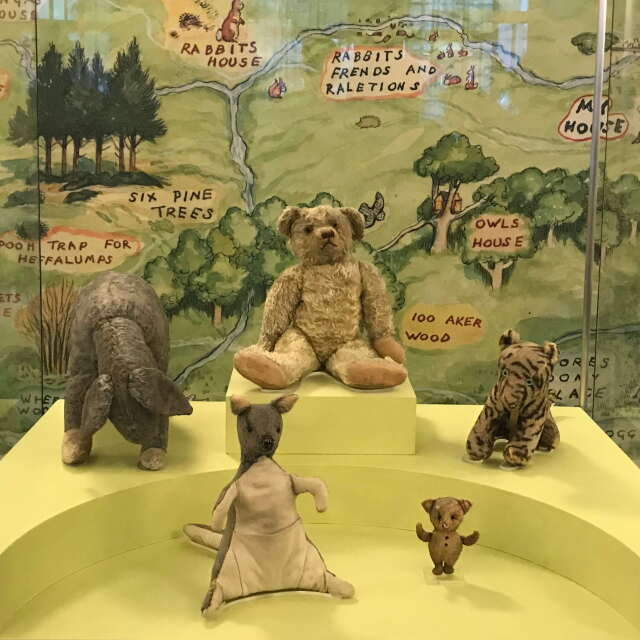
7:19And I visited the original Pooh teddy bear at the New York Public Library. This is a stuffed bear that Christopher Robin got for his first birthday in 1921. Do they have a nickname for Pooh bear super fans? The Pooh troop? Pooh heads? Pooh troop is much cooler. Pooh heads sound terrible. So many good options. Let's strike that from the record. Yeah, so Winnie the Pooh is on display at the New York Public Library, along with the stuffed versions of the other characters like Eeyore and Tigger. And millions of visitors have come through the library where Pooh lives. He's a big tourist draw. And I chose the Poohversary as my indicator because this 100-year milestone is reviving the debate about whether Pooh should go back to England.
8:03Huh, so England called and said, another country has a historically important artifact and we'd like that returned to us. Yes. And in the case of Pooh, they've been trying this for years. In 1998, a member of the British Parliament asked for the stuffies to be returned. And then a couple of years ago, an emissary of Queen Camilla tried to get the New York Public Library to send Pooh to Buckingham Palace just for a short-term visit. And the representative of the Queen told the Washington Post that the library said no because the toys are too old and they get so many visitors. How did the New York Public Library end up with the Pooh bear?
8:39Well, if you want to know the backstory, it's that the toys got into the possession of a publishing company. And then that publishing company had the toys in New York. And then the owners of that company donated Winnie the Pooh and his friends to the library. And that happened in 1987. So they've been there a long time. Oh, okay. The British don't really have a rightful claim to this. They just kind of like want them to do a solid for them. I mean, you could argue that Winnie the Pooh is part of, you know, England's cultural patrimony. But as Ricky reminded us before, the British do not have the best track record when it comes to keeping stuff from other countries.
9:24Like if you go to the British Museum website, there is a whole section about contested items in the museum collection. So think like European in bronzes, the Nigerian government has asked for those sculptures to be repatriated or the Elgin marbles. These are sculptures from the Parthenon that the Greeks are trying to get back. If you want to know more about this stuff, I recommend that there's a podcast and TV show called Stuff the British Stole. That's all about the backstories of these contested artifacts. How the tables have turned. We didn't steal this one. No, no. It's like the A.A. Milne Estate sold poo and the other stuff used to this publishing company.
10:00And then the executives at that company donated the toys to the New York Public Library. So it's up to the library whether it wants to give those stuffies back. Okay. England, if you're listening, which we know you are, use money. We're not going to give them back. Buy it. Make them an offer. How many pots of honey? This episode was produced by Angel Correras and engineered by Travis Hagen. It was fact-checked by Leila Dose. Kicking Cannon is our editor and The Indicator is a production of NPR. Stay tuned for the following announcements and messages from our sponsors. Support for NPR and the following message come from Washington Wise.
10:39Policy decisions in Washington can influence markets and your portfolio, but which developments matter most? Listen to Washington Wise, an original podcast from Charles Schwab. Host Mike Townsend, Charles Schwab's Managing Director for Legislative and Regulatory Affairs, takes a nonpartisan look at the latest news from Washington and how it may affect the economy and investing. Download the latest episode and follow at schwab.com slash Washington Wise or wherever you listen.