The Indicator from Planet Money
20 Oct 2026 · 9m

 Add vo to ChatGPT or Claude to ask about everything you hear
vo listened to this episode to put together the overview and transcript, so there may be the odd mistake.
Whether a government can “inflate away” its national debt, and why it’s risky.
Ricardo Rice, economics professor at London School of Economics; co-author of “Inflating Away the Public Debt.”
Debt is a promise to repay dollars; higher unexpected inflation reduces the real value of those dollars. The U.S. saw debt erosion in 2021–22 when inflation was ~20% cumulative and 10-year Treasury yields were under 2%. But debt eroding works only with surprise inflation; if investors expect inflation, they demand higher interest rates that offset the effect. Publicly signaling the plan can trigger “domino” higher expected inflation and bond yields (Latin America’s 1980s “galloping inflation”).
COVID-era inflation; post–World War II “financial repression” (capped Treasury rates, forced bond demand). Episode notes: White House statement didn’t confirm a strategy.
0:01NPR.
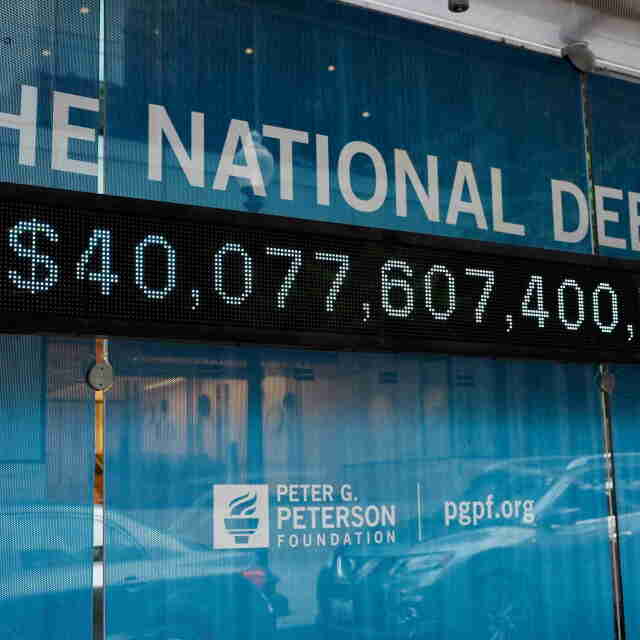
0:06This is The Indicator from Planet Money. I'm Waylon Wong. And I'm Patti Hirsch. And today we're here to talk about the national debt. A debt that right now is running at more than$40 trillion. That's more than$100 ,000 per person in the U.S. It's a potential crisis in the making. But don't worry, because I have a plan. A plan so cunning, you could put a tail on it and call it a weasel. Whoa. My plan is to erode the national debt with inflation. You are sounding positively presidential, Patty. I'll take it. Because this is, of course, an idea espoused recently by none other than President Trump.
0:46In an interview with Time Magazine, he suggested we might be able to inflate our way out of debt. So on today's show, inflation is a tool of debt reduction, a cunning plan, or a lot of hot air. That's coming up after the break.
1:11Stay tuned for the following announcements and messages from our sponsors. This message comes from NPR sponsor, Charles Schwab. Is there a right time to sell a stock? Are you taking the right risks with your portfolio? Financial decisions can be tricky, and often your own cognitive and emotional biases can lead you astray. Financial Decoder, an original podcast from Charles Schwab, can help. Join host Mark Reepy as he offers practical solutions to help overcome the biases that may affect your investing decisions. Download the latest episode and subscribe at schwab.com slash financial decoder. This message comes from Dell Technologies.
1:49Interruptions happen at work, but with the Dell Pro laptop powered by Intel Core Ultra with V Pro, built with optimized battery and built-in intelligence, your tech won't slow you down. Dell.com slash Dell-Pro. Built for you. This message comes from LinkedIn. Owning a small business comes with a lot of challenges and means juggling multiple things at once. It's even harder to do it efficiently. But with LinkedIn, you get all the tools you need to grow in one place. With LinkedIn, simplify your sales, marketing, and hiring so that you can actually run your small business. Learn more at linkedin.com slash indicator show.
2:28The idea of using inflation to erode a nation's debt is not a new one. There's an old history of countries paying their debt that way, if paying is the right word to use it. This is Ricardo Rice. He's a professor of economics at the London School of Economics in the UK. He's also the co-author of a paper entitled Inflating Away the Public Debt. So he's the guy. He is the man. And he says that this concept is pretty simple on the face of it. When I promise to pay you$1 ,000 a year from now, those$1 ,000 are going to be worth a lot less if inflation turns out to be really, really high over the next 12 months.
3:06So you see how this works? If I lend Ricardo a grand today and he promises to repay it in a year, he still has to pay me$1 ,000. But if inflation gets really high, if the price of everything rises sharply over the year, then that$1 ,000 is worth a lot less than it was when he borrowed it. Since a debt is but a promise to pay you a certain amount in dollars, the higher inflation, the less those dollars will be worth by the time I pay you back. The dollars are worth less. The real value of the money has fallen, which means the debt has been eroded. And this can and does happen, quite recently, in fact.
3:43If you look at the recent history of the United States, we did a very big inflating of the debt in 2021 and 22. That's during COVID he's talking about, in case you forgot. Inflation between 21 and 23 was approximately 20 percent cumulative over this year. And just prior to then, interest rates on government debt were super low, less than 2 % on 10-year treasuries. So after that two-year bout of inflation, the government's real obligation was, okay, back of the envelope math here, 16 % lower. It was real. Inflation really did erode the debt. So we did inflate a lot of the debt in 2021 and 22, and that helped pay for a lot of the extra spending of COVID.
4:21Well, a cunning plan indeed, except that it wasn't planned. Inflating away the debt, it requires unexpected inflation. So you don't just inflate the debt, you have to surprise inflate the debt. Aha, surprise. Yes, in that case, and in fact in almost every case when inflation has successfully eroded a government's debt, nobody saw inflation coming. That's why treasury rates were so low in 2021. If I expect that there will be a lot of inflation, then when I lend to you, the government, I ask for a higher interest rate to compensate me for that. Higher rates, meaning the government pays more to borrow, which essentially cancels out any erosion of debt that inflation might have caused.
5:07If we expect a lot of inflation, then there's no inflating away the debt because the interest rate already compensated for that inflation and the amount in dollars has already grown by that amount. So when the president comes out and says, and let me quote him here, inflation, certain levels of inflation will also pay off that debt very rapidly, he's kind of applying kryptonite to inflation's debt eroding powers. Because now there's no surprise. Investors are forewarned. And guess what? If they think Mr. Trump's serious, they're going to want those higher rates and be quick about it. Ricardo says this can have a very dangerous domino effect on the financial system.
5:46So as soon as a government admits that it wants to inflate away the debt, that is its goal, what one often sees, and this was very common in the 1980s in Latin America, was that expected inflation starts rising even faster. The interest rates the government has asked for in order to sell its government bonds escalates very quickly. And you're unable to inflate any of that away. And what are you left with only? Galloping inflation that ends up destroying your economy. Galloping inflation, 80s Latin American economies, A destroyed economy? No, thank you. But what about if an administration decided to enact this cunning plan without telling everyone what it was going to do?
6:26Is there a way, possibly, that it could find a way to make inflation work in its favor? Can governments do that? They can sometimes. For instance, through regulating pension funds, banks and others, and forcing them to hold a lot of government bonds in order to push up the demand for those bonds and therefore push down their interest rate. This is what economists call financial repression, forcing savers to accept a return lower than they would like while inflation does its work on the debt. This happened in the aftermath of the Second World War. Western nations racked up big debts and the U.S.
7:01steered investors into buying government debt and capped interest rates on those treasuries. This comes with distortions in the allocation of credit in the economy, of course. It comes with people not wanting to save, knowing that they're going to be repressed, and also has pretty negative consequences. Yeah, people stop saving. They stop lending the government money and look elsewhere to invest, which means, yep, the government has to hike rates. Ricardo says it's really difficult to manufacture the right conditions to inflate away your debt. First, your debt has to be the right kind of debt.
7:31For example, it can't be indexed to inflation, like a lot of the treasury debt that the government has sold lately. It also needs to be long-term debt because that's where you get the greatest erosion. and the inflation needs to be more than just a little blip. It's not enough to just have a burst of inflation. You need to have the burst of inflation to persist somewhat. It has to be unexpected and it has to persist at the same time as we have debt that's even longer than that persistence. Good Lord, that is a lot of ducks you've got to get all in a row there. Well, I asked Ricardo, does it look like anything like this could happen here and now?
8:06Even as the president of the United States or someone else in the government might say, wouldn't it be great if we inflated the debt? We didn't see the investor saying, oh, my God, this is going to happen. And therefore, let me raise the interest rates to prevent it from being inflated away. Now, to be clear, bond yields aren't exactly low, just over 5 percent on the 10-year Treasury. But they aren't soaring either. In fact, they've actually settled a little as we speak, even as inflation seems to have picked up a bit. Ricardo says that's a mark of investor confidence and Fed Chair Kevin Warsh's commitment to getting inflation down to 2 percent.
8:41There still seems to be quite a lot of trust in the Federal Reserve, in inflation targeting, and in keeping inflation stable over the next five and seven years. So I think there's right now the bondholders do continue to trust the Fed and that inflation will be low, even if there's a temptation to deviate from that commitment. Well, that is a relief. I don't know about you, Waylon, but I didn't fancy galloping inflation anyway. I don't know, Patty. I feel like the horse has already bolted on that one. And have you seen the price of hay? Well, I don't know about the price of hay, but we did reach out to the White House to ask if the president's words on inflating the debt are reflective of a planned economic strategy.
9:20They sent us a statement. It did not answer the question. Instead, it said, quote, the president's supply side economic agenda continues to address inflation, the markets and everyday Americans can count on more relief ahead. So here's me closing the stable door. No, too late, too late.
9:39This episode was produced by Corey Bridges with engineering by Sina Lafredo. It was fact-checked by Sierra Juarez. Kicking Cannon is our editor, and The Indicator is a production of NPR.
9:55Stay tuned for the following announcements and messages from our sponsors. This message comes from Easy Cater. making it easy for organizations to order food for meetings and events from favorite restaurants, set up meal programs for their employees, and manage food spend all in one place at easycater.com.
Scan the code with your iPhone camera
Listen in the app.