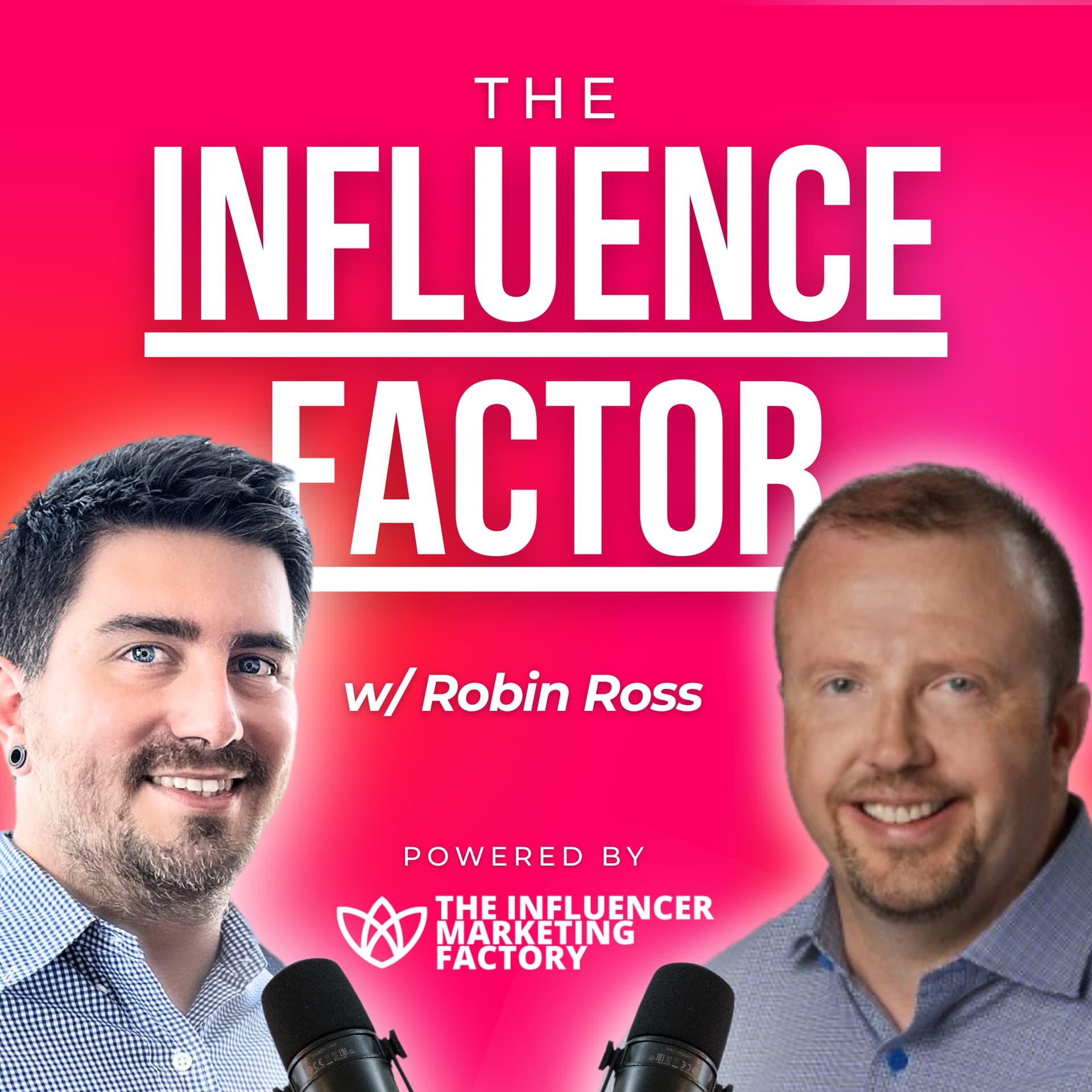

In short
Costco’s word-of-mouth marketing strategy via social media—turning members into creators, using social listening to guide business decisions, and staying disciplined about brand-aligned content (plus how AI should support, not replace, judgment).
Guest
Robin Ross, Costco marketing leader with 30+ years at Costco. Started as an hourly employee on the Canadian side; later ran marketing for Western Canada and moved to the U.S. to oversee membership and marketing. Focuses on amplifying front-line employee/member ideas and on strategy/innovation, including AI’s role.
Key claims
Costco resists paid advertising to pass savings to members; social media is “digital word of mouth” and an amplifier, not a standalone fix. They prioritize concerns/suggestions quickly, and amplify UGC/EGC with an organic feel. They avoid trend-chasing (“culture jacking”) that conflicts with brand ethics.
Notable examples
A rogue Facebook page with 150,000 followers (members talking to members) became a controlled channel; audience grew to nearly 6 million. Viral “hot deals” drive merchandising requests from warehouse store managers, including stock challenges when items are region-specific.
Written by AI. May contain mistakes. Listen to the episode to check what was said.
Chapters
Tap a time to open that second in VORobin's Journey with Costco
0:45 to 2:44
Robin shares her experience and the path that led her to Costco.
“And that's what I love to see on social media.”
Core Mission and Achievements at Costco
2:44 to 5:07
Discussion on Robin's mission at Costco and her proudest achievements.
“Our core business model is to find savings for our members to make that decision of a membership very, very easy every year because you're saving more than what you're paying.”
The Impact of Social Media at Costco
5:07 to 10:01
Exploring how Costco adapted to social media and engaged with customers.
“So I'm really inspired about innovation.”
Navigating Community Feedback
10:01 to 13:34
Robin discusses how Costco listens to and engages with community feedback.
“And they are then sharing that content as well.”
The Challenge of Trend Alignment
14:00 to 15:00
Explore the potential pitfalls of brands jumping on trends that misalign with their core values.
“Even legacy brands, they jump on trends that are not aligned with their values just to jump on it.”
The Importance of Brand Ethics
15:00 to 17:40
Discuss the significance of maintaining brand integrity and the cautious approach to social media trends.
“But at the end of the day, we've got a code of ethics and a mission statement and everything we do needs to align with that.”
Engaging Content Strategies
17:40 to 19:20
Learn about the types of content Costco focuses on, including user-generated and employee-generated content.
“And so what we try to find is an opportunity when something makes us smile, makes us laugh, or really makes us share something about the company.”
Understanding Social Media Dynamics
19:20 to 23:00
Analyze the differences in audience engagement across various social media platforms and content formats.
“But it's not the same video that it always used to be.”
Navigating Viral Trends and Demand
23:00 to 26:00
Examine the challenges of responding to viral trends and the impact of social media on product availability.
“And we'll see their channels where they're going through a shopping trip with them.”
Transcript
Automatic transcript. May contain errors.0:00We are a company that has resisted advertising and marketing because normally that's seen as an expense to the company. And for us as a low-cost operator, we want to pass all the savings to the member.
0:16Hey, Robin, welcome to the show. How are you? Good morning, Alessandro. I'm good. How are you? It's good. You know, like now that we're recording, just we got out from the blizzard in New York City. So I don't know when it's going to be live, the episode, but the past two days has been interesting to say the least. But it's New York City, right? We're used to it these days. I'm loving you. If you need shovels, we sell them. So the price is in your son. You see? That would be like a very, you know, really a loop in the trends type of promotion, right? Like we got whatever you need, right? And that's what I love to see on social media.
0:51Robin, before we get started on today's episodes and really get into not only your experience with Costco, but also how the company is changing, how it is adapting, and so on, I'd love to learn a bit more about yourself. And we use this thing called the map. Basically, it's divided into three main sections. The mission, so what do you aim to achieve with your work? Achievements, any notable milestones in your career or life or both that you're really proud of. And the last one is the purpose. Why do you do what you do? Excellent. That is a very heady question to kick off with. What's interesting is maybe a little bit about my backstory with how I started with Costco.
1:28So I've been with the company over 30 years. I started on the Canadian side of the business, and I really was a job by accident. I lived in Japan for about six months after graduating from college, just one of those life trips, and came home and outside the airport was a sign that when I landed back in Canada, that said future home of Costco. And I wasn't even sure what a Costco was, but it looked pretty big and I needed a job. So that is where I applied and started as an hourly employee. My intent at that time was really to work there until I found a real job to put my education to work with marketing.
2:08And as I normally tell a story, apparently 30 years later, I probably have not found a real job yet. But it is a company that has blessed me with a lot of opportunity that started in learning retail, learning marketing, moving into regional management, and then ultimately running marketing for Western Canada, which gave me an opportunity to come to the U.S. to oversee the membership and marketing group here. So my mission from a company standpoint is to be a resource to our membership and marketing teams at Costco. But ultimately, when we look at the purpose of the company and the mission of the company is to pass on savings to members.
2:49We're a membership model. Our core business model is to find savings for our members to make that decision of a membership very, very easy every year because you're saving more than what you're paying. That's our goal. Fantastic. And in all these years, what are the achievements that you're really proud of? Big achievements. So certainly within the company, I try to, it's a little uncomfortable to say achievements that I've done, but when I think about my mission and how I work, it's really to be an amplifier for the front line. So what is really great about Costco from a regional management or a corporate management is that we try and spend as little time in the office as possible.
3:32and be in the stores or what we call warehouses to be interacting with members, being interacting with employees and to get their ideas. Because what I learned pretty quickly is I run out of good ideas very fast. But when I spend time with our employees and I hear from our members, they've got great ideas. And my job is to figure out how to amplify and scale those ideas to make sure that they are sustainable and durable throughout the company. So the things that I've been proud of is how we've been able to build a durable membership business that is a core part of what we do at Costco. I'm more proud of being an advocate for our employees' ideas than it would be about promoting my own ideas.
4:13Amazing. And you were going to also talk about that later, you know, when it comes to employees, generated content and so on. But the last thing, the B, right? So the purpose. Is there anything, can be also not necessarily about just like the company, but also what is the purpose for you, like when you do your work? When I think about what excites me in my job, in my life, it's three things. I am a voracious reader about strategy. I am very interested in innovation. And I'm really inspired about the impact that AI is going to make. And inspired and scared all at the same time. Like those are two words I hear a lot.
4:50But I really think it is one of those tools when I think about what the impact that it can make on me and what I'm able to produce either on behalf of myself or on behalf of my company. I'm super excited, but also navigating a new world with everybody. So I'm really inspired about innovation. I'm really inspired about strategy. and then helping leaders think about that. Because I think what is unique about AI is that it almost minimizes the purpose of experience and judgment, right? And really what makes AI powerful is that when you apply experience and judgment to it, then it's powerful. But if you're using it to replace experience and judgment, I think you run into trouble.
5:36Absolutely. We have seen that with even content creators that try to replace themselves and their audience. They don't like that because you're removing your DNA as a content creator. You're removing your tone of voice, your way of thinking, right? And instead of coming up with new ideas, you are just basically just repurposing something that's been there. Maybe with different words, right? But AI cannot reinvent anything as of now, at least. It's kind of a photocopier, right? You can make a lot of them, right? But at the end of the day, it's a lot of the same stuff unless you're taking that experience of judgment.
6:10and really your, like you say, your unique DNA and putting that to purpose. Absolutely. During the, you know, when you said about when you started with Costco, it was almost by accident. Another accident that I wanted to talk with you is about how the Costco social media strategy can, you know, start it. Back in the days, let's go back 2008. 2008 in social media is another era, right? It's like something that people didn't even know, right? What is a Facebook page? Like, ah, whatever. And then you guys find out that, oh, wow, like we're getting traction here. These people that are following this page and like, oh, maybe this is bigger than just like a fan page.
6:47What happened there? Like, how do you start really realizing that social media was going to be a thing? And how did you start thinking about we have to be there and we have to control a narrative as a company? It was really a serendipitous moment because I had recently moved to the U.S. So Facebook was just becoming a thing. like all these channels were just becoming a thing. And then some members from my team came to me and said, hey, who set up this Facebook channel? And I go, what Facebook channel? And they said, there's 150 ,000 people following us on Facebook right now. I go, well, who set it up?
7:24And nobody could answer the question. So I said, well, how did we find out about it? And they go, well, Facebook came to us and said, if it's not a corporate entity, we either need to delete it or you need to take it over. So we had to make a decision about what we were going to do. And what was fascinating about it is when we went in and started to look at the content, it was just truly members talking to members and sharing their love for Costco and the brand, but also kind of teaching each other on how to use Costco to their advantage, how to maximize the membership. Did you know about this.
7:59So we eventually had taken this as an idea to the CEO to just say, hey, we're unsure of what we're going to do with this. We think it is not in our best interest because we've got a critical mass of people that are already interested in following us. We would like to watch it, but take control of it for right now. And then we'll come back to you with a plan. To be honest, I did not have a plan at that time. I really just wanted to learn what was going on so we can understand what to do. So eventually we unhoused that and started to follow what was going on, started building content, started engaging with our members.
8:35And really, what really made it resonate for us as a company is if you go back to Costco's history, we are a company that has resisted advertising and marketing because normally that's seen as an expense to the company. And for us as a low-cost operator, we want to pass all the savings to the member. So if we're investing in marketing and expense, there's a cost to that. And so our company has been built on word of mouth. Our members sharing information with each other. And what helped make that concept resonate in the company is that social media was digital word of mouth. These were members who were sharing information.
9:14And how we framed it essentially was we can be part of the conversation. and at the very least engage with our members or we could ignore it. And we landed at it's probably to be better part of the conversation to be listening, engaging and building. That audience now has gone from 150 ,000 to nearly 6 million in our channels. And we've built very scrappy, small social media teams. So we are not the typical company that has got hundreds of people that are working on this. We are essentially got a lean team that is thinking about organic content, is thinking about how to support our suppliers. But really, we're trying to use it as a channel to engage with our members and to educate them about the value of membership.
10:01And they are then sharing that content as well. And people are discovering this in the social media channels. Fantastic. So let's really look into for a second about all this community, right, that is talking to each other. First of all, fascinating. We discussed and we covered this topic multiple times on the podcast about going from a passive audience to an active community that, especially in your case, they are members that talk to each other. They give tips and tricks and they share practical, you know, like things that they can to help each other. It's like in your case, specifically, because I think that one of the strongest community, right, they can find out there.
10:39when you listen and you read comments and you listen to these conversations, first of all, how do you remove the noise, right? And you actually focus on what matters. And then where do you go in terms of decisions where, when it comes to maybe suggestions or things that you, you should implement, when do you actually take action on that? And when you're like, we're not sure about this yet. There is like some, you know, still like conversation going around, that this might not be the movement, like not the action take on like right now, maybe we're going to wait and so on. Certainly there's been helpful social listening tools that help surface trends and challenges that are to be aware.
11:20I think part of what has allowed us to focus is that we have not purposefully or intentionally built a large team to go after that. So we have no choice but to prioritize, right? Just from a resourcing standpoint. And what we're really looking to do is prioritize, is there anything that we need to solve in the immediate future? So if a member's got a concern about something, we really work to engage very quickly. If a member's got suggestions, what's really interesting, too, is we move that information on to our buying teams as well. And if a member's got ideas, we try and engage with them as well, too.
11:57So we learn a lot. What's kind of very interesting, I think, about social media, it's truly a two-way conversation with our members, where if you're just waiting for you to survey them, you're going to run into a challenge sometimes that it's a little bit of an echo chamber. But trends appear, right? When we're seeing our members comment, and it's weird, it may be a post about something new in the food court, but they're telling us, please open in Knoxville, Tennessee, right? So we have to, we've got a lot of that noise that we have to go through all the time, but the important stuff surfaces.
12:32And I think what our team is really, really good at is understanding what our members are saying. And what we've tried to establish in social too, is just what is our voice and what is our personality in social media as well? And what will it do and what it won't do? And I think people have been, I don't know, distracted a little bit that they think social solves all their problems or they can use social. And we think social really is just an amplifier for the business that exists. So something that we talk about internally is that social doesn't fix or break anything, but it is going to expose things a lot quicker.
13:11So it is more important to have a good, solid business model first and then share that information on social than it is to try and fix something or engage or create something on social. So it is really a channel, but it is not something that is independently strategic. It really starts with the mission of what we're trying to accomplish as a company and how social can complement. Hi, ready to elevate your brand? At the Influencer Marketing Factor, we've got you covered. We manage influencer campaigns from start to finish. So creator sourcing, strategy, legal, shipping, logistics, all of it. We work with Fortune 500 brands and DTC companies worldwide.
13:51And our campaigns are backed by real ROI analysis. Check us out at theinfluencermarketingfactory.com. It's a great point. You know what I see happening many times from brands. Even legacy brands, they jump on trends that are not aligned with their values just to jump on it. And now what happens is that you're creating confusion with your core customers because they're like, what is this? This is not ads. And now you're not, you're like getting like under the spotlight for a new type of customer base for one week that we forget about you. But the customer base that actually follow you for who you are now is like, you know, I don't understand.
14:28I believe that, right? Right. Yeah. I understand totally like the short term versus the long term and I love to hear that. What's been interesting, I heard the term, I can't remember how long ago that first came up, but this idea of culture jacking, right? You have to jump on a trend to go in. And we've always been disciplined internally is not to be reactive, right? And just like anything that is solid, that supports the business, we'll figure it out. And there's always time. So that could frustrate our teams internally sometimes a little bit, like everybody's doing this and we have to respond to that.
15:02But at the end of the day, we've got a code of ethics and a mission statement and everything we do needs to align with that. And I've seen, you've probably seen it too, is that where you can get distracted, where you can do things on social that when it is not aligned with the brand, it's just not a fit. And members do that. And I'm not saying that we've got social 100 % right as a company, but we really try to make sure it's about the brand first. Absolutely. Again, it makes sense. Even as an agency, what we see all the time, you don't have to jump on any trends just because. And I think that there is this thing sometimes from social media teams that there is FOMO, there is like, we have to jump on it.
15:47If we don't, then we are like outdated and everything. And like, yeah, if you never participate really, maybe, you know, after a while it becomes an issue. But if you are the one all the time, then you become, as we said before, a photocopy, right? Like you are just, you don't have your own identity anymore. You're jumping on everything. Customers get confused. is that easy to ruin sedimentation of a brand that has been there maybe for 100 years just to win over the internet for one day, right? To give you one in my life, sometimes when some of these trends come up, my team has to explain to me what the trend is because I have likely missed it, don't know about it.
16:24There was the what, so it's the trend of the guy holding up the cardboard sign that was everywhere and everything was doing it. And so when I sat with the team, might go, why does this matter? So what does this mean? And so it helps us get to the right ideas, I think, in the conversation. Some stuff we will pivot to, some stuff we don't. But I think to your point is you don't, you've got to be just like the items that we carry. We're very selective of what we carry as merchandise. We're going to also be selective in how we use social media. And what type of content works then? Is it like your own content?
17:03It is a UGC, so user-generated content. It is a EGC, so employee-generated content. It is a mix of them? I would say it would be a mix, but it is really stuff that has that organic UGC feel. I would call it that that is the most engaged content. So our team has found, I would call it a voice, when they're trying to tell stories about what's going on in our stories about the business that share that. I think some of our best performing content is when we amplify members' content. Because I don't think we can honestly do as good a job as they do. And so what we try to find is an opportunity when something makes us smile, makes us laugh, or really makes us share something about the company.
17:49We want to find an opportunity to use our platform to showcase their creation as well. And where do you find the majority of these videos? Is it like Facebook? Like it was back in 2008, it is like TikTok tips because I'm also curious to understand the type of users, right? And customers, they are so different because we are going to find in a Facebook marketplace is not the same person on TikTok that is not the same person on YouTube shorts. So first of all, I'm curious to understand like if you identified yourself of like patterns and customers on different ones and also like how do you really analyze and interact with different type of formats of videos that you might find, again, user-generated, that in your case, I'm pretty sure that as you said, the best ones having these very value-membered type of conditions as a business.
18:38I think each of the channels are so different. And part of our challenge sometimes is that you don't have a Facebook team and an Instagram team and a Twitter team and all the above. So what we try to find in terms of just building our content when we think about Facebook, but typically it skews to an older audience, right? So it's a little bit more longer form video. We try to be a little bit more informational on Facebook as well. And now that we've moved, that you can do reels on Facebook and Instagram that gives us some multi-platform choices. But we're also finding really video is where things are going.
19:18And video seems to really resonate with our members as well too. But it's not the same video that it always used to be. There's almost this attention deficit a little bit that your video needs to be very, very engaging. And you've got that two second window to grab somebody's attention. So we're we're struggling to really kind of figure out what what is our version of that. And and honestly, we're not actively posting on TikTok and exploring some opportunities. But a lot of the great content that goes viral, that's typically where it'll surface first. Certainly, that seems to be the most engaged audience.
19:58It's a younger audience. And we actually have an ambition as a company to bring in a younger member to help people discover Costco. So we're looking seriously at those channels to figure out where our space is in that as well. Not sure if that helped answer the question. No, it does. That's why, you know, I was, again, very curious, right, about the type of customer that you have and how they're currently posting. Because, of course, Shortform for the past five years has been, you know, the king. But again, you know, the video with Costco when it comes to having a community and sharing not only tips, but also the experience, right?
20:34Like you can do like, you know, a vlog, right? While going to Costco. And I saw a video myself of like, people like, follow me through this aisle. I'm going to tell you this product instead of this other. And this one is fantastic. there is this deal this week happening and these videos sometimes are like 20-30 minutes long so that's why i was curious like in your opinion if do you think that this year and this is something i've been asking actually to people if there might be a sort of like you know longer form coming back you know because i think that a lot of people get this pay attention right that there is like definitely like lowering by the day but at the same time you notice that people also want to start getting countries informative it is a bit longer so i don't know are you seeing that or or we still need to wait a bit more for long form to come back.
21:17Again, I won't pretend I've got it figured out, but what we're observing right now is that discovery is probably through like the Instagram reels and the TikTok. And when people are going to longer form, it's really YouTube. And it's YouTube that has built up those audiences. And it's almost like essentially a channel now that brings you back to the content. So I'm sure your audience being creators, are they thinking short form, long form? And I think they're probably solving for multiple versions because here's the appetizer of what this content is. If you want to go deeper, see me on this channel.
21:54Right. And so you've got more extended content. I enjoy the longer form and I'm very active on YouTube. so I'm more kind of using that to get information but also looking at at TikTok is is the discovery place but a lot of times it will be to get to YouTube so I can get the longer version of those kind of things too because I it feels sometimes TikTok can be a pinball right and and so what what where's the meat of what we're sharing here and sometimes you want to go deeper and I think you just don't want to be stuck in that pinball world all the time that you're just bouncing back and forth on something that there is something more sustainable and deeper that you can share.
22:36So I think there's audiences for each of the creators, but they have to kind of know. Long form means it needs to be engaging and meaningful, right? And if you're just building content for the two-second piece, then you can only go so deep. So somebody needs to be super thoughtful to build a YouTube following, I think. And we've got some great people. There's some people who like health. And we'll see their channels where they're going through a shopping trip with them. Here's the protein. Yeah. These are the best protein choices that you can make here. Here's the supplements that are available at Costco.
23:16And what I want to make sure that people know that those are unique, independent creators. Costco is not driving any of this. And what we as a company want to do is just stay out of our members' way sometimes because we think they do a better job of sharing that story. And for the most part, all of that has been excellent. And we see good information being shared and people are engaging with the content. Absolutely. I've been having people that just create content because they want to create content. That's great. You know that you built something strong, right? that after that many years, there are people that just say, you know, like I'm going to create a call about like, you know, Costco and Costco products and I'm not necessarily paid and I'm doing these just because I want to create content and inform others, you know.
24:03So that's something that, you know. There's these channels that exist on TikTok. You'll see them on Instagram too, but it's Costco deals or hot deals. And that's creators that are shopping and showing the merchandise. It's quite funny because our warehouse store managers have asked us, can you get ahead of what those trends are going to be so we can merchandise around that? Because when that content shows up, it makes an impact on the business. Absolutely. And so that's our internal struggle is can we get the signal to help them from a merchandising standpoint? And sometimes we're just, we can't be ahead of it to get it.
24:48So they're checking their phones all the time, too, just to see what's hot on TikTok, what's hot on Instagram right now. And then can we merchandise accordingly or make sure that we're in good stock of that item? Especially, I do understand, like, first of all, of course, you know, brilliant. I understand the challenge because sometimes a video goes viral and everyone wants to order that day. But it's still everything in stock. Maybe now it's going to take a few days, but the time maybe it's not viral anymore. So there is always like this thing, right? that it's a challenge because sometimes the item may only be in California, right?
25:22But TikTok is everywhere. Yes. And then you've got people showing up in Minnesota going, where's this item? And then our warehouse managers are struggling a little bit. It's a signal for us that kind of tells us there's demand. So there's good information in doing that, but it can't be a little bit of a challenge to kind of navigate. I can imagine, but it is fascinating. Robin, thank you so much for sharing all this knowledge with us. I'm going to follow along, you know, for like and see what else you're going to implement, right? And on social media and also like we'll have to continue saying how this community grow, right?
Read the full transcript
25:57With social media itself, right? The conversations, how do you analyze that and everything. So, but again, really, thank you so much for being with us today. Great, Alessandro. It was great being with you today. This was the Influence Factor by the Influencer Marketing Factory. And I'll see you in the next episode. Bye.
From the publisher
In this episode of The Influence Factor, Alessandro Bogliari chats with Robin Ross, AVP of Corporate Marketing at Costco, shares insights into the company's marketing journey, the evolution of social media strategies, and the importance of community engagement.
He discusses his mission to amplify employee ideas, the challenges of navigating customer feedback, and the balance between brand identity and current trends. Robin emphasizes the significance of user-generated content and the need to adapt to various social media platforms while considering the future of long-form content.
🌟 Leave a 5-star rating on Apple Podcasts and Spotify🚀 Start Your Next Influencer Marketing Campaign: Get In Touch🎙️Want to be a guest? Apply here
Show Notes:
(01:20) Introduction to Robin Ross
(03:07) Robin's Mission, Achievements, and Purpose
(06:58) The Emergence of Social Media at Costco
(11:11) Navigating Customer Feedback and Engagement
(14:34) The Balance of Brand Identity and Trends
(17:10) Content Strategy: UGC and Employee Contributions
(18:40) Adapting to Different Social Media Platforms
(21:15) The Future of Long-Form Content
(24:05) Conclusion and Future Insights
Check out some of our previous episodes!
- How to Build a High-Performing Affiliate Influencer Program w/ Sarah Grosz (Allbirds)
- Inside Etsy’s Creator Ecosystem w/ Monty Montalto
- AI’s Impact on the Creator Economy w/ Alexander Frolov (HypeAuditor)
- How Visa Supports Creators as Small Businesses w/ Jonathan Kolozsvary
- Patreon’s Secrets to Building Loyal Superfans w/ Paige Fitzgerald
- How FP Movement Builds Impact w/ Courtney Weis
- Inside McDonald’s Bold Marketing Moves w/ Jennifer Healan
- What Makes Content Stick w/ Victoria Blinova (YouTube)
- The Daily Grind of a Tech Journalist w/ Amanda Silberling (TechCrunch)
- The Creator’s Attorney w/ Tyler Chou
- The New Currency of Marketing w/ Raja Rajamannar (CMO of Mastercard)
- How To Protect Your Social Media Accounts w/ Liron Segev
- Liquid Death's Unconventional Marketing w/ Greg Fass
- The Secrets Behind ESPN's Social Media Success w/ Maxwell Kelley
- Inside Snap's Playbook w/ Brooke Berry
- Scaling Miss Excel w/ Kat Norton
- Mastering Money w/ Vivian Tu (Your Rich BFF)
- The Inside Scoop on Social Media w/ Jasmine Enberg (Insider Intelligence)
- TikTok's Influence w/ Adrienne Lahens & Sofia Hernandez


