
In short
Podcast Episode Summary: From Creator to CEO
Podcast Information
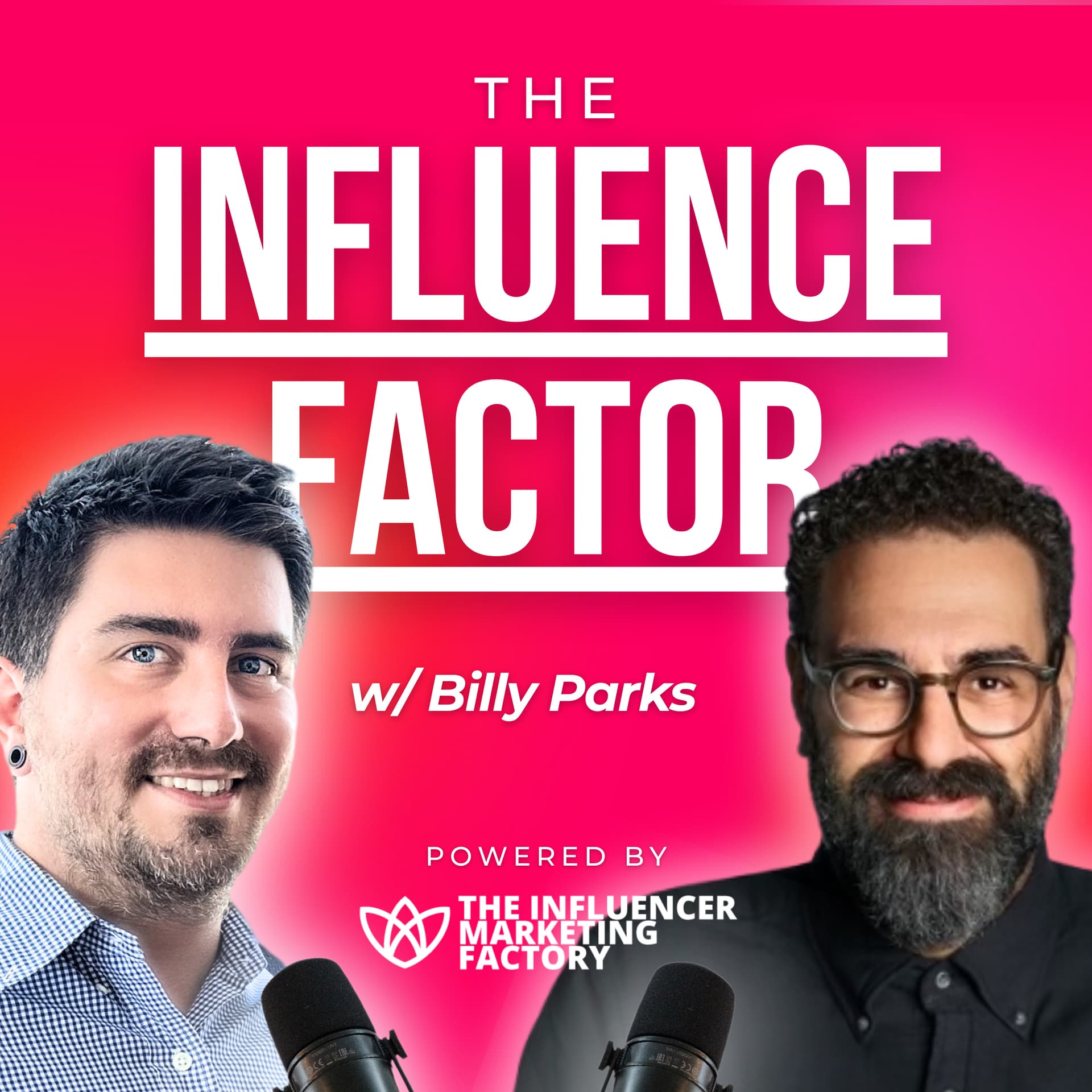
- Title: The Influence Factor
- Host: Alessandro Bogliari, CEO and Co-Founder of The Influencer Marketing Factory
- Guest: Billy Parks
- Episode Title: From Creator to CEO: How Influencers Are Building Real Businesses Beyond Brand Deals
- Episode Description: A discussion on the evolution of the creator economy and the journey of influencers transitioning from content creation to building sustainable businesses.
Key Points Discussed
Introduction of Billy Parks
- Background: Billy shares his philosophy of doing good work with good people, emphasizing the importance of authentic collaborations and learning moments over mere achievements.
- Career Milestone: A notable experience with content creator Grace Helbig where he learned about the power of genuine creator-audience relationships.
Transition from Content Creation to Commerce
- The evolution of the influencer landscape from simple brand deals to entrepreneurial ventures.
- Creators are encouraged to shift from "renting" audiences to "owning" them, which involves building sustainable businesses.
Creator Investment Strategies
- Investment Approach: Billy's firm has a $65 million fund focused on investing in creators who want to scale their businesses beyond mere content creation.
- Selection Criteria: Looking for creators who act as CEOs—focused on developing sustainable business models centered around their niche audiences.
Challenges in the Creator Economy
- Identifying Suitable Creators: Importance of assessing the authenticity and business acumen of creators.
- Market Saturation: The competitive landscape of influencer content and the need for creators to differentiate themselves.
- Red Flags in Applications: Common mistakes include a lack of focus on serious business development and being in a saturated or overly broad market.
Emerging Trends and Opportunities
- AI Integration: Creators can leverage AI tools to enhance audience engagement and operational efficiency.
- Niche Market Growth: Encouragement for creators to explore niche markets where their authority can translate into viable business opportunities.
Future of Creator Entrepreneurship
- A shift towards viewing audiences as potential business partners rather than just consumers.
- Creators are encouraged to consider their long-term aspirations: building businesses that can be sold versus simply generating income through brand partnerships.
Key Takeaways
- Entrepreneurial Mindset: Creators should aim to think strategically about their audience as a foundation for a scalable business.
- Authenticity Matters: Genuine, authentic connections with audiences are essential for success.
- Investment in Growth: Creators should be open to using funding to scale their business, whether through hiring or expanding into new channels.
Conclusion Billy Parks emphasizes the importance of transitioning from brand deals to building sustainable, scalable businesses. He advocates for creators to take ownership of their audience, explore innovative monetization strategies, and leverage new technologies for growth. The podcast encourages a thoughtful approach to building a creator-led business that can thrive in an evolving market.
---
Rating Request: Don't forget to leave a 5-star rating on [Apple Podcasts](http://bit.ly/3W2egs7) and [Spotify](http://bit.ly/3VZiZux).
---
Related Episodes:
- [How Visa Supports Creators as Small Businesses w/ Jonathan Kolozsvary](https://podcasts.apple.com/us/podcast/how-visa-supports-creators-as-small-businesses-w-jonathan/id1587732837?i=1000722784977)
- [Patreon’s Secrets to Building Loyal Superfans w/ Paige Fitzgerald](https://podcasts.apple.com/us/podcast/patreons-secrets-to-building-loyal-superfans-w-paige/id1587732837?i=1000719772214)
- [How FP Movement Builds Impact w/ Courtney Weis](https://podcasts.apple.com/us/podcast/how-fp-movement-builds-impact-w-courtney-weis/id1587732837?i=1000710255465)
For more insightful discussions, tune into [The Influence Factor](https://podcasts.apple.com/us/podcast/the-influence-factor-by-the-influencer-marketing-factory/id1587732837?i=1000627713159).
Written by AI. May contain mistakes. Listen to the episode to check what was said.
Transcript
Automatic transcript. May contain errors.0:00We look for creators that are CEOs, which is to say, they're not just looking at their audience as like, how can I grow my audience and how can I do brand deals? They're also saying to themselves, how can I build an audience that is going to result in a large scaled business?
0:22Hey, Billy, how are you? Welcome to the show. Thanks for having me. Thanks for having me. I'm good. Absolutely. Very excited to talk with you, you know, today, everything that is like creators and creator found and how creators can go, you know, beyond like everything that is just, you know, brand deals that everyone knows about but before we get started we go in the ins and outs of today's episode can you please tell us a bit you know about yourself we use this thing called the map right it's divided up in main sessions right like basically the mission right what you aim to achieve with your work achievements anything they are really proud of right and notable milestone in your career life or both and then ask your is the purpose so why do you do what you do i like to do good work with good people i think kind of throughout my career and uh from when i was from when I was first getting started all the way into my philosophy for the last, you know, venture is do good work with good people.
1:11I think if you keep that as a focus, it doesn't get wonky. I find that anytime I stray from that, it gets wonky. It gets wrong. So I've always kind of focused on that. So what I want to achieve is I always want to do good work with good people. I don't know if that's too simple for you, but that's kind of make sense. I'm a simple guy yeah yes love it love it love it and so you know because of that what are the achievements that you're like proud of yeah i i was thinking about that having seen some of your other podcasts i think something you know you you wrote milestones and i kind of think of milestones as big learning moments more than like i don't know if i want to sit here and list off a bunch of achievements but i uh i definitely think of big learning moments as milestone and and i thought about what might be interesting to your audience and something that was like meaningful to me and one of them was when I got to work with Grace Helbig.
1:58I don't know if you know Grace Helbig. She's a content creator. She's been doing it for, I don't know, 10 or 15 years, kind of definitely one of the big, really YouTubers. Very funny, great woman. And I created a content program called Summer Break with some of my friends at BBDO and some of my friends at Fullscreen. And we built this content program out. And we thought it was a great program that was across Snapchat, Instagram, and YouTube and Twitter. And this was in 2013, when kind of YouTube channels were just going. And we were really trying to figure out what creators were and what influencers were and how to work with them with brands.
2:36And I did this big program with AT &T. And we thought it was a really great program that audiences really like, but we didn't do a whole lot of thinking about how it was going to find an audience. And once the show was ready to get going and and go live we met with grace helbig and we wanted her to tell her audience about it so she could bring her audience into the show and she we showed her the show she did a video and we got the video back and she ripped the show to stretch she just said it was she said it was like the kids were awful on the show and how terrible the youth of today were and how you know how how like she was very cringy while watching it and when i when i saw that video i was like oh my god like no one's gonna watch the show this is not doing the work we thought it would do and the people around grace were like her audience will love this and what i realized was is that really gay like most reality tv you kind of need permission to hate it you know in a lot of regards And instead of her just going off our talking points and telling what we wanted her to say to her audience, she, in her own unique, hilarious way, shredded it, but super authentically, and really drove her audience to it in a way that they had permission to kind of hate it.
3:59And it ended up running for five seasons and did, you know, over 200 million views and was a really popular series, and I really attribute a lot of the early success to Grace because she really knew how to look at it and share what it was really about. And her audience followed along. And that was kind of my first, that was it when you asked about milestones, that's when I really understood the power of creators to bring their audiences along on the ride, as long as they're doing it in ways that are not on somebody else's talking points. They're in the ways that are like authentic and deeply personal to them in a way that will resonate with our audience.
4:36And that I've kind of carried with me. Amazing. And we're going to go into that, you know, like, and I'll be more later for sure, because it's interesting, right? Many times we say how, you know, the many times brands and companies don't even know their audience as, you know, their, you know, influencers and creators out there. I mean, it's hard for a big brand that has so many lines of business that has, you know, so many people they're trying to drive to their product to know really what's going to hit. And they know what they want to say, but they got to let people, they got to let people who have the audience say it in their own way.
5:08That's a hard lesson to learn. And we've been fighting that fight for a long time. And is there anything in addition to the mission, like on the purpose? I know that you already said, right? You want to like, you know, work with people that you like and something that makes you like passionate every single day. But is there anything else like on the purpose side? Yeah, I think right now my purpose is to make number go up. You know, like I really match capital with founders and entrepreneurs. And my purpose in doing that is to like, for them to scale their businesses and so you know i've done that in other ways in my you know my past life but like i think my purpose is to you know very simply is to help make the number go up you know and that's generally revenue and ownership and businesses yeah fantastic and we're gonna talk about that in a second before doing that i'm still also curious right you've been in the industry for like you know many years right a lot of experience and you went like you know from in like you know being a marketer right to now working hands-on right as you said with content creators on their businesses.
6:08How was this transition? Like, was it easy for you? Was it natural? Was it like a learning curve to like go from one side to the other or have you heard more about that? Yeah, I mean, I started as a create like kind of a pure creative and a producer. So I used to produce commercials and music videos for big artists and big brands. And I did that for a long time as a producer. And then as the world started changing more into branded content and digital content, and people were less focused on commercials and 30-second spots and starting to work with publishers online and work with creators to build content programs, I started doing more of that with agencies and brands.
6:47And then I went to go work at an investment firm called The Churning Group that was investing in a lot of what I would call content-to-commerce businesses, and I would help them on their content and creative strategy. And so I did that for many years, helping on content and creative strategy, figuring out how to grow audiences, figuring out how to grow audiences, not just with the purpose of clicks and working with brands, but as they were developing their businesses as well, how does content support growth of business lines? And then after doing that for several years, I started working more on the investment side, like identifying companies that had a content proponent to it or digital talent that were also building businesses.
7:25So that was kind of like the transition from creative producer into actually working at an investment capacity. And, you know, because of that, right, I'm pretty sure that you saw, right, this shift or at least evolution, right, of people probably doing like renting their channels for basically like, you know, third party, right? So 10 years ago, right, infrastructure marketing was this thing with no ROI whatsoever. It was like, hey, I love these sneakers. You should go buy them, right? And then finally, we got like, you know, more analytics behind and demographics and qualitative analysis, so much more.
7:59But now, you know, in addition to that, we've been seeing more, and we actually covered that on our blog, on several blog posts about, you know, fitness funded, you know, like brands by influencers. And food and grab, we've been seeing like candies, right? Going up, competing with a lot of, I guess, people and, you know, mattress for like yoga, like there are so many things. So first of all, why do you think we've been seeing this shift from, again, renting channels to actually own more? And do you think that right now it's still easy for the majority of influencers, or do you still have to go through like a bigger journey and actually be ready to go into something like that?
8:34Because I might think that is not that easy, right? To do it by your own. Yeah, I'll unpack a bunch of that. There's a lot of great questions in there. The first one, the transition. I think when digital channels started really growing and people really started the value in them and like you said, renting their audiences, brands renting their audiences, I think when the influencer or creator economy first started, it was surrounded by agents, managers, and brands first. And it was very transactional relationships where they saw a place to advertise as people were leaving traditional film and television.
9:14So the sophistication around digital talent and creators with their channels was all around very transactional relationships. relationships i think the and that was a great way where content creators are out there being creative and speaking to the audience all of a sudden we're able to have like a living you know like that was akin to big stars or people who had come up through comedy or come up through short films and come up to working in plays and like then we're trying to be big tv stars and a lot of these digital creators were like oh okay i can make as much money with my channels building a relationship with an audience if i work with brands that was one kind of flavor of creator and that's where the creator economy i think focused around and i think while that was happening there was also blogs where people had 200 000 300 000 a million people on their sub stack or on their number beehive wasn't there at the time but on their you know on their wordpress and they were building audiences around niche passion ideas whether you're a watch collector or a cyclist or a cigar aficionado you know or you said like you were saying uh yoga or exercise people were building kind of voices of authority and relationships in this kind of blogosphere and we're building really powerful relationships with audiences and there's a choice that i think creators are starting to make now and some creators knew this right away and some of them are starting to make a choice now where it's like do you want to spend all of your time making brand deals and being reliant on them to live and and some creators are going to make a good living making 200 000 to five million dollars a year just like pumping out branded content with you know and in transactional content with brands and that can be a fine way to live and i have no problem with that i think the other creators that are emerging are the ones that you just mentioned that have that is becoming more and more and i think when we look back if we're talking if you and i get on the on the on a podcast in five years or in 10 years i think more and more creators are going going to be thinking about, okay, if I'm going to spend five years building an audience, do I want to build a business as well, where in five years I can exit my business or in 10 years I can exit my business to a company because I'm doing revenue or do I want to have, and I own my audience and I have a direct relationship with them.
11:35I have their emails, they transact with me. I know how to think about merchandising my website so they can buy products from me. And that is a more sustainable, durable, long lasting option for some creators. Now, if you're just in the blogosphere and you're making comedy and you're, you know, you're, you're, you're doing just fun things. If you're very, very scaled, you can do that, but there you can, you can make five,$10 million with 500, 600 ,000 subscribers on your Instagram or on your, on your YouTube in a business without needing to take one brand dollar. And I think that that is the where kind of these creator CEOs we see are popping up.
12:19And generally they're in more like kind of passion niche categories like you just mentioned, like is, are they in fitness? Are they in woodworking? Are they in cars? Are they in cycles? Are they in fishing? You know, like places where people are going to learn something and then they're willing to transact because this is a person with a voice of authority. and since you know like you mentioned right like being upper focus and ceo let's get into this right i'm very curious about your selection when it comes to the you know like you guys have the slow venture creator fund right yeah so i'm very interested to know a bit more like what it is when did it started how did it start it like tell you a bit more like how it works these days and then after that i'm very curious again for any you know creator out there that is like i think i'm ready i want to go you know like and add some revenue stream what are the things that for you are green flag versus red flags to select the one that you want to really invest on sure yeah i think we look for creator ceos so our job we have a 65 million dollar fund and we write checks in the size of like one to three million dollars and we look for creators that are ceos which is to say they're not just looking at their audience as like, how can I grow my audience and how can I do brand deals?
13:32They're also saying to themselves, how can I build an audience that is going to result in a large scaled business? And that's what we look for. So they're hyper focused on their niche and they are in a niche, in a passion category. So they have an audience that is willing to transact and that is interested very specifically in this creator that has a voice of authority in the space. So, uh, general comedy, things like that are not, you know, or general media or entertainment. We focus more on a, like you, like you just mentioned very astutely, like, are they a cyclist and people know that they know everything about road biking or mountain biking or racing or downhill.
14:15And then they go there to like, learn everything they want to know about their passion area. And then, okay, this person can then transact with them and sell them products and services where they can either learn how to be a better cyclist or they can learn i mean we haven't invested in any cyclists i'm just giving an example you know like or i'm going to buy my pedals and i'm going to buy my road rash gear and i'm going to buy my helmets from this person who developed them because they are an authority and i trust them and they're somebody i get my all my information from so like niche passion categories are really interesting to us that have and people who have really strong communities that will go where they go so and then back to the CEO part, like, you know, we look for creators who are like, really, like, they're like, yes, I'm making content.
14:56I know it's an important part of what I do. I love it. And I'm doing it every day, every week, every month, and I'm building an audience, but I really have product services, a business I want to build to add value to this audience. And because I know this area so well, like I know what it's missing. So back to the cyclist example, like I know what these companies are not selling their audience and I want to sell them this. So like, for example, we invested in a woodworker and this woodworker, he's got 600 ,000 subscribers on YouTube. He posts once a month, sometimes two times a month, and he builds products for woodworkers.
15:35And the way we look at that is like, this guy has patents pending. He knows how to get these products made. He knows how to develop products for audience. He knows what his audience wants. He creates great content from them that he can learn. And then the audience is like a high spend category. People have, you know, people have shops that they do woodworking in that are a thousand dollars worth of tools or$10 ,000 worth of tools and they love it. And so he's figured out how to sell them tools and how to, you know, get patents on his tools and what tools they want. And, and that's, those are the type of creators that we, we, we like the ones who are really running their businesses.
16:10Hello, is your brand ready to amplify its reach? Well, the influencer marketing Factory is here to do just that. We are a global influencer marketing agency helping brands ignite their growth from influencer identification to campaign strategy, handling legalities and agreements to managing shipping and logistics. We have it all covered. We work with hundreds of brands across different verticals from Fortune 500 companies to DTC brands. And we don't just stop there. With detailed ROI analysis, we help brands like yours measure success, transforming and pressions into actionable conversions. You can find us at theinfluencermarketingfactory.com or just search the Influencer Marketing Factory on Google.
16:50And still on this, like, you know, the creator as a CEO, right? I'm very curious to learn a bit more about when they come to you. Are the majority solopreneurs or like, let's say, are they working by themselves to become entrepreneurs? Do they already have a team with them? And follow up question on that. If they are solo, do they want to invest part of the money to create a team? or do they want to invest in more marketing, open up new channels, or it is more in when it comes to, again, like, you know, some physical products to actually invest in that? Like, I'm curious, like, how do they actually invest the money?
17:24Totally understand. Great, great question. So some creators come to us and they have a really great audience and they have an idea on how to build, how to build a business with that audience. So they're very clear on what they want to do and they want to build a big business with their audience. and the money is generally for that purpose. Like it's the, hey, how do I build a scaled business? So they could come to us and they could have a team in place and maybe they're making a couple million bucks and they know if they need more, maybe they're making 5 million bucks, maybe they're making no money and they know if they have the capital that they can grow a bigger team and grow a bigger business.
17:58So they might use the money to scale their content so they can work more closely on the business building. They could wanna hire people in their business business to help them scale the business that they're building. So they can hire operators or people who know supply chain or people know how to put goo in a bottle. People know how to get distribution. They could be hiring more team members that help them build out the business. They could be a solopreneur, as you mentioned, like who has a product that they want to build. And they say, Hey, I have a technical co-founder I want to hire. And I want to give him some capital to start building out or her some capital to start building out a product that I want to offer to those people.
18:35So they come to us with no people and just themselves, or they come to us with several people, a team of 15 that they just need more capital to scale. So they come to us at all ways and they can use the money to help market and build more content. So they could say, okay, I want to hire a head of content. So I can then focus more on the business and get, have somebody who can help like prepare the scripts, give me a content strategy, like open up two or three other channels. I want to double down. I'm on YouTube, but I also want to be on TikTok and I want to start a podcast and the podcast and TikTok are going to be very focused on either building the business or growing the audience.
19:10And I need some capital to help hire somebody to help me with that. So, and an editor and a this, so I can like focus on the business. And I always want to put some money on business. We also want them to keep some of the money so they can take shots on goal, which is to say, if you're an entrepreneur and you have an audience that loves you and you're in a niche passion category, you could start several businesses. and the first one could not work and the second one could not work and the third one could not work so you build a good malleable team they'll keep trying new things and very often just like when you try content things sometimes they connect with an audience and sometimes they don't the first two or three businesses that they like try to build they don't work but we look for entrepreneurs that are are very hungry to win and build a scaled business even if the first one dumps, you know?
19:58And very interesting. Did that answer your question? Absolutely. No, yeah, you did. And actually, like now I'm also thinking about, because, you know, you told me, right, about everything that you're looking at, right? Like looking at when it comes to your typical profile. I don't know how many they apply on a monthly basis, right? But in terms of percentage, like what are the main mistakes that you are like noticing then, you know, you're seeing application and again it's either a red flag or something that oh like this is the main thing that like 90 % of people that we decline is because you know okay let's not get into like they're not CEO mentality like is there anything else that they're doing wrong that if you were able to just say once for all like if you're fixed this couple of things you can get like a better shot at getting in that's that's a really good question I think what we'd like to see is somebody who is hyper-focused on building something of scale.
20:52Like they are hyper-focused on it. Sometimes we have great sessions with creators that are doing great brand business and they want to build merch or they want to build things that don't feel like they can scale. And that's when it's not a right fit for us. It could still be a one or two or$3 million business or a five or$10 million business one day. And that's interesting. And I don't think it's bad at all, But like if they are not 100 % focused on building like the biggest business, they're not extremely passionate about building something of scale. It's not right for us. There are some places that are like, OK, you need a million bucks to make four or five million bucks.
21:31Like, great. But we want people who want to build something of like massive scale. Also, we often see creators who aren't at enough scale. Like you've got to have a passion community. you know you got to have north of you know three four five hundred thousand subscribers you know and if it's if it's on the lower side you got to be doing real revenue off platform revenue so somebody might come to us and say hey we're a comedy creator we have a really massive audience and we want to build you know cereal or candy and you know like to win at candy which is a very crowded space you have to be of like really big kind of beast scale trahan scale to really win so when they're general when they're general merch or candy or food ideas you have to be at like a massive scale and you have to have a real differentiator for us to be like okay we think this can win this thing can get to real scale yeah and when we see people who aren't like in a in a in a real niche like it has to be i think niches win for us we really like creators who are in like you mentioned like some kind of passion category or people are kind of gathering and really love it either way you know and you know still on this scale right idea we all know that sometimes you know when it comes to physical product right the scale could be a bit challenging because of logistics and you know like depending on where you're located and based uh you know shipping and if you're going co-packing versus it's your actually own production right and all this and that while digital products right you make it once you can scale right easier and faster when they come to you?
23:10Is it majority? Is it physical products? Or do they, you know, I'm just thinking about lately, a lot of content creators are, for instance, building podcast platforms, right? Because they've been doing podcasts for many years, they know what is missing, there is a gap in the market, they do that. Or maybe, you know, like someone that is coming out with a CRM for 30 of agencies, because they've been working with agency and a brand side many times. In your opinion, like they're like, again, based on your experience, is it physical products? Is it digital? Is it a mix or are you saying like totally polarization on that it can be a mix but generally products that are based on media or ad dollars are less interesting to us which is to say if i think of like the audience that the creator has they have to be able to monetize it outside of brands which is to say if they're building a podcast platform that could be an interesting component of their business.
24:03But if that is the full part of their business, whenever brands stop, decide not to like them anymore, or CPMs go down, or they decide to go somewhere else, like they're taking pizza orders, you know, you're, you're reliant on brands. And if a business is fundamentally a media business, that's relying on brands, it's not for us. So if they're building a technical product, that is B2B SaaS or an audience first platform, like a way to connect employees and employers, or they're building a technical product that enables, like you mentioned exercise before. If there's a trainer who's building a platform that allows trainers to connect with and serve their clients.
24:49And it's a two-sided marketplace that brings both trainers on and brings clients to those trainers. and you are a voice of authority both for trainers and you're a voice of authority for that audience then like that's something that we'll look at and is very interesting to us but if you are yeah if you're building something that is like very media focused it's like generally that's like kind of a no or not something that like is for us but if it's a component of the business it could be you know if you're like hey i am i am uh the world's most foremost thinker and doctor in children's ADHD and how parents help them.
25:27And I, I have three or four other people that I want to build a podcast network with, and we are going to build an end-to-end solution to support parents with kids with ADHD. And here's how they subscribe. And this is what they give them outside of media. Here are the courses they take. Here's how we connect them with people who can identify the kids, where kids are going and how to give them support then it's like okay this is like a end-to-end solution for a community that that's in need versus like okay i just want to build a media platform do you prefer to have someone that is a creator that you know you said very niche specific on something do you prefer that they get started with something that only once they get their goals and the business model is working and everything then they open up to other revenue streams or do you prefer them to bet in on different things at the same time doing the Pareto principle see what brings the most in and then double down on that and and and remove the others that's a really good question i mean i think it really depends on the creator like for example if there's a creator who is in a very niche category and they start by just going to their their audience and saying hey here's a free workbook yeah sign up be part of my email and they have six million subscribers and then they get 250 000 people who sign up you're like oh like it's not they didn't have to pay for it but it's really interesting to show that like there's an audience that like gave them their email subscribed and like took the thing or maybe it's merch or maybe it's a book like or you know like there are things that they can test and learn to see their audience is willing to spend or transact with them those are interesting things as far as sequencing is concerned of businesses like i think it really depends on the creator and the creator's team and the strategy like i'm not one to say, hey, you test, nail, and scale one business and see how that works and then move on to the next business.
27:16If they want to try a couple different things at once at the same time to see if they work, I think that's really up to them to see if that's how they want to test how durable their audience is. It might tell them, oh, you know what? My audience really cares about this and not this. So I think it really depends, but it also depends on their people. If they're a solopreneur and they don't have that many people and it's they can't do two or three things at once then start with it start with start with what you think is going to work the best first and then move on to the next thing makes sense without stretching you till like to thin and then you do a thousand things and you do everything half baked and we saw some of these things i often yeah i often hear people say like you know you gotta like there's a focus for these businesses and that's true that can be really true you really sometimes have to focus and work on one thing at a time and make sure you really put your full effort into it.
28:05And sometimes, you know, you want to start something and like, and then you kind of say, okay, like this is going to do, I know I started this thing. It's going to do a million dollars a year. It's going to make 20, 30 % profit, but it's never going to make$20 million a year. So I'm not going to let that thing keep running. I'm going to have somebody on it. I'm going to work on it. And then I'm going to work on something that like could get much bigger. So sometimes that kind of prioritization is interesting. And, and by the way, we don't pick which thing they do and we don't help them do it so yeah we have to trust that they're trying the right things at the right times for themselves and they're getting the right learnings on it and it's that quality of thought that we then say okay look this guy or this gal has a she's trying like she's trying this and then she's going to try that and she's going to sequence it in the way she thinks is appropriate amazing last question for you we have like just you know one two minutes left for today yeah i would go like for hours to be honest sure yeah very interesting is there anything that i didn't ask you billy today that you are either excited about something that maybe are people are not like not looking at that they should like i'm very curious is something that we didn't cover today that you're super excited about or maybe opportunity like missed opportunity for people out there look i think for there's some there's a lot of really interesting opportunities for creators out there that are building businesses like i think There is a world in which they match what we're really interested in, which is like, oh, I want to build a really big scale business.
29:33And I want it to I want it to 100 X one day. I want it to go to 50, 100 million dollars. Like that's that's a great way to work at it. I think there's another ways for creators to look at businesses where they're looking at small businesses that they can do an effect on something that's doing a couple million dollars a year. But if they had their audience, like if they said, okay, I'll take a piece of that business and I'll use my audience to drive it to, and then I'll help it franchise and I'll help it get bigger. And like kind of these kind of smaller businesses that they can kind of get behind are really interesting.
30:02I think also AI is a really interesting opportunity for creators who are especially ones who get lots of questions and a lot of inquiries and are providing lots of information. if they have like lots of data like it's a really good opportunity for them to get those into their own llms and get those to their audiences as a channel that the same way you know like a newsletter is a good channel or youtube or podcast like i think that's really interesting but i think all in all the shift from i think creators are really starting to think about their audiences as ways to build businesses and not just ways to make money with brands i'm excited for that shift in whatever way it works for creators.
30:38And there's no downs. I mean, there's no, I don't have any bad opinions about creators. If you're able to make money working with brands, I always ask creators like, Hey, in five or 10 years, would you have rather spent that time building a business that you can sell one day and put your kids through private school and college and invest in other things? Like, are you building a business or are you just renting your audience? And that's, those are the kind of questions I ask creators. And that's what I'm excited to see the shift happening now. There's so many more tools for supply chain and AI and building technical products than there were five, 10 years ago.
31:13And it's much easier to start a business than it was. Totally. Absolutely. And you can truly start with zero at the beginning. Then when you need, you get investment with the right people. Billy, thank you so much. This was fantastic. Thank you to bring you all with us today. Amazing. This was the influence factor by the influencer I'm McKinney Factory and I'll see you in the next episode.
From the publisher
In this episode of The Influence Factor, host Alessandro Bogliari chats with Billy Parks about the evolution of the creator economy.
Billy shares why creators must move beyond renting audiences to build lasting, sustainable businesses. He reflects on key career lessons and the value of authenticity in brand collaborations.
The conversation also explores creator investment strategies, industry challenges, and emerging trends - like AI integration and niche market growth - shaping the future.
🌟 Leave a 5-star rating on Apple Podcasts and Spotify🚀 Start Your Next Influencer Marketing Campaign: Get In Touch🎙️Want to be a guest? Apply here
Show Notes:
(00:58) - Introduction to Billy
(06:15) - Shift from Content Creation to Commerce
(08:40) - Renting vs. Owning Audiences
(13:15) - Identifying Creators to Fund
(17:25) - Ways Creators Can Use Capital
(29:20) - Future Opportunities for Creators
Check out some of our previous episodes!
- How Visa Supports Creators as Small Businesses w/ Jonathan Kolozsvary
- Patreon’s Secrets to Building Loyal Superfans w/ Paige Fitzgerald
- How FP Movement Builds Impact w/ Courtney Weis
- Inside McDonald’s Bold Marketing Moves w/ Jennifer Healan
- The Rise of B2B Creators and Monetization Strategies w/ Olivia Owens (Teachable)
- What Makes Content Stick w/ Victoria Blinova (YouTube)
- The Daily Grind of a Tech Journalist w/ Amanda Silberling (TechCrunch)
- From Shark Tank to Viral Success w/ Annie Leal (I Love Chamoy)
- The Creator’s Attorney w/ Tyler Chou
- The New Currency of Marketing w/ Raja Rajamannar (CMO of Mastercard)
- Liquid Death's Unconventional Marketing w/ Greg Fass
- Inside Snap's Playbook w/ Brooke Berry
- Scaling Miss Excel w/ Kat Norton
- The Inside Scoop on Social Media w/ Jasmine Enberg (Insider Intelligence)


