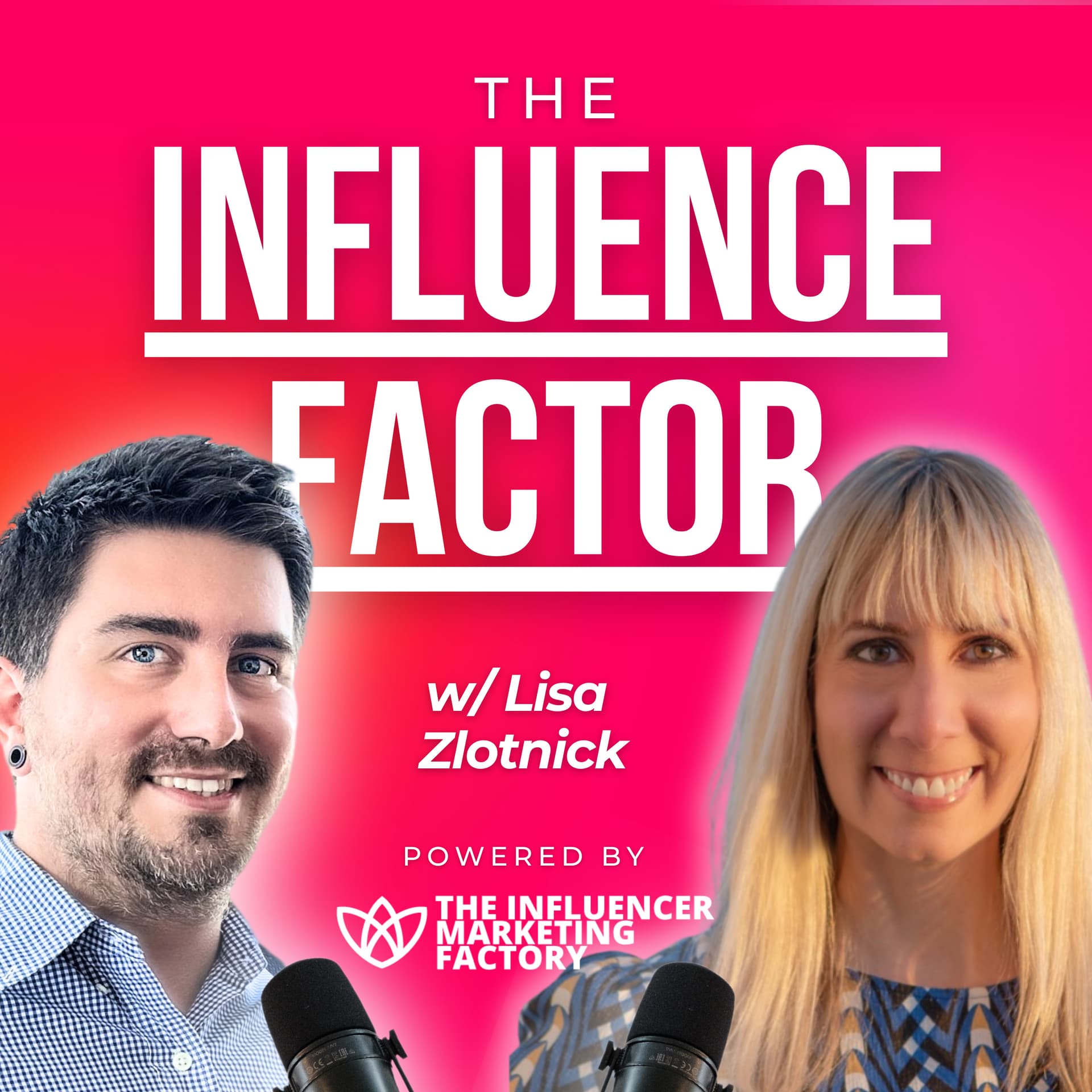

In short
How SHEIN uses creators and community programs to drive trends “at the pace of culture” rather than forecasting and pushing inventory; shifting creator marketing from one-off amplification to long-term relational partnerships and “authorship.”
Guest
Lisa Zlotnick, senior brand/communications leader focused on brand transformation. Background includes joining Nintendo’s PR agency Golin in 2015; helped navigate Nintendo’s identity shift before Nintendo Switch (2017) and enabled a Jimmy Fallon segment featuring Reggie Fils-Aimé and Shigeru Miyamoto. More recently, she worked at SHEIN to build U.S. messaging and creator strategy.
Key claims
Treat creators as core business strategy; lead with insight before ideas; build community-led programs for long-term affinity; align upfront via guidelines (not scripts) to preserve authenticity and brand safety; vet partnerships beyond reach.
Notable examples
SHEIN’s agile model (100–200 SKUs live at once, scale if demand); Campus Ambassadors Program (since 2021; $27M+ commissions); Normani fashion line (“business within a business,” exclusive to SHEIN, year-long launches).
Written by AI. May contain mistakes. Listen to the episode to check what was said.
Chapters
Tap a time to open that second in VOLisa Zlotnick's Journey and Achievements
0:45 to 5:20
Lisa shares her mission, achievements, and her role at SHEIN.
“Basically, it's divided in three main areas.”
Understanding SHEIN's Unique Business Model
5:20 to 6:45
Lisa explains how SHEIN's agile model empowers customers to drive trends.
“And, you know, you're, of course, talking about, you know, listening, right?”
The Right Way to Collaborate with Creators
6:45 to 10:28
Discussion on how SHEIN partners with creators for authentic engagement.
“What I think doing it right looks like today is treating creators as fundamental to the business.”
Navigating Cultural Relevance
10:28 to 13:10
Lisa discusses the importance of selecting creators and staying culturally relevant.
“So scale only works if the foundation is right.”
The Importance of Trend Integrity
14:02 to 14:46
Learn why brands should align with trends that reflect their values.
“And I love the point about integrity and also being aligned on things because I've seen so many brands that are jumping on trends just because they have to be there.”
Engaging Gen Z Through Campus Ambassadors
14:46 to 16:39
Discover the Campus Ambassadors Program and its impact on Gen Z engagement.
“I'm very curious about that one because, of course, you know, we're talking about social media.”
Real Stories Behind Campus Ambassadors
16:39 to 18:01
Hear how the Campus Ambassadors Program has changed lives and built loyalty.
“So these are students who really are living inside the culture that we want to be a part of.”
The Next Evolution of Creator Involvement
18:01 to 18:56
Understand how creators can shape product development and brand narratives.
“And that's why that community building aspect is a fundamental, powerful strategy than just, you know, marketing as a whole.”
Building Authentic Creator Partnerships
18:56 to 22:07
Learn how true partnerships with creators enhance brand authenticity and connection.
“And also, again, how, you know, like the company is able to put that into practice, but in a way that is also doable, right?”
Future of Brand-Creator Relationships
22:07 to 24:14
Explore strategies brands should adopt for successful long-term creator partnerships.
“It's influence that goes far beyond reach and it really shapes the product and the storytelling and the culture all at once.”
Transcript
Automatic transcript. May contain errors.0:00I really feel that when you invest in people and not just transactions, you really create that brand loyalty for life. And that's why Gen Z matters. And that's why that community building aspect is a fundamental, powerful strategy than just, you know, marketing as a whole.
0:22Hey Lisa, welcome to the show. How are you? I'm doing well. Thank you for having me. Absolutely, absolutely. You know, very interesting episode today because, you know, of course, you know, it's a well-known brand out there. You work with a lot of creators, influencers, right, and UGCs and so on. So probably like, you know, to understand a bit of the unseen of all of that. But before we get started, usually a lot to ask, you know, our guests about a bit, you know, themselves, right, for the audience listening. And we use this thing called the map. Basically, it's divided in three main areas. The mission.
0:53So what do you aim to achieve with your work? achievements, anything that you are really proud of. Could be career or life or both, if you want. And the last one is the purpose. So why you do what you do. Perfect. So I'll start with my mission. My mission has always been about helping brands find their voice, especially in moments of deep business transformation. Every role that I've taken has really put me at the center of a brand that needed to redefine itself, to stay relevant. So transformation is really where I thrive in the work that I do. If I were to talk about achievements, the one that I am most proud of has nothing to do with a campaign or a launch.
1:32It's becoming a mom. So my miracle baby was born nine years ago in the spring of 2017. And it's funny because he says to me, Mom, I'm no longer a baby, but fine, I'm still your baby. in the spring of 2017 was also the same time that the Nintendo Switch launched. So that spring was very busy for me. So I joined Nintendo at their longstanding PR agency, Golan, in 2015. And that was two years prior to the Nintendo Switch launch in March of 2017. During that time, the brand had lost market share and cultural relevance. It was hard for us to get media to come to events. And I really helped kind of navigate that identity shift, which led us to an incredible moment in gaming history when we gave Jimmy Fallon the exclusive opportunity to have both Reggie Fils-Aimé, Nintendo's former COO and president of Nintendo of America, as well as Shigeru Miyamoto, the creator of Mario, play the Nintendo Switch for the very first time on that show.
2:37That was one of the most incredible moments of my career. It's one of those things that you're like, pinch me, I'm here. So that was a big achievement for me. And more recently, I've spent the last couple of years at Shein doing something relatively similar. When I came into Shein, it was a little over two years ago now. I quickly realized that our narrative as an organization had been largely written for us, not by us. The marketing and communications team here in the United States was relatively new, and it was important for us to establish who we are as a company, what we stand for, and how our business proposition was fundamentally different in the industry.
3:19So we really needed to establish a clear messaging framework around education. That was imperative for our brand. So if I may, I'm going to bend your ear for a minute. The traditional landscape for retail, it typically works like this. They predict trends six to eight months in advance. They fill store shelves and racks with tens of thousands to hundreds of thousands of clothing items in the hopes that in six to eight months from now, customers will go into those stores and buy. How we operate is fundamentally different. We're actually operating in our own lane entirely. At any given time on the site, we can have between 100 to 200 SKUs of a product available for purchase.
4:03If customers like what they see, we scale up. We make more. If not, we try and sell out of that item and we move on. What this is, it's an agile model that minimizes overproduction and it allows our company to move at the pace of culture. So we're giving our customers the ability to drive those trends, not the other way around. And that is a fundamental misunderstanding of our business and one that my team is trying to course correct. And that brings me into the purpose, right? Why I do this work. I genuinely love communications and integrated brand marketing. It's in my bones. I have so much passion for it.
4:43Not just the craft, but the strategic challenge of aligning how a brand shows up publicly with who it actually is on the inside. I love building teams. I love mentorship, leadership, working cross-functionally, and creating the kind of cohesion where everyone is pulling towards the same brand vision. So as a senior level communicator, how we say something, what we say, and when we say it is of utmost importance when building and transforming a brand. What a great intro. I got really like so much just from the map that we used at the beginning. So thank you so much for sharing. And, you know, you're, of course, talking about, you know, listening, right?
5:25And getting like the, you know, feedback and understanding really the culture of what is happening to the minute. You know, of course, you know, to get into all the creative world, right? Being these podcasts about influencer marketing, the creative economy. I would love to mention something that you said at the Creative Economy Live event. And you said, and please, like, I'm going to quote you, but, you know, I hope that, you know, like, I don't really like it overbought on that one. is that the brand's getting it right to bring creators to the table to do what they do best, create and consider them fundamental to the business, helping drive relevance, trust, and demand.
5:59What do you mean by like doing it right today, right? Because there is so much about authenticity and giving creative freedom, right? It is to have the tone of voice of the person, but at the same time trying to balance with the brand guidelines and brand safety and so on. So how do you approach that these days? Yes, of course. That is very important. So I think one of the main things that we have to do when we're looking at creator partnerships is finding that authenticity. OK, we're looking for a way that we can align with them. So early on, like most brands, right, we were using creators as a channel or a tactic.
6:34Right. You identify somebody with reach. You give them a product. They post about it and you move on. But that to me is not partnership. It's more of a tactic, more of a media buy. What I think doing it right looks like today is treating creators as fundamental to the business. And for us, that evolution has happened in three distinct ways. First is that we need to lead with insight before ideas. So we don't just start with a campaign brief and then go find creators to execute it. We start by listening to our data, to our customers, to culture. And then we identify the creators who are already living inside that conversation authentically.
7:16That sequencing, it matters more than people realize. The second, it's investing in communities for long-term affinity. The brands that are doing it right, they're not just thinking campaign to campaign, tactic to tactic. They're thinking holistically. They're building relationships that outlast any single activation. That means building community-led programs based on shared values and genuine cultural credibility and nurturing those relationships over time. And then third is moving creators from simply amplifiers talking about a product to authorship. The next evolution of influence, it's not just about creators who talk about your product.
7:56It's about creators who help shape what the product is, what it stands for, and why it matters. That's where real brand connection, I think, gets built. So the evolution has really been from using creators to partnering with them to ultimately building and shaping with them. So that's what I think is doing it right, it looks like today. And, you know, we've been seeing that even in our latest report about the creator economy that we just published recently. We asked the right creators and they say that they are moving from the one-off activations to actually long-term partnerships. They want to be included and involved in the conversation about not only the promotion, but also why they're doing certain things.
8:34And they are also the ones that understand very well their own audience and community. And sometimes brands should also listen to creators because they are the one having this conversation happening. So I'm also curious, you know, since you're doing like these three main items here, how do you do that at scale? Right. Like being your company, like not that massive when it comes to creators. There are so many. How do you balance, again, the creative freedom, authenticity, but also the consistency in the brand, right? Because it is that easy that someone starts posting about your brand and company with words that you don't want to be associated with or by creators that maybe they don't align in terms of values and so on.
9:13So again, like a massive scale, how do you manage that? That is a very, very fair question because scale can be the enemy of authenticity if you're not intentional about it. So the way we think about that consistency, it doesn't come from controlling the message, right? It comes from getting that alignment up front. That starts with who we choose to work with. We're not casting creators based on reach alone. We're looking for people who already have a genuine affinity for affordable fashion, who talk about affordable fashion, who are already a part of that conversation before we ever come knocking.
9:46When that organic connection is there, you don't have to force the content. It just feels real because it is. And then from there, we absolutely provide structure. We set guidelines. There are product selections curated to fit each creator's aesthetic and audience. And there are campaigns designed to resonate with both their community and our fans. But the key word here is guidelines, not scripts. So we're giving creators a lane to create within, not a formula to follow. And that distinction matters enormously when we're talking about authenticity. So the way I think about it, our job is to find the right fit and create the right conditions.
10:26And their job is to create. So scale only works if the foundation is right. And for us, that foundation is always alignment first. And in addition to finding the right balance in terms of creators at a massive scale, you mentioned many times culture and understanding really what is going on in the world and how people are you know we all know right that these days you are watching a tv show or uh you know like a real financial whatever it is that you love and at the same time you are on social media while buying something right like it's happening at all at the same time so i'm very curious to understand when you do collaborations right with again you know anything that is happening culture could be a tv show could be celebrities could be someone that comes from a very niche underground the type of vertical.
11:18Yeah. How do you choose these cultural moments and like how you identify them? And then when it comes to collaboration, again, do you give certain guidelines depending on we are working with? There are certain guidelines like basis, like, you know, no matter what, the people that you work with, it depends by the channel, right? Because working with people that are like traditional celebrities is something compared to someone that is a social media and not to be influencer. So again, like even in that case, I do identify these cultural moments and how you approach like the work step by step in that case?
11:47I think that creator selection is one of the most consequential decisions that we make as a brand. And we absolutely treat it that way. So we have a very robust vetting process that applies whether we're working with a micro creator or a major name. Reach doesn't change the standard. So what we're looking for, it goes beyond content performance. We want creators who genuinely connect with our audience and whose audience genuinely connects with them. So that two-way trust is what makes a partnership credible. So if we know a creator is already a fan of Shein and their community is already engaged with affordable fashion, that for us, it's a green light.
12:23If it feels transactional or forced, we move on. So absolutely, we want to play in those cultural moments. We want to do so with authenticity. We also have clear brand values that every potential partner is evaluated against. And when it comes to content that is hateful, harmful, or hurtful in any way, it's a hard pass, full stop. No reach number is worth compromising that. And the reason why we're so diligent about this is simple, because perception is everything. The creators that we choose to stand next to say something about who we are as a brand, not just today, but for years to come. Every partnership is a signal about our values, our taste, and our judgment.
13:02And in a media environment where one piece of content can define a brand overnight, Due diligence, it's not optional. It's the job. So staying culturally relevant is absolutely a priority for us, but not at the expense of integrity. So the brands that last are the ones that move with culture thoughtfully, not just quickly. So for us, that alignment has to absolutely be there. And playing in those moments and doing so is very important when done thoughtfully. Hey, if your brand is ready to grow, we are here to help. At the Influencer Marketing Factory, we run full-service influencer campaigns that actually move the needle.
13:40We handle everything. Creator identification, campaign strategy, contract, shipping, logistics, you name it. We have supported brands of every size, from world-recognized Fortune 500 companies to ambitious DTC startups. And with our in-depth ROI tracking, you always know what's working and why. Just visit theinfluencermarkeringfactory.com to learn more and get started. You know, in a recent episode, exactly this point, we were discussing about that it's great to be on trends, but not on all trends, right? Just because you have to be there. And I love the point about integrity and also being aligned on things because I've seen so many brands that are jumping on trends just because they have to be there.
14:20And then we create confusion. The customer base is confused by why they're jumping on these. These are not aligned with anything else there. And so, you know, that was curious, like, do you jump on everything? Do you prefer just to wait a second and see what is happening and realign, right, on all these cultural moments? Because it can sometimes backfire, right, if not done properly. At the time, it can just create confusion. So that was, you know, like, I was really interested in understanding that. And, you know, in addition to these moments, something else also didn't notice that I saw, one of the initiatives that you also do is the Campus Ambassadors Program, right?
14:55I'm very curious about that one because, of course, you know, we're talking about social media. they're not just anymore Gen Z and millennials and now Gen Alpha, but Gen Z, they do play a major role, right? When it comes to especially short form videos and how they communicate when in college, not only publicly, but also when they send messages to each other, right? And the group chats and so on. I'm curious, like, how do you connect with Gen Z these days? And why, you know, the audience is still so influential? You're absolutely right. Gen Z is 100 % the most influential consumer demographic in the market right now.
15:31And not just because of their own purchasing power, but because of their ability to shape culture. And they bring everyone around them along for that ride. So if you earn the trust of Gen Z, you can absolutely earn relevance. That extends far beyond their generation. But this is the one thing that people need to understand about Gen Z. You can't market at them. They are so smart. They see through it. They have grown up with social media. They are fluent in advertising, right? They have a finely tuned radar for anything that feels inauthentic or transactional. And the only way to earn their trust is to build something together with them, not at them.
16:12So you're absolutely right. That's exactly the philosophy behind our Campus Ambassador Program. We started our campus ambassador program in 2021. And the goal of that program was never to create a network of paid promoters. It was to create a community of real college students who could help us understand and best serve the next generation of Shein customer in real time and real spaces with real credibility. So these are students who really are living inside the culture that we want to be a part of. And that's invaluable. And just to take a step back really quick on what our campus ambassador program is.
16:51If you attend a college or a university, you can come to our site. And all you have to do is enter your email address into the system. And if you are chosen to be one of our campus ambassadors, each campus ambassador receives a unique code. From there, they're able to share those codes with family members, with friends around campus, and anybody that makes a purchase on the Shein app, they get a commission. So since we've launched this program in 2021, we've paid out over$27 million in commissions to our ambassadors. But honestly, that number, it matters more is the human stories behind how much we've been able to pay to our campus ambassadors.
17:37We've heard incredible stories of tuition being paid off, of some of these students paying their parents' mortgages. We've heard about students landing their first major networking opportunity due to them being a part of our program. So I really feel that when you invest in people and not just transactions, you really create that brand loyalty for life. And that's why Gen Z matters. And that's why that community building aspect is a fundamental, powerful strategy than just, you know, marketing as a whole. It's loyalty that lasts well beyond graduation. I mean, I can only imagine, right? Like just the storytelling, the narrative of people that can change their life, as you said, you know, maybe you're paying the loan back.
18:22and helping the families while studying, right? So that's definitely like a great initiative. And still on this, you know, like, or at least we discussed it about these initiatives and partnerships. And we already kind of mentioned at the beginning of our conversation about not only having these transactional type of, you know, operation there, but really, you know, include the creators inside the conversation, implement their suggestions. and so let's dive into this a bit more i really would love to understand a bit more you know what is the next evolution right of the authorship right so basically where creators right help shape right what a product could be and even in that case i would love to hear from you how do you remove the noise right from all the comments that can be there because if you listen to everything you listen to nothing basically at the same time right so like first of all why this matters, right?
19:15The authorship. And also, again, how, you know, like the company is able to put that into practice, but in a way that is also doable, right? And feasible without getting, again, too much noise that then you get confused and you go in too many directions at the same time. Absolutely. I mean, the way that I think about it, there are really two eras of creator marketing. The first era was amplification, right? You have a product, you find someone with an audience, You pay them to talk about it. That model exists. It still absolutely has its place, but it's a ceiling. And a lot of brands, I feel, have hit that ceiling.
19:49So the next era is authorship. And that difference is profound. It's essentially putting a seat up at the table. It means that the creator isn't just talking about the product. They help shape what that product is, what that product stands for, and why it matters. And that's where real brand connection gets built. because the audience can feel a difference between a creator who has handed something and a creator who genuinely had a hand in creating it. So a lot of brands are talking right now about authorship, and it's hard to know how to best execute it. For us, we recently launched a fashion line called Normani.
20:29And it's obviously Normani is a multi-platinum recording artist, best known from Fifth Harmony. She also is a solo recording artist as well. And so we launched this line and that is very distinct because we didn't just give her a collection to put her name on. We essentially built a business within our business and it's called Normani and it's sold exclusively on Shein. She has her own fashion collection, her own identity, her own creative direction and her own planned launches over the course of an entire year long partnership. And it all lives inside the Shein ecosystem. So that is fundamentally a different model than a typical brand collaboration.
21:11And what made it work for us is that the values that we talked about earlier, right, the alignment, before we ever got in a room together, that clicked. Accessibility, inclusivity, empowerment, those are not just talking points that we handed her. That's who she embodies. That's who she already is. And our job was to essentially build a platform worthy of that vision and make it accessible and affordable to her fans and ultimately our customers as well. And that's why this shift matters so much right now. Customers are sophisticated. They know the difference between a partnership that was built and one that was bought.
21:50And when a creator is truly an author with their own fashion line, their own vision and their own creative stake at what gets made, I think that authenticity really comes through in the room, in the energy and in the culture around a brand. It's influence that goes far beyond reach and it really shapes the product and the storytelling and the culture all at once. And I think that that's what we're trying to prove is possible at scale. And you already kind of, you know, answered that to my last closing like question for you today, because you kind of, you know, left a lot of hidden gems here and there where you were like, you know, answering the other questions.
22:28But if you have like just to, you know, as final remarks to close the episode, like in terms of what, what do you think will define the most successful, you know, brand-credit partnership over the next few years? I think the brands over the next few years are the ones that are going to start treating creators as a core business strategy. And we see that shift already happening. The creator economy reached$37 billion in U.S. spending in 2025, with 70 % of marketing leaders already moving towards continuous creator partnerships. So for me, I see that the writing is kind of on the wall. But the brands that will truly stand out are thinking differently about what those partnerships are for.
23:08I want to say maybe the first thing I'd tell brands to do right now is move from the transactional to the relational. The campaign to campaign, tactic to tactic model, it only can take you so far. I think the brands building real equity are the ones that invest in those long-term relationships with creators who genuinely align with their values. And then I would say definitely get serious about insight-led strategy. That is so important for me. I am not a big fan of what I call finger in the wind marketing. The best partnerships, they don't start with a campaign brief. They start with listening deeply to your customer and your data.
23:46And then third, which I feel like is most strongly, is that invite creators to the business. We see a lot of brands right now that are bringing creators into unique roles. They're joining as creative directors. You're joining as like long-term partners for a brand. So that's where I believe the entire industry is heading. And so, yeah, I would say the ones that are going to win is going to have the deepest brand loyalty and the most durable cultural relevance for years to come are the ones that are doing those things. I could agree more. Many times creators are the ones that are day-to-day in direct communication with their audience.
24:20They also are able to read comments and what really people think, right? Without any filter sometimes. And in the better and the good, you know, sometimes it's good because you want to hear, right? to really what people think about your product, about your company. And they can be that bridge, right? That comes to you and in an easy way can really just group everything that they get, right? In terms of comments, analysis, and feedback and so on, and then together with the company. So I totally agree, like not more transactional, but relationship-based, long-term. Again, we've been seeing this happening, but still like not that many brands are either understanding that or putting the right efforts to really move to that direction because we can see that the trade economy is changing and is shifting, right?
25:04And is evolving and maturing. So those brands are not getting to the next level are going to be, you know, way, way behind, let's say. Yeah, I agree. Yeah. Lisa, thank you so much for joining me today, sharing all your knowledge with us. This was a fantastic episode. So thank you so much. Thank you for having me. I appreciate that. This was the Infless Factor by the Inflesser Marketing Factory and I'll see you in the next episode.
25:30Thank you.
From the publisher
In this episode of The Influence Factor, Alessandro Bogliari speaks with Lisa Zlotnick, Head of Brand PR, US Marketing at Shein, about her experience in brand transformation and the growing importance of creator partnerships.
She shares why brands need to move beyond transactional relationships with creators and focus on more authentic collaborations that reflect cultural relevance and integrity.
The conversation also explores how brands can better engage Gen Z through community-driven initiatives like campus ambassador programs, and why creators are increasingly becoming involved in product development - shifting their role from simple amplification to true authorship.
🌟 Leave a 5-star rating on Apple Podcasts and Spotify🚀 Start Your Next Influencer Marketing Campaign: Get In Touch🎙️Want to be a guest? Apply here
Show Notes:
(01:05) Introduction to Lisa
(06:15) The Evolution of Creator Partnerships
(09:15) Balancing Authenticity and Scale
(11:48) Cultural Relevance and Collaboration
(15:27) Engaging with Gen Z and Campus Ambassadors
(19:30) The Shift to Authorship in Creator Marketing
(22:40) Future of Brand-Creator Partnerships
Check out some of our previous episodes!
- How to Build a High-Performing Affiliate Influencer Program w/ Sarah Grosz (Allbirds)
- Inside Etsy’s Creator Ecosystem w/ Monty Montalto
- AI’s Impact on the Creator Economy w/ Alexander Frolov (HypeAuditor)
- How Visa Supports Creators as Small Businesses w/ Jonathan Kolozsvary
- Patreon’s Secrets to Building Loyal Superfans w/ Paige Fitzgerald
- How FP Movement Builds Impact w/ Courtney Weis
- Inside McDonald’s Bold Marketing Moves w/ Jennifer Healan
- What Makes Content Stick w/ Victoria Blinova (YouTube)
- The Daily Grind of a Tech Journalist w/ Amanda Silberling (TechCrunch)
- The New Currency of Marketing w/ Raja Rajamannar (CMO of Mastercard)
- How To Protect Your Social Media Accounts w/ Liron Segev
- Liquid Death's Unconventional Marketing w/ Greg Fass
- The Secrets Behind ESPN's Social Media Success w/ Maxwell Kelley
- Inside Snap's Playbook w/ Brooke Berry
- Scaling Miss Excel w/ Kat Norton
- Mastering Money w/ Vivian Tu (Your Rich BFF)
- The Inside Scoop on Social Media w/ Jasmine Enberg (Insider Intelligence)
- TikTok's Influence w/ Adrienne Lahens & Sofia Hernandez


