
In short
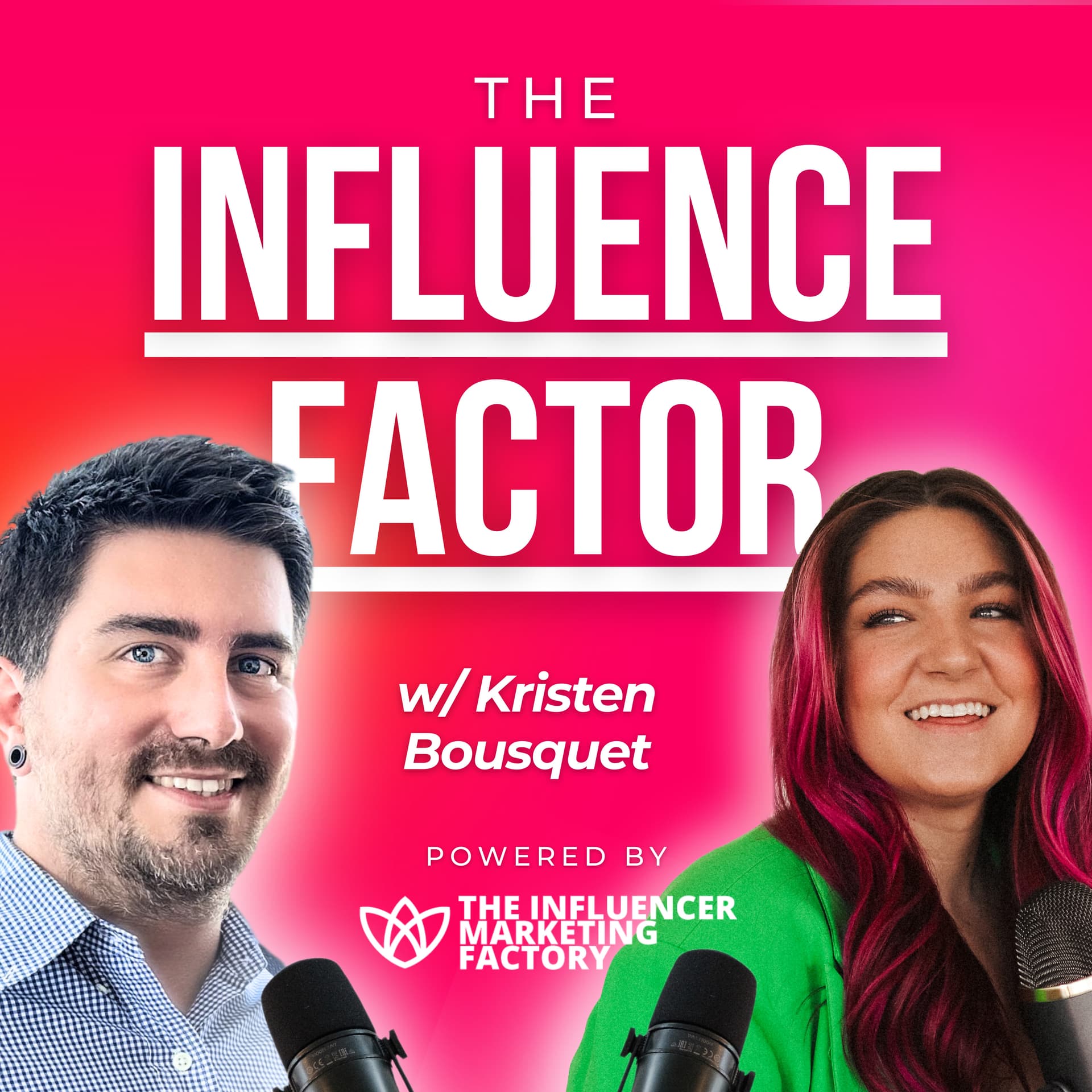
Podcast Episode Notes: How to Pitch and Monetize Like a Creator Pro with Kristen Bousquet
Episode Overview Podcast Title: The Influence Factor Episode Title: How to Pitch and Monetize Like a Creator Pro Host: Alessandro Bogliari, CEO and Co-Founder of The Influencer Marketing Factory Guest: Kristen Bousquet, founder and CEO of Your SoulcialMate Duration: [Not specified in the transcript, but includes timestamps for various segments]
Episode Description In this episode, Kristen Bousquet shares her insights on pitching as a creator, being transparent about monetization, and managing finances. She emphasizes the importance of community, networking among creators, and the use of visual hooks in content creation.
---
Key Concepts and Discussions
Introduction
- Alessandro welcomes Kristen, highlighting the packed agenda with tips on pitching, monetization, tools, and resources for creators.
Kristen Bousquet's Background
- Mission: Help creators build profitable, self-sustaining businesses.
- Achievements: Writes for Forbes, recognized as a top creator economy expert, generated over $500,000 as a micro-influencer.
- Purpose: Promotes freedom in work, enabling others to enjoy their careers as she does.
Identifying the Right Influencers
- Importance of authenticity over follower count in influencer-brand partnerships.
- Brands increasingly value engagement and loyalty over sheer numbers, with TikTok changing the landscape.
- Unique Value Proposition (UVP): Creators need to highlight what makes them different to attract brand attention.
- Building genuine relationships with brand representatives is crucial for effective pitching.
The Anti-Pitch Method
- Kristen’s shift from cold pitching to building relationships through platforms like LinkedIn and Twitter.
- A focus on authentic connections leads to better opportunities and collaborations.
Financial Management for Creators
- Many creators lack knowledge in business management, including finances and taxes.
- Importance of accessible education on business matters for creators.
- Kristen recommends outsourcing tasks like bookkeeping to focus on content creation.
Pricing Strategies
- No standard formula for pricing; everything is customized per partnership.
- Creators should find their pricing range through research and negotiation, adjusting rates based on acceptance and feedback.
Tools and Resources
- Utilizing services like Collective for bookkeeping and accounting.
- Emphasis on the need for creators to manage their finances effectively as they scale their businesses.
Community and Networking
- The establishment of a supportive community through Social Suite, where creators share insights, tips, and experiences.
- Importance of having a network of creators who can provide feedback and support.
Content Creation Strategies
- The necessity of grabbing attention within the first few seconds of content to combat decreasing attention spans.
- Visual Hooks: Using unique and creative elements to capture interest right away.
- Authentic storytelling and relatability are key to building loyal audiences—sharing personal stories can enhance engagement.
Emerging Trends in the Creator Economy
- A shift towards authenticity and personal connection in content.
- The importance of niche content as creators move away from generic posts to more unique, personal expressions.
---
Conclusion Kristen Bousquet shares valuable insights on successfully pitching and monetizing as a creator. Through personal stories and practical advice, she emphasizes the importance of authenticity, community, and effective financial management in the creator economy.
---
Timestamp Summary
- (00:00) - Introduction and Mission
- (03:39) - Identifying the right influencers
- (05:57) - Getting attention from brands and agencies
- (08:18) - Kristen's anti-pitch method
- (15:08) - Managing finances and monetization
- (18:50) - Approaching pricing as a creator
- (23:17) - Recommended tools and resources for creators
- (27:25) - Creating engaging content and capturing attention
- (30:49) - Rising trends in the creator economy
---
Additional Resources For further exploration of influencer marketing and related topics, check out previous episodes of The Influence Factor featuring industry experts and discussions on current trends in the space.
Written by AI. May contain mistakes. Listen to the episode to check what was said.
Transcript
Automatic transcript. May contain errors.0:00our followers don't want to feel like they're just another number. They want to have connections with us. They want to like actually be able to have conversations. And I said, why are we doing things like that with our audience? But we're not doing that with the people that we pitch to.
0:21Hey, Kristen, welcome to the show. How are you? I'm doing great. I'm so excited to be here. Fantastic. You know, today we talk about a lot of things, right? from how to pitch as a creator, how to be more transparent when it comes to monetization, tools, resources. It's going to be a pretty packed episode with a lot of tips and tricks. I already know that. But before we dive in, why don't you tell us a bit more about yourself using the map method that we have here on the Influence Factor podcast. The deal is divided in three different sections. The mission, what do you aim to achieve? The achievements, so anything that you are proud of, and inaudible milestone could be in your career, could be in your life for both of them, and the purpose.
1:02So why do you do what you do? Yeah, so my mission is definitely to help more creators learn how to actually build profitable, self-sustaining businesses. I know so many creators get into being creators by being creative, but they very often don't understand the business aspect of owning a creator business. So my mission is definitely to help them understand more of that so that it can become, again, like a sustainable, profitable business for them. For my achievements, I very recently actually started writing for Forbes.com, which was a really special achievement for me. I write their creator monetization beat, but I've also been named one of the 23 top creator economy experts to watch by Business Insider.
1:49Personally, outside of that, I've been able to generate over$500 ,000 as a micro-influencer from brand partnerships and my coaching business as well. So I've been able to work with a lot of really great brands that we all know and love in my career as a creator, even as a micro-influencer, which I feel like a lot of people don't know is possible. And my purpose, why I do what I do, it's really this idea of freedom. I think I personally worked a job that I wasn't really excited about I hated going there every day I always felt anxious going in and so me having the ability to come do this as my job has made me really love going to work every day and so I want to make that possible by educating and supporting other creators who are in my shoes you know the way that I was a couple years ago amazing and first of all congrats on you know Forbes and Business Insider it's it's it's great when you see yourself there, right?
2:48You work a lot and then you're like in the top of the people. You're able to write for these very famous publications. So I know the feeling. It's a great one. So congrats on that. Thank you. And why don't we get into like, you know, already some of the insides out, right, of today's episode. And the first thing that I wanted to ask you, I know that you serve with like around 40 or more than 40 influencer campaign managers for both like, you know, brands and agencies to understand a bit more what are the core factors, right? When it comes to identify the right influencers. We all know that that step is crucial, right?
3:20If you don't identify the right influencers, then it's going to be a dominant effect of, you know, problems, right? So that initial step, it's quite crucial. We say that all the time to all of our clients and brands. So have you found anything, any patterns, anything that you already knew, something maybe new that you didn't expect from this study? Definitely. I was writing an article for Forbes where I wanted to give content creators more of an inside look on what brands were actually looking for when they were looking for creators because as creators we very often don't get that perspective of what they're looking for on the inside and it was actually pretty eye-opening I would say a majority of the people who responded to this survey actually said that one of the biggest things for them was that authenticity piece you know they really wanted to partner with creators who had audiences that genuinely like knew this creator and then loved them and were loyal to them and they kind of put follower count on the back burner which I know in previous years is definitely something that's like very unheard of but I also was still pretty surprised I would say to see how many brands did say that follower count still matters to them a decent amount I think we're moving in the direction of more brands caring less and less about that follower count number, especially after TikTok.
4:41You know, it's been so easy for a creator to have one video that goes absolutely viral and that's all that really happens. And they don't really have much of a loyal audience. It's kind of just like that virality that's happened to them. So I'm surprised that so many of them said they were still kind of paying so much attention to follower count, but more and more I think are definitely moving in the direction, more of the engagement and the authenticity versus just follow our account, which is great. And, you know, we all know, right, that when it comes to influencer identification, you can either do like, you know, searching, right, and scouting using, you know, platforms, your internal databases, a network of people.
5:18But on the other side also, right, there is also creators or agents that send emails, right, do call outreach. And in that case, right, again, you know, we personally receive so many emails every single day, right? Sometimes certain emails are a bit like a typical email, right? Like, hey, we have this roster of people. Can we work together? And others, instead, they do a bit more of the homework, right, on why they should work with us and everything. So because of that, again, there are so many influencers, so many agents out there. How can they, right, get outside this sort of bubble, right, and actually get the right attention for either brands and also agencies to work on new campaigns?
5:56If you're a creator who's looking to get the attention of the brands or the agencies, I think there's two really important things to think about. First is your unique value proposition or your UVP. What is it that makes you different from other creators who might have similar demographics or a similar niche or similar stats to you? I think there's always got to be that one thing that's like, oh, this person is perfect for us because of this unique thing about them. And I honestly think that that's why so many more creators are trying to put more of themselves into the content because something in there, in their personality, in who they genuinely are, I think could be that unique value proposition.
6:39So that's definitely one of the really important things that I work with my creators on is figuring out what that is, because sometimes we're too close to it. So we don't necessarily kind of point it out for ourselves. And the second thing I think is the relationship that you build with the people at these brands or agencies. We've always been taught as creators to send as many cold pitch emails as possible. and while that's great and sometimes it works there's a lot more times that it doesn't work and so we've found in the last few years working with so many creators that brands really love to feel that authentic connection even just in the in the behind the scenes of when they're starting to partner with these creators it's the same like finding a job right you can send 200 like your cv to 200 companies spray and pray you will absolutely see that is a copy paste there is no reference to the company and you know like if you don't put enough time for that it doesn't it means that most probably you're not really interested right you're just looking for a job and it's the same concept also right for creators it doesn't mean necessarily that you care about that brand therefore why that brand should choose you right so i agree like you know on that like it's better sometimes quality over quantity right the better to select maybe 10 brands that you really love send them something very specific and maybe do do do a little video presentation about like why or maybe you really have the brands at home and show them right that you already have someone that uses so yeah absolutely i i see the importance there and i don't know like is there like the anti-pitch method that maybe i think that i read it somewhere yeah so in 2022 i was having this kind of revelation of I'm sending all these cold pitch emails out.
8:25No one is responding to them. The people that are responding are just saying, sorry, we're not working on anything right now. Give us your media kit. We'll come back to it later. And I was just getting so frustrated. But I also I got to the point where it would kind of go on the back burner because I was like, why am I going to spend so much time doing this if most of the time it's not even working? Like I'd rather just do other things in my business. And obviously that wasn't great because that's how I made a lot of my money, right, is these partnerships. And I had to pretty much depend on just inbounds or get up the courage to go send some cold pitch emails.
8:59So I was thinking about it one day, kind of from the perspective of like our followers, you know, like our followers don't want to feel like they're just another number. They want to have connections with us. They want to like actually be able to have conversations. And I said, why are we doing things like that with our audience, but we're not doing that with the people that we pitch to, you know? So we're sending out all these copy and paste pitch emails that all look the same. Everyone's looked the same. We're all working from the same script, basically. So I started to, instead of sending out cold pitch emails for the whole year of 2022, I fully experimented with actually connecting with the people that worked at the brands that I wanted to work with, mostly through LinkedIn, a lot of Twitter at the time.
9:46And I started to just build genuine relationships with these people. And I found that because they knew who I was and they knew that I was actually interested in their brand genuinely, they were more inclined to actually come reach out to me and say, hey, you know, now that we know each other, I was actually thinking about this thing that we're working on that you would be a great fit for. And so it started to put me in the kind of like top of mind, I guess, for a lot of these brands that I wanted to work with in a very organic way. But what was also really great about that is now I have all of these contacts, all of these different brands.
10:24And so when they move to different brands or have new campaigns coming up, they already know who I am. I don't have to like worry about, oh, am I sending a cold pitch email at the right time for the right campaign for the right person? Like it's more of a networking thing, I guess, than anything else. Especially in this industry, right? Where it's a people business network, it's very important. It's one of the most important things, right? So absolutely. Like if for brand managers, other talent agents, creators themselves, independent people, like networking, it's quite the foundations, right?
10:58And then as you said, you can build on top of that. So let's say that, you know, you get your brand deals, you know, like you start making money. As you said at the beginning, right? Of the episode, a lot of these creators and influencers, they start as creative people, right? They might not really know how to manage. Because, again, you think about a video, but then there is so much behind. You have to think about the script, do the brand deal, record, send it out. You get paid taxes, how to manage your finances and so on. So that's going to be more in this thing. But again, it's more about, you know, bureaucracy.
11:30And, you know, for some people, it could be seen as a boring topic, right? All the things behind finances. But once you start making money, it's important, right? If not, it happens like athletes, right? They are very young. They make a lot of money. Boom, like millions from zero to millions. And then they lose everything because they don't know how to manage money. So have you found any tips and tricks when it comes to help creators when it comes to their finances and monetization? This is such a great point. I think so many creators don't understand how to run a business. And why would they?
12:01They maybe didn't go to school for business. You know, like they're just here having a good time on the Internet. It happens to be fun. It happens to be working out for them. And they're like, huh, yeah, I should try and go into this a little bit further. This is actually one of the reasons why I do what I do is I try and create a lot of opportunities for creators to learn about the somewhat boring stuff. But in a way, that's very easily digestible. Because I know even for me, when I first got started, I was trying to learn about things like taxes and, you know, EIN numbers and all of this stuff.
12:32And I was like so confused and everything that I found on the internet, I think, was just kind of feeling like it was gibberish to me. And in our membership social suite, this is where we actually do a lot of the education on this. We bring in a lot of industry experts to actually teach us in a way that's very specific to creators. Because even with things like taxes, we have a lot of kind of caveats that can be a little bit confusing. And so it's been really important for us to be able to make that really understandable for the creators that we work with. We've had like bookkeeping and accounting companies come in.
13:11We've had creator lawyers come in to help us kind of digest contracts a little bit more. That's another area that we see a lot of creators have a lot of trouble with. So I think that's been like, again, one of the most important things for me is just finding ways to make that information more accessible and more understandable for a lot of people. Because I honestly, even at this point, I still don't feel like there are a lot of great resources out there. Is your brand ready to amplify its reach while the influencer marketing factory is here for you? We are a global influencer marketing agency helping brands ignite their growth.
13:45From influencer identification to campaign strategy, handling legalities and agreements, to managing shipping and logistics, we got you all covered. We work with hundreds of brands across different verticals, from Fortune 500 companies to direct-to-consumer brands. And we don't just stop there. With detailed ROI analysis, we help brands like yours measure success, transforming impressions into conversions. You can find us at theinfluencermarketingfactory.com or just searching the Influencer Marketing Factory on Google. Absolutely. Especially, you know, when a lot of these things like government, you know, is still a bit behind, you know, many times when it comes to how do you classify a creator, right?
14:28Yeah. Is that something that you cannot write off? Is that an actual expense as your business? you know and then you start getting maybe a team of people a video editor you know someone helping you with things someone to help you with brand deals and now you have a team of people and so like are they freelancers are they actually in pre-e of a company did you create an LLC so yes like we could talk about this for hours and and the more we learn and also more like you know again government is learning about us and everything so especially with the latest like you know event at the white house it seems there is some movement right but at the same time Our industry is moving fast and sometimes bureaucracy is, you know, sometimes usually bureaucracy is moving very slow, right?
15:03And so this space is different. And that's why I think many times there is a loss in translation when it comes to that. And so let's say again, you know, you are happy to write creators when it comes to their finances. But is there any other advice, these are other advice, especially when it comes to how to approach pricing, right? Because there is still not a formula, there is still not a price card, right? Everything is still a bit the Wild West. I mean, for more than 10 years, I started my career in this talking about pricing and how to price, you know, trying to find a sort of a formula. It's quite impossible to have it.
15:34If you find a way, tell us a bit more about this. I get so mad whenever I see all these pricing calculators online because I honestly don't think that I've ever found one that's very in line with my pricing. and I don't think they can be because the other aspect of it is not only is there no formula but there's also so many different brands and so many different deliverables and caveats to each partnership that you're gonna end up customizing every partnership that you're pricing I honestly don't think that having set rates and expecting that you're gonna get those numbers every time is realistic at all most of the creators that I work with I tell them to kind of have like a range of this is the absolute lowest that I'll accept to be worth my time.
16:18This is what I'd really like to hit. And then maybe you're going to always aim for a little bit higher than that. But there's no one rate and that's where you're going to get paid for every partnership. When it comes to figuring out what to charge, I honestly think there's a lot of guesswork here. I think the best thing to do is definitely start off by doing some research. A lot of people at this point, I think a lot of creators are very transparent about their pricing. I would be trying to kind of go around and see what other creators are being paid that are maybe similar to you in niche or in stats or, you know, in other brands that maybe they've worked with and kind of see what it is that they're charging, if it's something that they're sharing and use that as a starting point.
17:04So a lot of the times what I'll tell creators is if you're sending a rate to a brand and they're automatically accepting it, it's probably a little bit too low. So maybe next time you're going to raise that by 10 % or 15 % and then you throw that number out. And if that number is automatically accepted, you're like, okay, maybe we'll do that again. And you keep kind of raising it and raising it until you get to a point where you're almost having to negotiate with every brand that you're sending that number out to. And typically I know for me, like that's where I'll realize that I'm kind of in the right range there.
17:38And again, for some brands, maybe you're negotiating that rate, but then for others, you're immediately getting accepted. It's still going to depend on the brand. So I think it is more of that experimentation of like, all right, well, I've sent this rate out 10 times and seven of those 10 times it's gotten negotiated. So again, now we know we're like in the right range, but it is definitely more of an art than it is a science. That's for sure. A hundred percent. As I said, you know, every brand is different. Some of them, they have an unlimited budget that it will really look at pricing. And they're like, you know, we just want influencers, creators doing these things, whatever.
18:14Others are very data-driven, ROI-focused. So they're going to look at every single cent, right? So it depends, right? A hundred percent. And so in addition to finances, is there any other resources, tools that creators and influencers out there should know about? again because of course you know they record their videos but then there is there is much more right behind the scene is there anything that is uh do you recommend to any creator or any influencers out there that they should from today already if they haven't done it yet look into these tool resources for getting their success even like you know to the next level personally i started using an accountant and i think that that's one of the most like underrated things that a creator can do because so many creators are really afraid to spend the money on it.
18:57I pay my, it's a bookkeeping and accounting service where I pay them$299,$250 a month and they touch everything. I touch absolutely nothing. And that's actually one thing that for me has been such an important part of my business is where can I outsource to give more people things that I don't necessarily need to be doing so that I can spend more of my time doing the things that I personally need to be doing. So outsourcing something like bookkeeping, the company I use is called Collective. They are amazing. They actually help you file as an S-corp election so that you can end up saving money on taxes too.
19:37And they won't take anyone into their program who won't make back in saved taxes what you would pay them. So they want to make sure that it's definitely worth it for you. So that has been like my saving grace. one of the things that I absolutely, absolutely wish I did sooner. Fantastic. And is there any, you also manage a community, right? So I'm also interested to know a bit more like, are you finding creators helping each other? Are you seeing influencers sharing tips about like, you know, what to avoid in terms of mistakes? Like, you know, this is the right contact if you want to do these things.
20:14This is the tool that you should use. Like, tell me a bit more also what happens right again beyond the scenes when it comes to creators getting together to help each other somehow i think creator transparency is becoming more and more of the thing which is really great but i still think that there is this big gap on people who are willing to open up and support other people because we're still all kind of fighting for the same partnerships at a certain point and so i think people get very nervous to help other people out fortunately about two years ago, I started a membership called Social Suite, where we have about 165 creators in there right now who all are literally there to help each other out.
20:52And it's so incredible to see like how transparent everyone is. And they're really all there to help each other thrive. So we have a lot of times where someone might come in and say, hey, this brand just emailed me. This is what they want for deliverables. Has anyone ever worked with them before? Or what should I charge them? How do I respond? Can you guys help me type this out? Like we're truly there holding each other's hands throughout the whole process of building a creator business. And again, I think it's sometimes is difficult to find that community because if you're not joining a community, you're very often just kind of like talking with people over the DMs or maybe like, you know, sending some, some story replies or comments here and there.
21:33But what's really great about our group is everyone has become so close-knit because we actually do a lot of live group meetings as well. So we meet on Zoom once, twice, three times a week, and we're literally all there to just hang out with each other, share experiences, answer questions, get feedback for each other. You know, if someone's working on something new, they'll very often come in and say, hey, let me show this to you guys first before I actually, you know, present it to my audience. And it's kind of like you have this board of your business who's just a bunch of other creators who are going through a lot of the same things and again, can share their feedback and experience.
22:14So I think finding a community can be difficult sometimes, but when you find the right one, it's really so magical what can happen when people are willing to help each other out. Fantastic. You know, especially when, you know, I saw some Discord channels where creators like especially youtubers they ask their to their audience like closer audience before going out like should i use this thumbnail so they can give you absolutely a lot of you know a lot of value but at the same time other creators can give you much more value when it comes to especially again you know like i before about this title but uh you know like an algorithm and all these type of things right so so yeah again i i imagine that it's not that easy but once you find then it's your little like no family there with people helping you out and everything yeah yeah exactly i mean it's funny because like i have a lot of friends in person who all try and explain things to i'm like oh this brand said this and it was so frustrating and they're like i don't get it so it really is like nice to have people in the room that again like understand the same experiences totally totally and let's go for a second back to content right because we we covered many things about transparency for monetization, finance and so on, bookkeeping, accounting.
23:26But let's go back for a second about content. That is, again, the core of every content creator and influencers out there. We all know about the attention span is getting lower and lower day by day. People scroll after one sec. There is much competition these days, more than ever. How can creators get that hook in the first second? And because we know that, you know, informational videos, right, educational content, it's a bit easier, right, to do. But not all of them are about, you know, informational. Sometimes it's about entertainment. Other times it's about your latest song. Other times it's whatever, right, what you create.
24:04Have you identified, I know there is not a perfect formula, but is there a way to still providing value but still get attention in the first couple of seconds so that people don't crawl? Yeah, a more logistical answer to this question. I actually saw a friend of mine, Kenya Kelly, who the other day she started her video off using a shoe as a microphone. And I immediately stopped and watched it because I was like, what is she doing? But I thought that was such a great example of I didn't even hear one word that she said yet. And I'm already paying attention. So I think people don't pay enough attention to visual hooks.
24:37You know, we see a lot of videos saying here are 25 perfect hooks. You can start your videos off. And it's like at this point, again, like you said, everything has been done. like it's very oversaturated we've seen a lot of it we're almost not hooked by the same hooks anymore like things are moving so quickly and I think visual hooks get very much put on the back burner so that's definitely something to think about I actually today posted a video where my husband and my foster dog in it are in it and we're both out in the street and I think people are immediately like whoa what are they doing here this is not the normal area that they're filming what is he doing the video like they're kind of already starting to question it and process it by the time I'm already getting into the video and they're watching it so visual hooks I think can be definitely very important but also as a more I guess like emotional answer I do think that people watch videos when they connect to those people for any reason like it could just be like the way that person makes you feel or maybe there's something that you relate to in that video or maybe the person you're watching is like really humanizing themselves but they're this creator you watch all the time and you don't picture them being just like you.
25:47I think when people can bring themselves into content and just be like very genuinely themselves which I again I know is very it's said a lot right like everyone's like just be yourself it's great it'll be fine but I think it is very difficult to do. I mean I've been creating content for years and years and years and I still feel like very often when I go to create content I like flip a switch and I'm like okay I'm on you know like here's my my internet personality and it's very difficult to really let yourself just go and be genuinely you so I think practicing that and really trying to let people in and kind of like see if you were on a reality tv show and people were following you around all day what would you be acting like like what would your personality be like when you're just living your daily life.
26:36Those are the kind of moments where I feel like people really connect to them and are genuinely interested in getting to know you and hanging out with you because it does feel like they can actually build some sort of connection with you. And because again, you said that it's oversaturated, a lot of hooks are not working anymore and so on. I have a last question for you. What's working and what are the raising trends that you've noticed recently in the creative economy as a whole? I definitely, I think like kind of going back to the authenticity piece, like a lot of what I see perform the best in my content and in the creators that I work with are those times where you're bringing people in to a story that's personal to you.
27:19So if I'm sharing, you know, a vlog of like, come do this with me and I'm really bringing people through like the good, the bad, the ugly of whatever that thing is, I definitely find that more people are engaging in it, more people remember it and bring it up later. You start to build like these inside jokes with your audience. And I mean, that is so valuable when it comes to monetization, because those are the people that are going to purchase from you when you have products or, you know, those are the times when the brand is going to want to work with you because you really have this strong, loyal audience.
27:52I feel like I hate giving that as an answer because it's so like it's not very actionable it's like yeah we're all trying to be ourselves and be authentic but i i genuinely think right now especially after covid like we really are just craving that human connection we're really craving that relatability with other people fantastic yeah no absolutely especially you know these days there is more like niche content you know people want to see something new more original content right we all know that especially all the copy paste type of content is something that kind of bored people, right? They want to see something new.
Read the full transcript
28:29They want to see you because they follow you, right? And we already discussed this in other episodes, right? About the importance to... You also said the same, like your unique selling proposition there, right? As a person, at the end of the day, if you're a creator, you're a personal brand. People follow you for certain values because it's you and some. So I think that people are going to see more of that. At least they want to see more of that, right? Yeah, I mean, that's... Even for me personally, like for a long time, everything that I shared was very social media specific because I was like, oh, that's why people are following me.
29:03But I had this whole other area of my life. I'm very deep in animal rescue here in Charlotte, where I live. And I never shared any of that with people because I was like, oh, people aren't following me for animal rescue. Like they're not going to care. Why would I share this? But I was like, it feels like I'm suppressing this really important part of me. And so I started to share more of it. and it's been so crazy to see the reaction from people. Everyone is so excited. They all want to know who's this dog? How can I support them? Did they get adopted yet? How are they doing in their new home?
29:38People remember the names of all these fosters we've had. I get messages from people who are asking about dogs that have been adopted. I've had brands reach out to me to partner on pet content so it really it has just opened up such a big opportunity for me but it's something i never wanted to do because i was like it doesn't feel like it makes sense but me allowing myself to again just more authentically be who i really am in my real life has opened up the door to just such more a lot more opportunity and it's a great mission so you know or from the interview exactly fantastic christian thank you so much uh you know for joining me today i i knew that This was going to be a very packed with very valuable information.
30:21So thank you for sharing all your knowledge with us today. Of course. Yeah. Thank you so much for having me. This was fun. Absolutely. This was the Influence Factor by the Influencer Marketing Factory. And I'll see you next week.
From the publisher
In this episode of The Influence Factor, Alessandro Bogliari, CEO and Co-Founder of The Influencer Marketing Factory, chats with Kristen Bousquet, founder and CEO of Your SoulcialMate.
Kristen shares insights on how to pitch as a creator, be transparent in monetization, and manage finances. Kristen also discusses the value of community and networking among creators, as well as the need for visual hooks and relatable content to capture the audience's attention.
She advises creators to outsource tasks like bookkeeping and accounting to focus on their core strengths. Tune in to learn about the latest evolving trends in the creator economy and Kristen's personal branding strategy.
🌟 Leave a 5-star rating on Apple Podcasts and Spotify🚀 Start Your Next Influencer Marketing Campaign: Get In Touch🎙️
Want to be a guest? Apply here
Show Notes:
(00:00) - Introduction and Mission
(03:39) - Identifying the right influencers
(05:57) - Getting attention from brands and agencies
(08:18) - Kristen's anti-pitch method
(15:08) - Managing finances and monetization
(18:50) - Approaching pricing as a creator
(23:17) - Recommended tools and resources for creators
(27:25) - Creating engaging content and capturing attention
(30:49) - Rising trends in the creator economy
Check out some of our previous episodes:
- The Creator’s Attorney w/ Tyler Chou
- The New Currency of Marketing w/ Raja Rajamannar (CMO of Mastercard)
- Pay Transparency for Creators w/ Lindsey Lugrin
- How To Protect Your Social Media Accounts w/ Liron Segev
- Liquid Death's Unconventional Marketing w/ Greg Fass
- The Secrets Behind ESPN's Social Media Success w/ Maxwell Kelley
- Inside Snap's Playbook w/ Brooke Berry
- Trends at META w/ Jackie Pimentel
- Scaling Miss Excel w/ Kat Norton
- What a Creator-Led Brand Looks Like w/ Bryan Reisberg (Maxine The Fluffy Corgi)
- From $400 a Day to a Globally Recognized Brand w/ Calum Watson (Gymshark)
- Mastering Money w/ Vivian Tu (Your Rich BFF)
- The Magic of Interfluence w/ Lubna Mohsin-Haque (Estée Lauder)
- Screen to Cart w/ Collette Winn (NBCUniversal)
- The Inside Scoop on Social Media w/ Jasmine Enberg (Insider Intelligence)
- TikTok's Influence w/ Adrienne Lahens & Sofia Hernandez
- Retaining Influence w/ Conor Begley (CreatorIQ)
- From Clicks to Cash: Unleashing the Power of Linktree for Creator Monetization w/ Michael Bolen
- Funding the Creative Journey w/ Aaron DeBevoise (Spotter)
- Swipe Right on OkCupid Success w/ Michael Kaye
- The Art of Social Media Creativity w/ Jon Youshaei


